
16 Q
6th - 10th
15 Q
5th - Uni
15 Q
5th - Uni
15 Q
6th - Uni
25 Q
6th - Uni
25 Q
6th - Uni
15 Q
6th
11 Q
6th
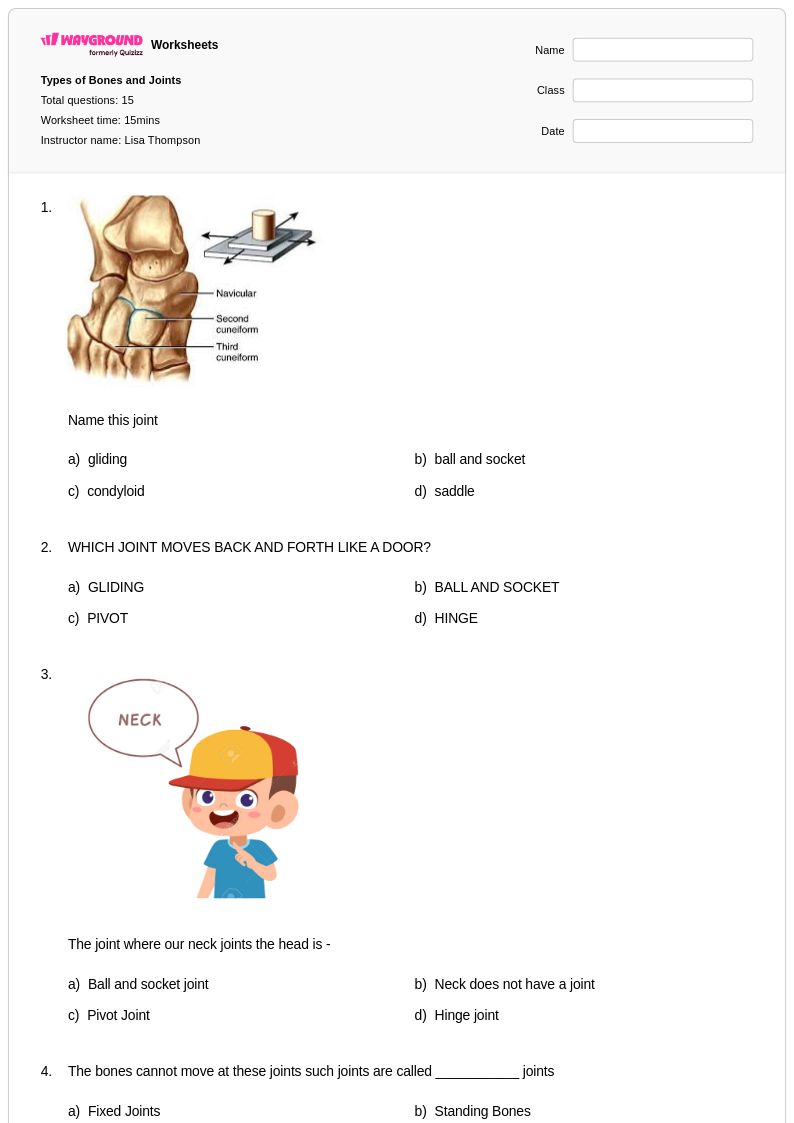
15 Q
6th - Uni
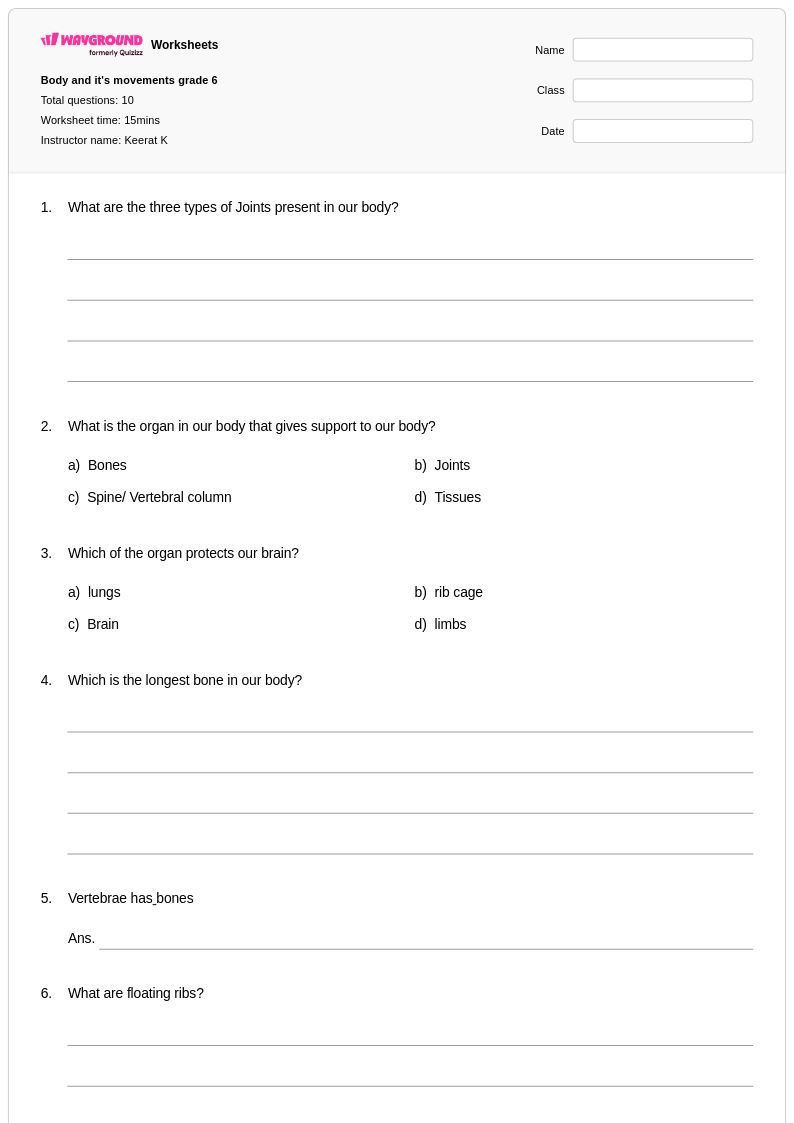
10 Q
6th
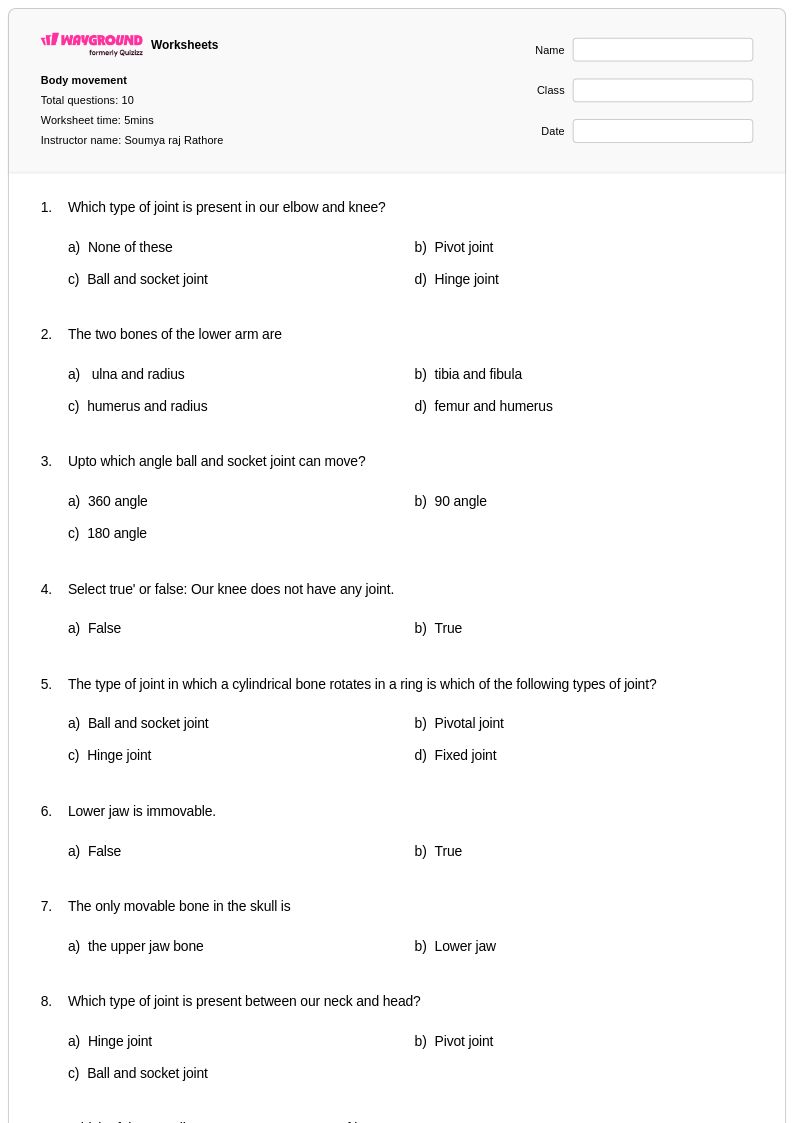
10 Q
6th
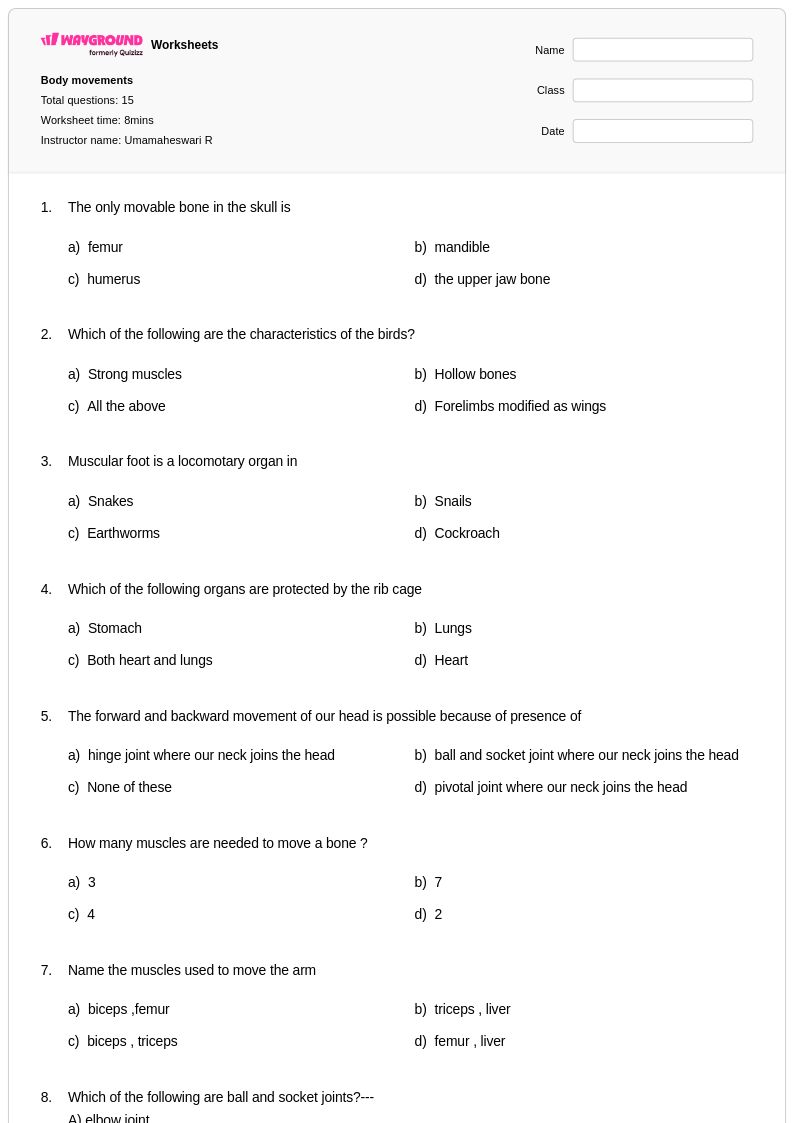
15 Q
6th
19 Q
6th
15 Q
6th
10 Q
6th
12 Q
6th
10 Q
6th
12 Q
6th - 8th
25 Q
6th - Uni
10 Q
6th
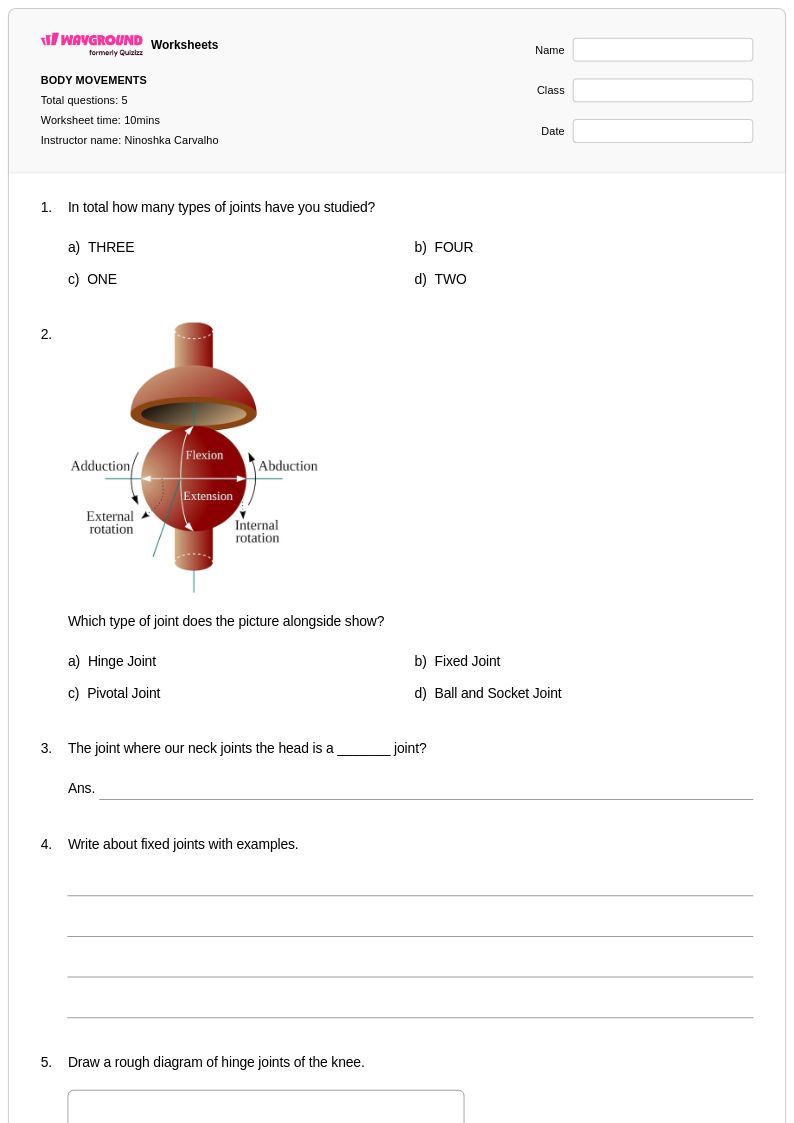
5 Q
6th
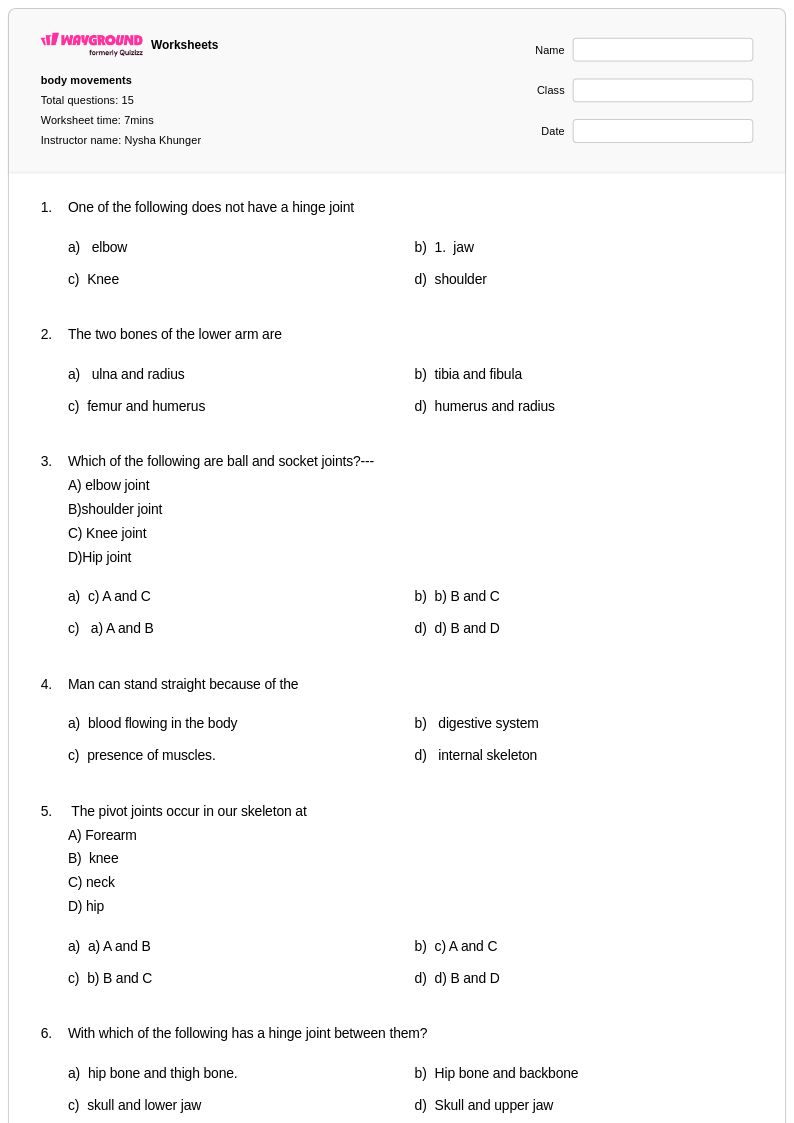
15 Q
6th
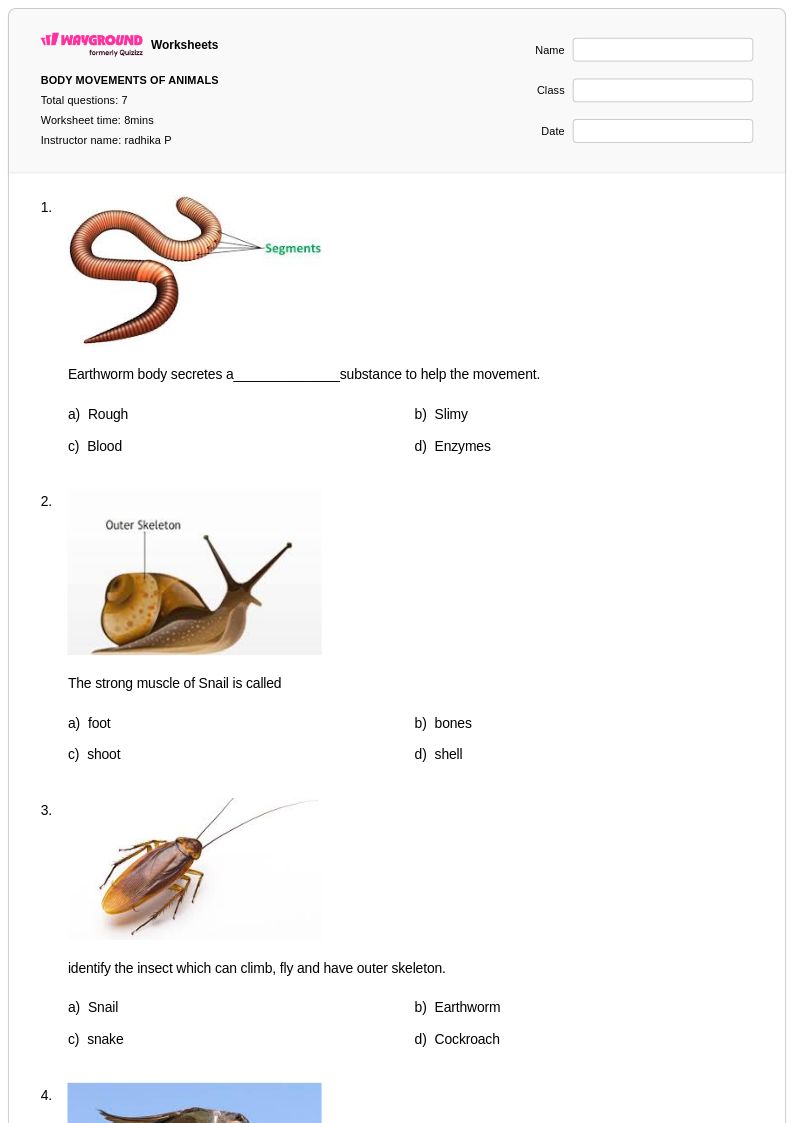
7 Q
6th
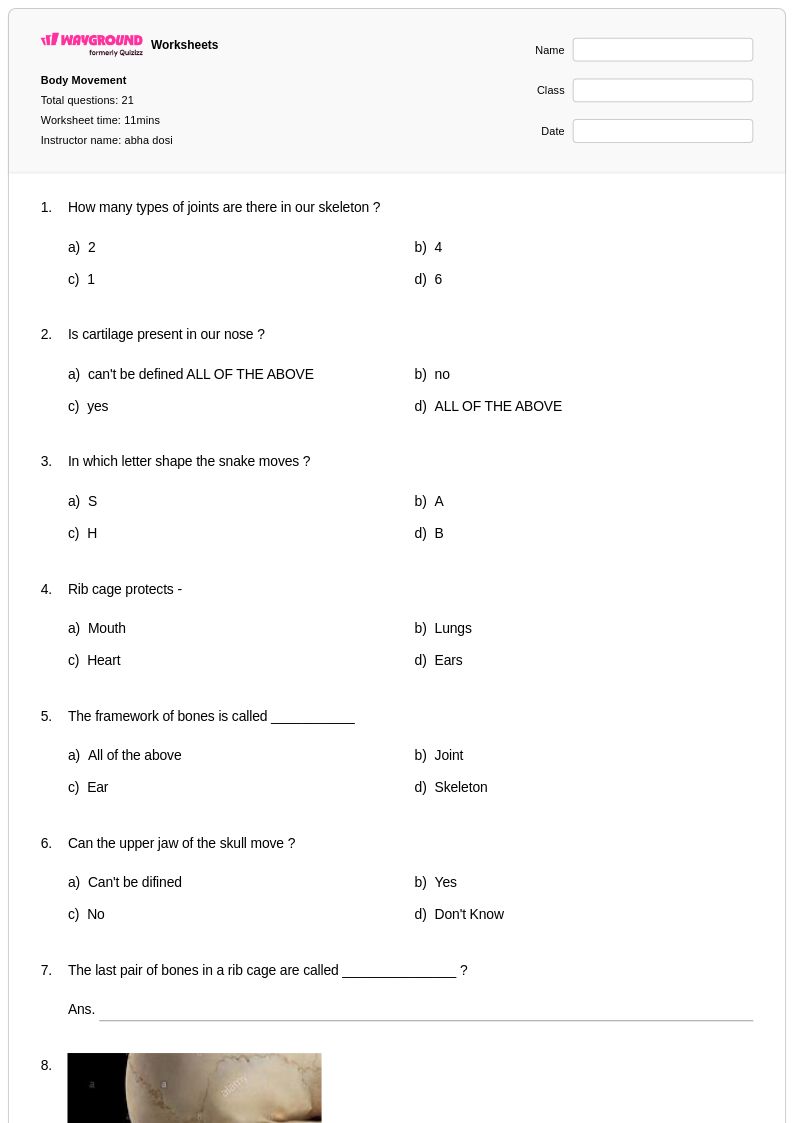
21 Q
6th
Explore Other Subject Worksheets for class 6
Explore printable Joints worksheets for Class 6
Joints worksheets for Class 6 students available through Wayground (formerly Quizizz) provide comprehensive coverage of the human skeletal system's connection points and their essential functions. These educational resources strengthen students' understanding of the three main joint types - immovable, slightly movable, and freely movable joints - while developing critical thinking skills about how structure relates to function in biological systems. The practice problems within these worksheets challenge sixth graders to identify joint locations, classify joint types, and analyze how different joints enable specific movements throughout the body. Each worksheet includes detailed answer key materials that support both independent learning and guided instruction, with free printables available in convenient pdf format for seamless classroom integration.
Wayground (formerly Quizizz) empowers educators with millions of teacher-created resources specifically designed for Class 6 joints instruction, featuring robust search and filtering capabilities that align with state and national science standards. The platform's differentiation tools enable teachers to customize worksheet difficulty levels and content focus areas, ensuring appropriate challenges for students across varying ability levels. These flexible resources are available in both printable and digital formats, including downloadable pdf versions that facilitate easy distribution and homework assignments. Teachers utilize these comprehensive worksheet collections for lesson planning, targeted remediation of misconceptions about joint function, enrichment activities for advanced learners, and regular skill practice that reinforces key concepts about how joints enable movement and provide structural support in the human body.