Free Printable Prokaryotes and Eukaryotes Worksheets for Class 6
Explore free Class 6 Biology worksheets and printables focused on prokaryotes and eukaryotes, featuring practice problems and answer keys to help students master cellular structure differences through Wayground's comprehensive PDF resources.
Explore printable Prokaryotes and Eukaryotes worksheets for Class 6
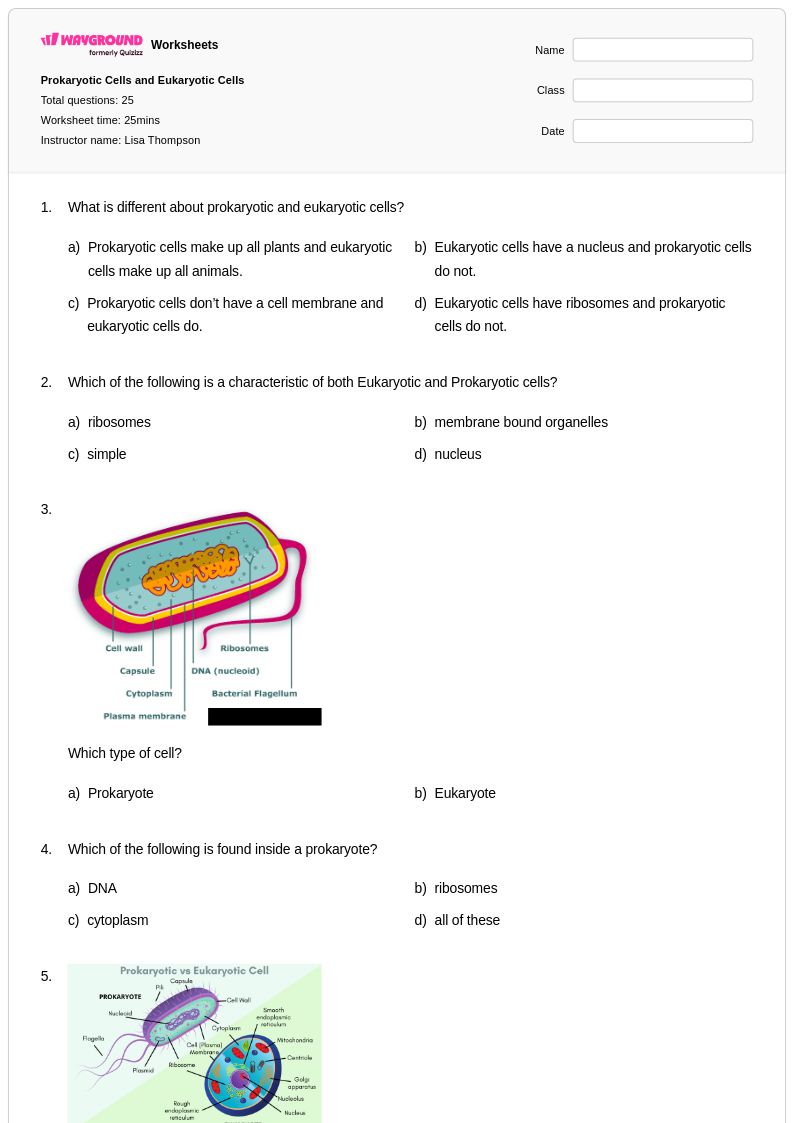
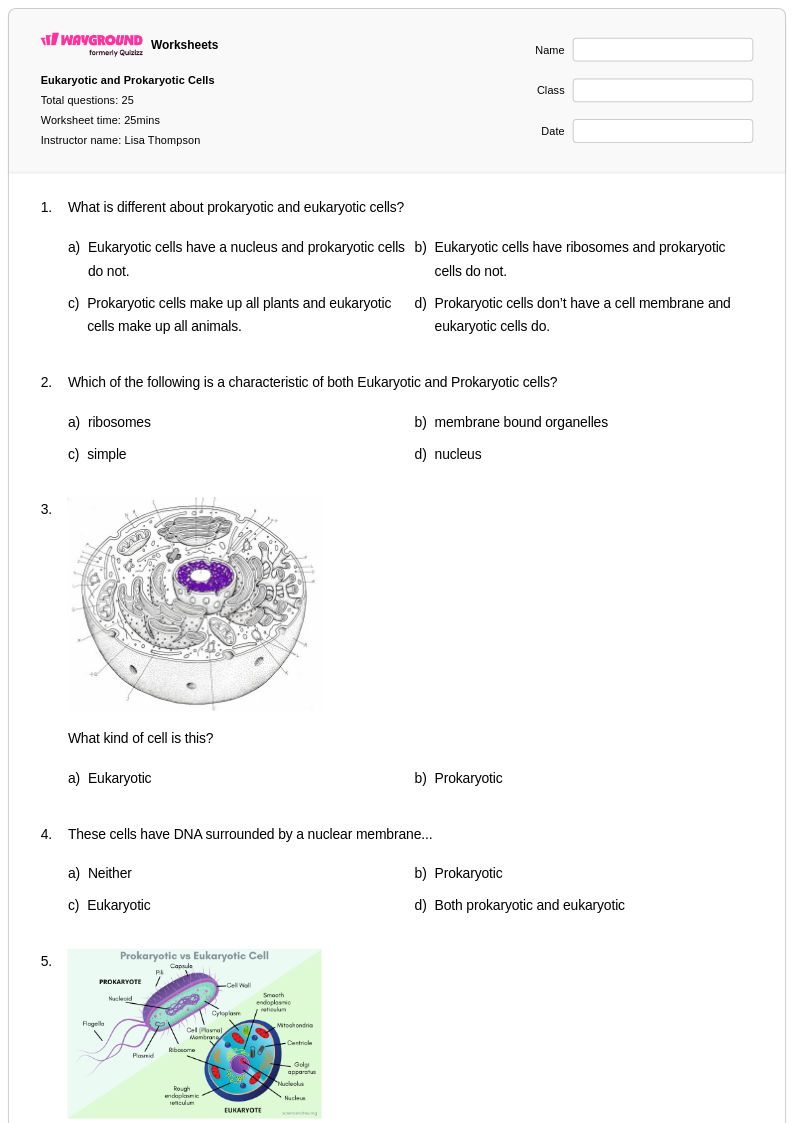
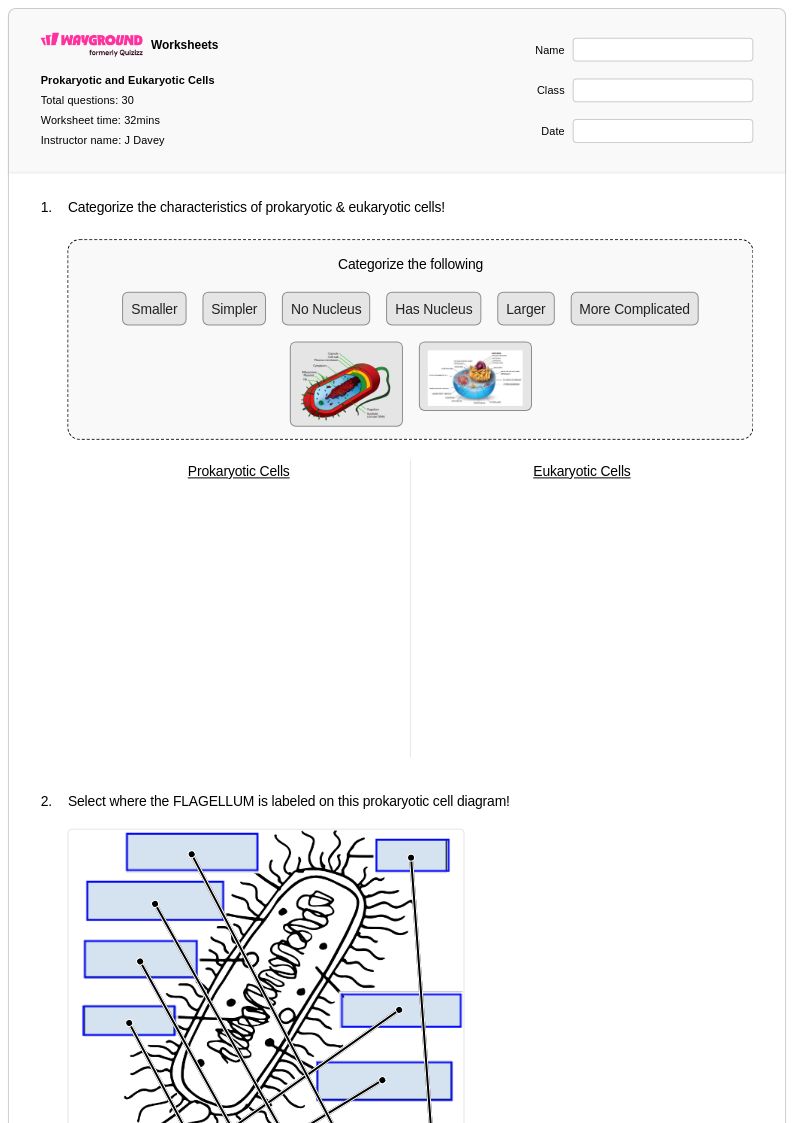
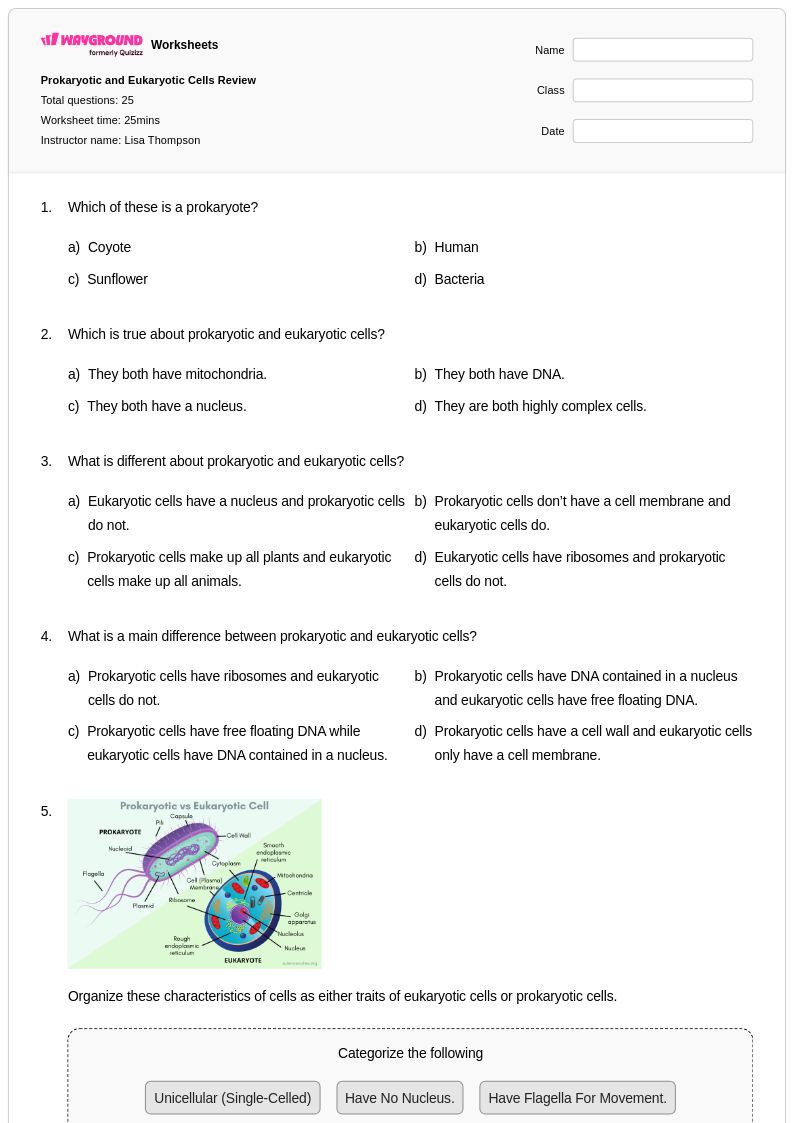
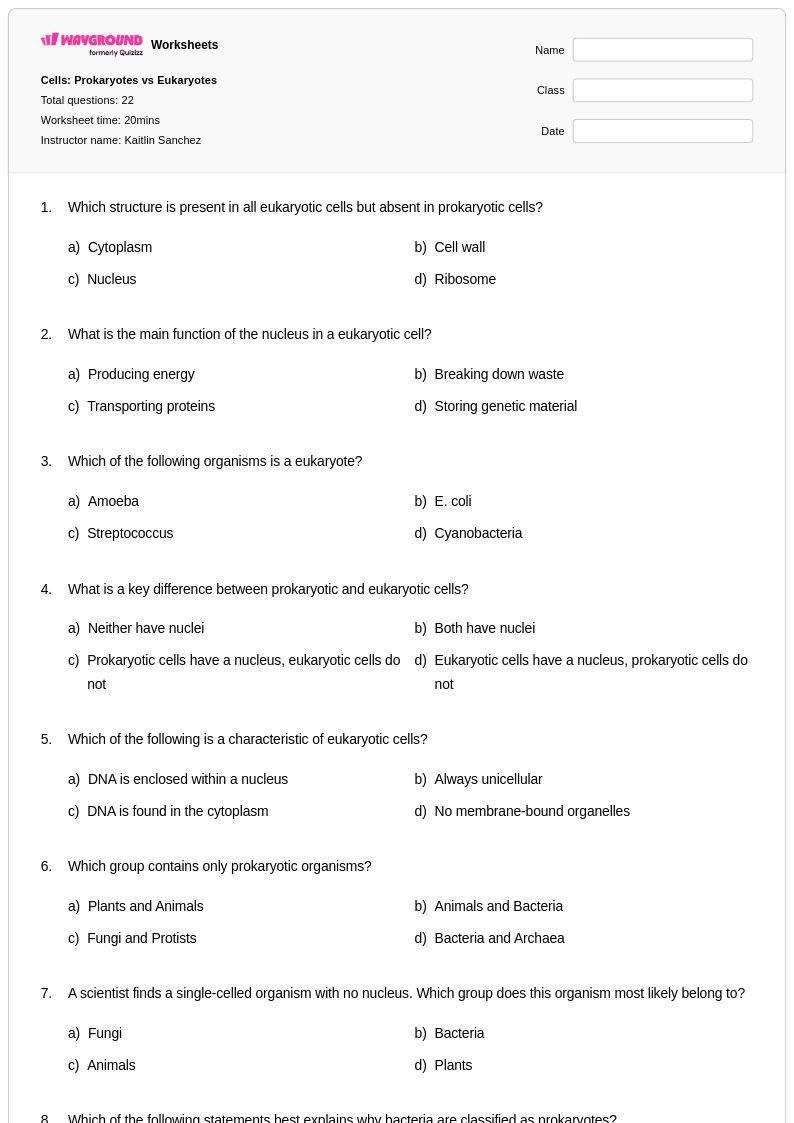
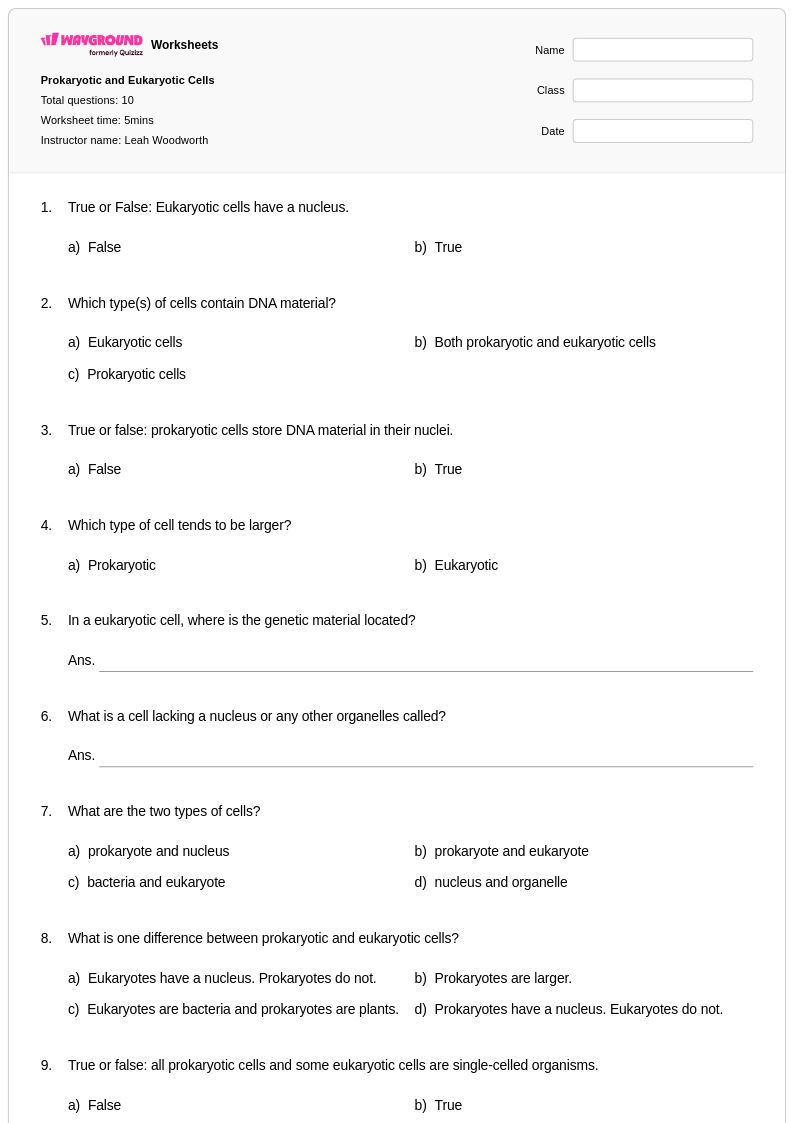
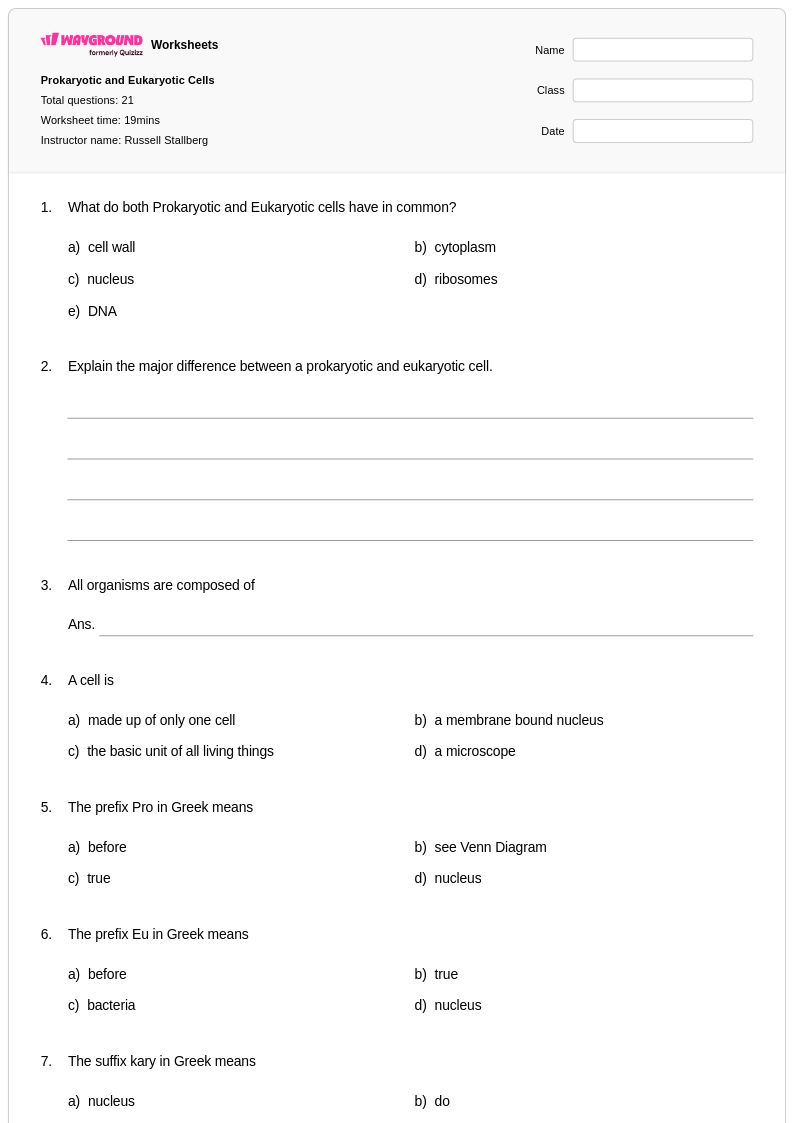
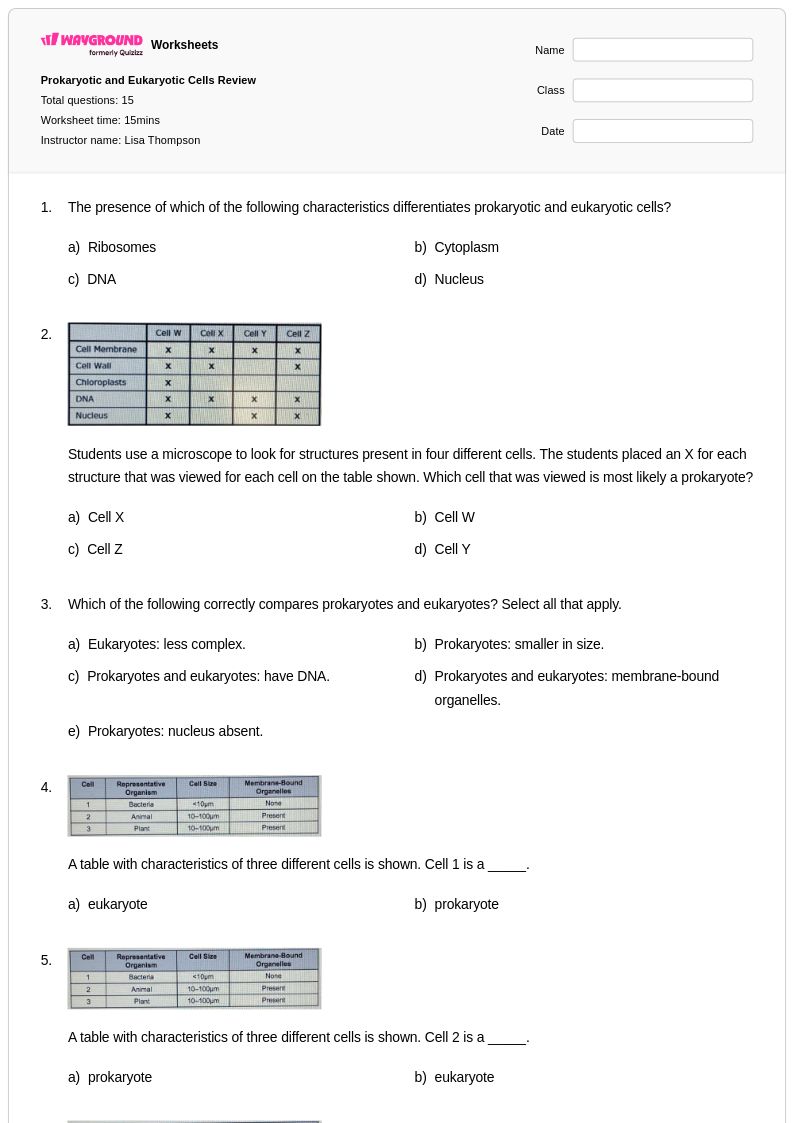
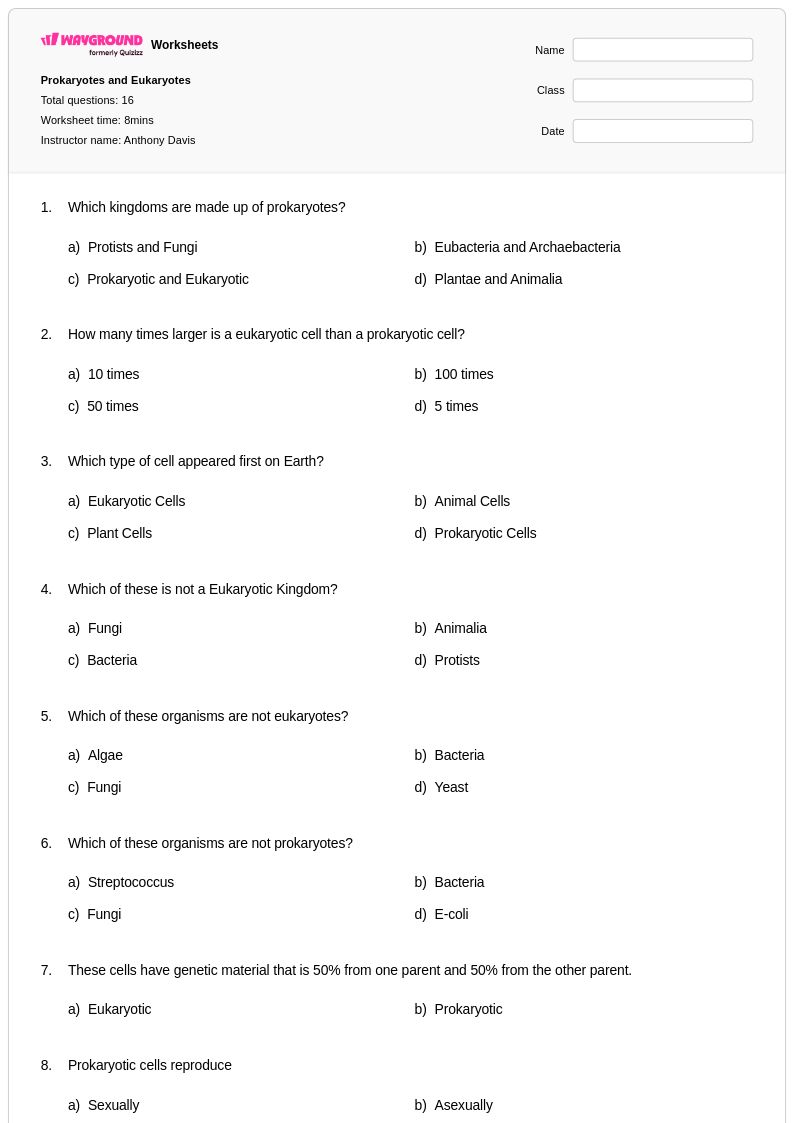
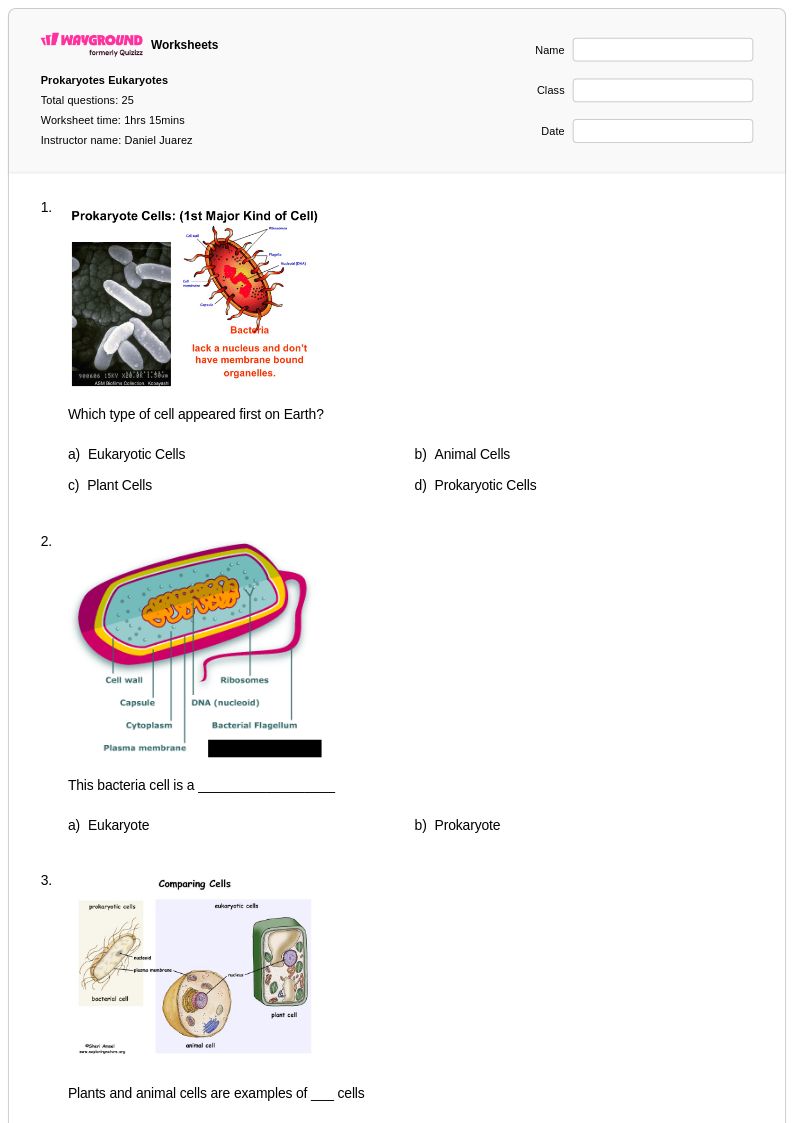
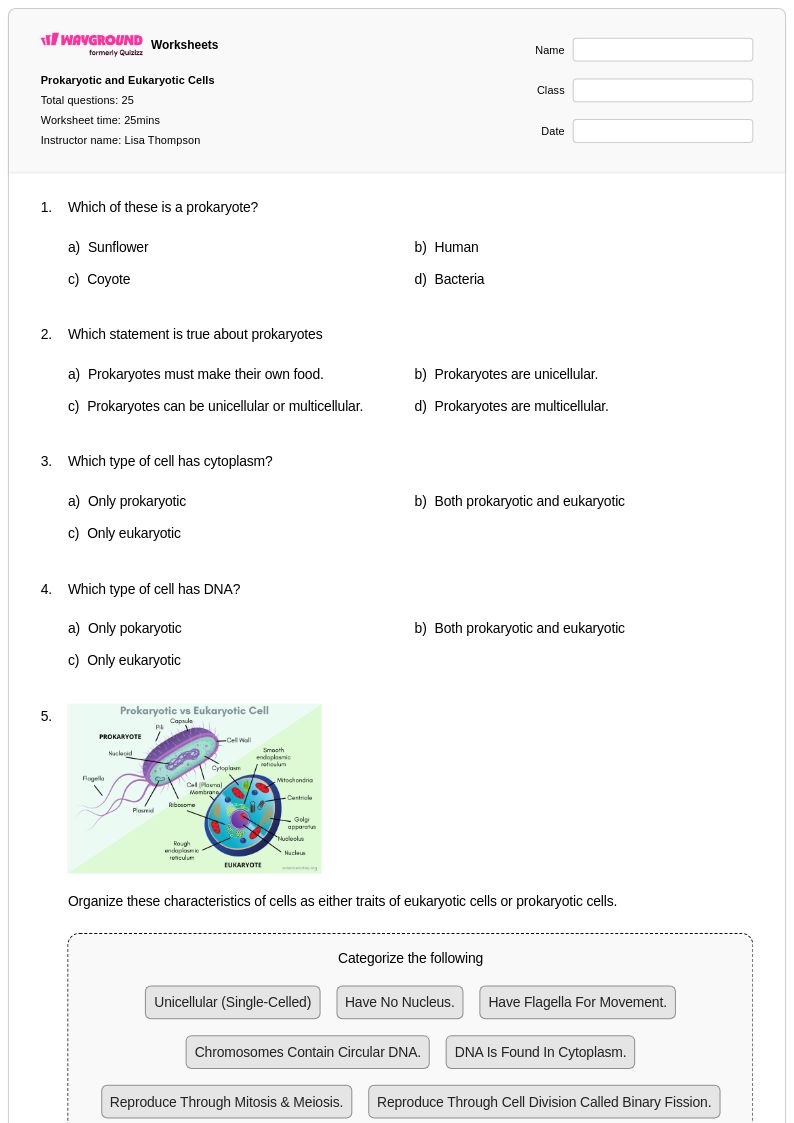
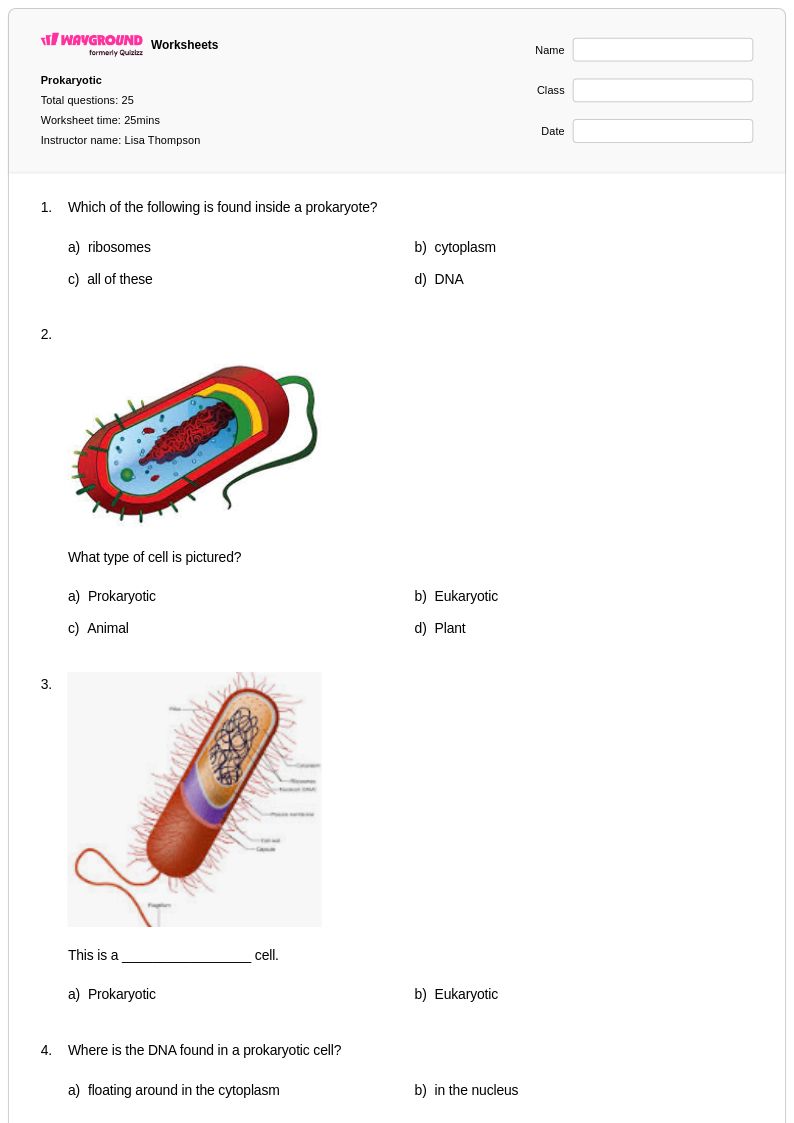
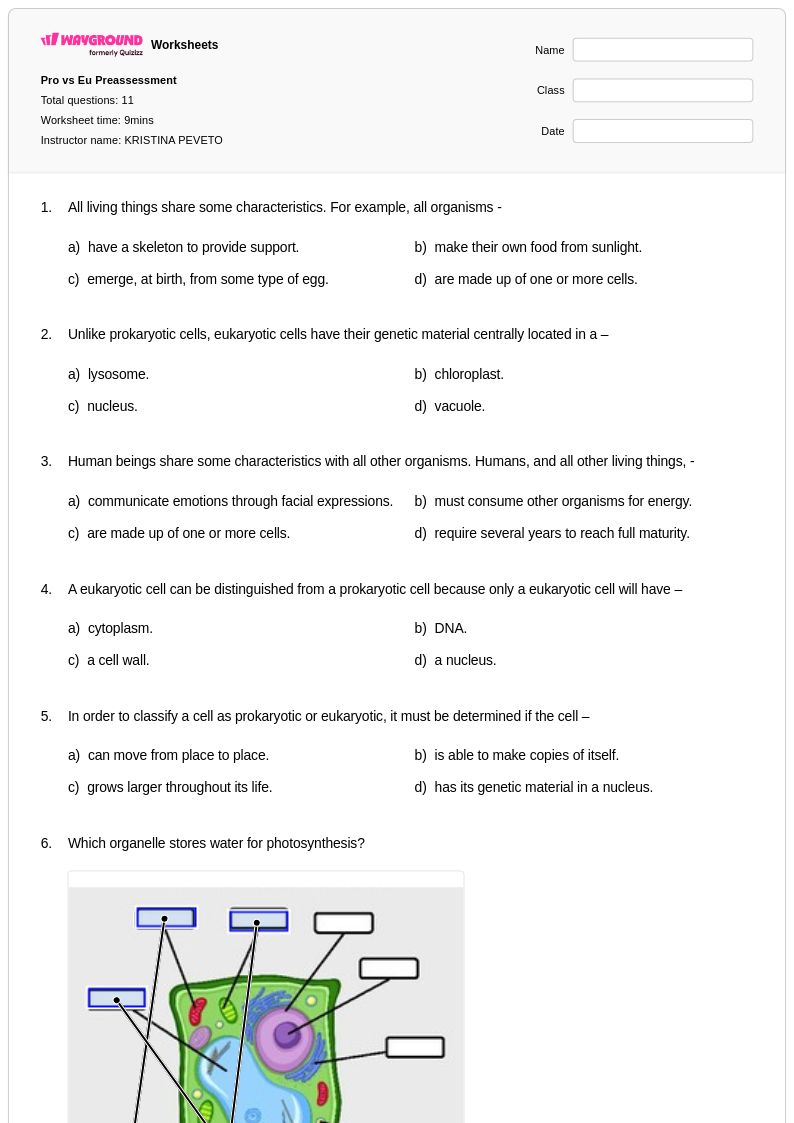
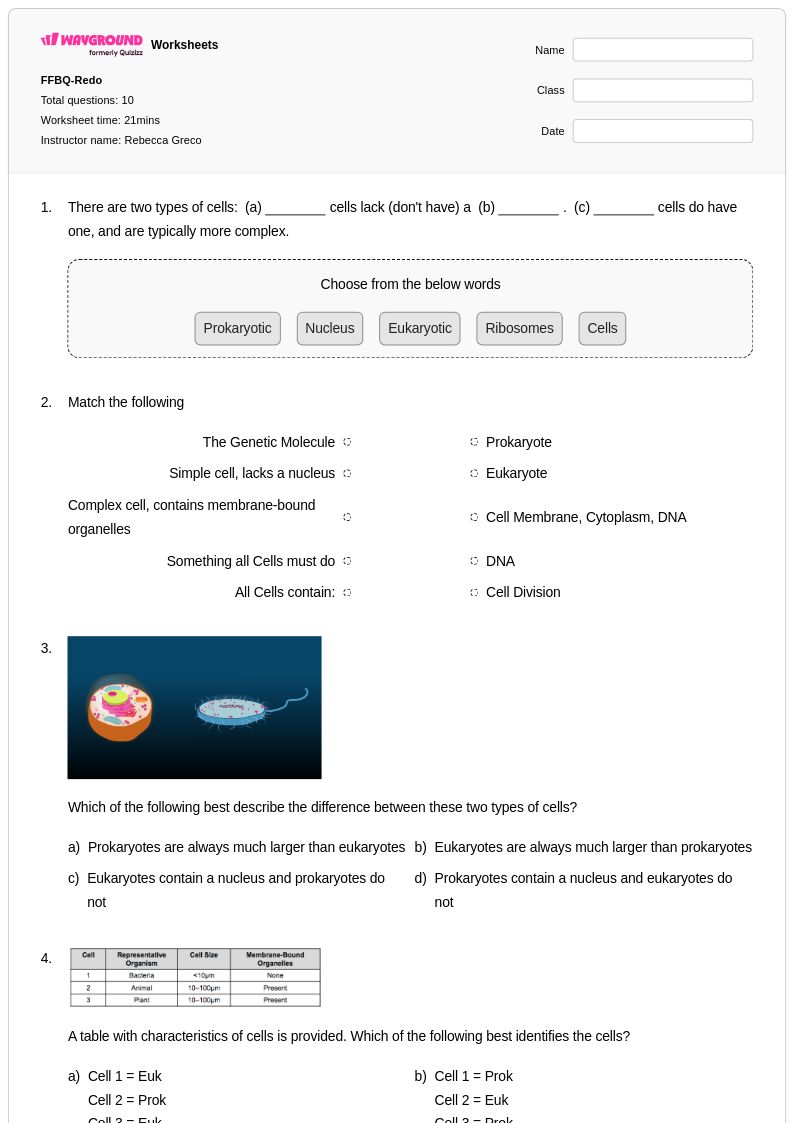
Prokaryotes and eukaryotes worksheets for Class 6 students available through Wayground provide comprehensive practice materials that help young learners distinguish between these two fundamental cell types. These educational resources strengthen critical thinking skills as students explore the structural differences between bacterial cells lacking membrane-bound organelles and more complex cells containing nuclei and specialized compartments. The worksheet collections include detailed answer keys that support independent learning, while free printables offer teachers flexibility in classroom implementation. Practice problems range from basic cell identification activities to more advanced comparative analysis exercises that challenge students to apply their understanding of cellular organization and function.
Wayground's extensive library features millions of teacher-created resources specifically designed to support prokaryotes and eukaryotes instruction at the Class 6 level. The platform's robust search and filtering capabilities enable educators to quickly locate materials aligned with specific learning standards, while built-in differentiation tools allow for seamless customization based on individual student needs. Teachers can access these valuable resources in both printable pdf formats for traditional classroom use and digital versions for interactive learning experiences. This comprehensive approach to resource delivery supports effective lesson planning, targeted remediation for struggling learners, enrichment opportunities for advanced students, and consistent skill practice that reinforces fundamental concepts in cellular biology throughout the academic year.
FAQs
How do I teach the difference between prokaryotes and eukaryotes?
Start by anchoring the distinction in one defining structural feature: whether the cell has a membrane-bound nucleus. From there, build outward to organelle presence, genetic material organization, and cell size. Using side-by-side comparison charts or labeled diagrams helps students visualize what separates bacteria and archaea from plant, animal, and fungal cells before moving into function-level analysis.
What exercises help students practice comparing prokaryotic and eukaryotic cells?
Effective practice exercises include Venn diagrams comparing the two cell types, labeling diagrams of each cell structure, sorting organelles by which cell type contains them, and fill-in-the-blank activities covering key vocabulary like nucleoid region, mitochondria, and cell wall composition. These formats reinforce both identification and conceptual understanding, which are the two skills most commonly assessed on biology exams.
What mistakes do students commonly make when learning about prokaryotes and eukaryotes?
The most common misconception is assuming all cells with a cell wall are prokaryotic, when in fact plant cells and fungi also have cell walls. Students also frequently confuse the nucleoid region in prokaryotes with a true nucleus, or incorrectly assume prokaryotes have no DNA at all. A third common error is conflating 'simple' with 'less functional,' which can be corrected by emphasizing the metabolic diversity and ecological dominance of prokaryotic organisms.
How can I use prokaryotes and eukaryotes worksheets to assess student understanding?
Worksheets that ask students to classify unfamiliar organisms, justify their reasoning, or identify errors in a labeled diagram are strong formative assessment tools because they require application rather than recall. Pairing these with complete answer keys allows students to self-assess immediately, which reinforces retention. Teachers can also use these materials as exit tickets or pre-lab checks before microscopy activities.
How do I use Wayground's prokaryotes and eukaryotes worksheets in my classroom?
Wayground's prokaryotes and eukaryotes worksheets are available as printable PDFs for traditional classroom use and in digital formats for technology-integrated environments, giving teachers flexibility for in-class work, homework, or lab reinforcement. You can also host any worksheet as a live or assigned quiz directly on Wayground, which allows you to track student performance and identify gaps in understanding. Accommodations such as read aloud, extended time, and reduced answer choices can be applied to individual students without disrupting the rest of the class.
How do I differentiate prokaryotes and eukaryotes instruction for students at different levels?
For students who are struggling, focus on the single nucleus distinction first and use heavily scaffolded diagrams with word banks before introducing organelle function. For advanced learners, introduce the endosymbiotic theory or compare prokaryotic binary fission to eukaryotic mitosis as enrichment. On Wayground, you can apply accommodations like reduced answer choices or read aloud to specific students individually, so differentiation happens at the assignment level without requiring separate versions of the worksheet.