Free Printable Ecological Relationships Worksheets for Class 6
Explore Class 6 ecological relationships with Wayground's free printable worksheets and practice problems, featuring comprehensive answer keys to help students master food chains, symbiosis, and ecosystem interactions.
Explore printable Ecological Relationships worksheets for Class 6
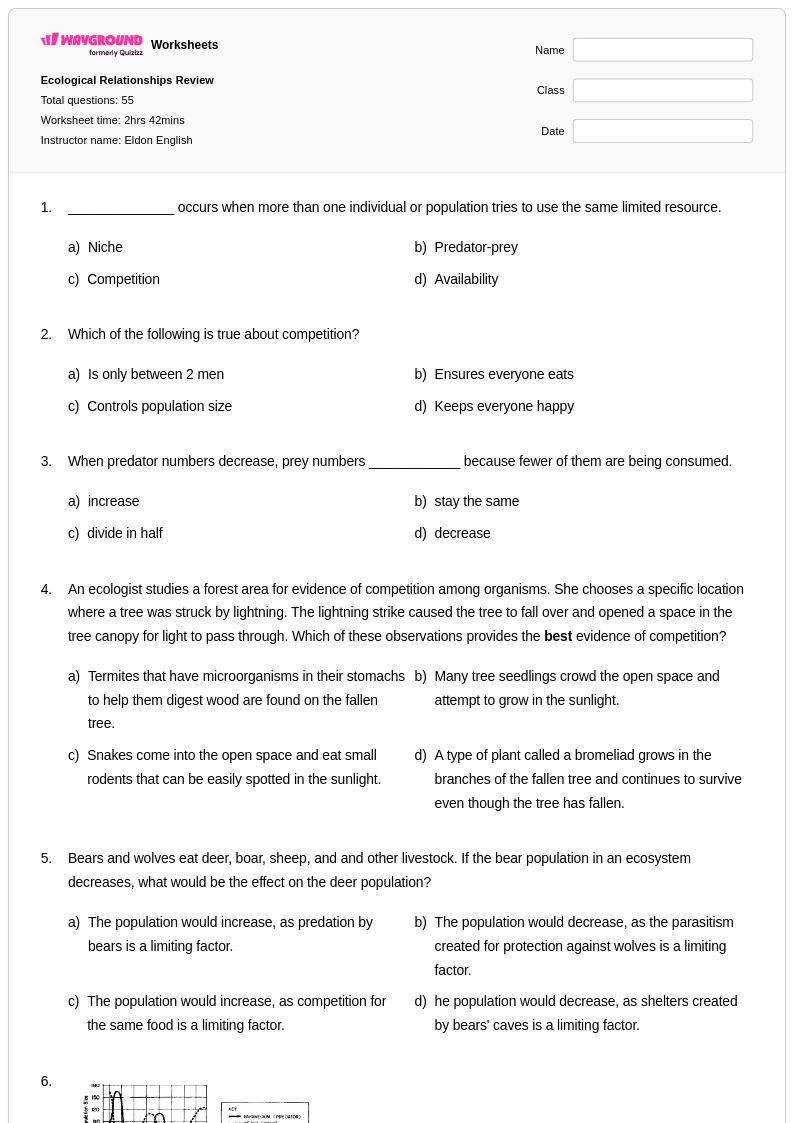
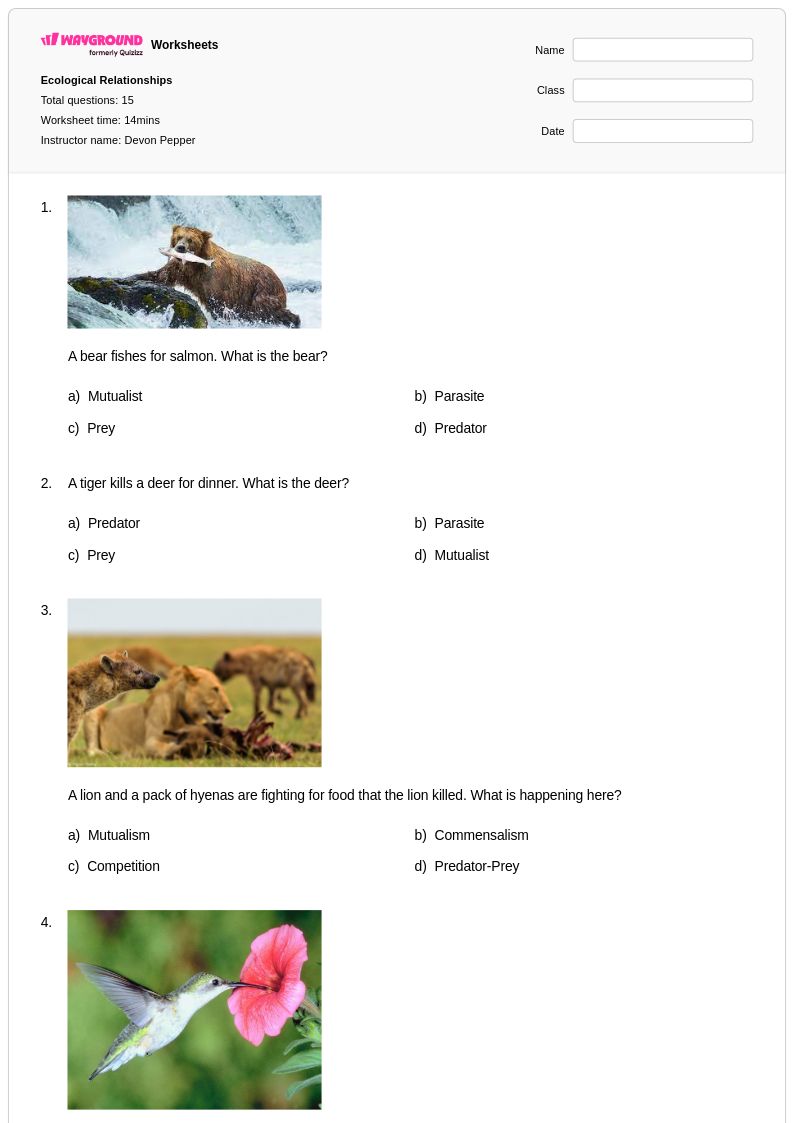
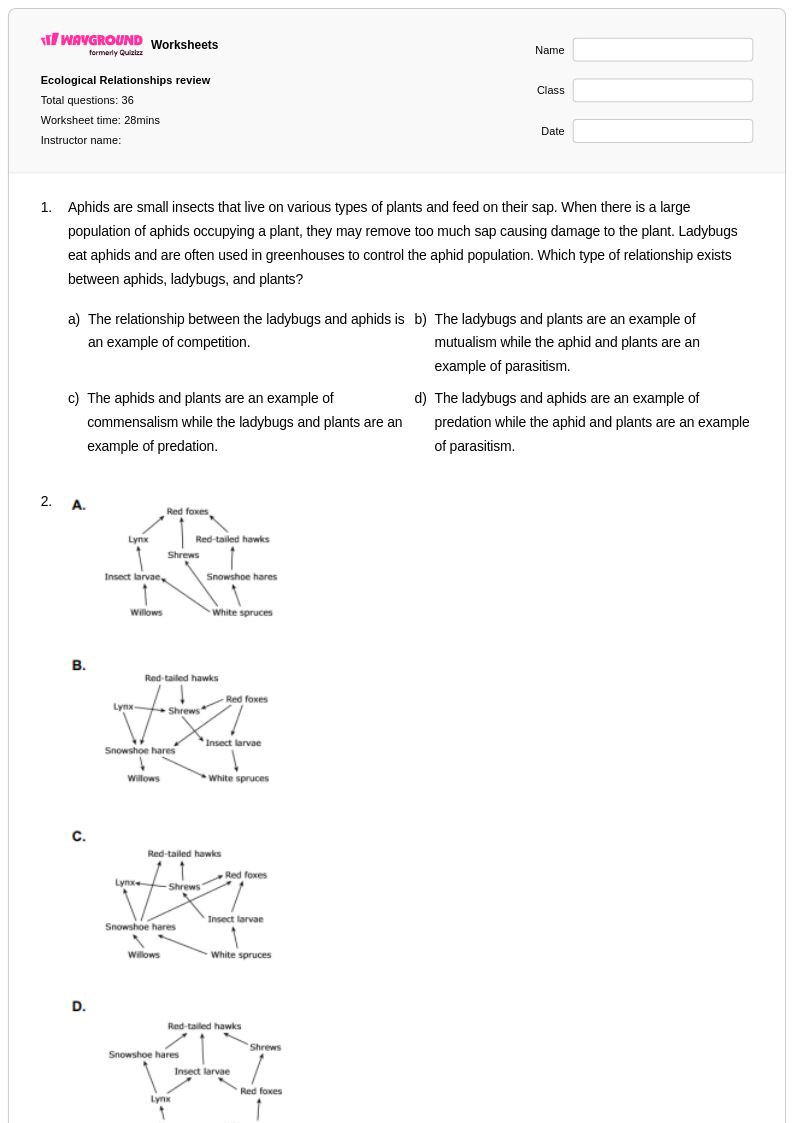
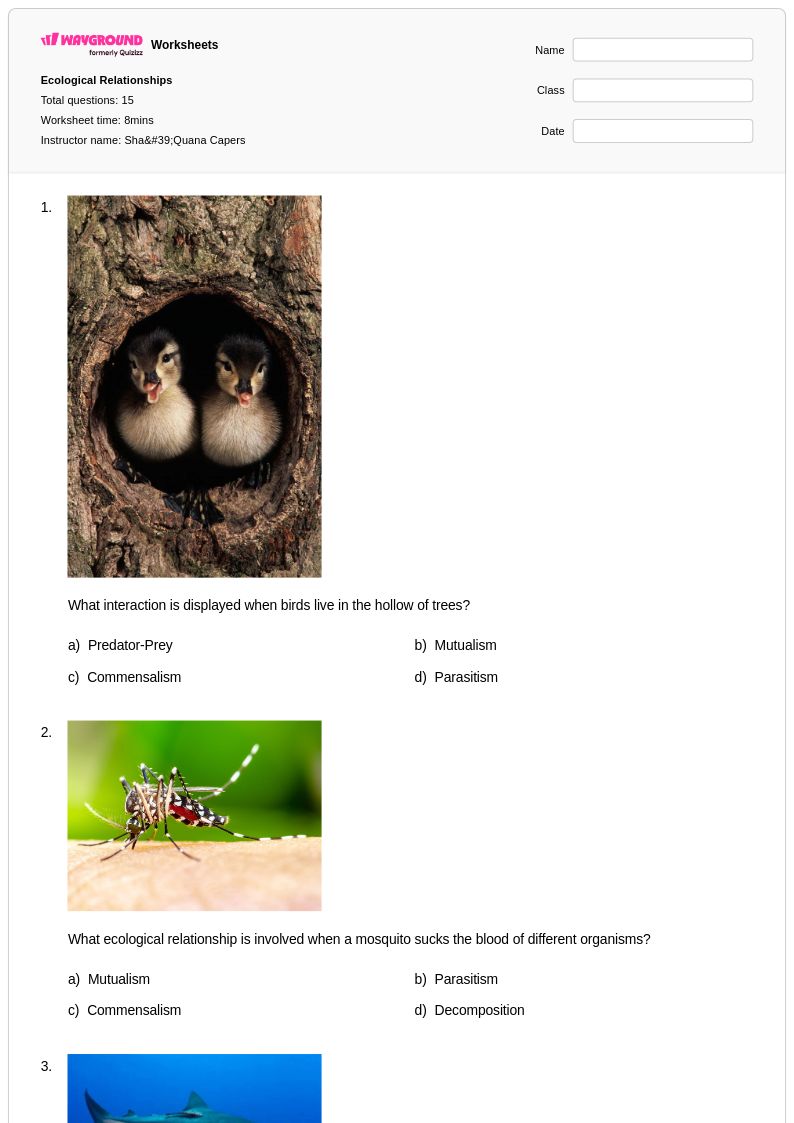
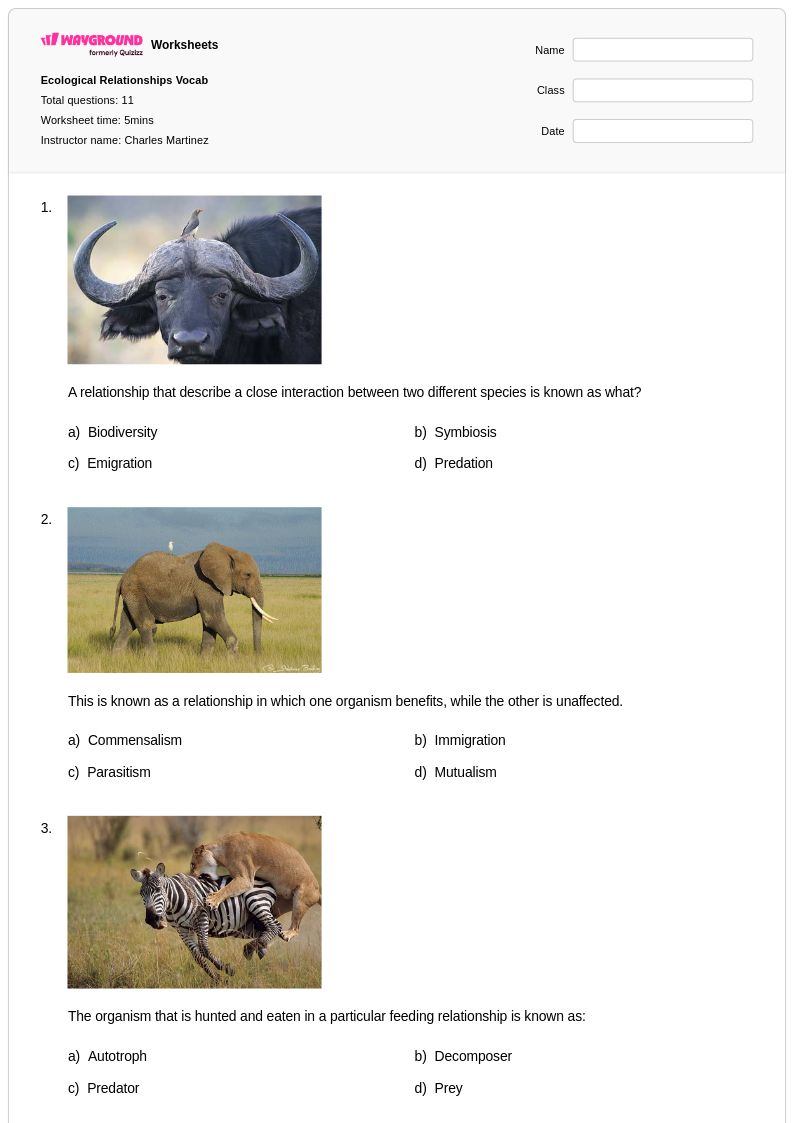
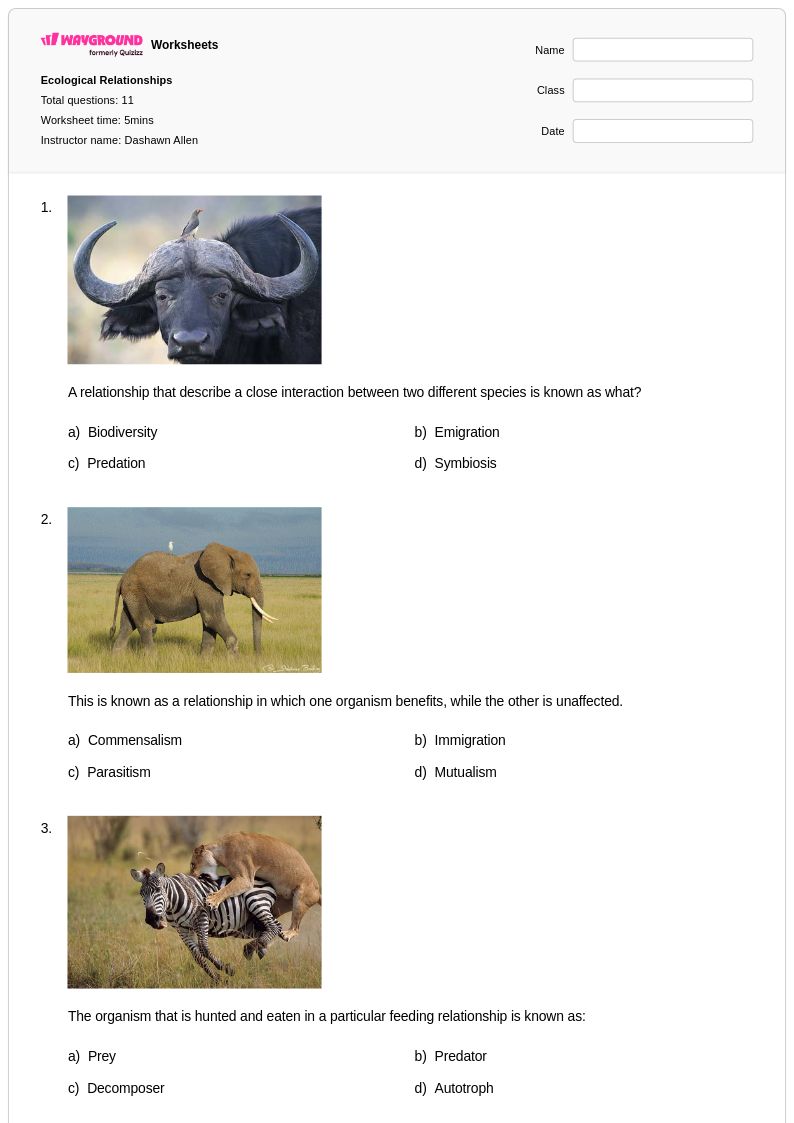
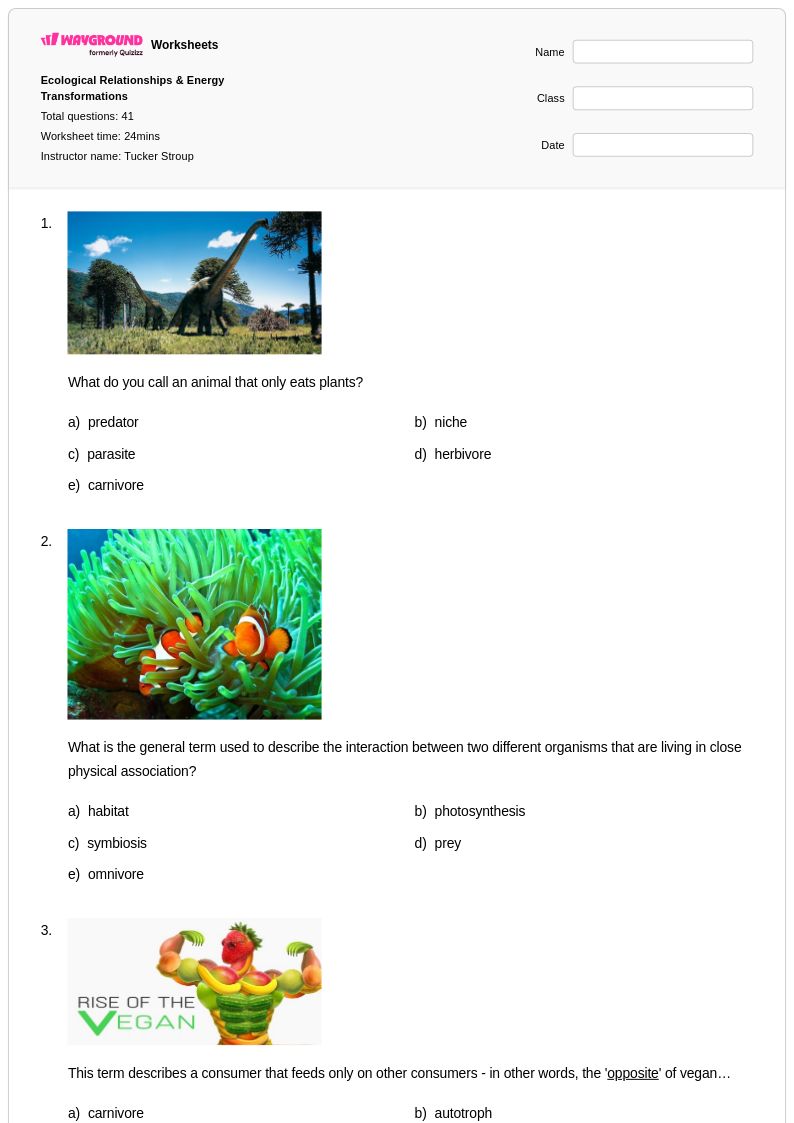
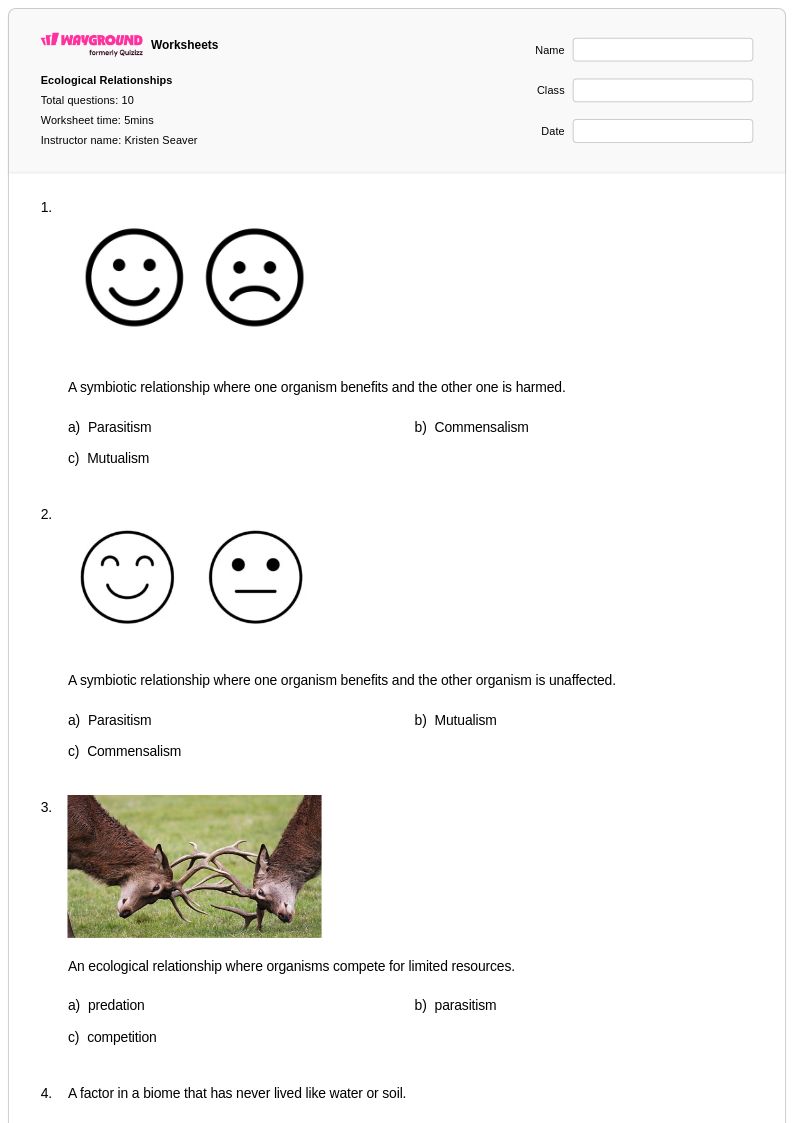
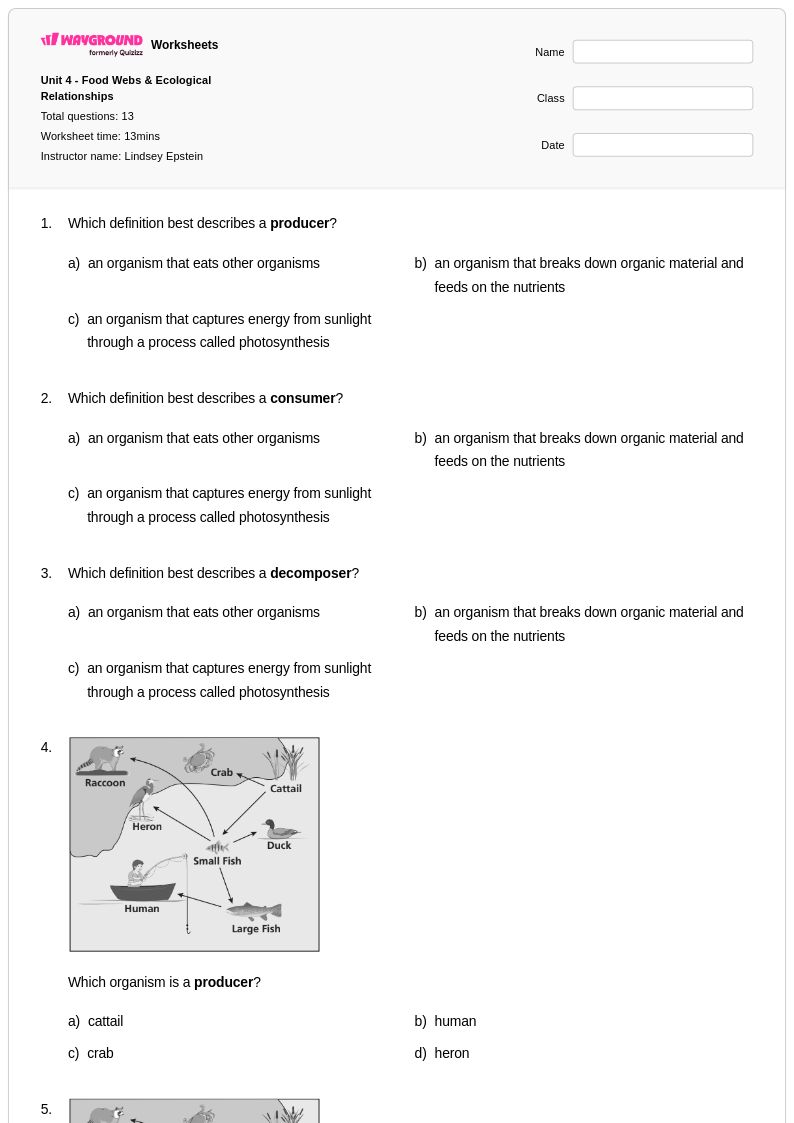
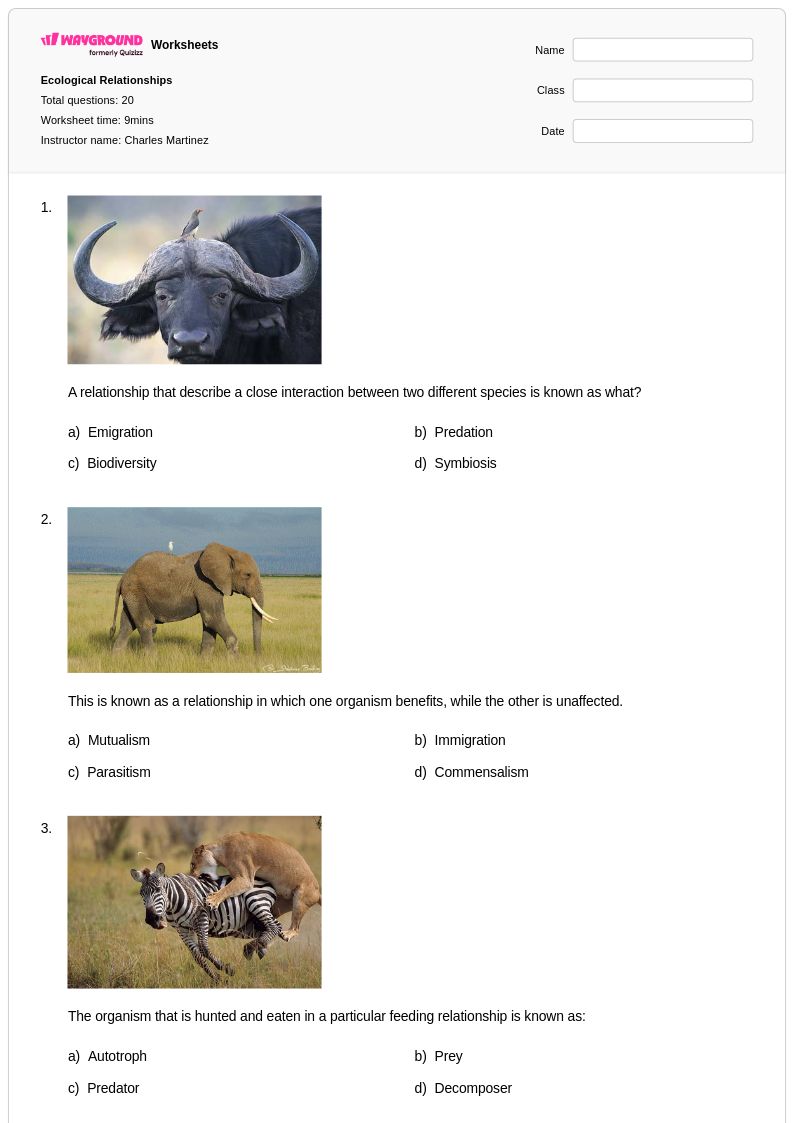
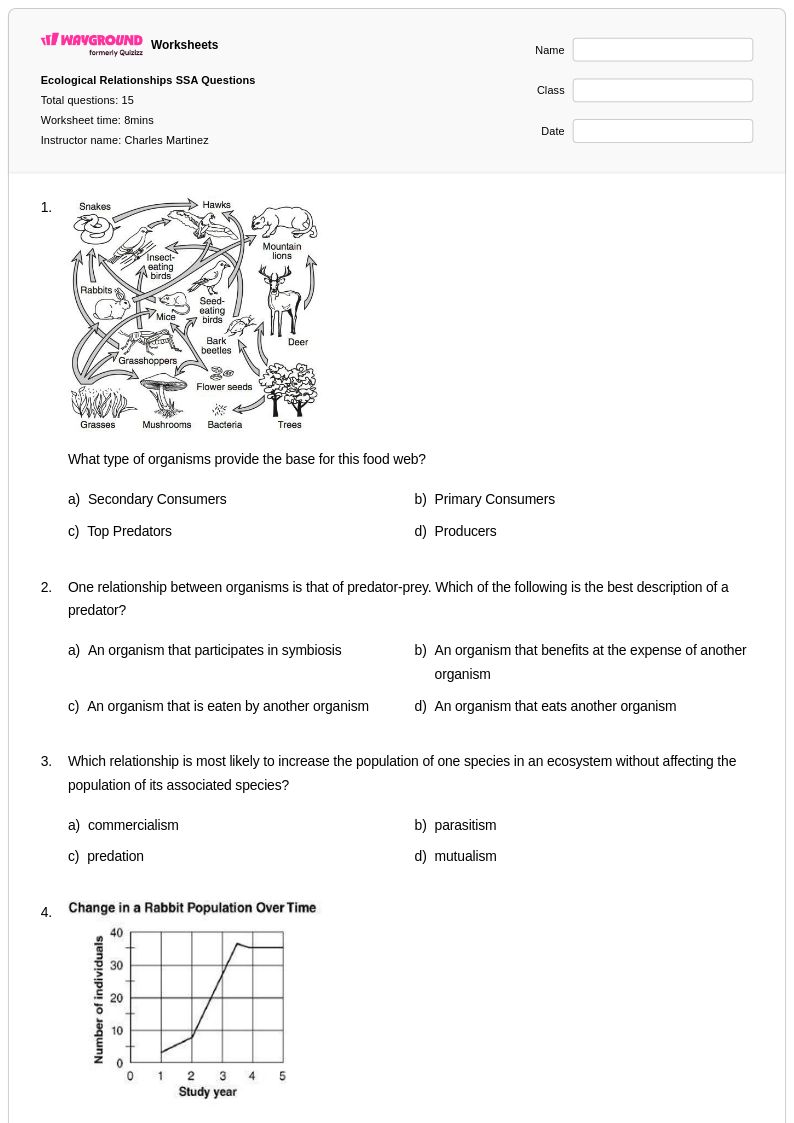
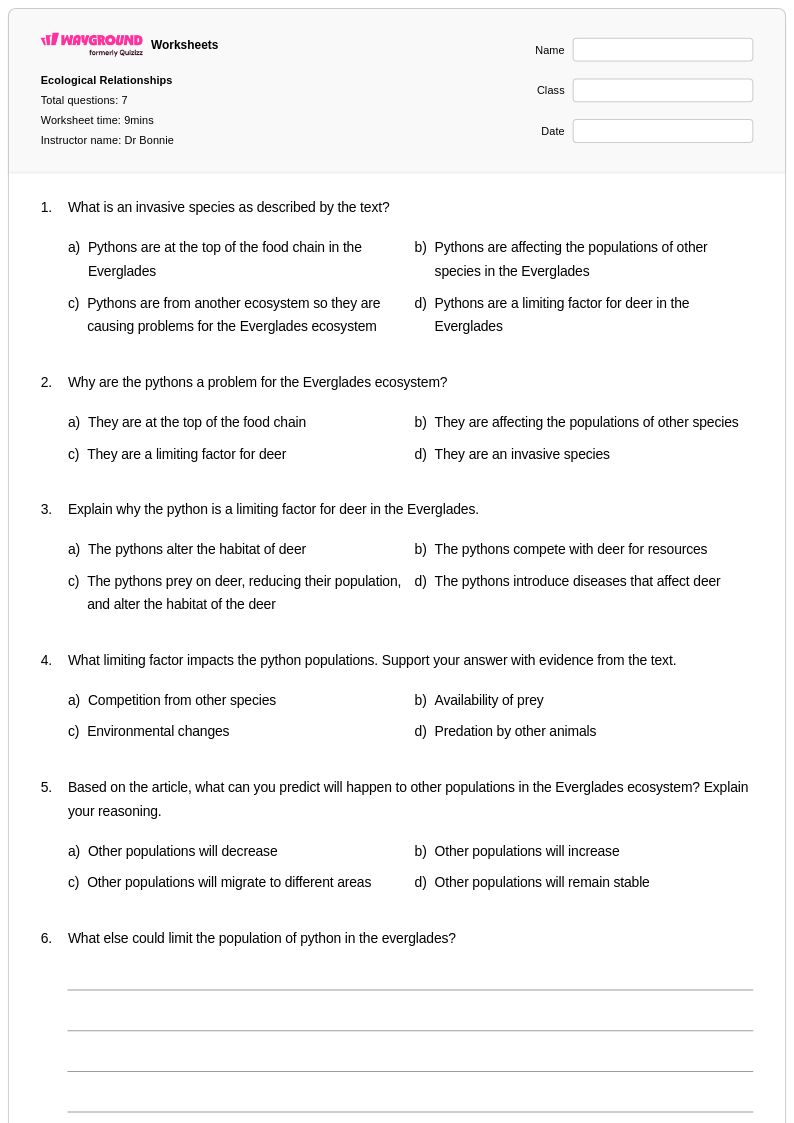
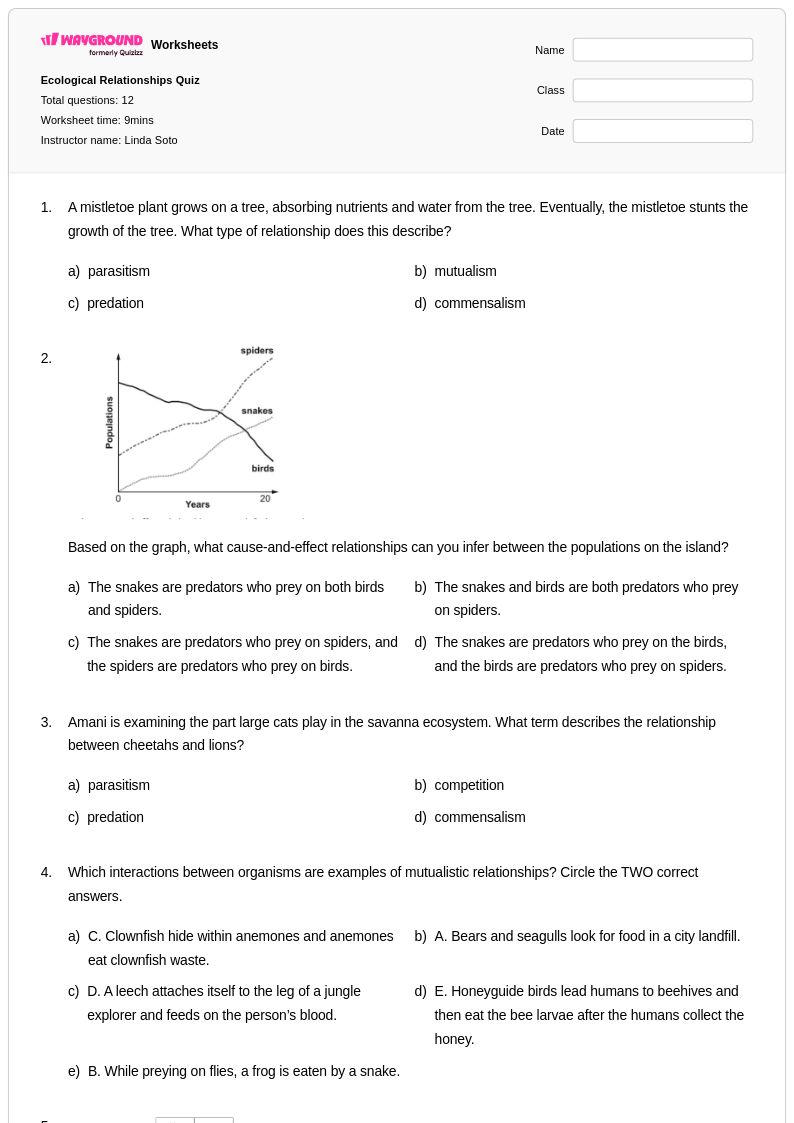
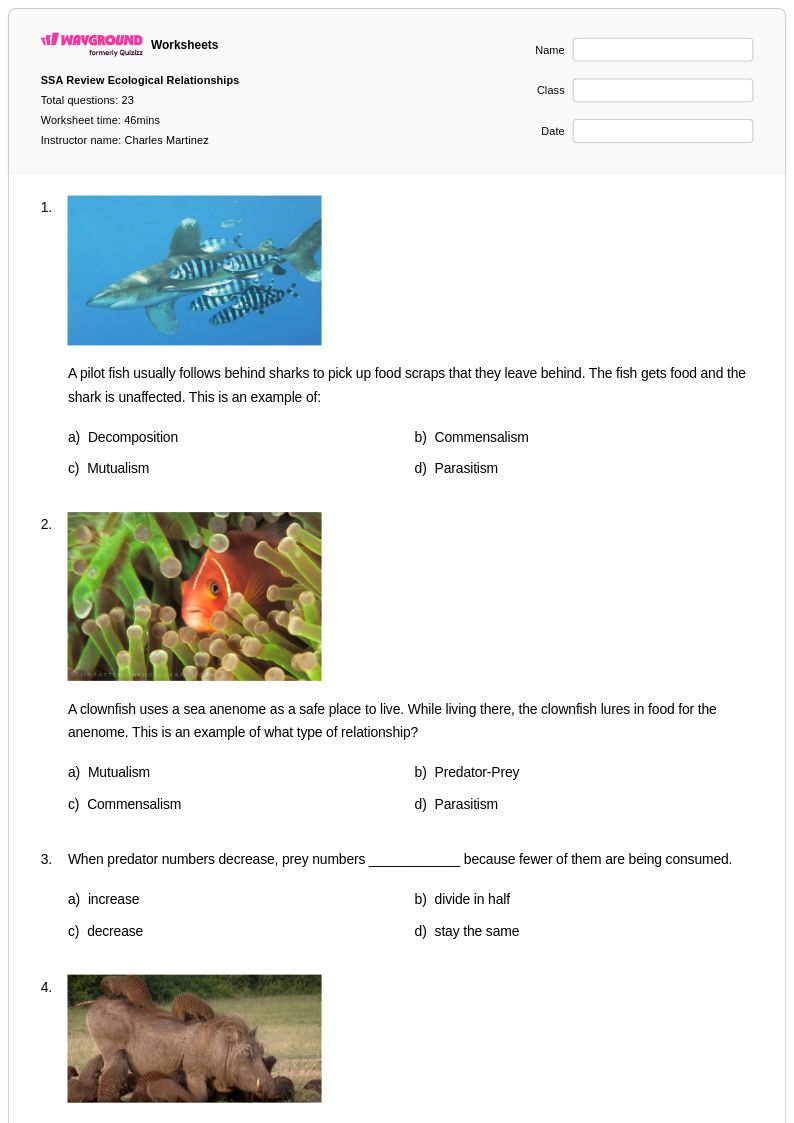
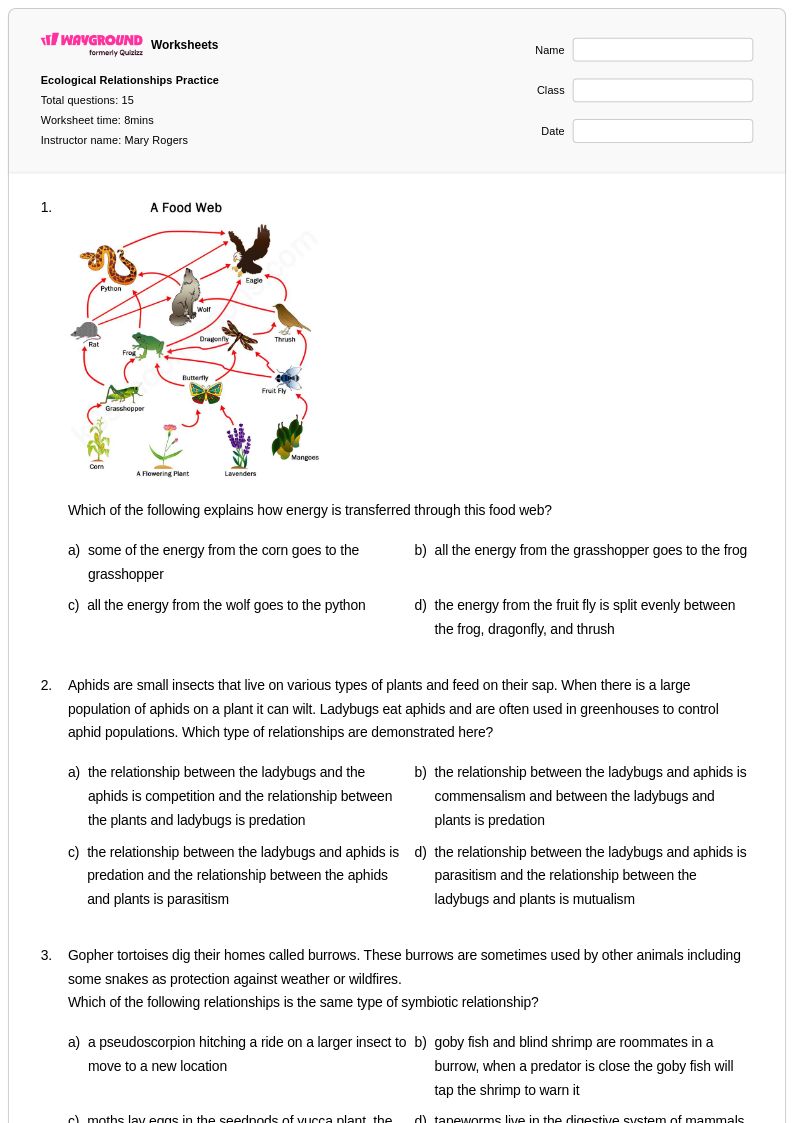
Ecological relationships form a cornerstone of Class 6 biology education, and Wayground's comprehensive worksheet collection provides students with engaging opportunities to explore the complex interactions between organisms and their environments. These expertly designed worksheets guide sixth-grade learners through fundamental concepts including predator-prey relationships, symbiosis, competition, and food webs, strengthening their analytical thinking and scientific reasoning skills. Students work through practice problems that challenge them to identify mutualism, commensalism, and parasitism in real-world scenarios, while free printables offer hands-on activities for examining energy flow through ecosystems. Each worksheet includes a detailed answer key to support independent learning and self-assessment, with pdf formats ensuring easy access for both classroom instruction and home study.
Wayground's extensive library of millions of teacher-created resources empowers educators to deliver comprehensive instruction on ecological relationships through carefully curated worksheet collections that align with grade-level standards. The platform's advanced search and filtering capabilities allow teachers to quickly locate materials that match their specific curriculum needs, whether focusing on terrestrial food chains, aquatic ecosystems, or population dynamics. Differentiation tools enable seamless customization of worksheets to accommodate diverse learning levels within the classroom, supporting both remediation for struggling students and enrichment opportunities for advanced learners. Available in both printable and digital formats, these resources streamline lesson planning while providing flexible options for skill practice, formative assessment, and reinforcement of key ecological concepts that build students' understanding of biological interconnections.
FAQs
How do I teach ecological relationships in a way that actually sticks?
Start with concrete, relatable examples before moving to abstract classification. Use local ecosystems or familiar animals to introduce predator-prey dynamics, then layer in symbiotic relationship types like mutualism, commensalism, and parasitism with case studies students can analyze and debate. Having students build or annotate food webs helps them see how multiple relationship types operate simultaneously within a single ecosystem, which deepens retention significantly.
What worksheets help students practice identifying types of symbiosis?
Scenario-based practice is most effective for symbiosis identification. Worksheets that present real organism pairings and ask students to classify the relationship type, justify their reasoning, and explain the benefit or harm to each organism build both recall and analytical thinking. Look for materials that include mutualism, commensalism, parasitism, and competition in the same exercise set so students practice distinguishing between them rather than studying each in isolation.
What mistakes do students commonly make when classifying ecological relationships?
The most common error is confusing commensalism with mutualism. Students often assume that if one organism benefits and the other is unaffected, there must still be some hidden benefit, causing them to misclassify the relationship. Students also frequently conflate predation with parasitism because both involve one organism harming another; the key distinction is that predators kill and consume prey immediately, while parasites live on or in a host organism over time without immediate death.
How do I help students understand predator-prey dynamics beyond just 'one eats the other'?
Predator-prey relationships involve population feedback loops that students need to grasp conceptually, not just definitionally. Use graphing exercises where students plot predator and prey population changes over time and identify the lag effect between the two curves. This moves students from memorizing a definition to understanding how the removal of a top predator cascades through an entire ecosystem, which is a critical systems-thinking skill in ecology.
How can I use ecological relationships worksheets from Wayground in my classroom?
Wayground's ecological relationships worksheets are available as printable PDFs for traditional classroom use and in digital formats for technology-integrated or hybrid learning environments, giving teachers flexibility regardless of their setup. Teachers can also host the content as a live or assigned quiz directly on Wayground, making it easy to use the same material for practice, formative assessment, or homework. Wayground also supports student-level accommodations such as read aloud, extended time, reduced answer choices, and adjustable reading modes, which can be assigned to individual students without disrupting the experience for the rest of the class.
How do I differentiate ecological relationships instruction for students at different skill levels?
For struggling learners, begin with binary relationship types (helpful vs. harmful) before introducing the full taxonomy of symbiosis. Graphic organizers and labeled diagrams help students scaffold their understanding before tackling written analysis. For advanced students, push beyond classification toward ecological consequence: ask them to predict what happens to a food web when one species is removed, or to design a scenario where a relationship type shifts due to environmental change. On Wayground, teachers can modify worksheet difficulty and assign accommodations like reduced answer choices or read aloud to individual students without changing the experience for the rest of the class.