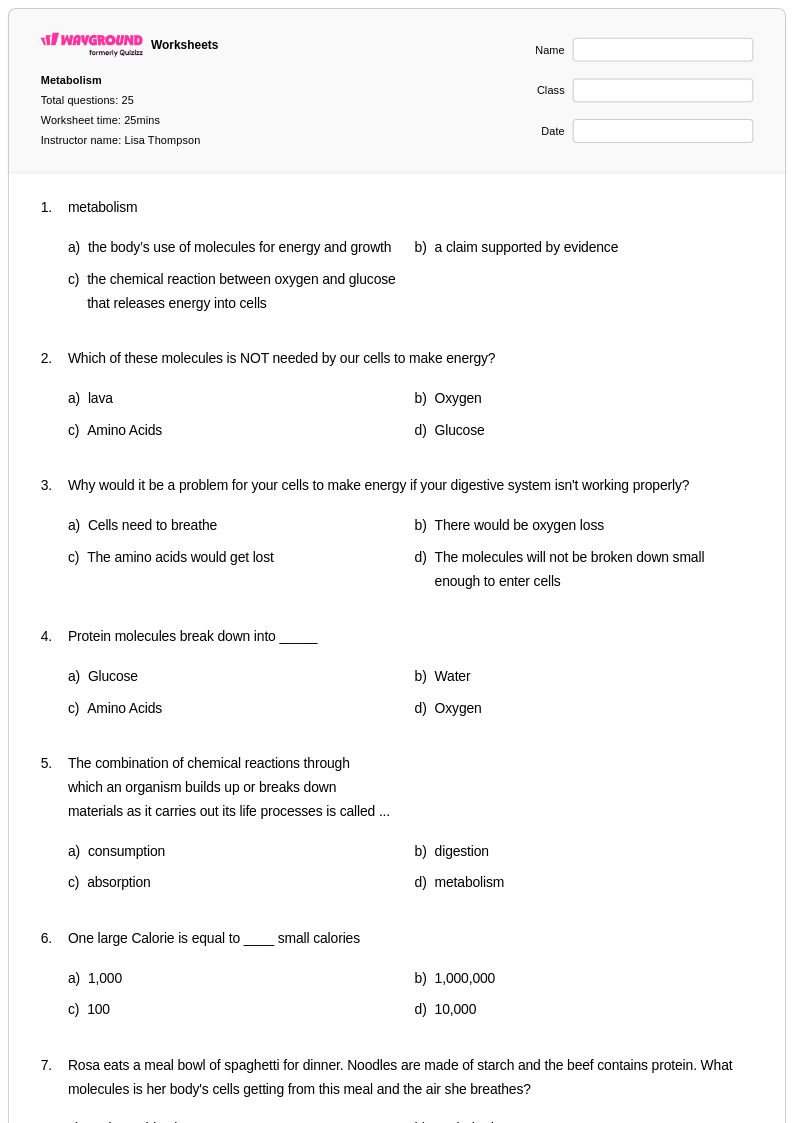
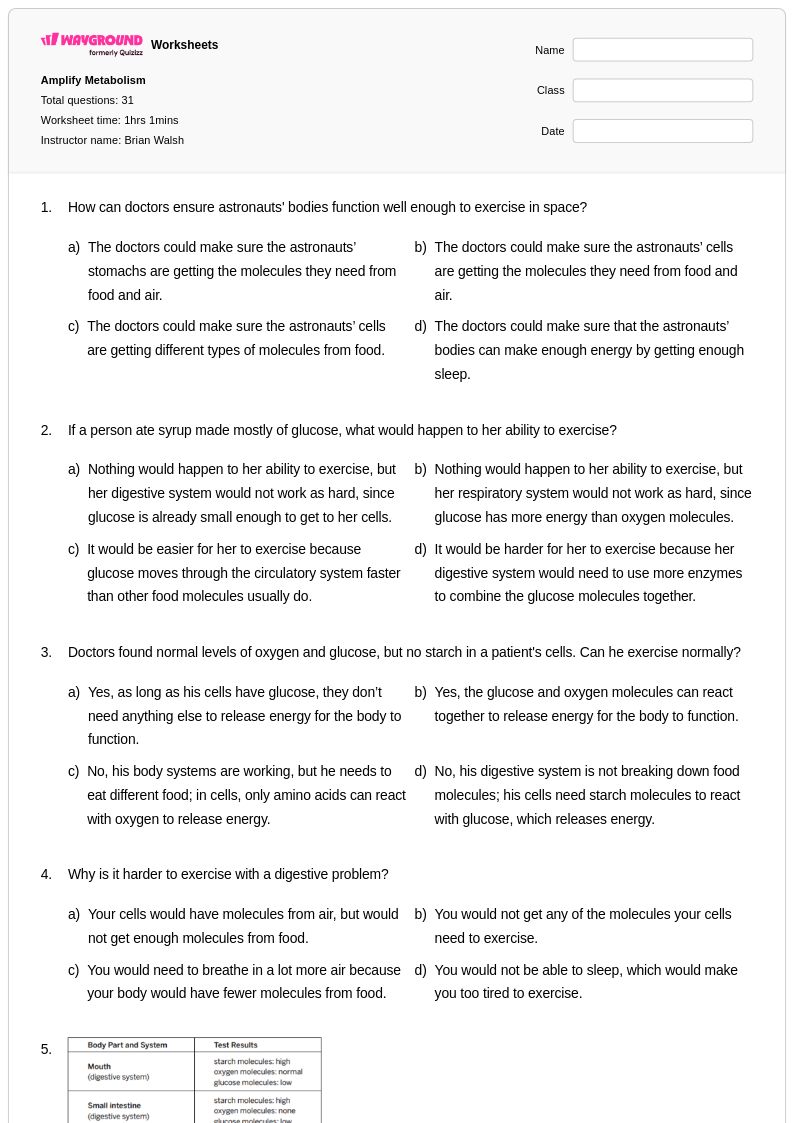
Enhance Class 6 students' understanding of metabolism with Wayground's comprehensive collection of free biology worksheets, featuring printable PDFs, engaging practice problems, and complete answer keys to master cellular energy processes.
Explore printable Metabolism worksheets for Class 6
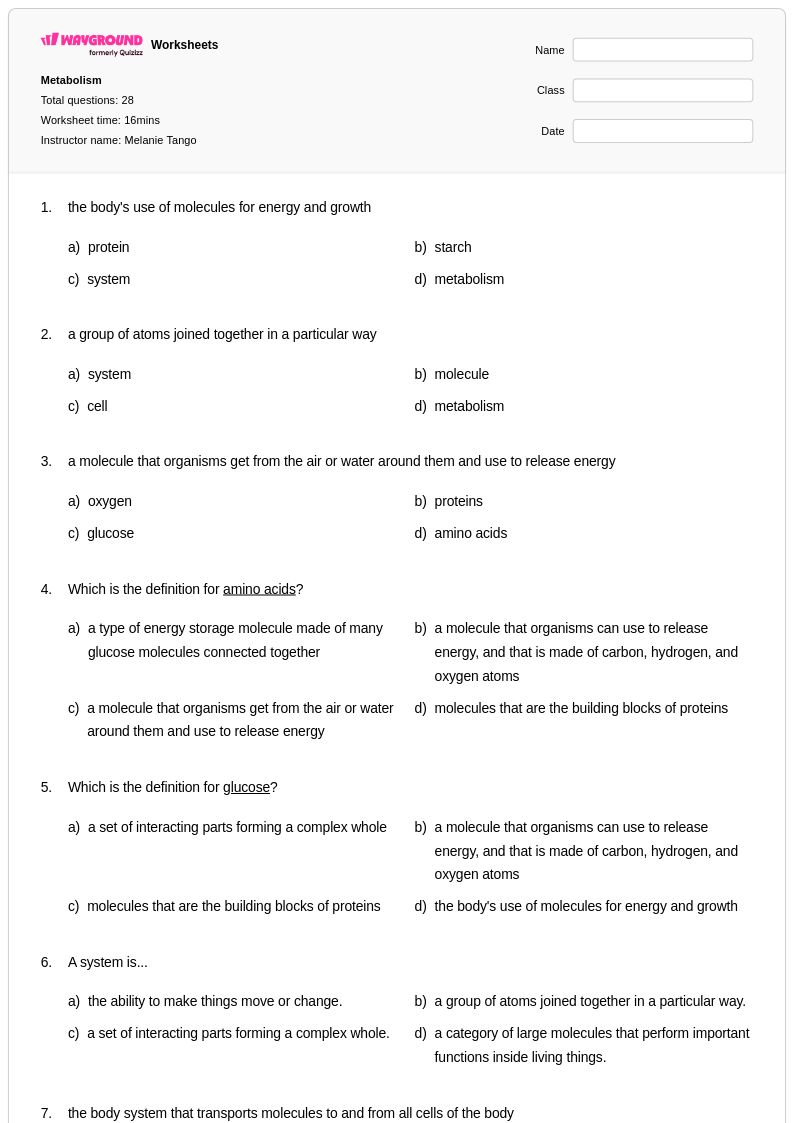
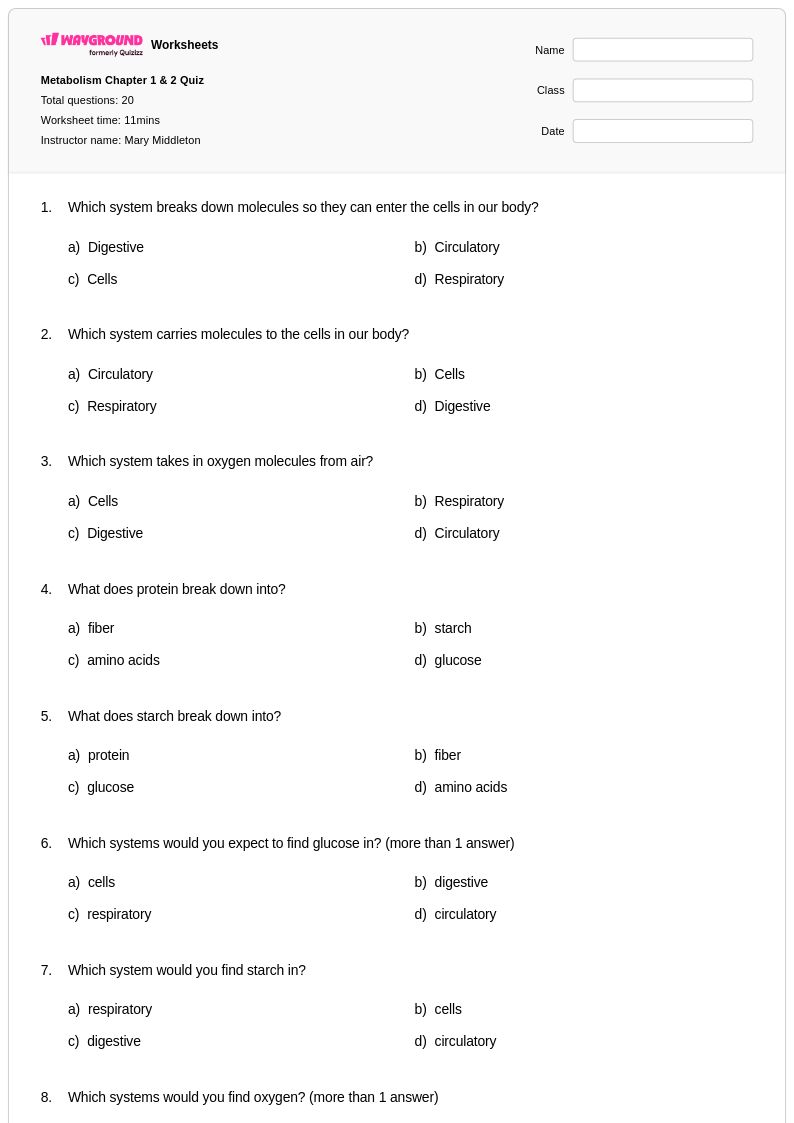
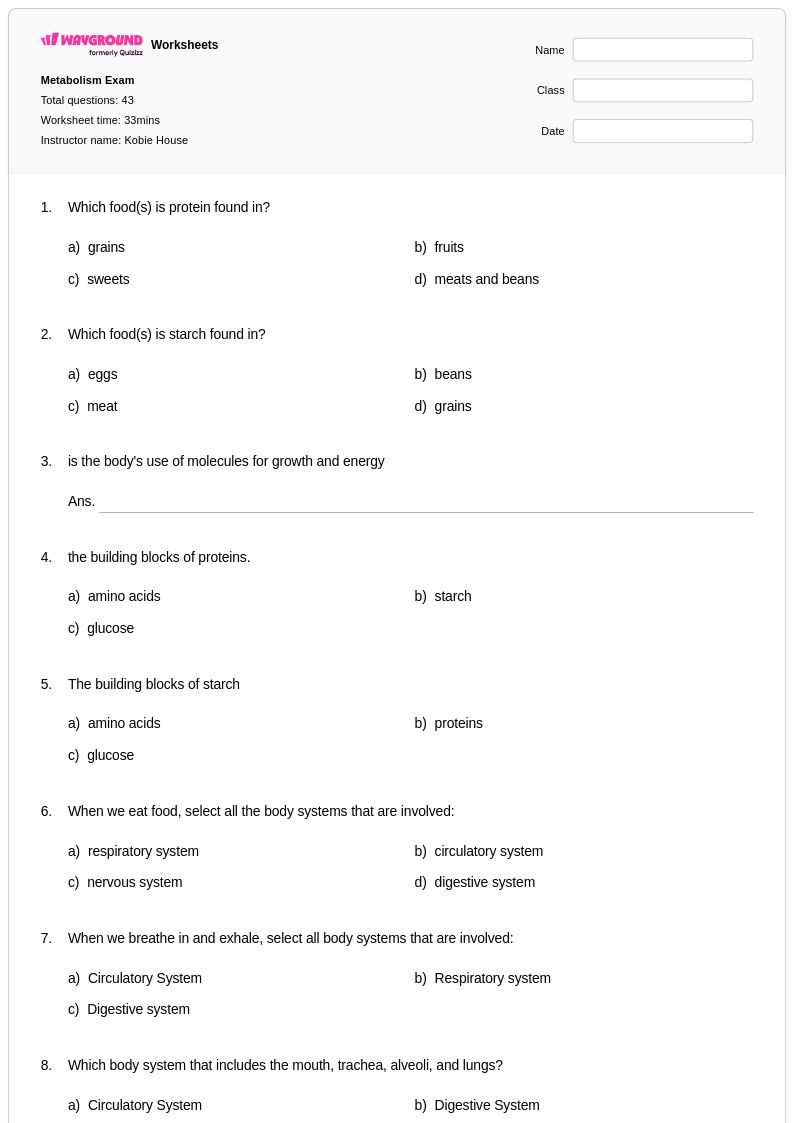
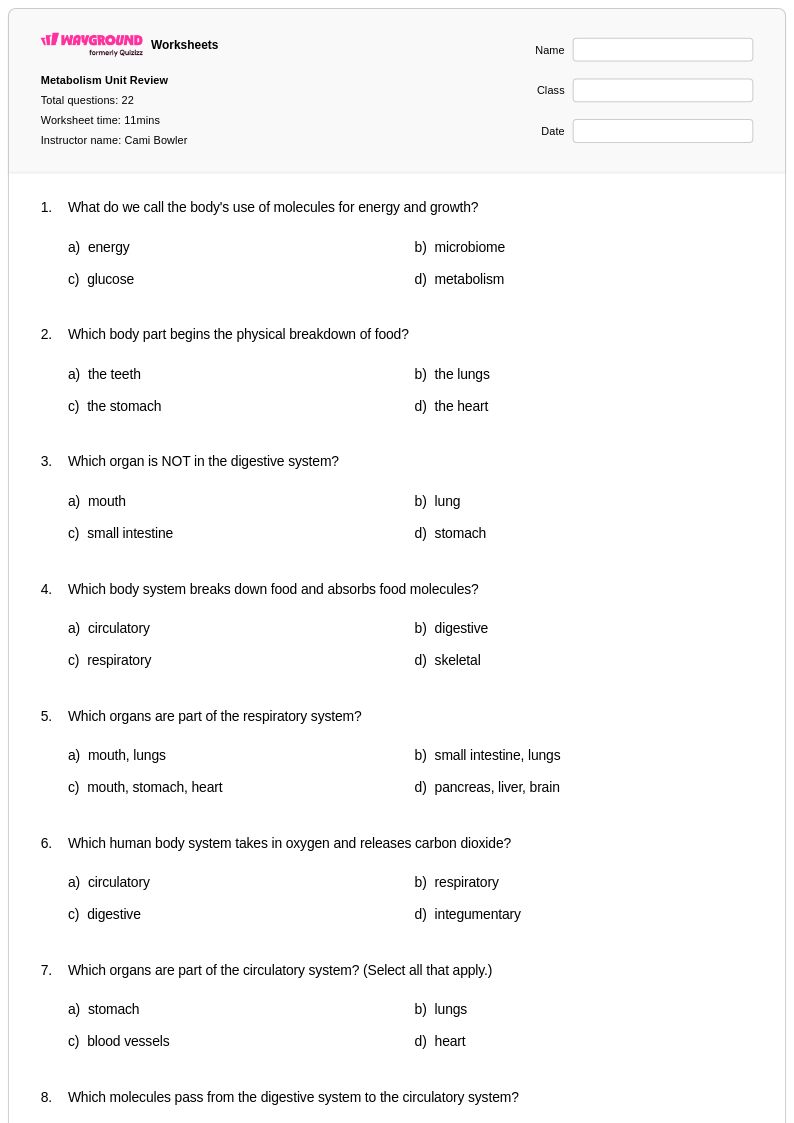
Metabolism worksheets for Class 6 students available through Wayground (formerly Quizizz) provide comprehensive coverage of cellular energy processes and biochemical reactions that sustain life. These educational resources focus on helping sixth-grade students understand how organisms convert nutrients into energy, the role of enzymes in metabolic pathways, and the differences between anabolic and catabolic processes. The worksheets strengthen critical thinking skills through practice problems that explore photosynthesis and cellular respiration, while building scientific vocabulary related to ATP production, glucose breakdown, and energy transfer. Each printable resource includes detailed answer keys that support both independent learning and guided instruction, with free pdf formats that make distribution and homework assignments seamless for classroom management.
Wayground (formerly Quizizz) empowers educators with access to millions of teacher-created metabolism resources that align with state science standards and curriculum objectives for middle school biology instruction. The platform's robust search and filtering capabilities allow teachers to quickly locate worksheets that match specific learning goals, whether focusing on basic energy concepts or more complex metabolic cycles. Advanced differentiation tools enable customization of content difficulty and question types to accommodate diverse learning needs, supporting both remediation for struggling students and enrichment opportunities for advanced learners. Available in both printable and digital formats including downloadable pdfs, these metabolism worksheets integrate seamlessly into lesson planning workflows and provide flexible options for skill practice, formative assessment, and reinforcement of key biological concepts essential for Class 6 science mastery.
FAQs
How do I teach metabolism to high school biology students?
Effective metabolism instruction begins by grounding students in the distinction between catabolism and anabolism before introducing specific pathways. Start with glycolysis as an entry point, then layer in the citric acid cycle and electron transport chain in sequence so students can trace energy flow as a continuous story rather than isolated steps. Using diagrams that show ATP yield at each stage helps students connect abstract biochemical reactions to tangible cellular outcomes. Reinforcing how carbohydrate, lipid, and protein metabolism converge into shared pathways builds the integrative thinking that deeper understanding requires.
What are the most common mistakes students make when learning metabolic pathways?
The most frequent misconception is treating glycolysis, the citric acid cycle, and the electron transport chain as separate, unrelated processes rather than a single interconnected system. Students also commonly confuse the roles of NADH and FADH2 as energy carriers versus direct ATP producers, and many misidentify where in the cell each stage occurs. Another persistent error is assuming ATP is produced in equal amounts at every stage, when in reality the electron transport chain accounts for the vast majority of ATP yield. Worksheet problems that require students to trace molecules across pathway stages and account for energy totals are particularly effective at correcting these errors.
What practice exercises help students master cellular respiration and metabolic pathways?
Practice problems that ask students to analyze metabolic reactions step by step, trace the fate of a glucose molecule through each pathway stage, and calculate net ATP yield are among the most effective for building mastery. Exercises requiring students to identify regulatory checkpoints and predict how changes in enzyme activity affect energy output develop the critical thinking skills that standardized assessments test. Problems integrating all three macronutrient pathways challenge students to recognize how lipid and protein catabolism feed into the same intermediates as carbohydrate metabolism, reinforcing the interconnected nature of the system.
How do I use Wayground's metabolism worksheets in my classroom?
Wayground's metabolism worksheets are available as printable PDFs for traditional classroom use and in digital formats for technology-integrated learning environments, making them flexible for both in-person and remote instruction. Teachers can also host the worksheets as a quiz directly on Wayground, enabling real-time student responses and streamlined assessment. Each worksheet includes a complete answer key, supporting both independent student self-assessment and efficient teacher evaluation. This makes them suitable for introductory lessons, targeted review sessions, or remediation with students who need additional support on specific pathway concepts.
How can I differentiate metabolism instruction for students at different ability levels?
For students who struggle with the complexity of metabolic pathways, breaking problems into single-pathway tasks before introducing multi-pathway integration reduces cognitive overload. Wayground supports differentiation through student-level accommodations including reduced answer choices to simplify decision-making, read aloud functionality for students who benefit from audio support, and extended time settings configurable per student. These accommodations can be applied individually while the rest of the class receives default settings, allowing teachers to support diverse learners within the same assignment without disruption. Advanced learners can be challenged with problems requiring them to analyze regulatory mechanisms and predict metabolic responses to environmental changes.
How do enzyme functions connect to metabolic regulation, and how should I teach this?
Enzymes act as the control points of metabolism by catalyzing specific reactions within pathways and responding to feedback signals that speed up or slow down energy production based on cellular needs. Teaching enzyme function in direct connection to pathway regulation, rather than as a standalone biochemistry topic, helps students understand why metabolic rates change under different physiological conditions. Effective instruction pairs enzyme mechanism problems with pathway diagrams so students can locate where each enzyme acts and predict downstream consequences when enzyme activity is altered. This approach builds the analytical skills students need to answer application-level questions on assessments.

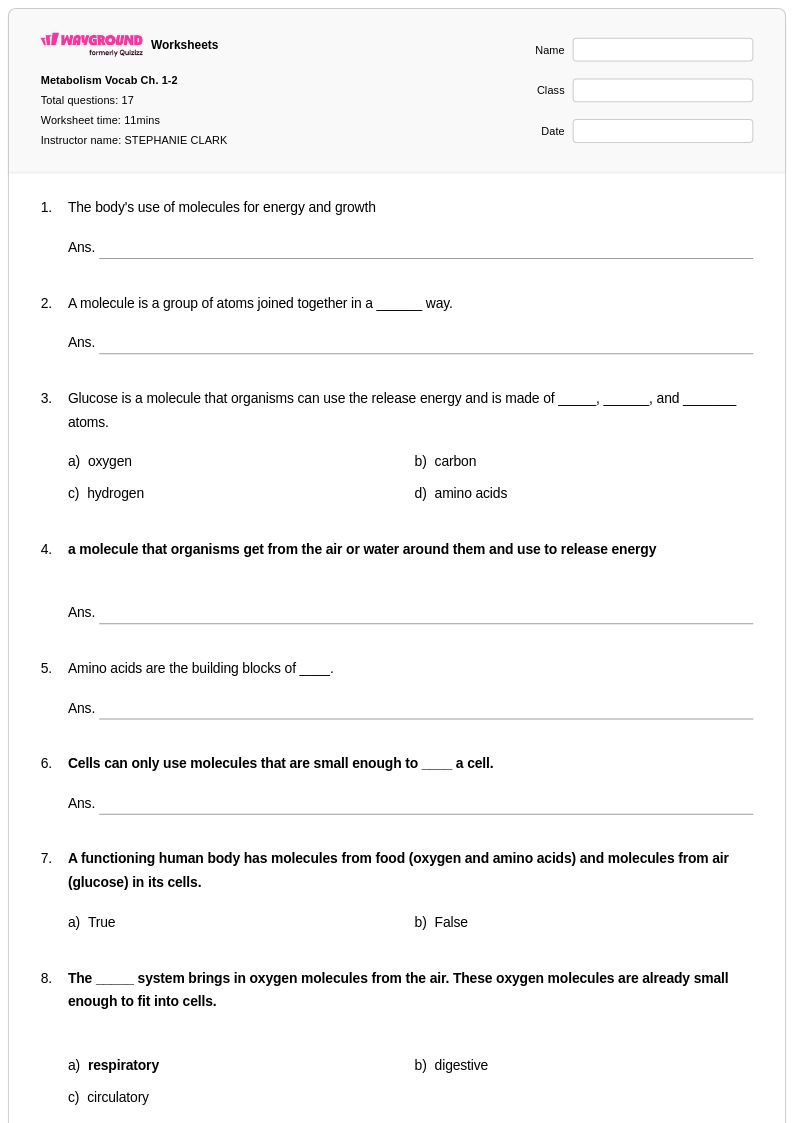
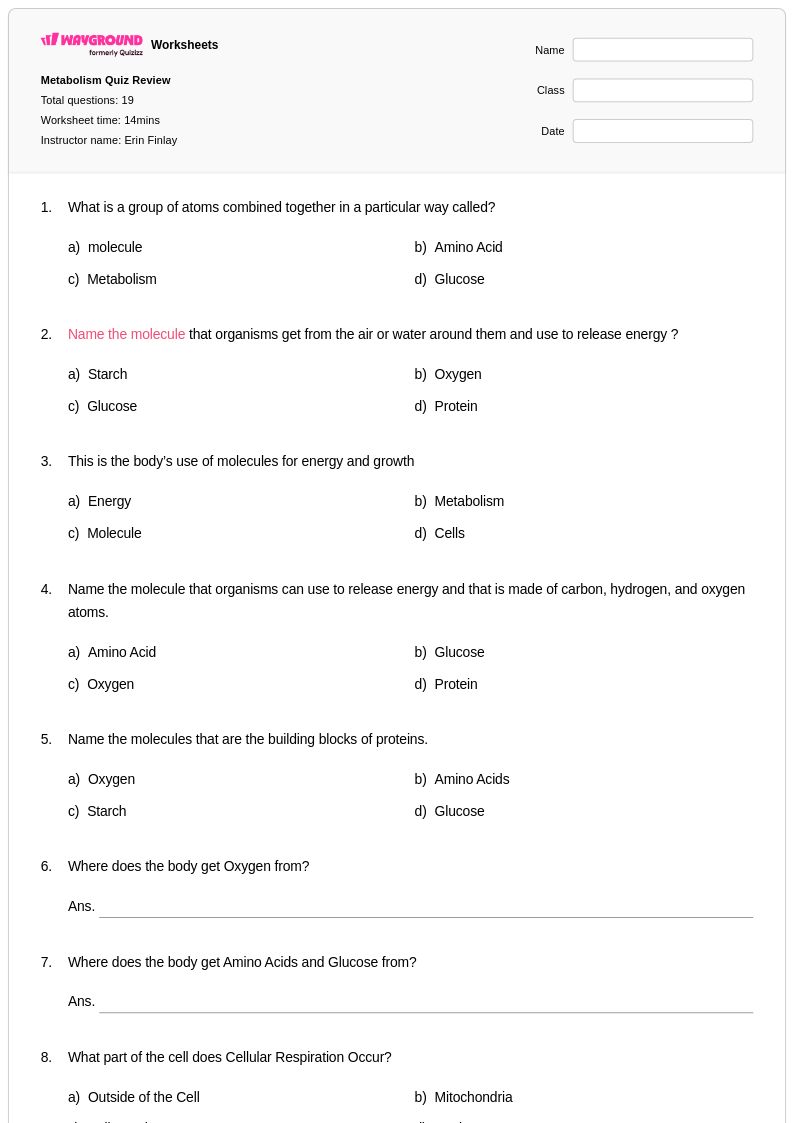
![Amplify * Metabolism Chapter 1 [Molecules Needed by the Cells] - Printable Metabolism Worksheets Class 6 - Wayground](https://quizizz-static.s3.amazonaws.com/_media/worksheets-new/63ba33642d7d16001e7dd6e9-amplify-metabolism-chapter-1-molecules-needed-by-the-cells)