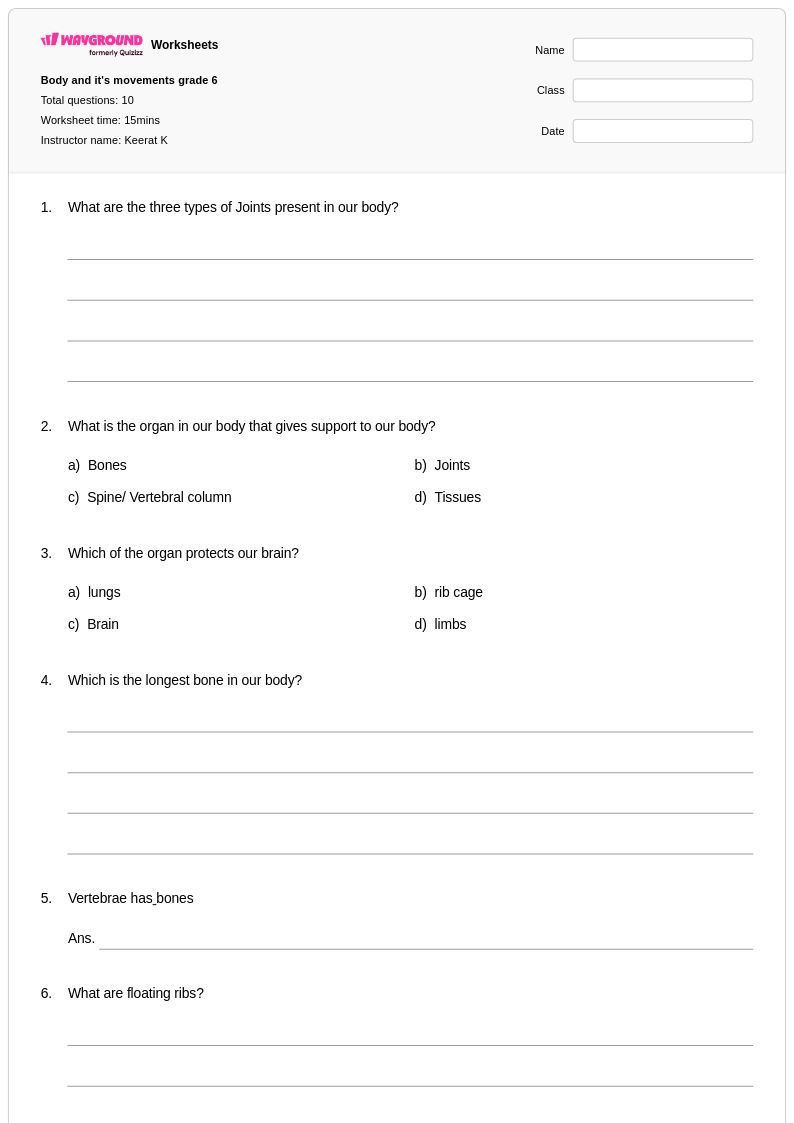
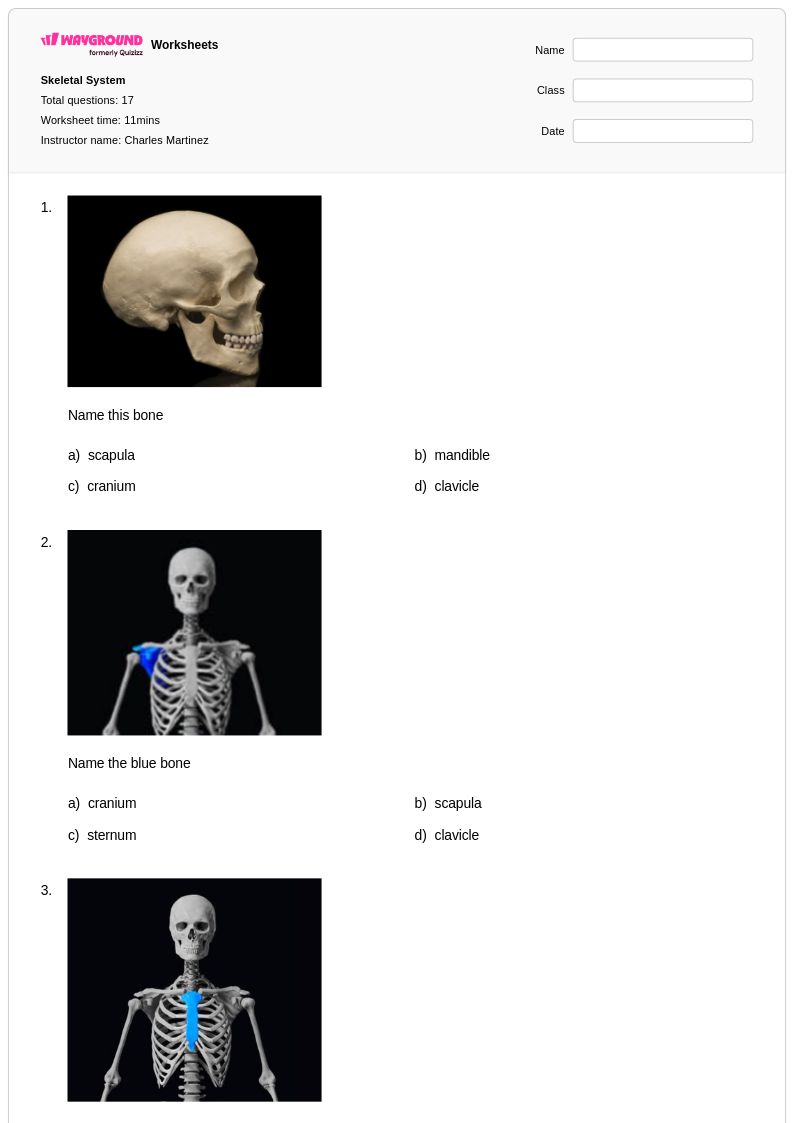
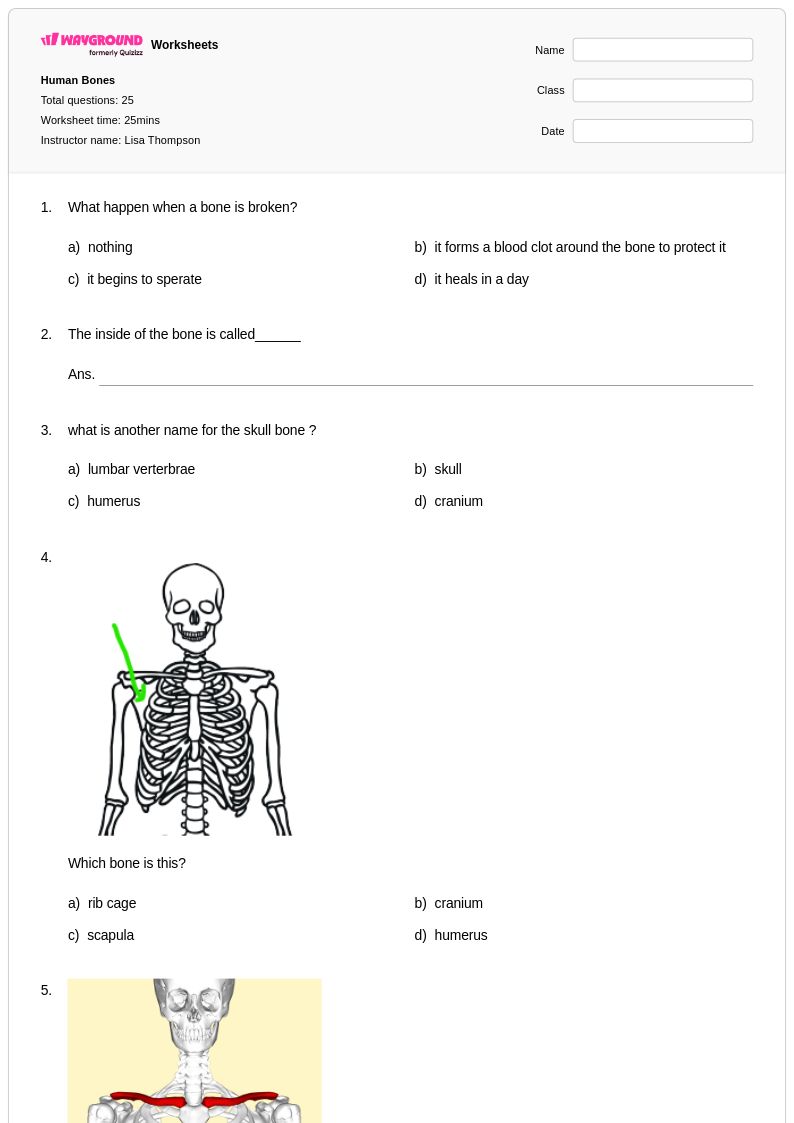
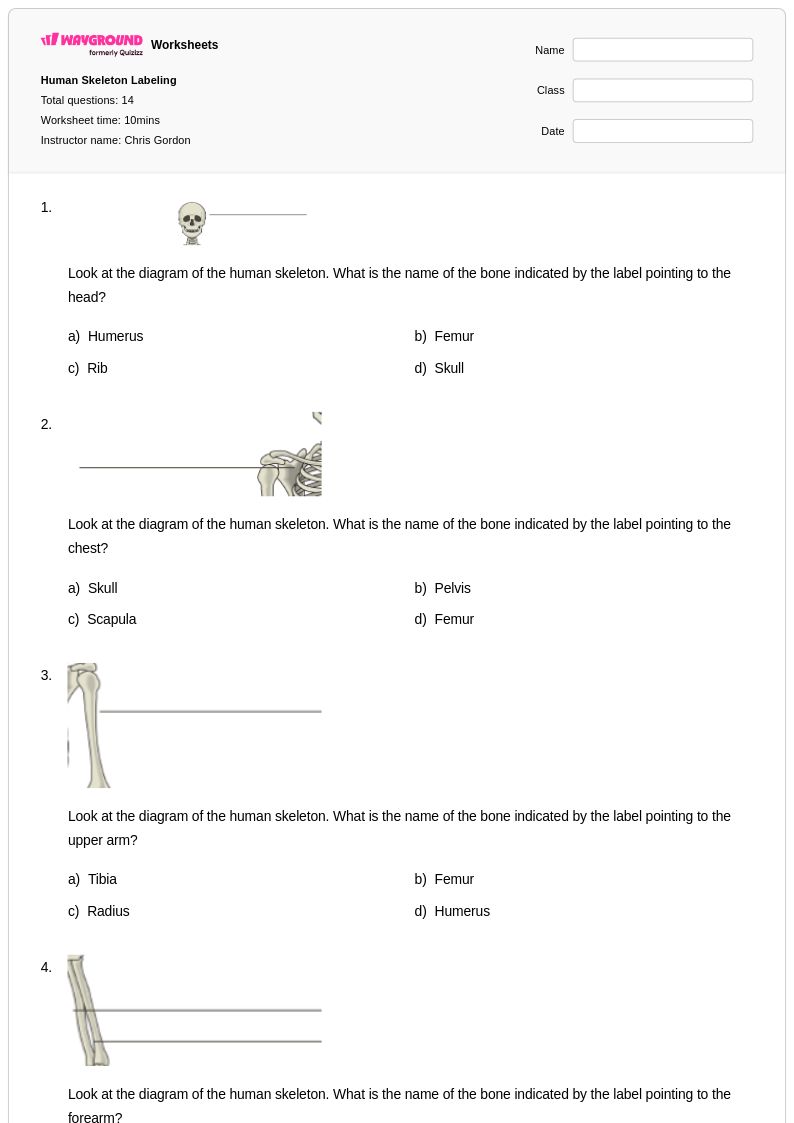
Explore Class 6 humerus worksheets and printables that help students learn about this major arm bone through engaging practice problems, free PDF downloads, and comprehensive answer keys.
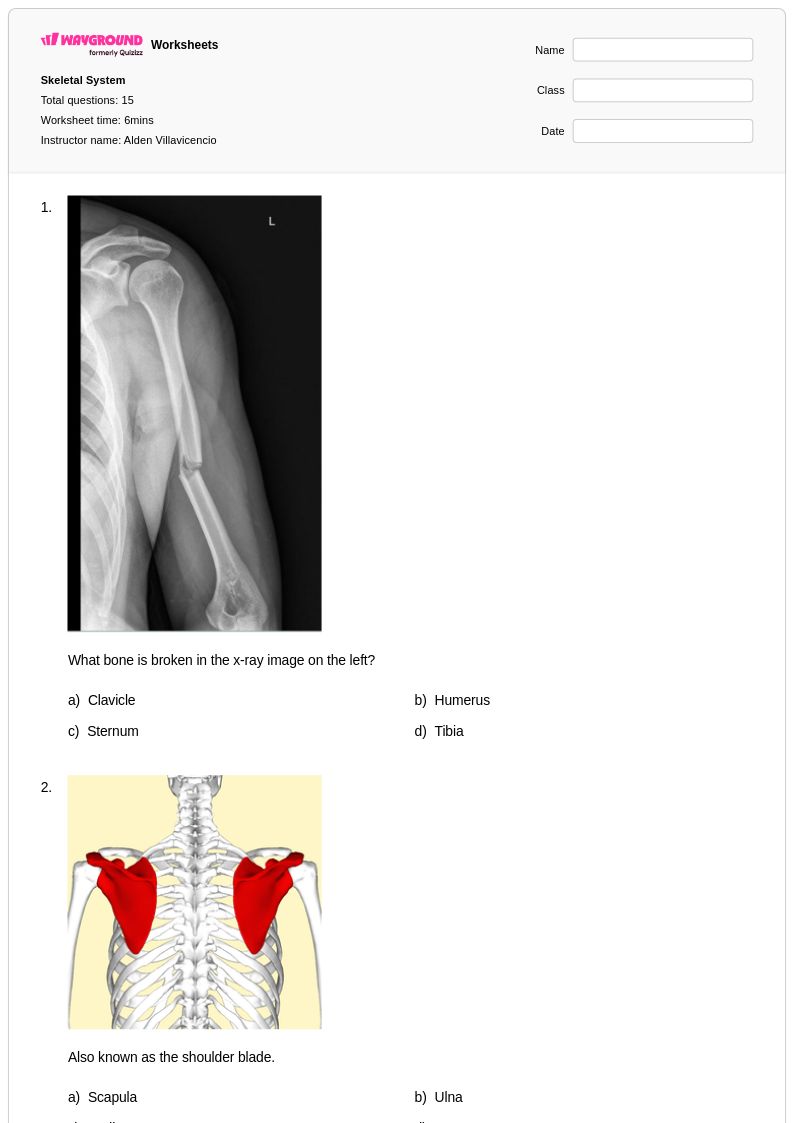
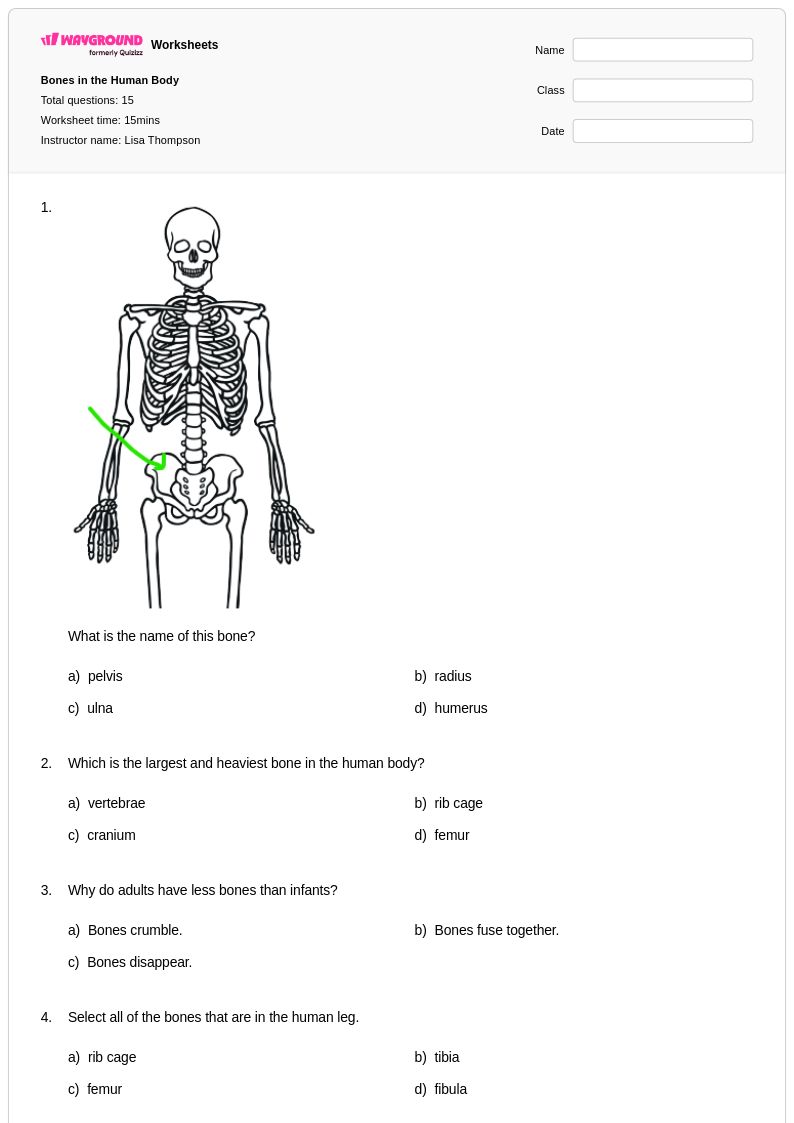
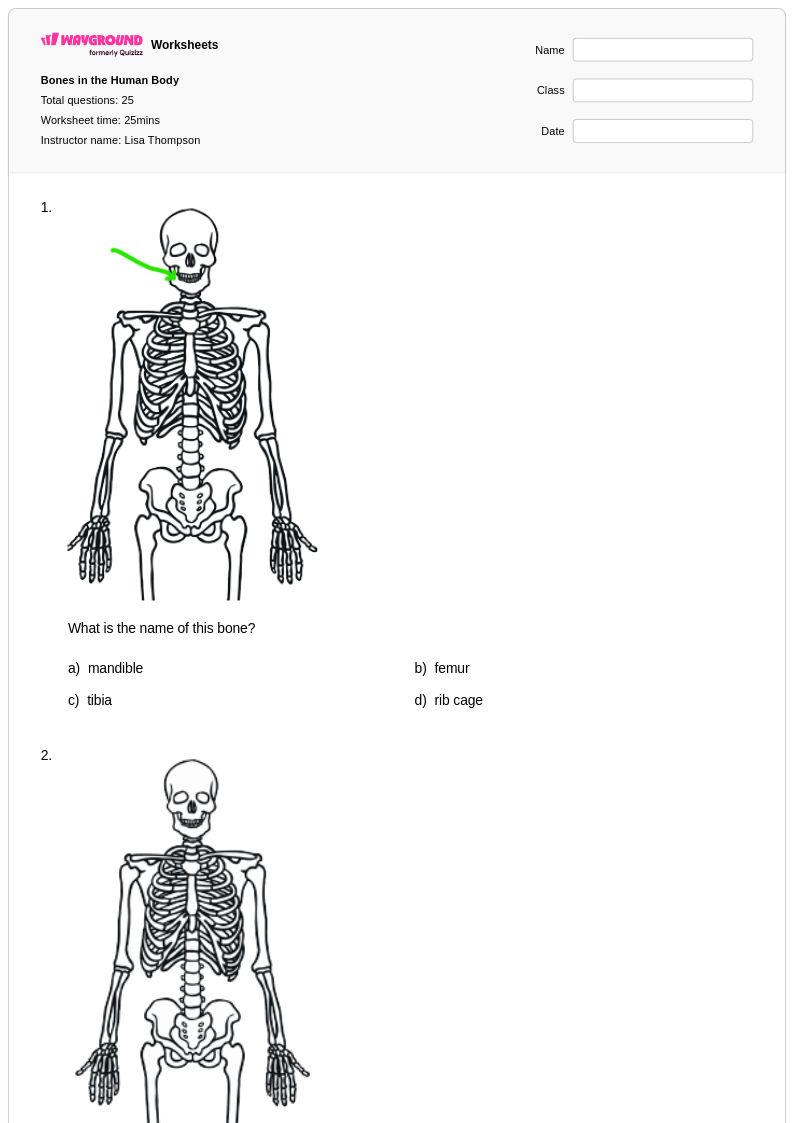
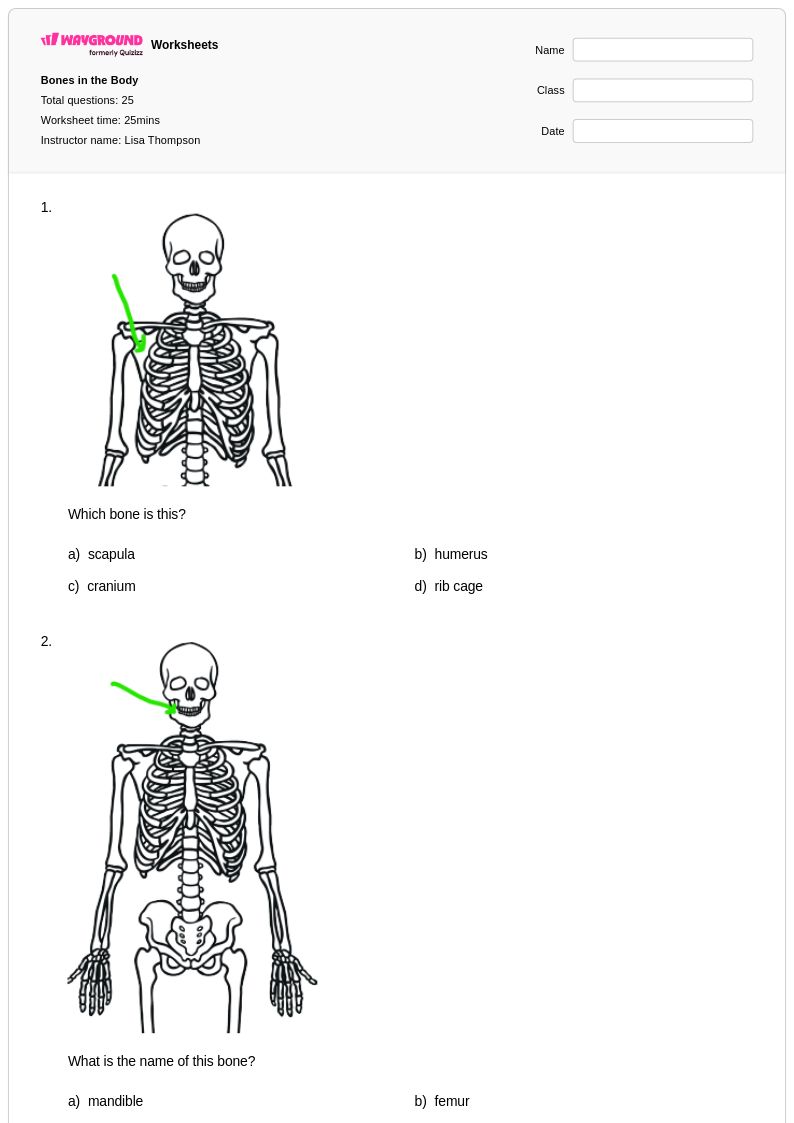
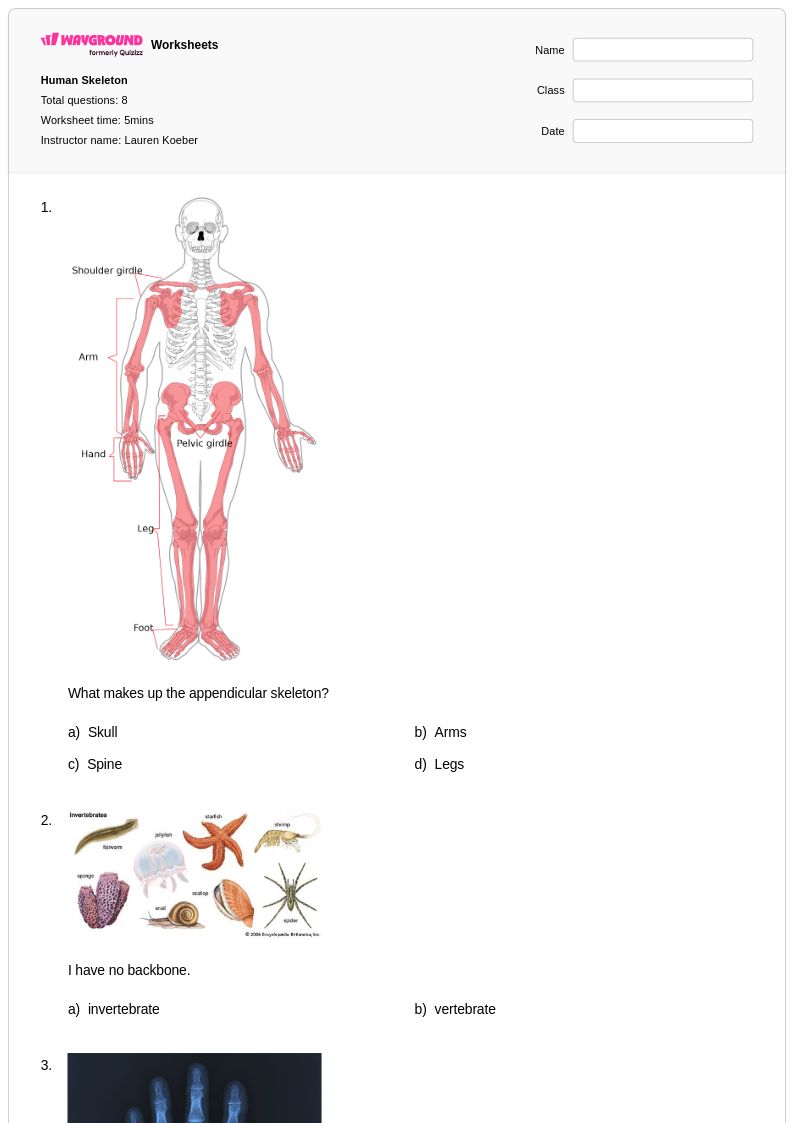
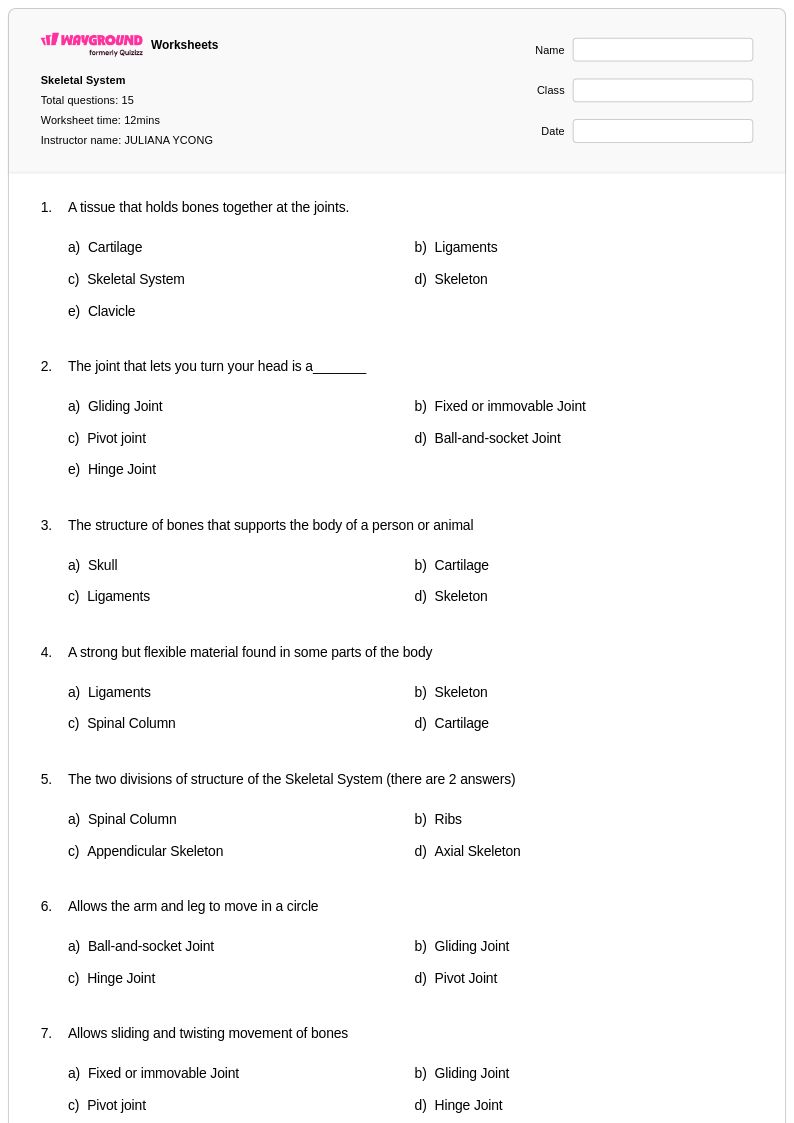
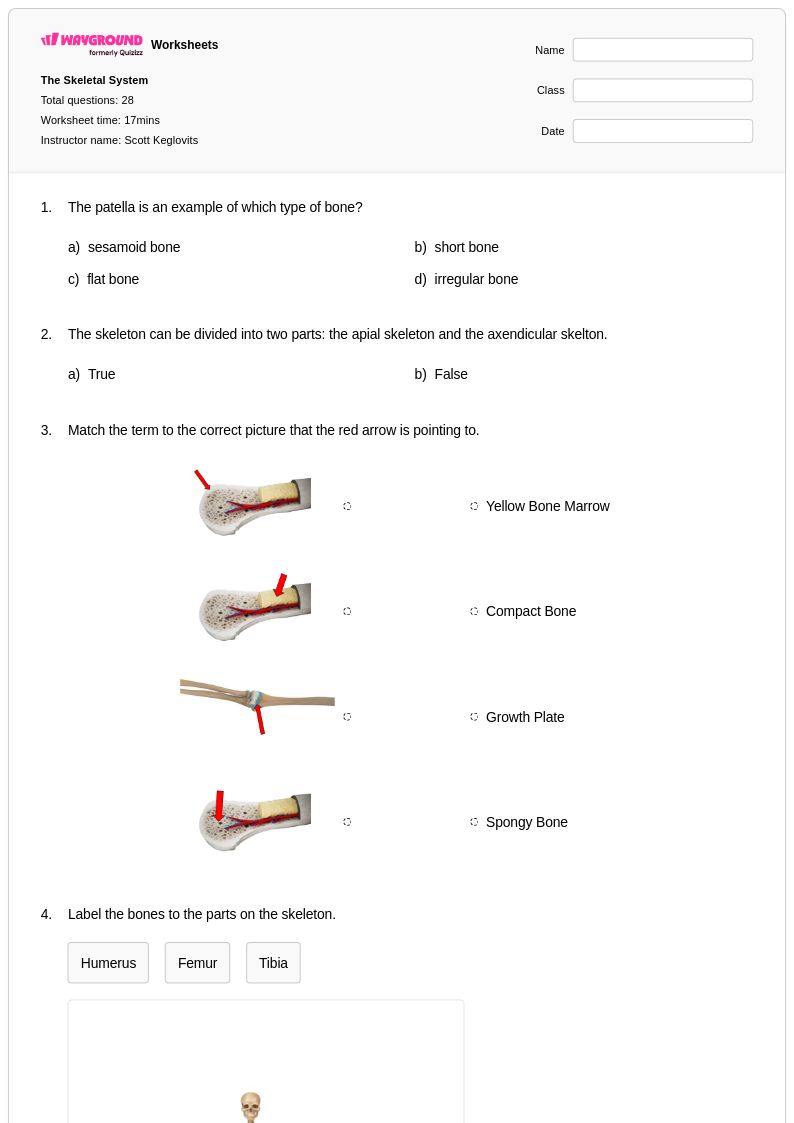
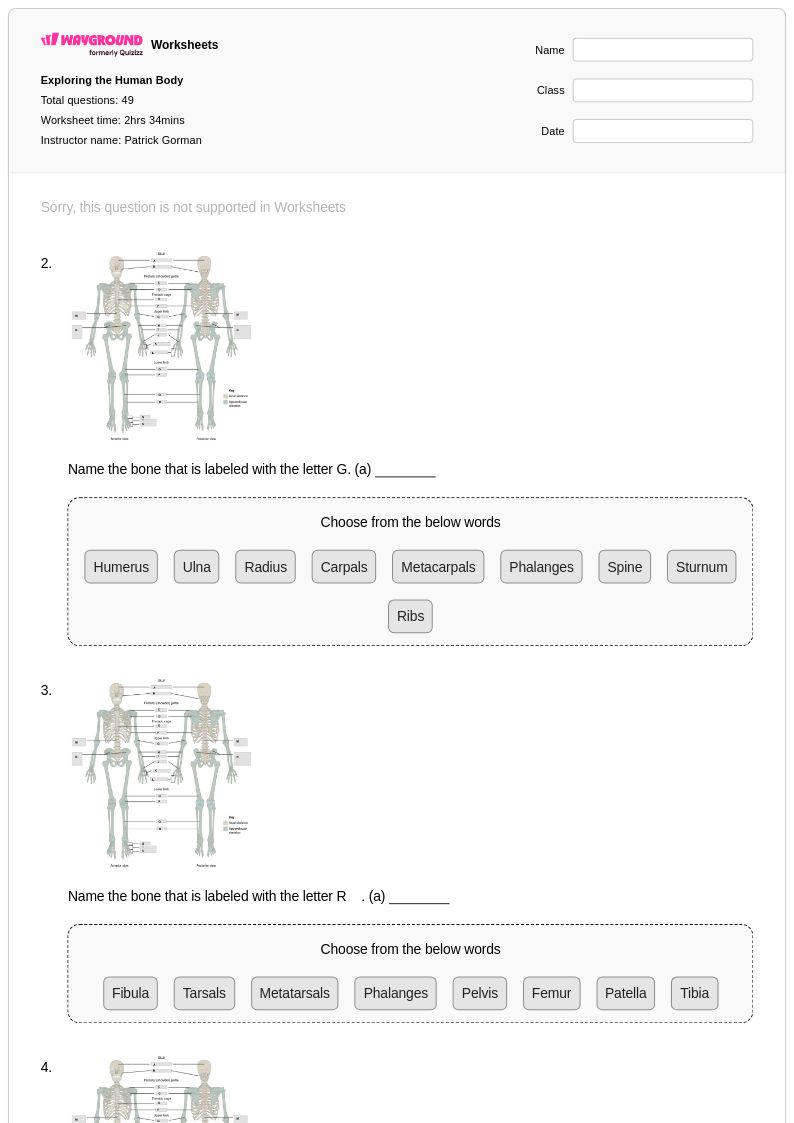
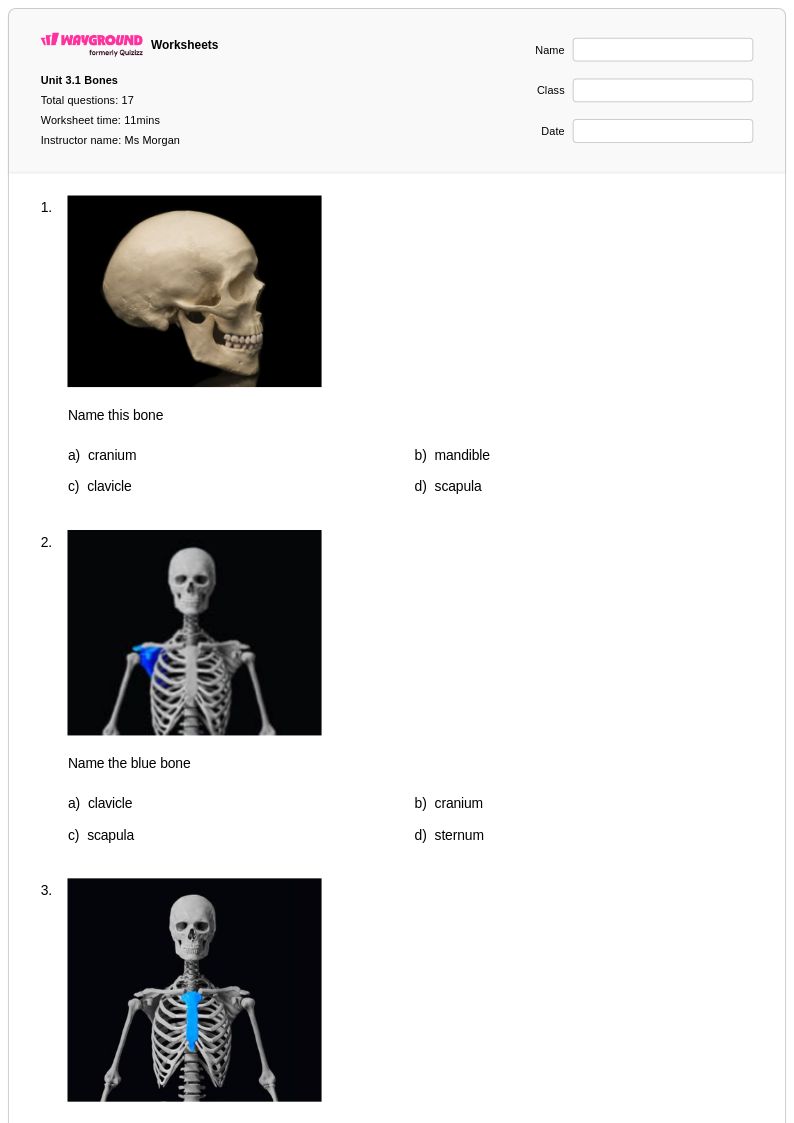
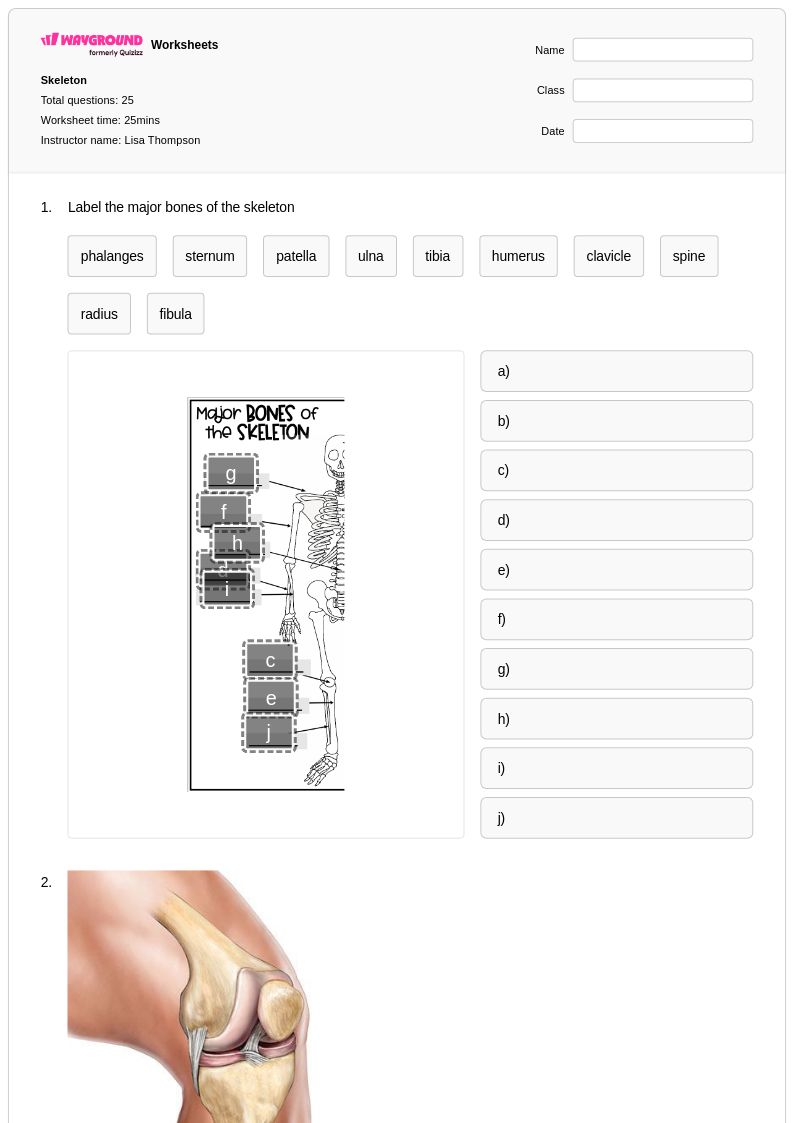
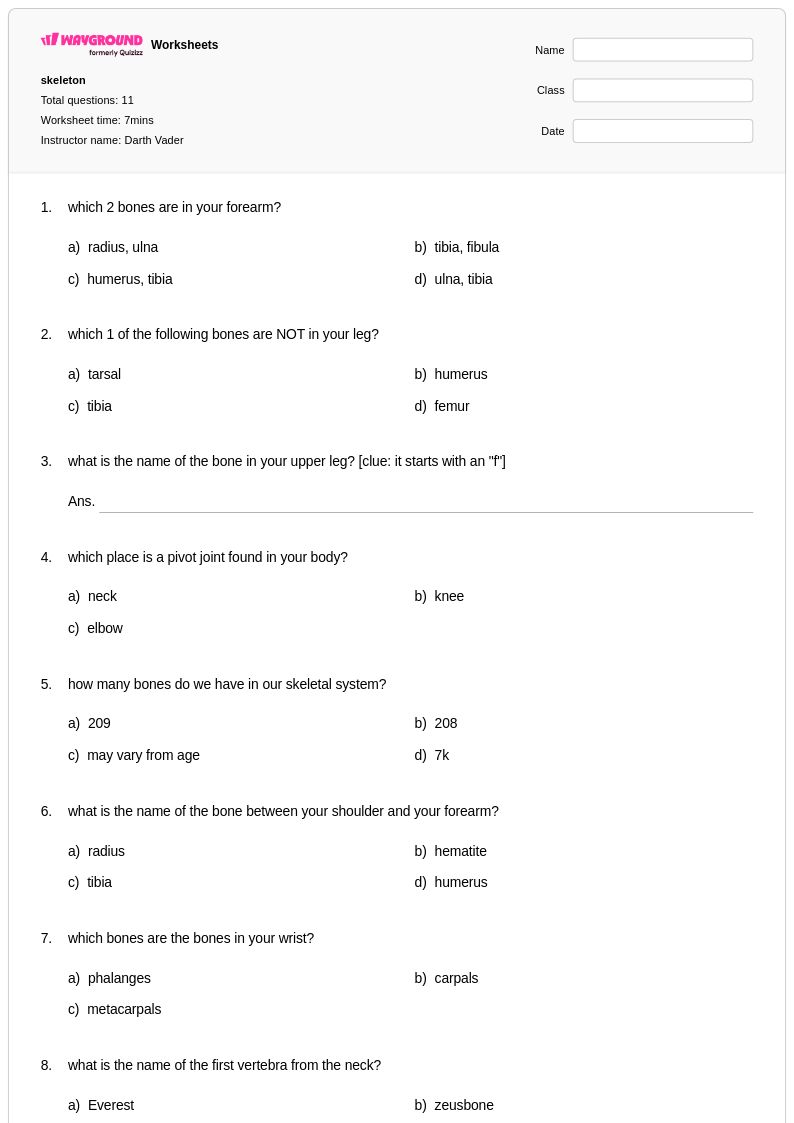
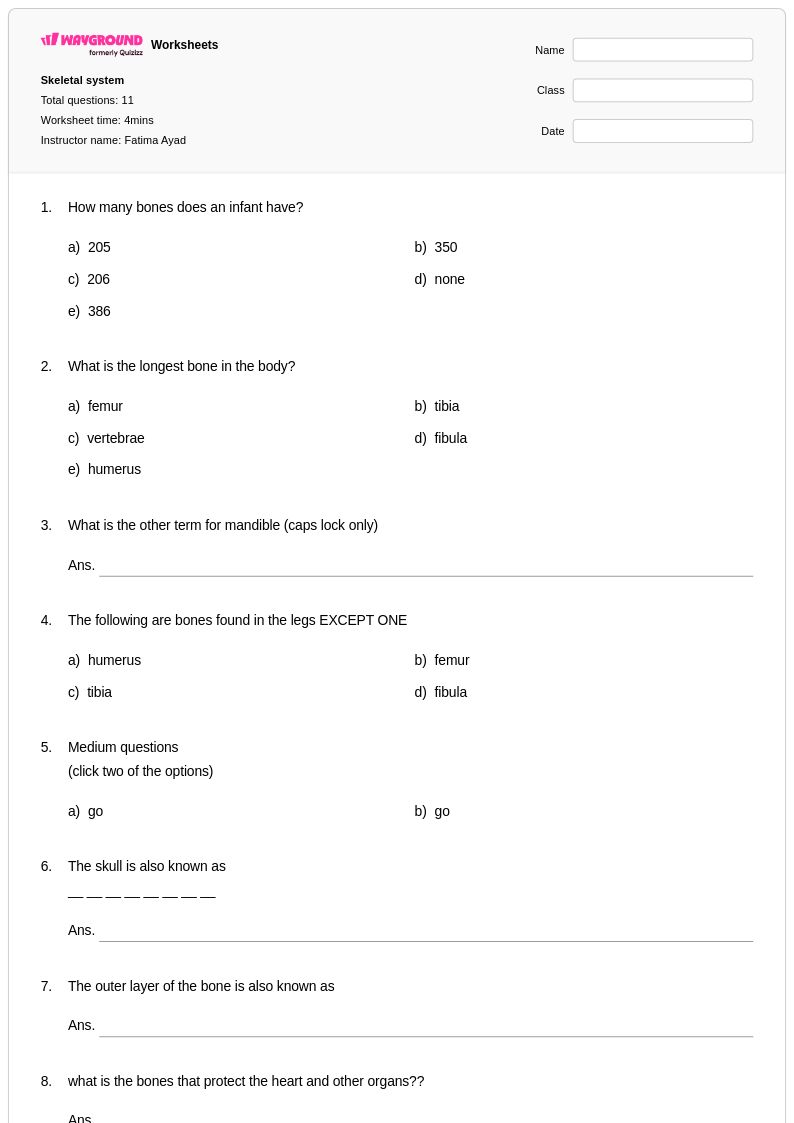
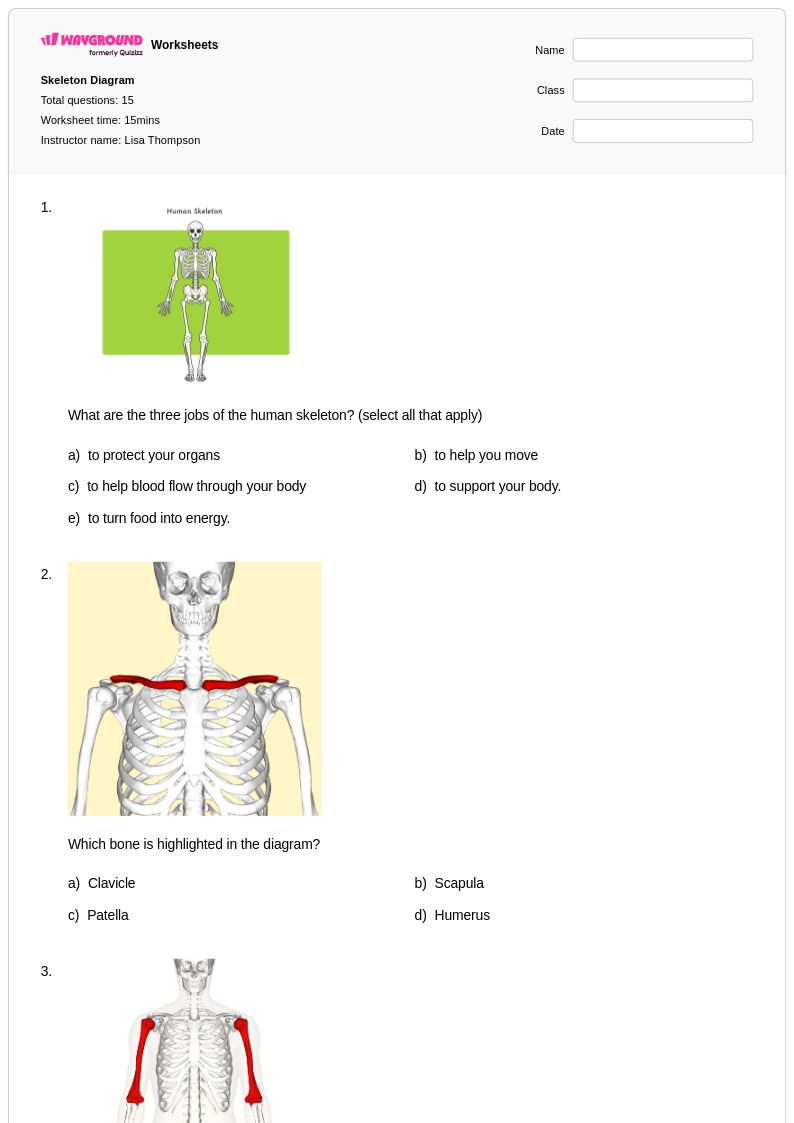
Humerus worksheets for Class 6 students available through Wayground (formerly Quizizz) provide comprehensive learning materials that focus on this essential bone of the upper arm within the human skeletal system. These educational resources strengthen students' understanding of bone structure, function, and anatomical positioning while developing critical scientific vocabulary and observation skills. The worksheet collection includes detailed diagrams for labeling exercises, comparative anatomy activities, and practice problems that help students identify the humerus in relation to other bones like the radius and ulna. Each worksheet comes with a complete answer key and is available as free printables in pdf format, making it easy for educators to incorporate bone study into their biology curriculum and assess student comprehension of skeletal anatomy.
Wayground (formerly Quizizz) supports teachers with an extensive collection of humerus-focused worksheets created by millions of educators worldwide, offering robust search and filtering capabilities that allow instructors to find materials perfectly suited to their Class 6 biology classes. The platform's standards alignment ensures that worksheet content meets educational requirements while differentiation tools enable teachers to modify activities for diverse learning needs and abilities. These customizable resources are available in both printable and digital formats, including downloadable pdf versions, giving educators flexibility in lesson planning and delivery methods. Teachers can utilize these materials for initial skill building, targeted remediation for struggling students, enrichment activities for advanced learners, and ongoing practice to reinforce anatomical knowledge throughout their skeletal system unit.
FAQs
How do I teach the humerus to students in a biology or anatomy class?
Start by anchoring the humerus within the upper limb skeleton before introducing its specific anatomical landmarks. Use labeled diagrams to walk students through proximal features like the humeral head, greater and lesser tubercles, and anatomical neck, then move distally to the deltoid tuberosity, epicondyles, and condylar processes. Connecting each landmark to a muscle attachment or joint function gives students a clinical reason to remember the terminology rather than memorizing it in isolation.
What exercises help students practice identifying humerus anatomy?
Labeling diagrams of the humerus from both anterior and posterior views is one of the most effective practice formats because it forces students to recall landmark names and their spatial positions simultaneously. Fill-in-the-blank questions tied to specific features — such as the deltoid tuberosity or the olecranon fossa — help reinforce precise anatomical vocabulary. Pairing these with short-answer questions about the humerus's role in arm movement adds functional context to what might otherwise feel like pure memorization.
What mistakes do students commonly make when learning humerus anatomy?
Students frequently confuse the greater and lesser tubercles, often reversing their positions or misattributing which rotator cuff muscles attach to each. The distinction between the anatomical neck and the surgical neck is another persistent source of error, particularly because the surgical neck has greater clinical relevance despite not being an actual joint articulation. Students also tend to conflate the medial and lateral epicondyles when viewing the bone without a directional reference point, so reinforcing anatomical orientation early is essential.
How do I use humerus worksheets effectively in my classroom?
Humerus worksheets work well as structured practice after an initial lecture or diagram walkthrough, giving students a concrete task to consolidate new terminology. On Wayground, these worksheets are available as printable PDFs for traditional classroom use and in digital formats for technology-integrated or remote learning environments, and teachers can also host them as a quiz directly on the platform. Using the answer key for self-correction or peer review immediately after completion reinforces retention more effectively than saving review for a later session.
How do I differentiate humerus anatomy instruction for students at different ability levels?
For students who need additional support, reducing the number of landmarks introduced at once and providing a word bank on labeling exercises lowers cognitive load without removing rigor. When hosting humerus worksheets digitally on Wayground, teachers can apply individual accommodations such as read aloud support, reduced answer choices, and extended time for specific students, while the rest of the class works under default settings without disruption. Advanced learners benefit from questions that ask them to explain the functional consequence of a landmark — for example, why the surgical neck is a common fracture site — rather than simply identifying it.
What prior knowledge do students need before studying the humerus?
Students should have a working understanding of basic skeletal anatomy, including the difference between long bones and other bone types, before engaging with humerus-specific content. Familiarity with anatomical directional terms — proximal, distal, medial, lateral, anterior, and posterior — is essential for accurately interpreting diagrams and answering questions about landmark positions. A brief review of joint types, particularly the ball-and-socket structure of the glenohumeral joint, also helps students contextualize why the humeral head has the shape and articulating surface it does.