Explore Wayground's comprehensive collection of cellular transport worksheets featuring free printables and practice problems with answer keys to help students master membrane transport, diffusion, and osmosis concepts.
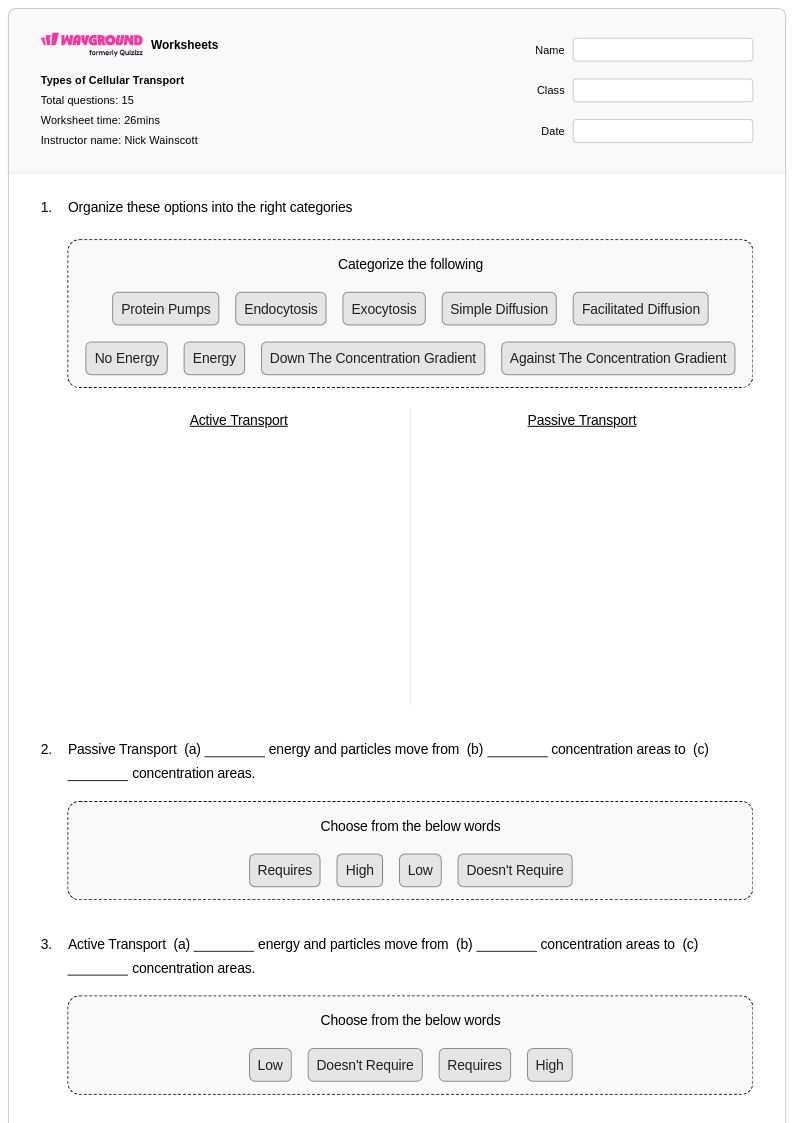
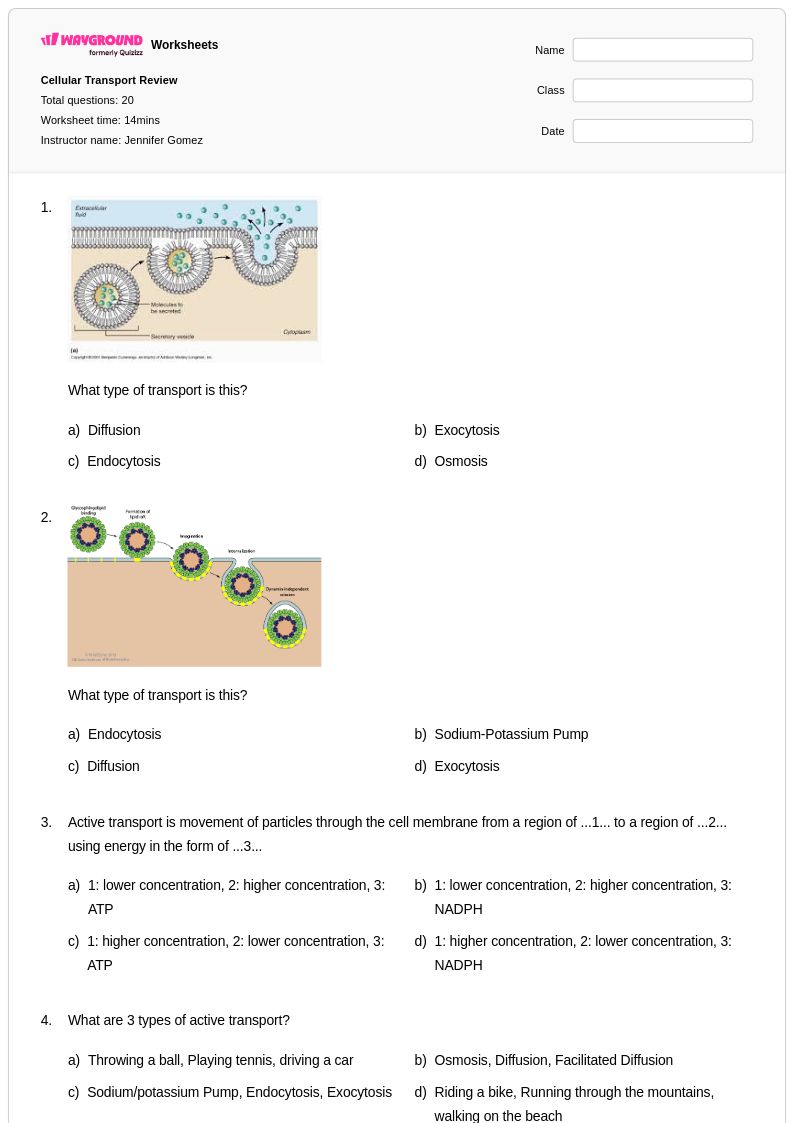
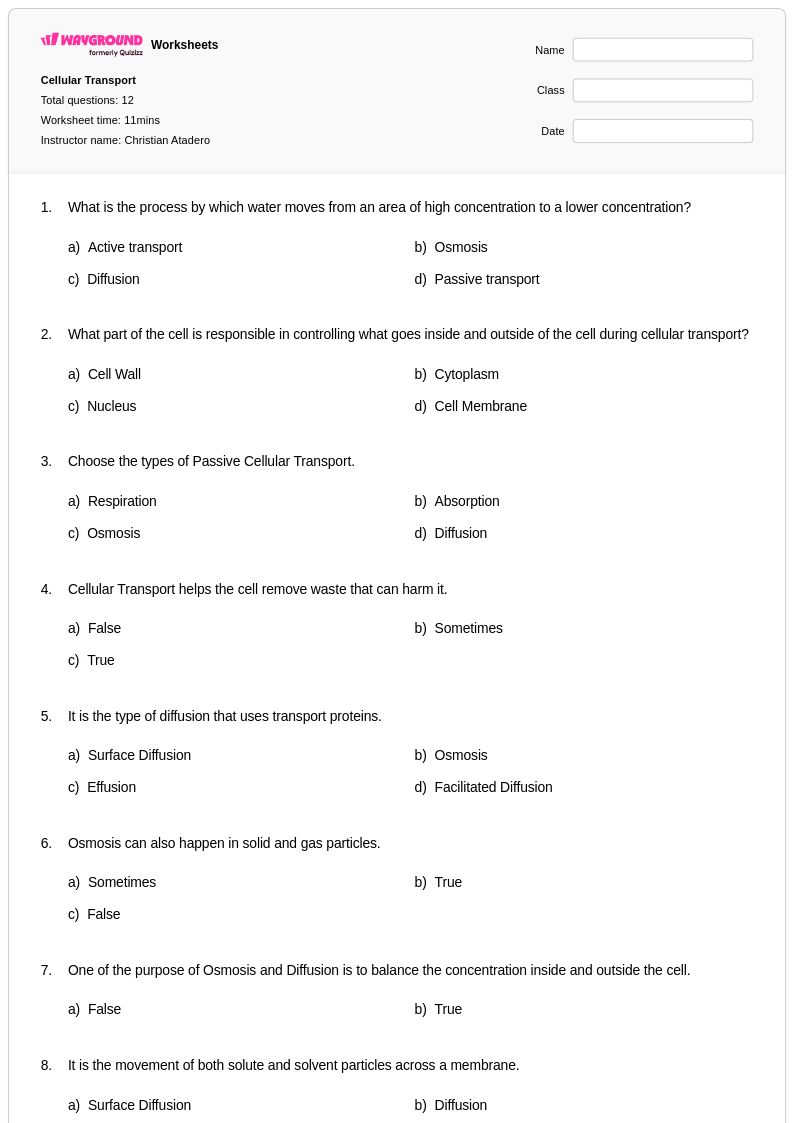
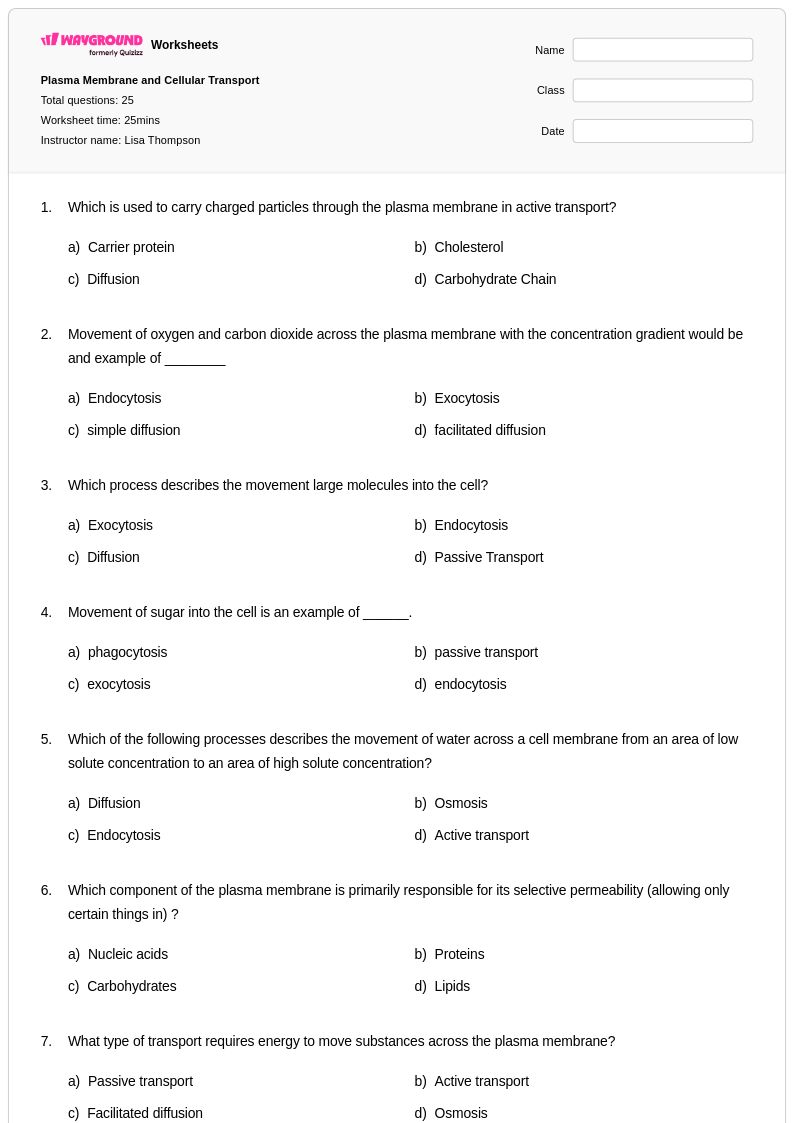
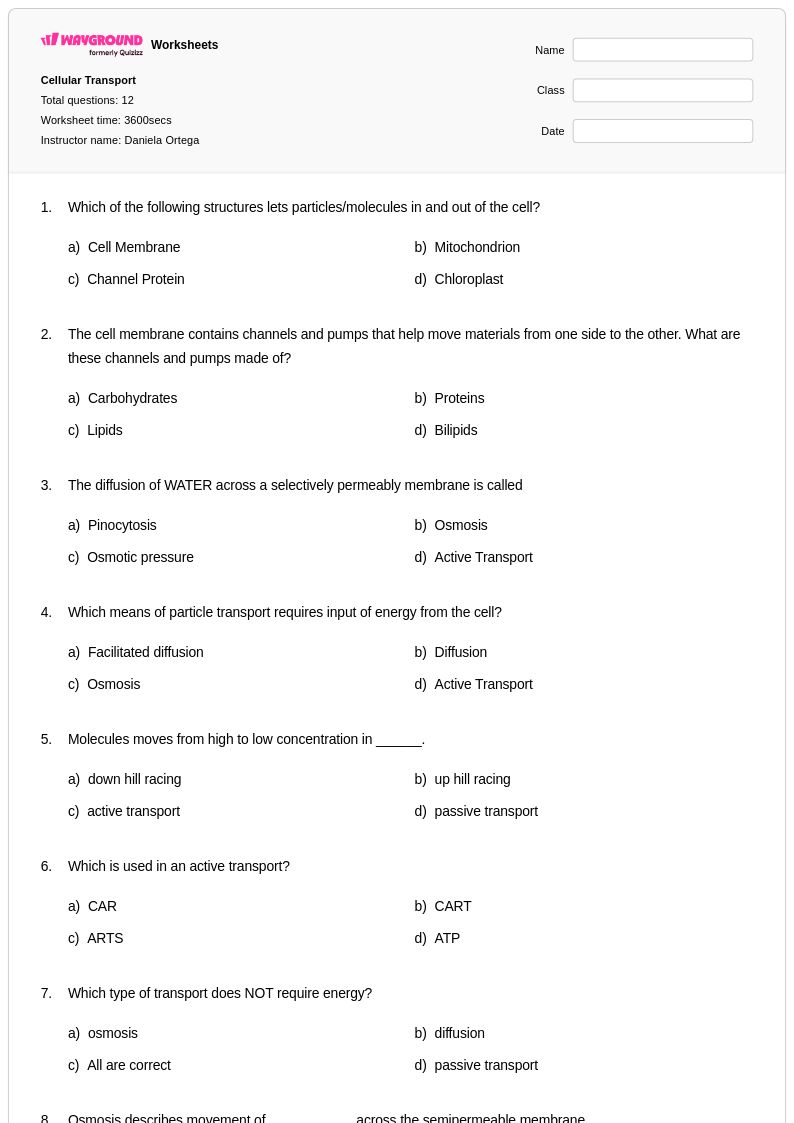
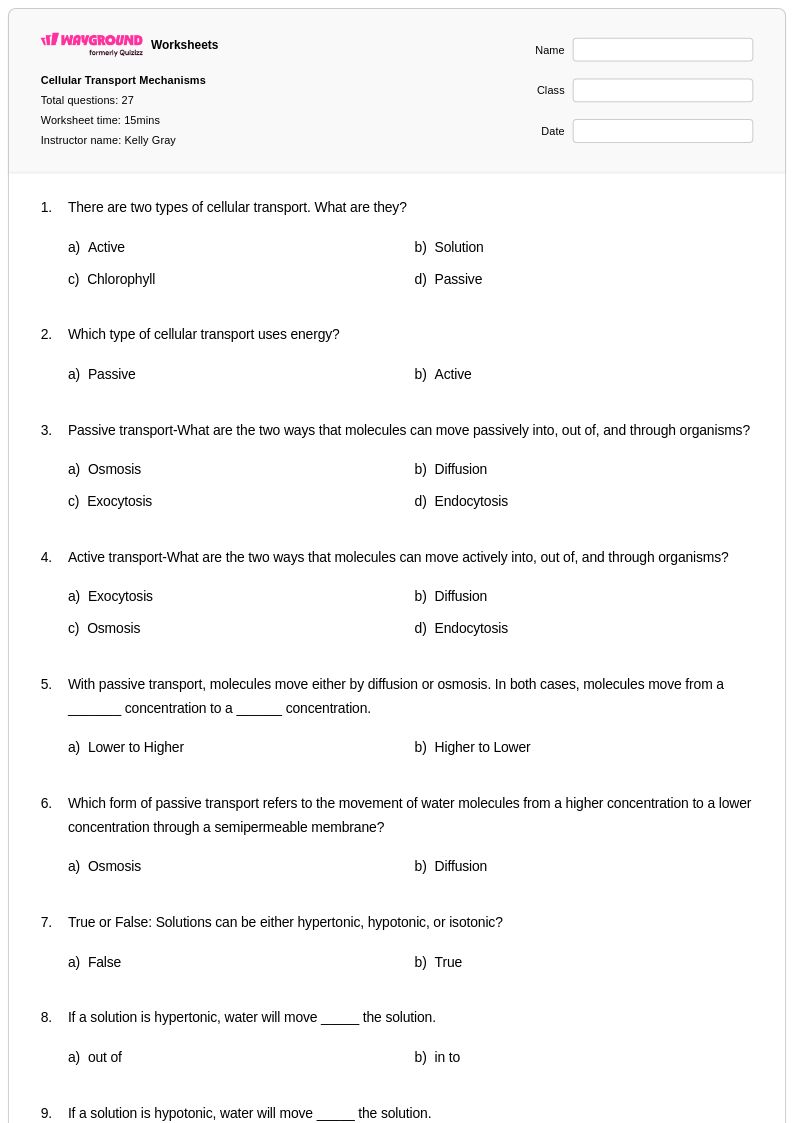
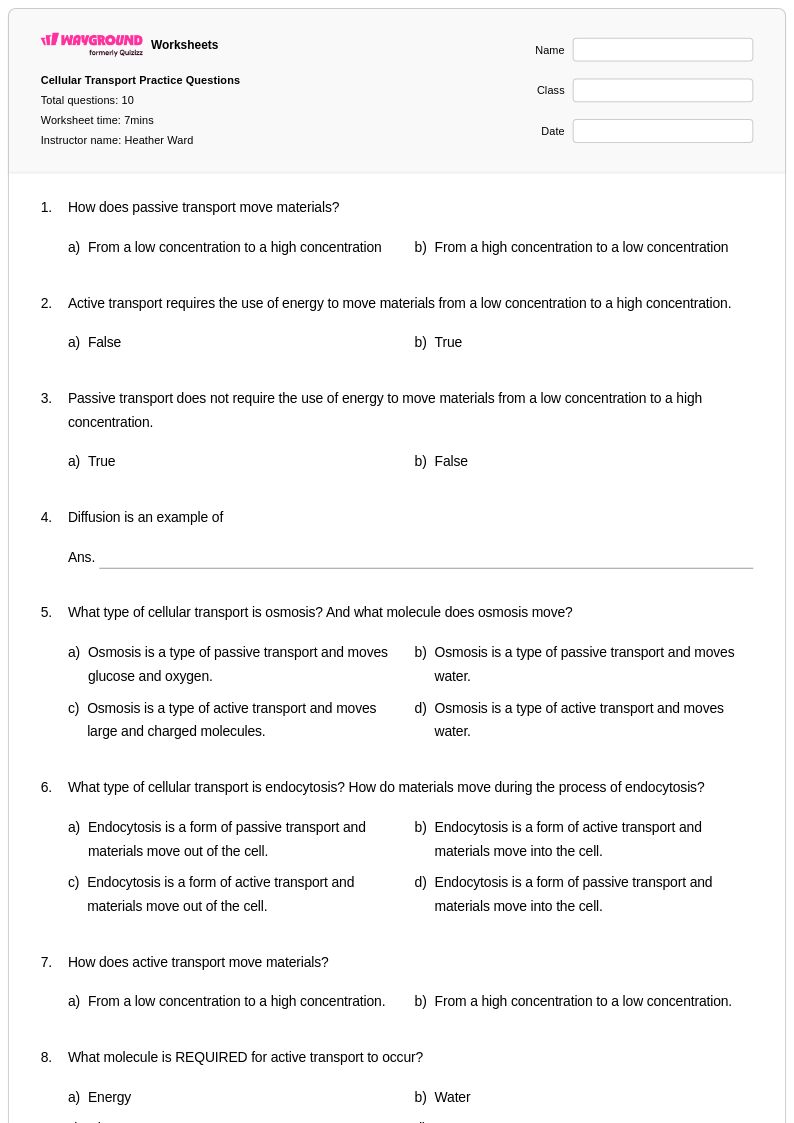
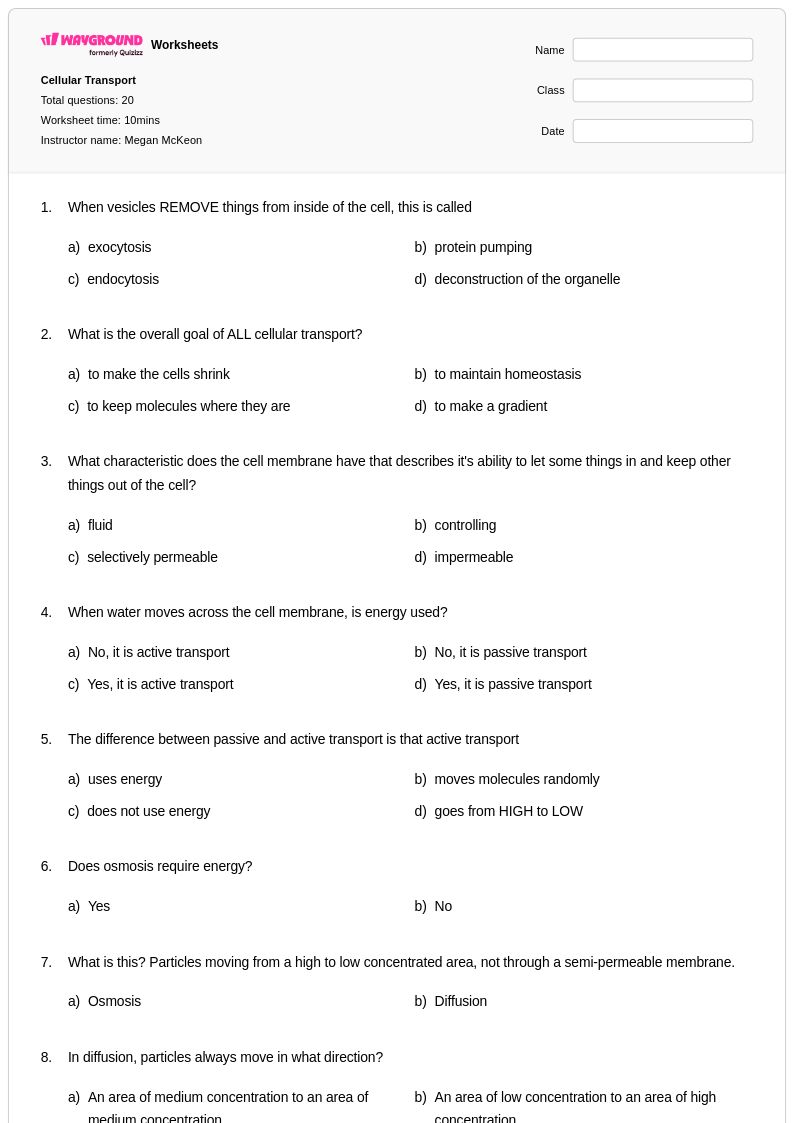
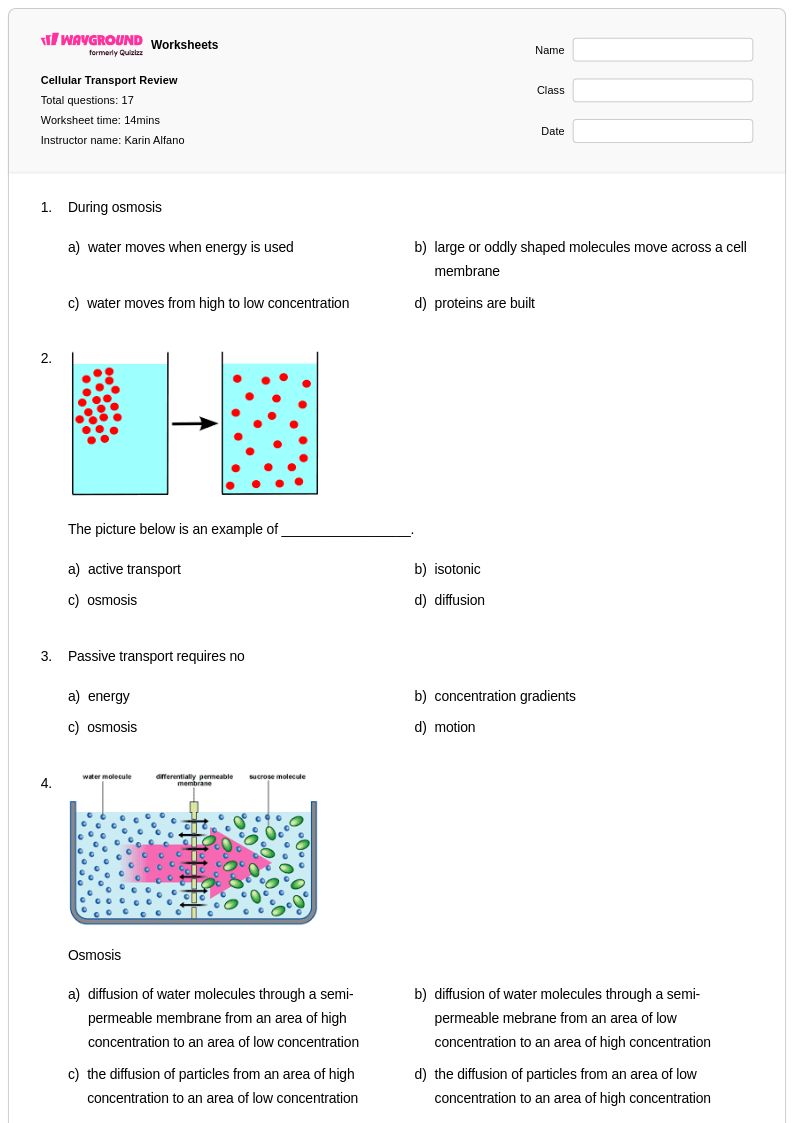
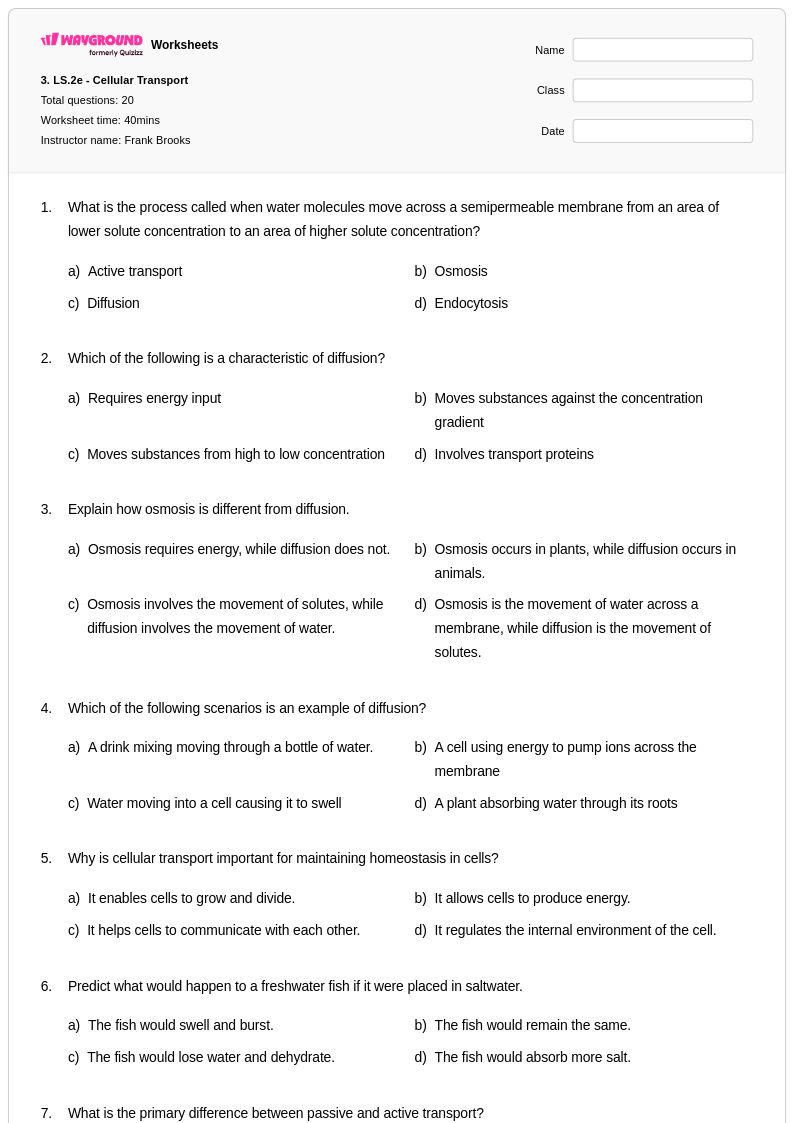
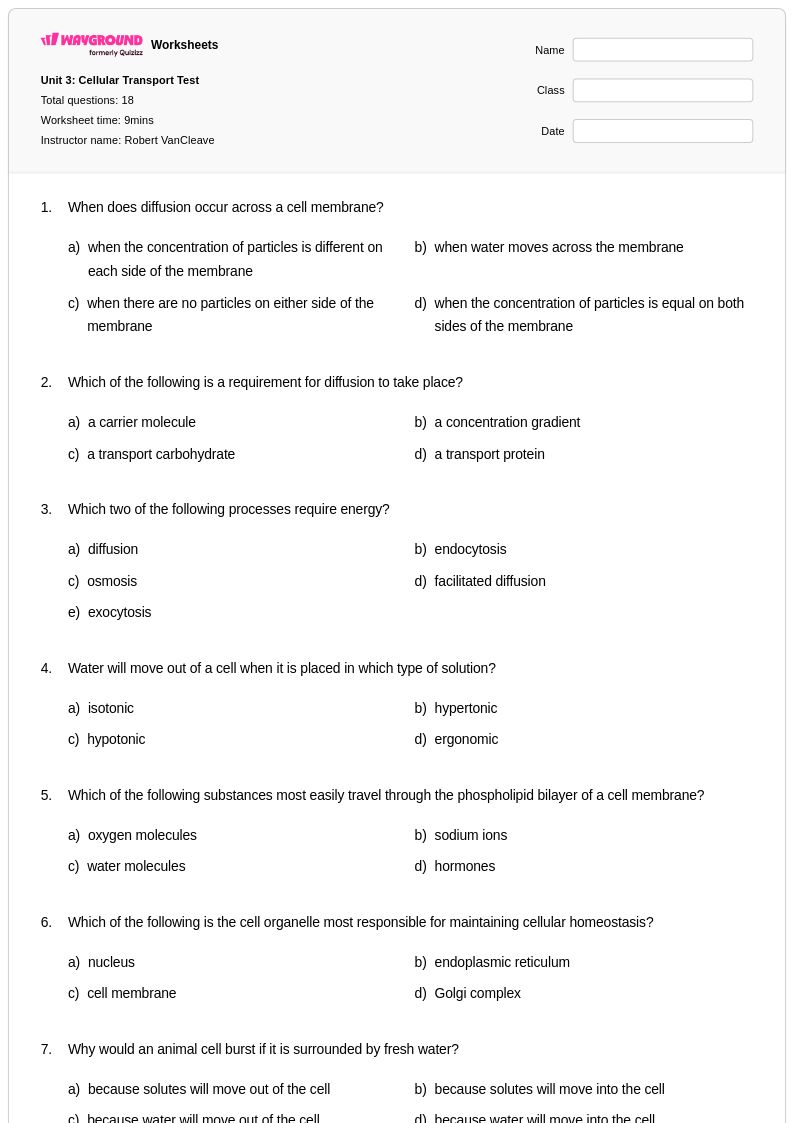
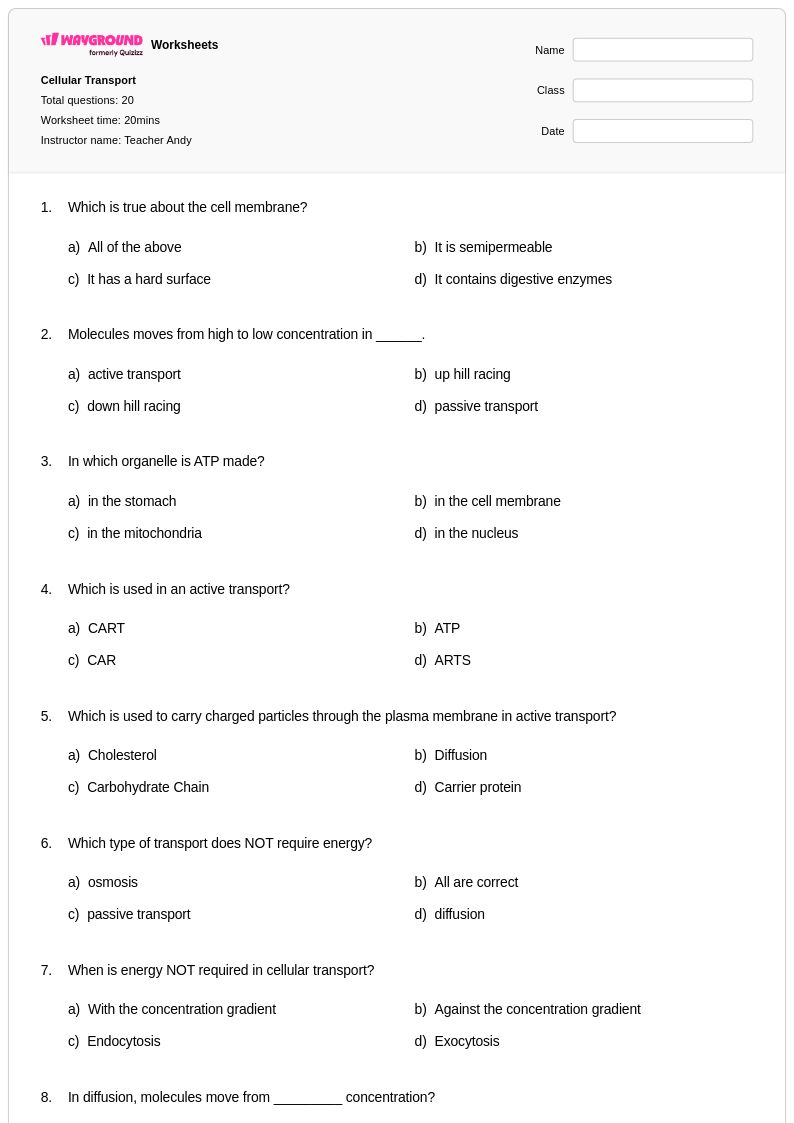
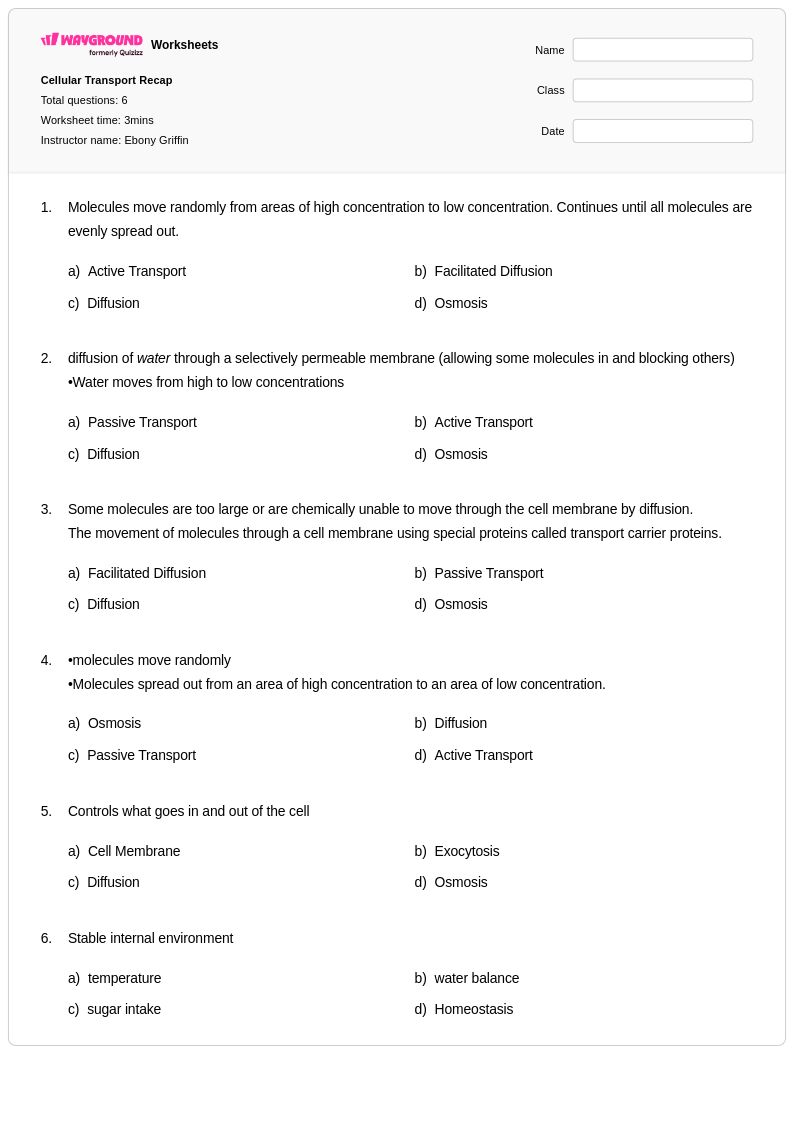
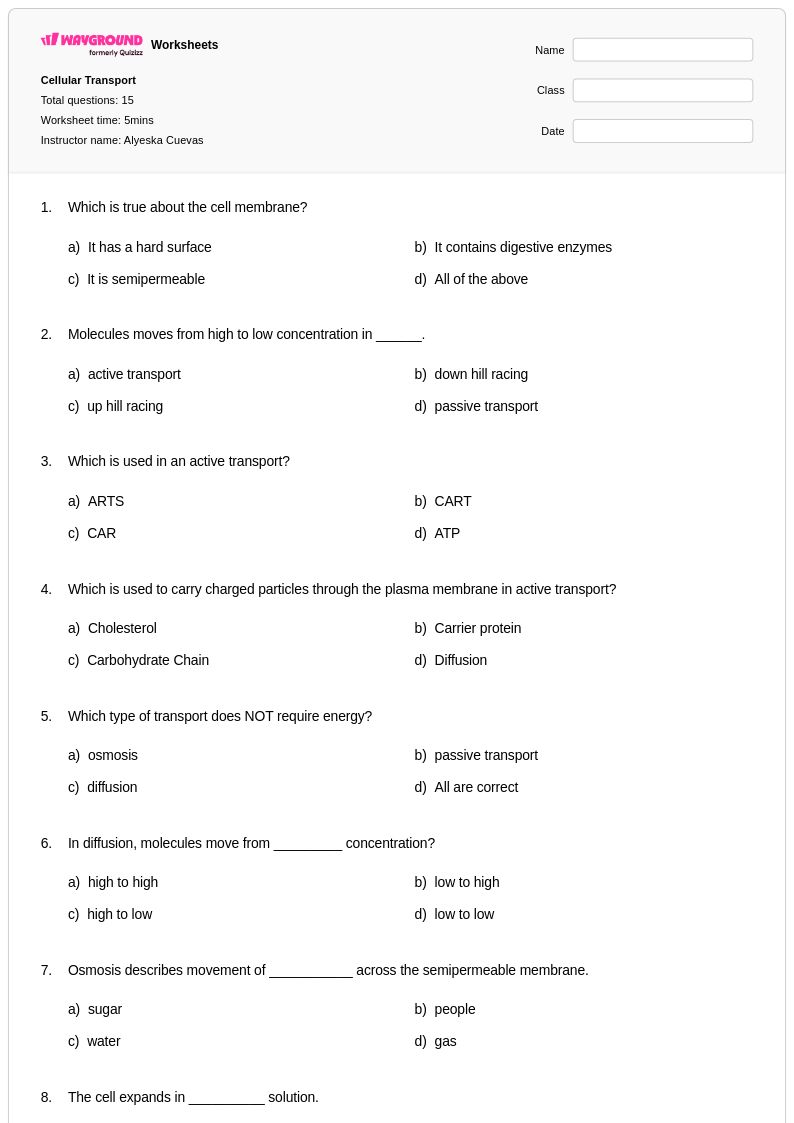
Cellular transport worksheets available through Wayground (formerly Quizizz) provide comprehensive coverage of how substances move across cell membranes, including passive transport mechanisms like diffusion and osmosis, as well as active transport processes that require cellular energy. These carefully designed practice problems strengthen students' understanding of concentration gradients, membrane permeability, and the various transport proteins that facilitate molecular movement in living cells. The worksheets feature detailed diagrams of cell membranes, scenarios involving different transport types, and analytical questions that challenge students to predict outcomes based on cellular conditions. Each printable resource includes a complete answer key, making these free materials invaluable for both independent study and classroom assessment, while the pdf format ensures easy distribution and consistent formatting across different devices and printing systems.
Wayground (formerly Quizizz) empowers educators with millions of teacher-created cellular transport resources that can be easily located through robust search and filtering capabilities, allowing instructors to find materials perfectly matched to their curriculum needs and standards alignment requirements. The platform's differentiation tools enable teachers to customize worksheets for varying skill levels within the same classroom, supporting both remediation for struggling students and enrichment opportunities for advanced learners. These flexible resources are available in both printable and digital formats, including downloadable pdf versions, giving educators the versatility to adapt materials for in-person instruction, remote learning, or hybrid educational environments. The comprehensive collection supports systematic skill practice while streamlining lesson planning, as teachers can quickly access high-quality materials that reinforce complex biological concepts through varied question types and real-world applications.
FAQs
How do I teach cellular transport to high school biology students?
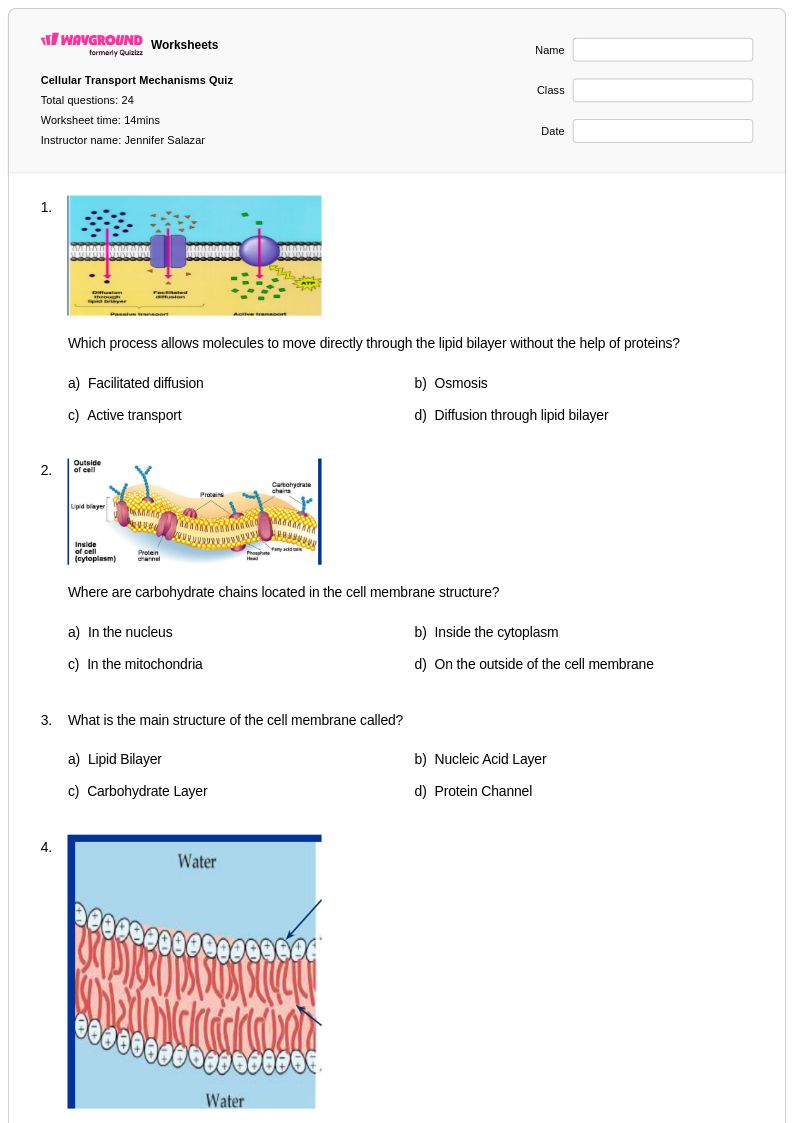
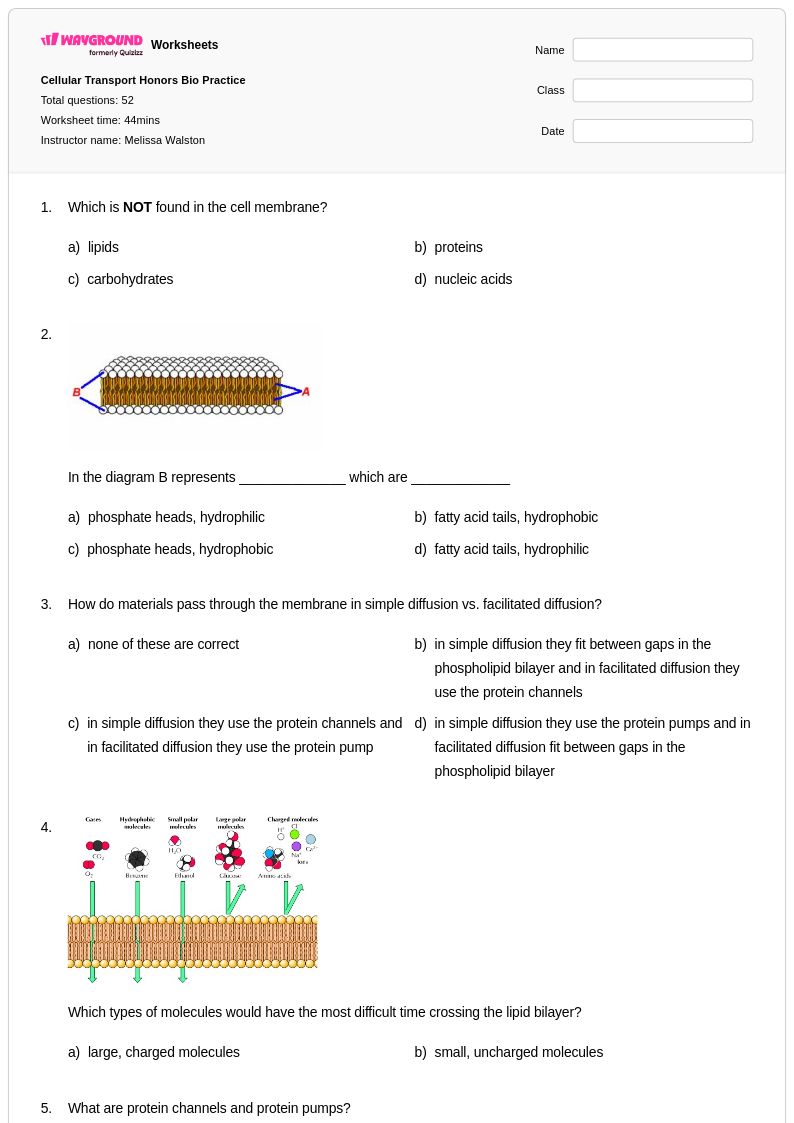
Effective cellular transport instruction typically begins with establishing a solid understanding of concentration gradients and membrane structure before introducing specific transport mechanisms. Teachers often sequence passive transport (diffusion and osmosis) before active transport, since passive processes rely on gradient-driven movement while active transport requires students to understand ATP as an energy source. Using labeled membrane diagrams alongside scenario-based questions helps students connect the abstract concept of permeability to observable biological outcomes.
What exercises help students practice the difference between passive and active transport?
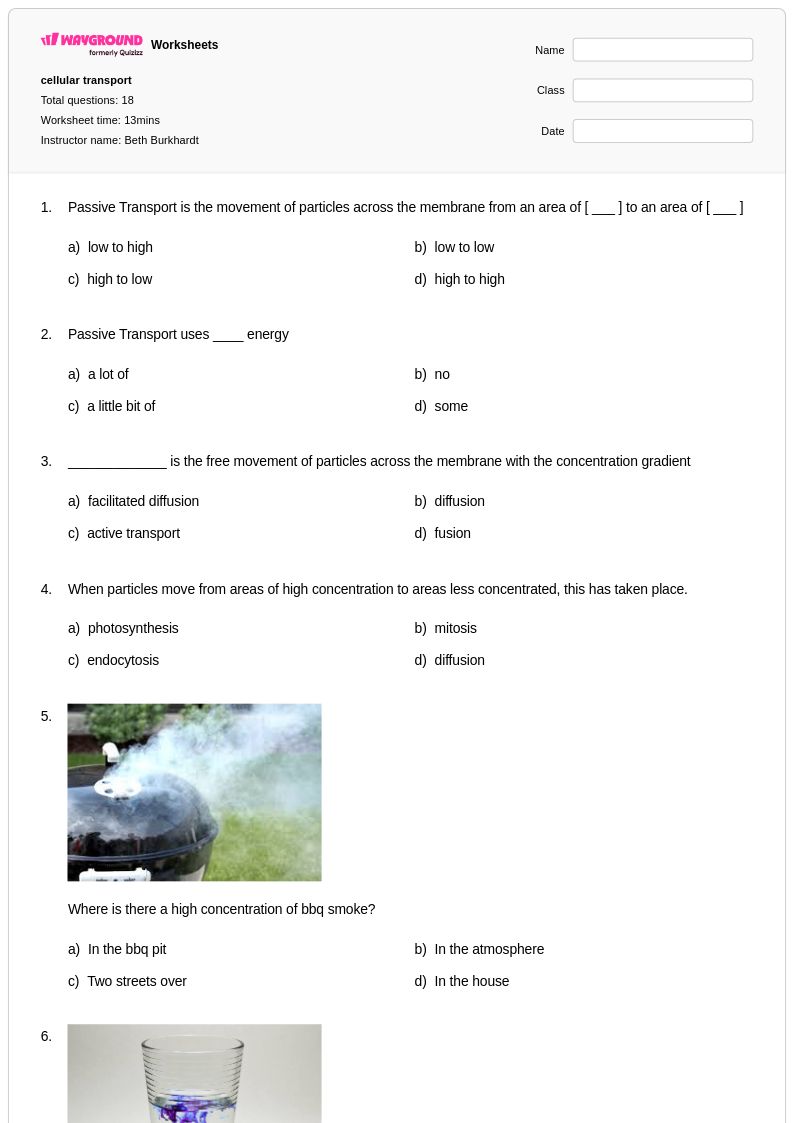
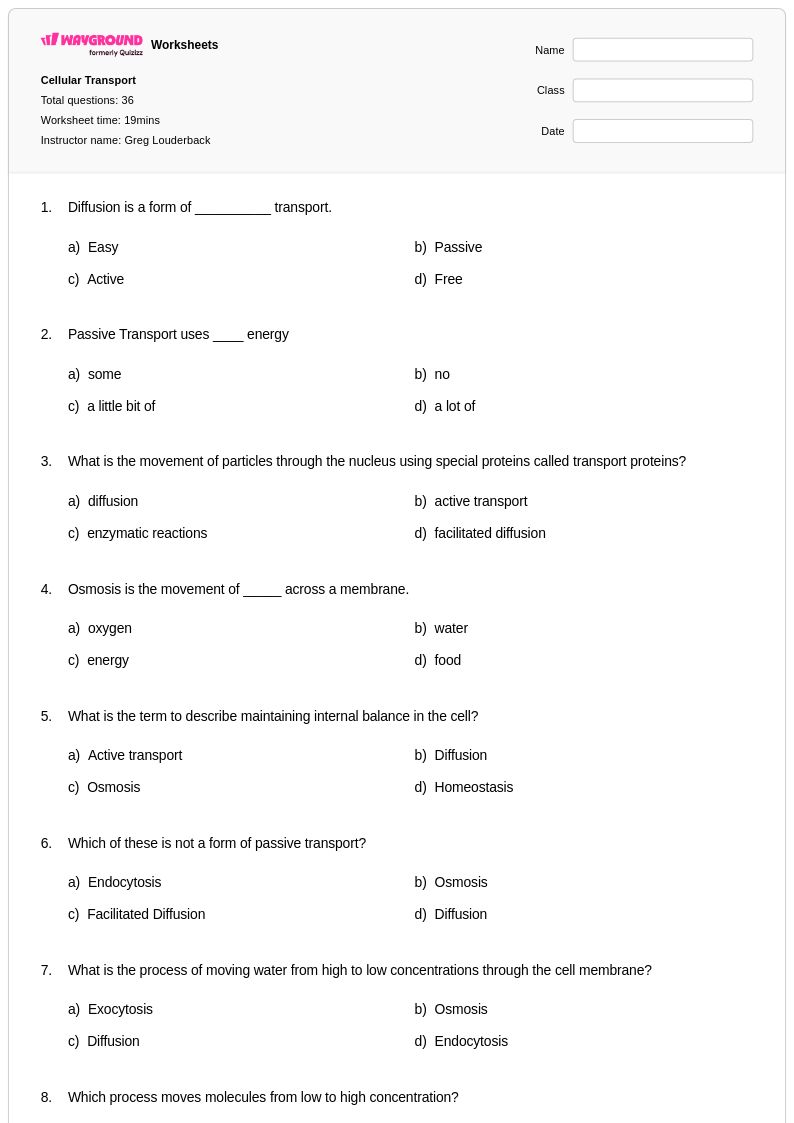
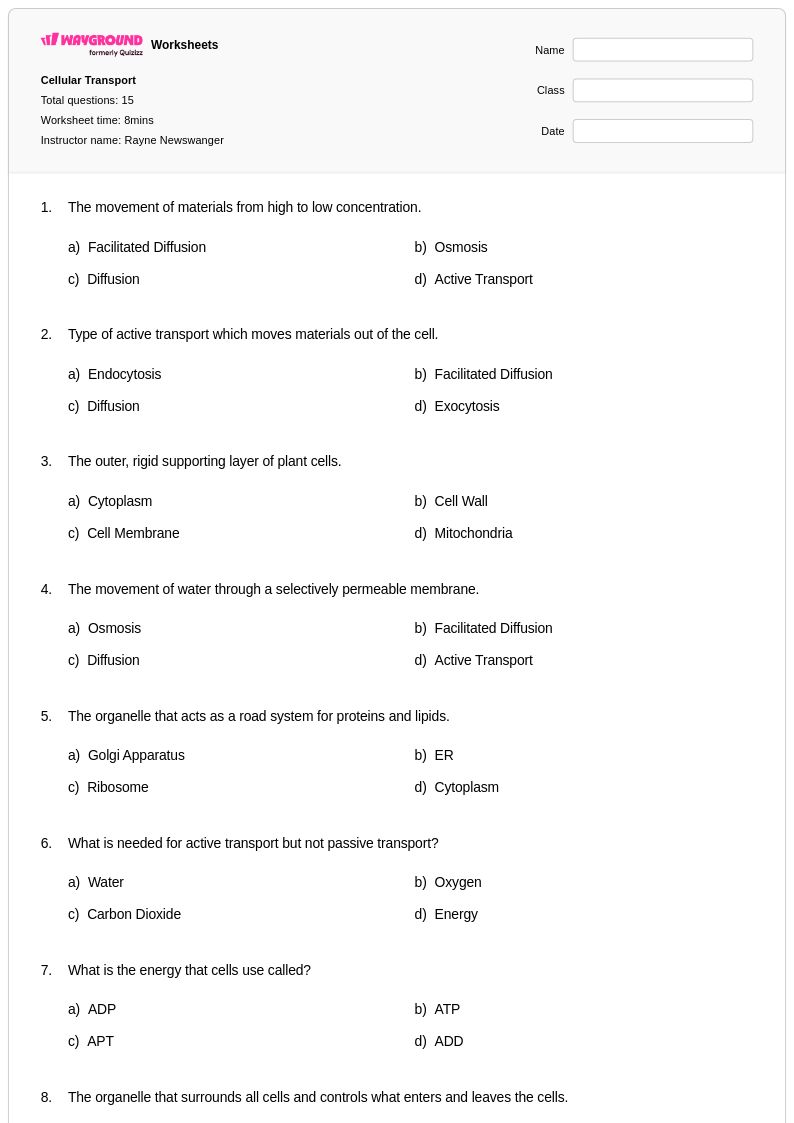
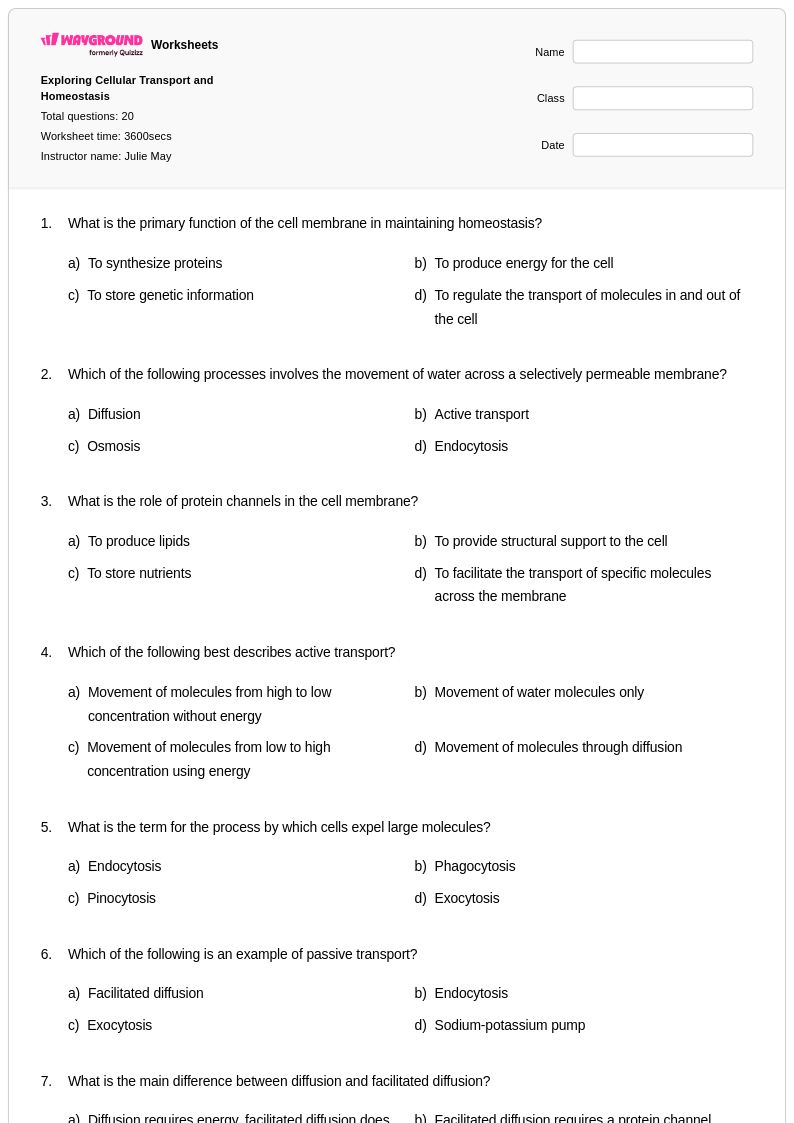
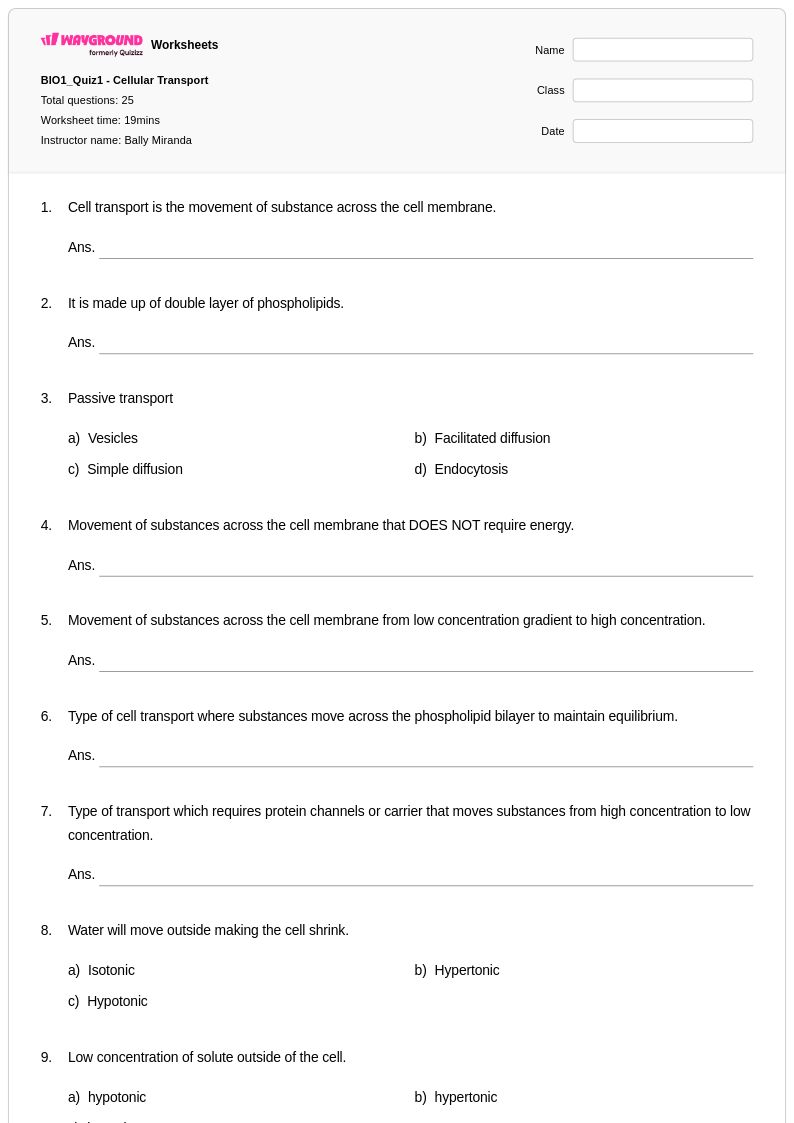
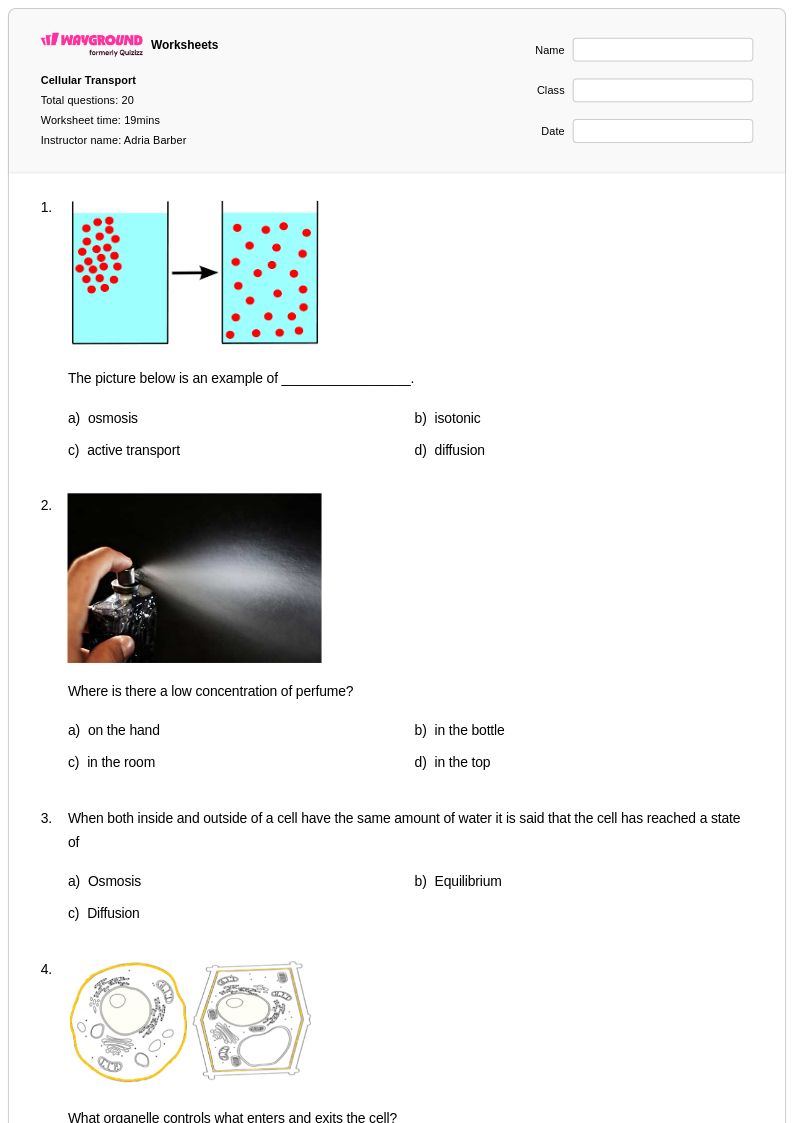
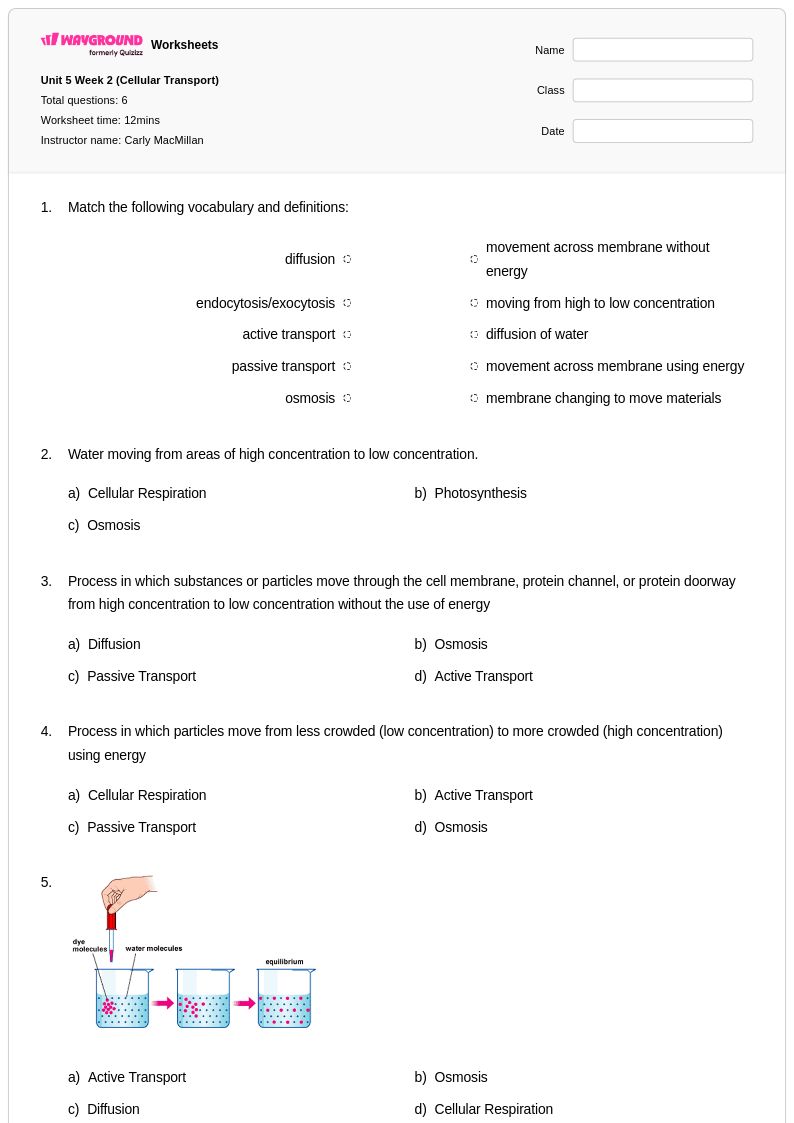
Practice exercises that present students with cellular scenarios and ask them to identify which transport mechanism is occurring are particularly effective for reinforcing this distinction. Analytical questions requiring students to predict the direction of molecular movement based on concentration gradients, or to determine whether a process requires energy, build the kind of reasoning skills assessed on exams. Diagram-based problems that show membrane conditions before and after transport help students visualize what diffusion, osmosis, facilitated diffusion, and active transport each look like at the cellular level.
What mistakes do students commonly make when learning osmosis and diffusion?
One of the most frequent errors is students confusing the direction of osmotic movement, often assuming water moves toward areas of lower solute concentration rather than higher. Students also commonly conflate diffusion and osmosis, not recognizing that osmosis is specifically the movement of water across a selectively permeable membrane. Another persistent misconception is treating facilitated diffusion as a form of active transport because it involves transport proteins, when in fact it requires no cellular energy and still moves molecules down their concentration gradient.
How do I help students who struggle to understand concentration gradients in cellular transport?
Students who struggle with concentration gradients often benefit from concrete analogies before moving to cellular contexts, such as comparing the spread of food coloring in water to diffusion across a membrane. Practice problems that isolate the gradient variable, asking students only to determine high-concentration versus low-concentration sides before predicting movement direction, can reduce cognitive overload. On Wayground, teachers can apply accommodations such as reduced answer choices or read-aloud support for individual students who need additional scaffolding, without disrupting the experience for the rest of the class.
How can I use cellular transport worksheets from Wayground in my classroom?
Wayground's cellular transport worksheets are available as printable PDFs for traditional classroom use and in digital formats for technology-integrated or remote learning environments, giving teachers flexibility in how they distribute and collect student work. Teachers can also host worksheets as interactive quizzes directly on Wayground, allowing for real-time student response tracking. Each worksheet includes a complete answer key, making them suitable for independent practice, guided review, or formative assessment without additional preparation.
What types of questions are included in cellular transport worksheets?
Strong cellular transport worksheets typically include a mix of diagram interpretation, scenario-based analysis, and conceptual questions that ask students to apply their understanding to novel situations. Questions that present membrane conditions and ask students to predict solute or water movement outcomes are particularly useful for developing higher-order thinking. Including questions on transport proteins, membrane permeability, and the energy requirements of different transport types ensures comprehensive coverage of the topic.