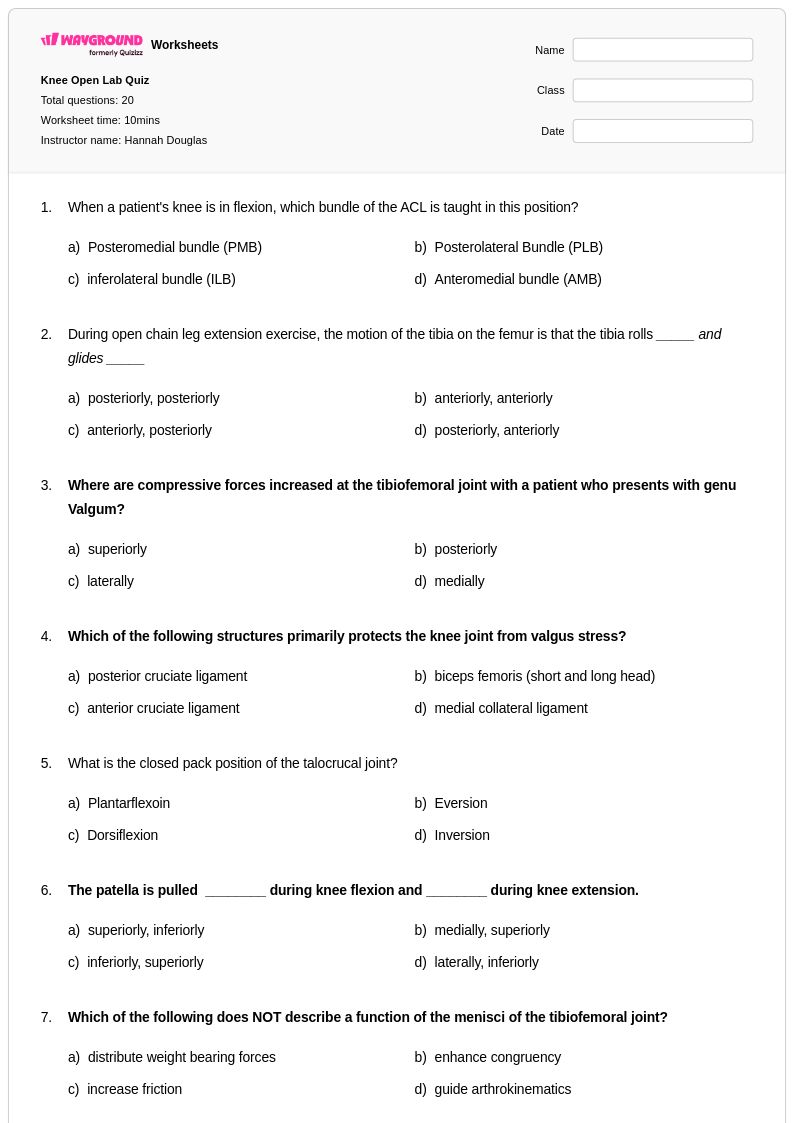
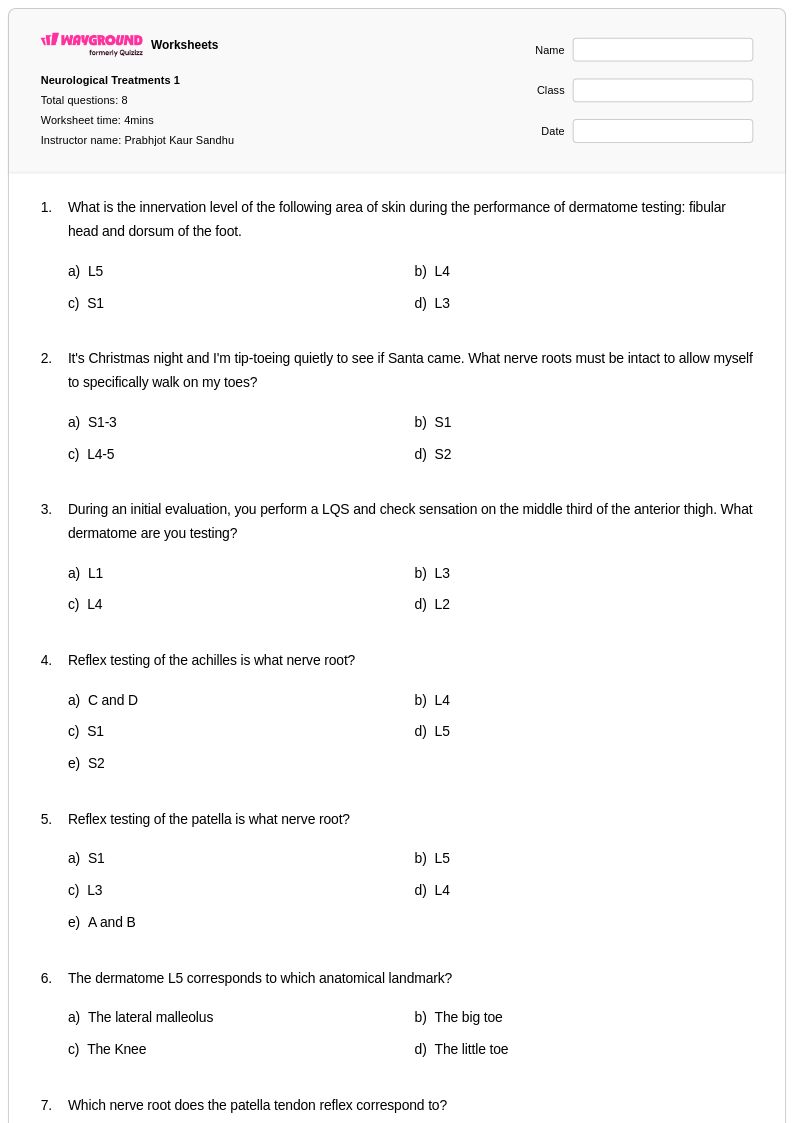
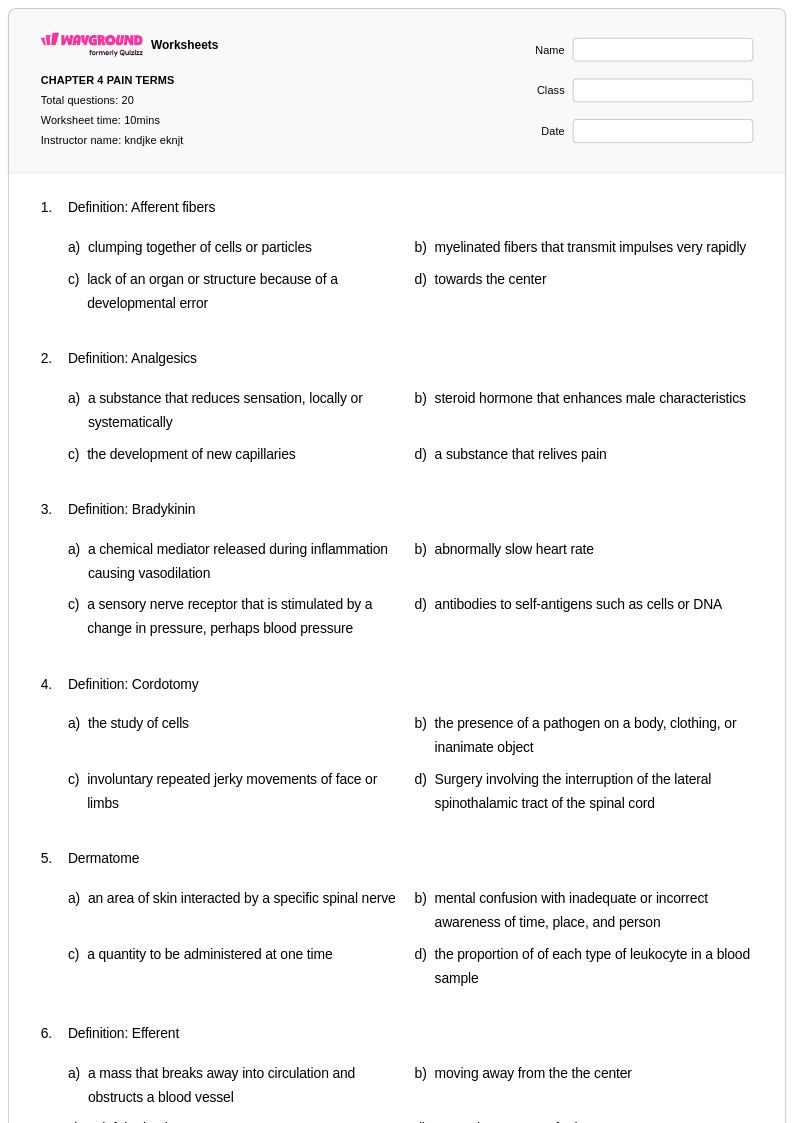
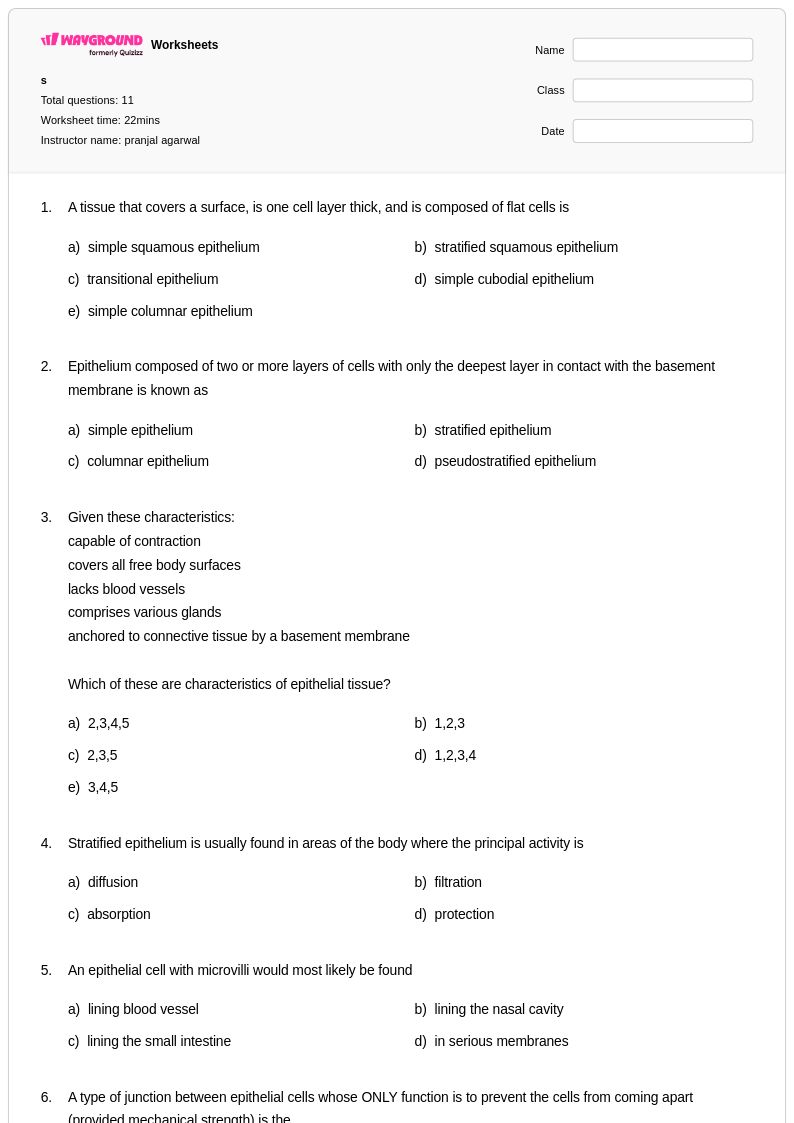
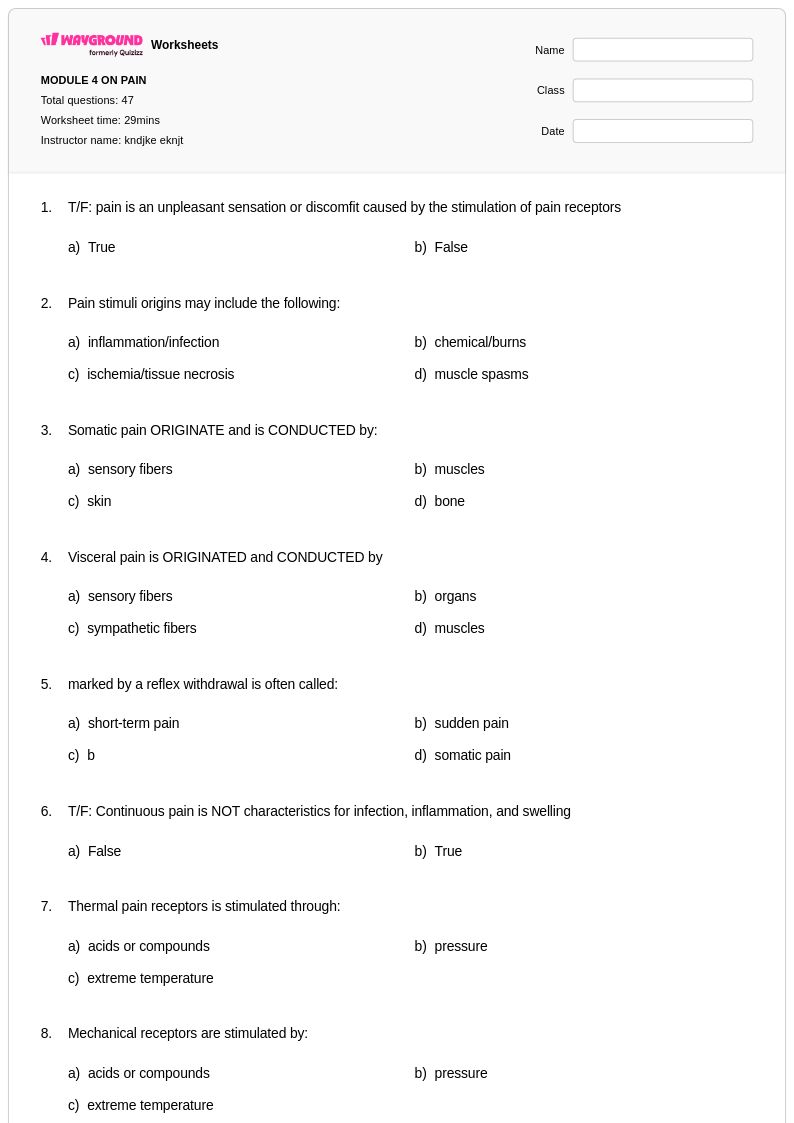
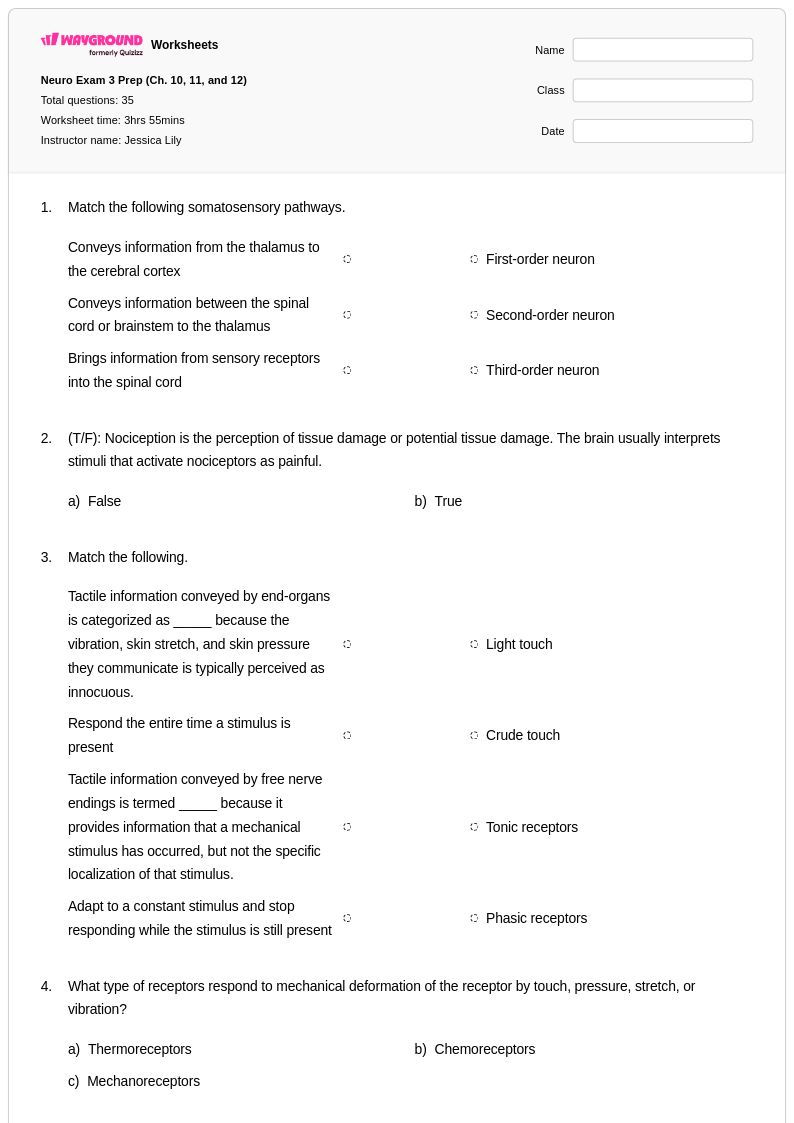
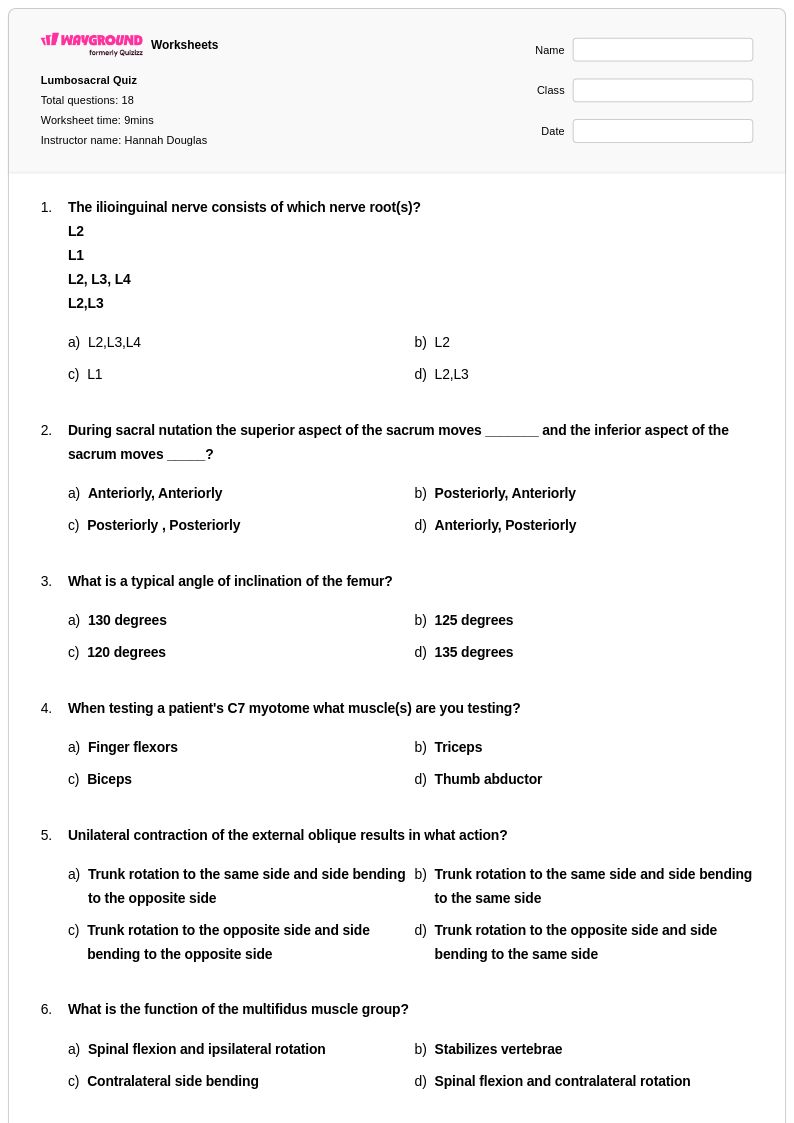
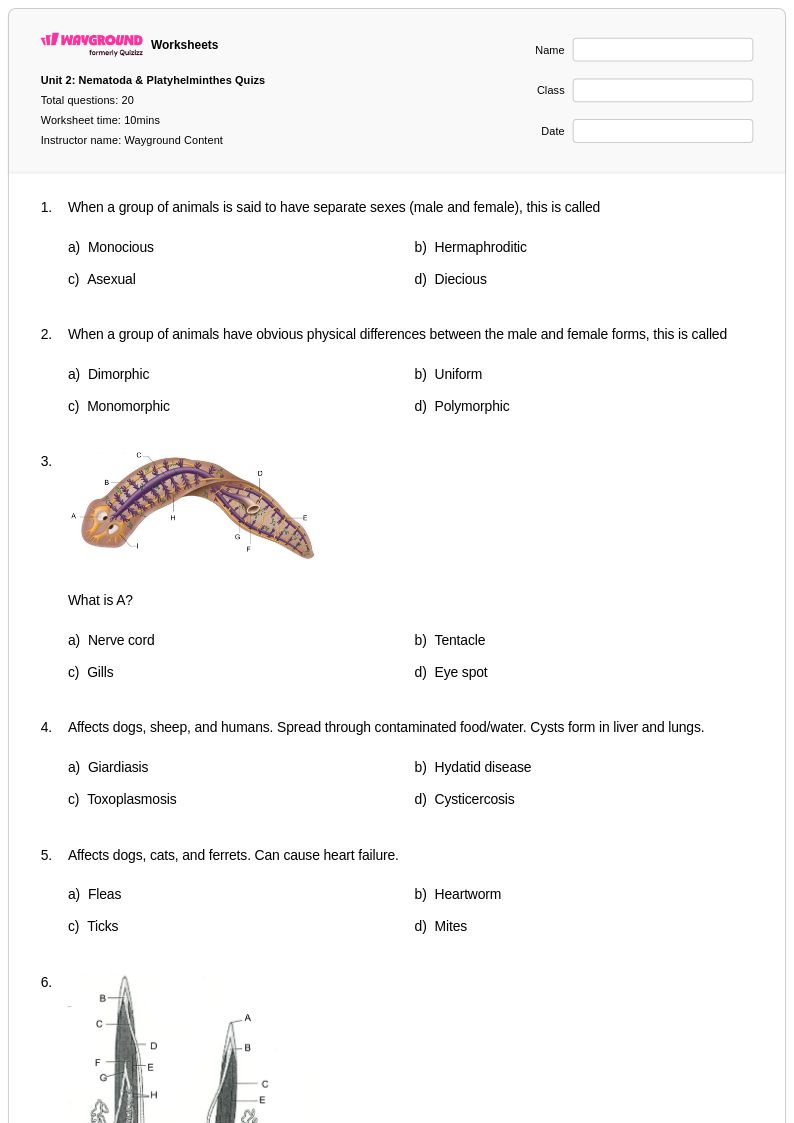
Explore Wayground's comprehensive collection of dermatome worksheets and printables that help students master nerve distribution patterns through engaging practice problems, free PDF resources, and detailed answer keys for effective biology learning.
Dermatome worksheets available through Wayground (formerly Quizizz) provide comprehensive educational resources designed to help students master the complex mapping of spinal nerve distributions across the human body. These specialized biology worksheets focus on building critical anatomical knowledge by teaching students to identify the specific areas of skin innervated by individual spinal nerves, understand the clinical significance of dermatome patterns, and apply this knowledge to neurological assessment scenarios. The collection includes detailed practice problems that challenge students to trace nerve pathways, interpret dermatome charts, and analyze case studies involving sensory deficits. Each worksheet comes with a comprehensive answer key and is available as free printable pdf resources, enabling students to develop proficiency in this essential neuroanatomy concept through structured, hands-on learning activities.
Wayground (formerly Quizizz) empowers educators with an extensive library of millions of teacher-created dermatome resources that streamline lesson planning and enhance student understanding of peripheral nervous system anatomy. The platform's advanced search and filtering capabilities allow teachers to quickly locate worksheets aligned with specific educational standards and customize materials to match diverse learning needs and skill levels. These versatile resources are available in both printable and digital pdf formats, providing flexibility for classroom instruction, remote learning, and independent study sessions. Teachers can leverage these differentiated materials for targeted remediation of struggling students, enrichment activities for advanced learners, and systematic skill practice that reinforces the spatial relationships between spinal cord segments and their corresponding sensory territories, ultimately supporting comprehensive mastery of this fundamental neuroanatomy topic.
FAQs
How do I teach dermatomes to students who struggle with spatial anatomy?
Teaching dermatomes effectively requires anchoring spatial patterns to clinical meaning before asking students to memorize distributions. Start by having students trace a single spinal level, such as C6 or L4, from the vertebra to its skin territory on a body diagram, then connect that pathway to a real neurological scenario like a disc herniation. Building from one level outward helps students develop a mental map rather than relying on rote recall of disconnected regions.
What exercises help students practice identifying dermatome distributions?
The most effective practice exercises for dermatomes involve chart interpretation, pathway tracing, and case-based application. Students benefit from labeling blank body diagrams with spinal nerve levels, matching sensory deficit descriptions to the corresponding dermatome, and analyzing short clinical vignettes where they must identify which nerve root is involved based on symptom location. Layering these exercise types builds both recognition and applied reasoning.
What mistakes do students commonly make when learning dermatomes?
The most common error is treating dermatome boundaries as precise, non-overlapping lines when in reality adjacent spinal nerve territories overlap significantly. Students also frequently confuse dermatomal patterns with peripheral nerve distributions, which follow different anatomical routes entirely. A third common mistake is memorizing dermatomes in isolation rather than understanding their relationship to spinal cord segments, which leads to errors on clinical application questions.
How can I use dermatome worksheets to assess student understanding?
Dermatome worksheets are well suited for formative assessment because they can target discrete skills, such as accurately labeling a dermatome chart, interpreting a sensory loss pattern, or matching a clinical finding to a nerve root level. Using case study problems as exit tickets or short quizzes reveals whether students can apply anatomical knowledge rather than just reproduce a memorized diagram, which is the higher-order skill most anatomy and physiology courses require.
How do I use Wayground's dermatome worksheets in my classroom?
Wayground's dermatome worksheets are available as free printable PDFs and in digital formats, making them usable in traditional lab settings, blended classrooms, and remote learning environments. Teachers can assign them as digital quizzes directly through the Wayground platform, where built-in accommodations such as read aloud, extended time, and reduced answer choices can be applied to individual students as needed. Each worksheet includes a complete answer key, so they work equally well for guided practice, independent study, or self-paced review.
How do dermatome worksheets support students with different learning needs?
Wayground allows teachers to apply individual accommodations when assigning dermatome worksheets digitally, including read aloud support for students who benefit from audio delivery of anatomical terminology, extended time for students who need additional processing time, and reduced answer choices to lower cognitive load on selected questions. These settings can be assigned per student without notifying the rest of the class, and they carry over to future sessions automatically, reducing setup time across a unit.