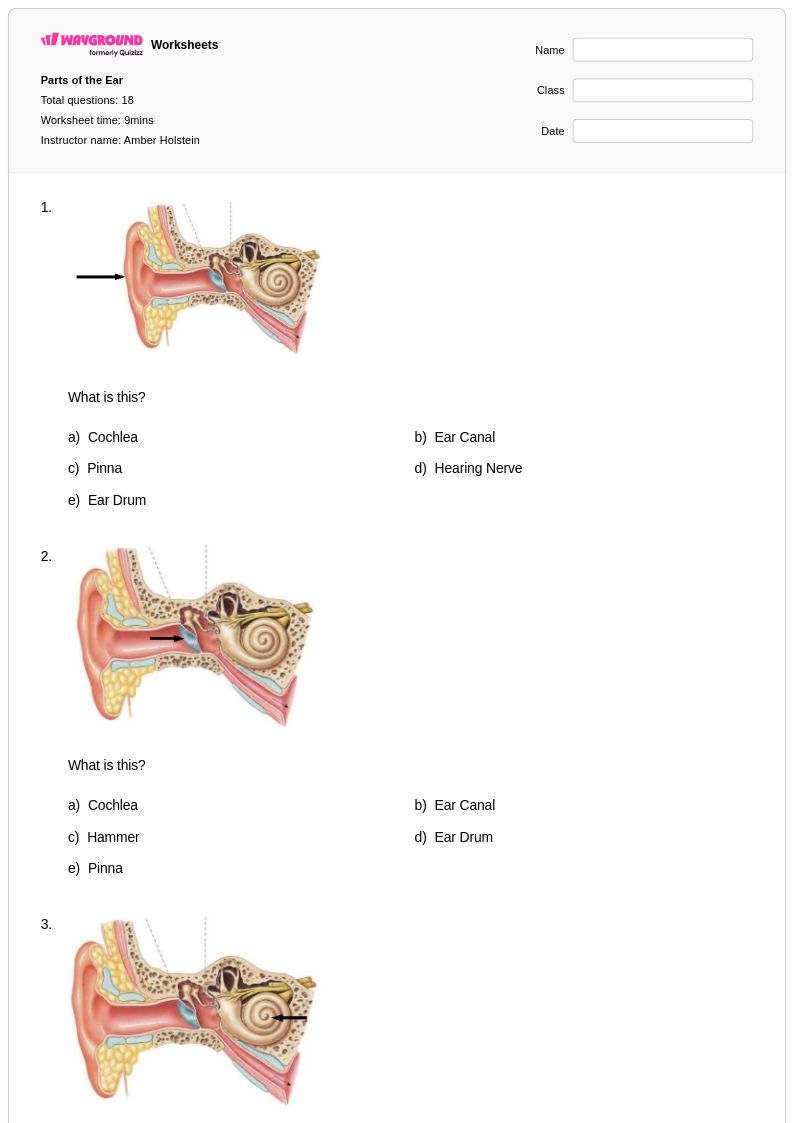
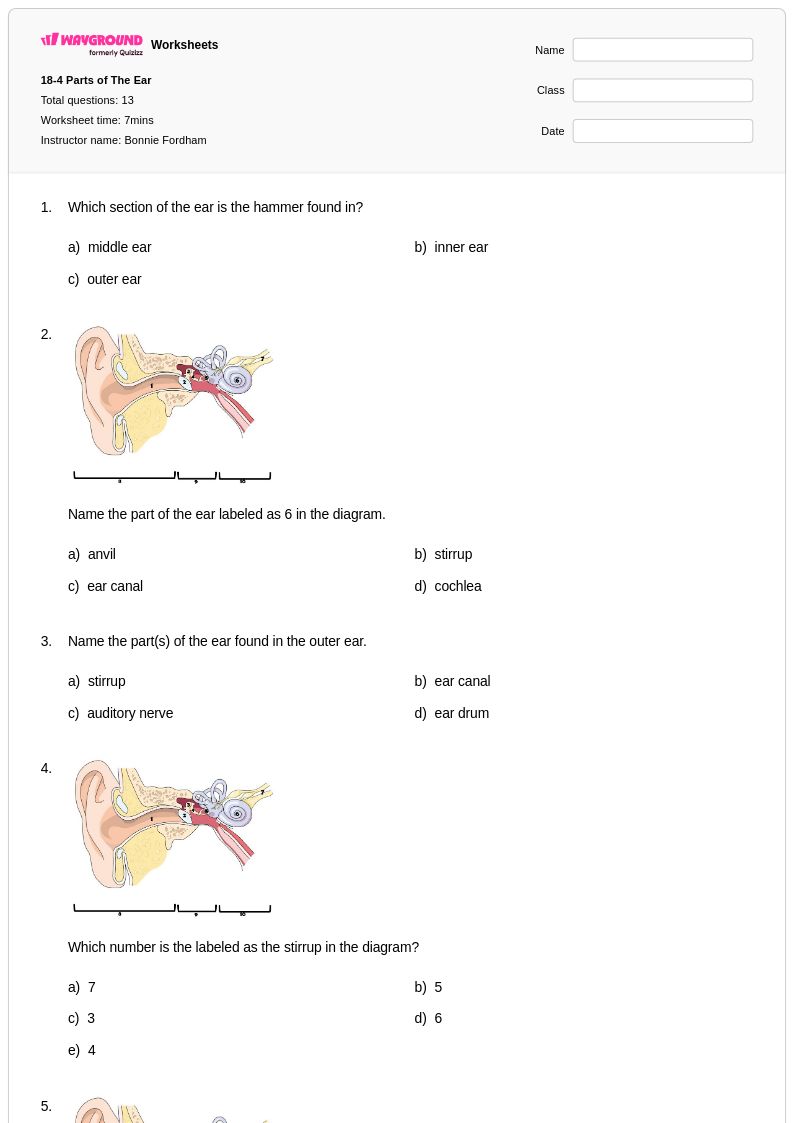
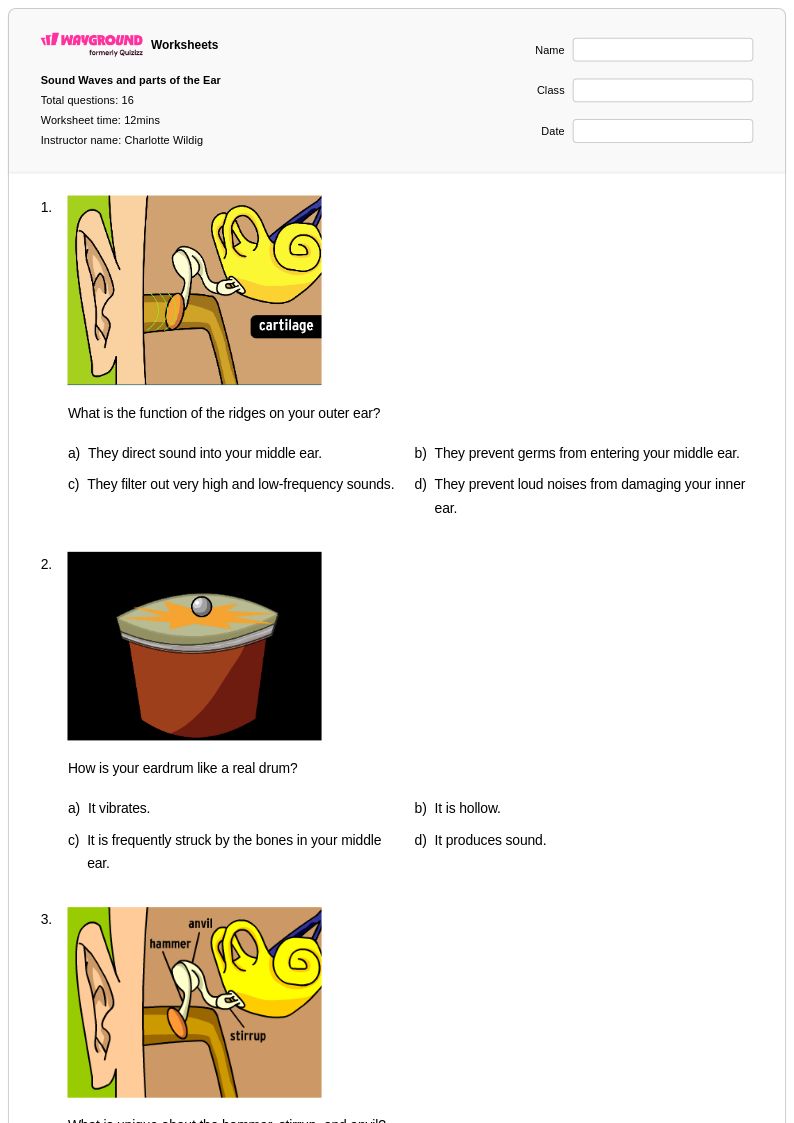
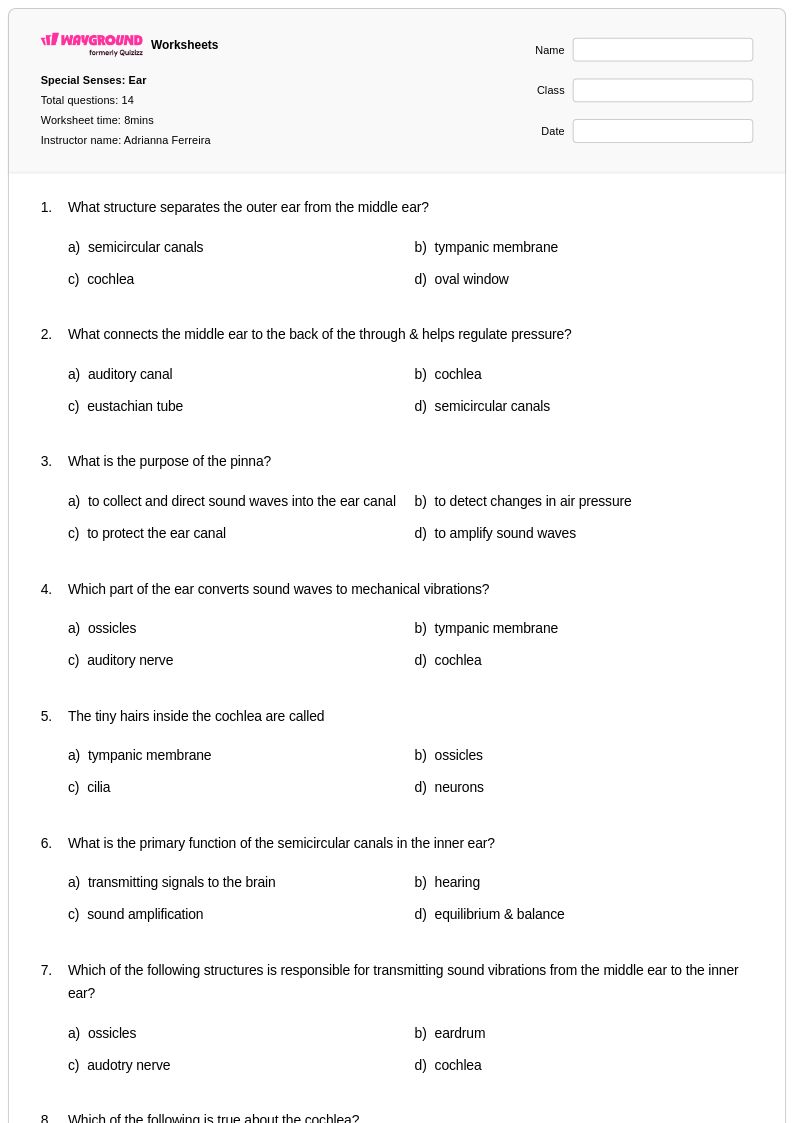
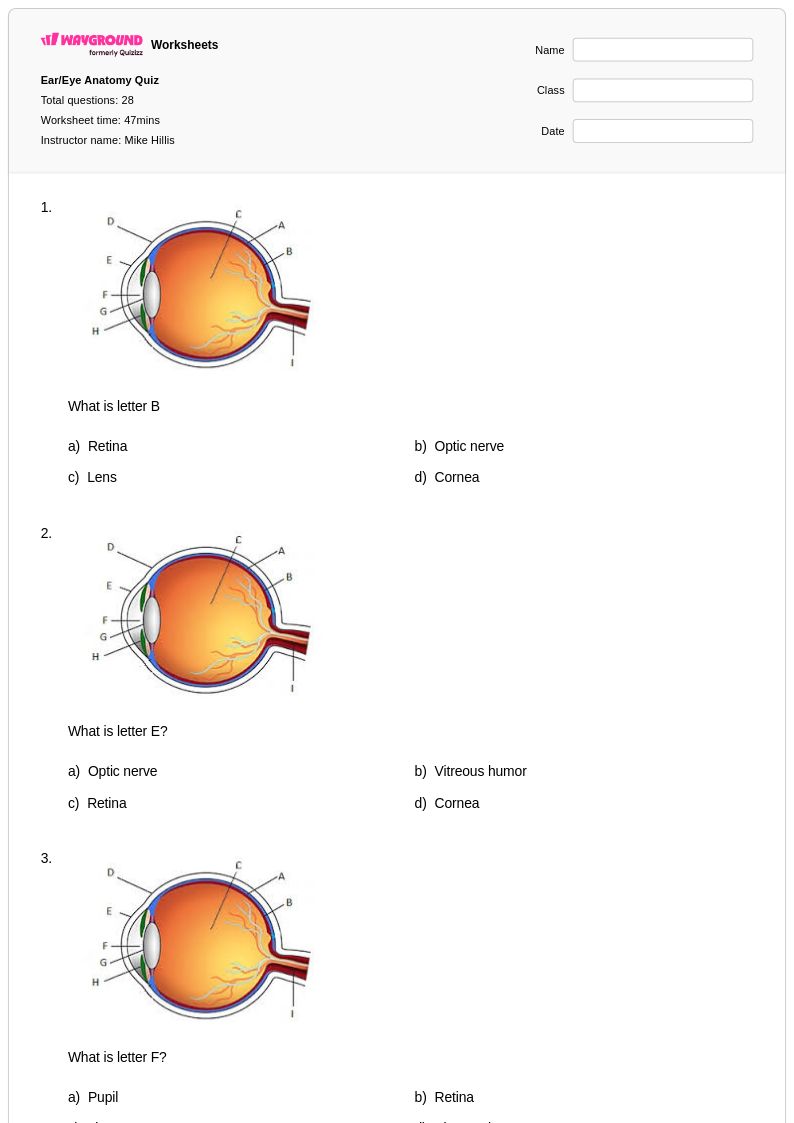
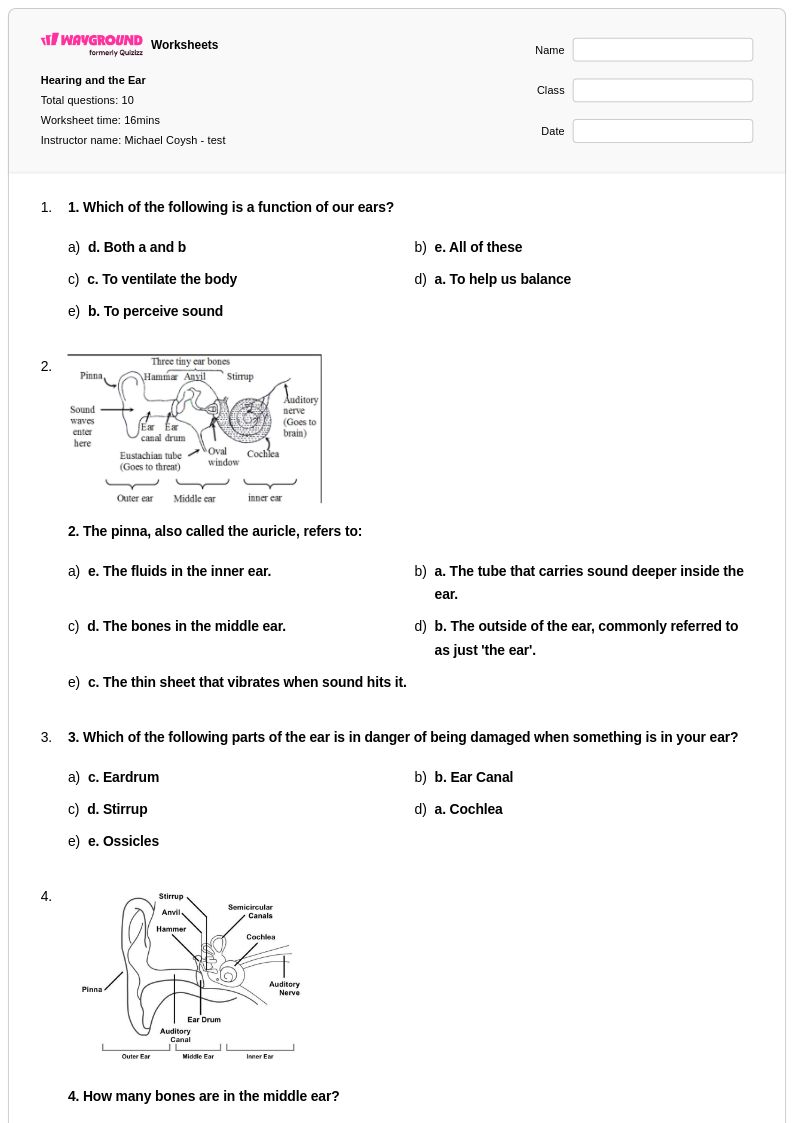
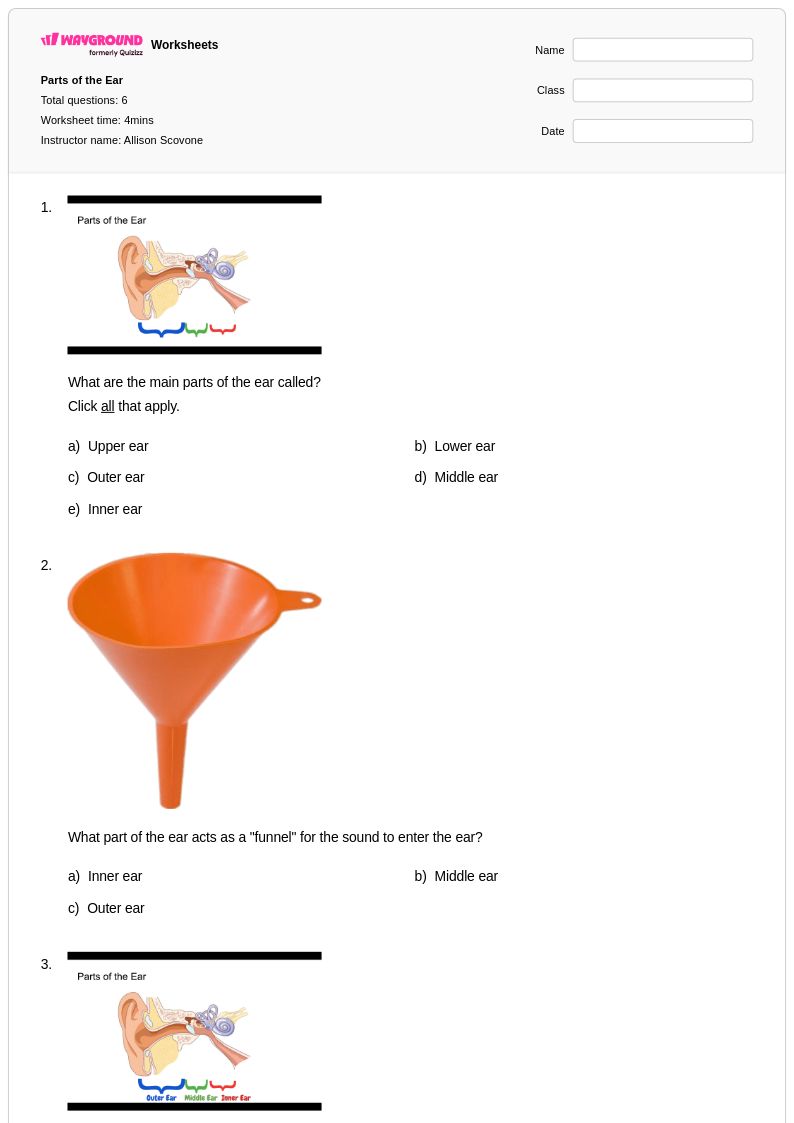
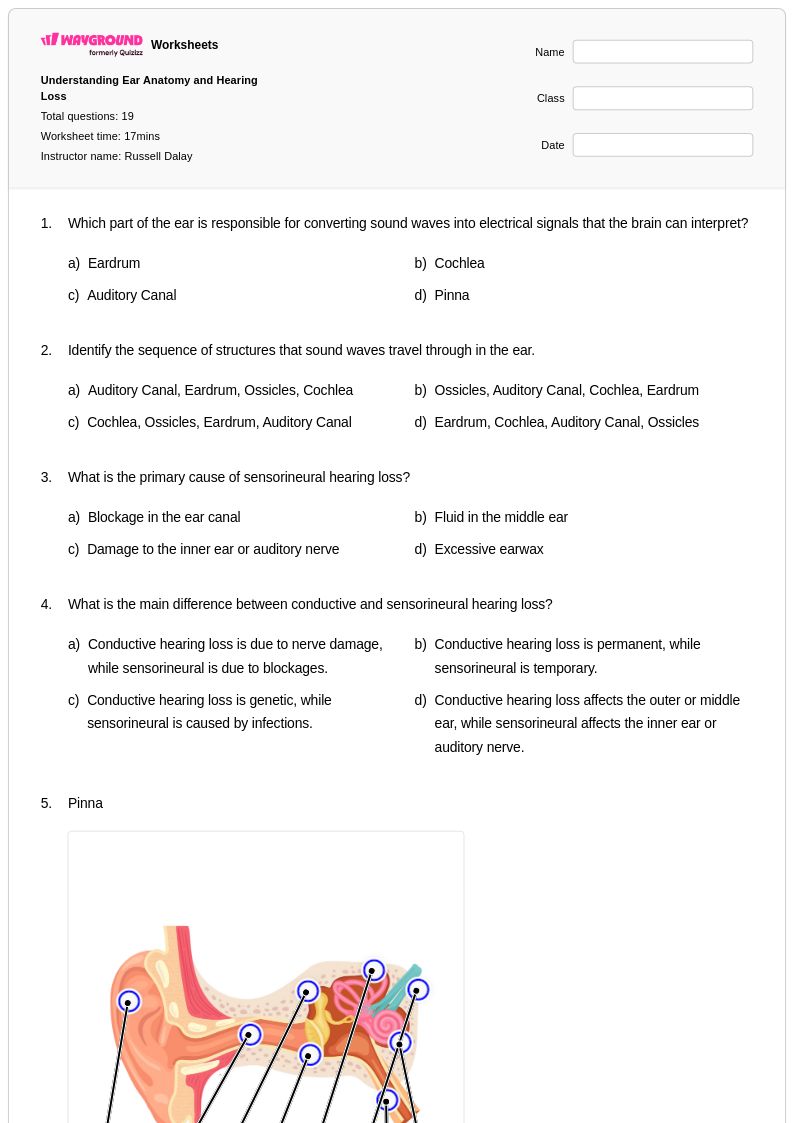
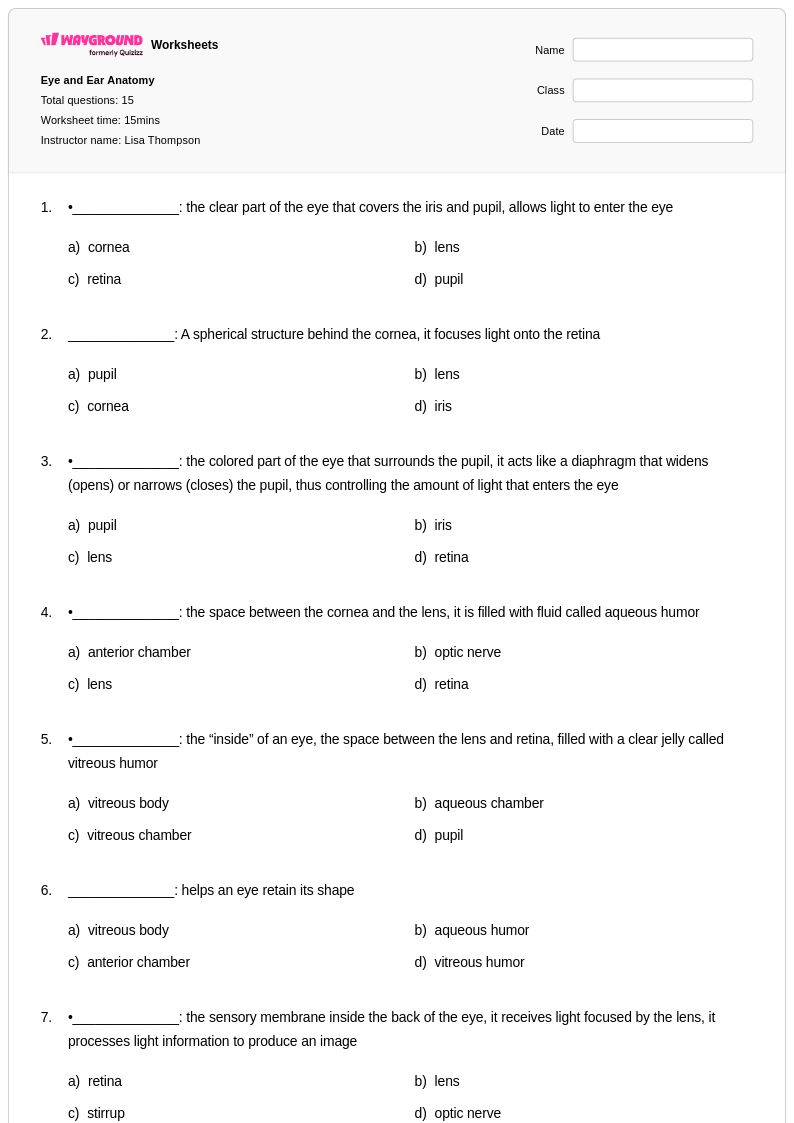
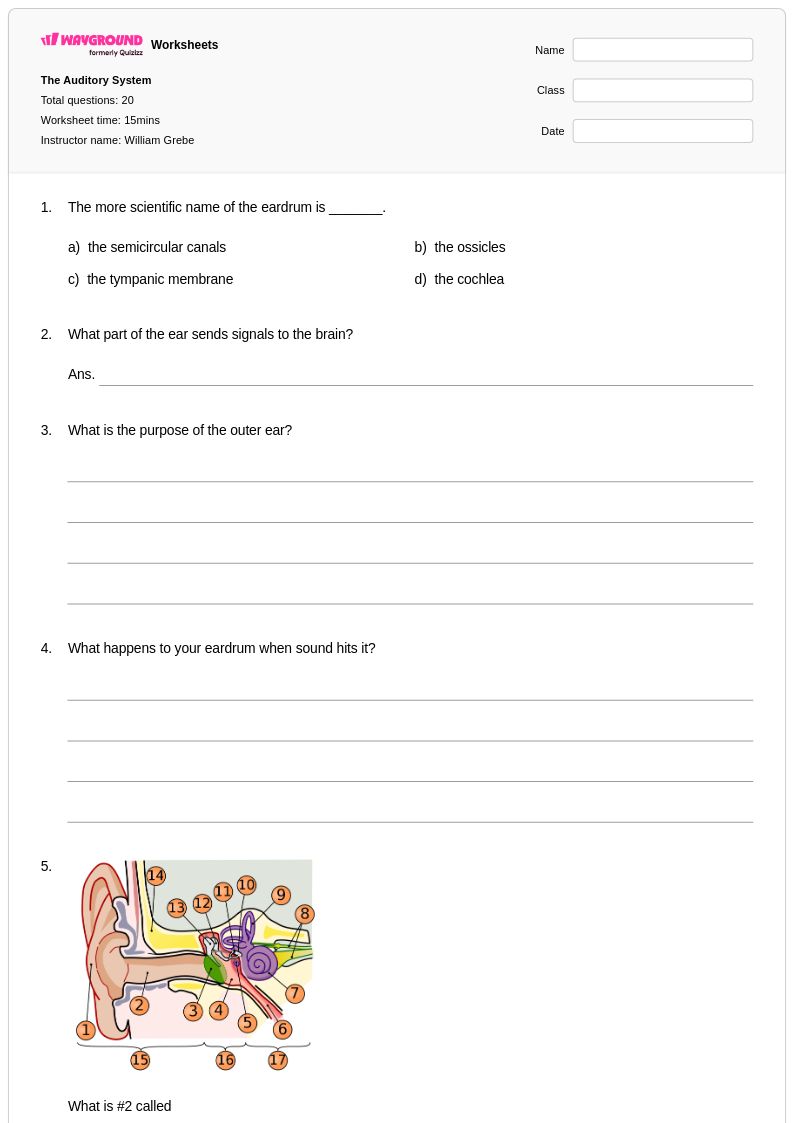
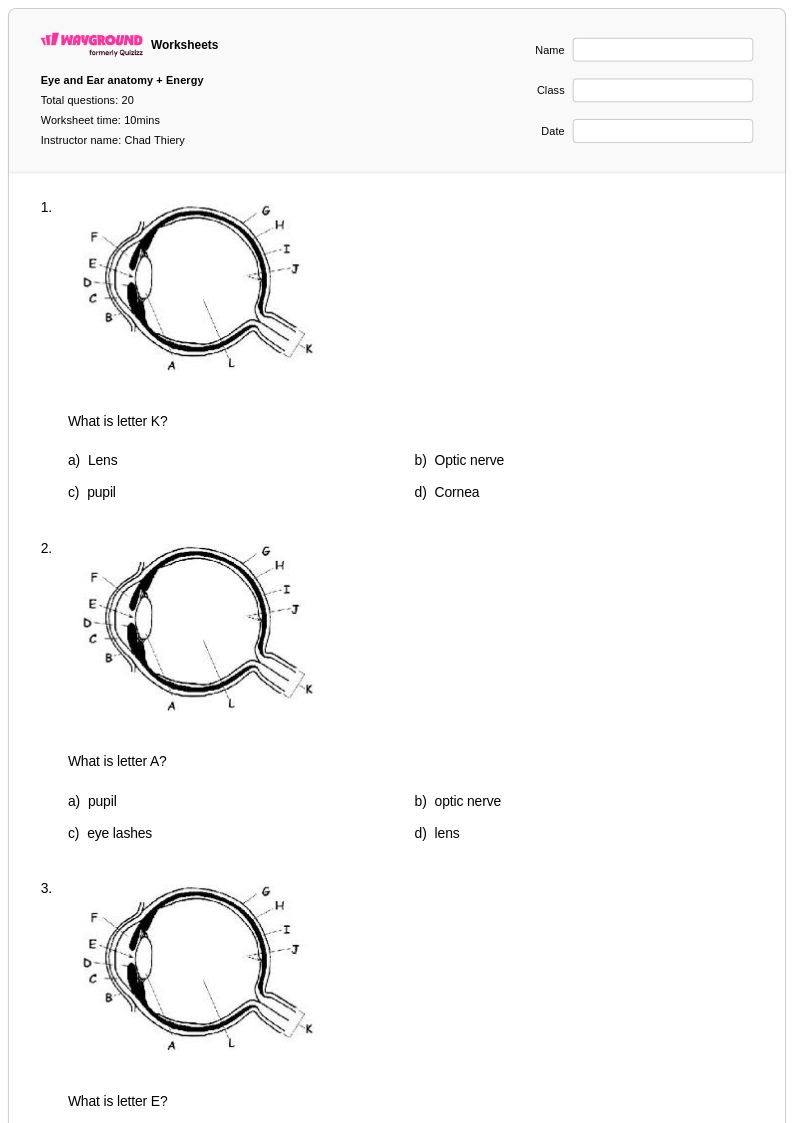
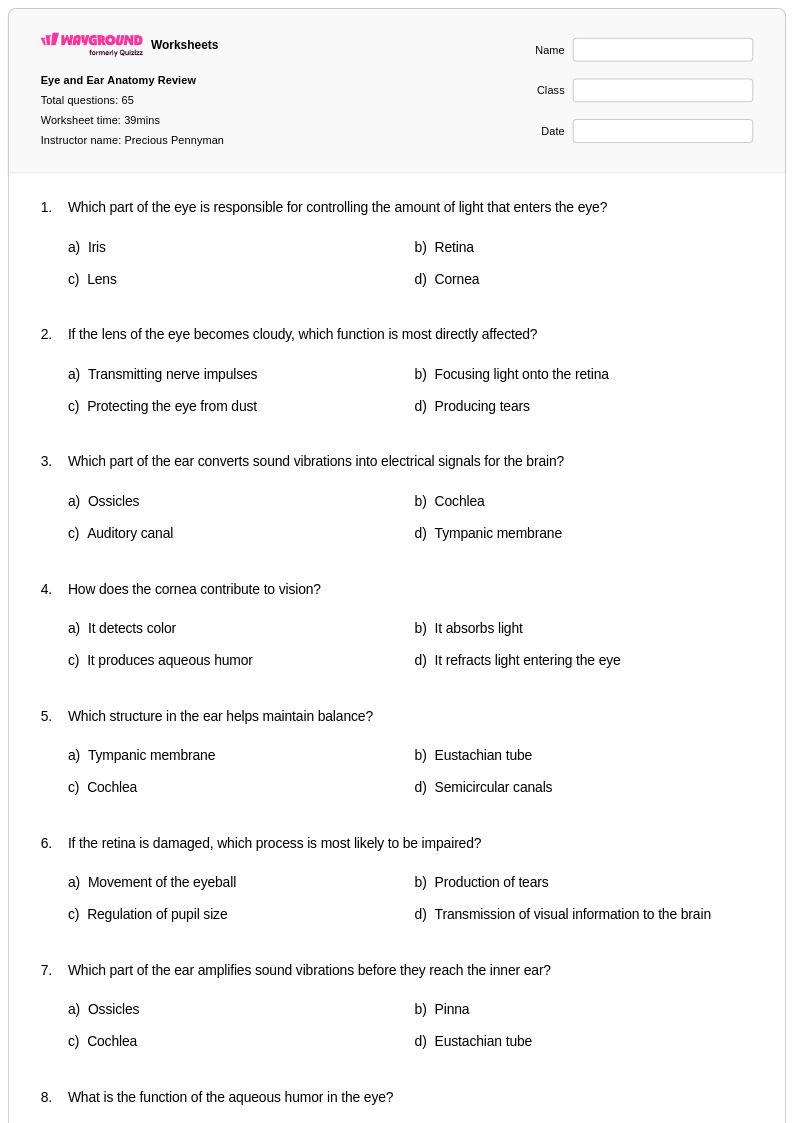
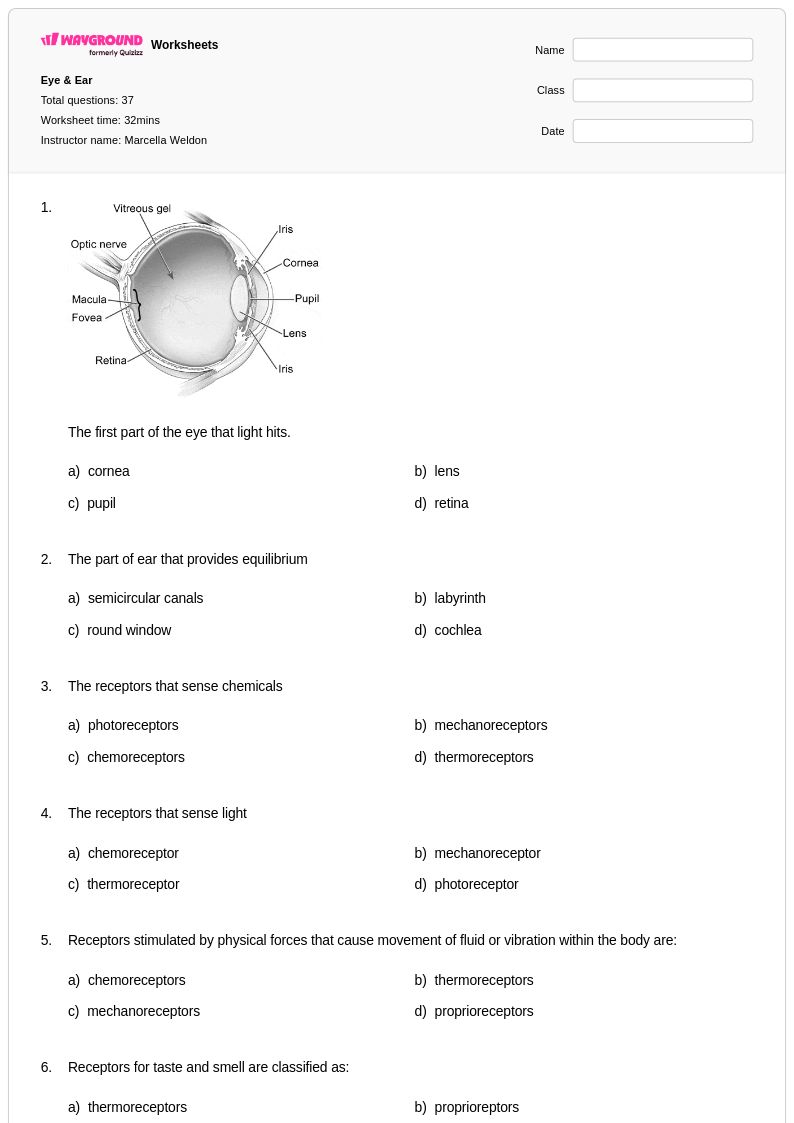
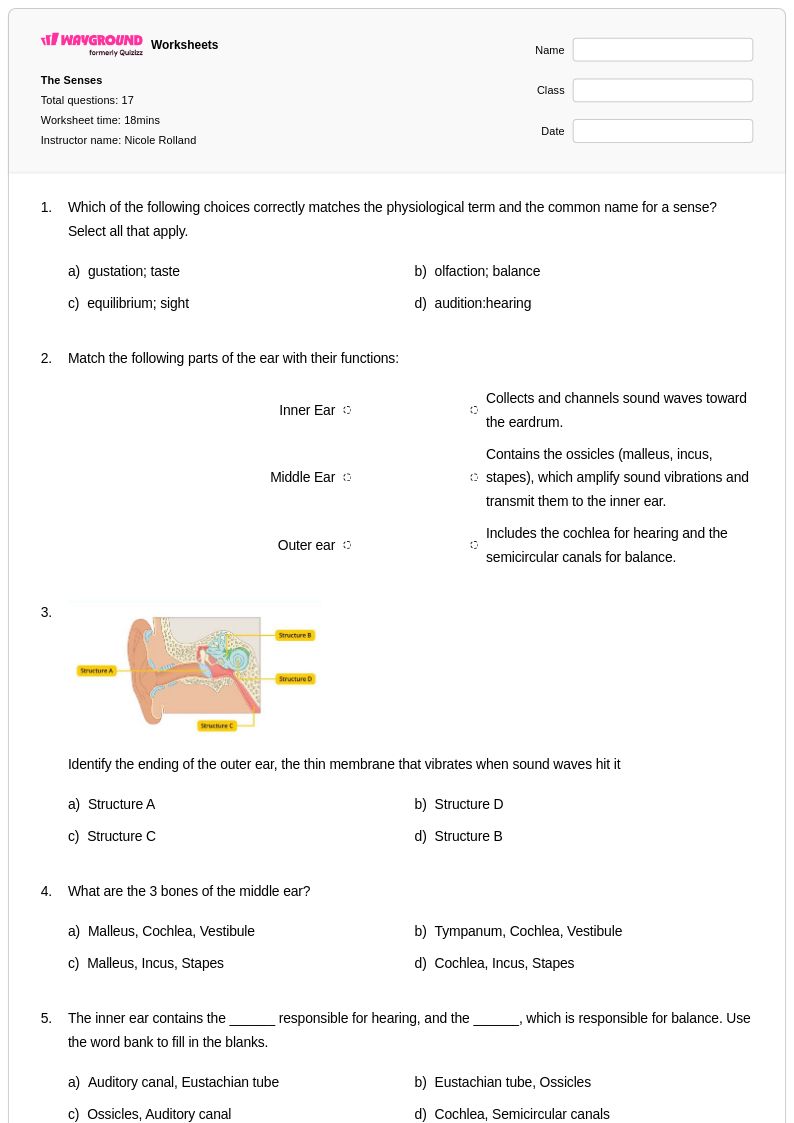
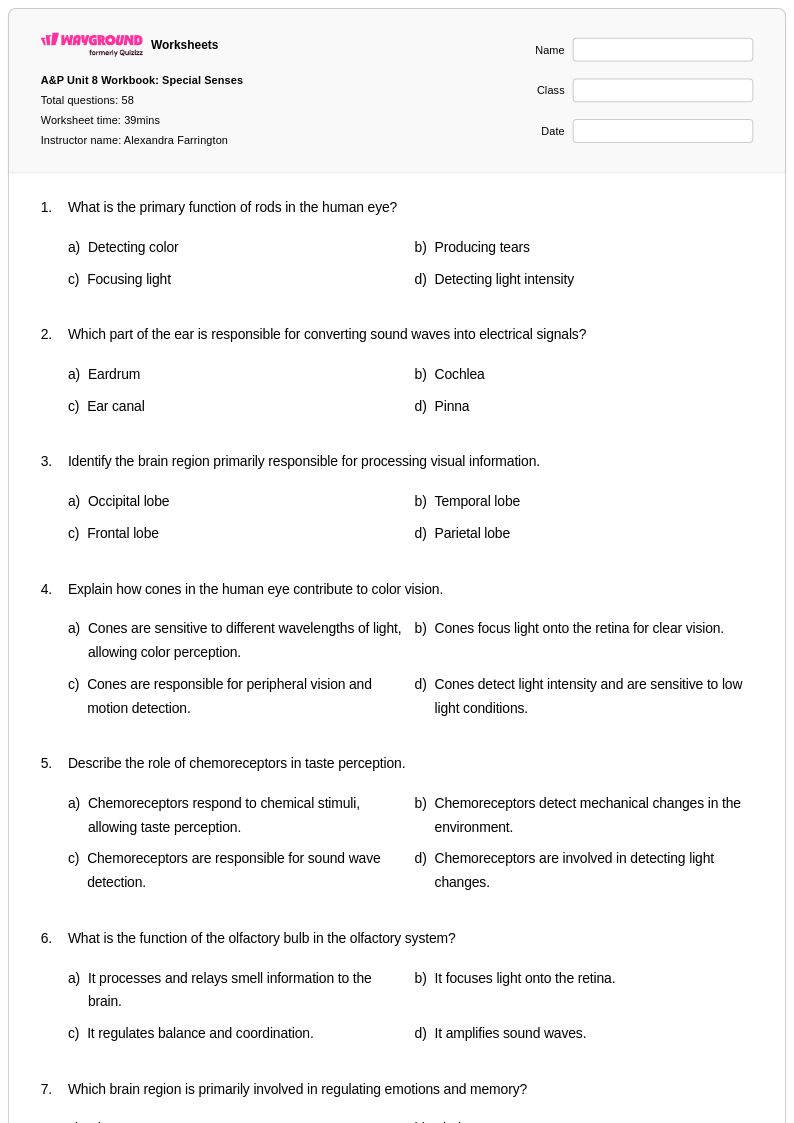
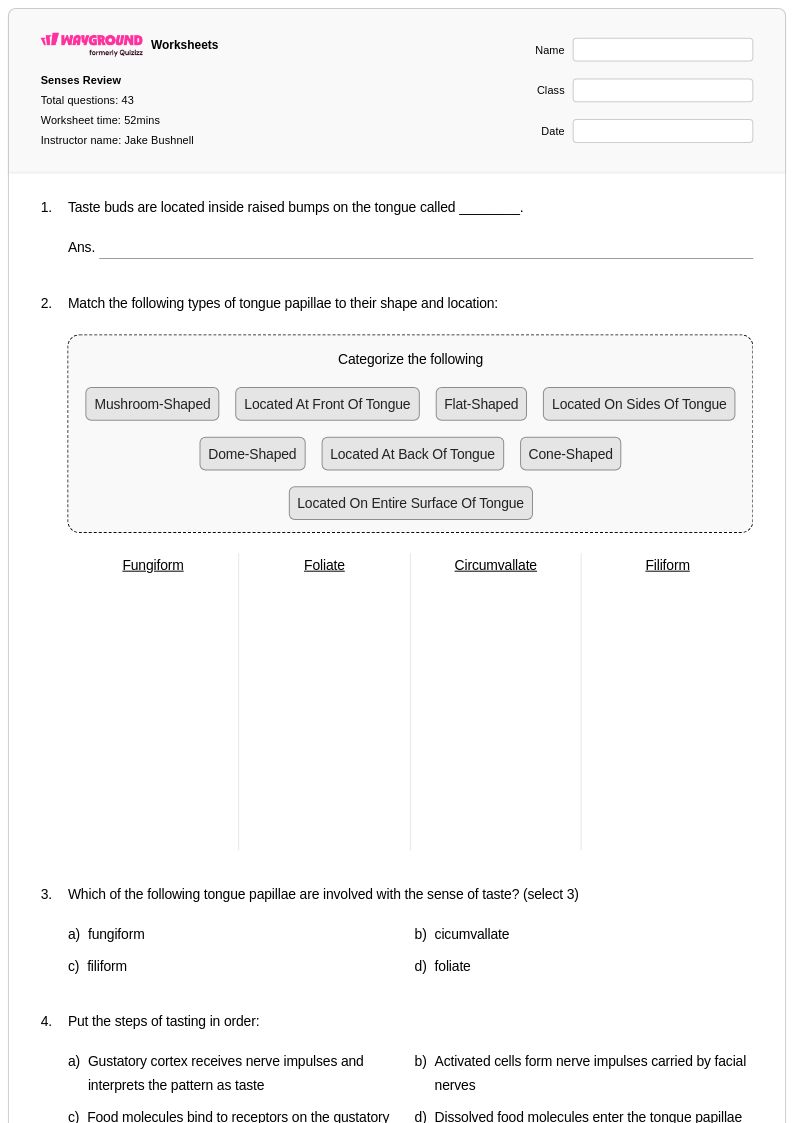
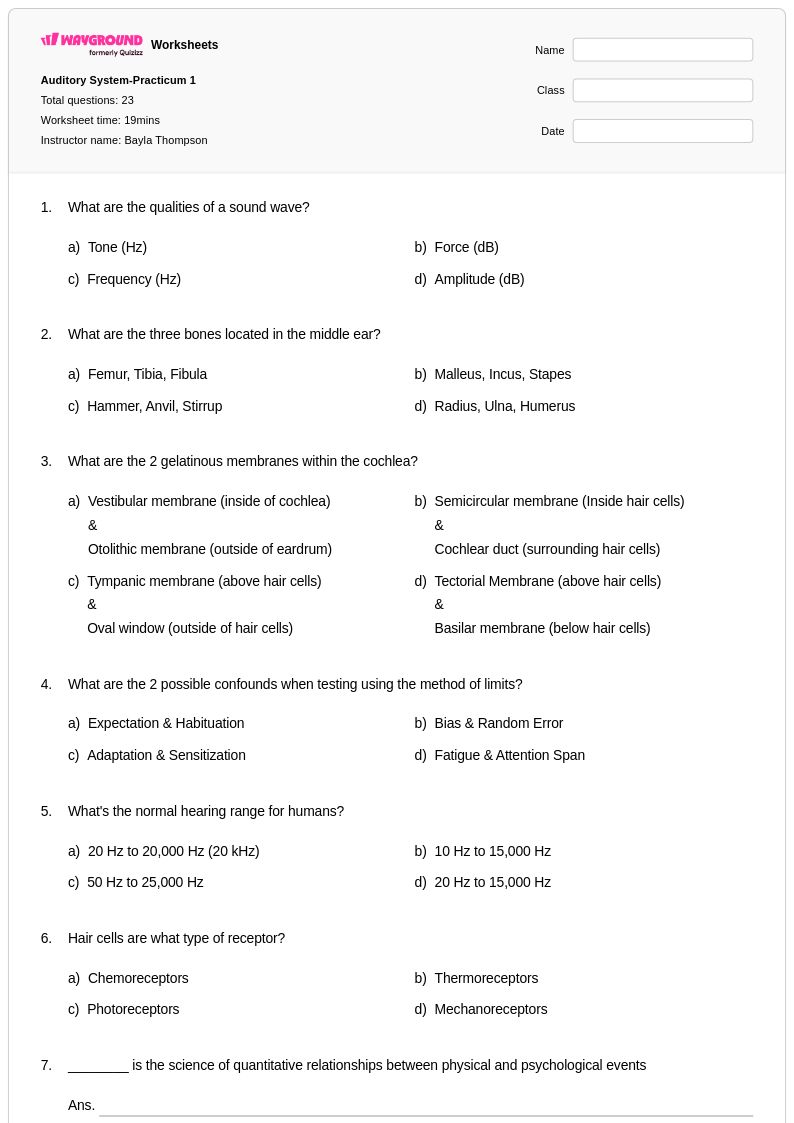
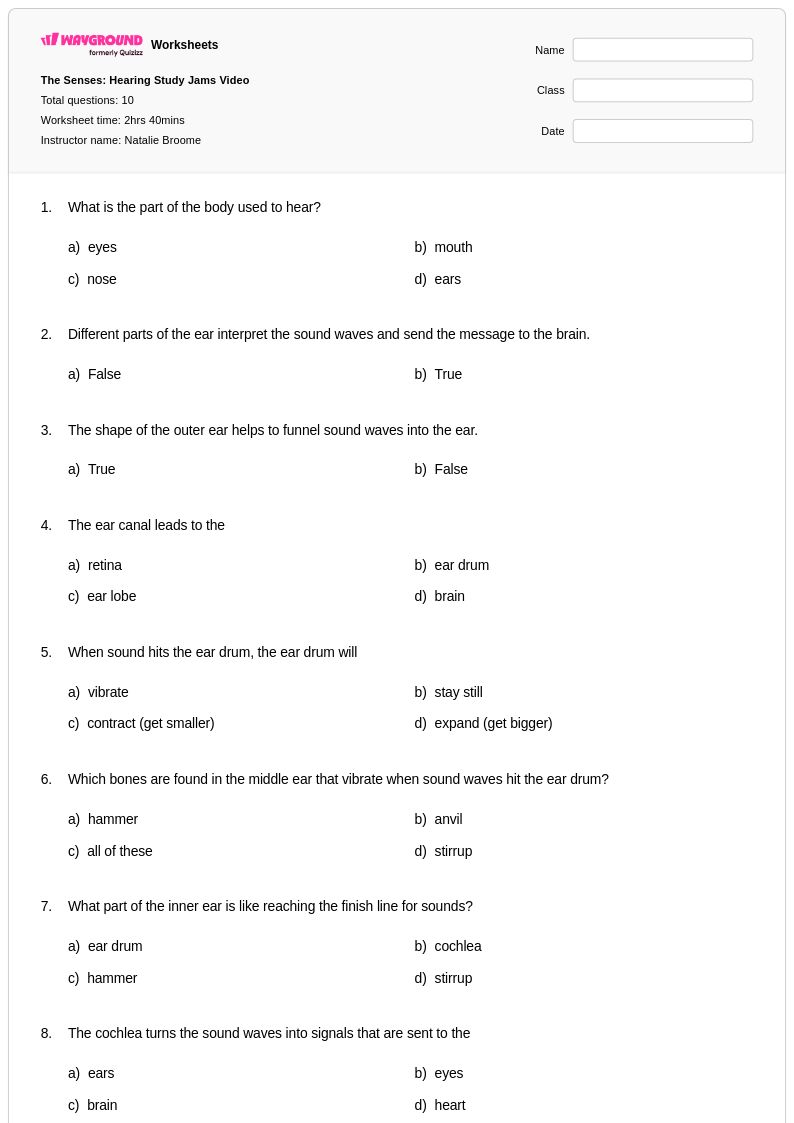
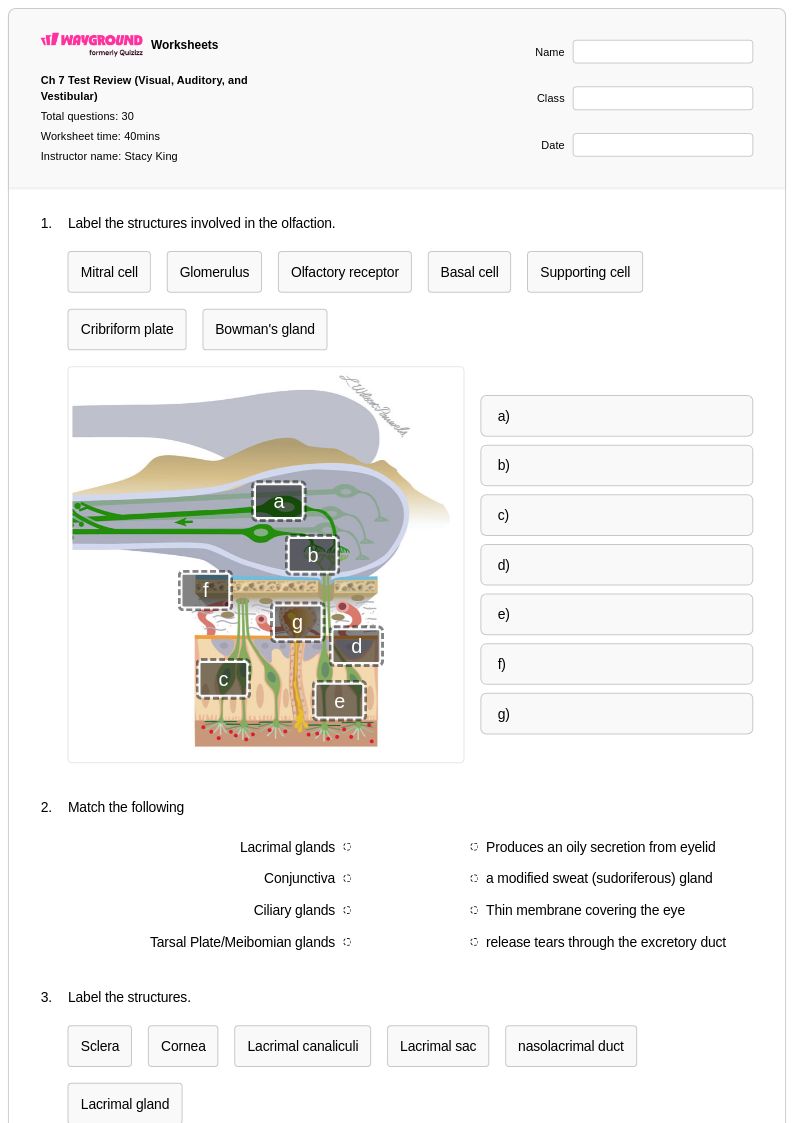
Explore free printable ear anatomy worksheets and practice problems that help students master the structure and function of the human ear through detailed diagrams, labeling exercises, and comprehensive answer keys.
Ear anatomy worksheets available through Wayground (formerly Quizizz) provide comprehensive educational resources that help students master the complex structures and functions of the human auditory system. These meticulously crafted materials guide learners through detailed explorations of the outer, middle, and inner ear components, including the pinna, ear canal, tympanic membrane, ossicles, cochlea, and semicircular canals. Students engage with practice problems that challenge them to identify anatomical structures, understand sound transmission pathways, and analyze the physiological processes involved in hearing and balance. Each worksheet includes a corresponding answer key to support independent learning and self-assessment, while the free printable format ensures accessibility for diverse classroom environments. These pdf resources strengthen critical thinking skills in biology while building foundational knowledge essential for advanced studies in anatomy, physiology, and auditory science.
Wayground (formerly Quizizz) empowers educators with an extensive collection of millions of teacher-created ear anatomy worksheets that streamline lesson planning and enhance instructional effectiveness. The platform's robust search and filtering capabilities enable teachers to quickly locate resources aligned with specific learning standards and educational objectives, while differentiation tools allow for seamless customization to meet varied student needs and ability levels. These versatile materials are available in both printable and digital formats, including downloadable pdf versions that facilitate flexible classroom implementation. Teachers can utilize these comprehensive worksheet collections for targeted skill practice, remediation activities for struggling learners, and enrichment opportunities for advanced students, ensuring that all learners develop a thorough understanding of ear anatomy and its connection to broader biological systems.
FAQs
How do I teach ear anatomy to students?
Teaching ear anatomy is most effective when you move systematically from outer to inner structures, helping students understand not just the names but the function each part plays in sound transmission and balance. Start with the pinna and ear canal before progressing to the tympanic membrane, ossicles, cochlea, and semicircular canals. Pairing labeled diagrams with explanations of physiological processes gives students a structural and functional framework simultaneously, which improves long-term retention.
What exercises help students practice identifying ear anatomy structures?
Labeling exercises using detailed anatomical diagrams are among the most effective practice tools for ear anatomy, requiring students to actively recall structure names and their locations rather than passively recognize them. Complementing these with sound transmission pathway questions challenges students to apply their knowledge by tracing how vibrations move from the outer ear through the ossicles to the cochlea. Combining identification tasks with short-answer questions about function deepens conceptual understanding beyond simple memorization.
What mistakes do students commonly make when learning ear anatomy?
One of the most frequent errors is confusing the roles of the three ossicles (malleus, incus, and stapes) or misremembering their sequence in the sound transmission chain. Students also commonly conflate the cochlea's role in hearing with the semicircular canals' role in balance, treating them as interchangeable when they serve entirely different functions. Reinforcing the distinction between sensory function and structural location through targeted practice questions can help correct these misconceptions early.
How can I use ear anatomy worksheets to support students who are struggling?
For struggling learners, worksheets with reduced complexity — such as fill-in diagrams with a word bank — lower the cognitive load while still requiring active recall. On Wayground, teachers can apply accommodations such as read aloud support, reduced answer choices, and extended time on a per-student basis without disrupting the experience for the rest of the class. These settings are reusable across sessions, making it easier to consistently support students with diverse learning needs.
How do I use ear anatomy worksheets from Wayground in my classroom?
Wayground's ear anatomy worksheets are available as printable PDFs for traditional classroom use and in digital formats for technology-integrated learning environments, giving teachers flexibility in how they assign and deliver the material. Teachers can also host worksheets as a quiz directly on Wayground, enabling real-time student responses and automatic grading. Each worksheet includes a complete answer key, making them practical for independent practice, homework, or guided review sessions.
How does ear anatomy connect to broader biology topics students will study?
Ear anatomy sits at the intersection of several advanced biology topics, including sensory neuroscience, physiology, and cellular biology, since the cochlea's hair cells represent a key example of mechanoreception at the cellular level. Understanding how the auditory system converts mechanical vibration into electrical nerve signals also reinforces concepts in signal transduction and the nervous system. Building a strong foundation in ear anatomy prepares students for more advanced coursework in anatomy, physiology, and auditory science.