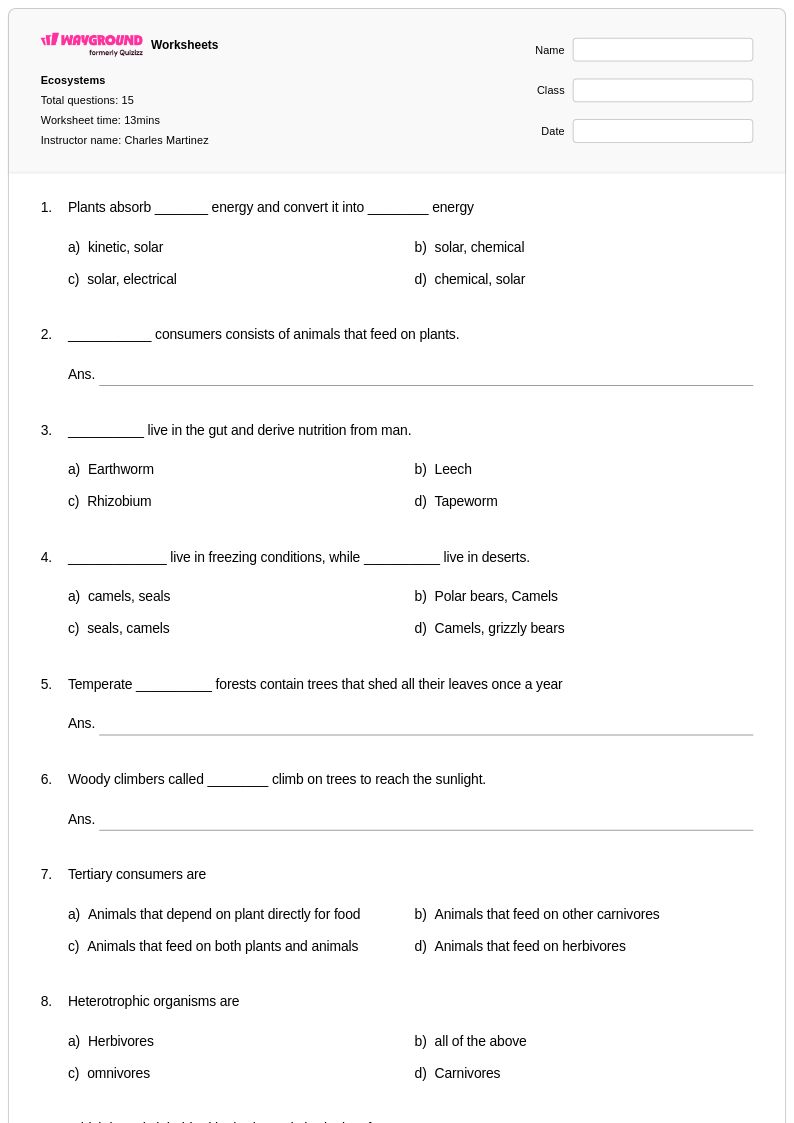
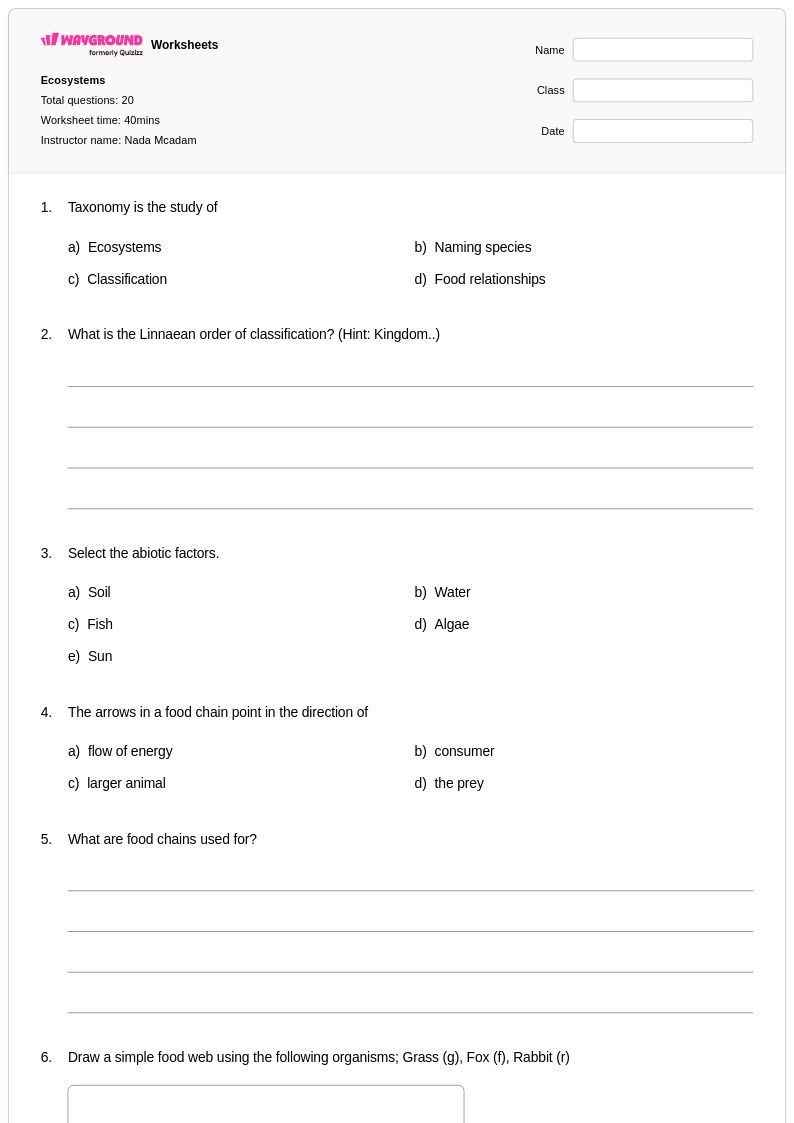
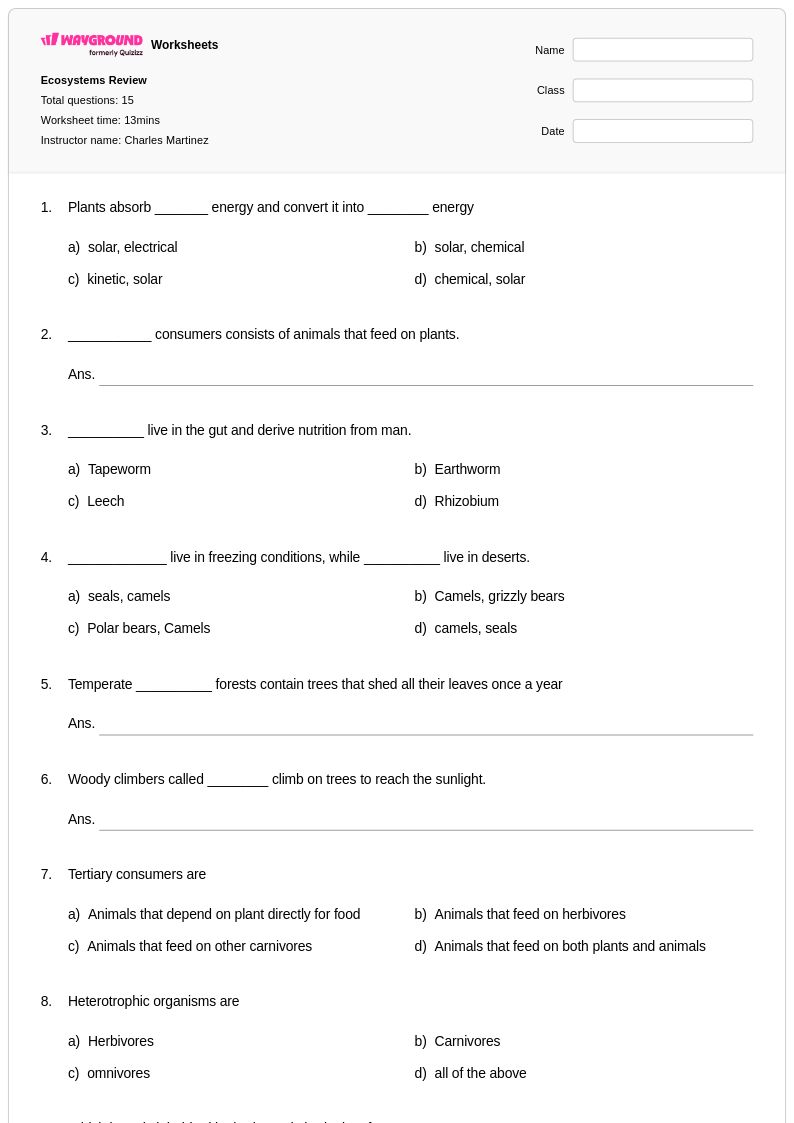
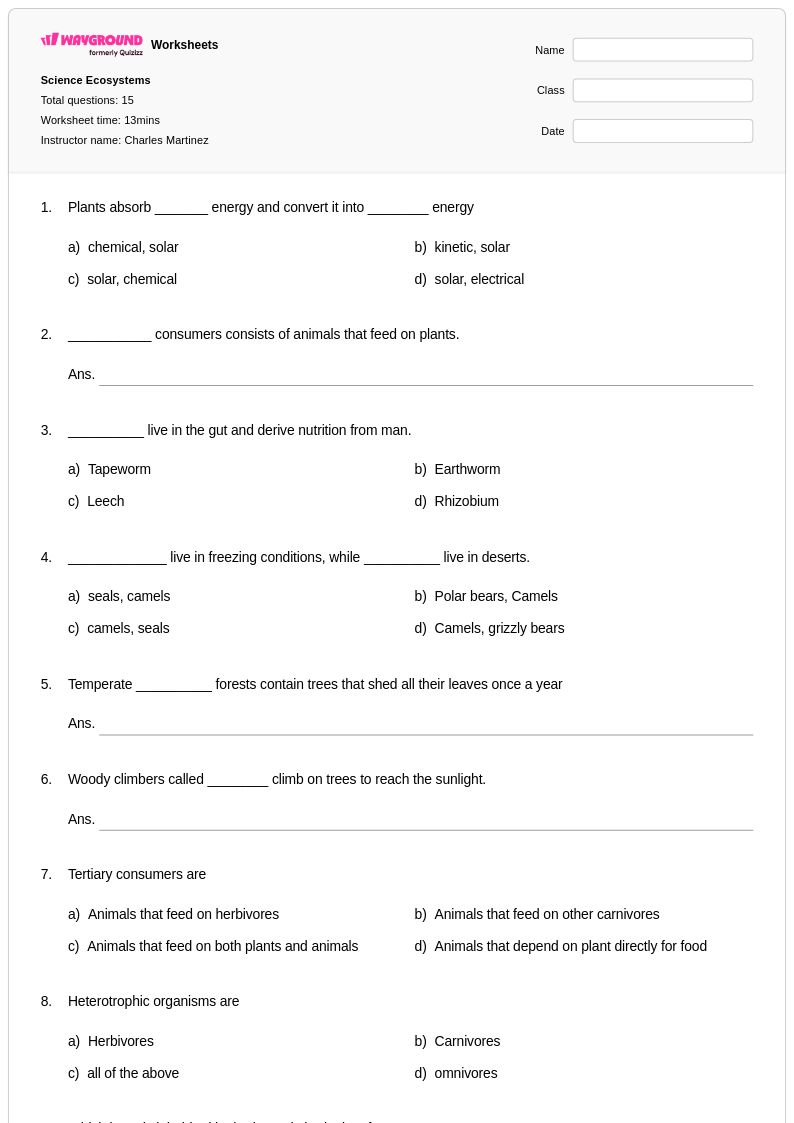
Explore Class 8 ecosystems through Wayground's comprehensive collection of free worksheets and printables, featuring practice problems and answer keys that help students master food webs, energy flow, and ecological relationships.
Explore printable Ecosystems worksheets for Class 8
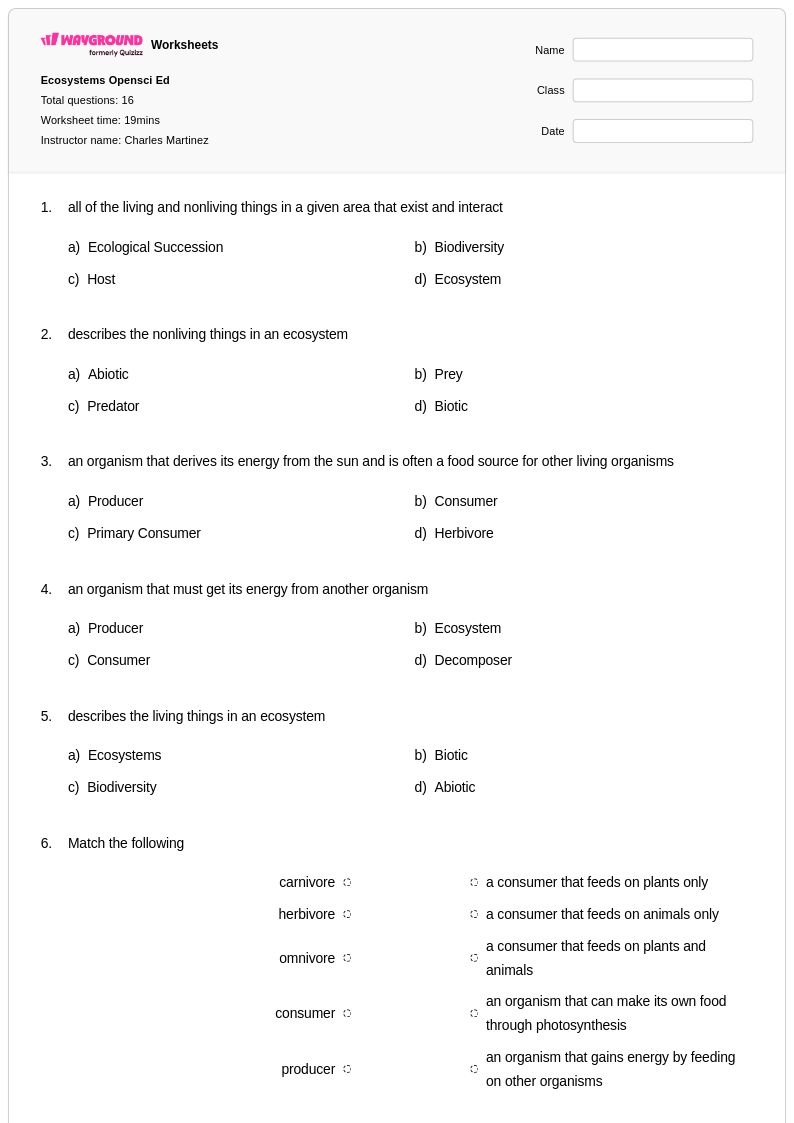
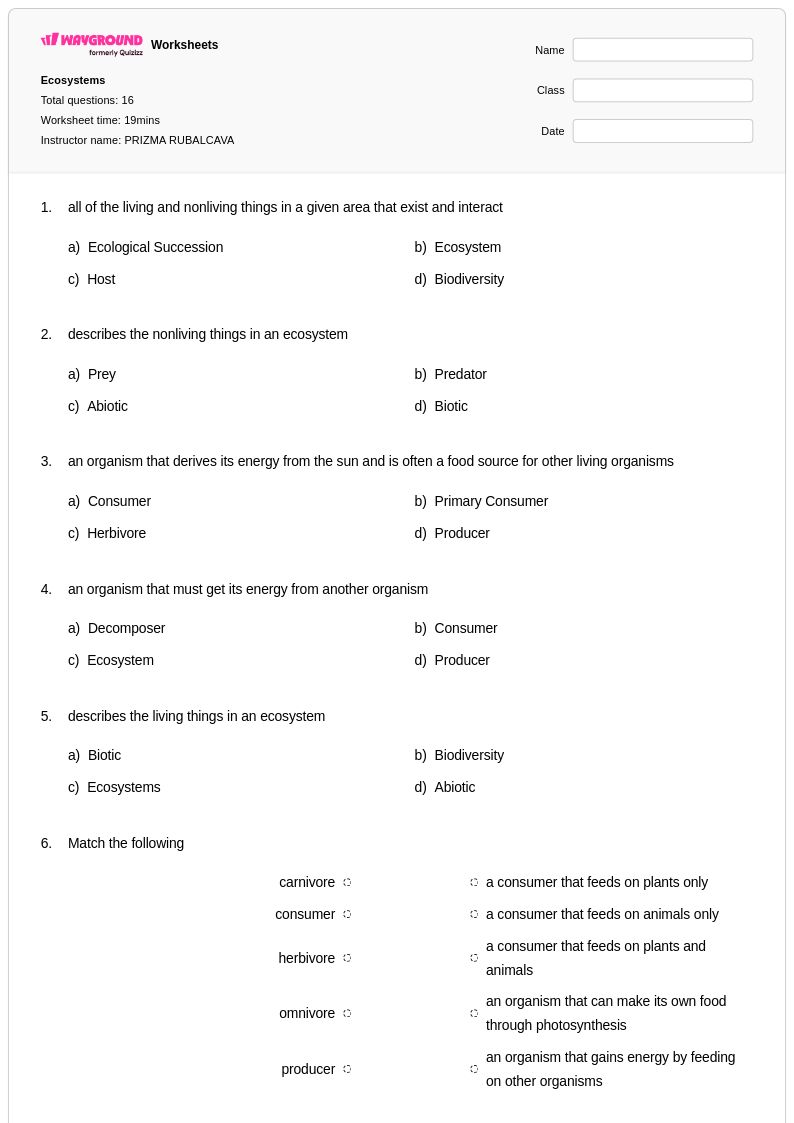
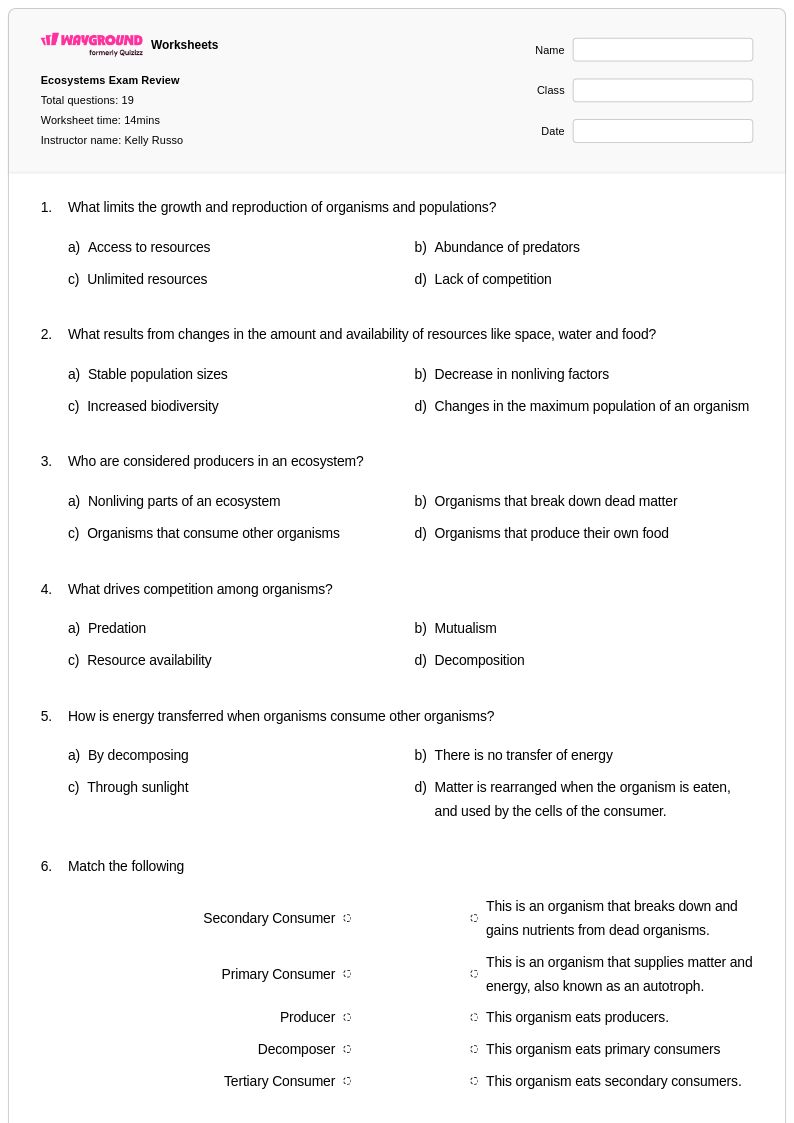
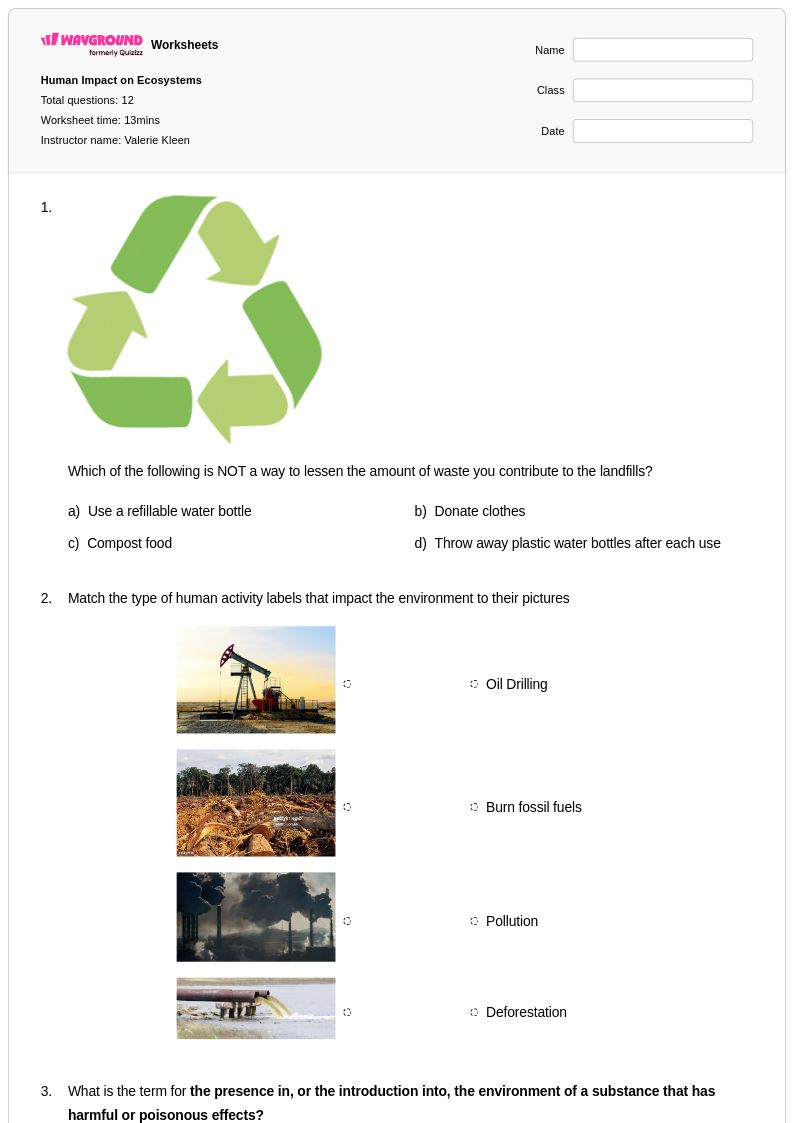
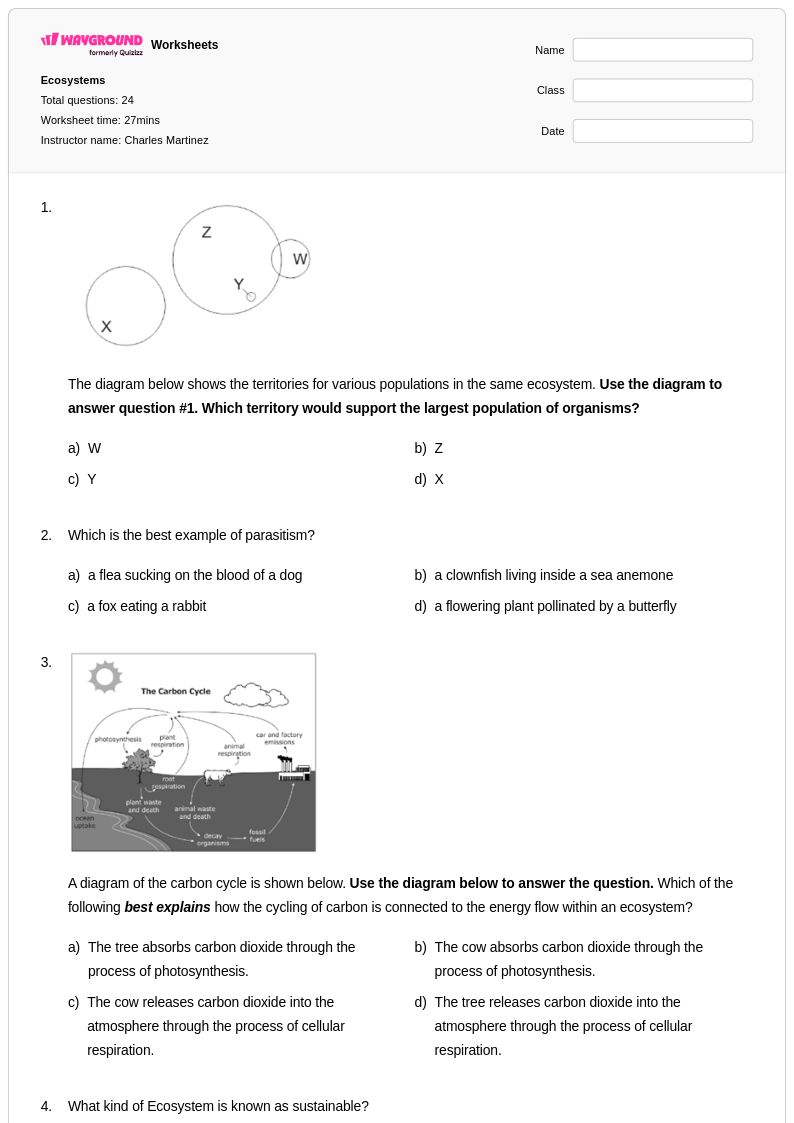
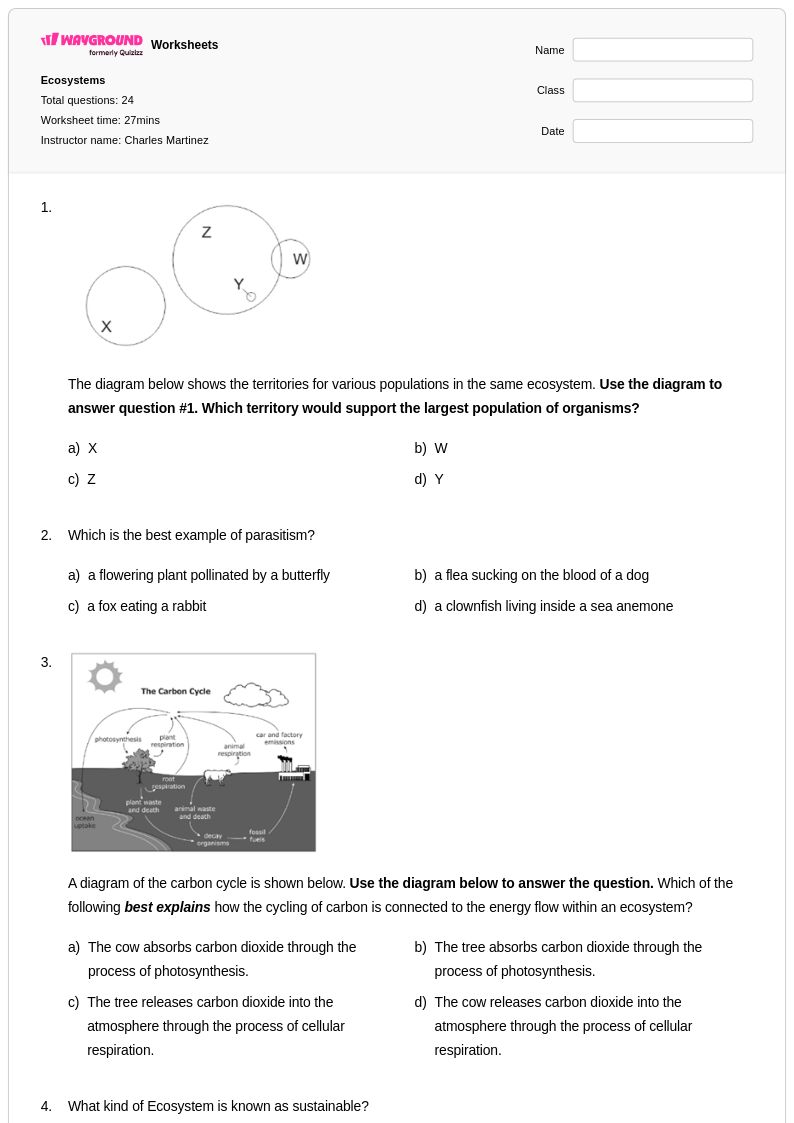
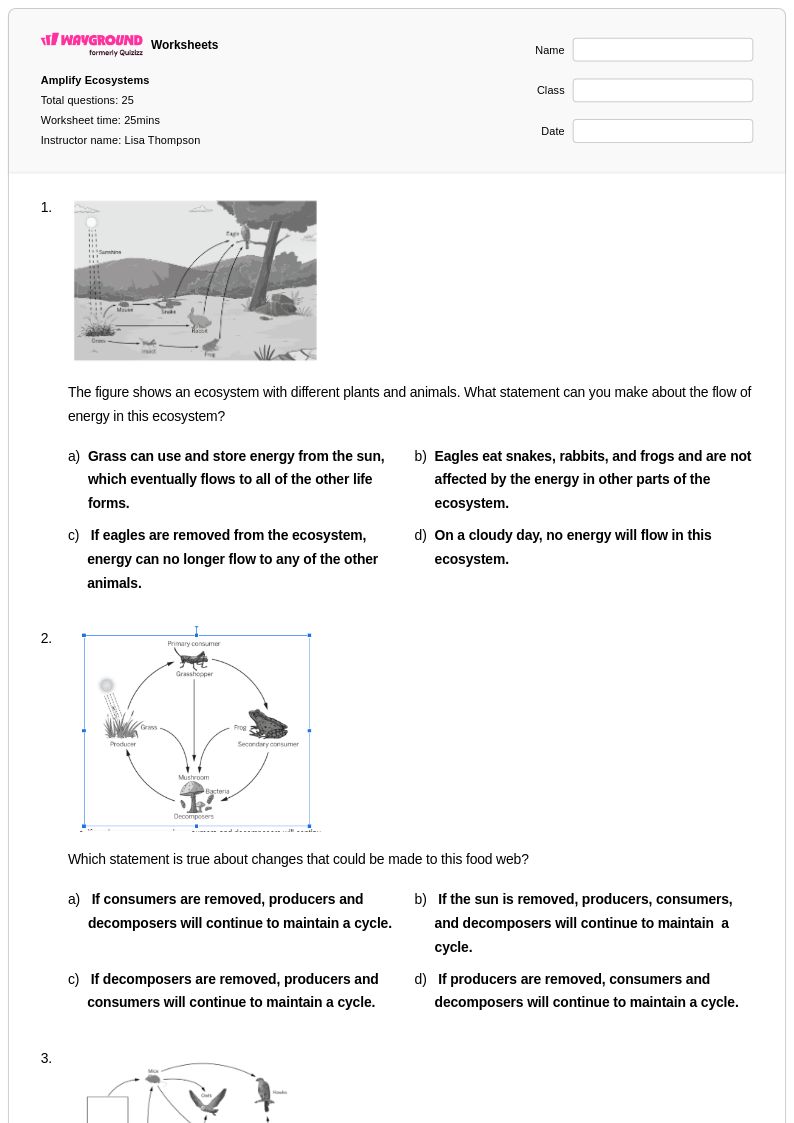
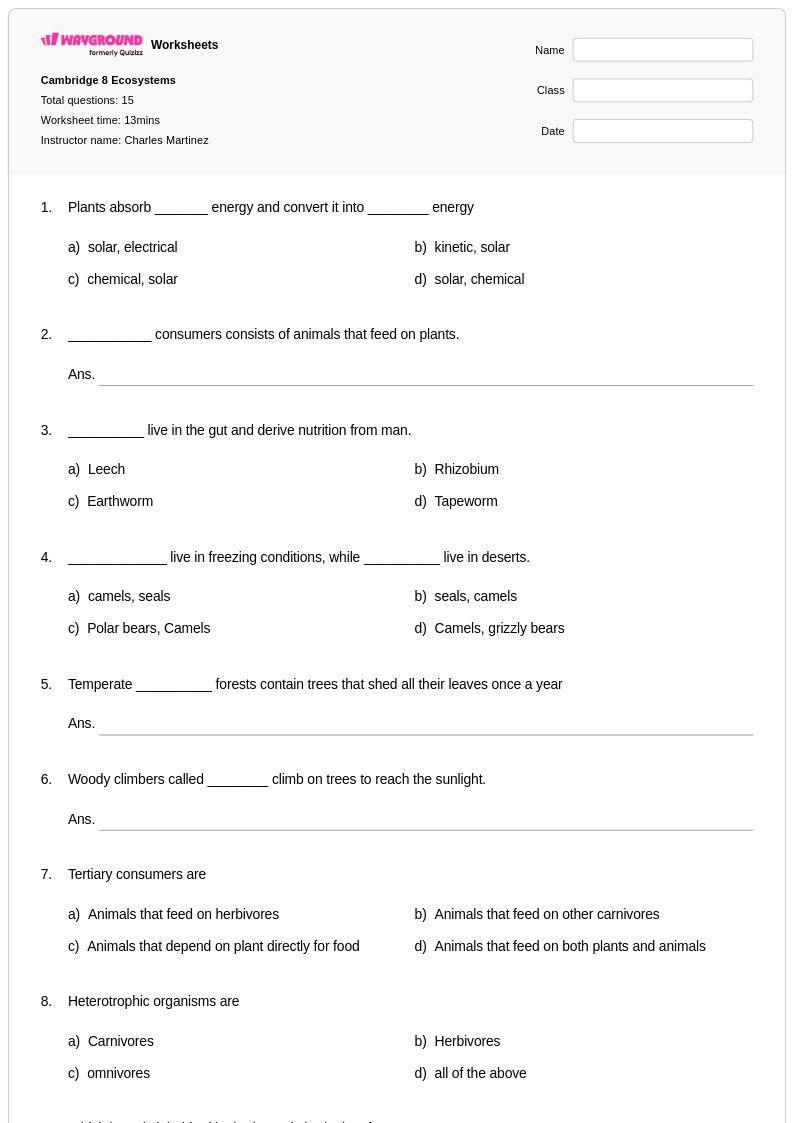
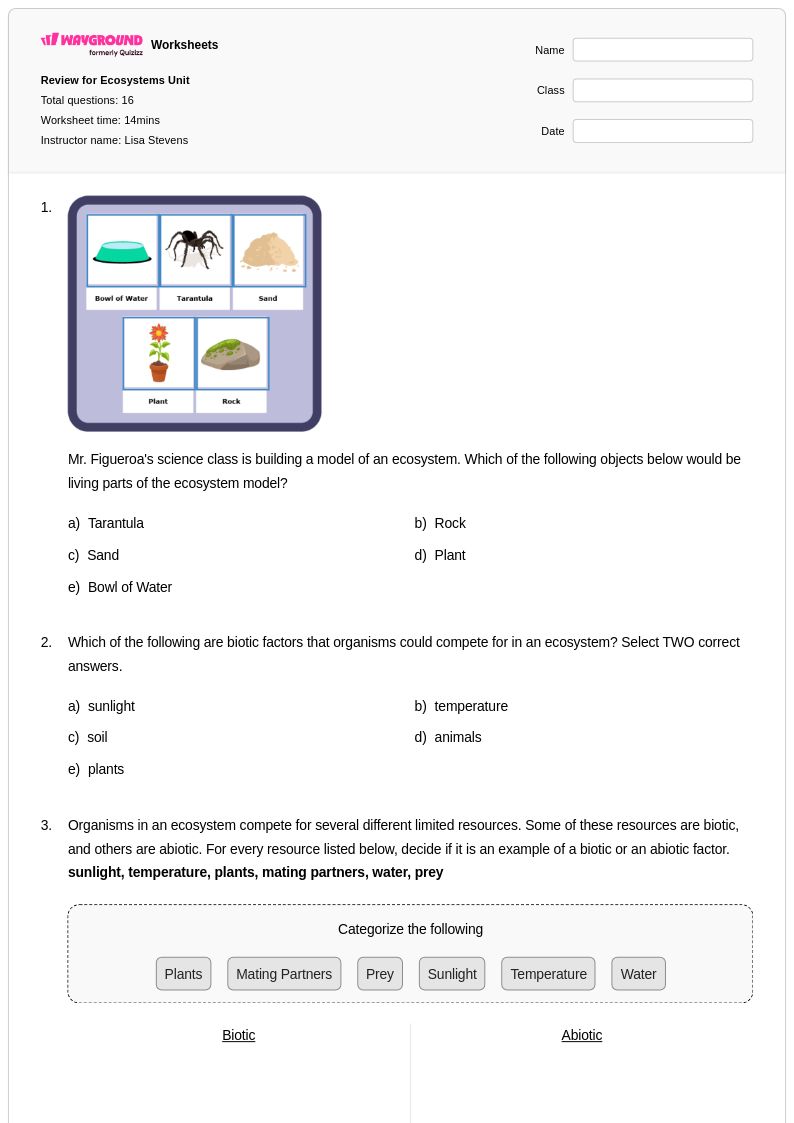
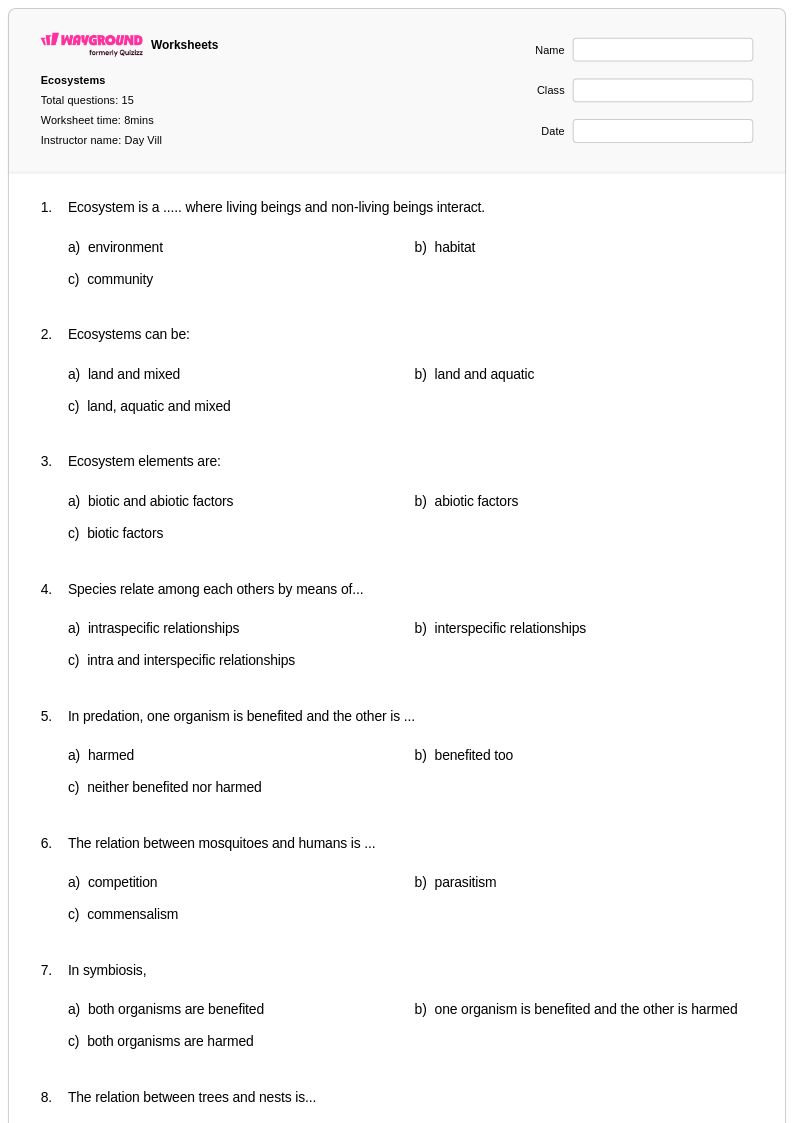
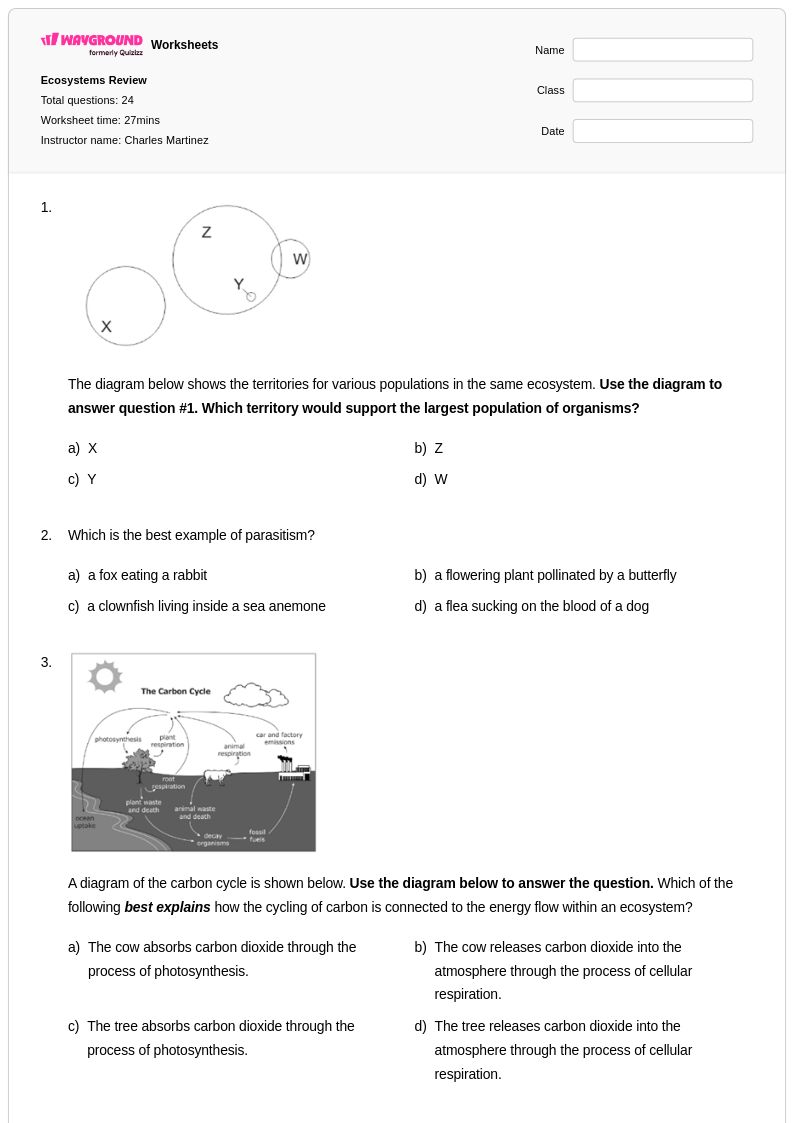
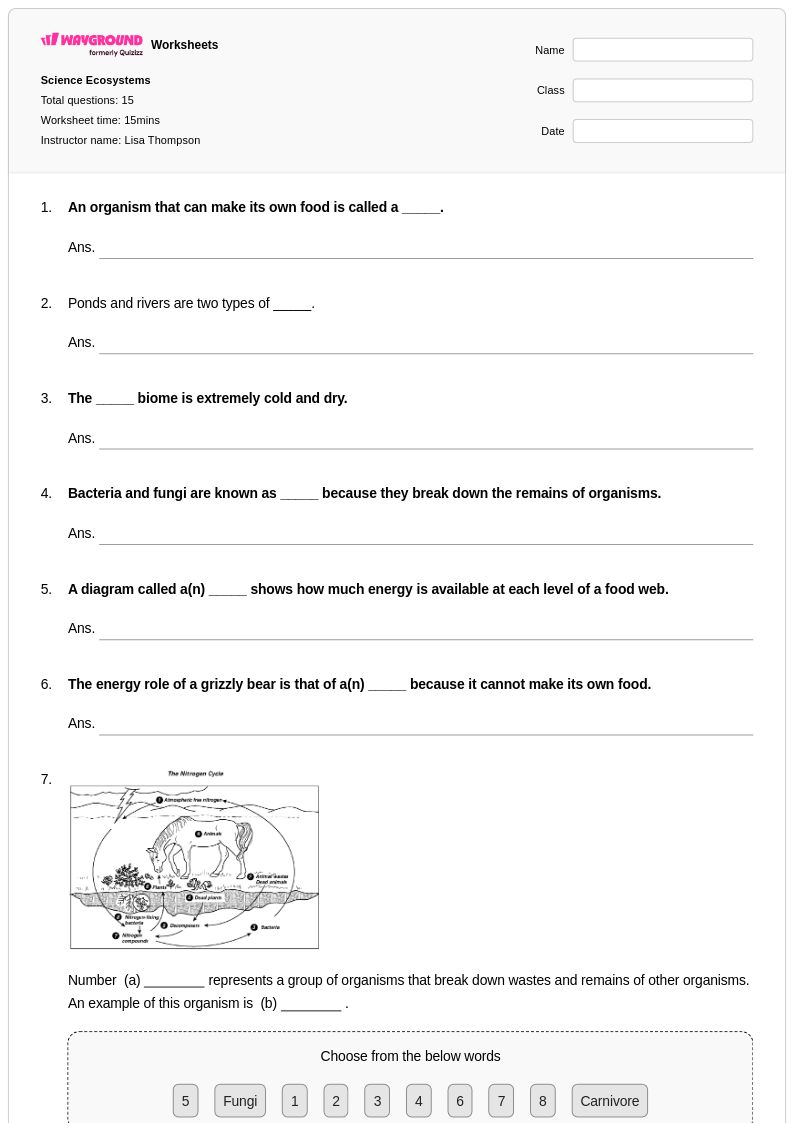
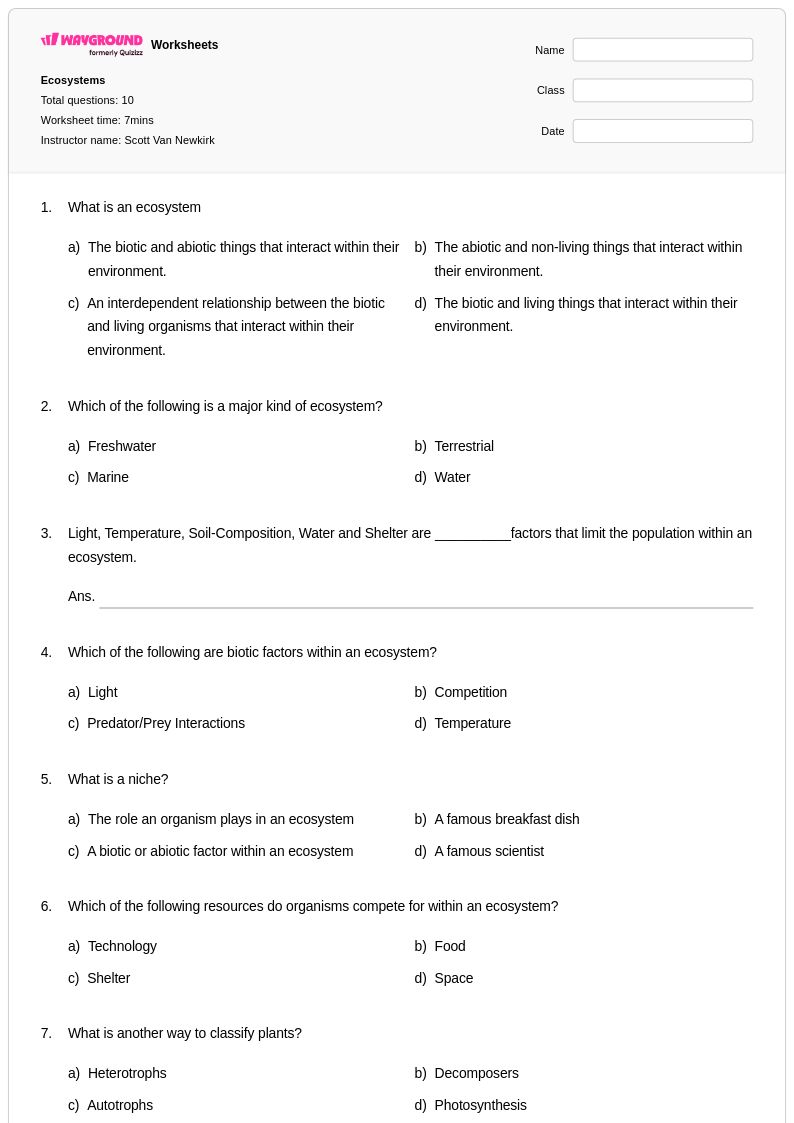
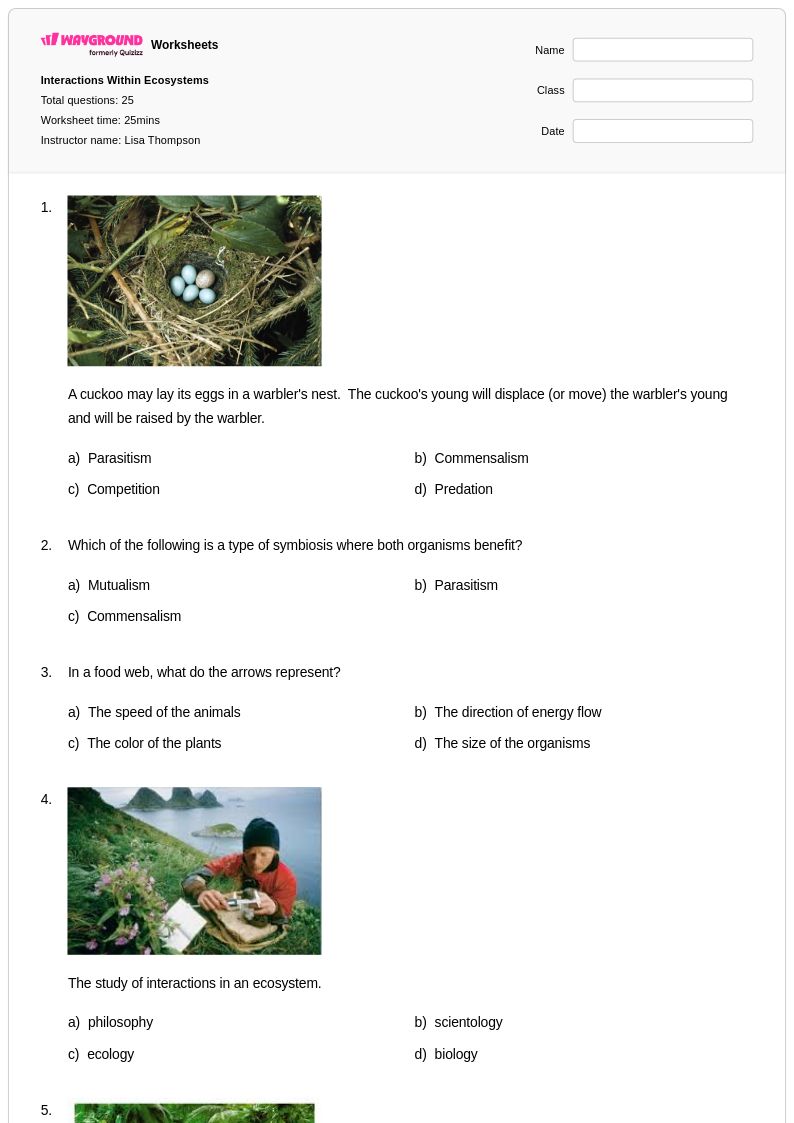
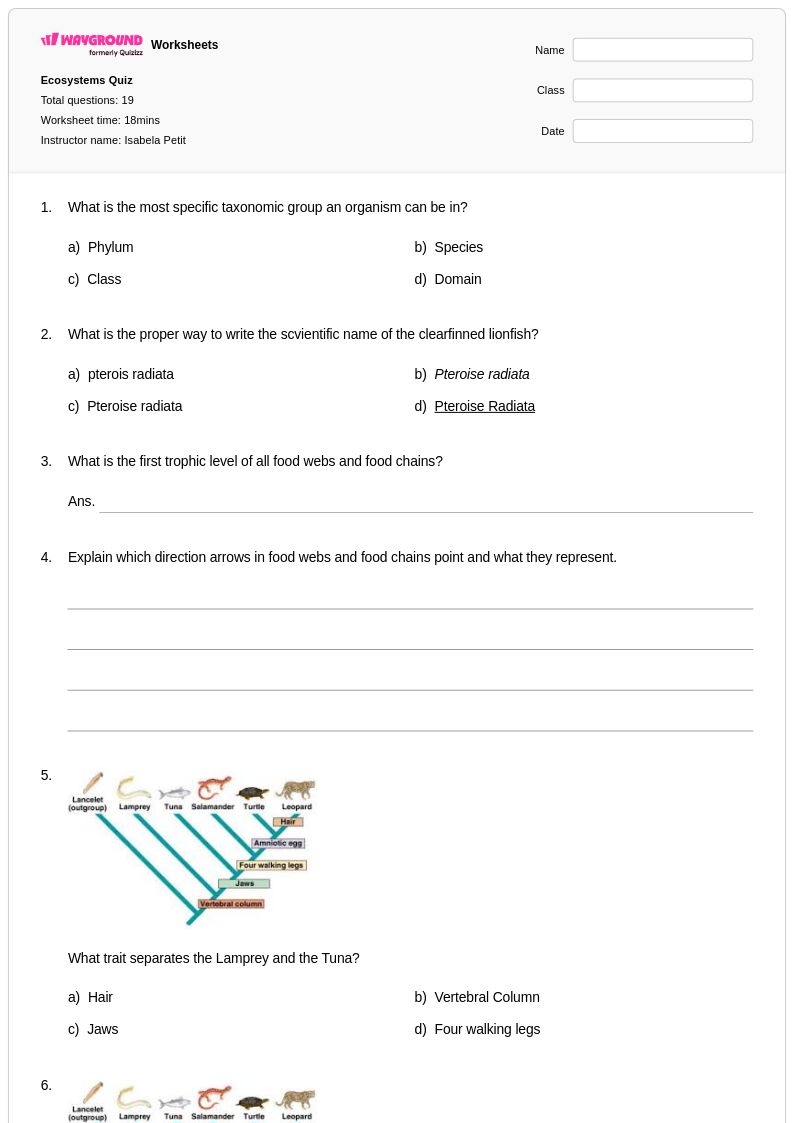
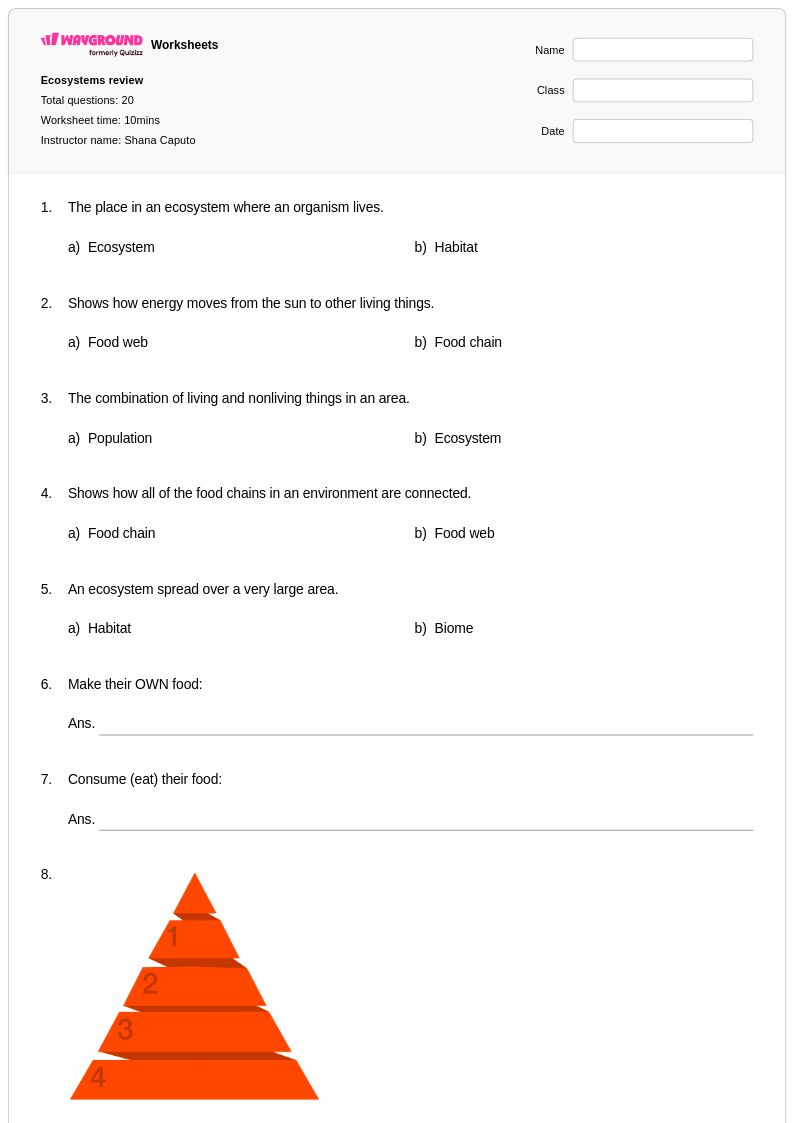
Class 8 ecosystems worksheets available through Wayground (formerly Quizizz) provide comprehensive coverage of ecological principles that eighth-grade students must master to understand the complex interactions within biological communities. These expertly crafted worksheets strengthen critical skills including food web analysis, energy flow calculations, population dynamics assessment, and biodiversity evaluation through engaging practice problems that mirror real-world ecological scenarios. Students develop proficiency in interpreting ecosystem diagrams, analyzing predator-prey relationships, and understanding the impact of environmental factors on species distribution and abundance. Each worksheet collection includes detailed answer keys that support independent learning and self-assessment, while the free printable pdf format ensures accessibility for both classroom instruction and homework assignments.
Wayground (formerly Quizizz) empowers educators with millions of teacher-created ecosystem resources that streamline lesson planning and enhance student engagement across diverse learning needs. The platform's robust search and filtering capabilities allow teachers to quickly locate materials aligned with specific curriculum standards and learning objectives, while differentiation tools enable seamless customization of worksheet difficulty levels to accommodate varying student abilities. These comprehensive collections support both remediation efforts for struggling learners and enrichment opportunities for advanced students through flexible digital and printable formats that integrate seamlessly into any instructional approach. Teachers benefit from the platform's extensive ecosystem worksheet library that covers essential topics from habitat relationships to conservation biology, providing reliable resources for skill practice, formative assessment, and comprehensive review of ecological concepts throughout the academic year.
FAQs
How do I teach ecosystems to elementary students?
Begin with concrete, observable examples by having students identify producers, consumers, and decomposers in a local habitat before introducing abstract energy flow diagrams. Use food chain worksheets to establish one-directional energy transfer, then progress to food web worksheets that show interconnected relationships. This scaffolded approach builds from simple predator-prey pairs in grades K-2 toward multi-organism webs and nutrient cycles by grades 3-5.
What exercises help students practice food chains and food webs?
Effective practice moves students from identifying organism roles to constructing and analyzing complete webs. Start with worksheets that require students to label trophic levels in a given food chain, then advance to exercises where students draw arrows showing energy transfer between multiple organisms. Graph-based problems that ask students to predict population changes when one species is removed reinforce critical thinking about ecological interdependence.
What common mistakes do students make when learning about ecosystems?
The most frequent error is drawing food chain arrows in the wrong direction -- students point arrows toward the predator instead of following energy flow from prey to predator. Students also commonly confuse food chains with food webs, treating a single linear chain as a complete representation of an ecosystem. Another persistent misconception is that removing one species only affects organisms directly connected to it, when in reality the impact cascades through the entire web.
How do I differentiate ecosystems instruction for struggling and advanced students?
For struggling students, use worksheets that provide partially completed food webs with word banks so students focus on understanding relationships rather than recall. For advanced students, assign problems that require analyzing population data, calculating energy transfer between trophic levels, or evaluating human impacts on biodiversity. Wayground's customizable worksheets allow teachers to select difficulty levels that match individual student readiness within the same topic.
How do I use ecosystems worksheets in my classroom?
These worksheets are available as printable PDFs for in-class independent practice and in digital formats for homework or remote learning assignments. Use shorter food chain identification sheets as warm-up activities or exit tickets, and reserve multi-step food web analysis worksheets for guided practice during the lesson. Answer keys are included, making them effective for both teacher-graded assessments and student self-checking during independent work.
How do I assess student understanding of food webs and energy flow?
Use worksheets that require students to trace energy flow through a food web and predict what happens to populations when a species is added or removed. Questions that ask students to calculate the percentage of energy transferred between trophic levels reveal whether they understand the 10% rule. Asking students to compare two ecosystem diagrams and identify which represents a more stable system tests higher-order analysis of biodiversity and resilience.
What grade levels are ecosystems worksheets appropriate for?
Ecosystems worksheets span kindergarten through grade 8, with content complexity scaled to each level. Grades K-2 focus on identifying living vs. nonliving things and basic habitat concepts, grades 3-5 introduce food chains, producers, consumers, and decomposers, and grades 6-8 cover energy pyramids, nutrient cycles, population dynamics, and human impacts on ecosystems. This progression aligns with Next Generation Science Standards across elementary and middle school.