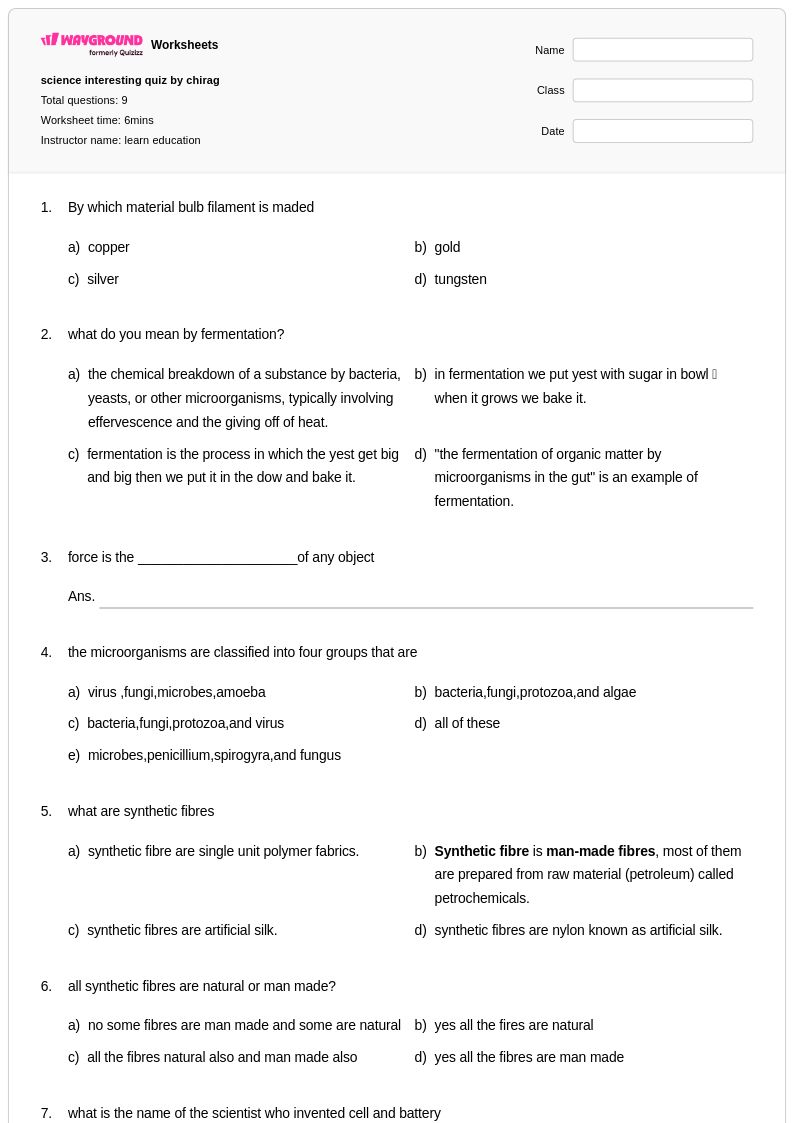
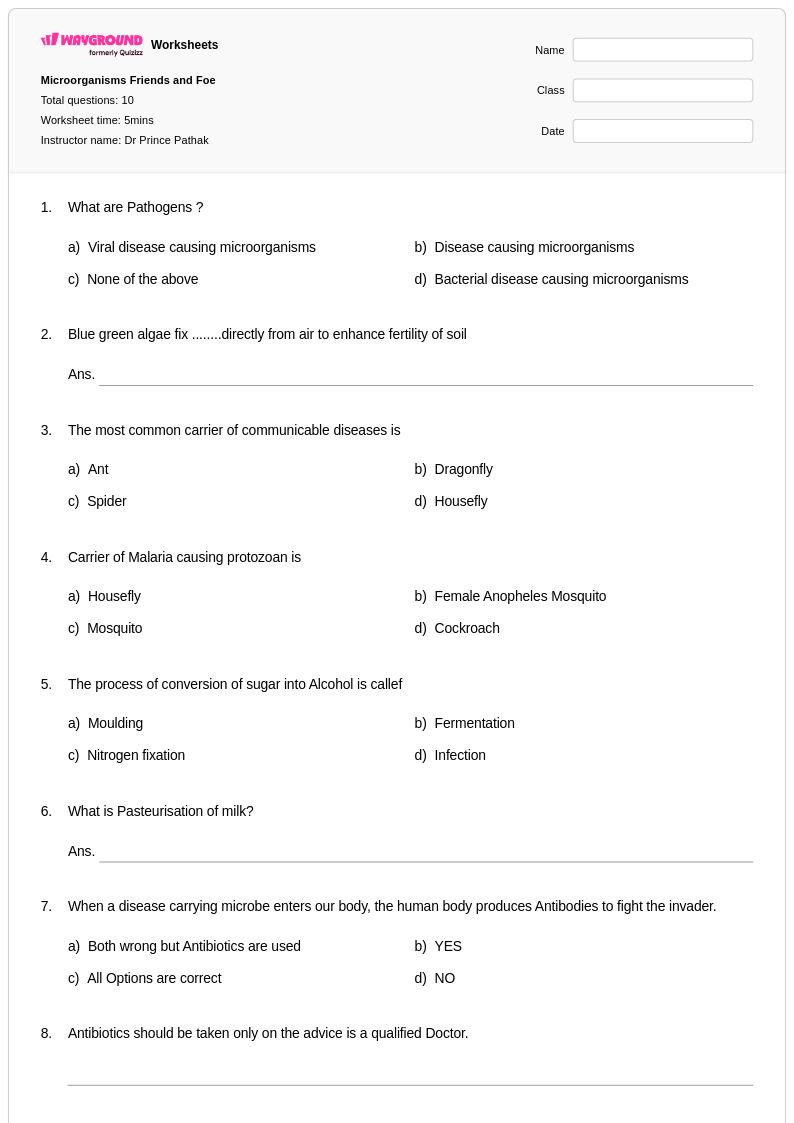
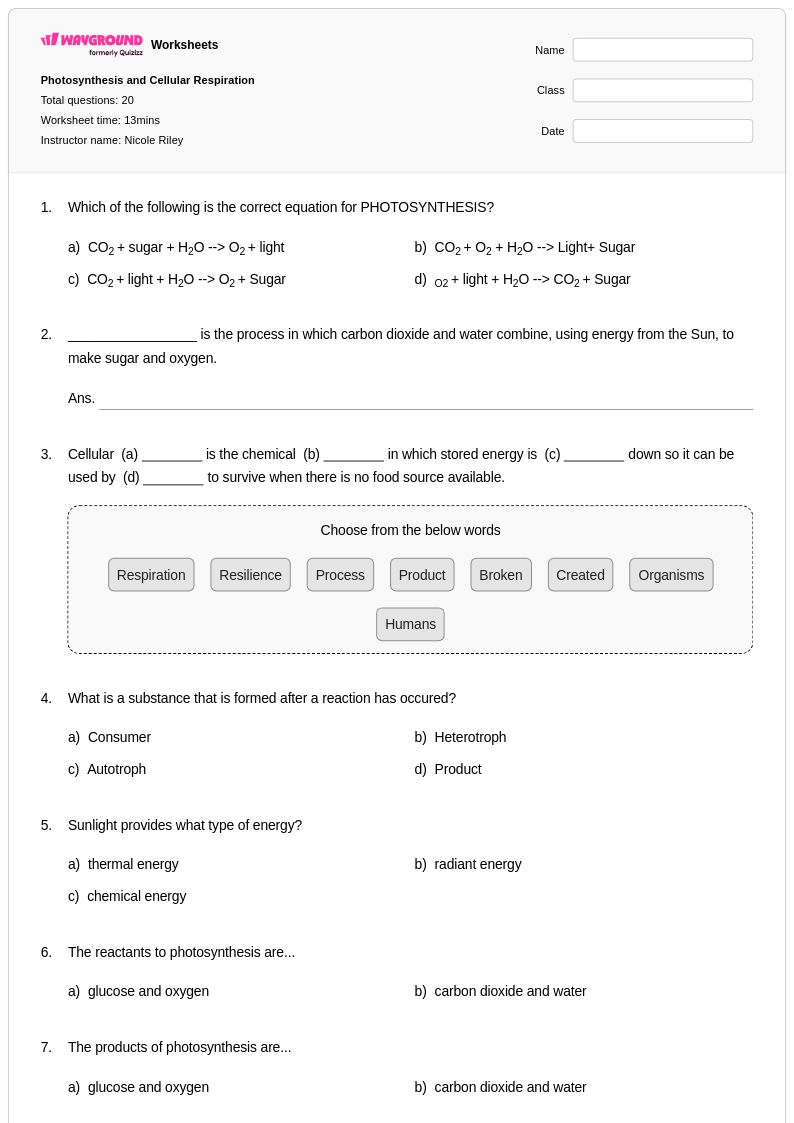
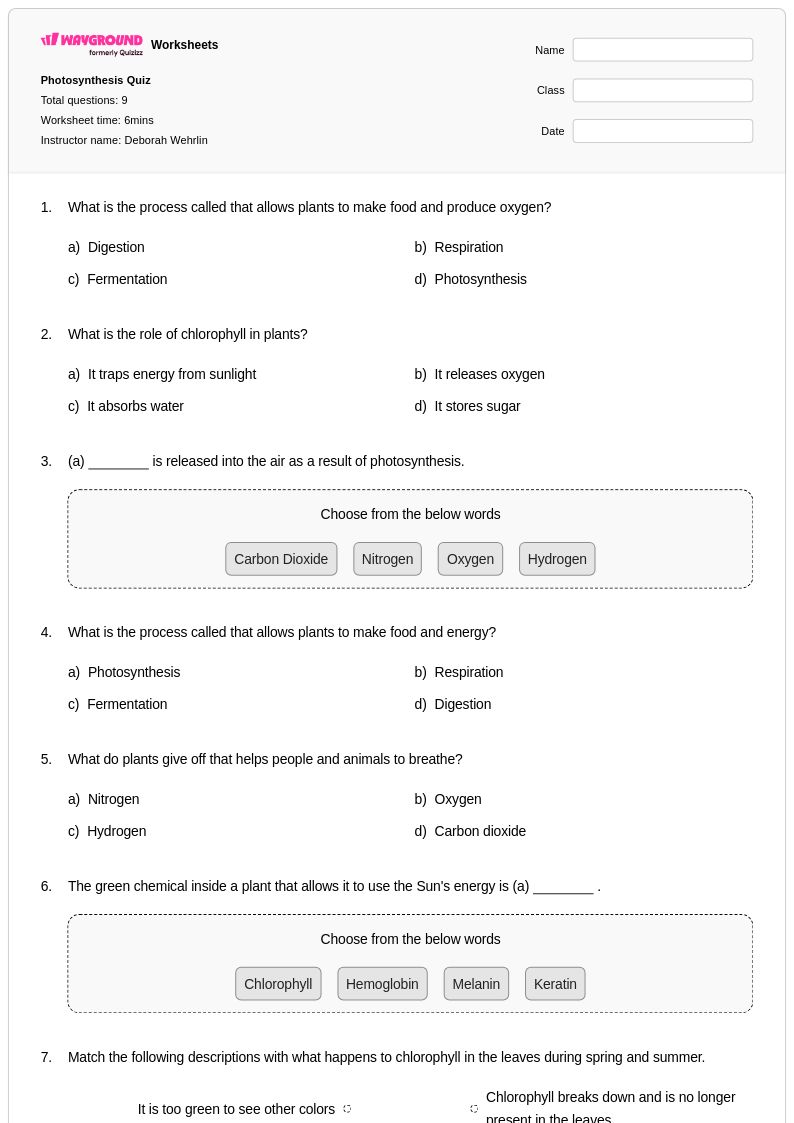
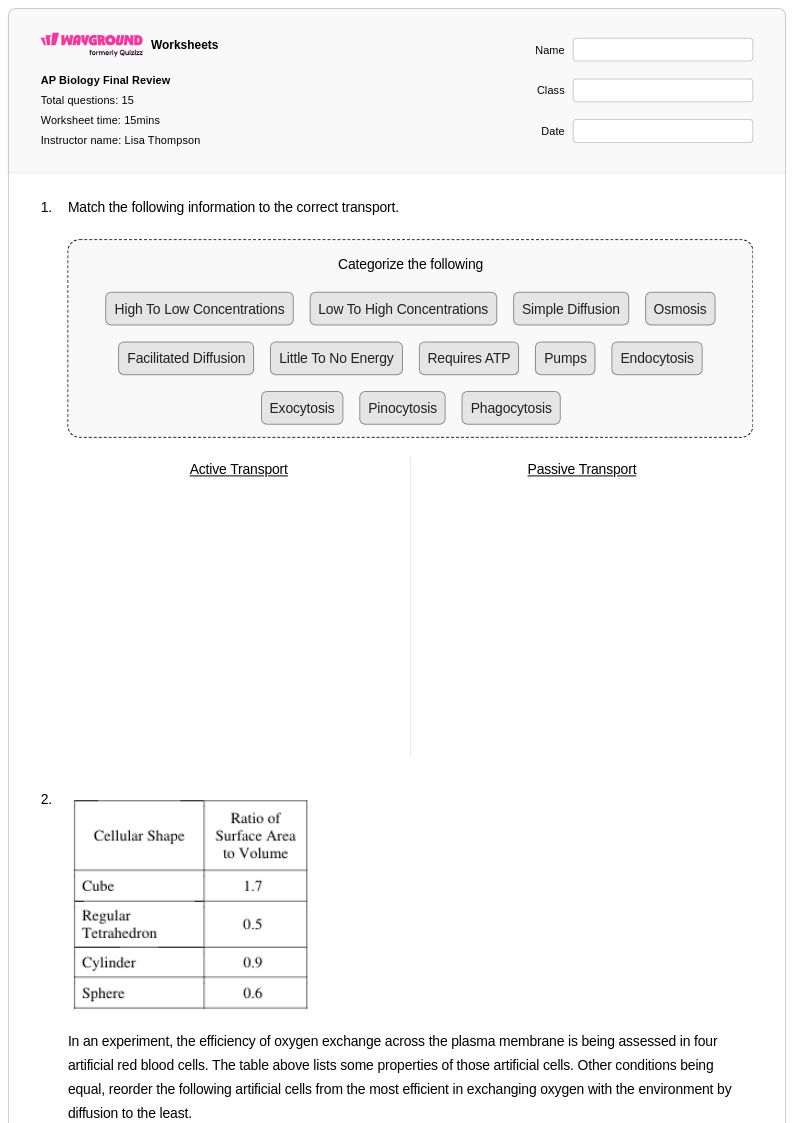
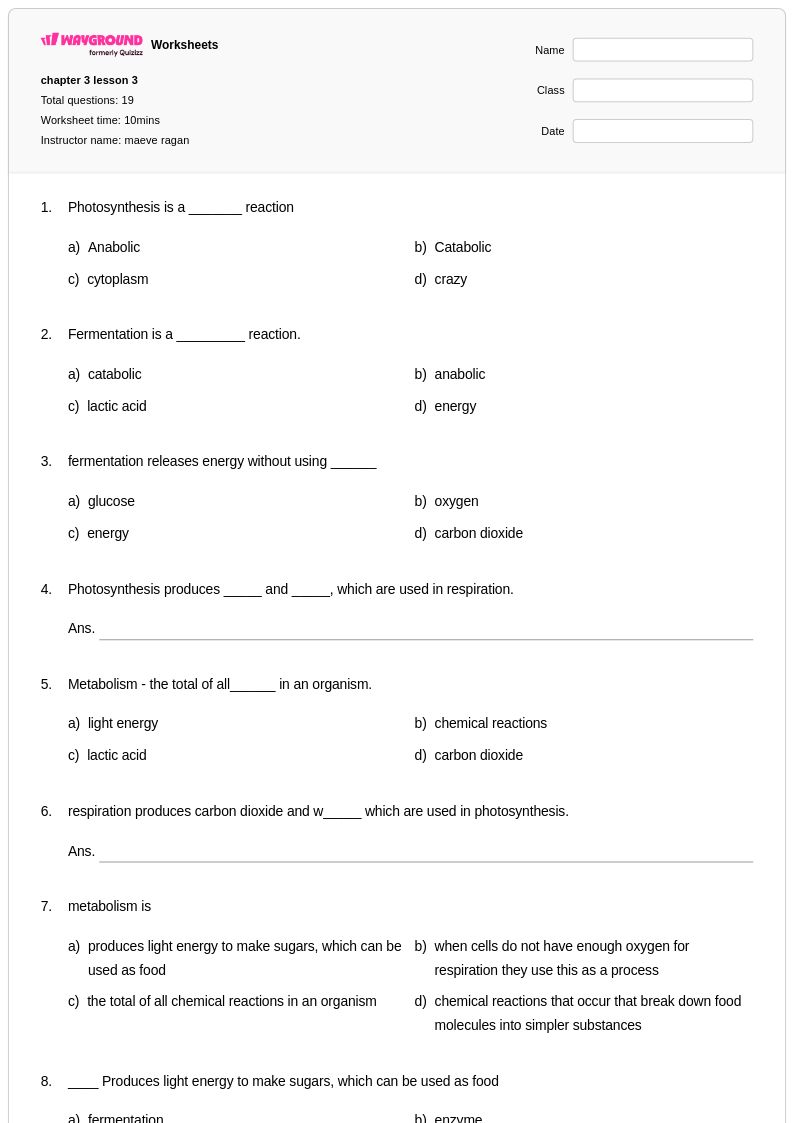
Explore Wayground's comprehensive collection of free fermentation worksheets and printables that help students understand cellular respiration, anaerobic processes, and metabolic pathways through engaging practice problems with complete answer keys.
Fermentation worksheets available through Wayground (formerly Quizizz) provide comprehensive coverage of this fundamental biological process that converts organic compounds through the action of microorganisms. These educational resources strengthen students' understanding of anaerobic cellular respiration, enzyme function, and metabolic pathways while exploring real-world applications in food production, biotechnology, and industrial processes. The worksheet collections include detailed practice problems that guide learners through glycolysis modifications, alcohol fermentation, lactic acid fermentation, and the role of specific microorganisms like yeast and bacteria. Each printable resource comes with a complete answer key and is available as a free pdf download, enabling students to master complex biochemical concepts through structured practice and immediate feedback on their comprehension of fermentation mechanisms.
Wayground (formerly Quizizz) empowers educators with access to millions of teacher-created fermentation worksheets that support diverse instructional needs across biology curricula. The platform's robust search and filtering capabilities allow teachers to locate resources aligned with specific academic standards while offering differentiation tools to accommodate varying student skill levels and learning preferences. These customizable worksheet collections are available in both printable pdf format and interactive digital versions, providing flexibility for classroom instruction, homework assignments, and independent study sessions. Teachers can seamlessly integrate these resources into lesson planning for concept introduction, skill remediation, and advanced enrichment activities, while the comprehensive coverage of fermentation topics ensures students develop thorough mastery of this essential biological process through targeted practice and assessment opportunities.
FAQs
How do I teach fermentation to biology students?
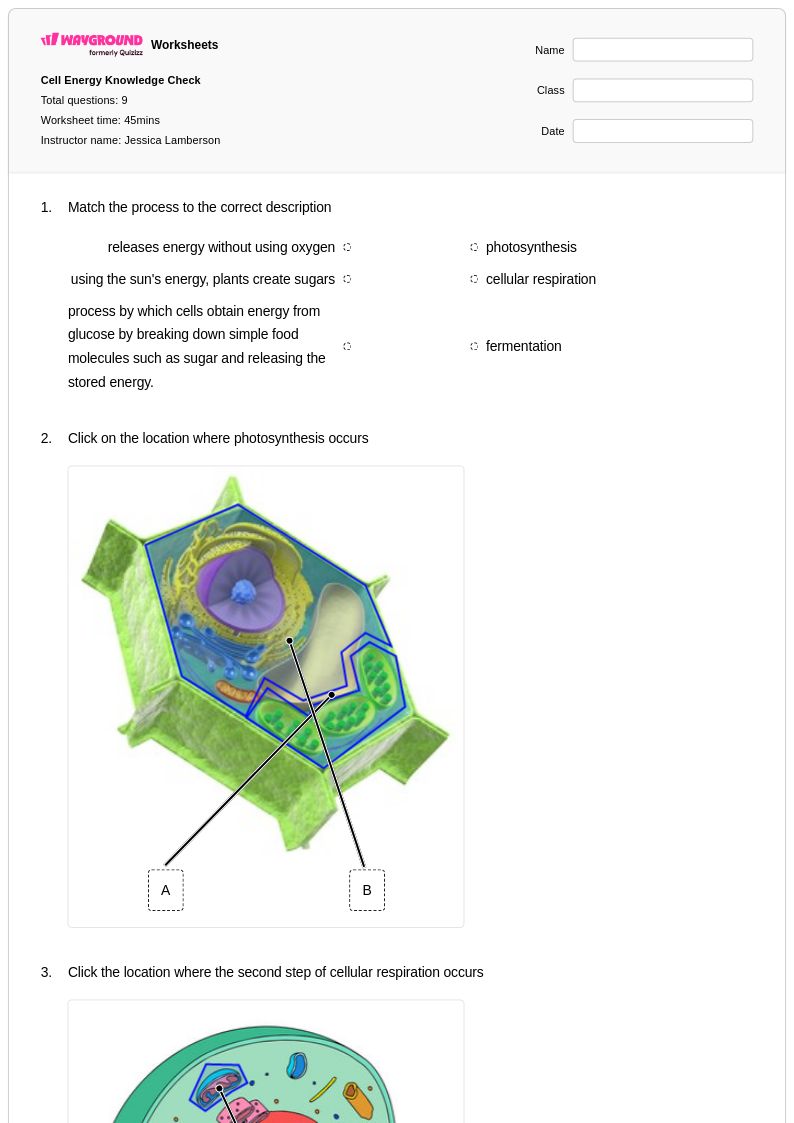
Teach fermentation by grounding it first in cellular respiration — students need to understand why cells switch to anaerobic pathways when oxygen is unavailable. Start with glycolysis as the shared entry point, then branch into alcohol fermentation (yeast) and lactic acid fermentation (muscle cells and bacteria), comparing their end products and the organisms that use each. Real-world examples like bread rising, yogurt production, and beer brewing make the biochemistry tangible and help students connect metabolic pathways to observable outcomes.
What are the most common misconceptions students have about fermentation?
A widespread misconception is that fermentation produces ATP the same way aerobic respiration does — students often miss that fermentation's primary role is to regenerate NAD+ so glycolysis can continue, not to generate additional ATP directly. Many students also confuse fermentation with decomposition or incorrectly assume all fermentation produces alcohol. Another frequent error is treating yeast as the only organism capable of fermentation, when bacteria (e.g., Lactobacillus) are equally central to lactic acid pathways.
What practice problems help students understand the difference between alcohol and lactic acid fermentation?
Comparison tasks work well — have students trace the fate of pyruvate in each pathway, identifying the final products (ethanol and CO2 versus lactate) and the organisms involved. Diagram labeling exercises that require students to map NAD+/NADH cycling keep the focus on the biochemical function rather than just memorization of end products. Scenario-based problems, such as asking why a sprinting athlete's muscles produce lactic acid rather than ethanol, push students to apply pathway logic rather than recall facts.
How do fermentation worksheets support students who struggle with biochemical pathways?
Structured practice problems that walk through fermentation step by step — from glucose input through glycolysis to end products — help struggling students build the pathway incrementally rather than trying to memorize it as a whole. On Wayground, teachers can enable accommodations such as Read Aloud for students who need audio support, reduced answer choices to lower cognitive load on assessment items, and extended time for students who need additional processing time. These settings can be applied per student without disrupting the rest of the class.
How do I use Wayground's fermentation worksheets in my classroom?
Wayground's fermentation worksheets are available as printable PDFs for traditional classroom use and in digital formats for technology-integrated instruction, giving you flexibility for in-class practice, homework, or independent study. You can also host any worksheet as a live quiz on Wayground, making it easy to collect student responses and review comprehension in real time. Each worksheet includes a complete answer key, so grading and feedback are built into the resource itself.
How do fermentation worksheets fit into a broader cellular respiration unit?
Fermentation worksheets are most effective when sequenced after students have covered glycolysis and the basics of aerobic respiration, positioning fermentation as an alternative anaerobic pathway rather than a standalone concept. Practice problems that ask students to compare ATP yield, oxygen requirements, and end products across aerobic respiration, alcohol fermentation, and lactic acid fermentation reinforce the relationships between these pathways. Including real-world biotechnology applications — enzyme function in food production, industrial fermentation — extends the unit beyond pure biochemistry and builds relevance.