
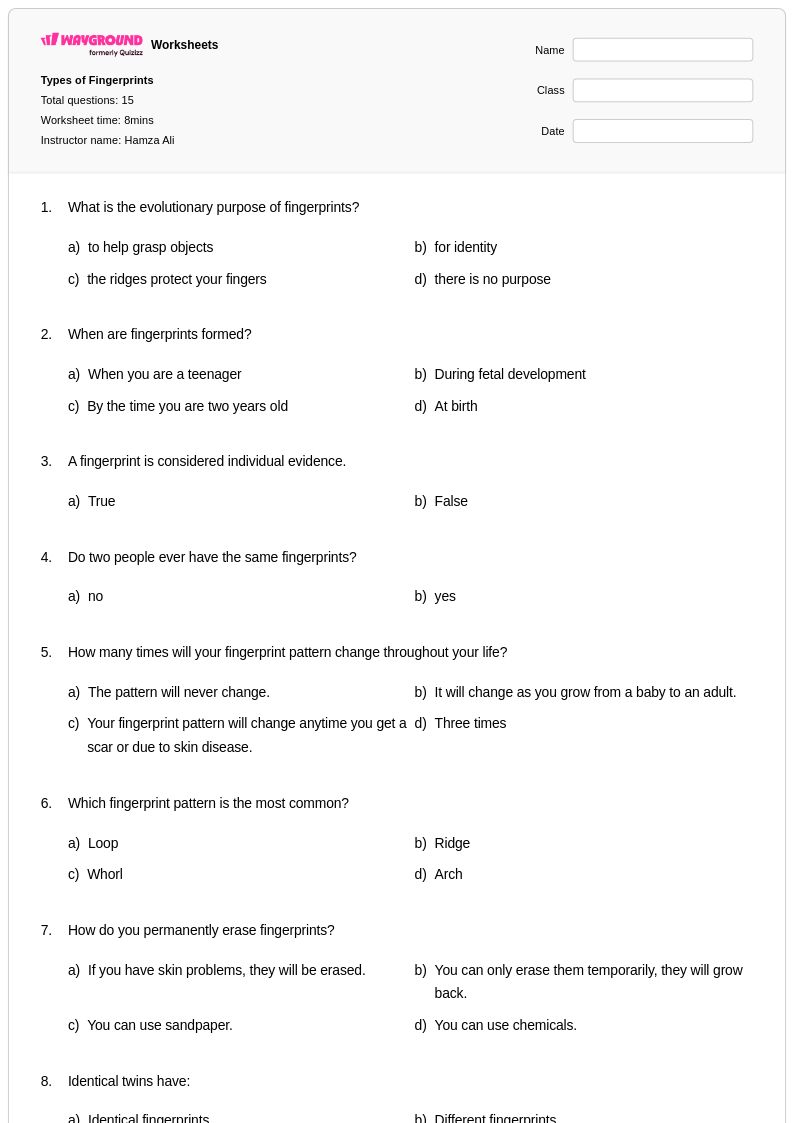
15Q
7th - Uni
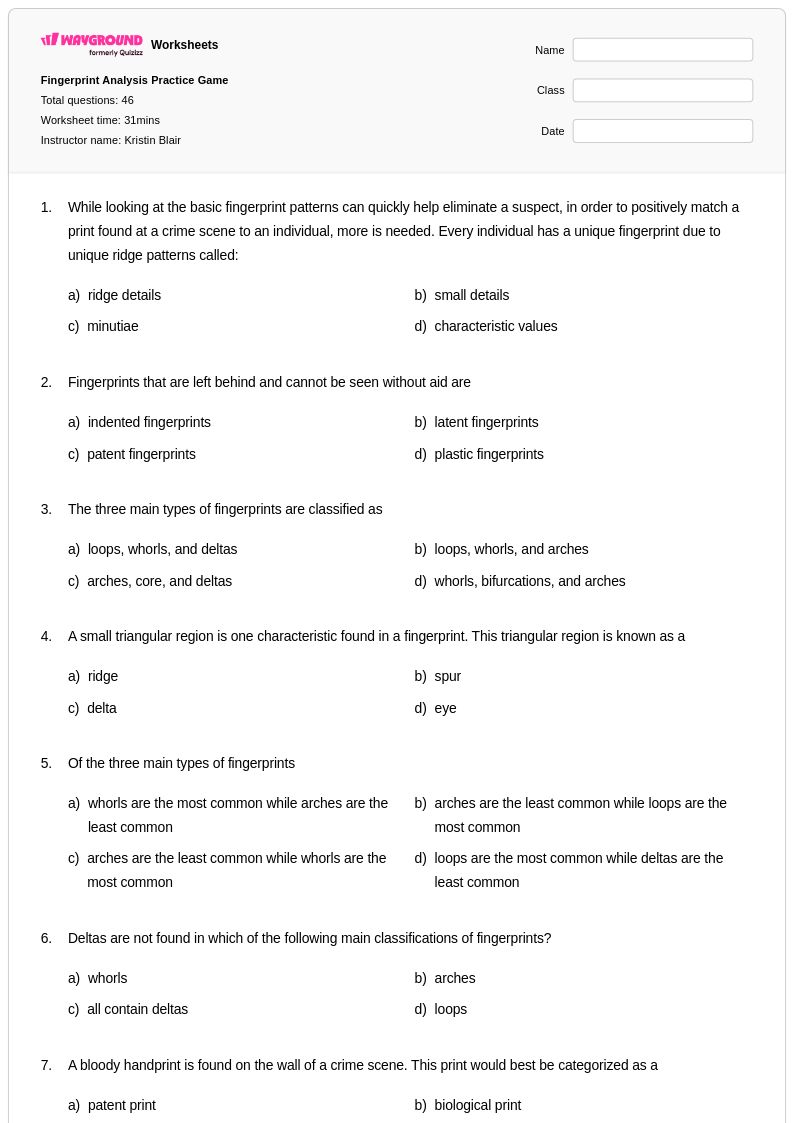
46Q
7th - Uni
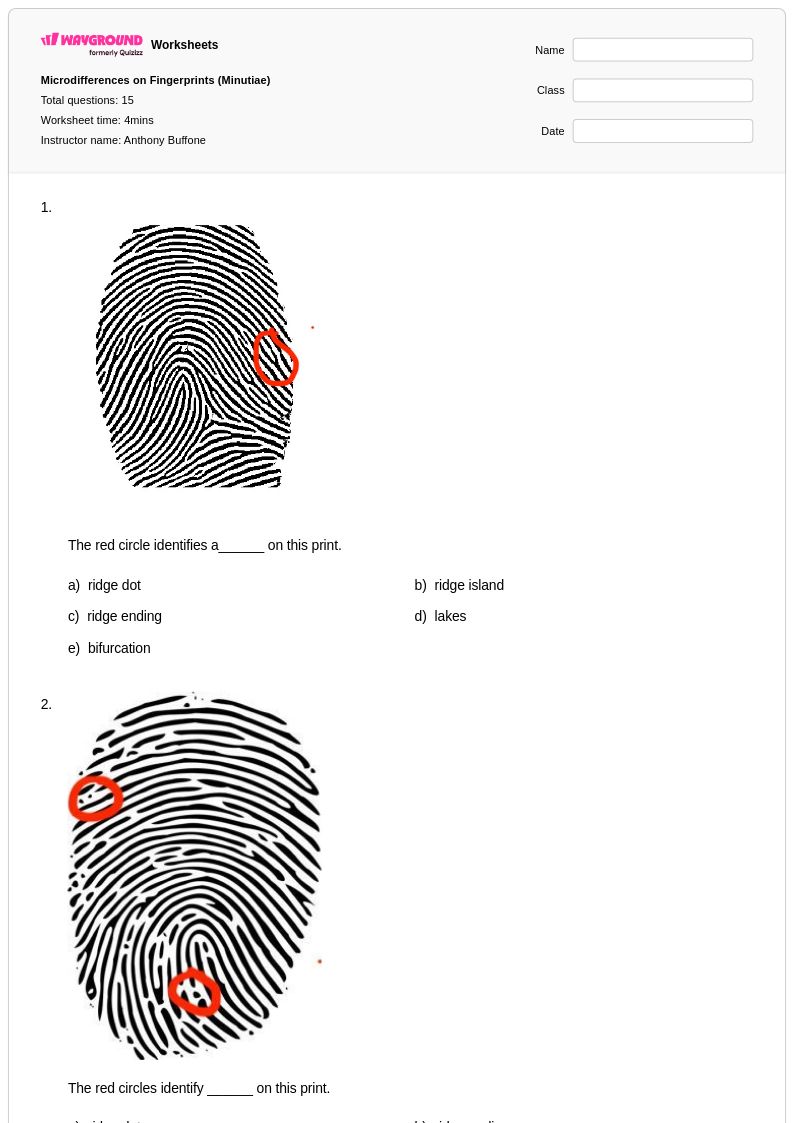
15Q
6th - 9th
58Q
6th - 8th
18Q
8th
74Q
8th
16Q
8th
6Q
5th - 8th
25Q
6th - Uni
5Q
7th - 8th
75Q
6th - 8th
25Q
8th - Uni
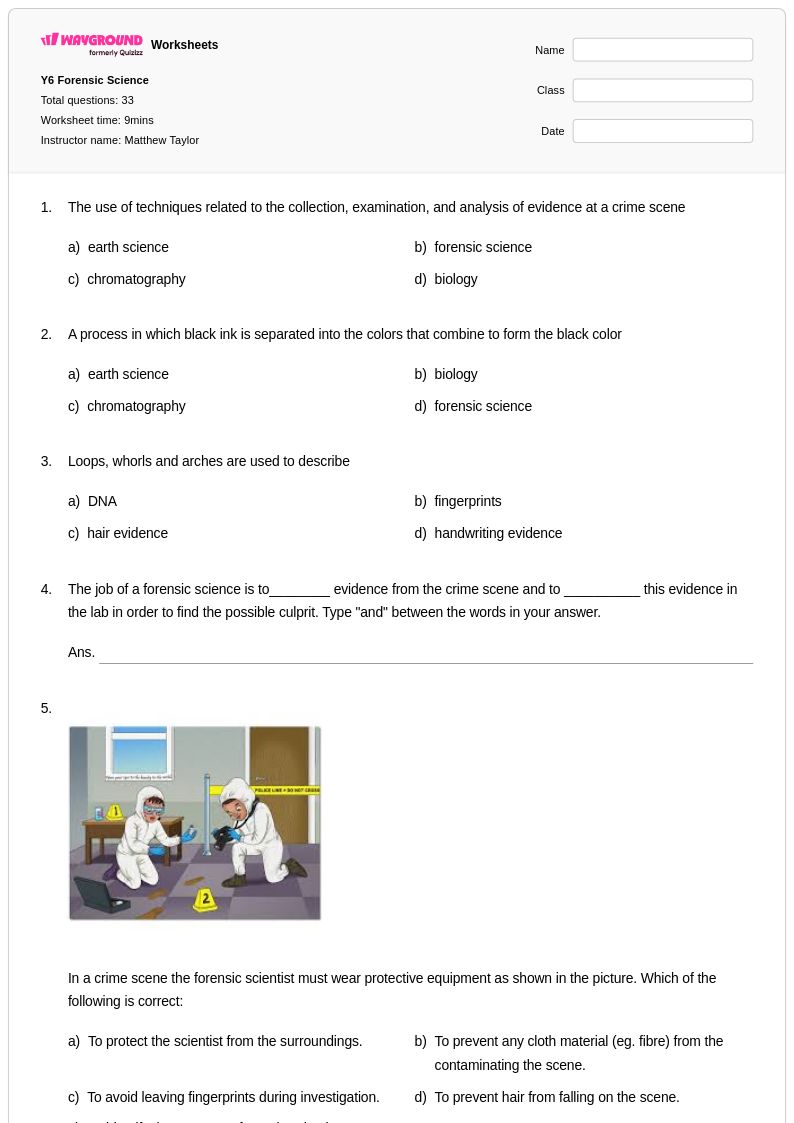
33Q
6th - 9th
22Q
6th - 8th
15Q
8th - Uni
![Sci-Oly 2022-2023 [CrimeBusters] - Imprimible Fingerprints Worksheets Class 8 - Quizizz](https://quizizz-static.s3.amazonaws.com/_media/worksheets-new/63571b6af23a82001e25ade7-sci-oly-2022-2023-crimebusters)
130Q
6th - 8th
25Q
8th - Uni

16Q
5th - Uni
6Q
6th - 8th
25Q
3rd - Uni
25Q
3rd - Uni
24Q
7th - 12th
10Q
6th - 8th
Explorar Fingerprints hojas de trabajo por grados
Explore otras hojas de trabajo de materias para class 8
Explore printable Fingerprints worksheets for Class 8
Class 8 fingerprint worksheets available through Wayground (formerly Quizizz) provide students with comprehensive practice in understanding the unique biological characteristics and forensic applications of human fingerprints. These educational resources strengthen critical skills in pattern recognition, scientific observation, and analytical thinking as students explore the three main fingerprint classifications: loops, whorls, and arches. The worksheets guide learners through hands-on activities involving fingerprint collection, comparison techniques, and identification methods used in forensic science. Each printable resource includes detailed answer keys that support independent learning and self-assessment, while free practice problems reinforce key concepts about ridge patterns, minutiae points, and the biological factors that make each person's fingerprints completely unique. Students develop both scientific literacy and practical investigation skills through these structured pdf worksheets that combine theoretical knowledge with real-world applications.
Wayground (formerly Quizizz) empowers educators with an extensive collection of teacher-created fingerprint resources that streamline lesson planning and enhance student engagement in Class 8 biology curricula. The platform's millions of educational materials include robust search and filtering capabilities that allow teachers to quickly locate worksheets aligned with specific learning standards and differentiated for various skill levels. These customizable resources are available in both printable and digital formats, including downloadable pdf versions that accommodate diverse classroom environments and individual student needs. Teachers can easily adapt existing worksheets or create personalized versions to support targeted remediation for struggling learners, provide enrichment opportunities for advanced students, or deliver focused skill practice that reinforces essential concepts about human biology and forensic science applications.
FAQs
How do I teach fingerprint classification to students?
What hands-on activities help students practice fingerprint analysis?
What common mistakes do students make when classifying fingerprints?
How can fingerprint worksheets support a forensic science unit?
How do I use Wayground's fingerprint worksheets in my classroom?
How do I differentiate fingerprint activities for students with different ability levels?