Free Printable Forensic Entomology Worksheets for Class 9
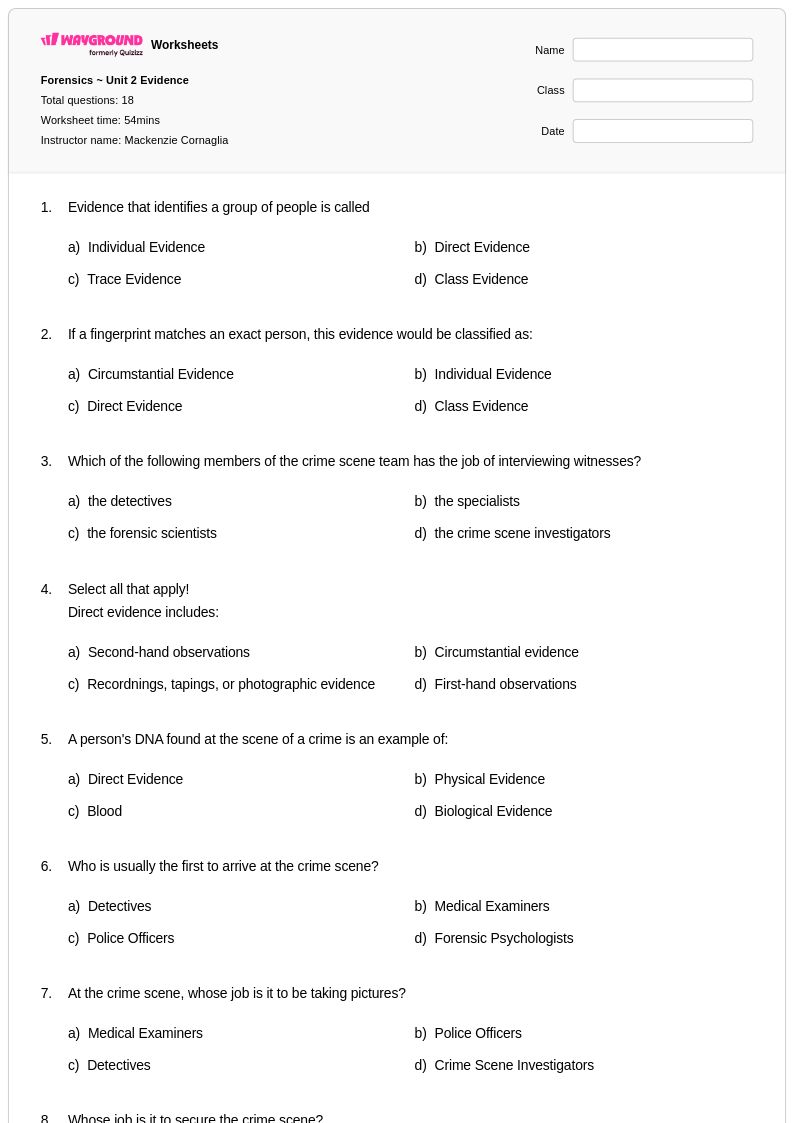
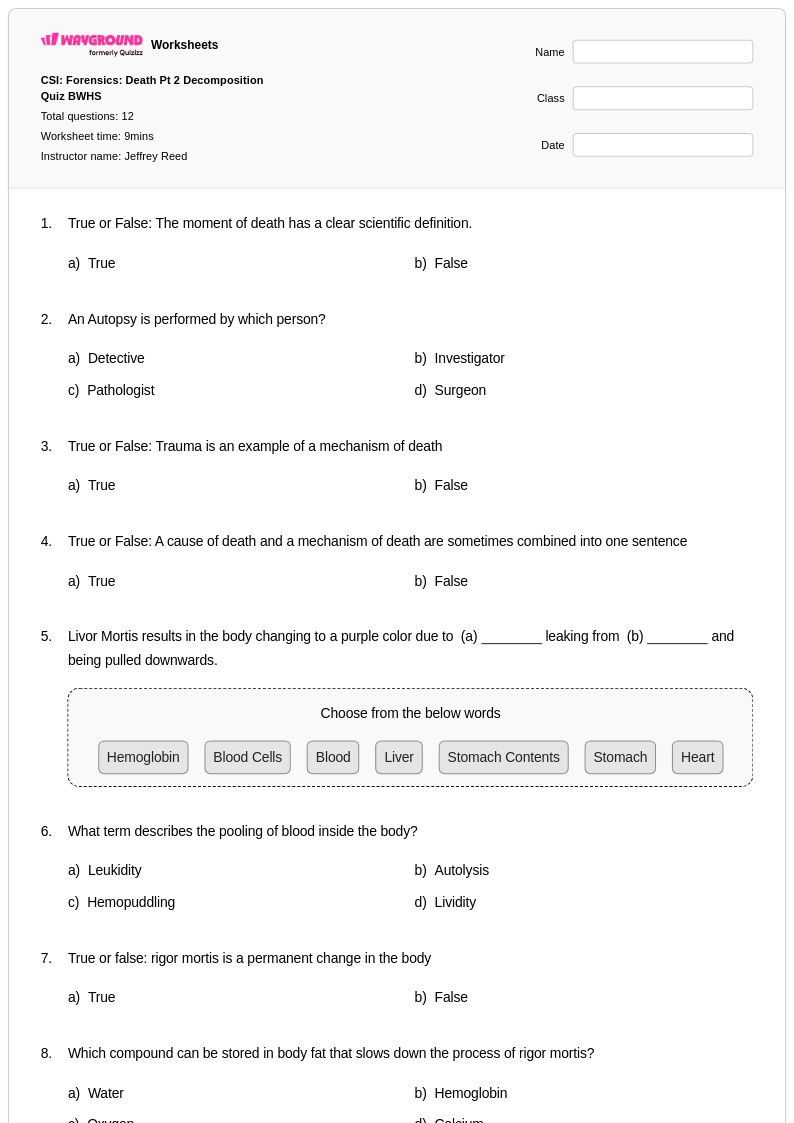
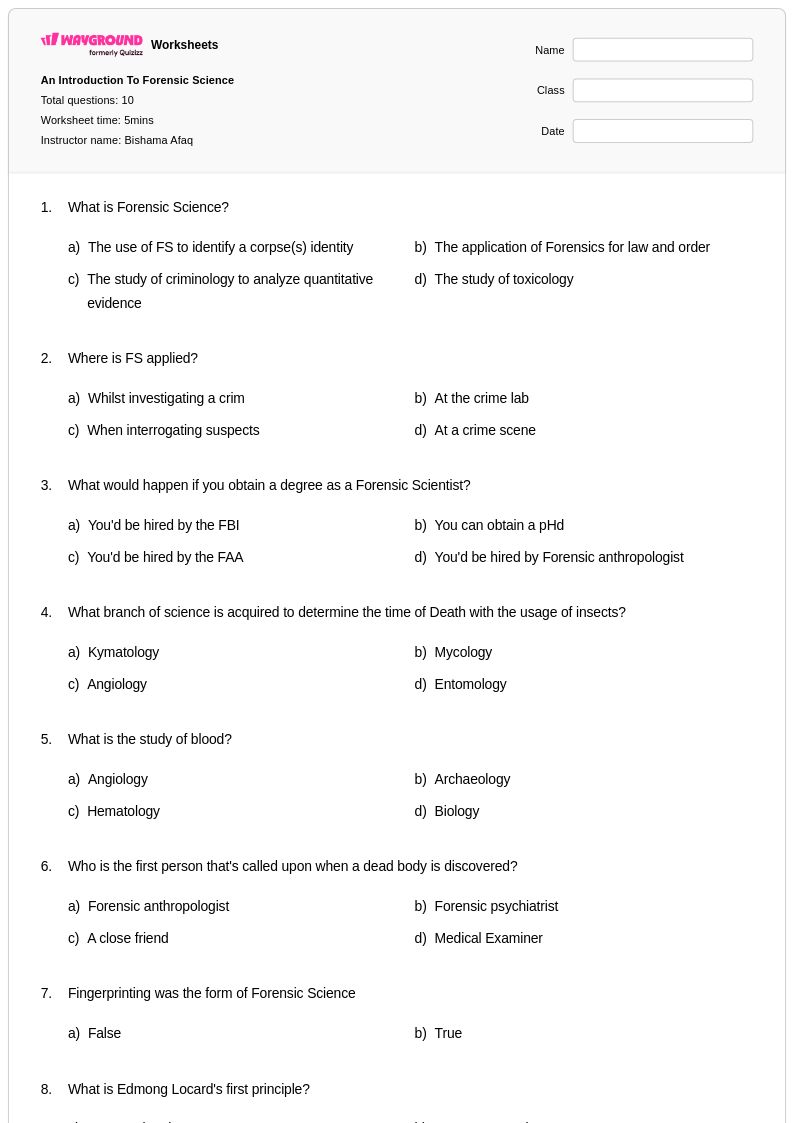
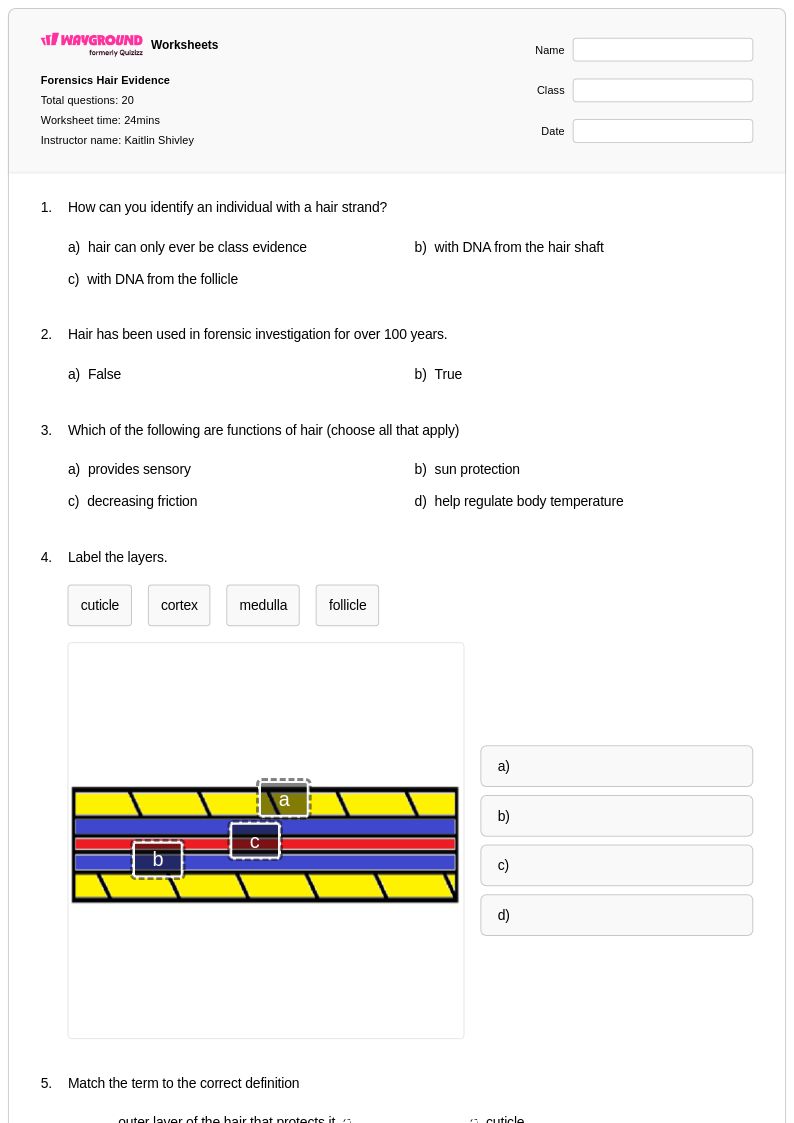
Class 9 forensic entomology worksheets from Wayground help students explore how insects aid criminal investigations through engaging printables, practice problems, and comprehensive answer keys in convenient PDF format.
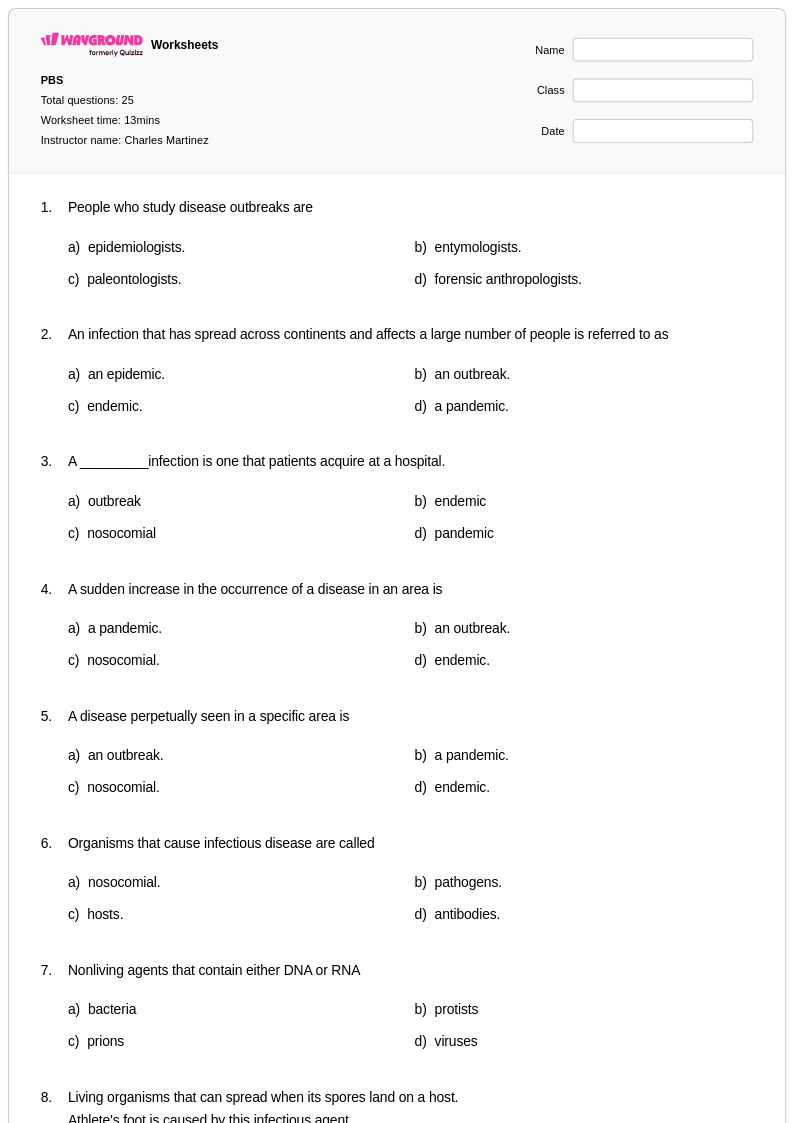
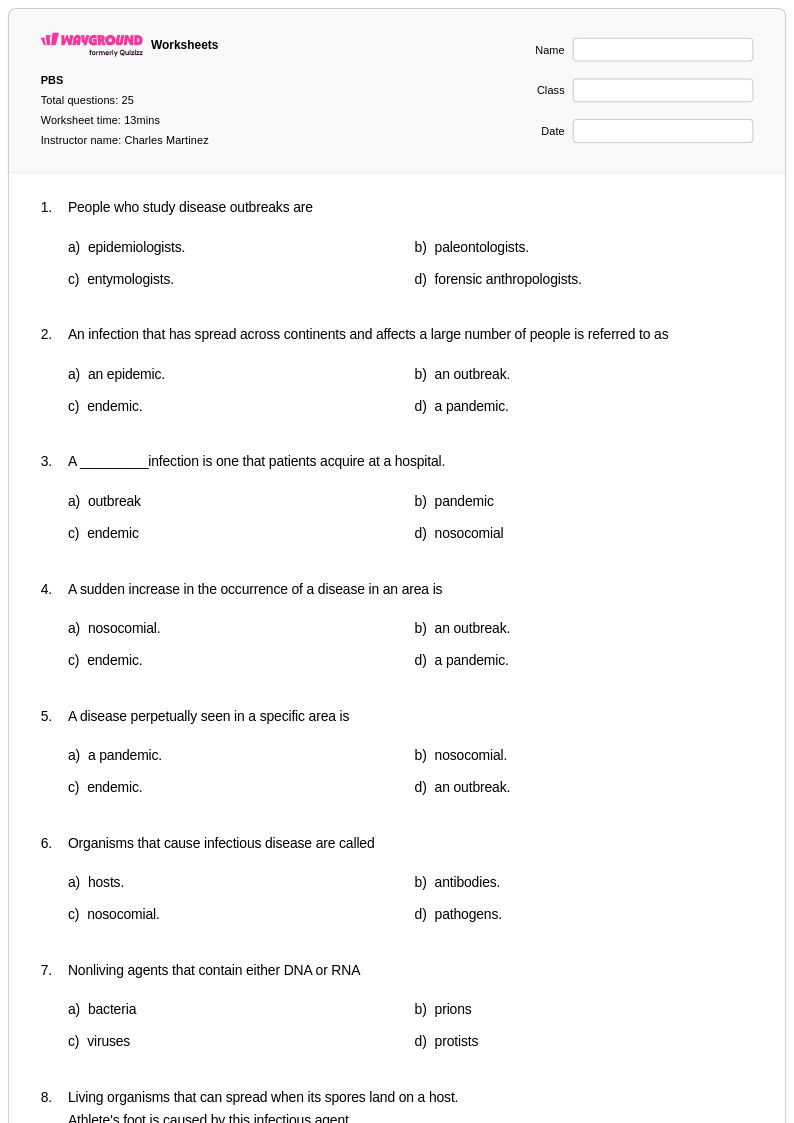
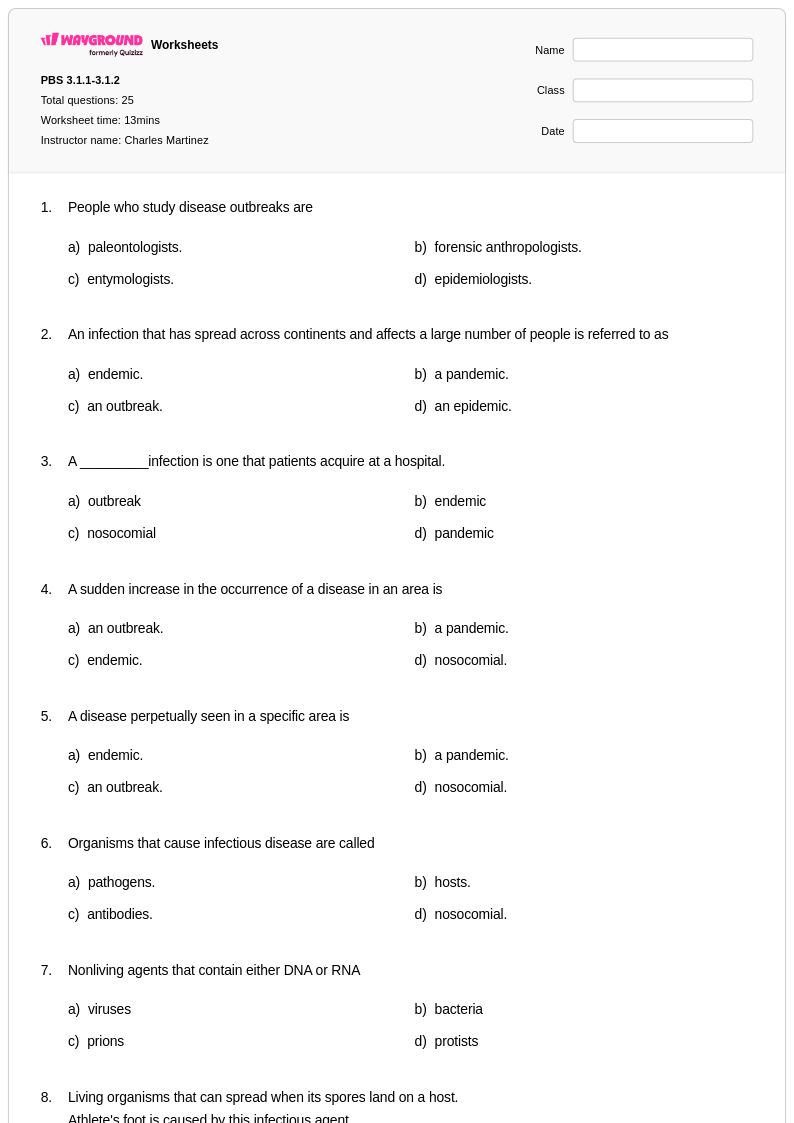
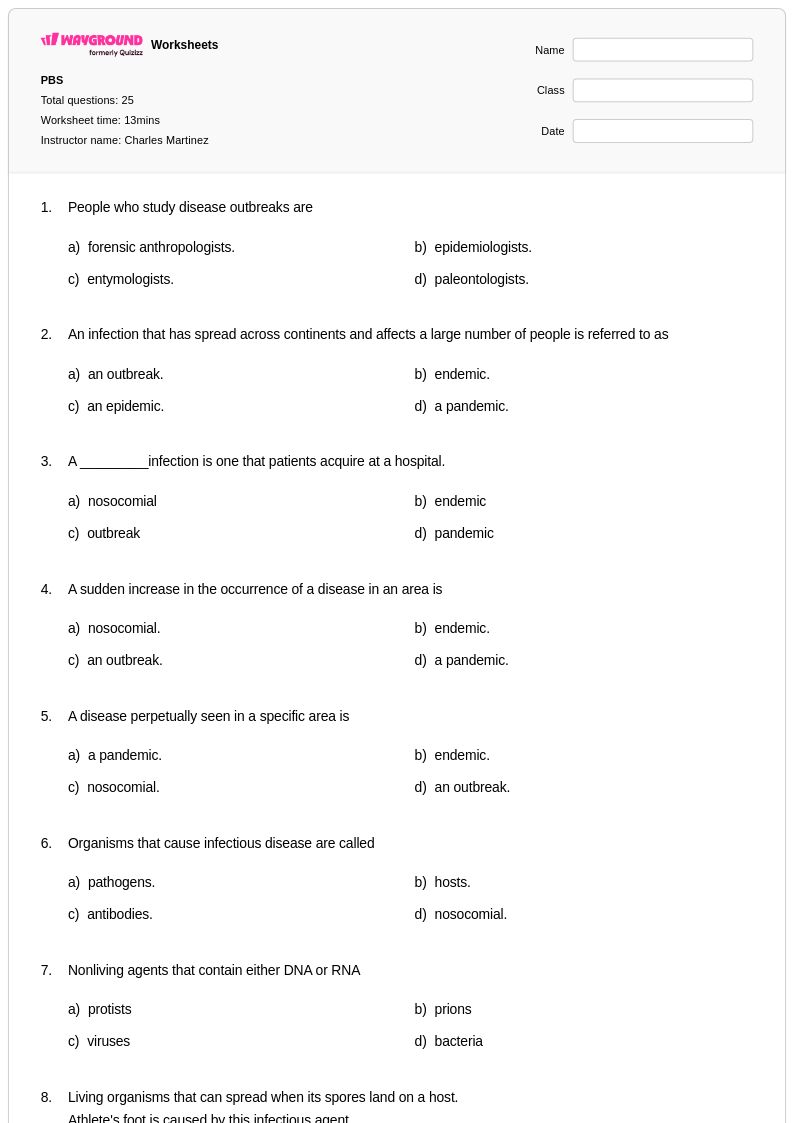
Explore printable Forensic Entomology worksheets for Class 9
Forensic entomology worksheets for Class 9 students available through Wayground provide comprehensive coverage of this fascinating intersection between biology and criminal investigation. These educational resources help students develop critical analytical skills by exploring how insects can serve as biological evidence in legal cases, including understanding life cycles of carrion-feeding insects, calculating postmortem intervals, and interpreting environmental factors that affect decomposition rates. The practice problems within these worksheets challenge students to apply scientific methodology to real-world scenarios, while detailed answer keys enable independent learning and self-assessment. Teachers can access these materials as free printables in convenient pdf format, making it easy to integrate hands-on forensic science activities into their biology curriculum.
Wayground's extensive collection draws from millions of teacher-created resources, offering educators powerful search and filtering capabilities to locate the most appropriate forensic entomology materials for their Class 9 classrooms. The platform's standards alignment features ensure that worksheets meet academic requirements while supporting differentiated instruction through customizable content that can be adapted for various learning levels. Teachers benefit from flexible formatting options, including both printable and digital versions, allowing seamless integration into lesson planning whether for in-person or remote learning environments. These comprehensive tools support effective remediation for struggling students, enrichment opportunities for advanced learners, and targeted skill practice that reinforces essential concepts in biological evidence analysis and scientific investigation techniques.
FAQs
How do I teach forensic entomology in a high school science class?
Start by grounding students in basic insect biology and decomposition stages before introducing forensic applications. Use case study scenarios to walk students through how investigators identify forensically important species, interpret insect succession patterns, and estimate postmortem intervals. Connecting the biology to real criminal investigation contexts increases engagement and helps students see scientific reasoning as a practical skill.
What kinds of practice problems help students understand accumulated degree days and postmortem interval estimation?
Students benefit most from problems that require them to calculate accumulated degree days using temperature data and apply those calculations to estimate how long a body has been at a scene. Exercises that vary environmental conditions, such as seasonal temperature shifts or indoor versus outdoor settings, push students to consider how external factors affect decomposition rates and insect activity, which is where deeper understanding develops.
What mistakes do students commonly make when learning forensic entomology concepts?
The most common error is treating insect succession as a fixed sequence rather than understanding that environmental variables like temperature, humidity, and location significantly alter which species appear and when. Students also frequently confuse accumulated degree days with calendar time, failing to account for temperature fluctuations across the postmortem interval. Targeted practice with varied case scenarios helps correct both misconceptions.
How can I use forensic entomology worksheets to support students with different ability levels?
Forensic entomology lends itself well to differentiation because problems can range from basic species identification to complex thermal summation calculations. For students who need additional support, reducing the number of answer choices on identification questions or enabling read-aloud features for case study text can lower barriers to entry. Advanced students can be extended into career application scenarios and multi-variable crime scene reconstructions.
How do Wayground's forensic entomology worksheets work in the classroom?
Wayground's forensic entomology worksheets are available as printable PDFs for traditional classroom use and in digital formats for technology-integrated learning environments, including the option to host them as a quiz directly on Wayground. Each worksheet includes a complete answer key with detailed explanations, so teachers can use them for independent practice, homework, or structured review sessions without additional preparation.
How do insects help determine time of death in a forensic investigation?
Forensic entomologists analyze the species present at a scene and their developmental stage to estimate the postmortem interval, which is the time elapsed since death. Because blowflies and other forensically significant insects colonize remains in predictable succession patterns, and because their development rates are tied to temperature, investigators can use accumulated degree day calculations to work backward to an estimated time of death. This method is most reliable when combined with knowledge of local insect populations and environmental conditions.