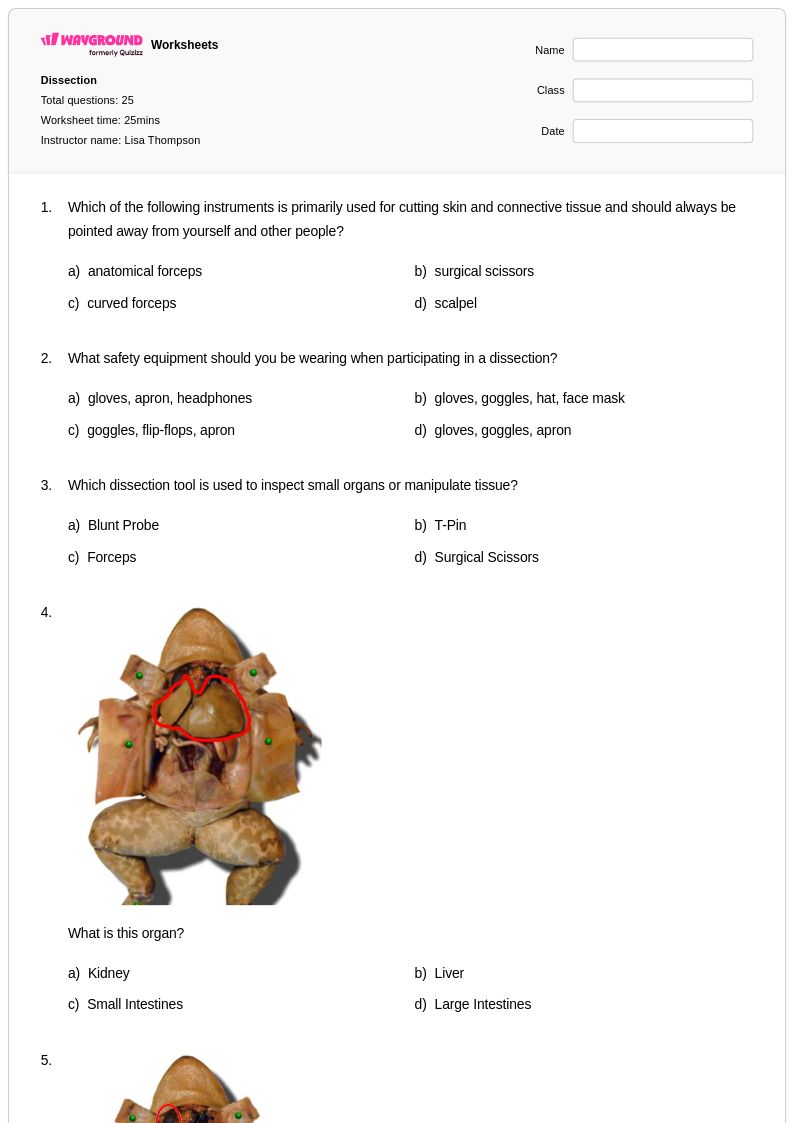
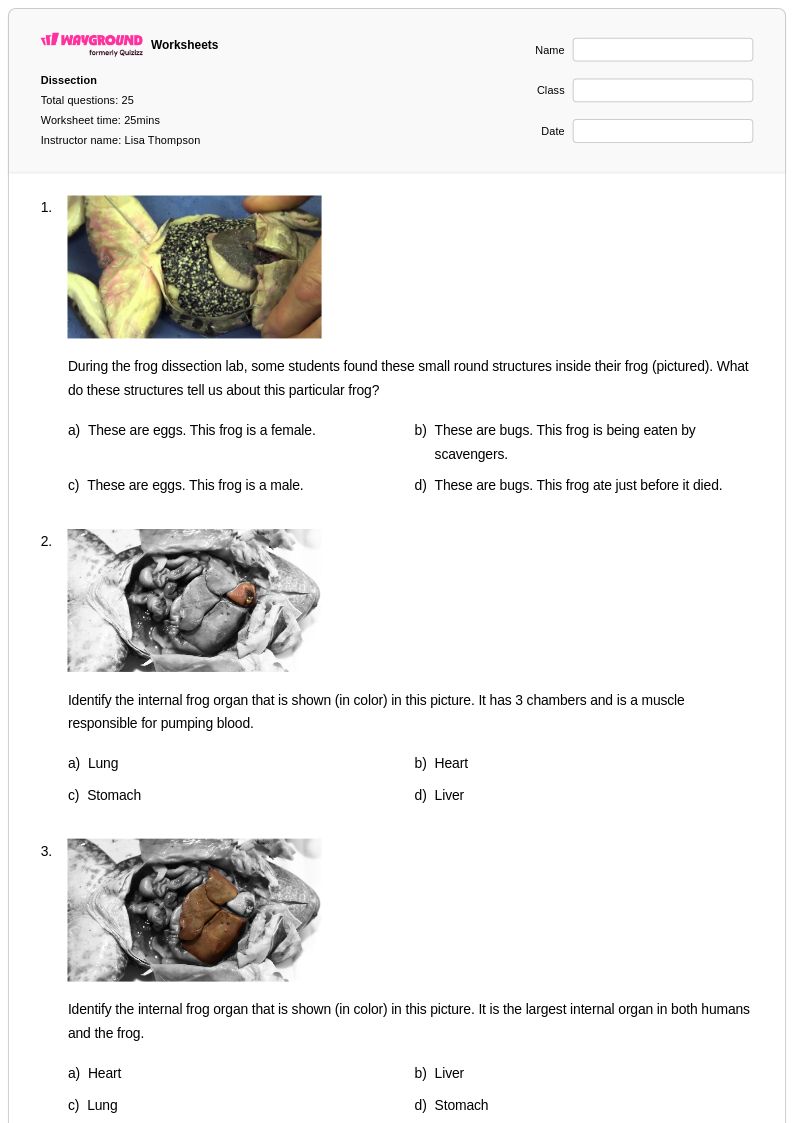
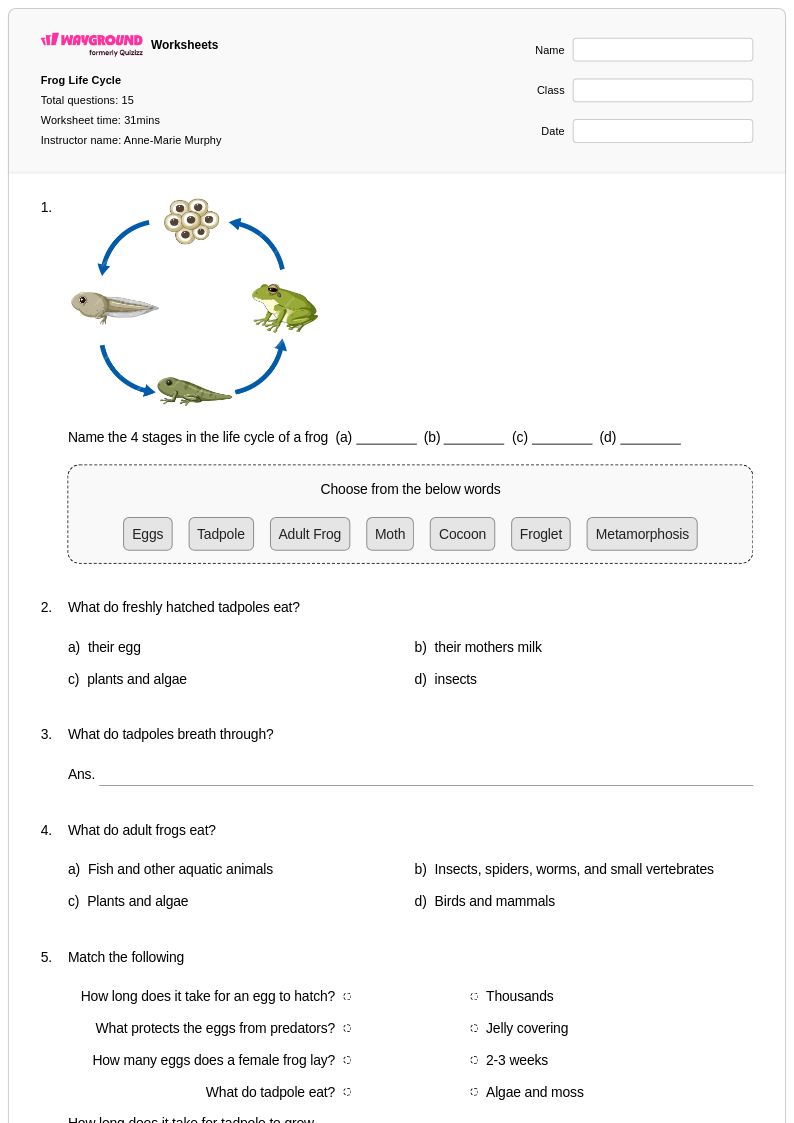
Explore Wayground's free frog dissection worksheets and printables that help students learn anatomical structures, organ systems, and biological processes through hands-on practice problems with detailed answer keys.
Frog dissection worksheets available through Wayground (formerly Quizizz) provide comprehensive educational resources that guide students through the systematic exploration of amphibian anatomy and physiology. These carefully structured worksheets enhance critical observation skills, reinforce biological terminology, and deepen understanding of comparative anatomy principles as students examine external and internal frog structures. The collection includes detailed practice problems that challenge students to identify organs, trace circulatory pathways, and analyze respiratory and digestive systems, with accompanying answer keys that support independent learning and self-assessment. Available as free printables and downloadable pdf formats, these worksheets serve as essential tools for pre-lab preparation, guided dissection activities, and post-lab analysis, ensuring students maximize their hands-on learning experience while developing scientific inquiry skills fundamental to biological study.
Wayground (formerly Quizizz) supports educators with an extensive collection of teacher-created frog dissection resources, featuring millions of worksheets that can be easily accessed through robust search and filtering capabilities. The platform's standards alignment ensures that dissection activities meet curriculum requirements while differentiation tools allow teachers to modify content complexity for diverse learner needs. Flexible customization options enable educators to adapt worksheets for specific lab protocols or focus areas, whether emphasizing organ system functions or comparative vertebrate anatomy. Available in both printable and digital formats including pdf downloads, these resources streamline lesson planning while providing targeted materials for remediation, enrichment, and skill practice, empowering teachers to create meaningful dissection experiences that reinforce scientific methodology and deepen students' appreciation for biological complexity.
FAQs
How do I teach frog dissection effectively in a biology class?
Effective frog dissection instruction follows a three-phase structure: pre-lab preparation, guided dissection, and post-lab analysis. During pre-lab, students should review external anatomy, directional terms, and the major organ systems before touching a specimen. During dissection, structured observation guides help students stay on task and record findings systematically. Post-lab worksheets that ask students to trace circulatory pathways or compare frog and human organ systems consolidate learning and reinforce biological terminology.
What exercises help students practice frog dissection concepts?
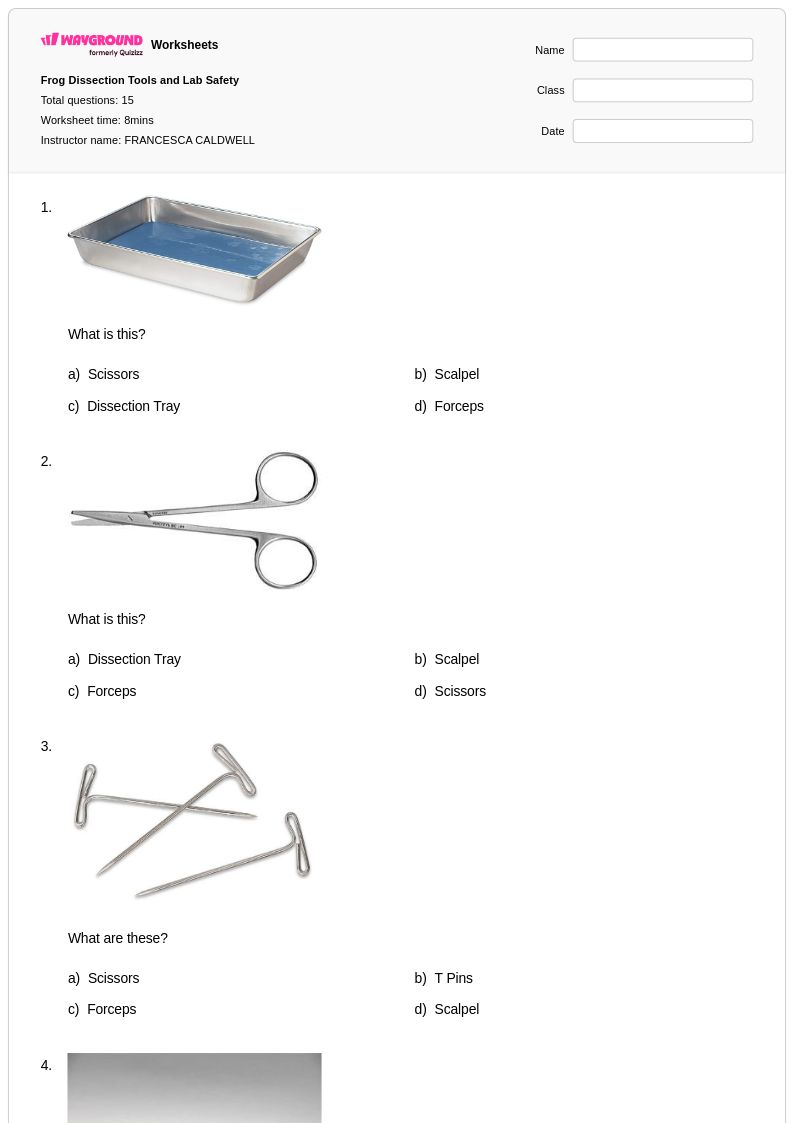
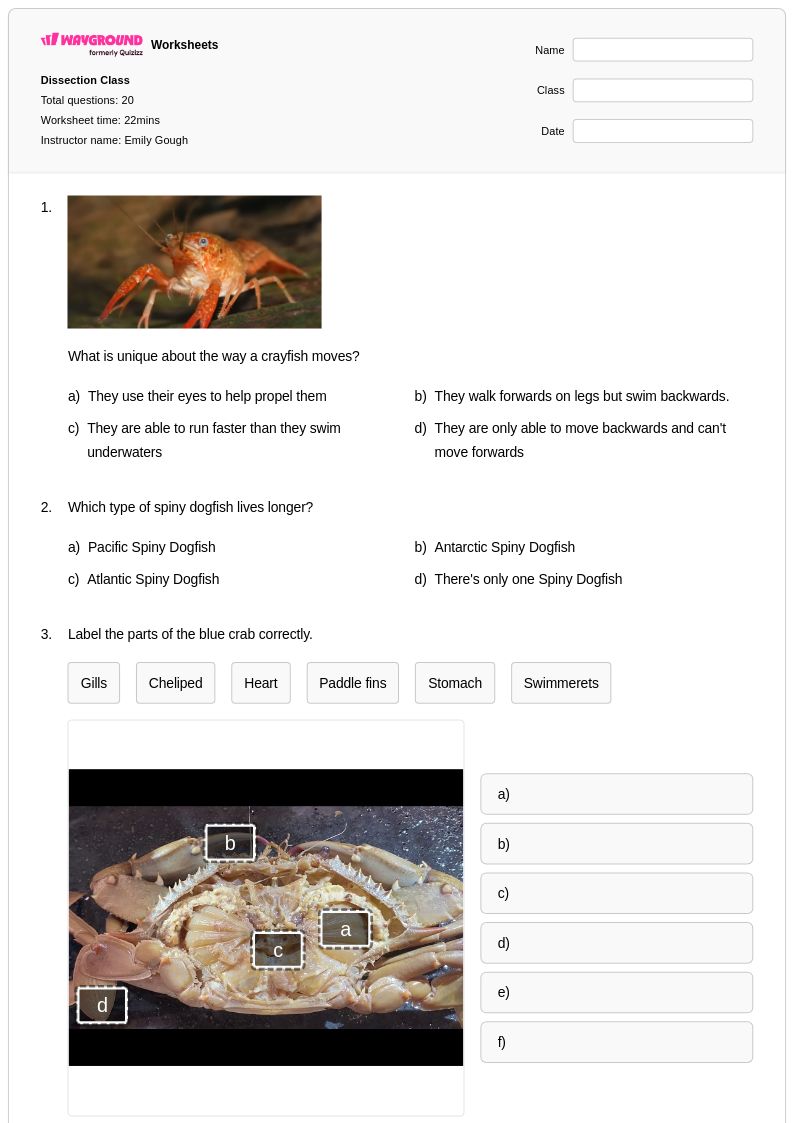
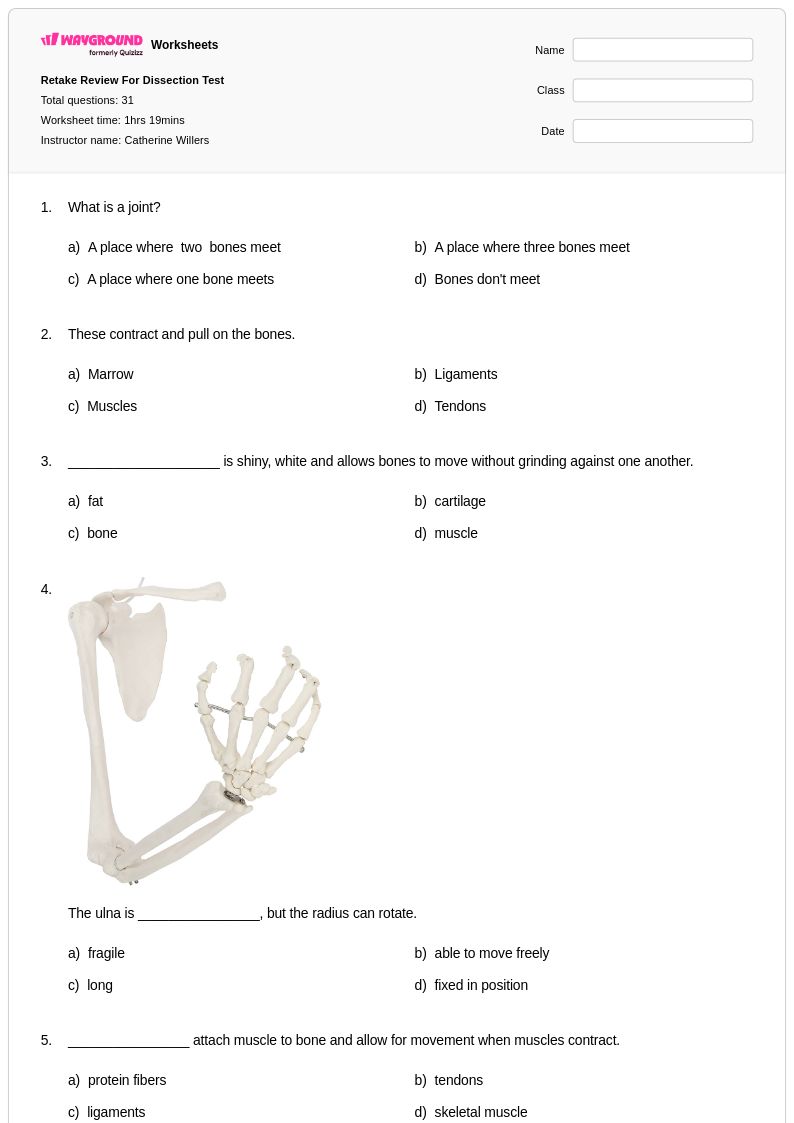
Practice exercises that ask students to label anatomical diagrams, identify organs by function, and trace the path of blood through the circulatory system are among the most effective for reinforcing dissection content. Comparative anatomy problems that prompt students to contrast frog and human digestive or respiratory structures extend the learning beyond observation into analysis. Answer-key-supported worksheets allow students to self-assess and correct misconceptions independently, which is especially valuable for reinforcing terminology after a hands-on lab session.
What mistakes do students commonly make when identifying frog anatomy?
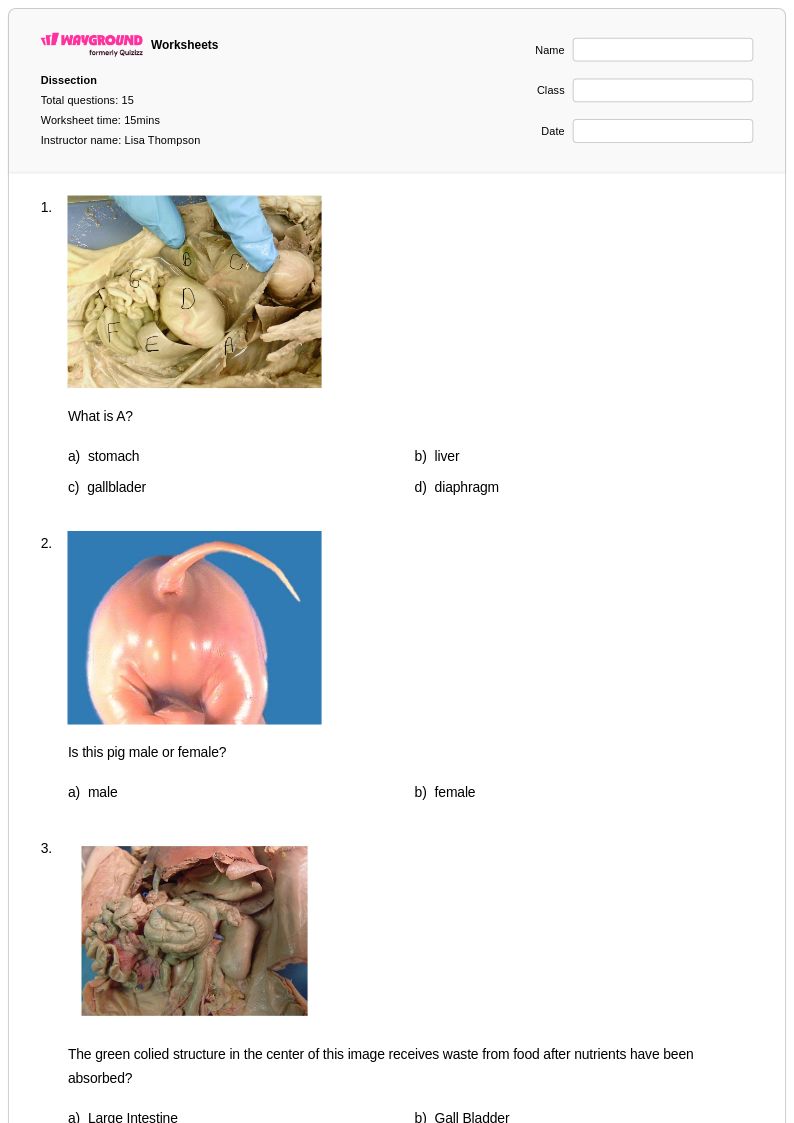
One of the most frequent errors is confusing the liver with other large abdominal organs, particularly the stomach, due to their proximity and similar coloration in preserved specimens. Students also commonly misidentify the small and large intestine or fail to correctly trace the path of food through the digestive system in sequence. Another persistent misconception is conflating the heart chambers, as the three-chambered amphibian heart differs structurally from the four-chambered mammalian heart students may have studied previously.
How do I support students who can't participate in a physical frog dissection?
For students who are exempt from physical dissection for ethical, cultural, or medical reasons, anatomy diagram worksheets and organ system labeling activities provide a rigorous alternative that covers the same learning objectives. These paper-based resources can be used alongside virtual dissection tools to give students a comparable observational experience. On Wayground, teachers can use the Read Aloud accommodation to support students who need audio assistance and adjust font sizes and display themes through Reading Mode, ensuring accessible participation for diverse learners.
How do I use Wayground's frog dissection worksheets in my classroom?
Wayground's frog dissection worksheets are available as printable PDFs for traditional lab settings and in digital formats for technology-integrated classrooms, making them flexible across different instructional environments. Teachers can use them as pre-lab preparation guides, in-lab observation tools, or post-lab assessment materials depending on the instructional goal. Digital versions can be hosted as a quiz directly on Wayground, and all worksheets include answer keys so students can self-assess or teachers can use them for quick grading. Wayground's search and filtering tools also make it straightforward to locate worksheets focused on specific organ systems or lab protocols.
How do I differentiate frog dissection worksheets for students at different skill levels?
For students who need additional support, worksheets with word banks, partially labeled diagrams, or simplified organ identification tasks reduce cognitive load while preserving the core learning objective. Advanced students benefit from open-response problems that require them to explain organ functions, analyze respiratory or circulatory pathways, or draw comparative conclusions between amphibian and mammalian anatomy. On Wayground, teachers can apply accommodations such as reduced answer choices or extended time on a per-student basis without notifying the rest of the class, allowing seamless differentiation within a shared assignment.