Free Printable Inheritance of Blood Types worksheets
Explore Wayground's free inheritance of blood types worksheets with printable PDFs, practice problems, and answer keys to help students master genetic patterns and ABO blood group inheritance principles.
Explore printable Inheritance of Blood Types worksheets
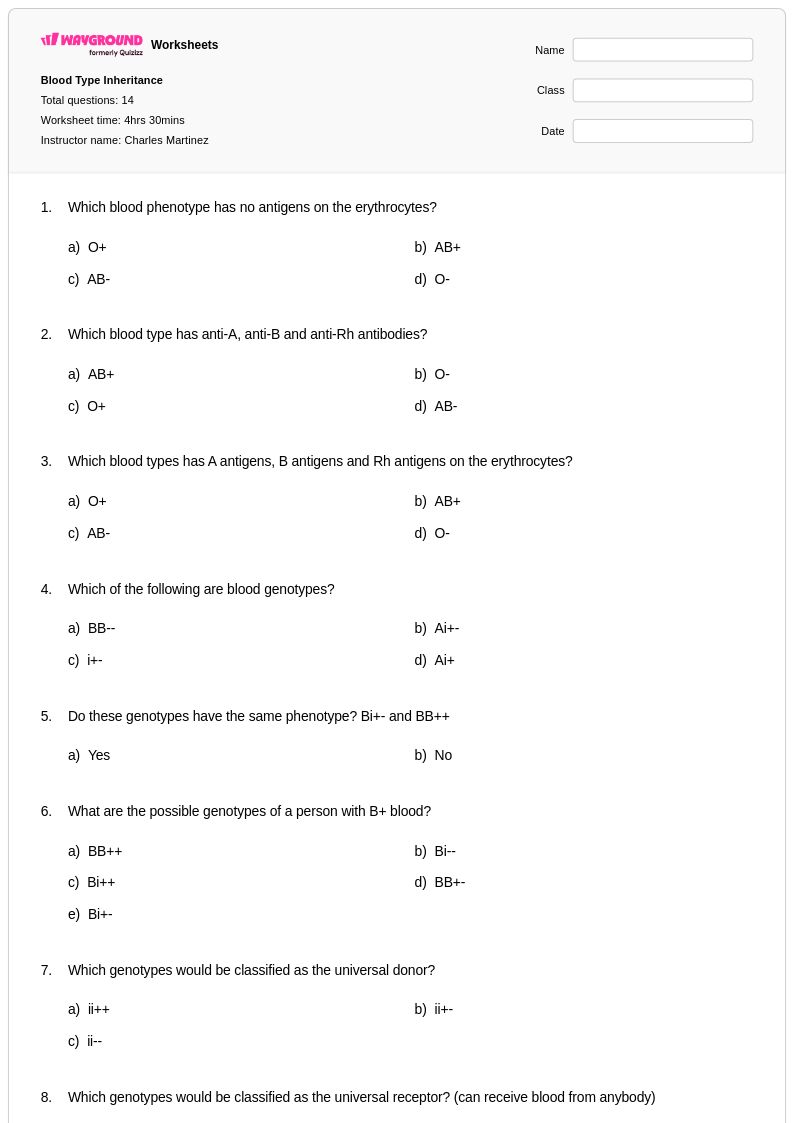
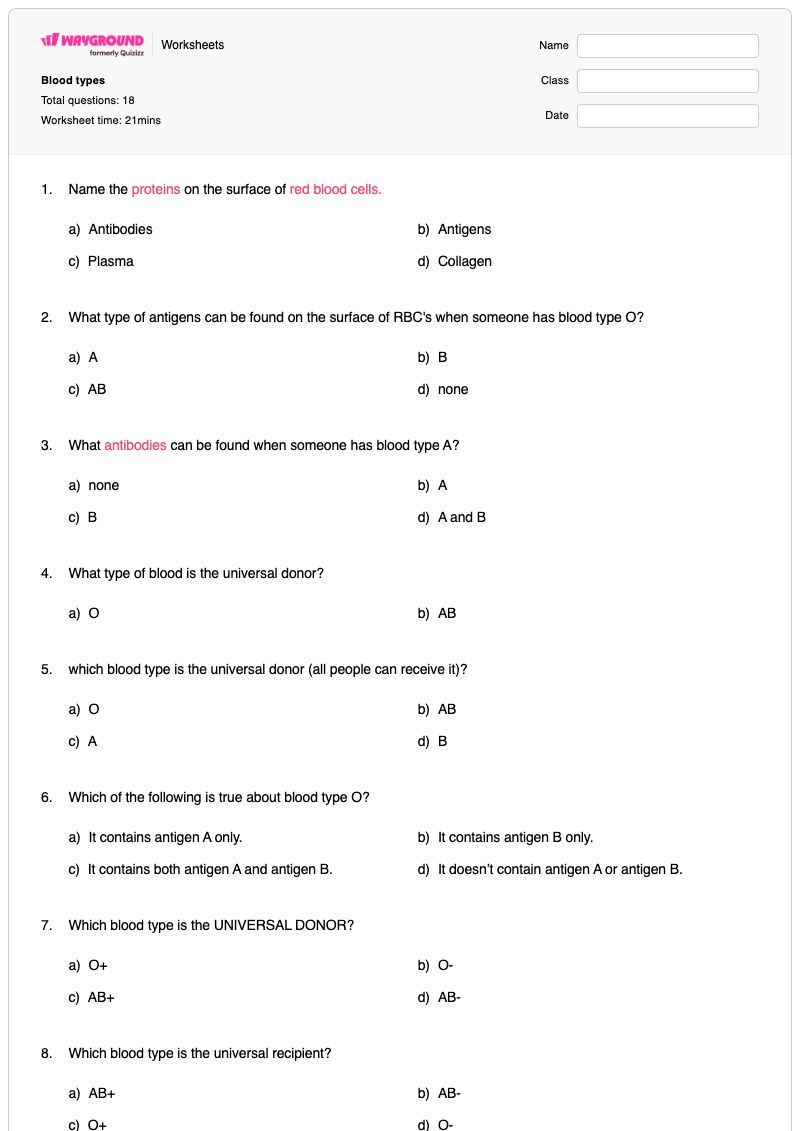
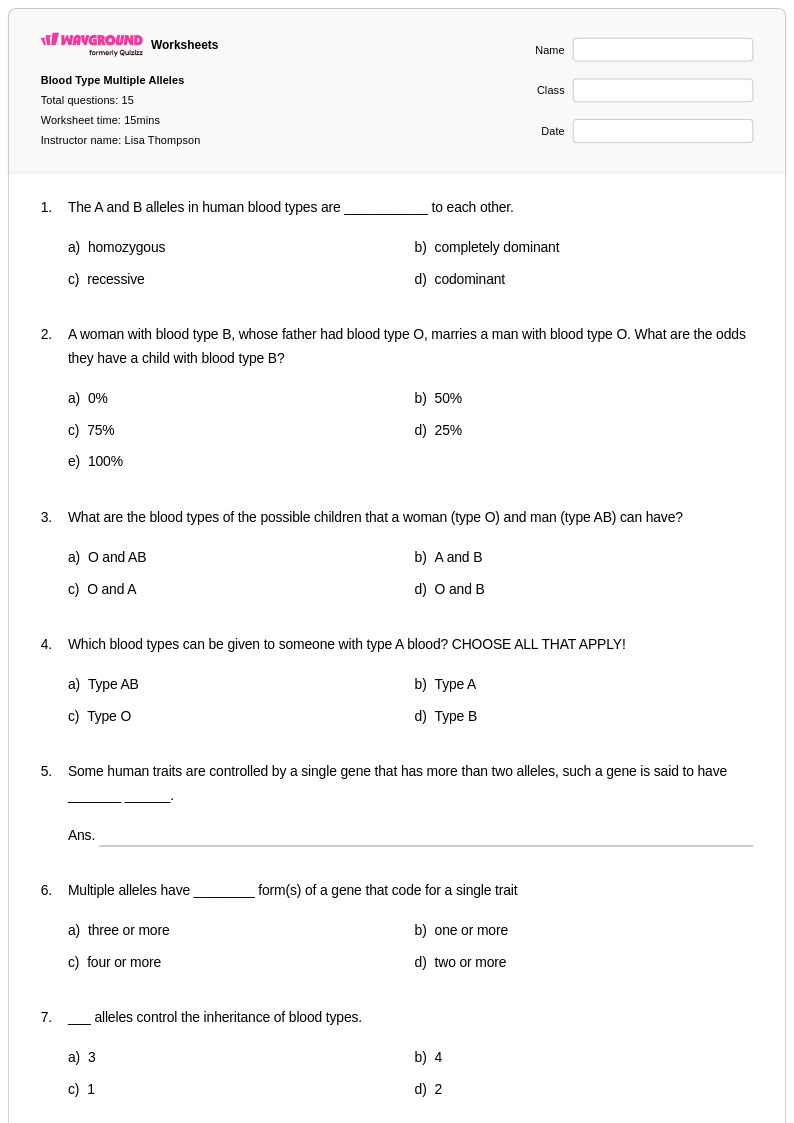
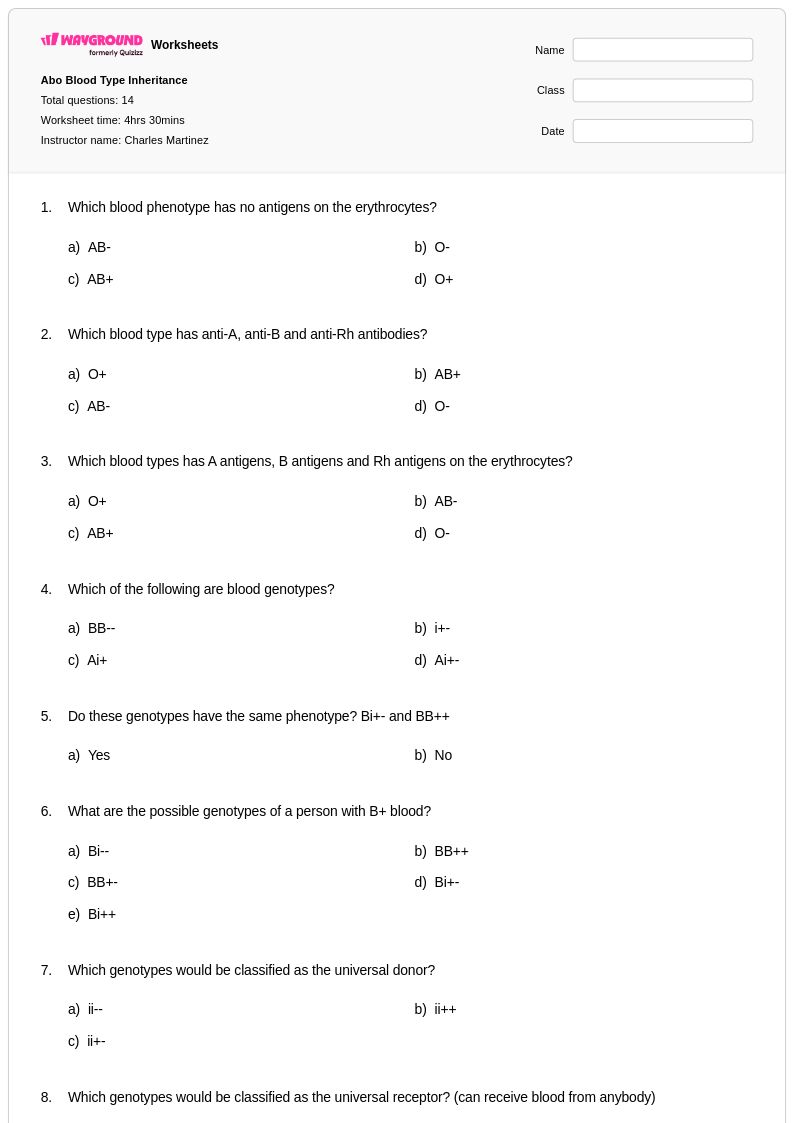
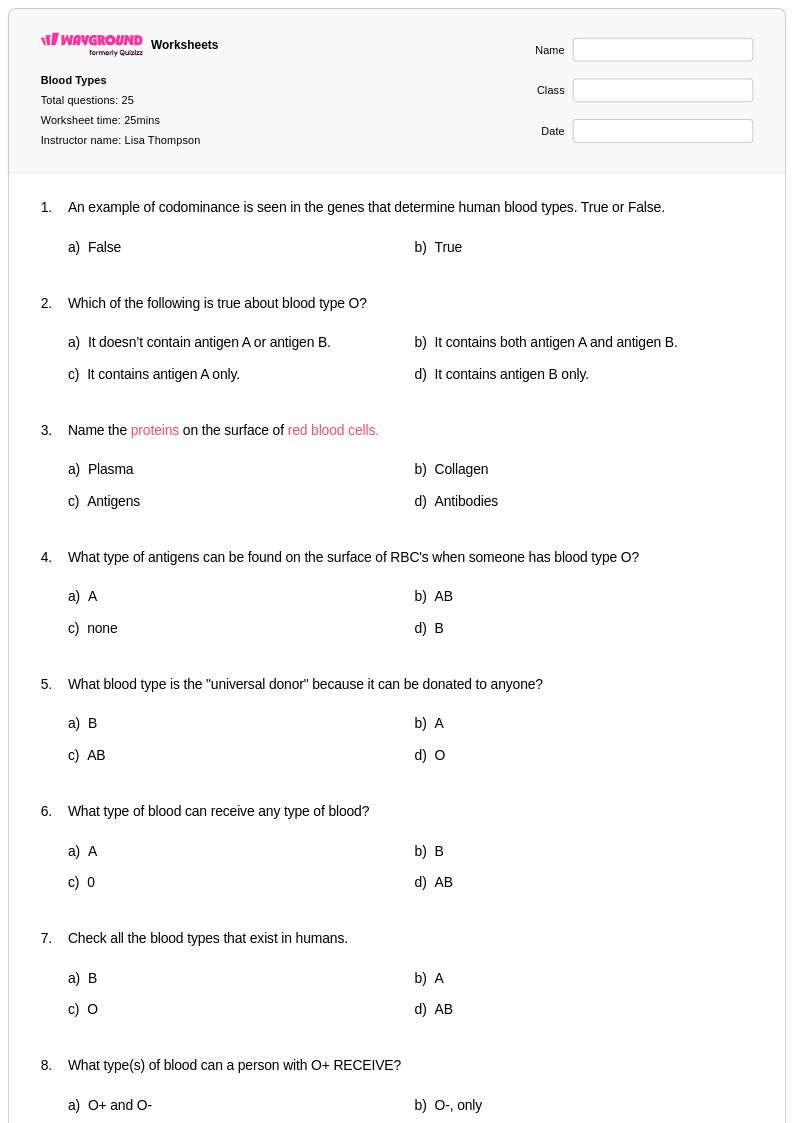
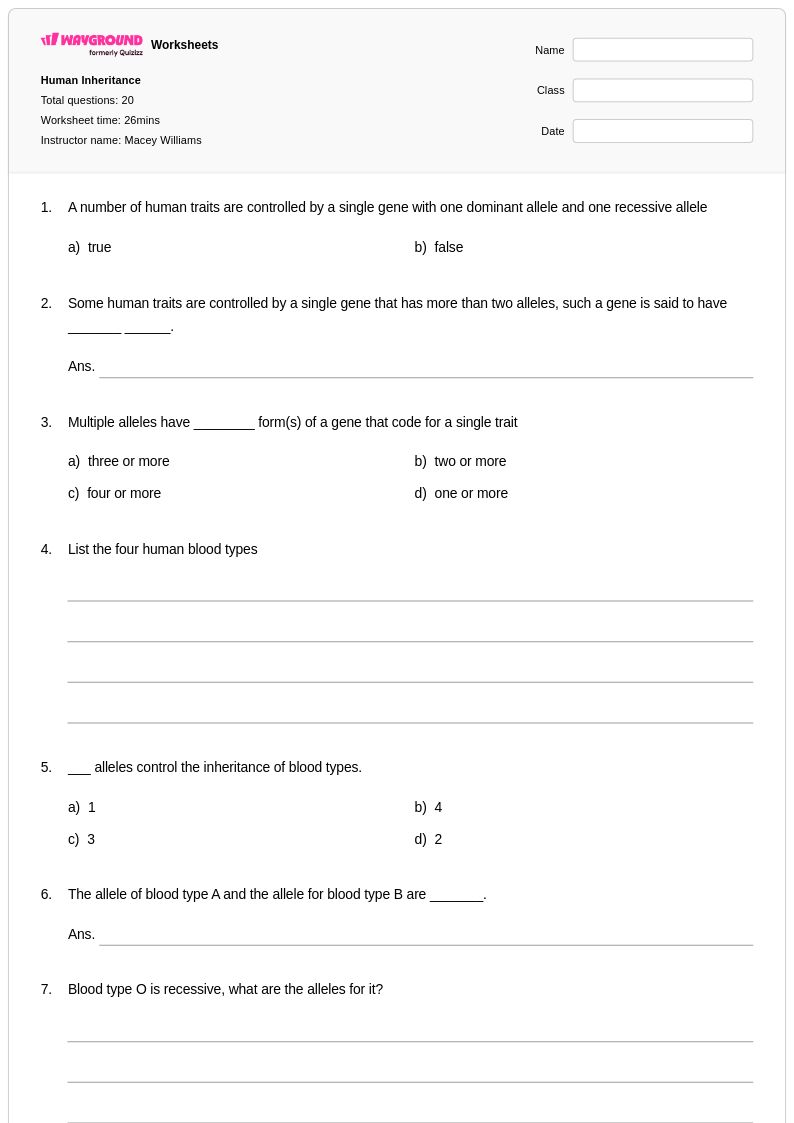
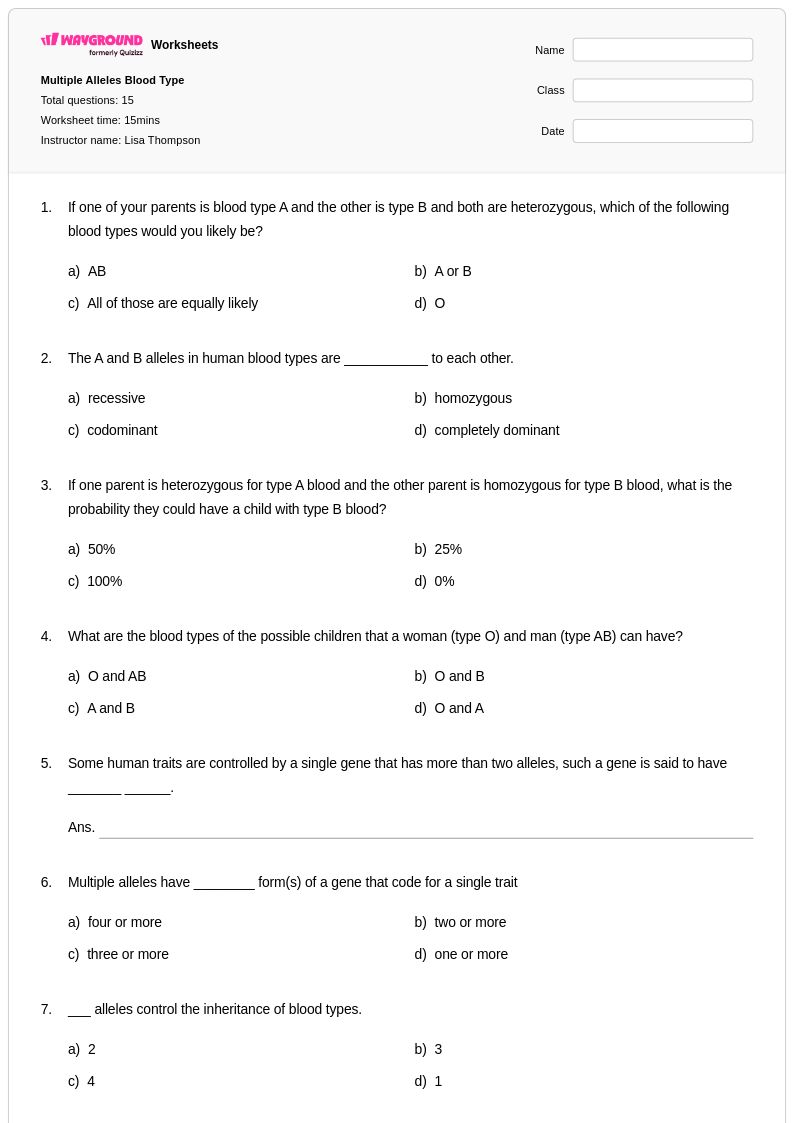
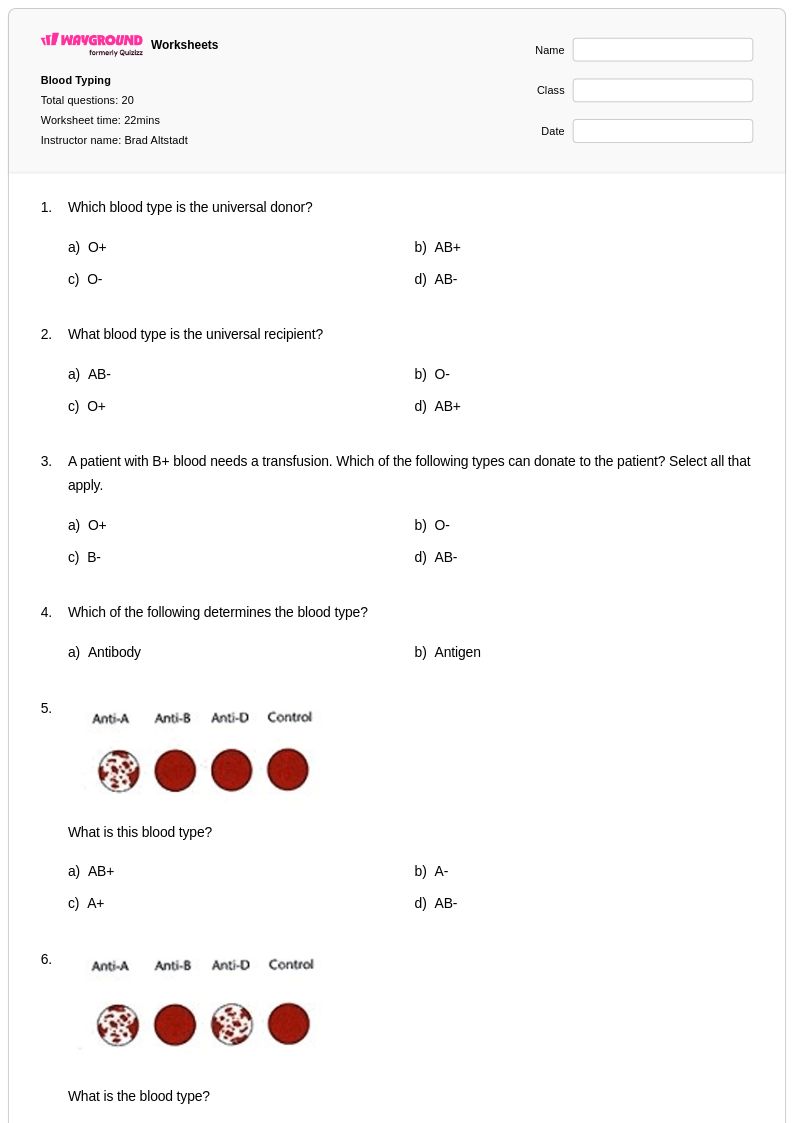
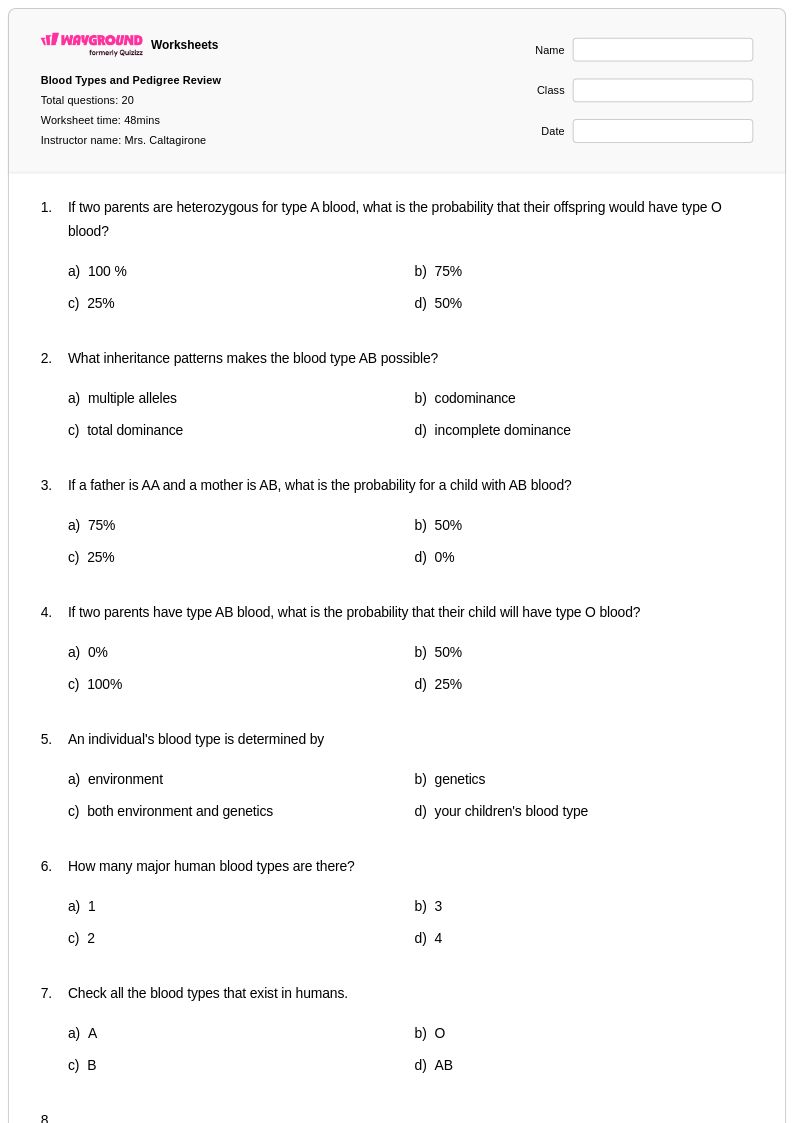
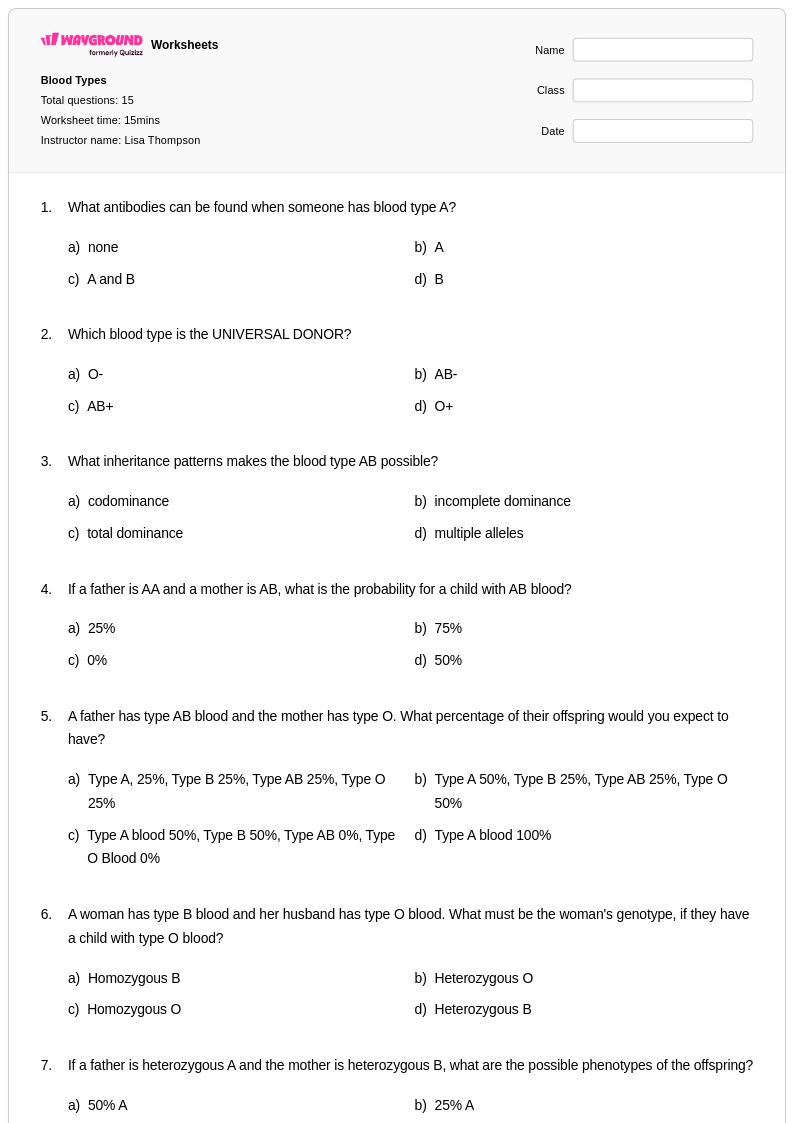
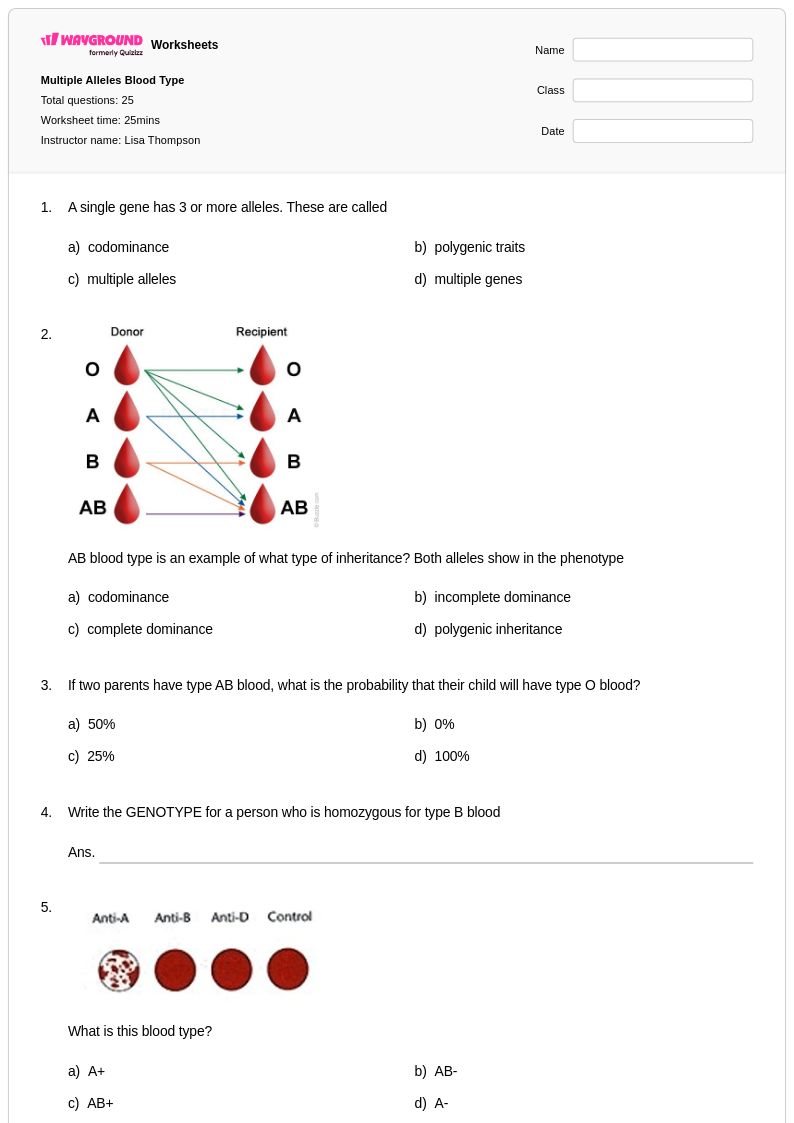
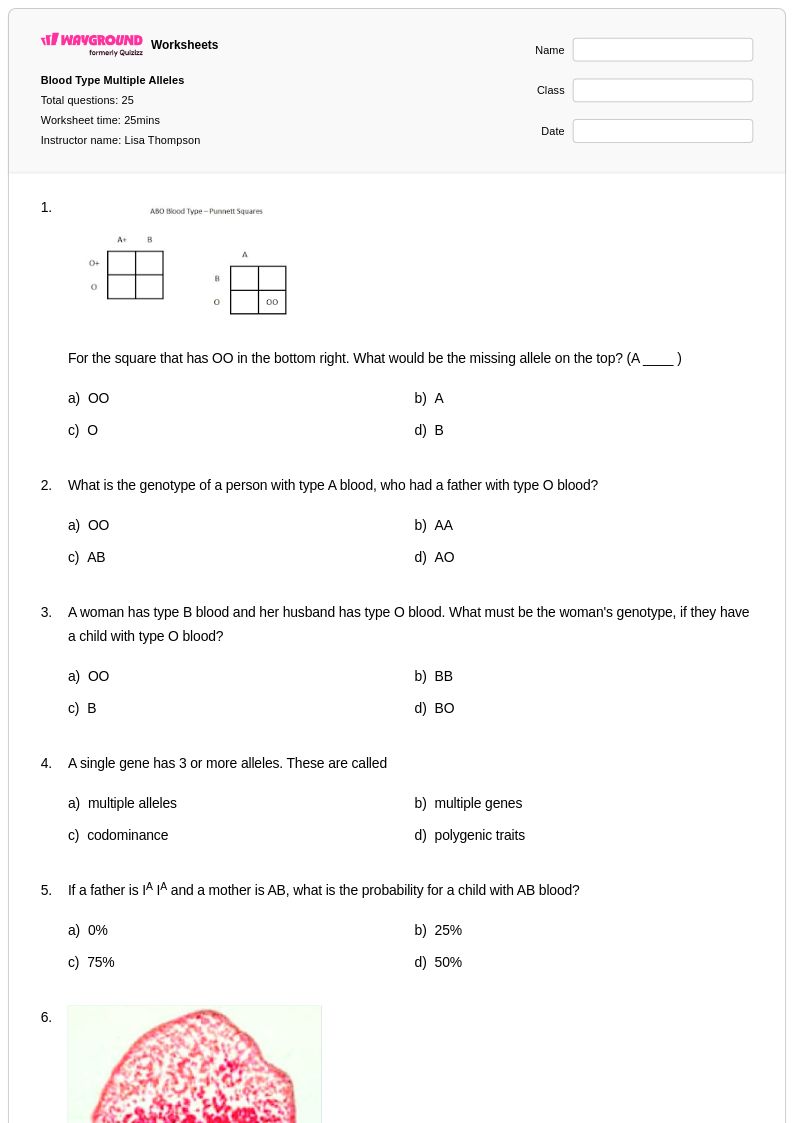
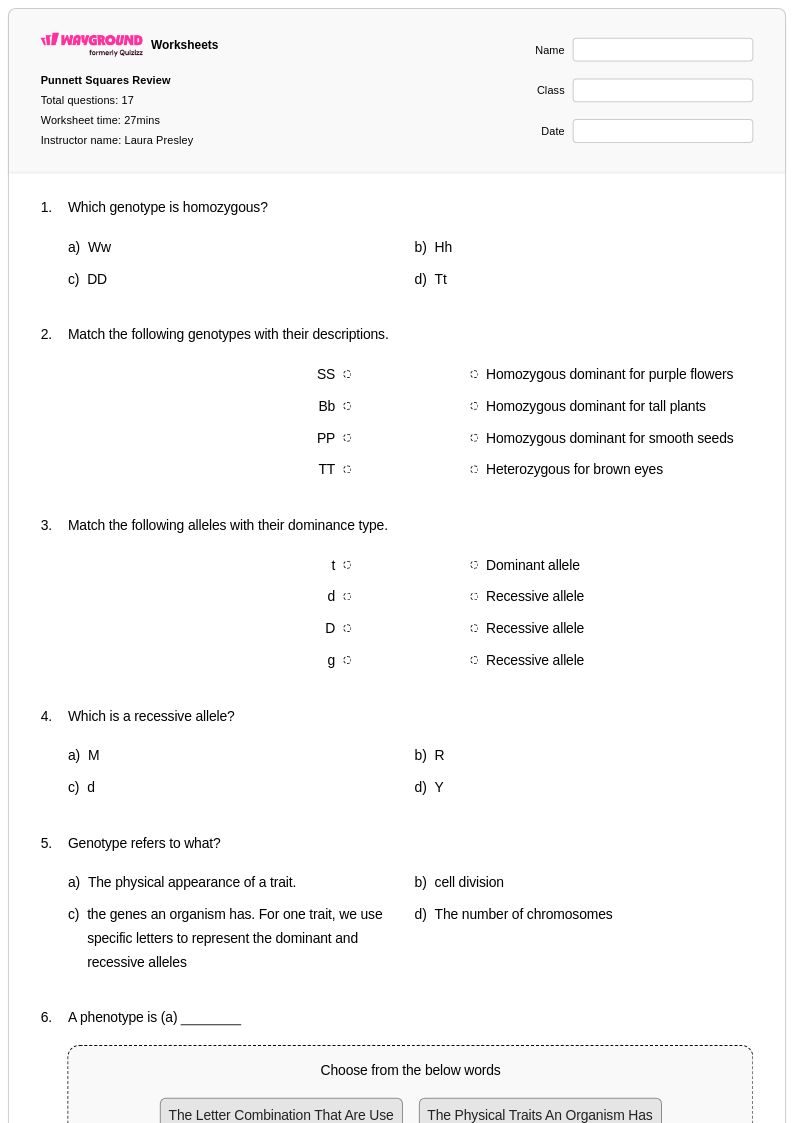
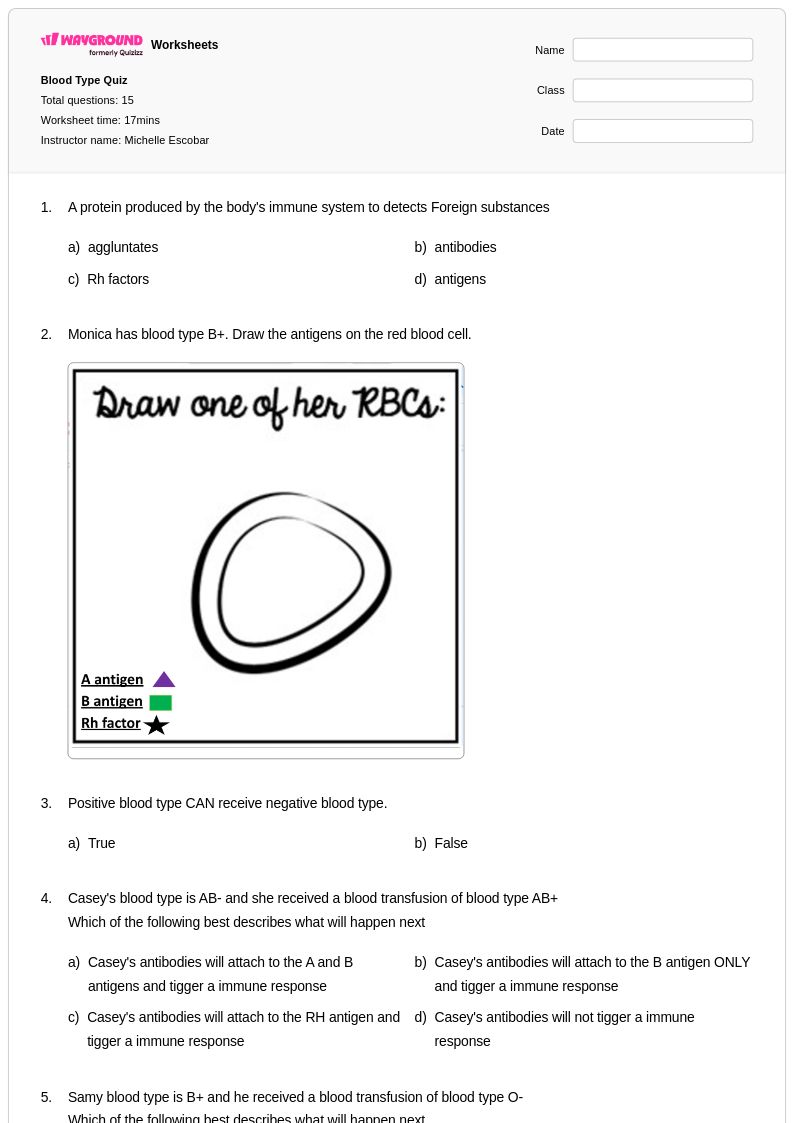
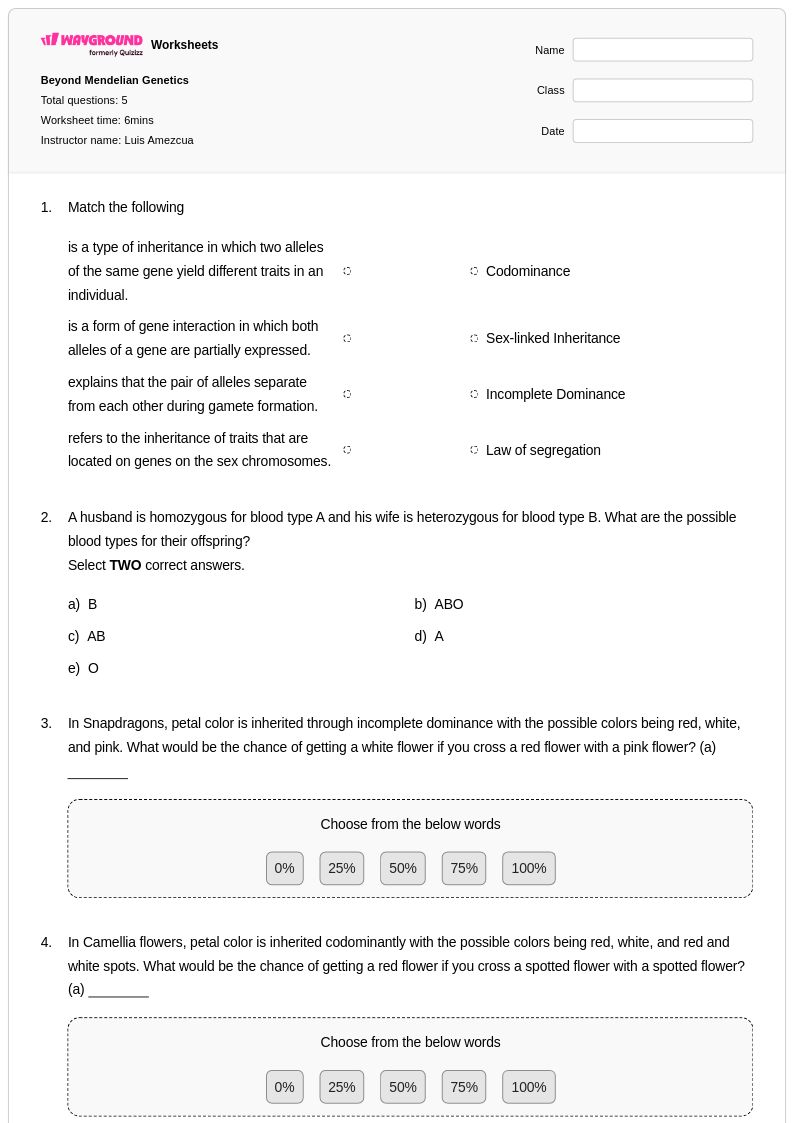
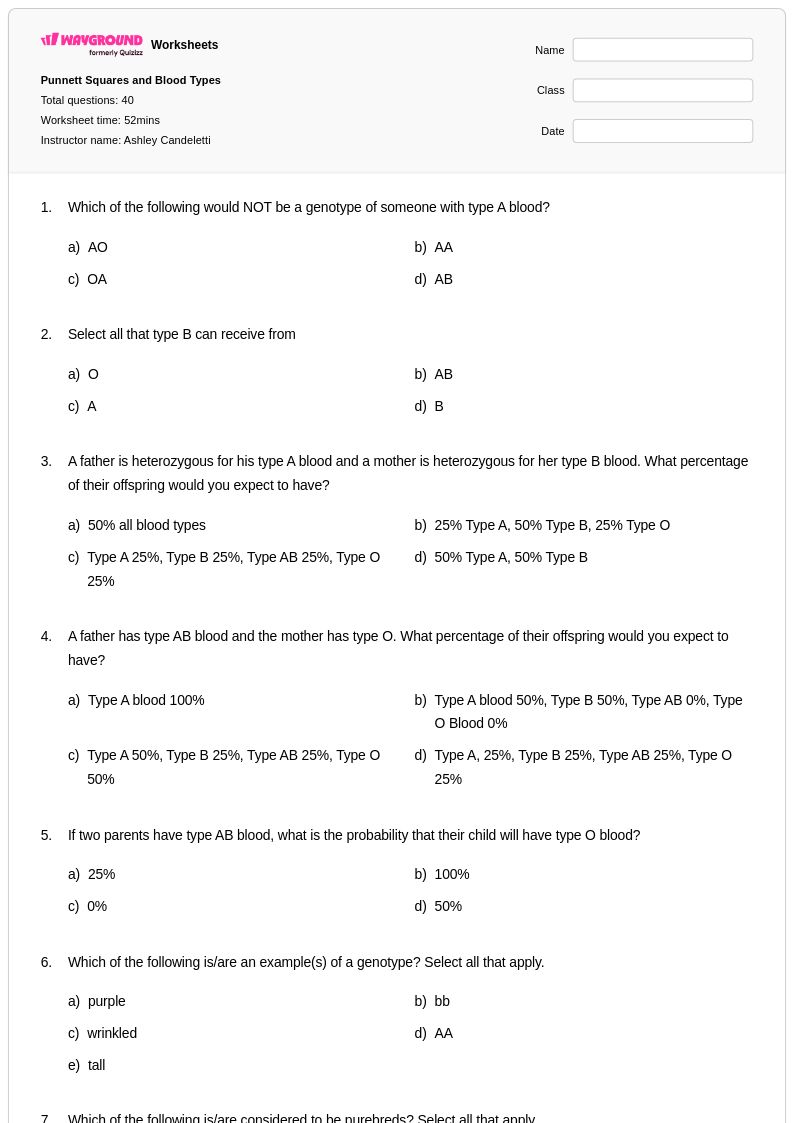
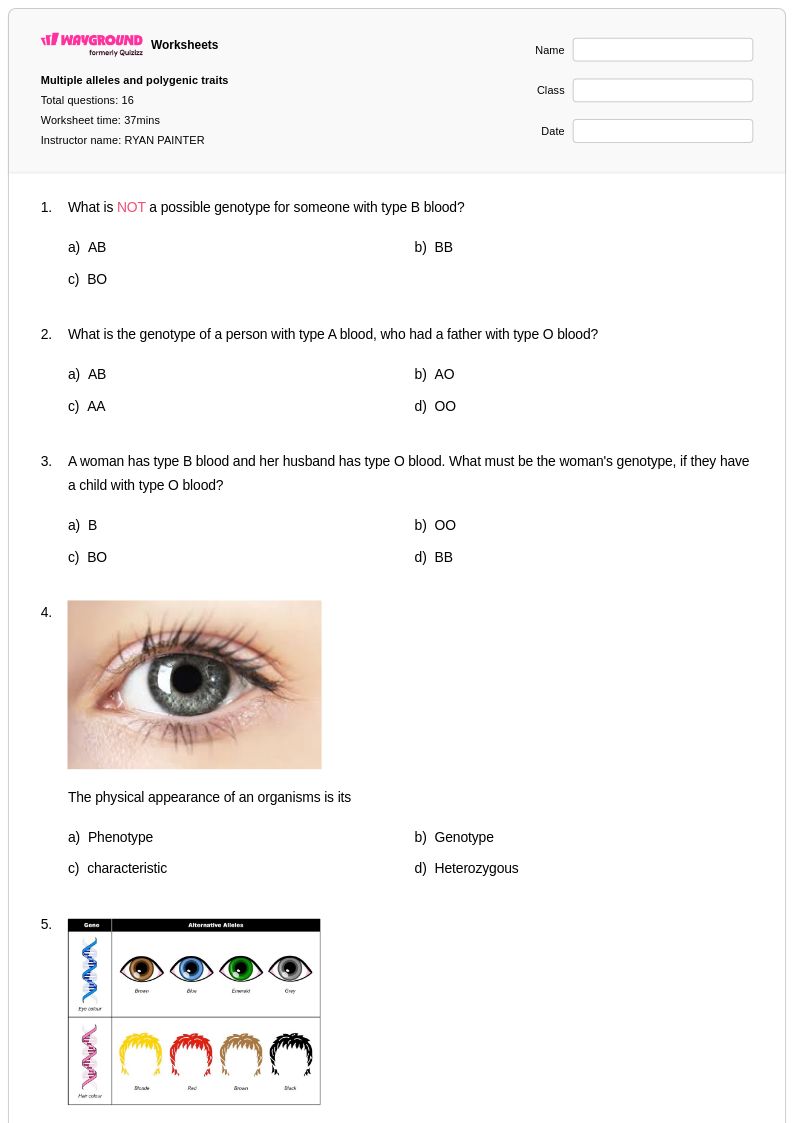
Inheritance of blood types worksheets available through Wayground (formerly Quizizz) provide students with comprehensive practice in understanding the genetic mechanisms that determine ABO and Rh blood group systems. These educational resources focus on strengthening critical skills including Punnett square construction for multiple allele systems, codominance and incomplete dominance patterns, and probability calculations for genetic crosses involving blood type inheritance. Students work through practice problems that explore how the IA, IB, and i alleles interact to produce Type A, Type B, Type AB, and Type O blood types, while also examining Rh positive and negative factor inheritance. Each worksheet collection includes detailed answer keys and is available as free printable pdf resources that guide learners through increasingly complex genetic scenarios, from simple monohybrid crosses to dihybrid crosses involving both ABO and Rh systems.
Wayground (formerly Quizizz) supports science educators with millions of teacher-created worksheet resources specifically designed for genetics instruction, featuring robust search and filtering capabilities that allow quick access to materials focused on blood type inheritance patterns. The platform's standards-aligned content includes differentiation tools that enable teachers to customize worksheets for varying skill levels, ensuring appropriate challenge levels for remediation and enrichment activities. These flexible resources are available in both printable and digital pdf formats, making them ideal for traditional classroom instruction, homework assignments, or remote learning environments. Teachers can efficiently plan comprehensive genetics units by accessing worksheets that progress from basic blood type identification through advanced pedigree analysis, providing students with systematic skill practice that builds conceptual understanding of complex inheritance patterns essential for advanced biology coursework.
FAQs
How do I teach ABO blood type inheritance to high school biology students?
ABO blood type inheritance is best introduced by first establishing the concept of multiple alleles, explaining that three alleles (IA, IB, and i) govern a single gene locus. Teachers should then layer in codominance by showing how IA and IB are both expressed in Type AB individuals, contrasting this with the recessive behavior of the i allele that produces Type O. Using Punnett squares to work through crosses between known genotypes before asking students to predict unknown parental genotypes helps build reasoning skills progressively. Connecting blood type outcomes to real-world contexts like paternity testing or blood transfusion compatibility increases student engagement.
What Punnett square exercises help students practice multiple allele inheritance for blood types?
Students benefit most from Punnett square exercises that increase in complexity across a sequence: starting with crosses between two heterozygous Type A parents (IAi × IAi), then moving to crosses involving Type AB and Type O parents, and finally tackling dihybrid crosses that combine ABO and Rh factor inheritance simultaneously. Practice problems that ask students to work backwards from offspring phenotype ratios to determine parental genotypes are particularly effective at deepening conceptual understanding. Including probability calculations alongside each cross reinforces the quantitative side of genetics.
What common mistakes do students make when working with blood type genetics?
The most frequent error is treating IA and IB as dominant over each other rather than codominant, which leads students to incorrectly predict that Type AB offspring cannot exist from certain crosses. Students also commonly confuse the i allele as simply recessive to one allele rather than recessive to both IA and IB, causing errors in genotype assignment. A third persistent misconception is conflating codominance with incomplete dominance, so explicitly contrasting the two patterns using blood types versus flower color examples helps clarify the distinction.
How do I differentiate blood type inheritance worksheets for students at different skill levels?
For students who need additional support, begin with scaffolded Punnett square templates that pre-label the allele axes and limit crosses to the ABO system before introducing Rh factor. Advanced students can be challenged with pedigree analysis problems that require determining the blood types of multiple generations, or with problems that integrate probability notation alongside genetic crosses. On Wayground, teachers can apply accommodations such as reduced answer choices for students who need lower cognitive load, or enable the Read Aloud feature for students who benefit from audio support, all configurable per student without affecting the rest of the class.
How can I use Wayground's inheritance of blood types worksheets in my classroom?
Wayground's blood type inheritance worksheets are available as printable PDFs for traditional classroom use and in digital formats for technology-integrated or remote learning environments. Teachers can assign them as guided in-class practice, independent homework, or formative assessments, and can also host them as a quiz directly on Wayground for instant scoring. Each worksheet includes a complete answer key, making them practical for self-paced review or sub plans. The free printable PDF format means no additional tools are required for teachers who prefer paper-based instruction.
How do I help students connect ABO and Rh blood type inheritance in the same lesson?
Teaching ABO and Rh inheritance together works best once students are confident with each system independently, since combining them requires constructing dihybrid Punnett squares and tracking two separate loci simultaneously. A useful bridge activity is to first confirm mastery of ABO crosses, then introduce Rh as a straightforward dominant-recessive system, and finally present combined problems where students must state both the ABO and Rh phenotype of predicted offspring. This sequence mirrors the progression from monohybrid to dihybrid crosses covered in most biology curricula and prepares students for more complex pedigree problems.