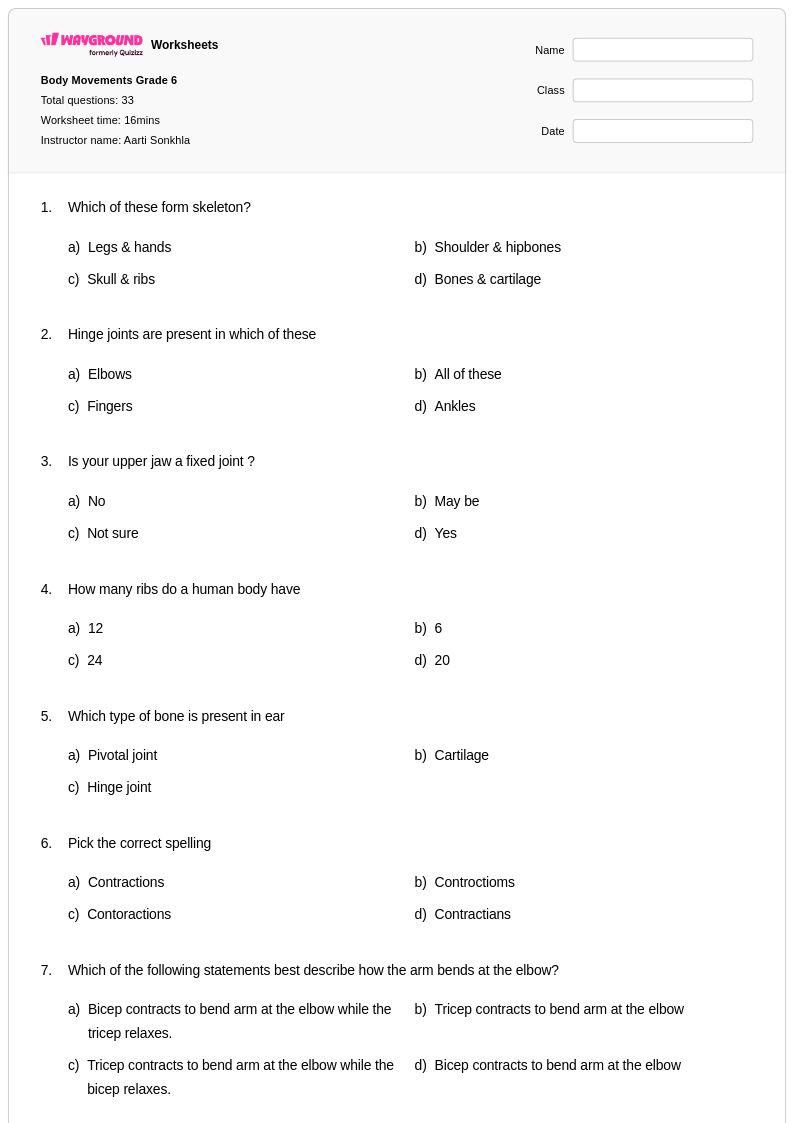
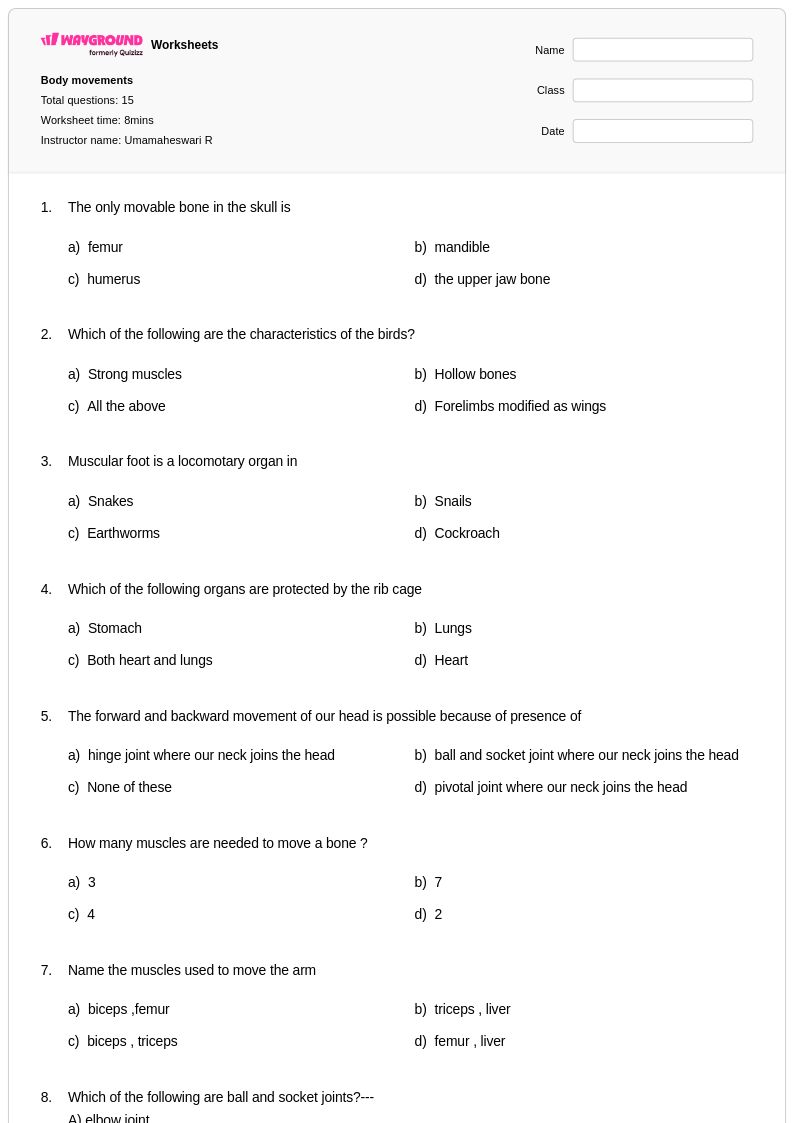
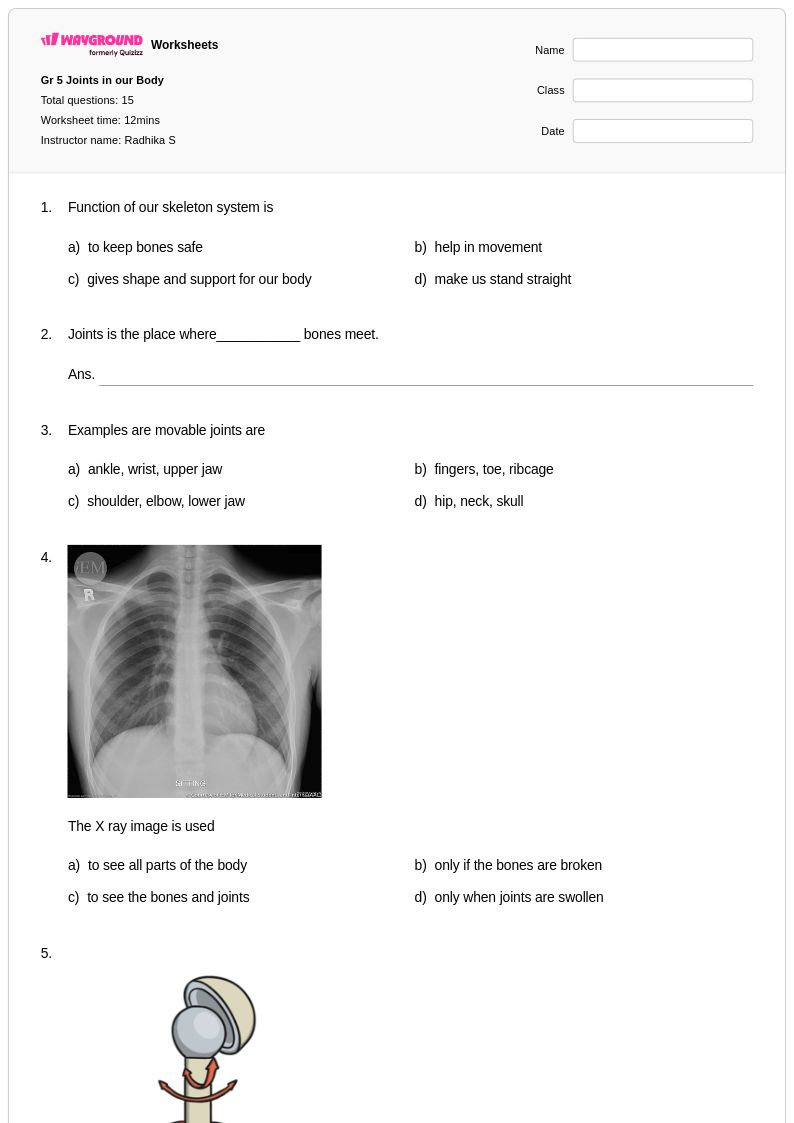
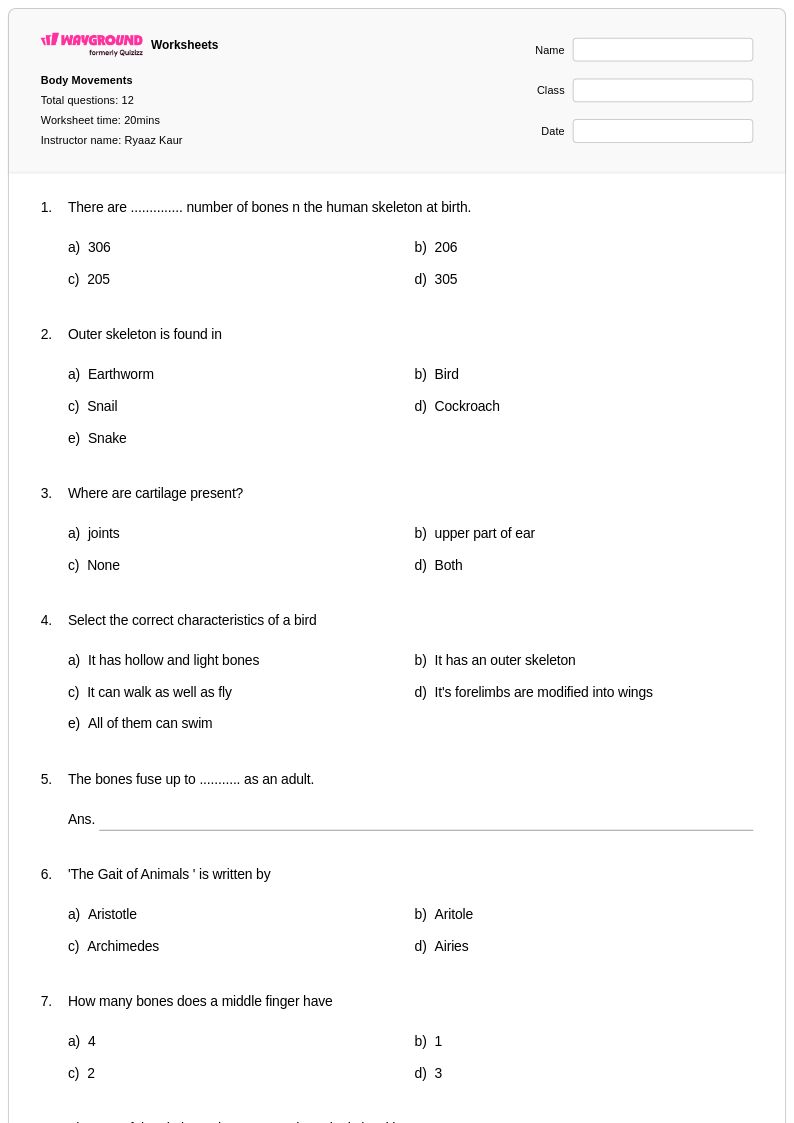
Explore Wayground's comprehensive collection of skull bones worksheets and printables that help students master anatomical structures through engaging practice problems, free PDF resources, and detailed answer keys for effective biology learning.
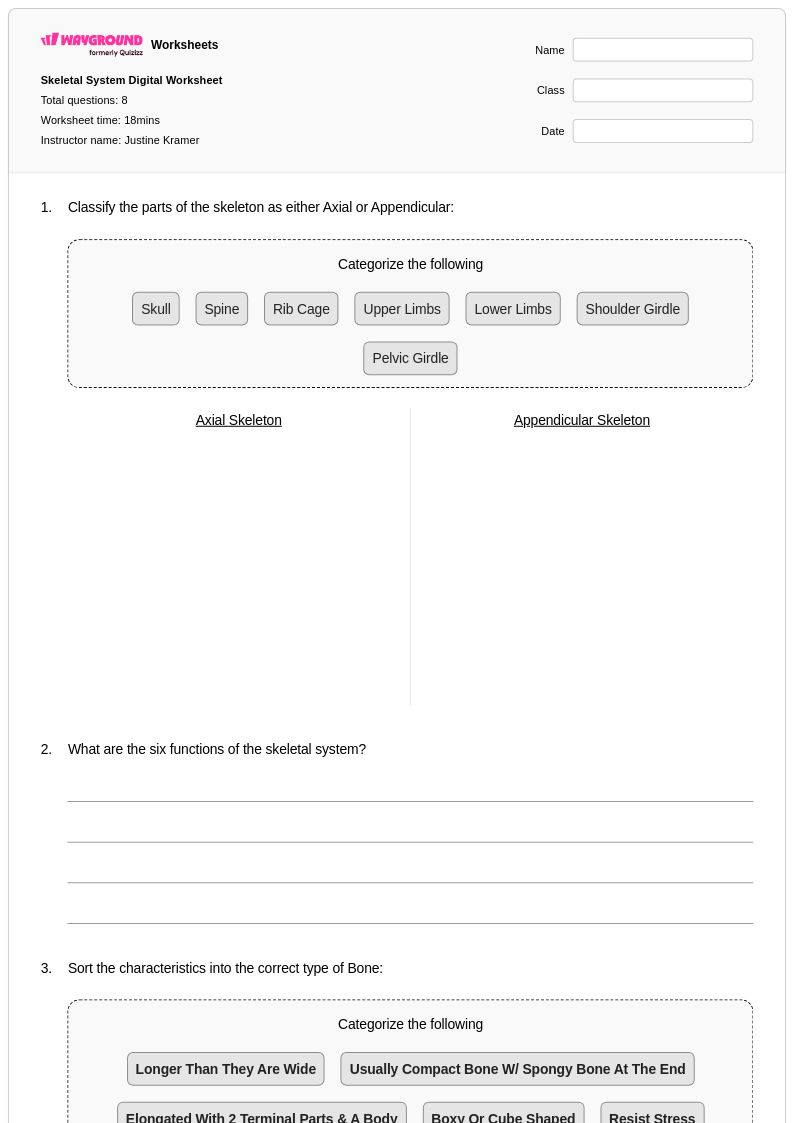
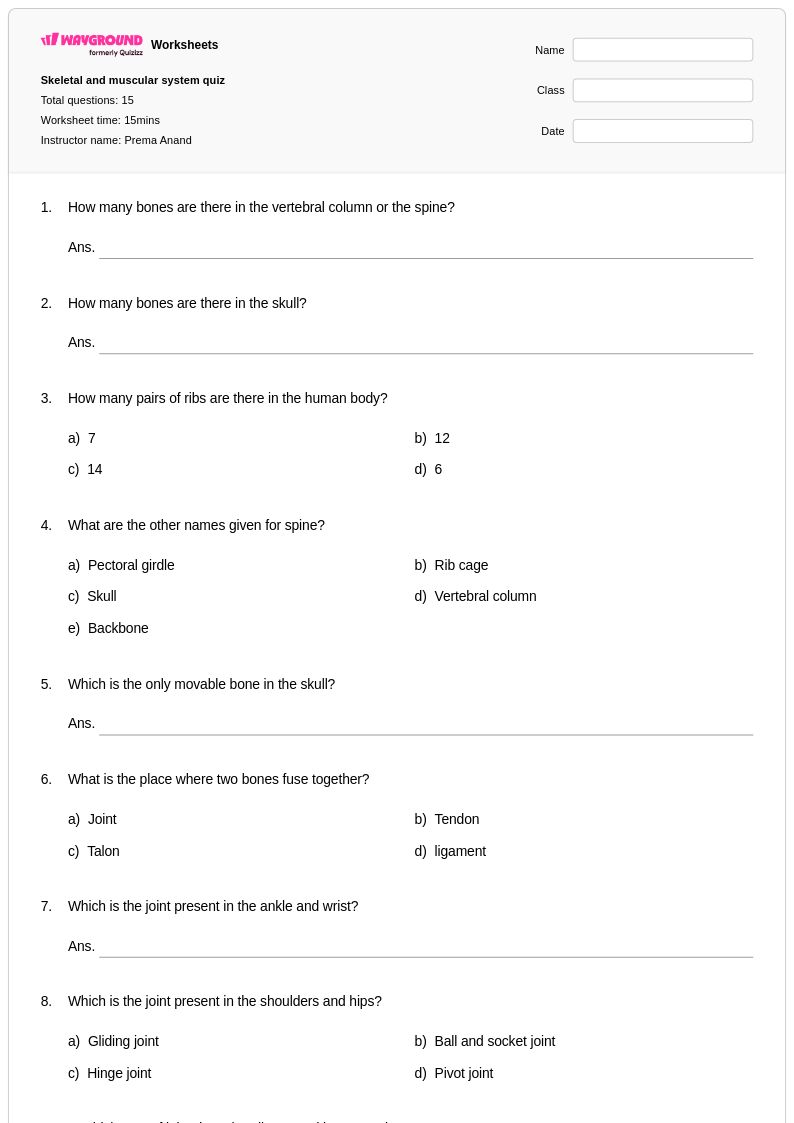
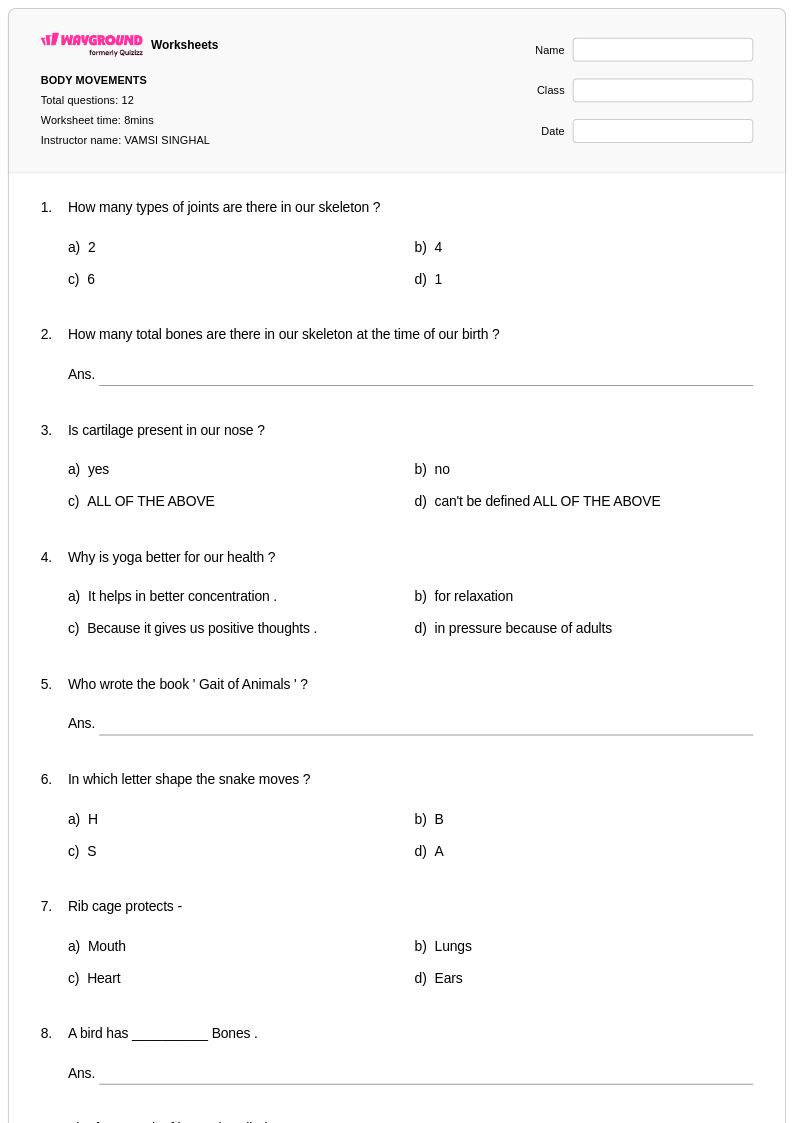
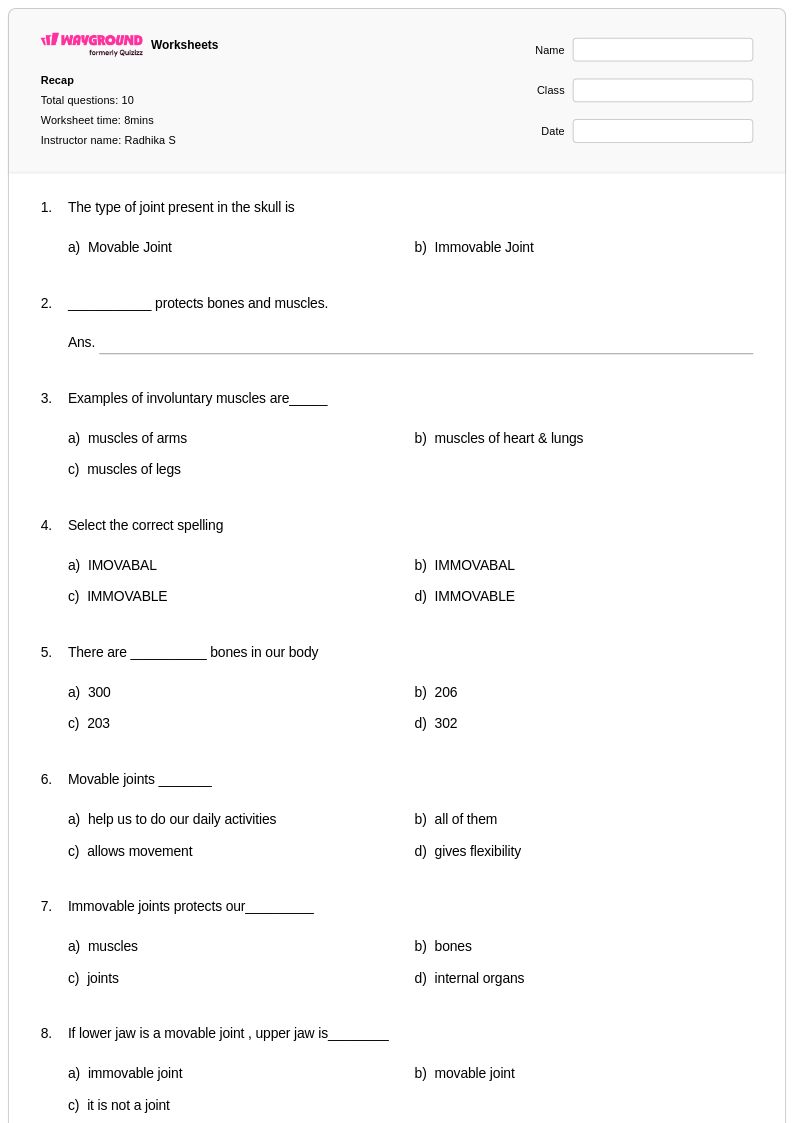
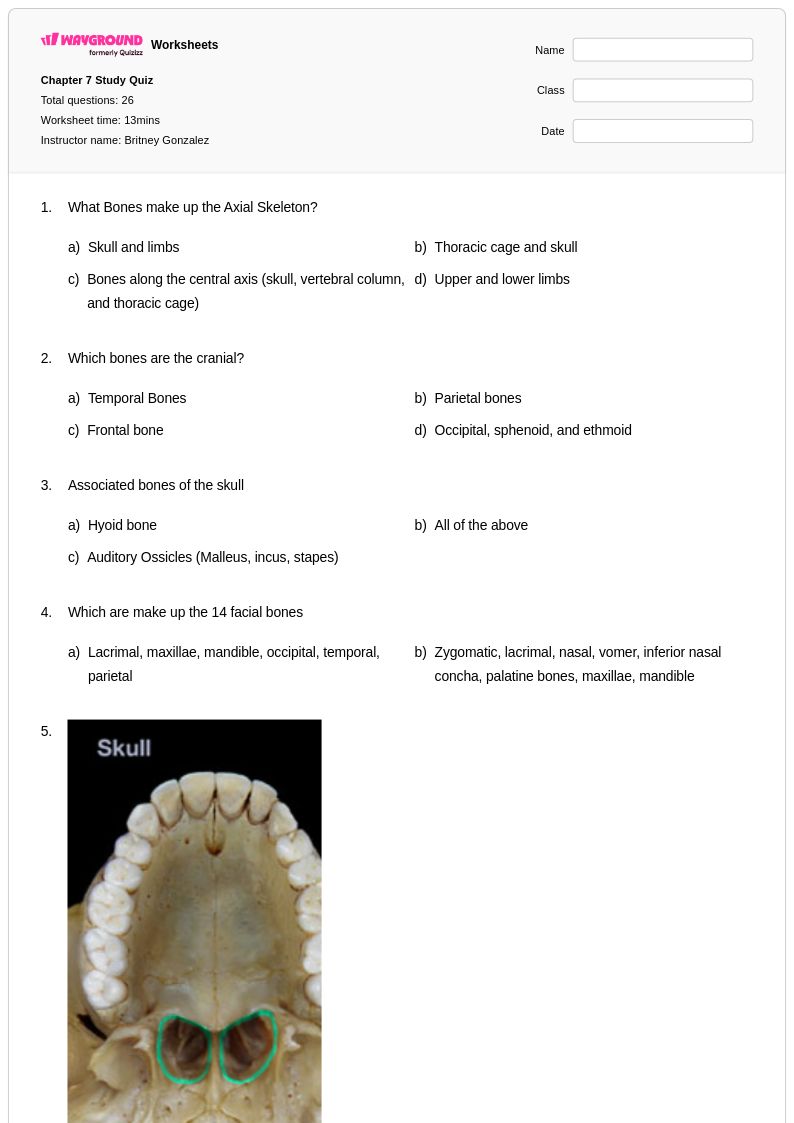
Skull bones worksheets available through Wayground (formerly Quizizz) provide comprehensive educational resources designed to help students master the complex anatomy of the human cranium and facial skeleton. These expertly crafted biology worksheets focus on identifying, labeling, and understanding the function of the 22 bones that comprise the skull, including major structures like the frontal, parietal, temporal, and occipital bones, as well as smaller facial bones such as the nasal, maxilla, and mandible. Students develop critical anatomical knowledge through engaging practice problems that reinforce bone location, suture connections, and the protective functions these structures serve for the brain and sensory organs. Each worksheet comes complete with detailed answer keys and is available as free printable pdf downloads, making them accessible resources for both classroom instruction and independent study of this fundamental aspect of human skeletal anatomy.
Wayground (formerly Quizizz) empowers educators with an extensive collection of millions of teacher-created skull bones worksheets that can be easily discovered through robust search and filtering capabilities. Teachers can quickly locate materials that align with specific educational standards and accommodate diverse learning needs through built-in differentiation tools that allow for seamless customization of content difficulty and presentation format. These versatile resources are available in both printable pdf formats for traditional paper-based learning and interactive digital versions for technology-enhanced instruction, providing flexibility for various classroom environments and teaching preferences. The platform's comprehensive worksheet library supports effective lesson planning while offering targeted resources for remediation of struggling students, enrichment activities for advanced learners, and systematic skill practice that reinforces essential anatomical concepts across different learning modalities.
FAQs
How do I teach skull bones to students effectively?
Teaching skull bones is most effective when students first understand the skull's two major divisions: the cranium (which protects the brain) and the facial skeleton (which supports sensory organs and structures like the jaw). Begin with the eight cranial bones before introducing the 14 facial bones, using labeled diagrams to anchor each structure spatially. Connecting each bone to its function, such as how the temporal bone houses the auditory canal or how the occipital bone surrounds the foramen magnum, helps students retain names through meaningful context rather than rote memorization.
What exercises help students practice identifying skull bones?
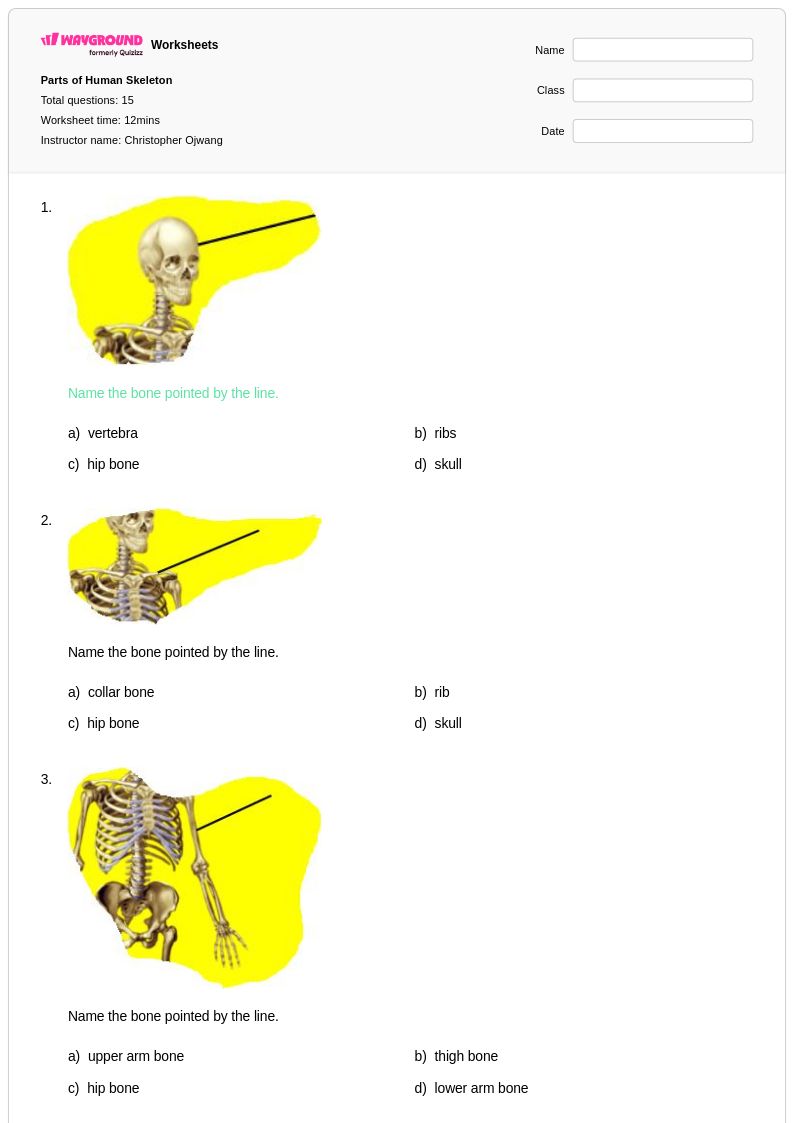
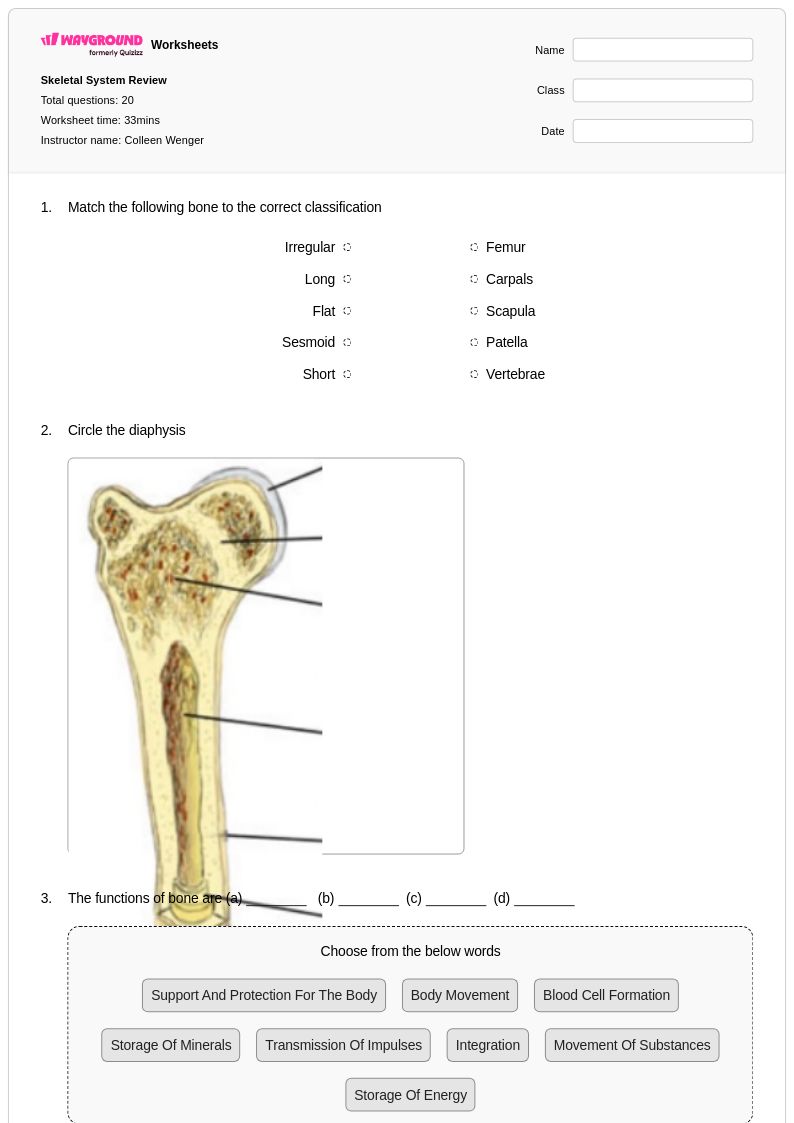
Labeling diagrams is the most direct practice method for skull bone identification, requiring students to place bone names on unlabeled lateral, anterior, and superior views of the skull. Suture-mapping exercises, where students trace and name the coronal, sagittal, lambdoid, and squamous sutures, reinforce spatial relationships between bones. Matching functions to structures, such as pairing the mandible with chewing or the nasal bone with the bridge of the nose, builds applied anatomical understanding beyond simple recall.
What mistakes do students commonly make when learning skull bones?
Students frequently confuse the temporal and parietal bones because both form lateral portions of the cranium and share a border along the squamous suture. Another common error is misidentifying the sphenoid bone, which is not visible on a standard lateral view and is often omitted from student answers entirely. Students also tend to conflate the maxilla and mandible, incorrectly treating both as movable, when only the mandible articulates at the temporomandibular joint.
How can I differentiate skull bones instruction for students with different learning needs?
For students who struggle with dense anatomical vocabulary, reducing the number of bones targeted in a single session and focusing on major cranial bones before facial bones can lower cognitive load. On Wayground, teachers can enable Read Aloud so bone names and questions are read to students who benefit from audio support, and can apply reduced answer choices for students who need a more guided identification task. Extended time settings can also be assigned to individual students without affecting the rest of the class, making it straightforward to accommodate diverse learners during digital assessments.
How do I use Wayground's skull bones worksheets in my classroom?
Wayground's skull bones worksheets are available as free printable PDF downloads for paper-based anatomy lessons and in digital formats for technology-integrated classrooms. Teachers can assign them as independent practice, homework, or structured review activities. The digital versions can also be hosted as a quiz on Wayground, giving teachers real-time insight into student performance on specific bone identification tasks. Each worksheet includes a detailed answer key, so grading and self-checking are built in.
How many bones make up the human skull, and which ones do students need to know?
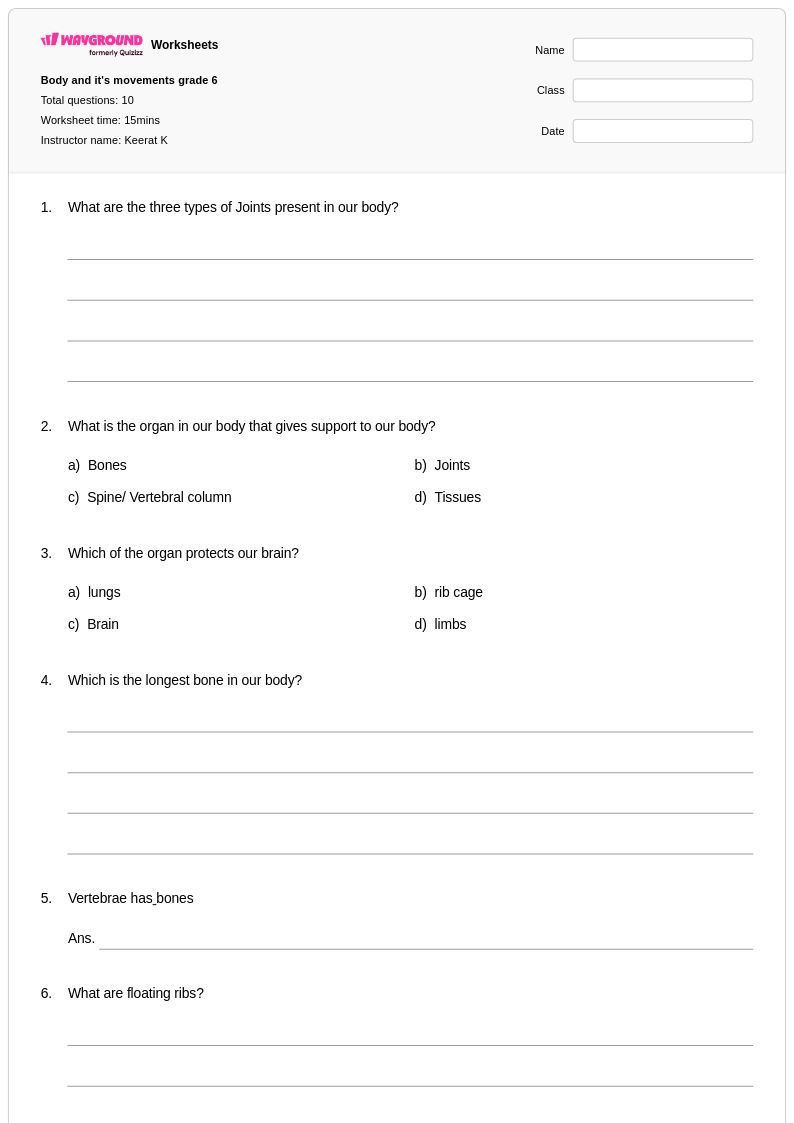
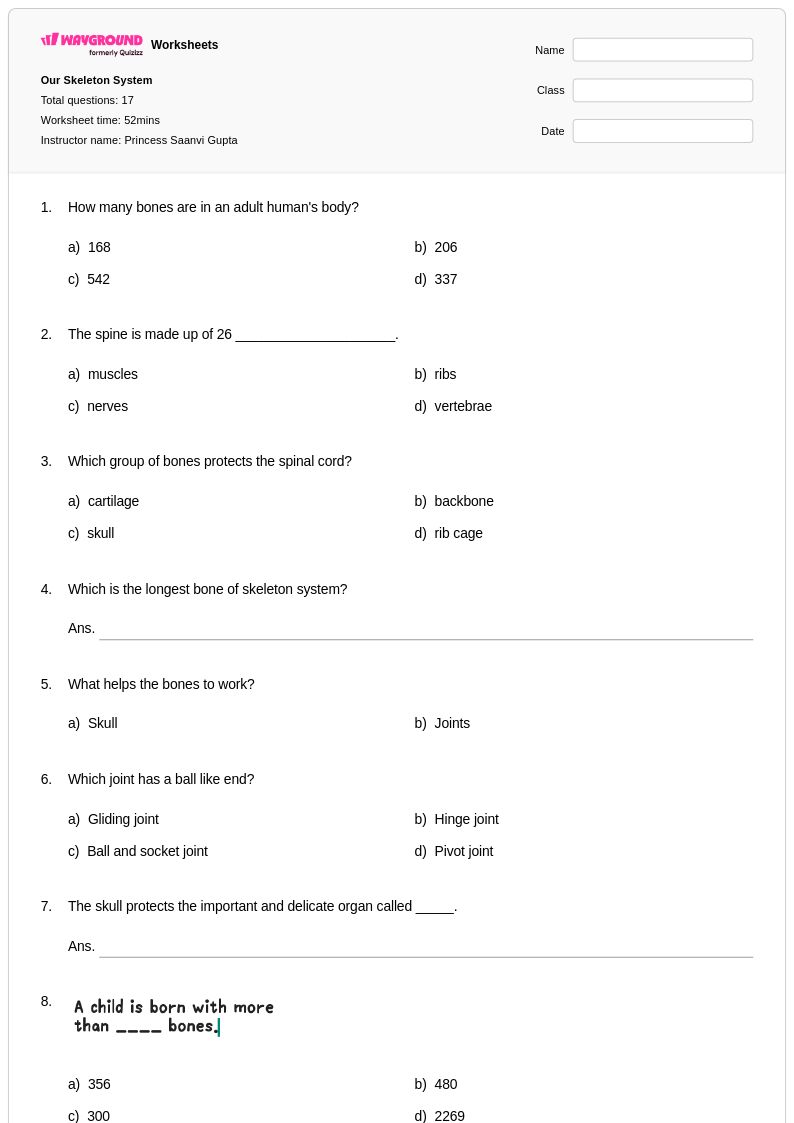
The human skull is composed of 22 bones in total: 8 cranial bones and 14 facial bones. The cranial bones students most commonly need to identify include the frontal, parietal (paired), temporal (paired), occipital, sphenoid, and ethmoid. Key facial bones include the nasal, maxilla, mandible, zygomatic, lacrimal, and palatine bones. Most secondary anatomy courses prioritize the cranial bones and the larger facial bones, while more advanced coursework extends to smaller structures like the vomer and inferior nasal conchae.