
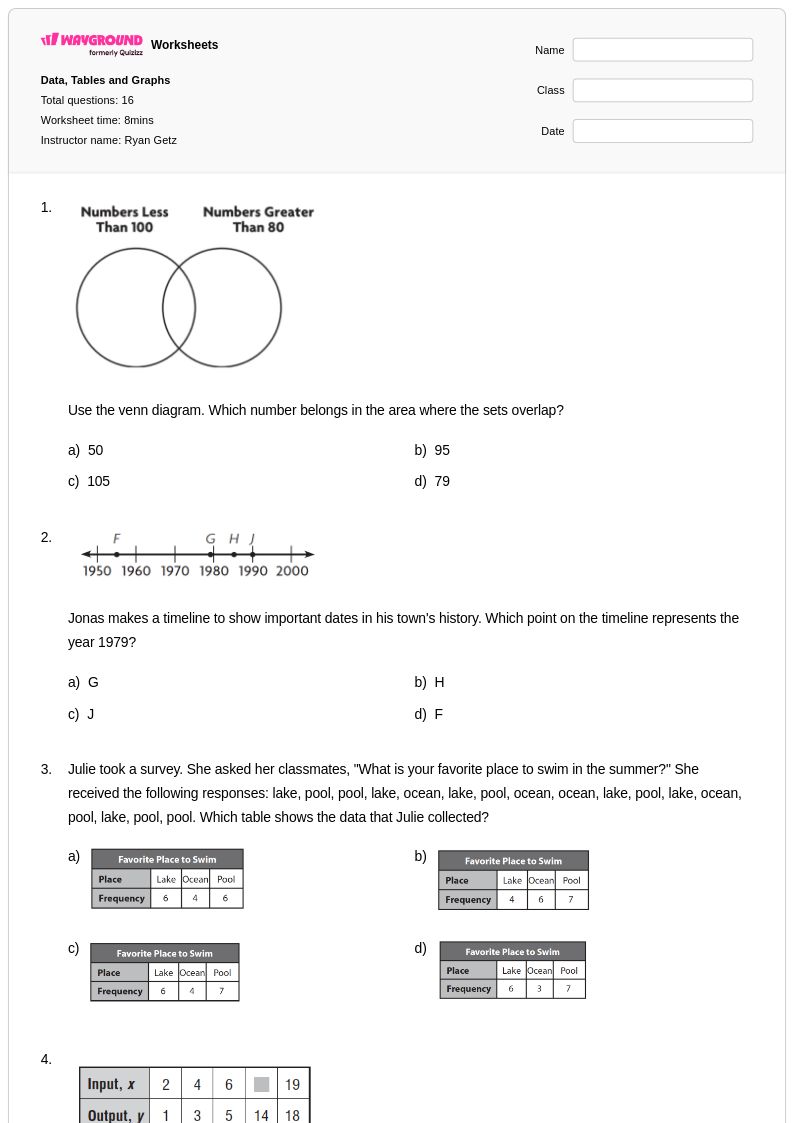
16 Q
4th
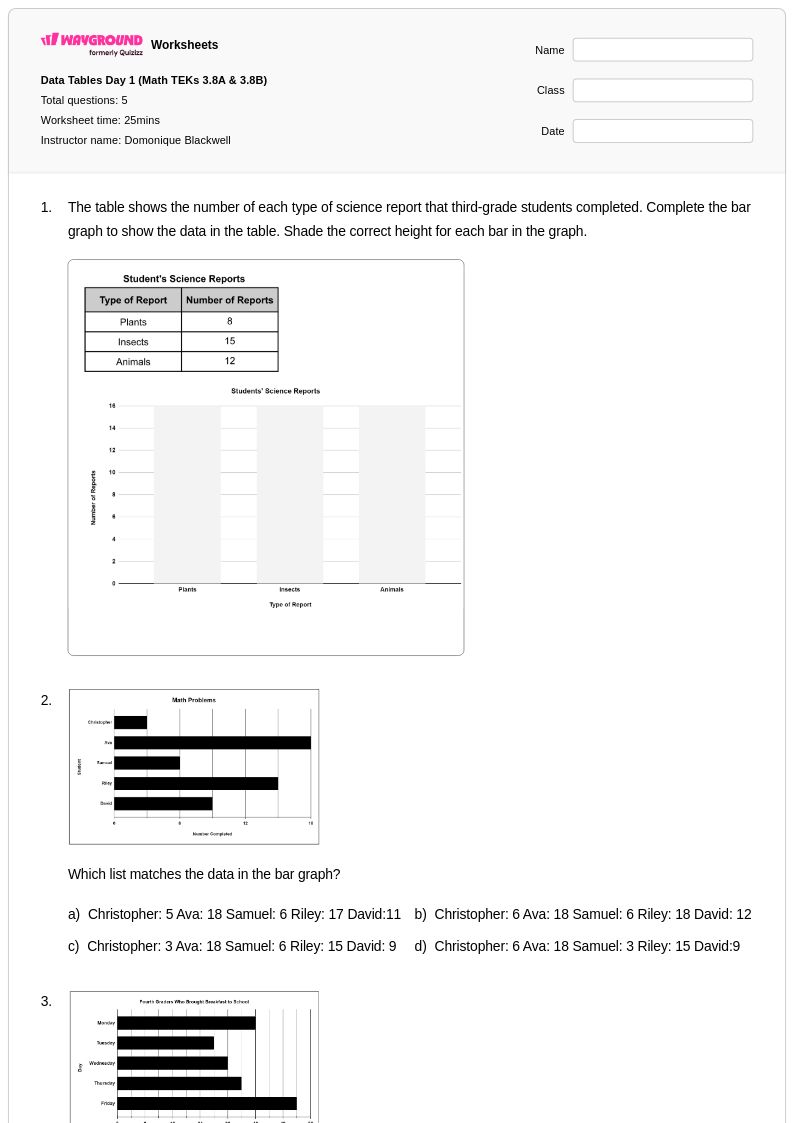
5 Q
3rd

23 Q
4th
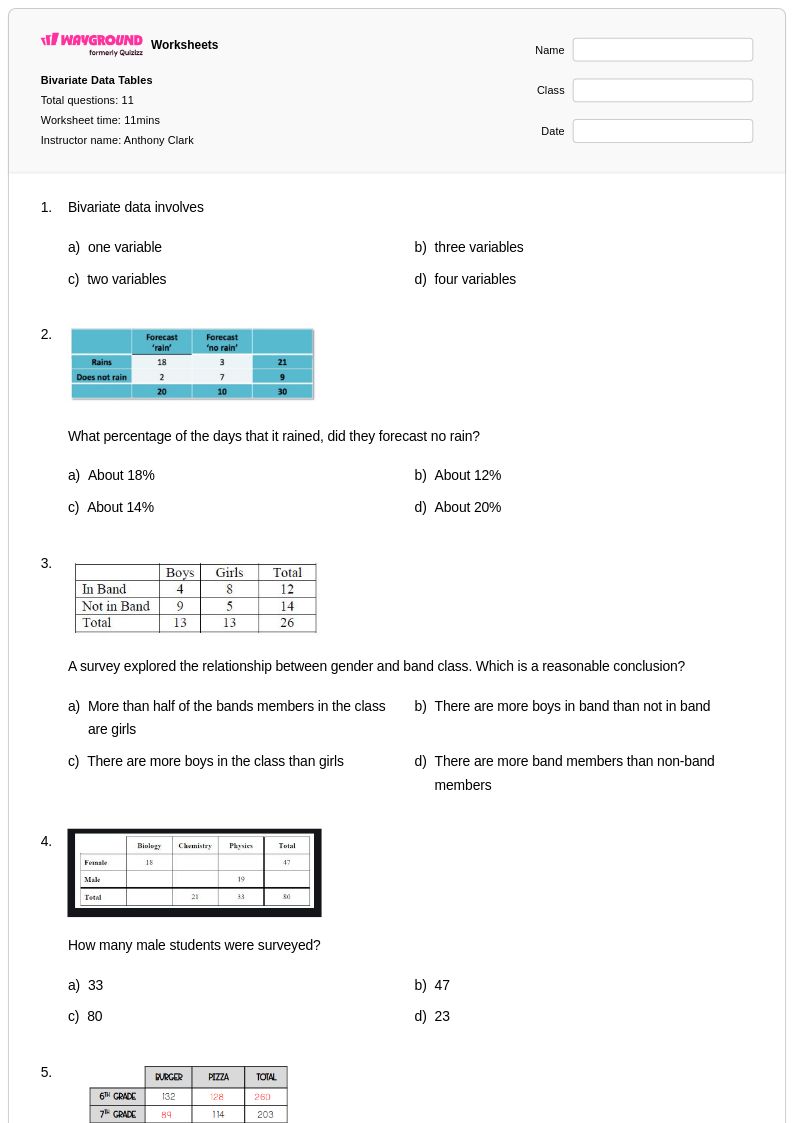
11 Q
8th - Uni
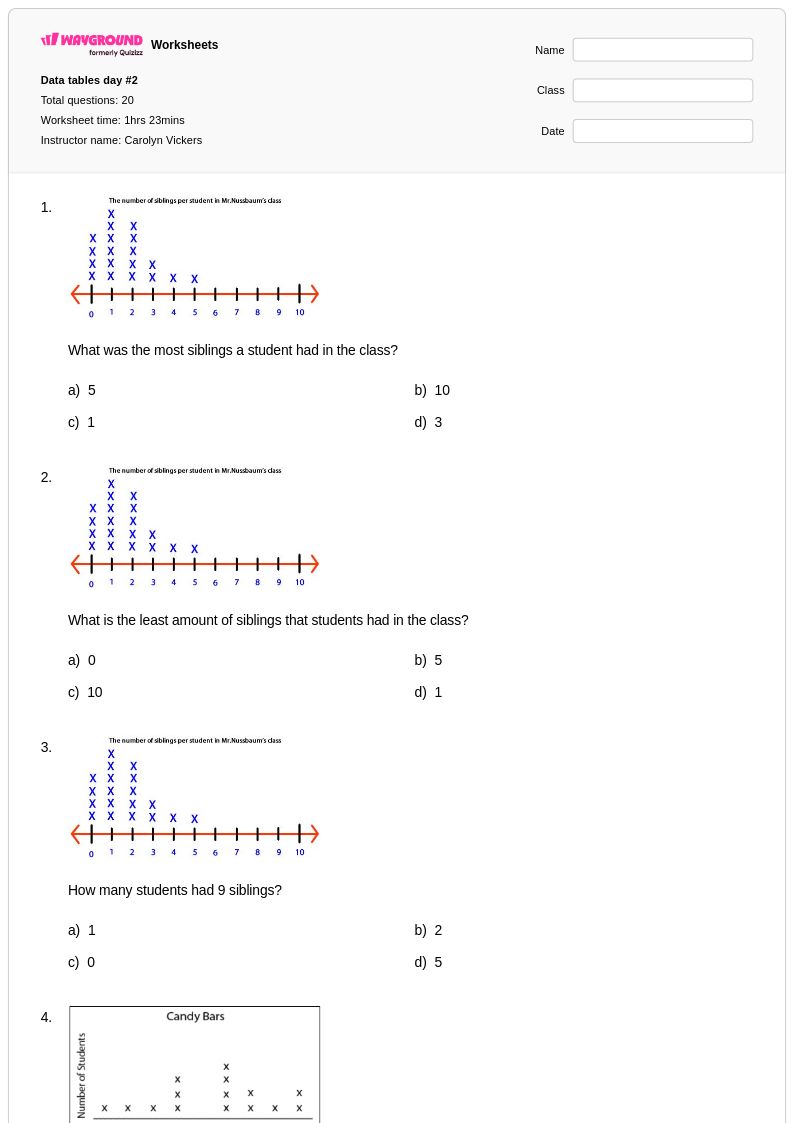
20 Q
4th
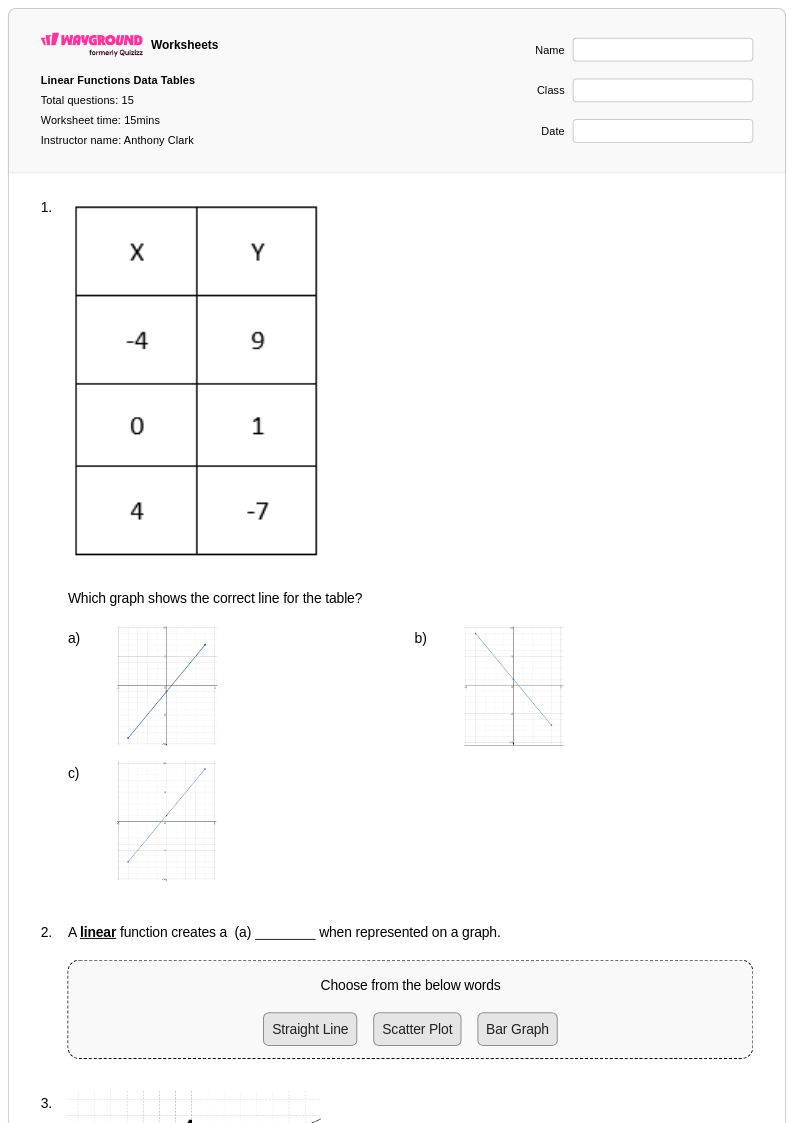
15 Q
8th - Uni
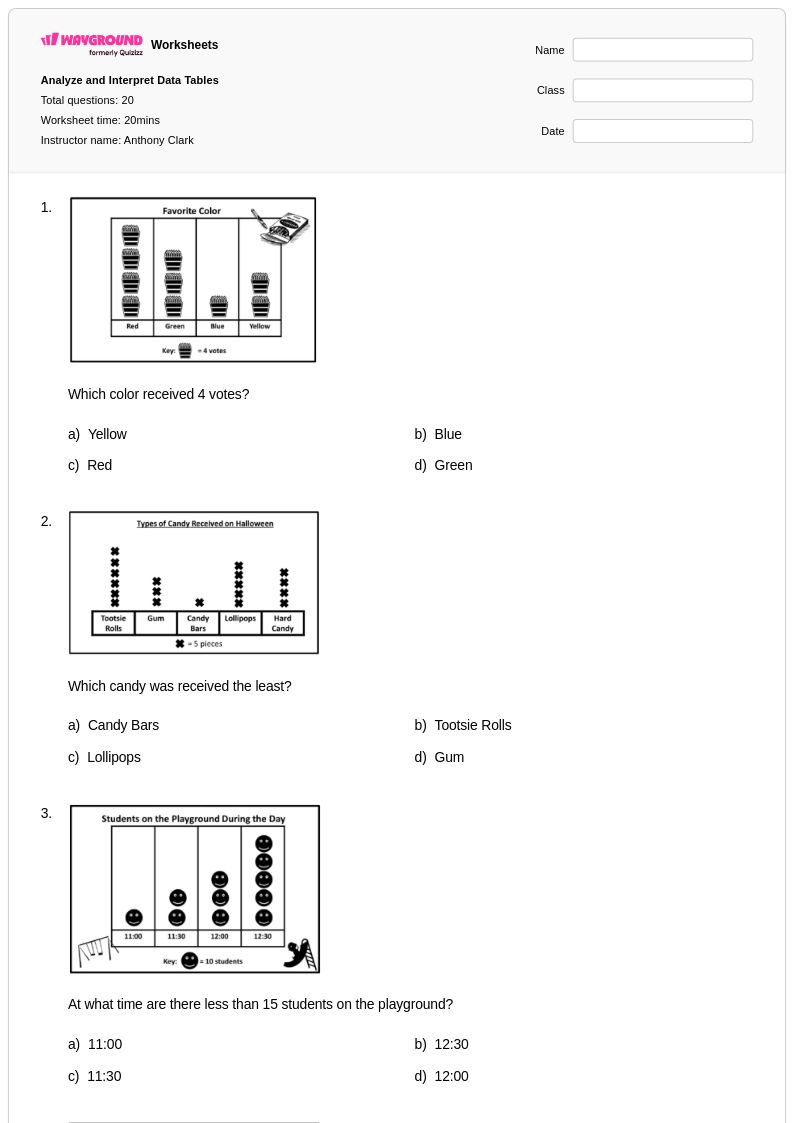
20 Q
4th - Uni
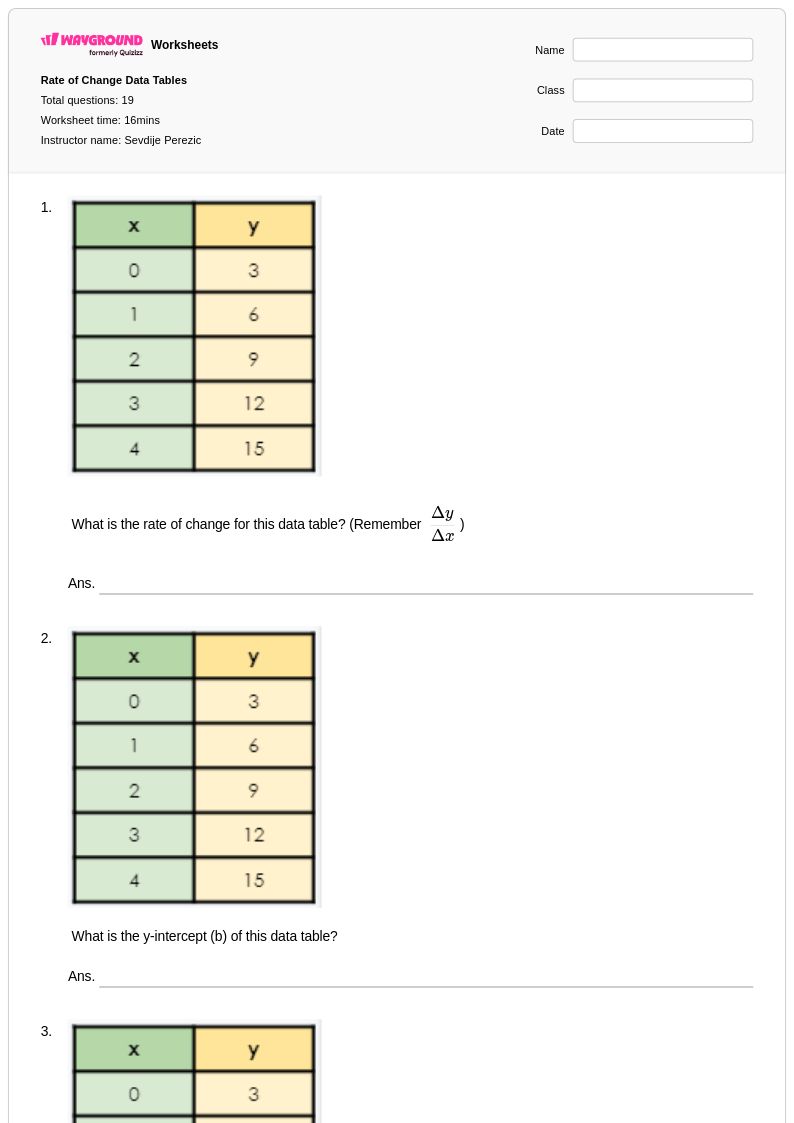
19 Q
10th
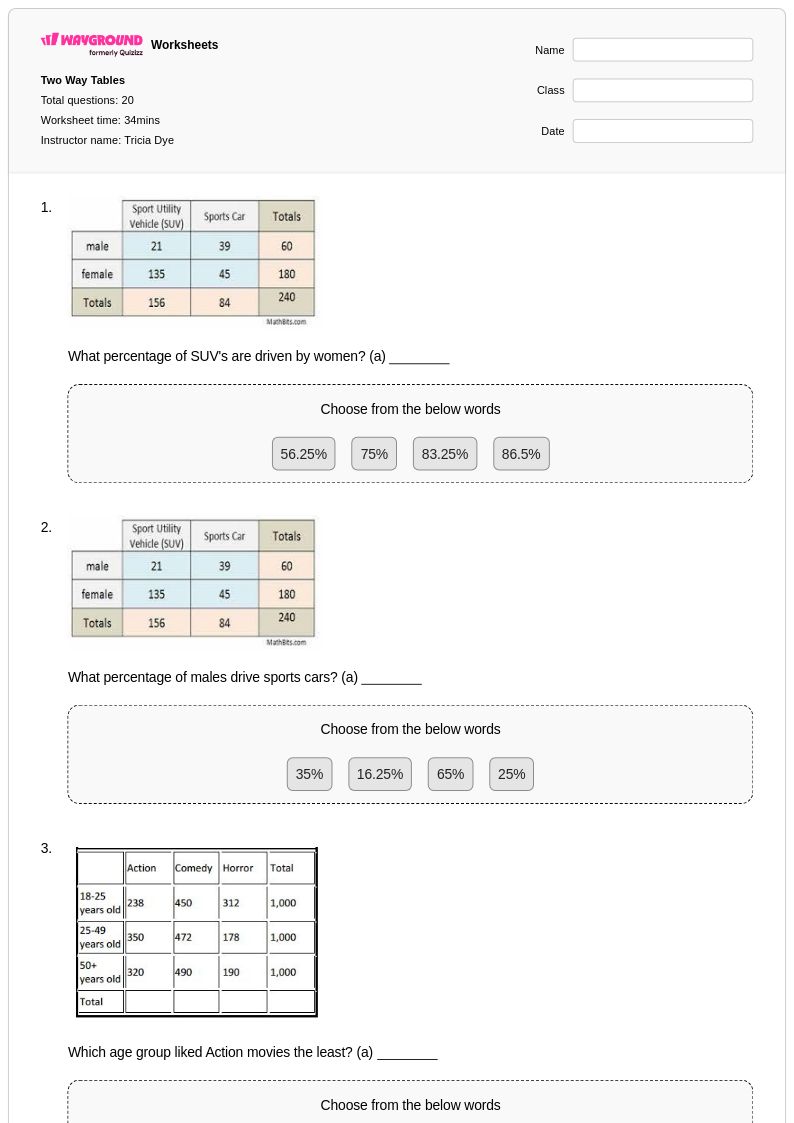
20 Q
8th
16 Q
8th
18 Q
8th
18 Q
8th
16 Q
8th
15 Q
8th - Uni
10 Q
4th
20 Q
8th - Uni
13 Q
5th
18 Q
8th
33 Q
9th - 12th
20 Q
8th - Uni
14 Q
7th - Uni
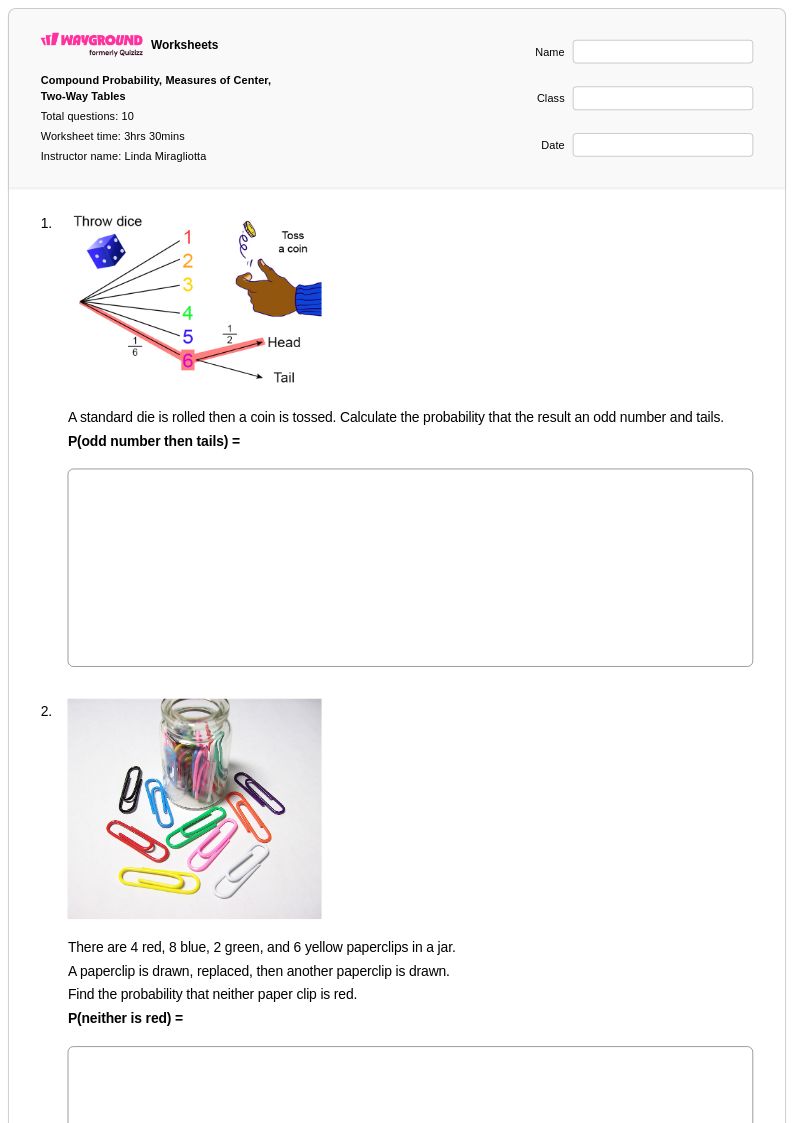
10 Q
12th
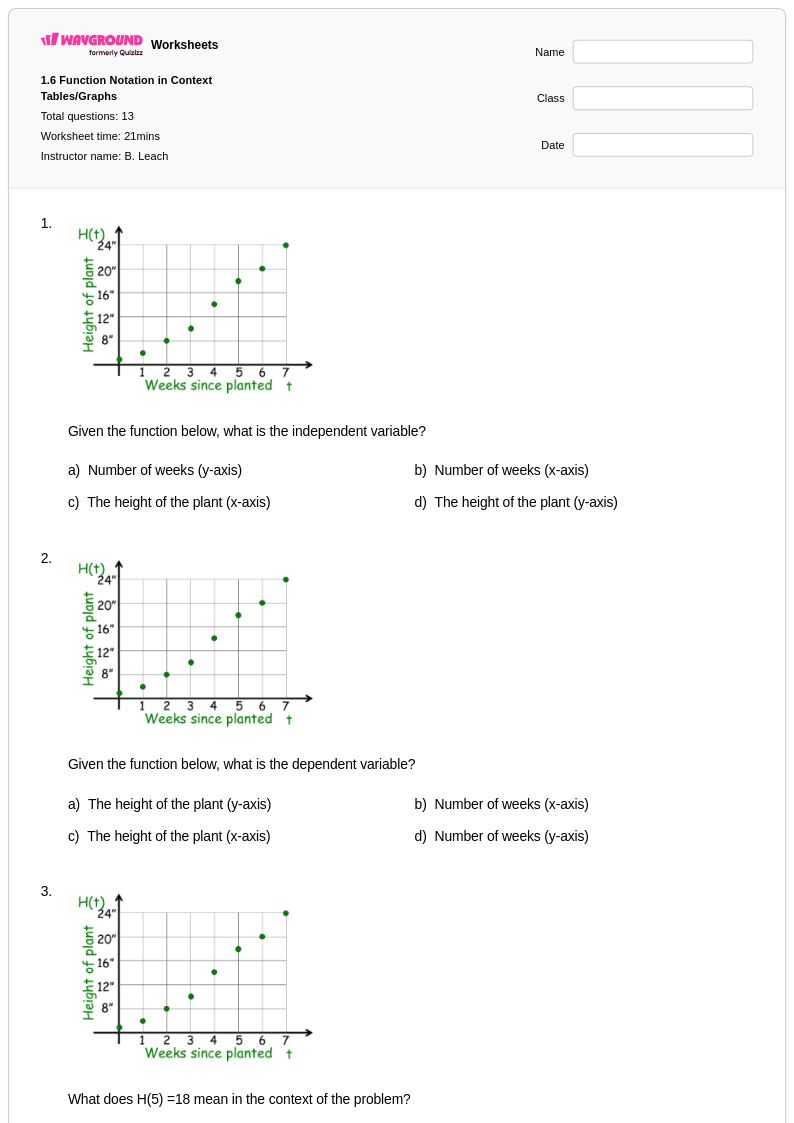
13 Q
9th
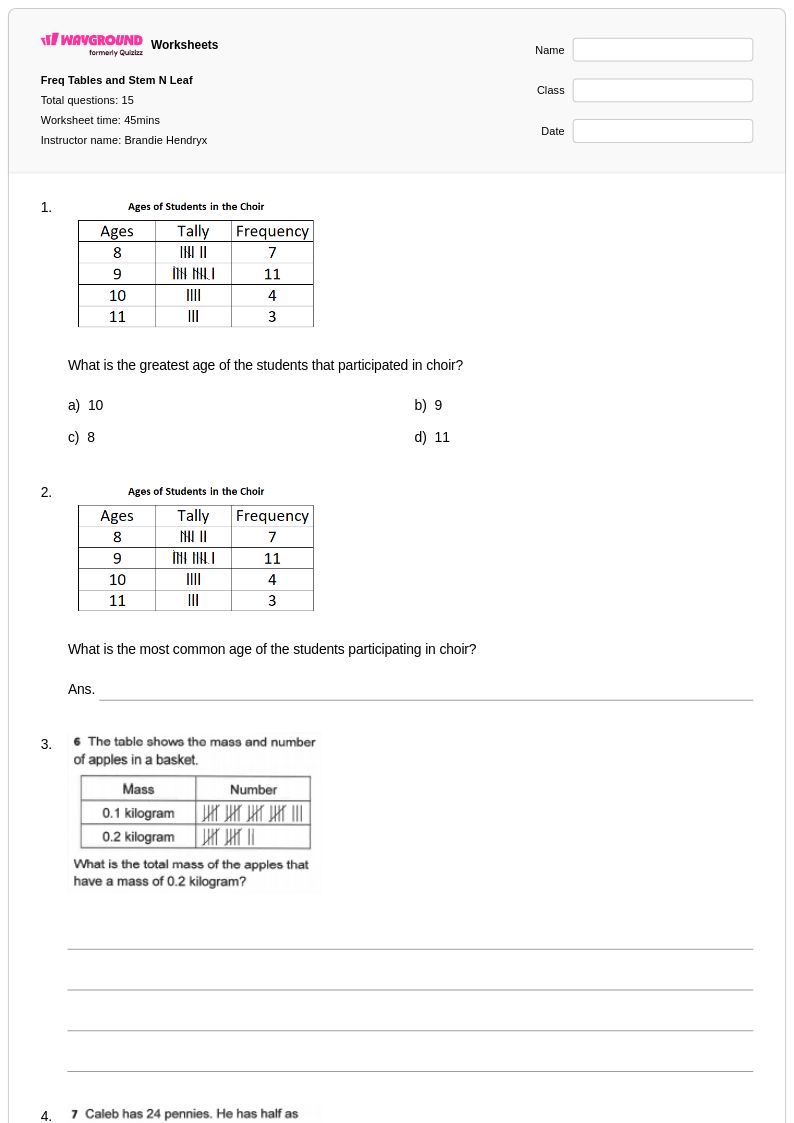
15 Q
5th
Explore Worksheets by Subjects
Explore printable Data Tables worksheets
Data tables form a fundamental component of mathematical literacy, serving as organized structures that help students collect, interpret, and analyze numerical information systematically. Wayground's comprehensive collection of data tables worksheets provides educators with expertly crafted practice problems that guide students through reading, creating, and manipulating tabular data across various mathematical contexts. These free printable resources strengthen essential skills including data organization, pattern recognition, comparative analysis, and logical reasoning while building the foundation for more advanced statistical concepts. Each worksheet includes a complete answer key and is available as a downloadable pdf, ensuring teachers have immediate access to solutions for efficient grading and student feedback during both classroom instruction and independent practice sessions.
Wayground, formerly Quizizz, empowers mathematics educators with an extensive library of millions of teacher-created data tables resources that streamline lesson planning and enhance student learning outcomes. The platform's robust search and filtering capabilities allow teachers to quickly locate worksheets aligned with specific curriculum standards and learning objectives, while built-in differentiation tools enable seamless customization for students with varying skill levels and learning needs. Whether delivered in traditional printable format or through interactive digital pdf versions, these resources support targeted remediation for struggling learners, enrichment opportunities for advanced students, and systematic skill practice for entire classrooms. The platform's flexible design accommodates diverse teaching styles and classroom environments, making it an indispensable tool for mathematics educators seeking to strengthen their students' data analysis capabilities through structured, meaningful practice.
FAQs
How do I teach students to read and create data tables?
What exercises help students practice data tables?
What mistakes do students commonly make when working with data tables?
How can I use Wayground data tables worksheets in my classroom?
How do data tables fit into the Common Core math progression?
How can I differentiate data tables practice for mixed-ability learners?