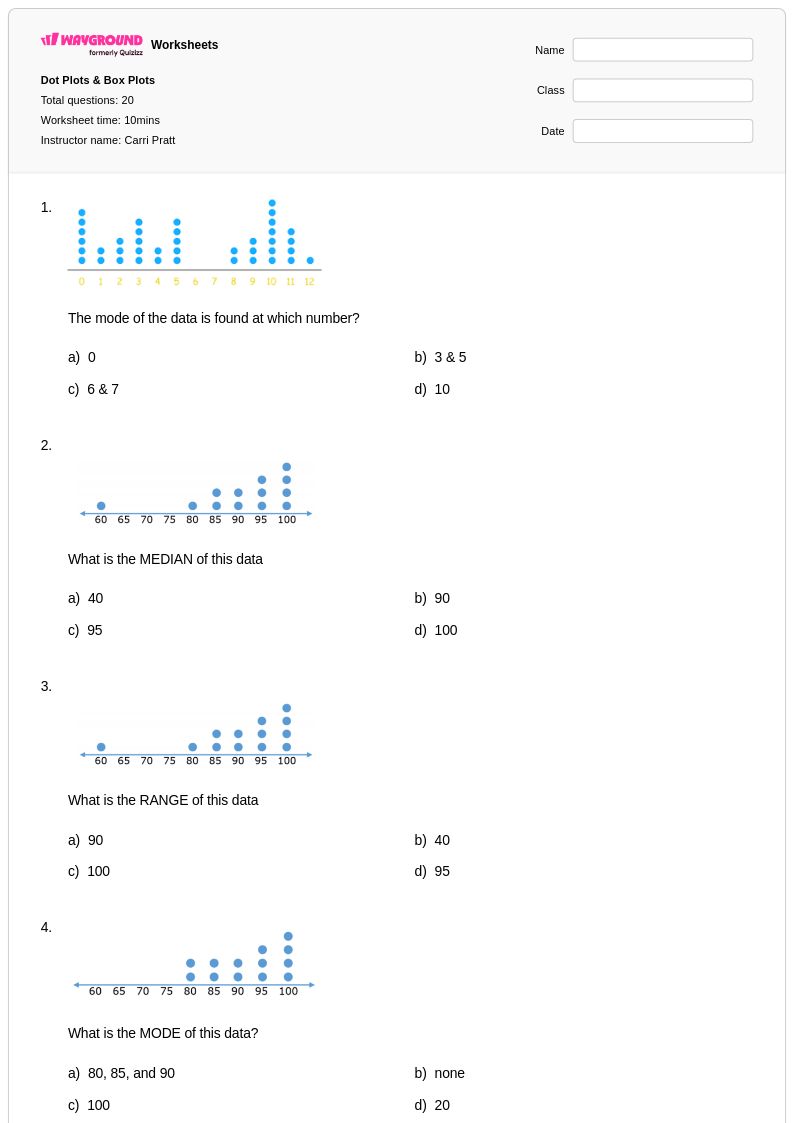
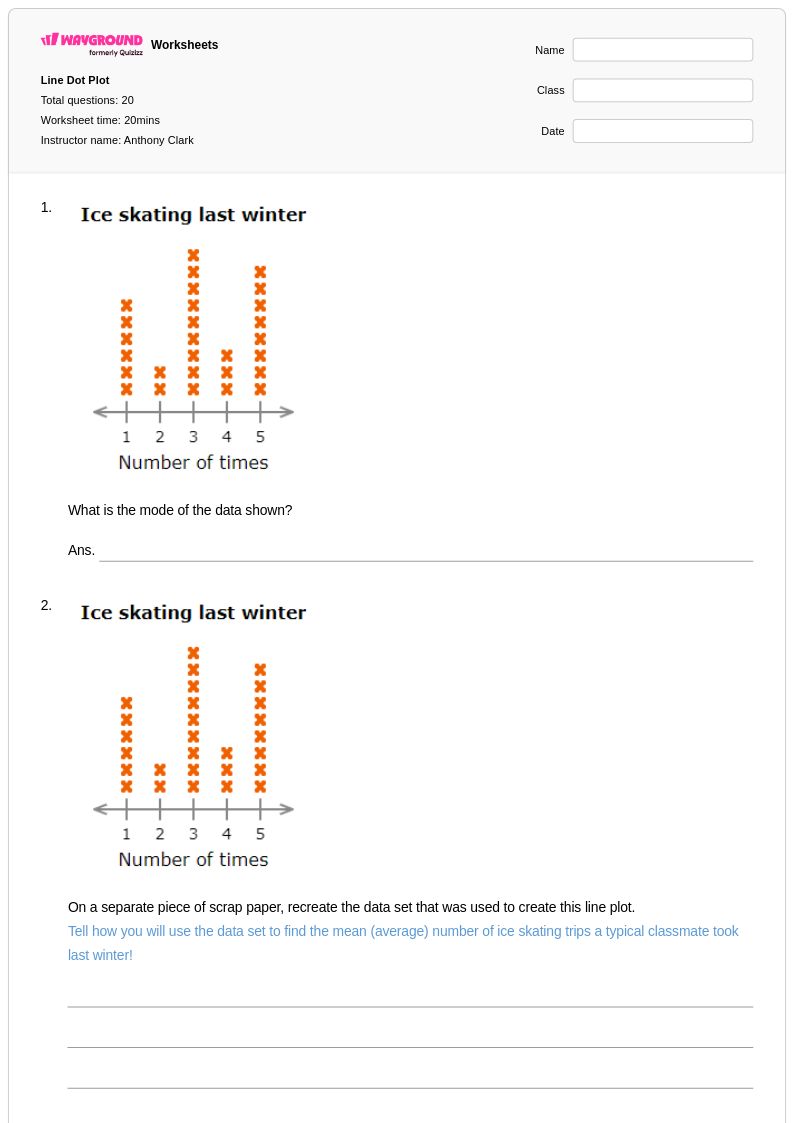
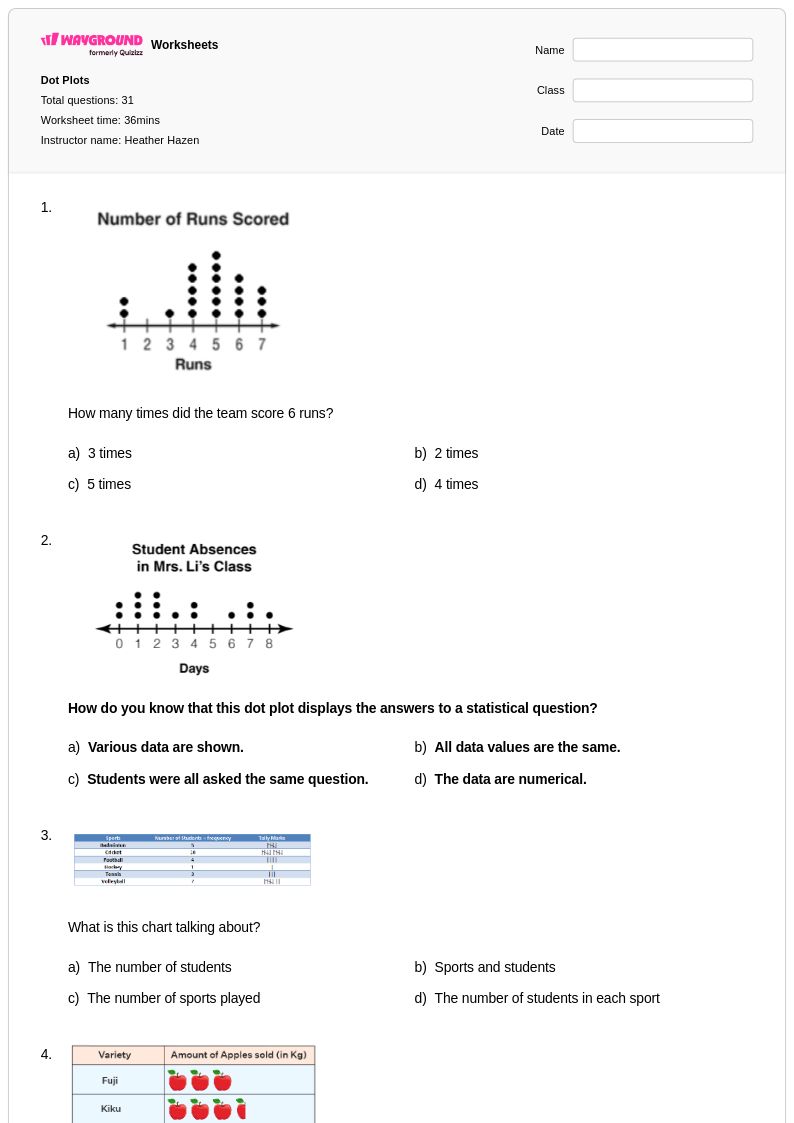
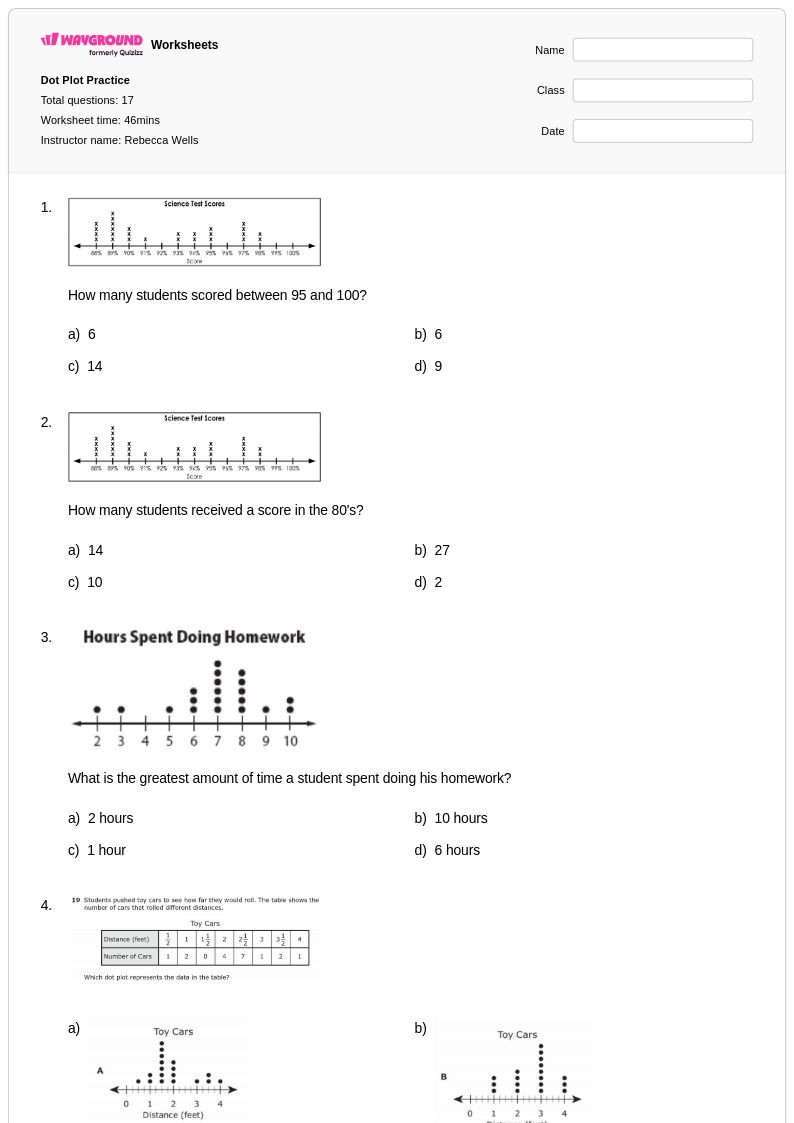
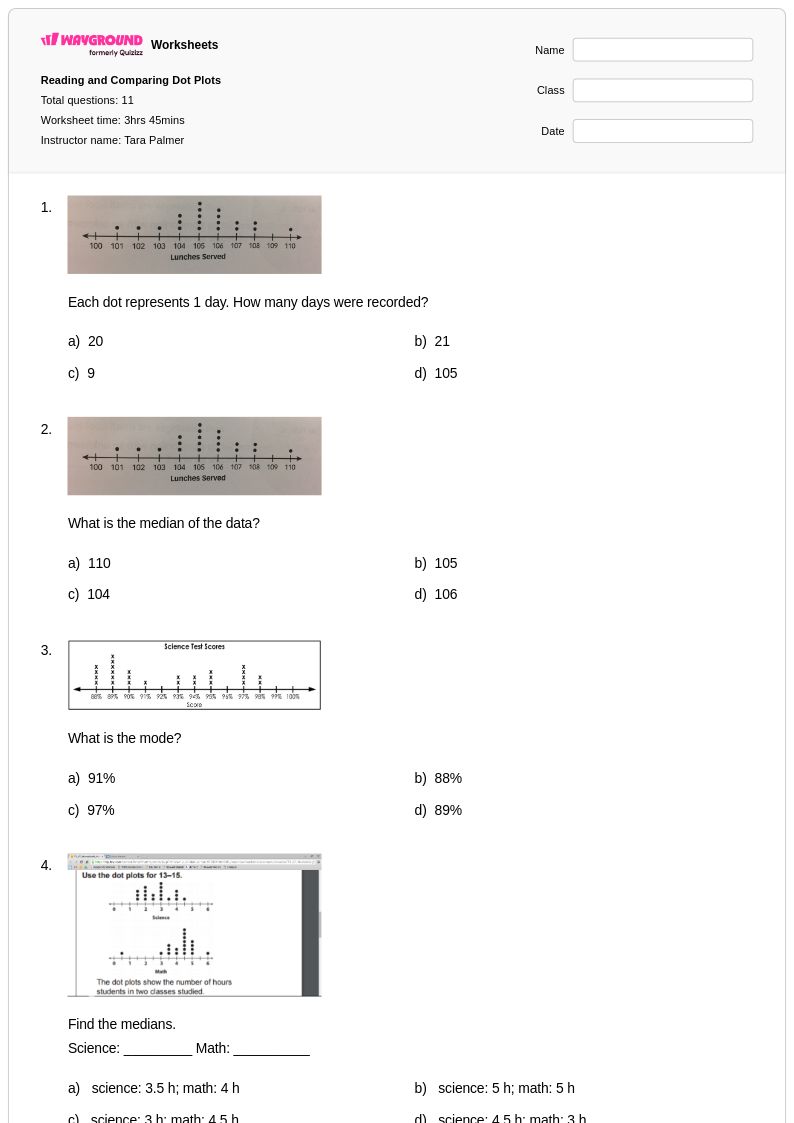
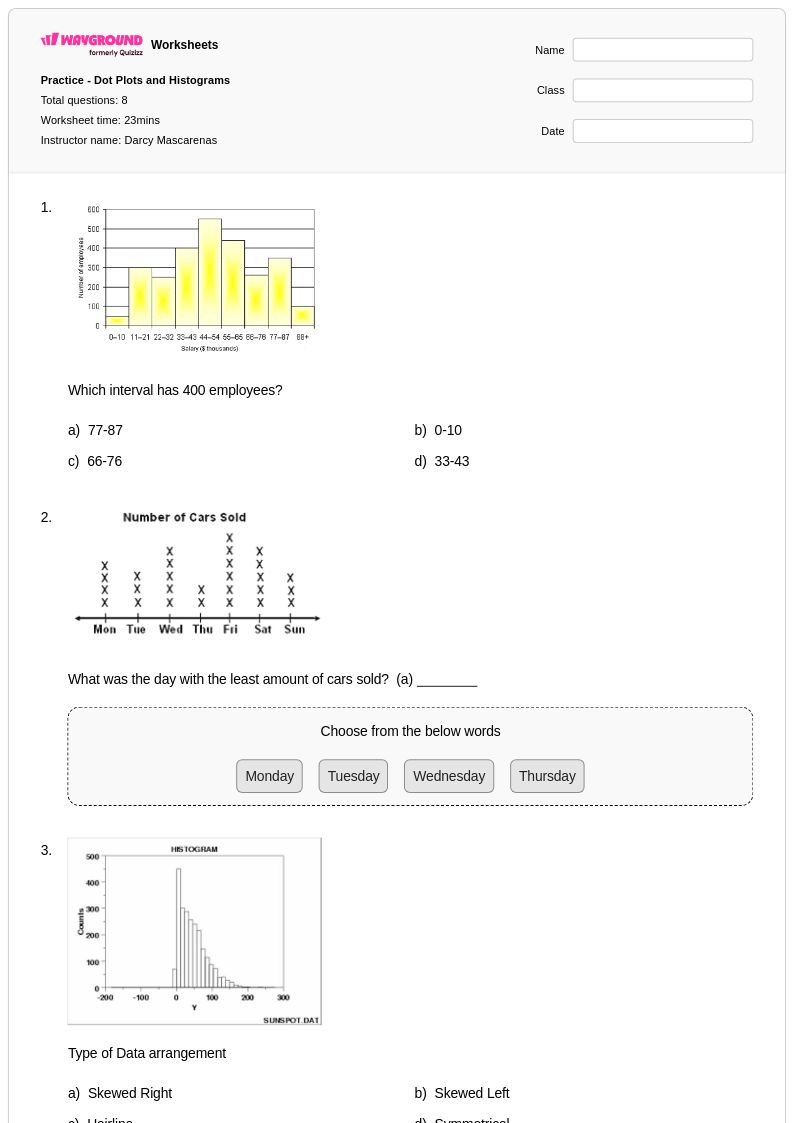
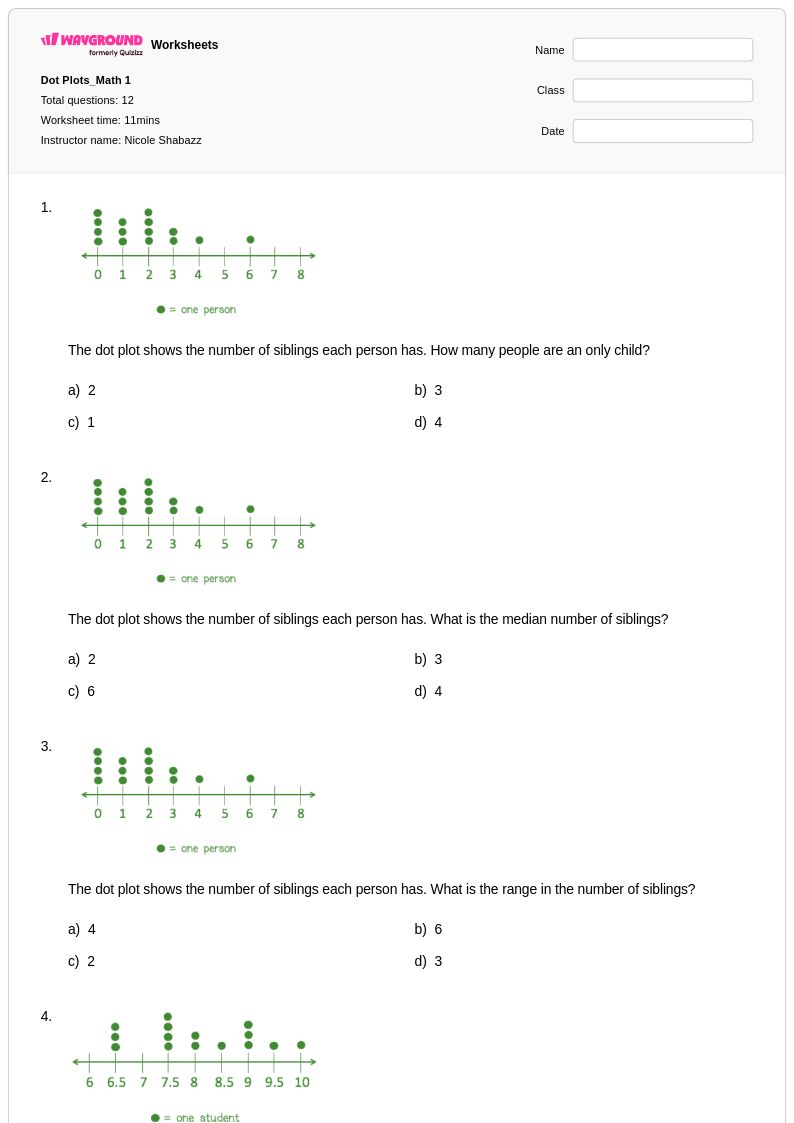
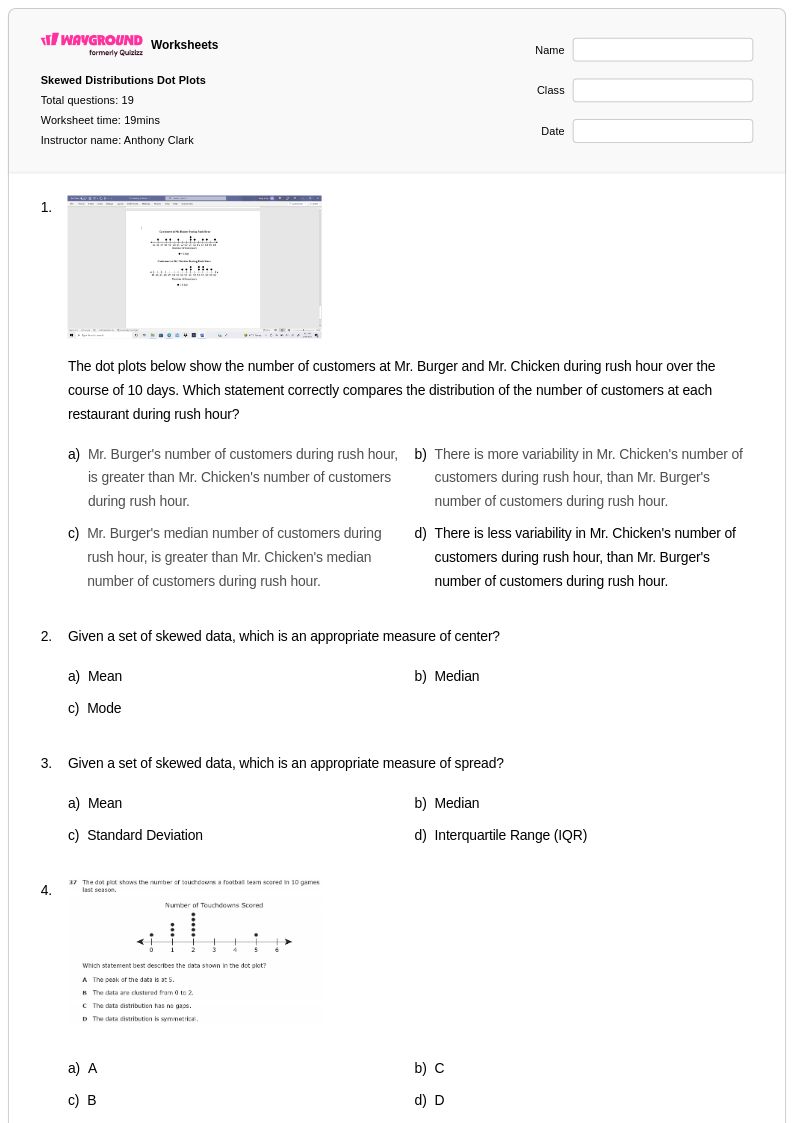
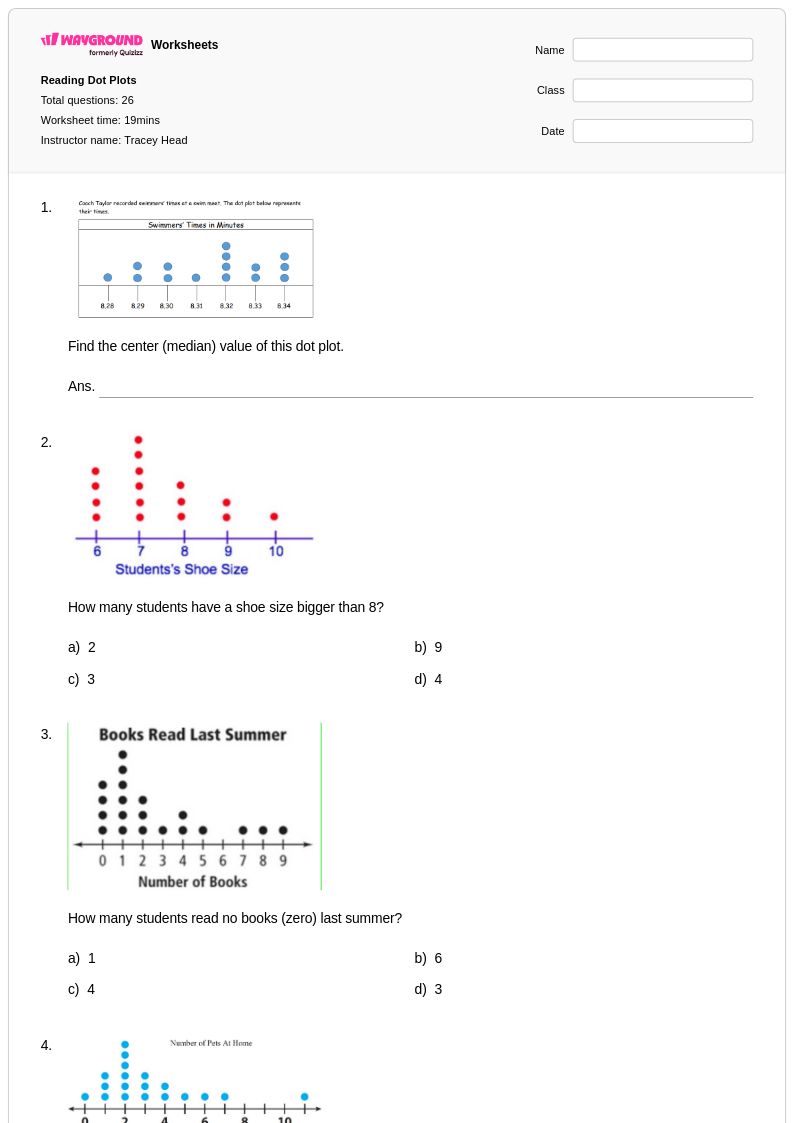
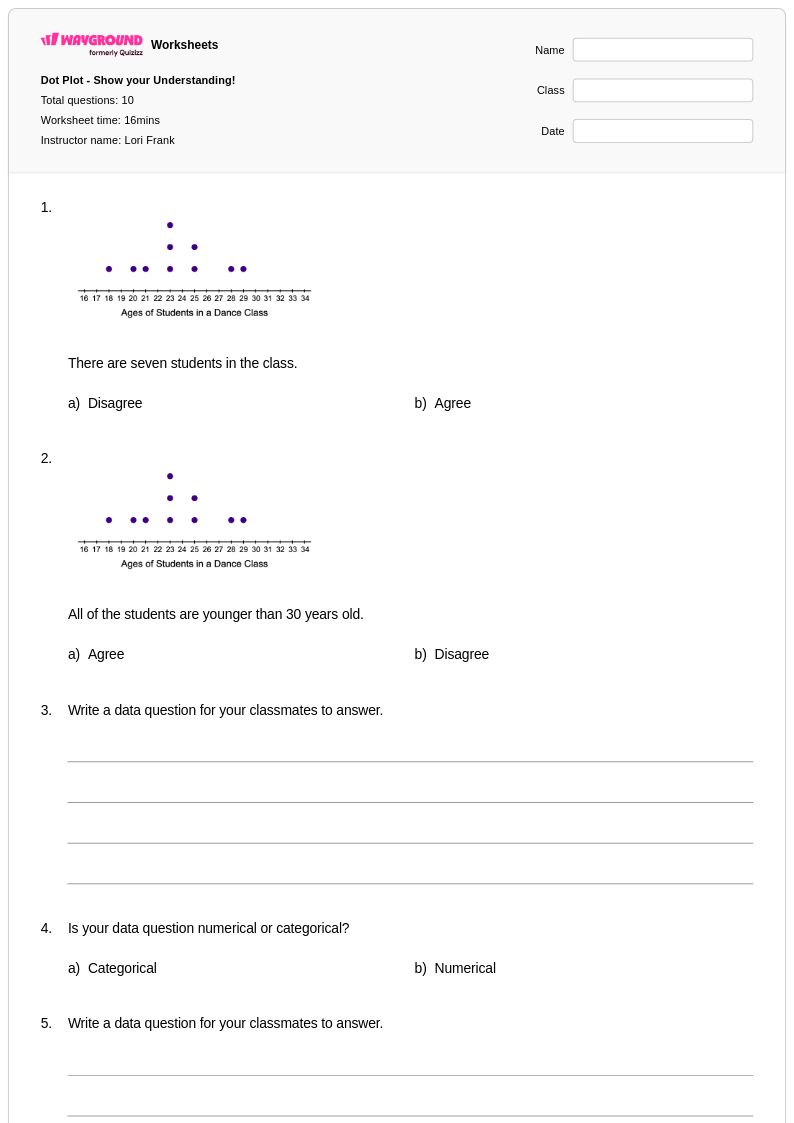
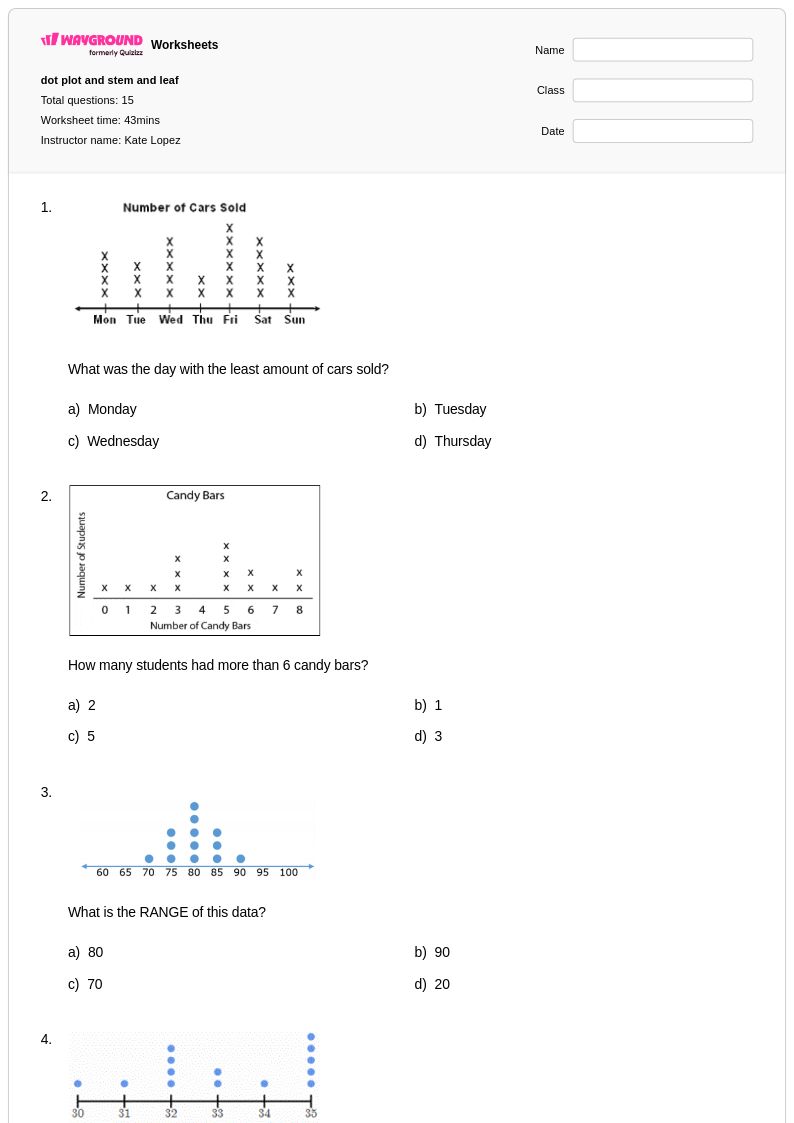
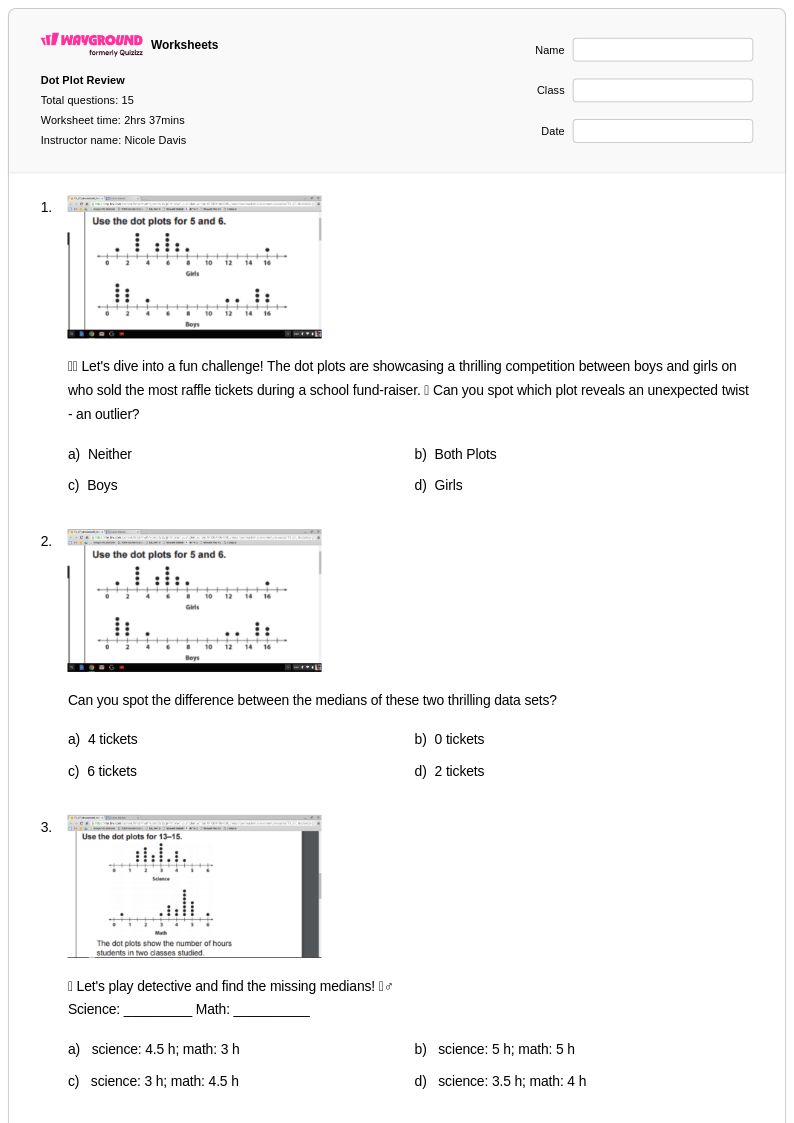
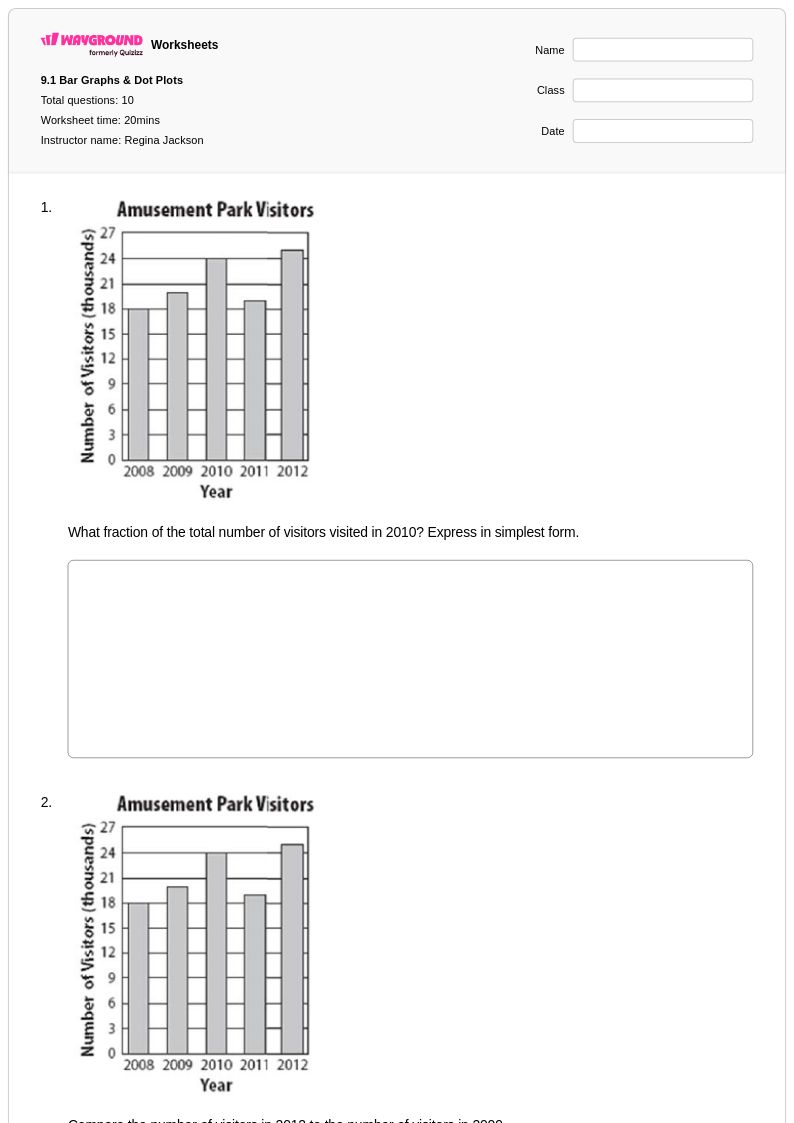
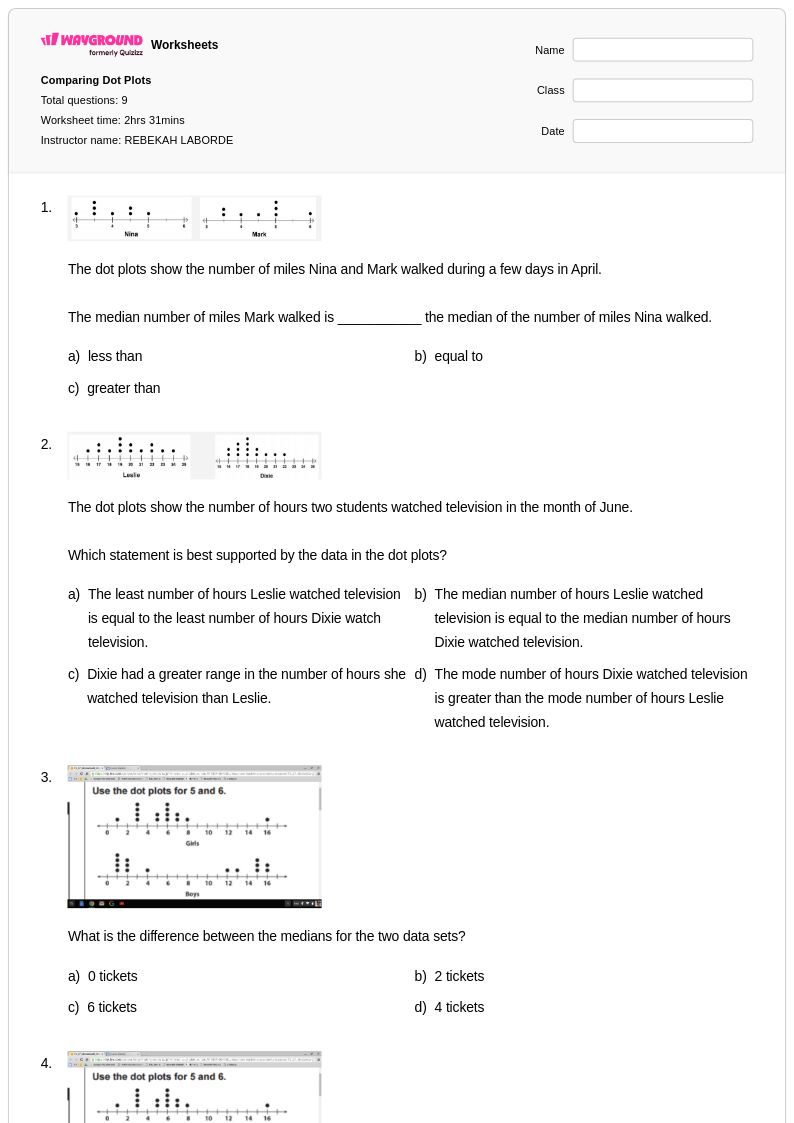
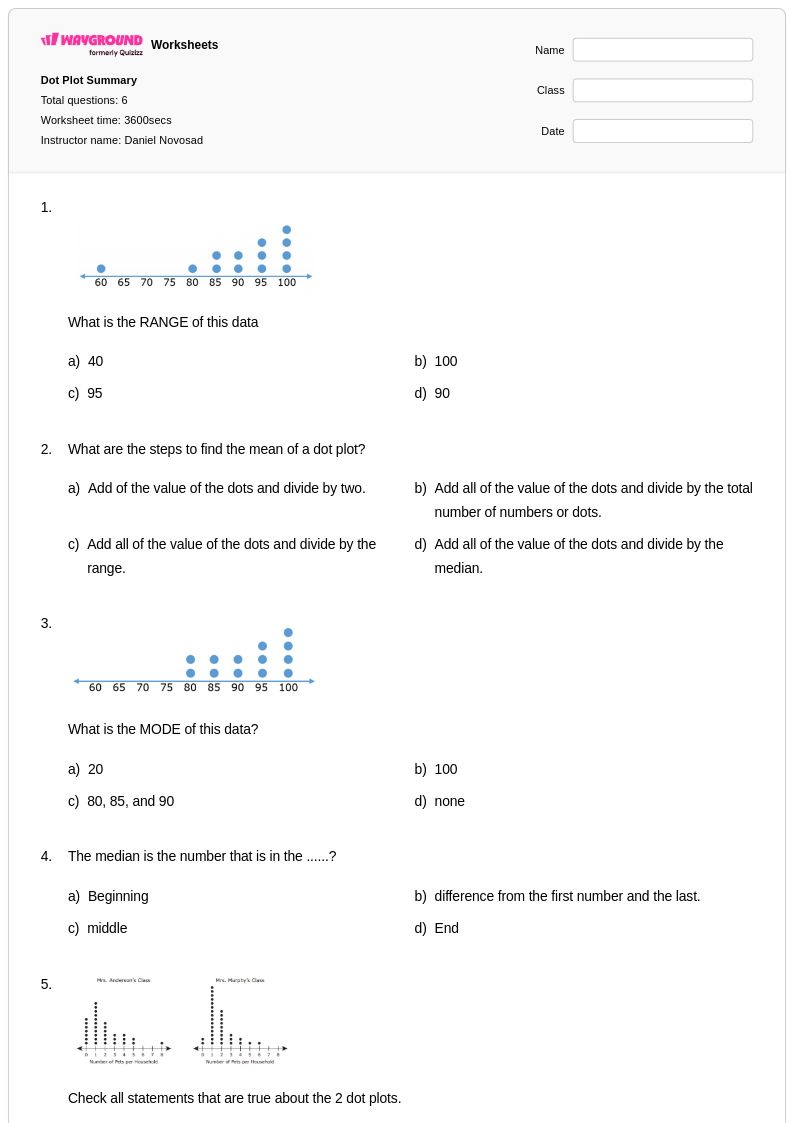
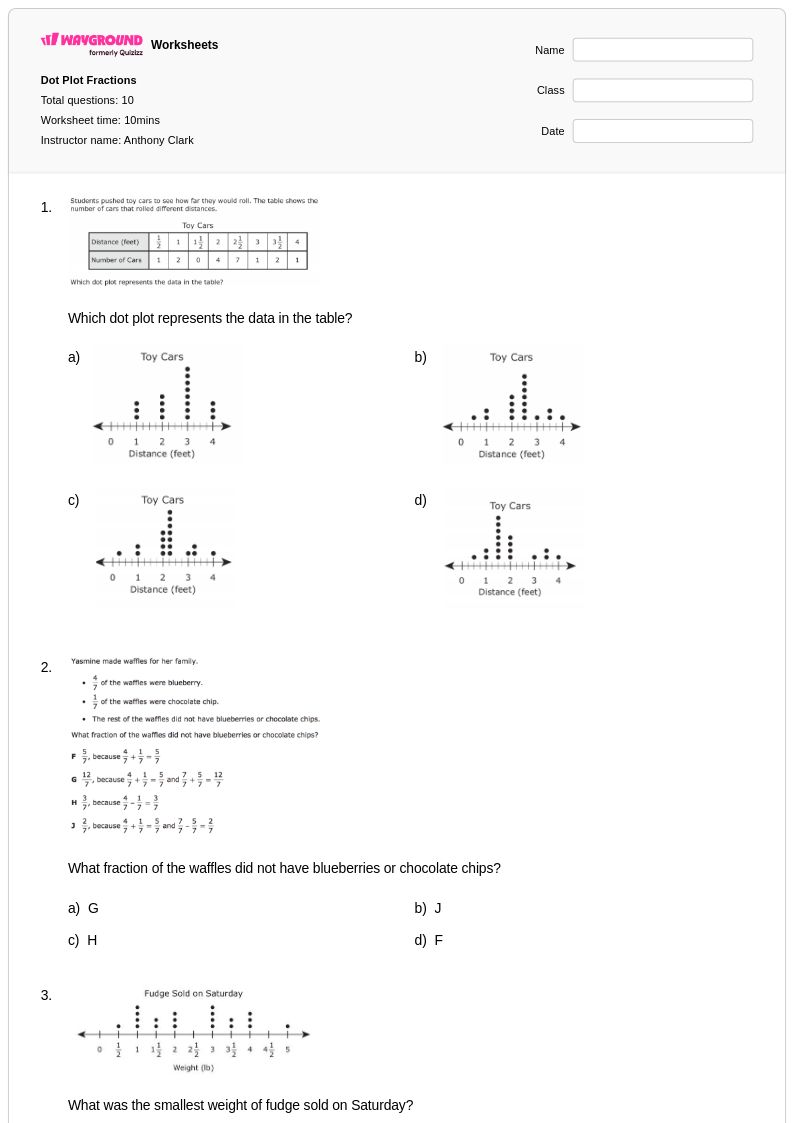
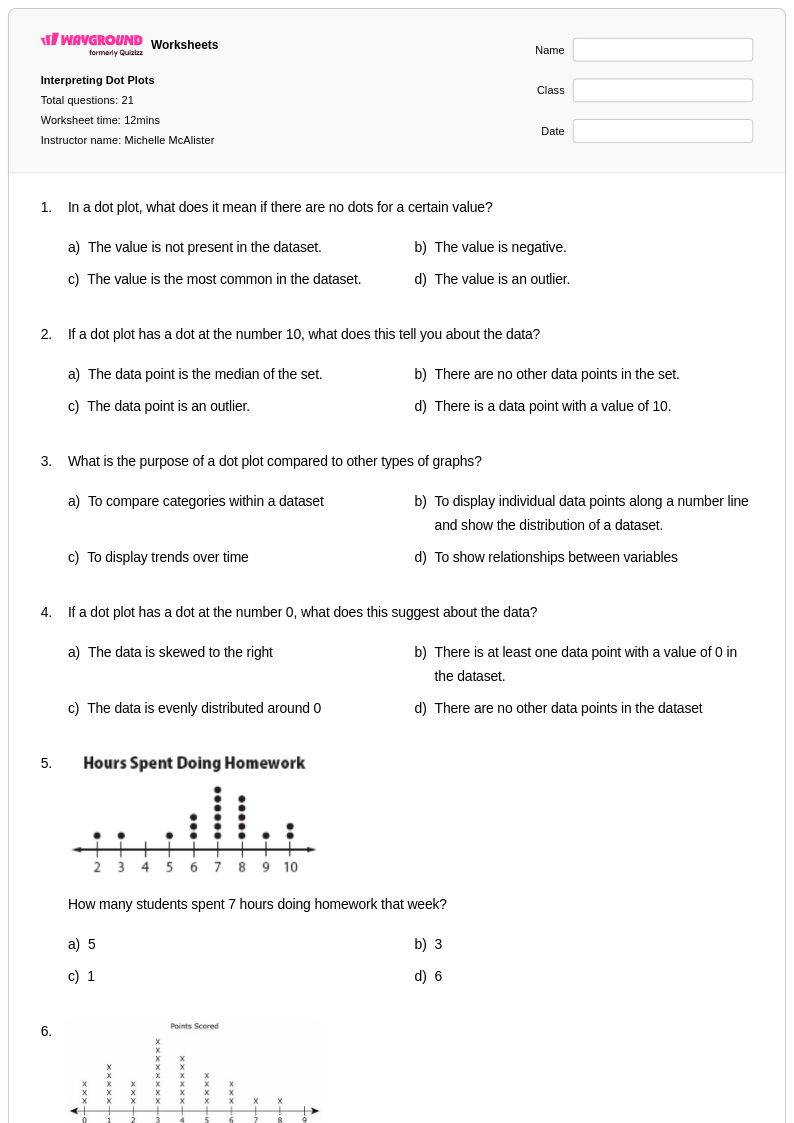
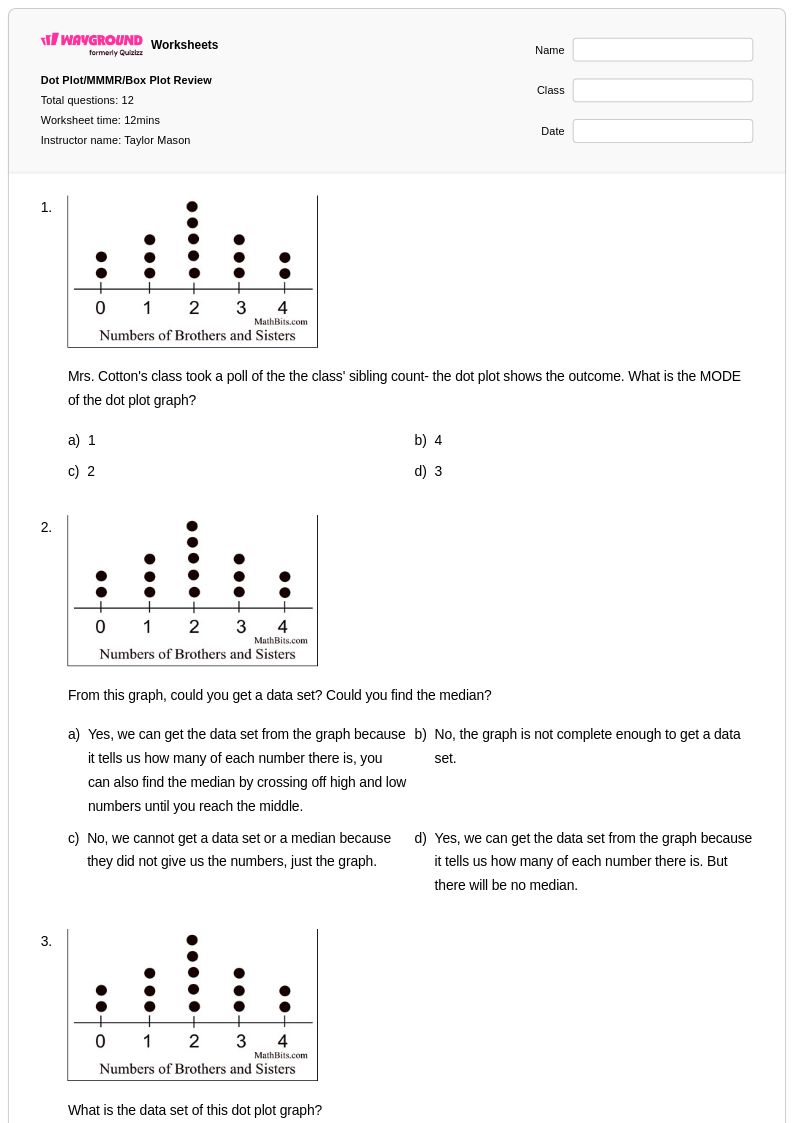
Explore Wayground's collection of free dot plot worksheets and printables that help students master data visualization through engaging practice problems with comprehensive answer keys and downloadable PDF formats.
Dot plot worksheets available through Wayground (formerly Quizizz) provide students with essential practice in creating, reading, and interpreting this fundamental data visualization tool. These comprehensive worksheets strengthen critical mathematical skills including data collection, frequency analysis, distribution patterns, and statistical reasoning. Students work through carefully designed practice problems that progress from basic dot plot construction using simple datasets to more complex interpretations involving measures of center, variability, and comparative analysis. Each worksheet collection includes detailed answer keys and is available as free printable pdf resources, making them accessible for both classroom instruction and independent study. The practice problems are structured to build conceptual understanding while reinforcing procedural fluency in organizing and displaying numerical data effectively.
Wayground (formerly Quizizz) supports mathematics educators with millions of teacher-created dot plot worksheet resources that feature robust search and filtering capabilities to locate materials perfectly suited to specific learning objectives. The platform's standards-aligned collections ensure comprehensive coverage of data and graphing concepts while offering differentiation tools that accommodate diverse student needs and skill levels. Teachers can easily customize existing worksheets or create new ones, with flexible options for both printable pdf formats and interactive digital versions that enhance student engagement. These versatile resources streamline lesson planning while providing targeted support for remediation, enrichment, and systematic skill practice, enabling educators to effectively guide students through the essential process of understanding how dot plots reveal patterns, clusters, gaps, and outliers within datasets.
FAQs
How do I teach dot plots to students?
Start with a live classroom survey — ask students something simple like how many siblings they have, then build the dot plot together on the board. This makes the connection between raw data and visual display concrete before students work independently. Once they can read a plot you've built together, shift to having them construct their own from a given dataset, then move toward interpretation: where do the data cluster, where are the gaps, and what does that tell us?
What exercises help students practice reading and interpreting dot plots?
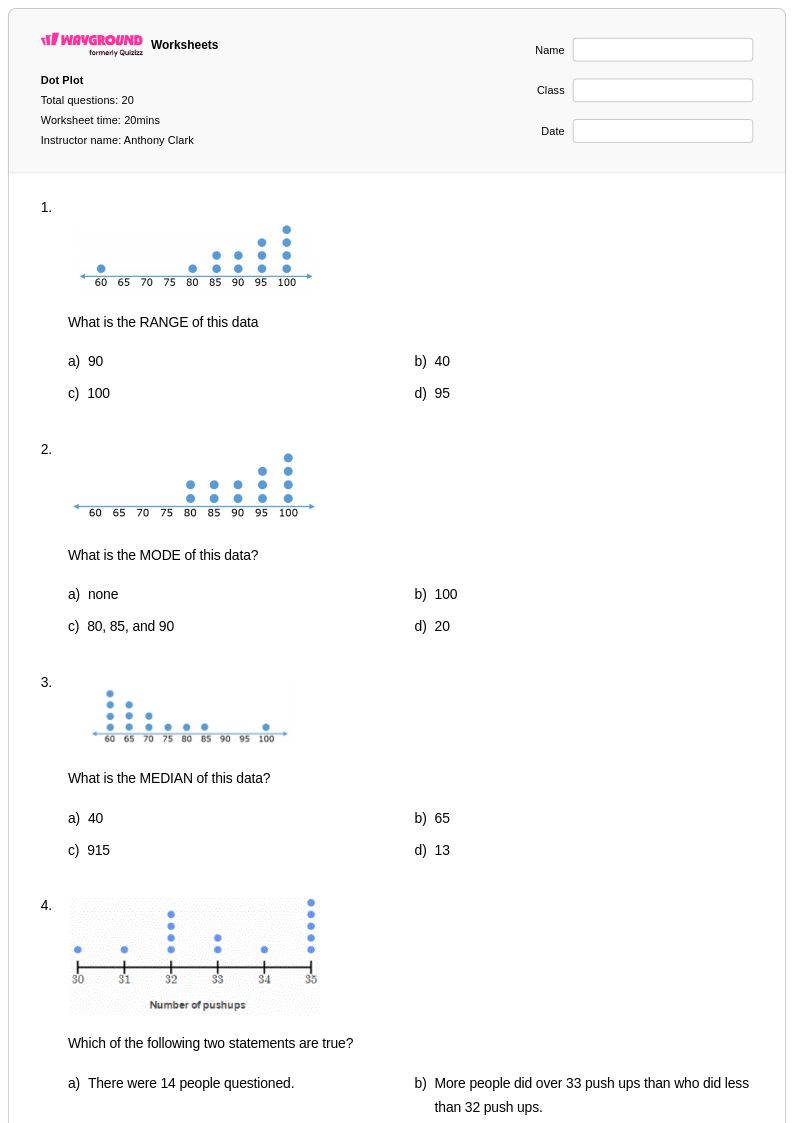
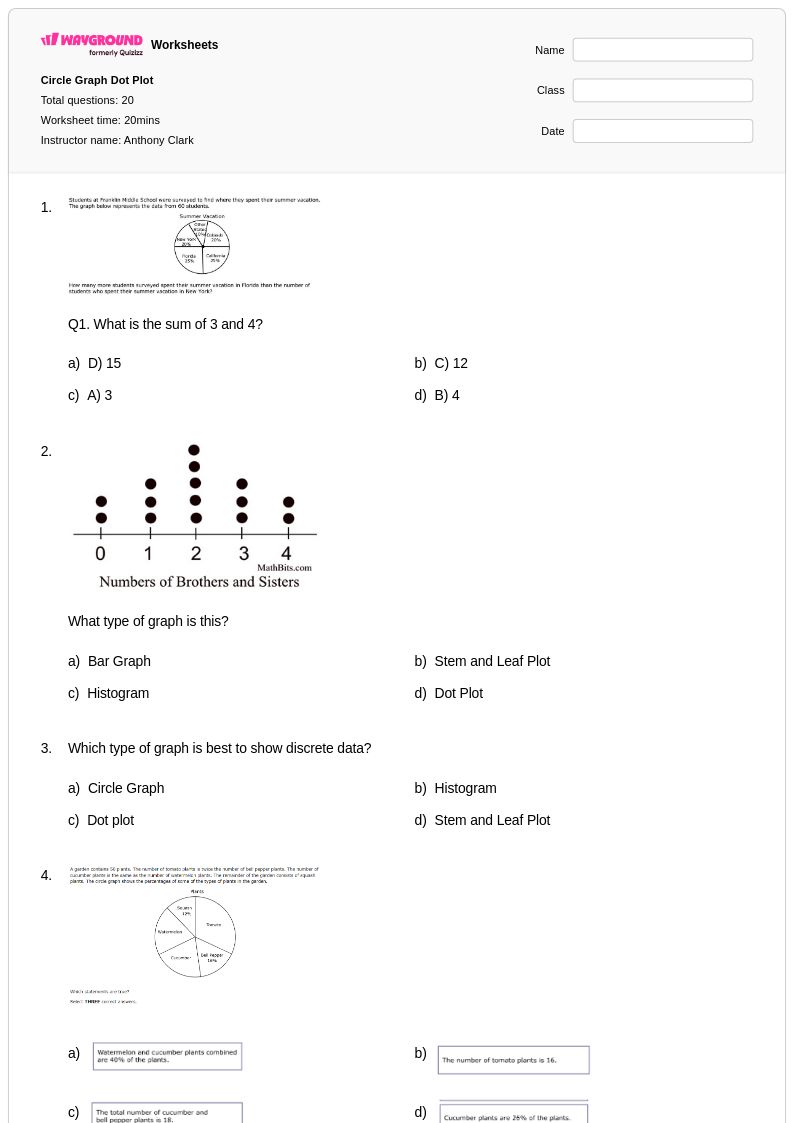
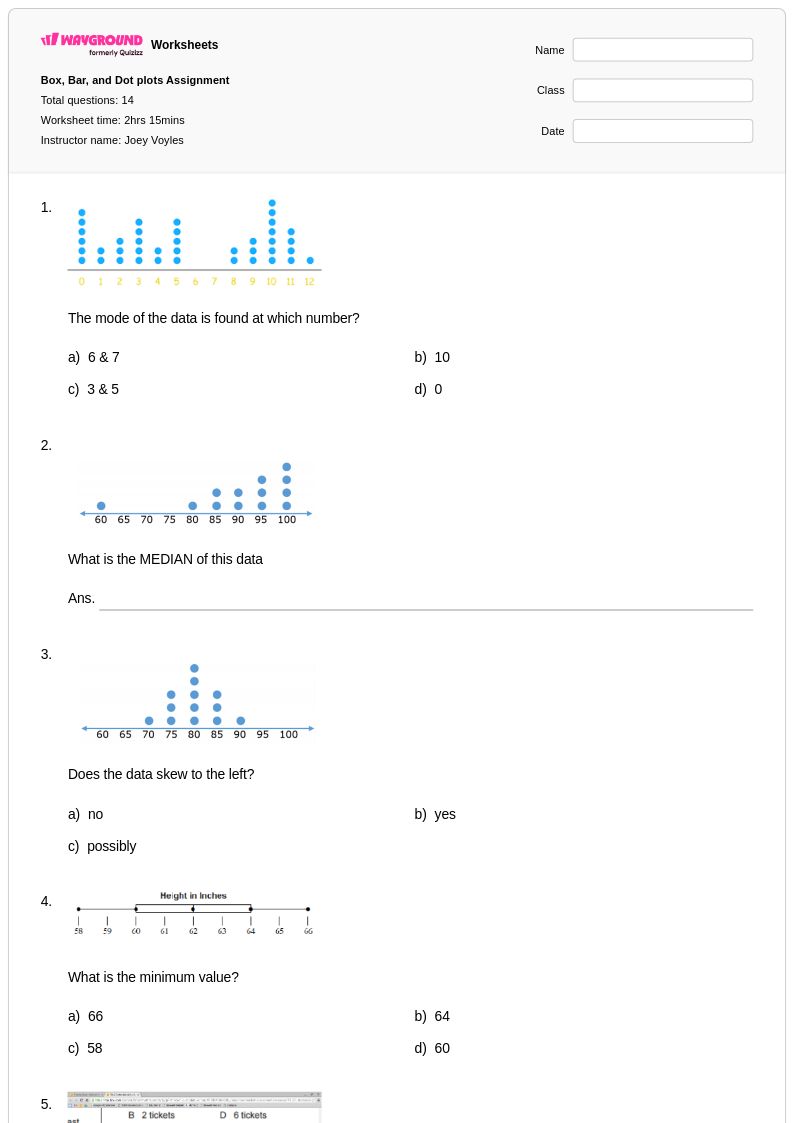
The most useful practice moves students through three stages: reading (how many data points show a value of 4?), interpreting (what does the cluster between 6 and 8 suggest?), and comparing (which dataset has greater spread?). Wayground's dot plot worksheets are structured to progress through exactly this sequence, from basic construction with simple datasets to analytical questions about distribution, measures of center, and variability.
What mistakes do students commonly make with dot plots?
Three errors come up repeatedly. First, students miscount stacked dots when values repeat, especially if their dots aren't evenly spaced. Second, they confuse the number line scale with a frequency axis — they think a dot at position 5 means "five of something" rather than "one data point with a value of 5." Third, when comparing two dot plots, students focus on the tallest stack rather than the overall shape and spread of the distribution.
How do I use Wayground's dot plot worksheets in my classroom?
Each worksheet is available as a printable PDF or as a digital quiz hosted on Wayground — same problems, either format. For digital use, assign it as an interactive session and students submit answers online. For paper use, print and distribute; you can then grade submissions using the Wayground for Teachers app, which lets you scan or capture student work for quick grading. Every worksheet includes a complete answer key either way.
Are dot plot worksheets aligned to Common Core standards?
Yes. Common Core introduces dot plots (called line plots) in the early elementary grades for organizing whole-number data, then revisits them in grades 5 and 6 as students begin working with fractional measurements and, later, with statistical concepts like center and spread. By the time students reach middle school, they're expected to use dot plots alongside histograms and box plots to describe and compare distributions — so dot plot fluency is a direct prerequisite for that statistical reasoning work.
How can I differentiate dot plot practice for mixed-ability classes?
For students who struggle with reading density or overlapping dots, Wayground's worksheet-level tools let you increase font size and spacing or apply a dyslexia-friendly font to reduce visual noise. For students who need support processing multi-part questions, the Read Aloud accommodation reads questions aloud, and Reduced Answer Choices lowers the cognitive load on multiple-choice items. These settings apply per student, so the rest of the class works from the default version without any disruption.