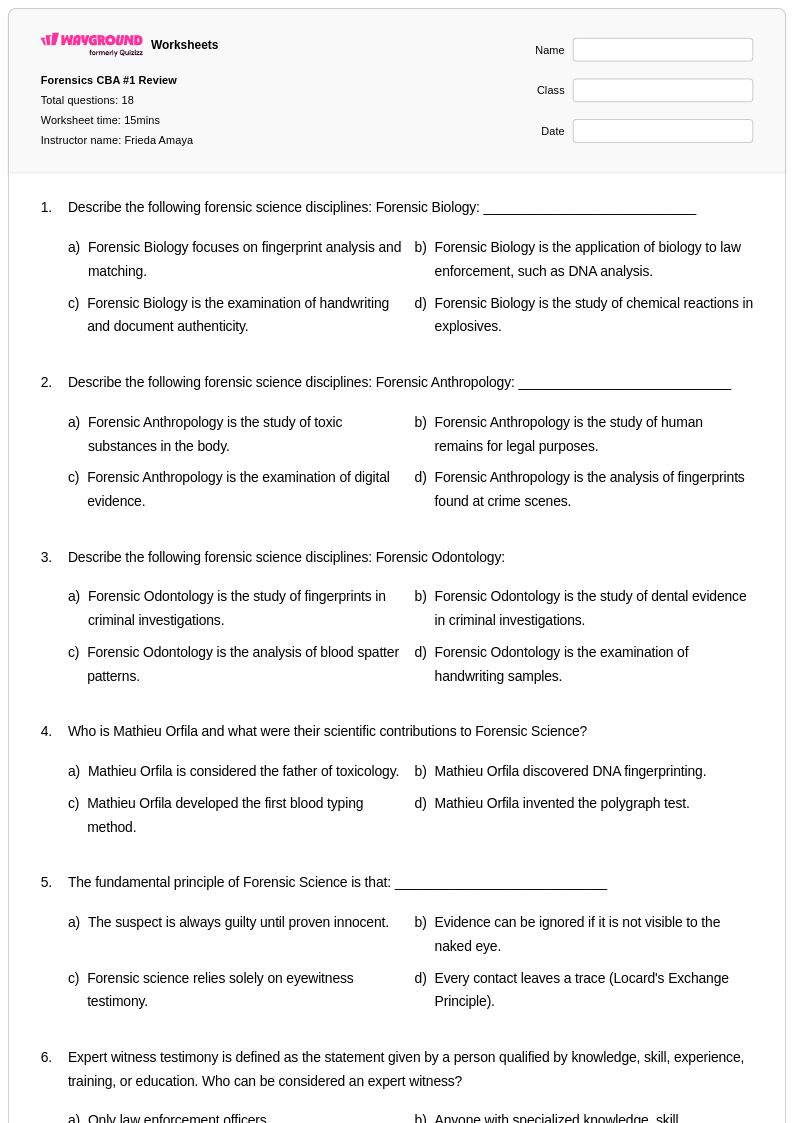
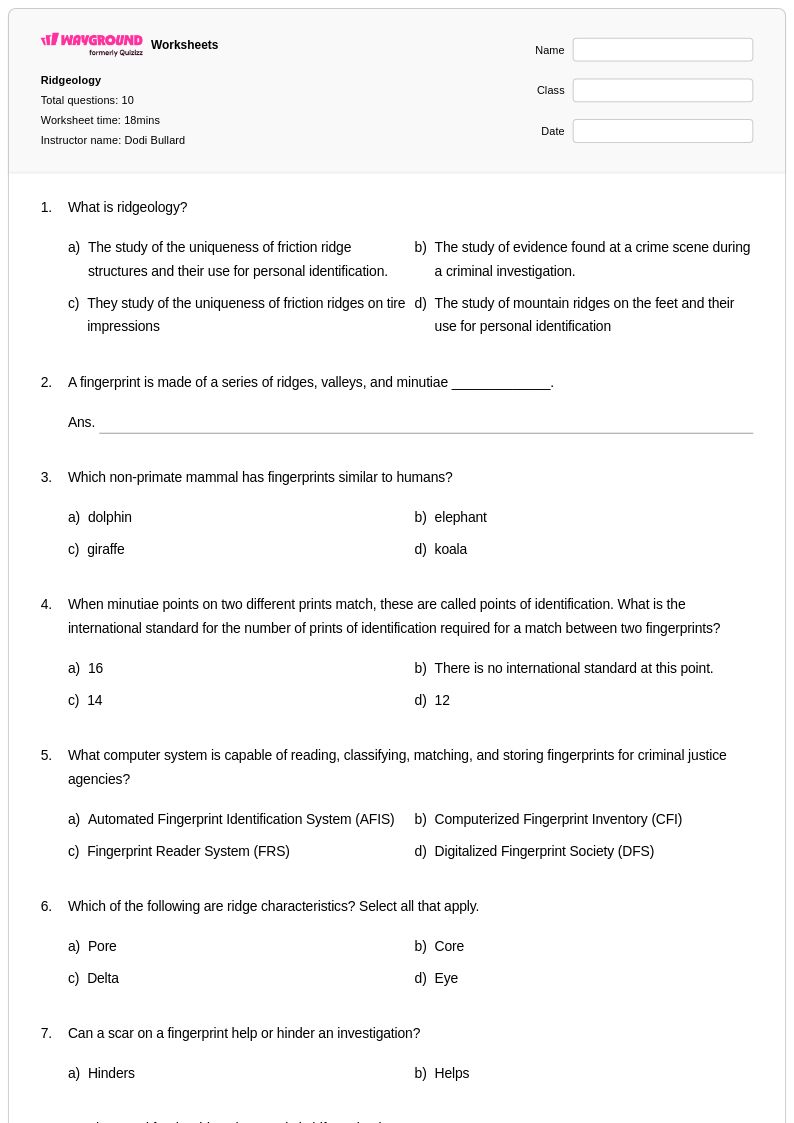
Explore Wayground's free fingerprint worksheets and printables that help students discover the science behind unique human identification patterns, featuring practice problems and answer keys for comprehensive biology learning.
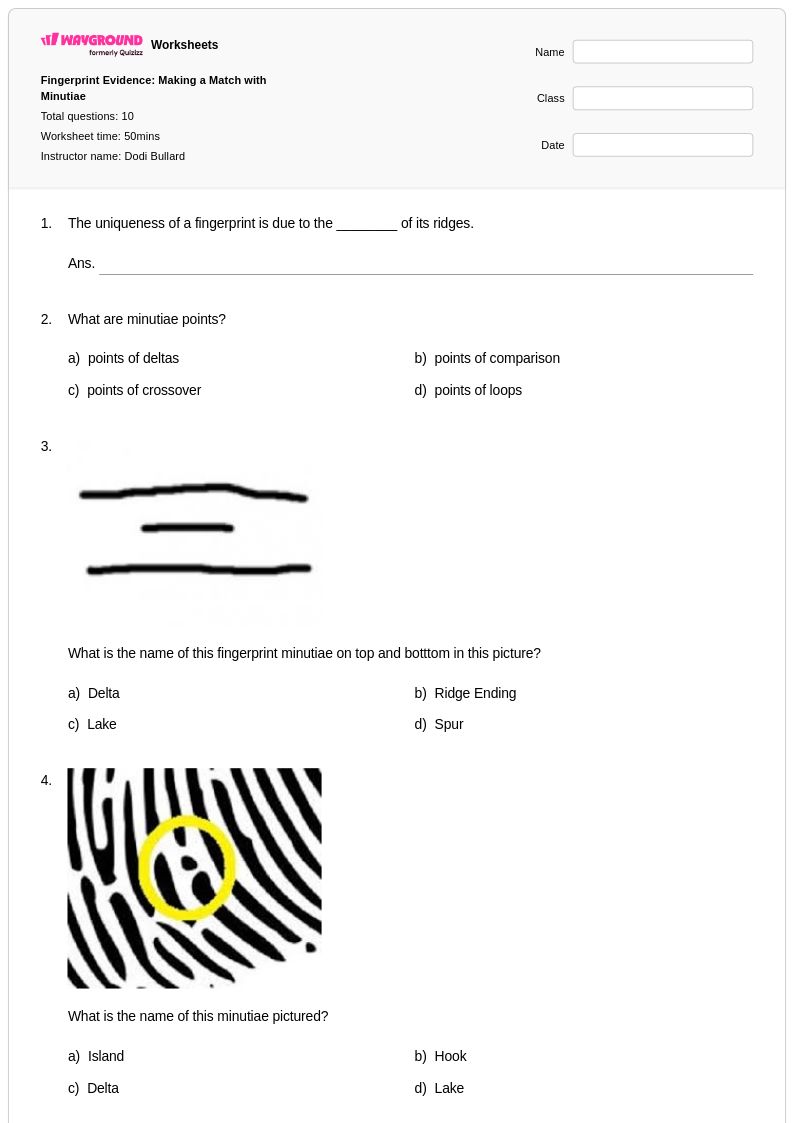
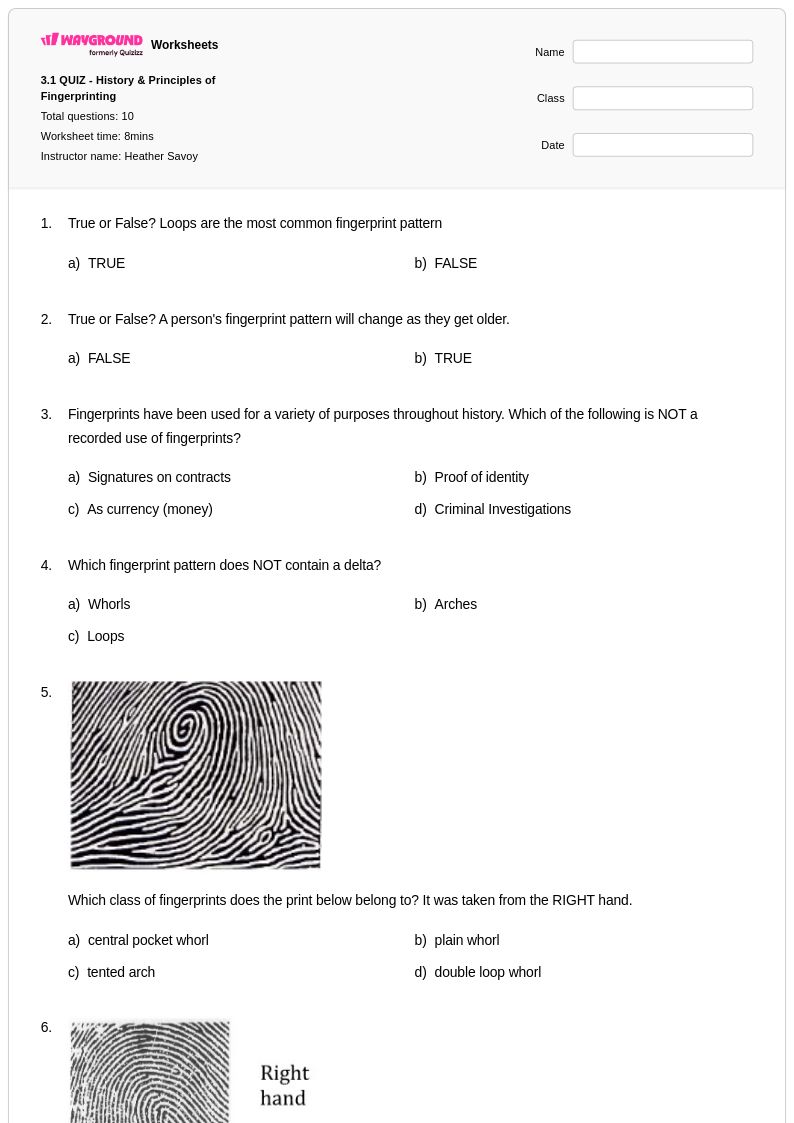
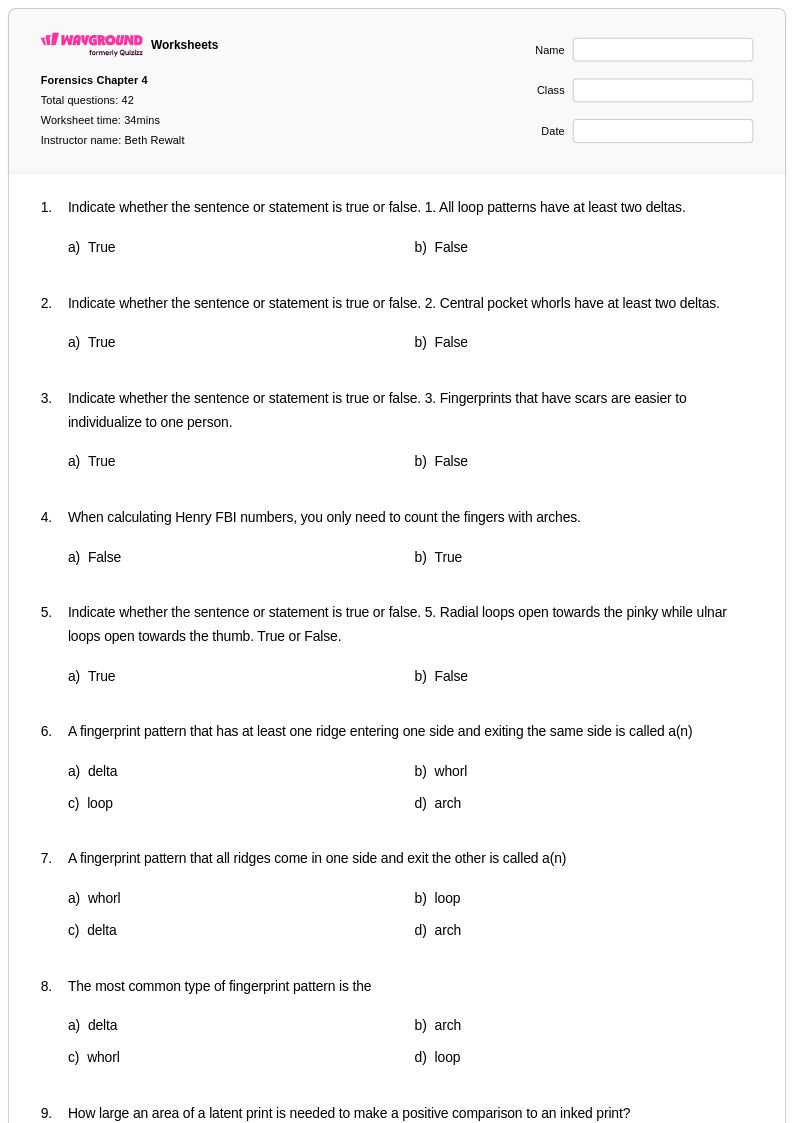
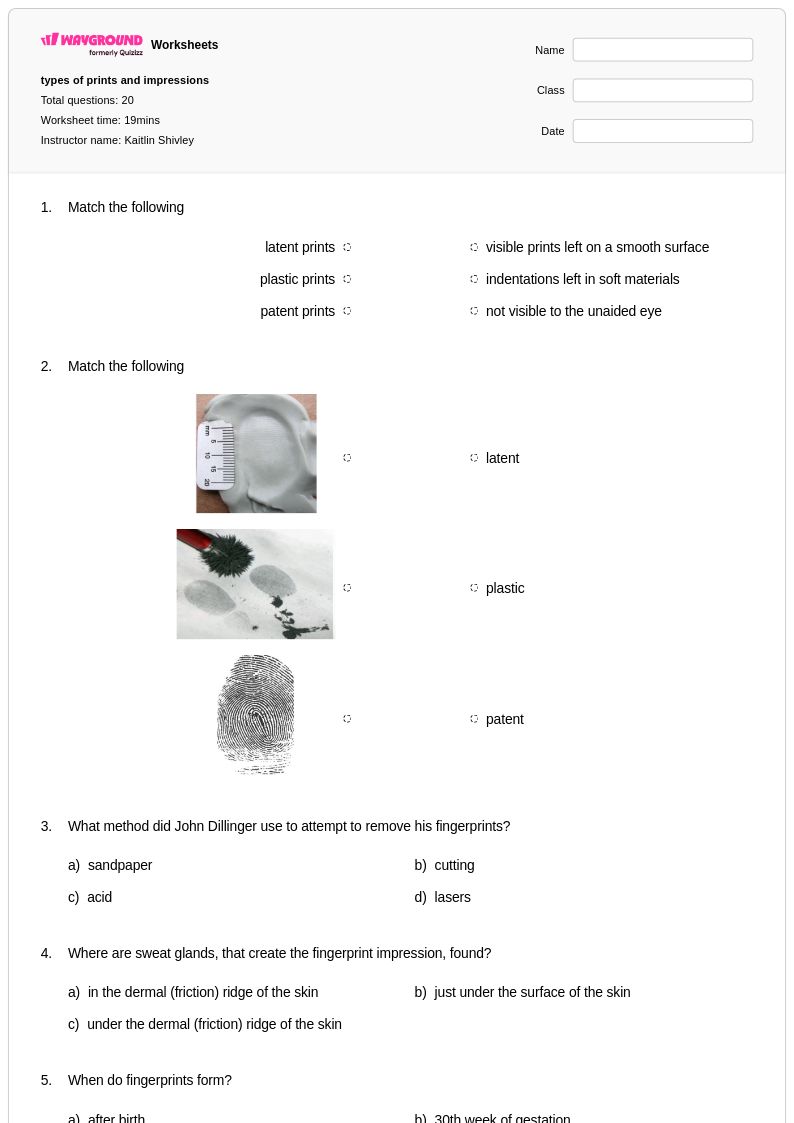
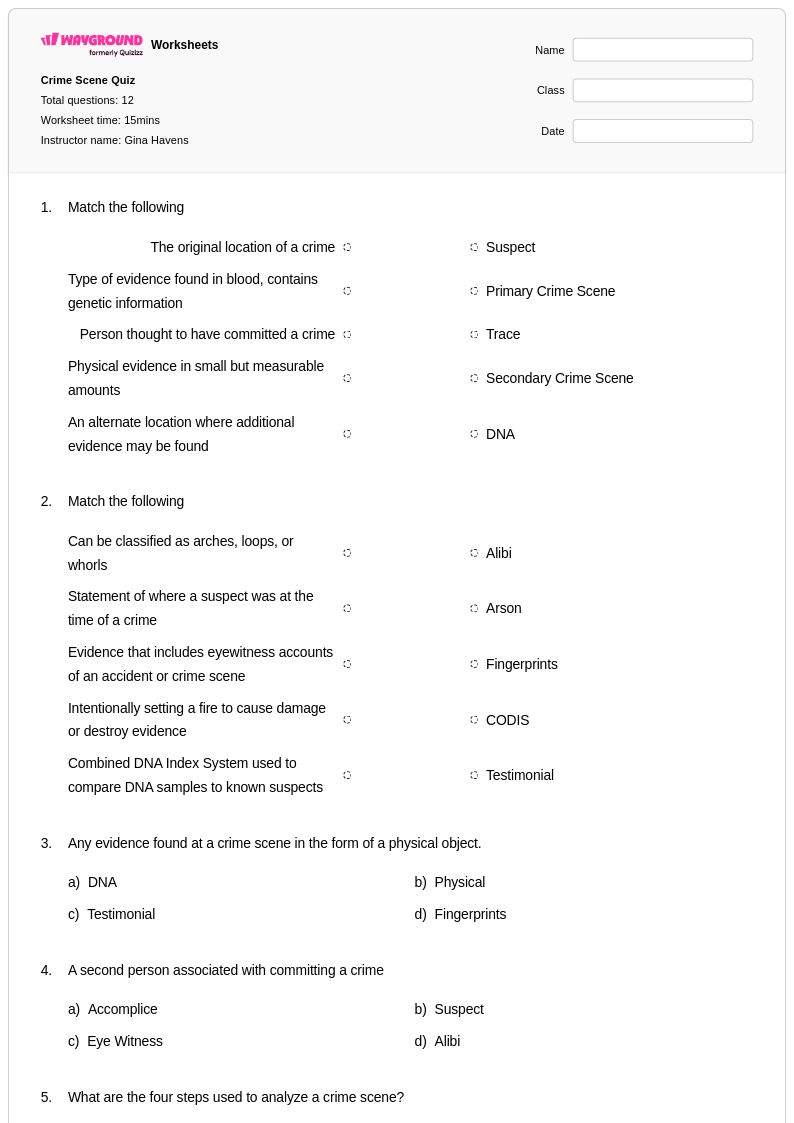
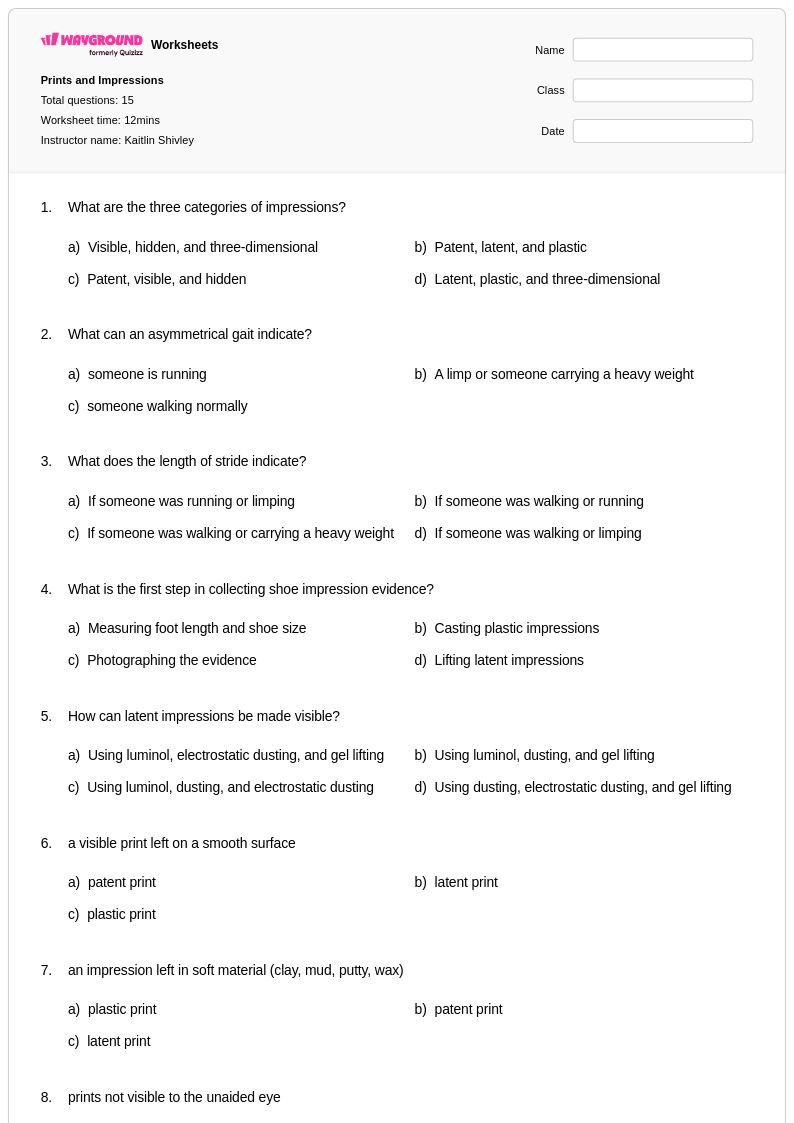
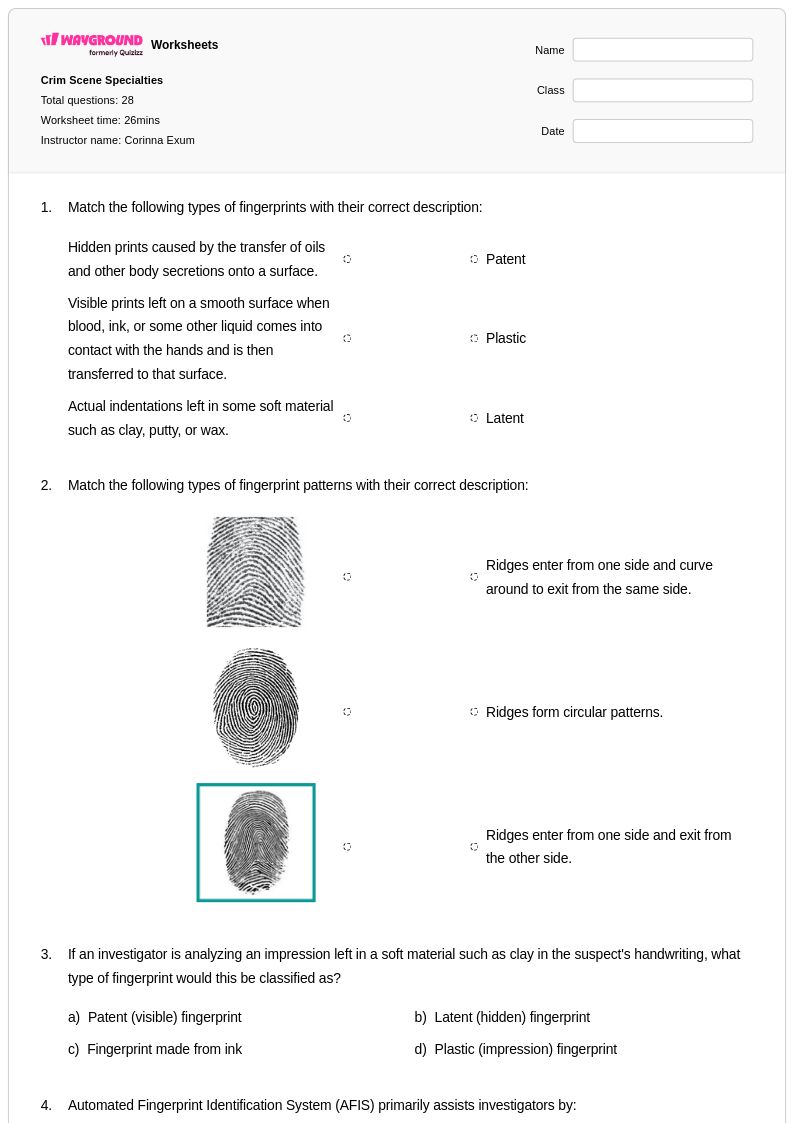
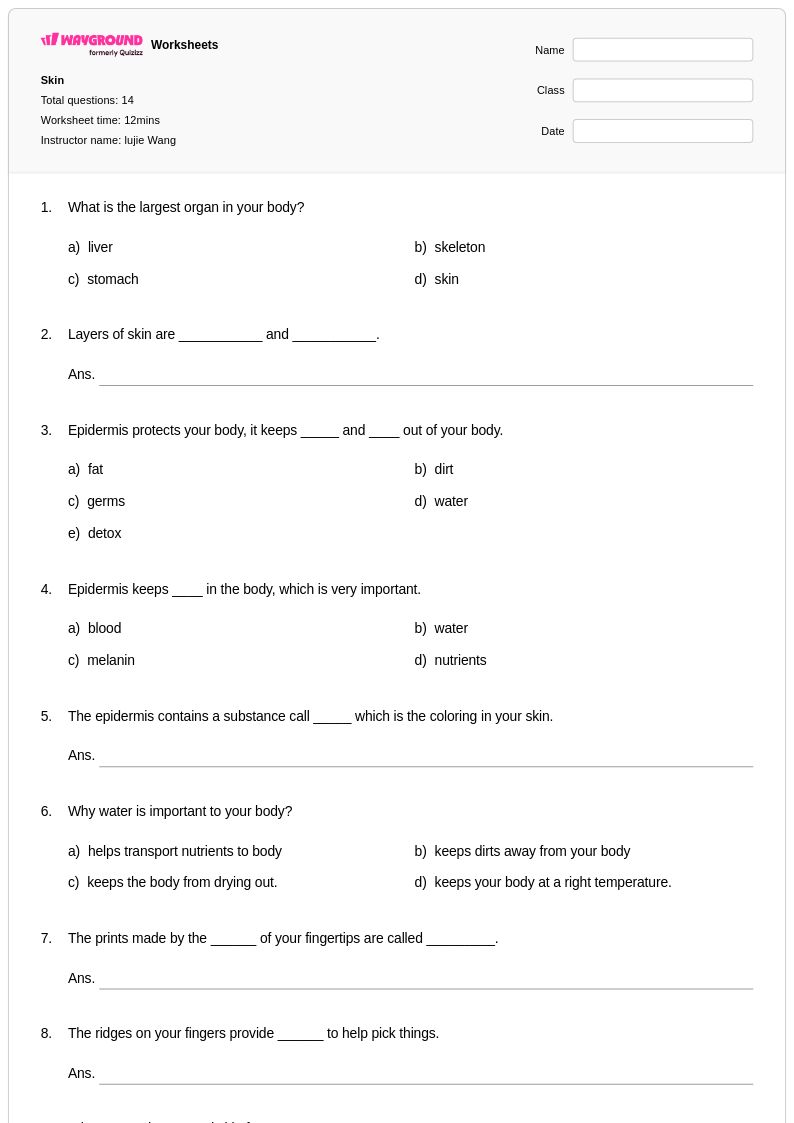
Fingerprints worksheets available through Wayground (formerly Quizizz) provide students with comprehensive exploration of the unique patterns that distinguish individual identity through scientific analysis. These educational resources strengthen critical observation skills, pattern recognition abilities, and understanding of forensic science principles as students examine whorl, loop, and arch formations found in human fingerprints. The worksheets incorporate hands-on activities where students create their own fingerprint samples, compare different classification systems, and analyze the biological basis for these distinctive dermal ridge patterns. Each worksheet comes with a detailed answer key to support independent learning, and the free printables offer structured practice problems that guide students through the scientific methodology of fingerprint analysis, from collection techniques to identification processes.
Wayground (formerly Quizizz) supports educators with an extensive collection of teacher-created fingerprint resources, drawing from millions of high-quality materials that have been developed and refined by classroom professionals worldwide. The platform's advanced search and filtering capabilities enable teachers to quickly locate worksheets that align with specific learning objectives and standards, while differentiation tools allow for seamless customization to meet diverse student needs and ability levels. These fingerprint worksheets are available in both printable pdf format and digital versions, providing flexibility for various classroom environments and learning preferences. Teachers can effectively utilize these resources for lesson planning, targeted remediation of scientific concepts, enrichment activities for advanced learners, and regular skill practice that reinforces understanding of biological patterns and forensic science applications.
FAQs
How do I teach fingerprint classification to students?
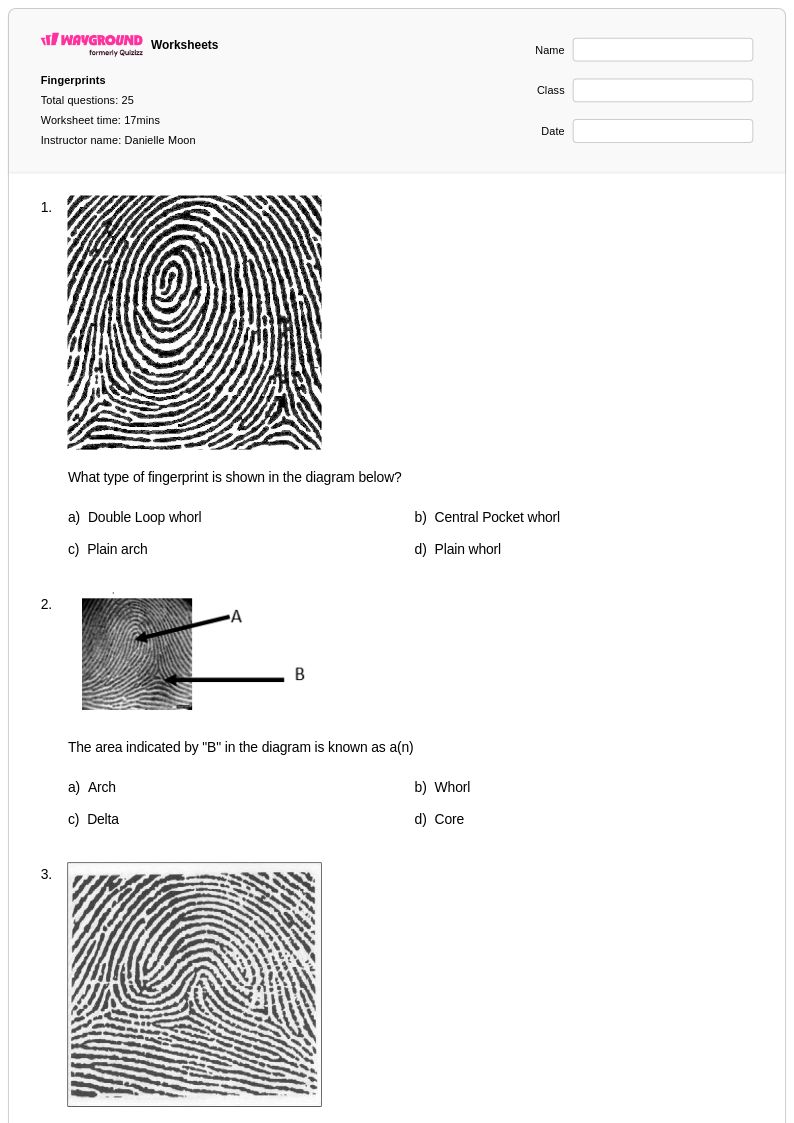
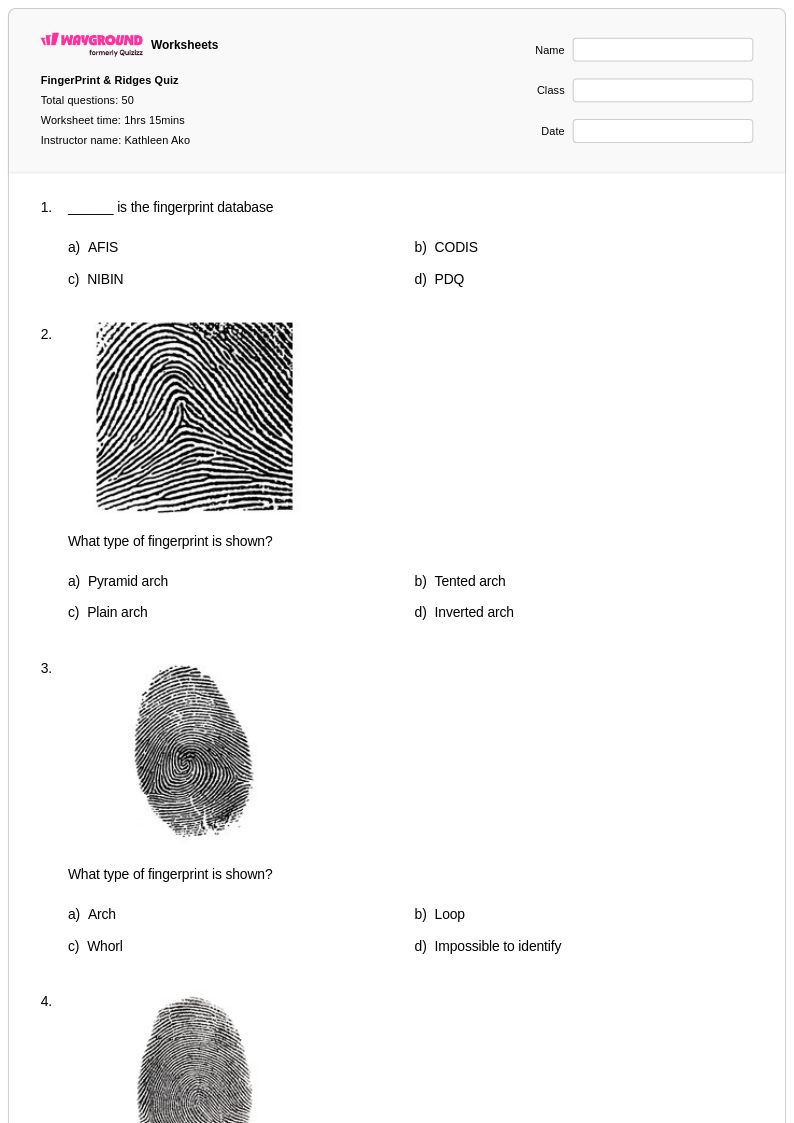
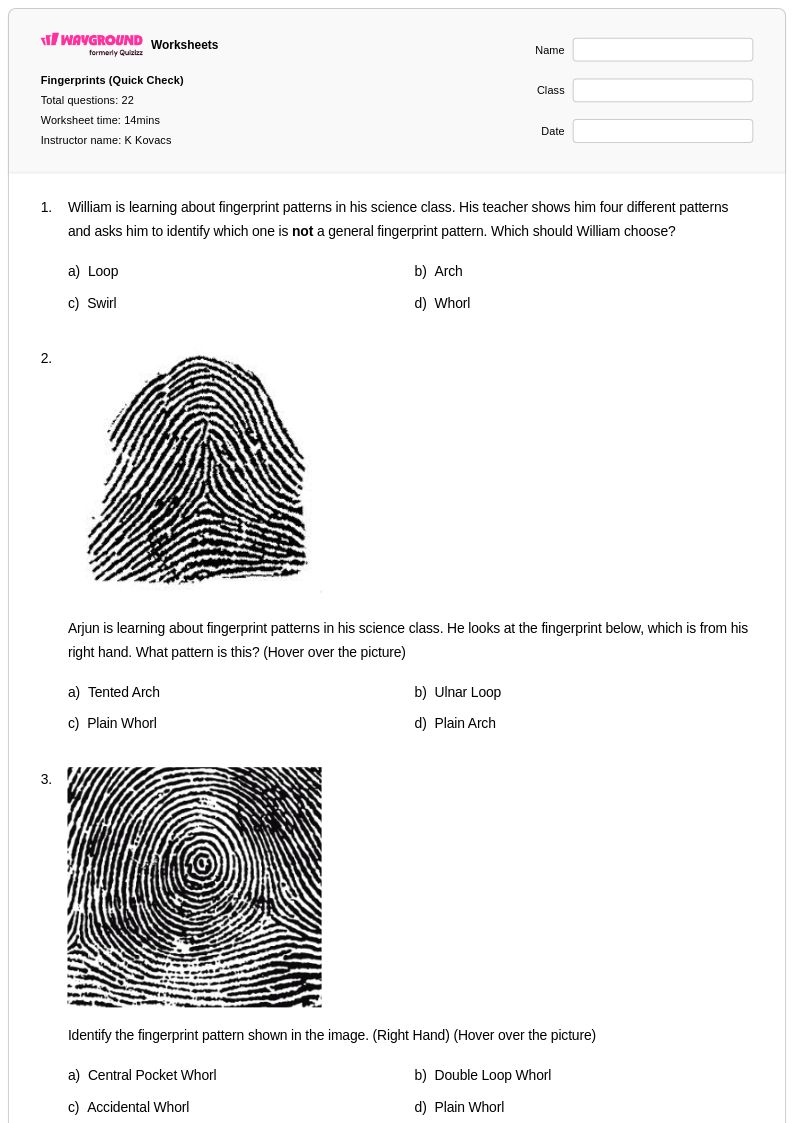
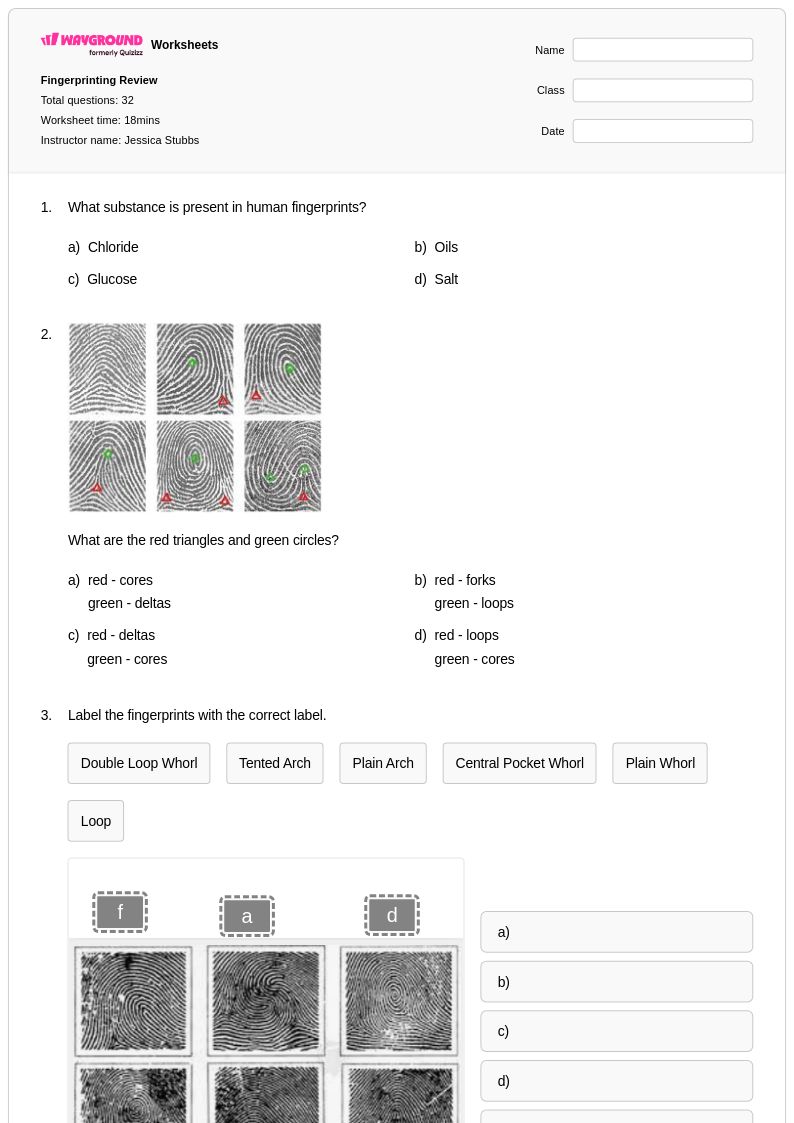
Begin by introducing the three primary fingerprint pattern types: whorls, loops, and arches. Have students examine printed fingerprint samples and practice categorizing each type before moving on to sub-classifications. Connecting the lesson to forensic science and real-world identification applications helps sustain student engagement and gives the classification system meaningful context.
What hands-on activities help students practice fingerprint analysis?
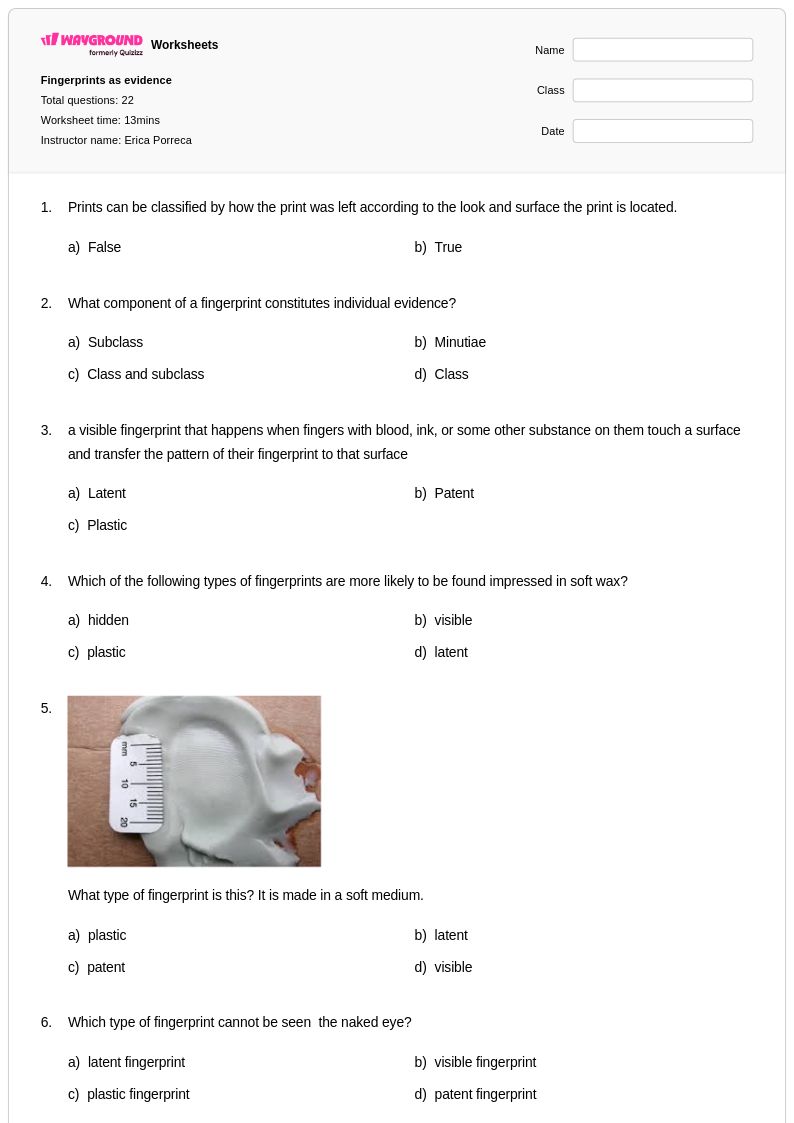
Having students create their own fingerprint samples using ink pads or pencil smudges is one of the most effective practice methods, as it grounds the science in direct observation. Students can then compare their own prints to printed classification charts, identify pattern types, and practice the methodology of fingerprint analysis from collection through identification. This sequence mirrors the actual forensic science process and reinforces both observation and categorization skills.
What common mistakes do students make when classifying fingerprints?
The most frequent error is confusing loop and whorl patterns, particularly when whorls have an asymmetric appearance that resembles a loop. Students also tend to overlook the core and delta reference points that are essential to accurate classification. Giving students multiple examples of each type side by side, with annotations pointing to key distinguishing features, helps correct these misidentifications before they become habitual.
How can fingerprint worksheets support a forensic science unit?
Fingerprint worksheets provide structured practice in pattern recognition and scientific methodology, both of which are foundational to forensic science. Worksheets that incorporate comparison exercises and classification problems help students understand how forensic analysts approach physical evidence. These resources work well as both introductory activities and follow-up assessments within a broader forensics or biology unit.
How do I use Wayground's fingerprint worksheets in my classroom?
Wayground's fingerprint worksheets are available as printable PDFs for traditional classroom use and in digital formats for technology-integrated environments, making them adaptable to a range of instructional settings. Teachers can also host the worksheets as a quiz directly on Wayground, which enables real-time student responses and streamlined review. Each worksheet includes a complete answer key, supporting both teacher-led instruction and independent student practice.
How do I differentiate fingerprint activities for students with different ability levels?
For students who need additional support, reducing the number of classification options presented at once lowers cognitive load and makes the task more manageable. Wayground allows teachers to apply accommodations individually, including reduced answer choices and read-aloud support for students who benefit from audio delivery of content. Advanced learners can be extended into sub-classification systems or asked to research the biological basis of dermal ridge formation as an enrichment challenge.