
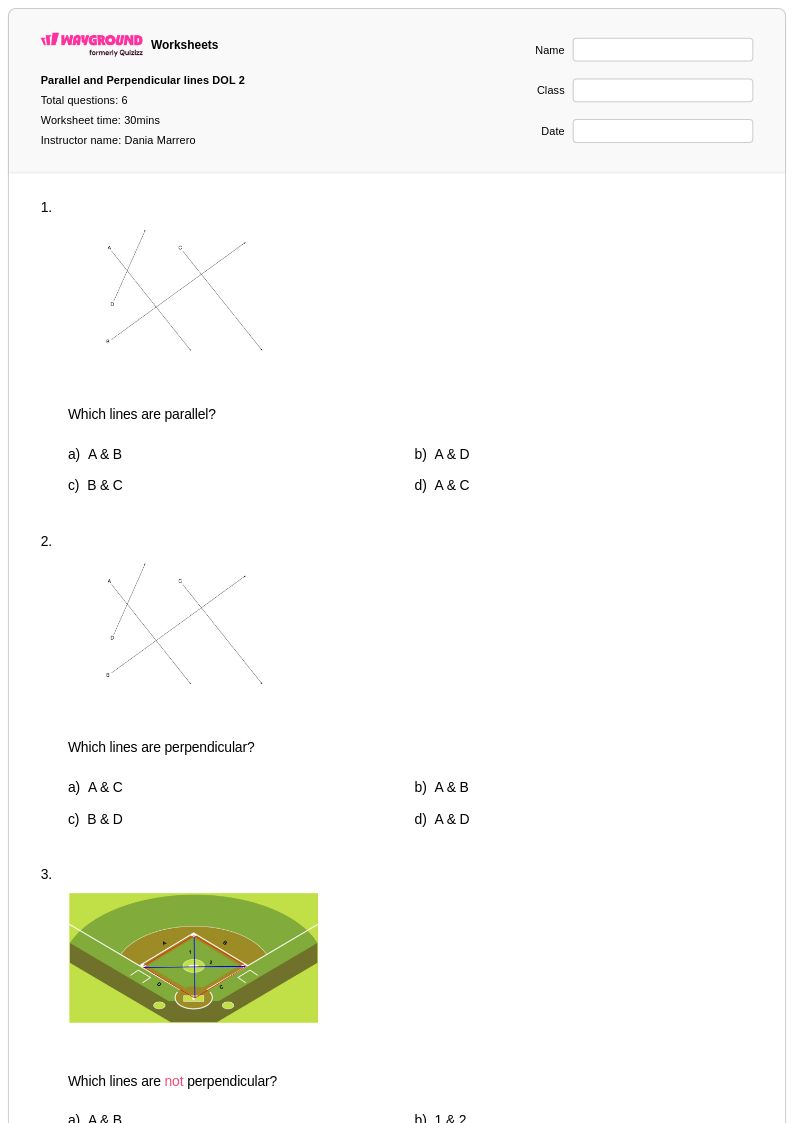
6 Q
4th
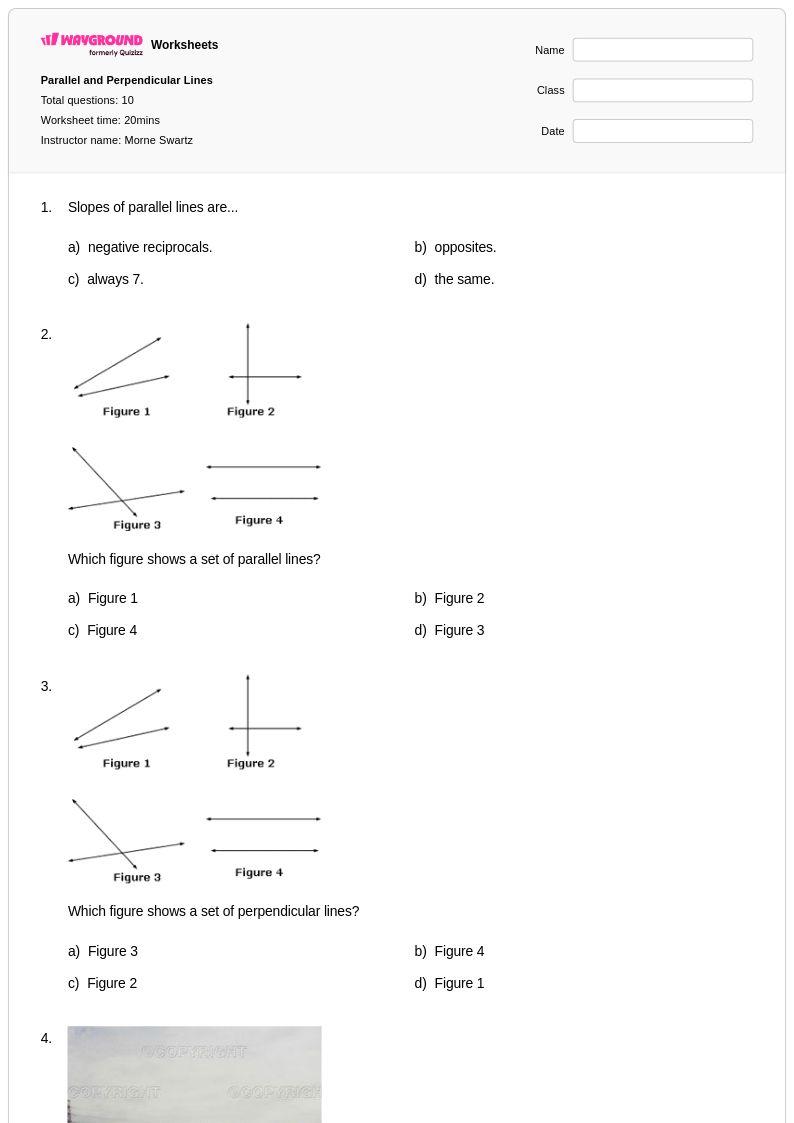
10 Q
4th
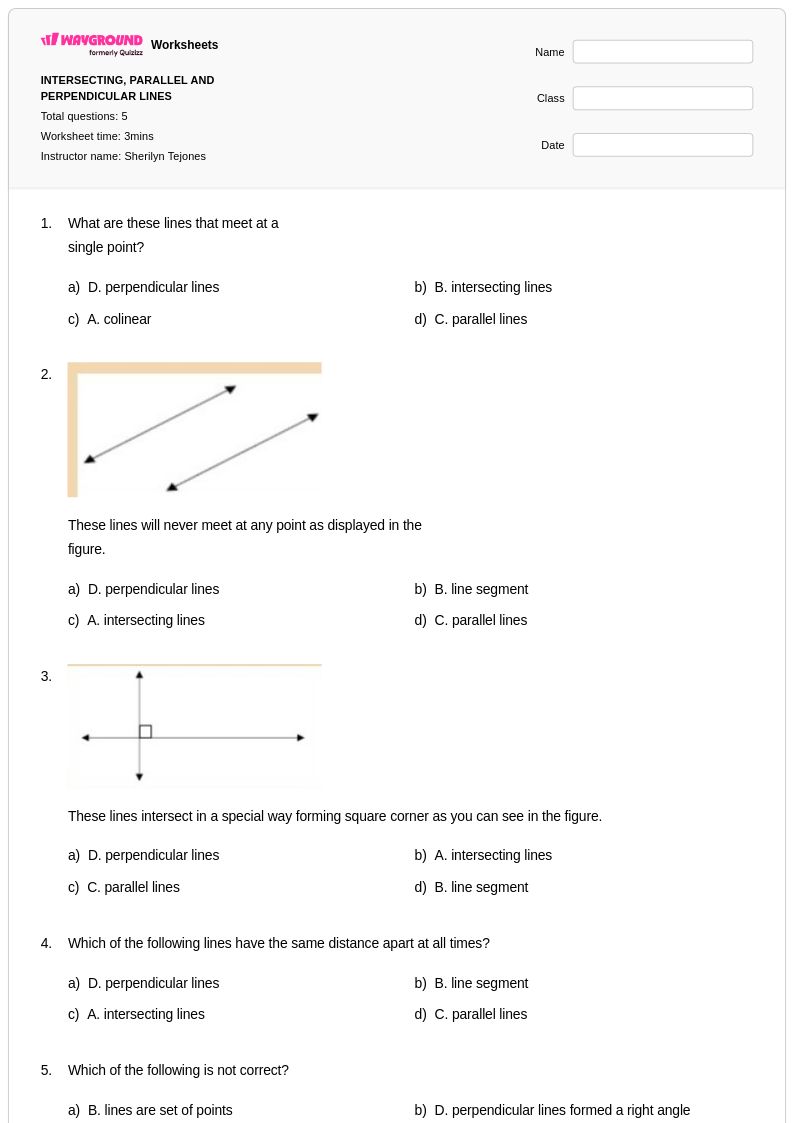
5 Q
4th
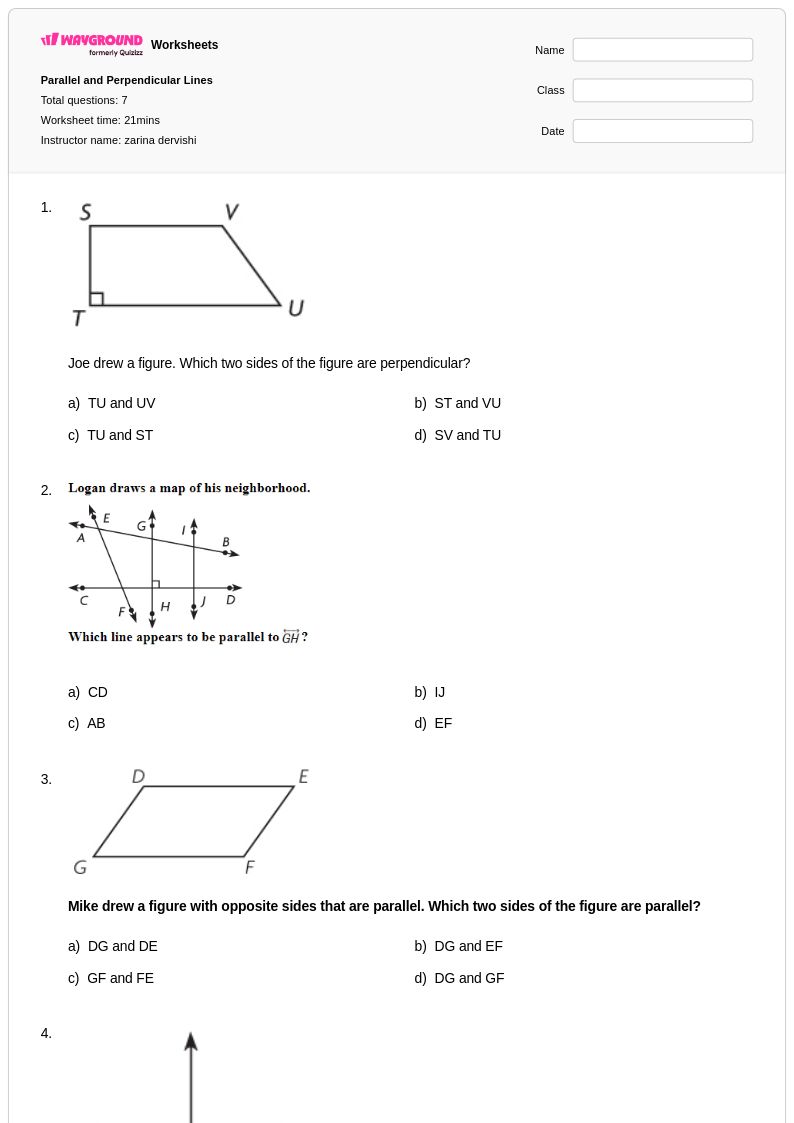
7 Q
4th
8 Q
4th
6 Q
4th
15 Q
4th
20 Q
4th
4 Q
4th
10 Q
4th
35 Q
4th
20 Q
4th
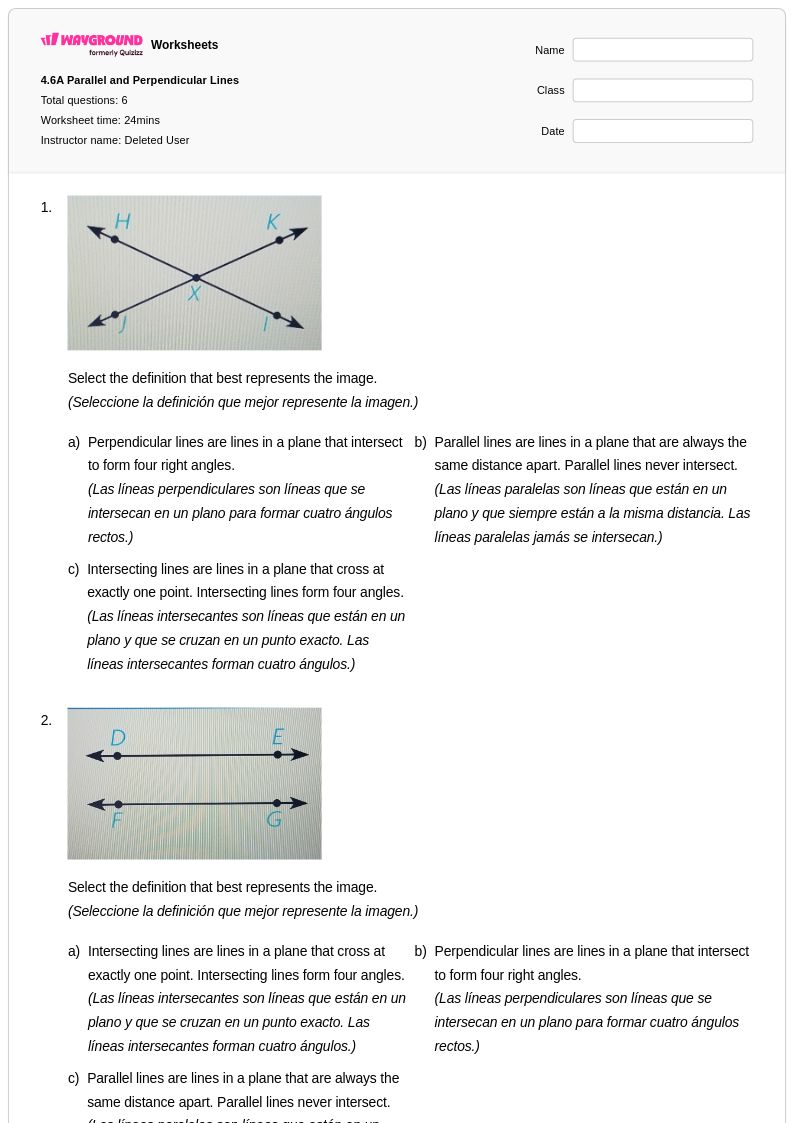
6 Q
4th - 6th
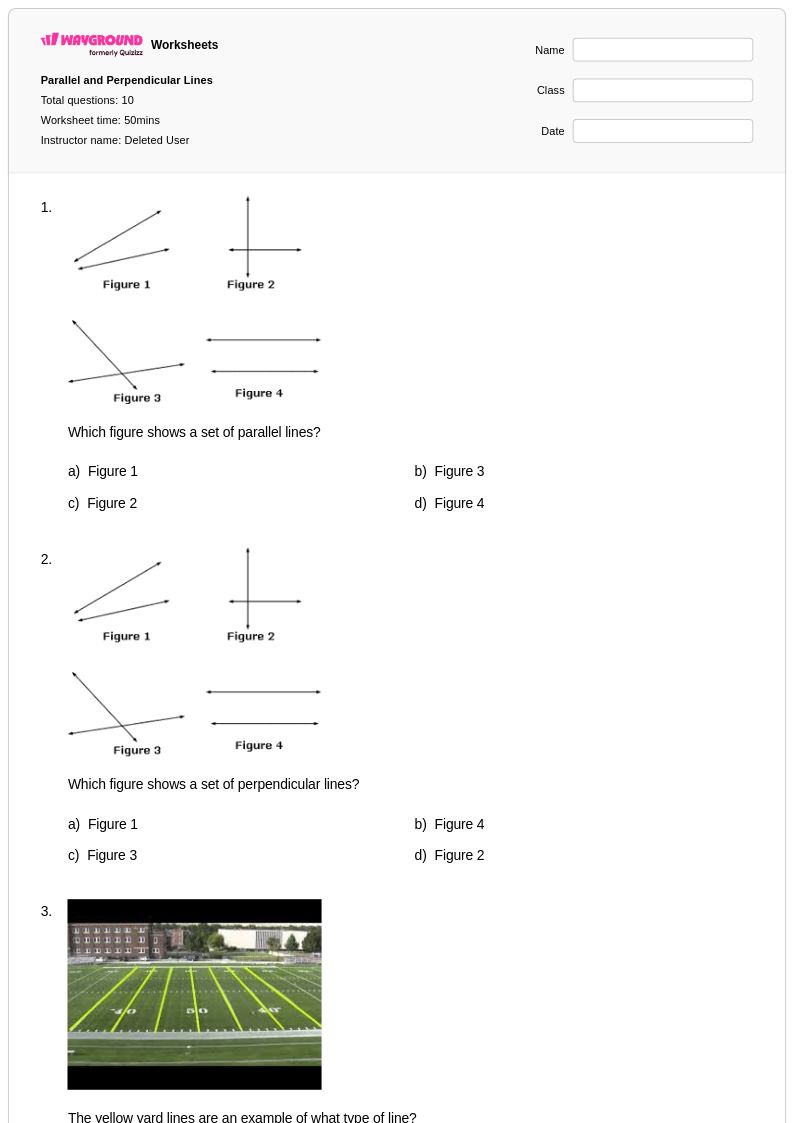
10 Q
4th
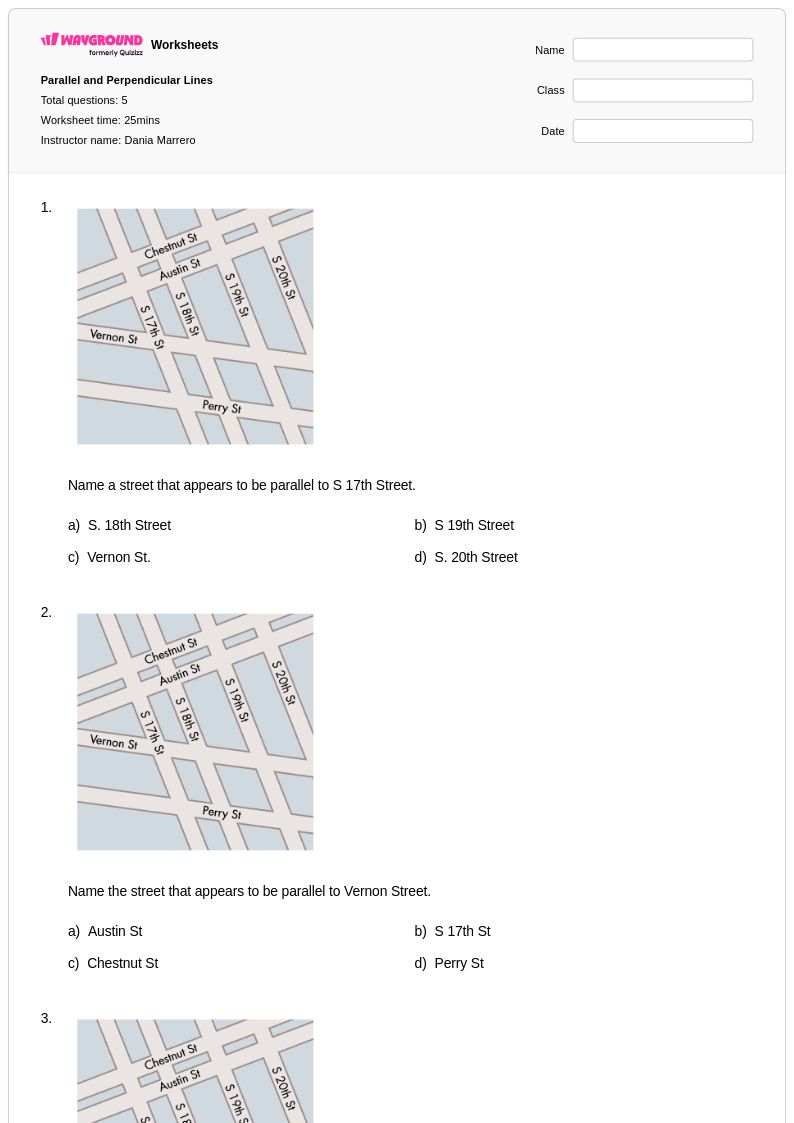
5 Q
4th
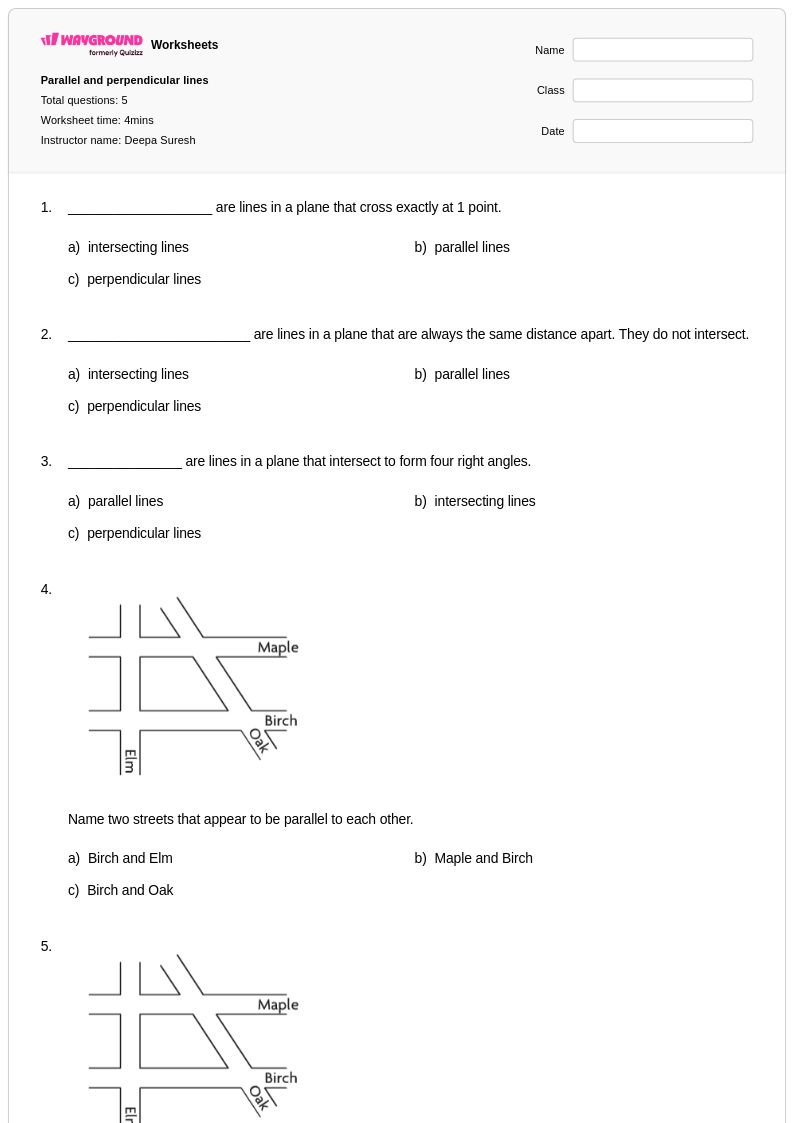
5 Q
4th
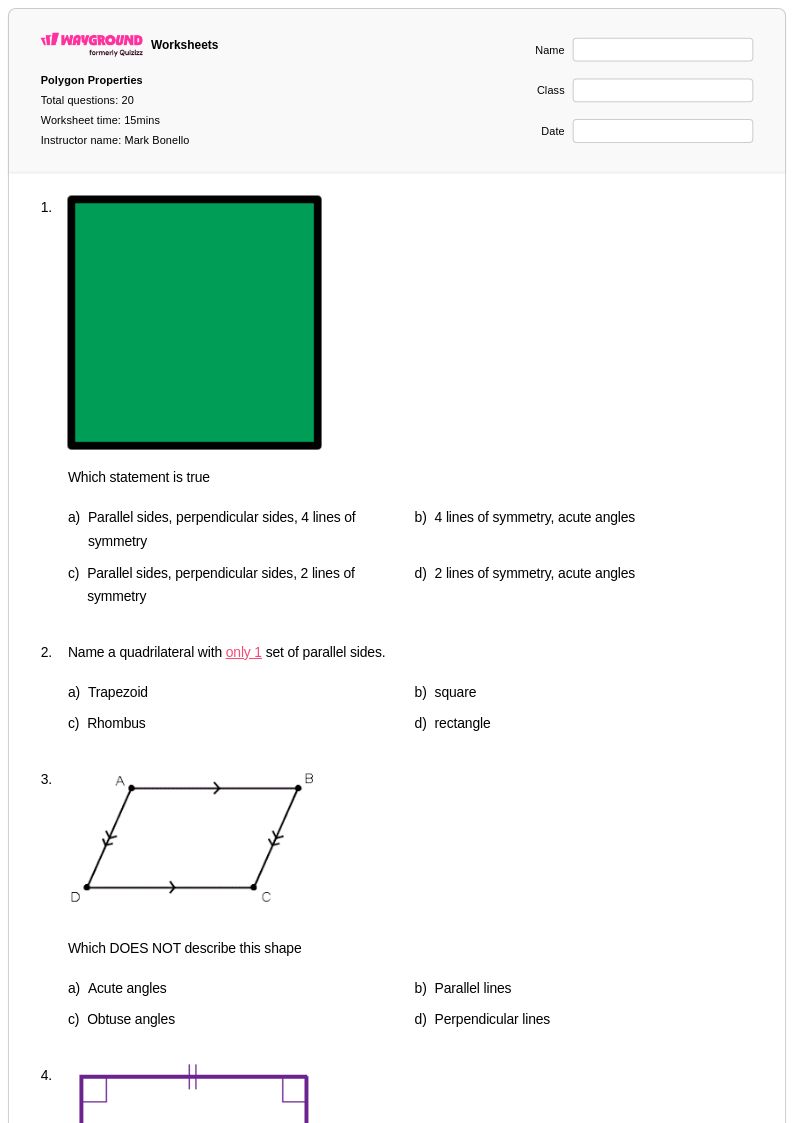
20 Q
4th - 6th
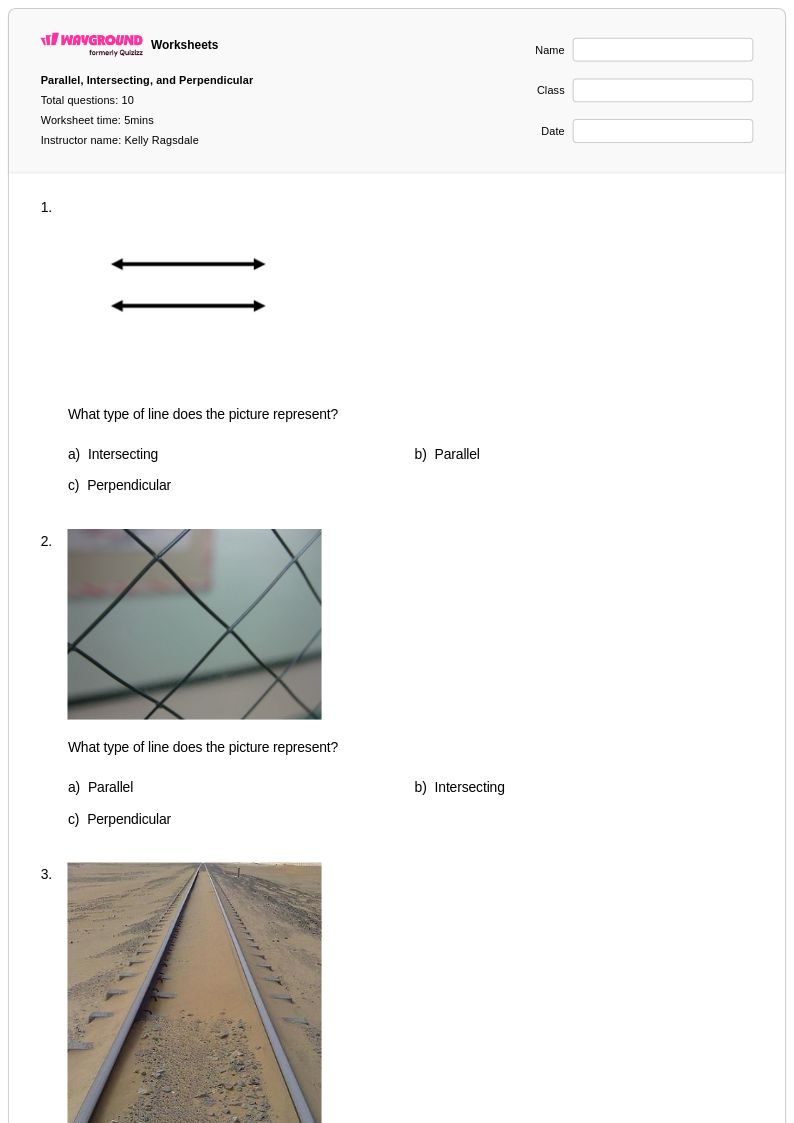
10 Q
4th
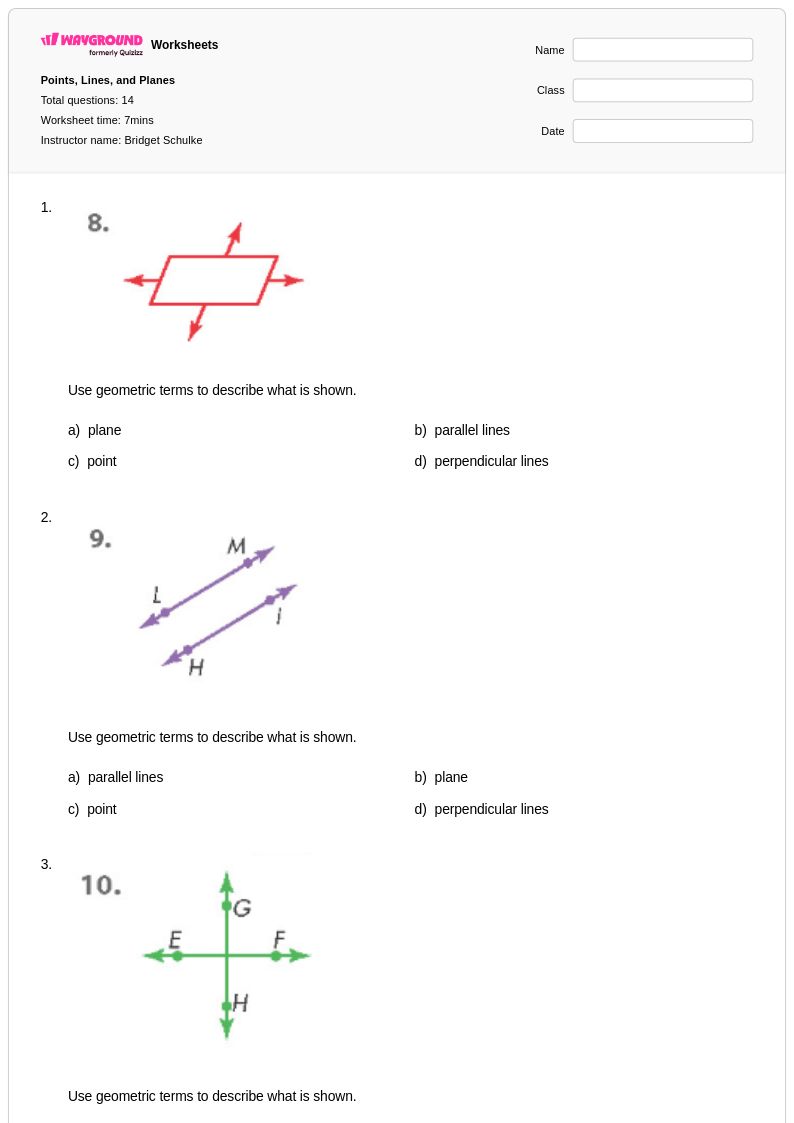
14 Q
4th
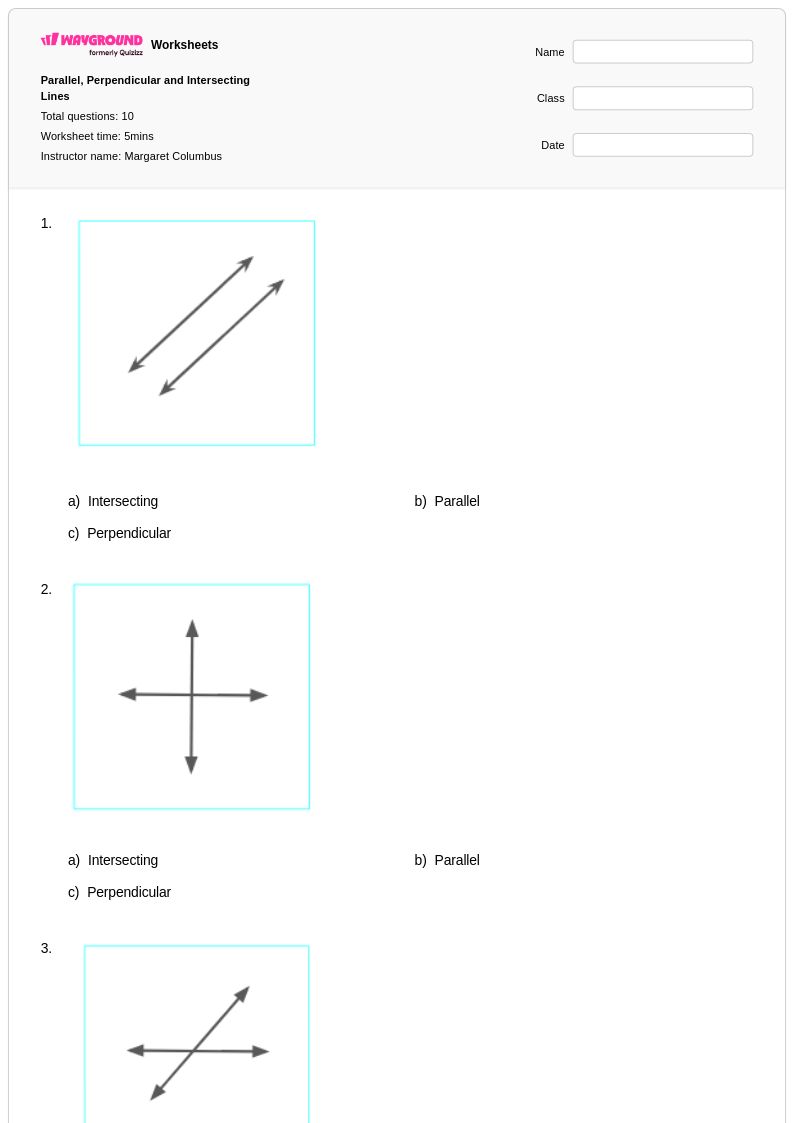
10 Q
3rd - 4th
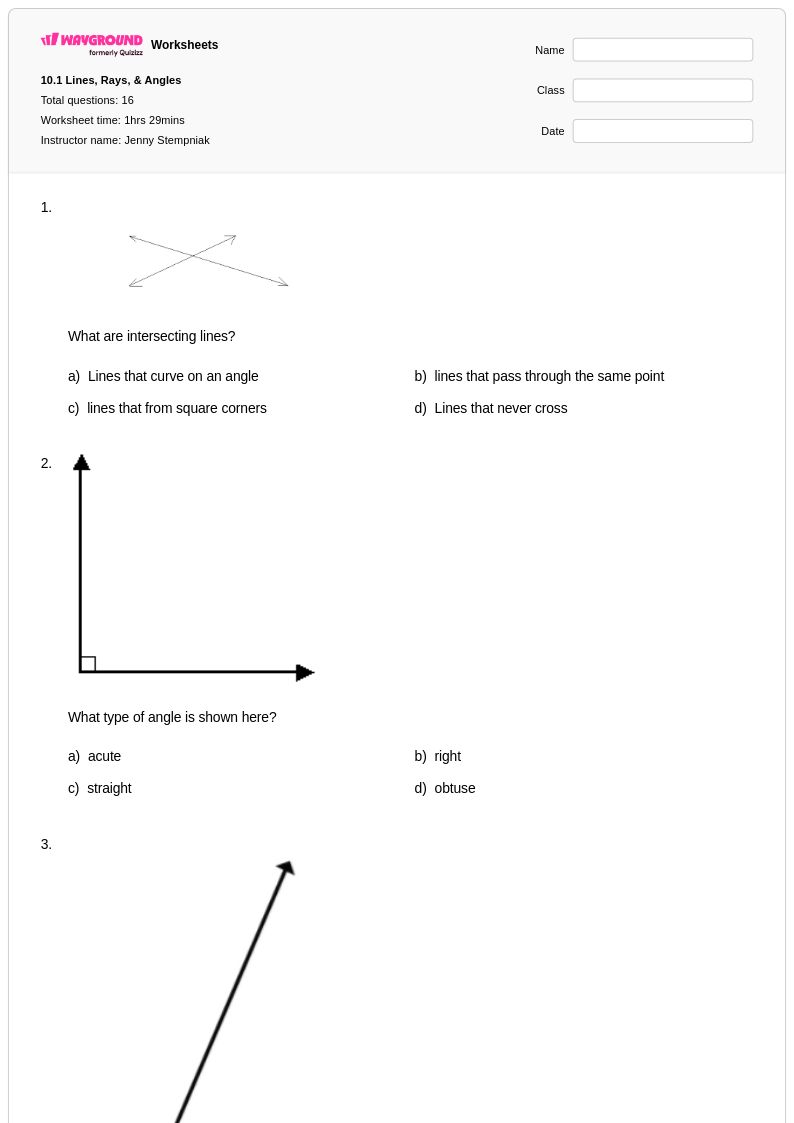
16 Q
4th
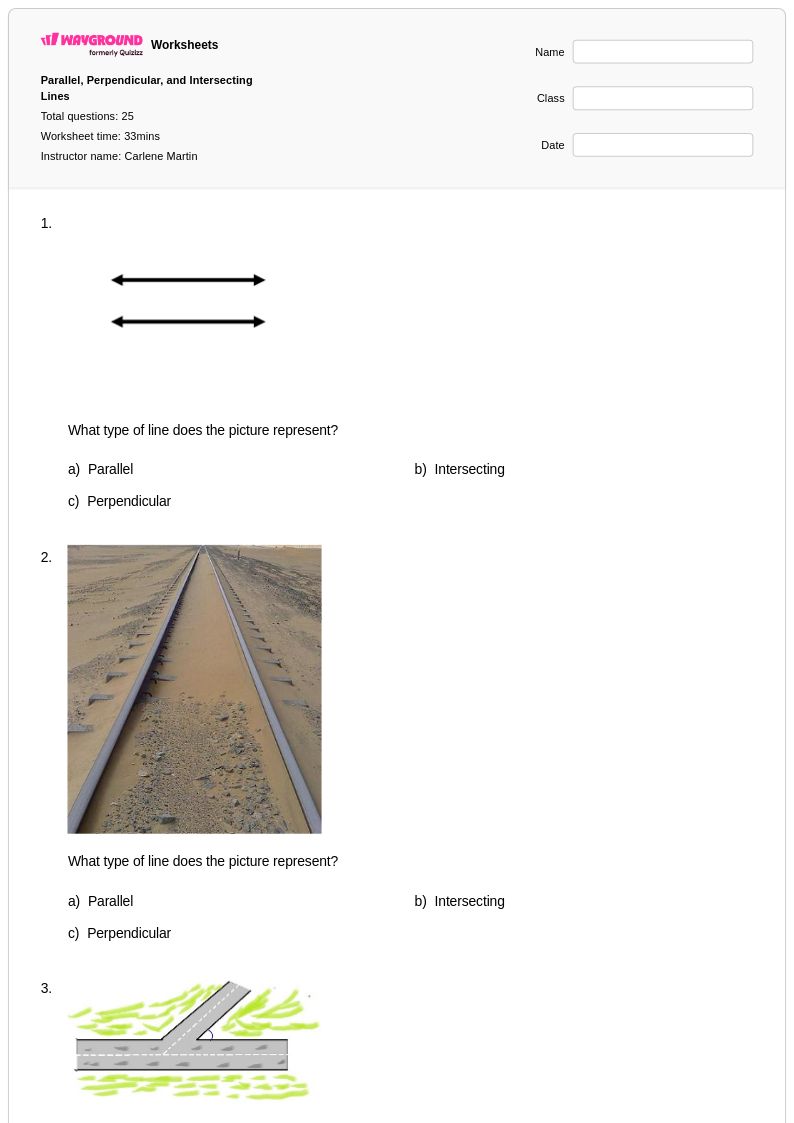
25 Q
3rd - 4th
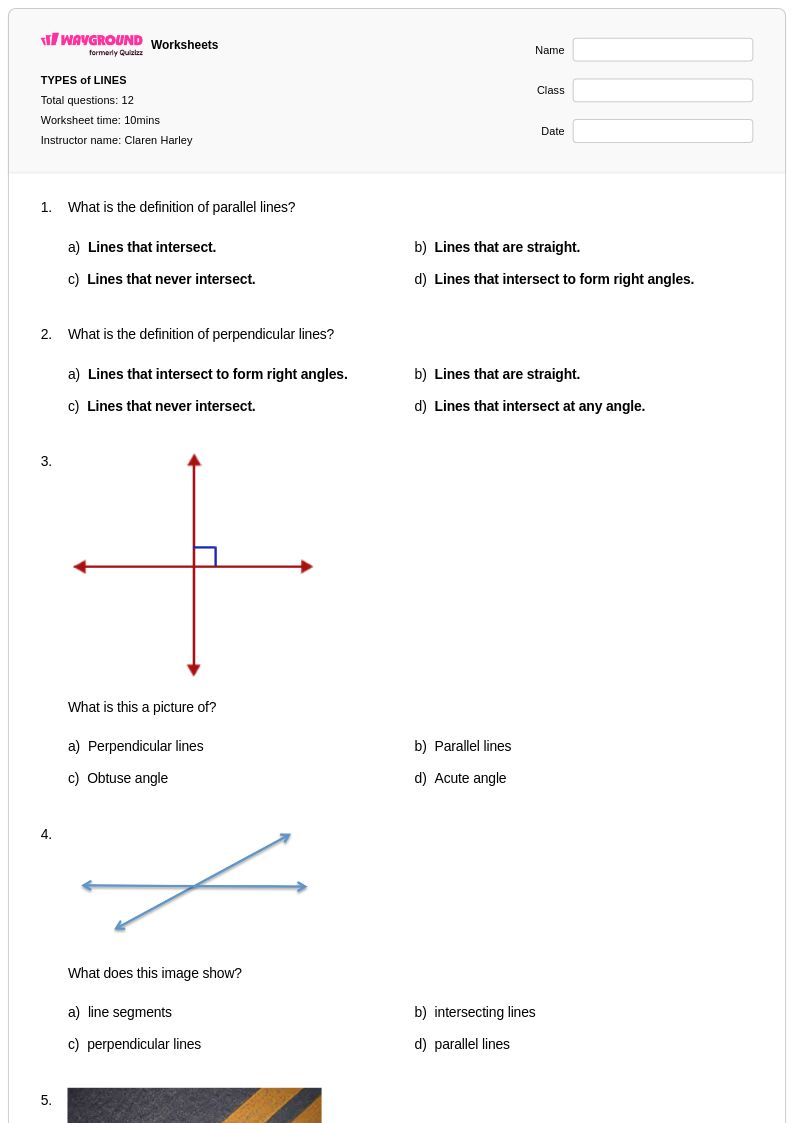
12 Q
4th - 5th
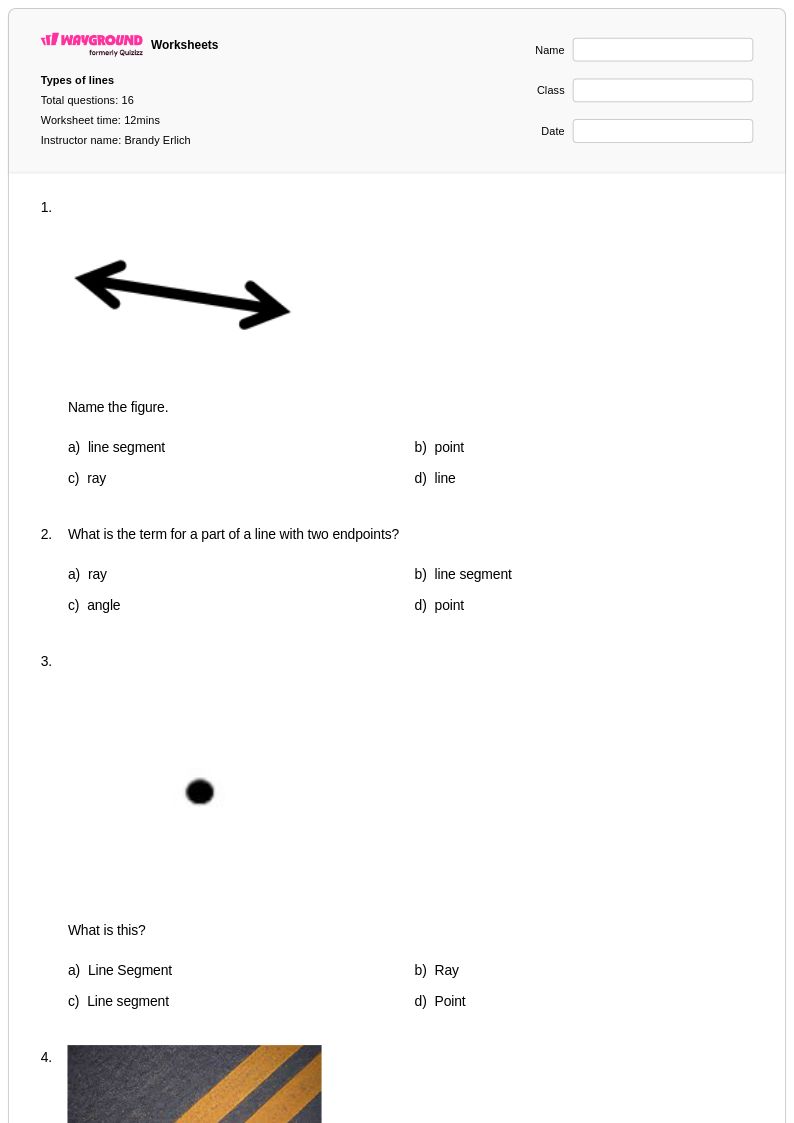
16 Q
4th
Explore Parallel and Perpendicular Lines Worksheets by Grades
Explore Other Subject Worksheets for grade 4
Explore printable Parallel and Perpendicular Lines worksheets for Grade 4
Parallel and perpendicular lines worksheets for Grade 4 students available through Wayground provide essential practice in understanding fundamental geometric relationships that form the foundation of spatial reasoning. These comprehensive practice problems help students identify, classify, and distinguish between lines that never intersect and lines that meet at right angles, strengthening critical visual-spatial skills and mathematical vocabulary. The worksheet collections include varied exercises ranging from simple identification tasks to more complex real-world applications, with complete answer keys provided to support both independent learning and guided instruction. Teachers can access these free printable resources in convenient pdf formats, making it easy to distribute materials for homework assignments, classroom activities, or assessment preparation while ensuring students develop confidence in recognizing these important geometric concepts.
Wayground's extensive library contains millions of teacher-created resources specifically designed to support Grade 4 parallel and perpendicular lines instruction, with robust search and filtering capabilities that allow educators to quickly locate materials aligned with their curriculum standards and learning objectives. The platform's differentiation tools enable teachers to customize worksheets based on individual student needs, whether providing additional scaffolding for struggling learners or enrichment opportunities for advanced students ready for more challenging applications. These flexible resources are available in both printable and digital formats, streamlining lesson planning while supporting various instructional approaches from direct instruction to independent practice sessions. The comprehensive collection facilitates targeted remediation when students need extra support with geometric concepts and provides systematic skill practice that builds mathematical confidence and procedural fluency.
FAQs
What are the expectations for Grade 4 students learning parallel and perpendicular lines?
What's an effective way to teach 4th graders to draw and identify these lines?
What types of problems help students practice this skill?
Where do fourth graders typically get stuck when learning about this topic?
How can I use this worksheet for my 4th grade class?
How does this topic align with 4th grade Common Core math standards?