
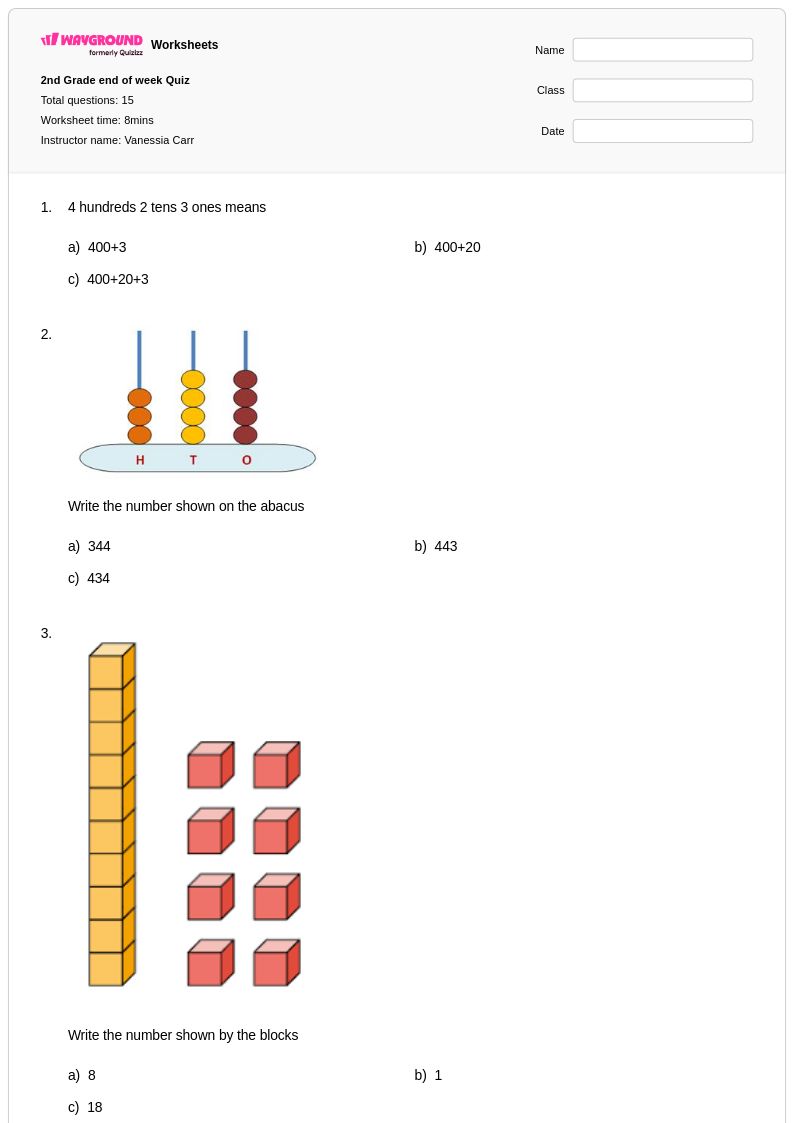
15 Q
2nd
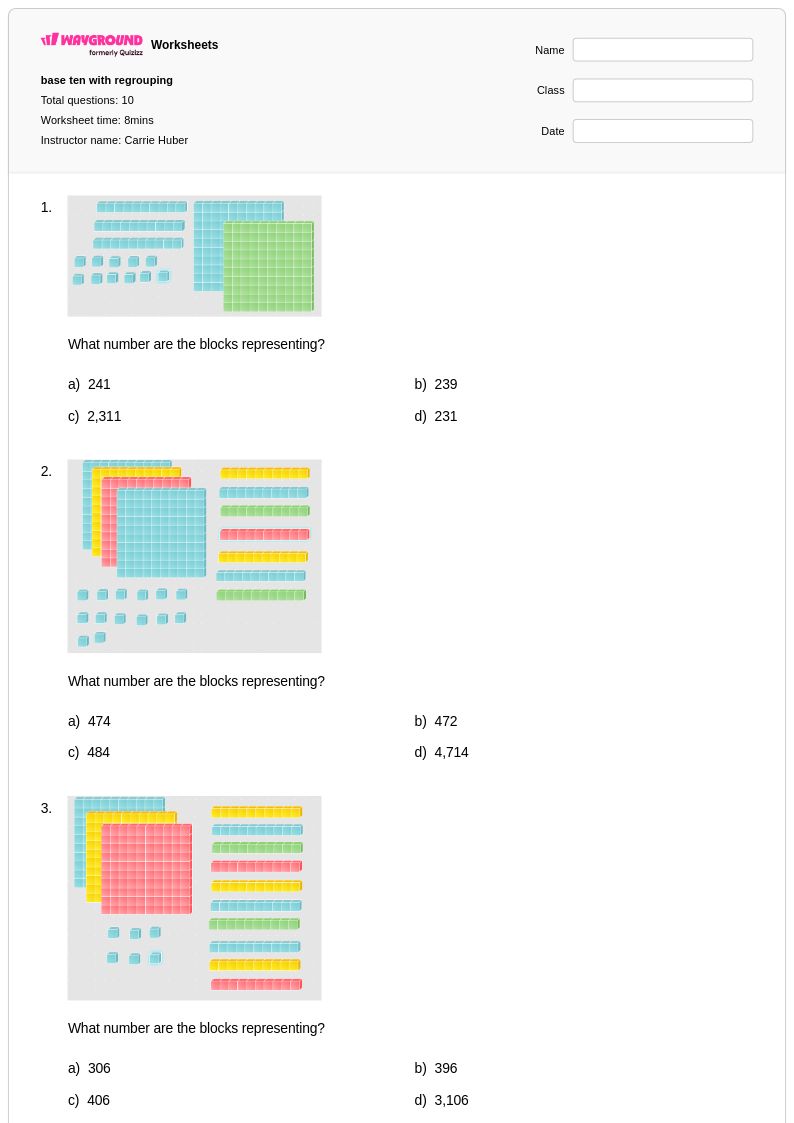
10 Q
2nd - 4th
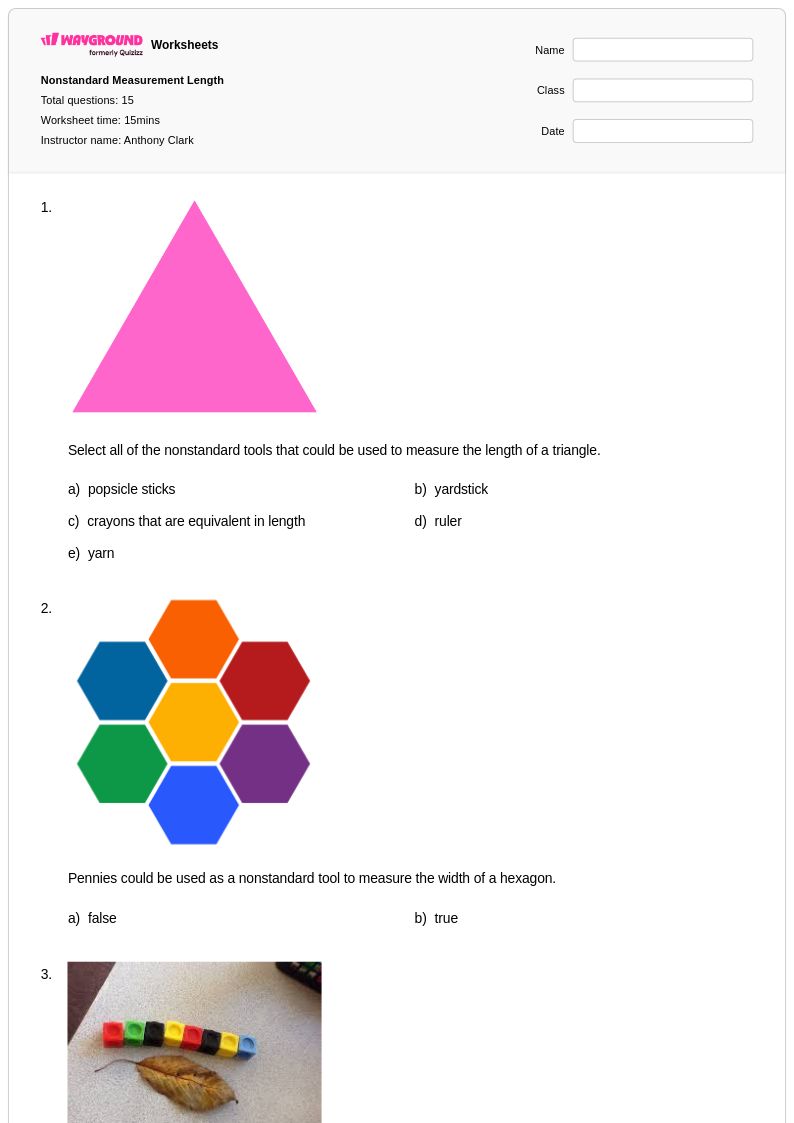
15 Q
1st - Uni
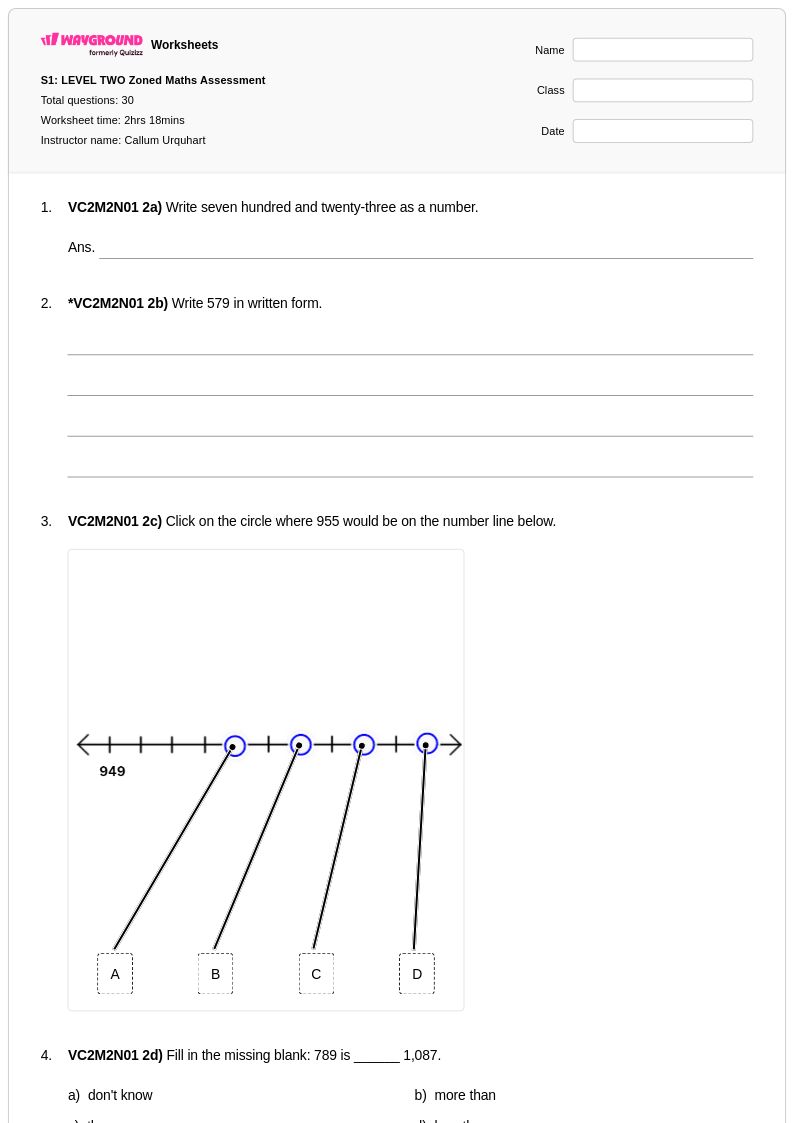
30 Q
2nd
13 Q
2nd
15 Q
1st - Uni
14 Q
1st - Uni
20 Q
1st - Uni
10 Q
2nd
25 Q
2nd
16 Q
2nd - Uni
15 Q
2nd - Uni
10 Q
2nd
20 Q
1st - Uni
14 Q
2nd - Uni
20 Q
1st - 5th
16 Q
2nd - Uni
11 Q
2nd
14 Q
1st - 5th
23 Q
2nd
84 Q
2nd
20 Q
2nd - Uni
21 Q
2nd
20 Q
2nd
Explore Other Subject Worksheets for grade 2
Explore printable Pattern Blocks worksheets for Grade 2
Pattern blocks for Grade 2 students represent a fundamental approach to developing spatial reasoning, geometric understanding, and mathematical thinking through hands-on manipulation and visual exploration. Wayground's extensive collection of pattern block worksheets provides young learners with structured activities that strengthen critical skills including shape recognition, symmetry exploration, fraction concepts, and creative problem-solving. These carefully designed practice problems guide students through progressive challenges, from basic shape identification and sorting to more complex pattern completion and geometric composition tasks. Each worksheet includes a comprehensive answer key and is available as a free printable pdf, making it easy for educators to implement engaging geometry lessons that build foundational mathematical concepts through tactile learning experiences.
Wayground's robust platform, featuring millions of teacher-created resources, empowers educators with powerful search and filtering capabilities to locate the perfect pattern block materials for their Grade 2 mathematics instruction. The extensive worksheet collection aligns with educational standards and offers exceptional differentiation tools, allowing teachers to customize activities for diverse learning needs and skill levels. These versatile resources are available in both printable and digital formats, including downloadable pdf files, providing flexibility for classroom instruction, homework assignments, and independent practice sessions. Teachers can efficiently plan comprehensive geometry units, provide targeted remediation for struggling learners, offer enrichment opportunities for advanced students, and create engaging skill practice that transforms abstract geometric concepts into concrete, manipulable learning experiences.
FAQs
What new concepts can I teach with pattern blocks in 2nd grade?
What kinds of pattern block worksheets are appropriate for 2nd grade?
How can I tell if my 2nd graders are ready to move from pattern blocks to more abstract geometry?
How can I use these 2nd grade pattern block worksheets for practice or assessment?
How do pattern blocks support 2nd grade Common Core math standards?
How can I challenge advanced 2nd graders with pattern blocks?