
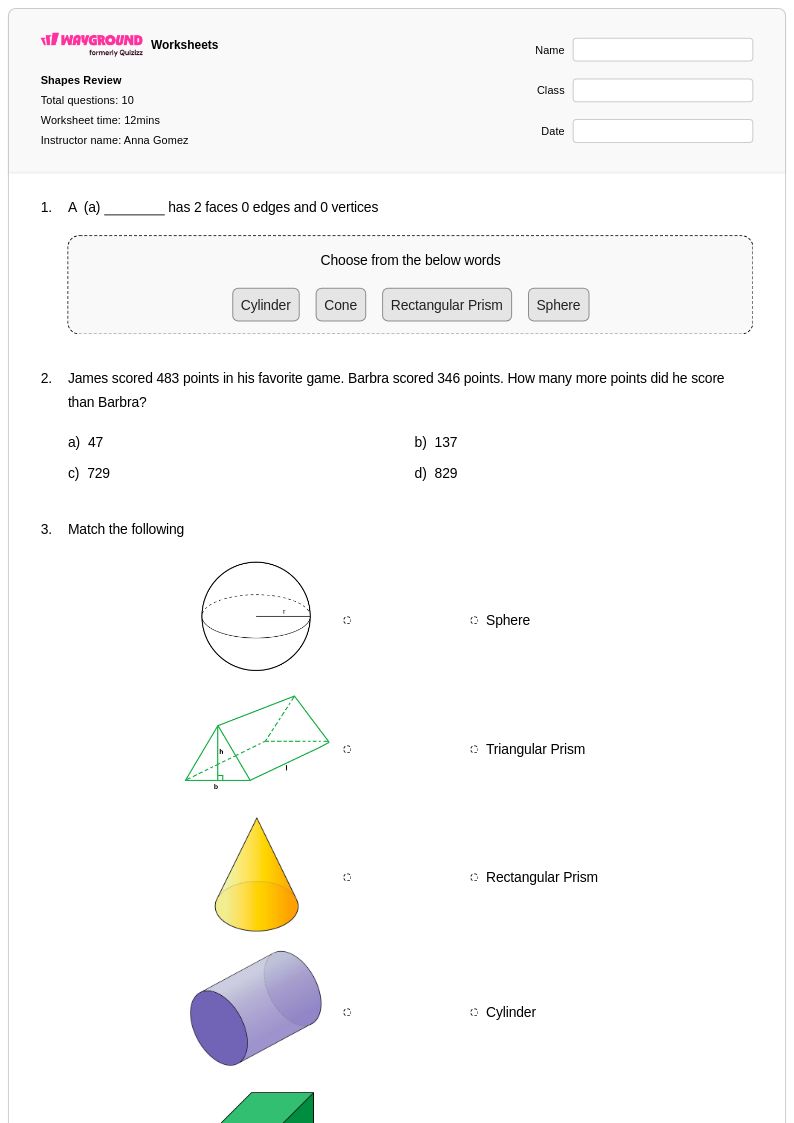
10 Q
2nd
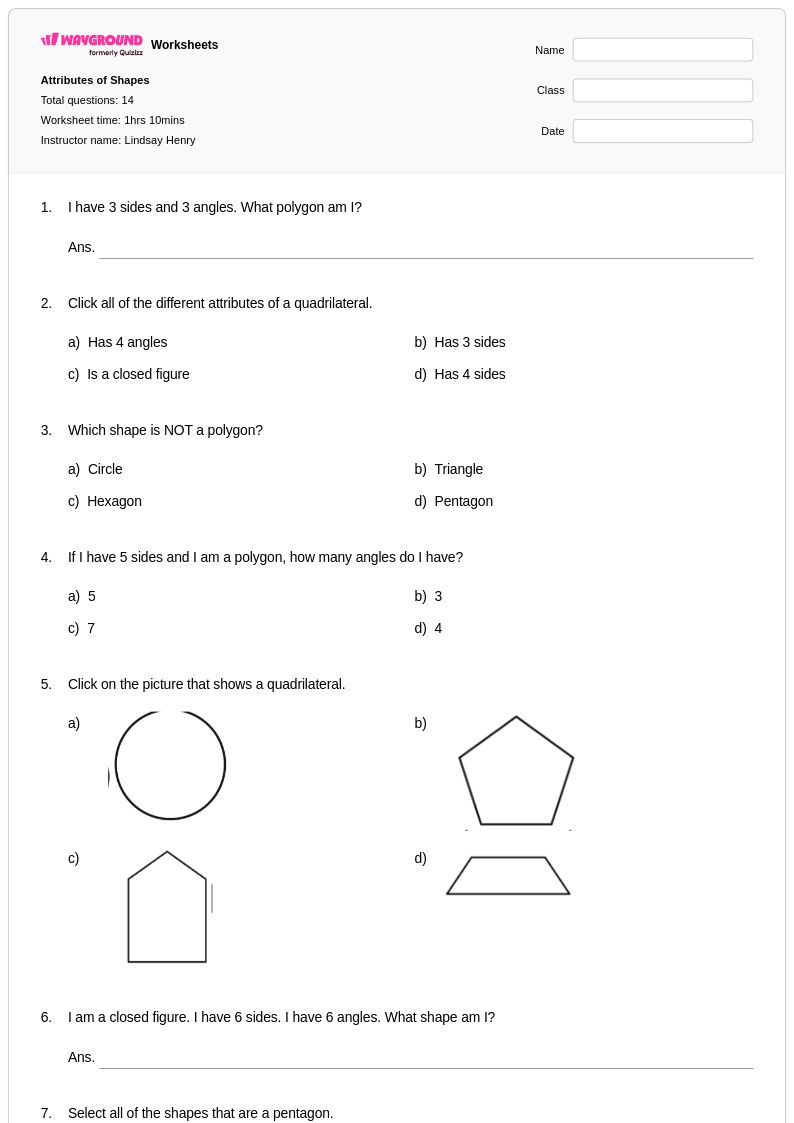
14 Q
2nd
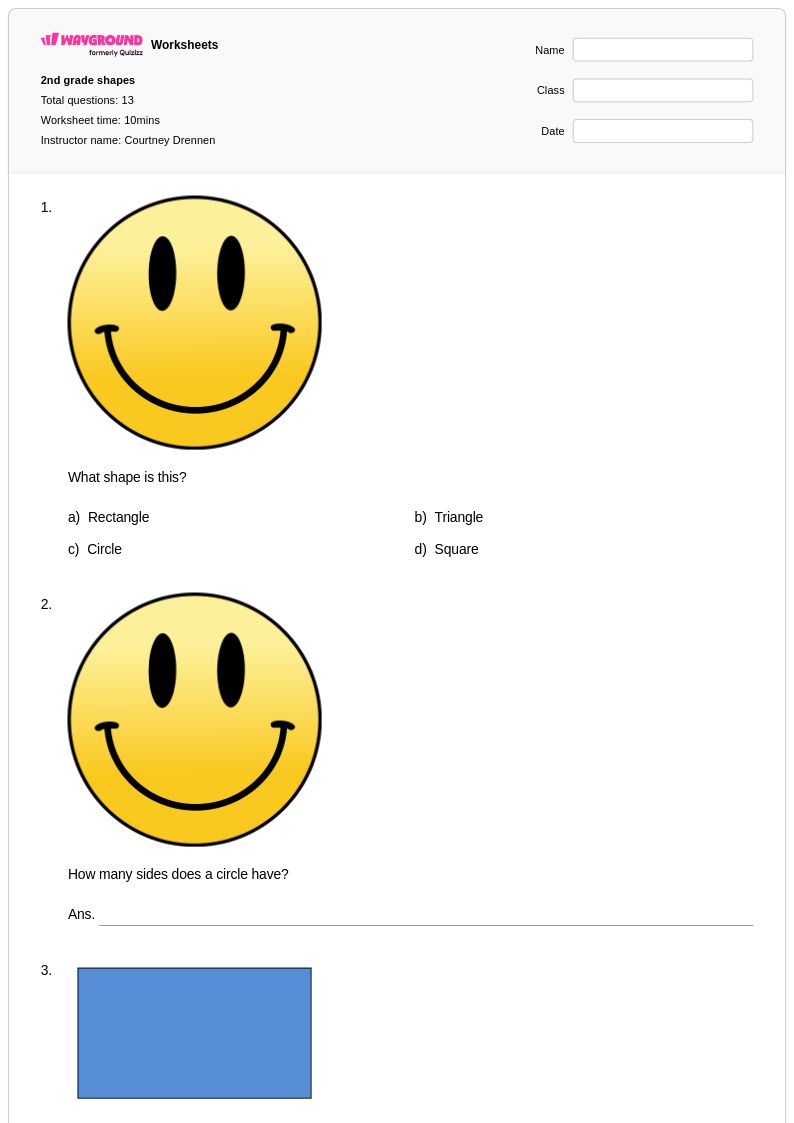
13 Q
2nd
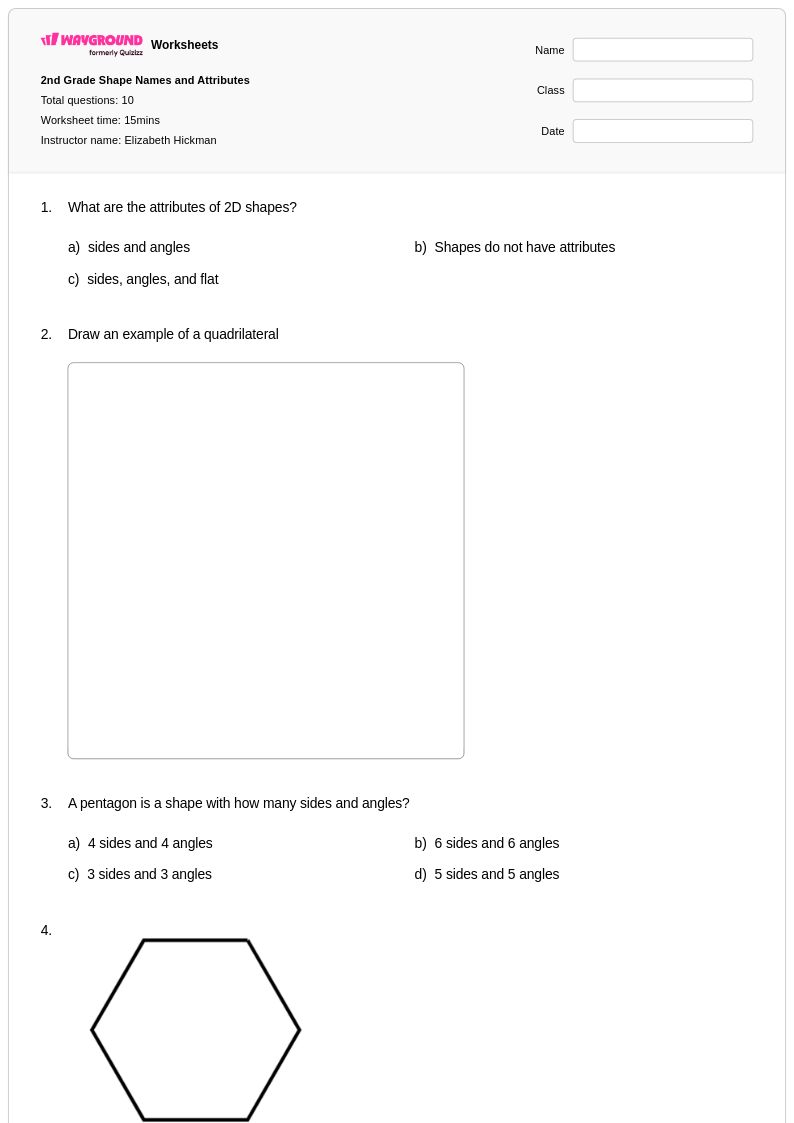
10 Q
2nd
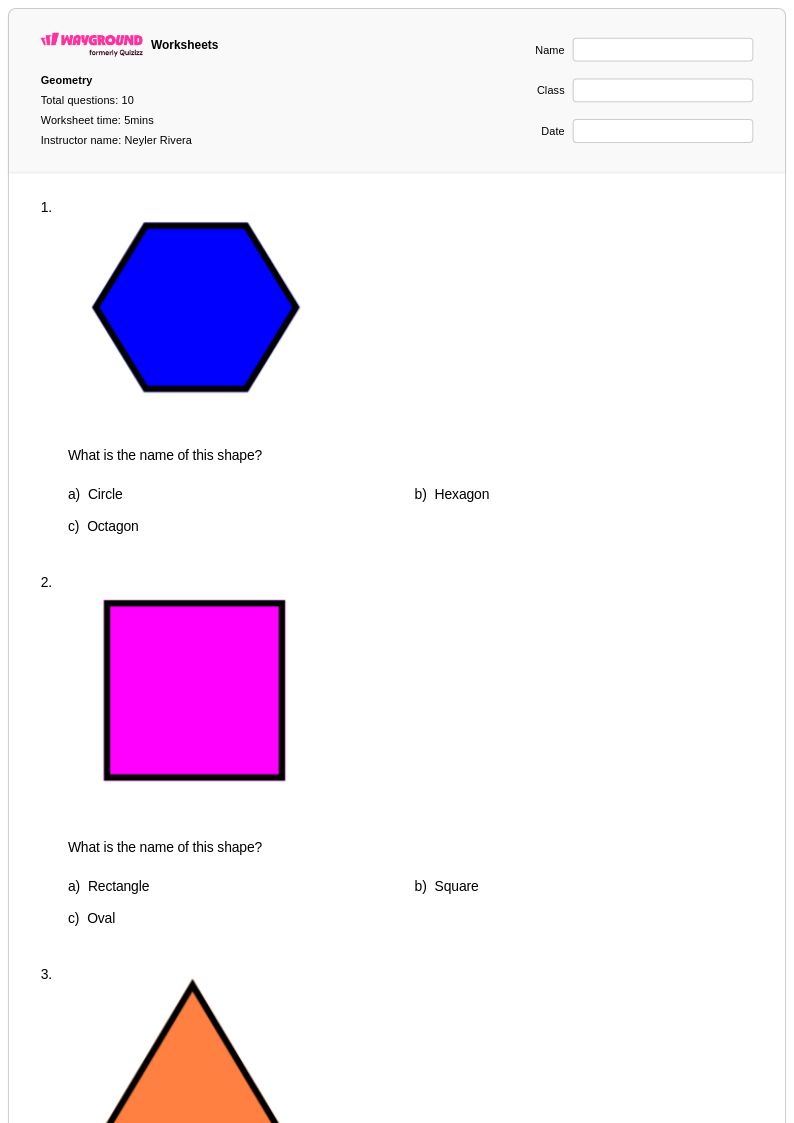
10 Q
2nd - 3rd
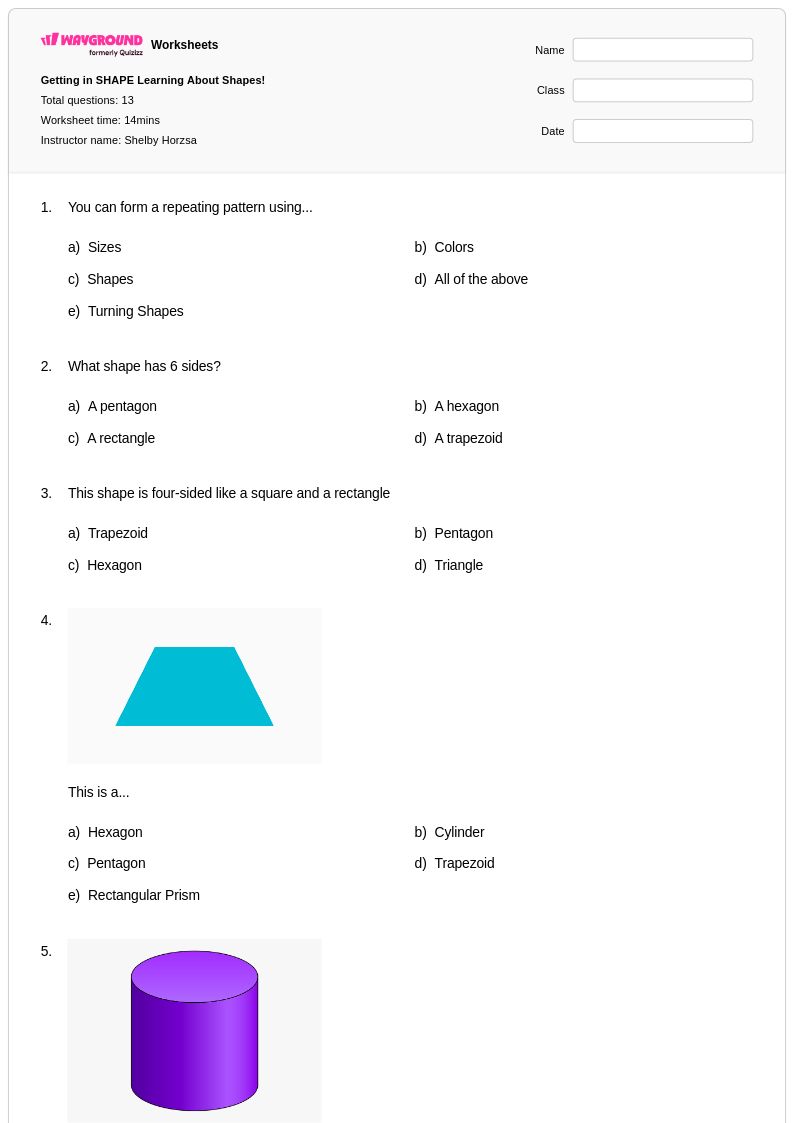
13 Q
2nd
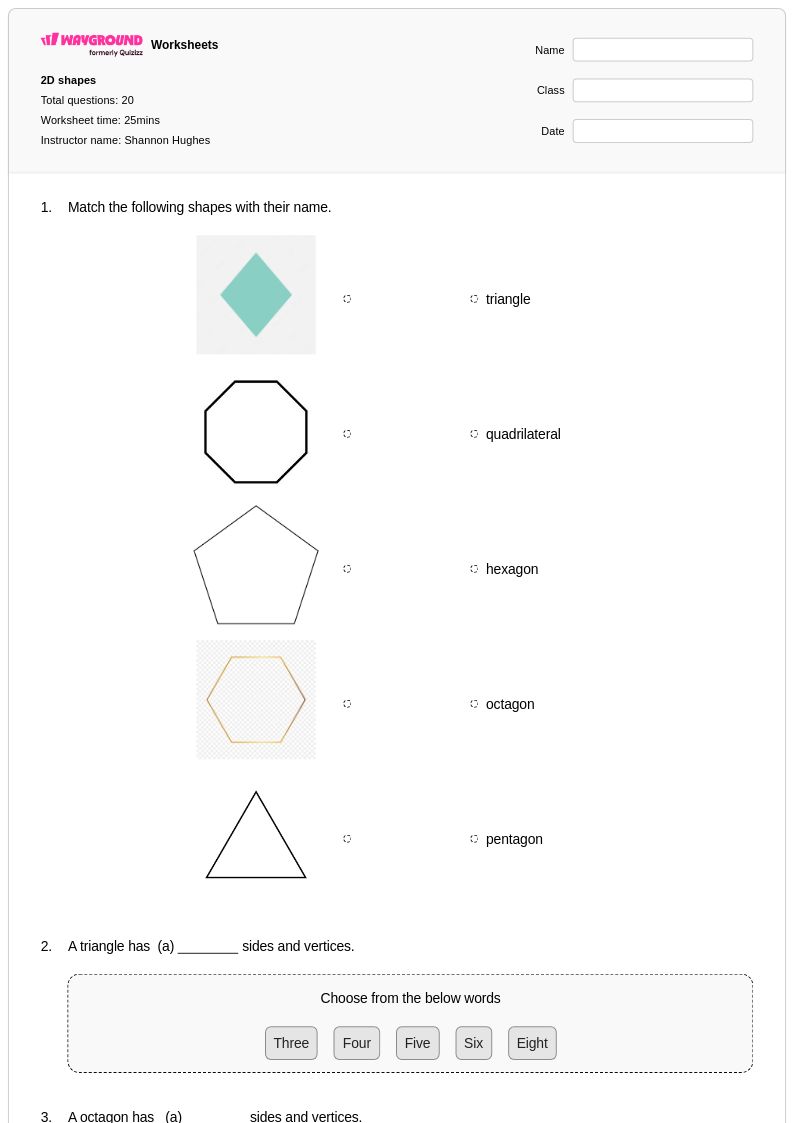
20 Q
2nd
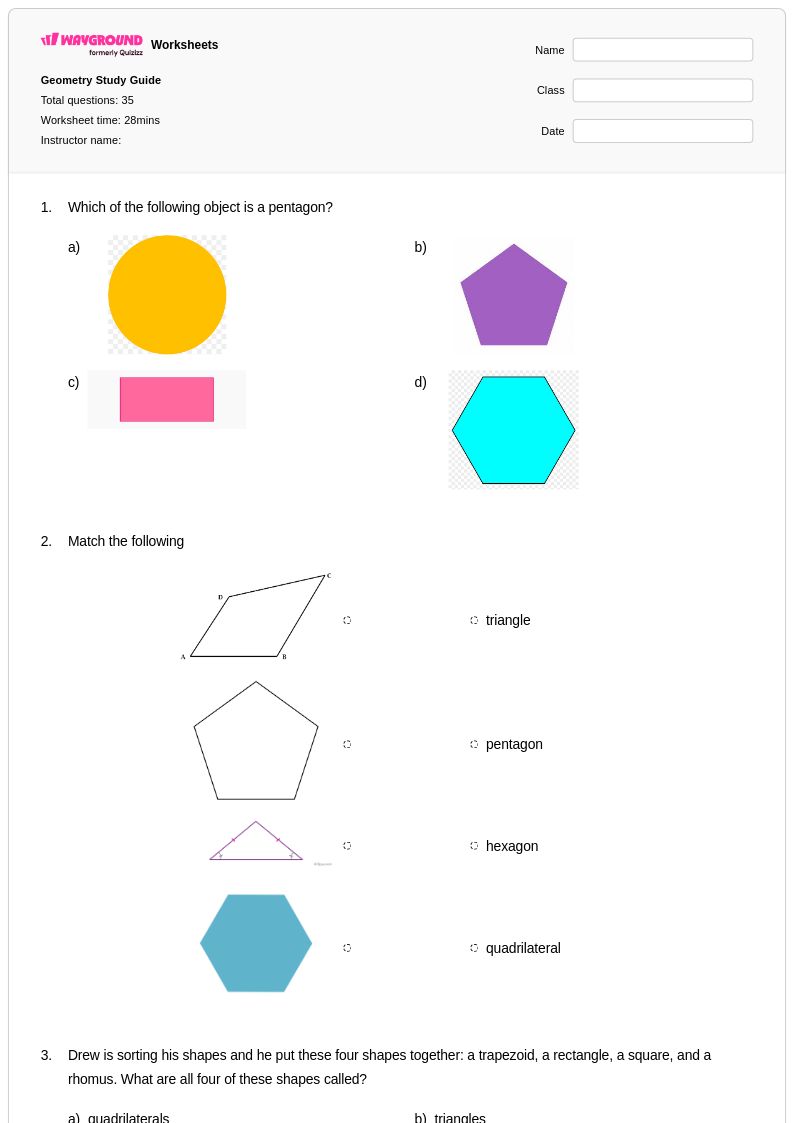
35 Q
2nd
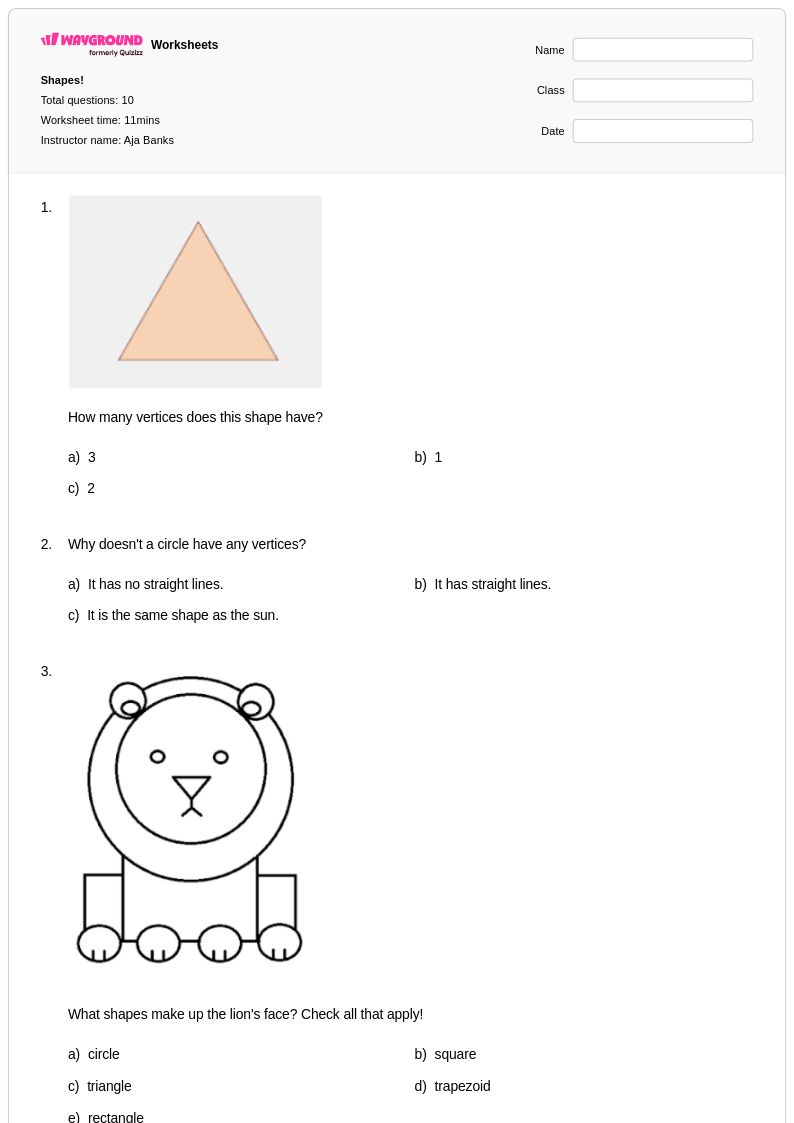
10 Q
1st - 2nd
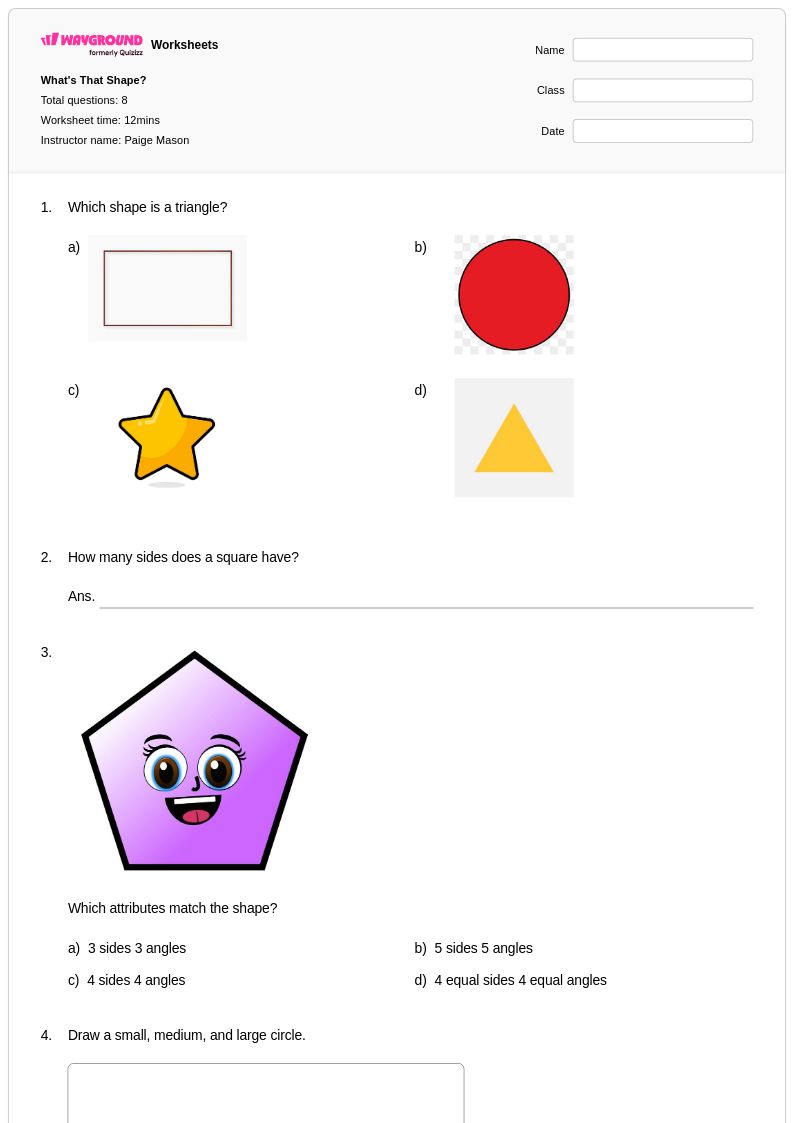
8 Q
2nd
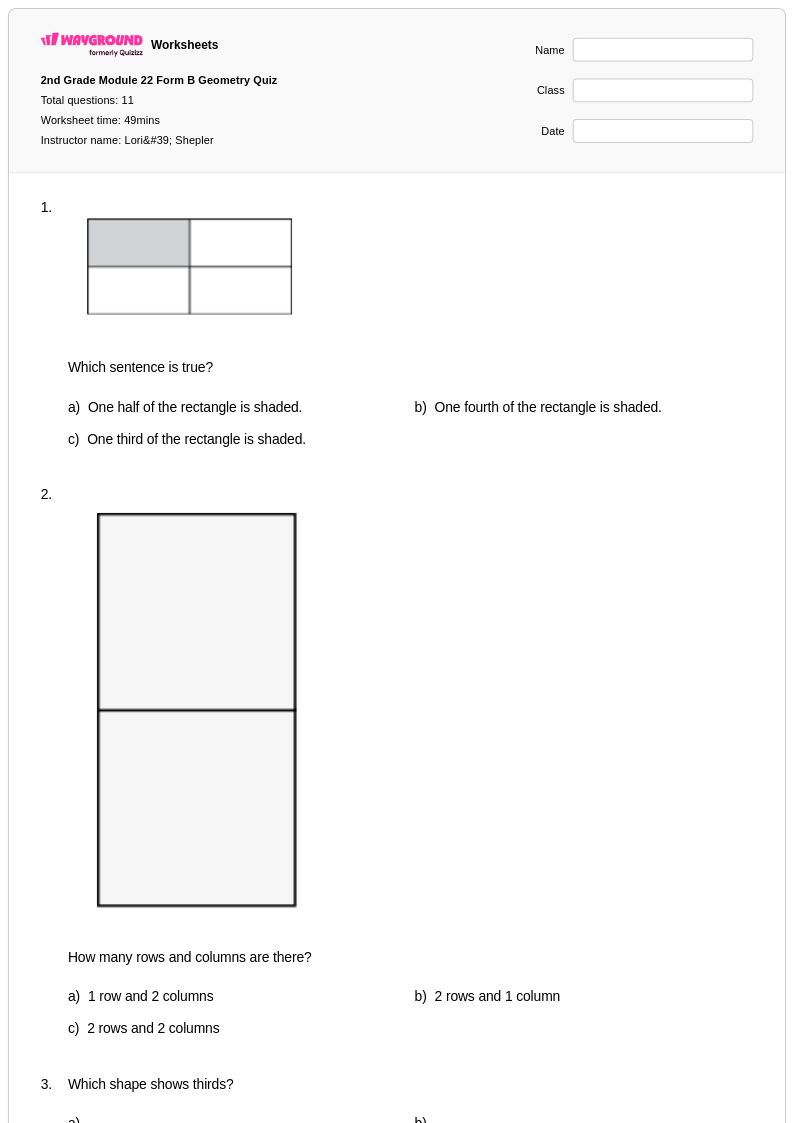
11 Q
2nd
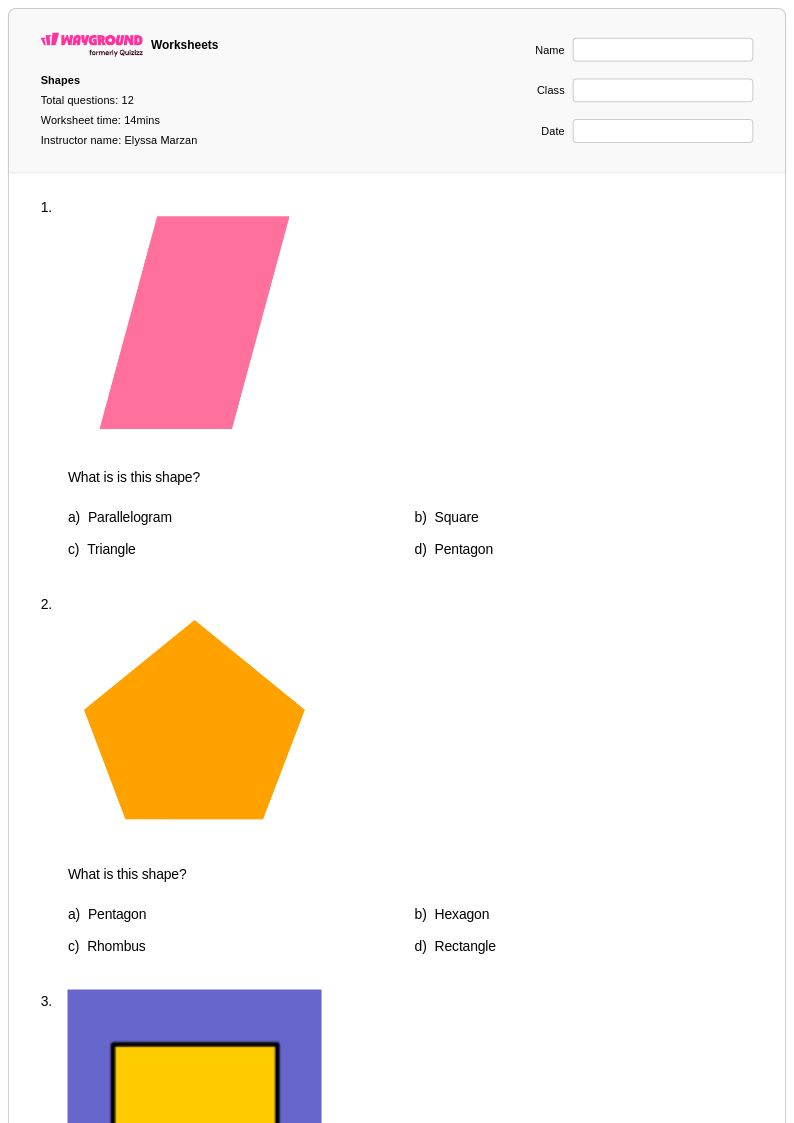
12 Q
2nd
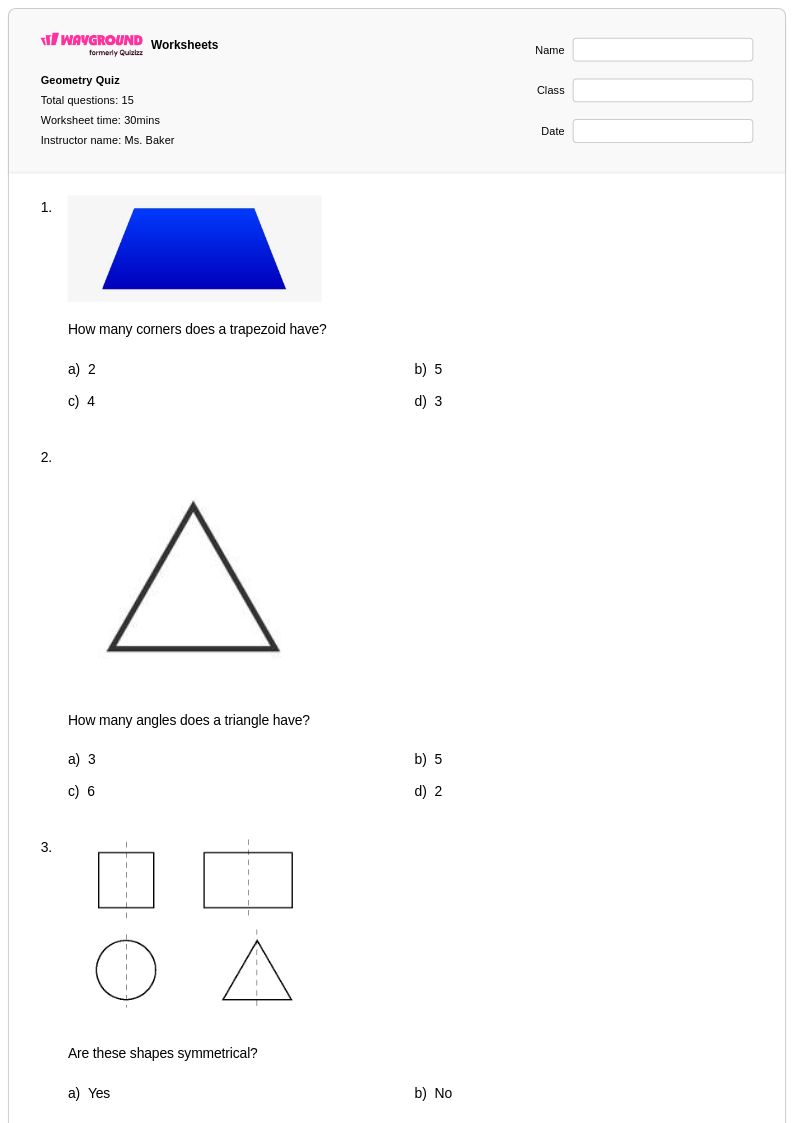
15 Q
2nd
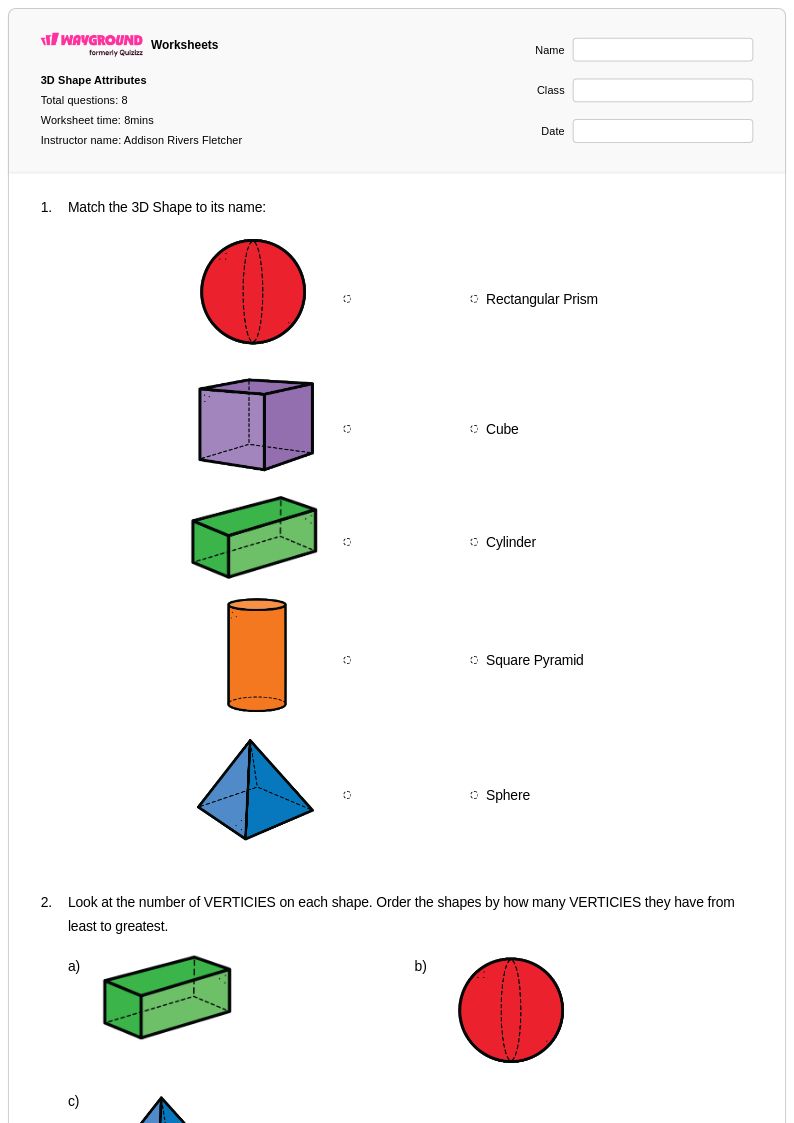
8 Q
2nd
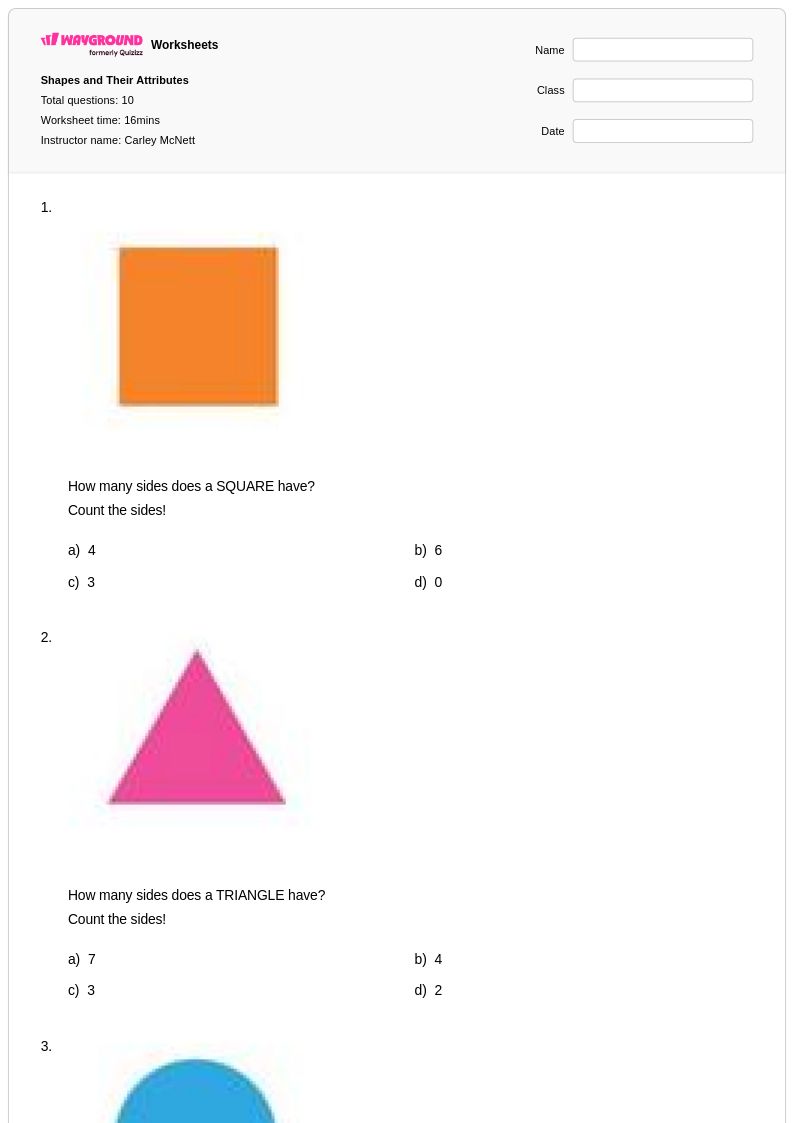
10 Q
2nd
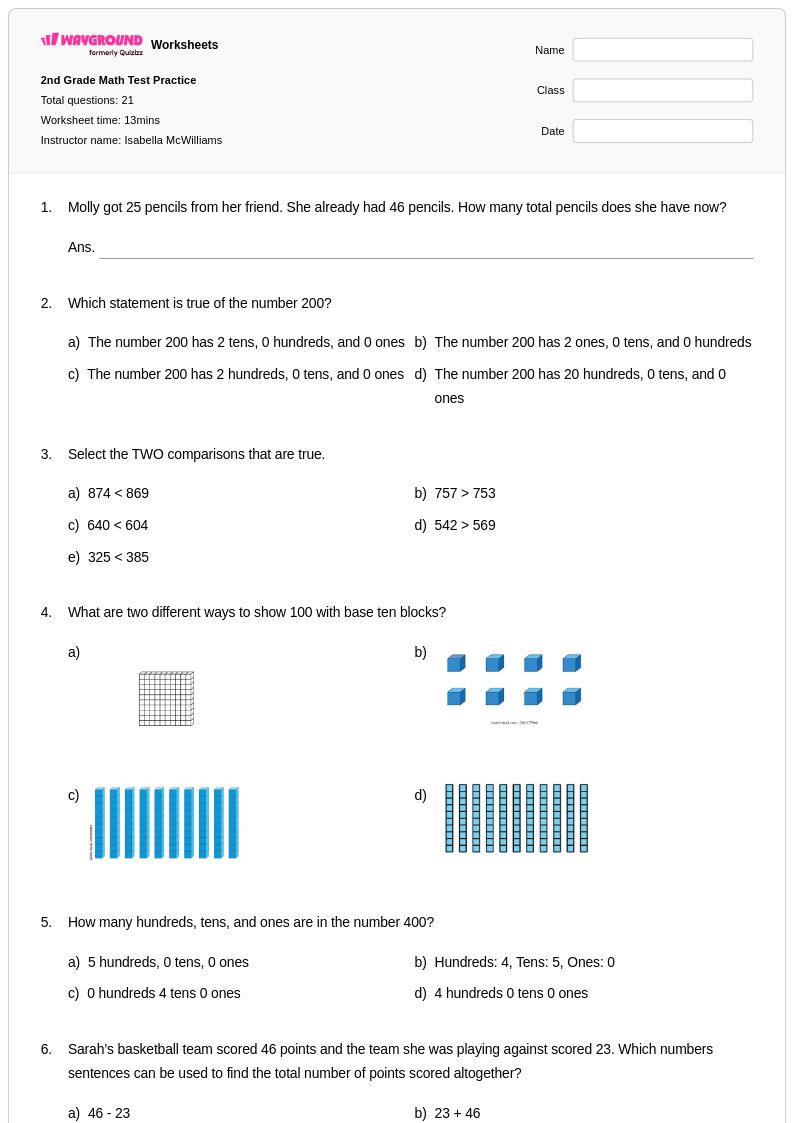
21 Q
2nd
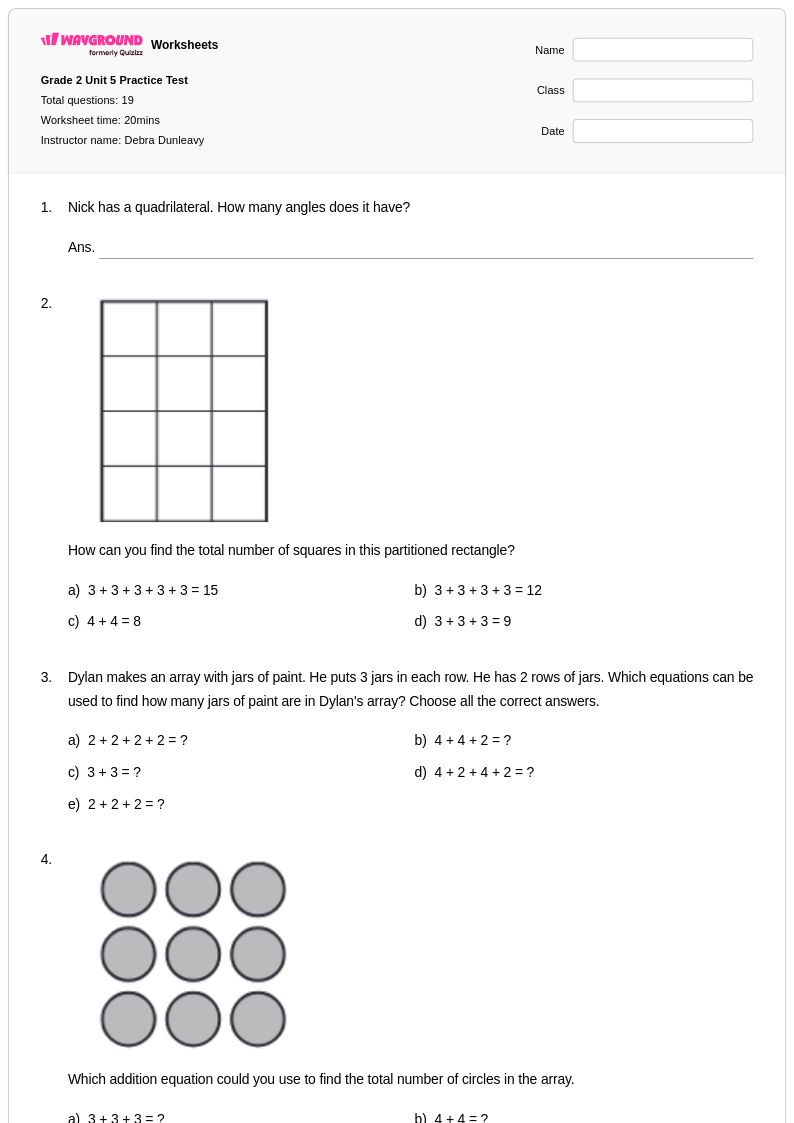
19 Q
2nd
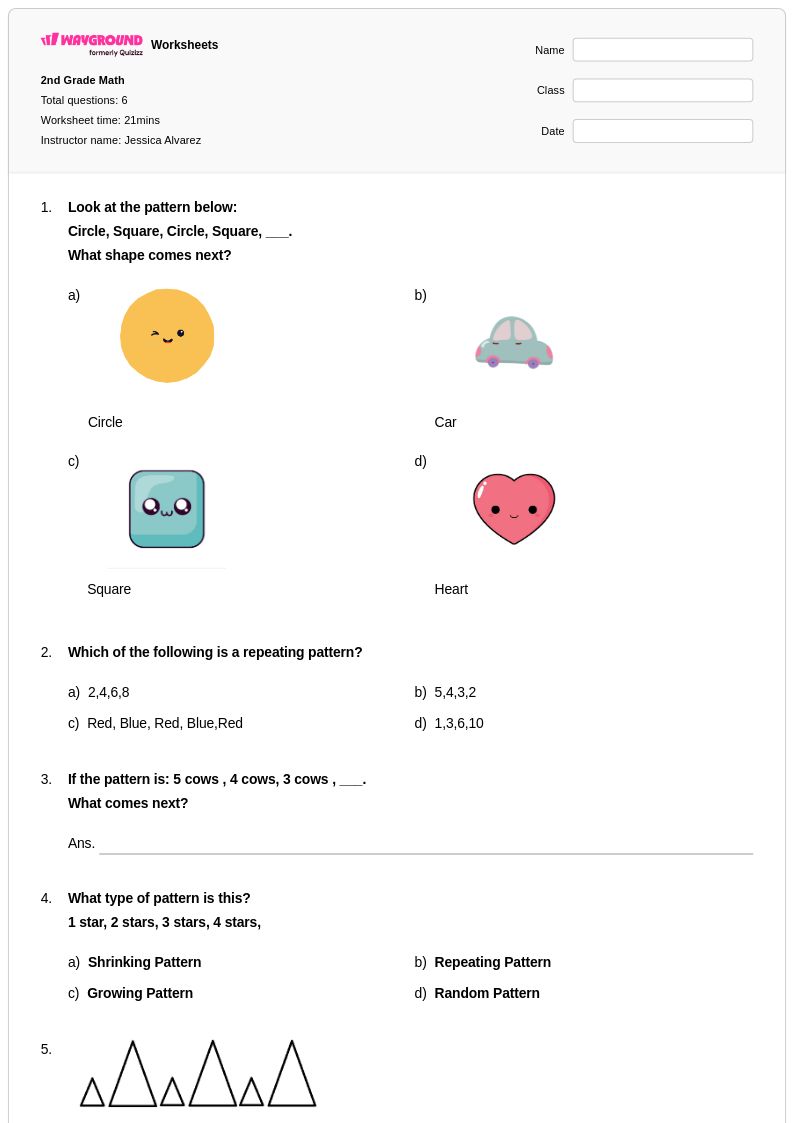
6 Q
2nd
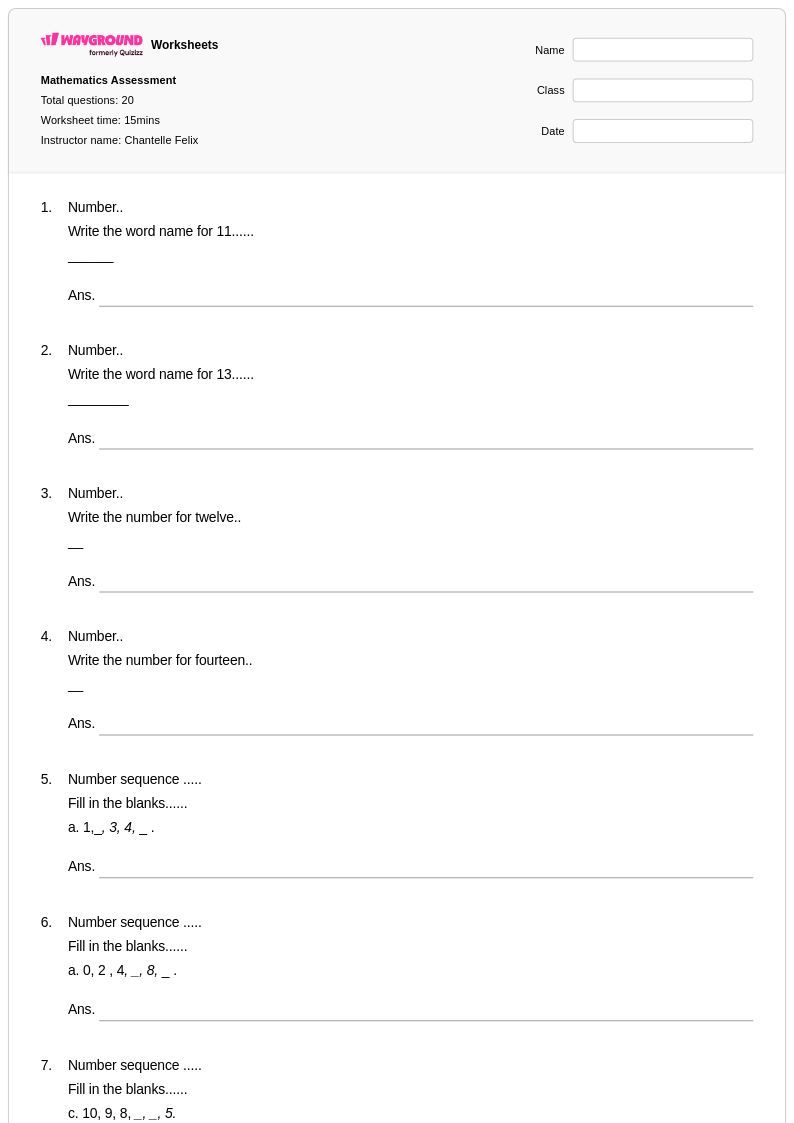
20 Q
1st - 2nd
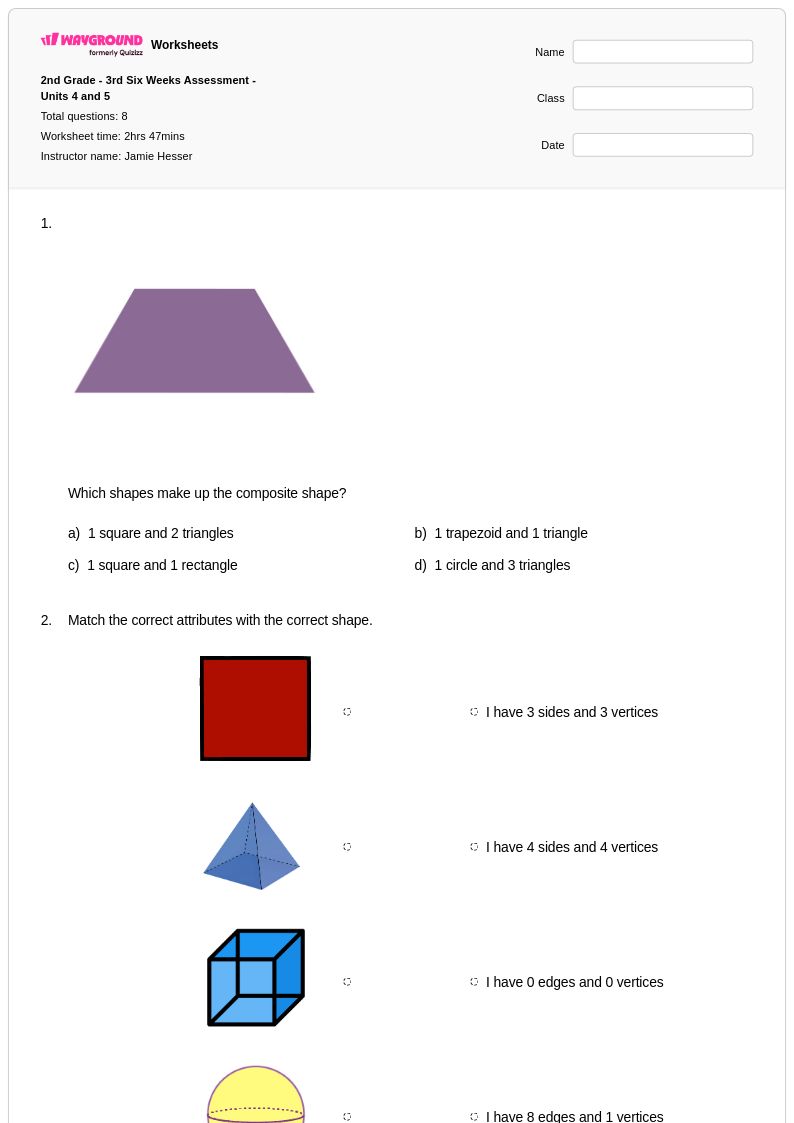
8 Q
2nd
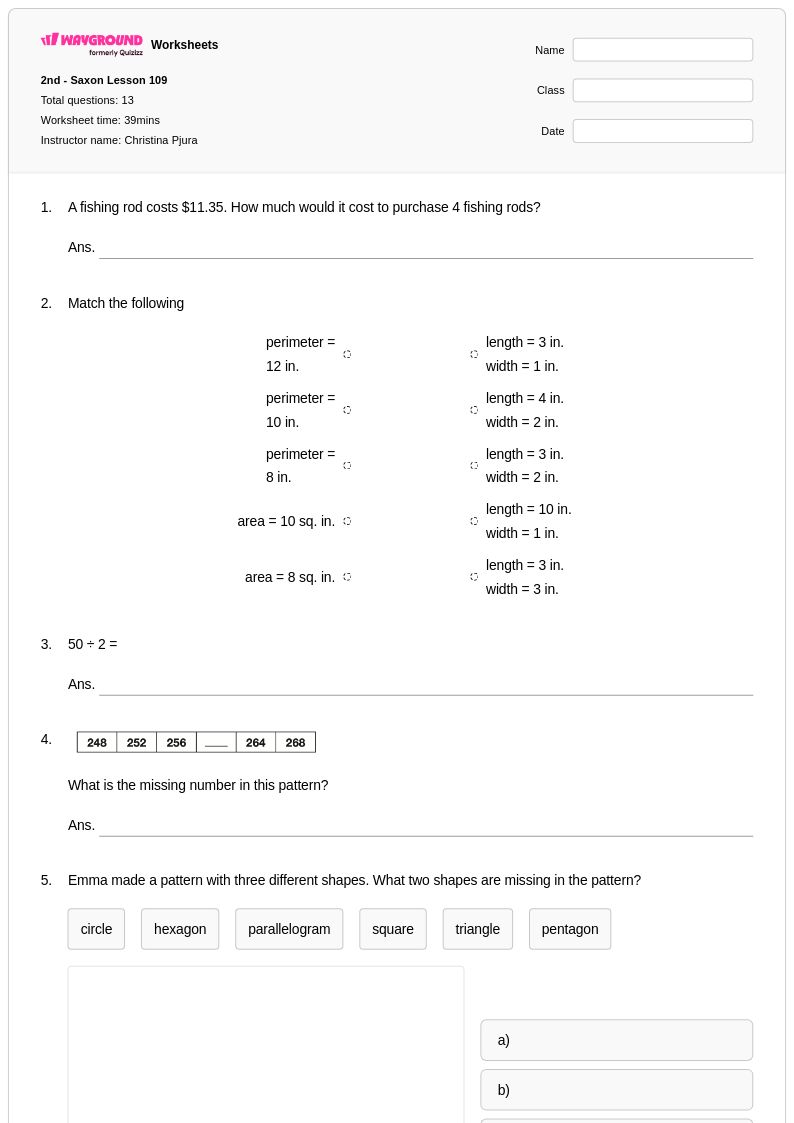
13 Q
2nd
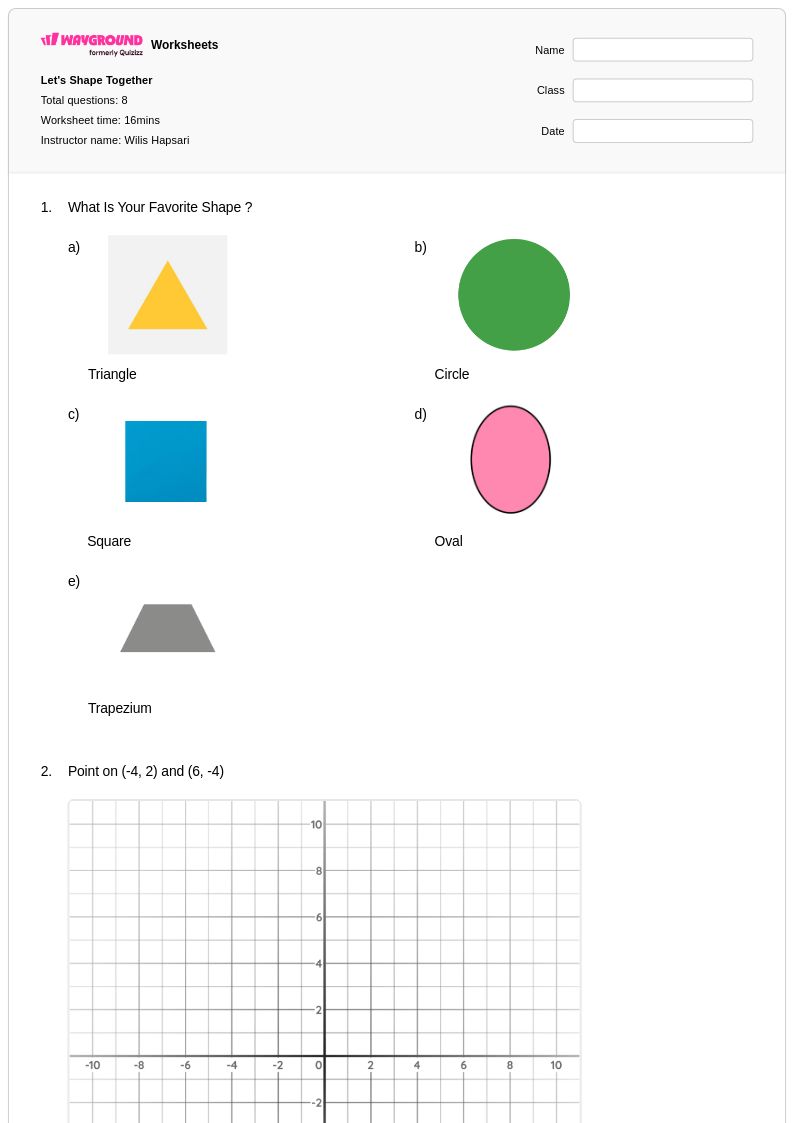
8 Q
1st - 5th
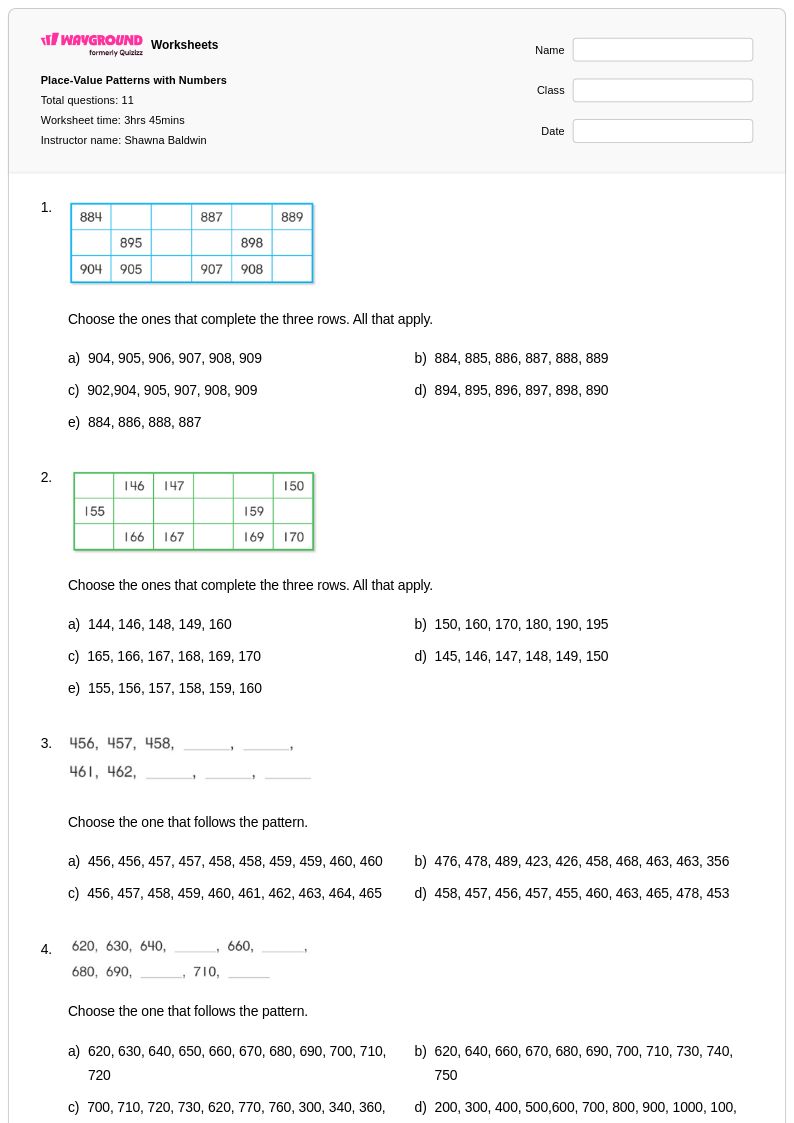
11 Q
2nd
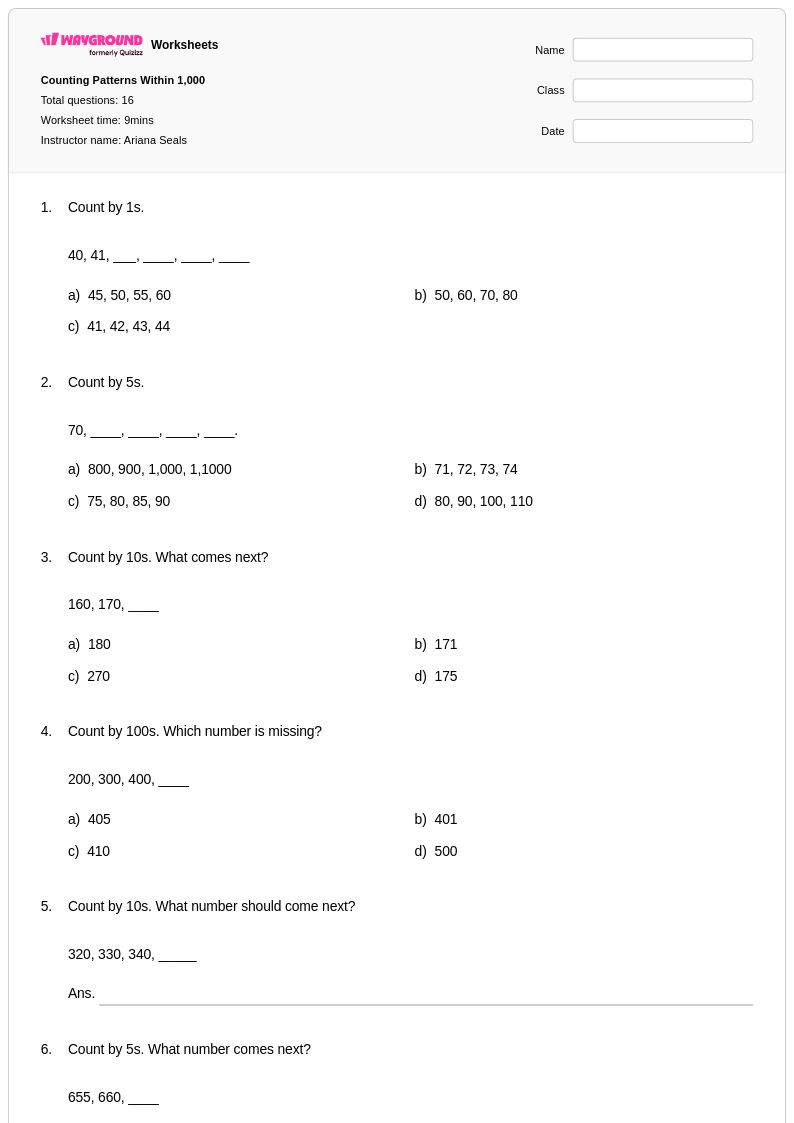
16 Q
2nd
Explore Other Subject Worksheets for grade 2
Explore printable Shape Patterns worksheets for Grade 2
Shape patterns worksheets for Grade 2 students available through Wayground (formerly Quizizz) provide essential practice for developing spatial reasoning and pattern recognition skills that form the foundation of geometric thinking. These carefully designed printables help young learners identify, extend, and create repeating patterns using various two-dimensional and three-dimensional shapes, strengthening their ability to recognize sequences and predict what comes next. Each worksheet collection includes comprehensive practice problems that progress from simple AB patterns using basic shapes like circles and squares to more complex ABAB and ABC patterns incorporating triangles, rectangles, and other geometric forms. Teachers can access complete answer keys for efficient grading and assessment, while the free pdf format ensures these valuable resources remain accessible for classroom use, homework assignments, and differentiated instruction.
Wayground (formerly Quizizz) empowers educators with an extensive library of millions of teacher-created shape pattern worksheets, supported by robust search and filtering capabilities that allow precise selection based on specific learning objectives and student needs. The platform's standards alignment features ensure that Grade 2 geometry worksheets meet curriculum requirements, while built-in differentiation tools enable teachers to customize difficulty levels for diverse learners. These resources are available in both printable pdf formats for traditional classroom activities and digital formats for interactive learning experiences, providing flexibility for various instructional approaches. Teachers utilize these comprehensive worksheet collections for lesson planning, targeted remediation for students who need additional support with pattern recognition, enrichment activities for advanced learners, and regular skill practice that reinforces geometric concepts throughout the school year.
FAQs
What kind of shape patterns do 2nd graders learn?
How can I challenge my 2nd graders with shape patterns?
What are common difficulties with 2nd grade patterns?
How do I use this 2nd grade shape patterns worksheet?
How do shape patterns in 2nd grade connect to other math topics?
How can I accommodate different reading levels for this worksheet?