
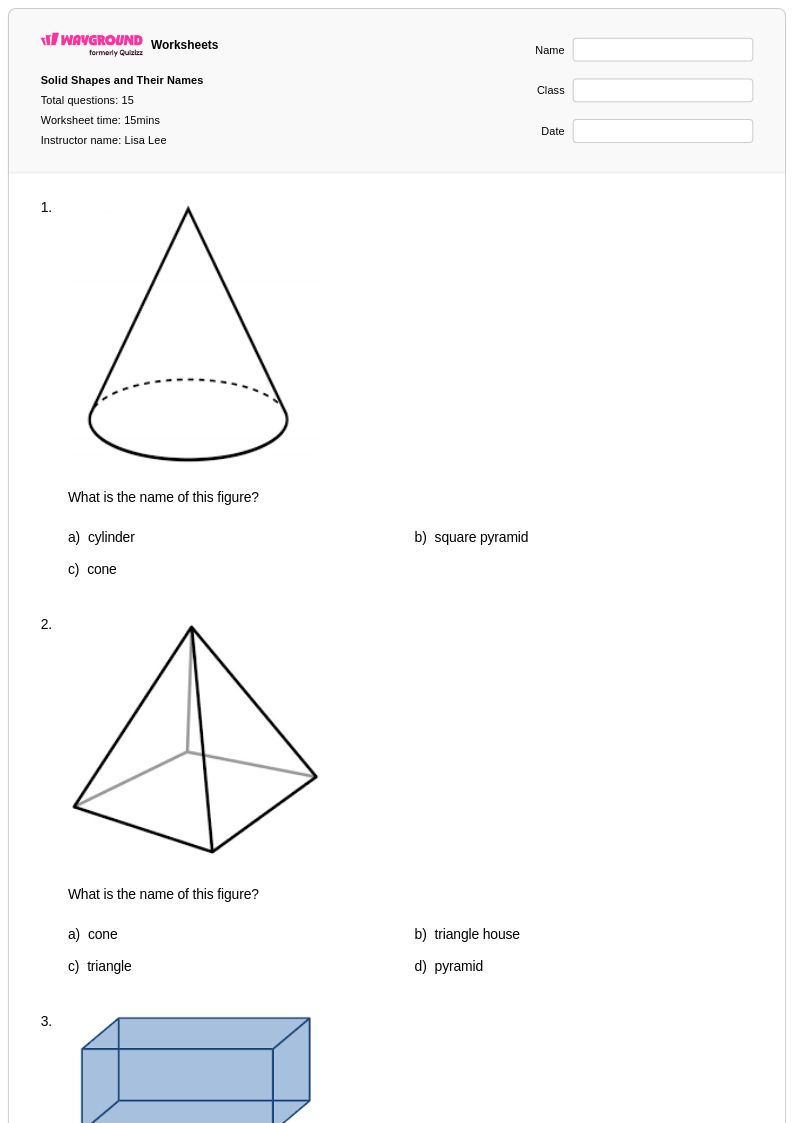
15 Q
2nd - 4th
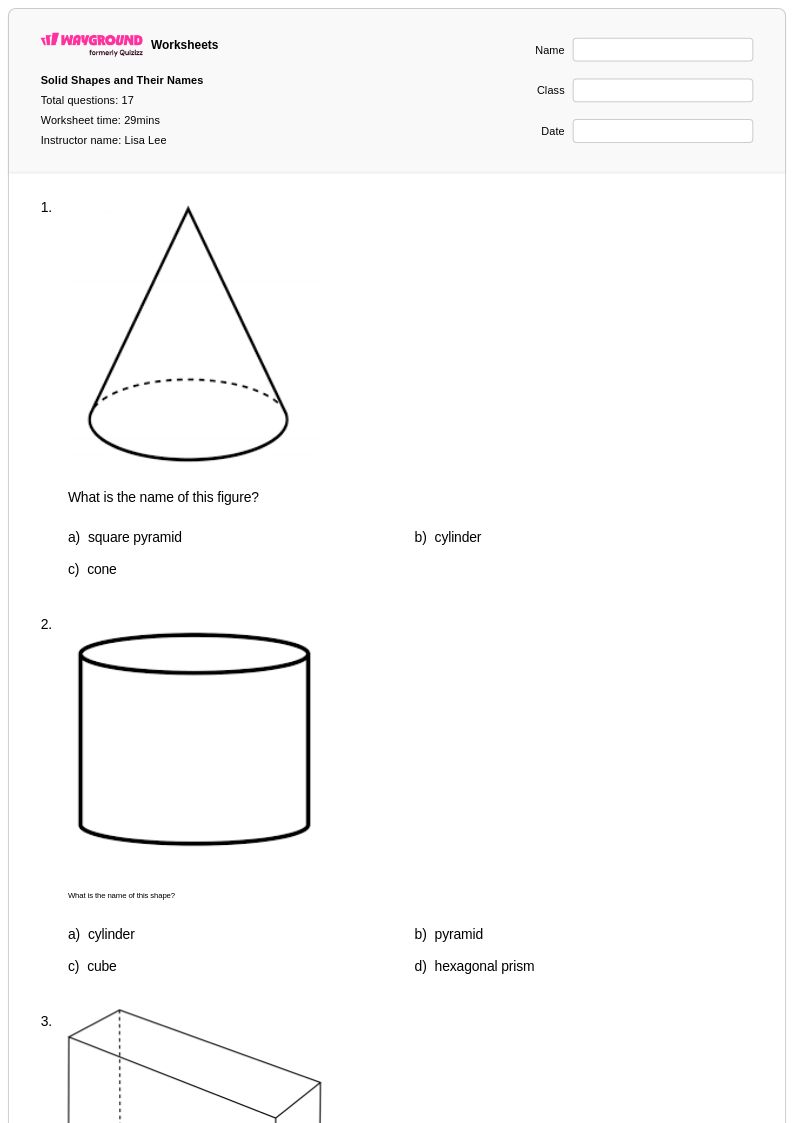
17 Q
1st - 2nd
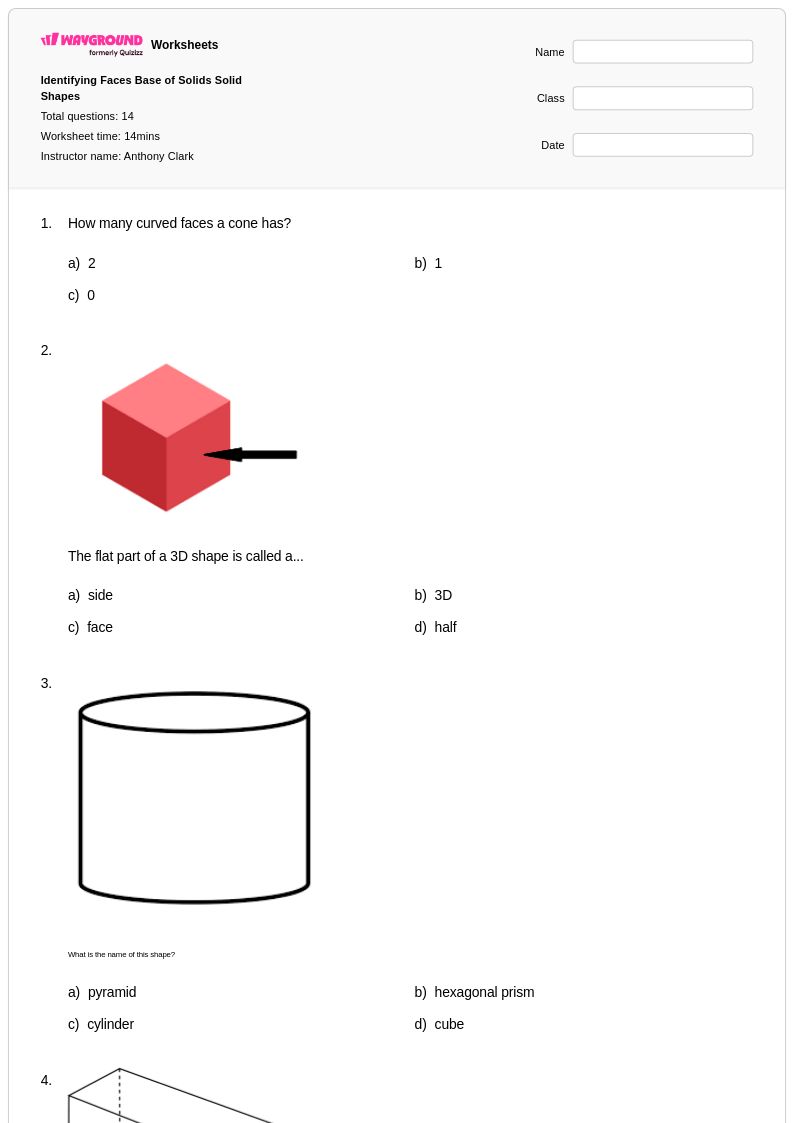
14 Q
2nd - Uni
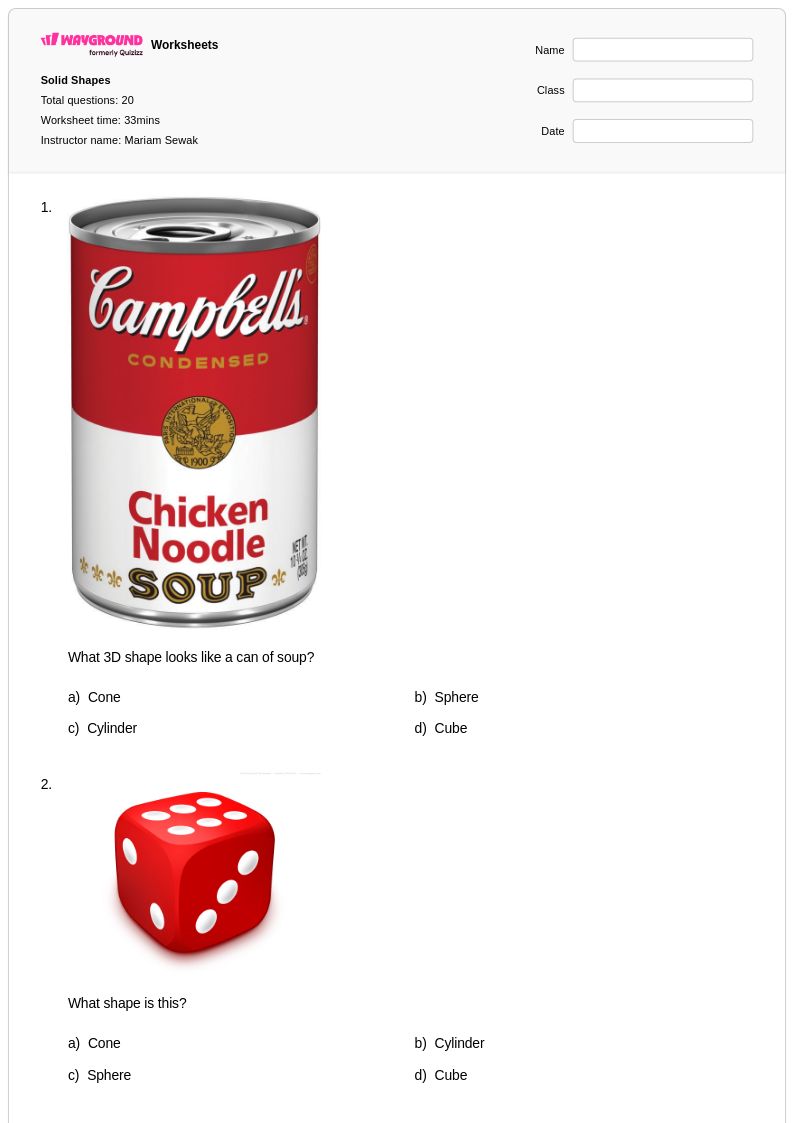
20 Q
2nd
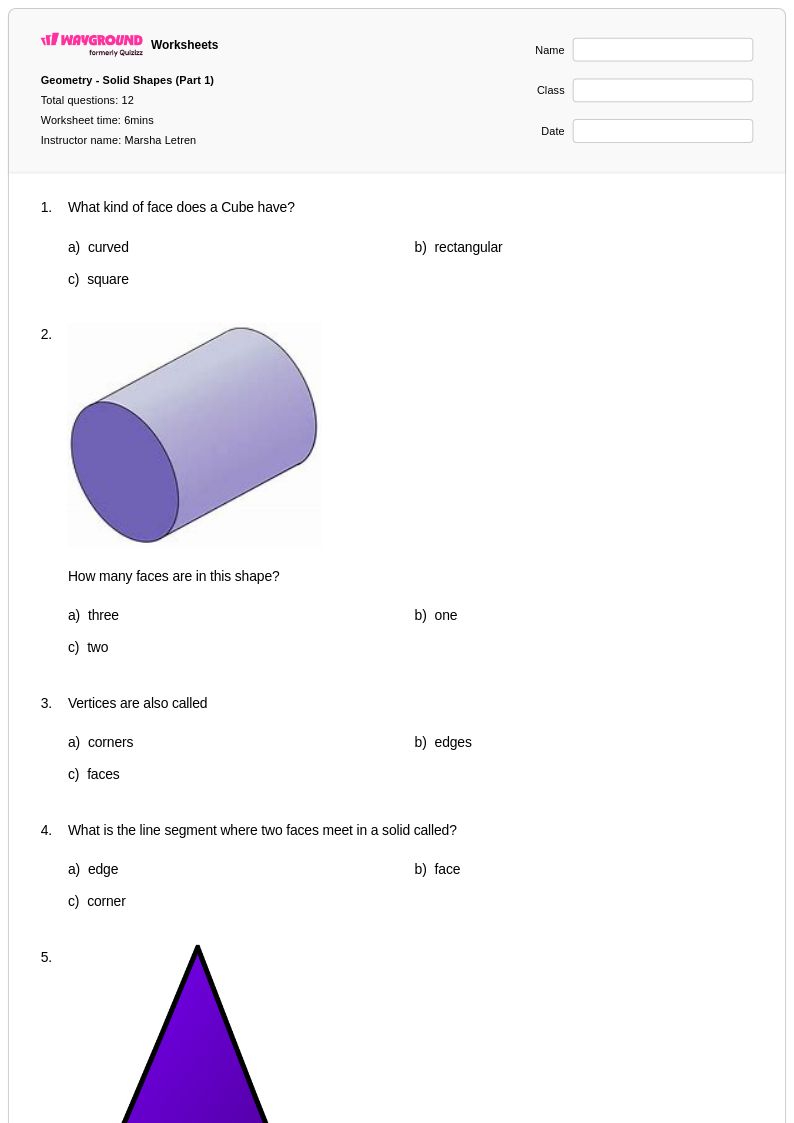
12 Q
2nd - 4th
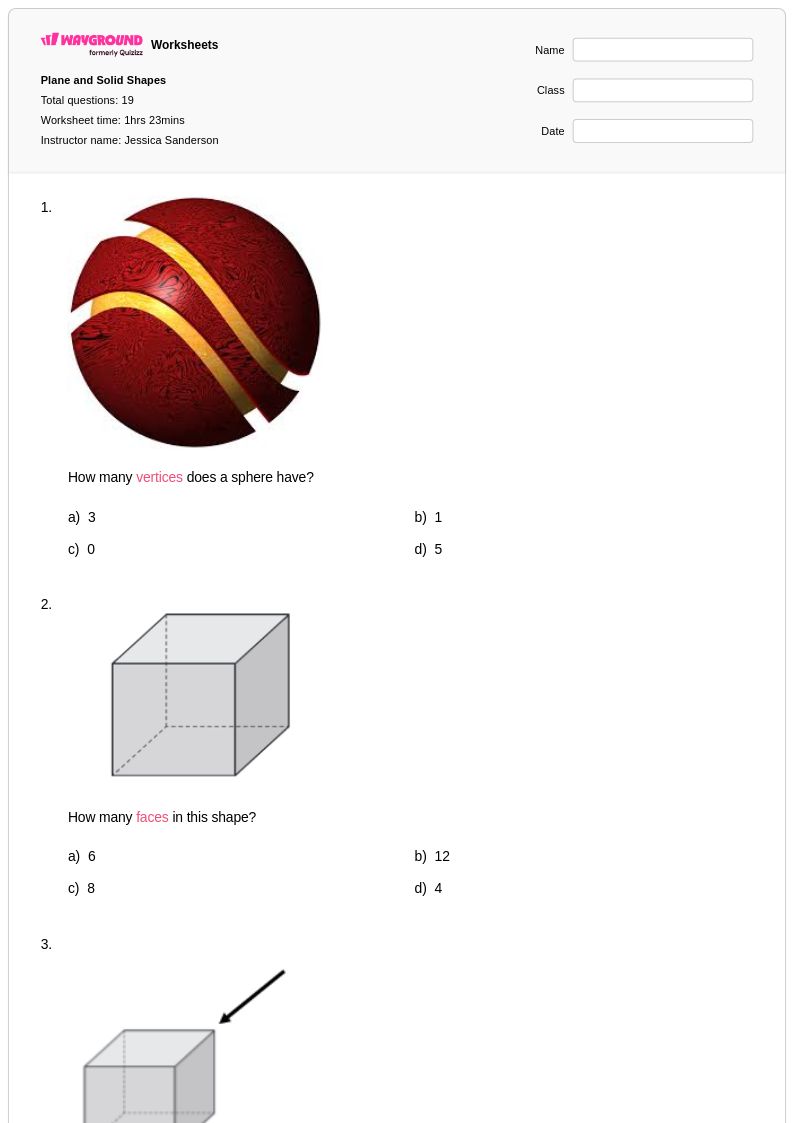
19 Q
2nd - 5th
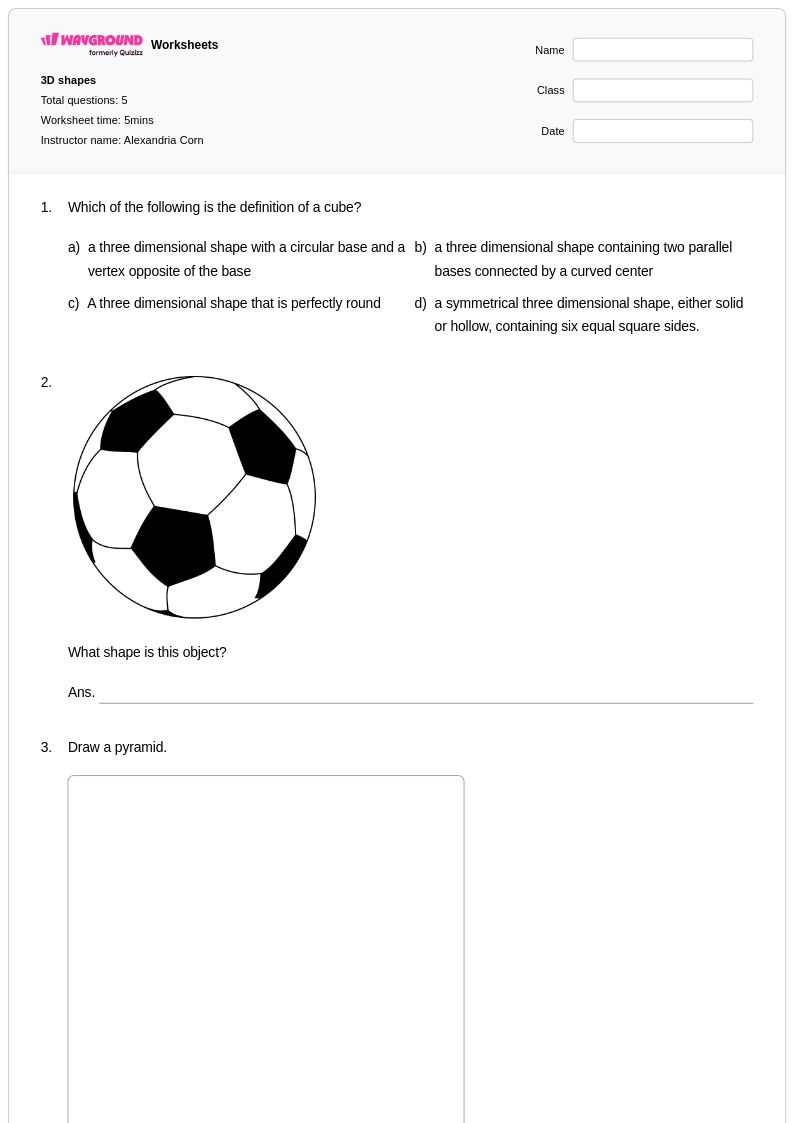
5 Q
2nd
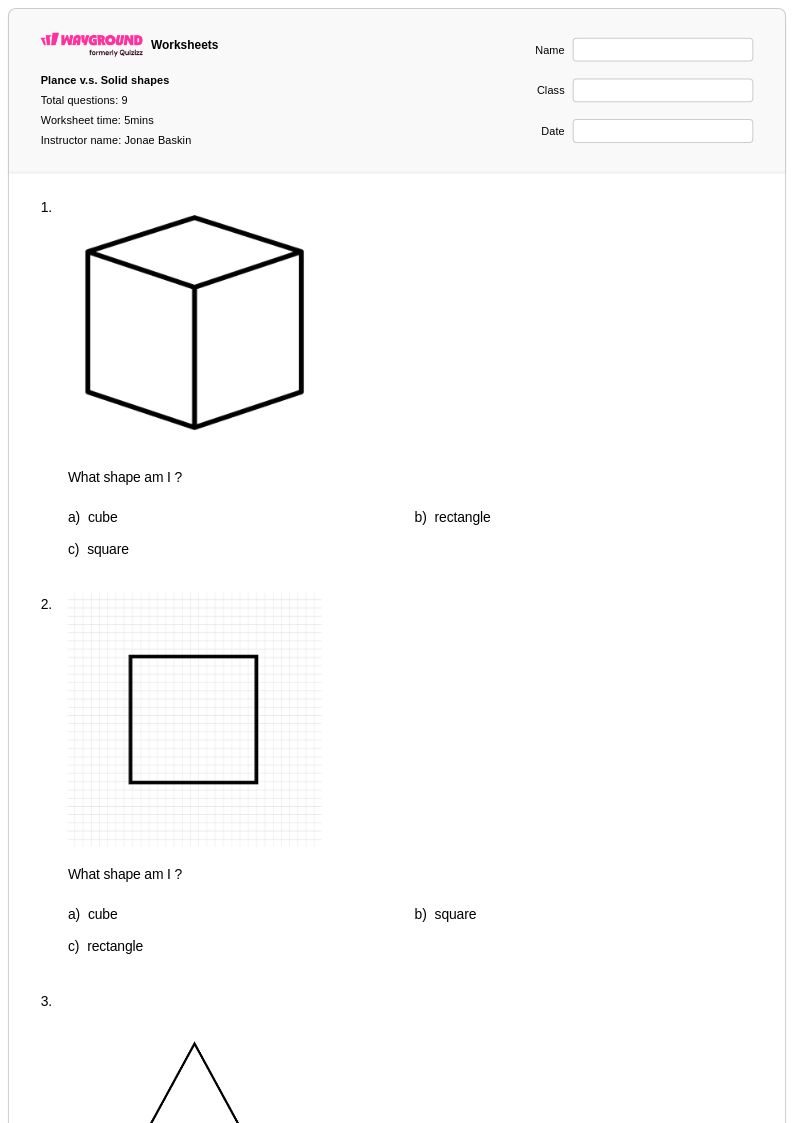
9 Q
2nd
15 Q
2nd - Uni
18 Q
2nd
9 Q
2nd
15 Q
2nd - Uni
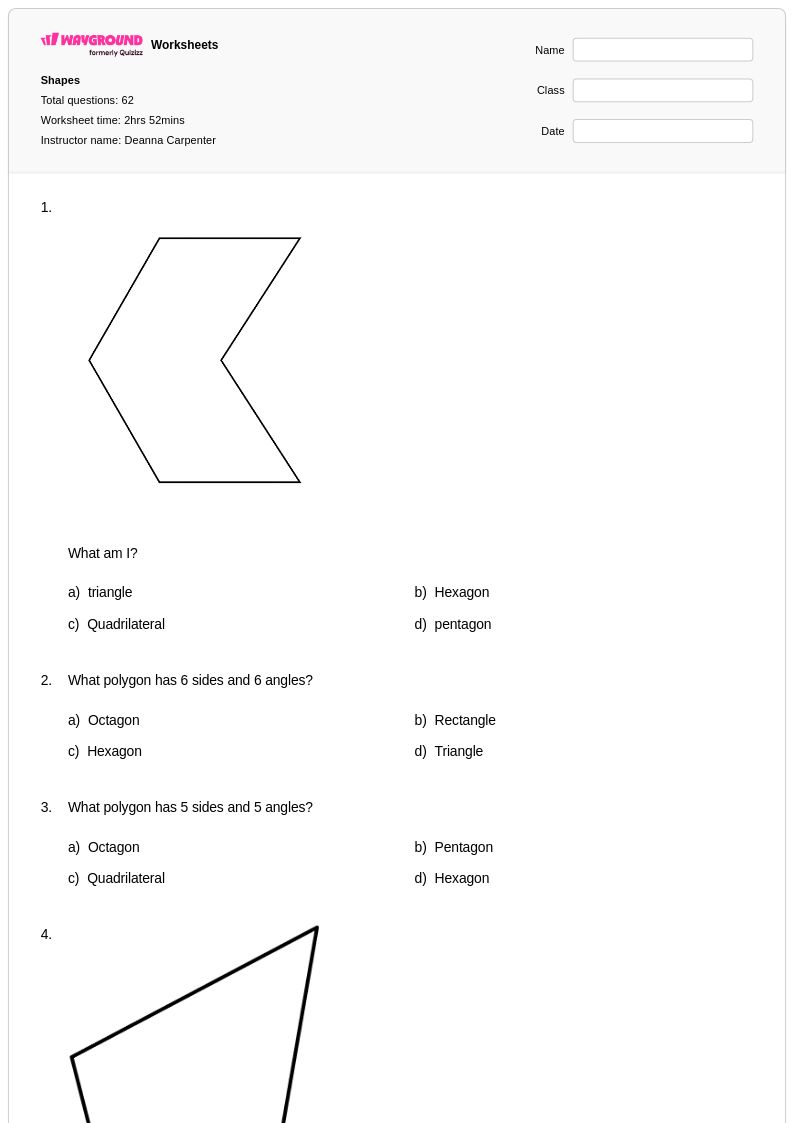
62 Q
2nd
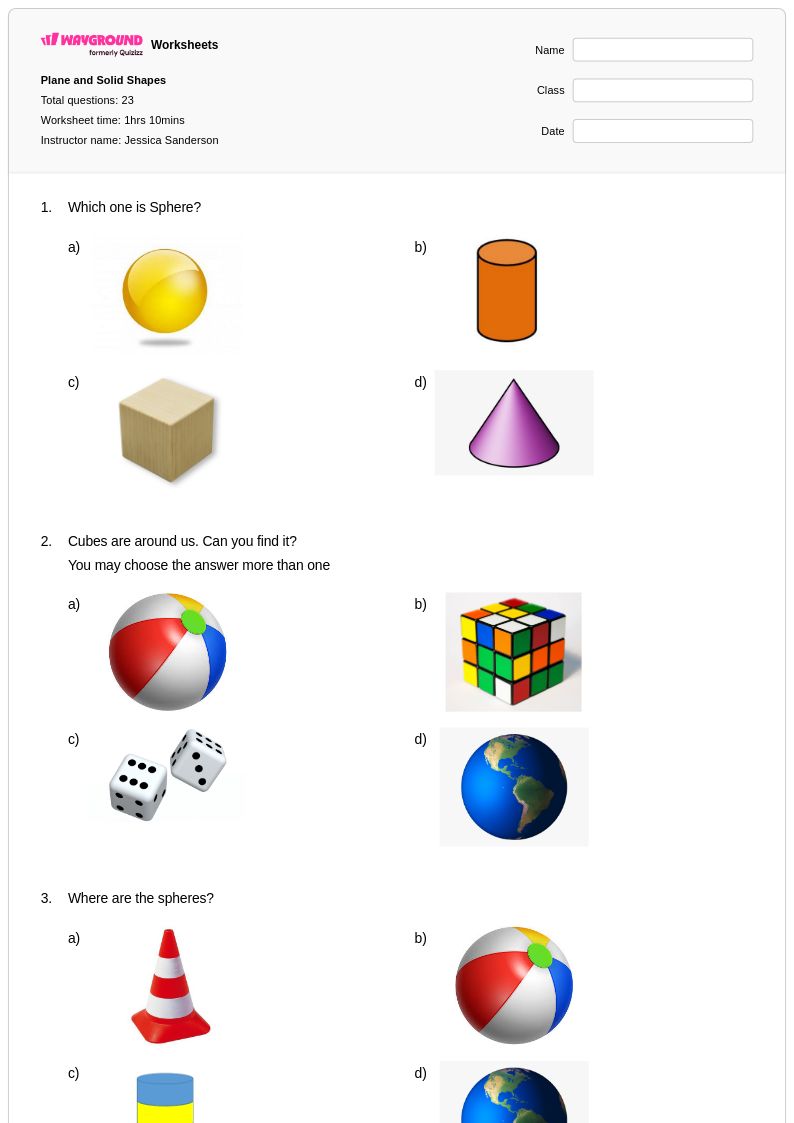
23 Q
1st - 4th
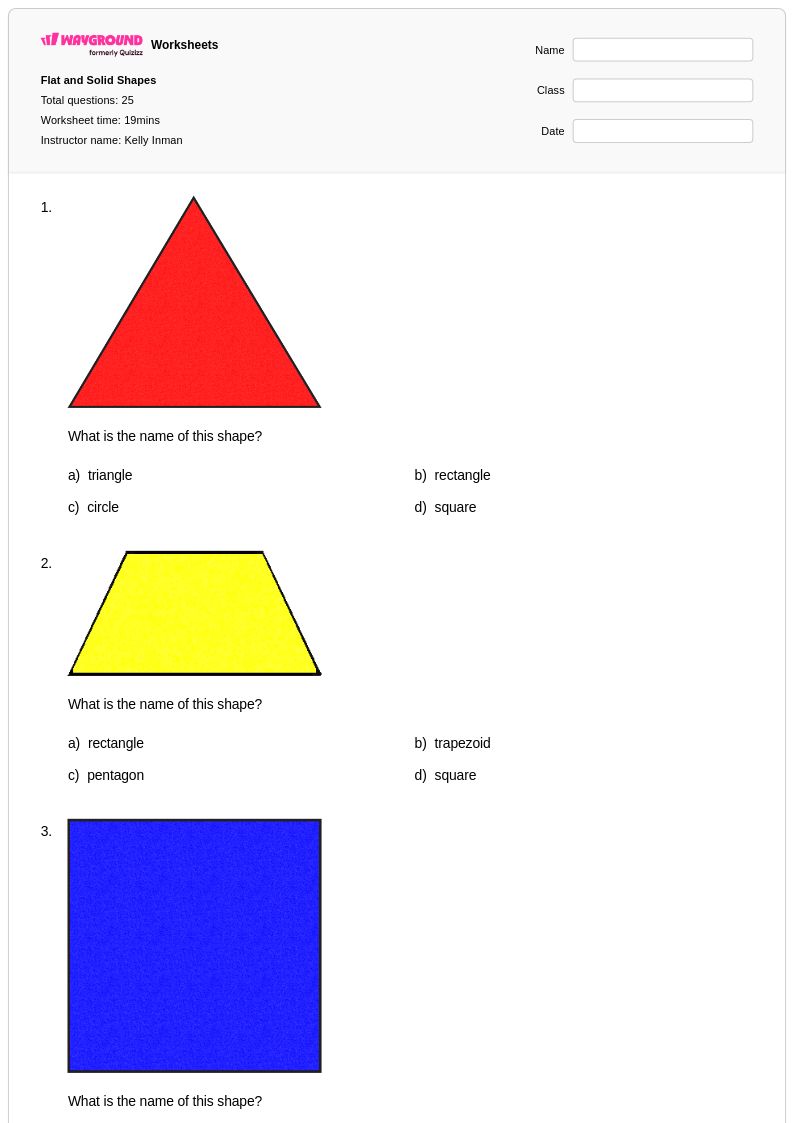
25 Q
KG - 2nd
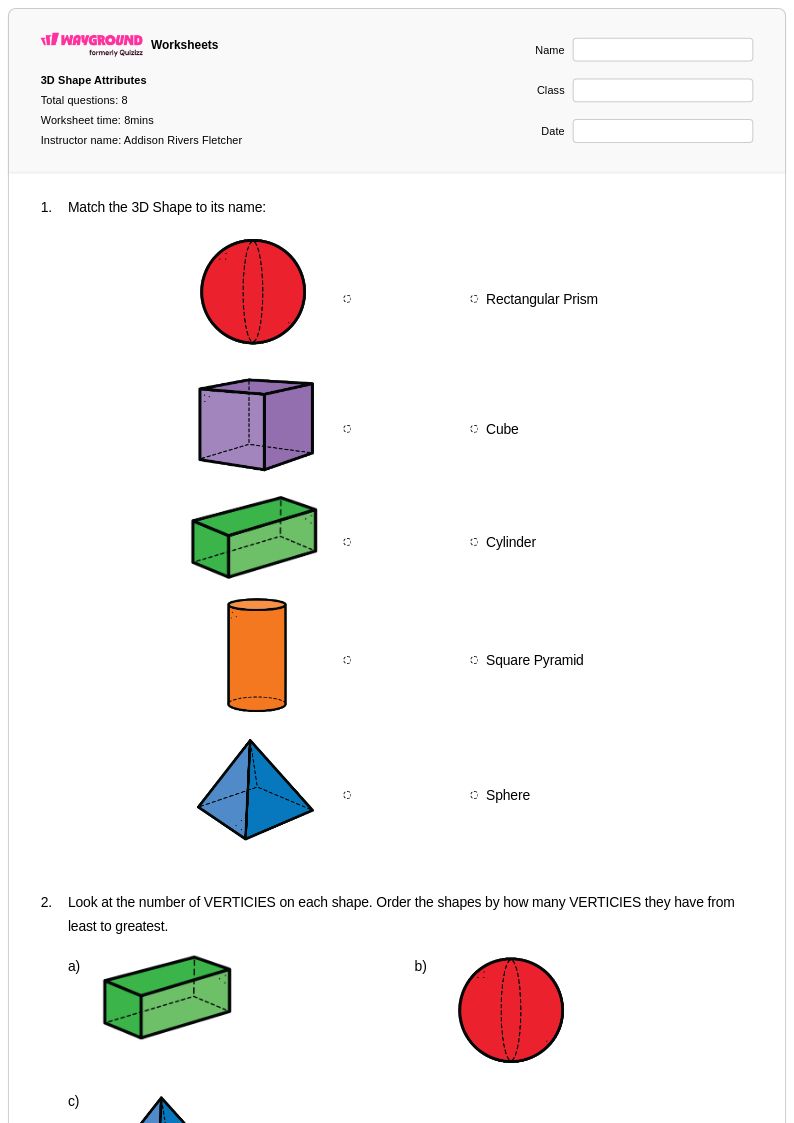
8 Q
2nd
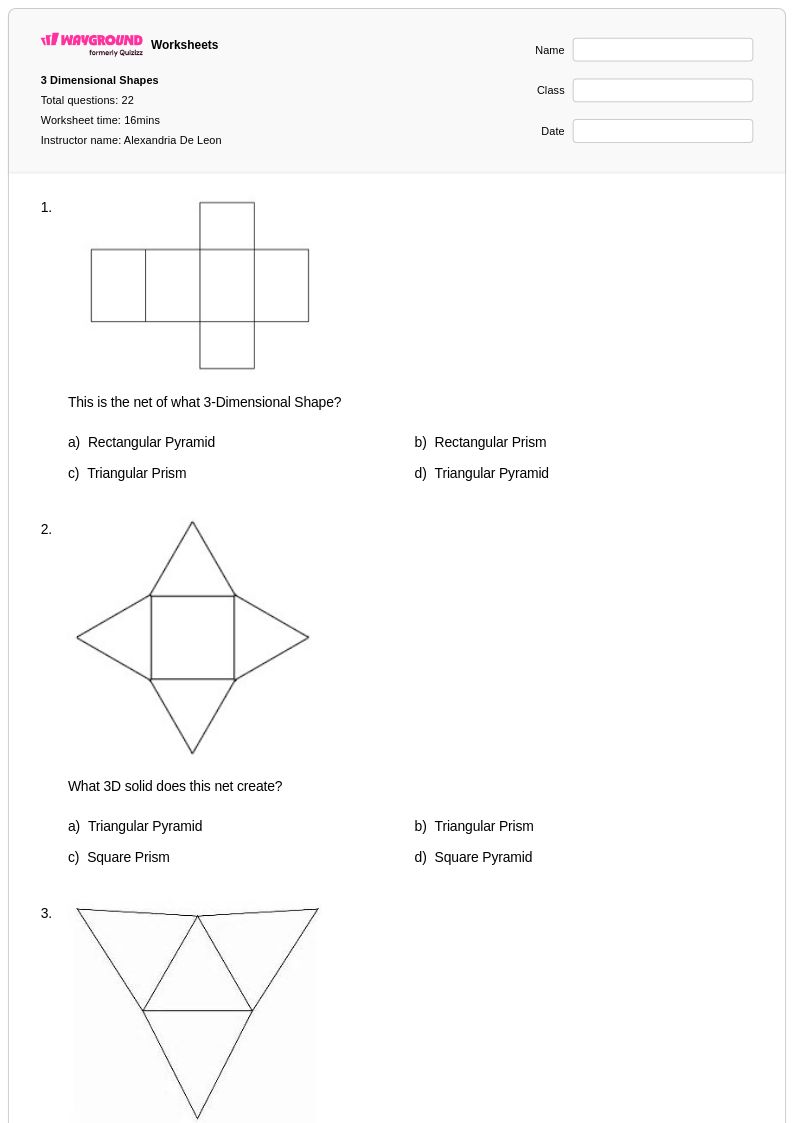
22 Q
2nd
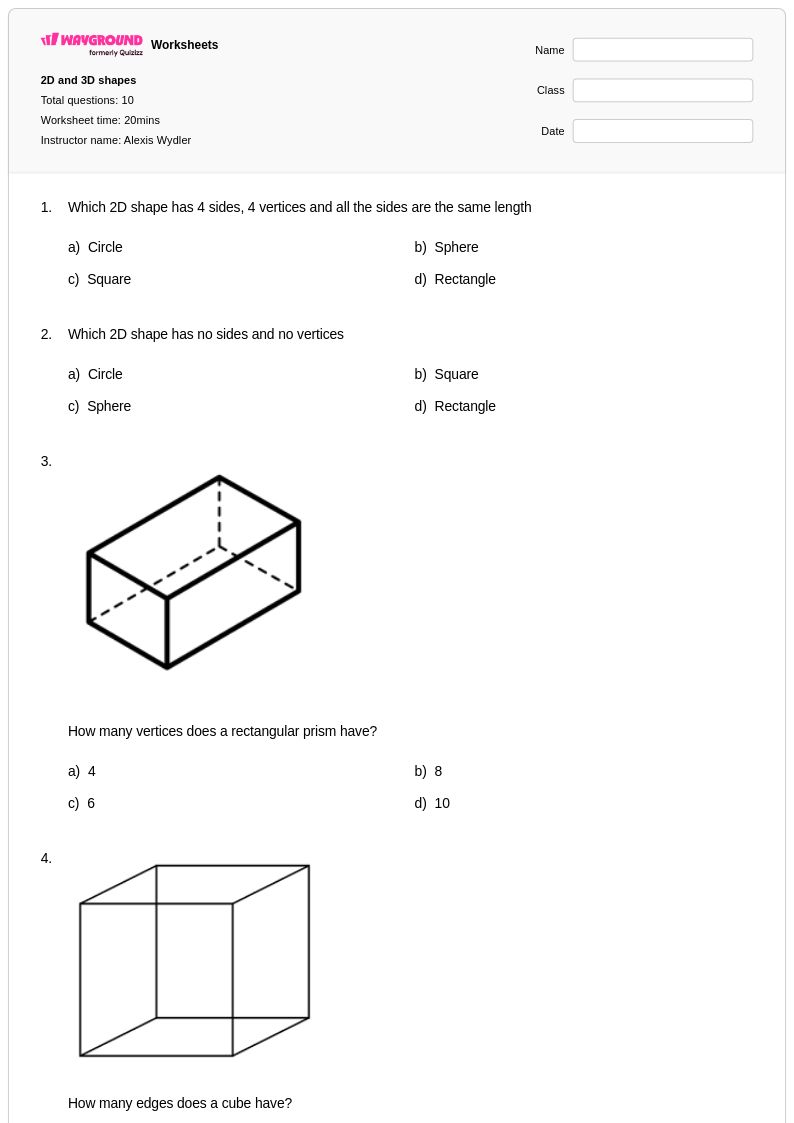
10 Q
2nd
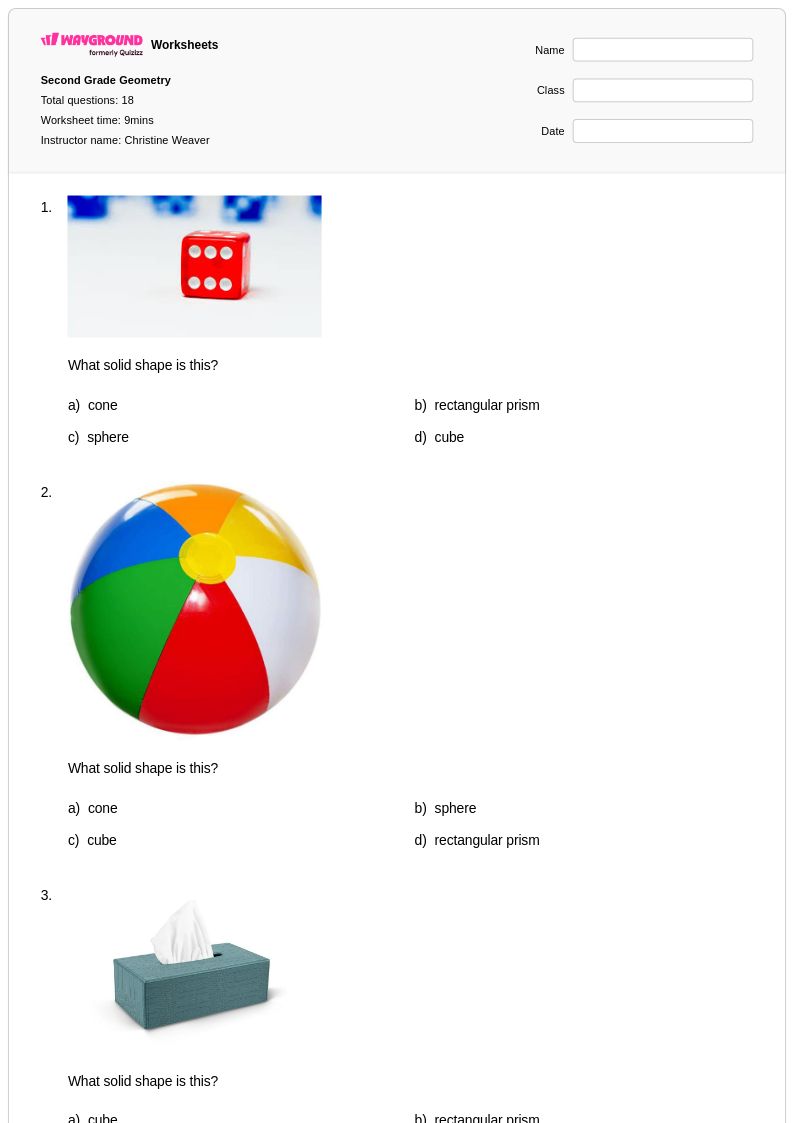
18 Q
2nd
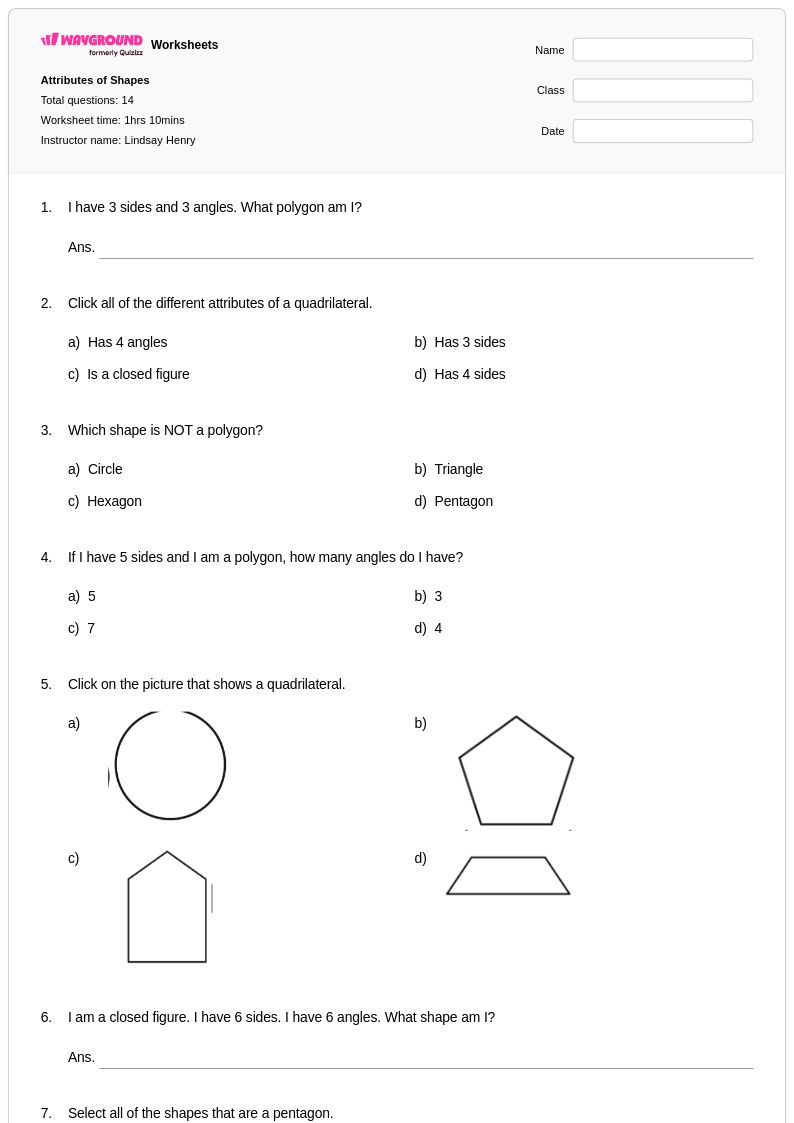
14 Q
2nd
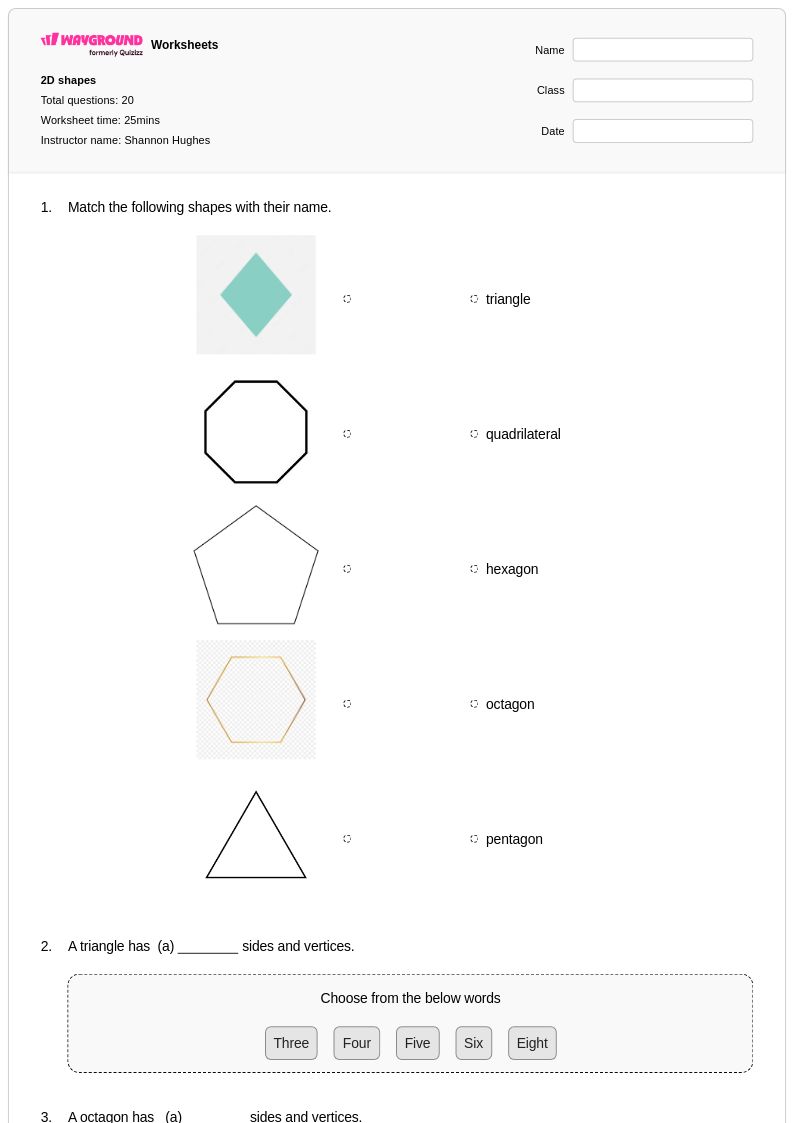
20 Q
2nd
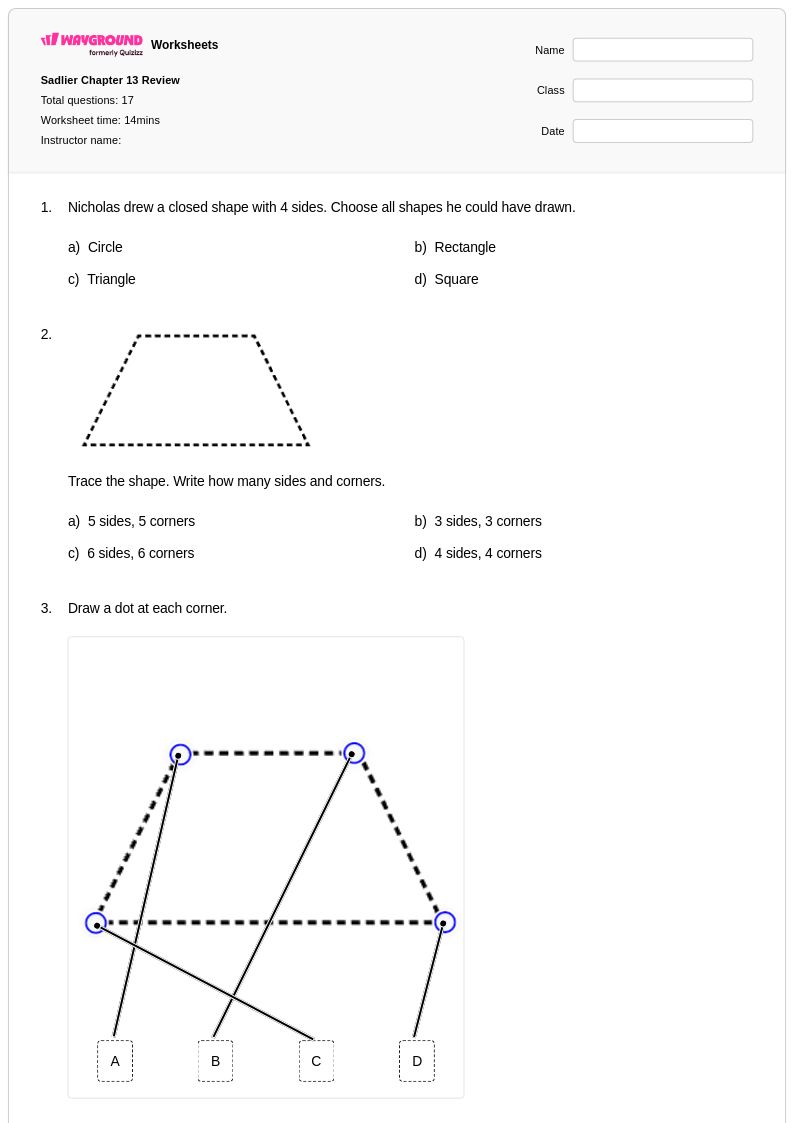
17 Q
1st - Uni
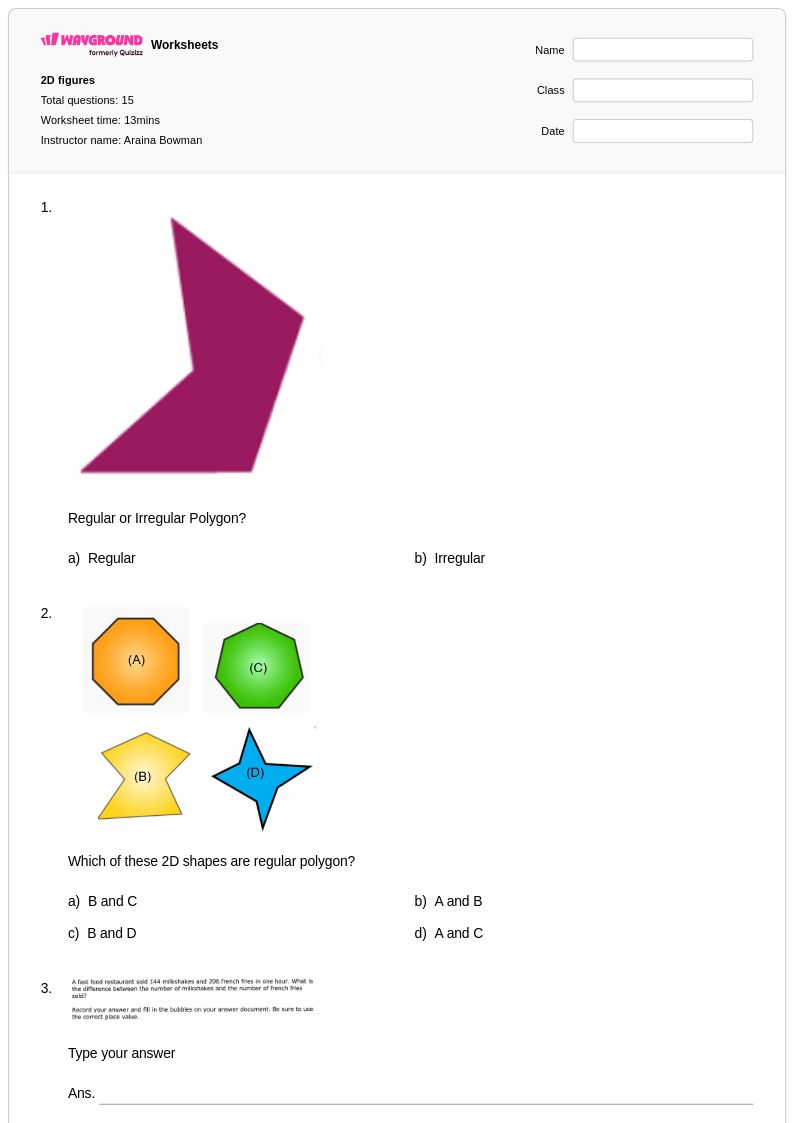
15 Q
2nd
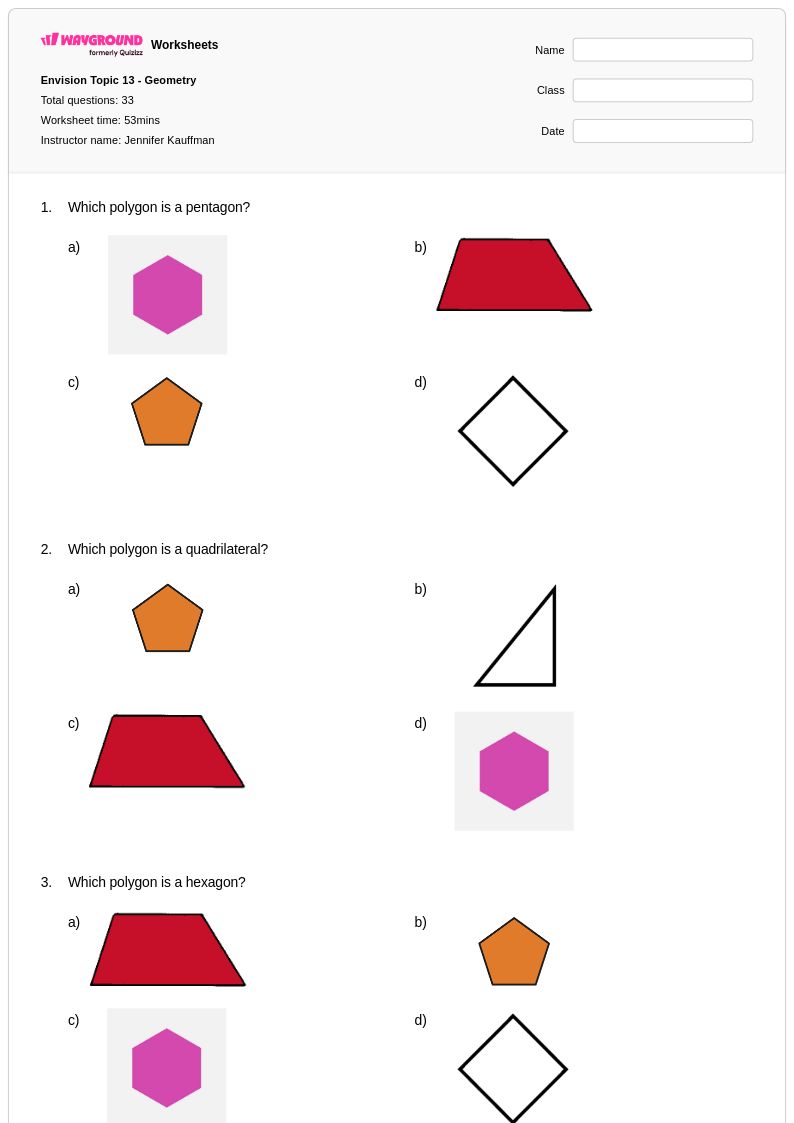
33 Q
2nd
Explore Other Subject Worksheets for grade 2
Explore printable Solid Shapes worksheets for Grade 2
Solid shapes worksheets for Grade 2 students available through Wayground (formerly Quizizz) provide essential foundational practice for young learners developing spatial reasoning and geometric understanding. These carefully designed printables focus on helping second graders identify, classify, and analyze three-dimensional objects including cubes, spheres, cylinders, cones, and rectangular prisms through engaging visual activities and hands-on practice problems. Students strengthen critical mathematical skills by examining real-world examples, sorting shapes by attributes, and recognizing solid shapes in their environment, with each worksheet featuring a comprehensive answer key to support both independent learning and guided instruction. The free pdf resources emphasize tactile and visual learning approaches that align with developmental needs, enabling young mathematicians to build confidence while mastering fundamental geometric concepts through structured, age-appropriate exercises.
Wayground (formerly Quizizz) empowers teachers with millions of educator-created solid shapes resources specifically tailored for Grade 2 mathematics instruction, featuring robust search and filtering capabilities that streamline lesson planning and skill-targeted practice selection. The platform's extensive worksheet collection supports differentiated instruction through customizable difficulty levels and varied question formats, allowing educators to address diverse learning needs within their classrooms while maintaining alignment with elementary mathematics standards. Teachers benefit from flexible delivery options including both printable pdf formats for traditional classroom use and digital versions for interactive learning experiences, facilitating seamless integration into existing curricula whether for whole-group instruction, small-group remediation, or independent enrichment activities. These comprehensive tools enable educators to efficiently identify student misconceptions, provide targeted skill practice, and monitor progress in three-dimensional geometry concepts while saving valuable preparation time through readily available, professionally designed instructional materials.
FAQs
How do I teach solid shapes in Grade 2?
What activities help second graders practice solid shapes?
What misconceptions do Grade 2 students have about solid shapes?
How do I use a Grade 2 solid shapes worksheet from Wayground?
How does Grade 2 solid-shape practice fit the Common Core progression?
How can I differentiate solid-shape worksheets for second graders?
What should second graders know about solid shapes?