Free Printable Anatomical Terminology Worksheets for Class 10
Class 10 anatomical terminology worksheets from Wayground help students master medical vocabulary and body system terms through engaging printables, practice problems, and comprehensive answer keys for effective biology learning.
Explore printable Anatomical Terminology worksheets for Class 10
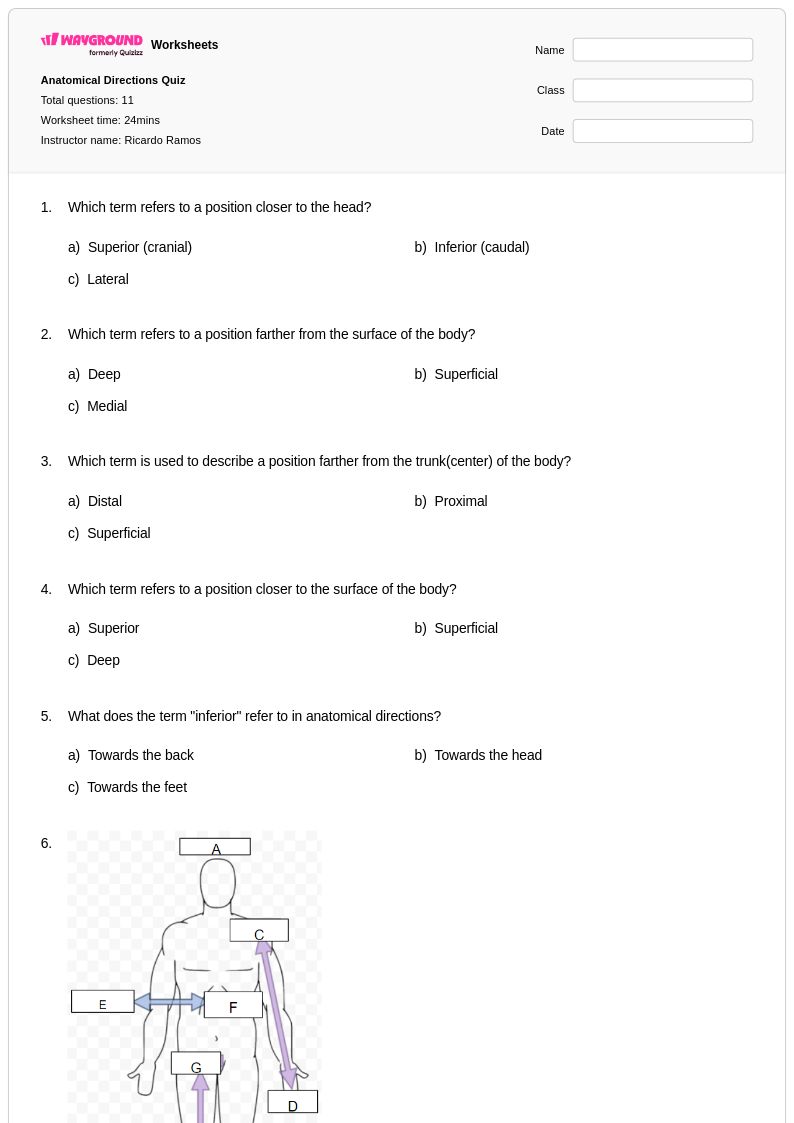
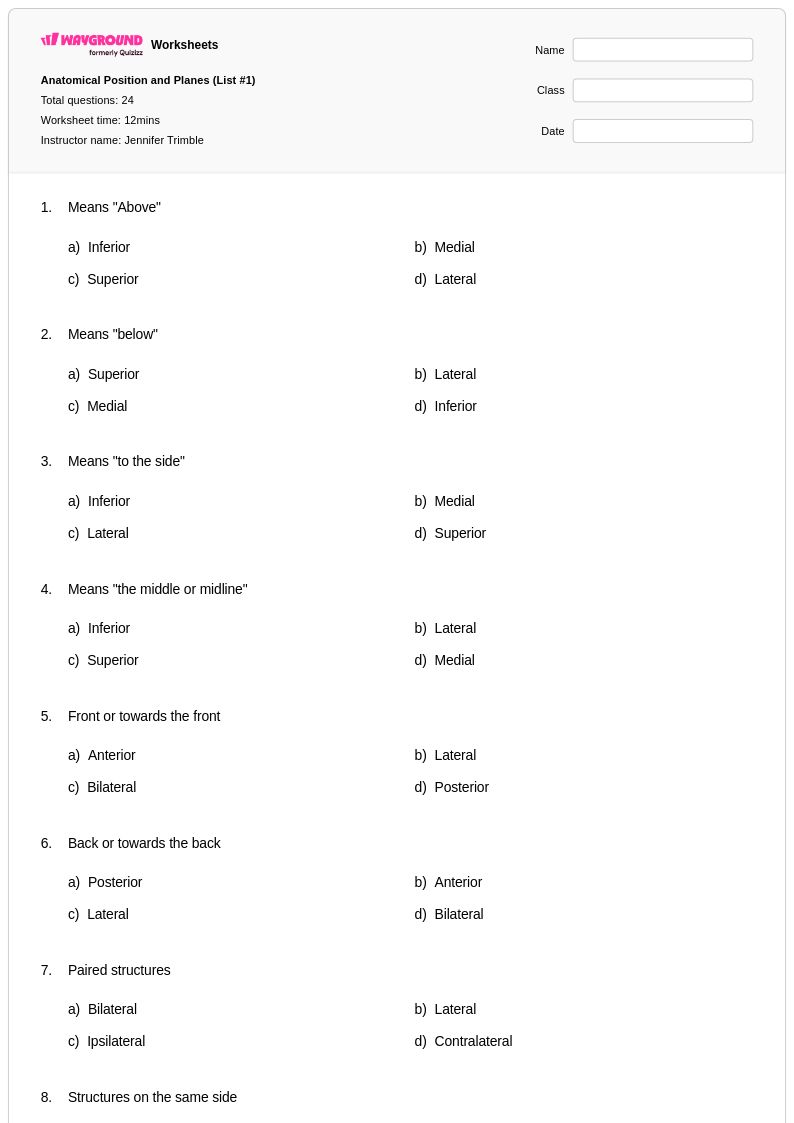
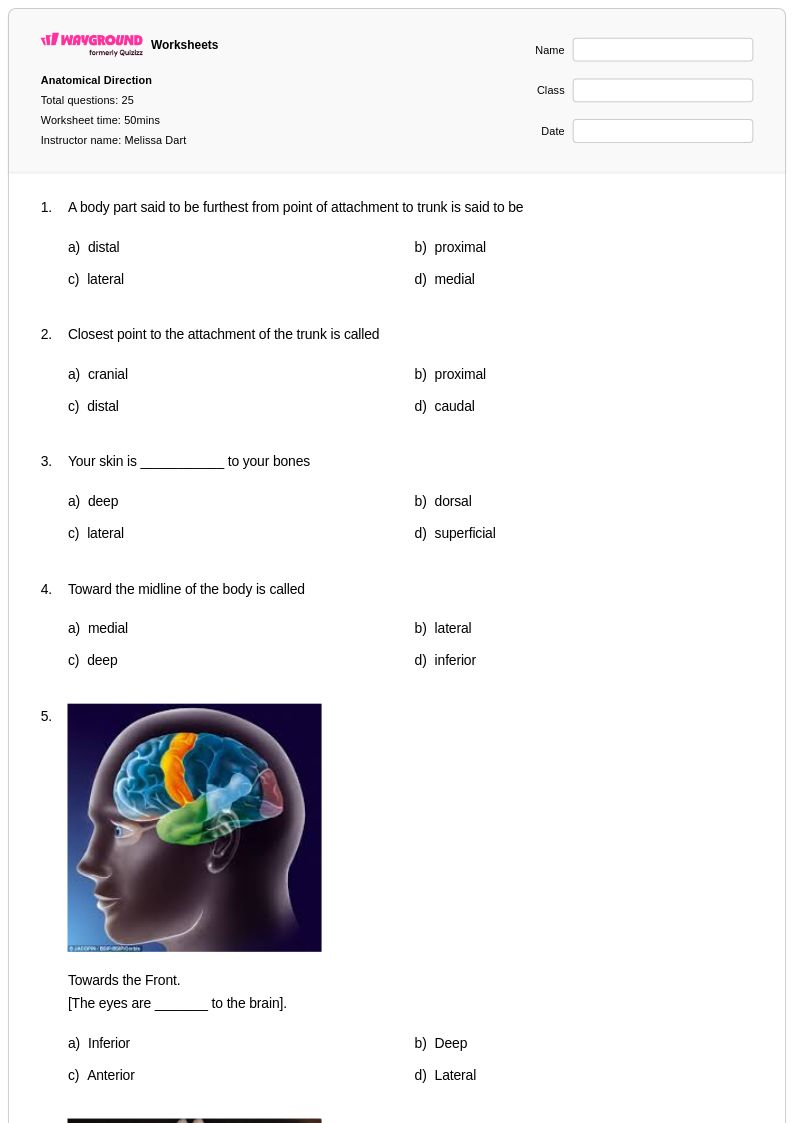
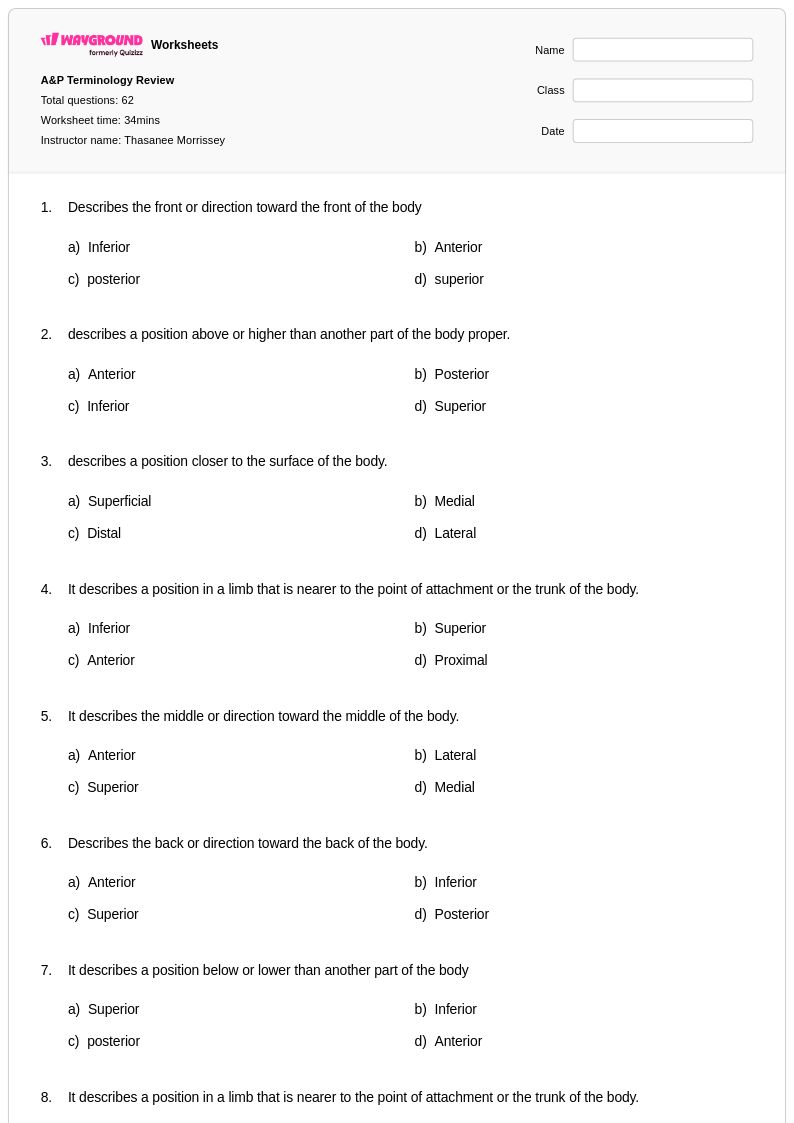
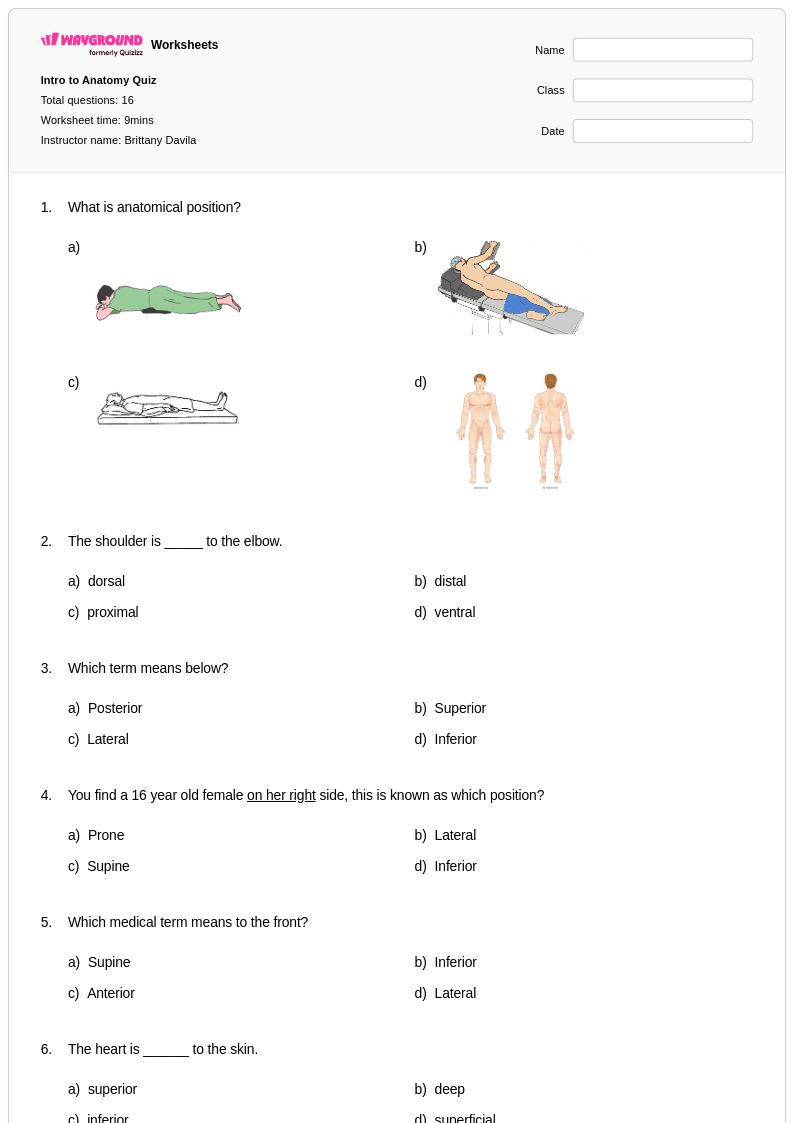
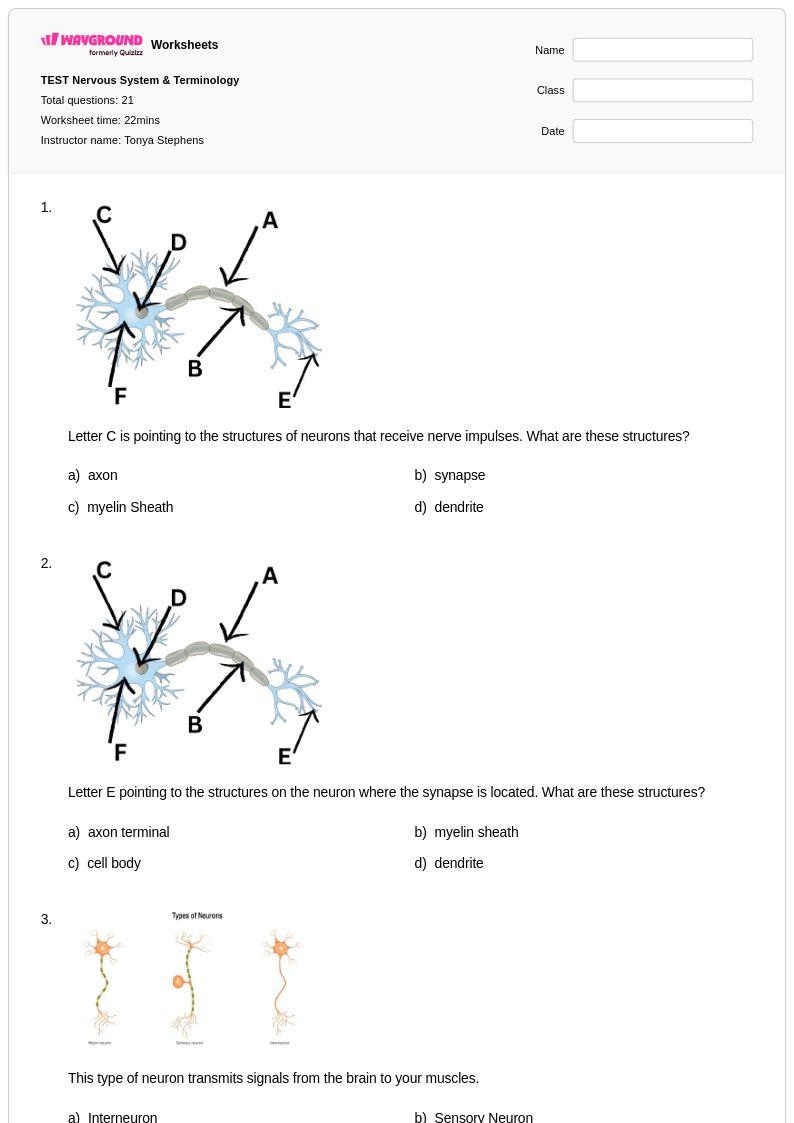
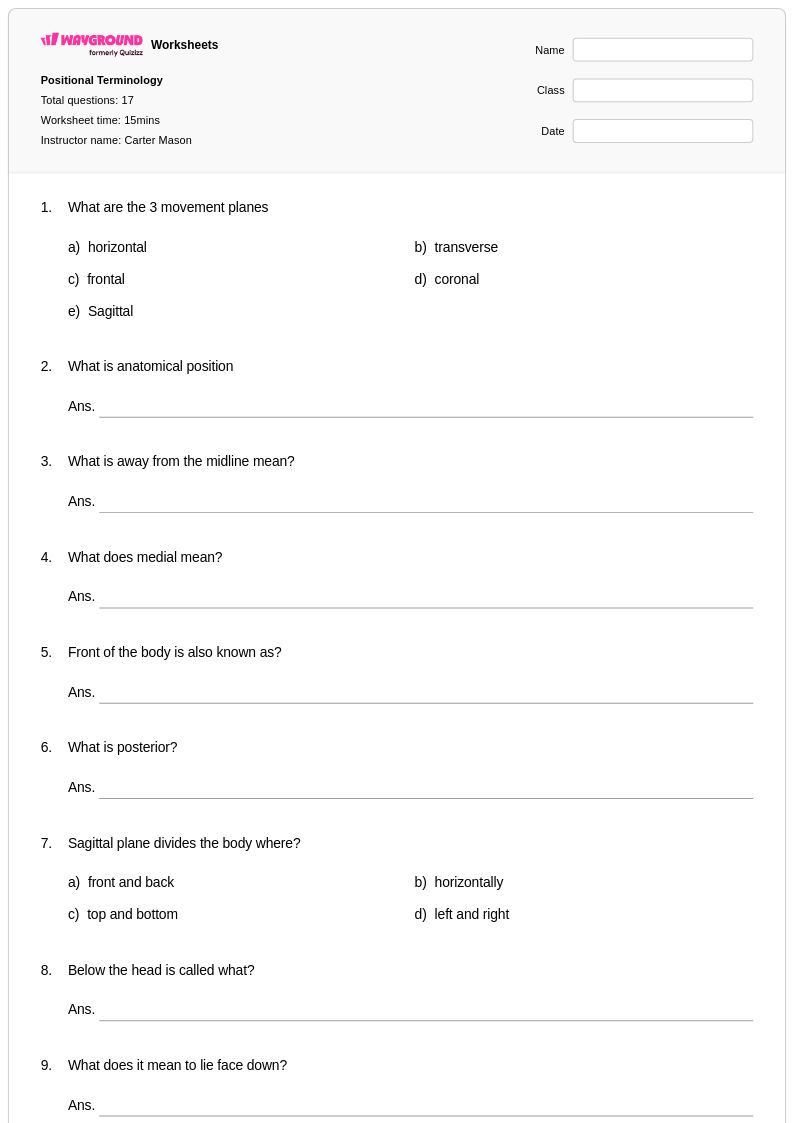
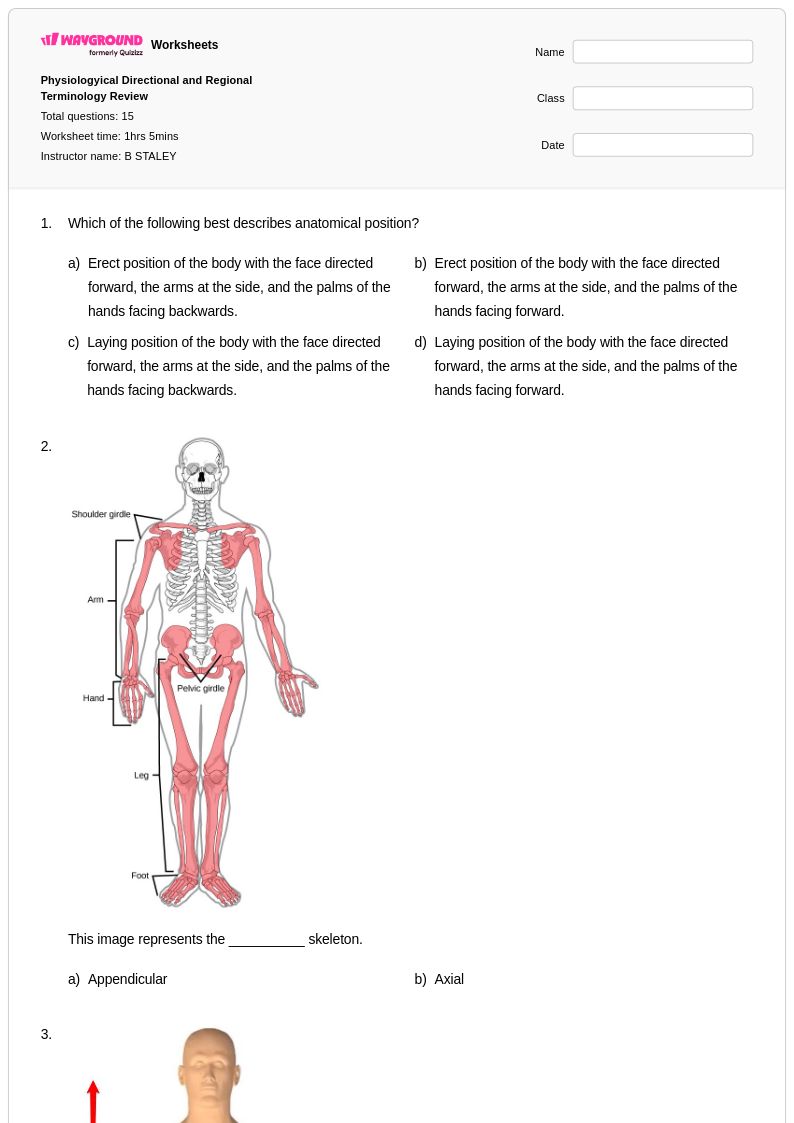
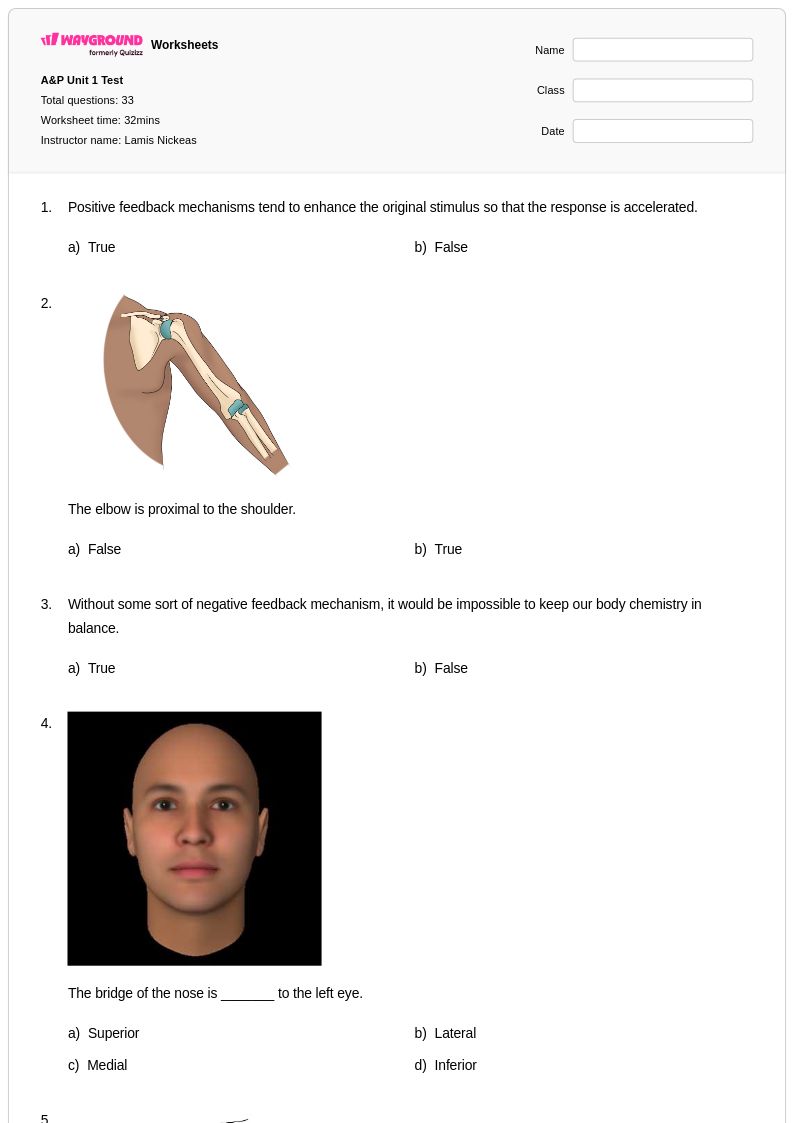
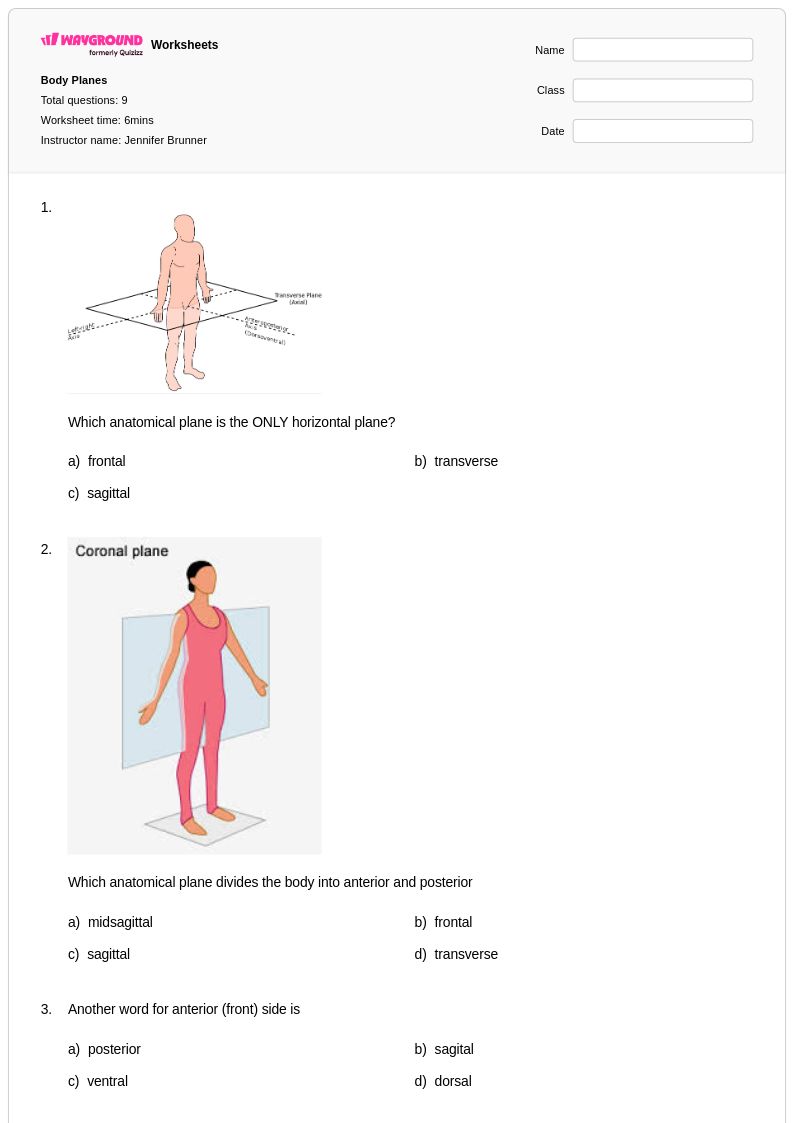
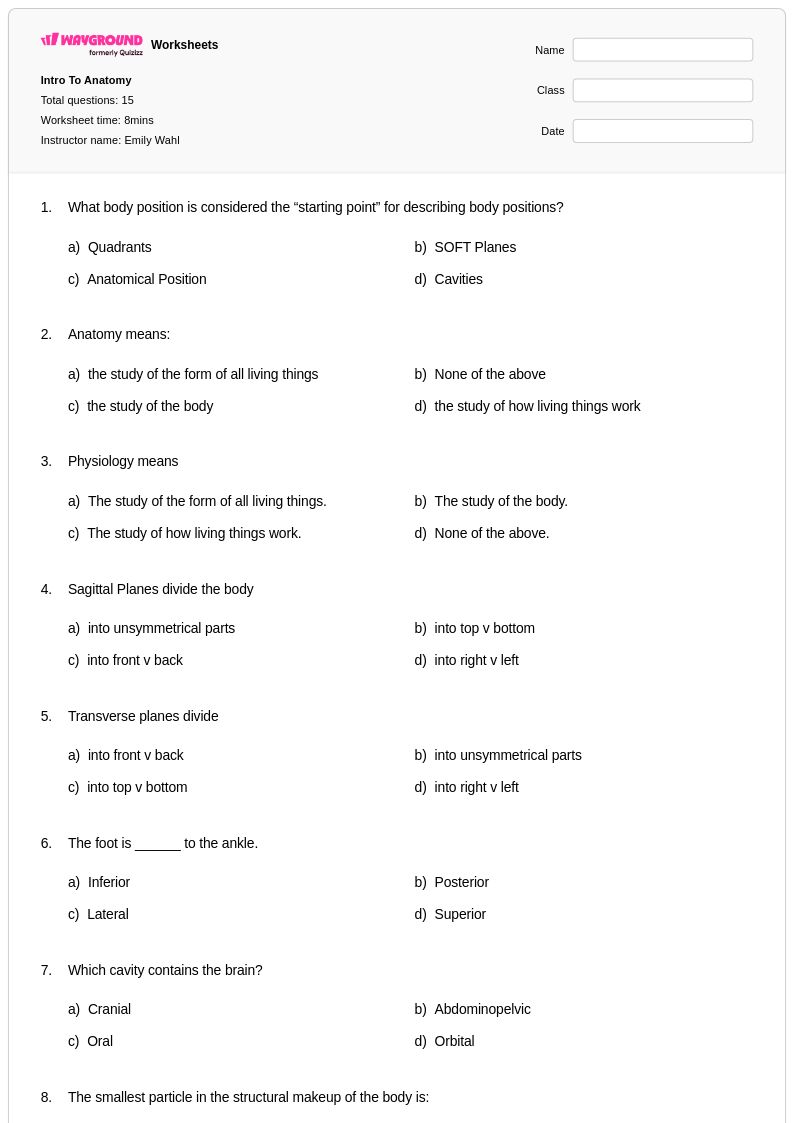
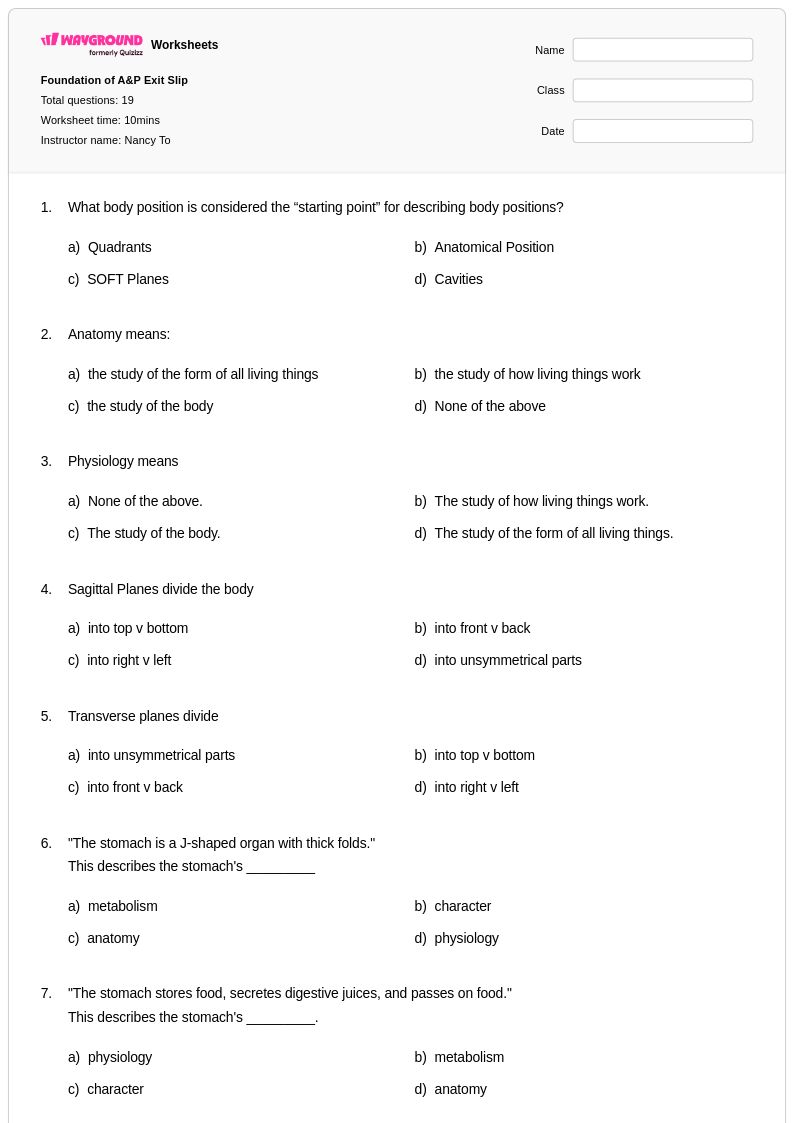
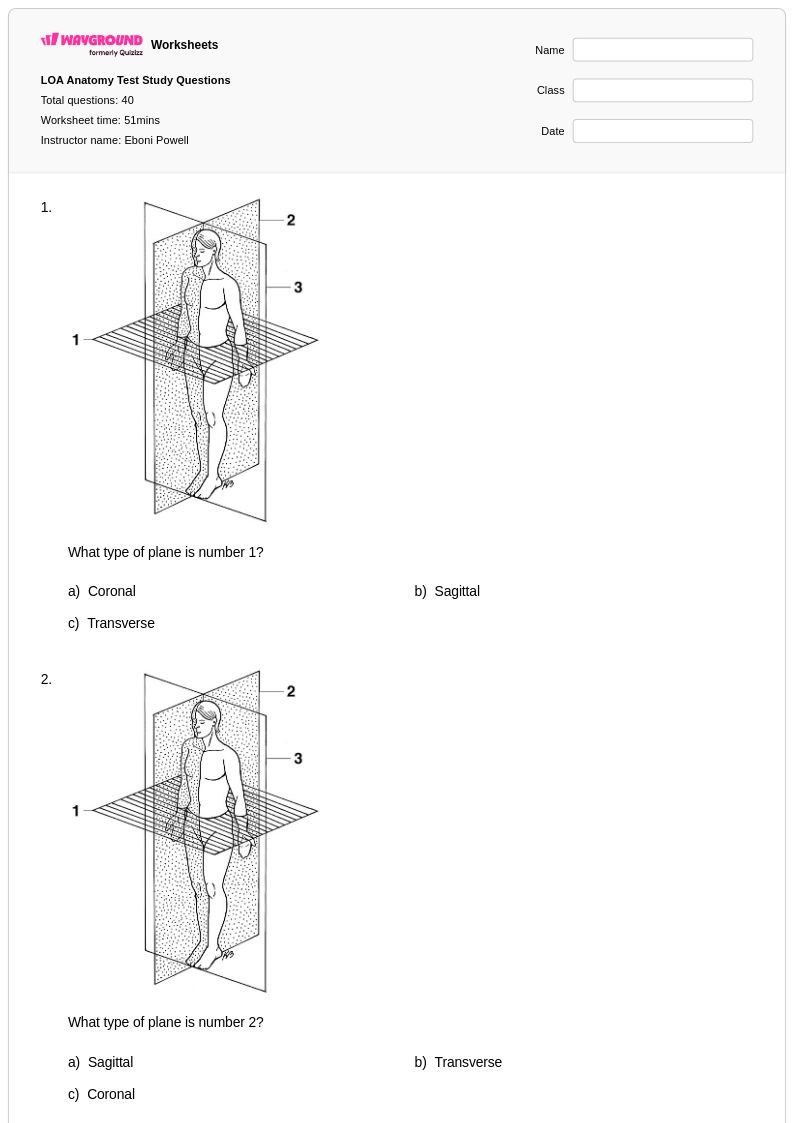
Class 10 anatomical terminology worksheets available through Wayground (formerly Quizizz) provide comprehensive practice with the specialized vocabulary that forms the foundation of human anatomy and physiology studies. These expertly designed resources help students master directional terms like anterior, posterior, medial, and lateral, along with positional references, body planes, and anatomical regions essential for advanced biological study. Students strengthen their ability to accurately describe anatomical structures and their relationships through targeted practice problems that reinforce proper usage of scientific terminology. Each worksheet collection includes detailed answer keys and is available as free printable pdf resources, enabling students to develop the precise language skills necessary for success in upper-level biology coursework and potential healthcare careers.
Wayground (formerly Quizizz) supports biology educators with an extensive library of millions of teacher-created anatomical terminology resources specifically tailored for Class 10 students. The platform's robust search and filtering capabilities allow teachers to quickly locate worksheets aligned with curriculum standards and learning objectives, while built-in differentiation tools enable customization for varying student ability levels. These comprehensive worksheet collections are available in both printable pdf format and interactive digital versions, providing flexibility for classroom instruction, homework assignments, and independent study sessions. Teachers can efficiently plan lessons, design targeted remediation activities, and create enrichment opportunities that help students build confidence with complex anatomical vocabulary through systematic skill practice and assessment.
FAQs
How do I teach anatomical terminology to students who have no prior biology background?
Start by anchoring all terminology to the standard anatomical position, which gives students a consistent reference frame before introducing directional terms like anterior, posterior, superior, and inferior. From there, introduce terms in contrasting pairs (proximal/distal, medial/lateral) so students learn relationships rather than isolated vocabulary. Using labeled diagrams alongside definitions helps students connect abstract terms to concrete body structures, which significantly improves retention.
What exercises help students practice anatomical directional terms?
Effective practice exercises include fill-in-the-blank diagrams where students label body regions using correct directional terminology, as well as scenario-based questions that ask students to describe the position of one structure relative to another. Matching activities pairing terms with definitions build initial familiarity, while applied questions — such as describing a wound location using proper anatomical language — develop the higher-order thinking needed for medical and biological contexts.
What mistakes do students commonly make when learning anatomical terminology?
The most common error is applying directional terms without referencing the standard anatomical position, which leads to inconsistent or incorrect descriptions. Students frequently confuse medial and lateral, or proximal and distal, especially when working with limbs versus the trunk. Another persistent misconception is treating superior and inferior as absolute terms rather than relative ones, which causes errors when describing structures in context. Targeted practice that requires students to justify their term choices — not just select them — helps correct these patterns.
How can I use anatomical terminology worksheets to support students with different learning needs?
Wayground's anatomical terminology worksheets can be assigned digitally, which allows teachers to apply student-level accommodations directly within the platform. Options include Read Aloud for students who benefit from audio support when encountering complex medical vocabulary, reduced answer choices to lower cognitive load for students still building familiarity with the terms, and extended time settings for students who need additional processing time. These accommodations can be configured individually per student and are saved for reuse across future sessions, making differentiation sustainable without additional planning burden.
How do I use Wayground's anatomical terminology worksheets in my classroom?
Wayground's anatomical terminology worksheets are available as printable PDFs for traditional classroom use and in digital formats for technology-integrated environments, giving teachers flexibility based on their setup. Teachers can also host worksheets directly as a quiz on Wayground, enabling real-time student interaction and streamlined review. All worksheets include complete answer keys, so they can be used for guided practice, independent work, homework, or formative assessment without additional preparation.
How do anatomical terminology worksheets connect to broader biology and medical coursework?
Anatomical terminology is the foundational language of all body system studies, clinical documentation, and medical communication, which means gaps in this vocabulary create compounding difficulties in later coursework. Students who master directional terms, body cavity classifications, and regional terminology are better prepared for anatomy, physiology, and health science courses. Worksheet practice that applies these terms in biological contexts — rather than drilling definitions in isolation — builds the transferable language skills students need across disciplines.