
20 Q
9th - Uni
15 Q
9th - Uni
20 Q
7th - Uni
13 Q
9th
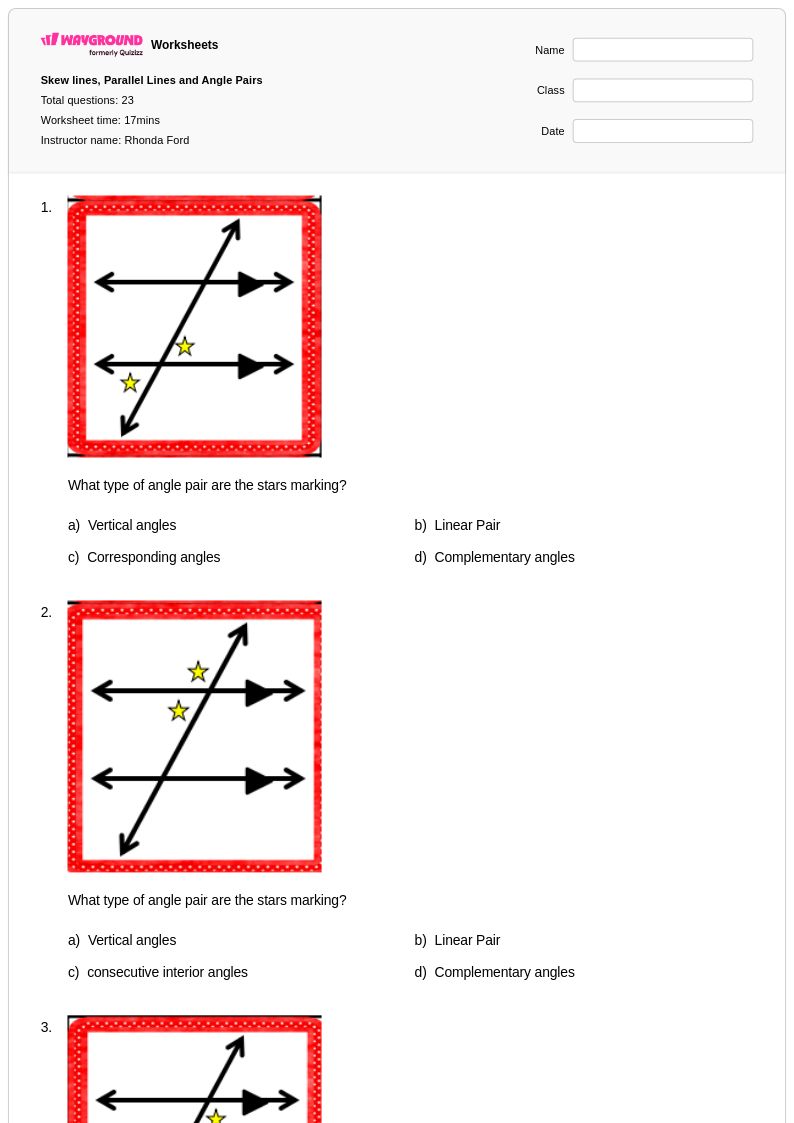
23 Q
9th
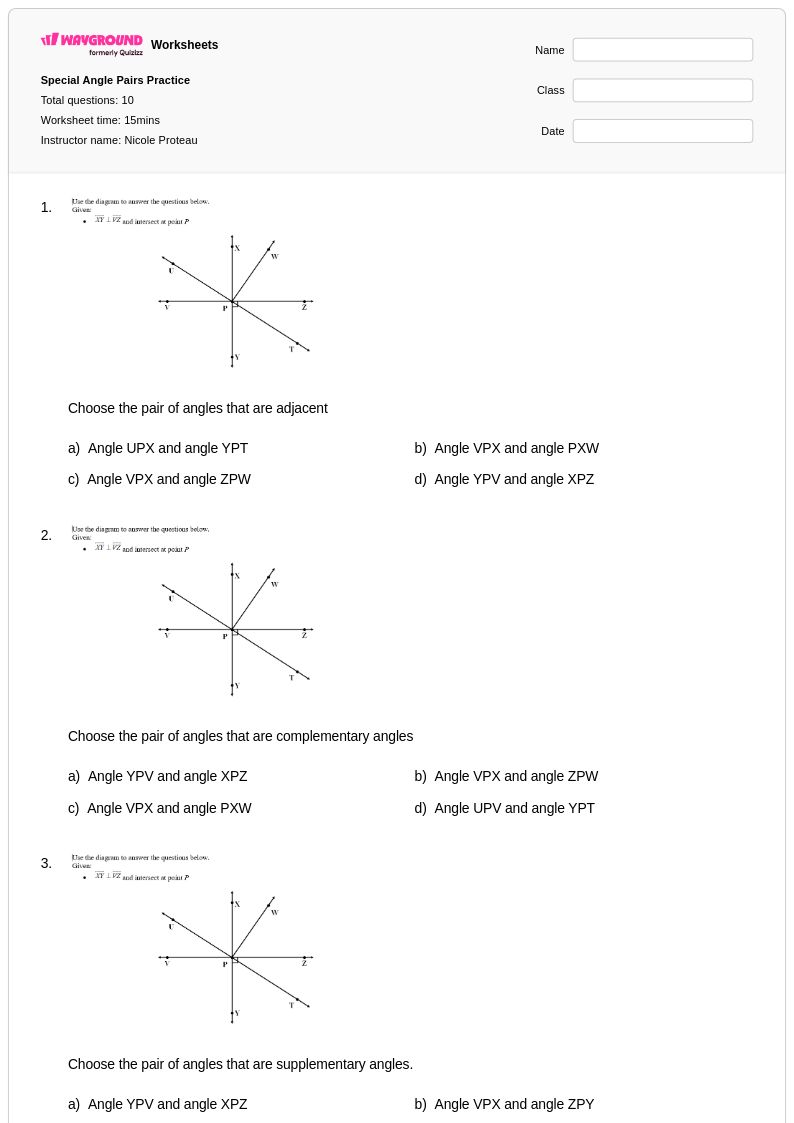
10 Q
8th - 11th
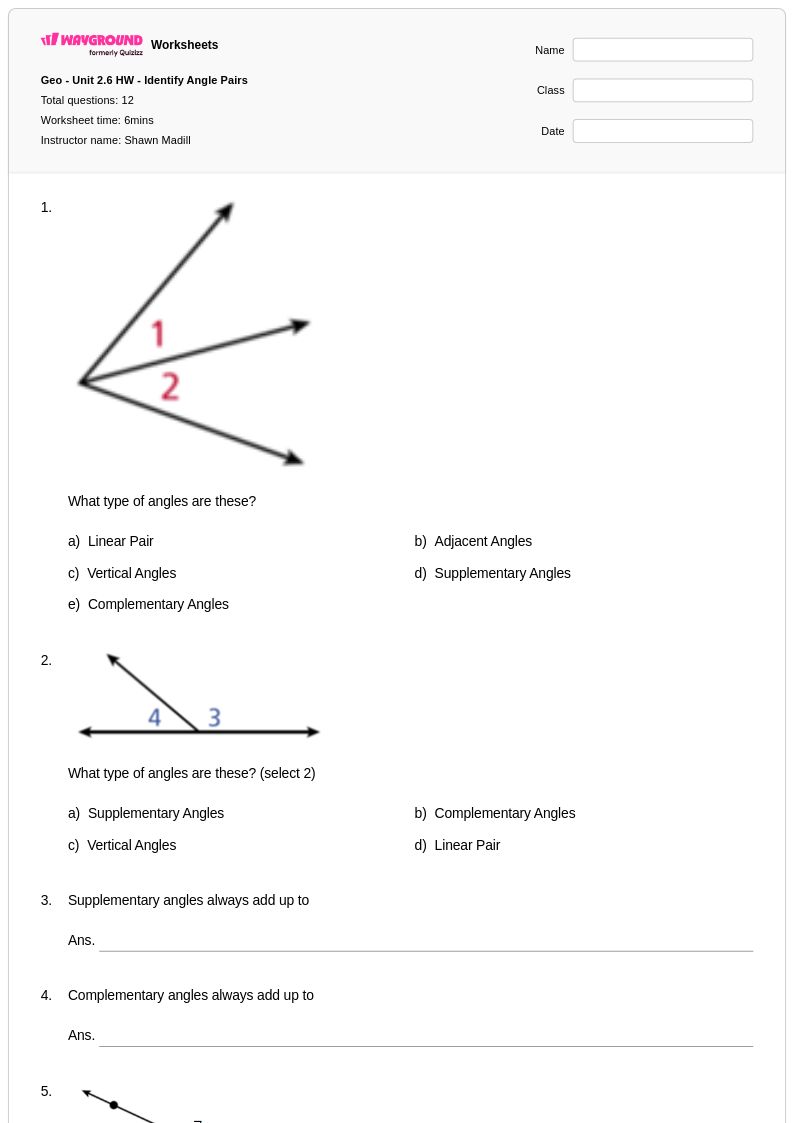
12 Q
9th - 12th
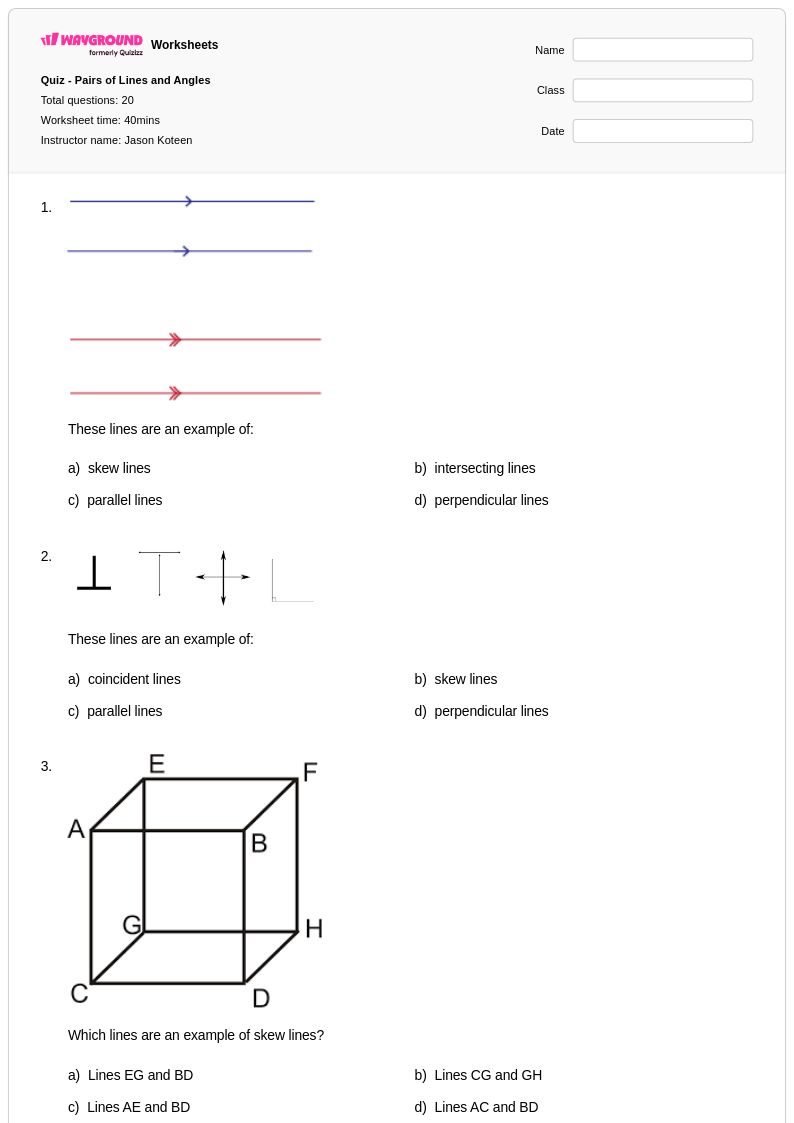
20 Q
7th - 10th
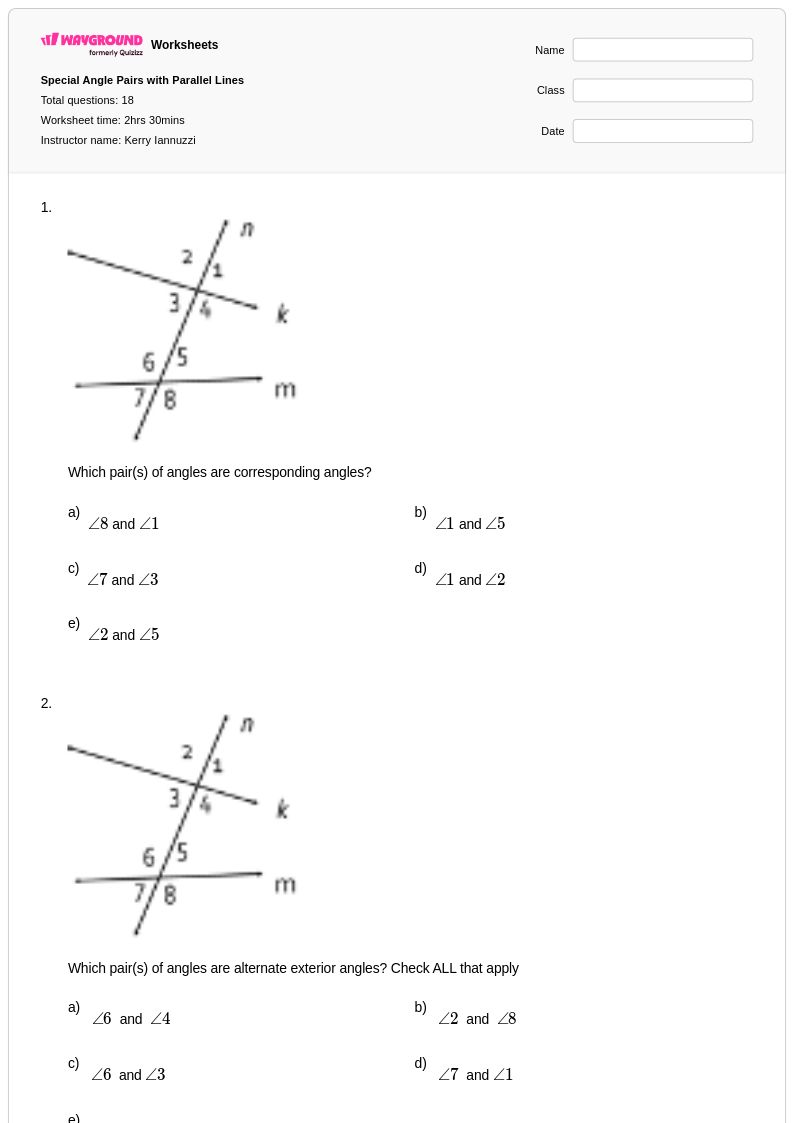
18 Q
9th - 10th
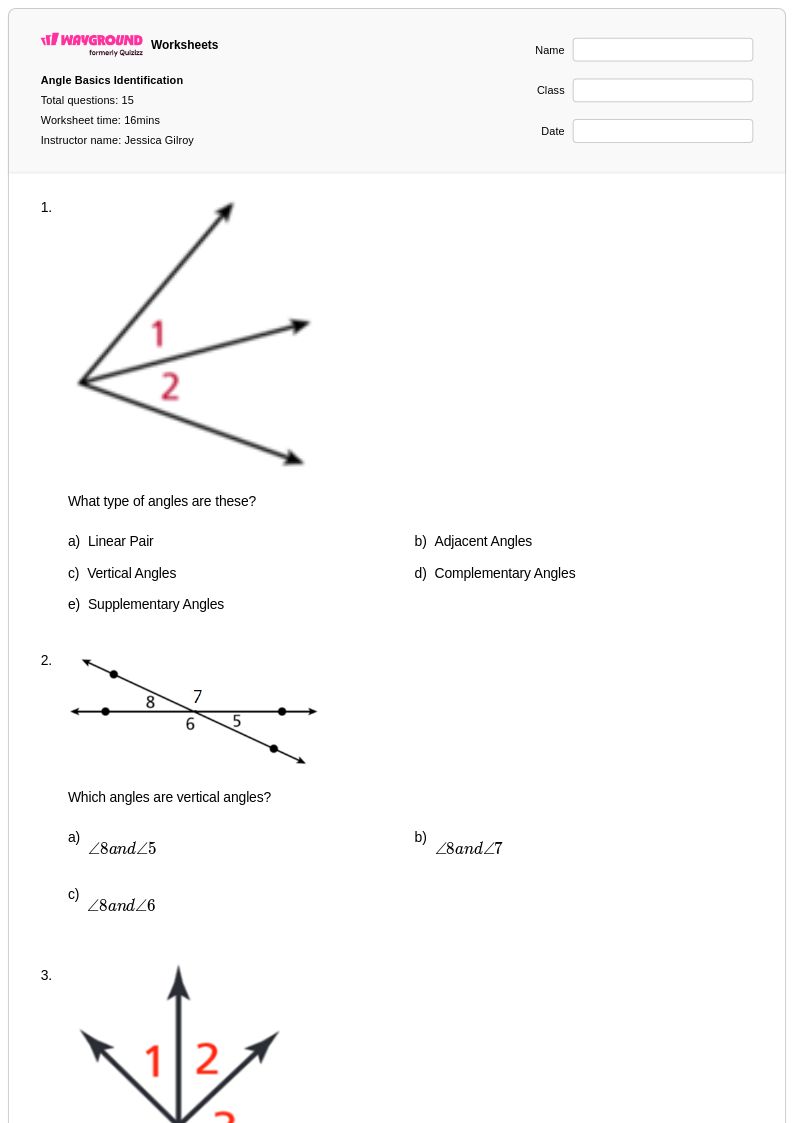
15 Q
9th
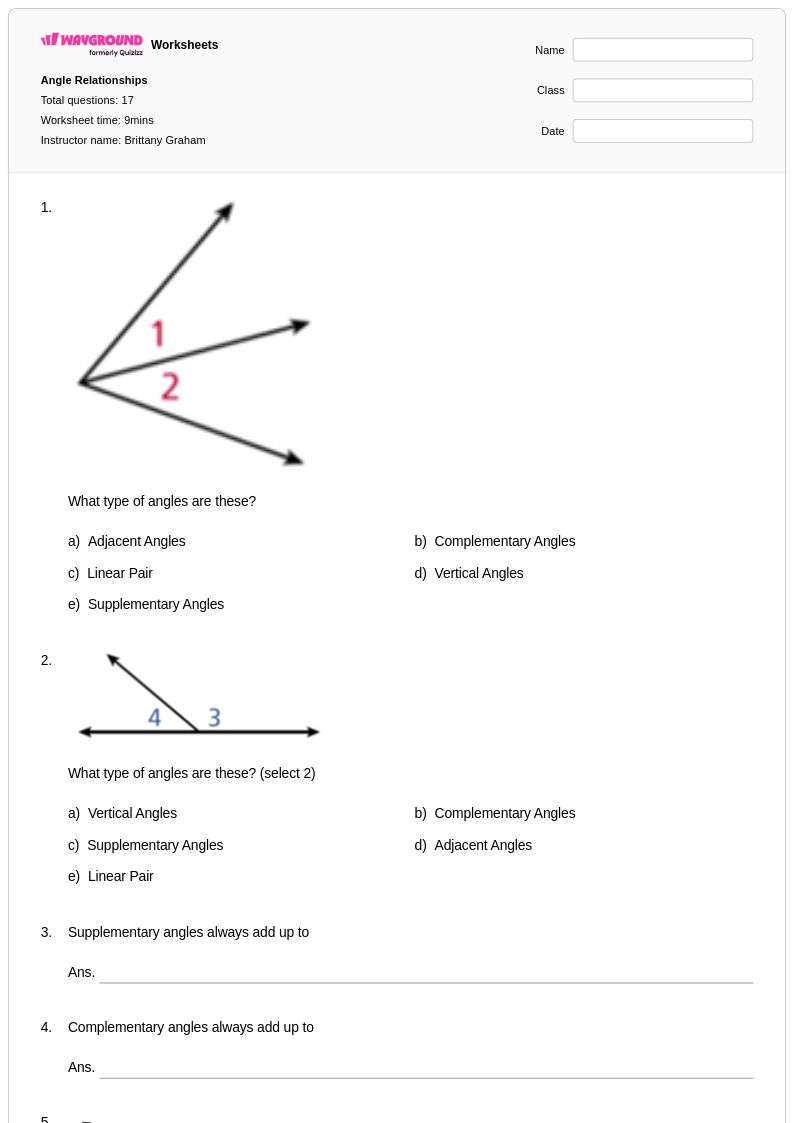
17 Q
9th - 10th
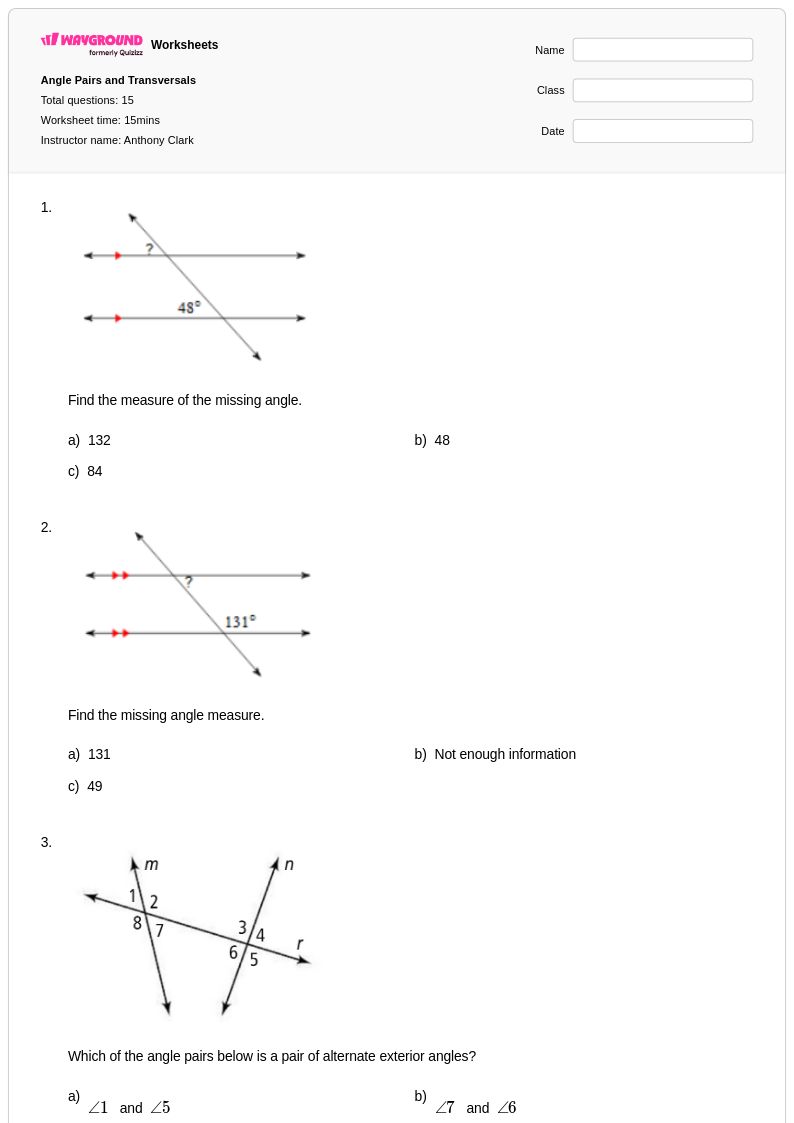
15 Q
9th - Uni
11 Q
9th
14 Q
8th - Uni
9 Q
9th - Uni
15 Q
9th - Uni
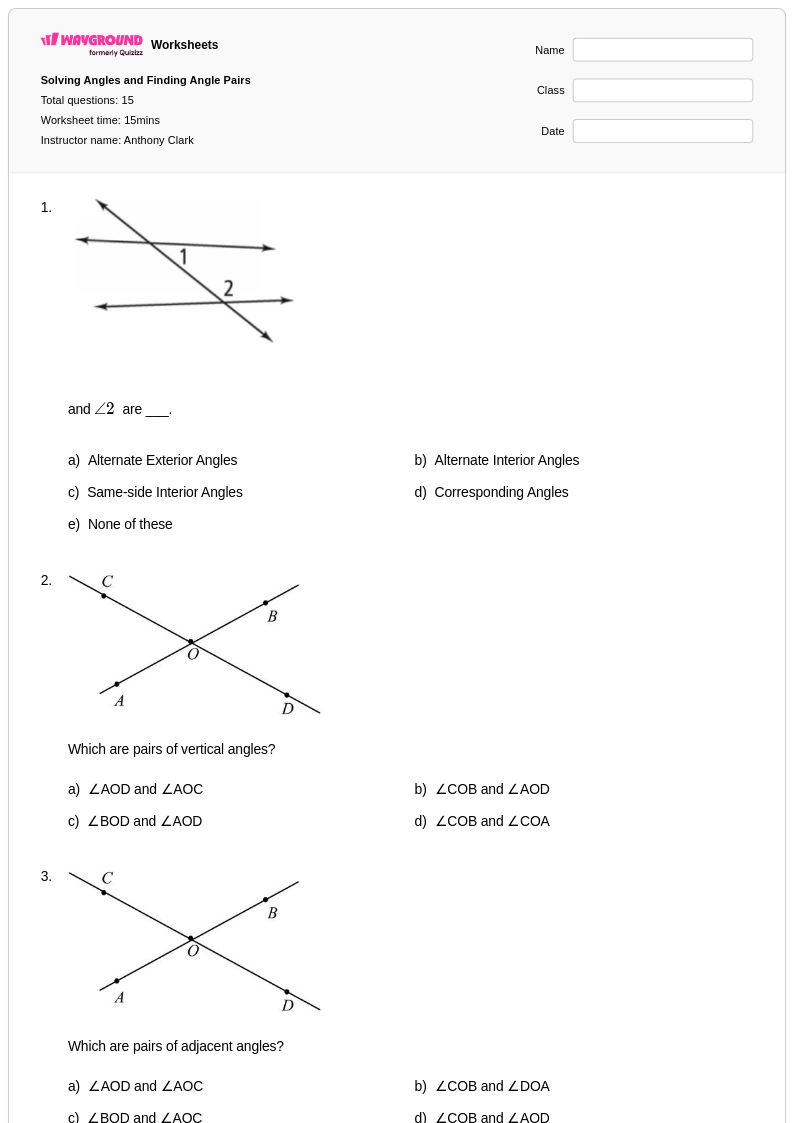
15 Q
9th - Uni
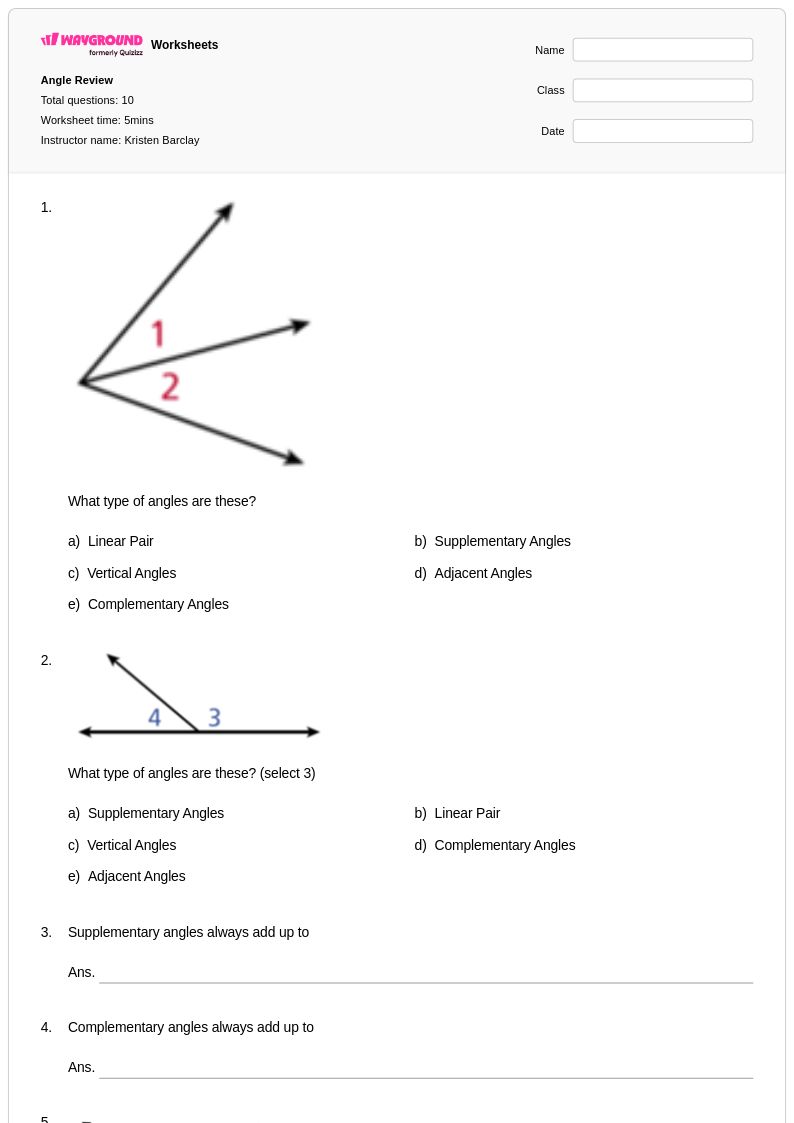
10 Q
9th - 10th
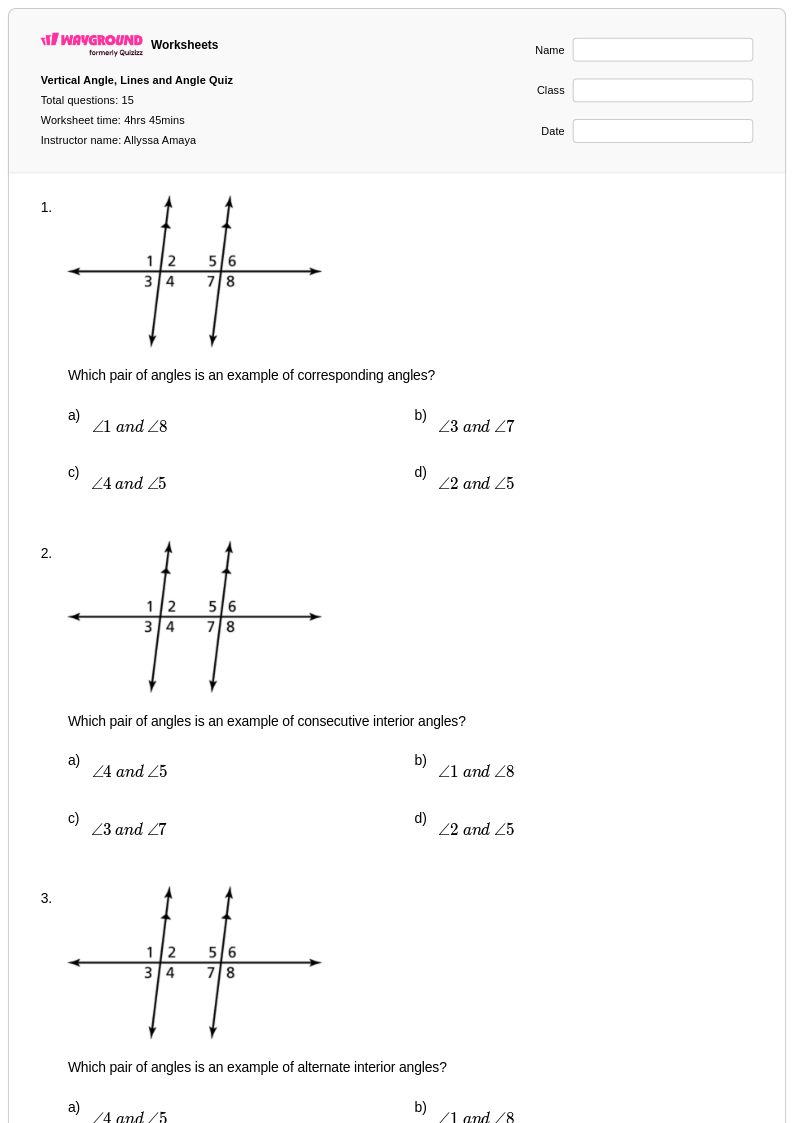
15 Q
9th
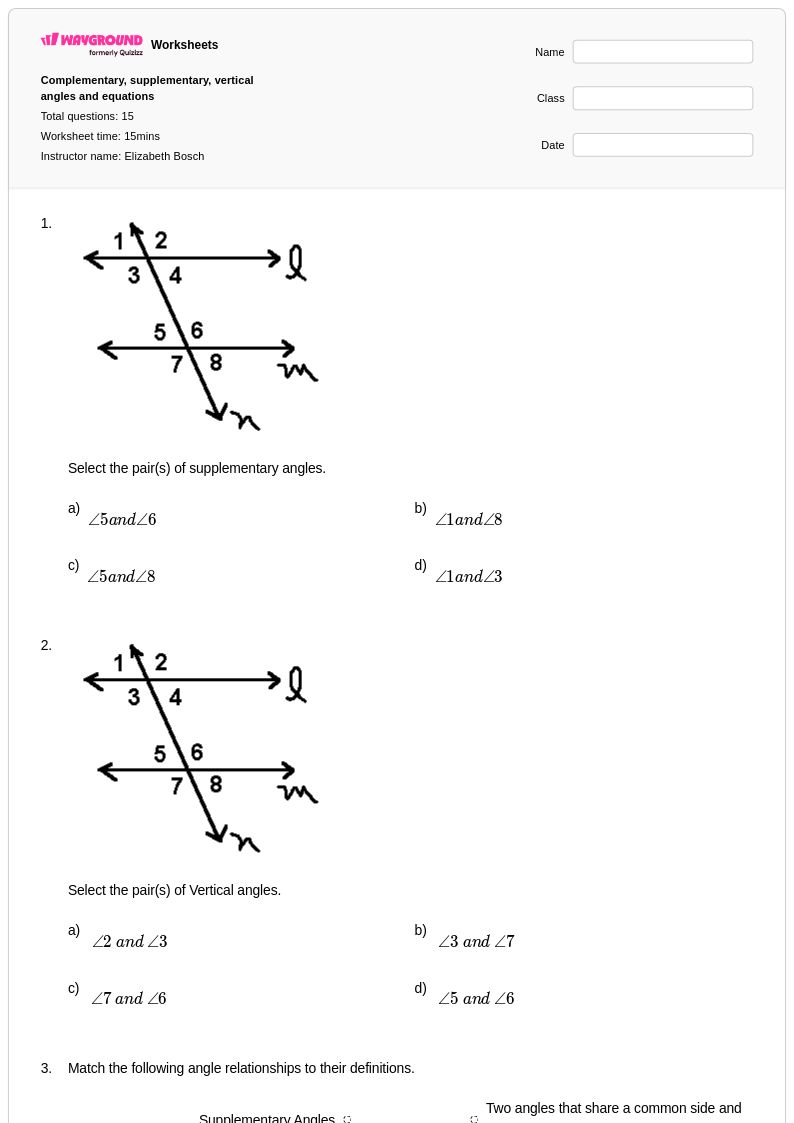
15 Q
7th - Uni
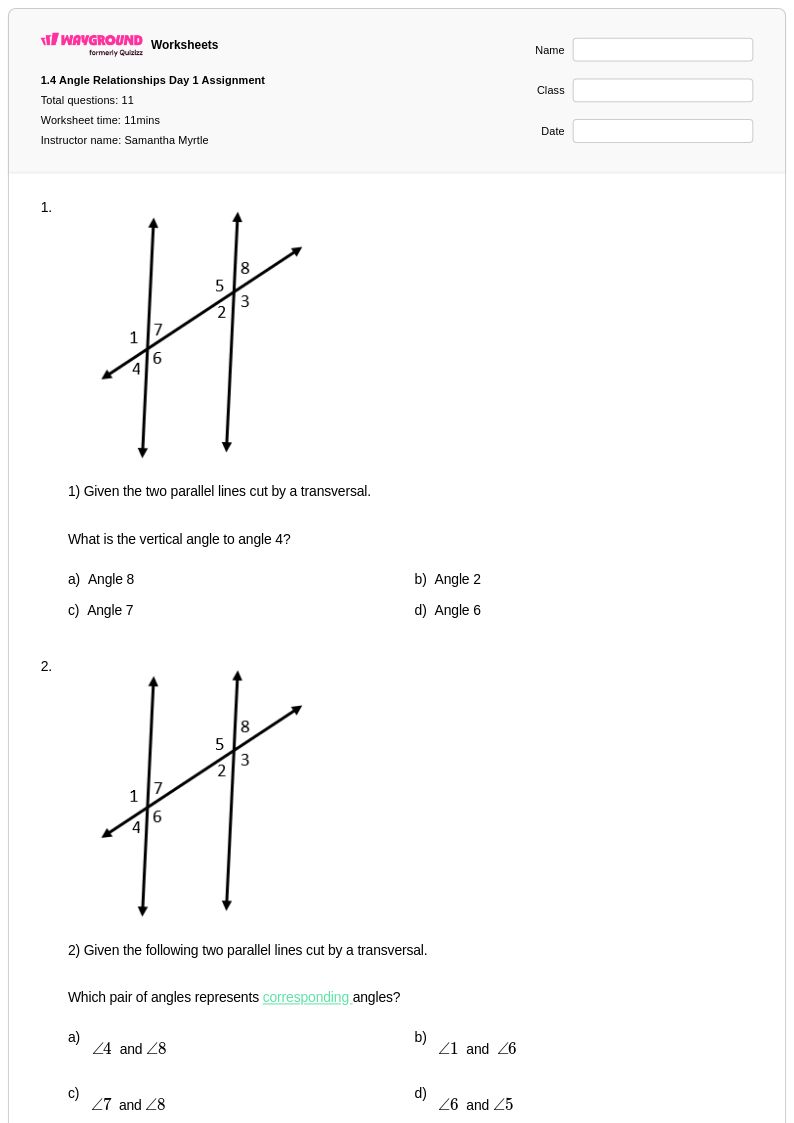
11 Q
9th - 12th
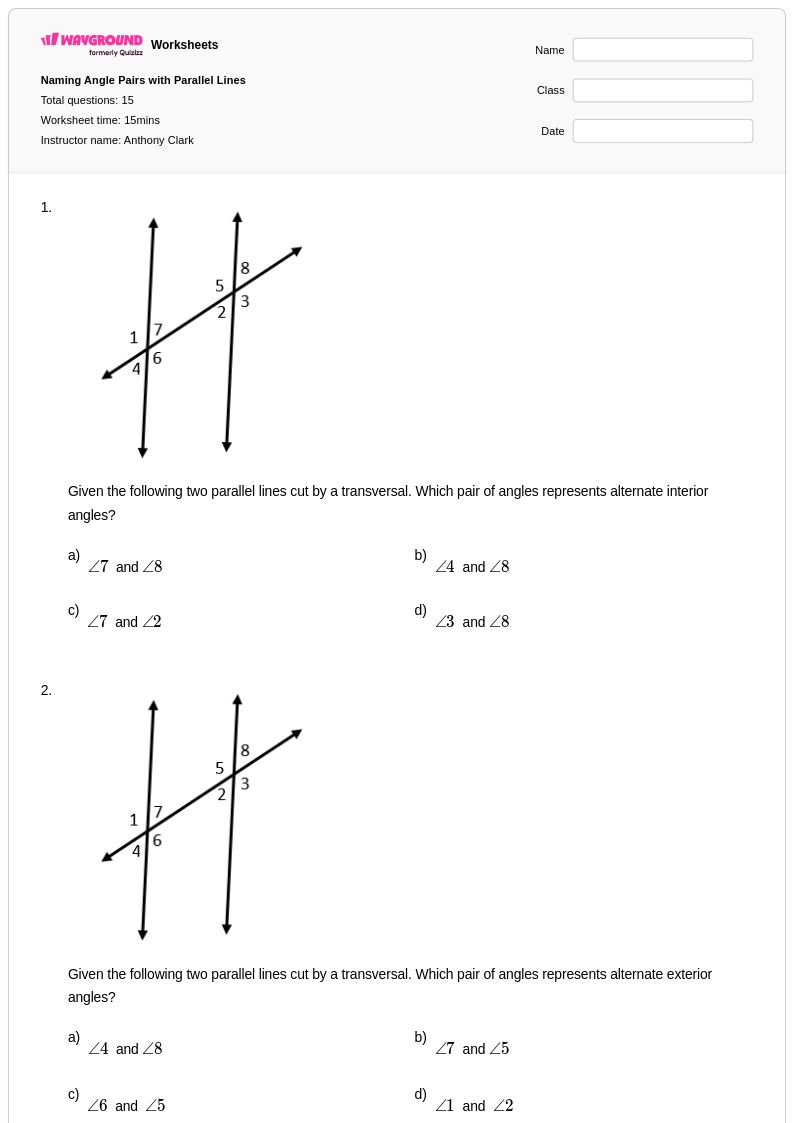
15 Q
9th - Uni
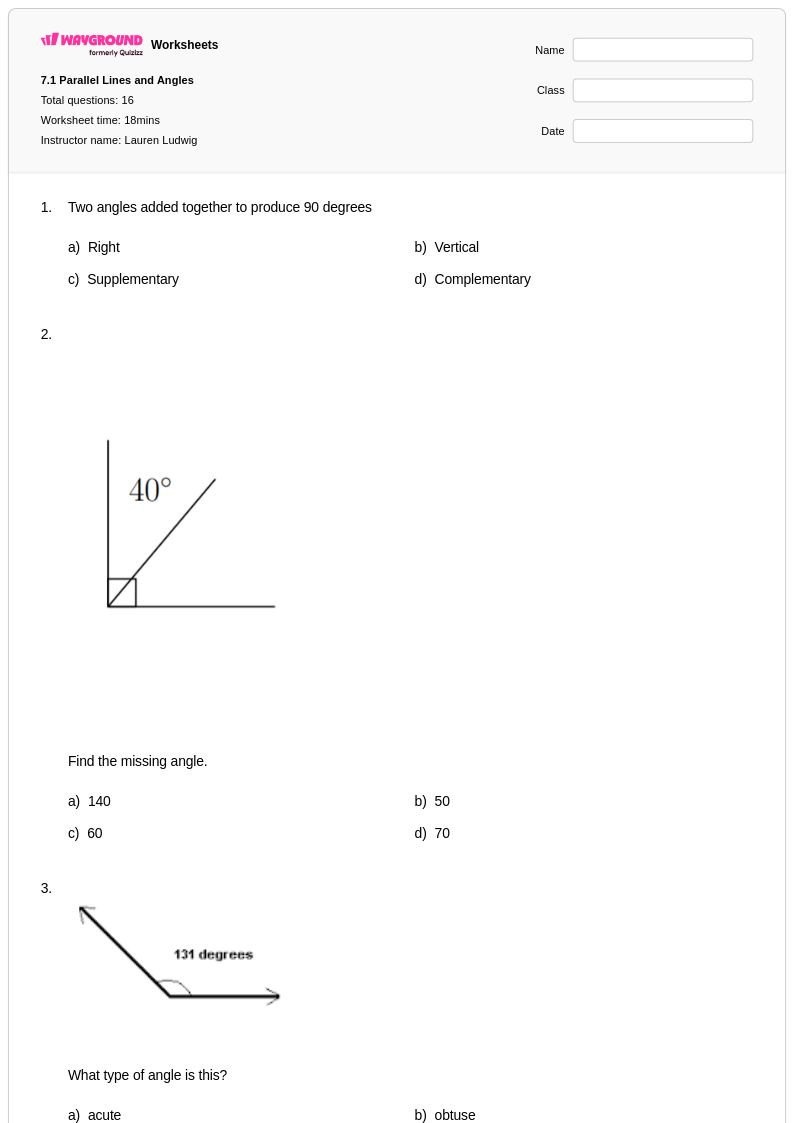
16 Q
9th
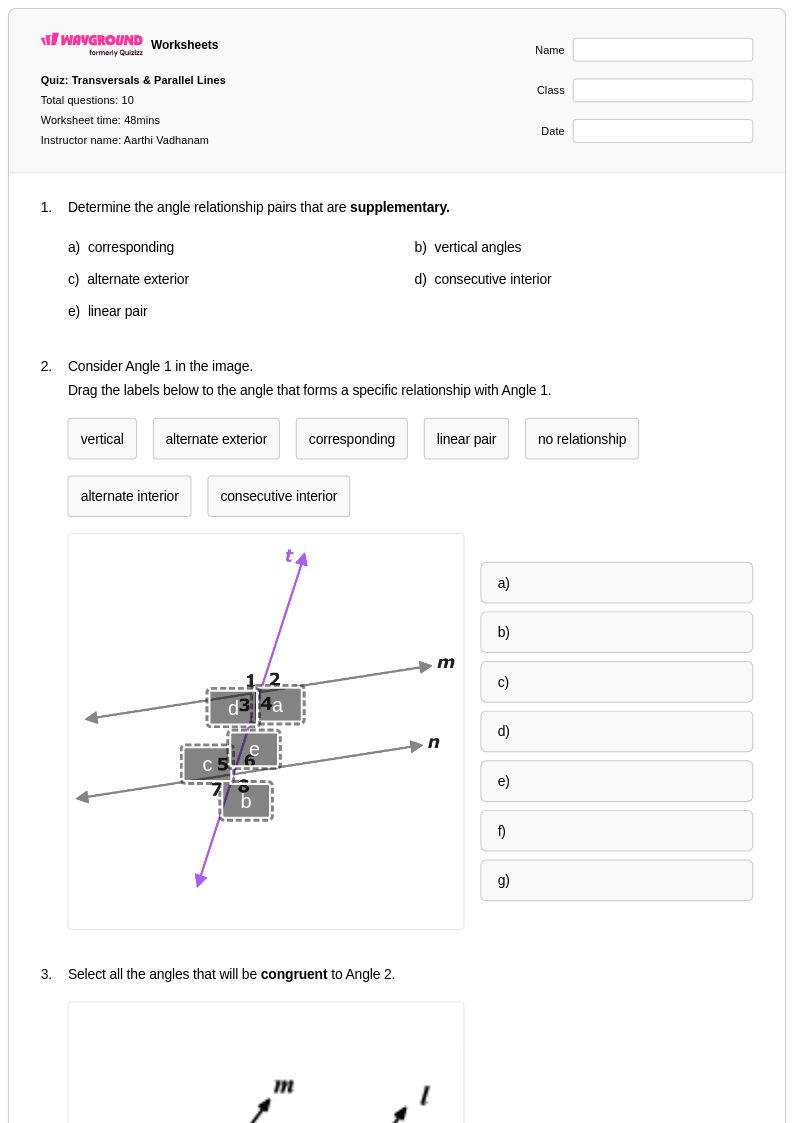
10 Q
9th - 12th
Explore Other Subject Worksheets for class 9
Explore printable Angle Pairs worksheets for Class 9
Angle pairs worksheets for Class 9 mathematics provide comprehensive practice with the fundamental geometric relationships that form the foundation of advanced geometric reasoning. These carefully designed resources through Wayground (formerly Quizizz) help students master essential concepts including complementary and supplementary angles, vertical angles, linear pairs, and adjacent angles through systematic problem-solving exercises. Students develop critical analytical skills by identifying angle relationships in various geometric configurations, calculating missing angle measures, and applying angle pair properties to solve complex multi-step problems. Each worksheet collection includes detailed answer keys and is available as free printable pdf resources, ensuring students can verify their work and teachers can efficiently assess understanding of these crucial geometric principles.
Wayground (formerly Quizizz) empowers educators with an extensive library of millions of teacher-created angle pairs worksheets that streamline lesson planning and support diverse learning needs in Class 9 geometry classrooms. The platform's robust search and filtering capabilities allow teachers to quickly locate resources aligned with specific curriculum standards and learning objectives, while built-in differentiation tools enable seamless customization for varying skill levels within the same classroom. These versatile worksheet collections are available in both printable pdf format for traditional instruction and digital formats for technology-integrated learning environments, providing flexibility for remediation sessions, enrichment activities, and targeted skill practice. Teachers can efficiently modify problems, adjust difficulty levels, and create personalized practice sets that address individual student needs while maintaining rigorous academic standards in geometric reasoning and angle pair applications.
FAQs
How should I teach angle pairs in Grade 9 geometry?
What angle-pair problems should ninth graders practice?
What mistakes do Grade 9 students make when solving angle-pair equations?
How can I assign a Grade 9 angle pairs worksheet for assessment or homework?
Do Grade 9 angle-pair worksheets align with Common Core geometry?
How can I differentiate angle-pair work in a Grade 9 geometry class?
Why are angle pairs taught in Grade 9?