Explore Wayground's comprehensive collection of free blood pressure measurement worksheets and printables that help students master cardiovascular monitoring techniques through hands-on practice problems and detailed answer keys.
Blood pressure measurement worksheets available through Wayground (formerly Quizizz) provide comprehensive educational resources that help students master the fundamental concepts of cardiovascular physiology and clinical measurement techniques. These expertly designed worksheets guide learners through the intricate processes of systolic and diastolic pressure readings, proper sphygmomanometer usage, and the interpretation of blood pressure values within normal and abnormal ranges. Students develop critical analytical skills by working through practice problems that explore the relationship between blood pressure and factors such as age, physical activity, stress, and underlying health conditions. Each worksheet includes detailed answer keys that support independent learning and self-assessment, while the free printable format ensures accessibility for diverse learning environments and study preferences.
Wayground's extensive collection of blood pressure measurement worksheets draws from millions of teacher-created resources, offering educators powerful search and filtering capabilities to locate materials perfectly suited to their instructional needs. The platform's robust differentiation tools enable teachers to customize content difficulty levels, ensuring appropriate challenge for students across varying ability ranges while maintaining alignment with relevant educational standards. These versatile resources are available in both printable pdf formats and interactive digital versions, providing flexibility for traditional classroom instruction, remote learning scenarios, and hybrid educational models. Teachers utilize these comprehensive worksheet collections for targeted skill practice, remediation of challenging concepts, enrichment activities for advanced learners, and efficient lesson planning that addresses the complex physiological principles underlying cardiovascular health assessment.
FAQs
How do I teach blood pressure measurement to students?
Start by establishing the physiological foundation: explain the cardiac cycle and how systolic pressure reflects ventricular contraction while diastolic pressure reflects ventricular relaxation. From there, introduce the sphygmomanometer and walk students through the procedural steps of manual measurement, including proper cuff placement and listening for Korotkoff sounds. Connecting readings to real-world factors like age, physical activity, and stress helps students understand why blood pressure varies and why accurate measurement matters clinically.
What exercises help students practice reading and interpreting blood pressure values?
Practice problems that present a range of systolic and diastolic values and ask students to classify them as normal, elevated, or hypertensive are highly effective for building interpretation skills. Scenario-based exercises that tie readings to patient profiles, such as a sedentary adult versus an athlete, reinforce how physiological and lifestyle factors influence values. Repeated exposure to reading sphygmomanometer dials or digital displays in worksheet form builds fluency before students work with actual equipment.
What mistakes do students commonly make when learning blood pressure measurement?
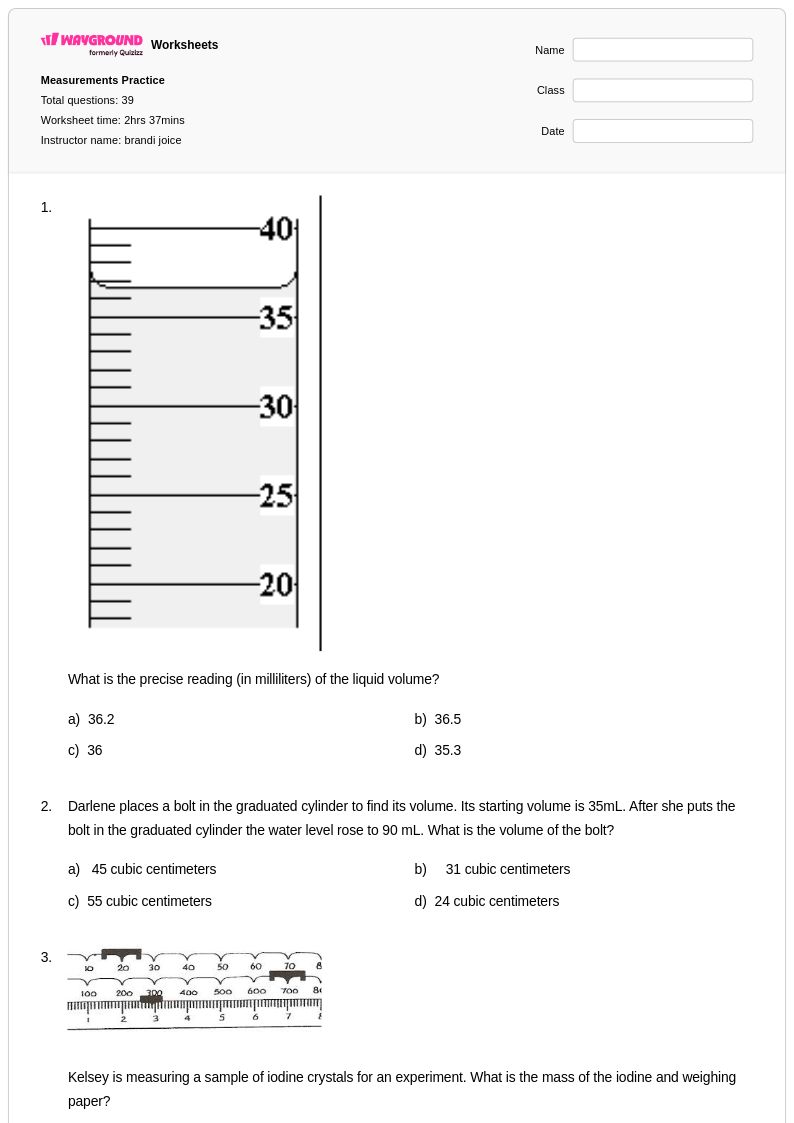
One of the most common errors is confusing which value is systolic and which is diastolic, particularly when writing readings in fraction format. Students also frequently misidentify whether a given value falls within a normal, elevated, or hypertensive range because they have not memorized the clinical thresholds. A third common mistake is misreading analog sphygmomanometer gauges, where students round to the nearest large increment rather than reading the precise value, leading to clinically significant errors.
How can I use blood pressure measurement worksheets to support students at different skill levels?
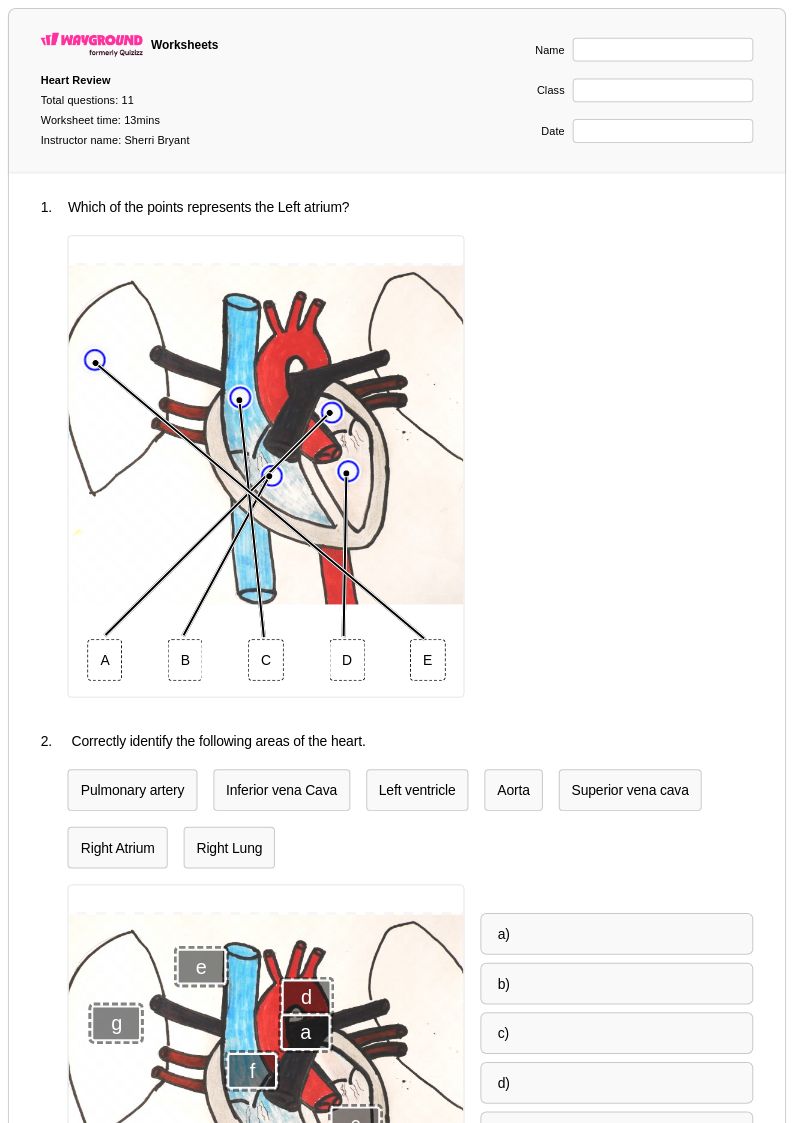
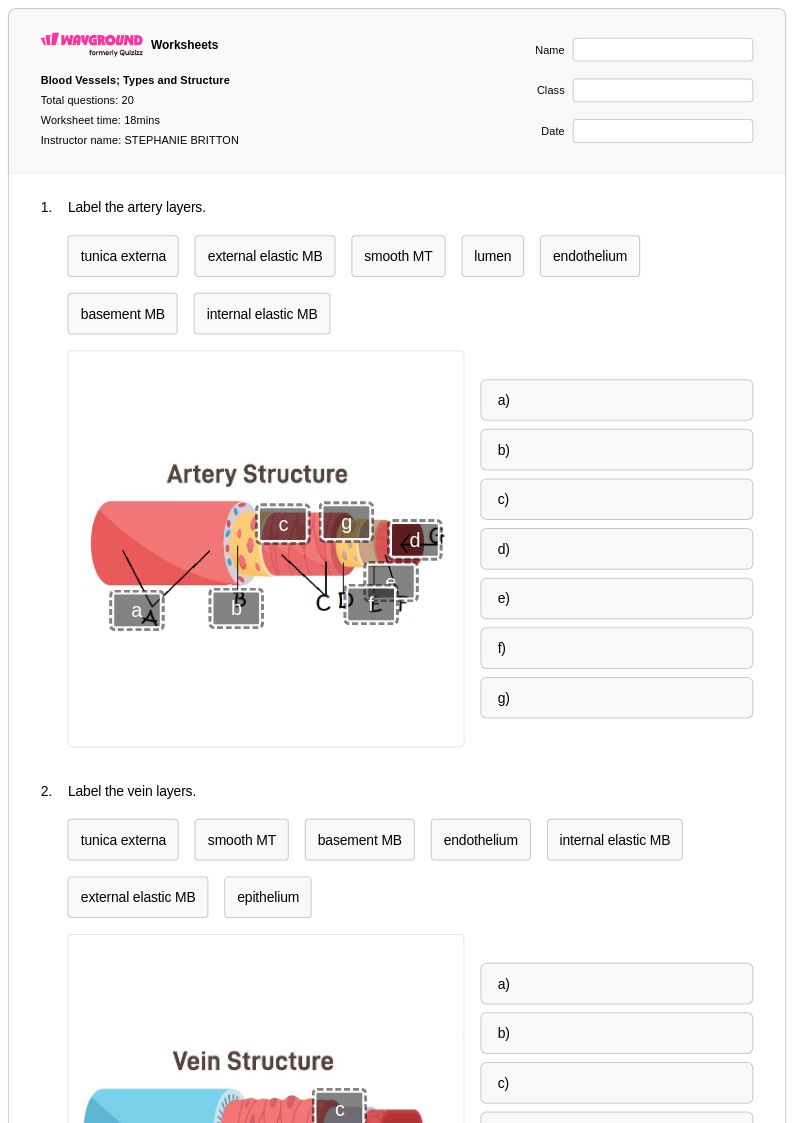
For students who are still building foundational knowledge, worksheets that focus on labeling diagrams of the cardiovascular system and matching terminology provide accessible entry points before introducing numerical interpretation. More advanced students benefit from problems that require them to analyze trends across multiple readings or evaluate the impact of specific health conditions on blood pressure. On Wayground, teachers can also apply accommodations such as reduced answer choices or read-aloud support to individual students, ensuring each learner engages with the material at an appropriate level of challenge.
How do I use Wayground's blood pressure measurement worksheets in my classroom?
Wayground's blood pressure measurement worksheets are available as printable PDFs, making them easy to distribute in a traditional lab or classroom setting, and in digital formats that work for remote or hybrid instruction. Teachers can also host these materials as a quiz directly on Wayground, enabling real-time student responses and immediate feedback. The included answer keys support both teacher-led review and independent self-assessment after students complete the activity.
How does blood pressure relate to broader cardiovascular health concepts students need to understand?
Blood pressure is a direct indicator of how hard the heart is working and how much resistance exists in the arterial system, which connects it to conditions like hypertension, atherosclerosis, and heart disease. Teaching measurement in context, rather than as an isolated skill, helps students see why sustained elevated readings signal underlying physiological stress. This integration makes blood pressure measurement a gateway topic for broader cardiovascular health literacy.