Free Printable Cell Differentiation Worksheets for Class 9
Explore Class 9 cell differentiation worksheets and printables from Wayground that help students master how cells specialize into different types, featuring free PDF practice problems with comprehensive answer keys.
Explore printable Cell Differentiation worksheets for Class 9
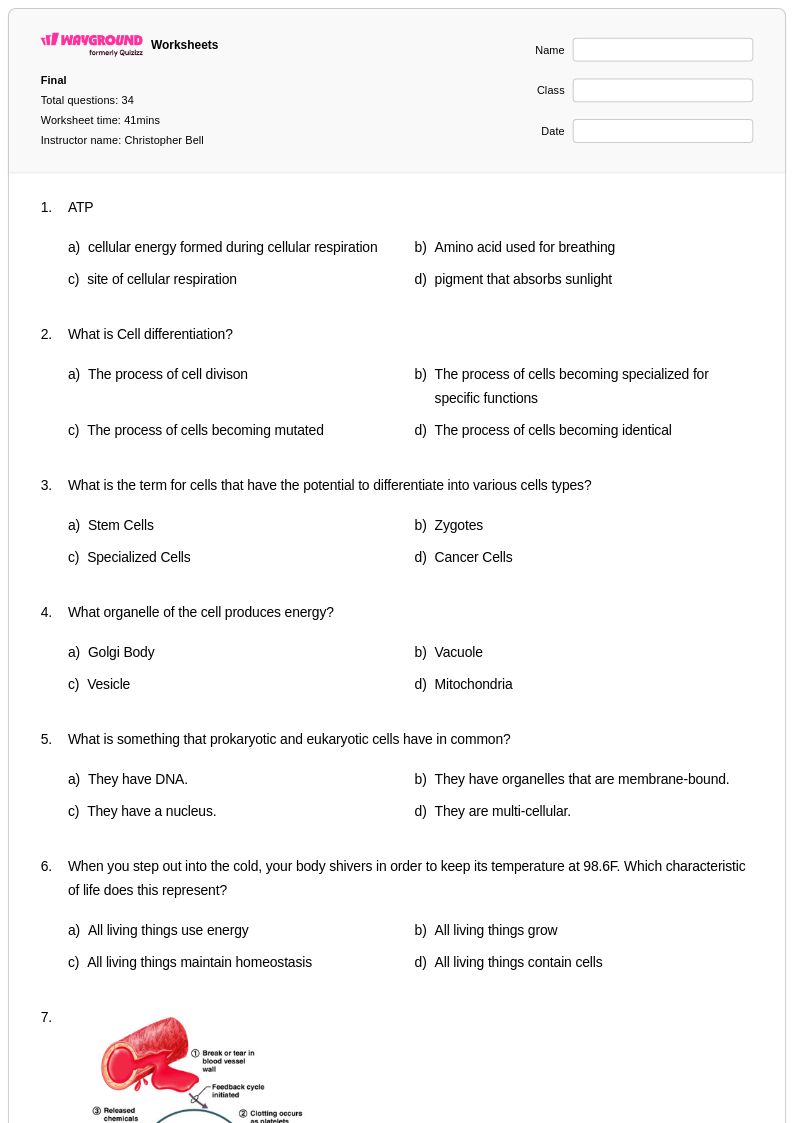
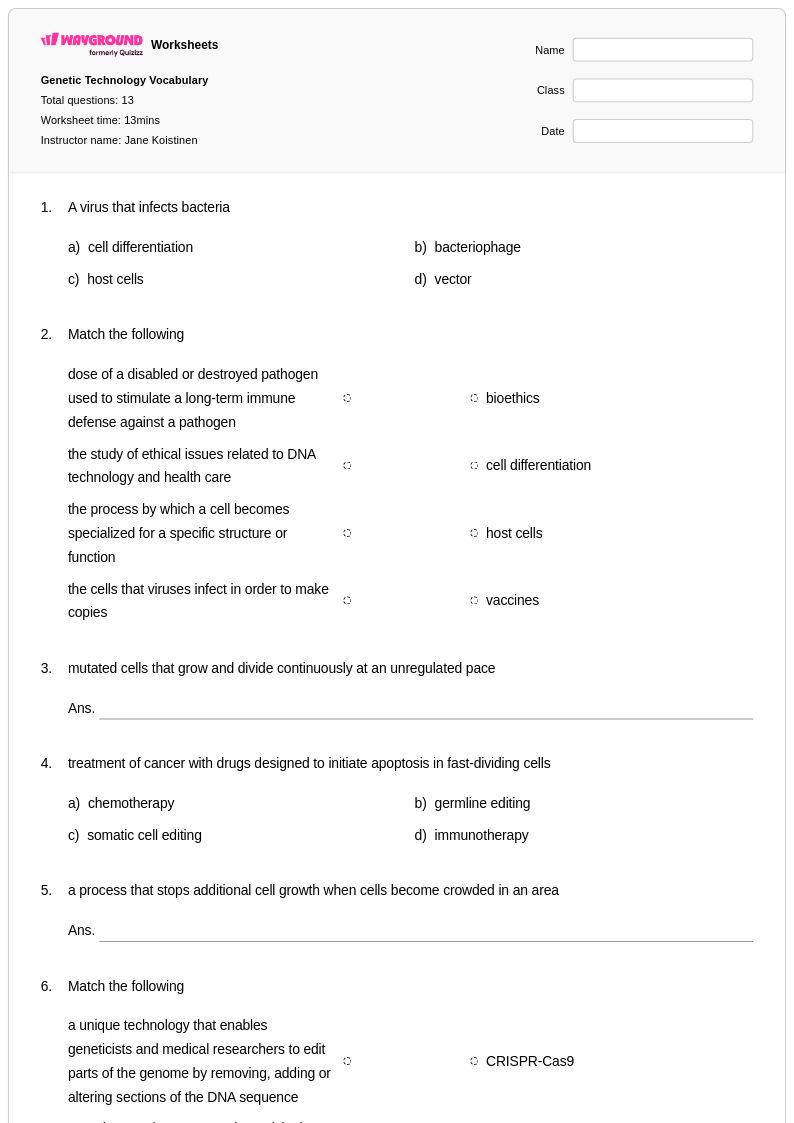
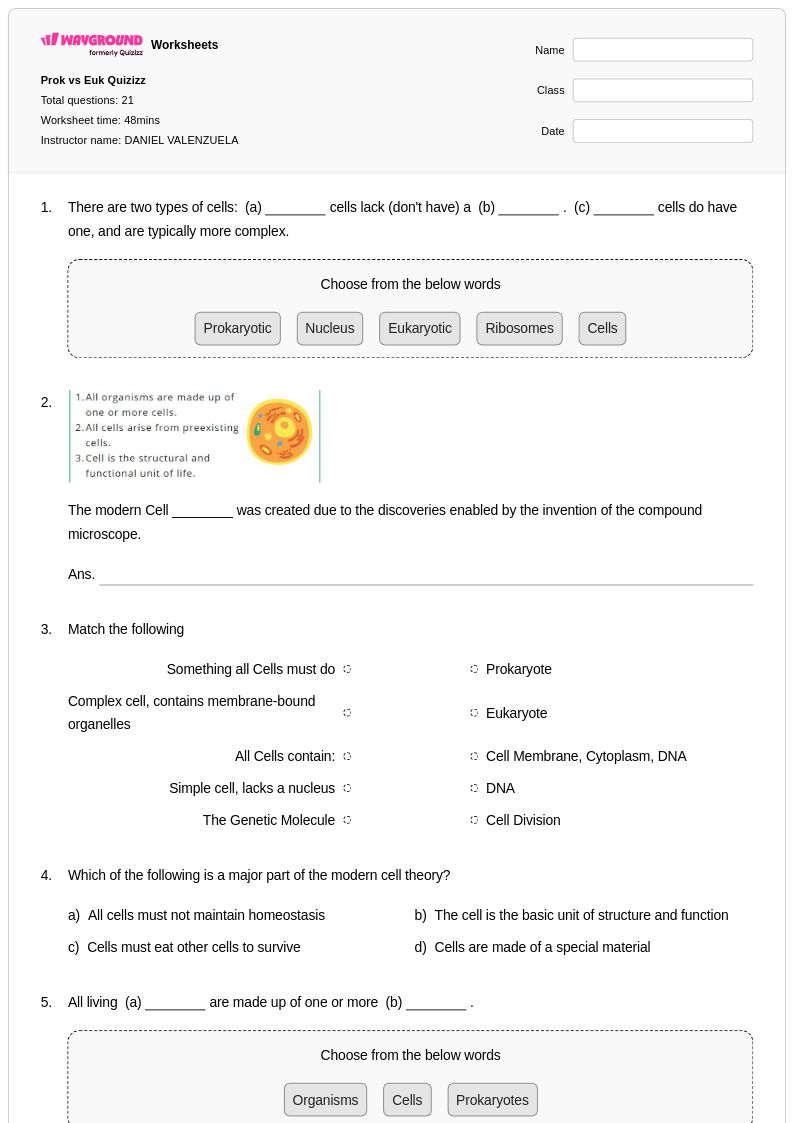
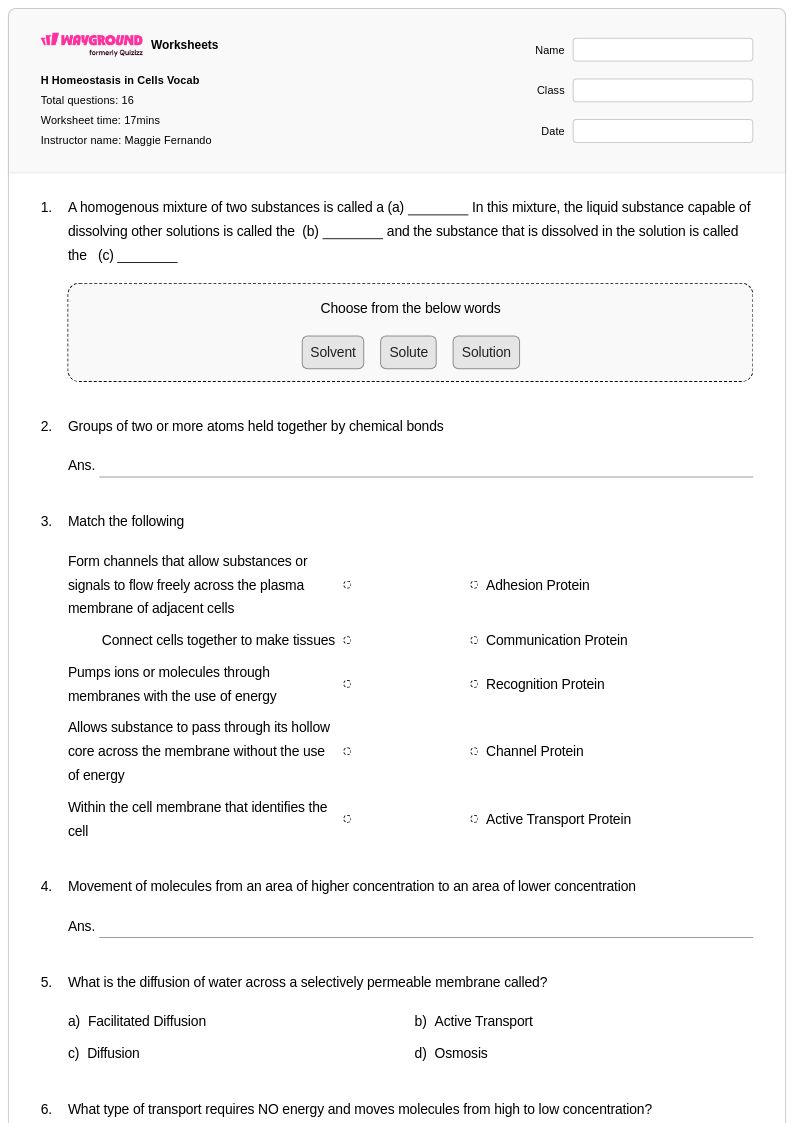
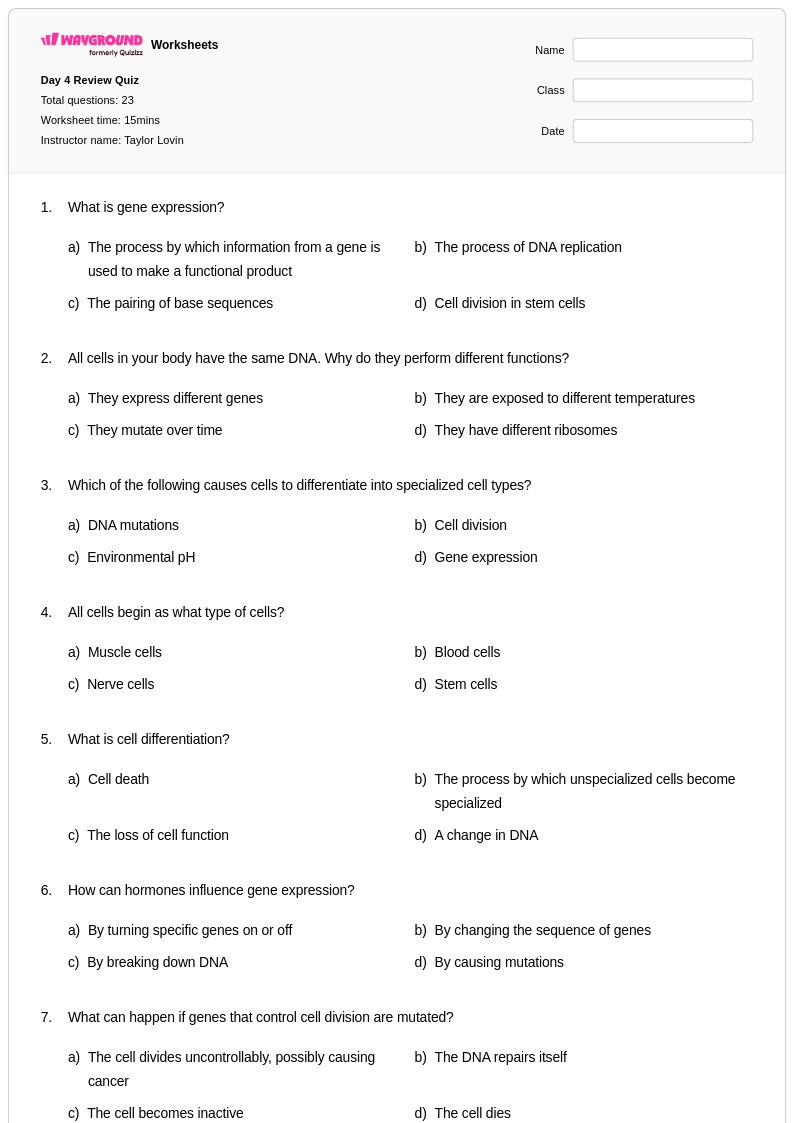
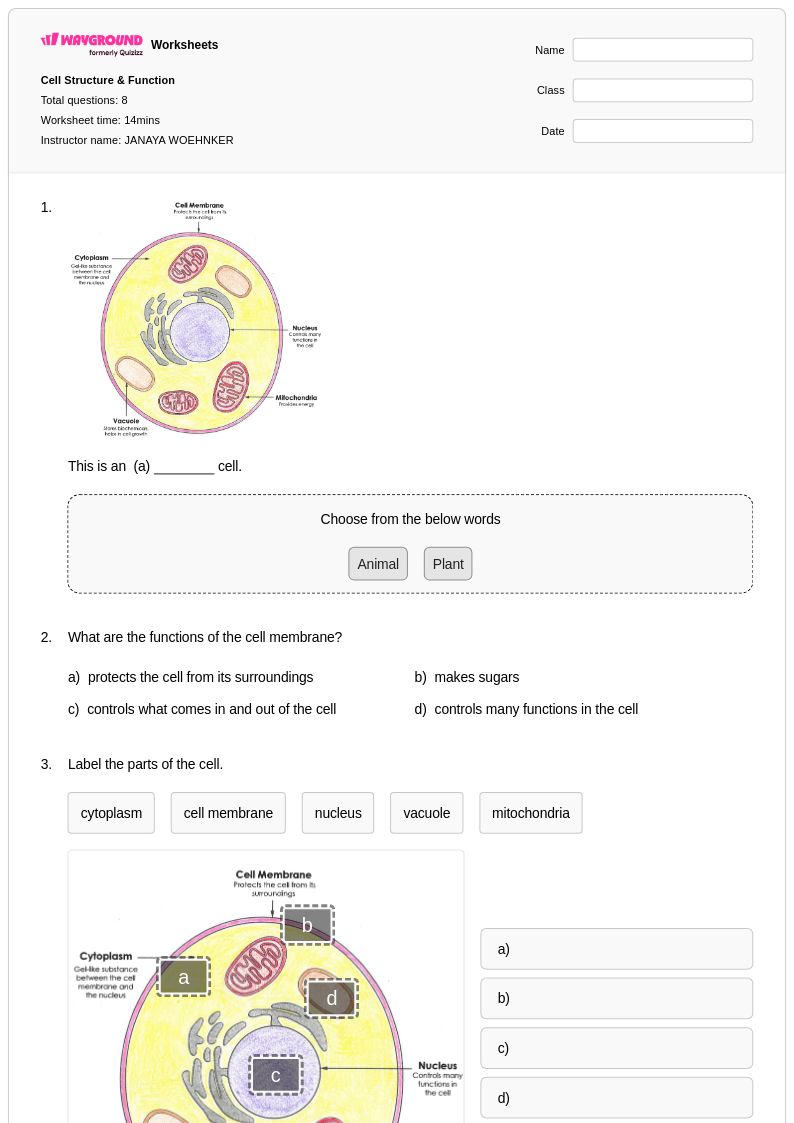
Cell differentiation worksheets for Class 9 biology students available through Wayground (formerly Quizizz) provide comprehensive coverage of how unspecialized cells develop into specialized cell types with distinct functions and structures. These expertly designed resources strengthen students' understanding of the molecular mechanisms that control gene expression during development, the role of transcription factors and signaling pathways in cellular specialization, and the relationship between cell structure and function in differentiated tissues. The collection includes practice problems that challenge students to analyze stem cell potency, trace differentiation pathways in various organ systems, and evaluate how environmental factors influence cellular development. Each worksheet comes with a detailed answer key and is available as free printables in PDF format, making them accessible resources for reinforcing complex biological concepts through hands-on learning activities.
Wayground (formerly Quizizz) empowers biology educators with millions of teacher-created worksheet resources specifically designed to support cell differentiation instruction at the Class 9 level. The platform's advanced search and filtering capabilities allow teachers to quickly locate materials aligned with specific curriculum standards and learning objectives, while built-in differentiation tools enable customization based on individual student needs and learning styles. Teachers can seamlessly transition between printable PDF worksheets for traditional classroom activities and digital formats for interactive online learning, providing flexibility for diverse instructional approaches. These comprehensive resources support effective lesson planning by offering ready-made materials for skill practice, targeted remediation for students struggling with complex differentiation concepts, and enrichment opportunities for advanced learners ready to explore specialized topics like epigenetic regulation and tissue engineering applications.
FAQs
How do I teach cell differentiation to biology students?
Cell differentiation is best taught by anchoring the concept in a concrete analogy: all cells in an organism share the same DNA, yet become structurally and functionally distinct through selective gene expression. Start with stem cell potency (totipotent, pluripotent, multipotent) before moving into the molecular signals that drive fate decisions, such as transcription factor activity and environmental cues. Using differentiation pathway diagrams alongside real-world examples like red blood cell or neuron formation helps students visualize the process before tackling the underlying mechanisms.
What exercises help students practice cell differentiation concepts?
Effective practice exercises for cell differentiation include pathway mapping tasks where students trace an unspecialized stem cell through its differentiation stages, compare-and-contrast charts distinguishing pluripotent from multipotent stem cells, and scenario-based questions requiring students to predict how changes in gene expression or environmental signals alter cell fate. Practice problems that ask students to analyze differentiation during embryonic development and tissue repair reinforce both conceptual understanding and application skills.
What misconceptions do students commonly have about cell differentiation?
A frequent misconception is that differentiation involves cells losing or gaining different DNA sequences — students often conflate gene expression with gene presence. Another common error is assuming all stem cells have the same potential; many students conflate pluripotent and multipotent stem cells or treat 'stem cell' as a single category. Explicitly addressing how epigenetic regulation silences or activates genes without altering the DNA sequence itself helps correct both errors.
How do I use Wayground's cell differentiation worksheets in my classroom?
Wayground's cell differentiation worksheets are available as free printable PDFs for traditional classroom instruction and in interactive digital formats for technology-integrated environments, including the option to host them as a live quiz on Wayground. Teachers can use the platform's search and filtering tools to locate materials aligned with specific curriculum standards, then assign worksheets for direct instruction, independent practice, or remediation. For diverse learners, Wayground's accommodation settings allow teachers to enable features such as read aloud, extended time, and reduced answer choices for individual students without disrupting the rest of the class.
How can I differentiate cell differentiation instruction for students at different readiness levels?
For students struggling with foundational concepts, scaffolded worksheets that focus on basic cell types and straightforward differentiation pathways provide the structured support needed before introducing molecular mechanisms. Advanced students can be challenged with enrichment tasks covering epigenetic regulation, induced pluripotent stem cells, and tissue engineering applications. On Wayground, teachers can apply individual accommodations such as reduced answer choices or read aloud for students who need additional support, while the rest of the class works with standard settings.
What topics should a comprehensive cell differentiation unit cover?
A thorough cell differentiation unit should cover stem cell potency levels, the role of gene expression regulation in determining cell fate, the influence of environmental signals and transcription factors on differentiation, and the processes of morphogenesis during embryonic development. Students should also examine differentiation in the context of tissue repair and explore advanced applications such as regenerative medicine and induced pluripotent stem cells to connect foundational biology to current scientific research.