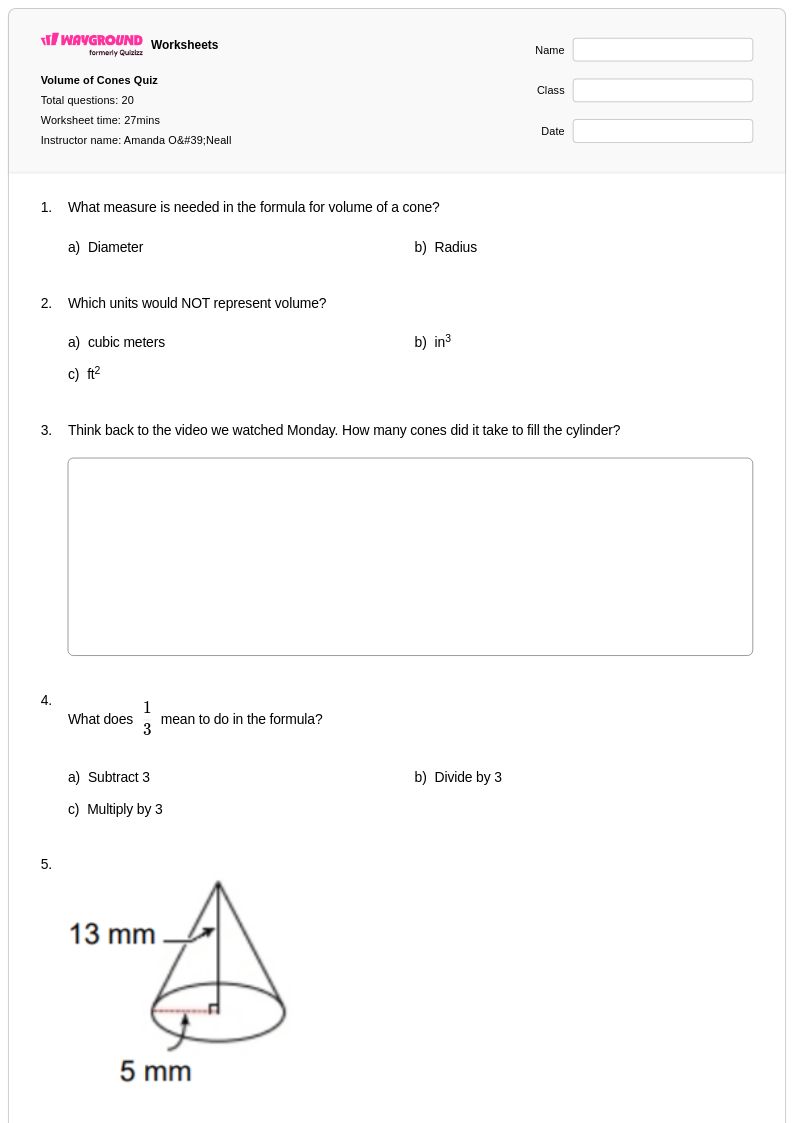
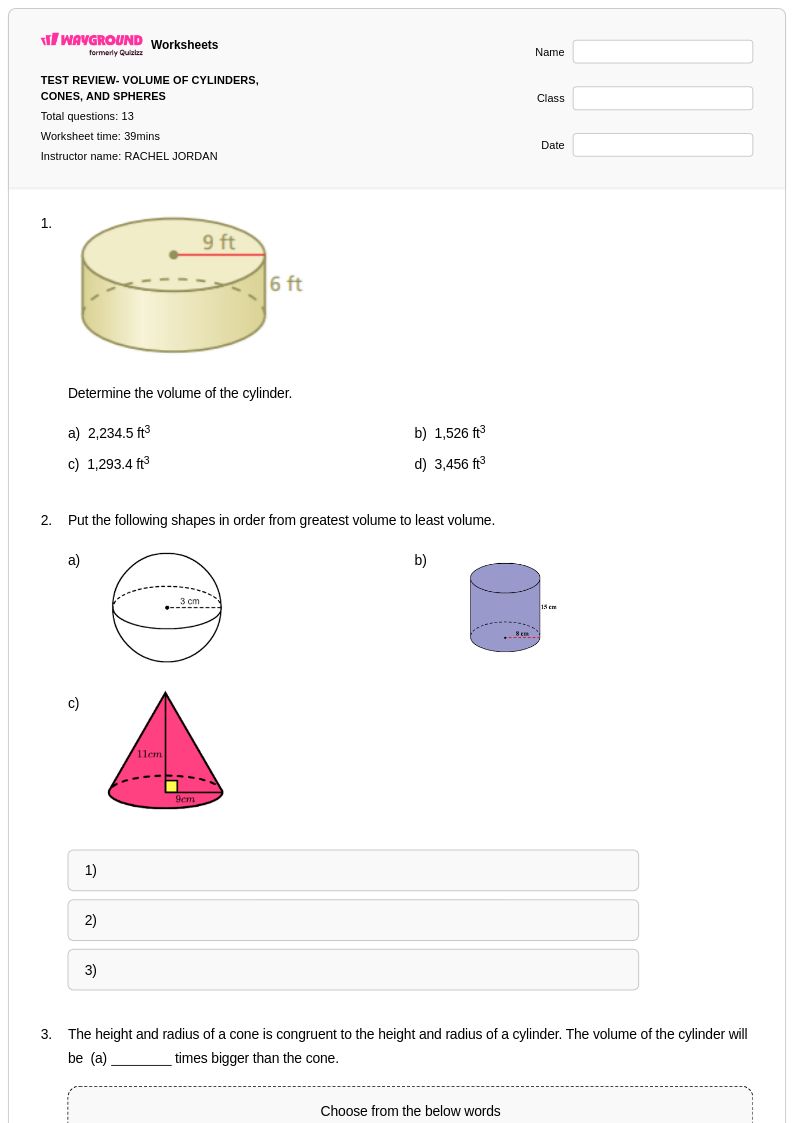
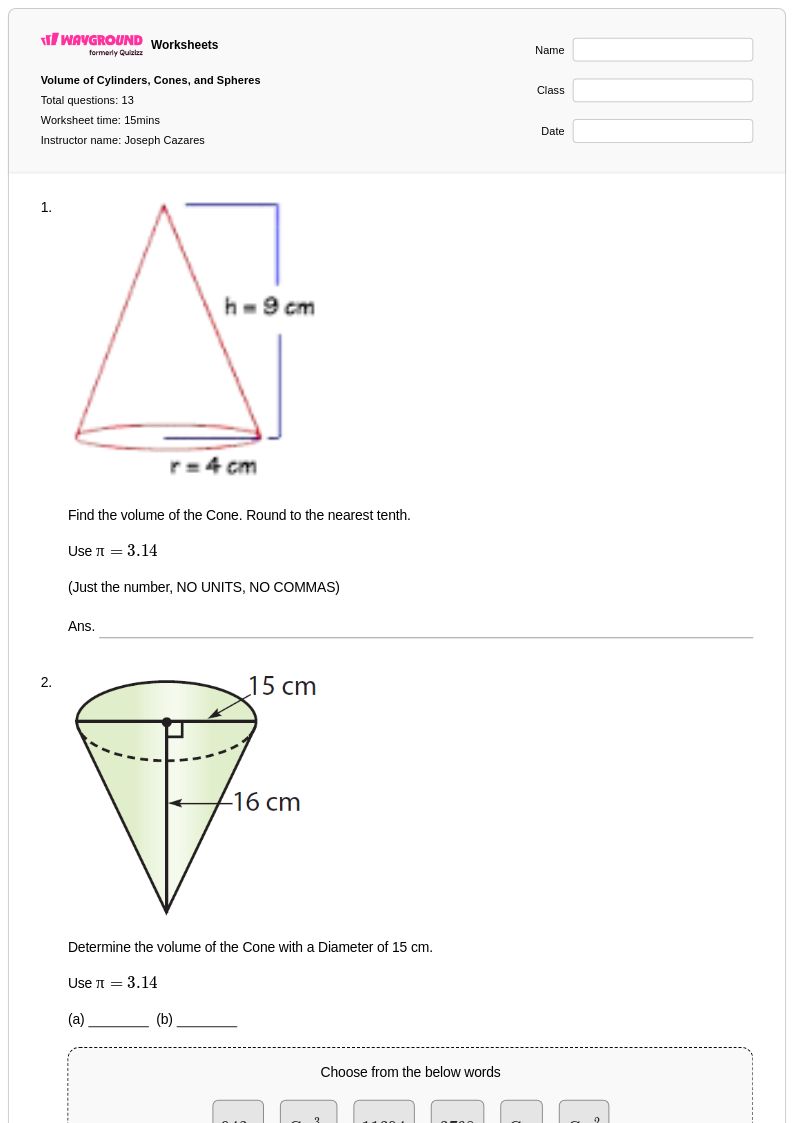
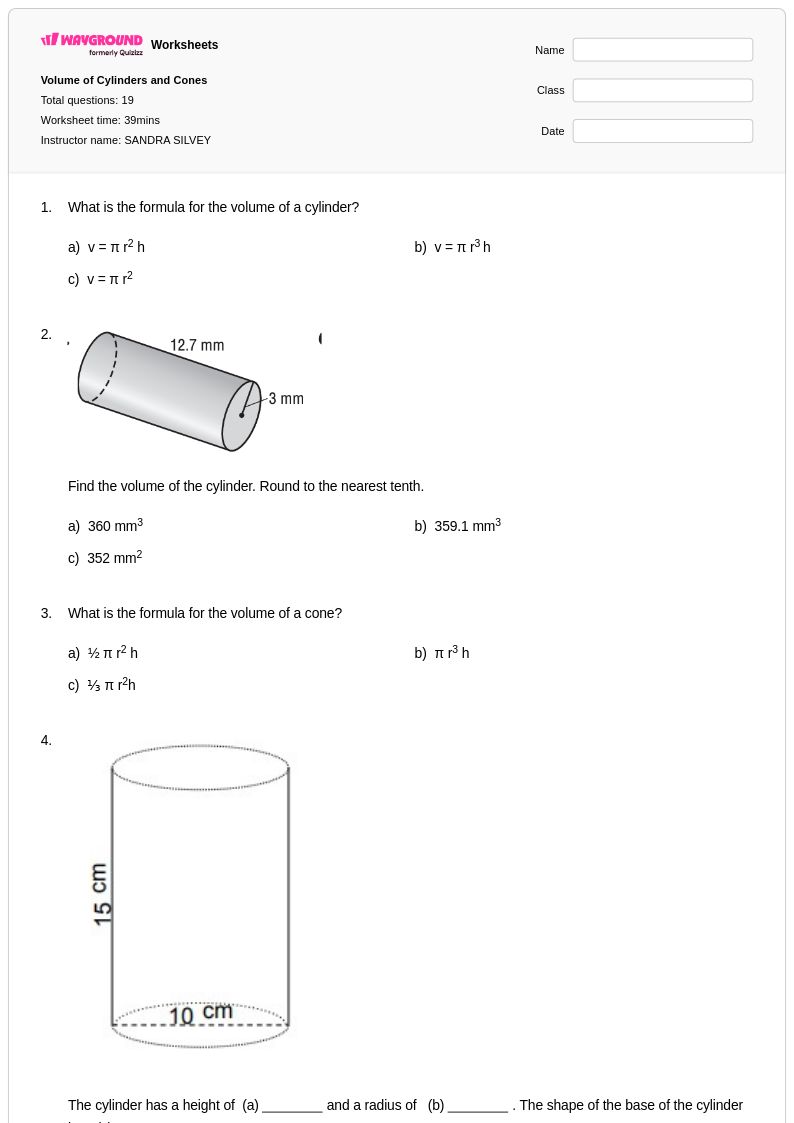
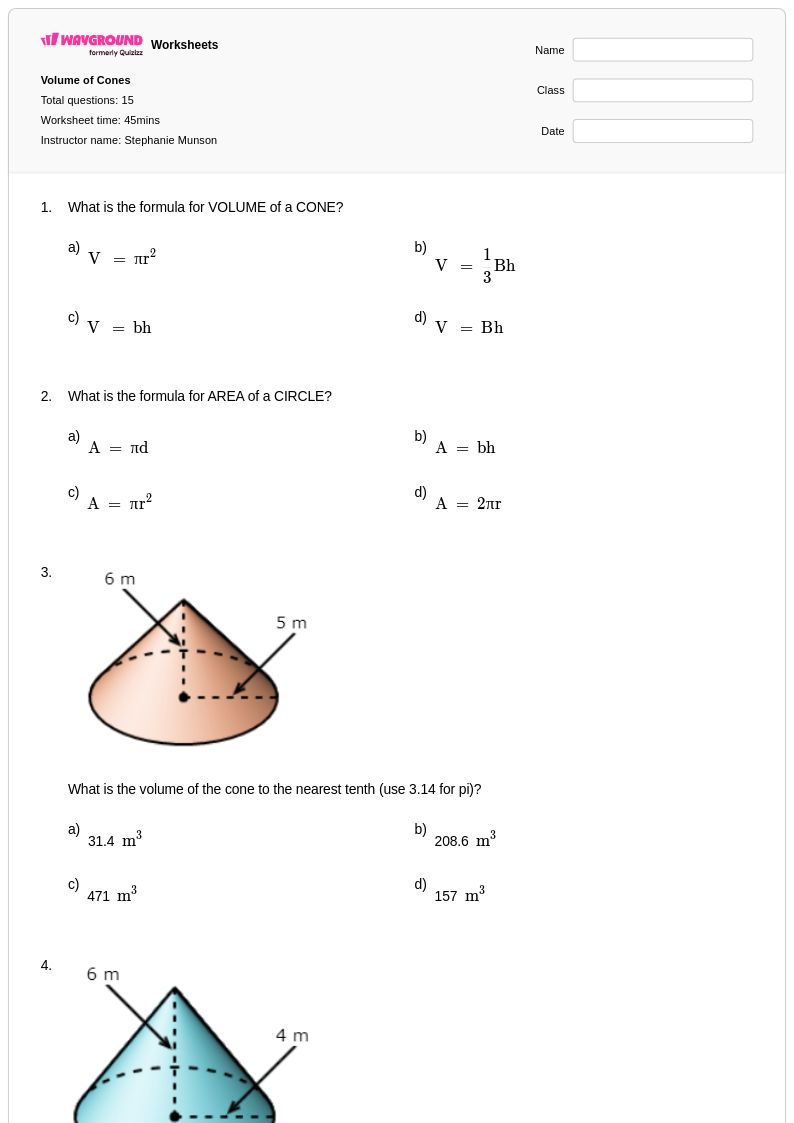
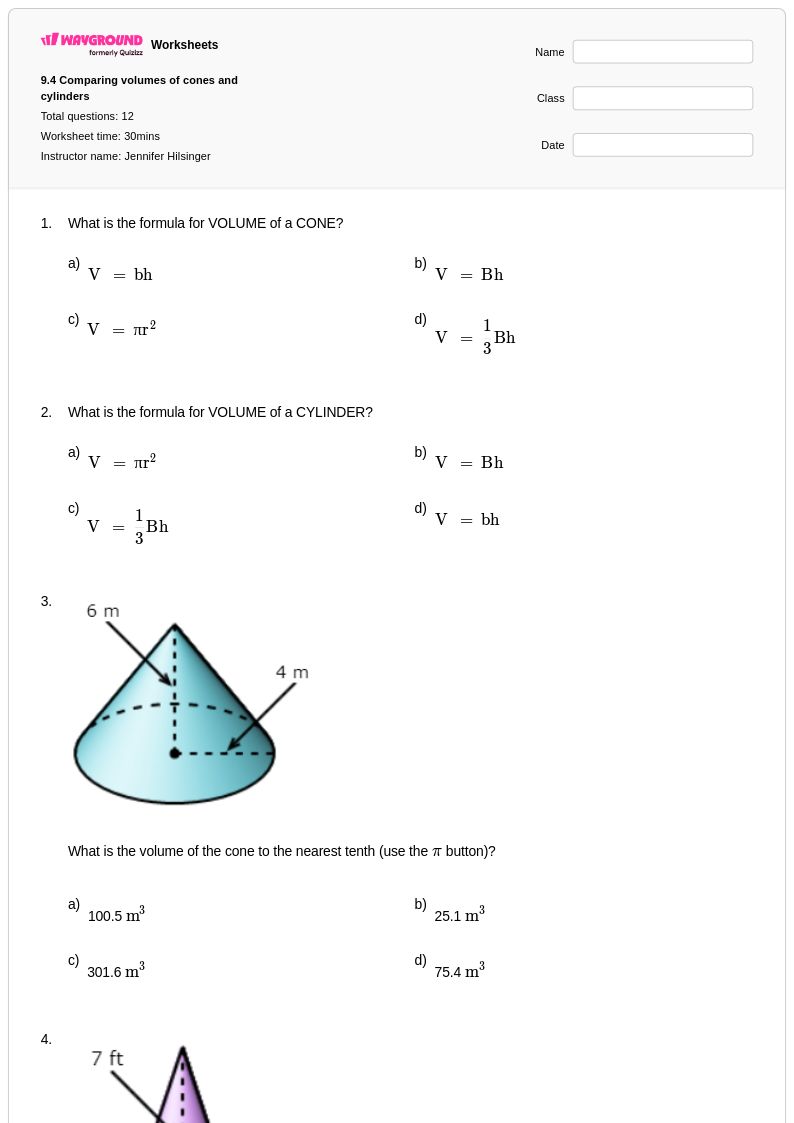
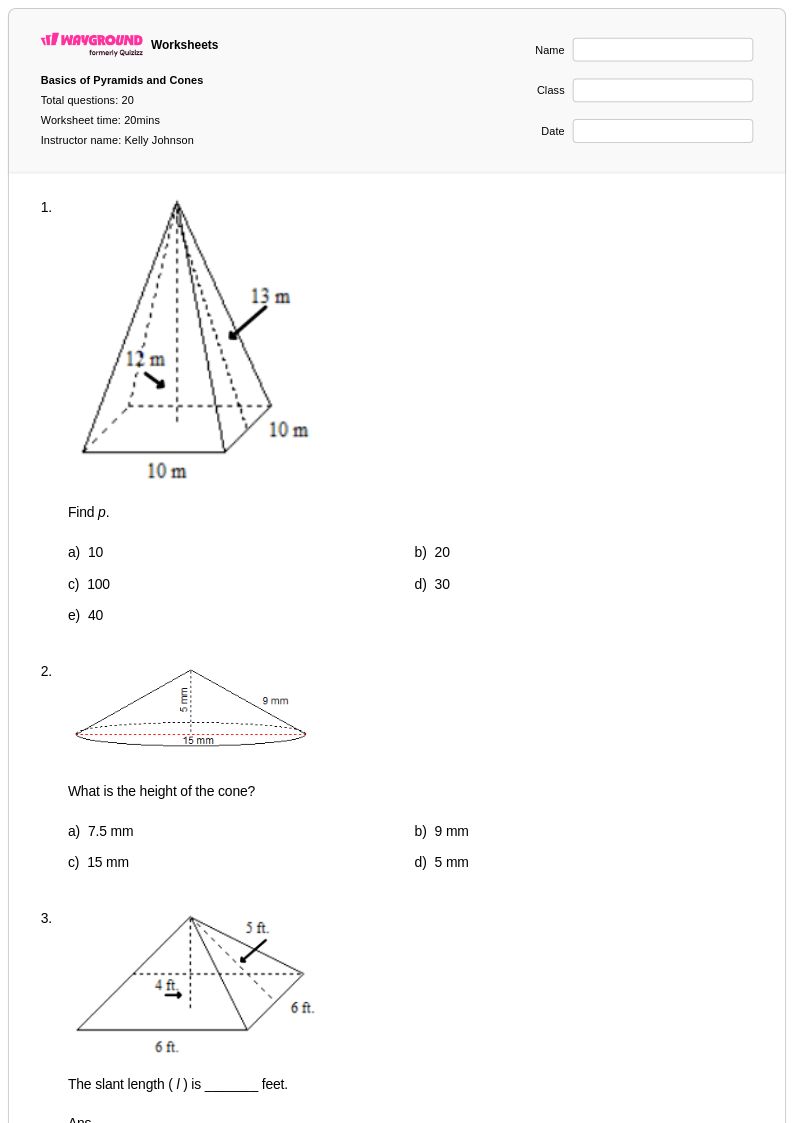
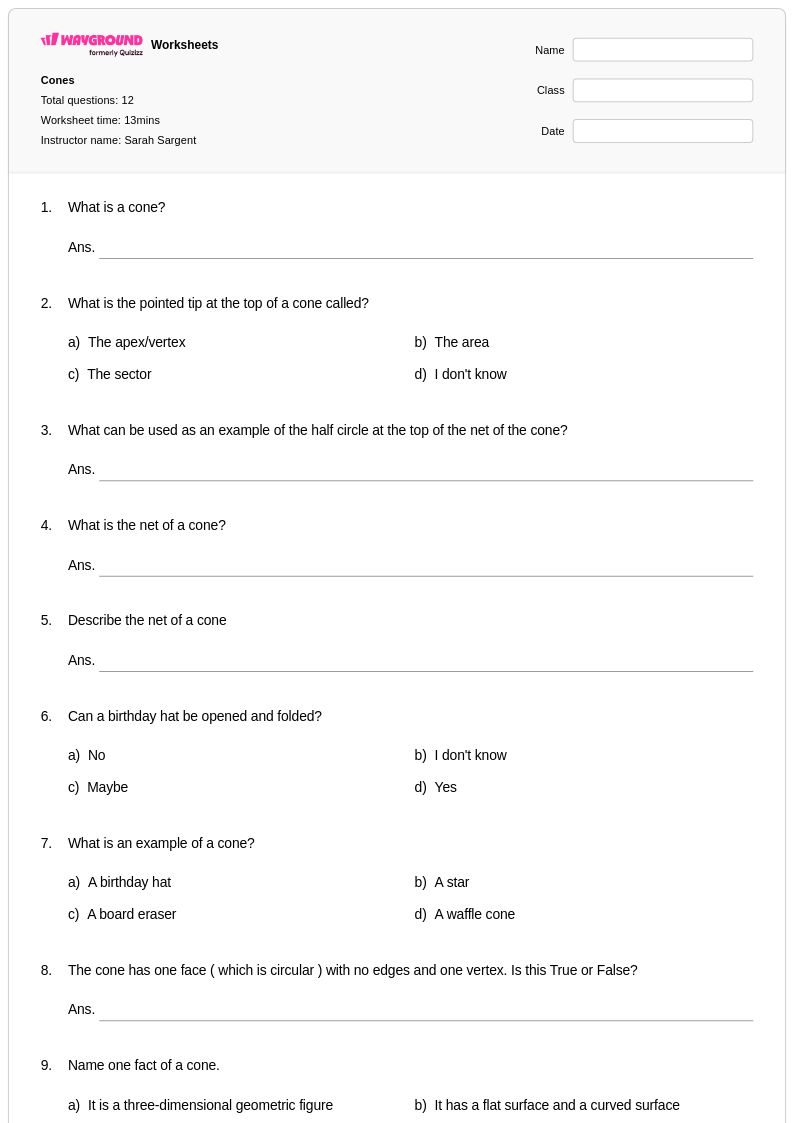
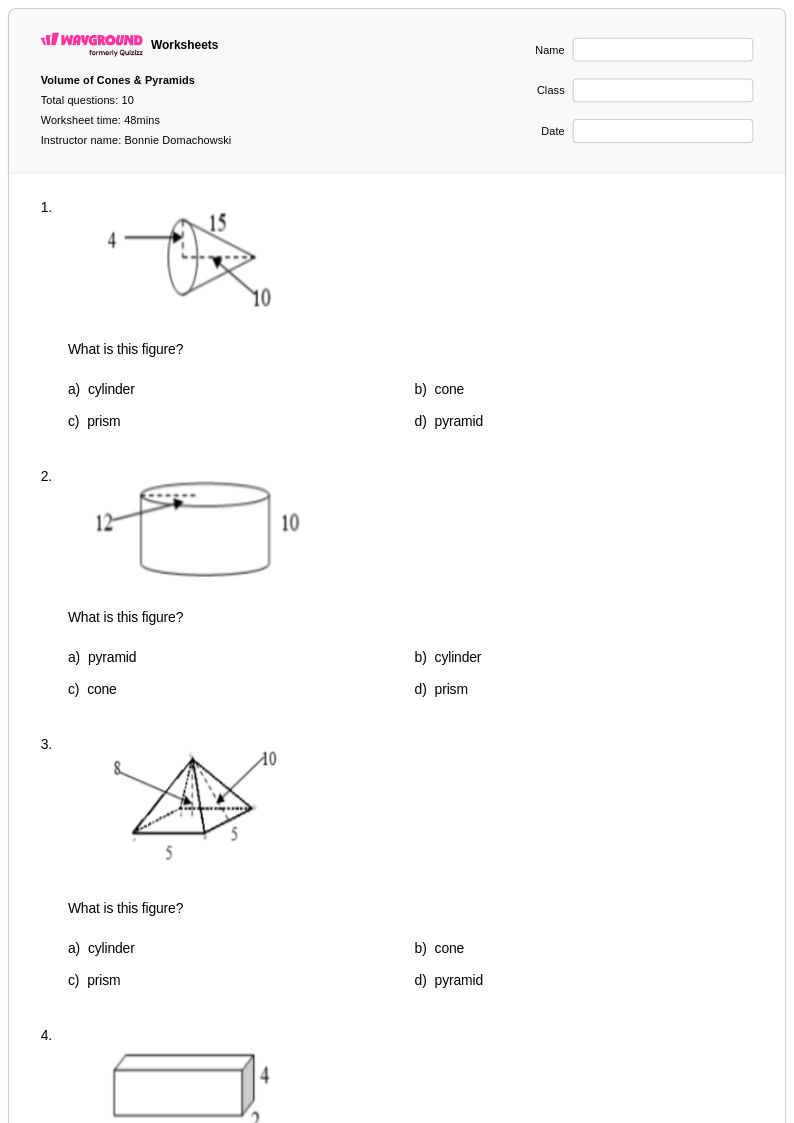
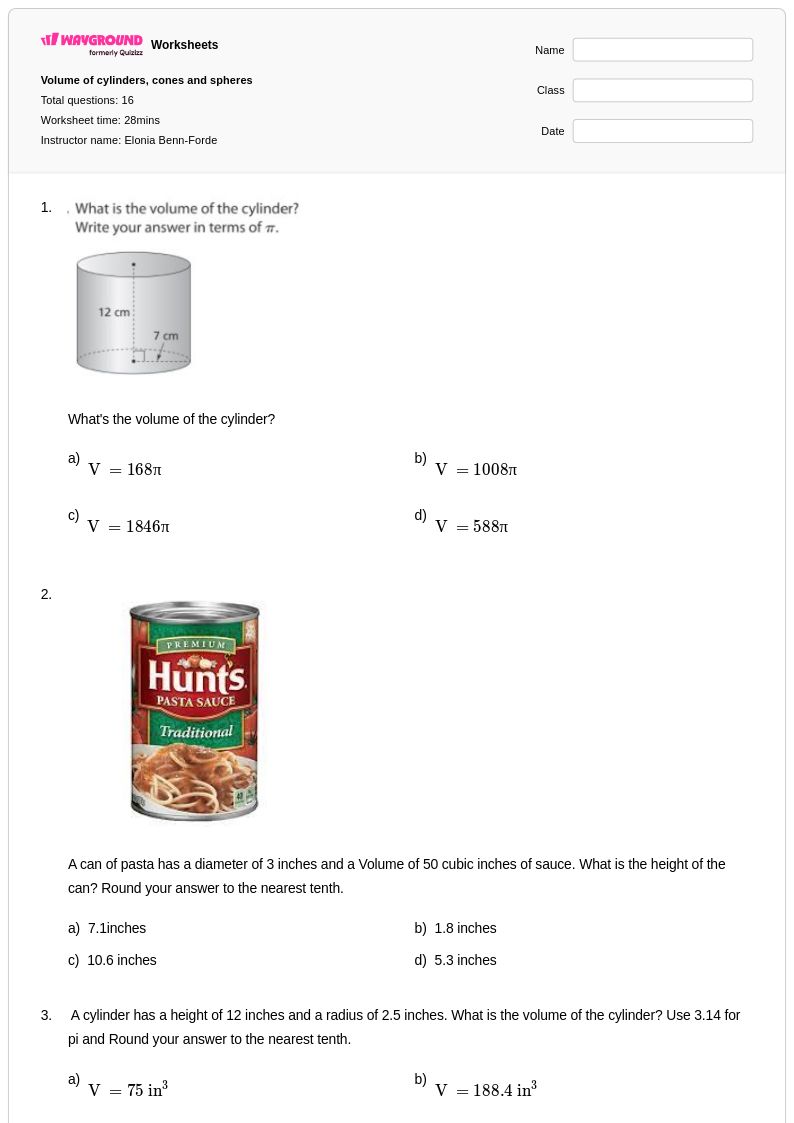
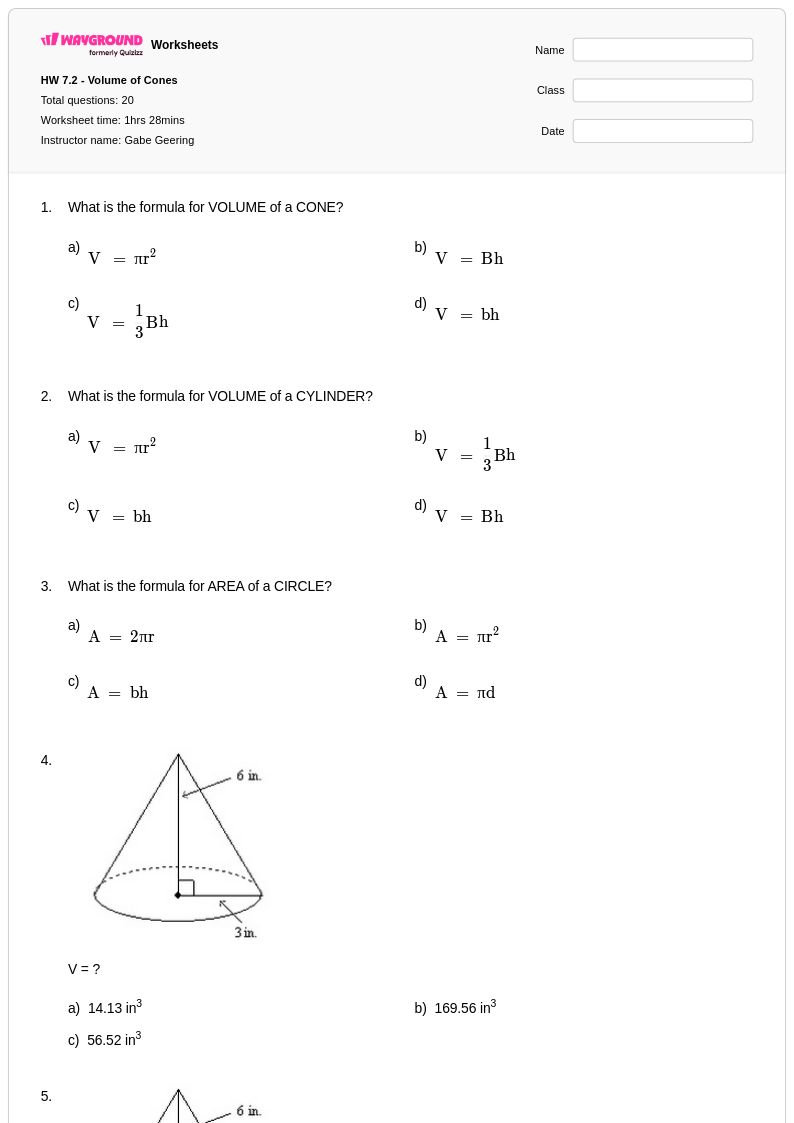
Explore Wayground's free kindergarten cone worksheets and printables that help young learners identify, trace, and understand three-dimensional cone shapes through engaging practice problems with complete answer keys.
Explore printable Cones worksheets for Kindergarten
Kindergarten cones worksheets available through Wayground (formerly Quizizz) provide young learners with engaging, developmentally appropriate activities designed to introduce the fundamental characteristics of three-dimensional cone shapes. These educational resources strengthen essential early geometry skills including shape recognition, visual discrimination, and spatial reasoning through carefully crafted practice problems that encourage hands-on exploration and discovery. The comprehensive collection features printable worksheets with clear answer keys, making it simple for educators to assess student understanding and provide immediate feedback. Each free resource incorporates age-appropriate illustrations and activities that help kindergarten students identify cones in their everyday environment, distinguish cones from other 3D shapes, and begin developing crucial mathematical vocabulary through structured practice opportunities available in convenient pdf format.
Wayground (formerly Quizizz) empowers teachers with an extensive library of millions of teacher-created cone worksheets specifically designed for kindergarten mathematics instruction. The platform's robust search and filtering capabilities enable educators to quickly locate resources that align with curriculum standards and meet diverse classroom needs. Teachers benefit from powerful differentiation tools that allow customization of worksheets to support varying skill levels, ensuring both struggling learners and advanced students receive appropriate challenges. The flexible format options, including printable pdf versions and digital alternatives, streamline lesson planning while providing versatile tools for remediation, enrichment, and targeted skill practice. This comprehensive approach supports educators in creating meaningful learning experiences that build foundational geometry knowledge through systematic, engaging cone-focused activities.
FAQs
How do I teach cones to kindergarten students?
Introduce a cone with familiar objects and let students observe its pointed top, circular base, and curved surface. Use simple language, hands-on sorting, and classroom shape hunts to help children connect the geometric shape to objects they see every day.
What cone activities are appropriate for kindergarten?
Kindergarten practice should include coloring cone-shaped objects, matching pictures, sorting cones from other 3D shapes, and identifying cones in everyday scenes. These visual and hands-on activities strengthen shape recognition, visual discrimination, spatial reasoning, and early geometry vocabulary.
What mistakes do kindergarten students make when identifying cones?
Young learners may call any object with a point a cone or confuse cones with cylinders because both can have circular faces. Ask students to check for one circular base, a curved surface, and a single pointed top rather than relying on only one visible feature.
How can I use Wayground kindergarten cone worksheets?
Wayground kindergarten cone worksheets are available as printable PDFs and in digital formats, accommodating different classroom settings and learner preferences. Teachers can host a worksheet as a digital quiz on Wayground or print and assign it on paper; every worksheet includes a complete answer key, and paper submissions can be scanned or captured for grading with the Wayground for Teachers app.
How do kindergarten cone activities support Common Core geometry?
These activities align with the Common Core focus on identifying, naming, describing, comparing, and modeling shapes using observable attributes. Recognizing cones in different sizes and orientations helps children reason about shape properties instead of depending on a single familiar example.
How can I differentiate cone practice for kindergarten learners?
Support developing learners with real objects, clear illustrations, fewer shapes per sorting task, and repeated oral use of words such as base, curved, and point; challenge advanced learners to explain why an object is or is not a cone. In Wayground, teachers can also provide Read Aloud, extended time, reduced answer choices, or reading mode for individual students without changing the default experience for the rest of the class.
What grade do students learn to identify cones?
Cone recognition is appropriate in kindergarten as part of foundational work with three-dimensional shapes. At this level, students focus on identifying cones, describing visible attributes, comparing them with other solids, and finding examples in their environment rather than calculating measurements.