
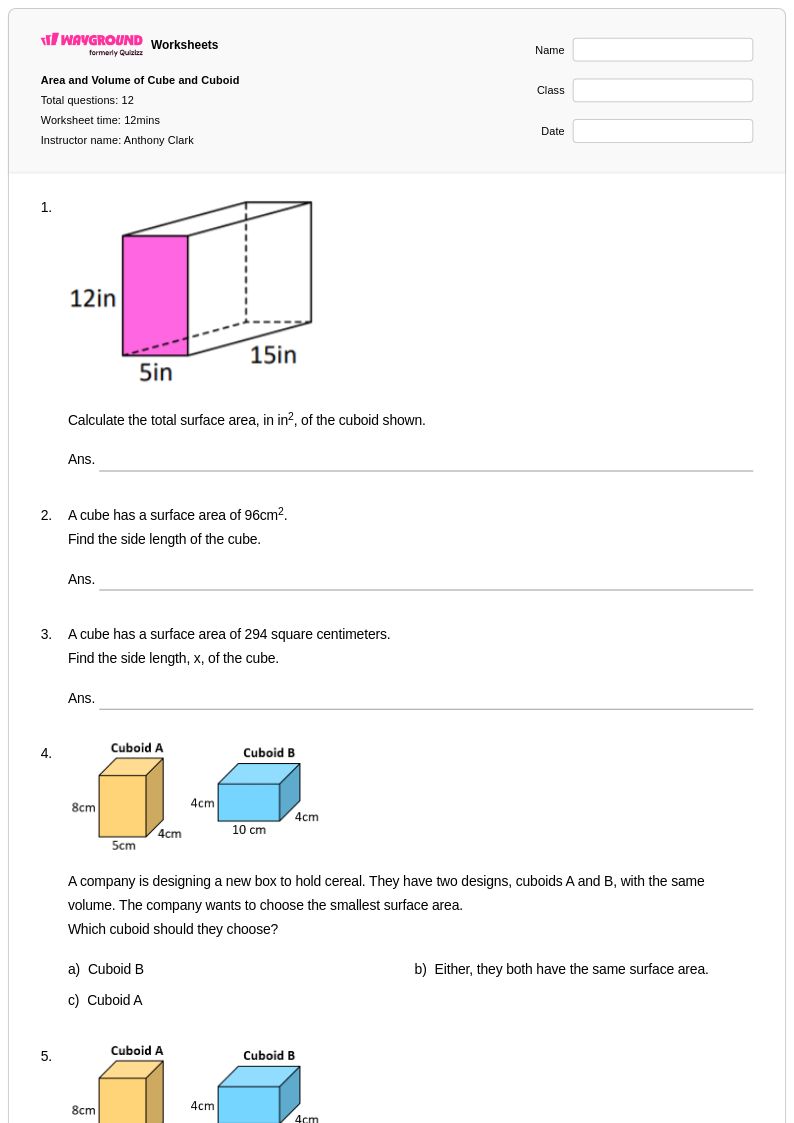
12 Q
9th - Uni
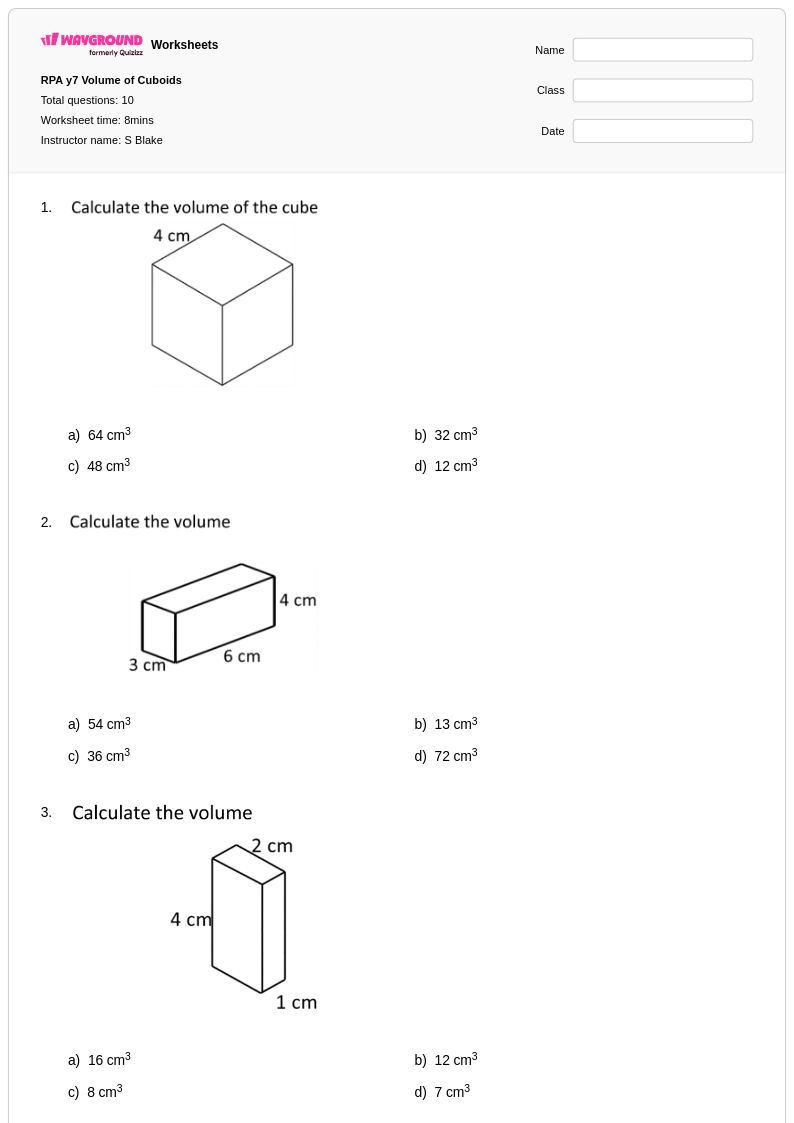
10 Q
7th
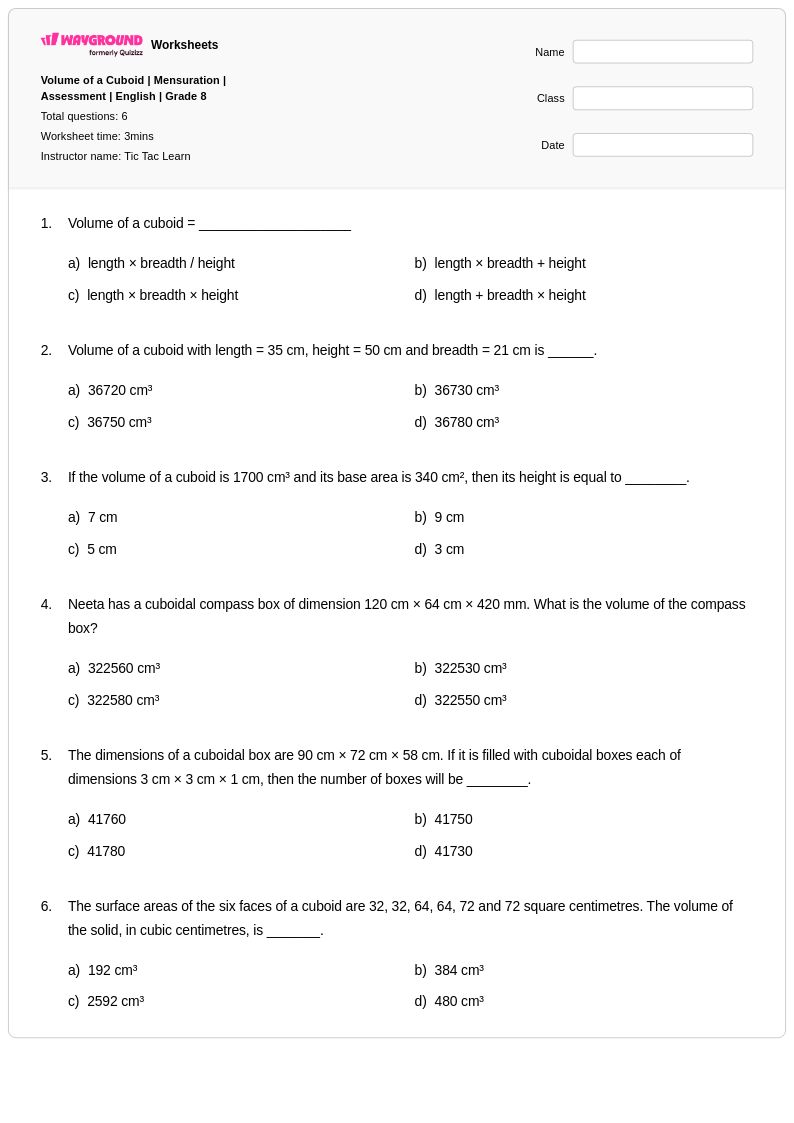
6 Q
8th
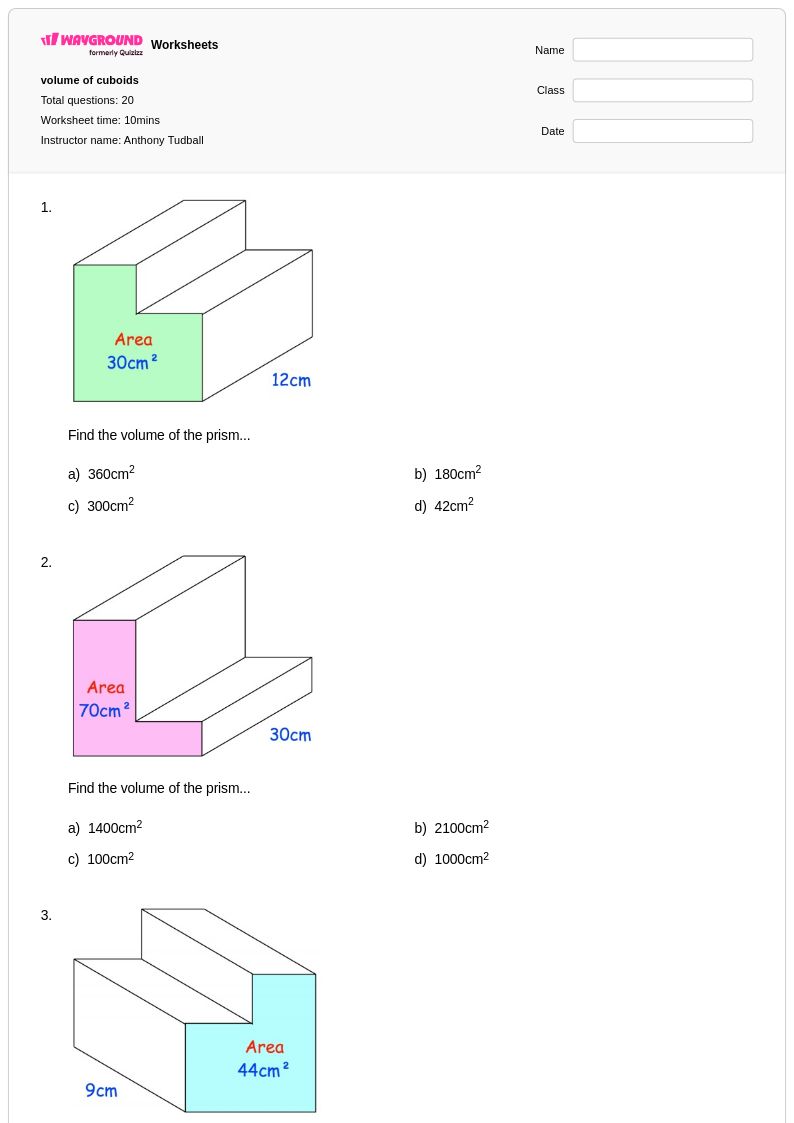
20 Q
8th
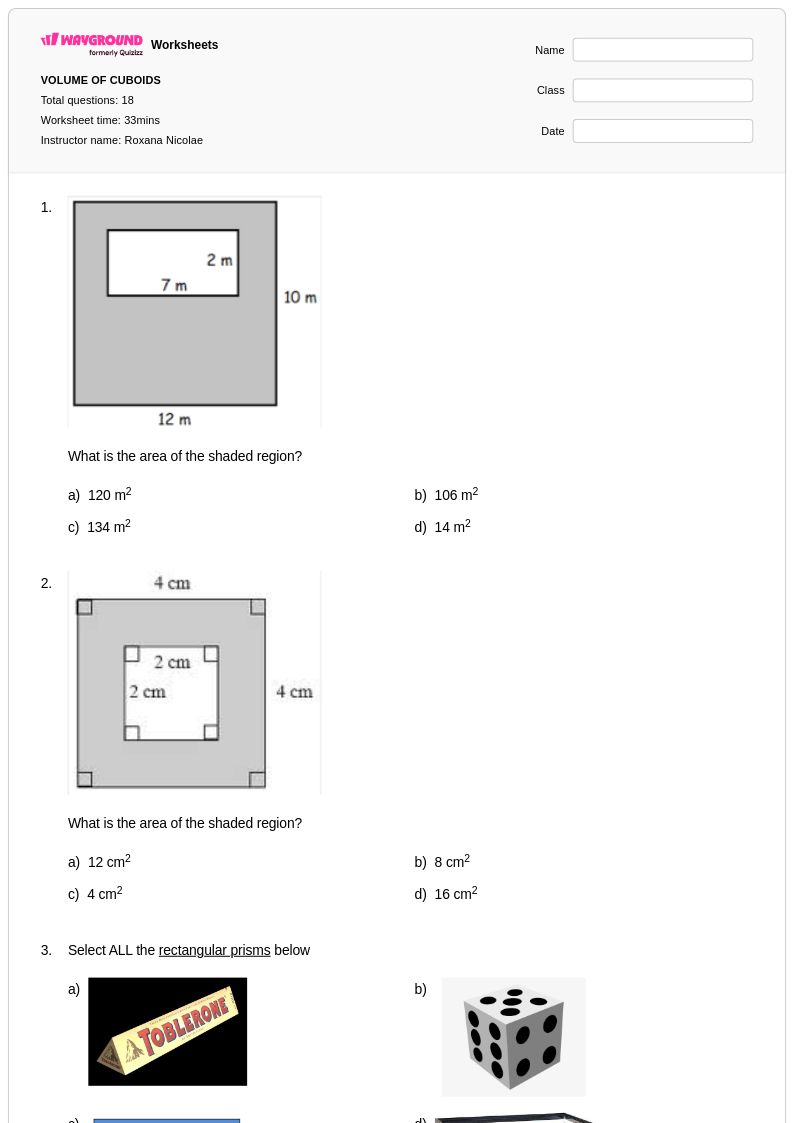
18 Q
7th
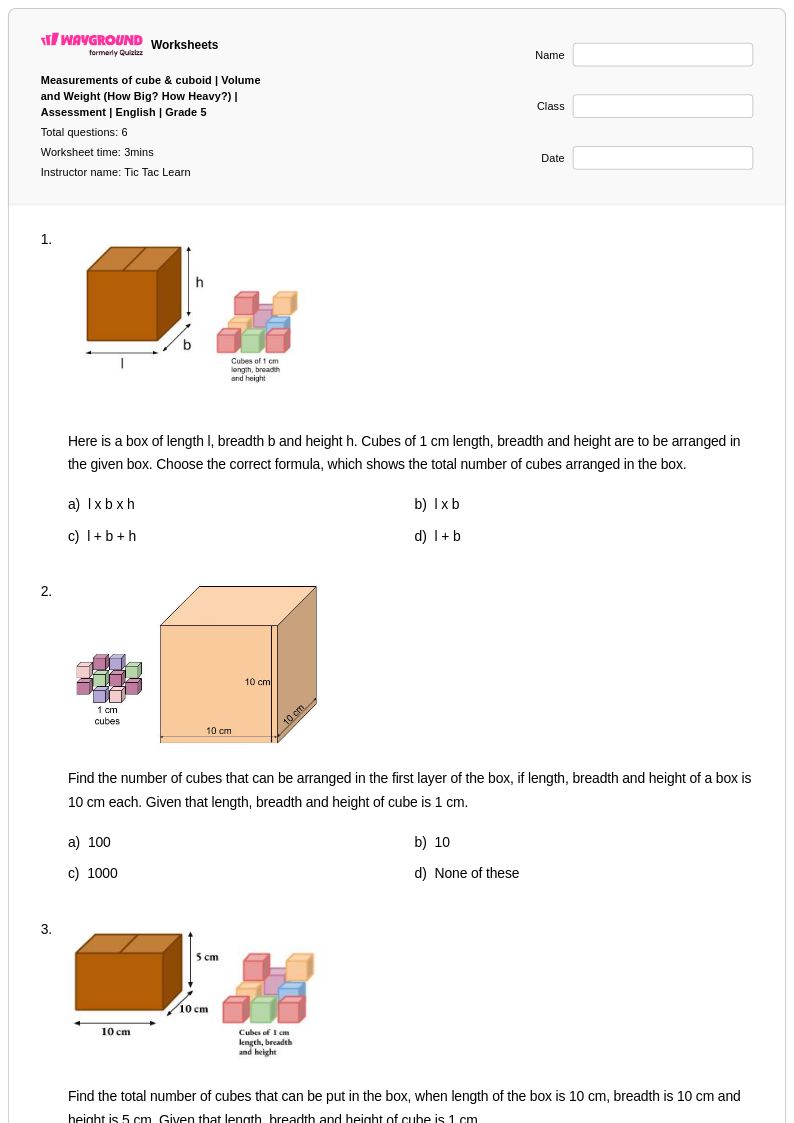
6 Q
5th
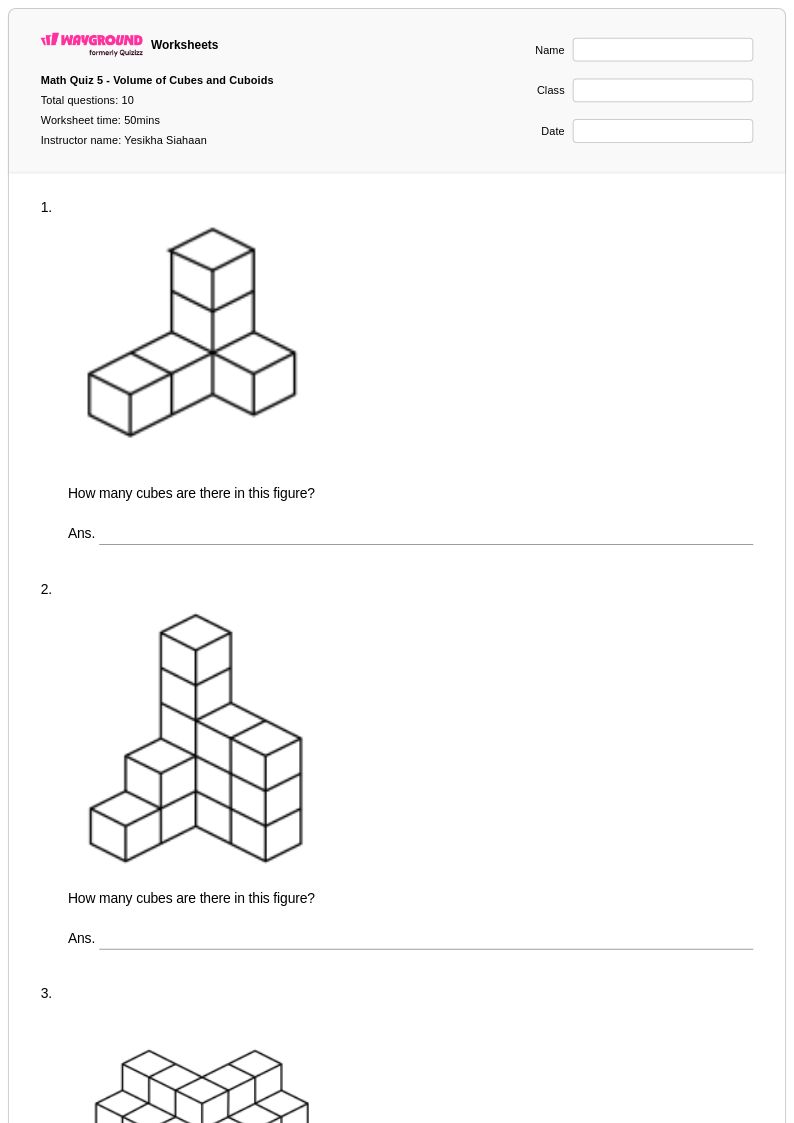
10 Q
5th
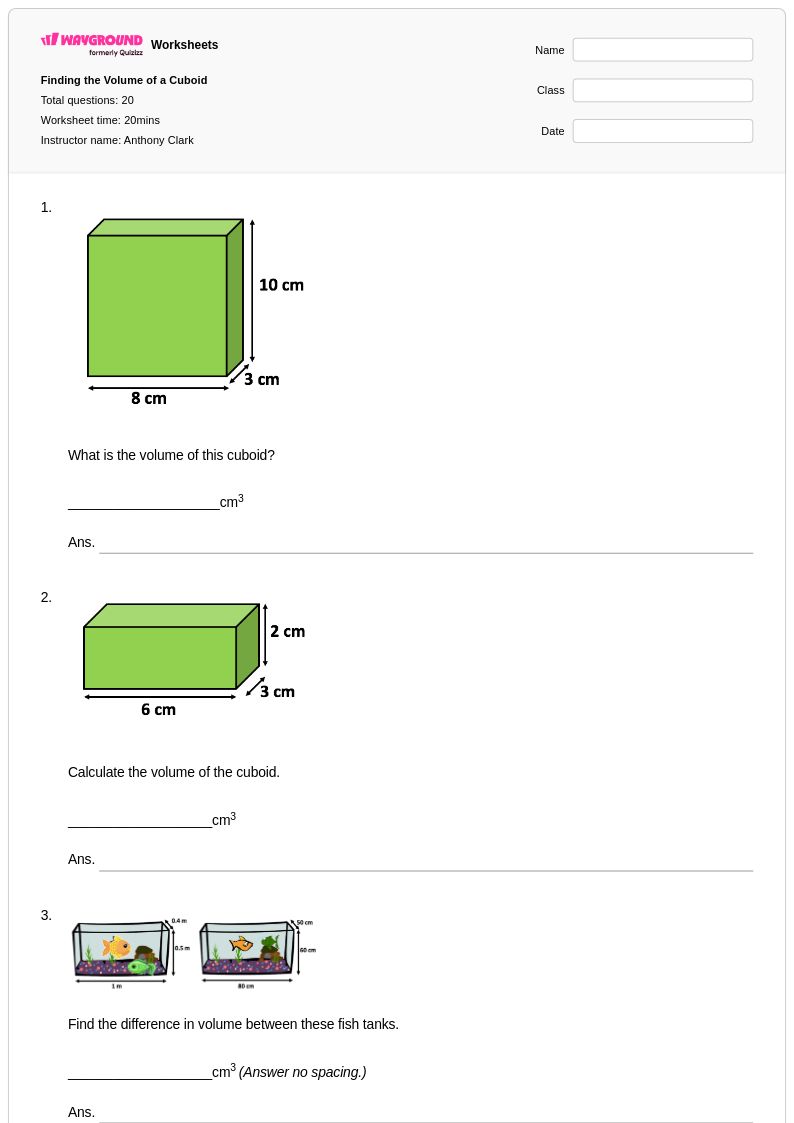
20 Q
6th - Uni
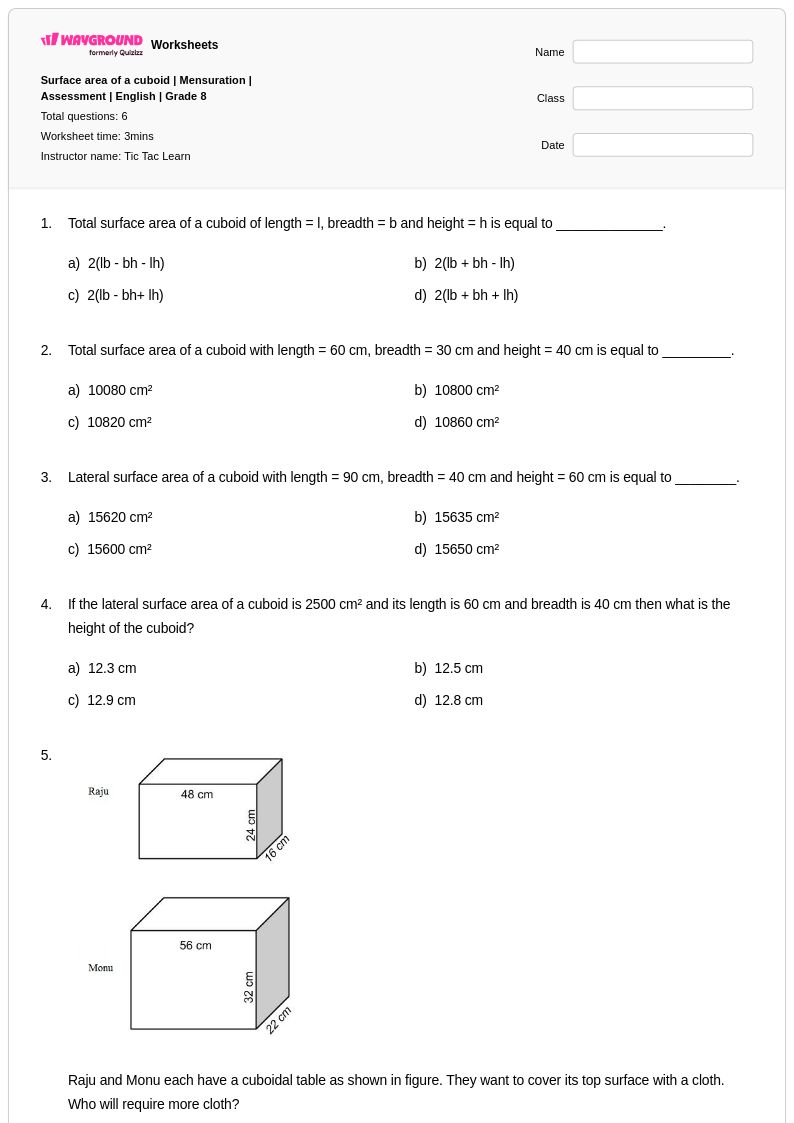
6 Q
8th
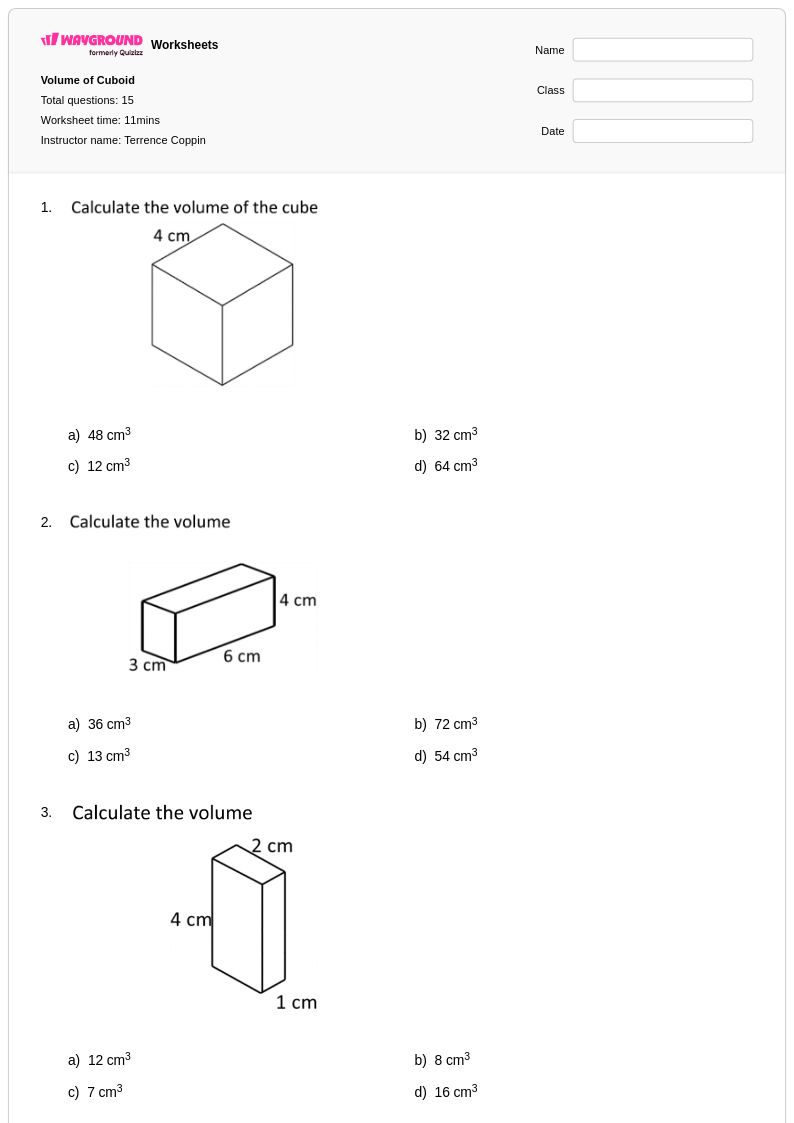
15 Q
10th
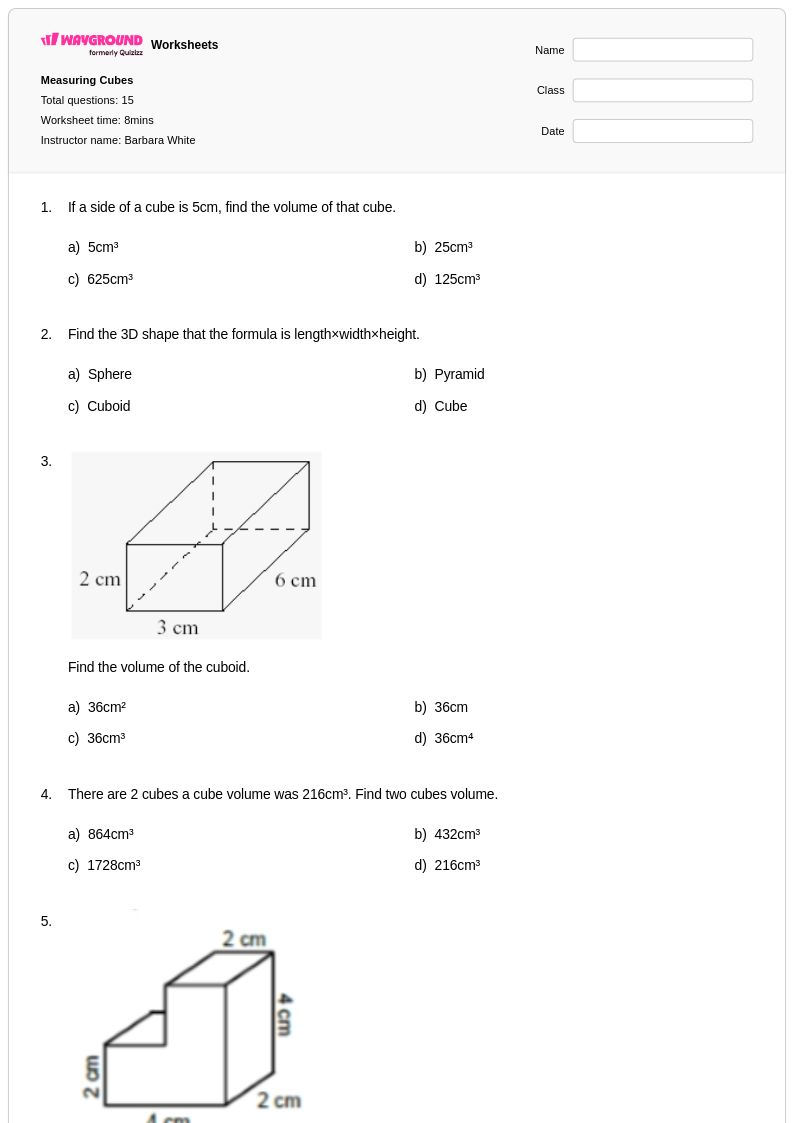
15 Q
6th
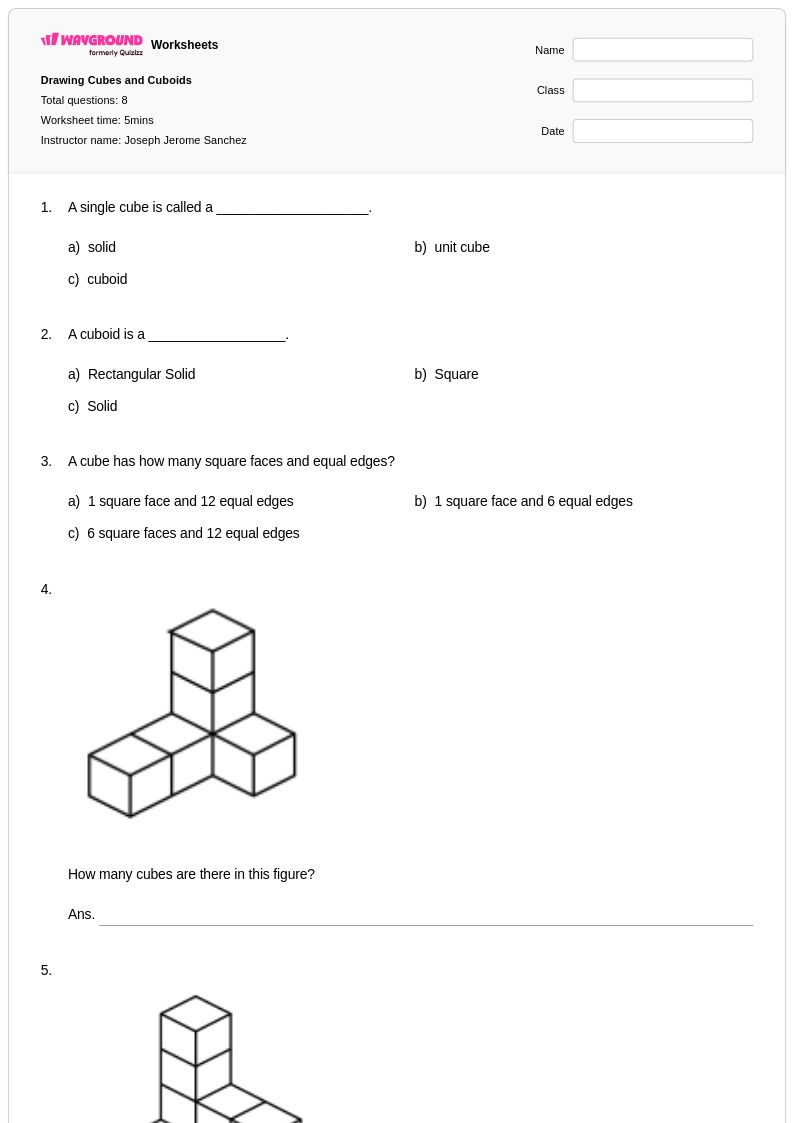
8 Q
5th - 6th
10 Q
8th
20 Q
5th
12 Q
1st
12 Q
2nd
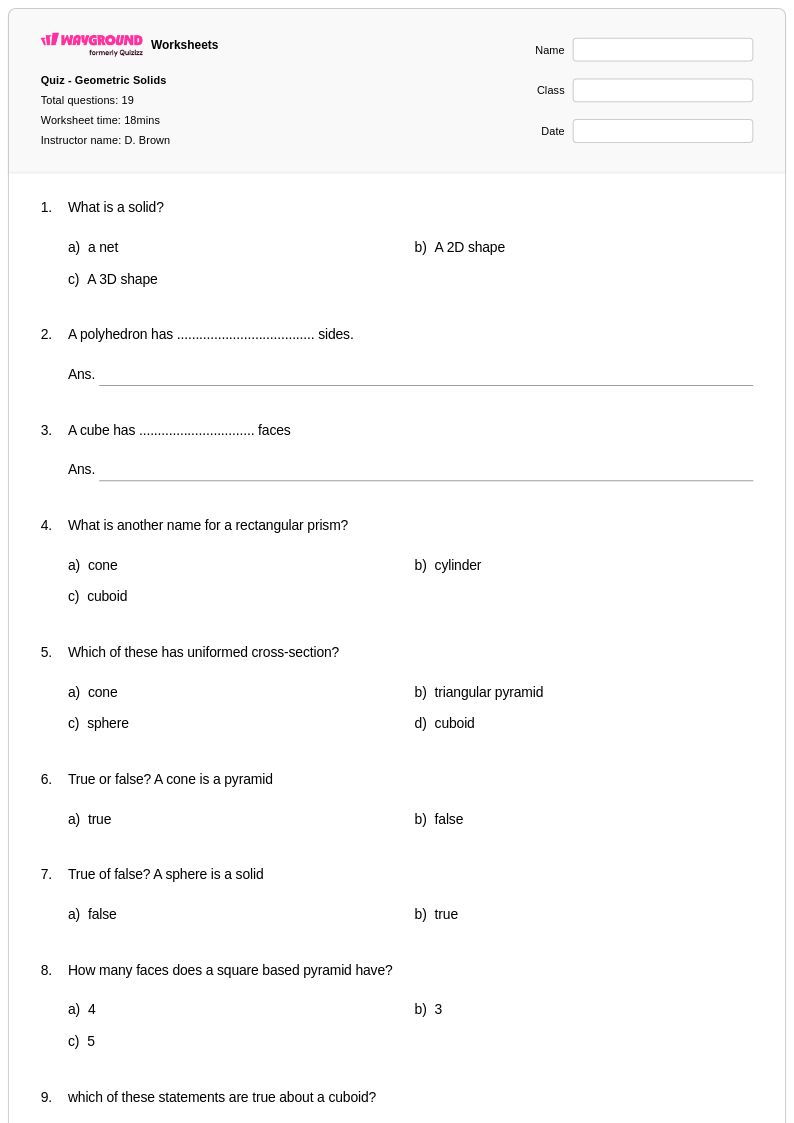
19 Q
2nd
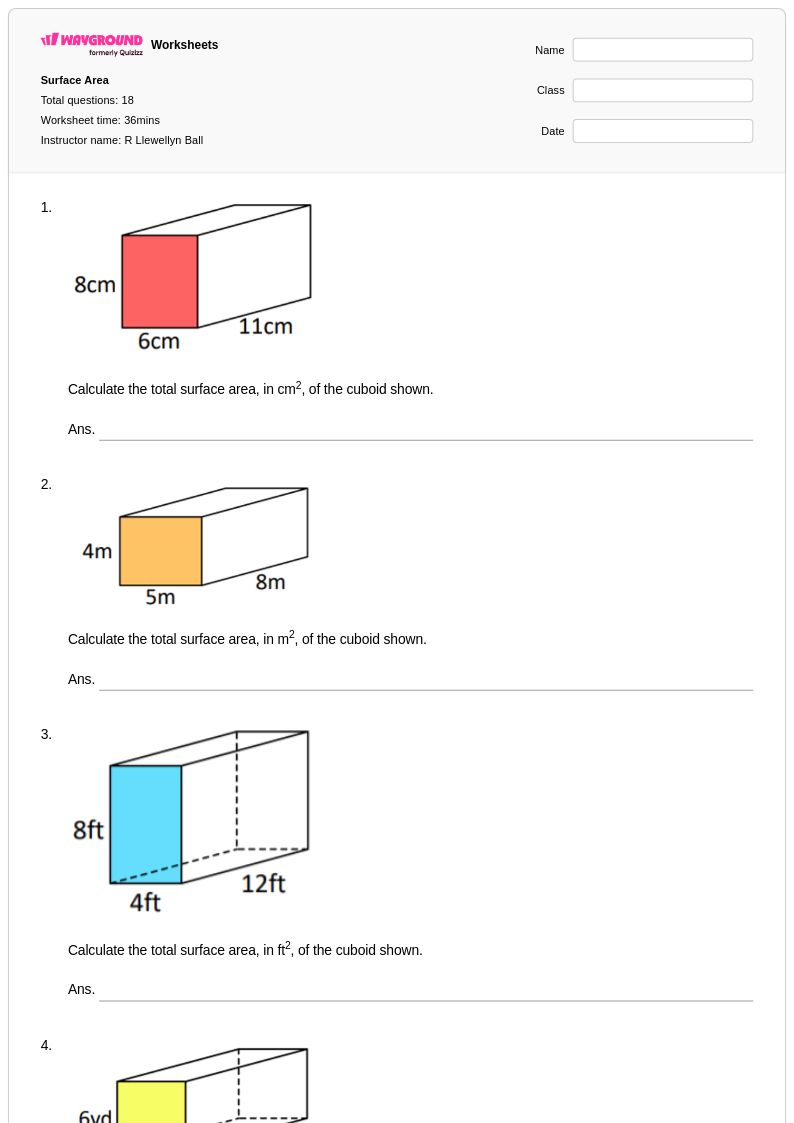
18 Q
8th - 11th
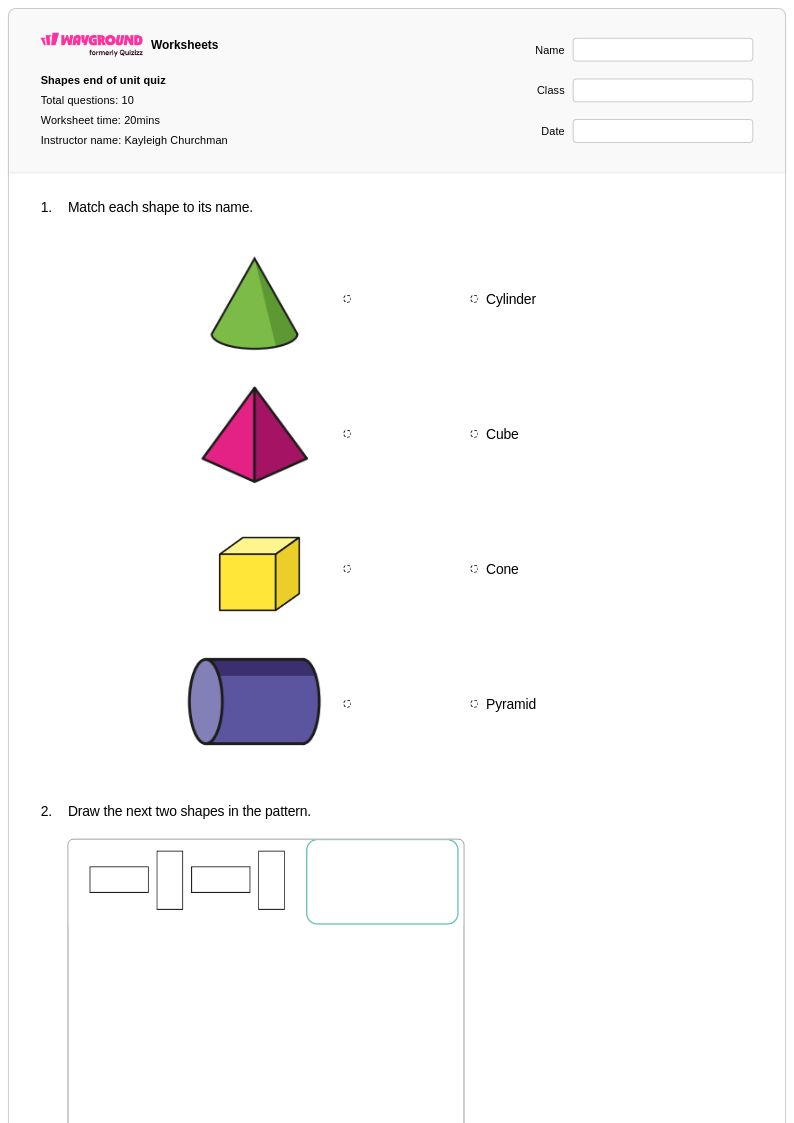
10 Q
1st
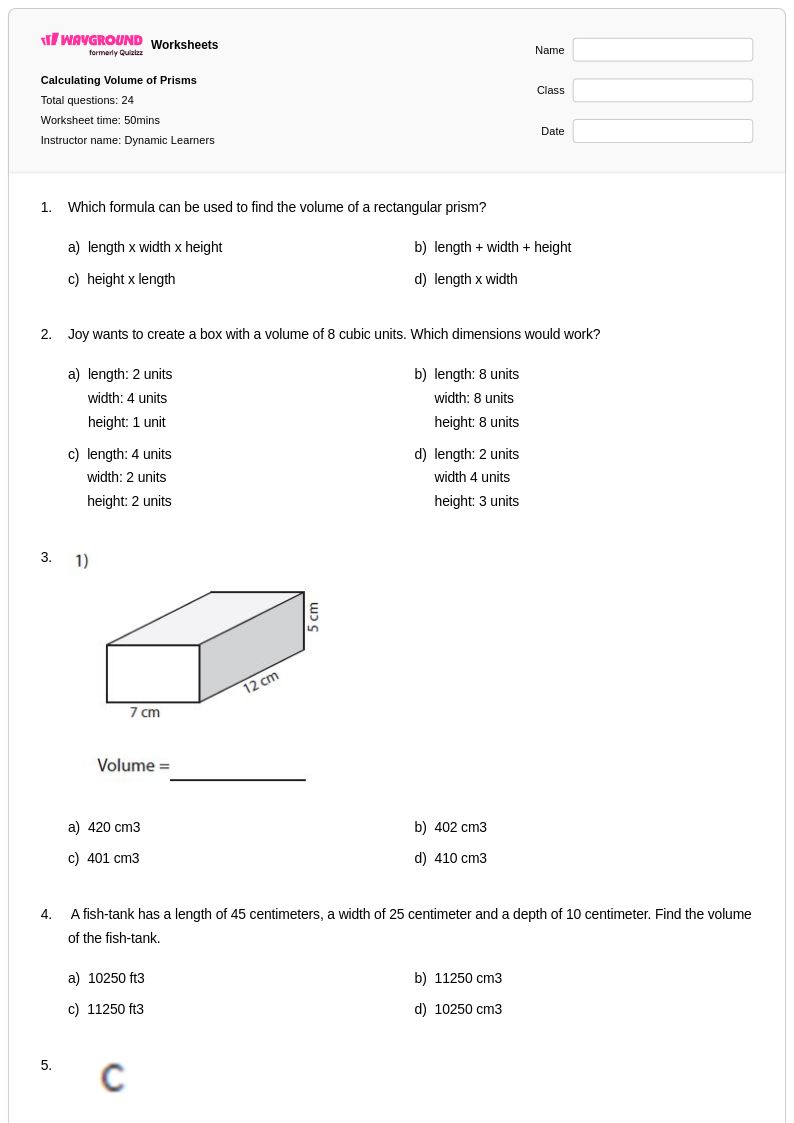
24 Q
5th - Uni
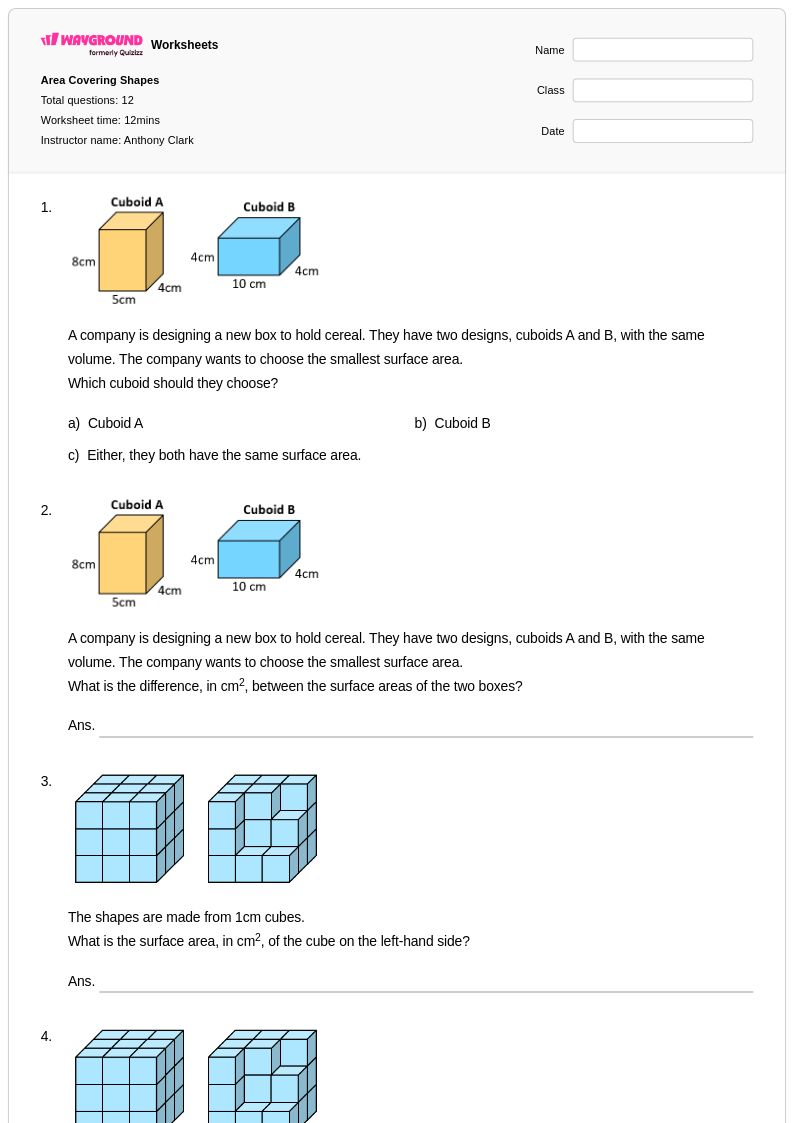
12 Q
9th - Uni
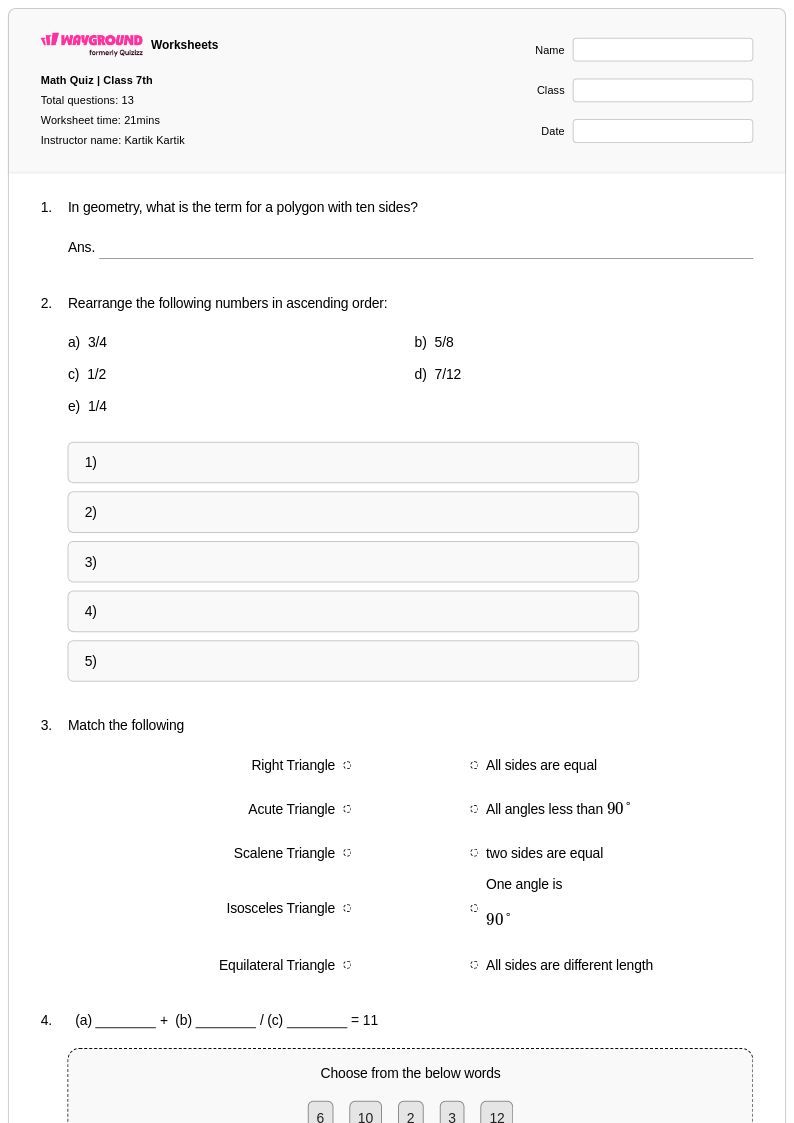
13 Q
7th
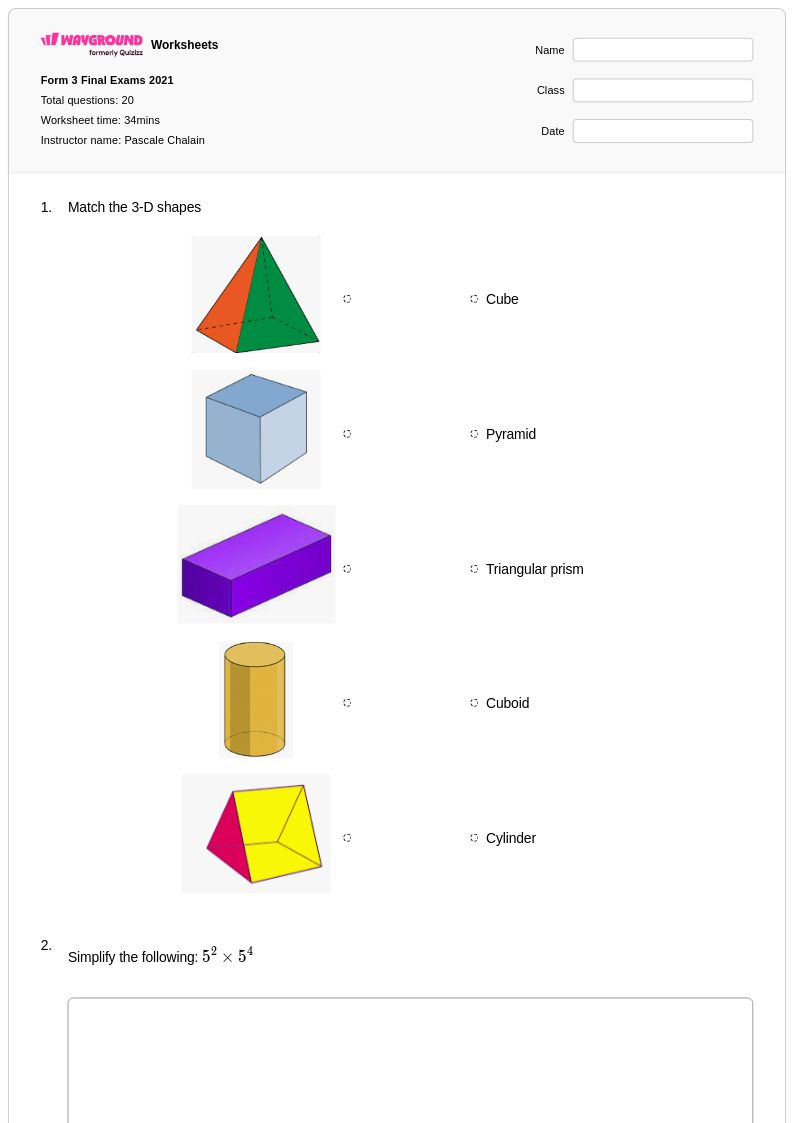
20 Q
8th
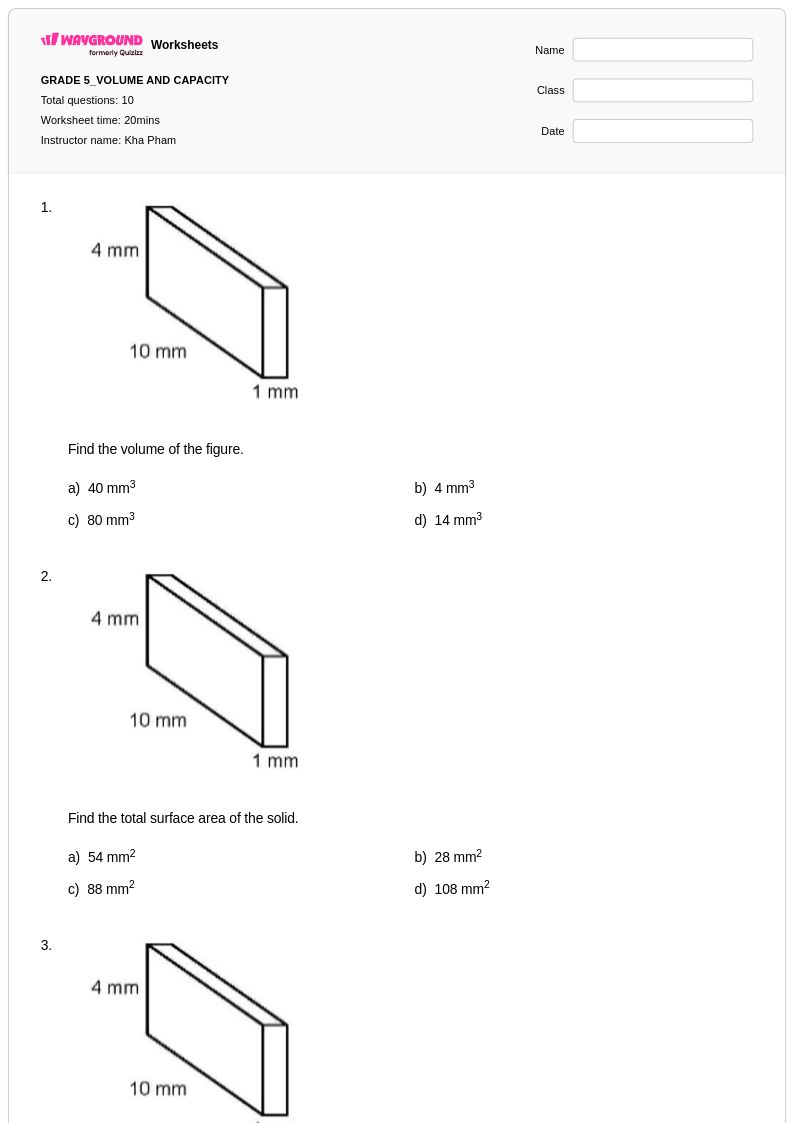
10 Q
5th
Explore Other Subject Worksheets for kindergarten
Explore printable Cuboids worksheets for Kindergarten
Cuboids worksheets for kindergarten students available through Wayground (formerly Quizizz) introduce young learners to three-dimensional geometric shapes through engaging, age-appropriate activities. These carefully designed practice problems help kindergarteners develop spatial reasoning skills by identifying cuboids in everyday objects, distinguishing them from other 3D shapes like spheres and cylinders, and understanding basic properties such as faces, edges, and corners. The comprehensive collection includes colorful printables that make learning about rectangular prisms accessible and enjoyable, with each worksheet featuring clear answer keys that support both independent practice and guided instruction. These free educational resources strengthen foundational geometry concepts while building visual discrimination skills essential for mathematical development, allowing students to explore cuboids through hands-on activities, sorting exercises, and real-world object recognition tasks presented in convenient pdf format.
Wayground's extensive platform supports kindergarten teachers with millions of teacher-created cuboid worksheets that streamline geometry instruction and accommodate diverse learning needs. The robust search and filtering system enables educators to quickly locate materials aligned with early childhood mathematics standards, while differentiation tools allow seamless customization for varying skill levels within the classroom. Teachers can access these resources in both printable and digital formats, including downloadable pdfs, making lesson planning more efficient and flexible for different instructional settings. The platform's comprehensive collection facilitates targeted skill practice, supports remediation for students who need additional geometric concept reinforcement, and provides enrichment opportunities for advanced learners ready to explore more complex 3D shape relationships, ensuring that every kindergarten student can build confidence with cuboid recognition and spatial understanding.
FAQs
How do I teach cuboids to kindergarten students?
What activities help kindergarteners practice recognizing cuboids?
What mistakes do kindergarteners make when identifying cuboids?
How can I use Wayground kindergarten cuboids worksheets?
How do cuboids fit into the Common Core kindergarten geometry progression?
How can I differentiate kindergarten cuboids activities?
What should kindergarten students know about cuboids?