
15 Q
12th
22 Q
9th - Uni
22 Q
10th - 12th
25 Q
12th
30 Q
12th
45 Q
9th
20 Q
9th - 12th
20 Q
12th
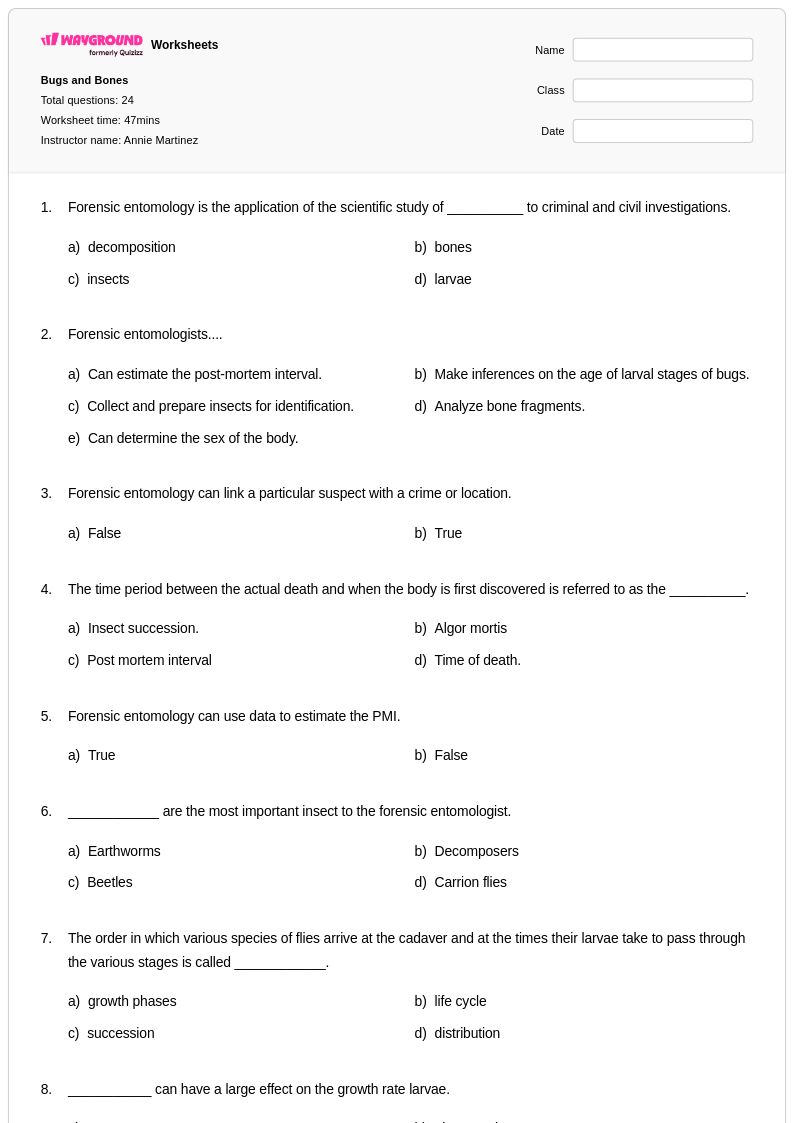
24 Q
12th
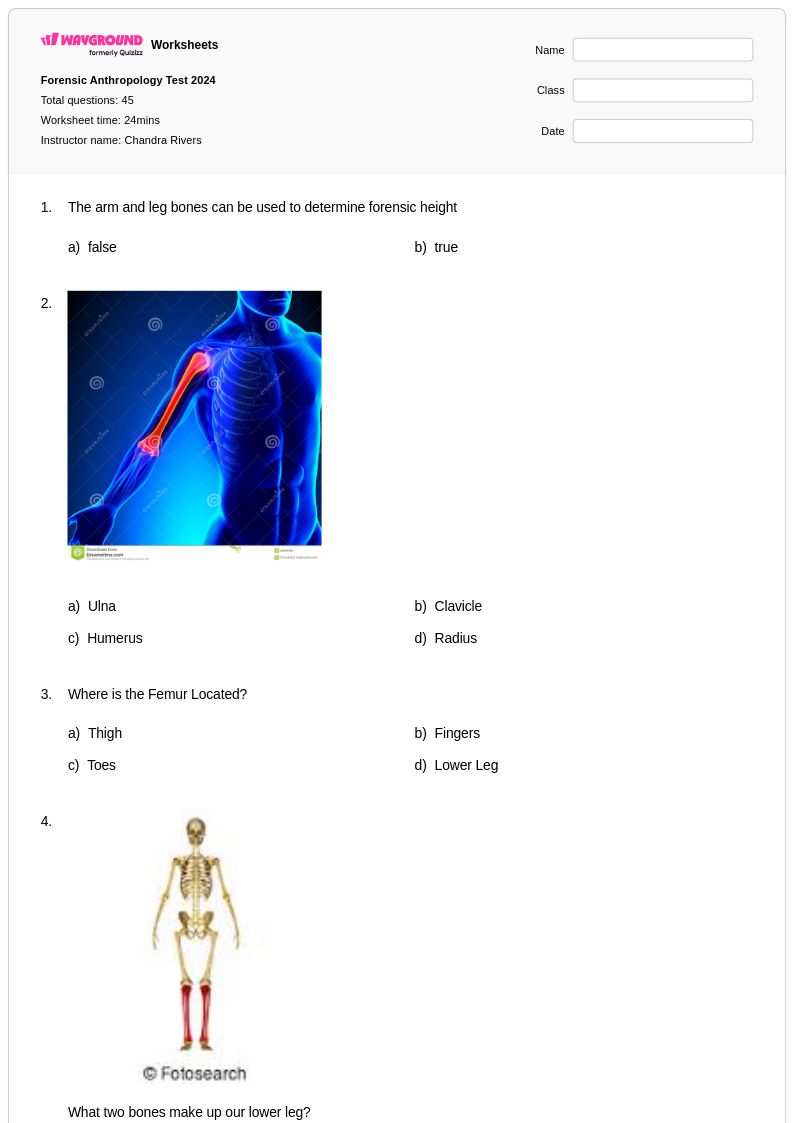
60 Q
10th
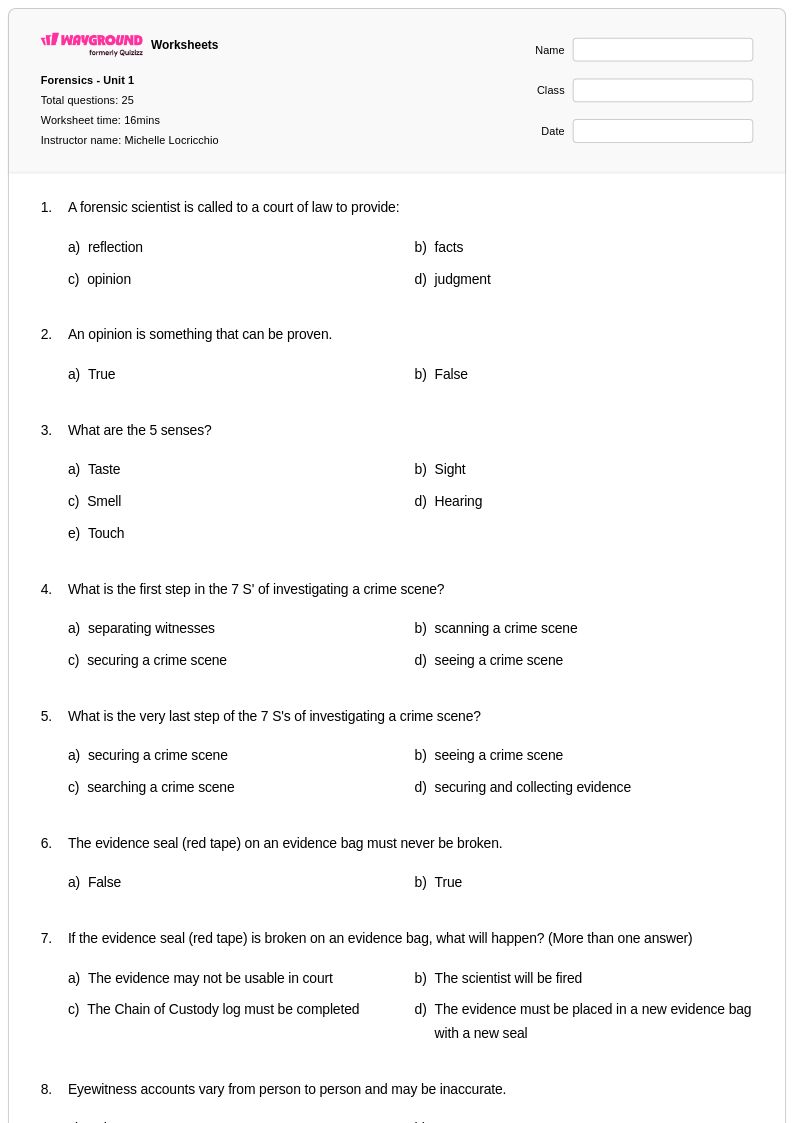
25 Q
8th
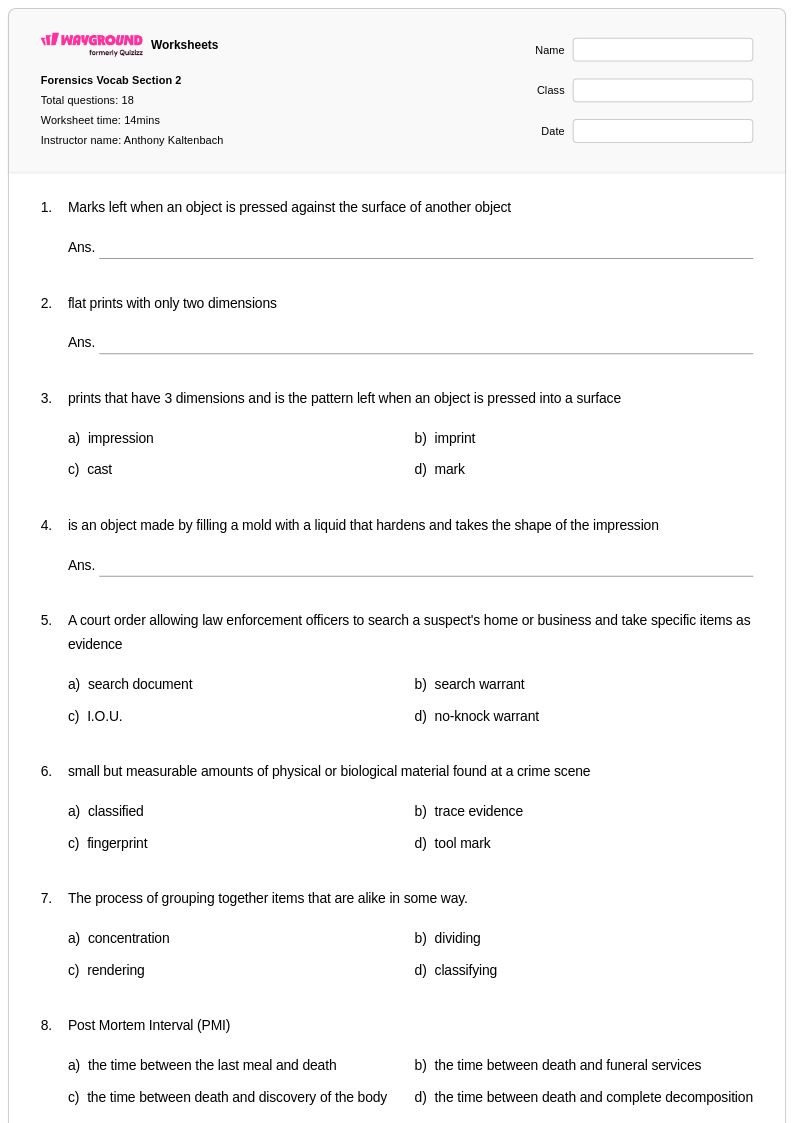
18 Q
8th
20 Q
11th
68 Q
12th
18 Q
9th - 12th
12 Q
9th - 12th
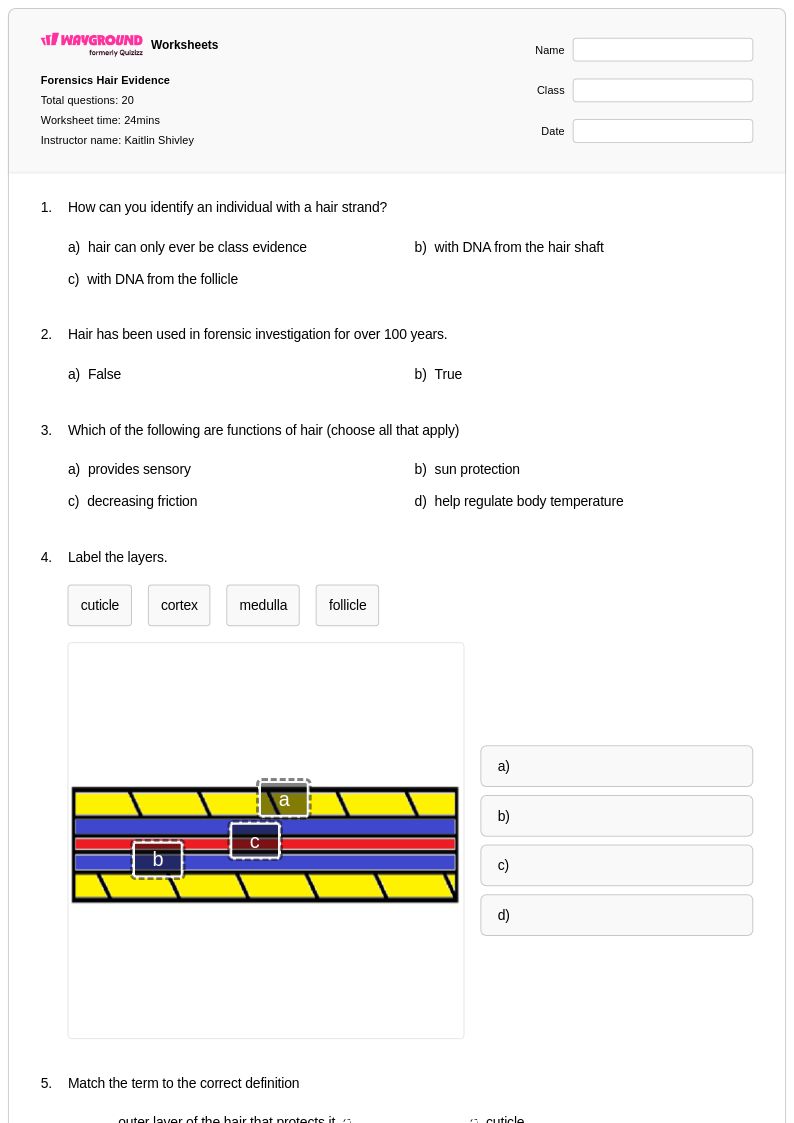
20 Q
9th - 12th
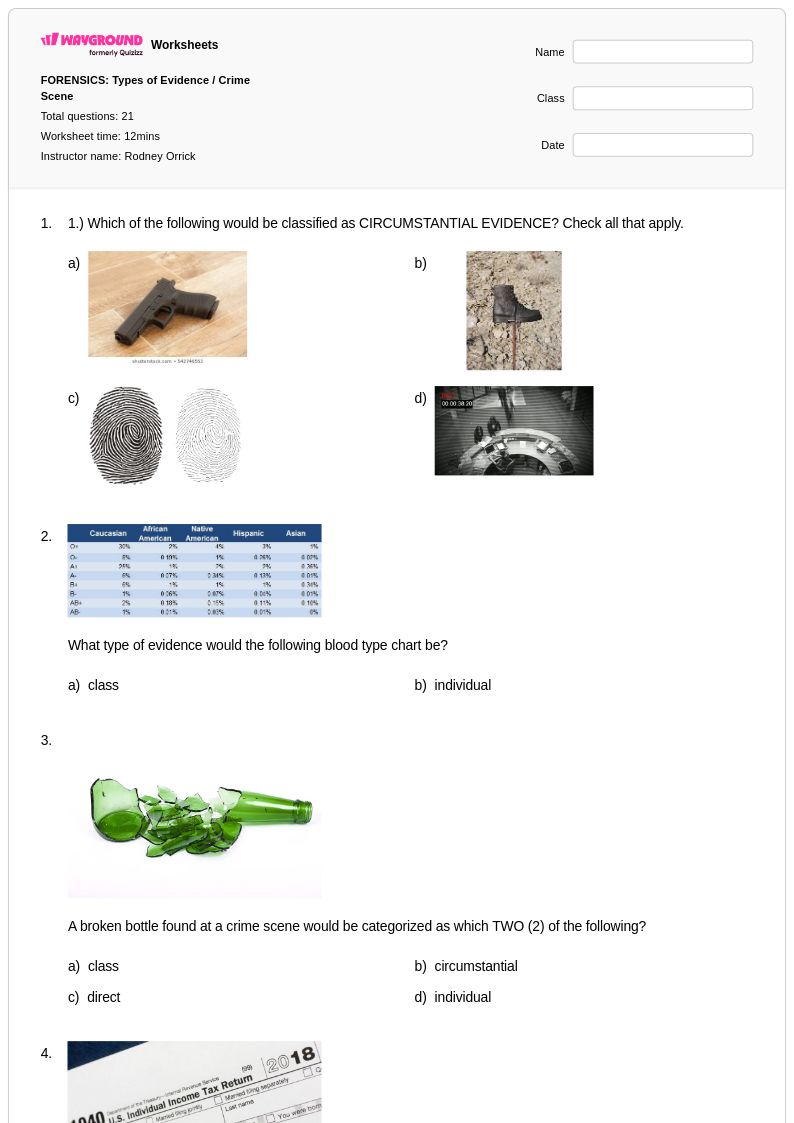
21 Q
12th
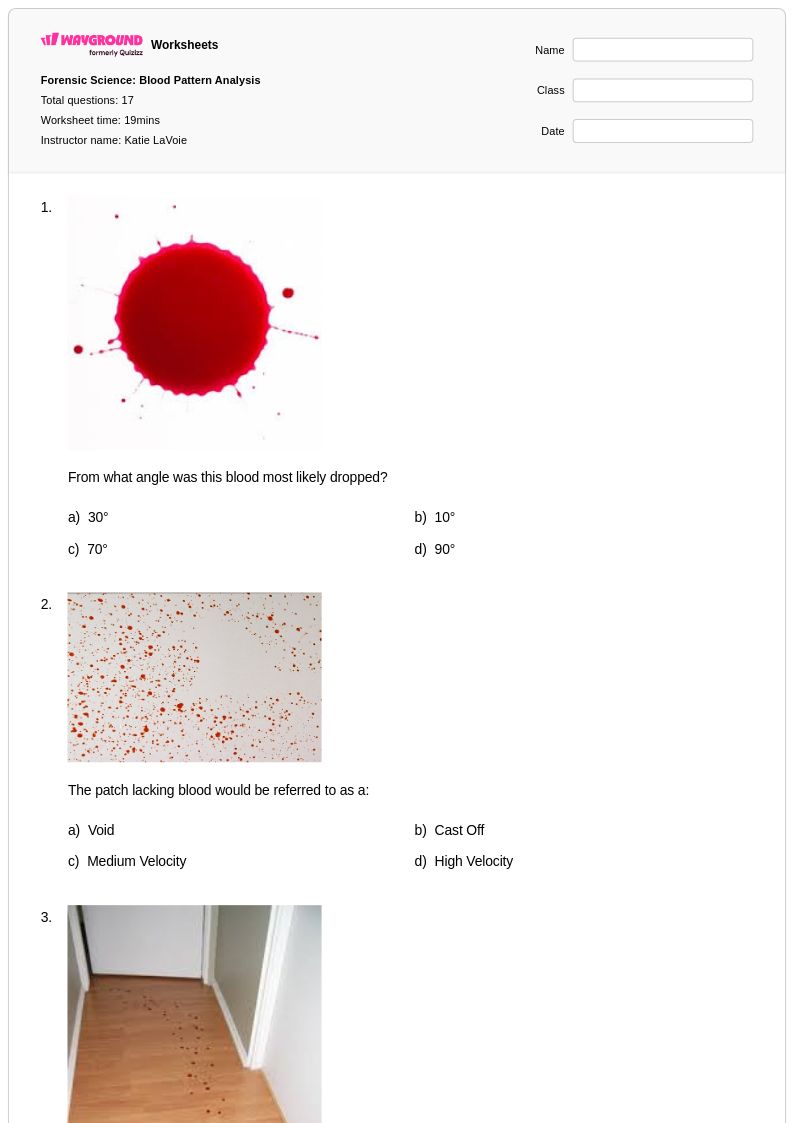
17 Q
12th
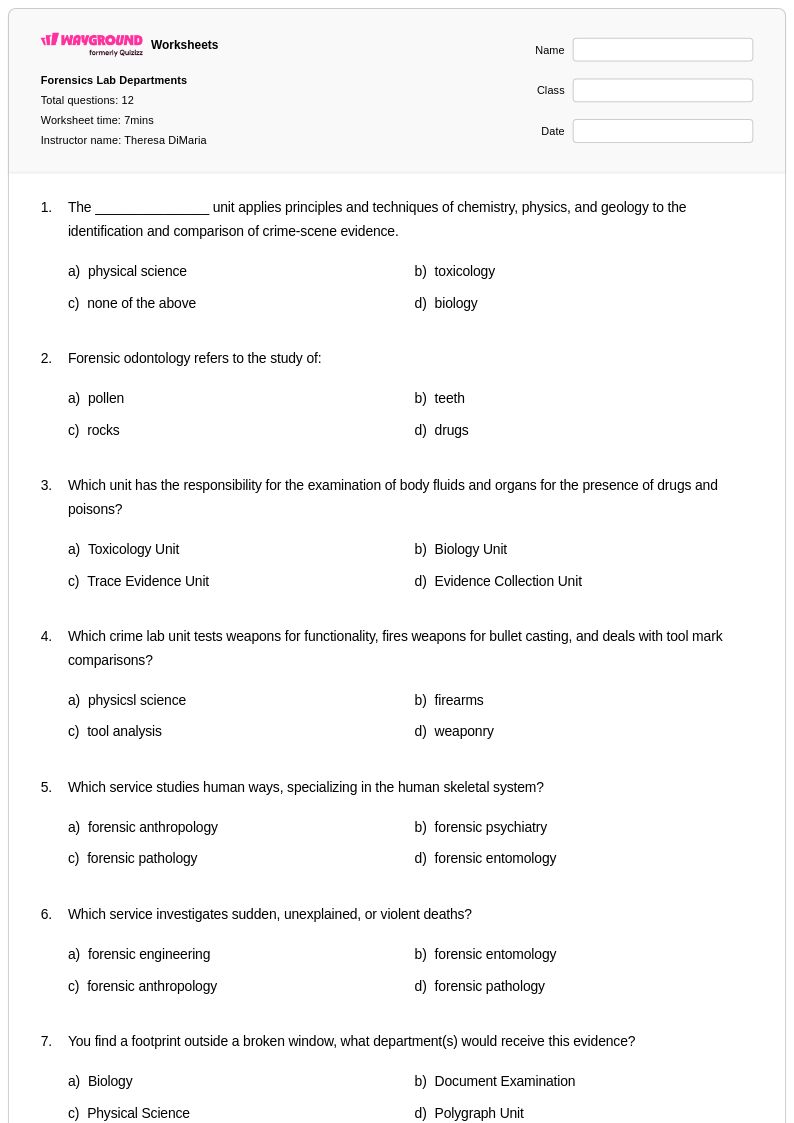
12 Q
10th - 12th
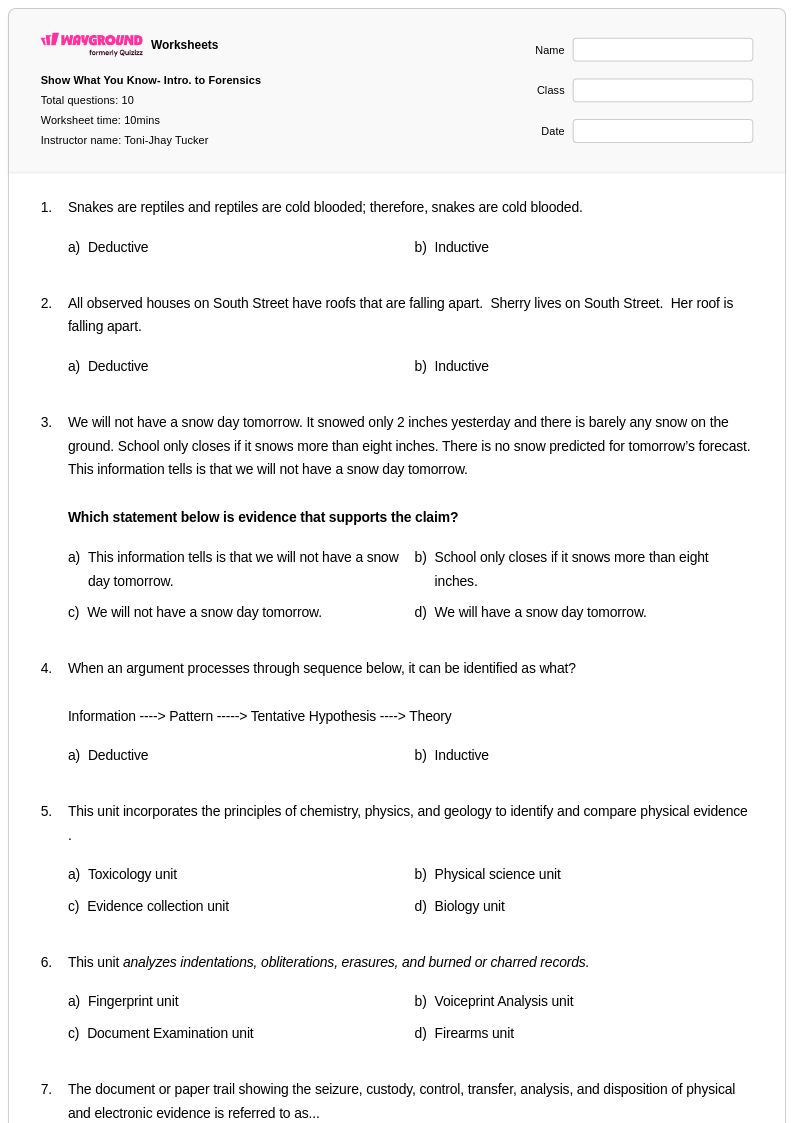
10 Q
10th - 12th
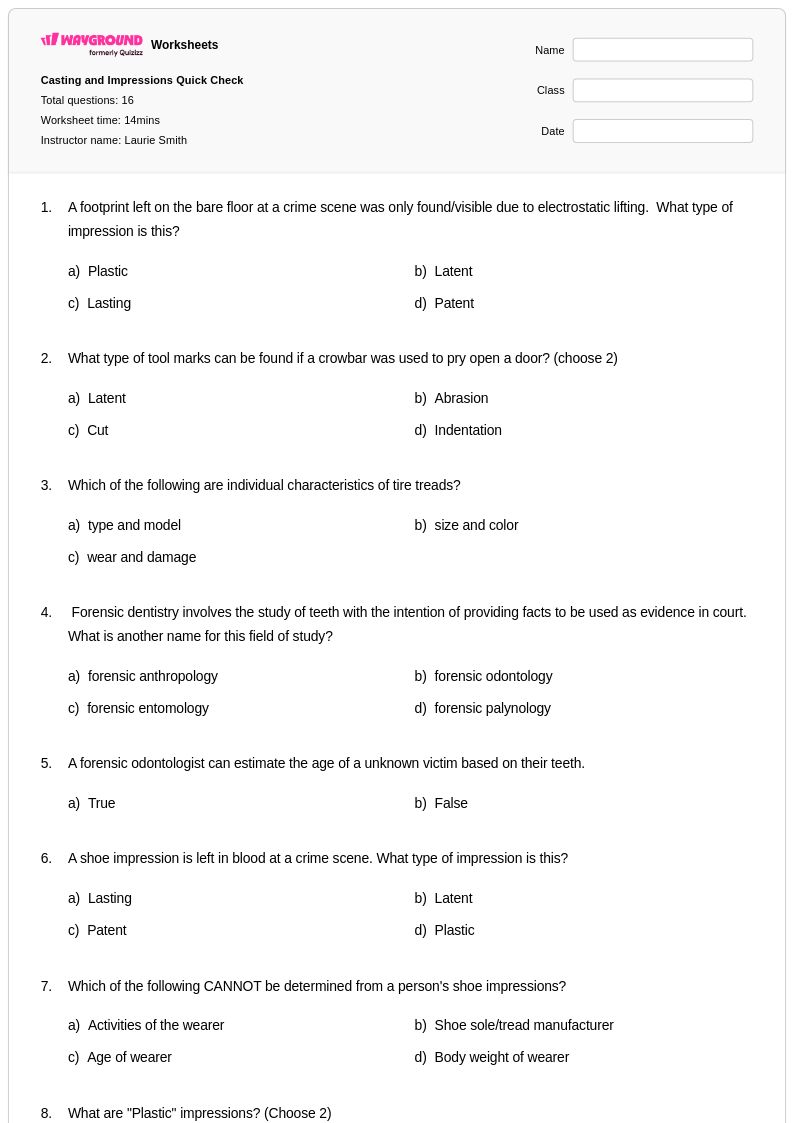
16 Q
11th - 12th
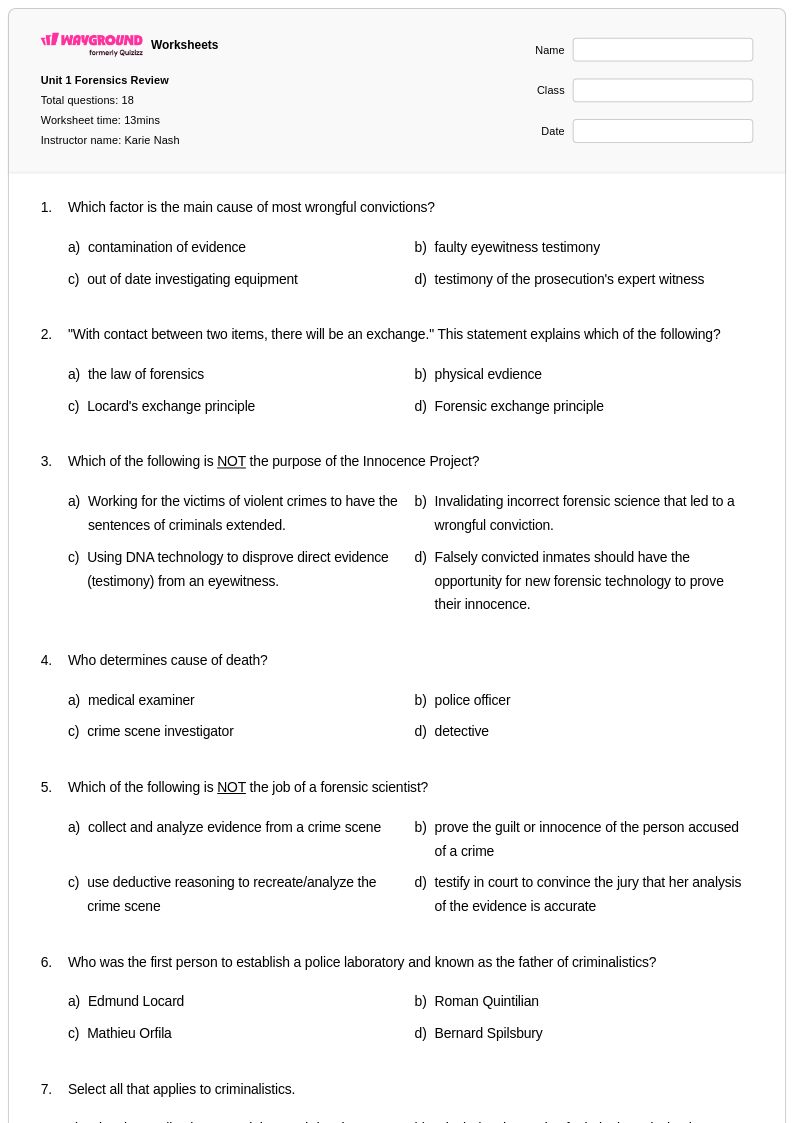
18 Q
11th - 12th
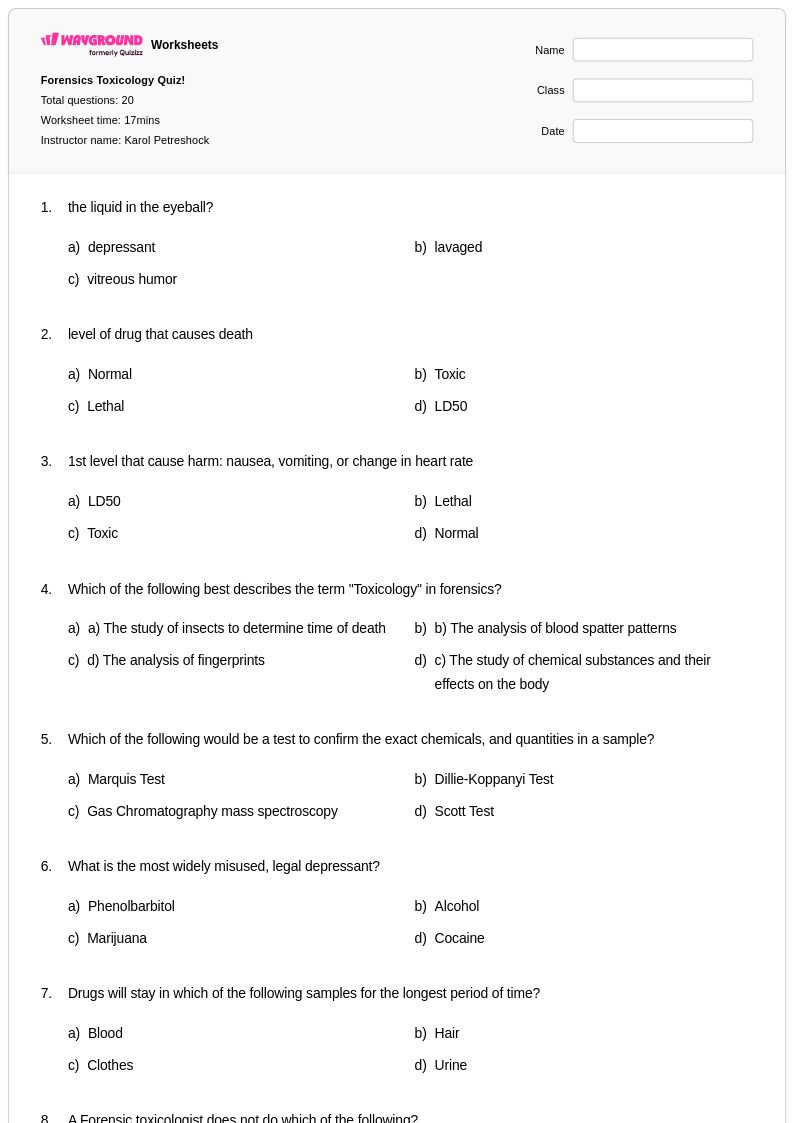
20 Q
11th
Explore Worksheets by Subjects
Explore printable Forensic Entomology worksheets
Forensic entomology worksheets available through Wayground (formerly Quizizz) provide students with comprehensive practice in understanding how insects and arthropods are used to solve criminal investigations and determine crucial details about decomposition timelines. These specialized biology worksheets strengthen critical analytical skills by guiding students through the identification of forensically important species, calculation of accumulated degree days, and interpretation of insect succession patterns found at crime scenes. Each worksheet collection includes detailed answer keys and comprehensive explanations that help students master complex concepts such as postmortem interval estimation, seasonal variations in insect activity, and the relationship between environmental factors and decomposition rates. The practice problems incorporate real-world case study scenarios, challenging students to apply entomological principles to solve forensic puzzles while developing their scientific reasoning abilities. These free printable resources serve as essential tools for reinforcing classroom learning and preparing students for advanced study in forensic science applications.
Wayground (formerly Quizizz) supports educators with an extensive collection of teacher-created forensic entomology worksheets drawn from millions of educational resources developed by experienced biology instructors and forensic science professionals. The platform's robust search and filtering capabilities enable teachers to quickly locate materials that align with specific learning objectives and academic standards, while differentiation tools allow for seamless customization to meet diverse student needs and ability levels. Teachers can access these resources in both printable pdf formats for traditional classroom use and interactive digital versions that provide immediate feedback and adaptive learning experiences. This flexibility proves invaluable for lesson planning, targeted remediation of challenging concepts like thermal summation calculations, enrichment activities for advanced students exploring career applications, and structured skill practice that builds competency in scientific observation and data interpretation essential for understanding the intersection of biology and criminal justice.
FAQs
How do I teach forensic entomology in a high school science class?
What kinds of practice problems help students understand accumulated degree days and postmortem interval estimation?
What mistakes do students commonly make when learning forensic entomology concepts?
How can I use forensic entomology worksheets to support students with different ability levels?
How do Wayground's forensic entomology worksheets work in the classroom?
How do insects help determine time of death in a forensic investigation?