
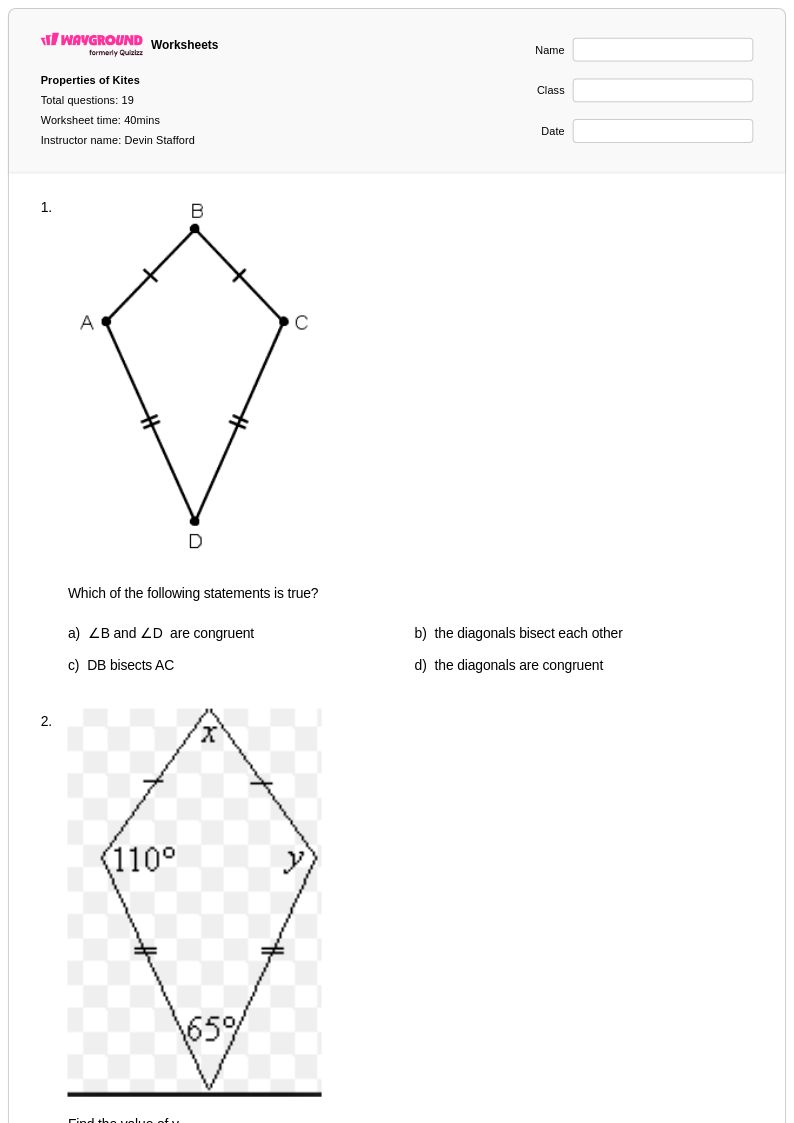
19 Q
10th
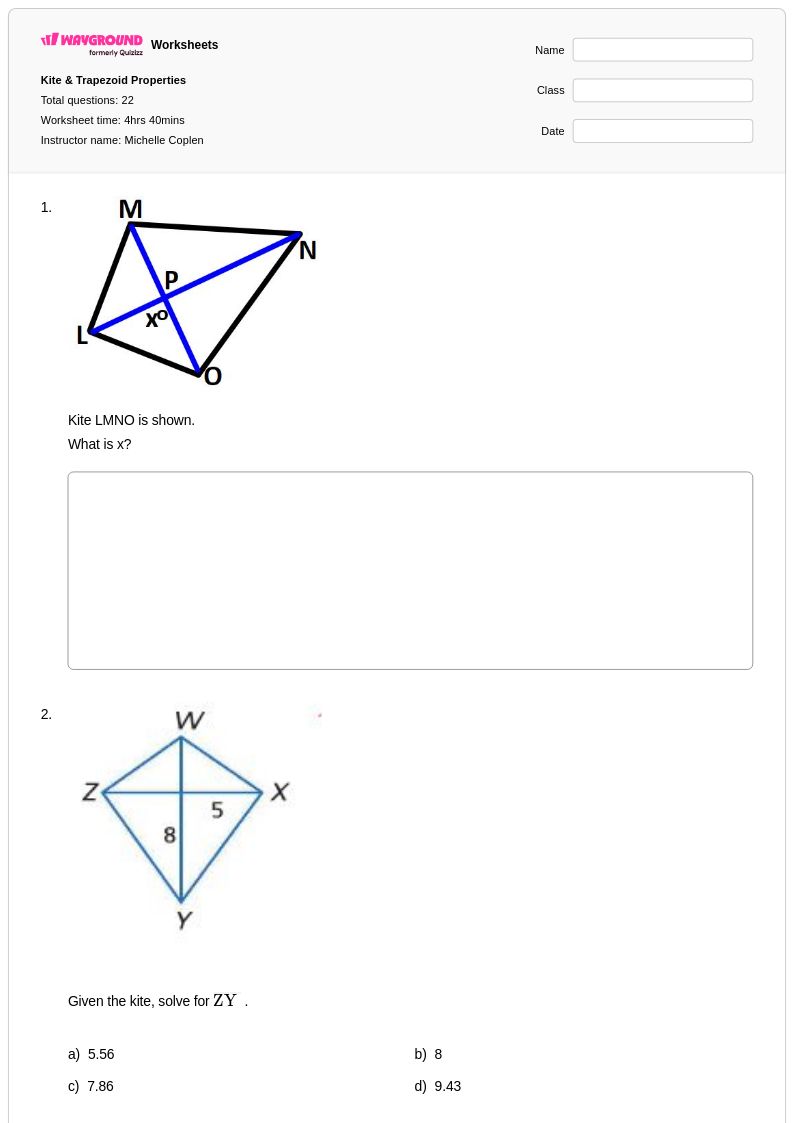
22 Q
9th - 12th
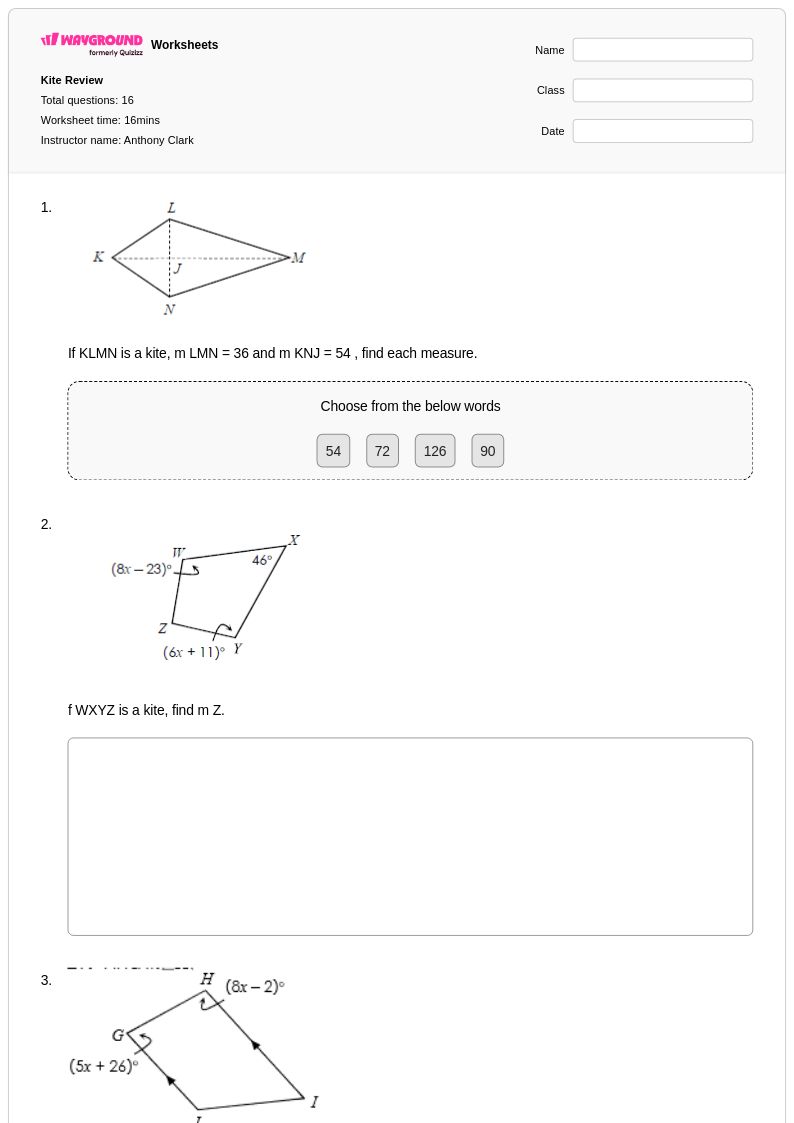
16 Q
10th - Uni
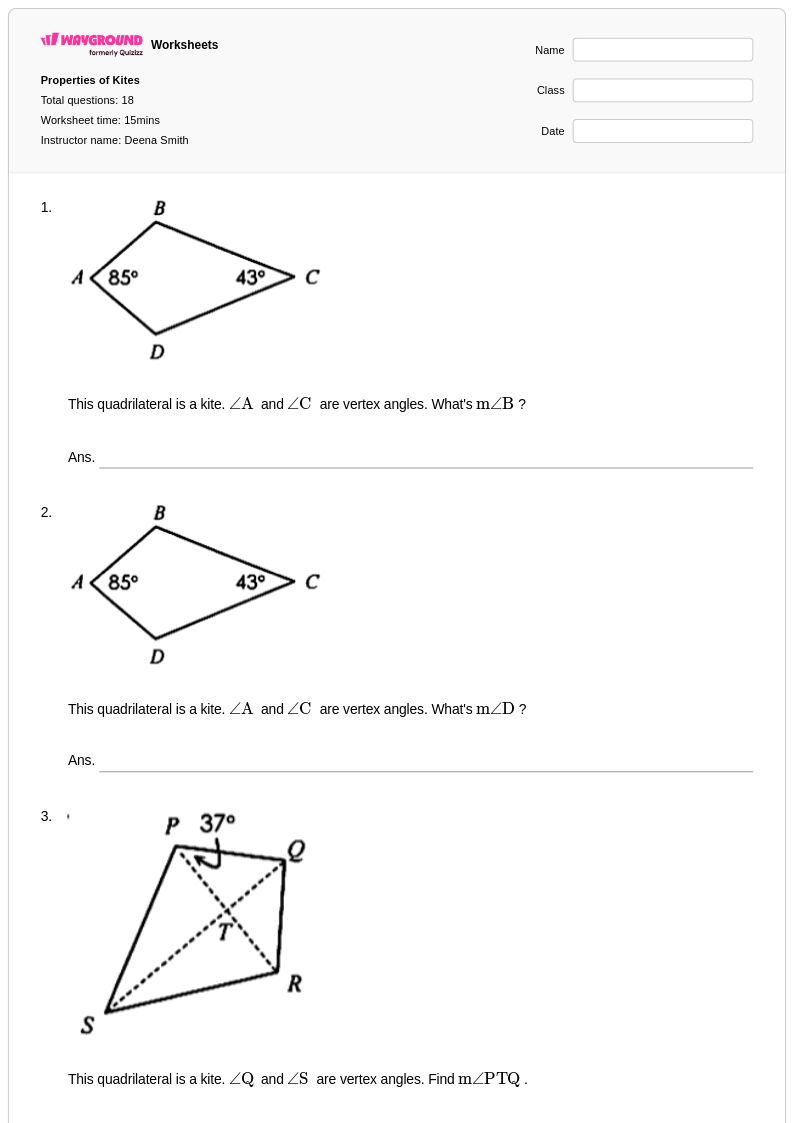
18 Q
9th - 10th
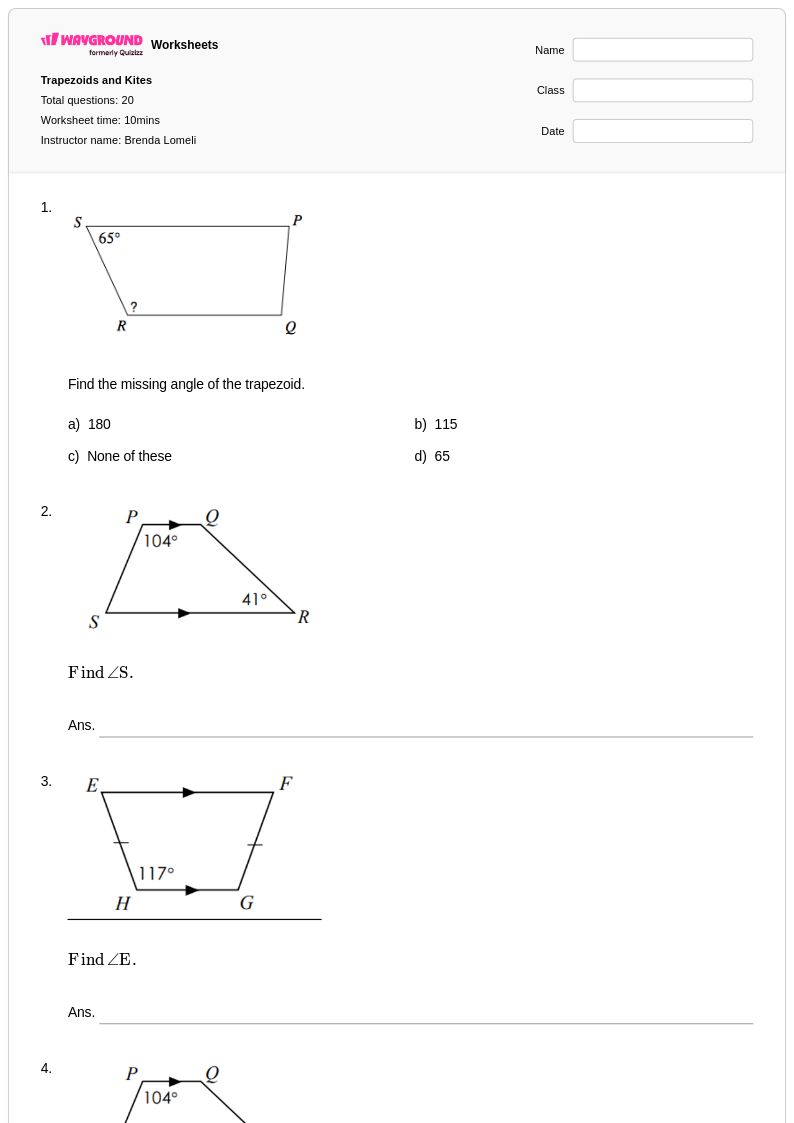
20 Q
9th - 12th
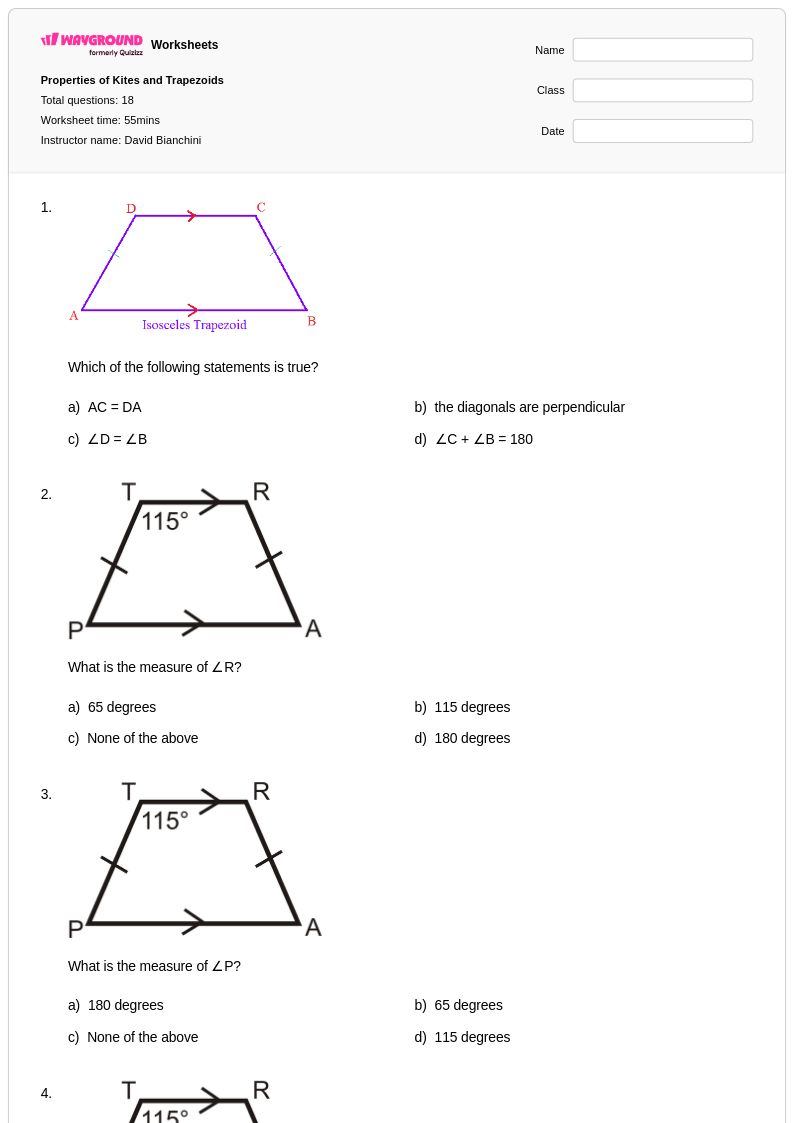
18 Q
10th
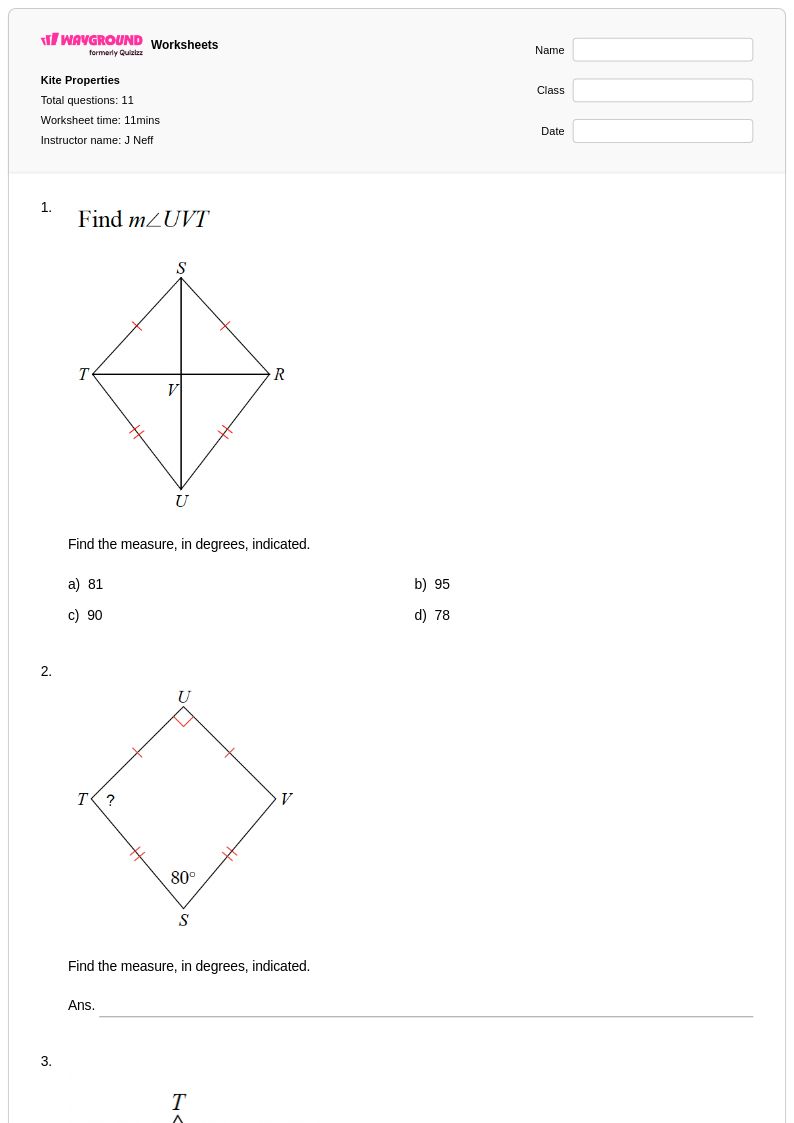
11 Q
12th
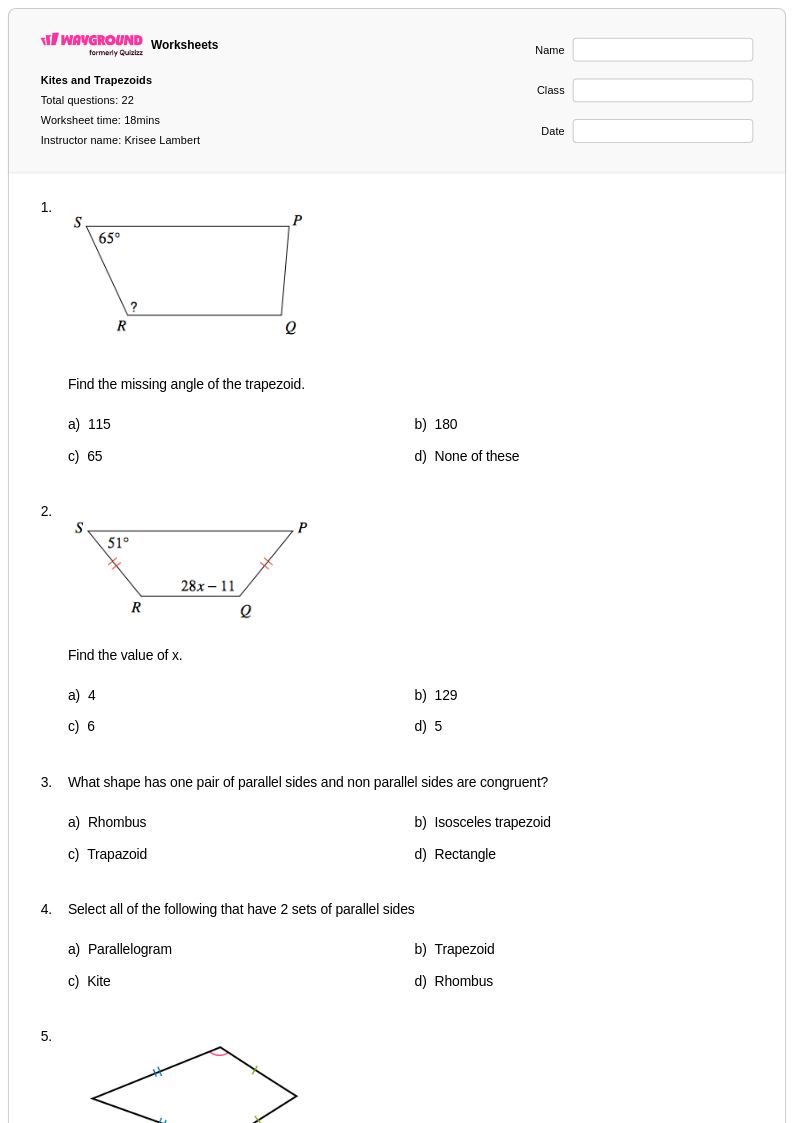
22 Q
10th
10 Q
9th - 10th
20 Q
10th
11 Q
12th
20 Q
9th - Uni
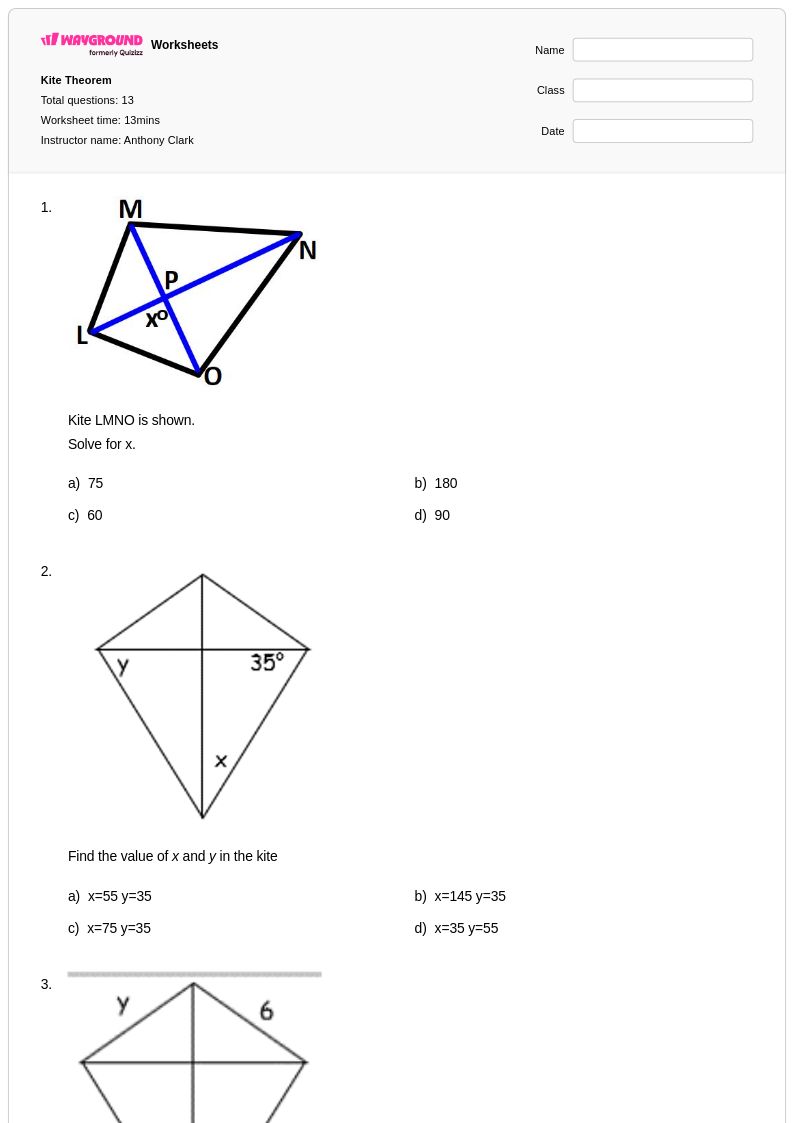
13 Q
9th - Uni
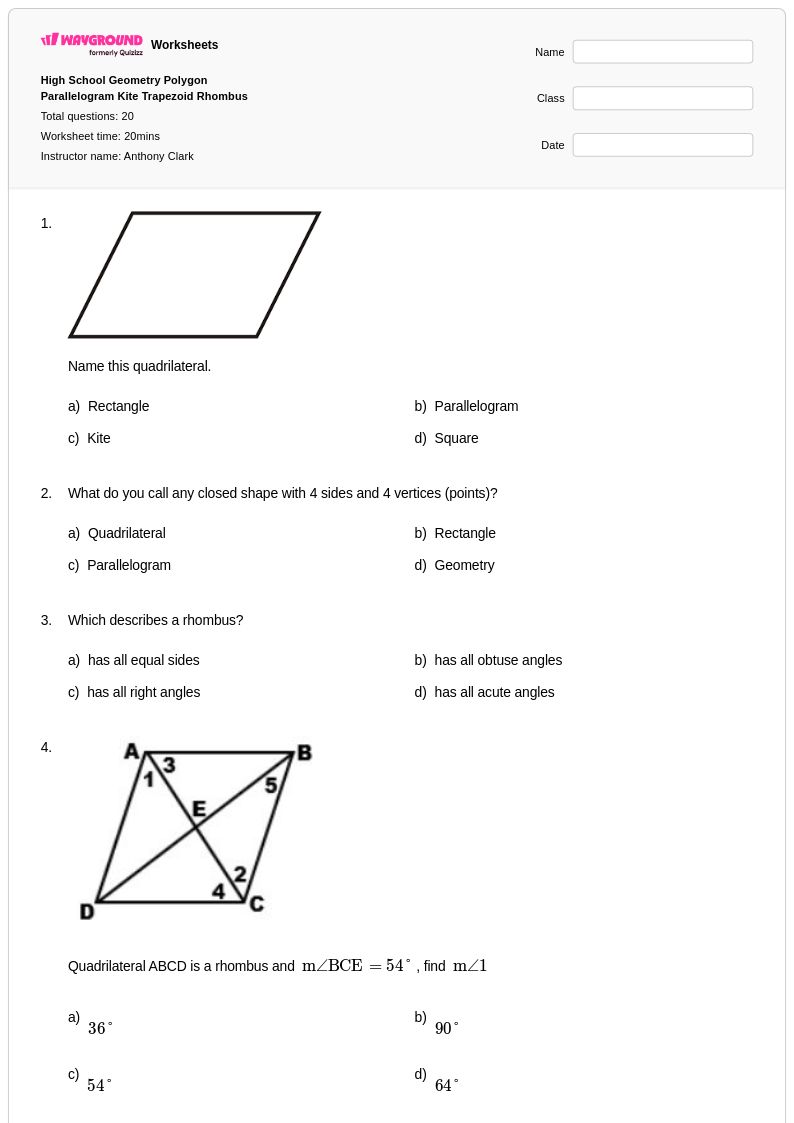
20 Q
5th - Uni
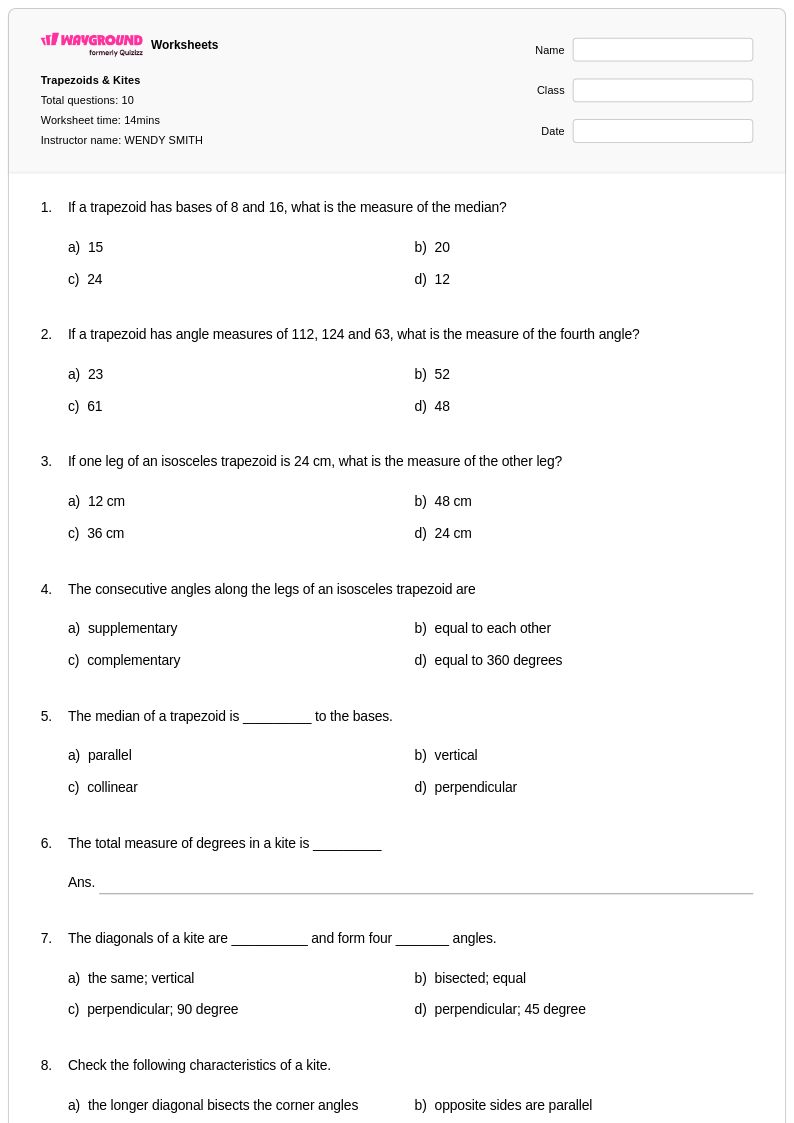
10 Q
10th - 12th
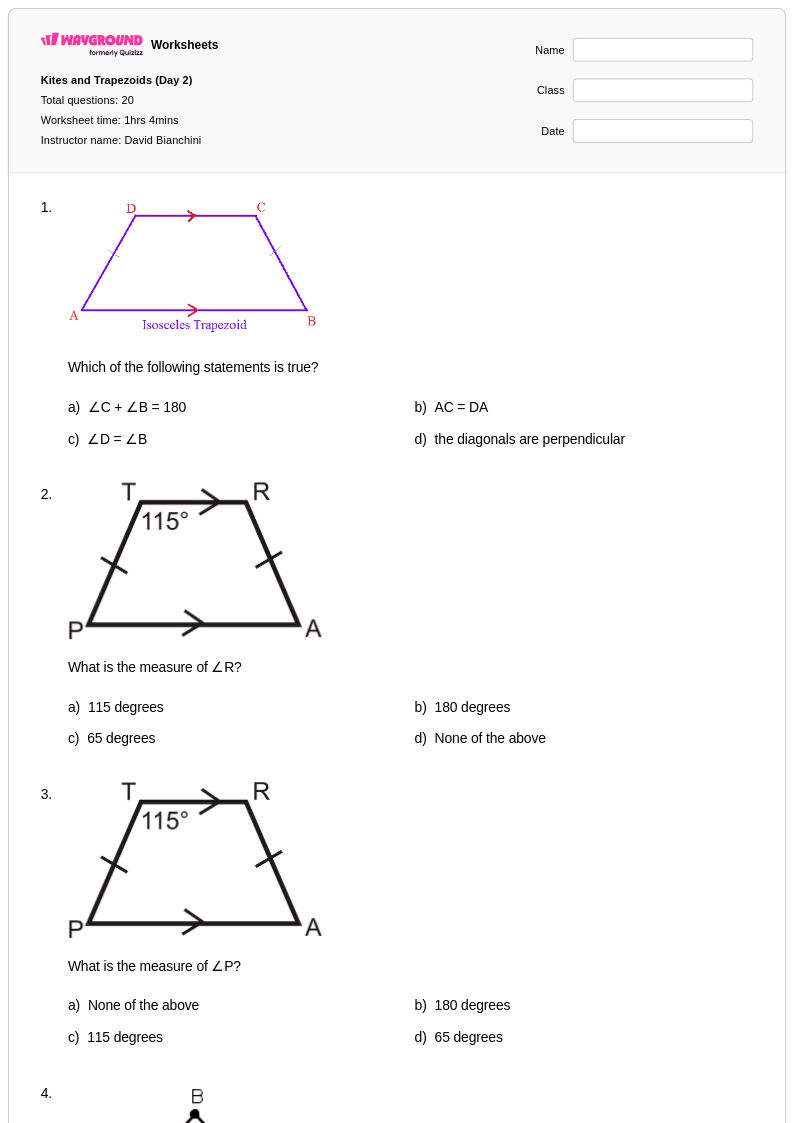
20 Q
10th
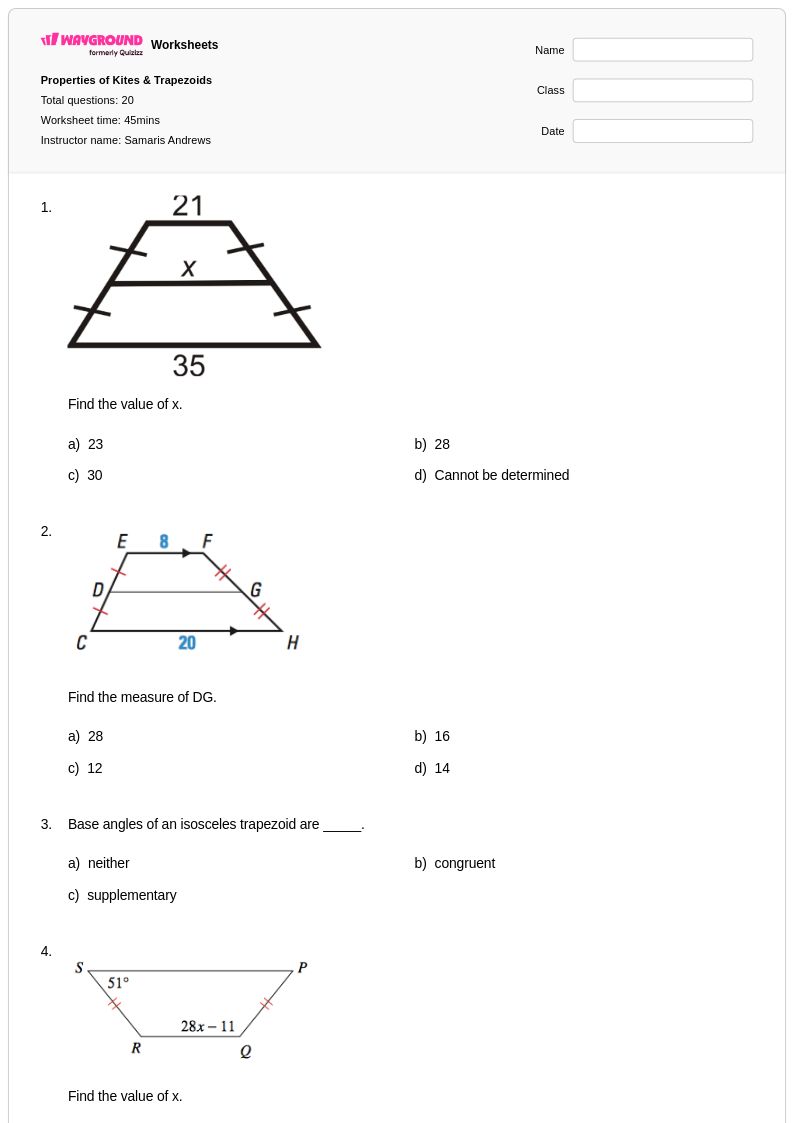
20 Q
10th
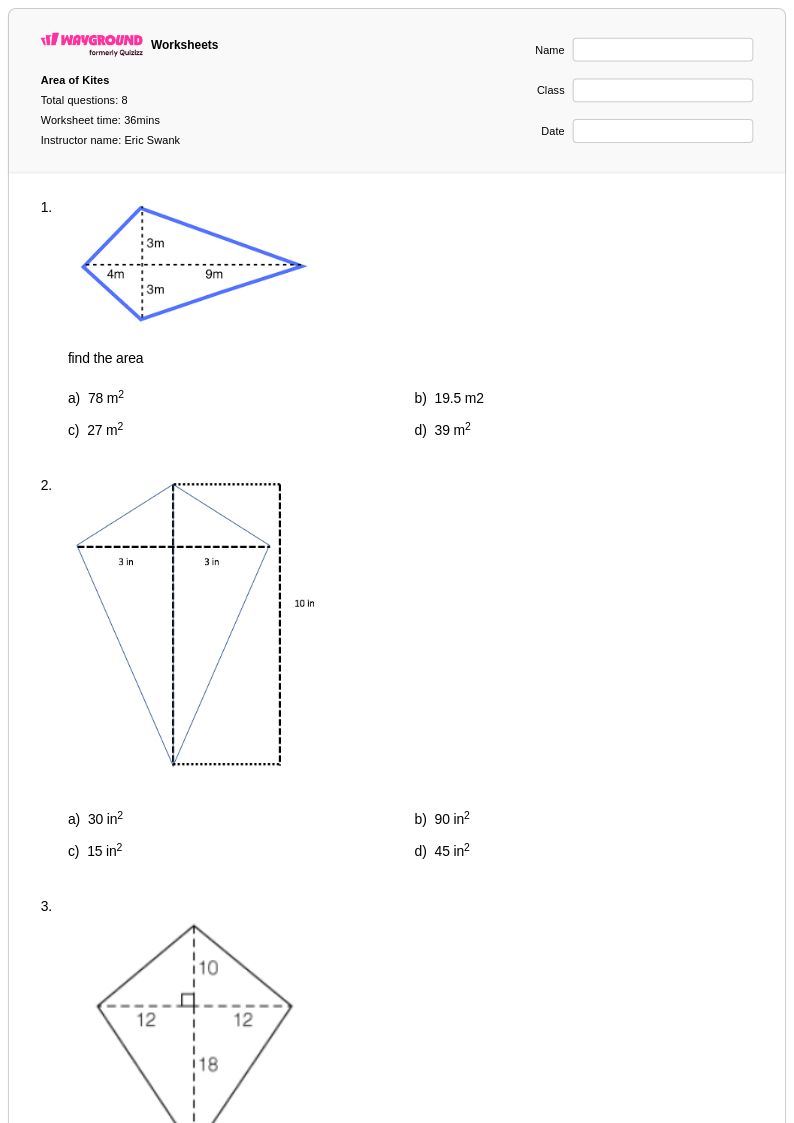
8 Q
9th
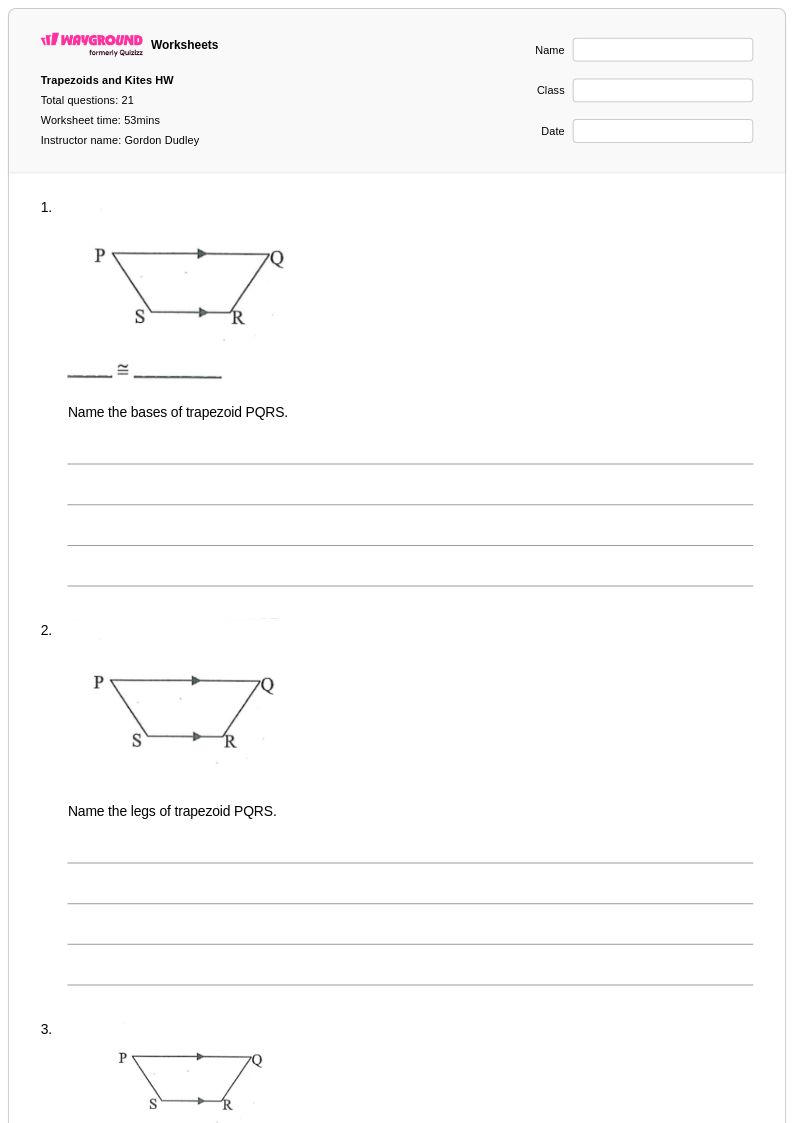
21 Q
10th
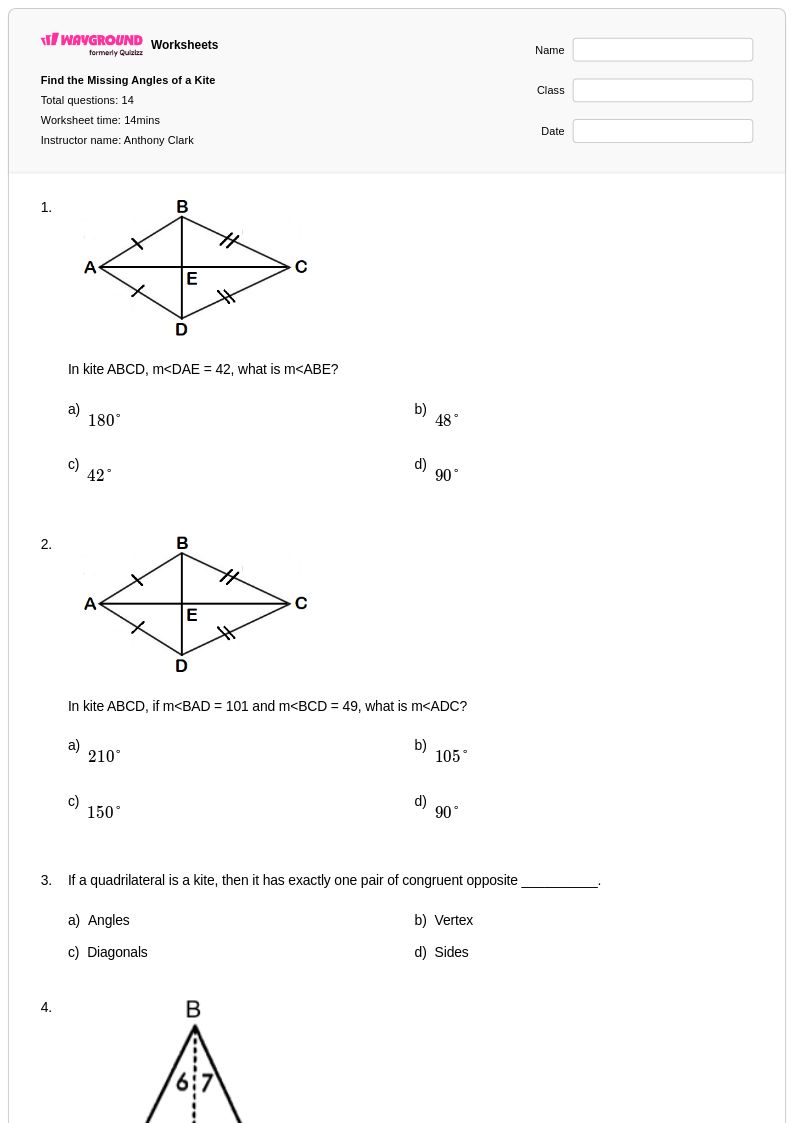
14 Q
8th - Uni
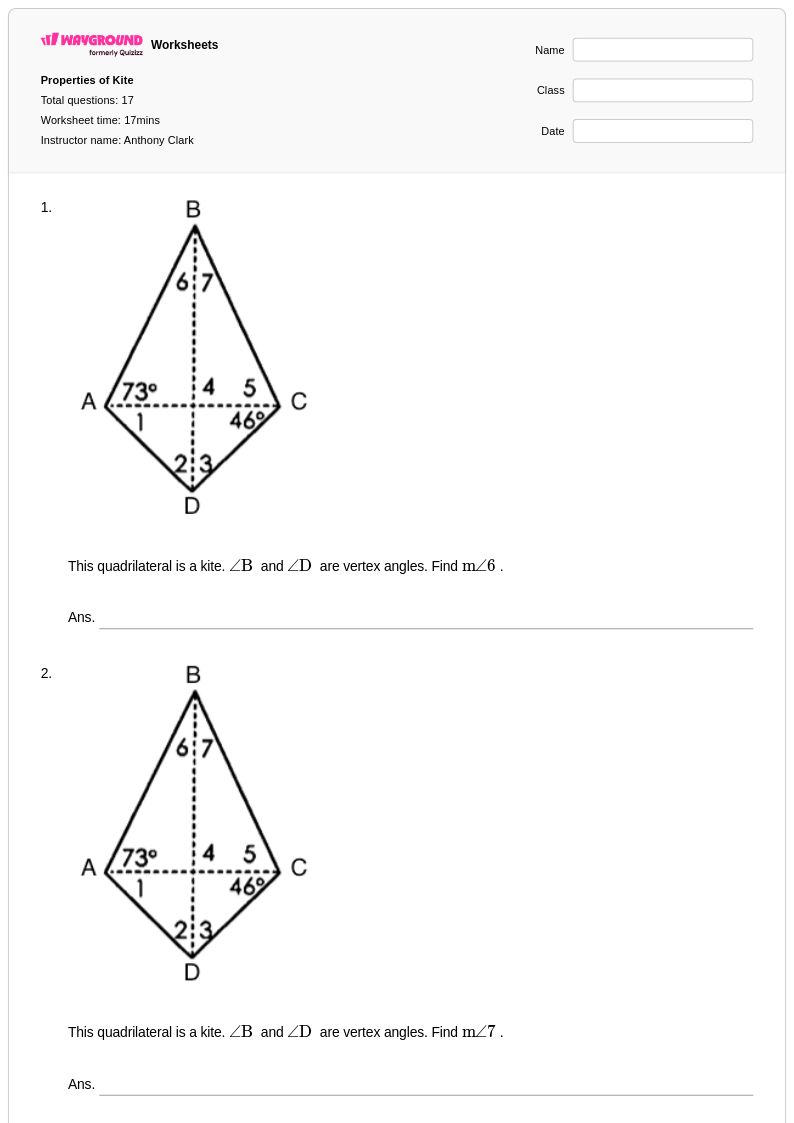
17 Q
10th - Uni
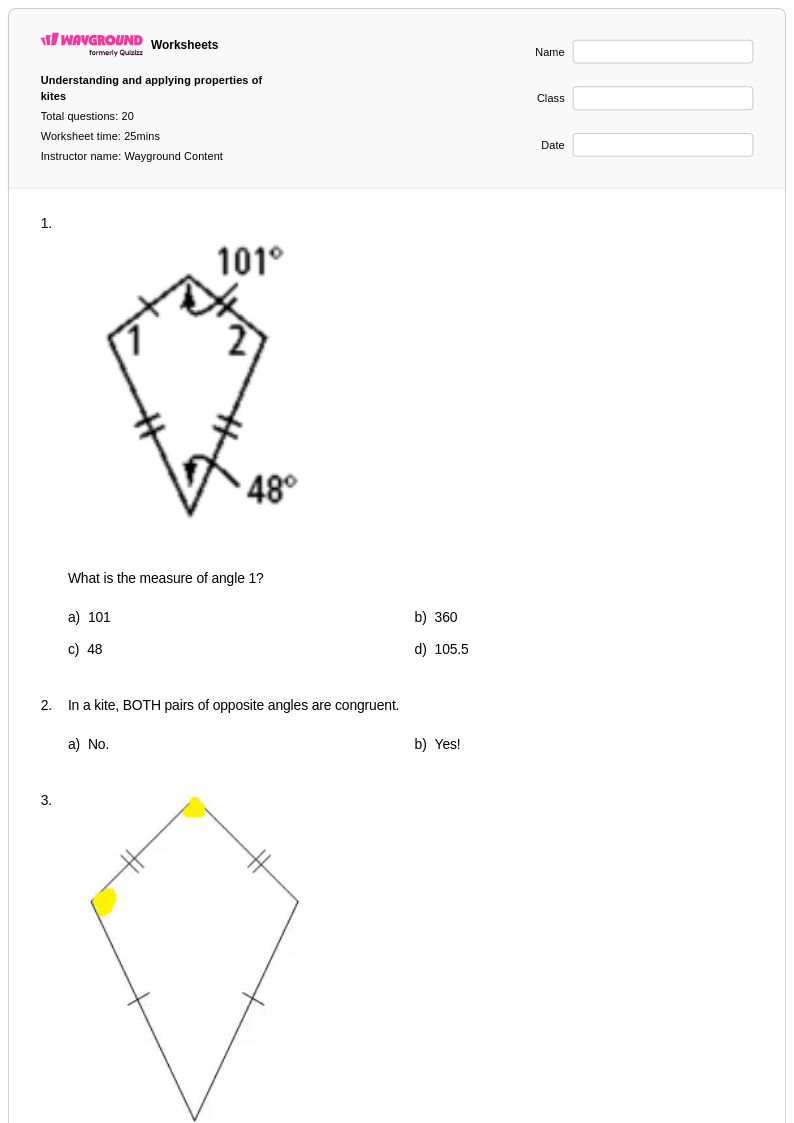
20 Q
KG - 12th
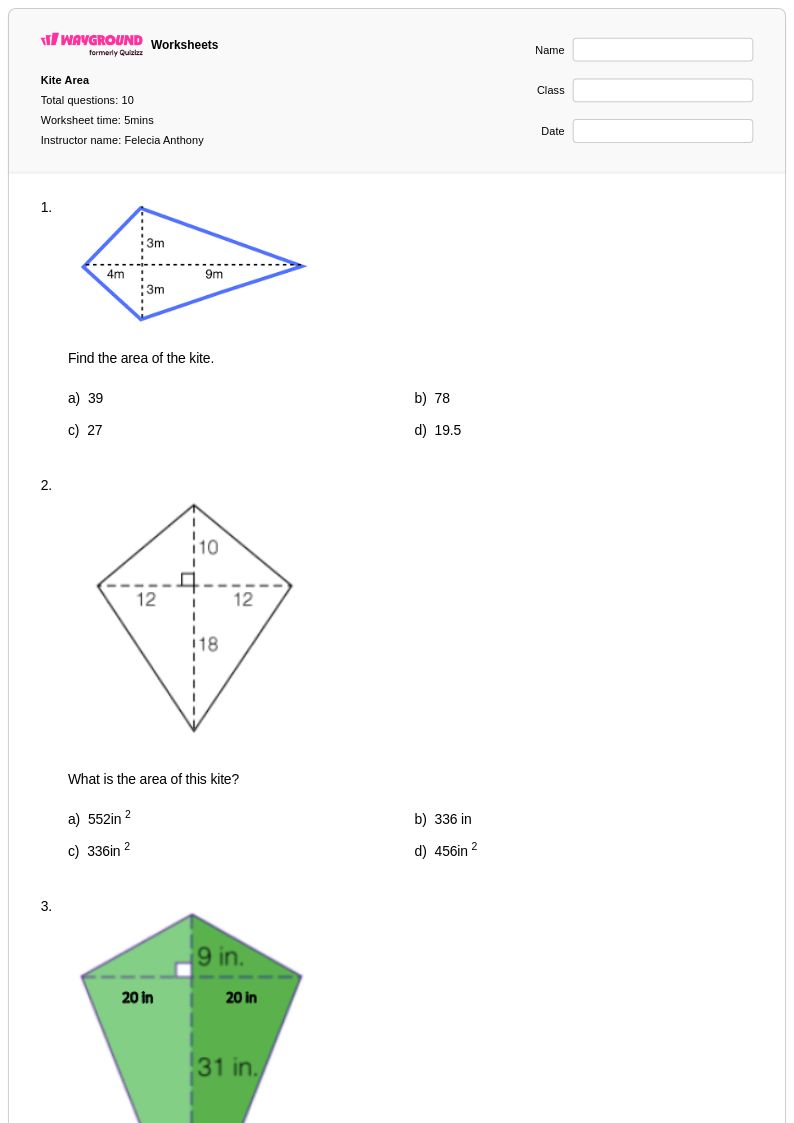
10 Q
6th
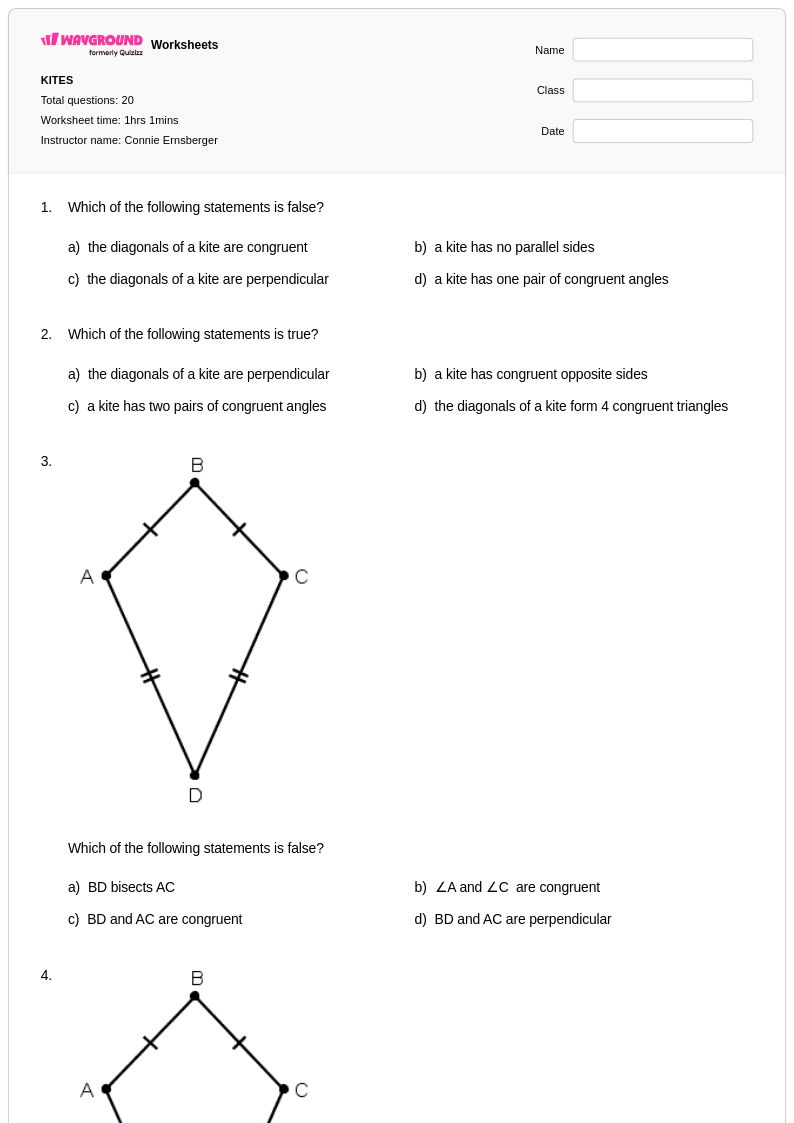
23 Q
12th
Explore Other Subject Worksheets for kindergarten
Explore printable Kite worksheets for Kindergarten
Kite worksheets for kindergarten students provide essential foundational practice in recognizing and understanding this distinctive quadrilateral shape that features two pairs of adjacent sides of equal length. These carefully designed mathematics resources from Wayground (formerly Quizizz) help young learners develop critical geometric recognition skills through engaging activities that include shape identification, tracing exercises, and basic property exploration. The comprehensive collection offers kindergarten educators access to free printables and pdf downloads that strengthen students' ability to distinguish kites from other 2D shapes while building spatial reasoning and visual discrimination skills. Each worksheet includes practice problems specifically tailored to developmentally appropriate learning objectives, with answer keys provided to support efficient assessment and immediate feedback during shape recognition activities.
Wayground (formerly Quizizz) empowers teachers with an extensive library of millions of teacher-created kite geometry resources that streamline lesson planning and differentiated instruction for kindergarten mathematics education. The platform's robust search and filtering capabilities enable educators to quickly locate standards-aligned materials that match specific learning objectives and student readiness levels, while flexible customization tools allow for seamless adaptation of worksheets to meet diverse classroom needs. These comprehensive kite shape resources are available in both printable and digital formats, including convenient pdf options that support various instructional approaches from hands-on manipulative work to interactive whiteboard presentations. Teachers can effectively utilize these differentiated materials for targeted skill practice, remediation support for struggling learners, and enrichment opportunities that extend geometric understanding beyond basic shape recognition.
FAQs
What grade do students learn to identify a kite?
How do I introduce the kite shape to kindergarteners?
What activities help young learners practice identifying kites?
What shapes do kindergarteners commonly confuse with a kite?
How can I use this kindergarten kite worksheet?
How can I support students who struggle with shape recognition?