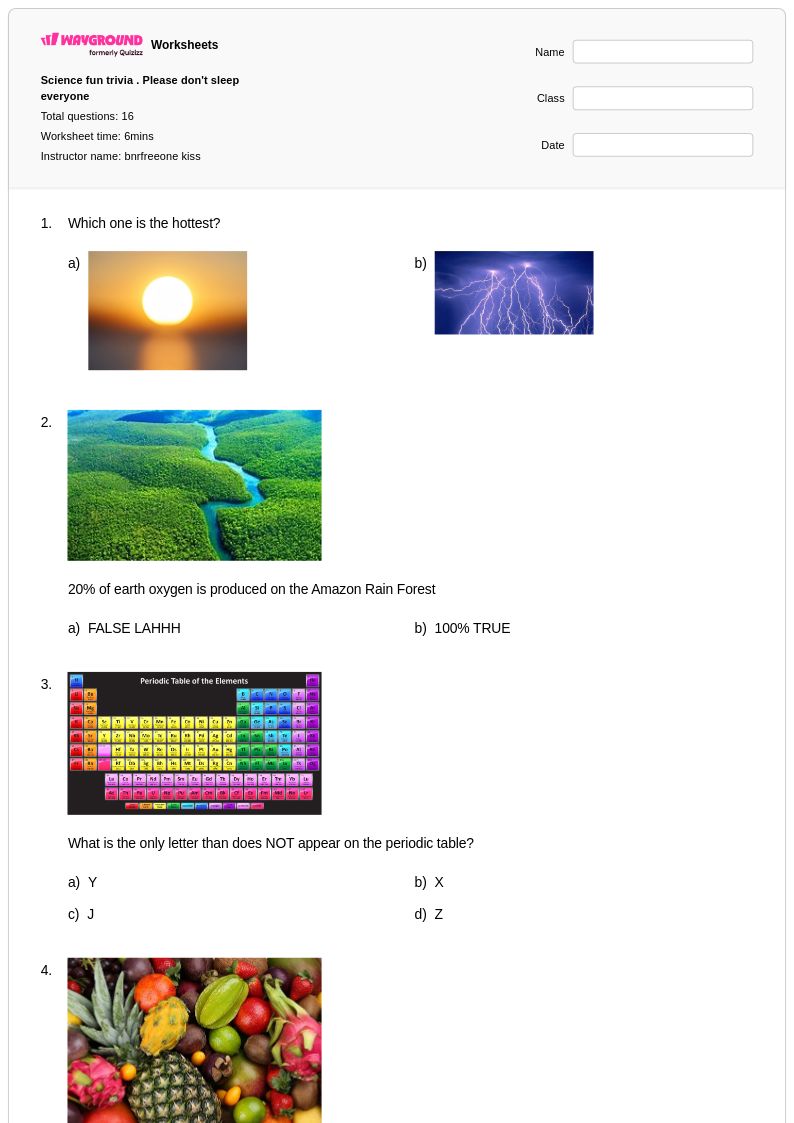
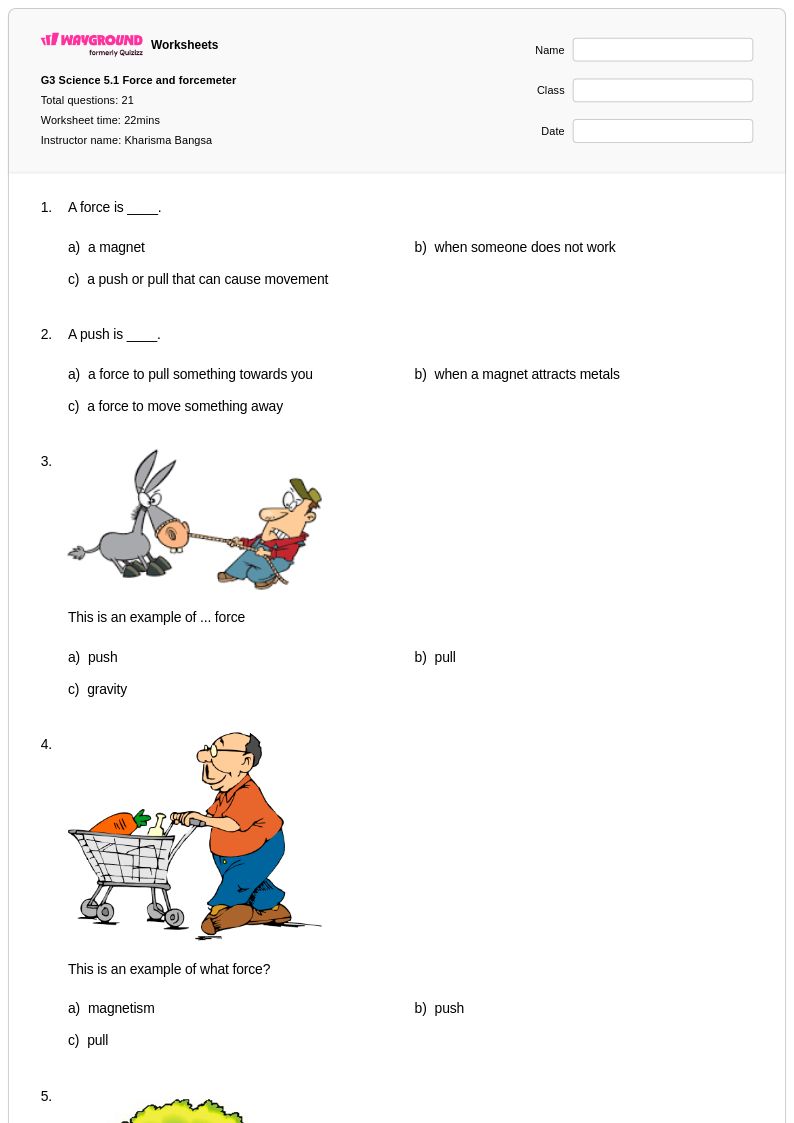
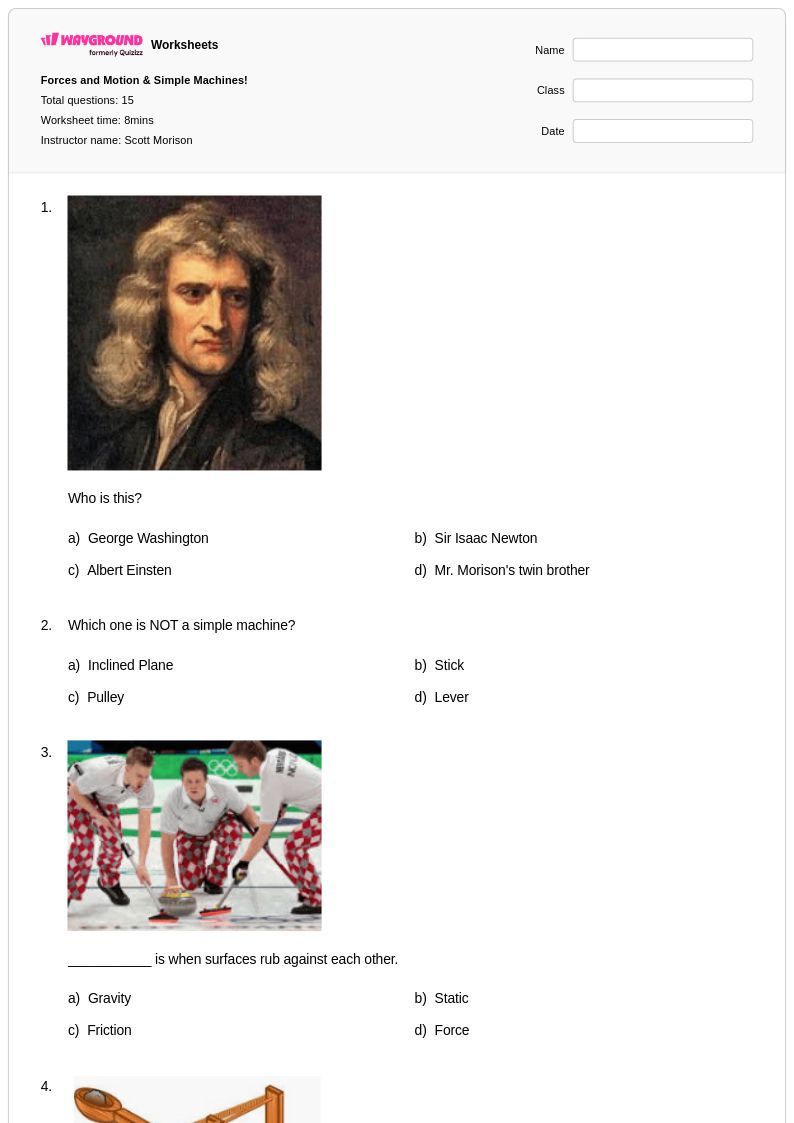
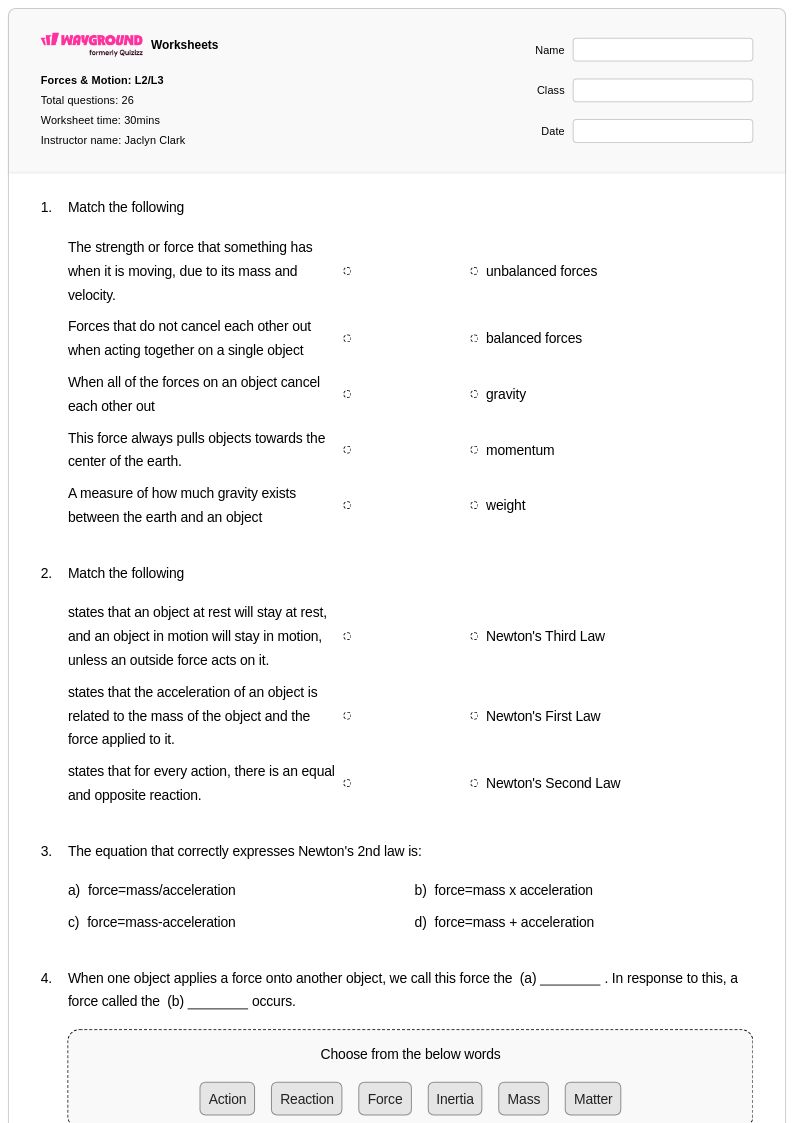
Class 3 biology worksheets help students discover nekton through engaging printables and practice problems, featuring free PDF resources with answer keys to explore swimming ocean creatures.
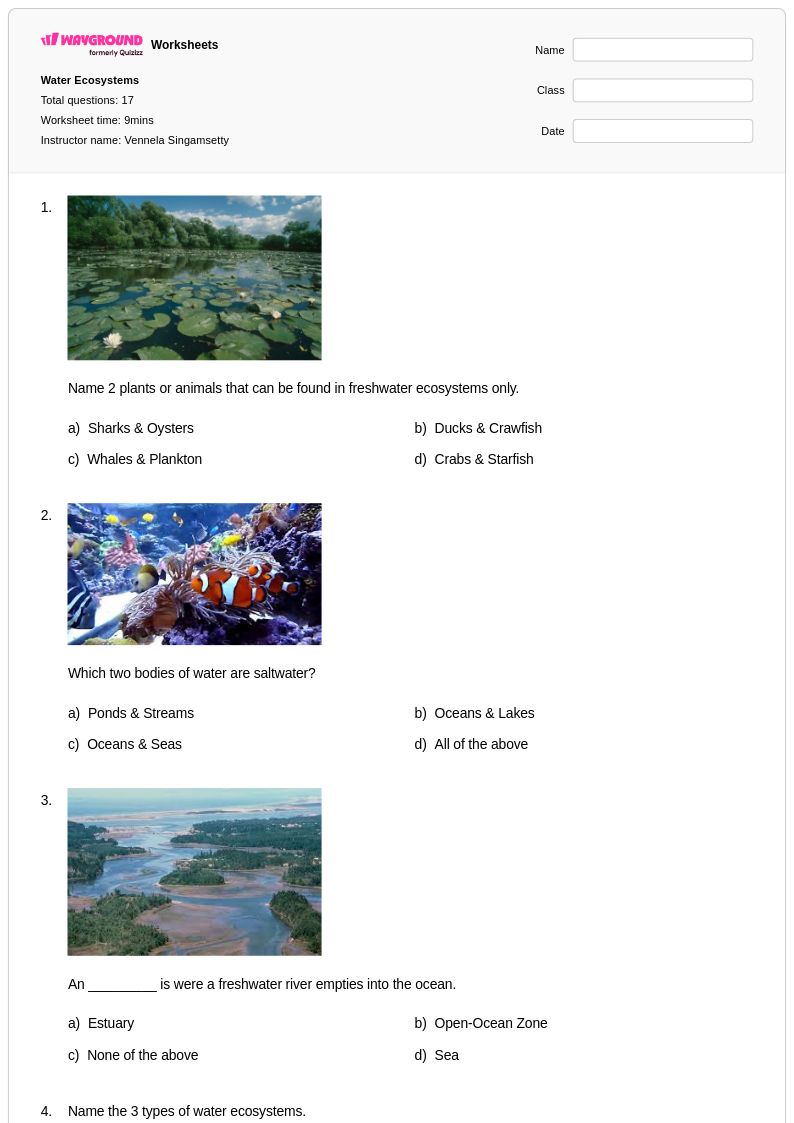
Nekton worksheets for Class 3 students available through Wayground (formerly Quizizz) introduce young learners to the fascinating world of swimming organisms in aquatic ecosystems. These educational resources help third-grade students understand how nekton differs from plankton and benthos by focusing on organisms that actively swim and move through water columns, including fish, marine mammals, and larger aquatic invertebrates. The worksheets strengthen critical thinking skills through engaging practice problems that challenge students to identify different nekton species, understand their adaptations for swimming, and explore their roles in food webs. Teachers can access comprehensive materials that include detailed answer keys and free printable activities designed to make complex biological concepts accessible to elementary learners through age-appropriate scientific vocabulary and visual learning approaches.
Wayground (formerly Quizizz) empowers educators with millions of teacher-created resources specifically designed to support nekton instruction at the Class 3 level, featuring robust search and filtering capabilities that help teachers quickly locate materials aligned with science education standards. The platform's differentiation tools enable instructors to customize worksheets for diverse learning needs, whether providing additional support for struggling students or offering enrichment opportunities for advanced learners. Teachers benefit from flexible formatting options, including both printable pdf versions for traditional classroom use and digital formats for interactive learning experiences. These comprehensive worksheet collections support effective lesson planning by providing ready-to-use materials for skill practice, targeted remediation activities, and engaging enrichment exercises that deepen students' understanding of aquatic ecosystems and the organisms that inhabit them.
FAQs
How do I teach nekton to students in a marine biology unit?
Start by distinguishing nekton from the other two major categories of marine life: plankton (drifters) and benthos (bottom-dwellers). Nekton are organisms that actively swim and control their own movement through the water column, which makes locomotion and adaptation the central teaching focus. Effective instruction connects nekton classification to real examples students recognize, such as fish, marine mammals, cephalopods, and sea turtles, before moving into ecological roles like predator-prey dynamics within pelagic food webs.
What activities help students practice identifying and classifying nekton?
Practice problems that ask students to sort organisms into nekton, plankton, or benthos categories build classification fluency quickly. Worksheets focused on locomotion patterns, feeding strategies, and habitat preferences within the water column are especially effective because they require students to apply definitional understanding rather than just recall. Including scenarios around pelagic food webs helps students see how nektonic species like squid or tuna function as both predators and prey within marine ecosystems.
What misconceptions do students commonly have about nekton?
The most common misconception is that all marine animals are nekton. Students frequently confuse nekton with plankton, particularly for small or slow-moving organisms, not realizing that the defining trait is active swimming ability rather than size or visibility. Another frequent error is assuming nekton are exclusively fish, when in fact the category includes marine mammals, cephalopods like octopus and squid, and sea turtles. Addressing these misconceptions early with targeted classification exercises prevents compounding errors later in a marine biology unit.
How do nekton worksheets connect to broader ocean ecology concepts?
Nekton are central to pelagic food web dynamics, making them an essential link between primary producers, zooplankton, and apex predators in ocean ecosystems. Worksheets that trace energy flow through nektonic species help students understand how the removal or decline of key swimmers, such as large fish or marine mammals, disrupts entire food chains. This makes nekton an effective anchor topic for broader lessons on ocean biodiversity, migration, and conservation.
How do I use Wayground's nekton worksheets in my classroom?
Wayground's nekton worksheets are available as free printable PDFs for traditional classroom use and in digital formats for technology-integrated or blended learning environments, including the option to host them as a quiz directly on Wayground. Each worksheet includes answer keys, which reduces teacher prep time and makes the materials practical for independent practice, homework assignments, or in-class review. Wayground also supports student-level accommodations such as read aloud, extended time, and reduced answer choices, which can be applied individually so that all learners engage with the same nekton content at an appropriate level.