
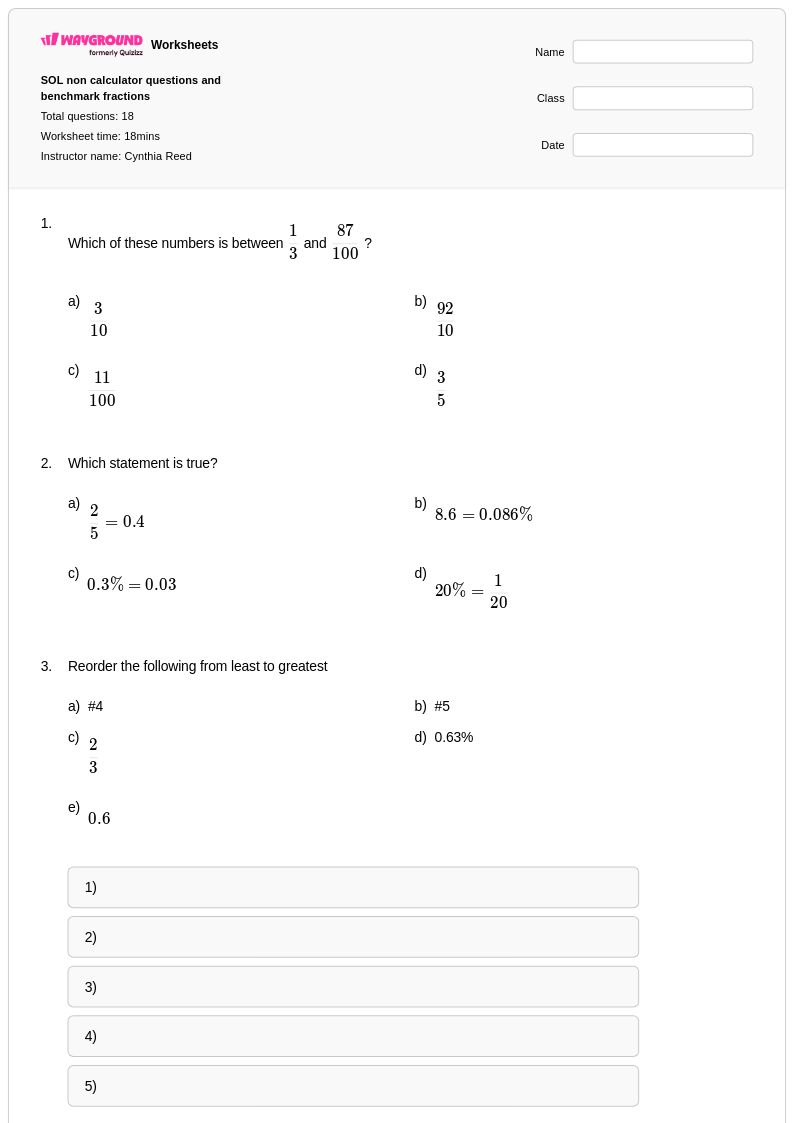
18 Q
6th
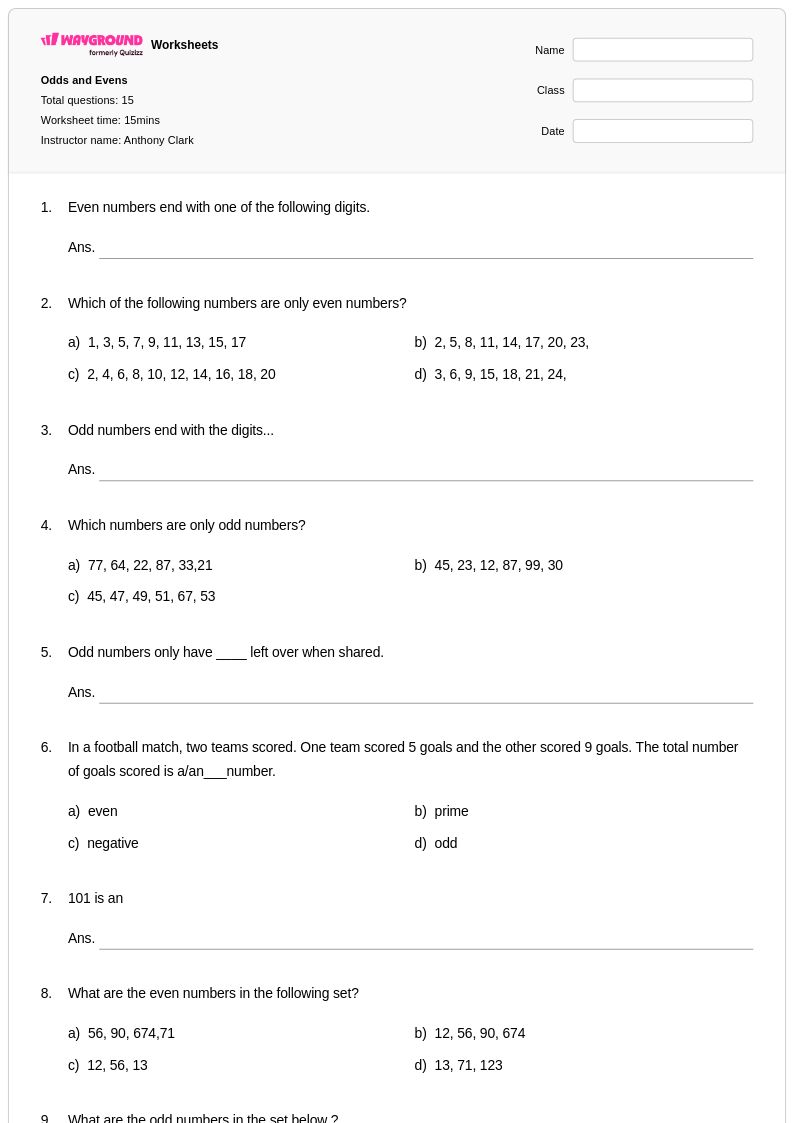
15 Q
2nd - Uni
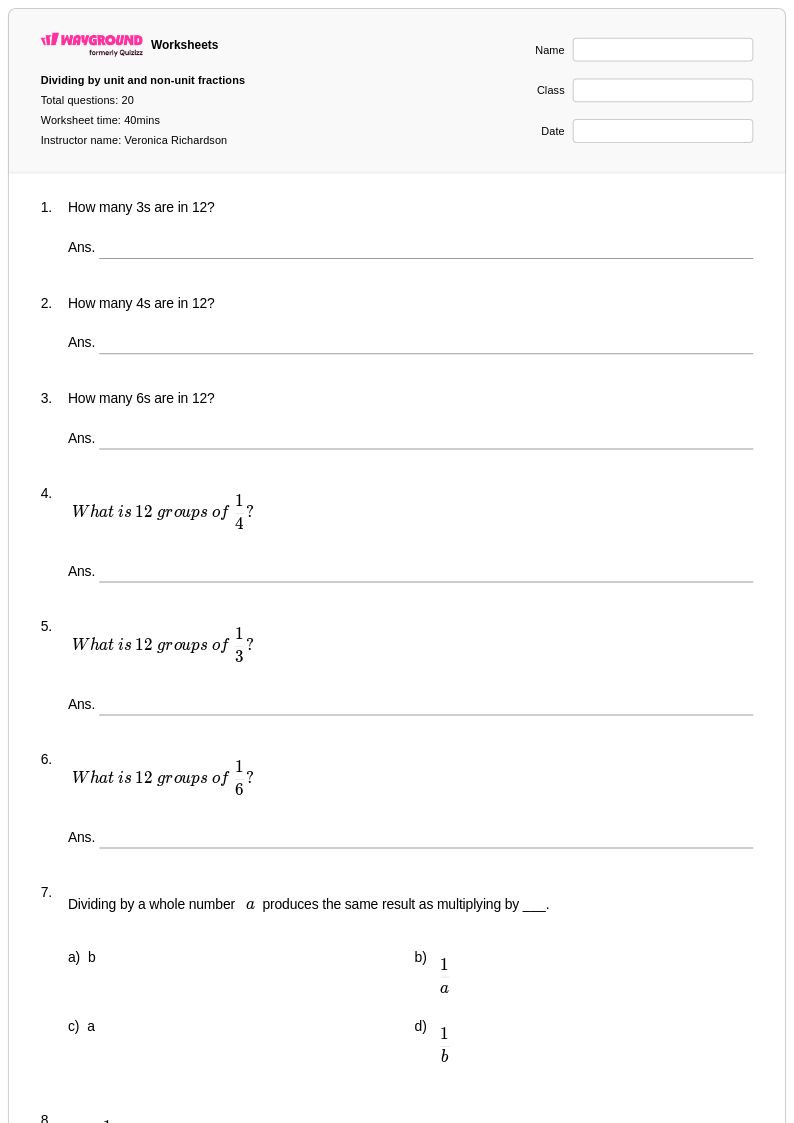
20 Q
6th - 8th
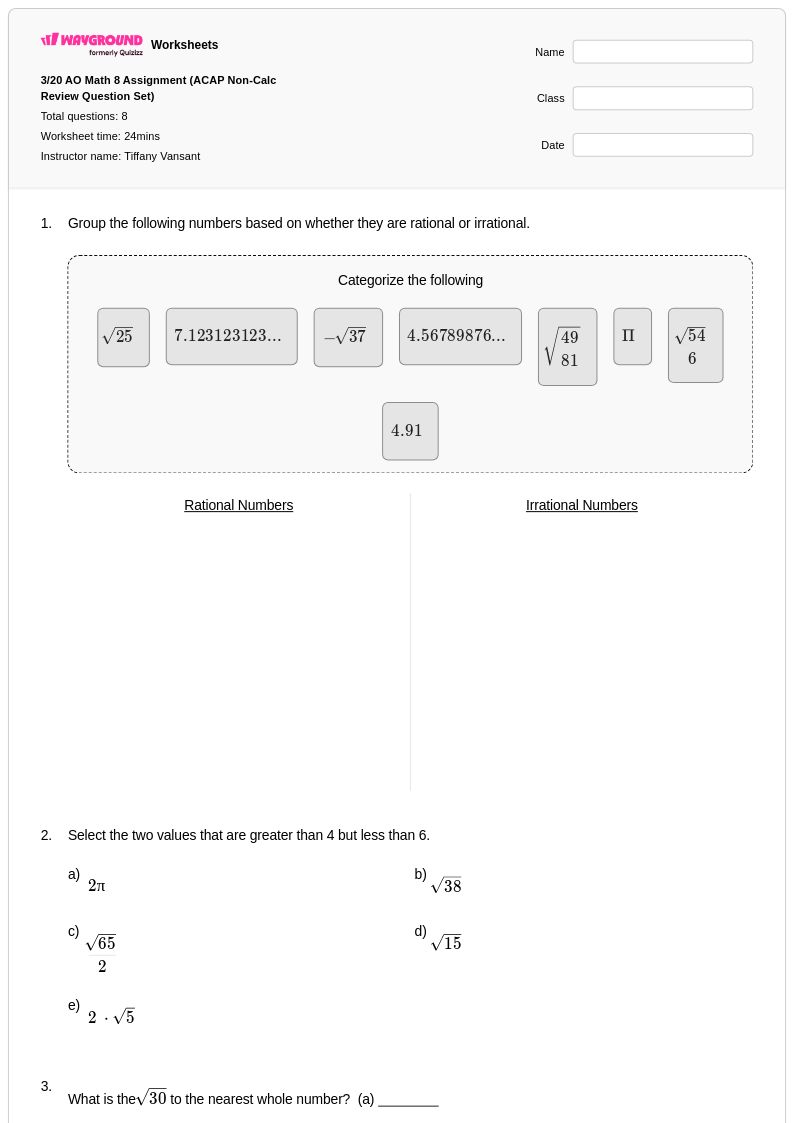
8 Q
6th - 8th
12 Q
6th
8 Q
6th
20 Q
5th - Uni
25 Q
6th
20 Q
6th - 7th
20 Q
2nd - Uni
20 Q
6th - 8th
10 Q
6th
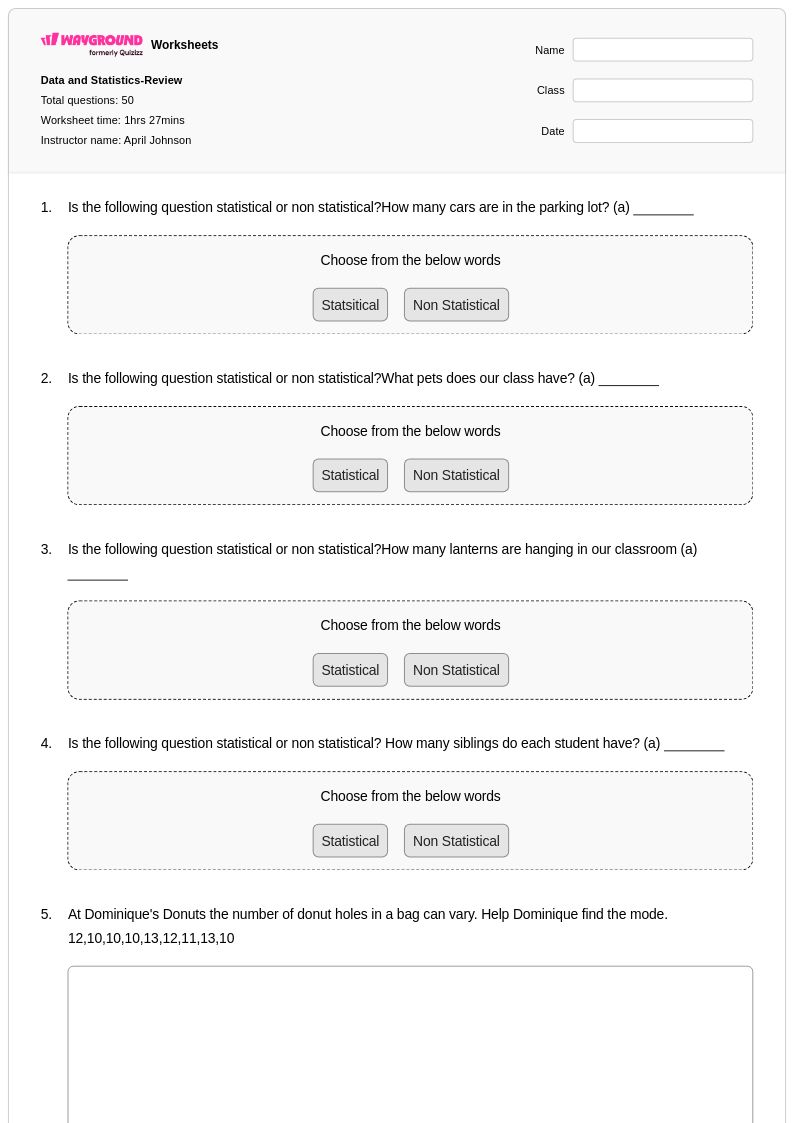
50 Q
6th
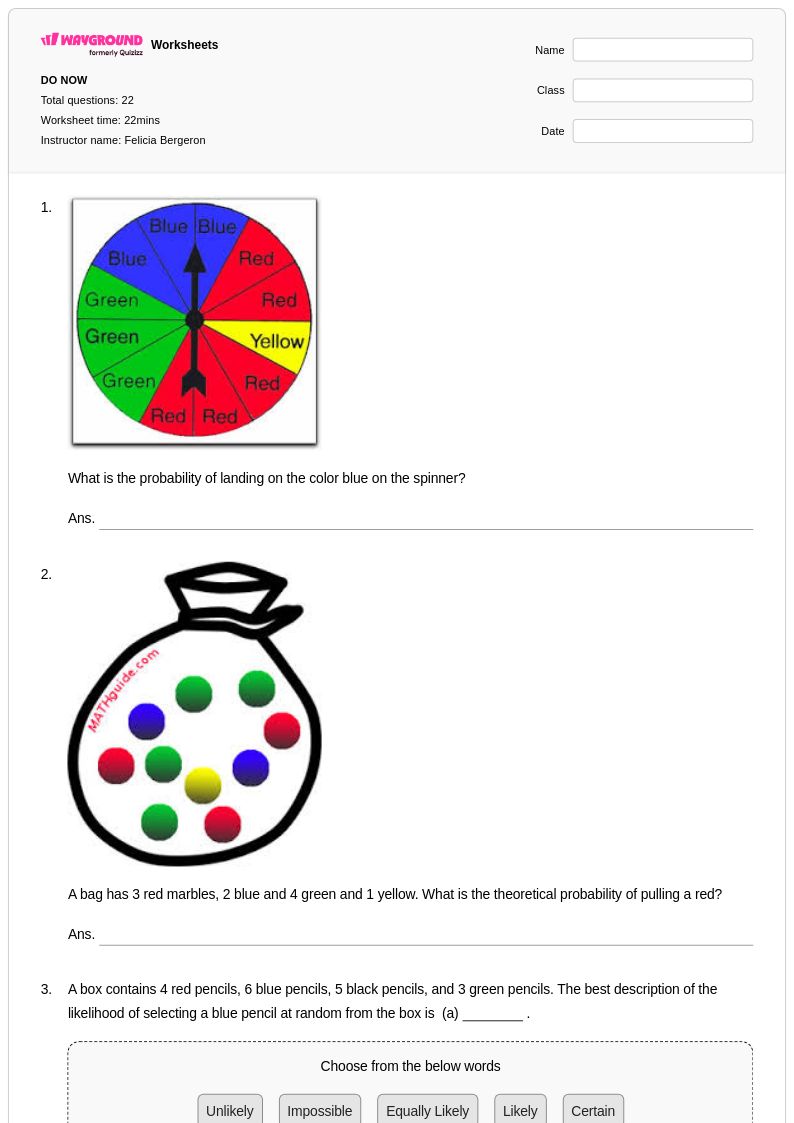
22 Q
6th
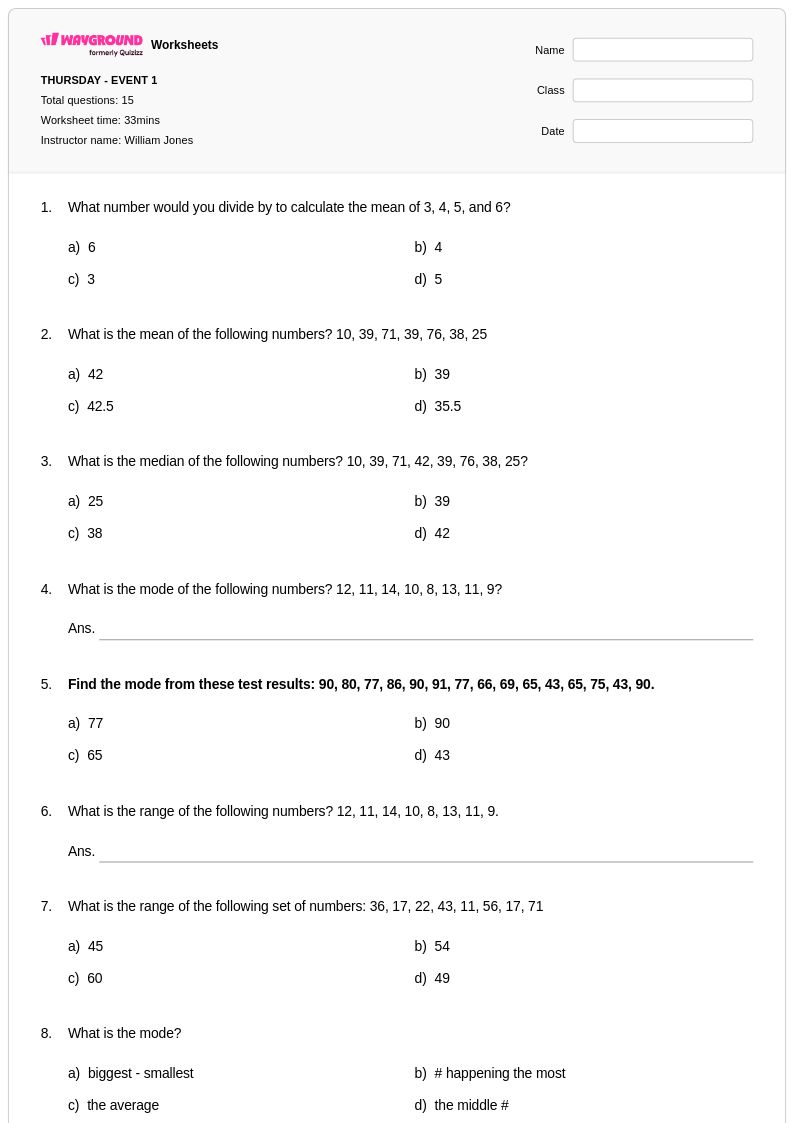
15 Q
6th
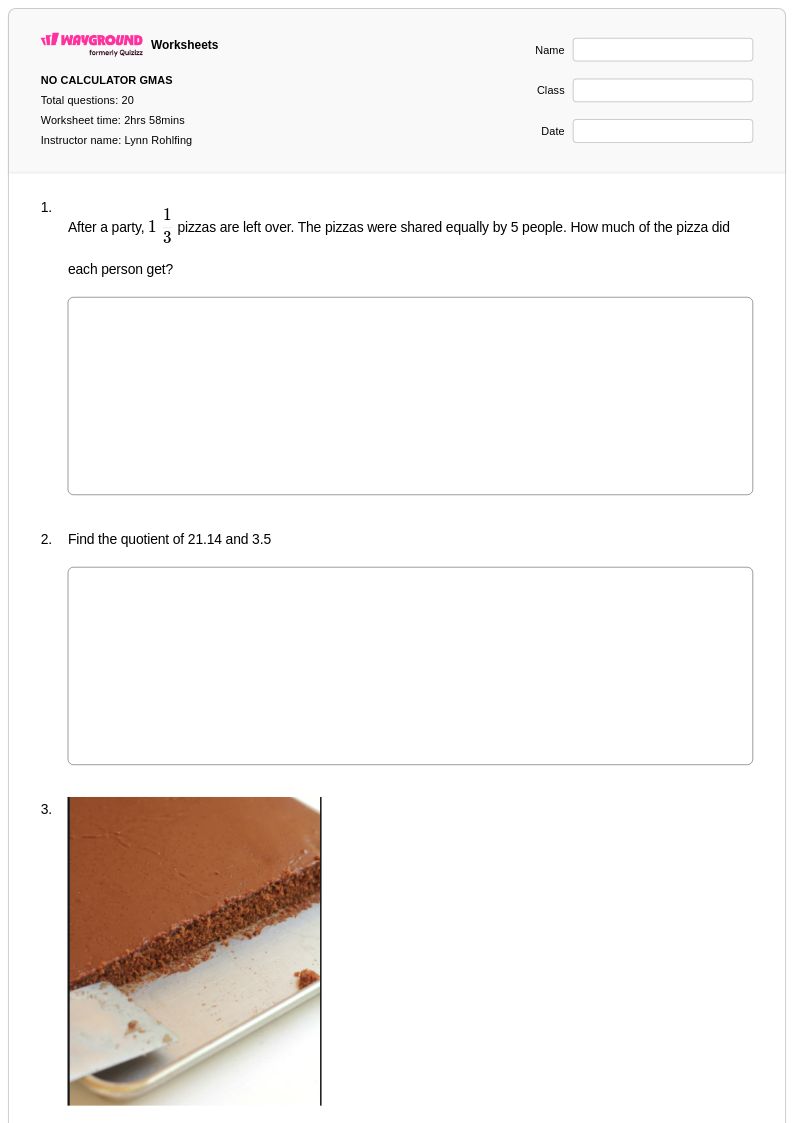
20 Q
6th
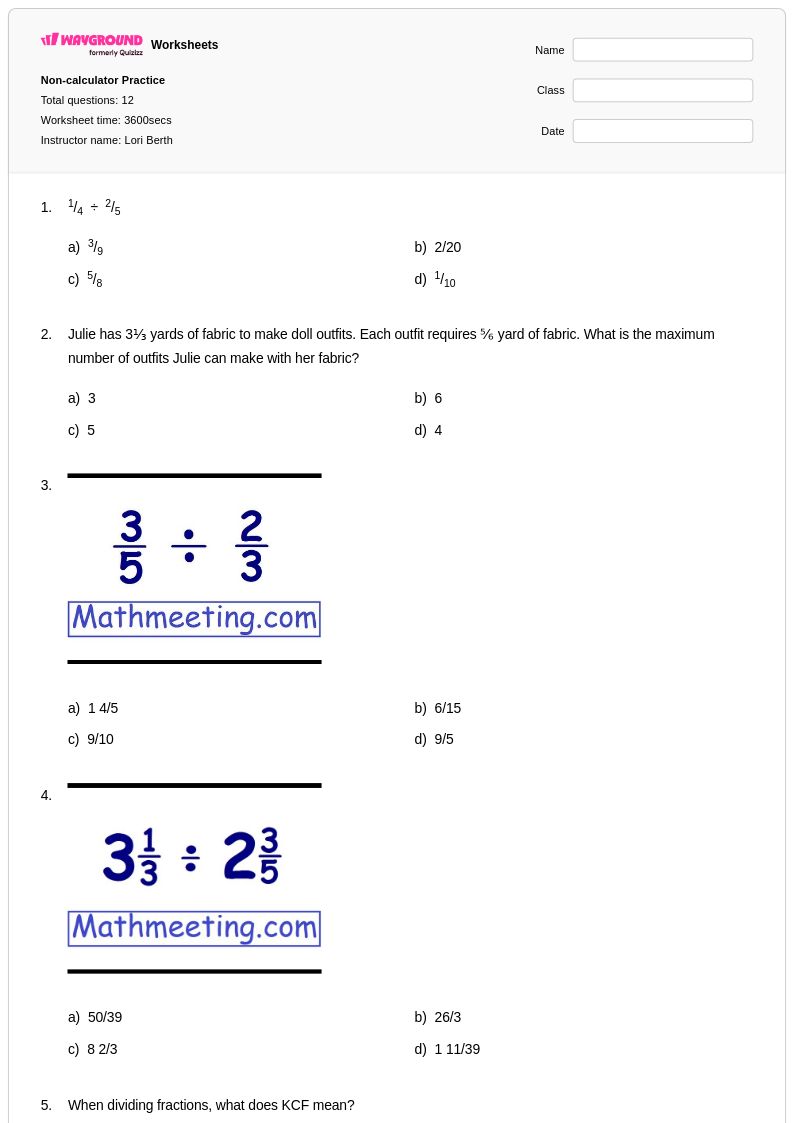
12 Q
6th
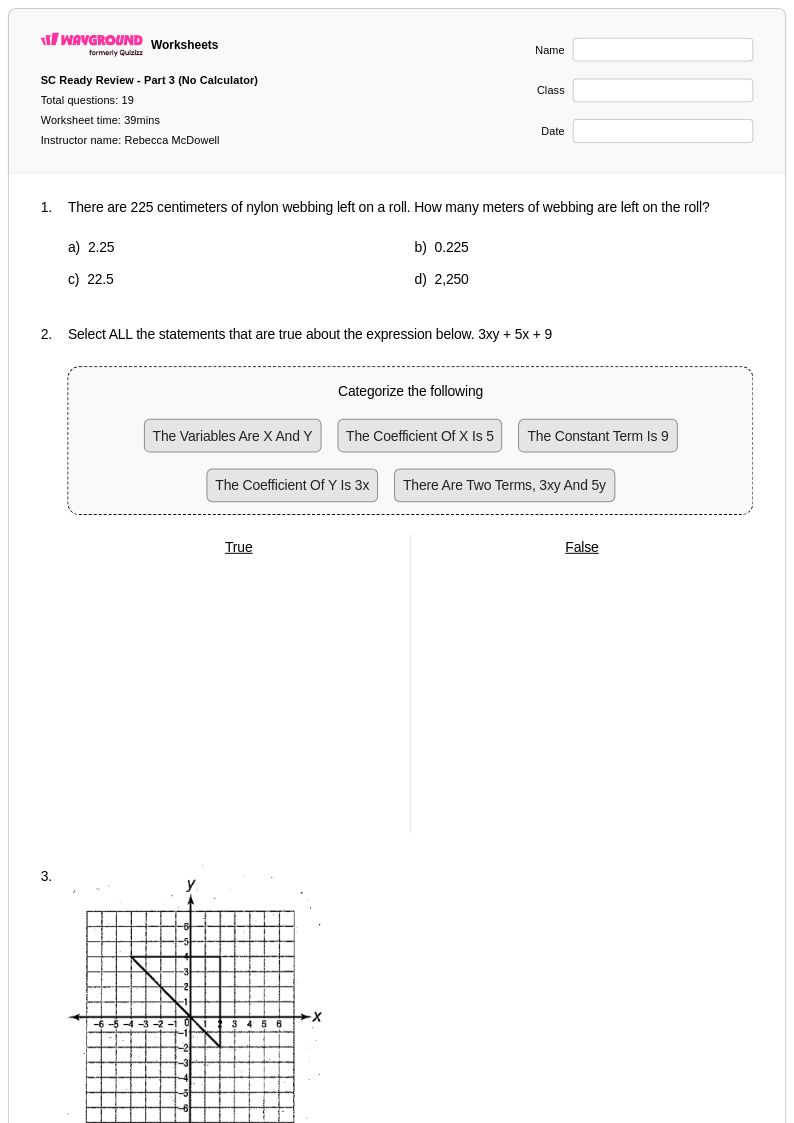
19 Q
6th
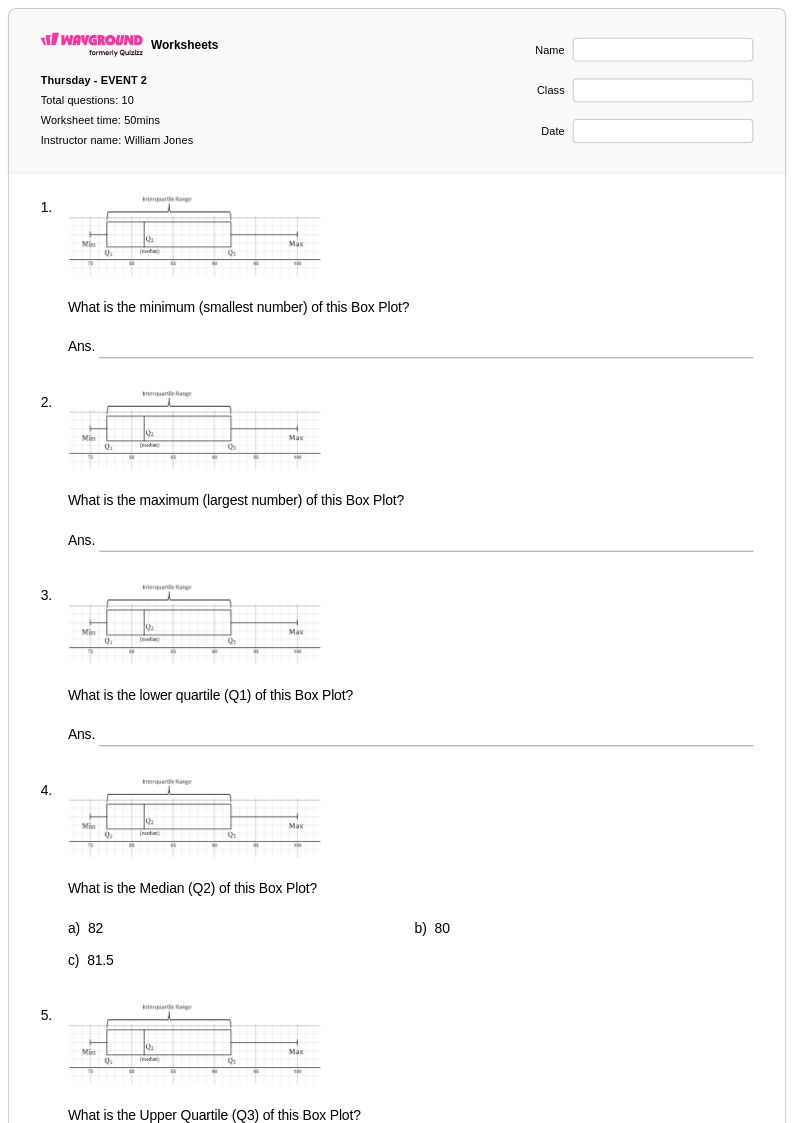
10 Q
6th

12 Q
2nd - Uni
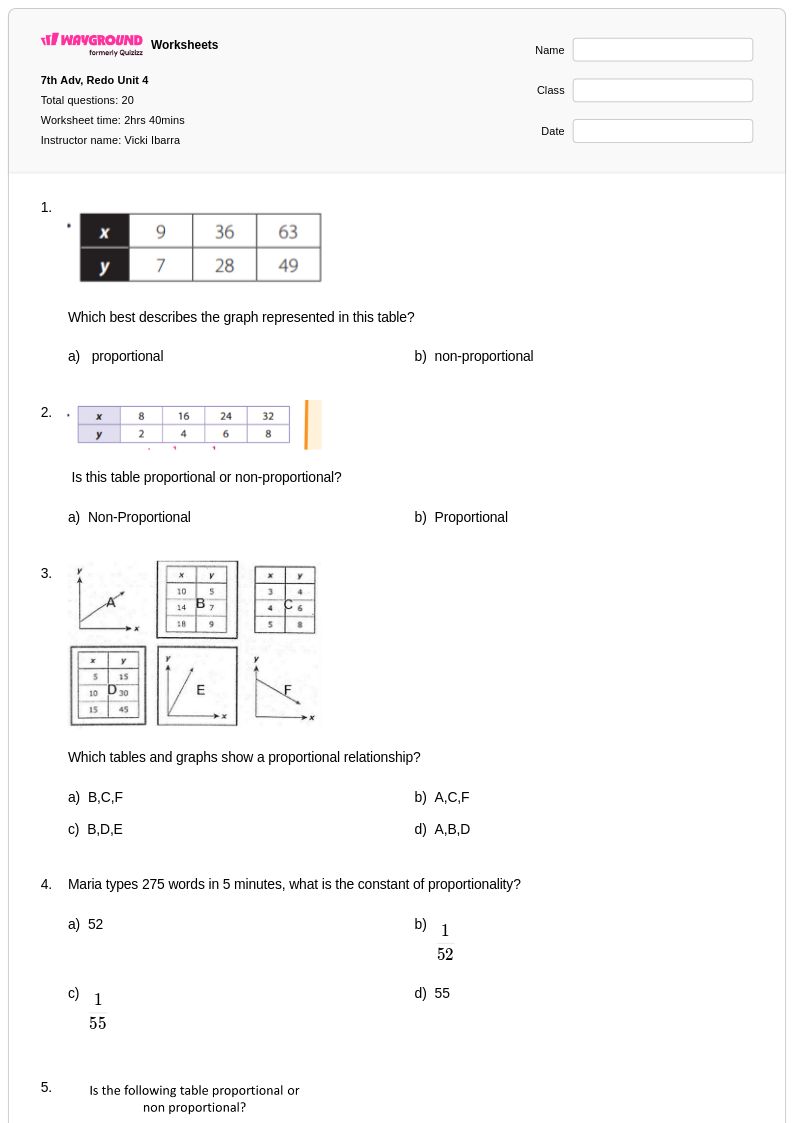
20 Q
6th - 8th
20 Q
3rd - Uni
20 Q
6th
Explore Non-disjoint Events Worksheets by Grades
Explore Other Subject Worksheets for class 6
Explore printable Non-disjoint Events worksheets for Class 6
Non-disjoint events worksheets for Class 6 students available through Wayground (formerly Quizizz) provide comprehensive practice in understanding overlapping probability scenarios where events can occur simultaneously. These carefully crafted educational resources help students master the fundamental concept that some events share common outcomes, such as drawing a card that is both red and a face card, or selecting a student who plays both soccer and basketball. The worksheets strengthen critical mathematical reasoning skills by guiding students through identifying shared elements in sample spaces, calculating probabilities using inclusion-exclusion principles, and recognizing when events overlap rather than being mutually exclusive. Each printable resource includes detailed practice problems with answer keys, allowing students to work independently while building confidence in this essential probability concept that forms the foundation for more advanced statistical thinking.
Wayground (formerly Quizizz) empowers teachers with millions of educator-created worksheet collections specifically designed for non-disjoint events instruction, featuring robust search and filtering capabilities that help locate grade-appropriate materials aligned with mathematical standards. The platform's differentiation tools enable teachers to customize worksheets for varying skill levels within their Class 6 classrooms, while the flexible format options include both printable pdf versions for traditional paper-and-pencil work and digital formats for technology-enhanced learning environments. These comprehensive resources support effective lesson planning by providing teachers with ready-to-use materials for initial instruction, targeted remediation for students who struggle with overlapping event concepts, and enrichment opportunities for advanced learners ready to explore more complex probability scenarios, ensuring that all students develop solid foundational skills in understanding when and how events can share common outcomes.
FAQs
What grade do students learn about non-disjoint events?
How can I introduce non-disjoint events to 6th graders?
What exercises help 6th graders practice identifying overlapping events?
What's a common misconception for 6th graders with this topic?
How can I use this worksheet with my 6th-grade class?
How does this topic align with 6th-grade math standards?