Free Printable Non Mendelian Inheritance Worksheets for Class 9
Explore Wayground's comprehensive Class 9 Non Mendelian Inheritance worksheets featuring free printables and practice problems with answer keys to help students master complex genetic patterns beyond simple dominance and recessiveness.
Explore printable Non Mendelian Inheritance worksheets for Class 9
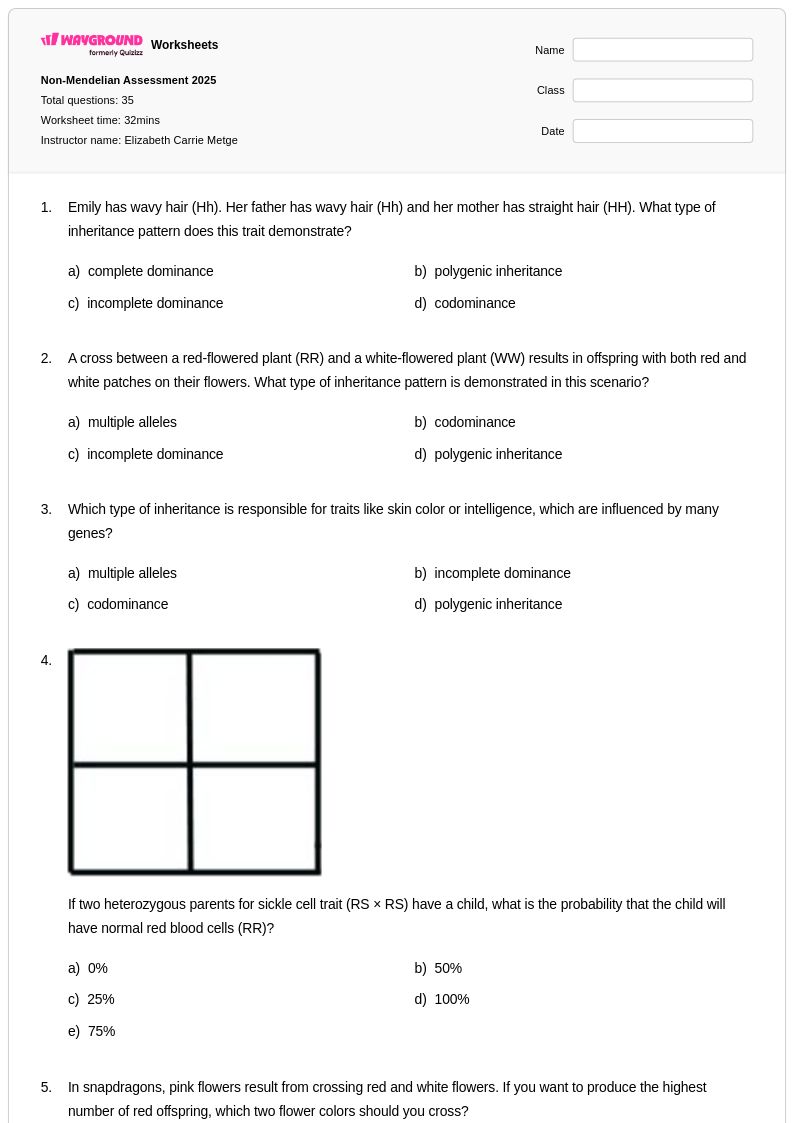
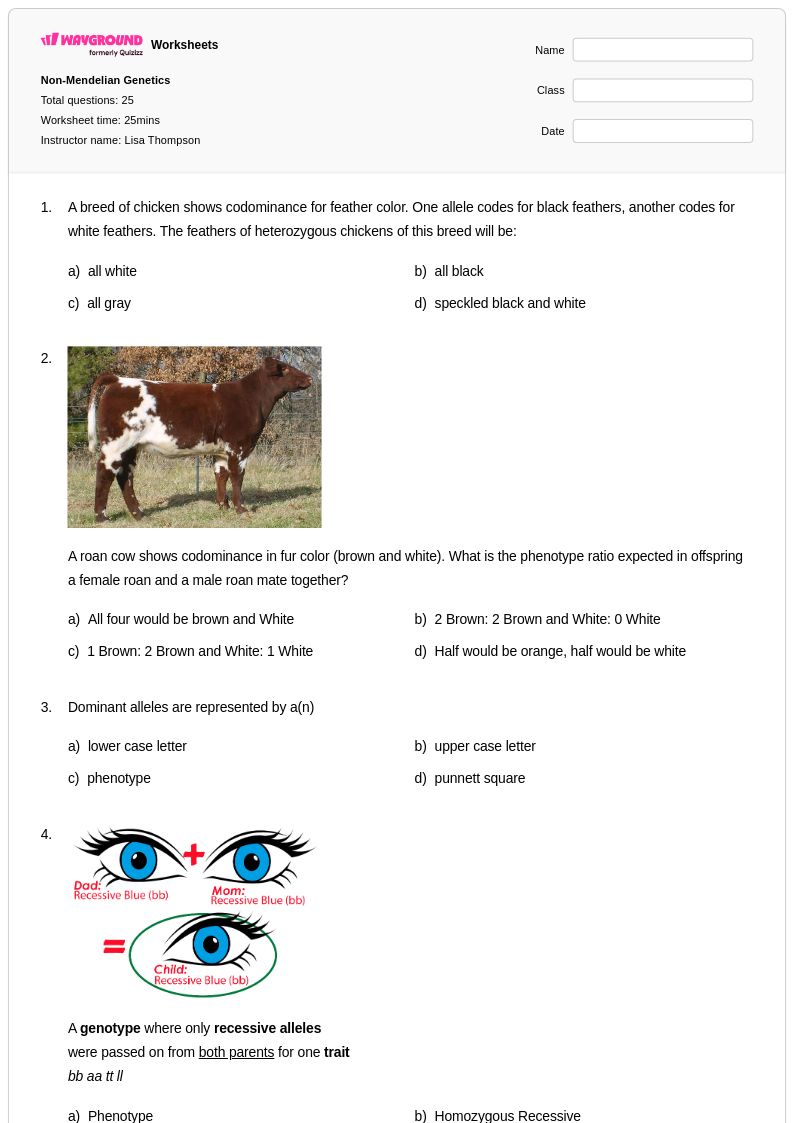
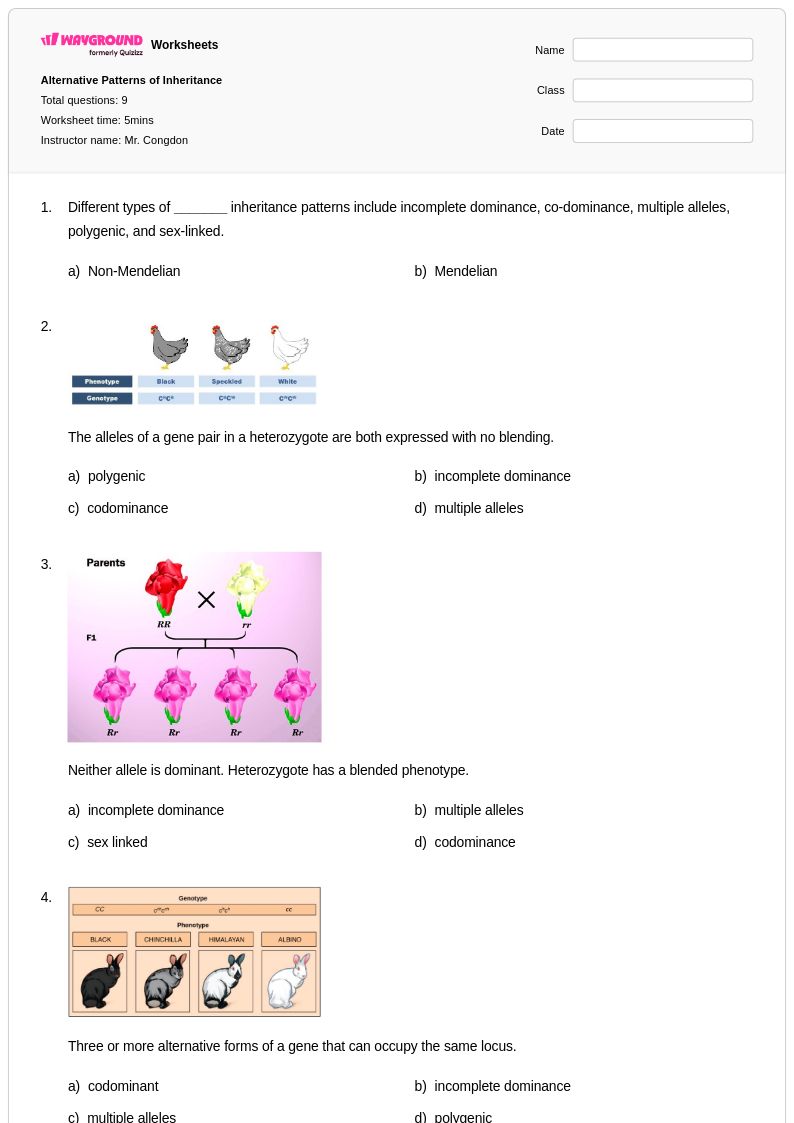
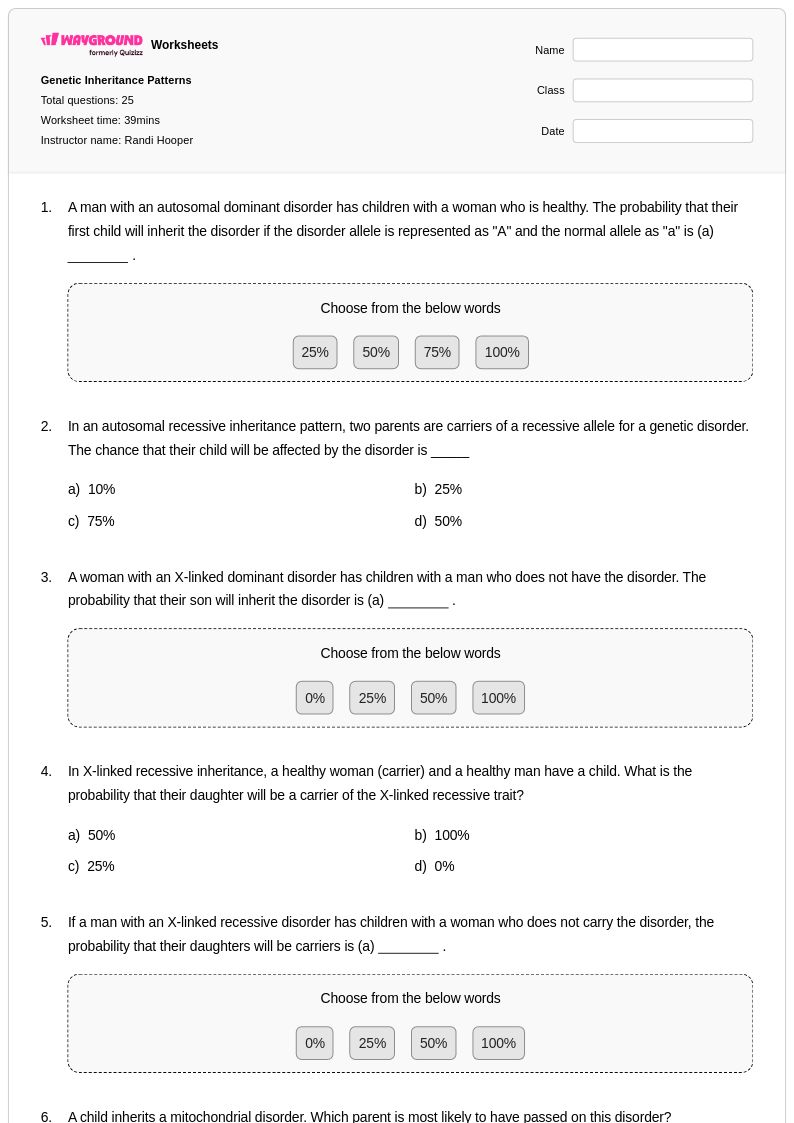
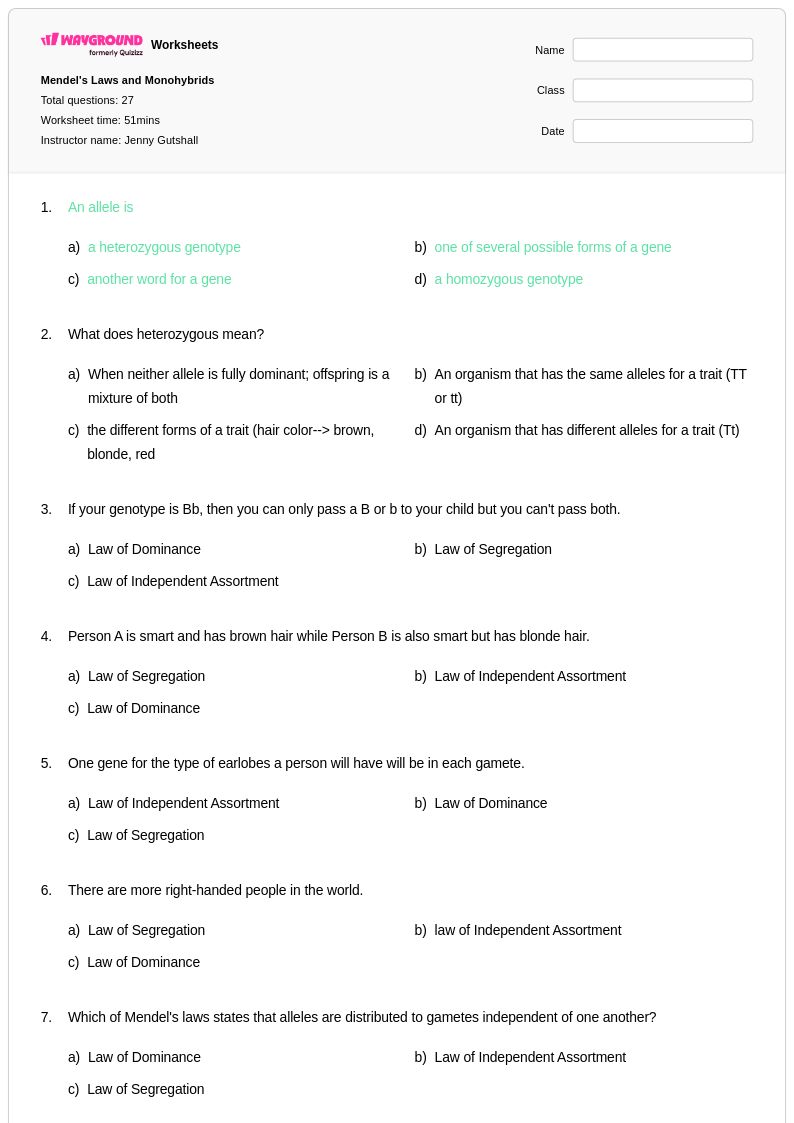
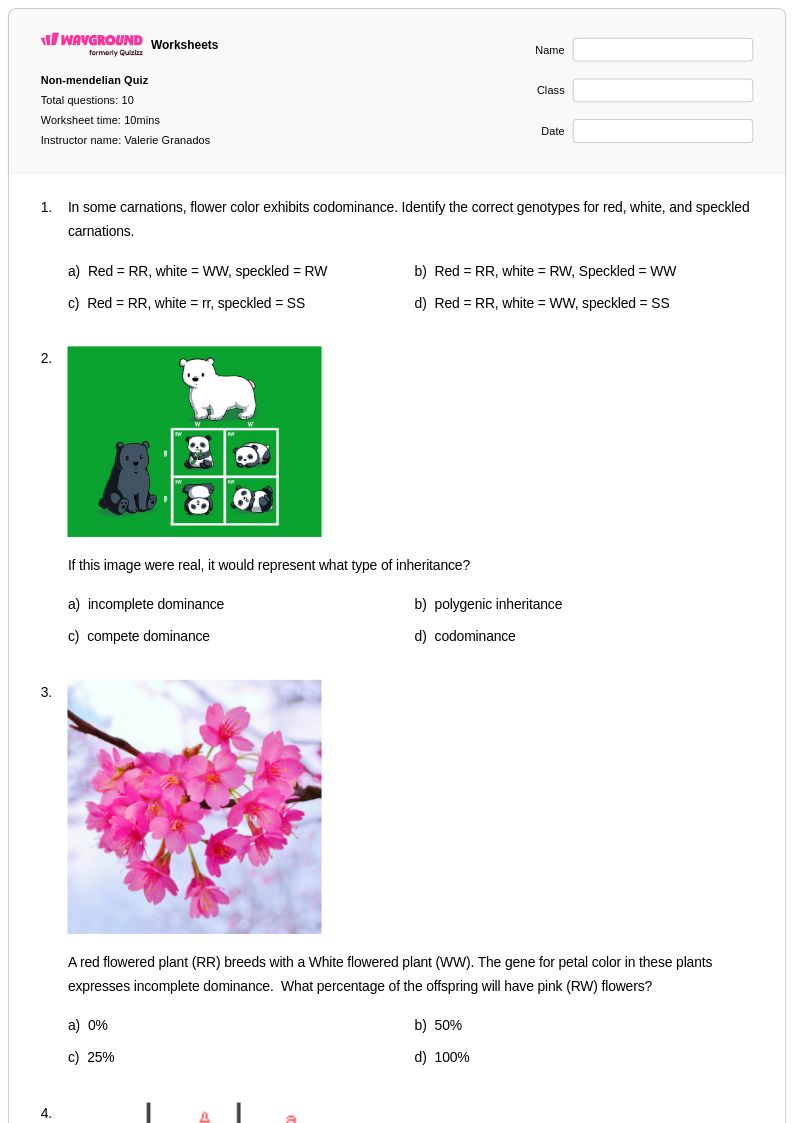
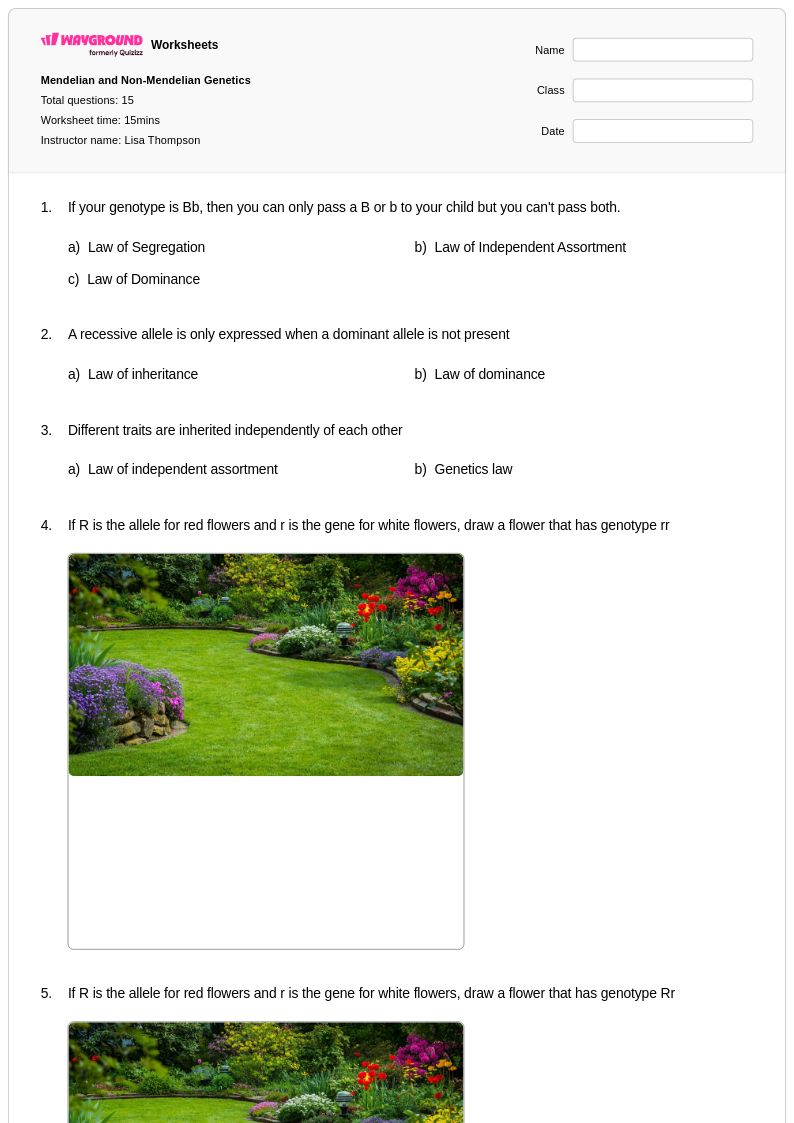
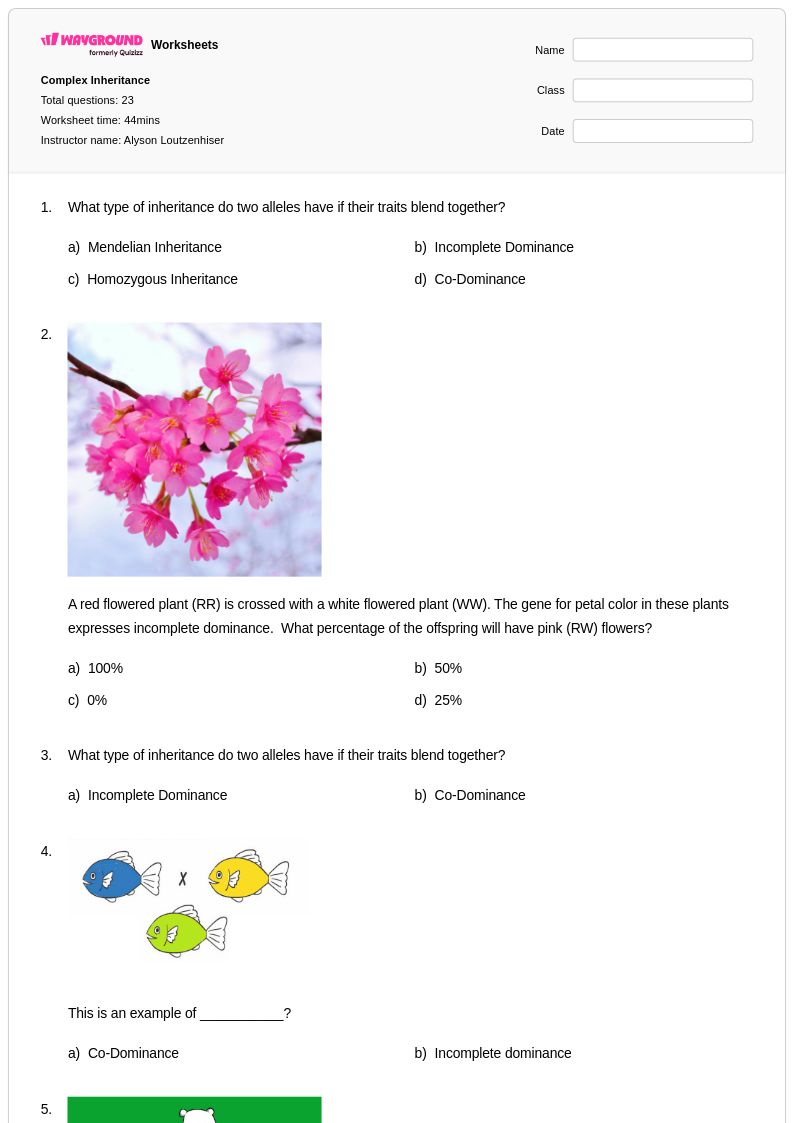
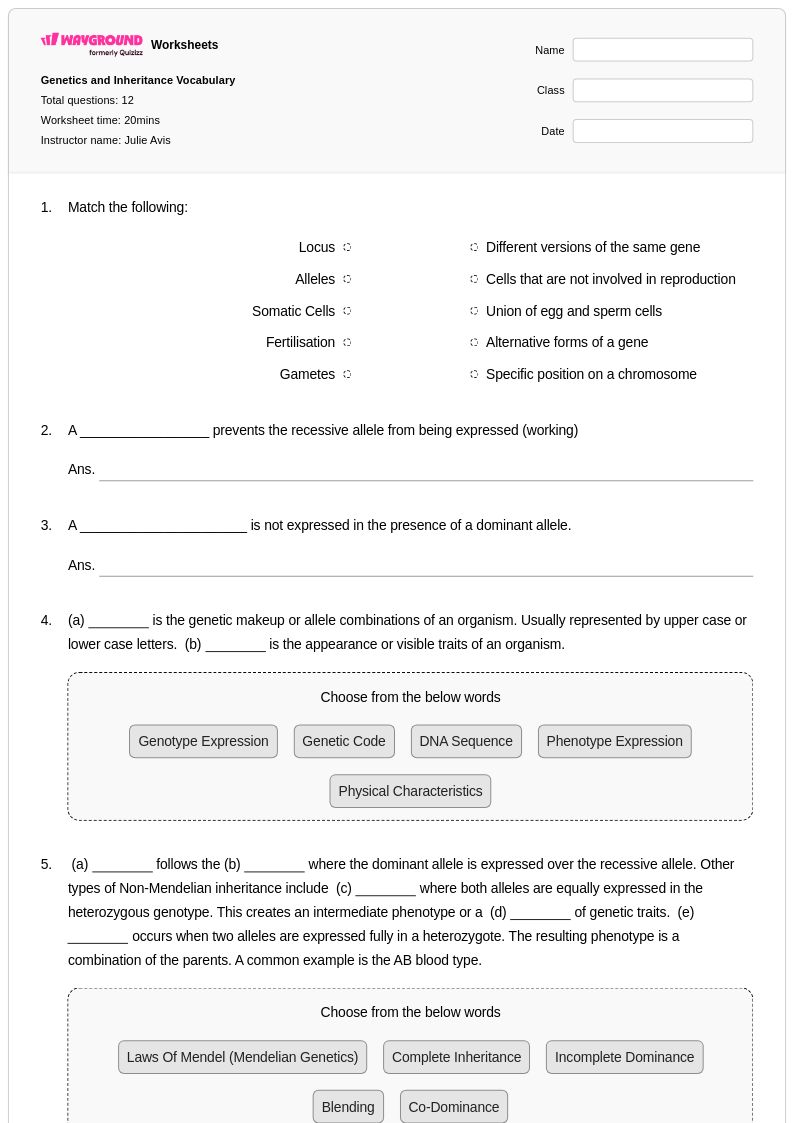
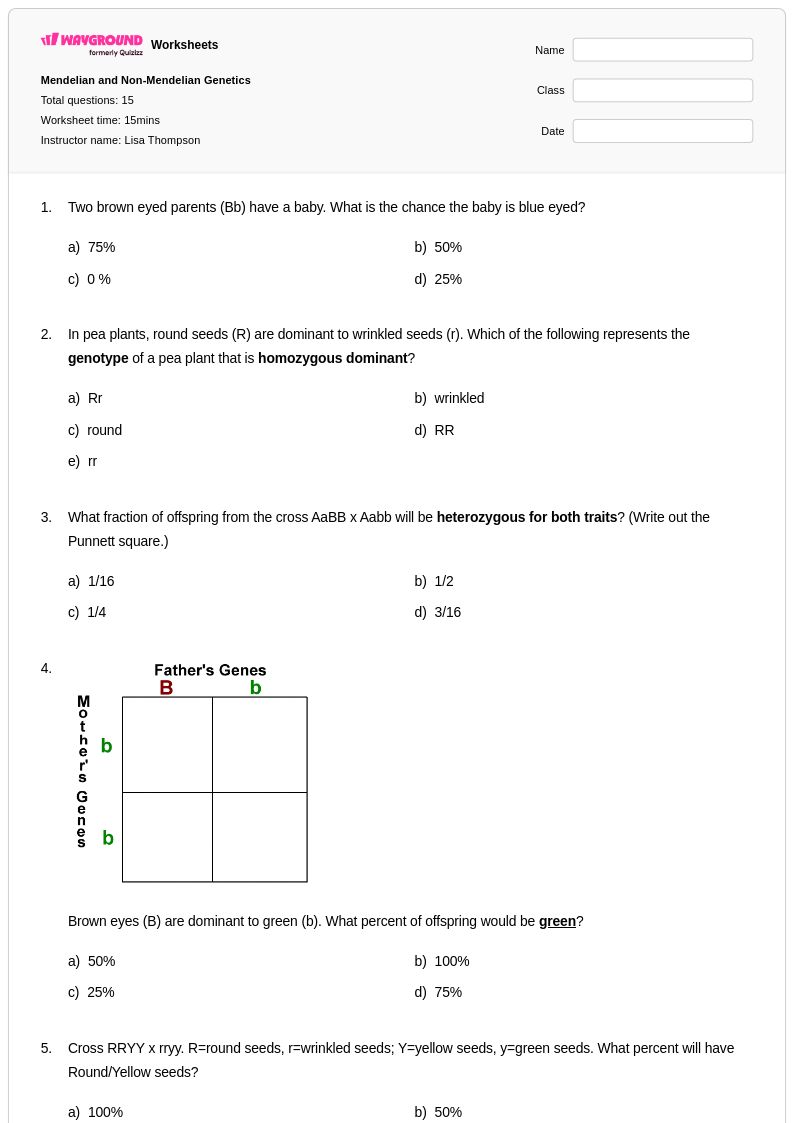
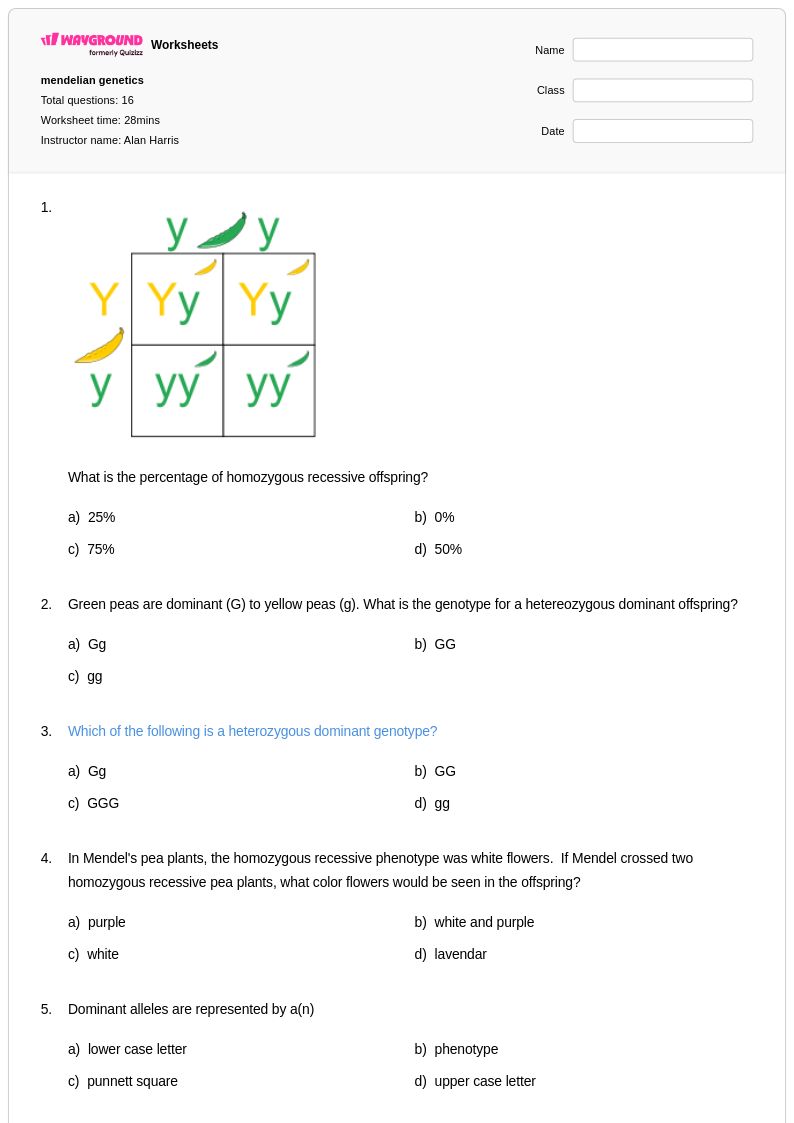
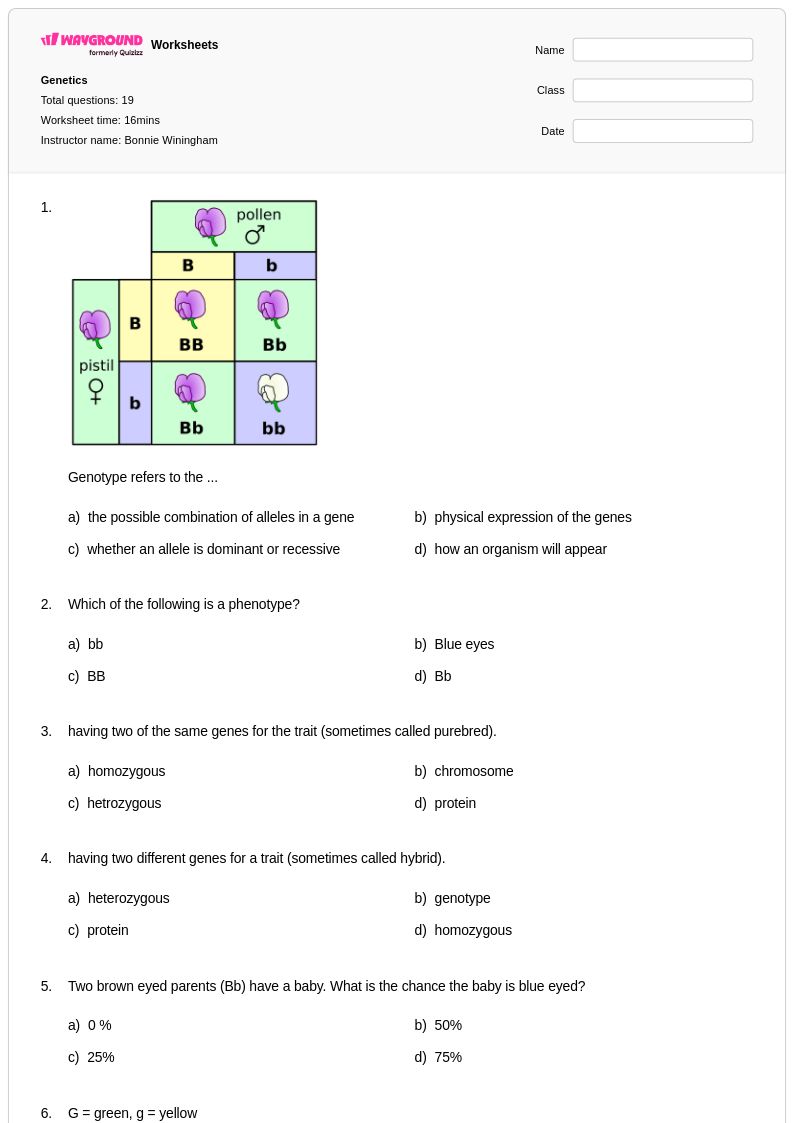
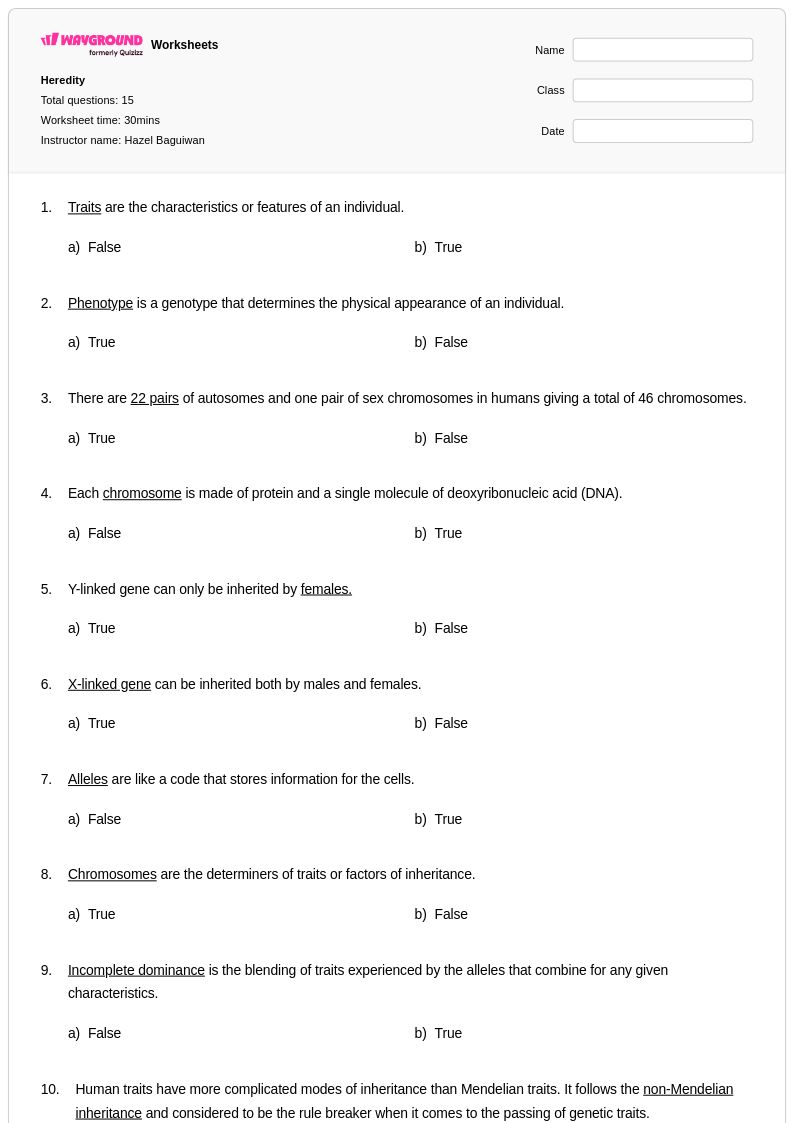
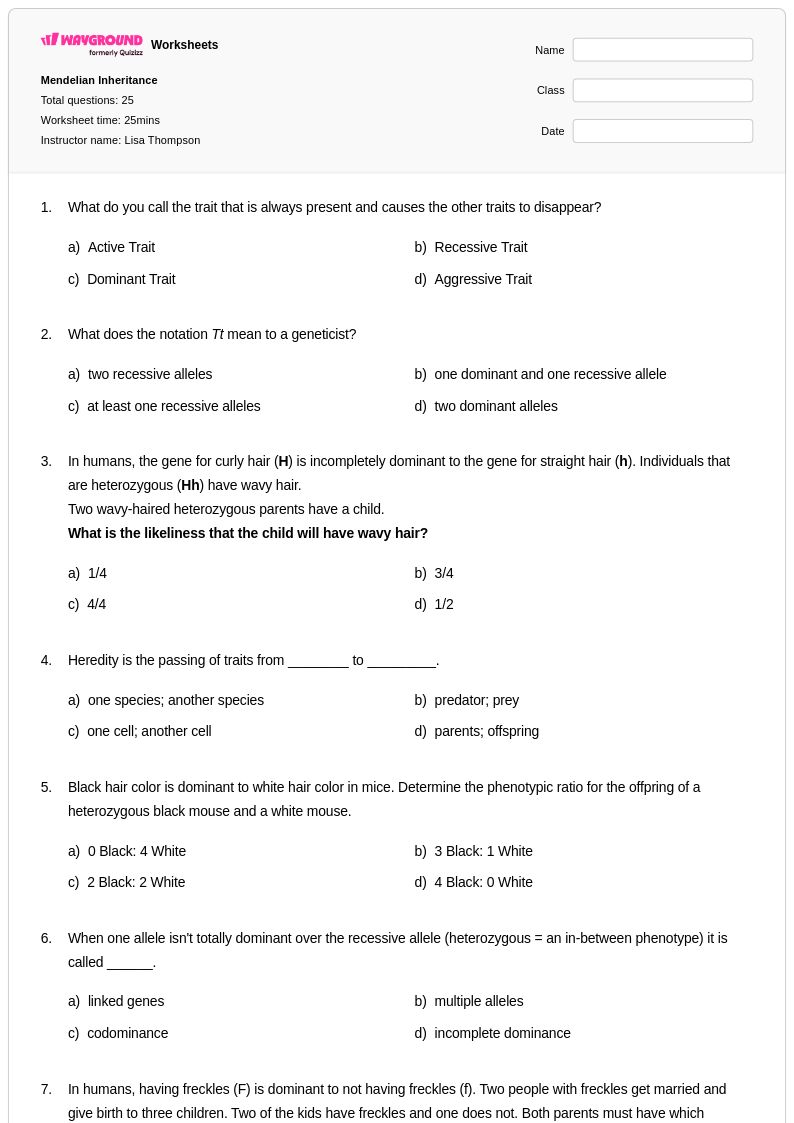
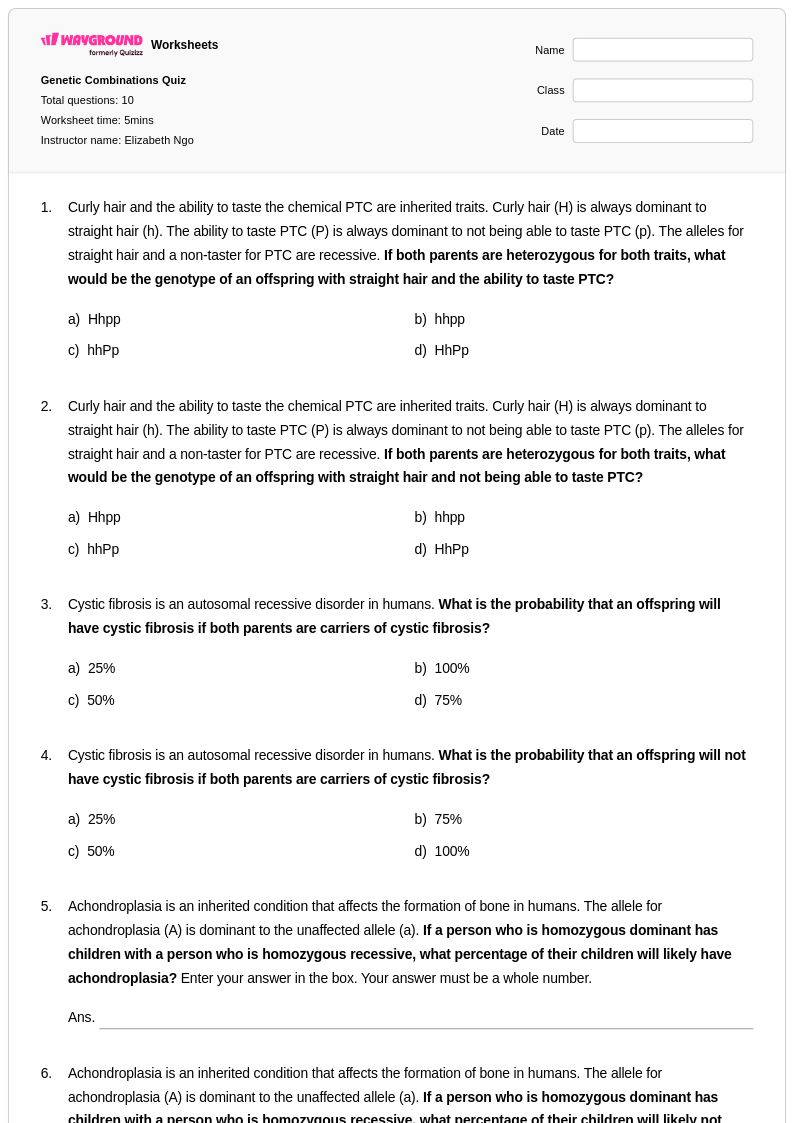
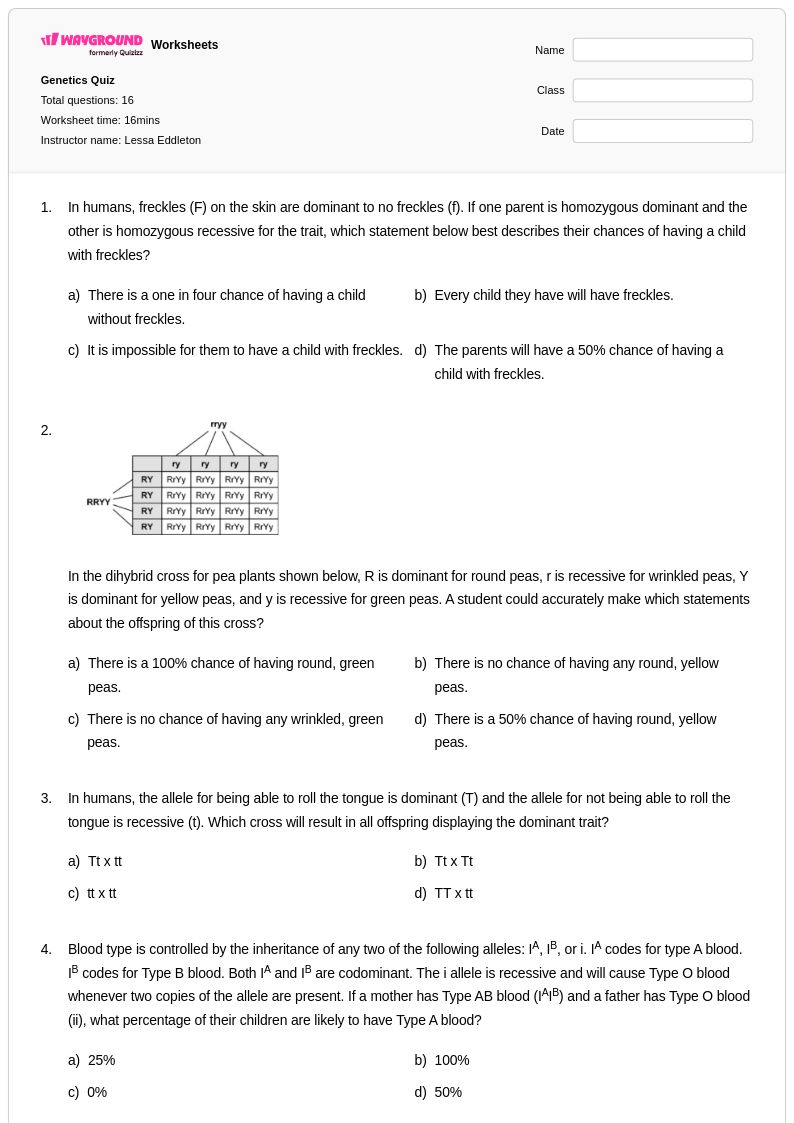
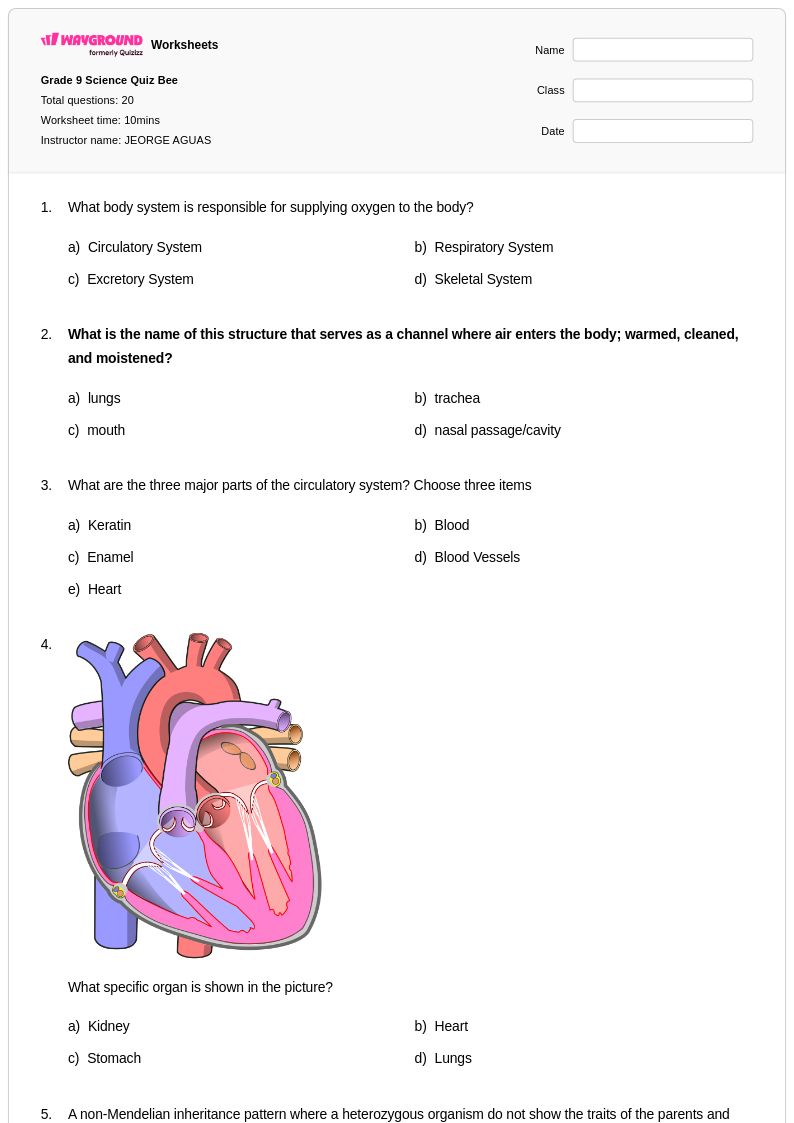
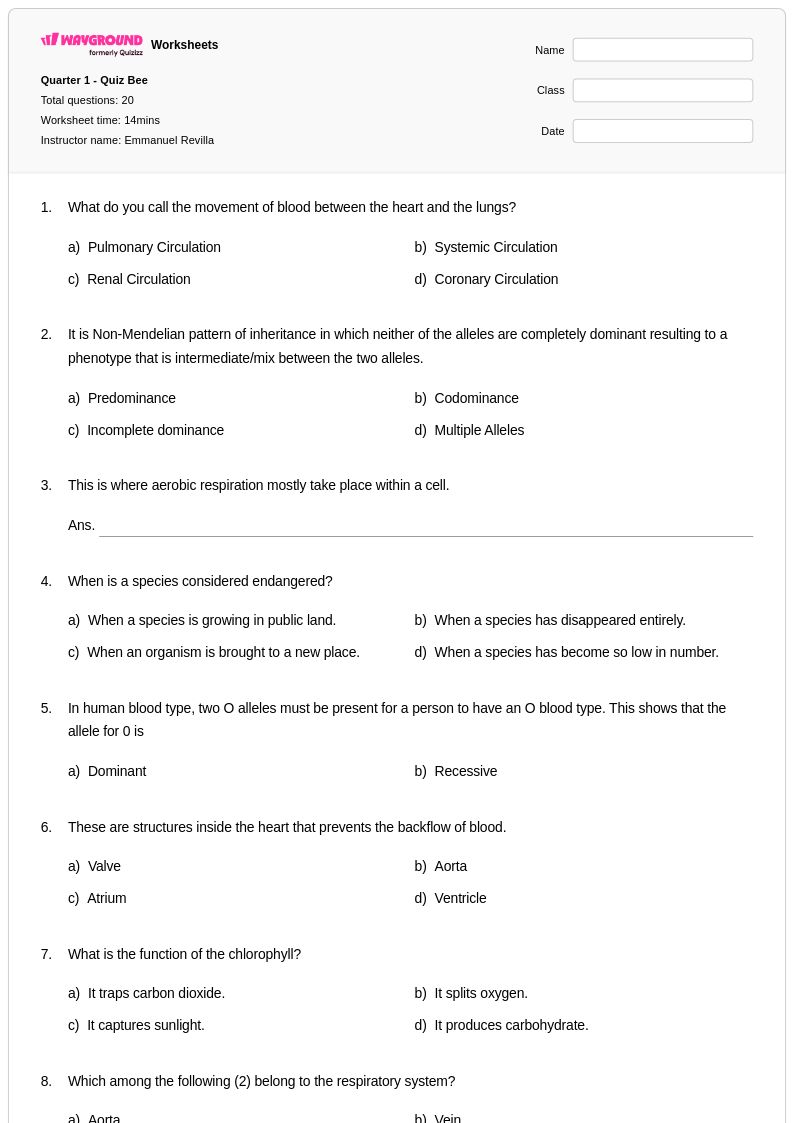
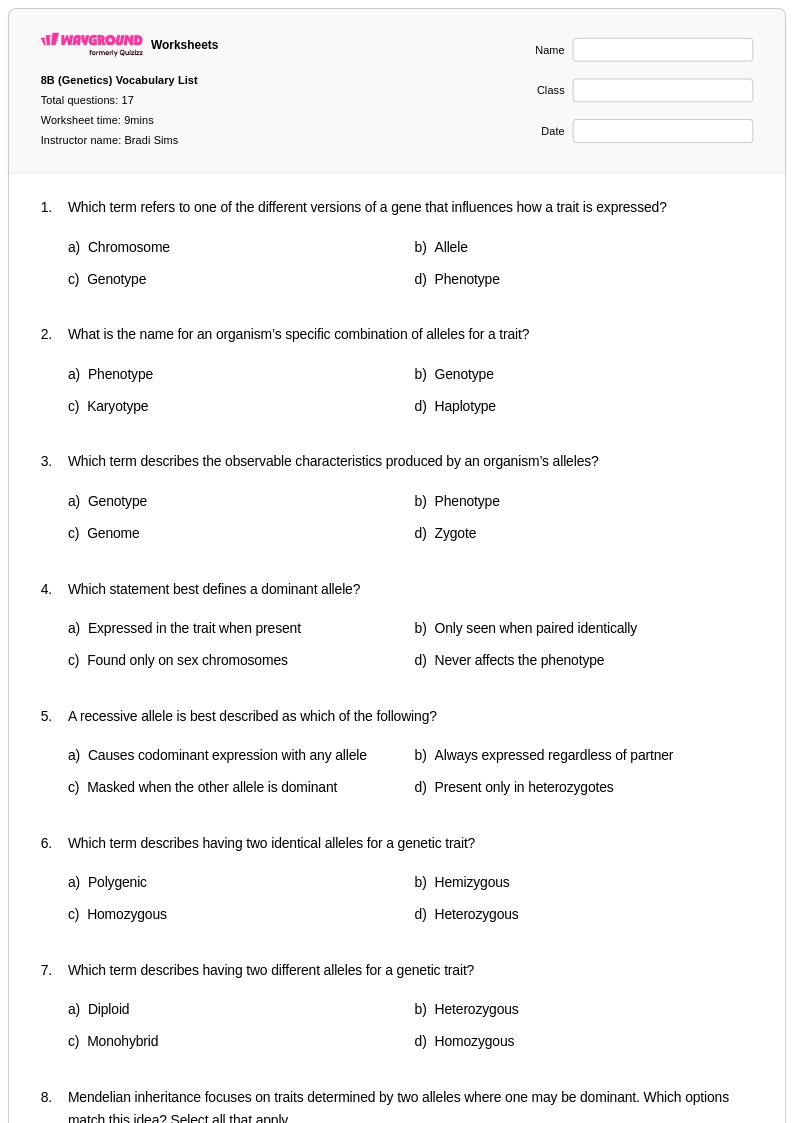
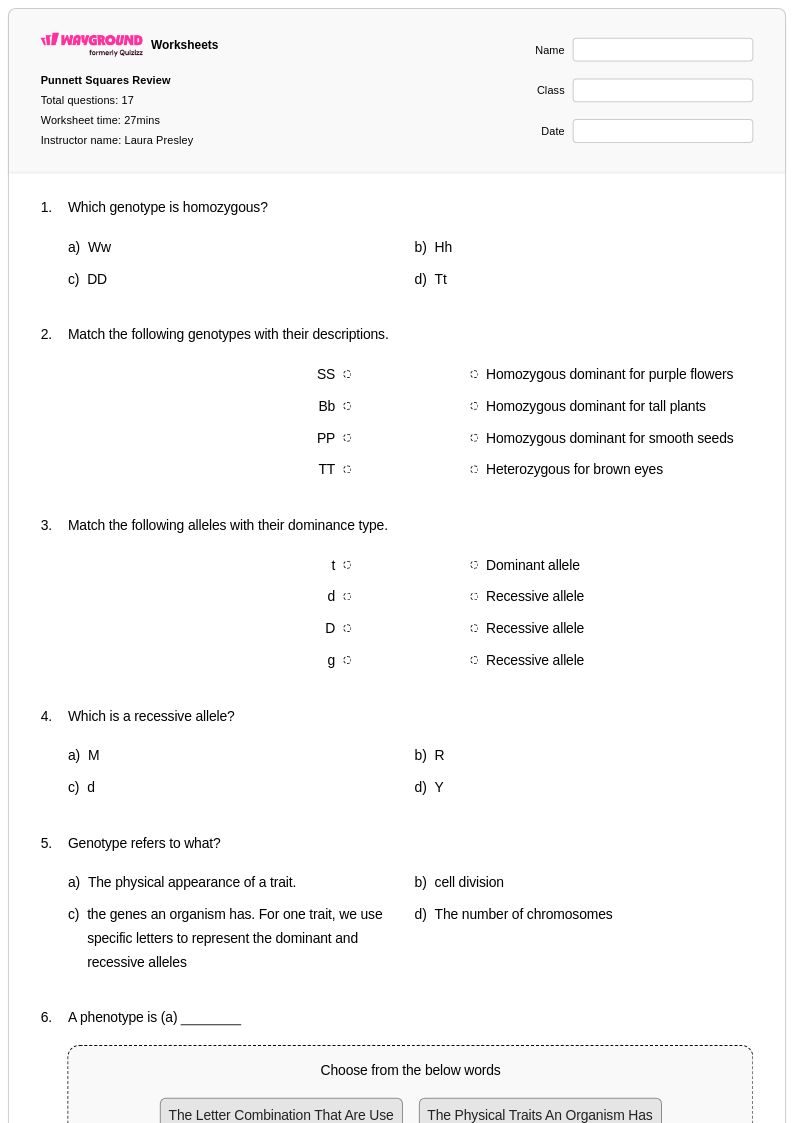
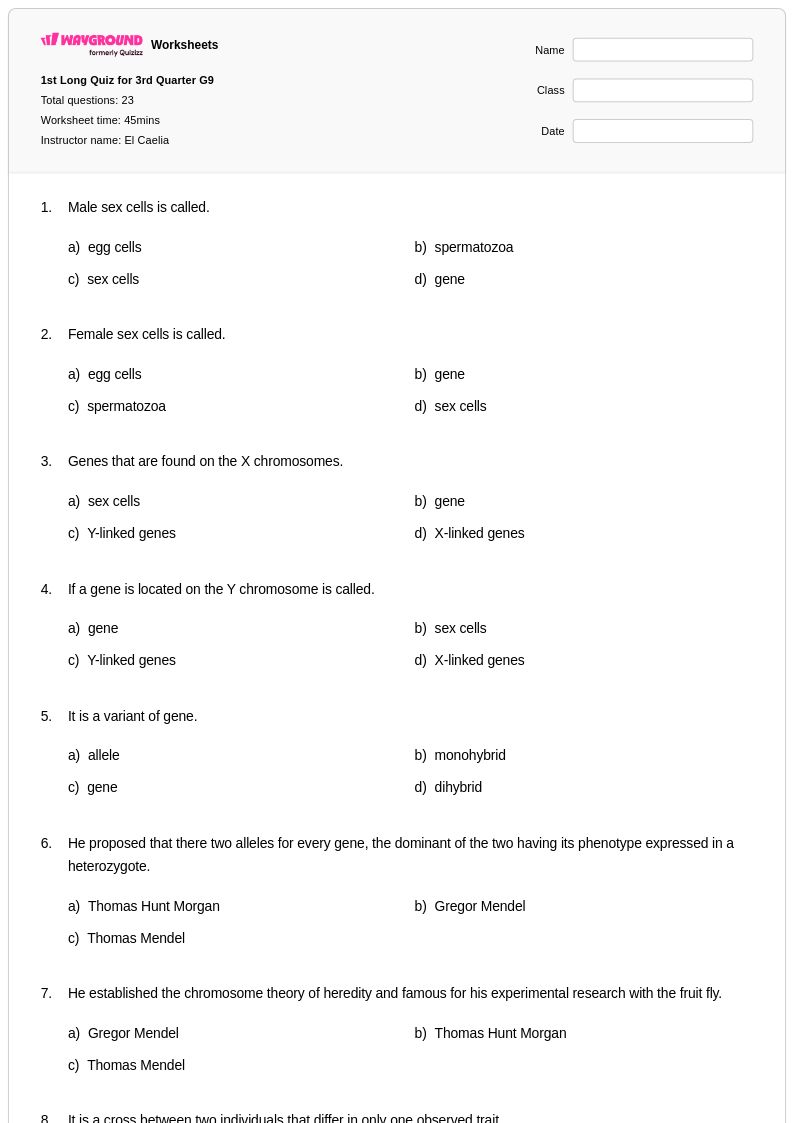
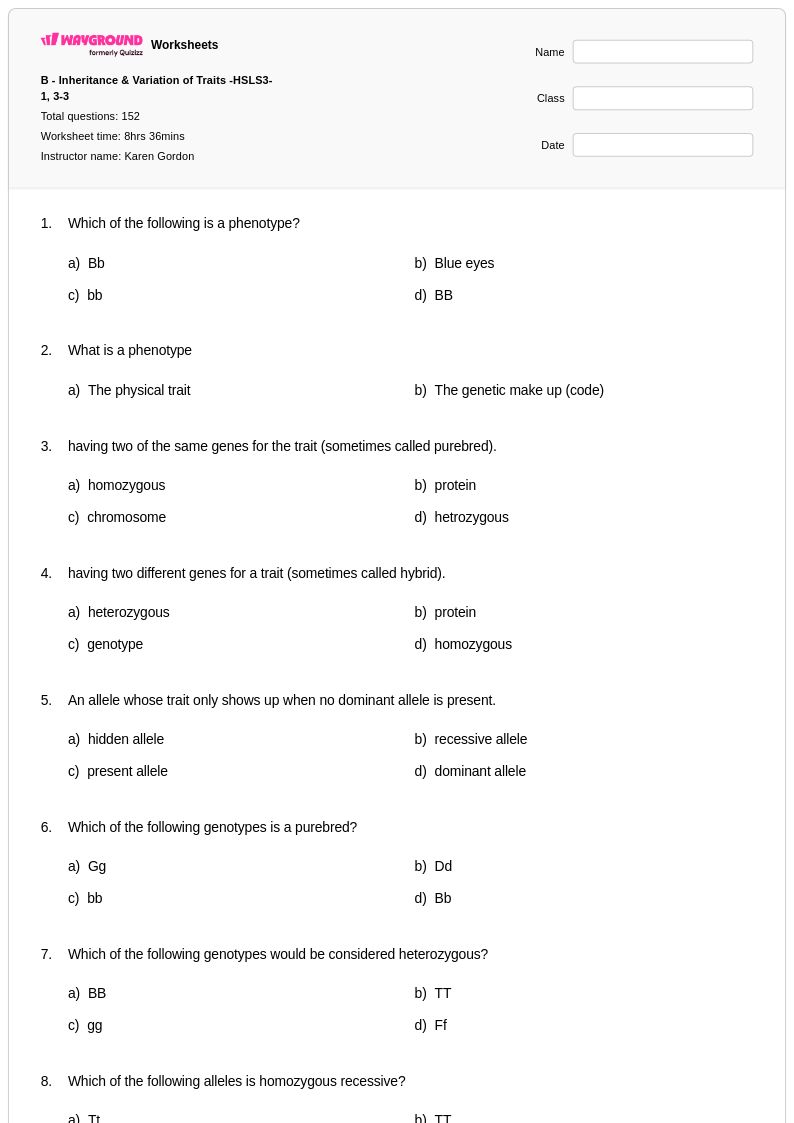
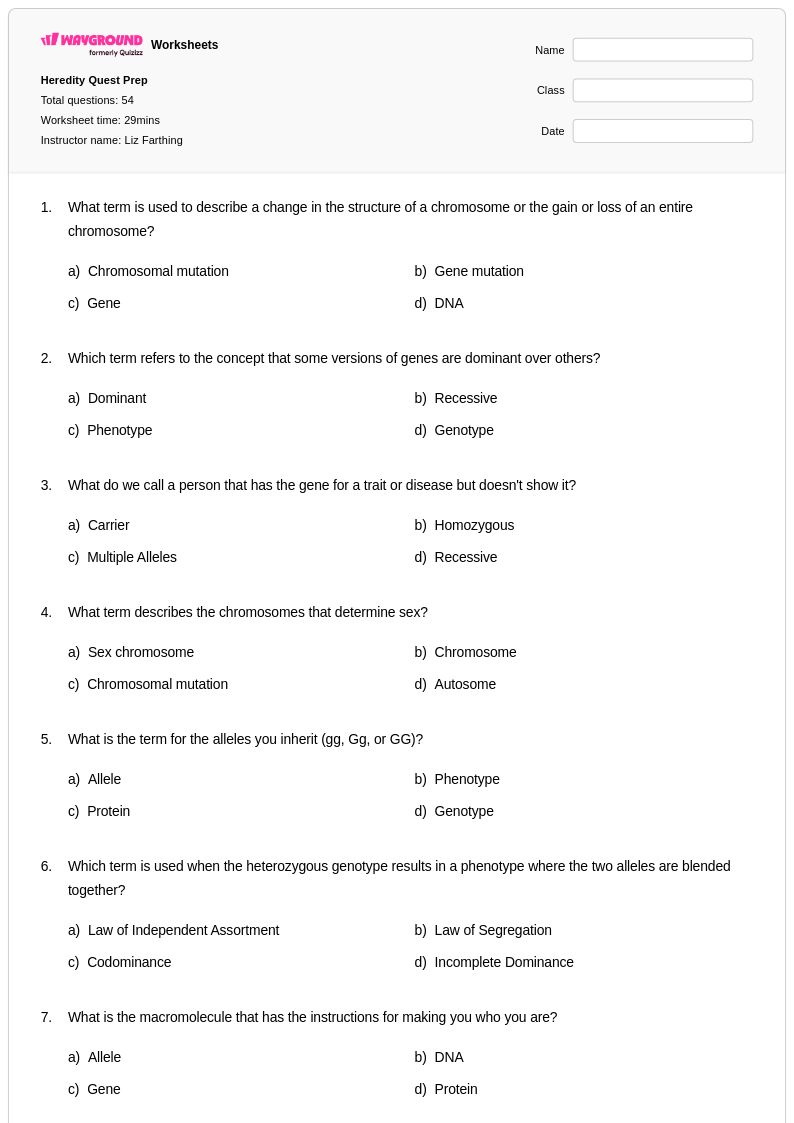
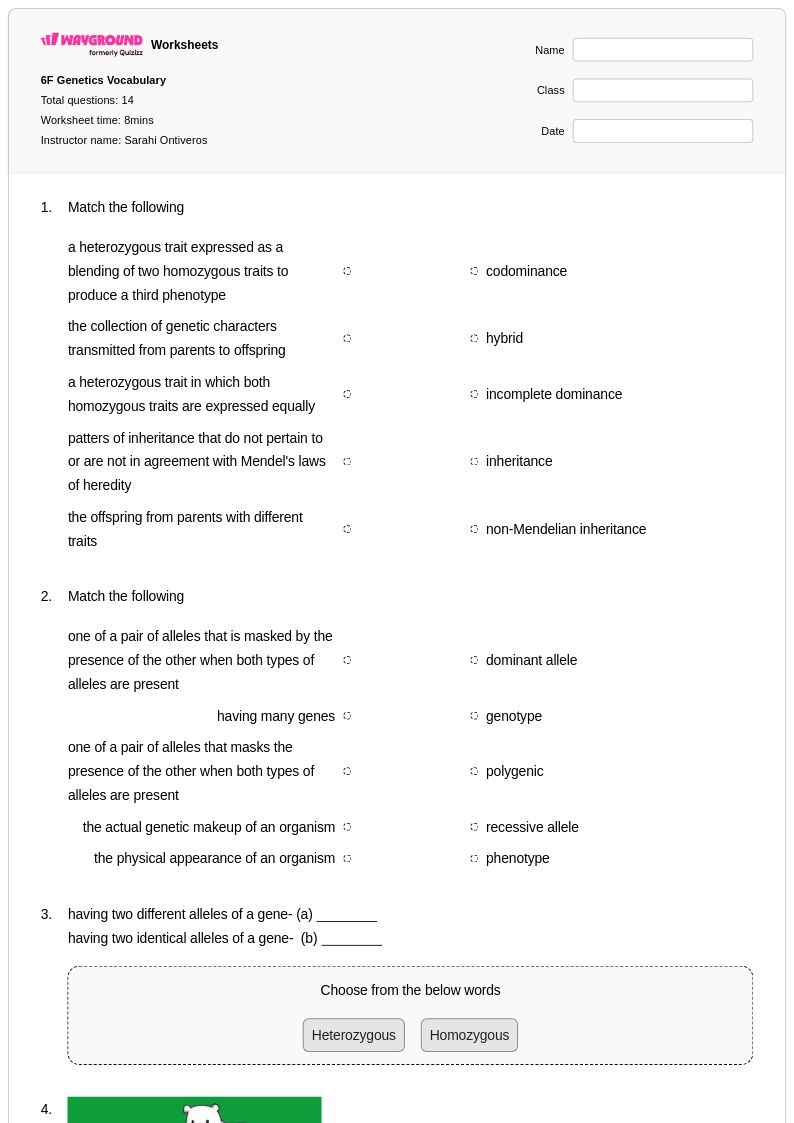
Non Mendelian Inheritance worksheets for Class 9 students available through Wayground (formerly Quizizz) provide comprehensive coverage of inheritance patterns that deviate from classical Mendelian genetics. These expertly designed resources help students master complex concepts including incomplete dominance, codominance, multiple alleles, polygenic inheritance, and sex-linked traits through structured practice problems and real-world examples. The worksheets strengthen critical thinking skills by challenging students to analyze pedigrees, predict phenotypic ratios, and solve genetics problems involving ABO blood types, X-linked disorders, and continuous variation traits. Each worksheet collection includes detailed answer keys and explanations, making them valuable tools for both independent study and classroom instruction, with printable pdf formats ensuring easy access for all learning environments.
Wayground (formerly Quizizz) supports biology educators with an extensive library of millions of teacher-created Non Mendelian Inheritance resources, featuring robust search and filtering capabilities that allow teachers to quickly locate materials aligned with specific learning standards and curriculum requirements. The platform's differentiation tools enable educators to customize worksheets for varying ability levels within Class 9 classrooms, supporting both remediation for struggling students and enrichment opportunities for advanced learners. Teachers can seamlessly integrate these resources into their lesson planning through flexible digital and printable formats, facilitating targeted skill practice sessions, formative assessments, and comprehensive review activities that reinforce understanding of complex inheritance patterns and prepare students for more advanced genetics concepts in higher-level biology courses.
FAQs
How do I teach non-Mendelian inheritance to high school biology students?
Start by ensuring students have a solid grasp of Mendelian dominance before introducing exceptions. Teach incomplete dominance and codominance first, since these are the most intuitive departures from classical genetics, then progress to polygenic traits, multiple alleles, sex-linked inheritance, and epistasis. Using real-world examples — such as blood type for multiple alleles or skin color for polygenic inheritance — helps students connect abstract patterns to observable biology. Pedigree analysis problems are especially effective for building pattern recognition across all non-Mendelian inheritance types.
What practice problems help students understand incomplete dominance and codominance?
The most effective practice problems for these topics ask students to predict phenotype ratios from crosses and then explain why the offspring do not match classical 3:1 Mendelian ratios. Problems that require students to distinguish between incomplete dominance (blended phenotype) and codominance (both phenotypes expressed simultaneously) are particularly valuable, since confusing the two is one of the most common student errors. Including flower color examples for incomplete dominance and ABO blood type problems for codominance gives students concrete anchors for each concept.
What mistakes do students commonly make when working through non-Mendelian inheritance problems?
The most frequent error is applying dominant-recessive logic to inheritance patterns that don't follow it — for example, assuming the "stronger" allele in incomplete dominance will fully mask the other. Students also commonly conflate incomplete dominance with codominance, misidentify sex-linked traits on pedigrees, and struggle to correctly calculate phenotype ratios for polygenic traits because they expect simple ratios like 3:1 or 1:2:1. Targeted practice problems that explicitly ask students to justify their reasoning — rather than just produce an answer — help surface and correct these misconceptions.
How do I use pedigree analysis worksheets to teach sex-linked inheritance?
Pedigree worksheets for sex-linked inheritance should ask students to first determine the mode of inheritance before attempting to assign genotypes. A useful scaffold is having students check whether the trait skips generations, appears more frequently in one sex, or passes from carrier mothers to affected sons — all hallmarks of X-linked recessive inheritance. Worksheets that present multiple pedigrees with different inheritance patterns (autosomal vs. sex-linked, dominant vs. recessive) and require students to distinguish between them build stronger analytical skills than those that isolate a single pattern.
How can I use non-Mendelian inheritance worksheets in my classroom?
Non-Mendelian inheritance worksheets on Wayground are available as printable PDFs for traditional classroom use and in digital formats for technology-integrated environments, making them flexible for homework, in-class practice, or lab follow-up. Teachers can also host worksheets directly as a quiz on Wayground, enabling real-time student responses and streamlined grading. Each worksheet includes a complete answer key, which supports both teacher-led review and student self-assessment after independent practice.
How do I differentiate non-Mendelian inheritance instruction for students at different ability levels?
For struggling students, begin with single-concept problems focused on one inheritance pattern at a time before introducing mixed-pattern pedigrees or multi-step probability calculations. Wayground supports individual accommodations including read aloud, reduced answer choices, and extended time, which can be applied per student without notifying the rest of the class. Advanced students benefit from epistasis problems and complex pedigrees that require synthesizing multiple non-Mendelian patterns, pushing them toward the level of rigor expected in AP Biology or introductory college genetics.