
Recommended Topics for you
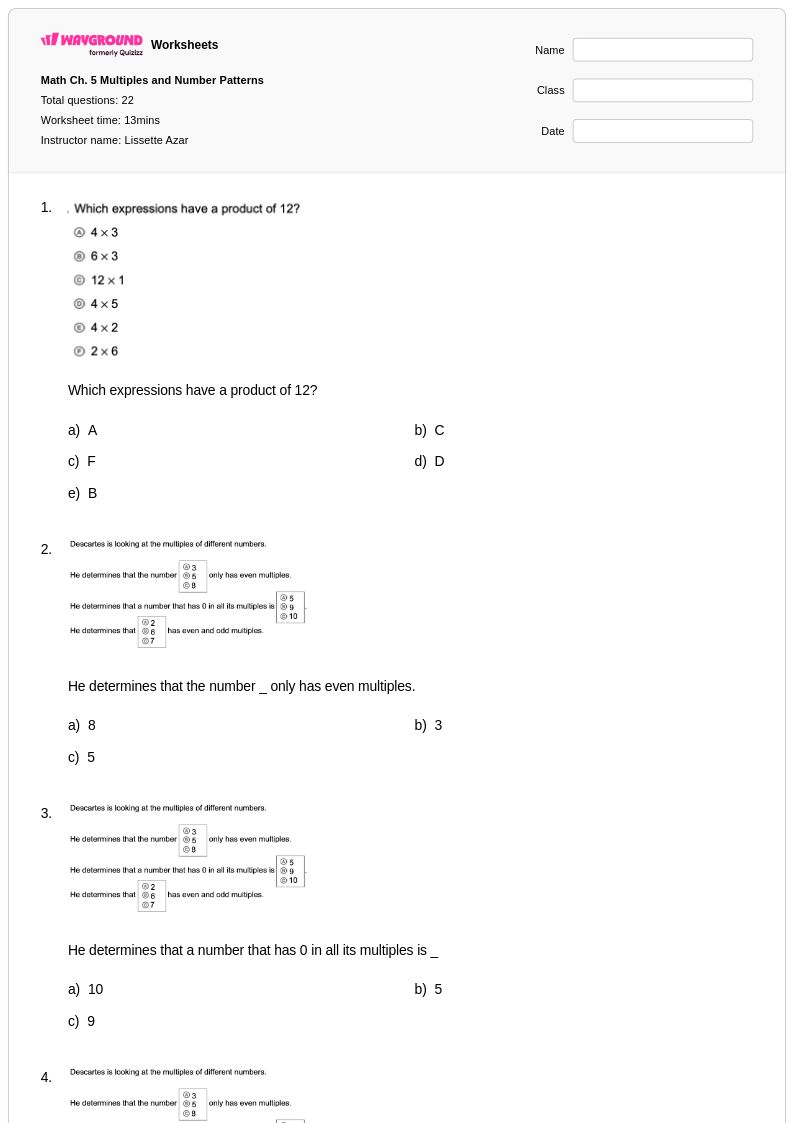
22 Q
3rd
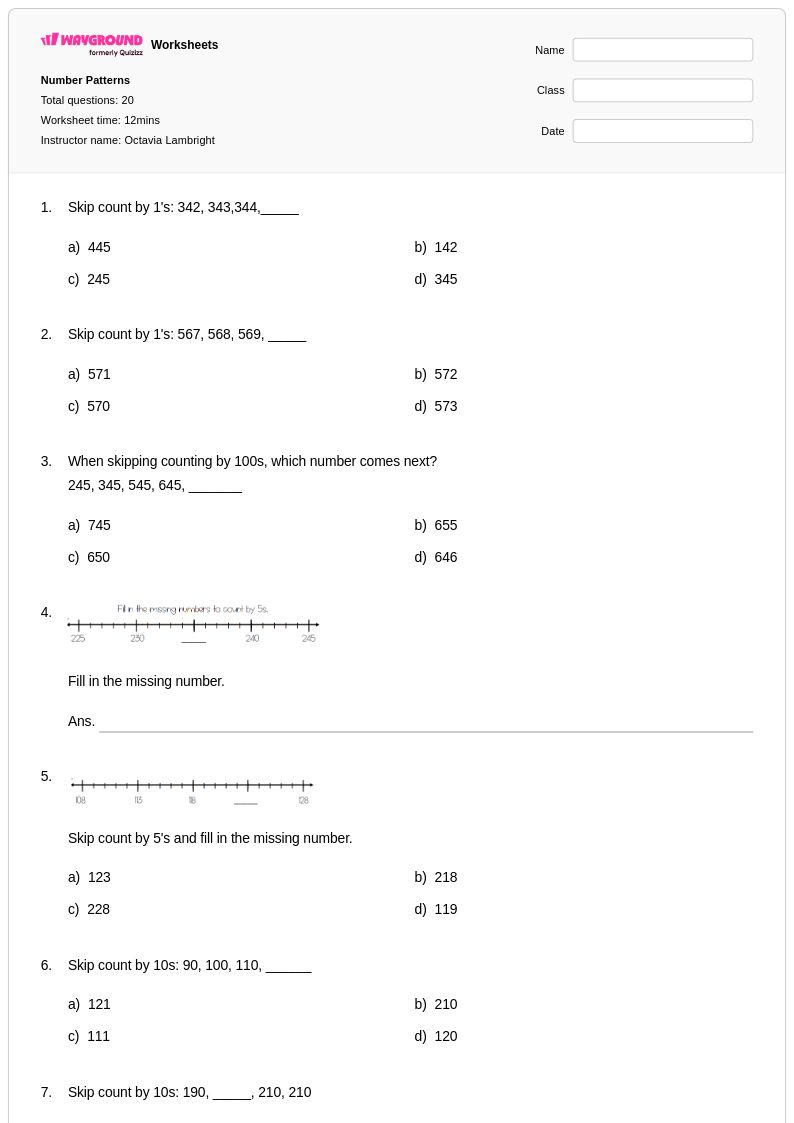
20 Q
2nd
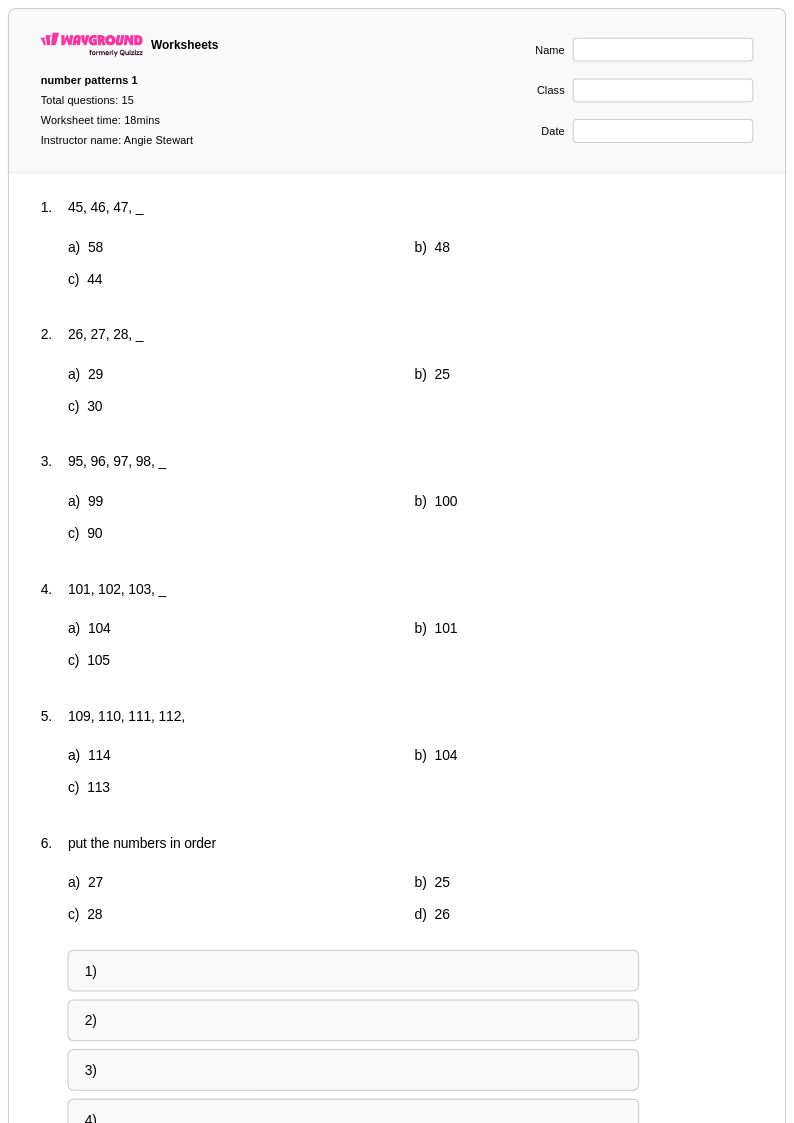
15 Q
1st
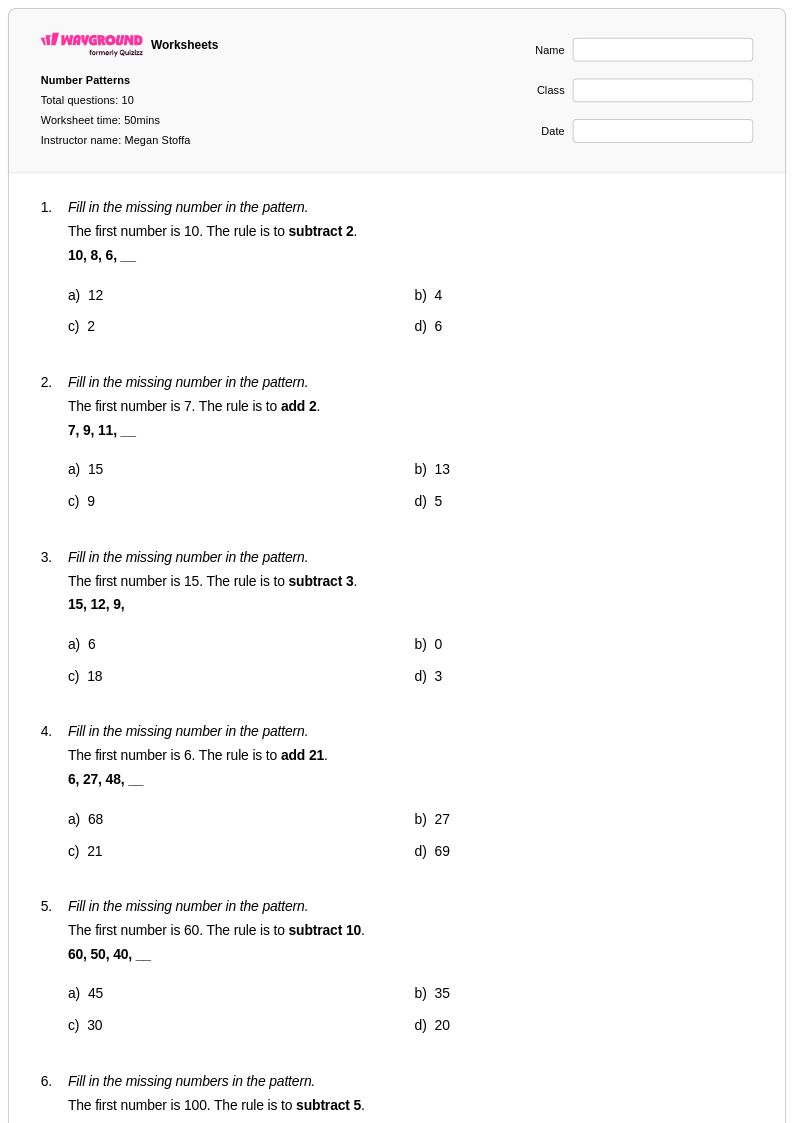
10 Q
5th - 6th
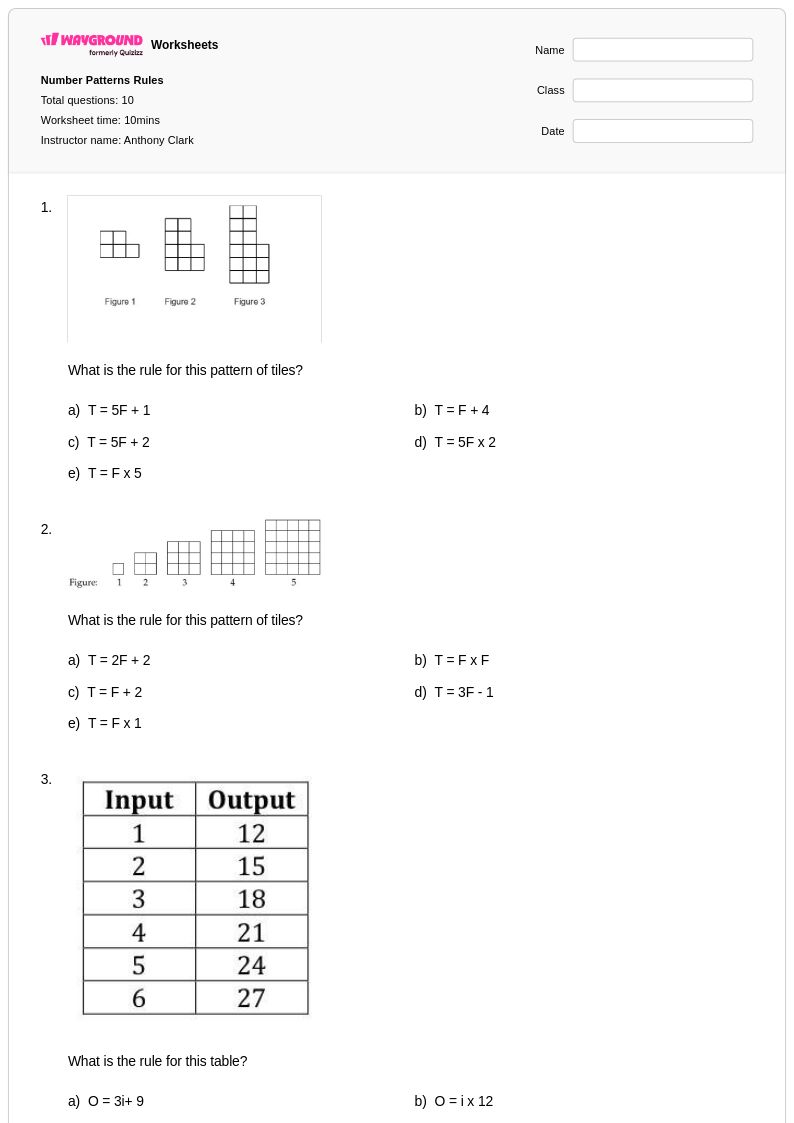
10 Q
5th - Uni
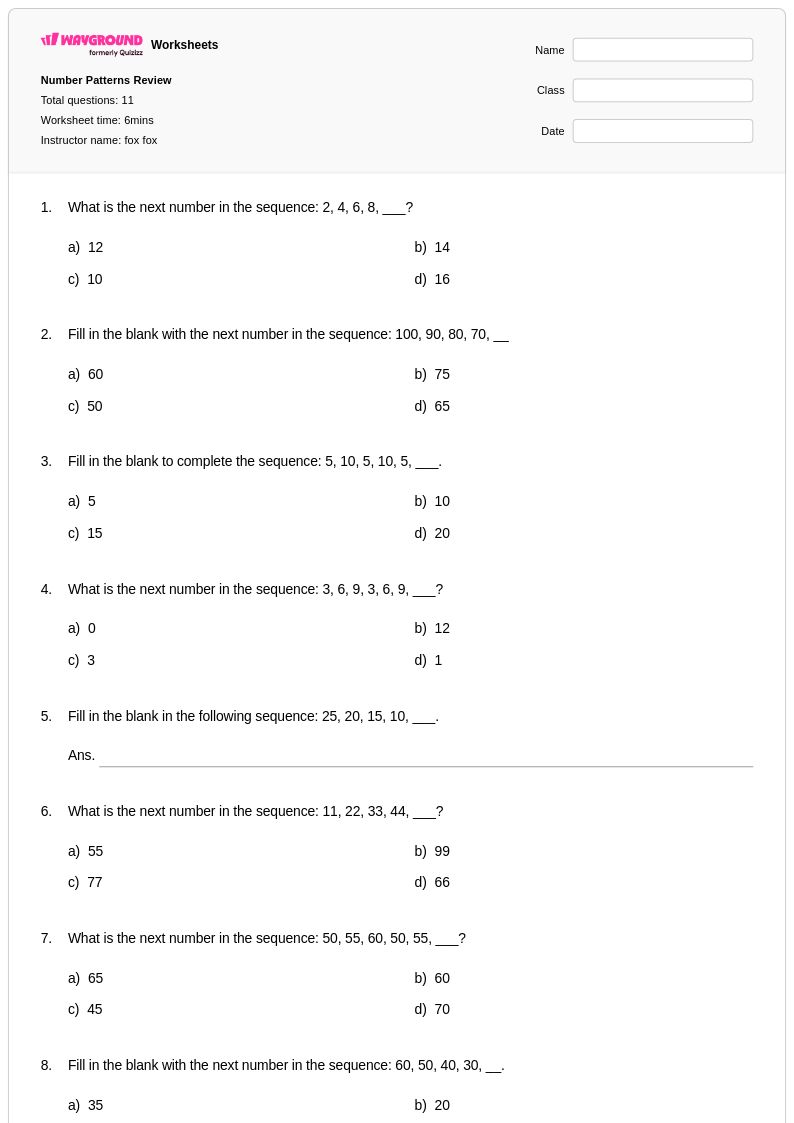
11 Q
1st
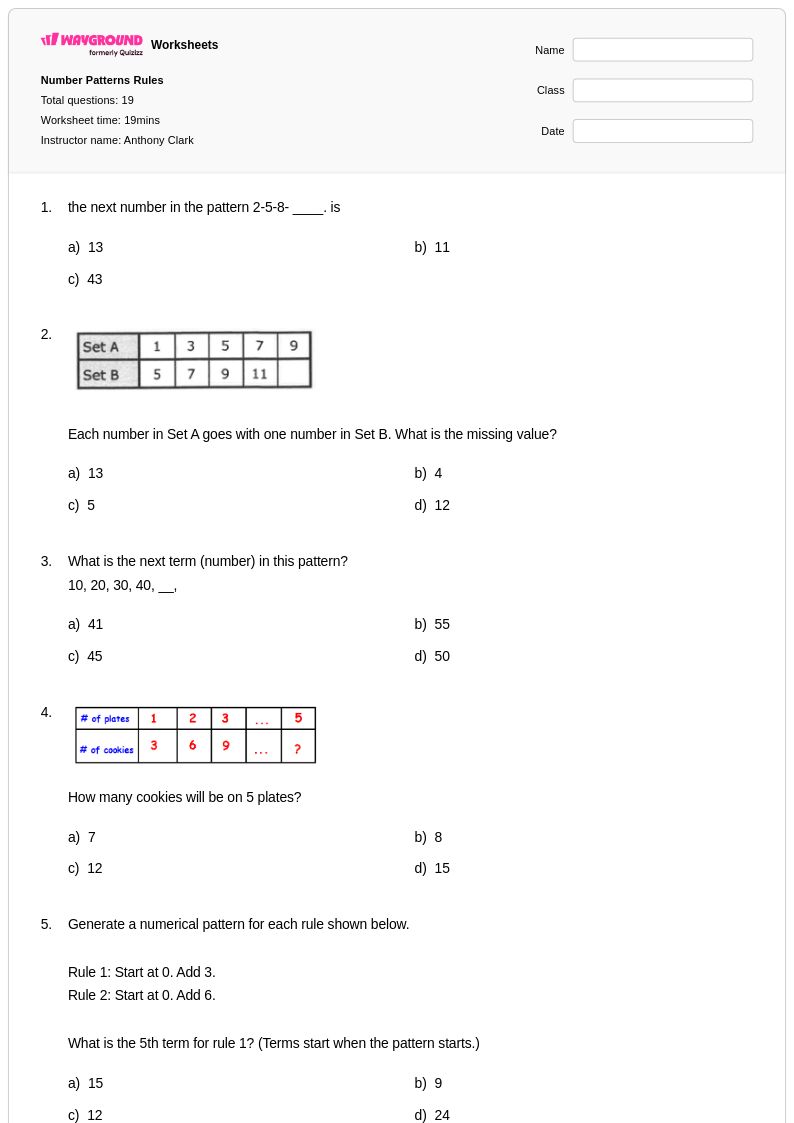
19 Q
5th - Uni
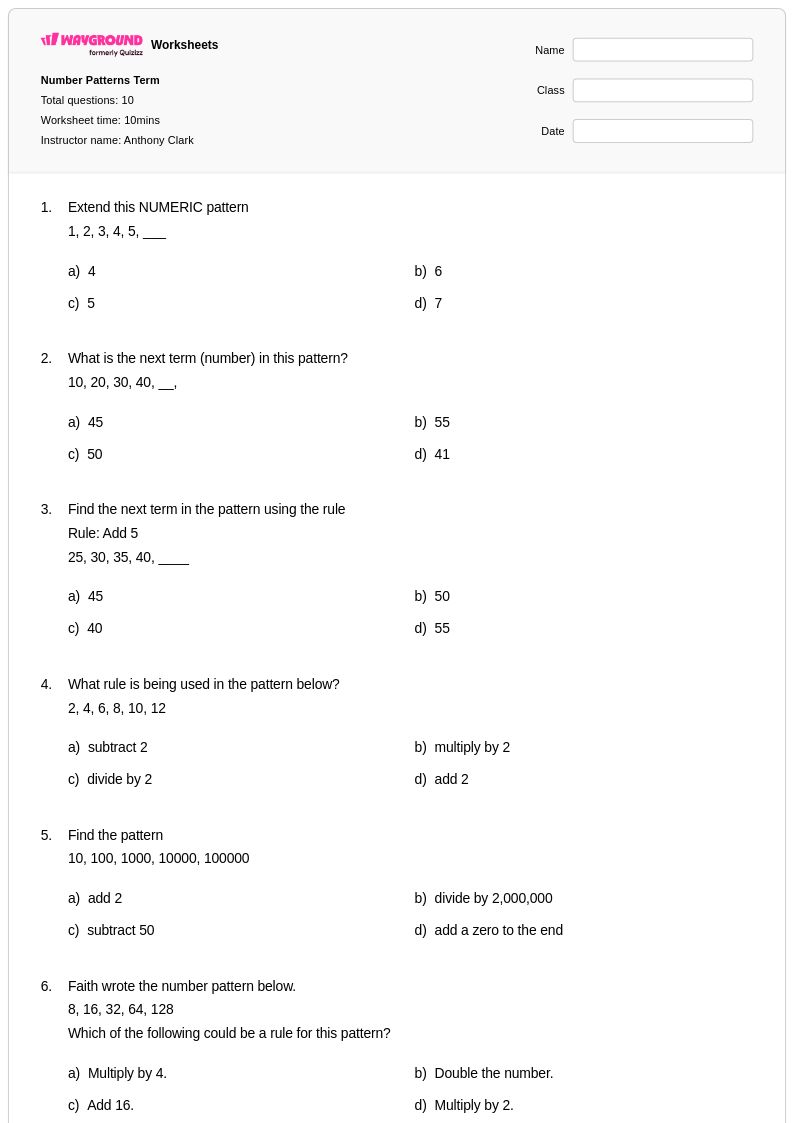
10 Q
5th - Uni
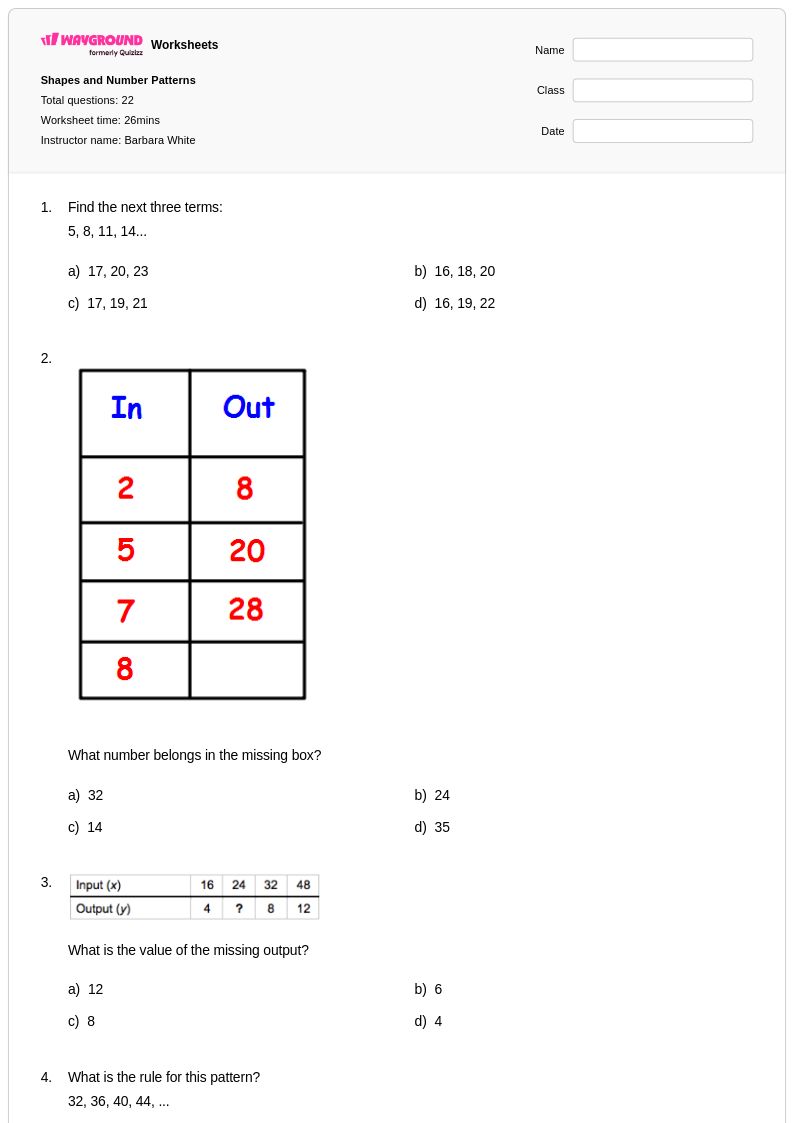
22 Q
4th
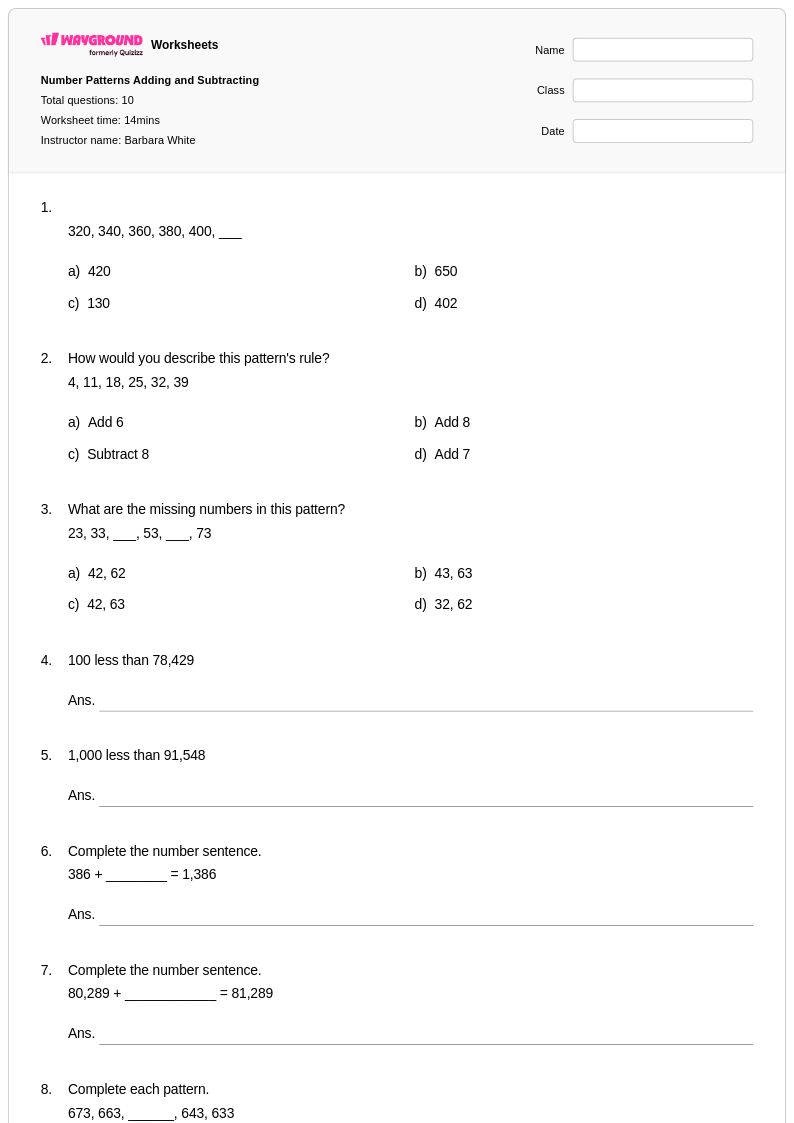
10 Q
4th
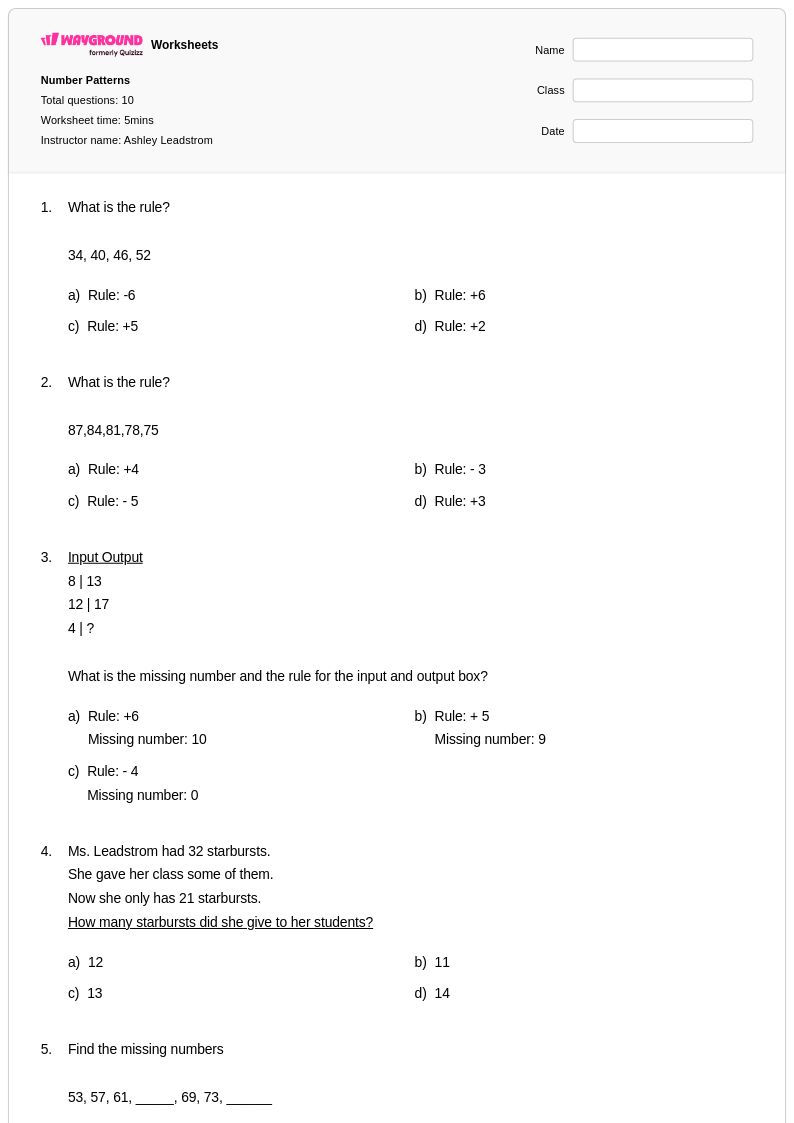
10 Q
2nd
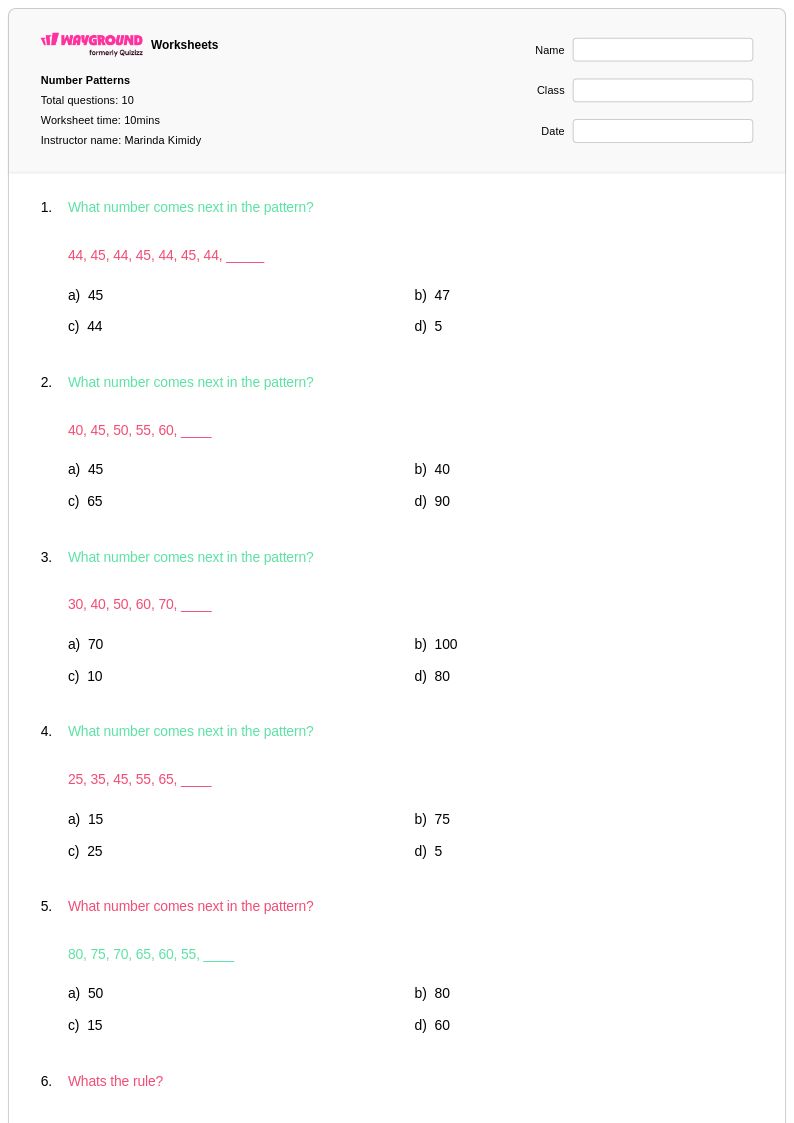
10 Q
1st
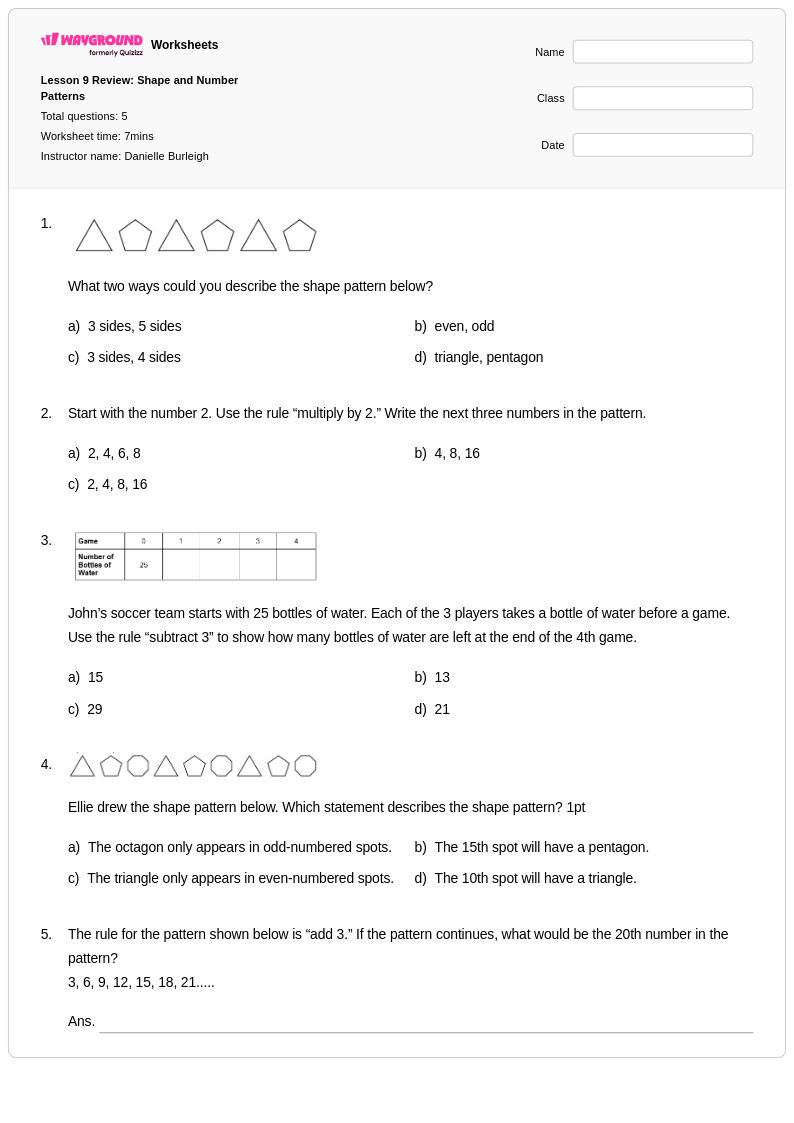
5 Q
4th
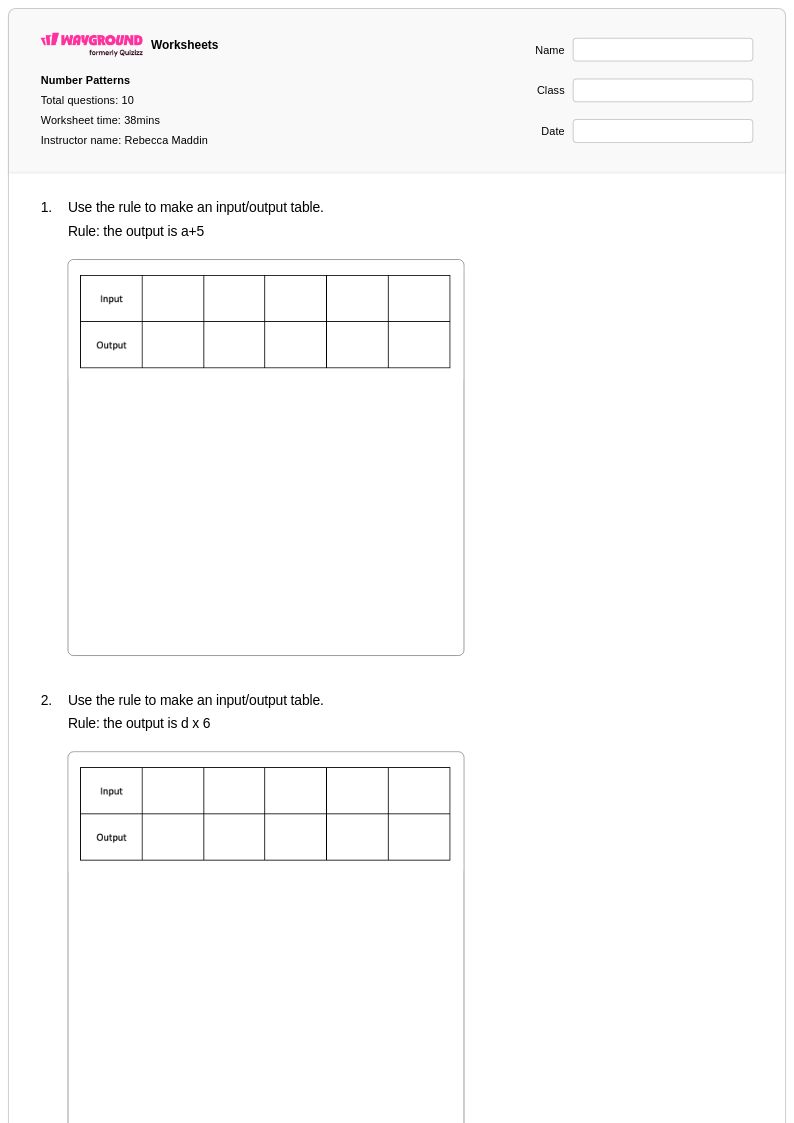
10 Q
5th
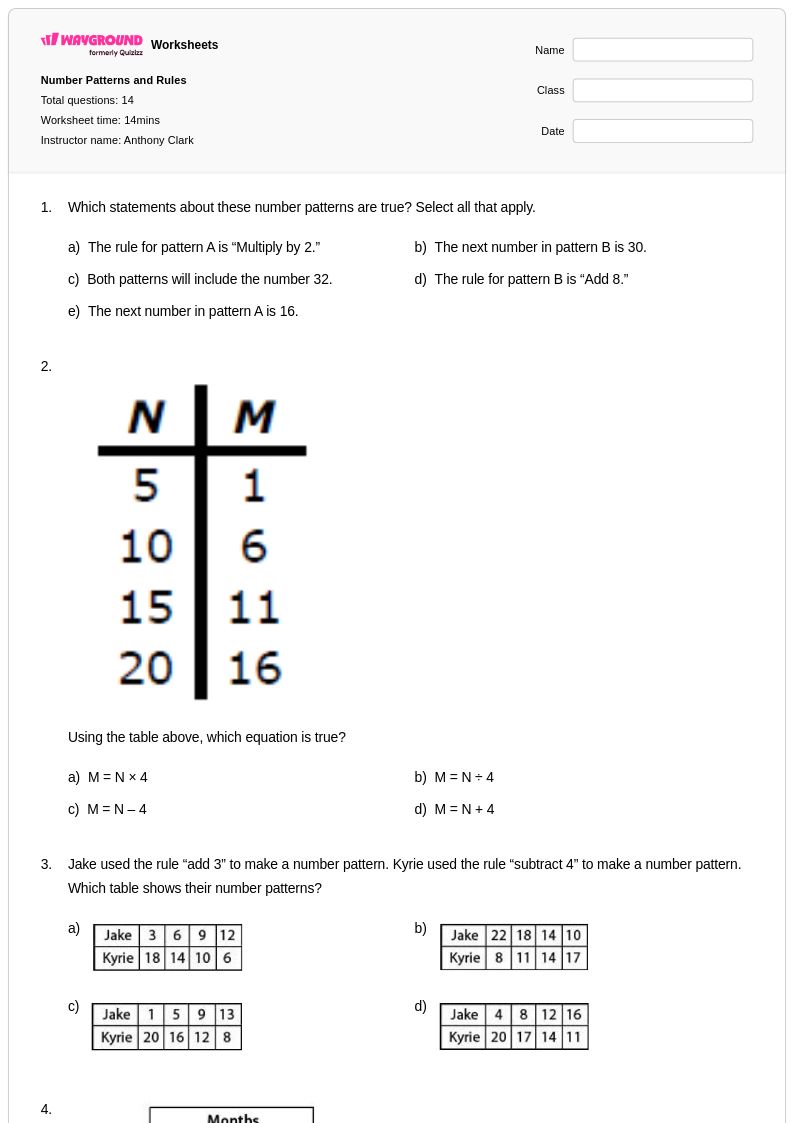
14 Q
5th - Uni
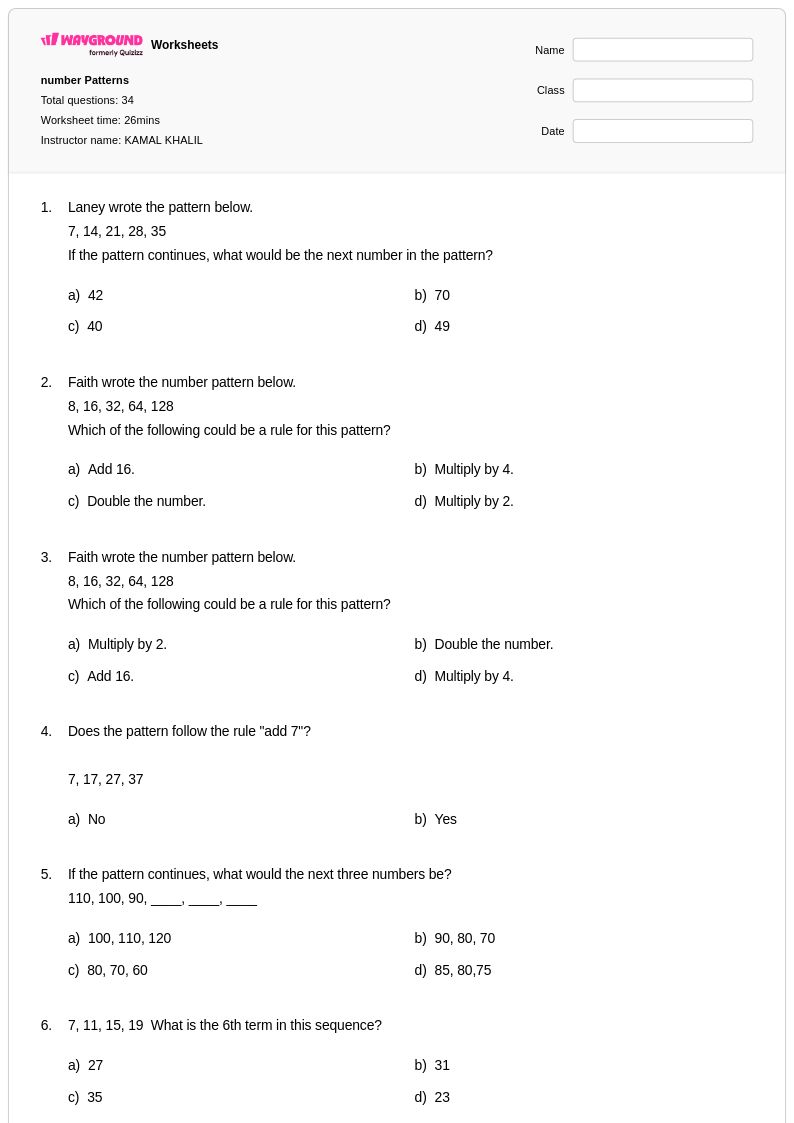
34 Q
4th
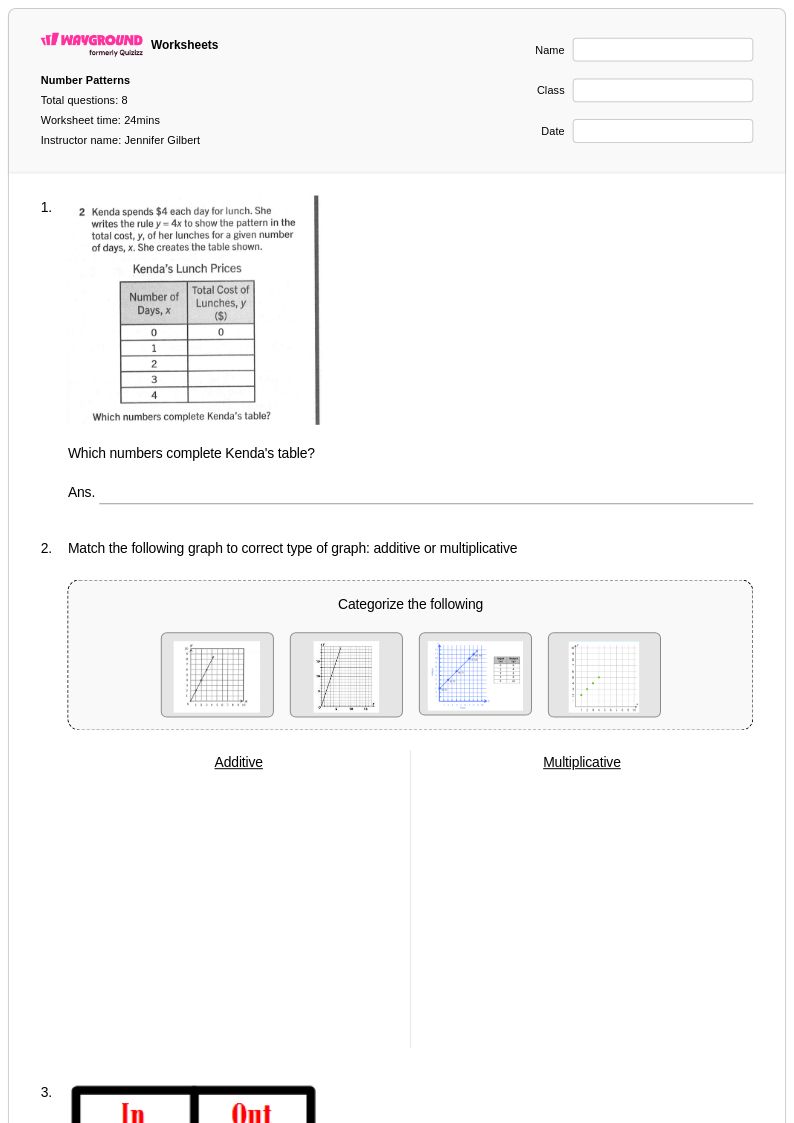
8 Q
5th
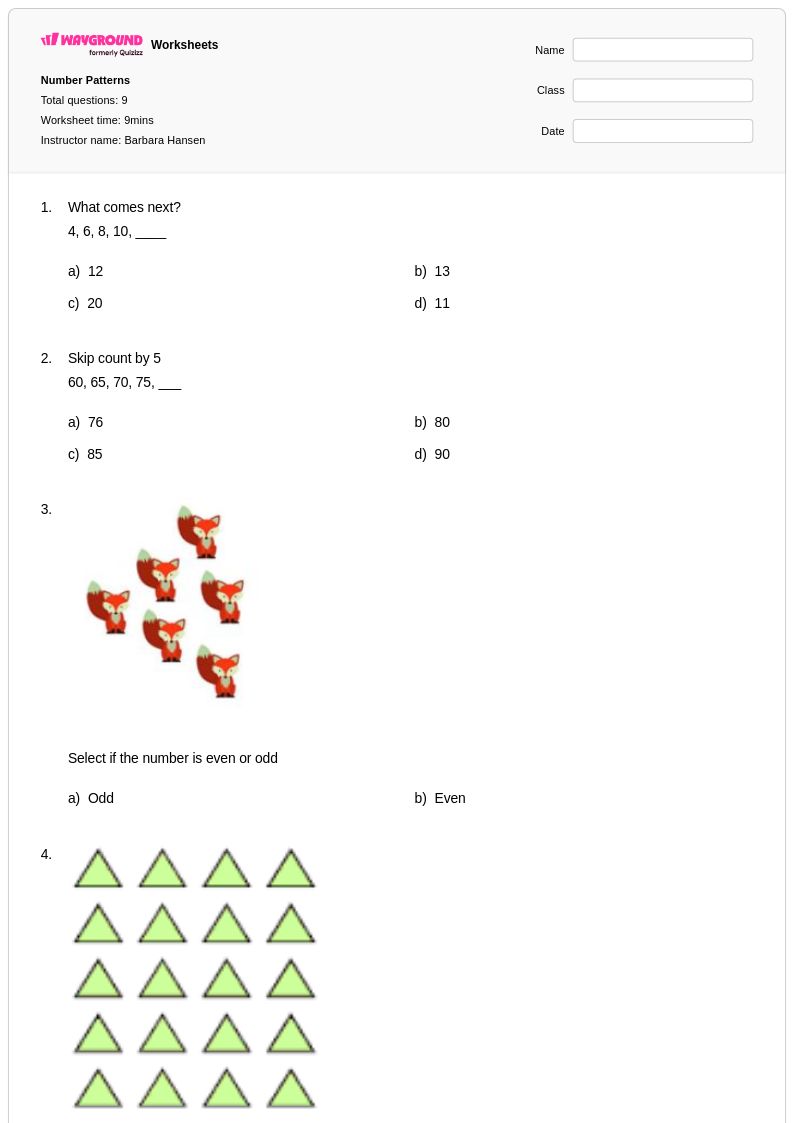
9 Q
2nd
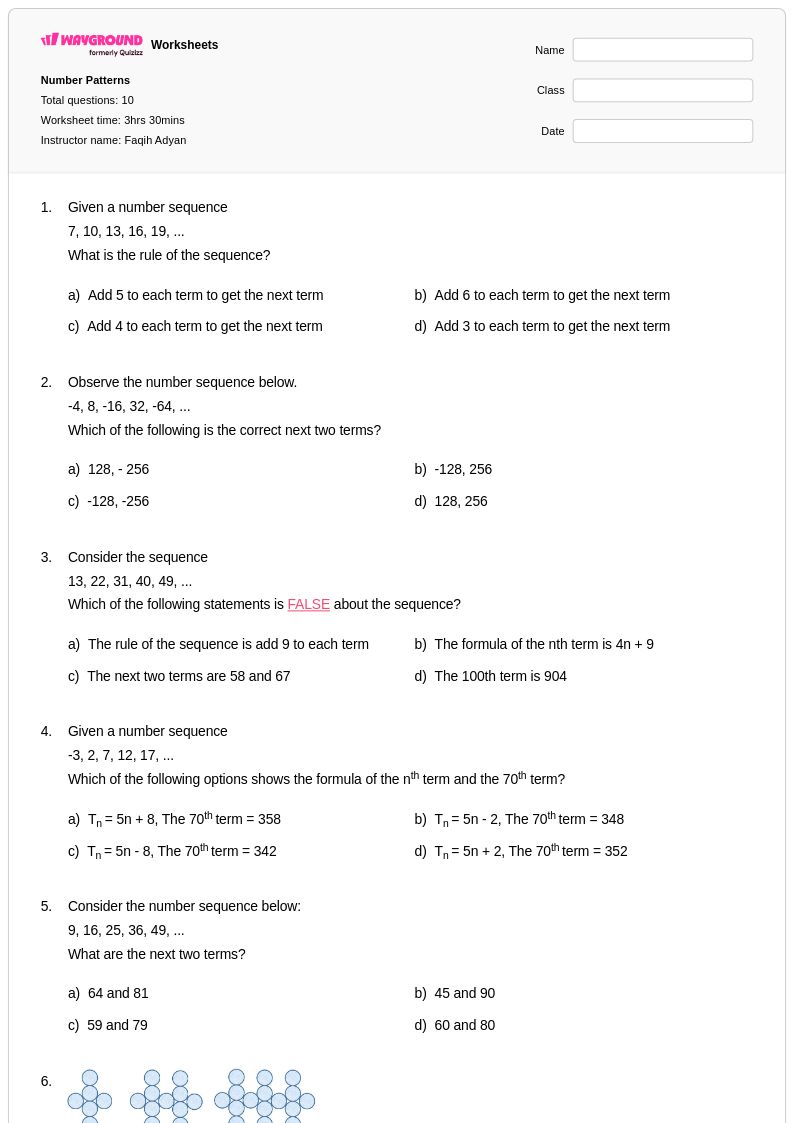
10 Q
7th - 9th
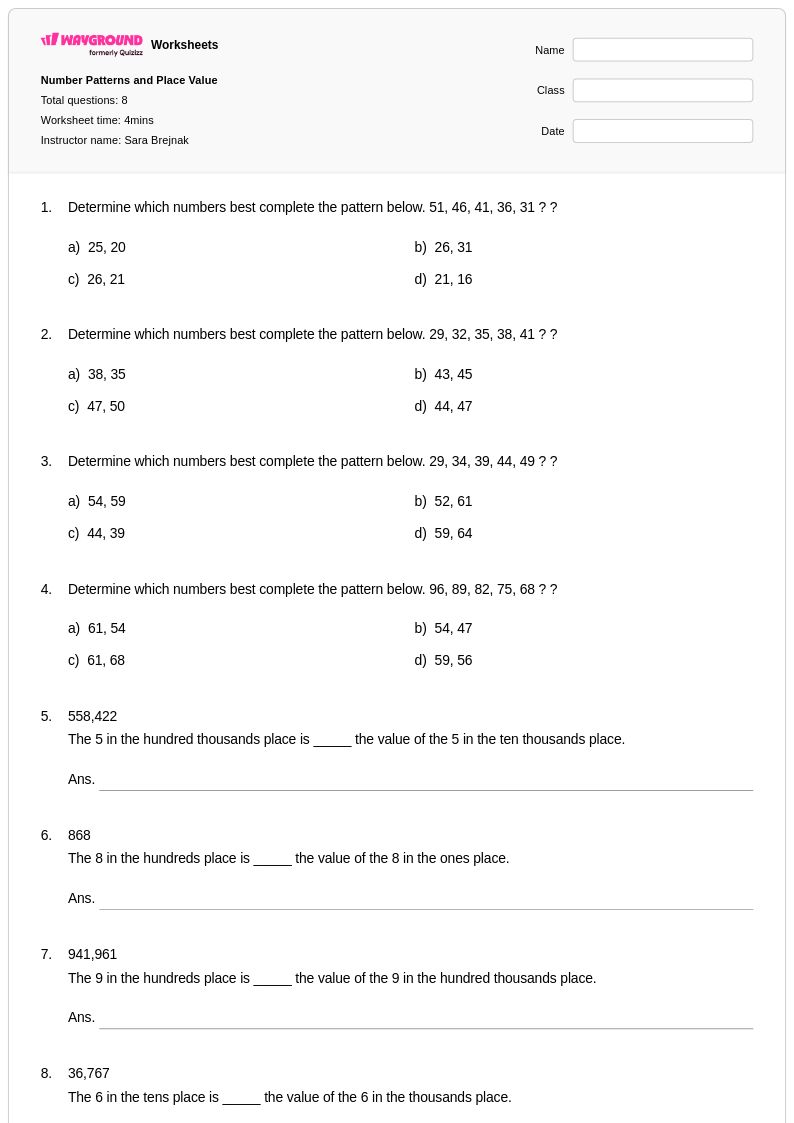
8 Q
5th
14 Q
2nd
7 Q
5th
20 Q
5th - Uni
15 Q
1st
Explore Number Patterns Worksheets by Topics
Explore Worksheets by Subjects
Explore printable Number Patterns worksheets
Number patterns worksheets available through Wayground (formerly Quizizz) provide students with systematic practice in recognizing, extending, and analyzing mathematical sequences and recurring numerical relationships. These comprehensive resources strengthen critical thinking skills by challenging learners to identify underlying rules in arithmetic sequences, geometric progressions, skip counting patterns, and complex multi-step sequences. The worksheet collection includes diverse problem types ranging from simple pattern completion exercises to advanced pattern analysis tasks, with each printable resource featuring detailed answer keys that support independent learning and self-assessment. These free practice problems help students develop pattern recognition abilities that serve as fundamental building blocks for algebraic thinking, logical reasoning, and mathematical problem-solving across all areas of mathematics.
Wayground (formerly Quizizz) empowers teachers with an extensive library of millions of educator-created number patterns worksheets that can be easily searched, filtered, and customized to meet diverse classroom needs. The platform's robust differentiation tools allow instructors to modify existing resources or create personalized materials that target specific skill levels, from basic repeating patterns to sophisticated numerical sequences aligned with mathematical standards. Teachers can access these versatile resources in both printable pdf formats for traditional classroom use and interactive digital versions for technology-enhanced learning environments. This comprehensive worksheet collection streamlines lesson planning while providing targeted materials for remediation, skill practice, and enrichment activities, ensuring that educators have the flexibility to address individual student needs and support mathematical growth through structured pattern recognition exercises.
FAQs
How do I teach number patterns effectively?
What exercises help students practice identifying number patterns?
What are common challenges students face with number patterns?
How can I use these number pattern worksheets in my classroom?
How are number patterns sequenced in the math curriculum?
How can I differentiate number pattern practice for a mixed-ability class?