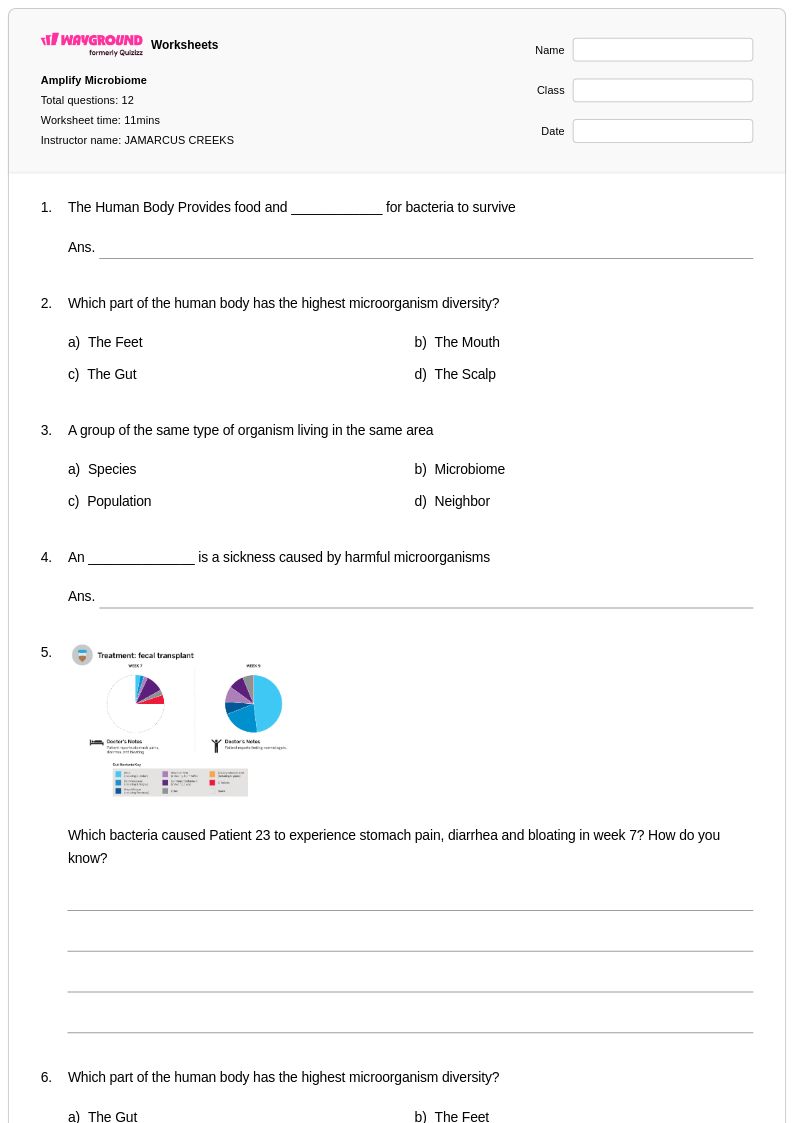
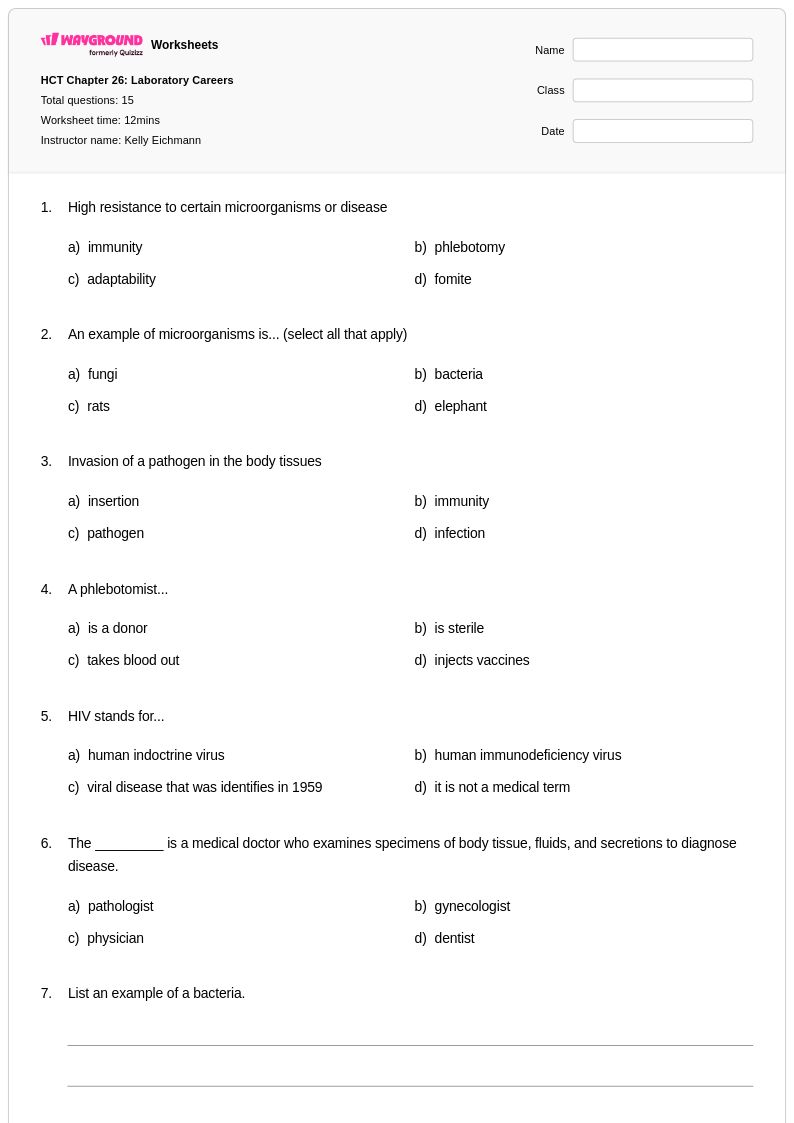
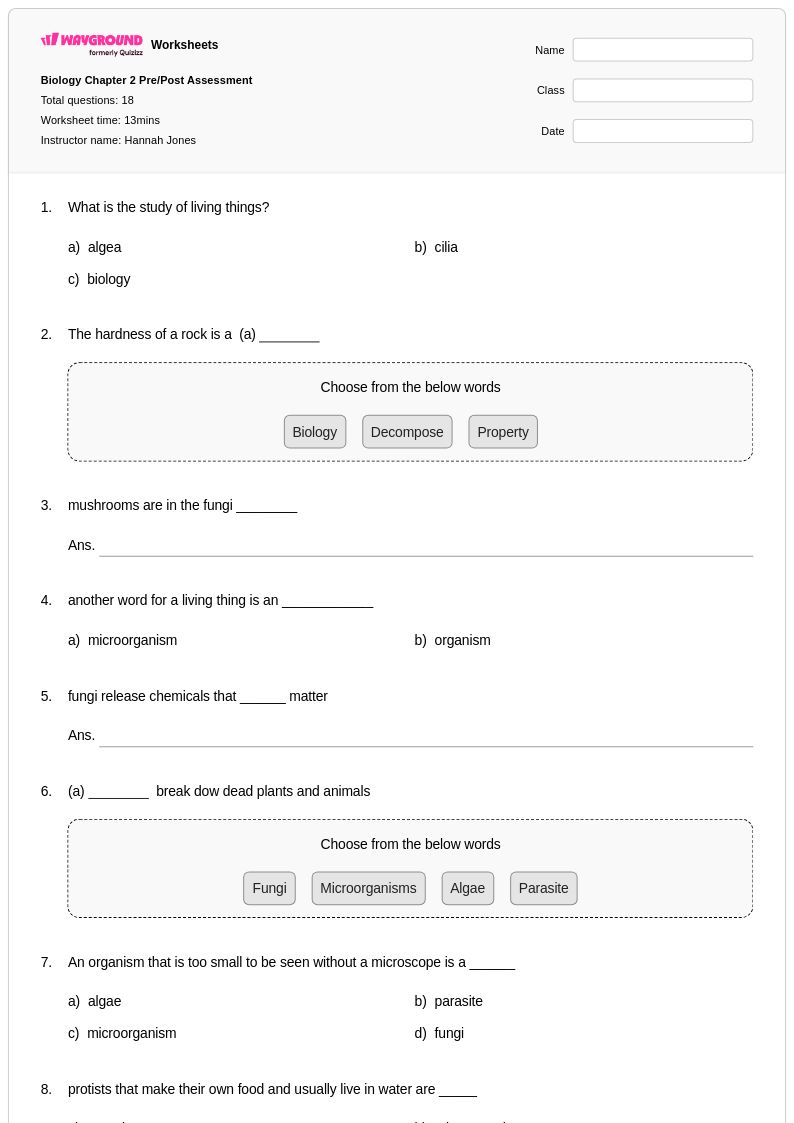
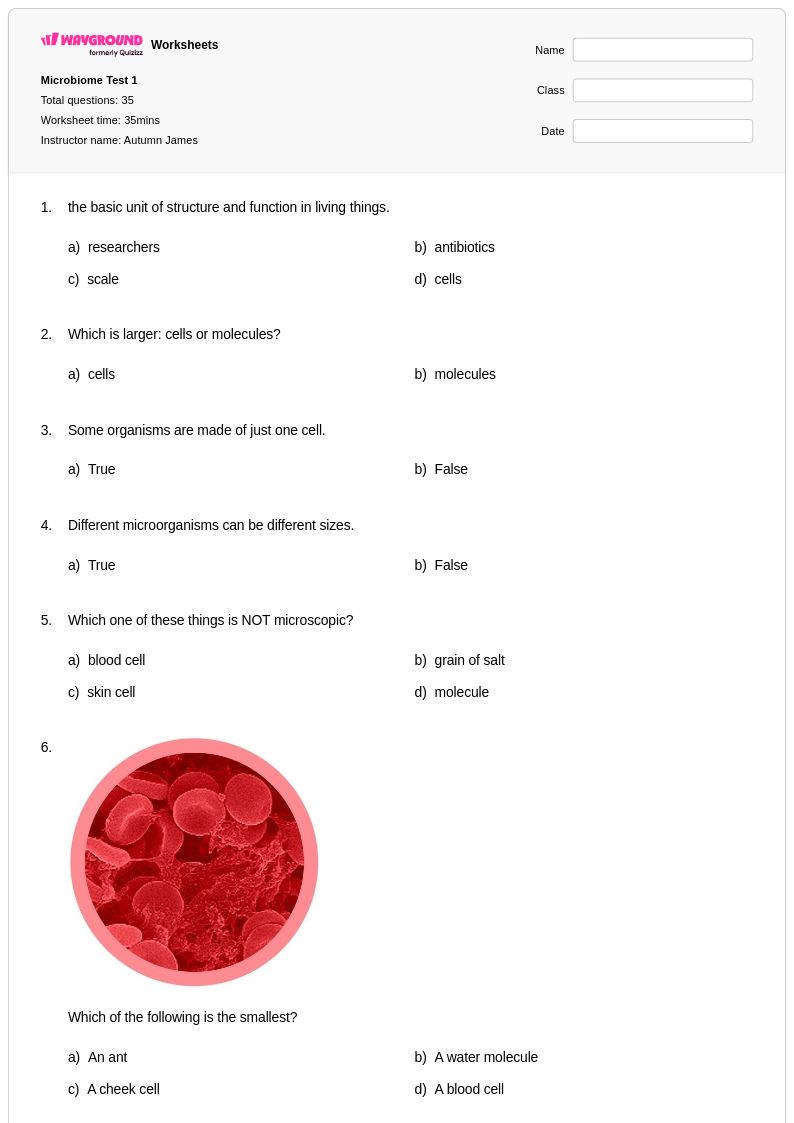
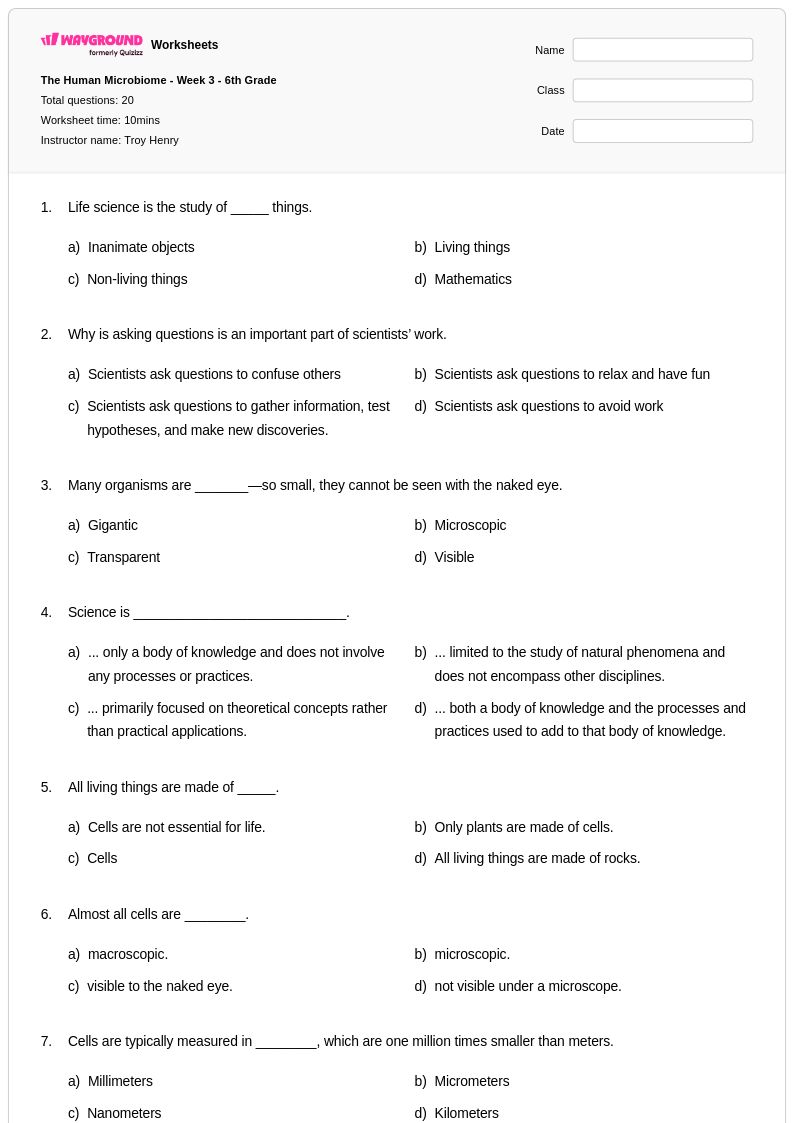
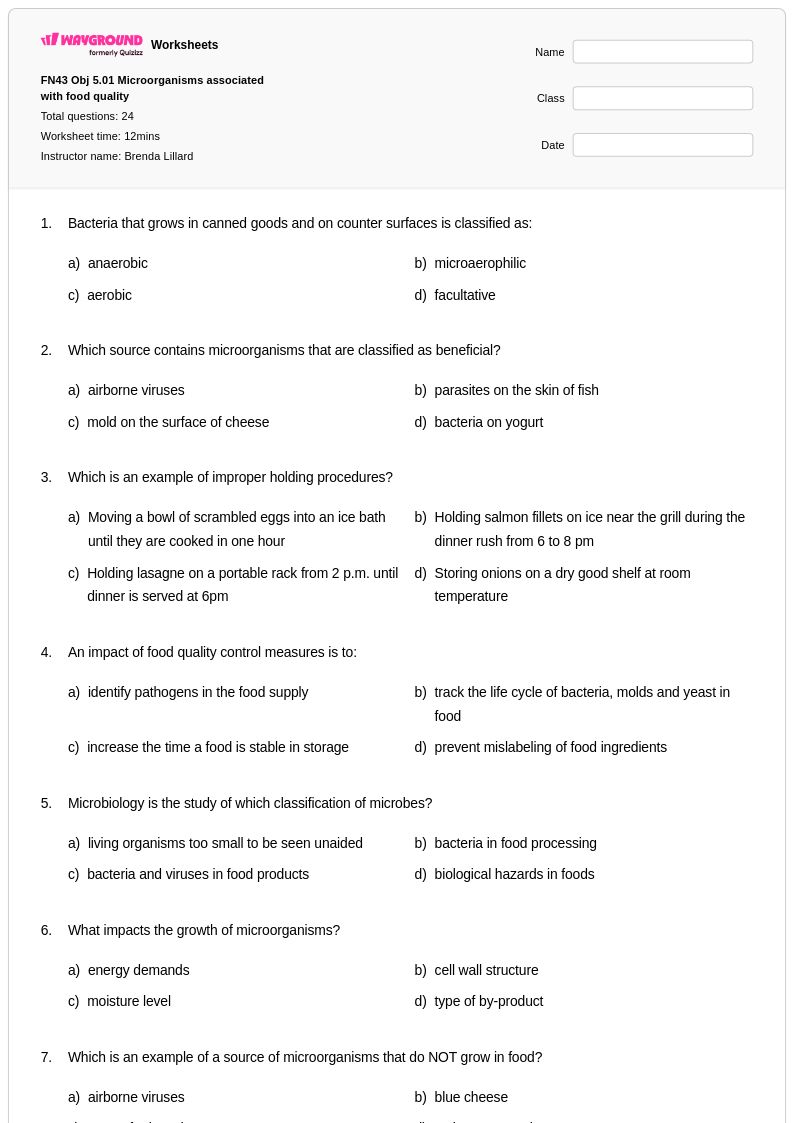
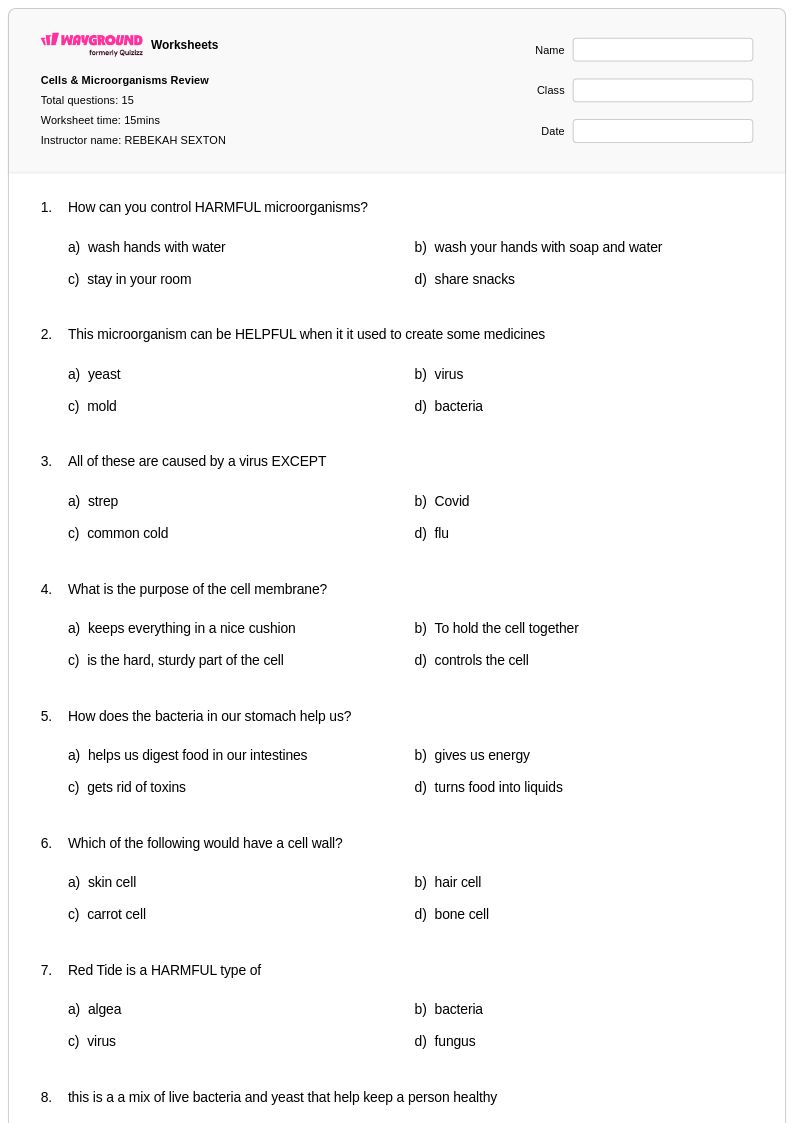
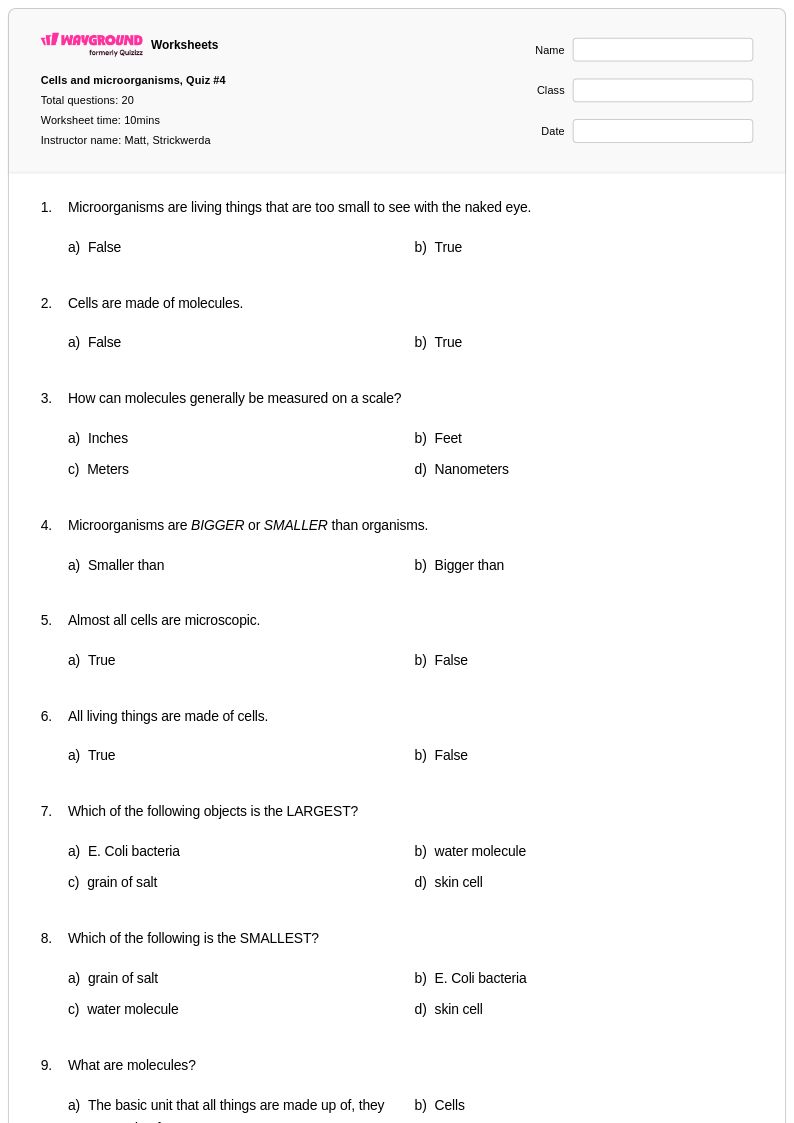
Explore Wayground's comprehensive collection of free pathogenic microorganisms worksheets and printables that help students master disease-causing bacteria, viruses, fungi, and parasites through engaging practice problems with complete answer keys.
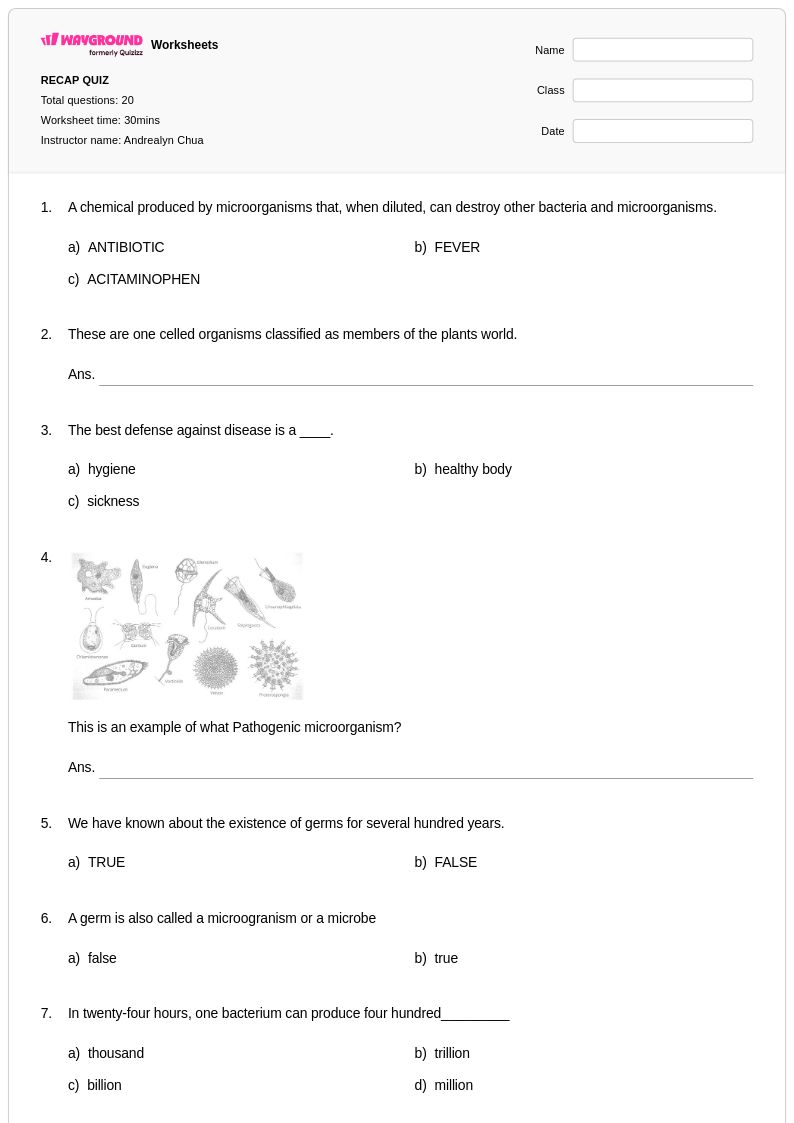
Pathogenic microorganisms worksheets available through Wayground (formerly Quizizz) provide comprehensive coverage of disease-causing bacteria, viruses, fungi, and parasites that impact human health and environmental systems. These educational resources strengthen critical thinking skills as students analyze microbial structures, infection mechanisms, transmission pathways, and immune system responses to various pathogens. The worksheet collections include detailed practice problems covering topics such as bacterial toxin production, viral replication cycles, fungal spore formation, and parasitic life stages, with complete answer keys that facilitate self-assessment and peer review. Students engage with free printables that challenge them to identify pathogenic characteristics, compare virulence factors, and evaluate treatment strategies, building essential knowledge for advanced biological sciences and healthcare-related fields through systematic pdf-formatted exercises.
Wayground (formerly Quizizz) supports science educators with millions of teacher-created pathogenic microorganisms worksheets that can be easily located through robust search and filtering capabilities aligned with national science standards. The platform's differentiation tools enable teachers to customize worksheet difficulty levels, modify content complexity, and adapt materials for diverse learning needs, ensuring that instruction meets individual student requirements for both remediation and enrichment activities. These versatile resources are available in both printable pdf formats for traditional classroom use and digital formats for interactive online learning, allowing educators to seamlessly integrate pathogen studies into their curriculum planning while providing students with flexible practice opportunities that reinforce microbiological concepts and strengthen scientific literacy skills essential for understanding infectious disease processes.
FAQs
How do I teach pathogenic microorganisms in a biology class?
Start by grounding students in the four major categories of pathogens — bacteria, viruses, fungi, and parasites — before moving into how each causes disease. Use comparative frameworks that connect microbial structure to infection mechanism, so students understand why a virus replicates differently than a bacterium invades tissue. Anchoring each pathogen type to a real-world disease example (e.g., Salmonella for bacteria, influenza for viruses) helps students retain abstract concepts by linking them to familiar health contexts.
What exercises help students practice identifying and comparing pathogens?
Effective practice exercises include matching activities that pair pathogens to their structural characteristics and virulence factors, as well as sequencing tasks where students reconstruct viral replication cycles or parasitic life stages in order. Comparison charts that ask students to evaluate transmission pathways, treatment strategies, and immune responses across bacterial, viral, fungal, and parasitic infections build the analytical skills needed for advanced biological sciences and healthcare coursework.
What misconceptions do students commonly have about pathogenic microorganisms?
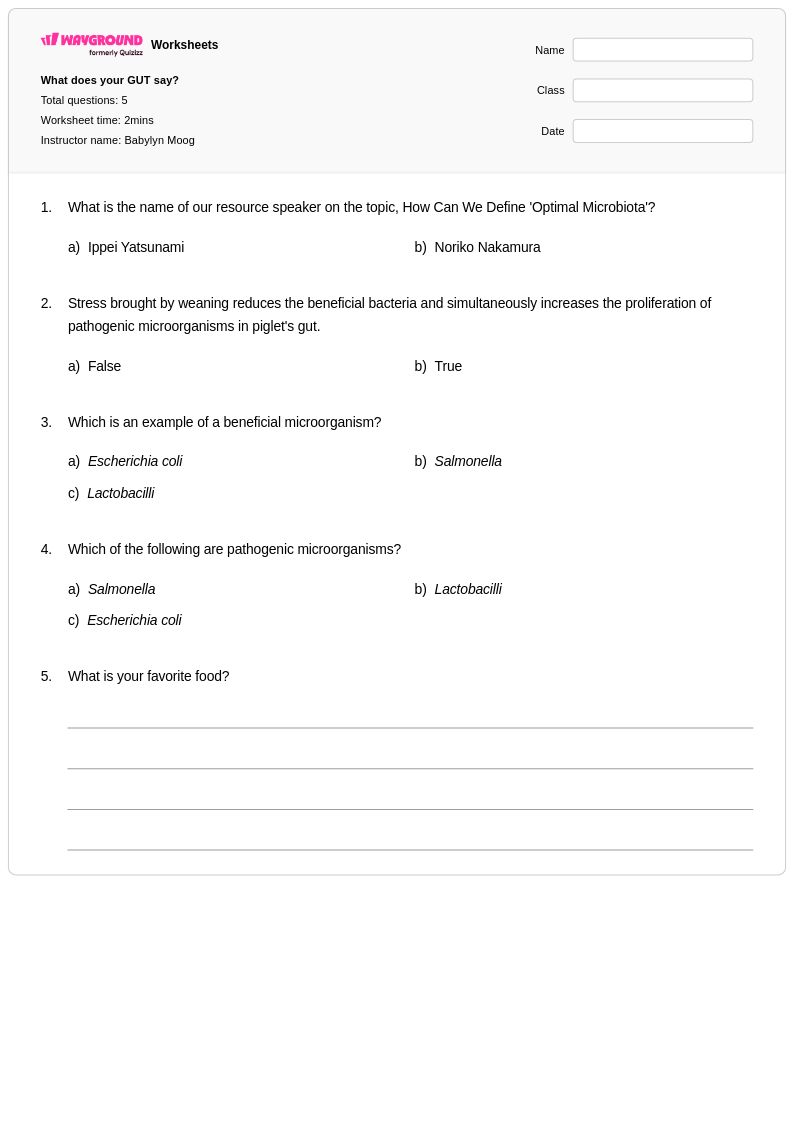
A frequent misconception is that all microorganisms are harmful — students often fail to distinguish between pathogenic and non-pathogenic species within the same category, such as assuming all fungi cause disease. Students also commonly conflate bacteria and viruses, leading to confusion about why antibiotics are ineffective against viral infections. Addressing these errors explicitly, with targeted practice comparing mechanisms of infection and treatment rationale, is essential for building accurate microbial literacy.
How do I help students understand the difference between bacterial toxin production and viral replication?
Bacterial toxin production and viral replication are mechanistically distinct processes, and students benefit from side-by-side visual comparisons rather than treating them as variations of the same idea. For bacteria, focus on how exotoxins and endotoxins are produced and how they disrupt host physiology without the bacterium necessarily entering host cells. For viruses, emphasize the host-cell hijacking model — the virus contributes no metabolic machinery of its own, which is precisely why antiviral and antibiotic treatments differ fundamentally in their targets.
How can I use pathogenic microorganisms worksheets to support students with different learning needs?
Pathogenic microorganisms worksheets on Wayground are available as printable PDFs for traditional classroom use and in digital formats for technology-integrated environments, including the option to host them as a quiz on Wayground. In digital mode, teachers can apply individual accommodations such as extended time, read-aloud support for complex microbiology terminology, reduced answer choices to lower cognitive load, and adjustable reading modes with larger fonts and accessible themes. These settings can be assigned per student without notifying others, making differentiation seamless across mixed-ability science classes.
How can pathogenic microorganisms worksheets be used to assess student understanding?
Worksheets that ask students to evaluate treatment strategies, compare virulence factors, or sequence infection pathways function as strong formative assessment tools because they reveal not just recall but conceptual understanding. Complete answer keys allow teachers to use these worksheets for peer review or self-assessment, giving students immediate feedback on errors in pathogen classification or transmission logic. Reviewing incorrect responses as a class is particularly valuable for surfacing and correcting the most persistent misconceptions before summative assessments.