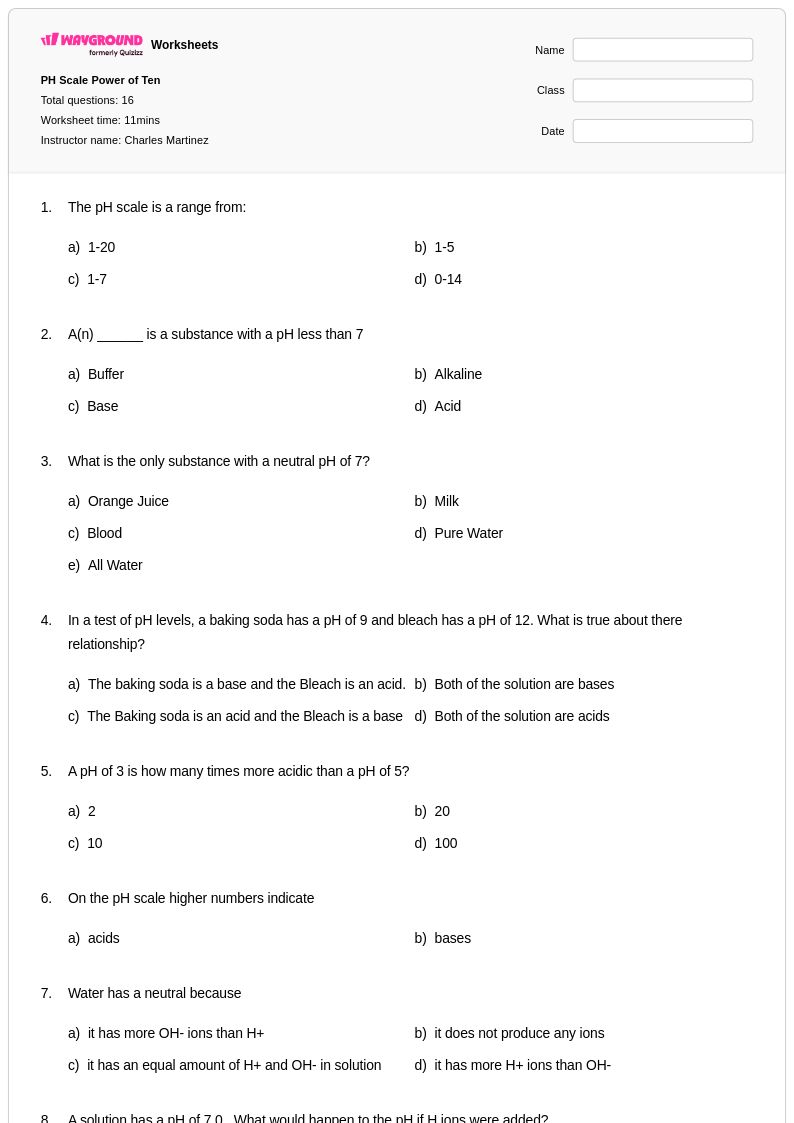
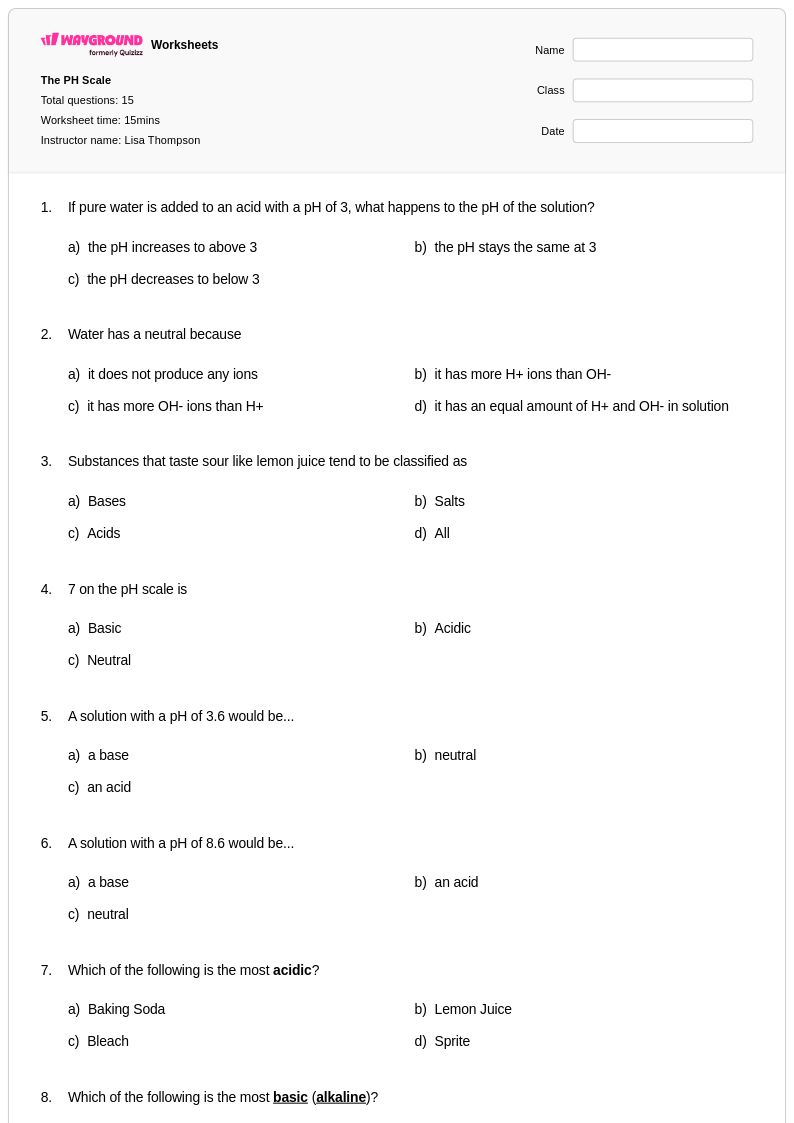
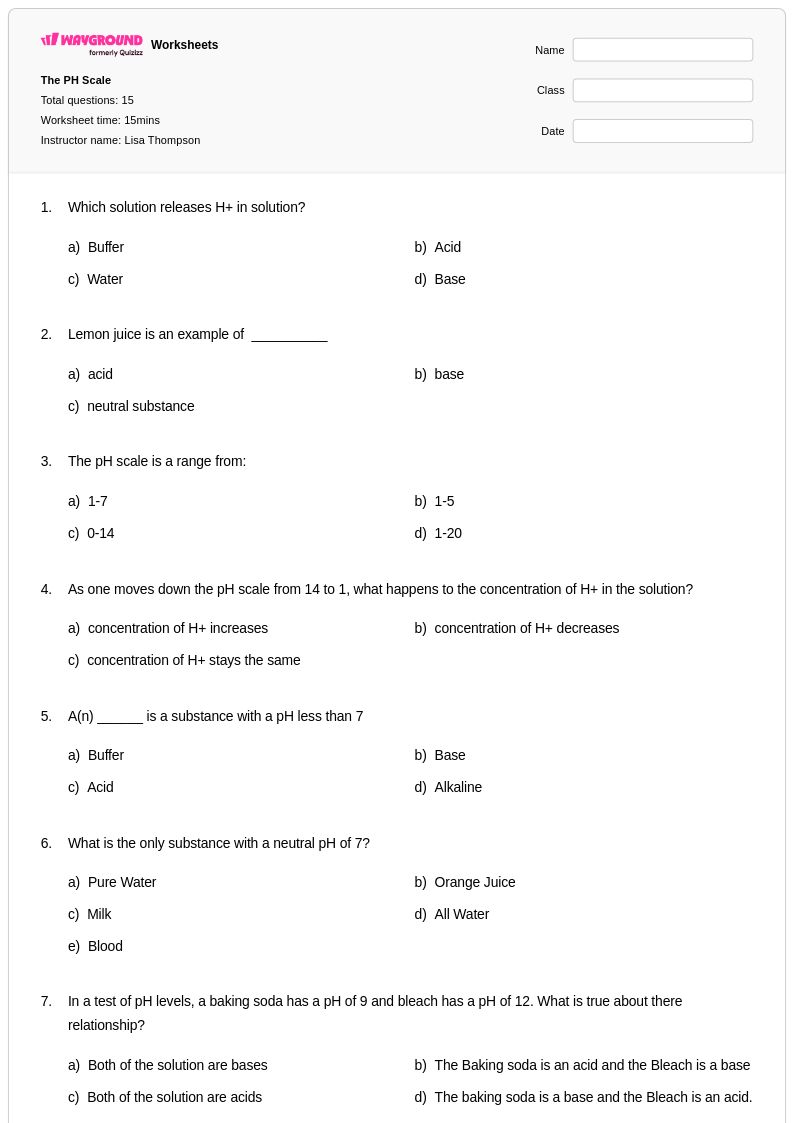
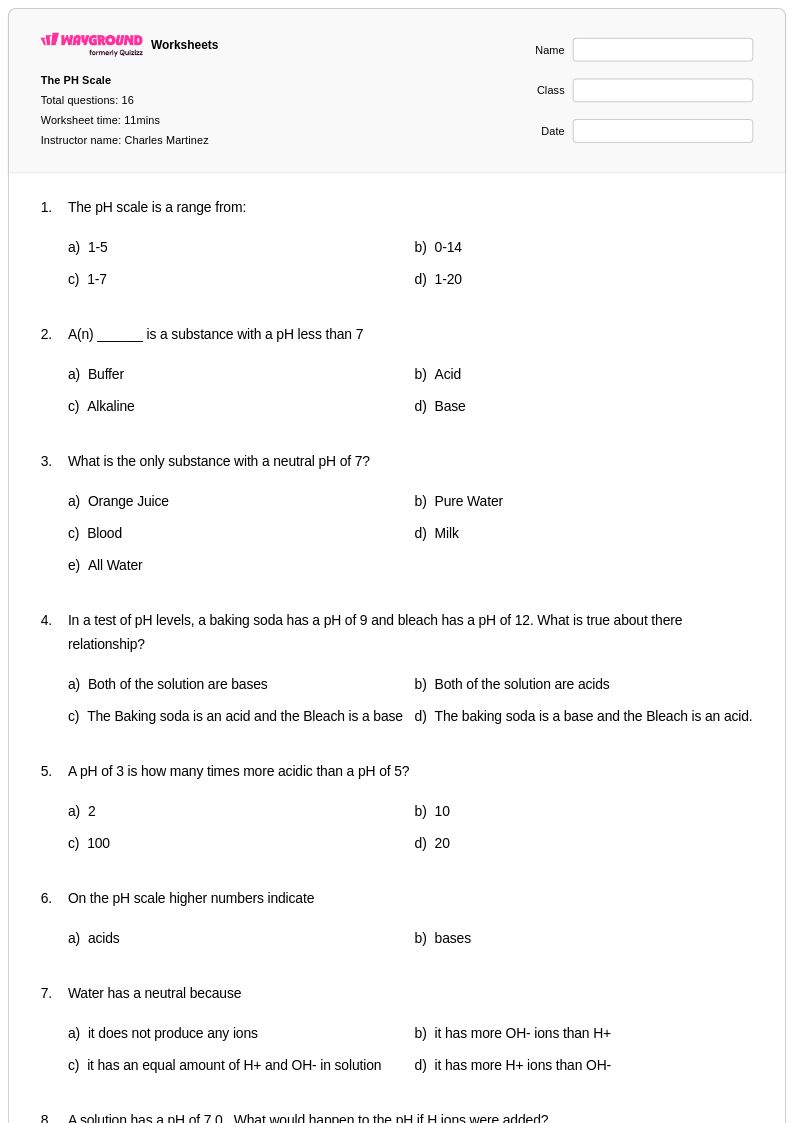
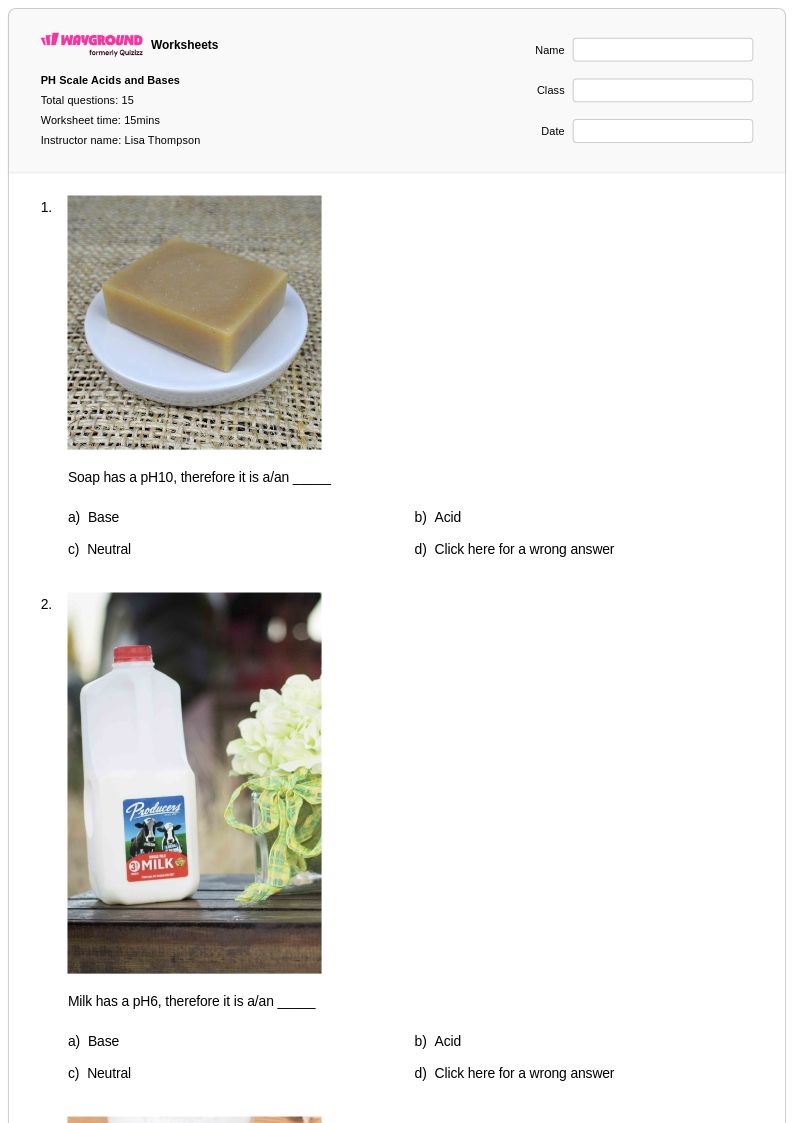
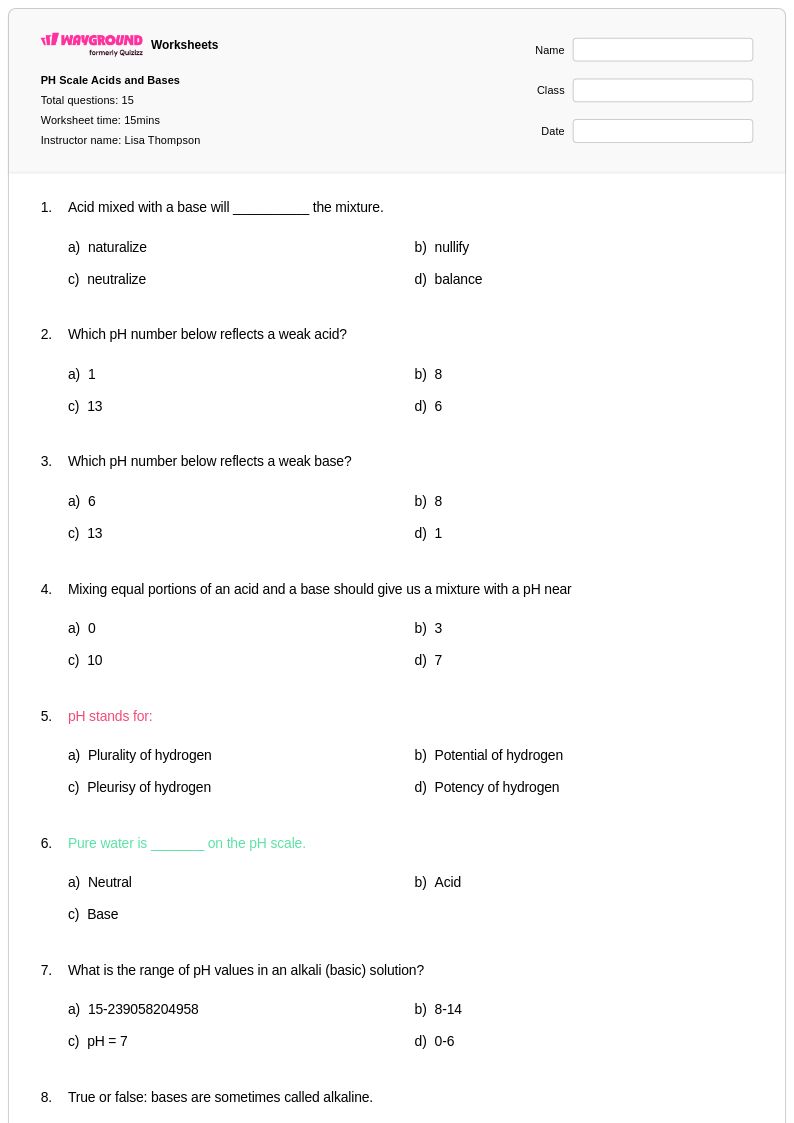
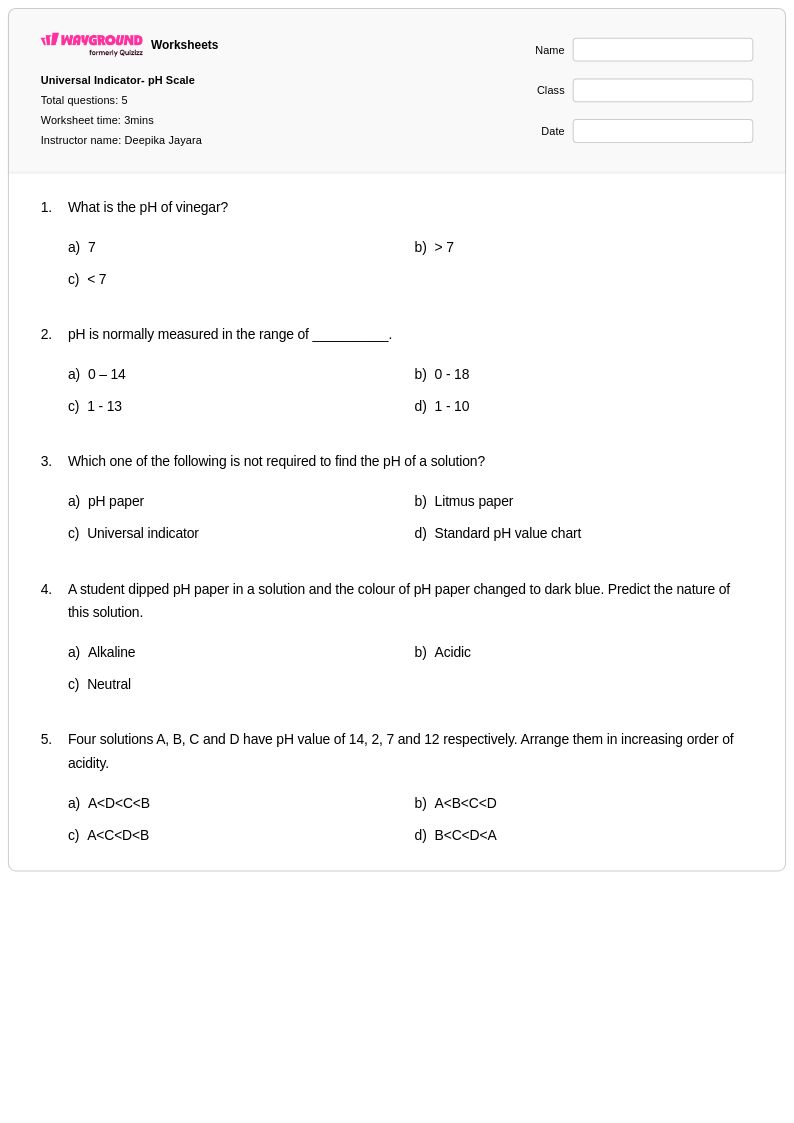
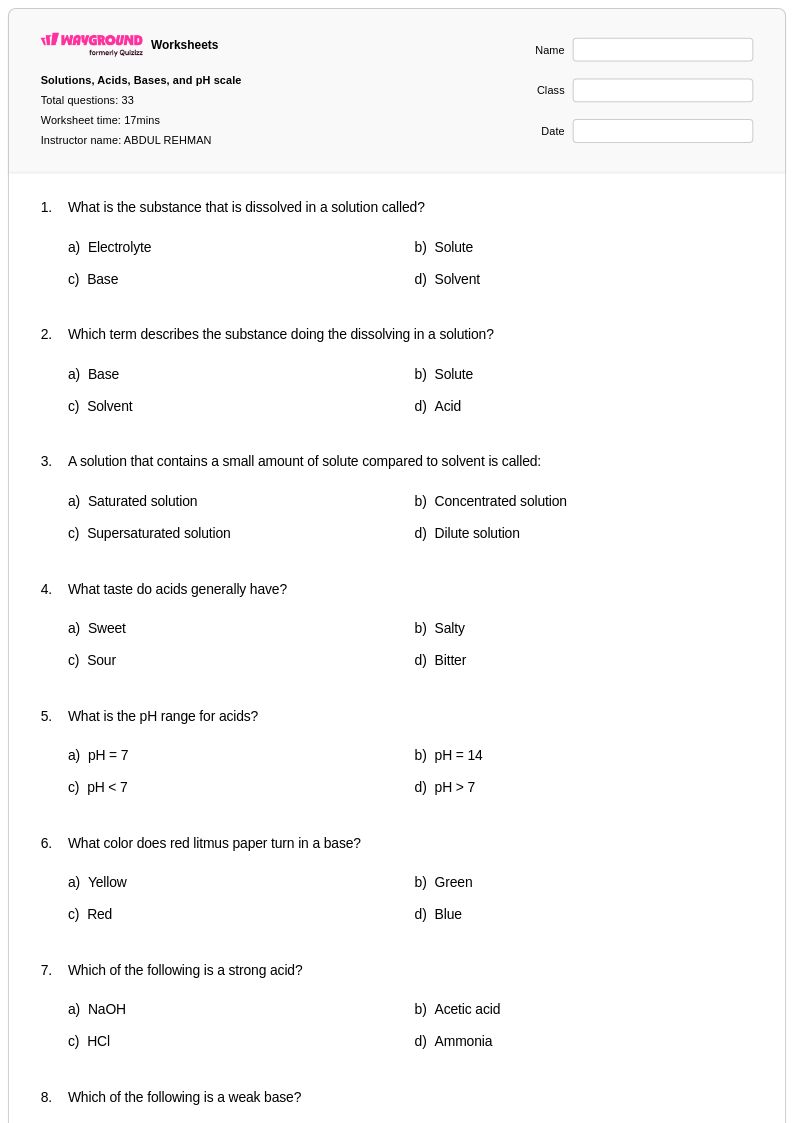
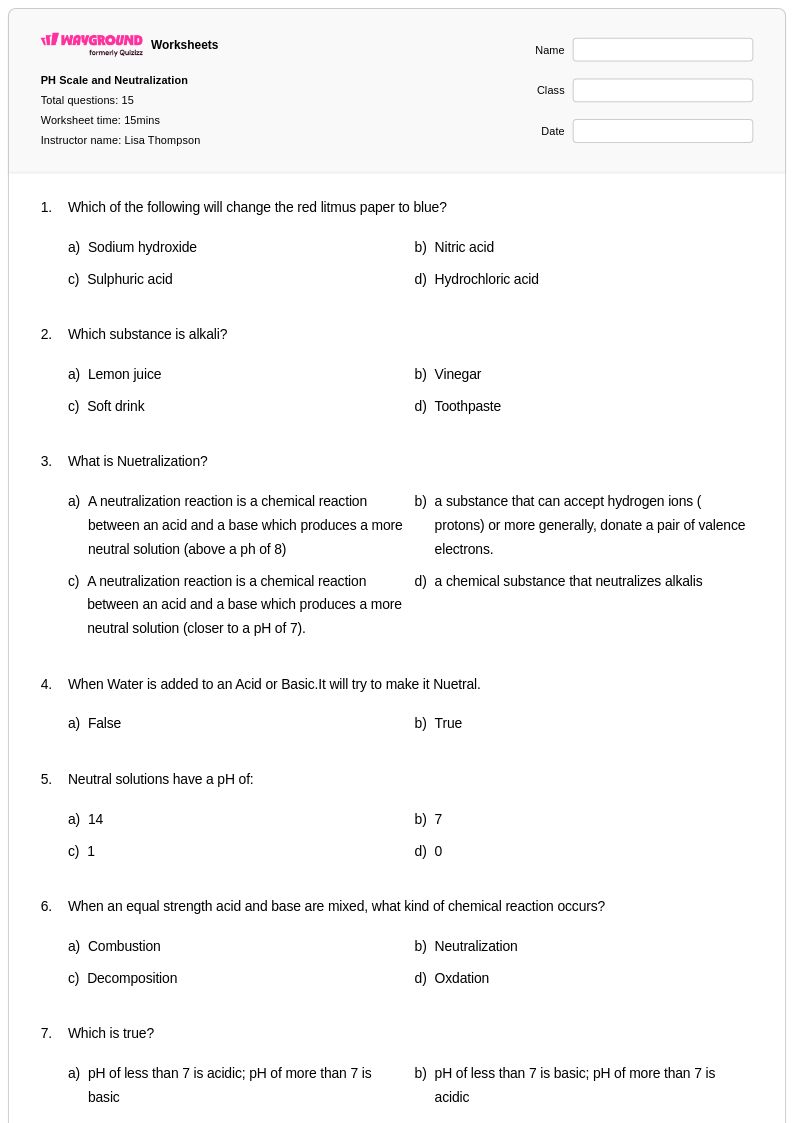
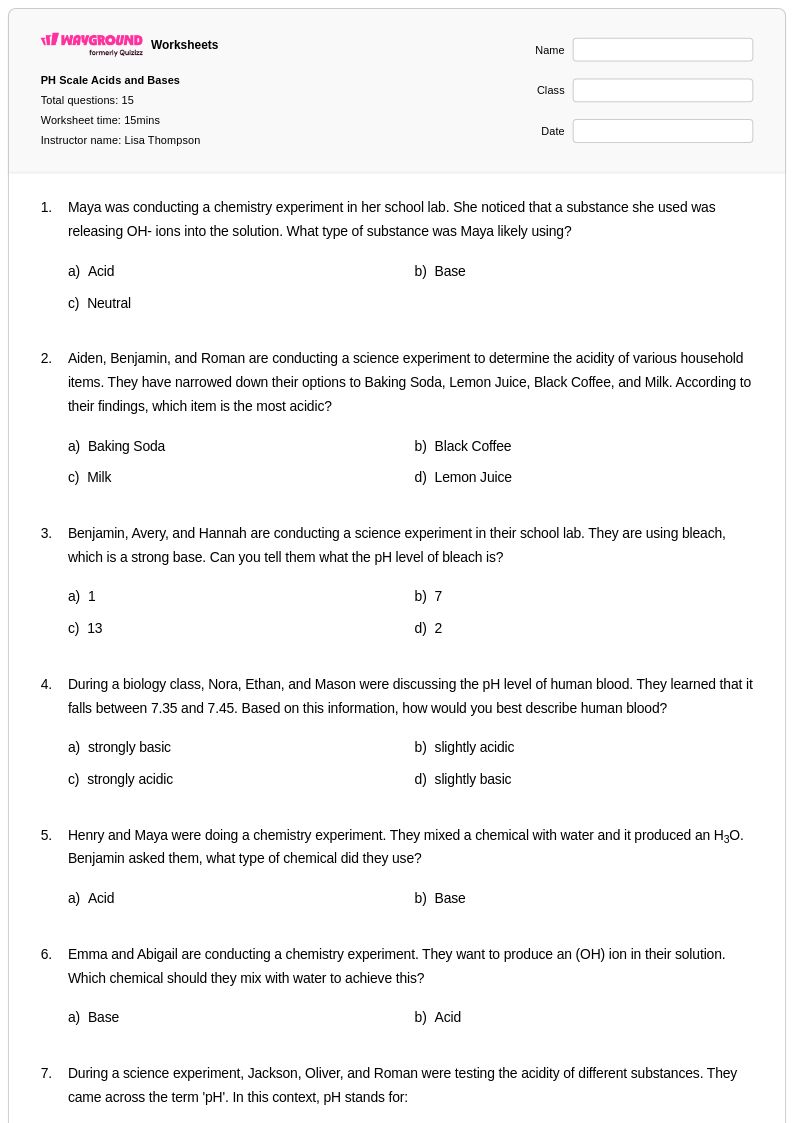
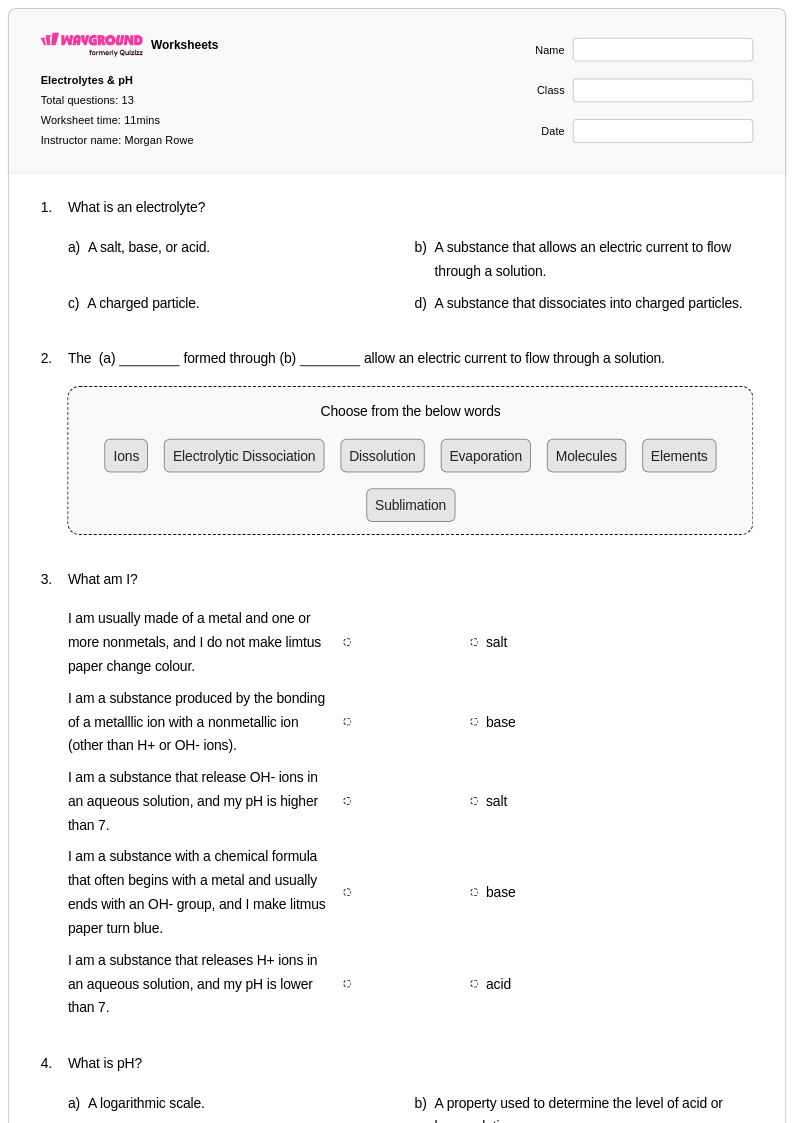
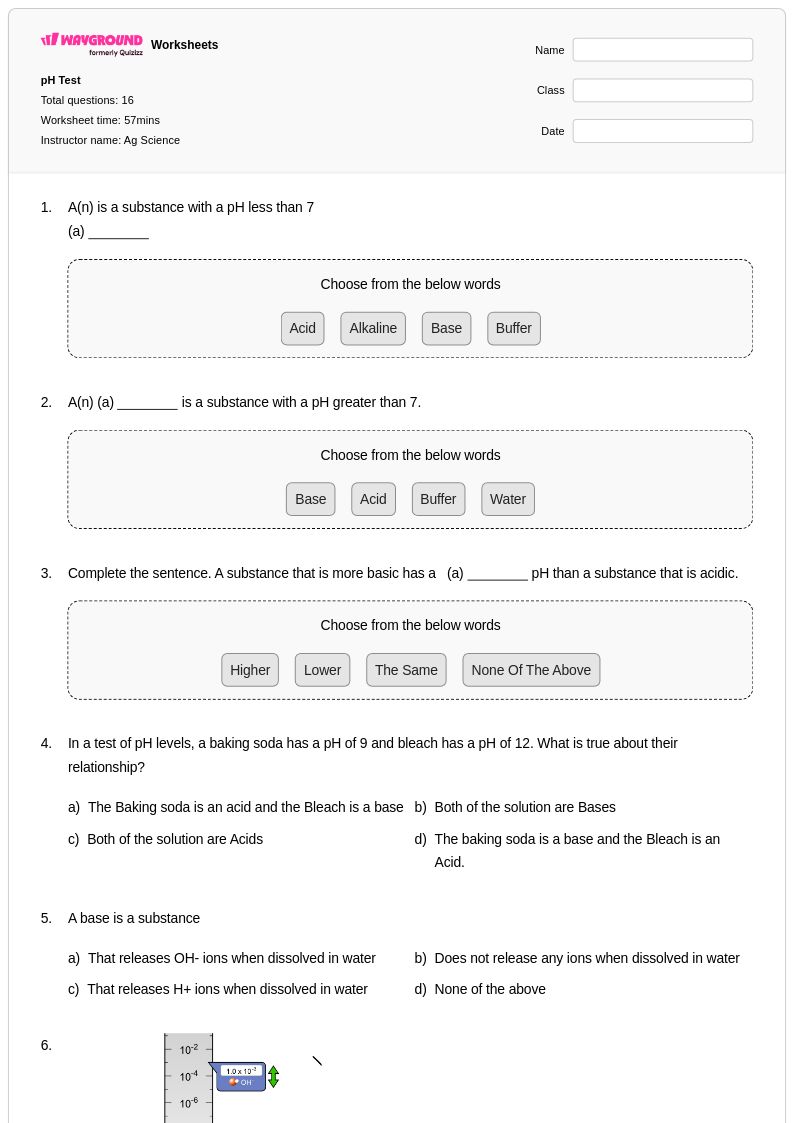
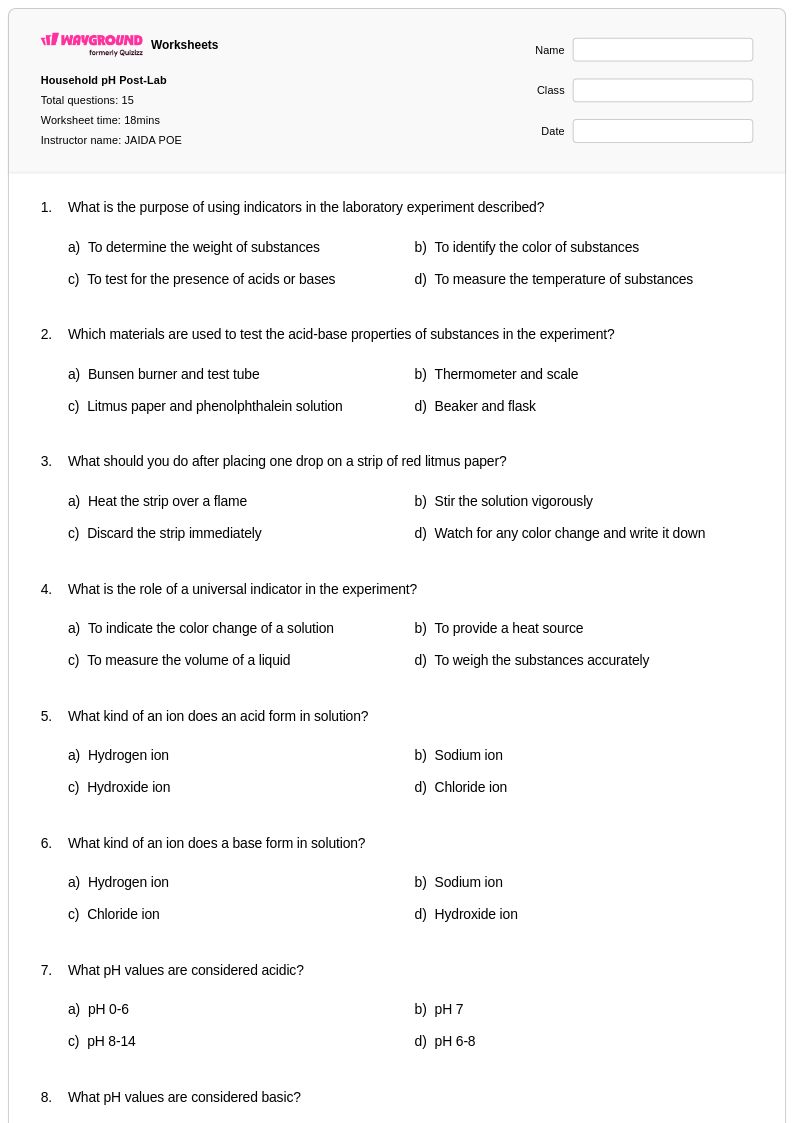
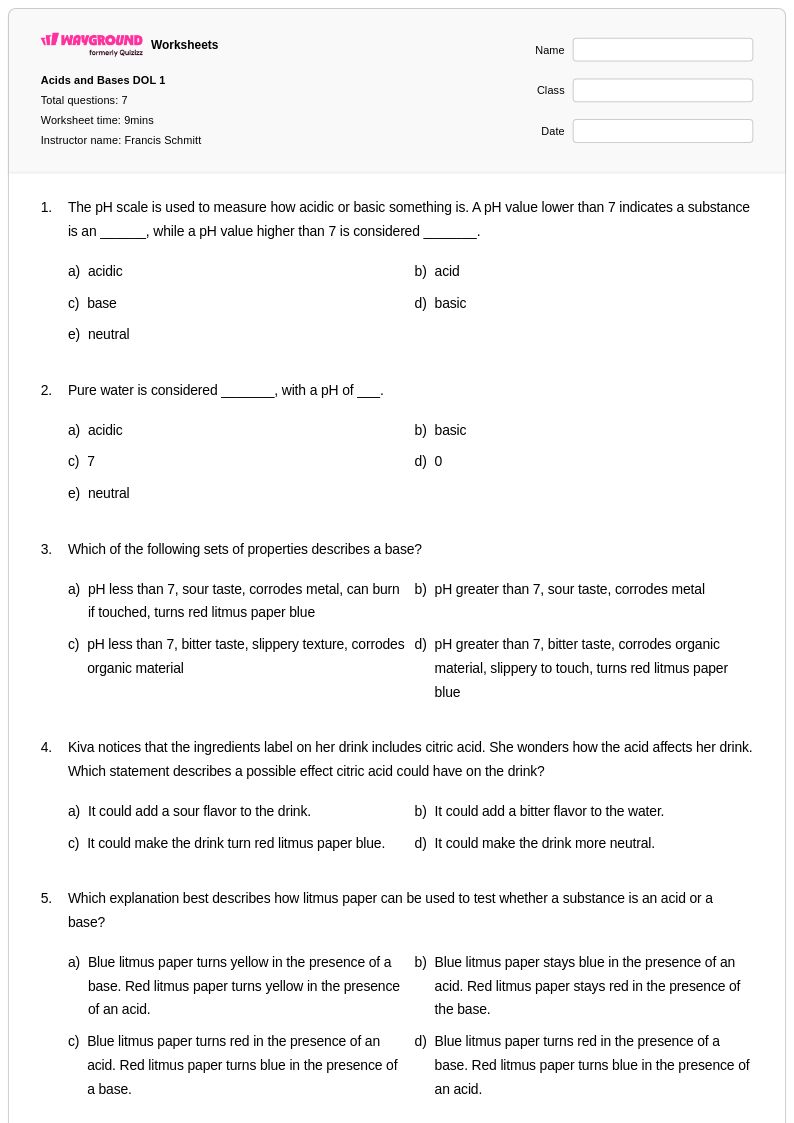
Enhance your Class 10 chemistry understanding with free PH Scale worksheets and printables from Wayground, featuring comprehensive practice problems and answer keys to help students master acid-base concepts and pH calculations.
Explore printable PH Scale worksheets for Class 10
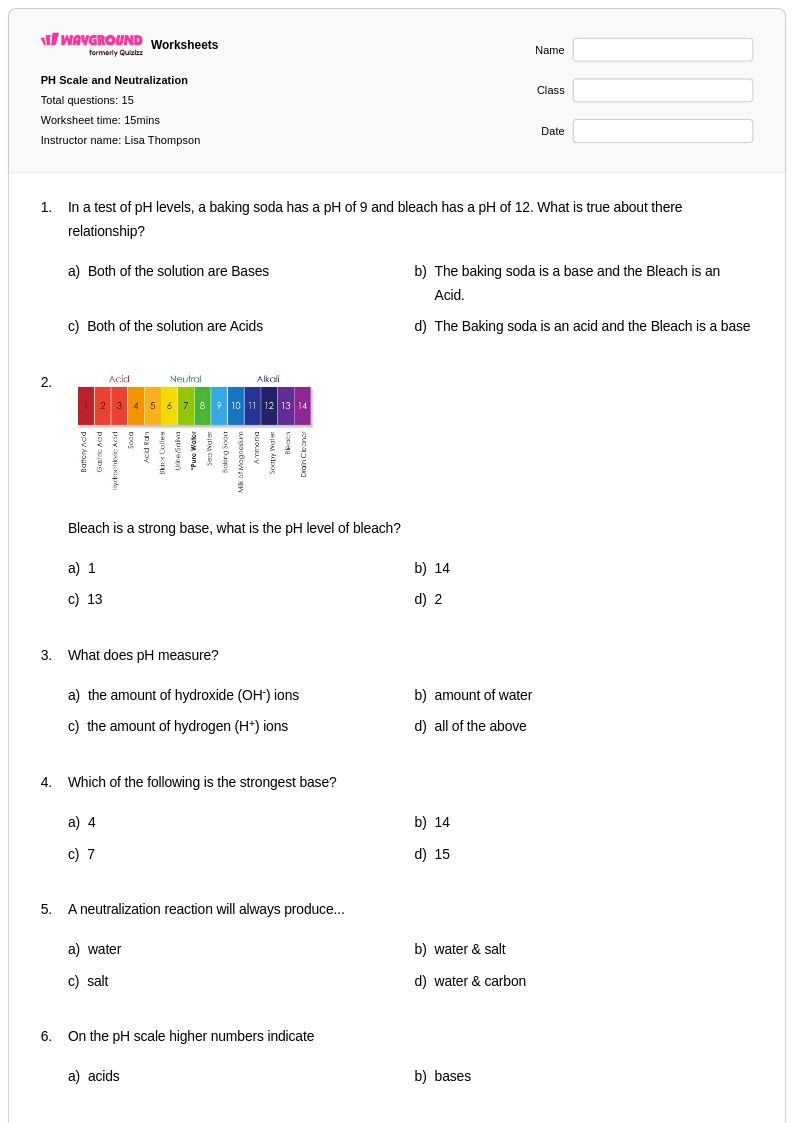
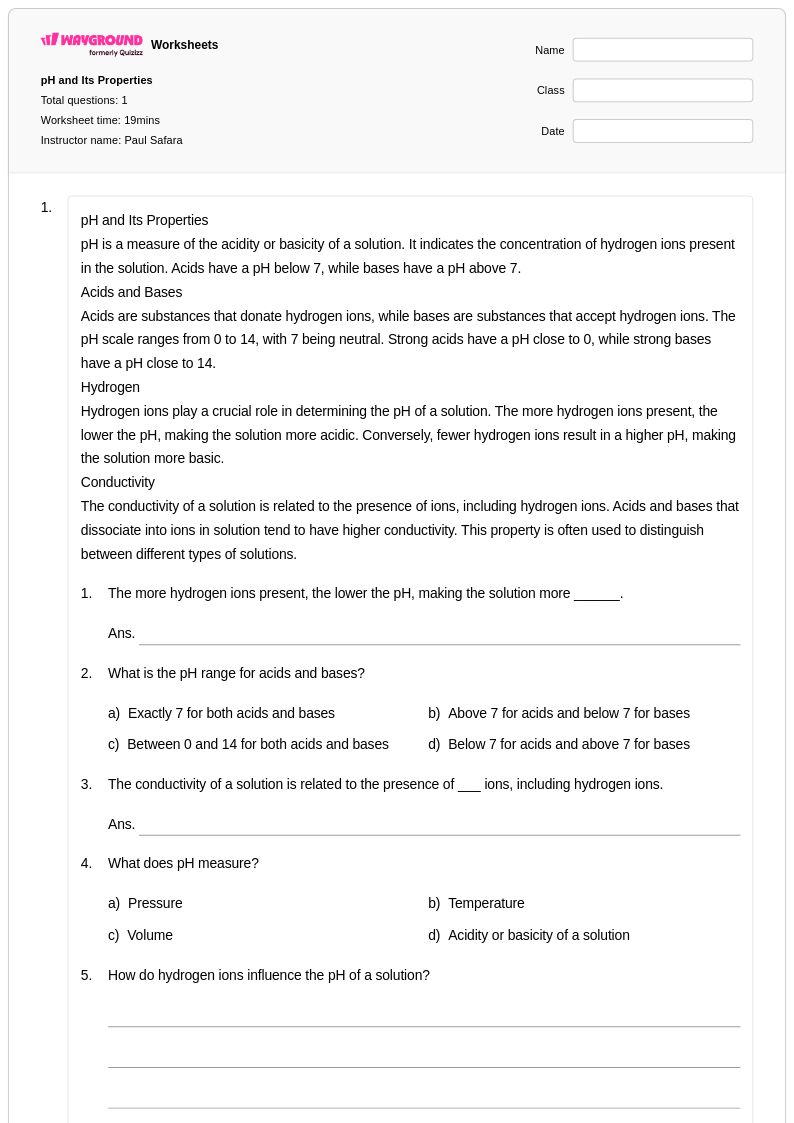
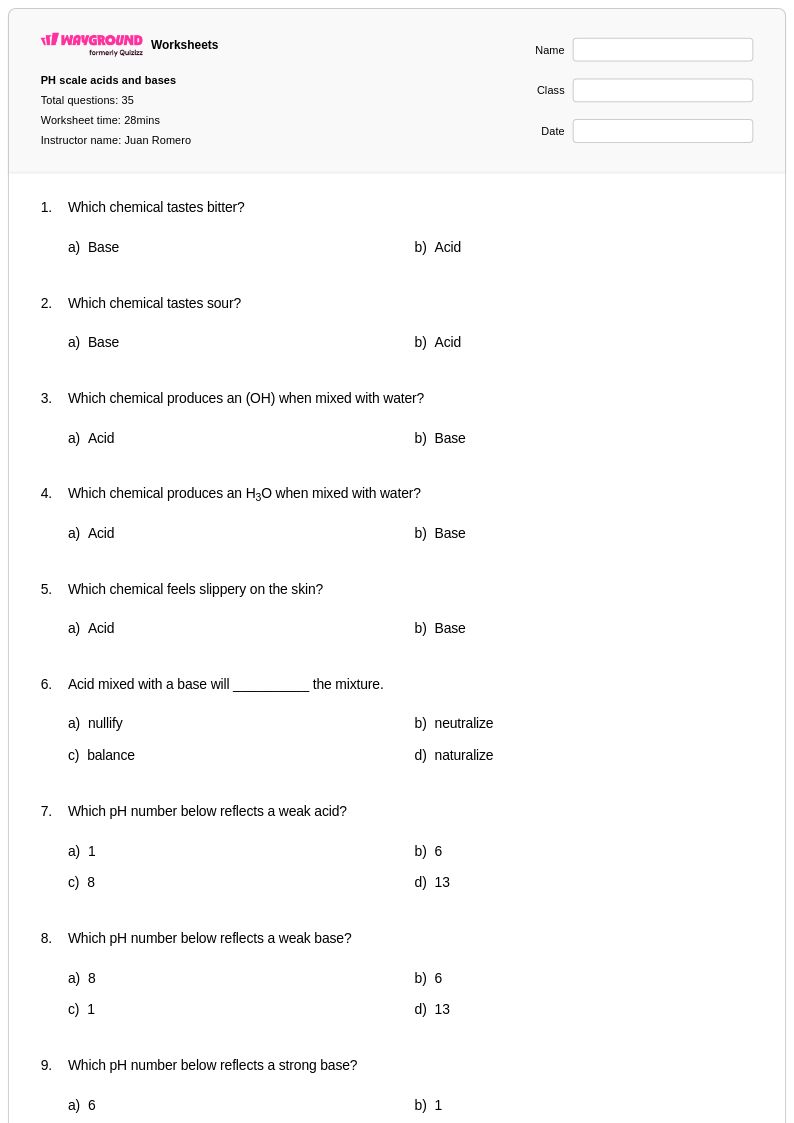
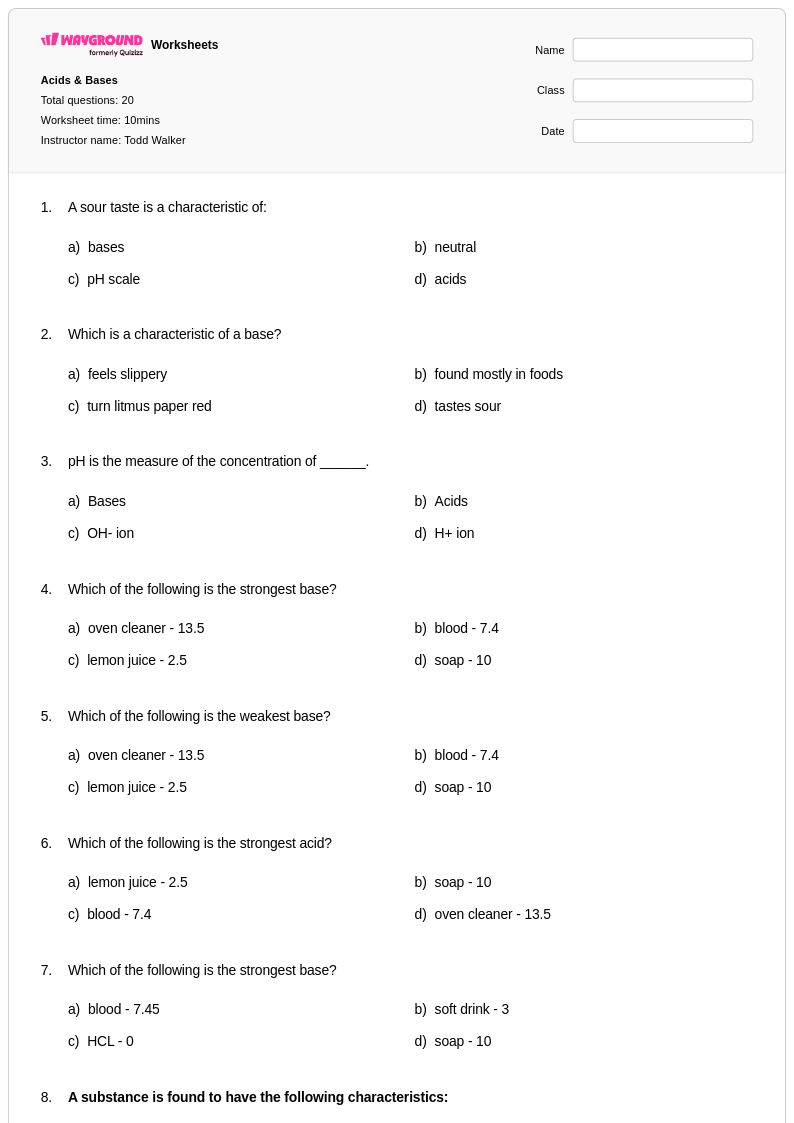
Class 10 pH scale worksheets available through Wayground (formerly Quizizz) provide comprehensive practice materials that strengthen students' understanding of acid-base chemistry fundamentals. These expertly designed resources focus on developing critical skills including calculating pH and pOH values, interpreting logarithmic scales, identifying acids and bases based on their pH measurements, and understanding the relationship between hydrogen ion concentration and solution acidity. Students engage with practice problems that range from basic pH identification to complex calculations involving strong and weak acids and bases, while teachers benefit from complete answer keys that facilitate efficient grading and immediate feedback. The collection includes both printable pdf formats and interactive digital versions, ensuring accessibility for diverse classroom environments and study preferences, with free resources complementing premium materials to support varied educational budgets.
Wayground's extensive library of teacher-created pH scale worksheets draws from millions of educational resources, offering robust search and filtering capabilities that help educators quickly locate materials aligned with specific learning objectives and curriculum standards. The platform's differentiation tools enable teachers to customize worksheet difficulty levels, modify problem sets, and adapt content to meet individual student needs, making it invaluable for both remediation of struggling learners and enrichment of advanced students. These flexible resources support comprehensive lesson planning by providing varied question formats including multiple choice, calculation-based problems, and conceptual analysis activities, while the dual availability in printable and digital pdf formats accommodates different teaching styles and technological capabilities. Teachers can seamlessly integrate these materials into daily instruction, homework assignments, and assessment preparation, creating targeted skill practice opportunities that reinforce mastery of pH scale concepts essential for success in chemistry coursework.
FAQs
How do I teach the pH scale to chemistry students?
Start by grounding students in the concept that pH measures hydrogen ion concentration on a logarithmic scale from 0 to 14, where values below 7 are acidic, 7 is neutral, and above 7 are basic. Use everyday substances like vinegar, water, and baking soda to make the concept concrete before moving into calculations. Emphasizing the inverse relationship between hydrogen ion concentration and pH value early on prevents one of the most persistent misconceptions students carry into assessments.
What exercises help students practice reading and interpreting the pH scale?
Effective practice exercises include classifying a list of substances as acids, bases, or neutral; calculating pH from hydrogen ion concentrations; and interpreting pH indicator color charts. Problems that require students to compare the relative acidity or alkalinity of two substances reinforce the logarithmic nature of the scale, which is often underemphasized in introductory instruction. Mixing calculation problems with conceptual classification tasks ensures students develop both procedural fluency and conceptual understanding.
What mistakes do students commonly make when working with the pH scale?
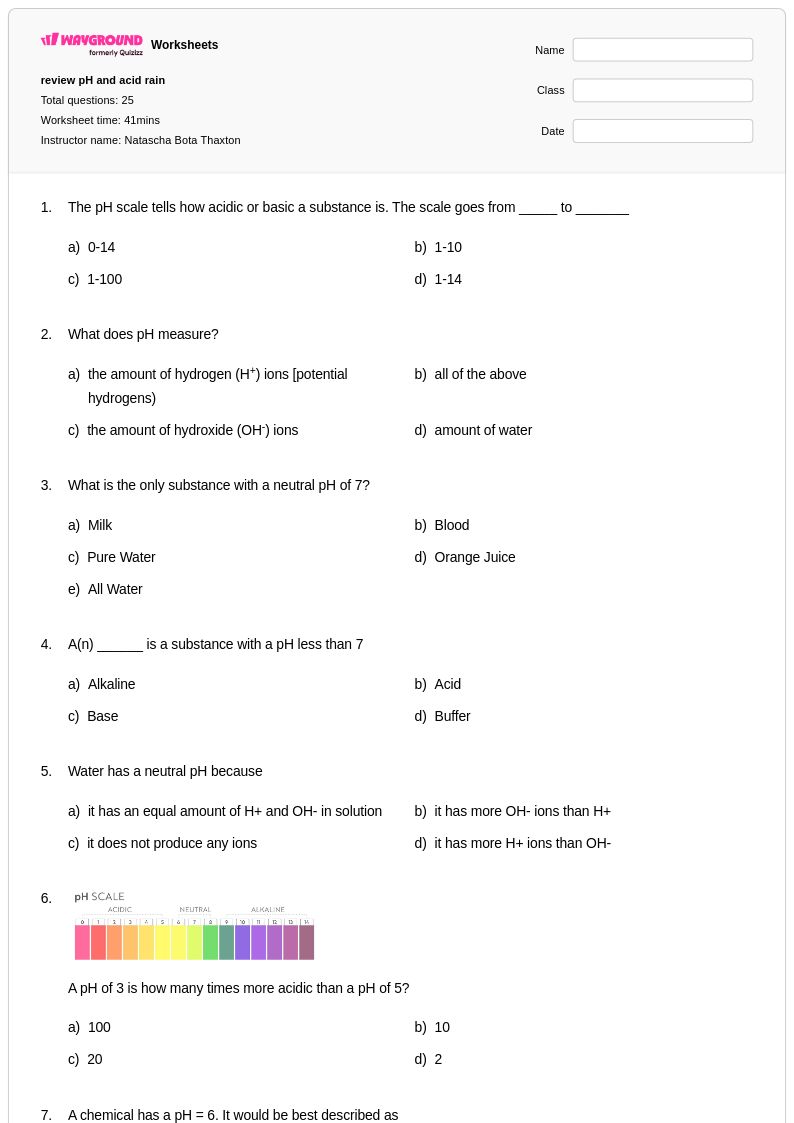
The most common error is treating the pH scale as linear rather than logarithmic, which leads students to underestimate the difference in acidity between, say, a pH of 3 and a pH of 5. Students also frequently confuse the direction of the relationship, believing that a higher hydrogen ion concentration means a higher pH. A third widespread misconception is conflating strength with concentration, leading to errors when comparing strong versus weak acids.
How can I differentiate pH scale instruction for students at different skill levels?
For students who are still building foundational understanding, focus on classification tasks and visual scale activities before introducing any calculations. Advanced learners can be extended into buffer systems and the Henderson-Hasselbalch equation. On Wayground, teachers can apply per-student accommodations such as reduced answer choices to lower cognitive load for struggling learners, or enable read-aloud support for students who need it, without signaling those adjustments to the rest of the class.
How do I use Wayground's pH scale worksheets in my classroom?
Wayground's pH scale worksheets are available as printable PDFs for traditional classroom or homework use, and in digital formats for technology-integrated environments, including the option to host them as a quiz directly on Wayground. Each worksheet includes a detailed answer key, supporting independent practice, self-assessment, and efficient teacher grading. The platform's search and filtering tools allow teachers to quickly locate materials targeting specific skills, from basic acid-base classification to logarithmic pH calculations.
How do I explain the logarithmic nature of the pH scale to students who struggle with math?
Rather than leading with the formal logarithm definition, use a concrete comparison: a substance with a pH of 3 is ten times more acidic than one with a pH of 4, and one hundred times more acidic than one with a pH of 5. Repeated exposure to this multiplier pattern through structured practice problems helps students internalize the concept without requiring a deep understanding of logarithms first. Visual number line representations that label the scale with real-world substances can further anchor the idea.