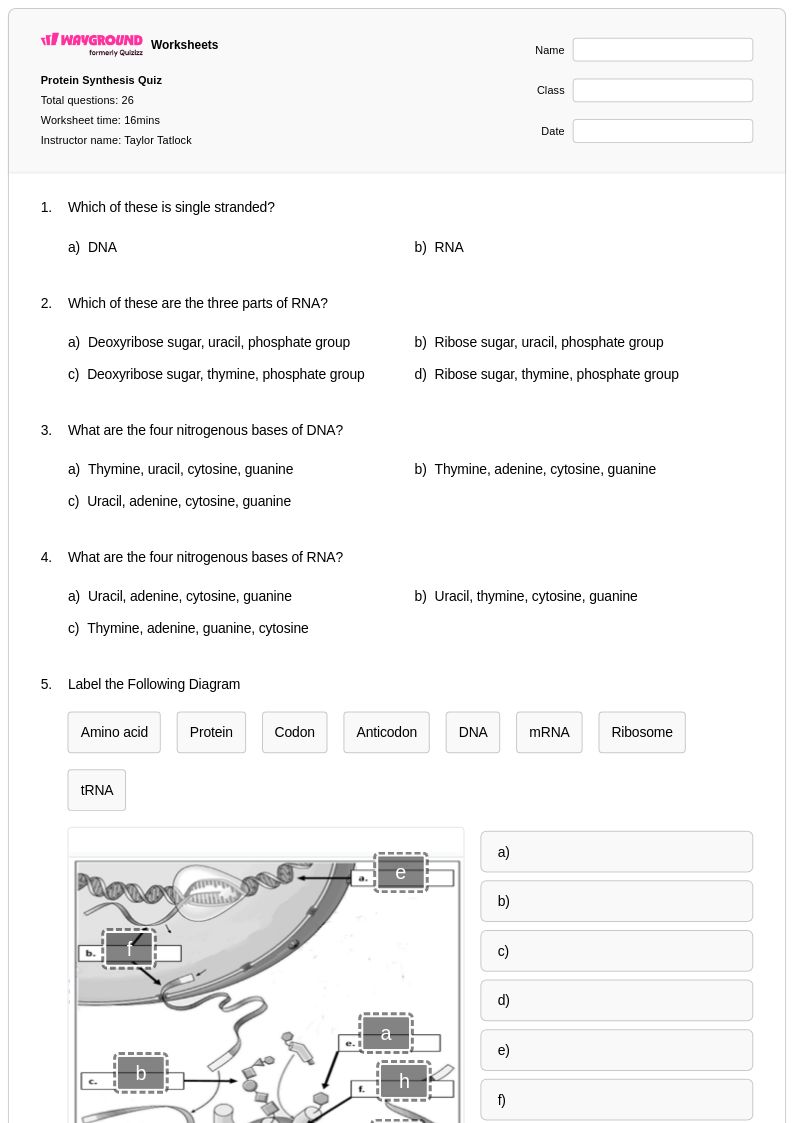
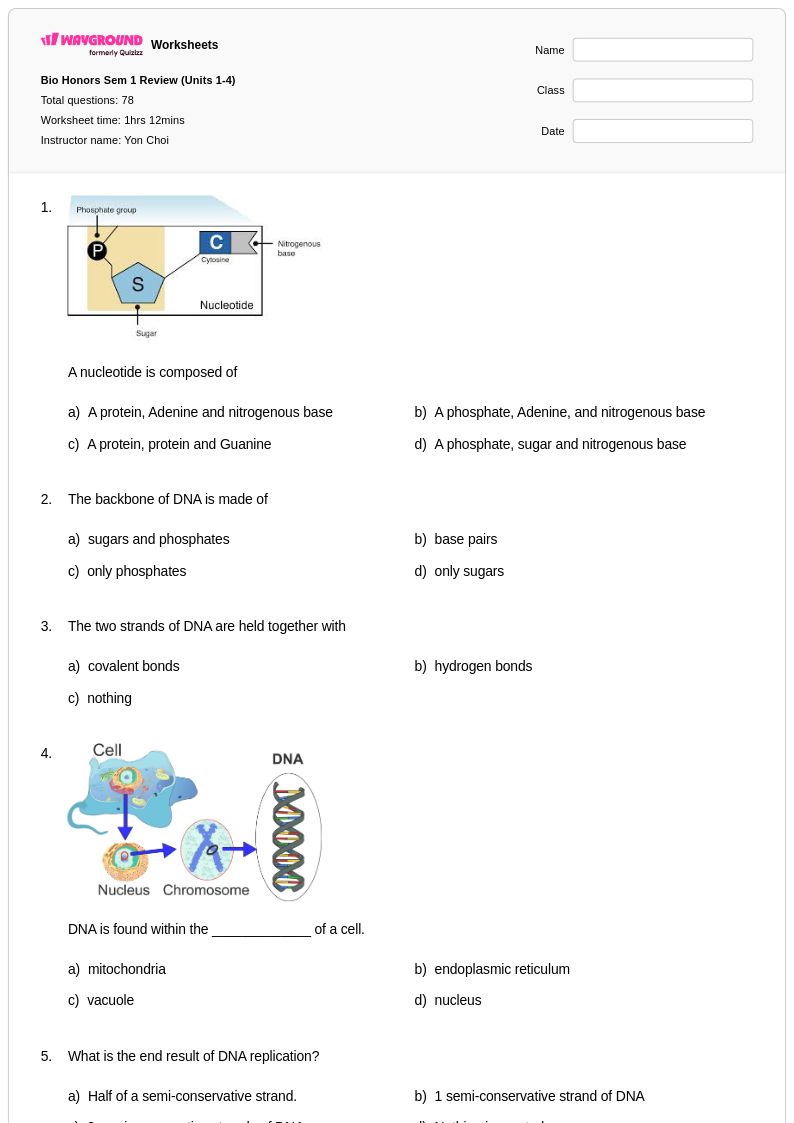
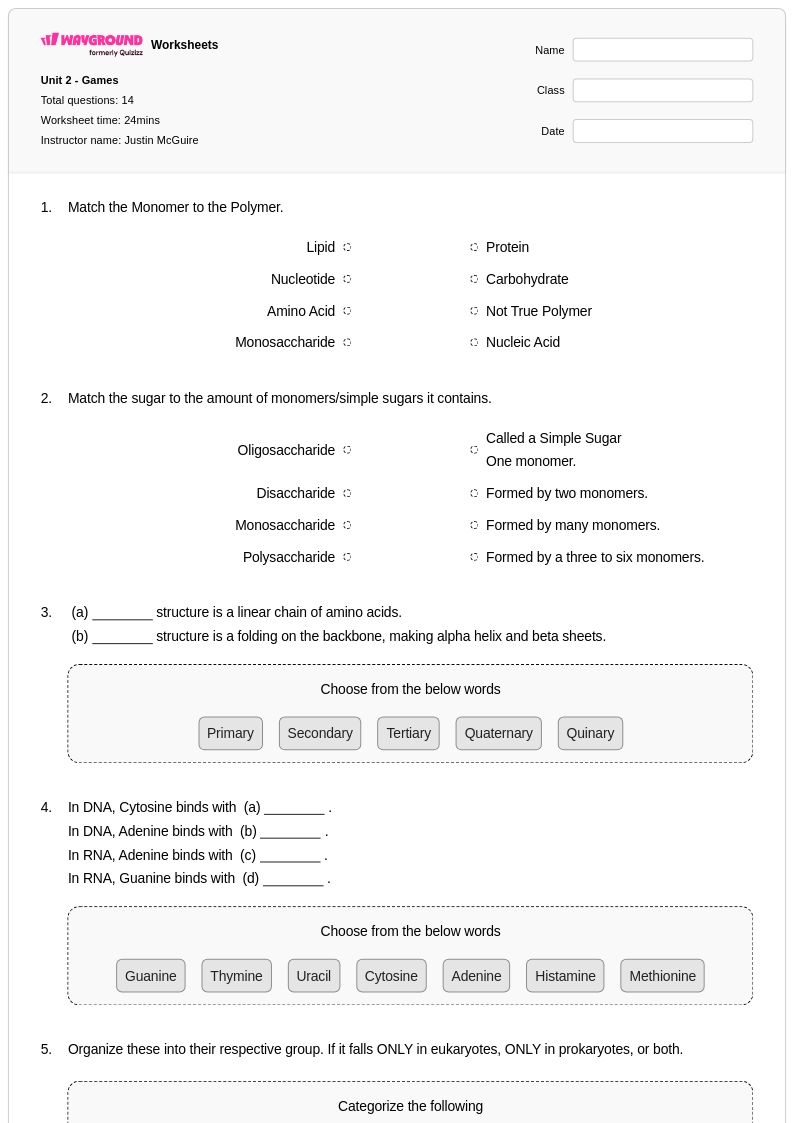
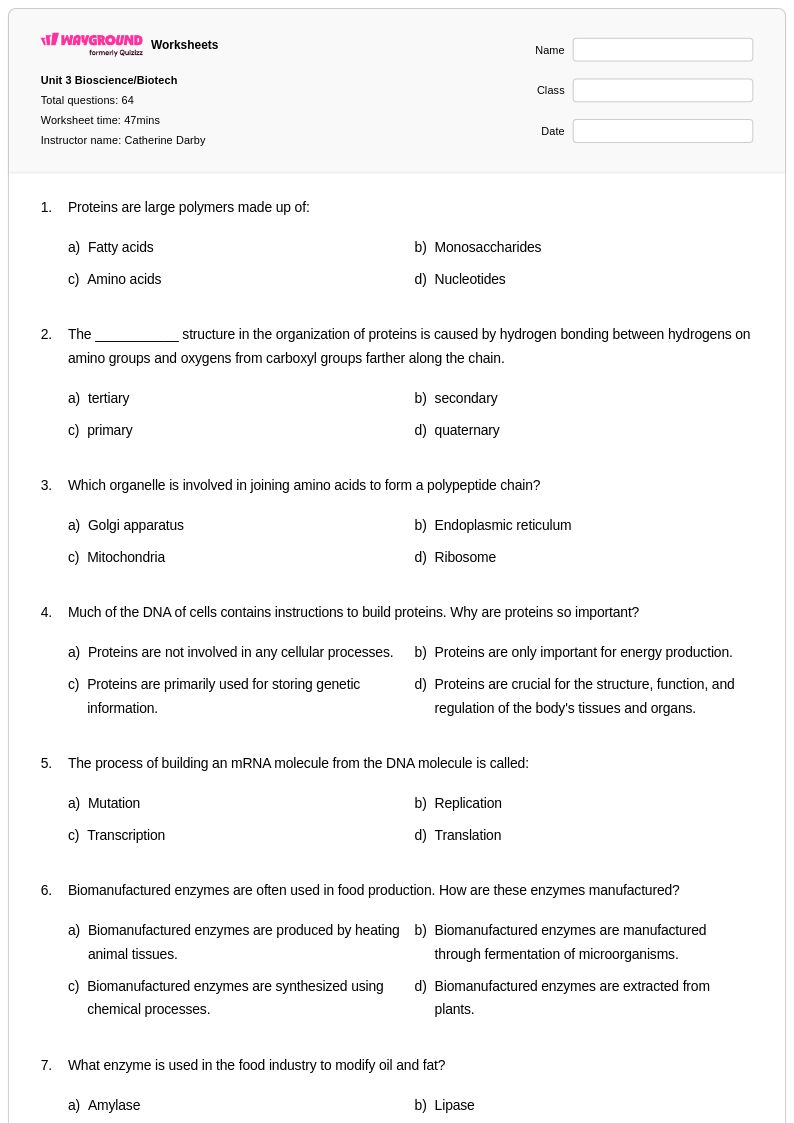
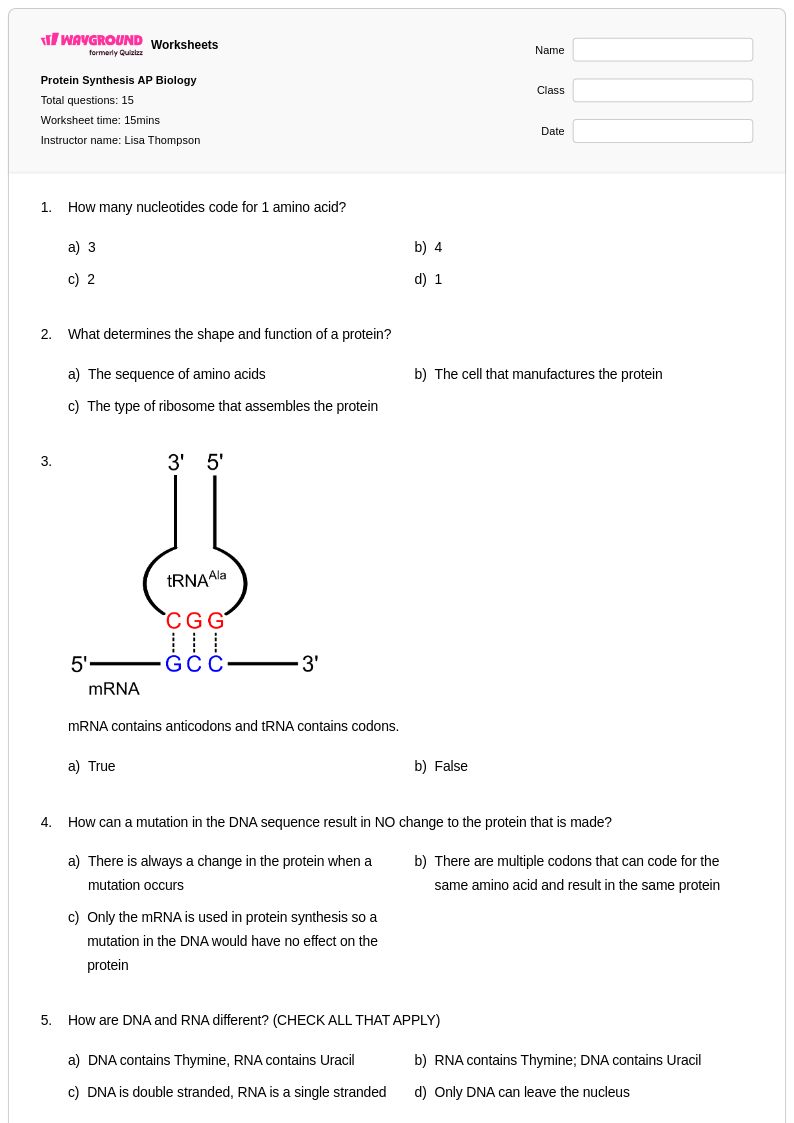
Enhance student understanding of protein folding with Wayground's comprehensive collection of free worksheets, printables, and practice problems that explore molecular structures, amino acid sequences, and folding mechanisms with detailed answer keys.
Protein folding worksheets available through Wayground (formerly Quizizz) provide comprehensive educational resources that guide students through the intricate process of how polypeptide chains transform into functional three-dimensional protein structures. These expertly crafted materials strengthen critical thinking skills by challenging learners to understand the relationship between amino acid sequences and final protein conformations, while exploring concepts such as primary, secondary, tertiary, and quaternary protein structures. Students engage with practice problems that examine the role of hydrogen bonds, disulfide bridges, and hydrophobic interactions in determining protein stability and function. Each worksheet comes with a complete answer key and is available as a free printable pdf, making these resources accessible for both classroom instruction and independent study of this fundamental biological process.
Wayground (formerly Quizizz) empowers educators with millions of teacher-created protein folding worksheets that can be easily discovered through robust search and filtering capabilities, ensuring alignment with specific curriculum standards and learning objectives. The platform's differentiation tools allow teachers to customize content complexity and scaffold learning experiences for students at varying levels of biological understanding, while flexible formatting options provide both printable pdf versions for traditional classroom use and digital formats for technology-enhanced learning environments. These comprehensive worksheet collections support effective lesson planning by offering ready-to-use materials for skill practice, targeted remediation of misconceptions about protein structure, and enrichment activities that challenge advanced learners to explore cutting-edge research in protein biochemistry and molecular biology.
FAQs
How do I teach protein folding to high school biology students?
Start by grounding students in the four levels of protein structure — primary, secondary, tertiary, and quaternary — before introducing the folding process itself. Use physical models or diagrams to show how amino acid side chain properties (hydrophobic, hydrophilic, charged) drive the polypeptide into a specific three-dimensional shape. Connecting structure to function, such as why misfolded proteins cause diseases like Alzheimer's, gives students a concrete reason to care about the concept.
What exercises help students practice understanding protein folding?
Effective practice tasks include labeling diagrams of primary through quaternary protein structures, identifying the types of bonds (hydrogen bonds, disulfide bridges, hydrophobic interactions) that stabilize each structural level, and predicting how changes in amino acid sequence affect final protein shape. Sequencing activities — where students arrange steps of the folding process in order — also reinforce procedural understanding of how a polypeptide chain achieves its functional conformation.
What misconceptions do students commonly have about protein folding?
A frequent misconception is that protein folding is a random process, when in fact the amino acid sequence precisely determines the final three-dimensional structure. Students also often confuse the levels of protein structure, particularly conflating tertiary structure (single polypeptide folding) with quaternary structure (multiple subunits interacting). Another common error is underestimating the role of the cellular environment — chaperone proteins, pH, and temperature all influence whether folding proceeds correctly.
How do I use a protein folding worksheet effectively in my classroom?
Protein folding worksheets work well as guided practice after direct instruction on polypeptide structure, or as formative assessment to check whether students can connect amino acid chemistry to protein function. On Wayground, these worksheets are available as printable PDFs for traditional classroom use and in digital formats for technology-integrated learning environments, and can also be hosted as a quiz directly on the platform. Using the included answer key, teachers can conduct whole-class review or have students self-assess before moving to more complex topics like enzyme activity or protein denaturation.
How does protein misfolding connect to disease, and how can I teach this connection?
Misfolded proteins lose their functional shape, which can cause them to aggregate and disrupt normal cellular processes — this mechanism underlies diseases such as Alzheimer's, Parkinson's, and cystic fibrosis. Teaching this connection helps students see protein folding as clinically relevant rather than purely abstract. A strong instructional approach is to present a case study of one disease, ask students to identify which structural level is disrupted, and then discuss why that disruption affects protein function.
How can I differentiate protein folding instruction for students at different levels?
For students who are still building foundational knowledge, focus on primary and secondary structure before introducing tertiary and quaternary interactions. Advanced learners can be challenged with problems about how specific mutations in amino acid sequences alter folding outcomes or with readings on current protein biochemistry research. On Wayground, teachers can customize content complexity and scaffold learning experiences for students at varying levels of biological understanding, and individual accommodations such as read aloud and reduced answer choices can be applied to specific students without disrupting the rest of the class.