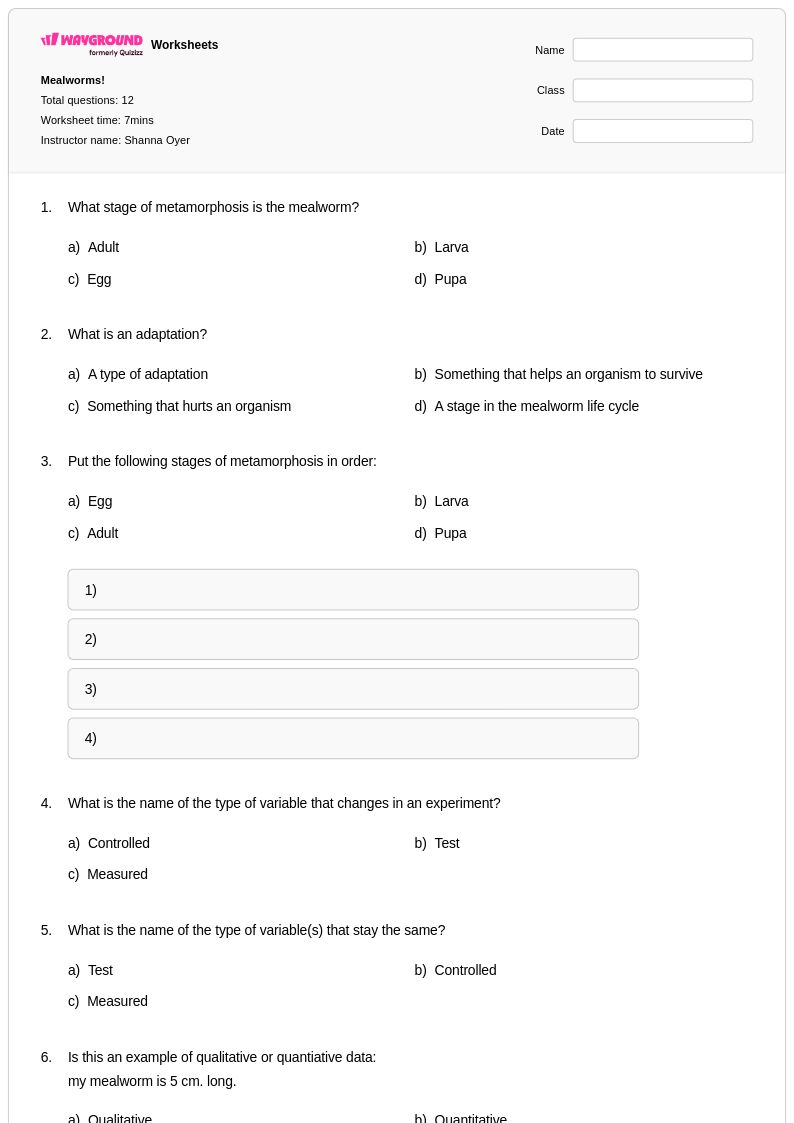
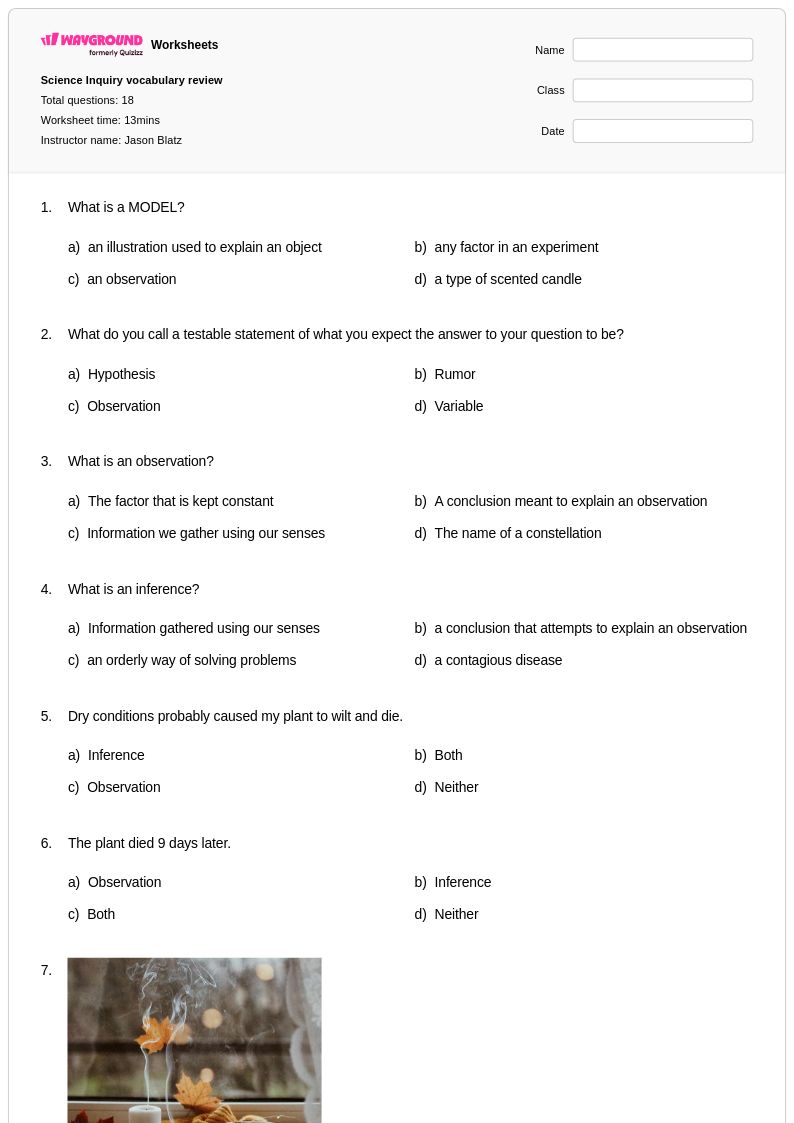
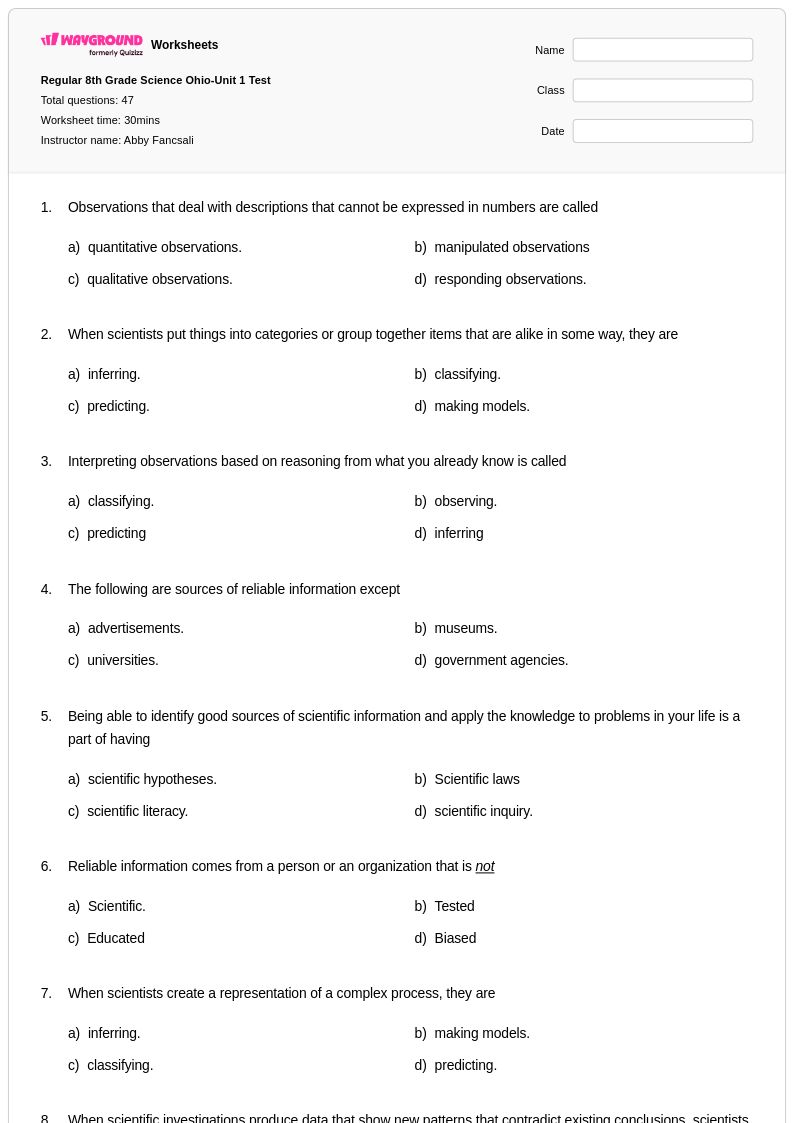
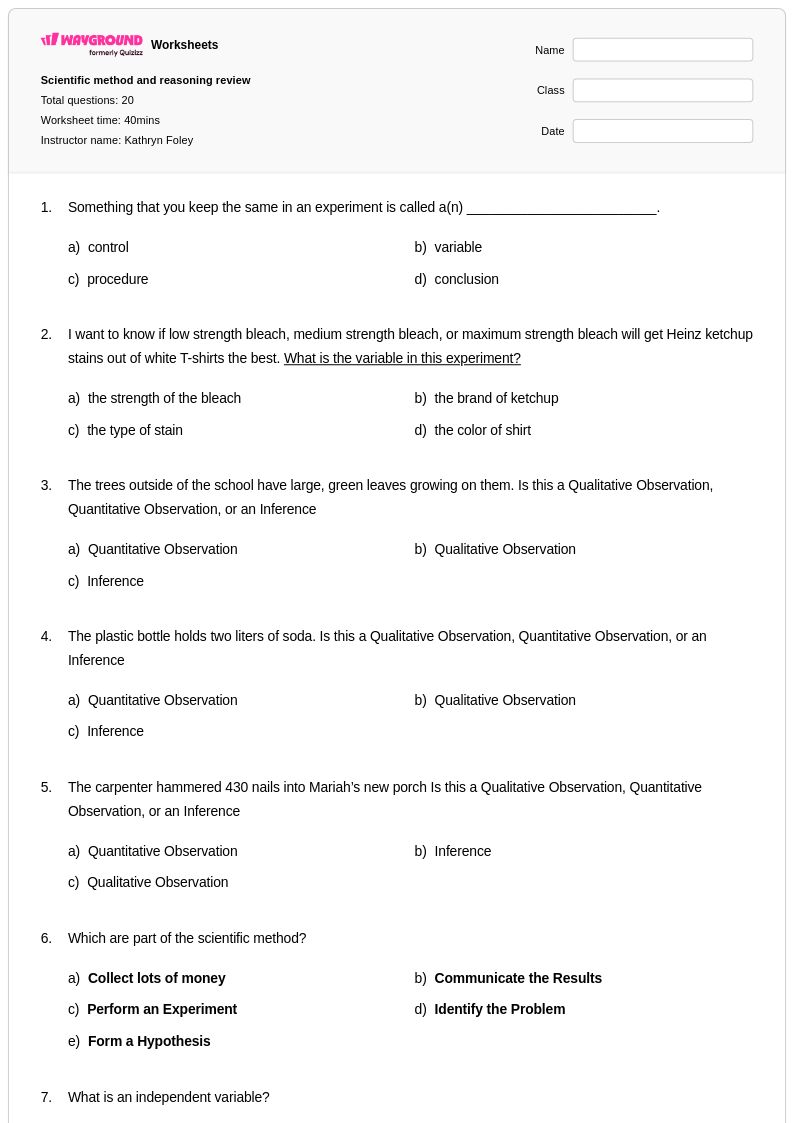
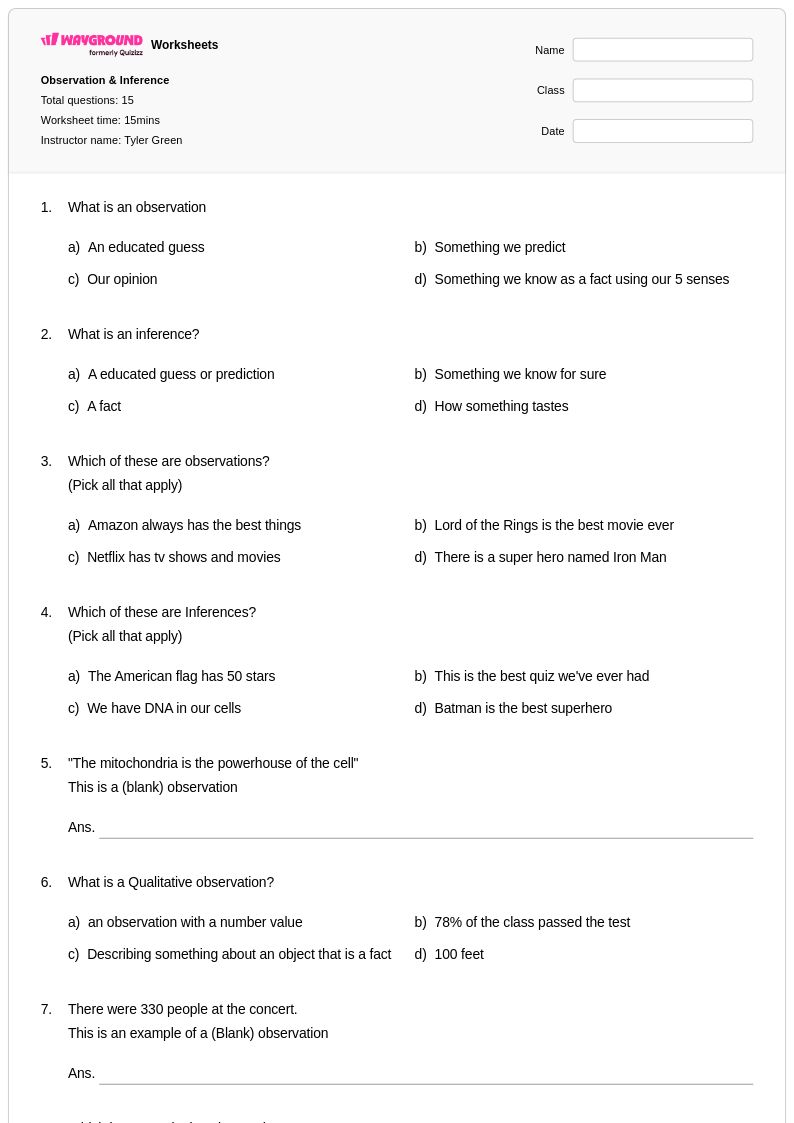
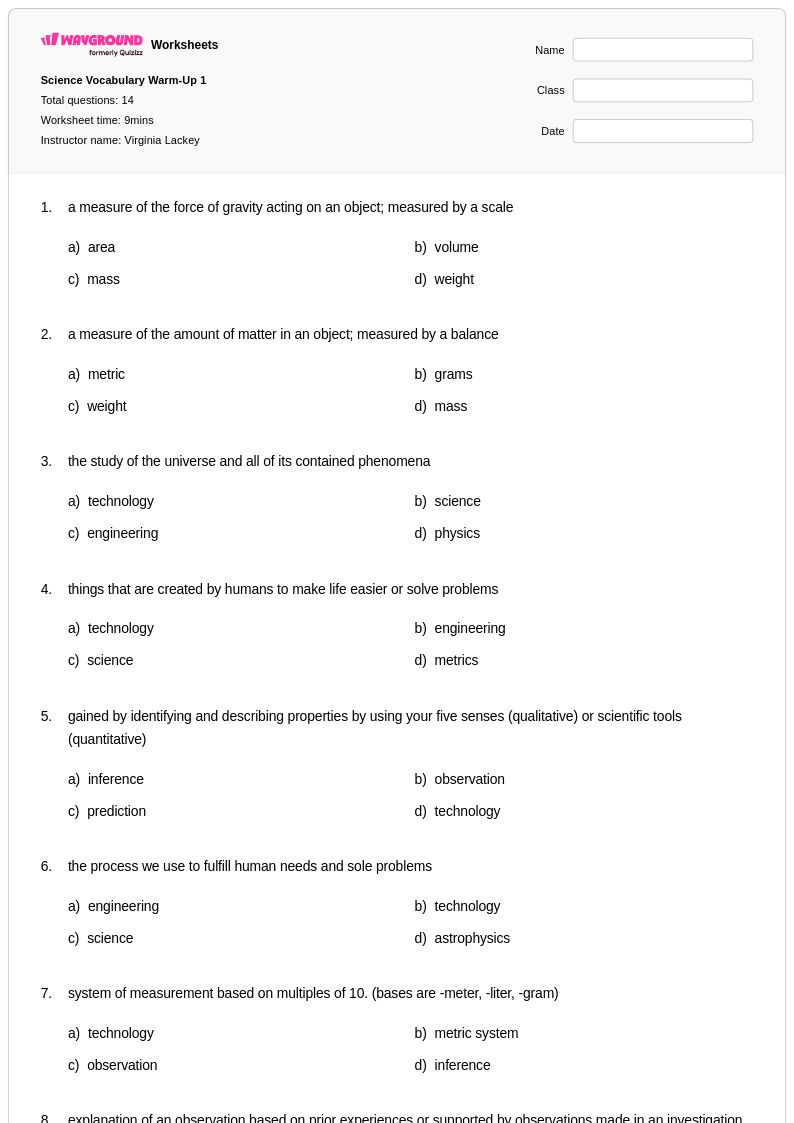
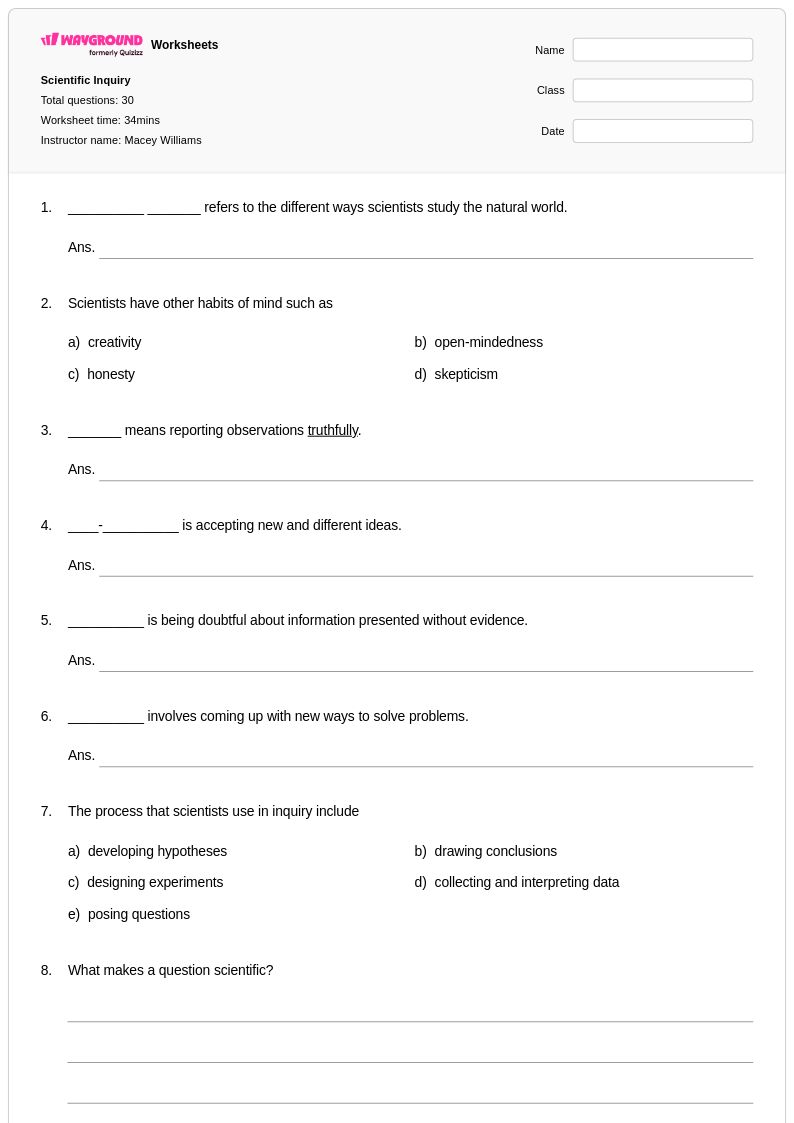
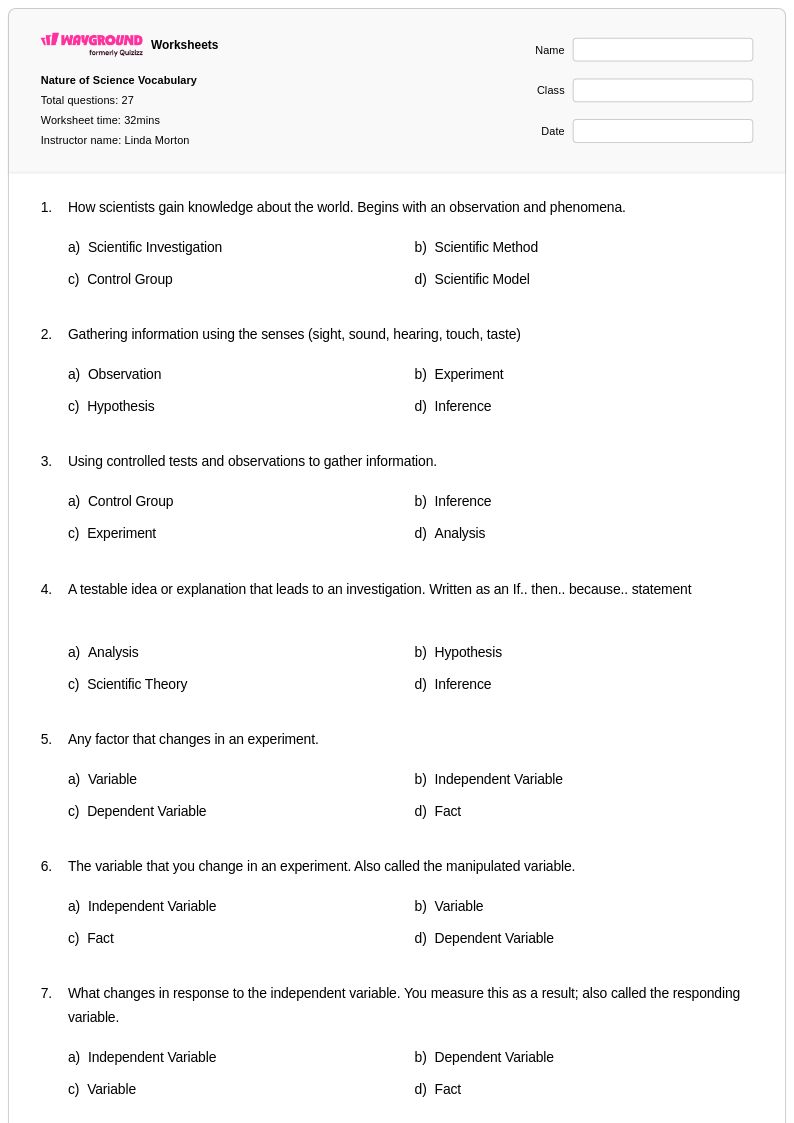
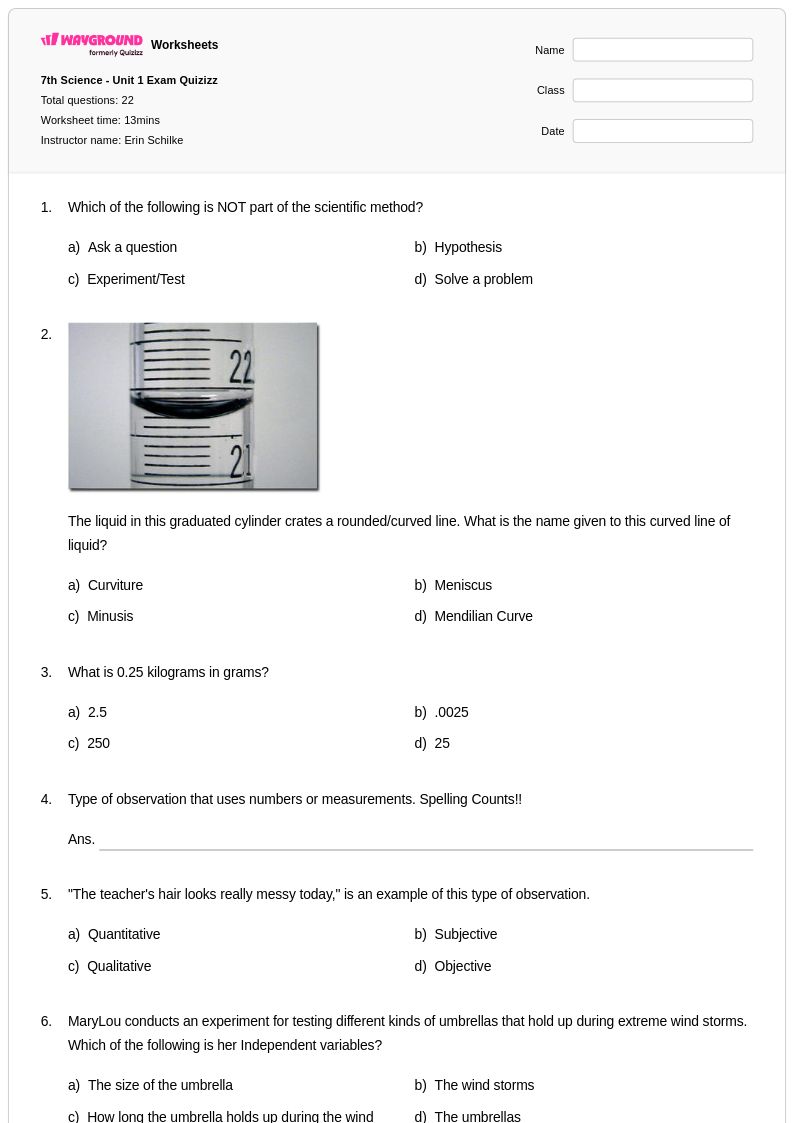
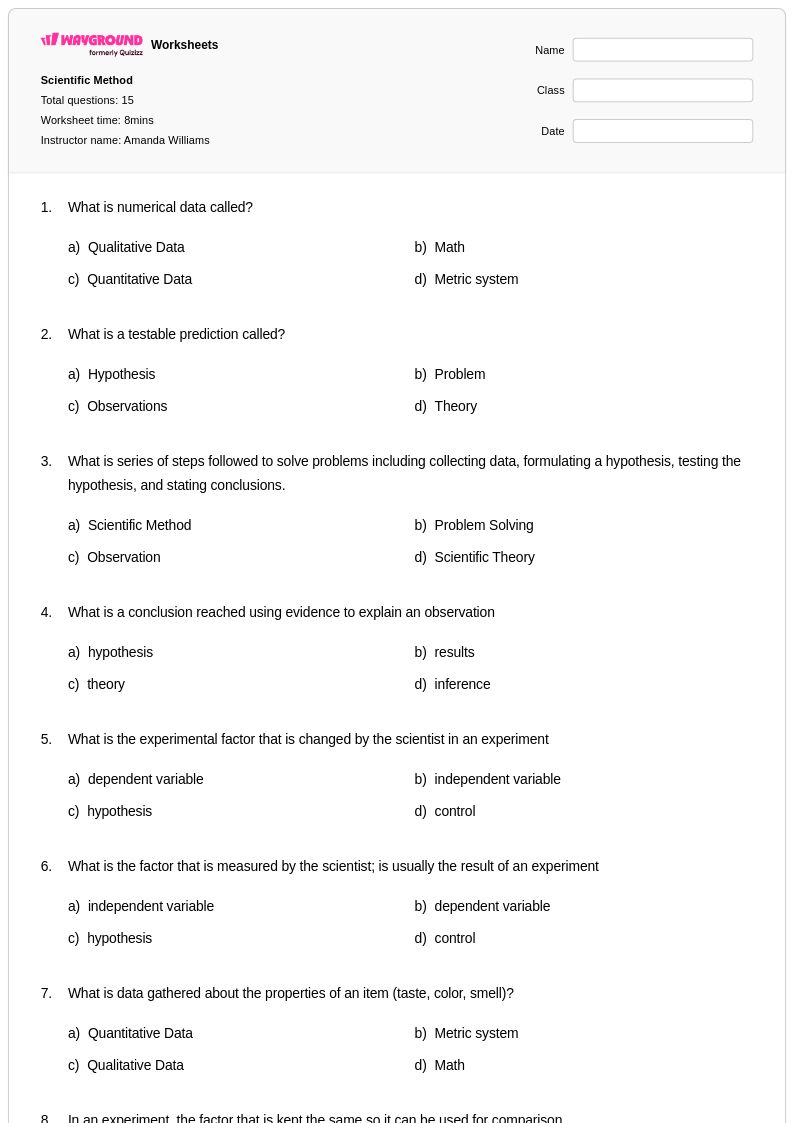
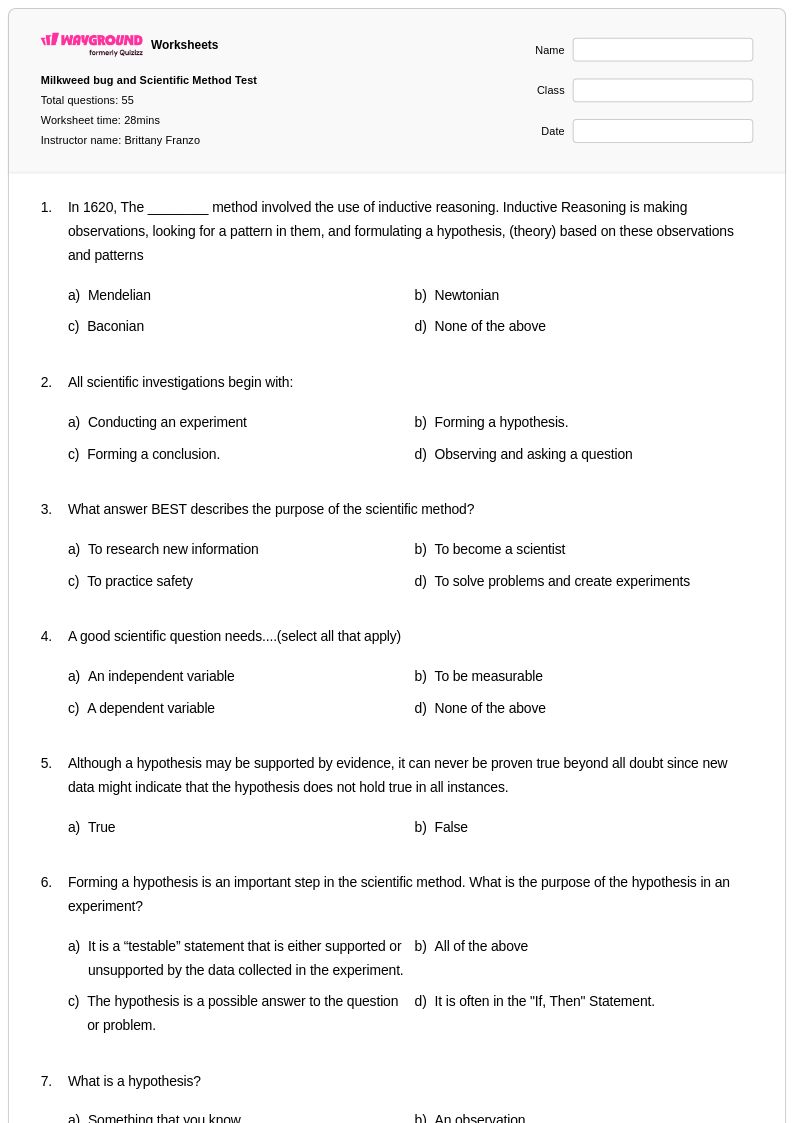
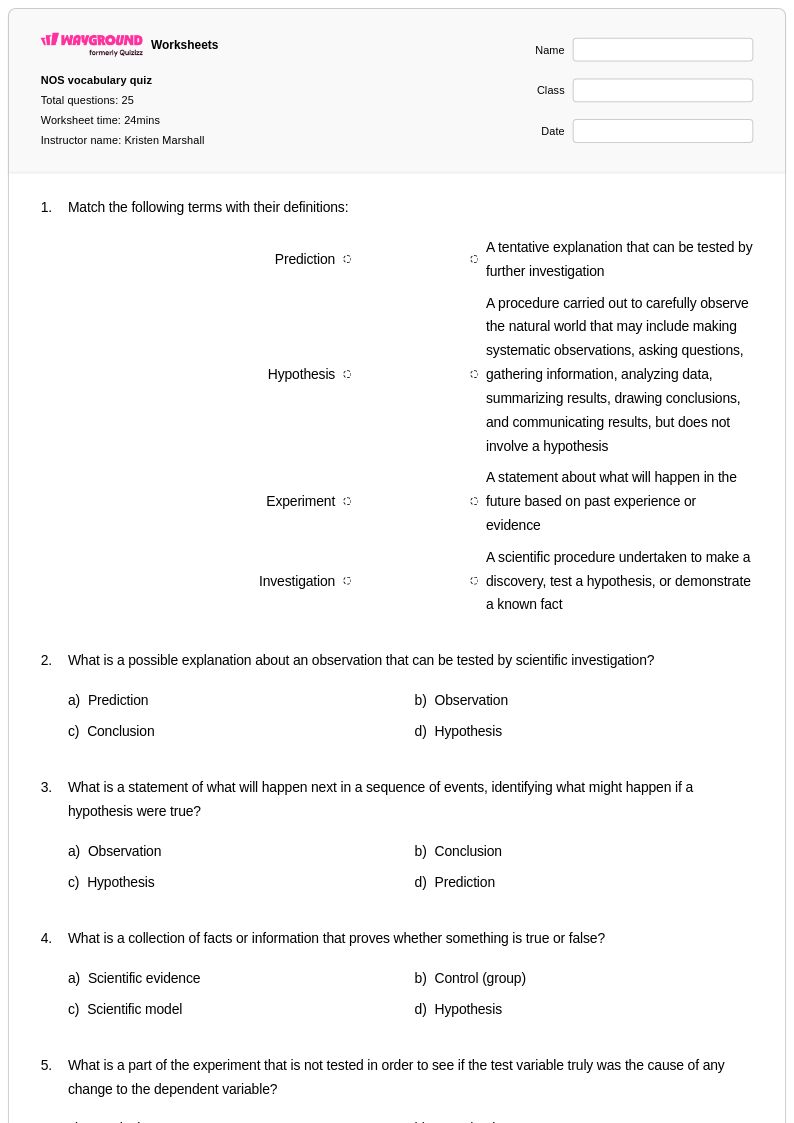
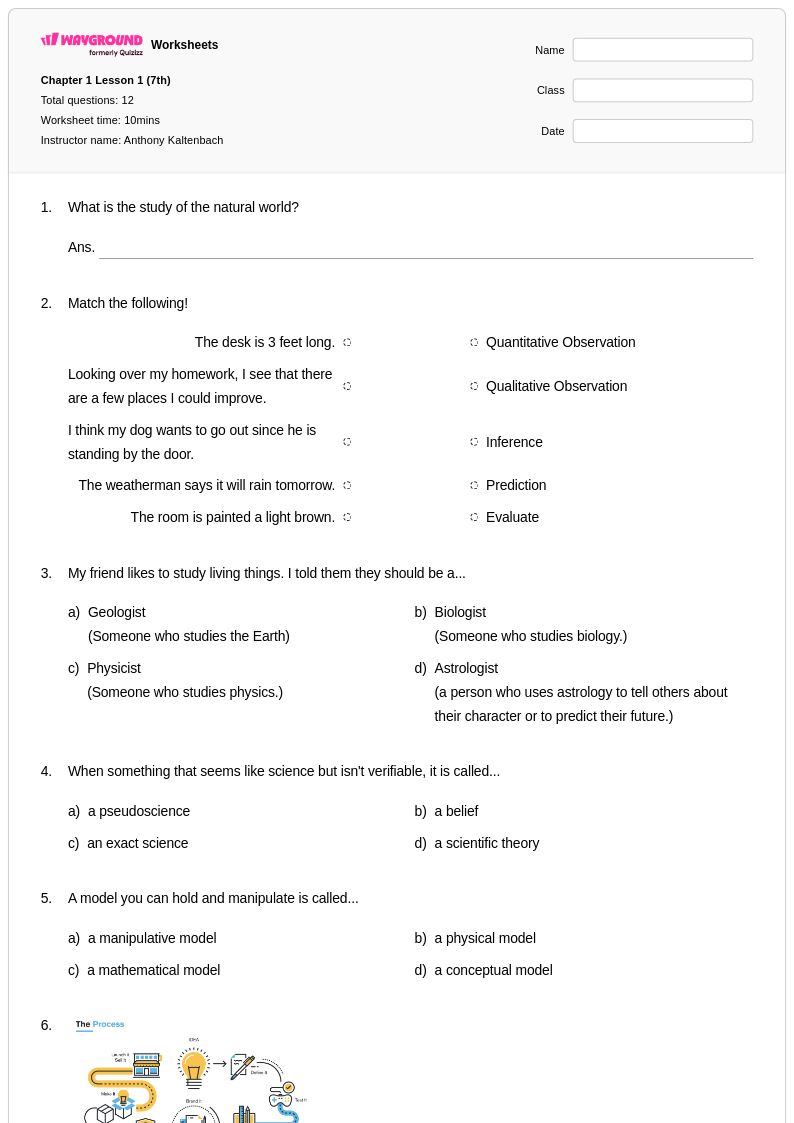
Master physics quantitative problems with Wayground's comprehensive collection of free worksheets and printables, featuring step-by-step practice problems and detailed answer keys to strengthen mathematical problem-solving skills in physics.
Physics quantitative problems worksheets available through Wayground (formerly Quizizz) provide comprehensive practice opportunities for students to develop essential problem-solving skills across all areas of physics. These carefully designed worksheets focus on numerical analysis, mathematical modeling, and the application of physics principles to real-world scenarios, strengthening students' ability to manipulate equations, analyze data, and interpret results. Each worksheet collection includes detailed answer keys that guide students through step-by-step solutions, helping them understand the logical progression from given information to final answers. These free printables cover fundamental quantitative concepts including kinematics calculations, force and energy problems, wave mechanics, thermodynamics, and electromagnetic field analysis, offering extensive practice problems that build computational confidence and analytical thinking skills.
Wayground (formerly Quizizz) supports physics educators with millions of teacher-created quantitative problem resources that streamline lesson planning and provide targeted skill development opportunities. The platform's robust search and filtering capabilities allow teachers to quickly locate worksheets that align with specific physics standards and curriculum requirements, while differentiation tools enable customization for varying student ability levels and learning needs. These versatile resources are available in both printable pdf format and interactive digital versions, making them ideal for classroom instruction, homework assignments, test preparation, and remediation activities. Teachers can easily modify problem sets, adjust difficulty levels, and create personalized practice sessions that address individual student weaknesses while reinforcing core quantitative reasoning skills essential for physics mastery.
FAQs
How do I teach quantitative problem-solving in physics?
Effective physics quantitative problem instruction starts with teaching students a consistent problem-solving framework: identify knowns and unknowns, select the appropriate equation, substitute values with units, and interpret the result. Teachers should model this process explicitly before releasing students to independent practice. Scaffolded problems that gradually remove support help students internalize the logical progression from given information to a final answer.
What exercises help students practice quantitative physics problems?
Structured practice problems that require students to manipulate equations, perform unit conversions, and apply physics principles to real-world scenarios are the most effective for building quantitative fluency. Worksheets covering kinematics calculations, force and energy problems, wave mechanics, thermodynamics, and electromagnetic field analysis give students broad exposure to numerical problem types. Repeated practice with detailed answer keys that show step-by-step solutions helps students identify where their reasoning breaks down.
What mistakes do students commonly make when solving quantitative physics problems?
The most common errors are unit inconsistencies, incorrect equation selection, and algebraic mistakes when rearranging formulas. Students often plug in numbers before isolating the target variable, which leads to compounded errors that are difficult to trace. Another frequent issue is dropping units entirely, which prevents students from using dimensional analysis as a self-check.
How do I differentiate quantitative physics problem worksheets for students at different ability levels?
Differentiation can be achieved by varying the scaffolding within problem sets: provide equation sheets or partially worked examples for struggling students, and offer multi-step or open-ended problems for advanced learners. On Wayground, teachers can apply student-level accommodations such as read aloud support for students who benefit from hearing problems read to them, reduced answer choices to lower cognitive load, and extended time settings for students who need additional processing time. These accommodations can be assigned individually while the rest of the class receives default settings.
How do I use Wayground's quantitative problems worksheets in my physics class?
Wayground's quantitative problems worksheets are available as printable PDFs for traditional classroom use and in digital formats for technology-integrated environments, making them suitable for in-class practice, homework, test preparation, and remediation. Teachers can also host the worksheets as a quiz directly on Wayground, allowing students to complete problems digitally with immediate feedback. Each worksheet includes a detailed answer key that walks through step-by-step solutions, so teachers can use them for instruction modeling as well as independent student practice.
How do I align quantitative physics worksheets to my curriculum standards?
Wayground's search and filtering tools allow teachers to locate quantitative problem sets that align with specific physics standards and curriculum requirements, reducing the time spent on lesson planning. Teachers can filter by topic area, covering domains such as kinematics, thermodynamics, and electromagnetism, to ensure the problems match the unit currently being taught. This targeted search capability makes it practical to find skill-specific practice without sorting through unrelated content.