
20 Q
7th
20 Q
5th
20 Q
10th
20 Q
3rd
16 Q
10th
11 Q
3rd
18 Q
3rd
14 Q
9th - 12th
13 Q
8th
16 Q
6th
13 Q
7th
45 Q
7th
16 Q
5th
17 Q
5th
13 Q
6th
20 Q
8th
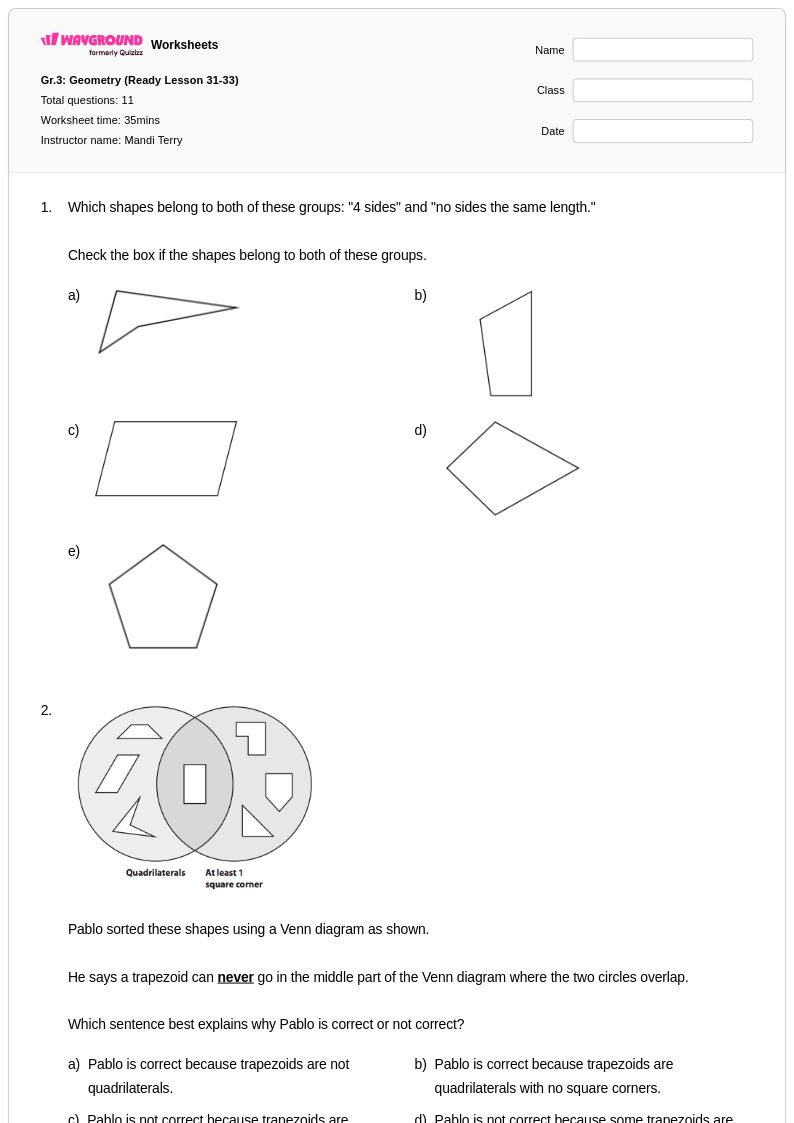
11 Q
3rd
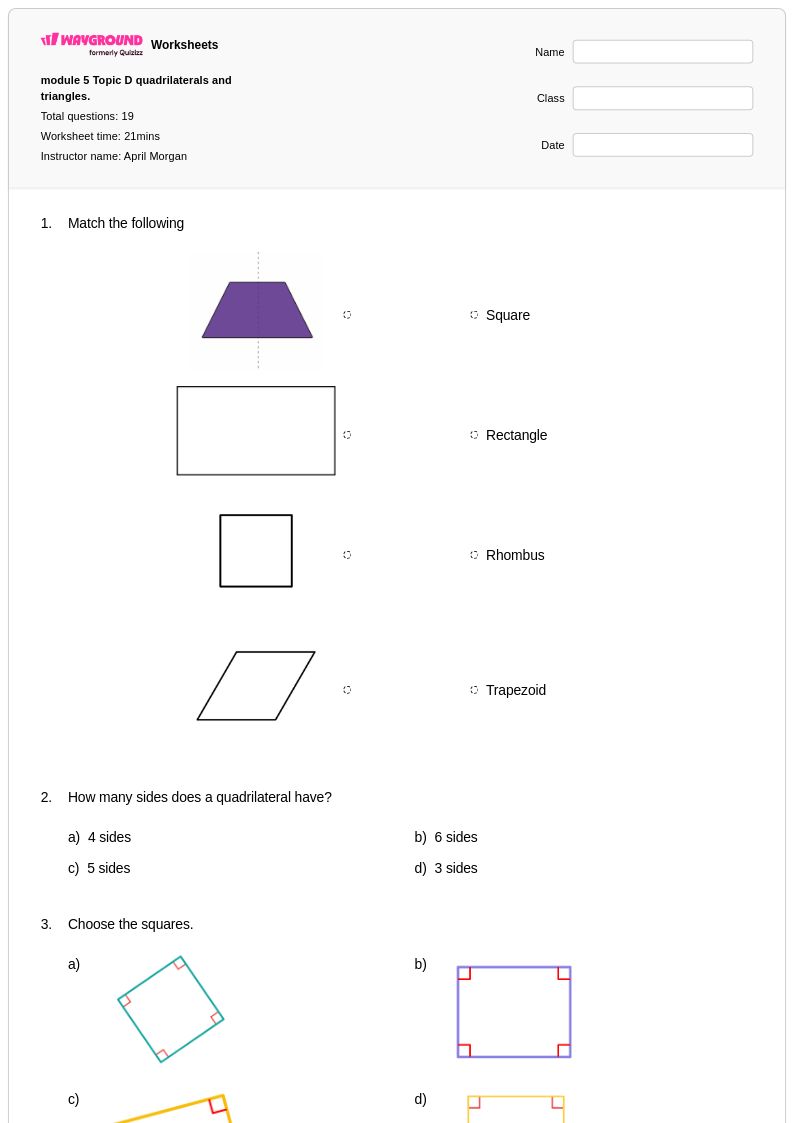
19 Q
5th
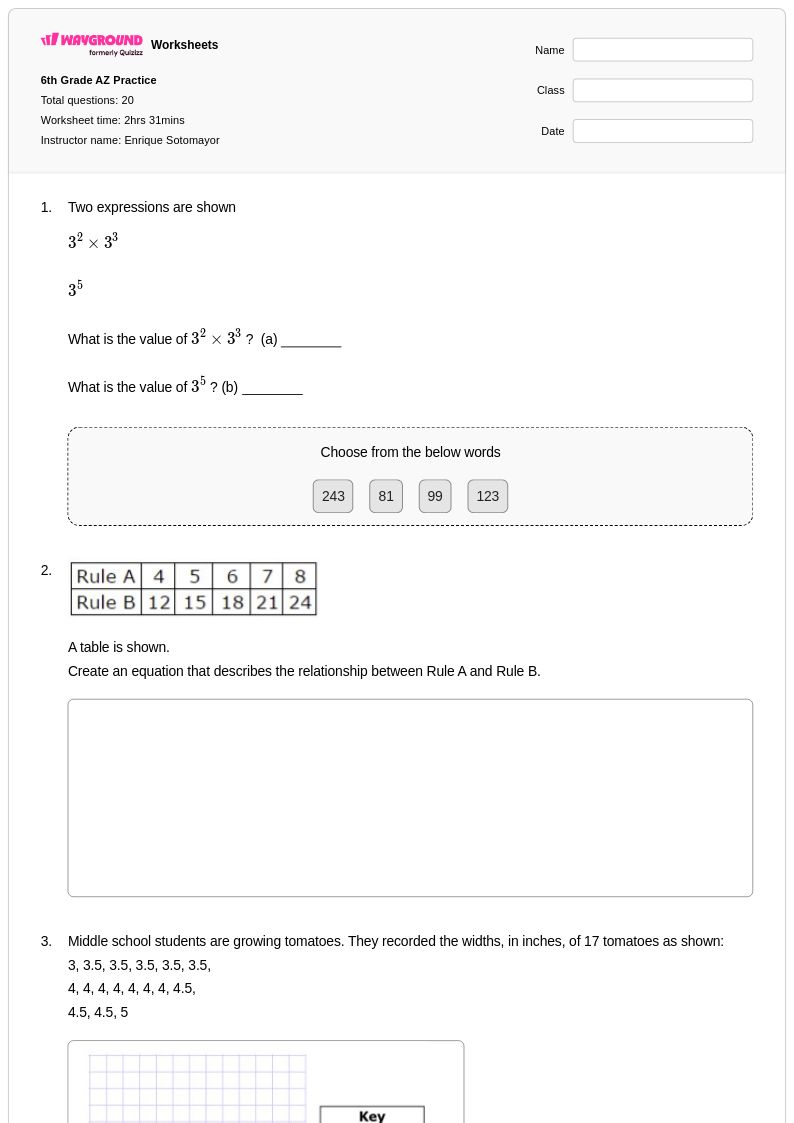
20 Q
6th
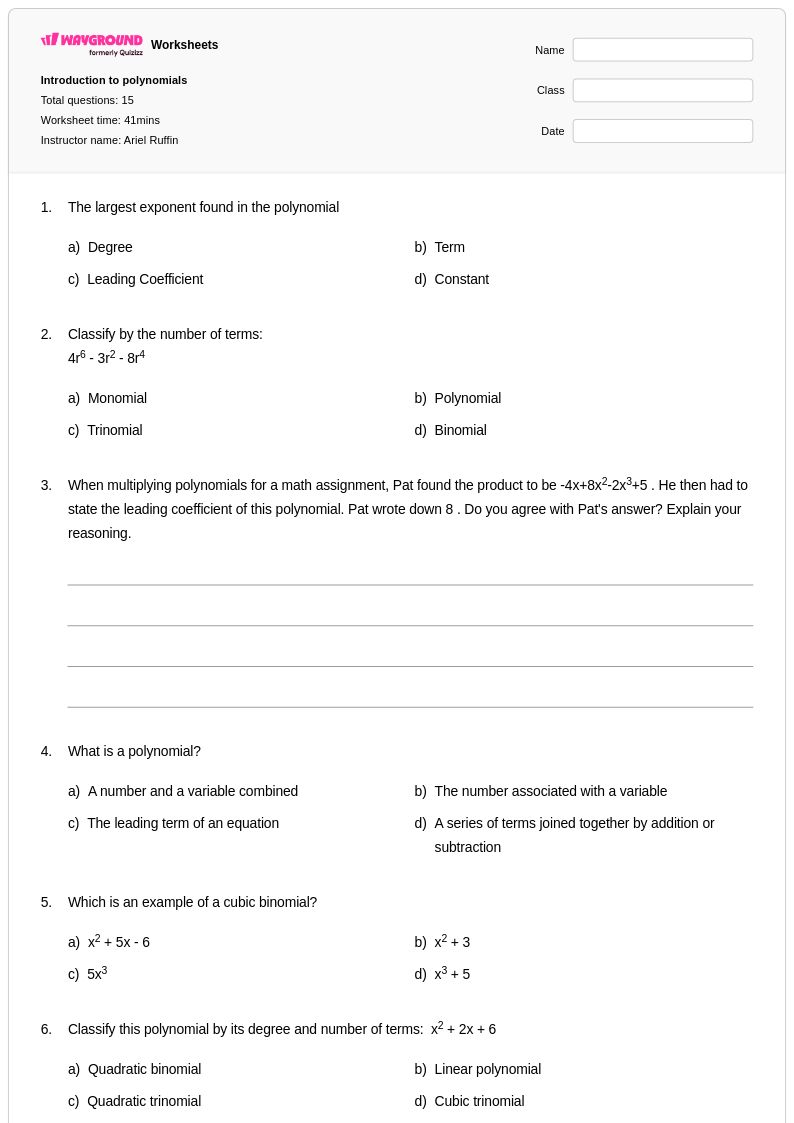
15 Q
9th
17 Q
7th
15 Q
6th
23 Q
8th
19 Q
10th
Explore Shape Sorting and Classification Worksheets by Grades
Explore Other Subject Worksheets for kindergarten
Explore printable Shape Sorting and Classification worksheets for Kindergarten
Shape sorting and classification worksheets for kindergarten provide foundational geometry experiences that help young learners recognize, categorize, and organize basic shapes in their environment. These printable resources from Wayground (formerly Quizizz) introduce students to essential geometric concepts through hands-on activities that develop visual discrimination skills, logical thinking, and pattern recognition abilities. The practice problems within these worksheets guide kindergarteners through identifying circles, squares, triangles, and rectangles while learning to group shapes by common attributes such as size, color, or number of sides. Each worksheet includes clear answer keys that support both independent practice and guided instruction, making these free pdf resources valuable tools for building the spatial reasoning skills that serve as building blocks for more advanced mathematical concepts.
Wayground (formerly Quizizz) empowers educators with access to millions of teacher-created shape sorting and classification worksheets specifically designed for kindergarten mathematics instruction. The platform's comprehensive search and filtering capabilities allow teachers to quickly locate age-appropriate materials that align with early learning standards and accommodate diverse learning needs through built-in differentiation tools. These flexible resources are available in both printable and digital formats, including downloadable pdf versions that facilitate seamless integration into classroom activities, homework assignments, and intervention programs. Teachers can customize worksheet collections to target specific skill gaps during remediation sessions or provide enrichment opportunities for advanced learners, while the extensive variety of practice materials ensures consistent skill reinforcement across different learning contexts and teaching scenarios.
FAQs
What geometry skills are taught in kindergarten?
What's the best way to teach shape sorting in kindergarten?
What activities help kindergarteners practice classifying shapes?
What mistakes do kindergarteners make when learning shapes?
How can I use these kindergarten shape worksheets?
How does kindergarten shape sorting align with Common Core standards?