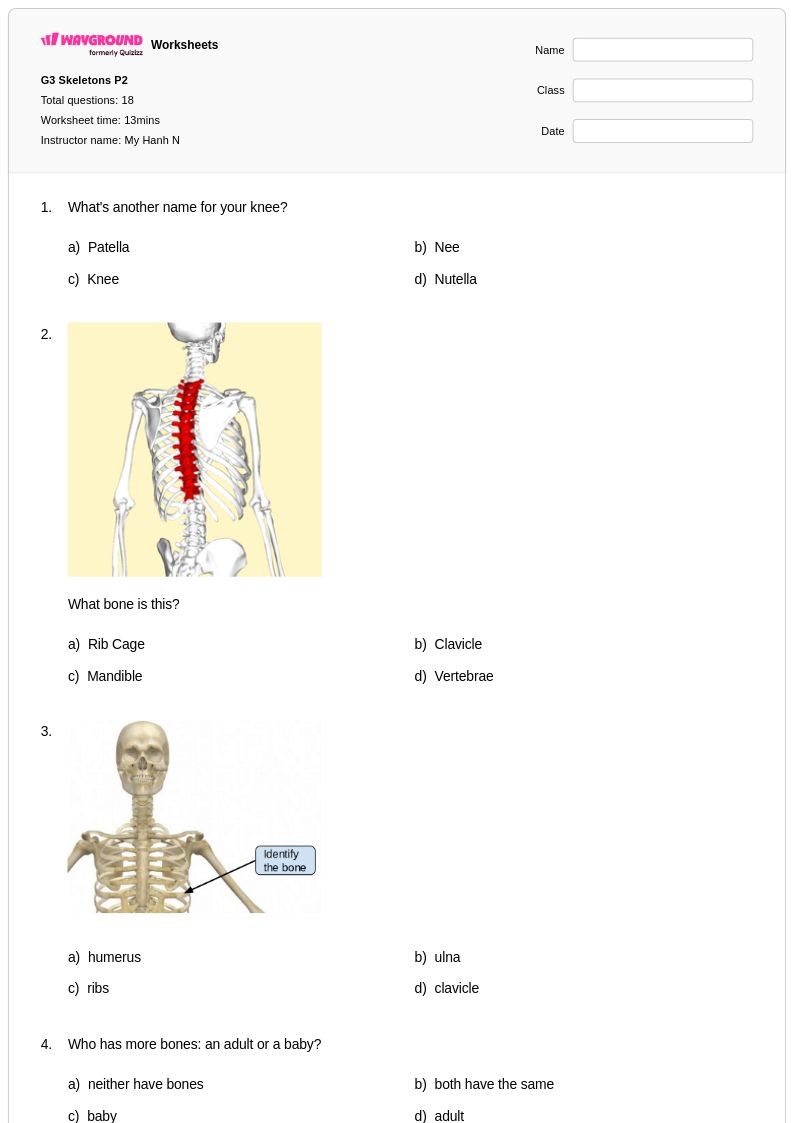
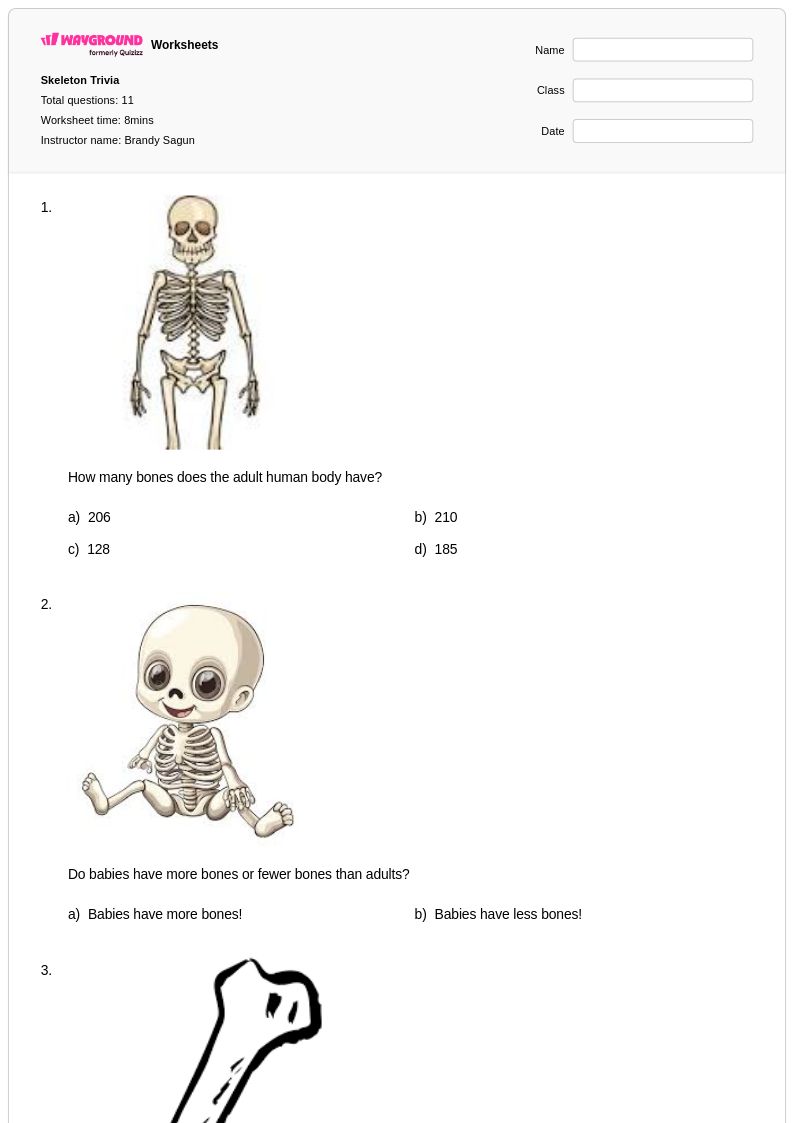
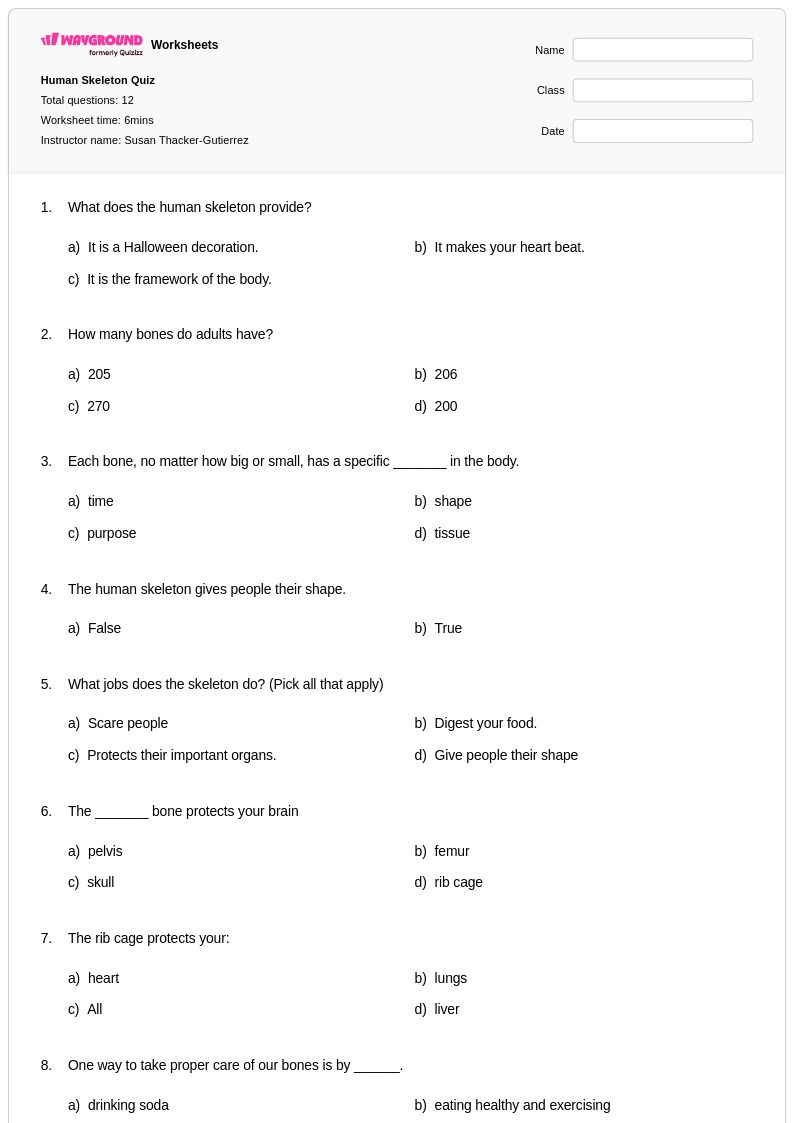
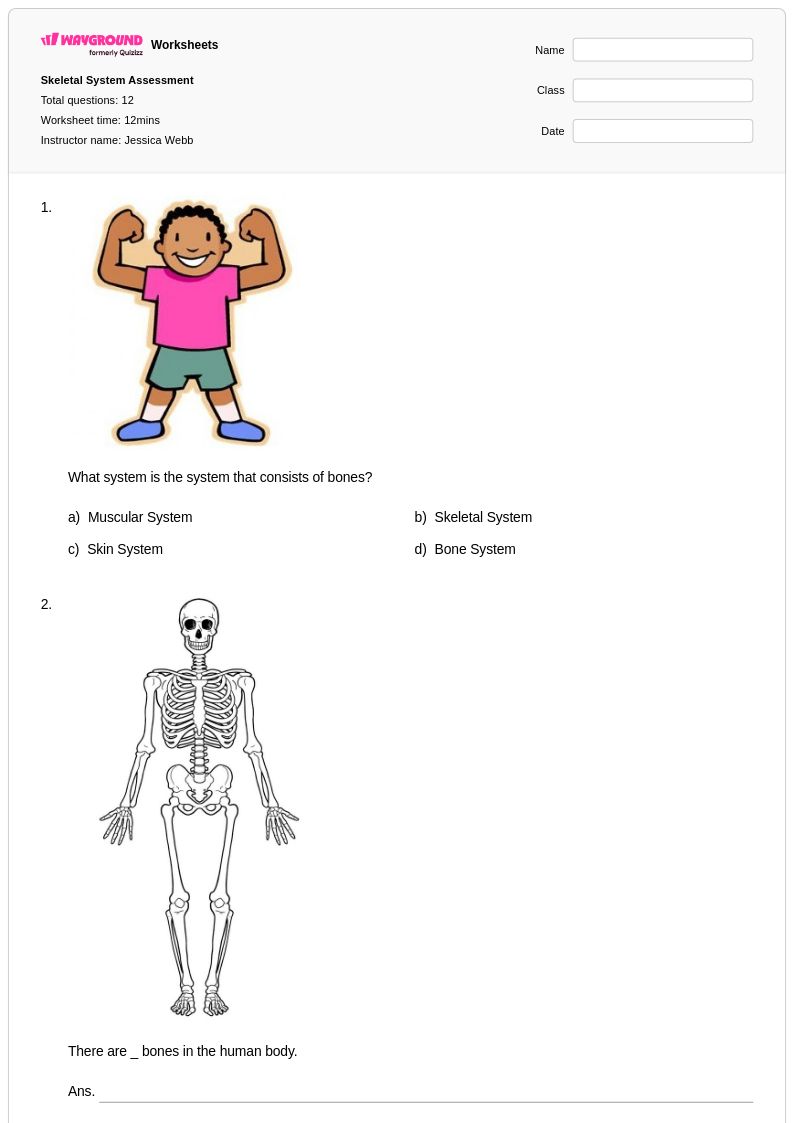
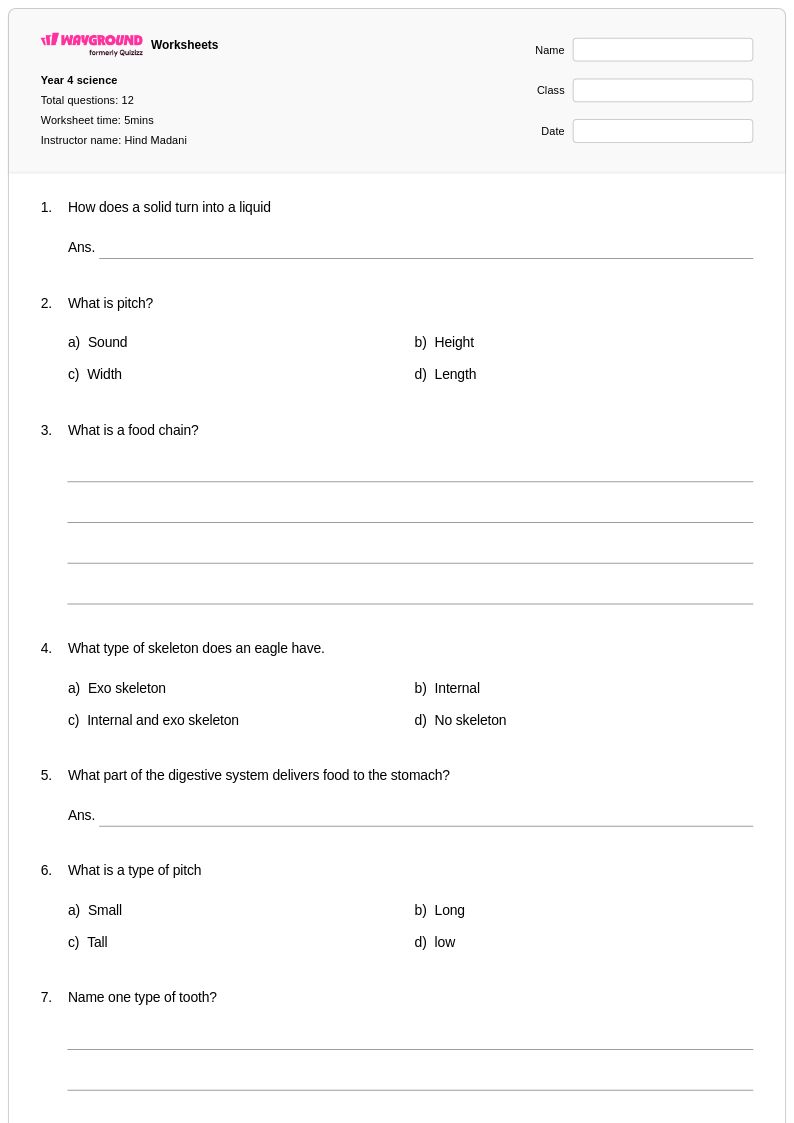
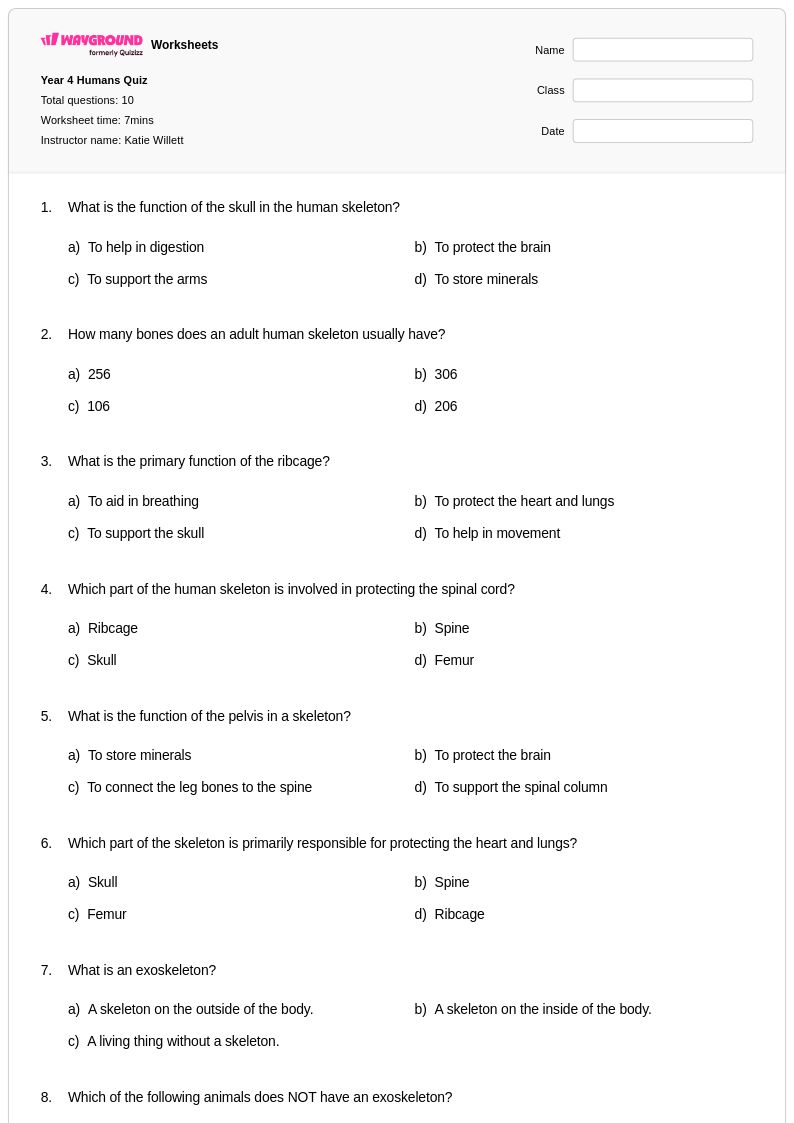
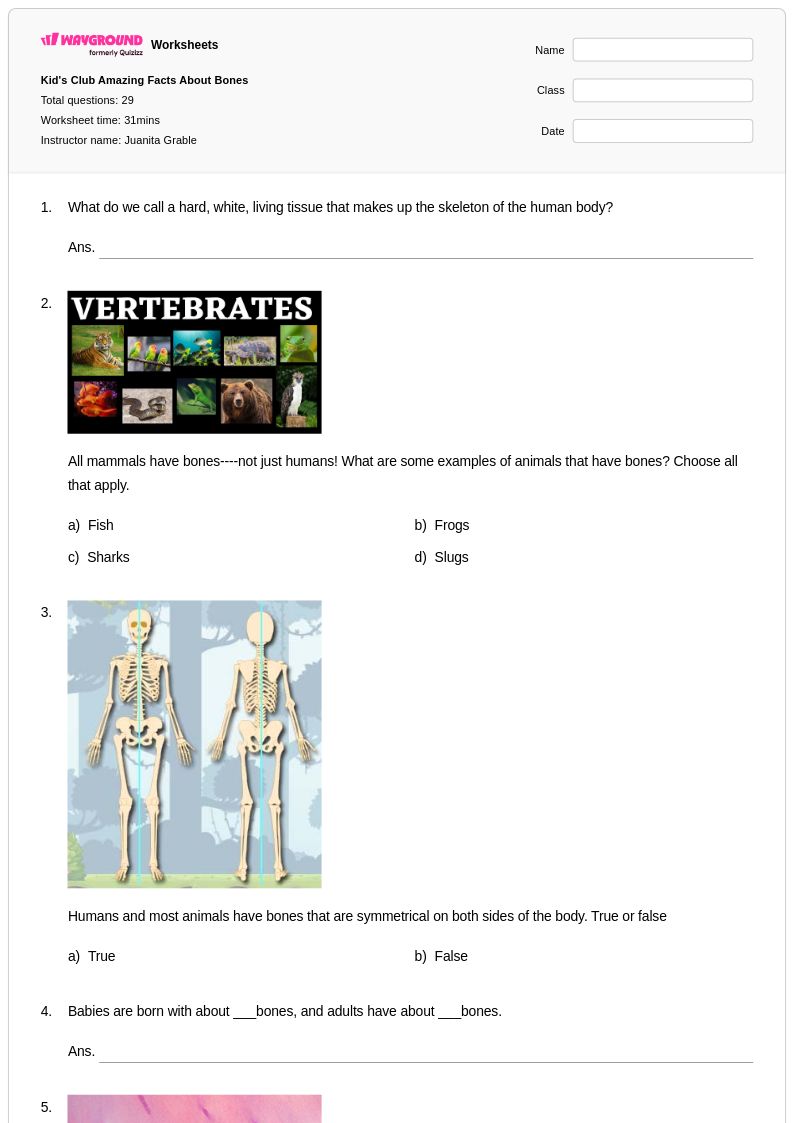
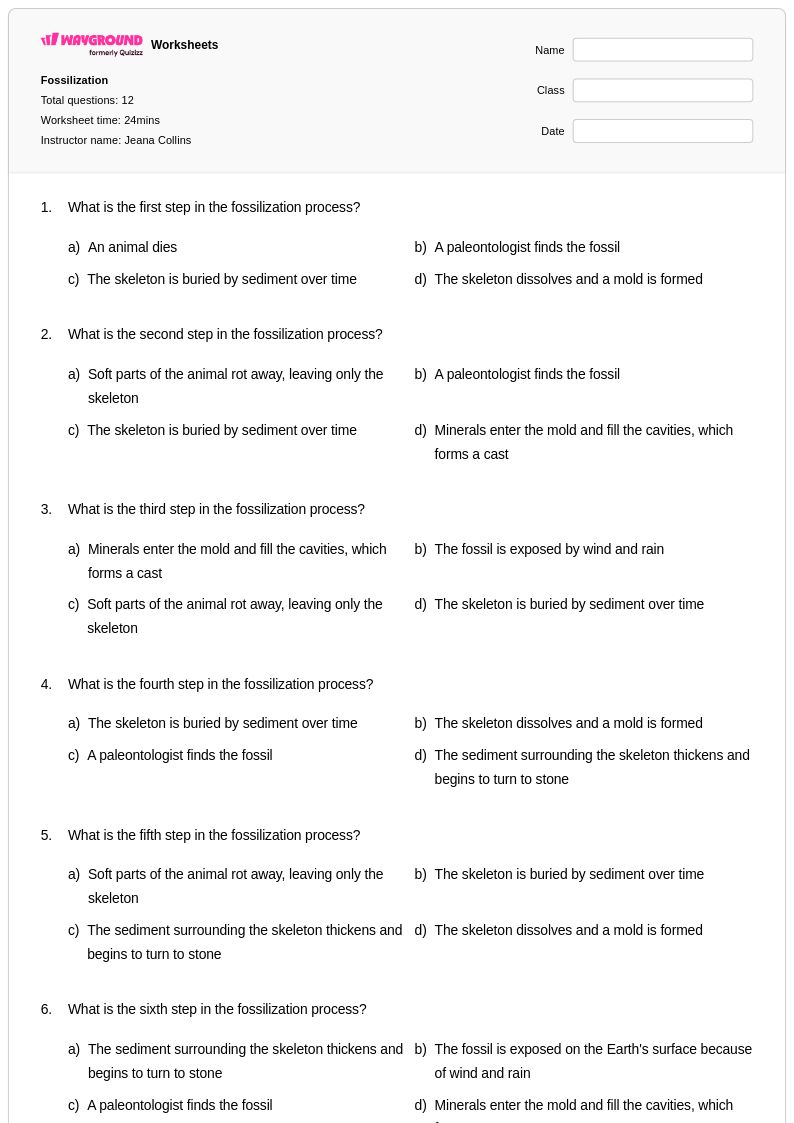
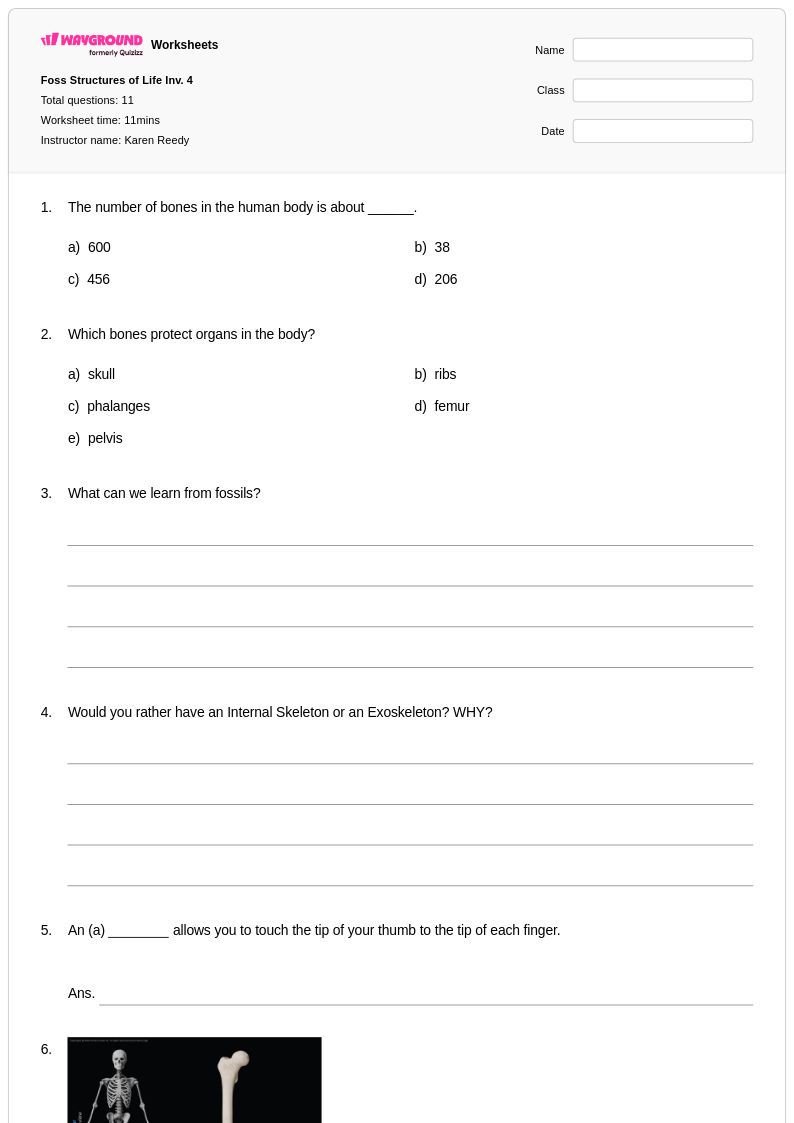
Explore Wayground's free Class 3 skeleton worksheets and printables that help students learn about bones, the human body structure, and skeletal system functions through engaging practice problems with answer keys.
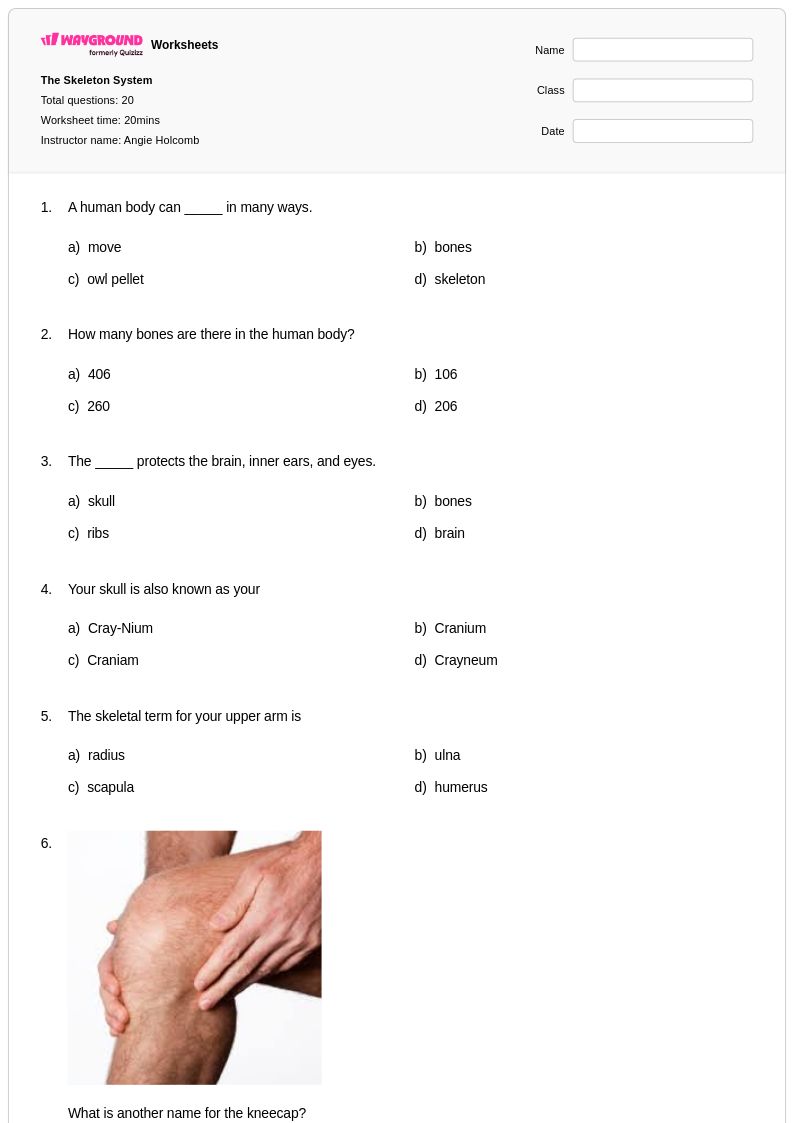
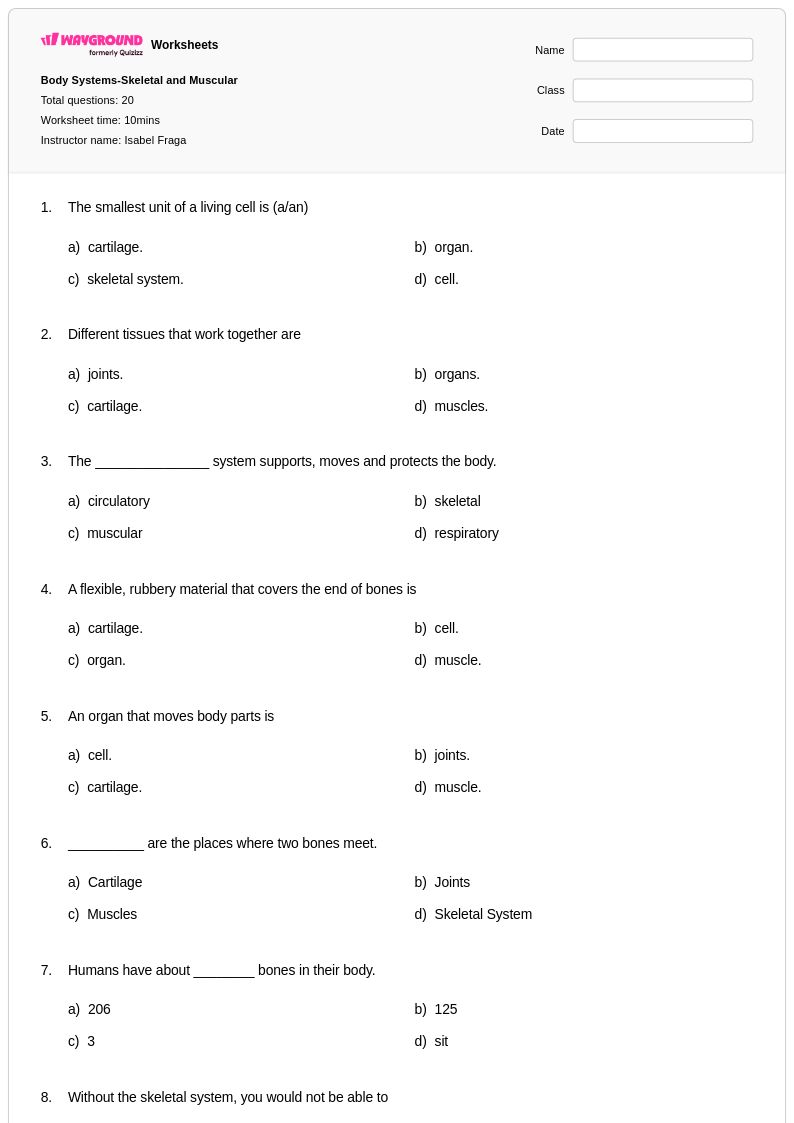
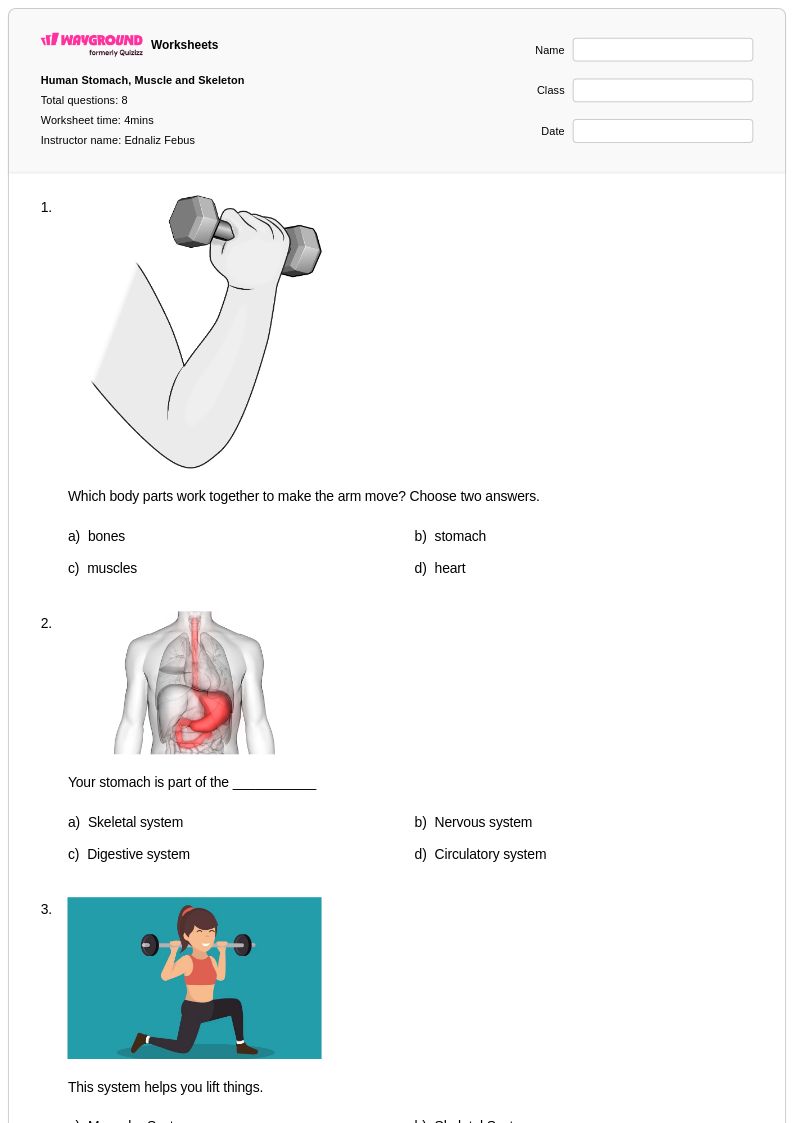
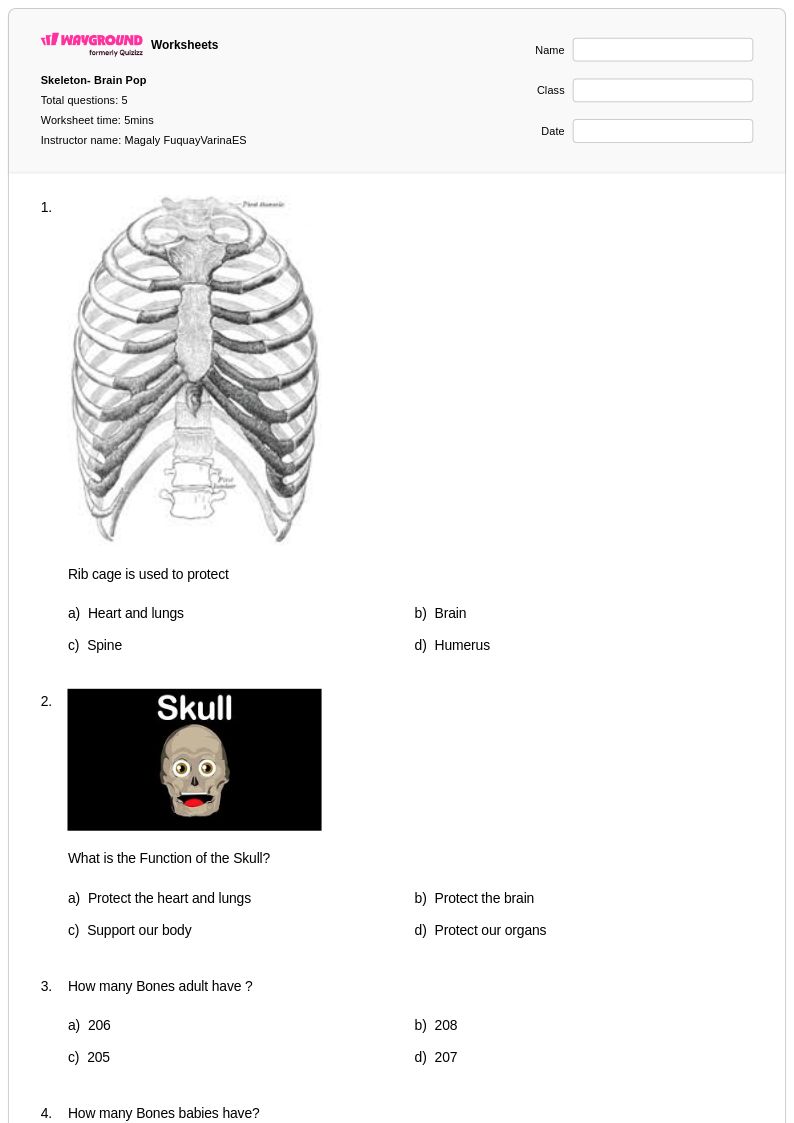
Class 3 skeleton worksheets available through Wayground (formerly Quizizz) provide young learners with engaging opportunities to explore the fundamental structure of the human body. These educational resources focus on helping students identify major bones, understand basic skeletal functions like protection and support, and recognize how bones work together as a complete system. The worksheets strengthen essential science skills including observation, classification, and anatomical vocabulary development while building foundational knowledge about human body systems. Teachers can access comprehensive collections that include practice problems ranging from bone identification exercises to simple diagrams students can label and color. Each worksheet comes with a corresponding answer key, and the materials are available as free printables in convenient pdf format, making them easily accessible for both classroom instruction and independent study.
Wayground (formerly Quizizz) empowers educators with millions of teacher-created skeleton resources specifically designed for elementary science instruction. The platform's robust search and filtering capabilities allow teachers to quickly locate grade-appropriate materials that align with state and national science standards for human body systems. Advanced differentiation tools enable educators to customize worksheets based on individual student needs, whether for remediation support or enrichment challenges. These flexible resources are available in both printable and digital formats, including downloadable pdf files that can be seamlessly integrated into lesson plans or assigned as homework. The comprehensive worksheet collections support diverse instructional goals, from introducing basic skeletal anatomy concepts to providing targeted skill practice that reinforces learning objectives and prepares students for more advanced biological studies.
FAQs
How do I teach the skeletal system to students?
Start by introducing the two main divisions of the skeleton — the axial and appendicular — before drilling into individual bone groups. Use labeled diagrams to help students connect bone names to their locations and functions, then layer in concepts like joint types and the role of the skeleton in mineral storage and blood cell production. Building from structure to function gives students a logical framework that makes memorization more meaningful.
What exercises help students practice identifying bones?
Labeling diagrams is one of the most effective exercises for bone identification because it forces students to retrieve and apply anatomical vocabulary in context. Matching activities that pair bone names with their functions or locations, and fill-in-the-blank questions about major bone groups, also reinforce retention. Repeated low-stakes practice with immediate feedback is key to helping students build fluency with skeletal anatomy.
What mistakes do students commonly make when learning the skeletal system?
Students frequently confuse bones with similar names or locations, such as the radius and ulna or the tibia and fibula, especially when working from memory rather than diagrams. Another common error is conflating joint types — students often misclassify hinge and ball-and-socket joints because they understand one example but not the defining structural feature. Mixing up the skeletal system's roles, such as attributing blood cell production to muscle rather than bone marrow, is also a frequent misconception worth addressing directly.
How do skeleton worksheets support students who are struggling with anatomy concepts?
Skeleton worksheets provide structured, repeatable practice that helps struggling students isolate and work through specific gaps, such as bone identification or understanding skeletal functions. On Wayground, teachers can apply accommodations like Read Aloud so questions are read to students who need auditory support, or reduce answer choices to lower cognitive load for students who find multiple-choice formats overwhelming. These settings can be assigned to individual students without disrupting the rest of the class.
How do I use skeleton worksheets in my classroom?
Skeleton worksheets on Wayground are available as printable PDFs for traditional classroom use and in digital formats for technology-integrated environments, making them flexible enough for in-person, hybrid, or remote settings. Teachers can also host worksheets as a live or assigned quiz directly on Wayground, which allows students to complete work digitally and receive instant feedback. Answer keys are included with every worksheet, reducing prep time and making it easy to review results with the class.
How do I align skeleton worksheets to my curriculum standards?
Wayground's search and filtering tools allow teachers to narrow the skeleton worksheet collection by learning objective or educational standard, so you can quickly surface materials that match what your curriculum requires at a given point in the unit. Because the collection covers a broad range of subtopics — from bone identification and joint classification to skeletal functions like protection, support, and mineral storage — teachers can select worksheets that target exactly the concepts their standards prioritize.