Free Printable Stoichiometric Calculations Worksheets for Class 10
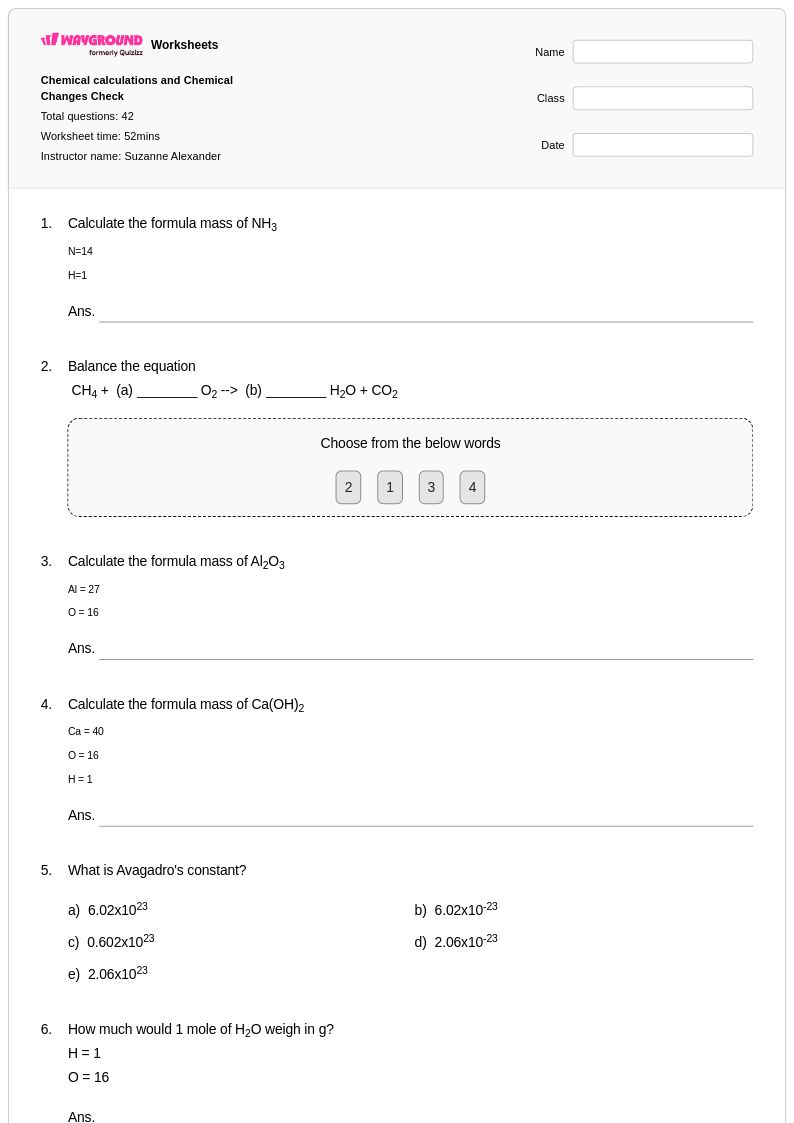
Class 10 stoichiometric calculations worksheets from Wayground provide comprehensive practice problems and answer keys to help students master chemical equation balancing, mole conversions, and quantitative relationships in chemistry through printable PDF exercises.
Explore printable Stoichiometric Calculations worksheets for Class 10
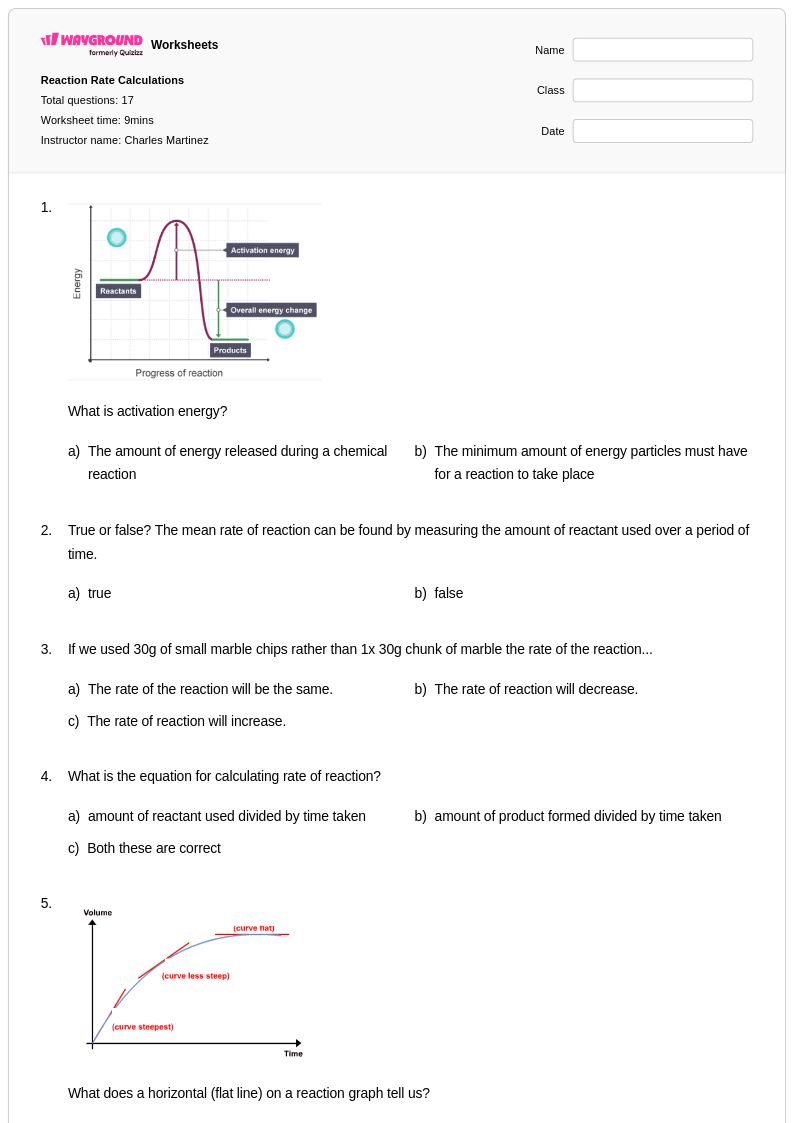
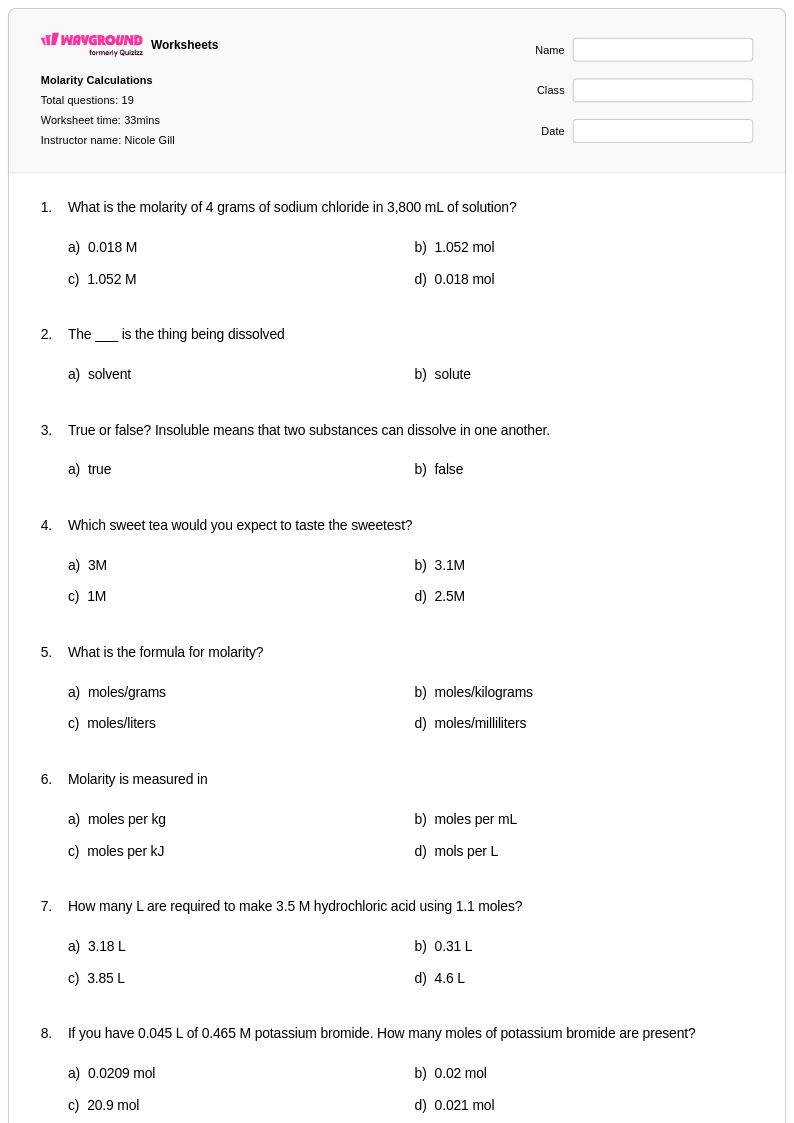
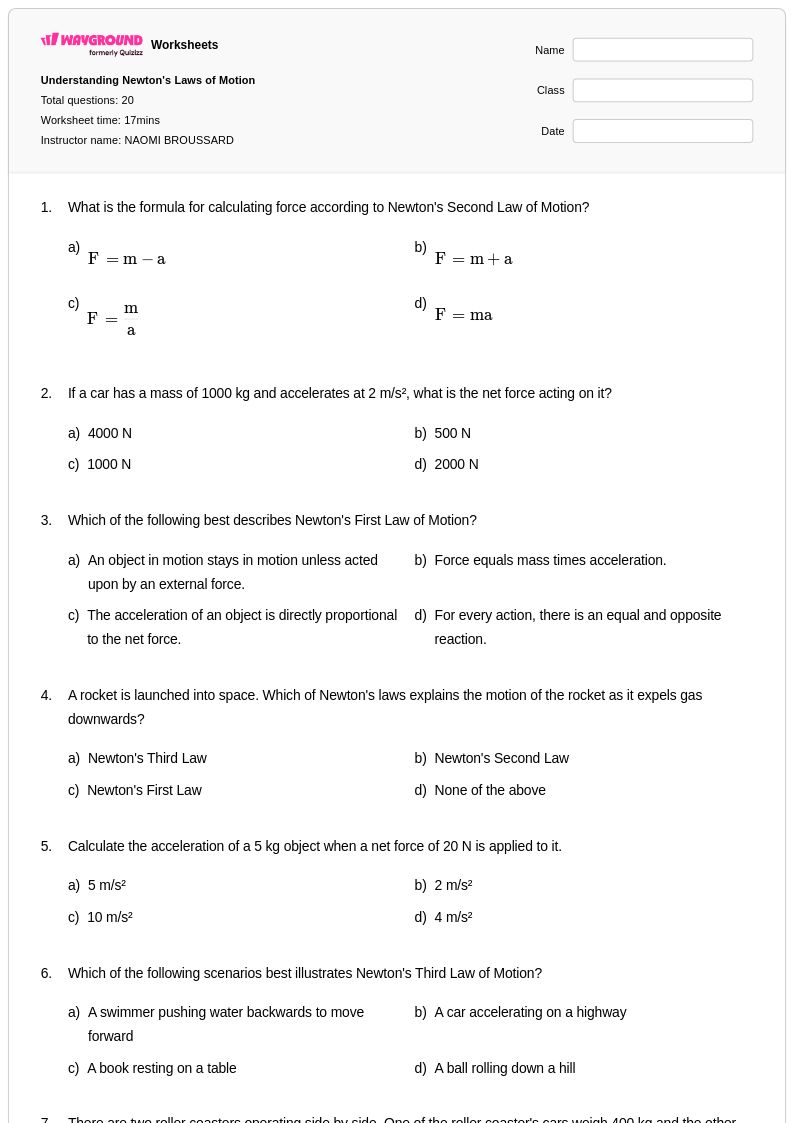
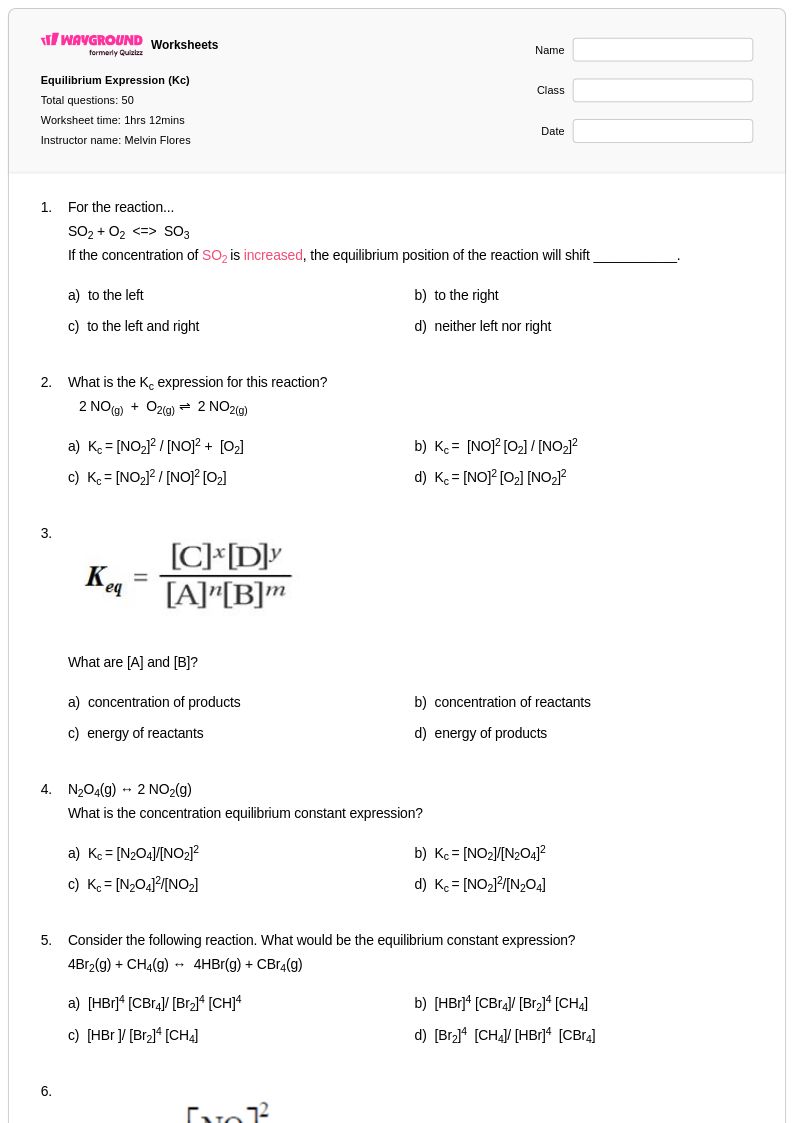
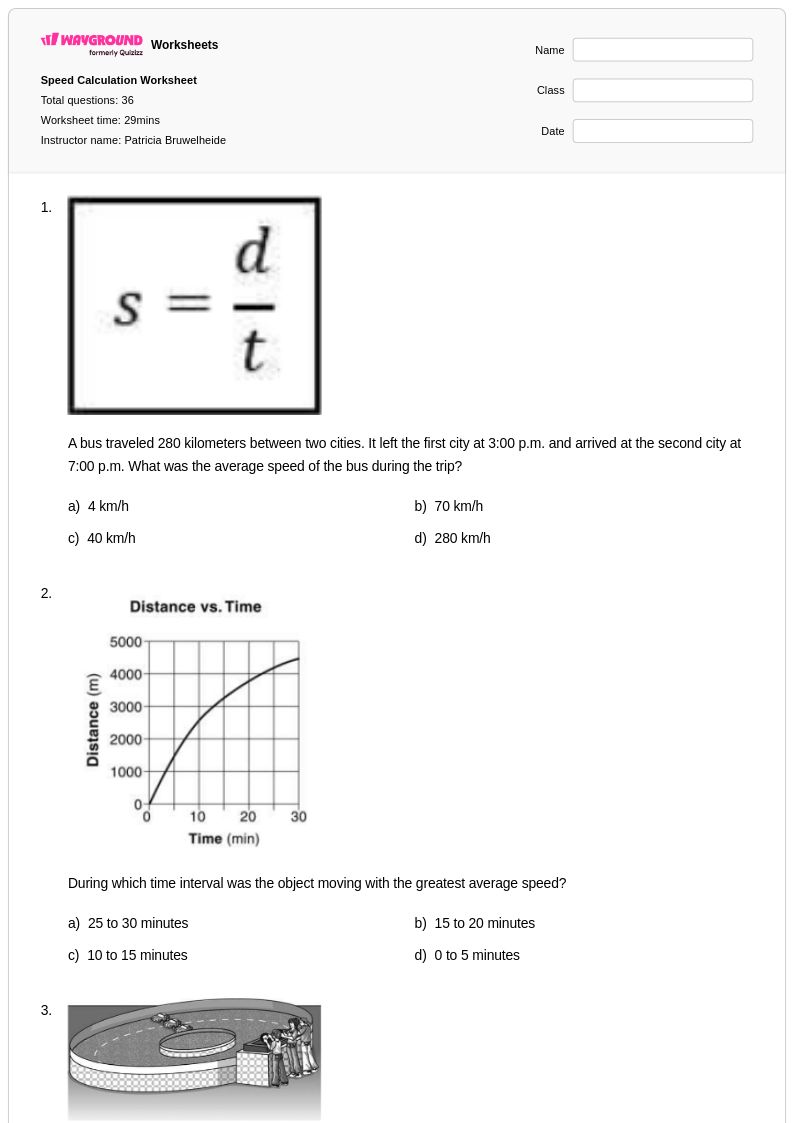
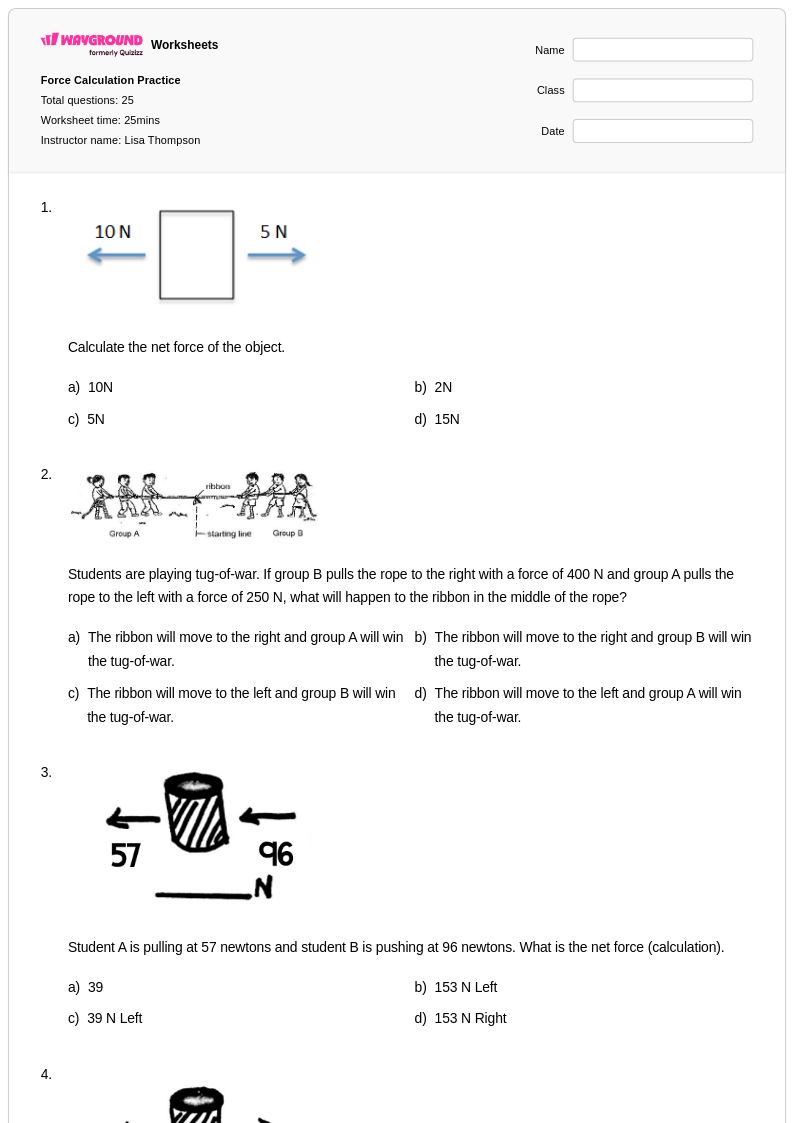
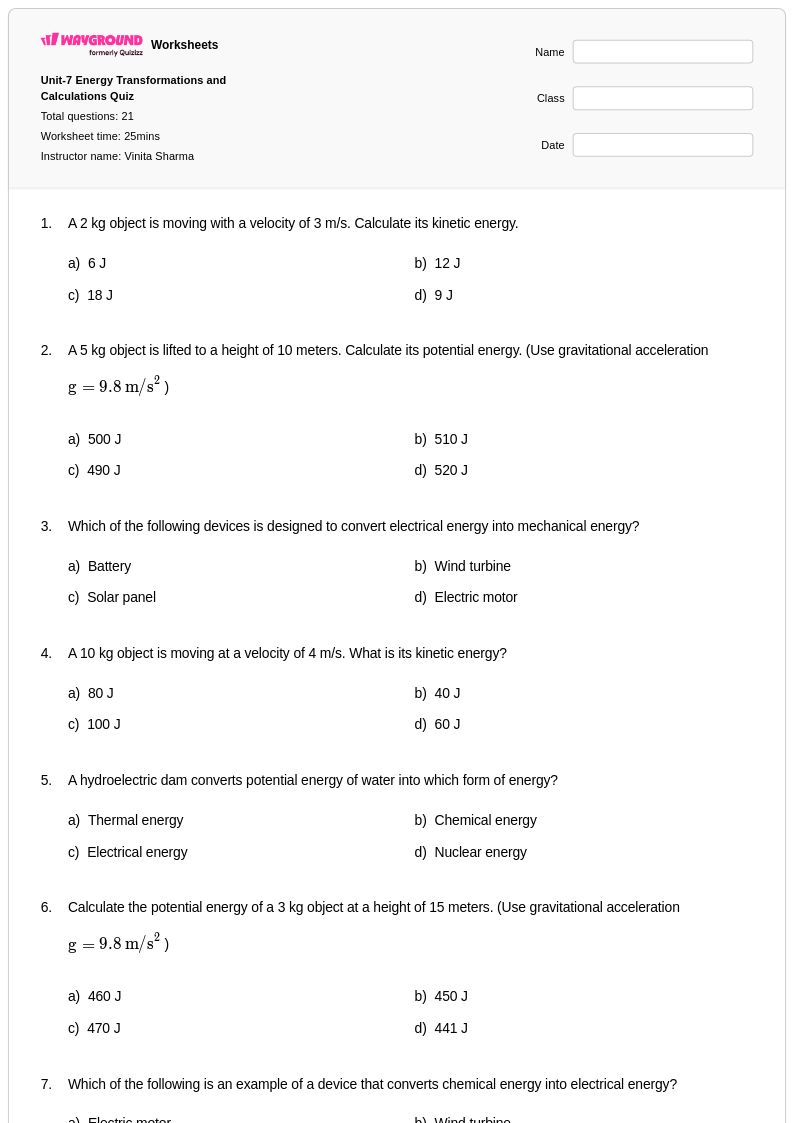
Stoichiometric calculations form the mathematical foundation of Class 10 chemistry, requiring students to master the quantitative relationships between reactants and products in chemical reactions. Wayground's comprehensive collection of stoichiometric calculations worksheets provides targeted practice with essential skills including mole-to-mole conversions, mass-to-mass calculations, limiting reagent problems, and percent yield determinations. These carefully crafted practice problems guide students through step-by-step problem-solving processes, from balancing chemical equations to applying dimensional analysis techniques. Each worksheet comes with a detailed answer key that helps students identify common calculation errors and reinforces proper methodology, while the free printable pdf format ensures accessibility for both classroom instruction and independent study sessions.
Wayground's extensive library of millions of teacher-created resources offers chemistry educators an unparalleled selection of stoichiometric calculations materials specifically designed for Class 10 students. The platform's advanced search and filtering capabilities allow teachers to quickly locate worksheets aligned with specific chemistry standards and learning objectives, while differentiation tools enable customization based on individual student needs and skill levels. Whether accessed in digital format for interactive learning or printed as traditional worksheets, these resources support comprehensive lesson planning by providing options for initial skill introduction, guided practice, remediation for struggling learners, and enrichment challenges for advanced students. The flexible format options and immediate availability of answer keys streamline assessment processes and enable teachers to provide timely feedback on complex stoichiometric problem-solving techniques.
FAQs
How do I teach stoichiometric calculations to chemistry students?
Start by ensuring students have a solid grasp of the mole concept and balanced chemical equations before introducing mole ratios. Build sequentially from mole-to-mole conversions to mass-mass problems, then layer in limiting reagent and percent yield calculations once the foundational steps are secure. Using dimensional analysis as a consistent problem-solving framework helps students avoid unit errors and approach multi-step problems systematically. Visual roadmaps or flowcharts that show the conversion pathway from given to unknown quantities are especially effective for keeping students on track.
What types of practice problems help students get better at stoichiometry?
Effective stoichiometry practice should progress from single-step mole-to-mole problems to more complex mass-mass and volume-based calculations before introducing limiting reagents and percent yield. Students benefit from seeing the same reaction type presented in varied formats so they can identify the pattern regardless of how the question is worded. Multi-step problems that require students to chain conversions together are particularly useful for building the fluency needed on exams. Mixing straightforward calculations with conceptual questions about why a limiting reagent controls product yield deepens overall understanding.
What mistakes do students commonly make when doing stoichiometric calculations?
The most frequent error is skipping the step of balancing the equation before setting up mole ratios, which produces systematically wrong answers. Students also commonly invert mole ratios or apply them to the wrong substance, particularly when multiple reactants are involved. In limiting reagent problems, a recurring mistake is assuming the reactant present in the smaller mass is automatically the limiting reagent without converting to moles first. For percent yield, students often confuse theoretical yield with actual yield or forget to express the result as a percentage.
How can I differentiate stoichiometry instruction for students at different skill levels?
For students who are struggling, focus remediation on a single conversion type at a time and provide structured templates that scaffold the dimensional analysis setup step by step. Advanced learners can be challenged with multi-step problems involving gas stoichiometry, solution stoichiometry, or real-world industrial yield scenarios. On Wayground, teachers can apply accommodations such as reduced answer choices to lower cognitive load for individual students, or enable the Read Aloud feature for students who need text support, while the rest of the class works under standard settings.
How do I use Wayground's stoichiometric calculations worksheets in my chemistry class?
Wayground's stoichiometric calculations worksheets are available as printable PDFs, making them straightforward to use as in-class practice, homework, or review packets. They are also available in digital formats for technology-integrated classrooms, and teachers can host them as a quiz directly on the Wayground platform. Each worksheet includes answer keys and step-by-step solutions, so they work equally well for guided instruction, independent practice, or self-paced review. The progression from basic molar conversions to complex multi-step problems means a single worksheet collection can serve multiple points in a unit.
How do I know if students truly understand stoichiometry versus just following steps mechanically?
Ask students to explain why they chose a particular mole ratio rather than just showing the arithmetic — students who understand the concept can justify each conversion, while those following steps mechanically cannot. A reliable check is to give a problem with a deliberately unbalanced equation and see whether students catch and correct the error before calculating. Another strong indicator is whether students can identify the limiting reagent conceptually before performing any calculation, using reasoning about relative quantities rather than only algebra.