
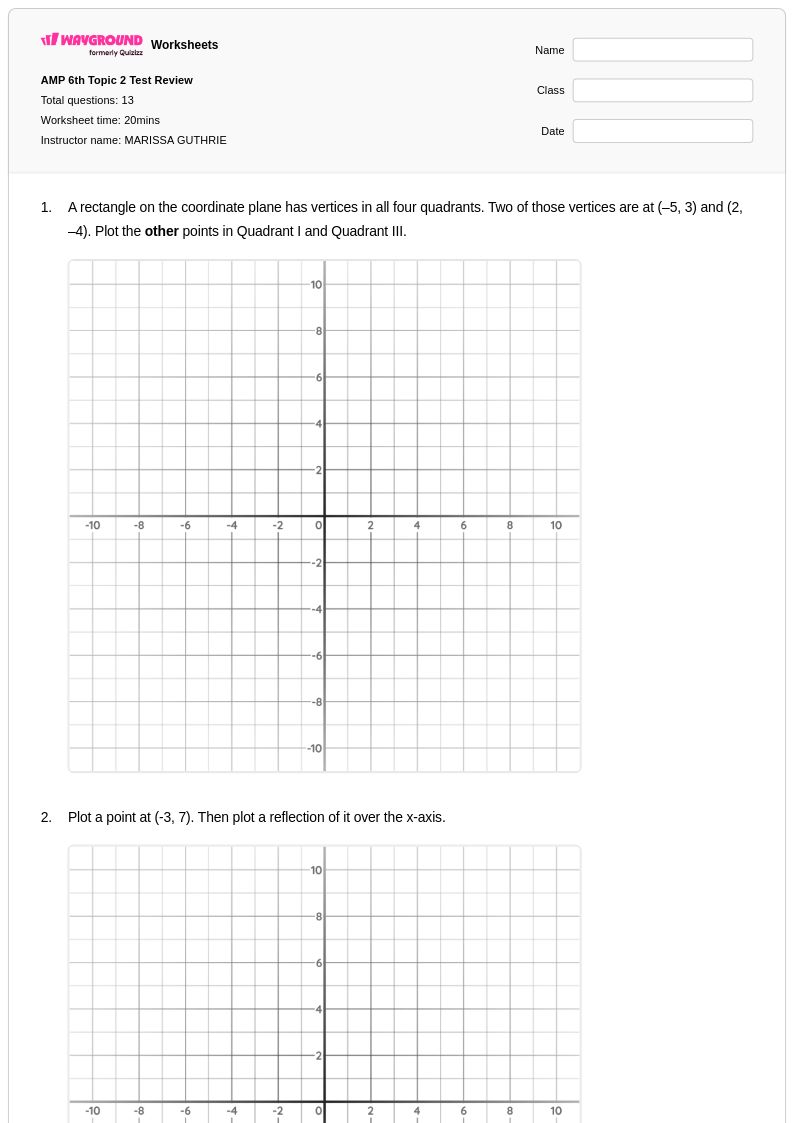
15 Q
6th - 8th
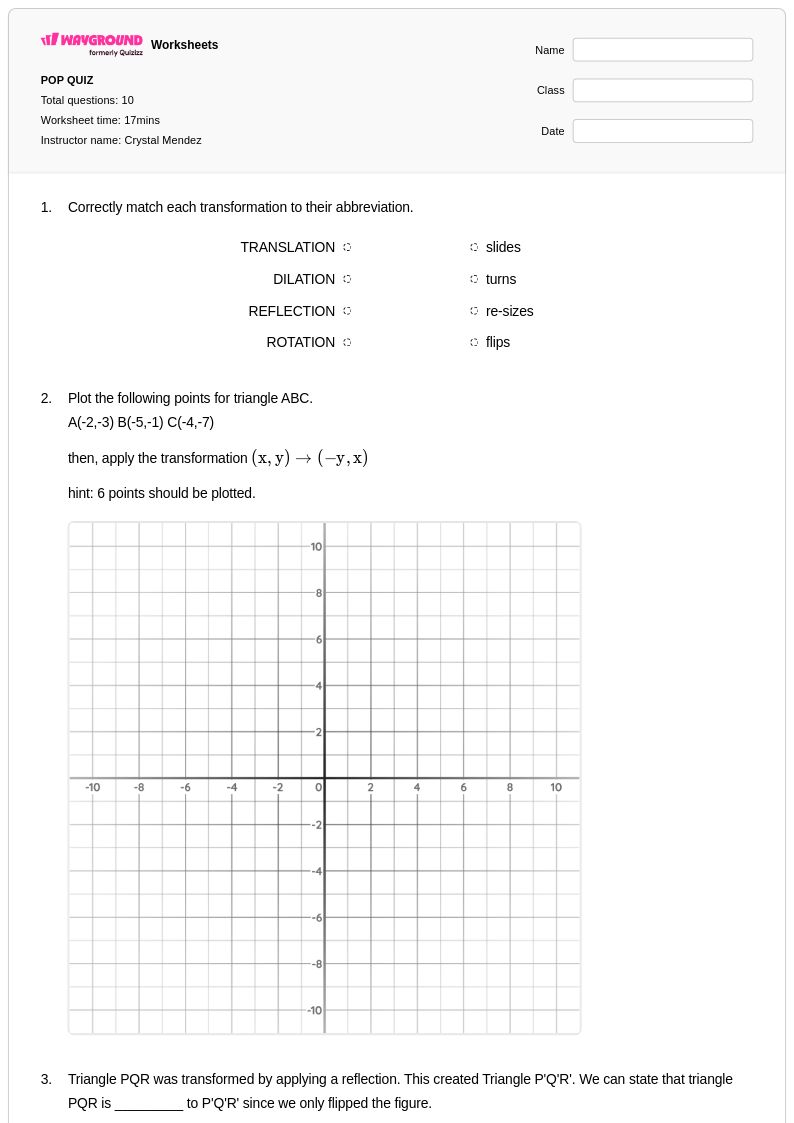
10 Q
10th
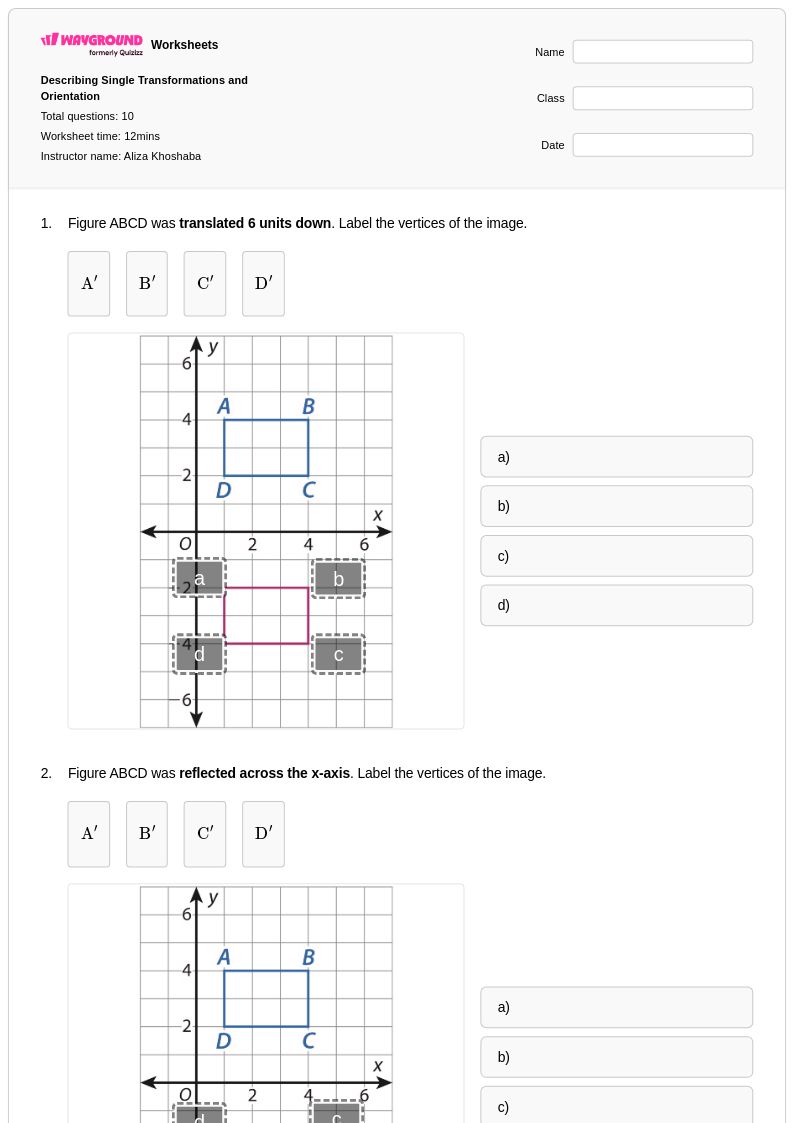
10 Q
8th - 9th
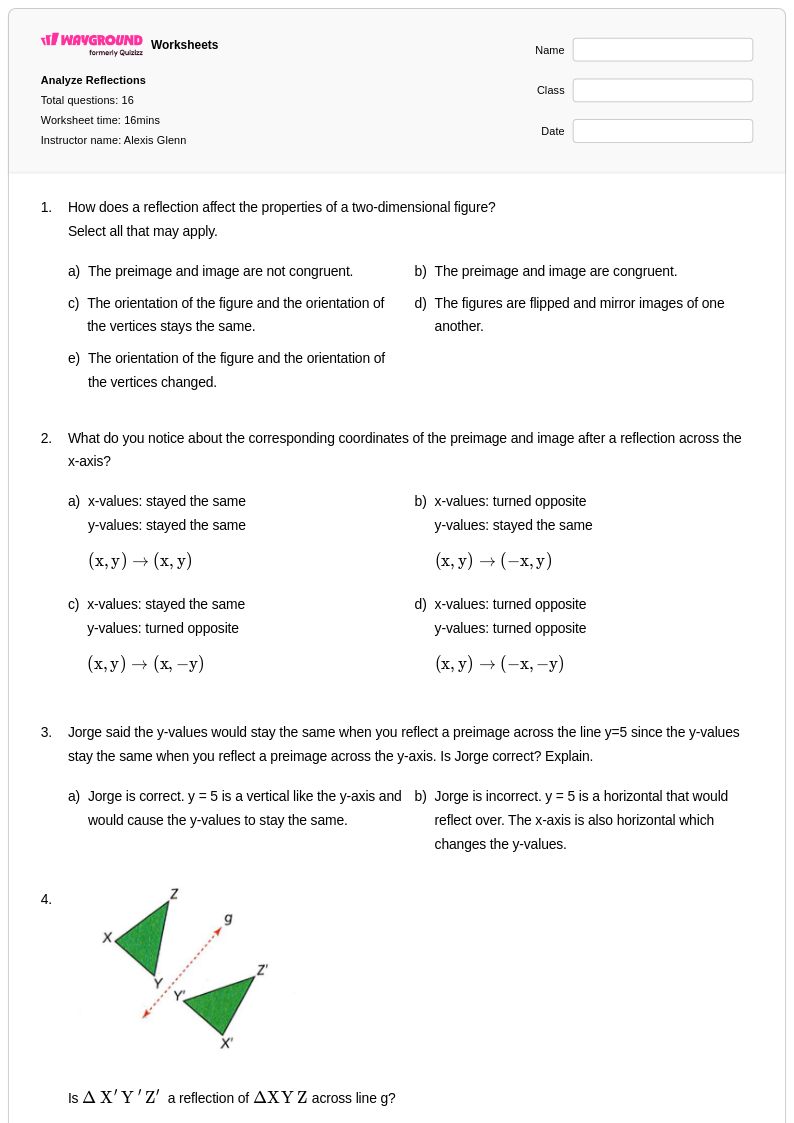
16 Q
8th
26 Q
10th
15 Q
2nd - Uni
11 Q
8th
7 Q
2nd
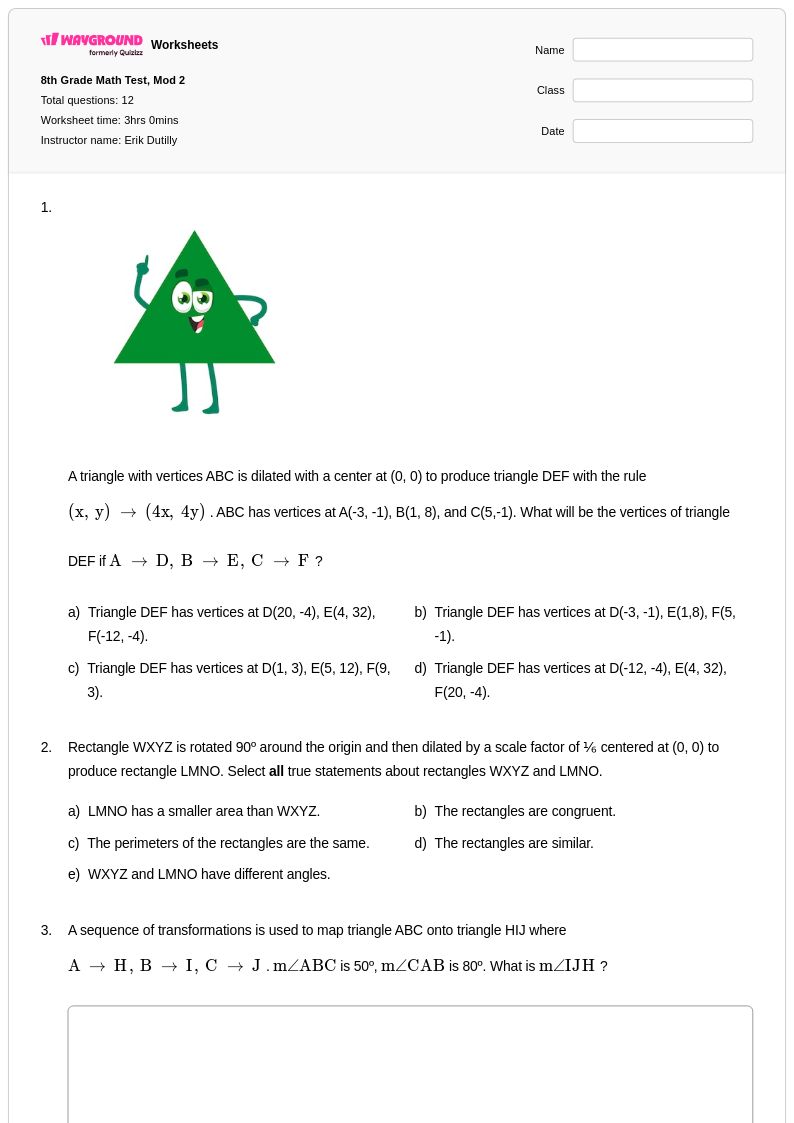
12 Q
8th
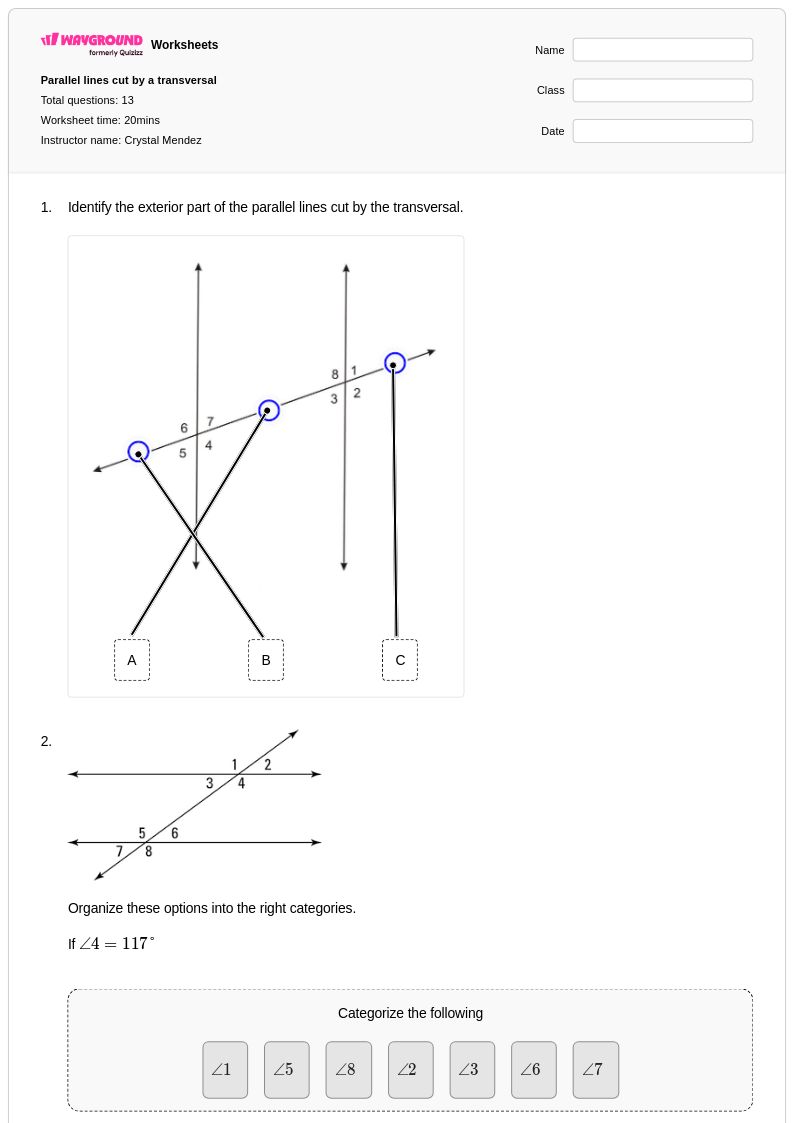
13 Q
10th
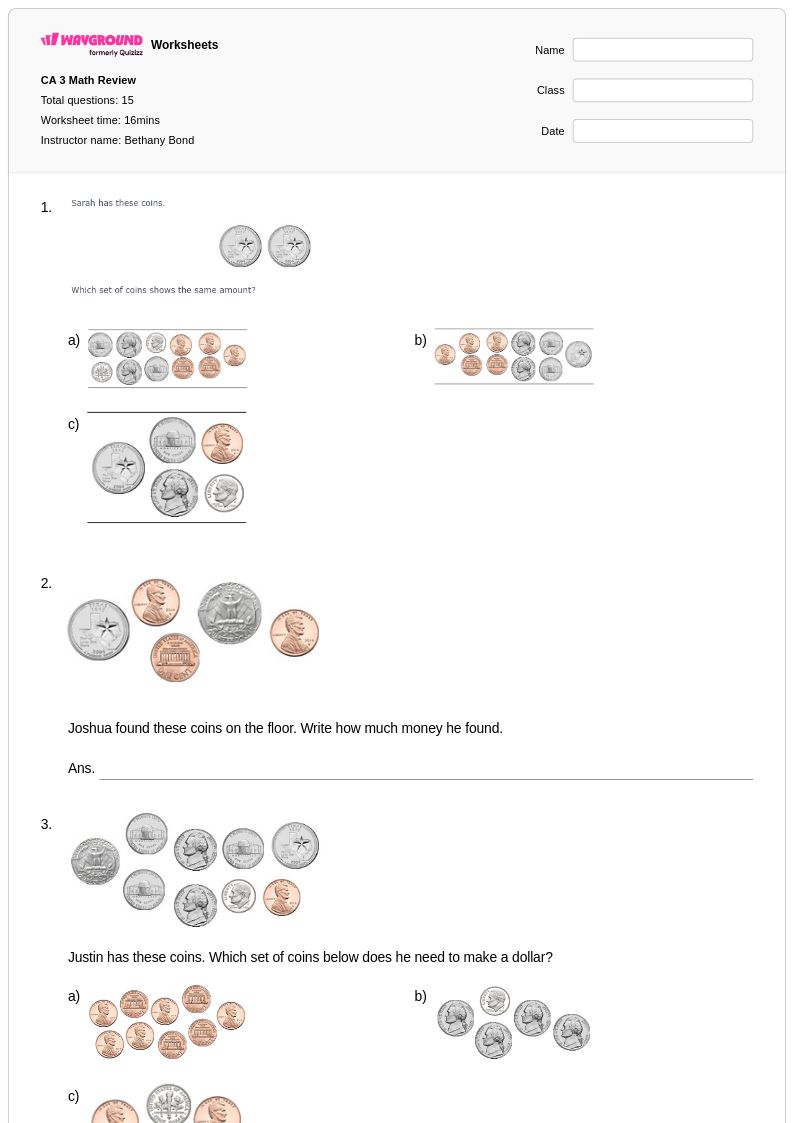
15 Q
2nd
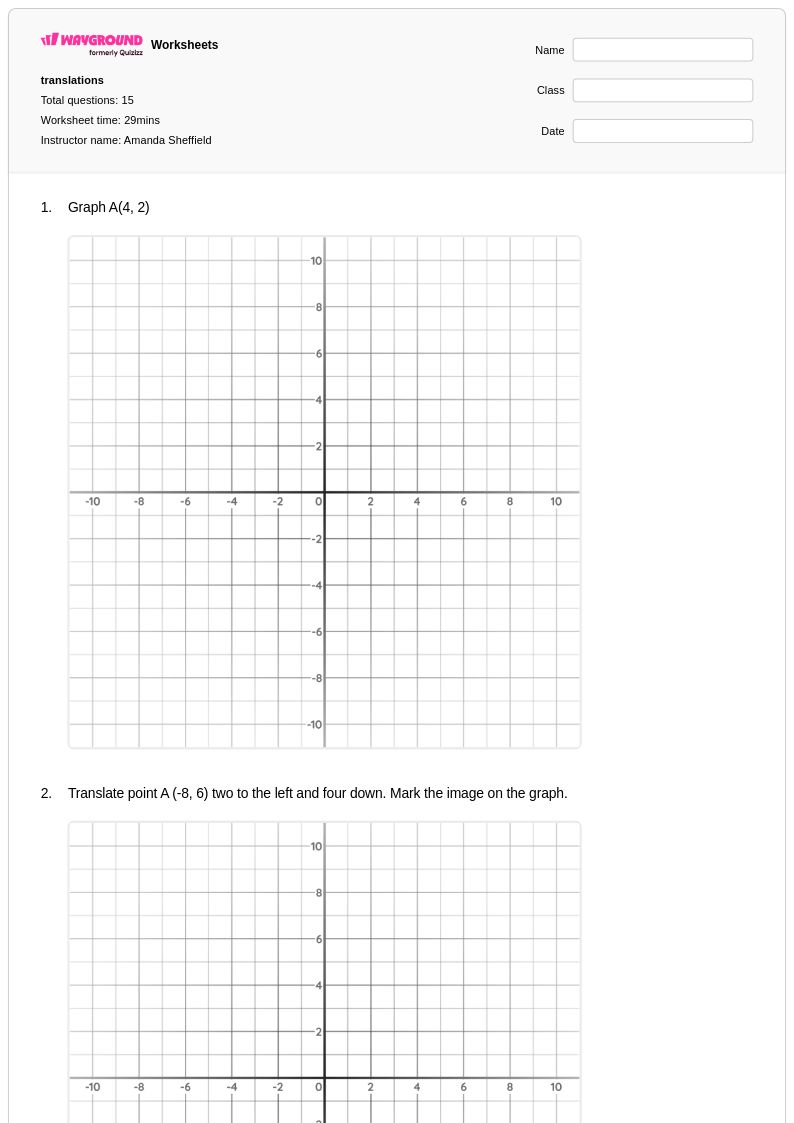
15 Q
7th
18 Q
3rd
20 Q
8th
17 Q
1st - 3rd
10 Q
8th
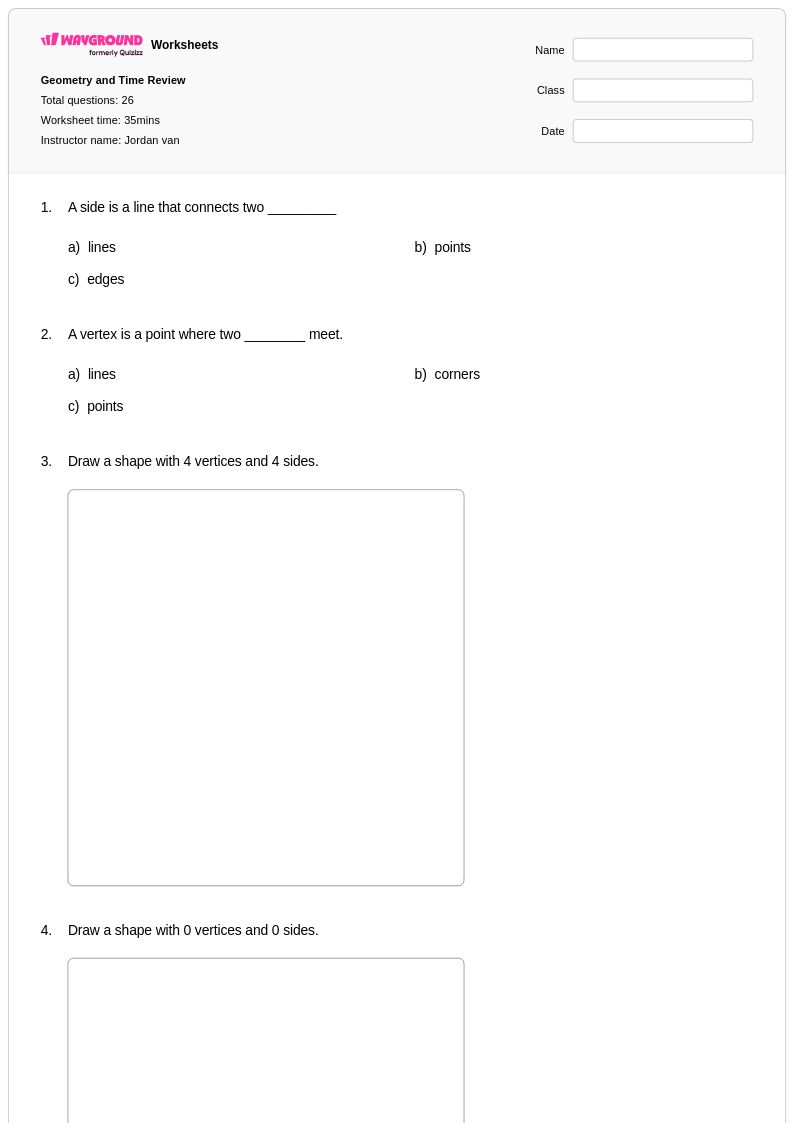
26 Q
1st
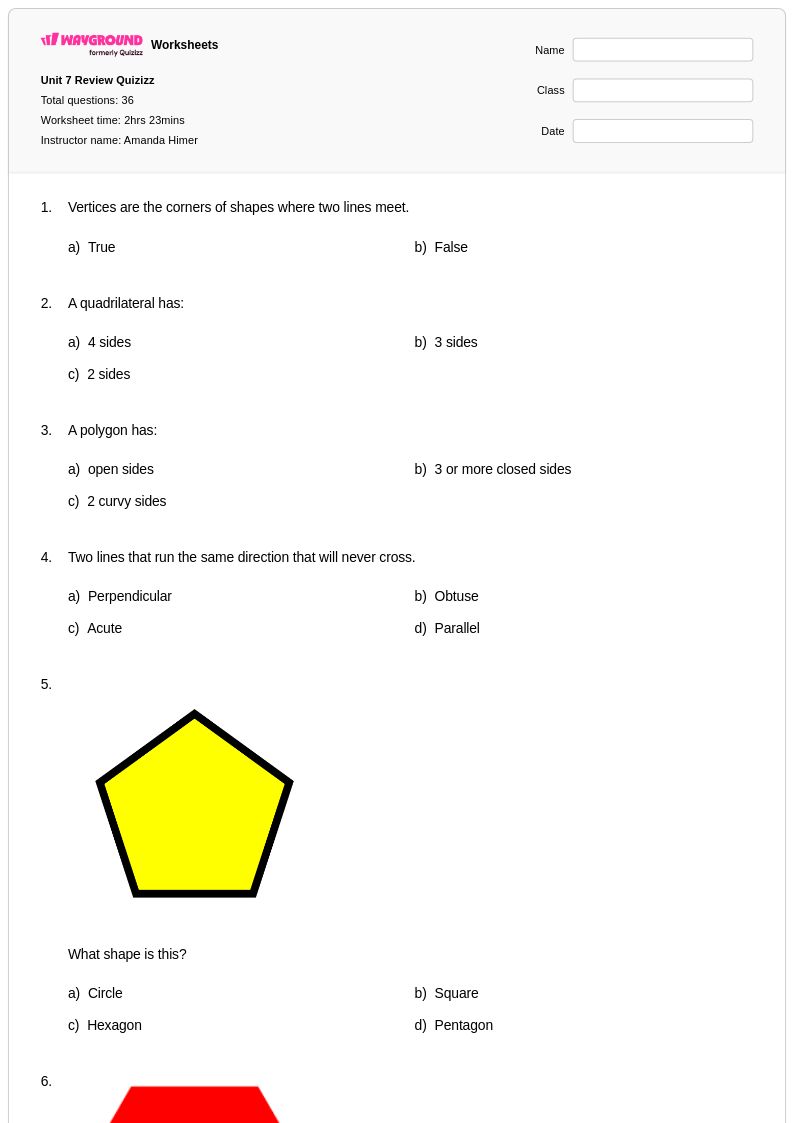
36 Q
2nd
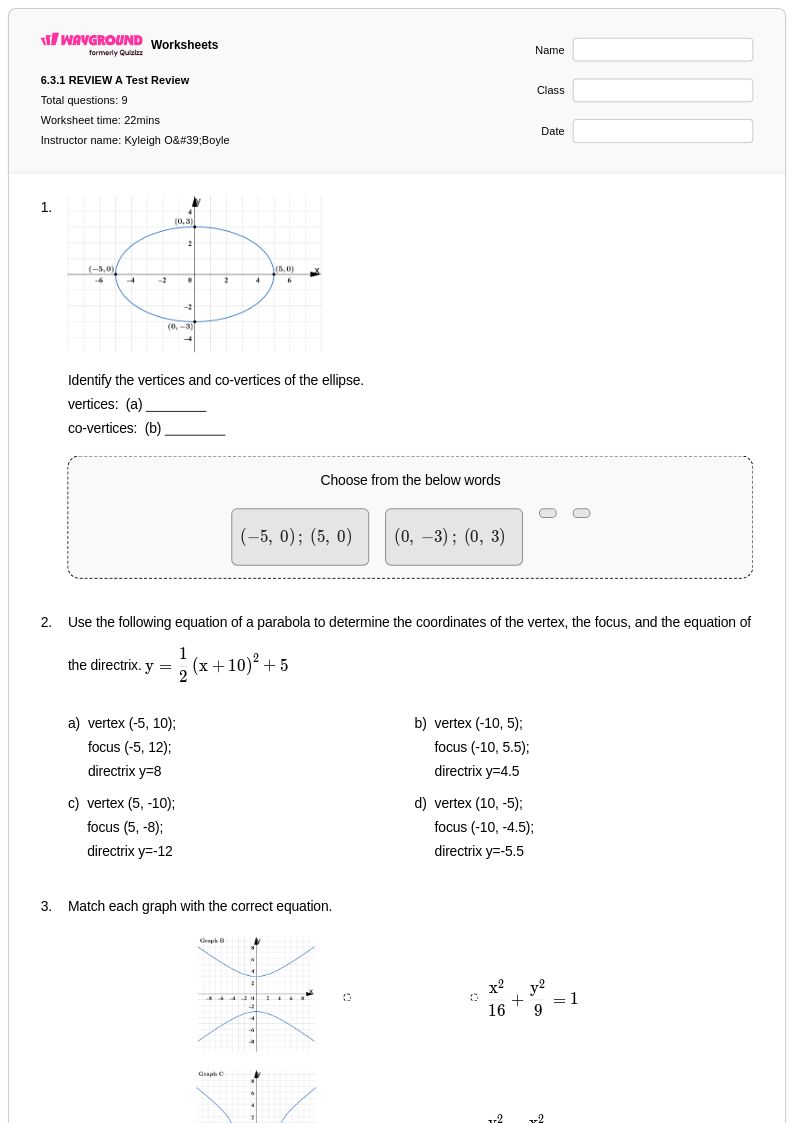
9 Q
12th
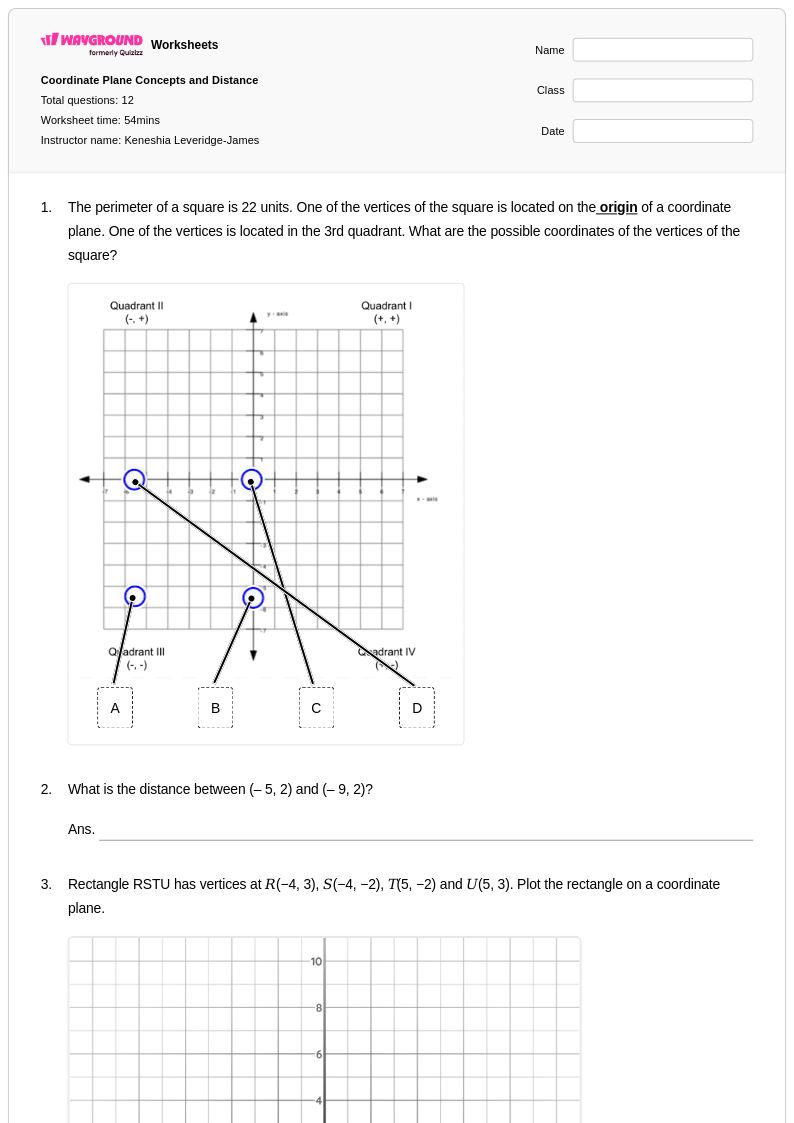
12 Q
6th
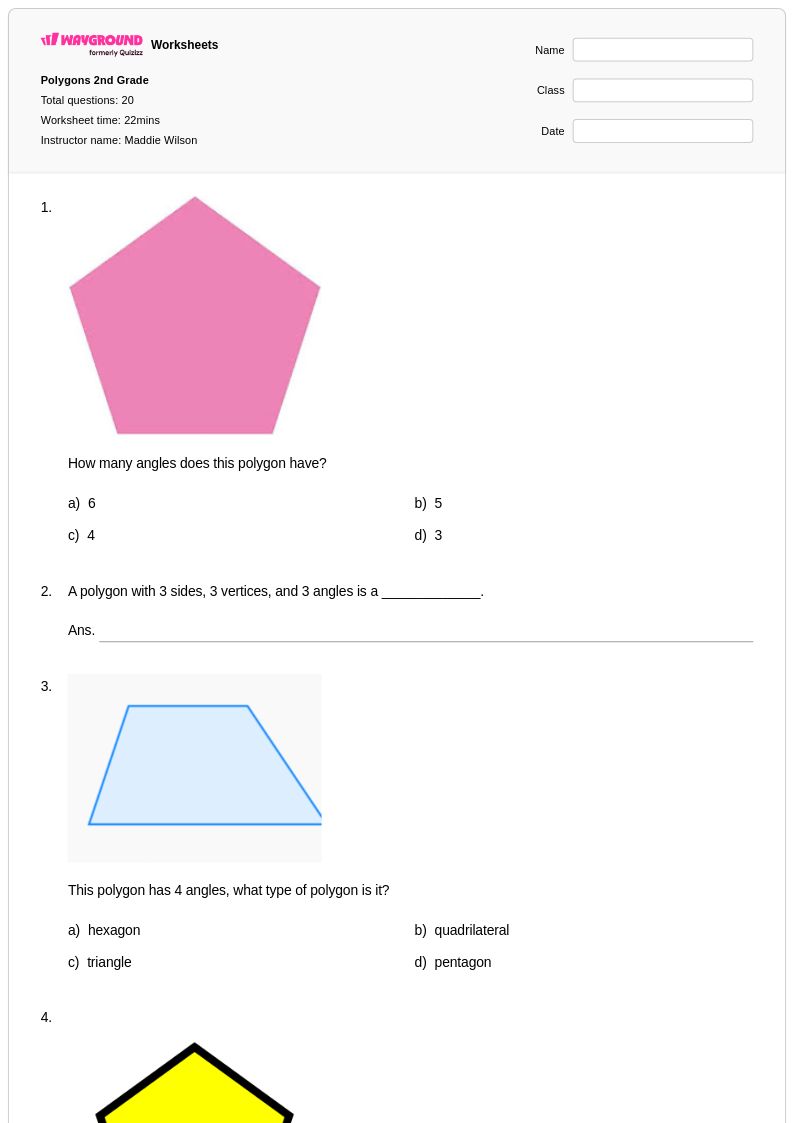
20 Q
2nd
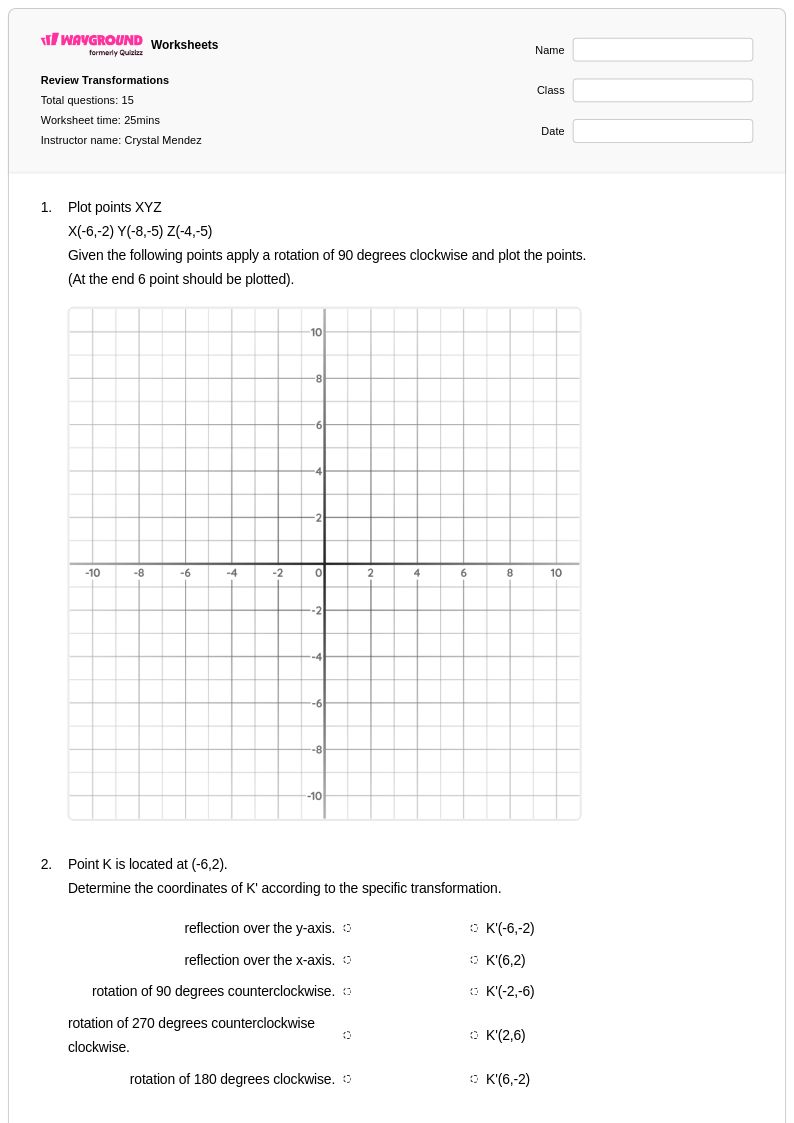
15 Q
10th
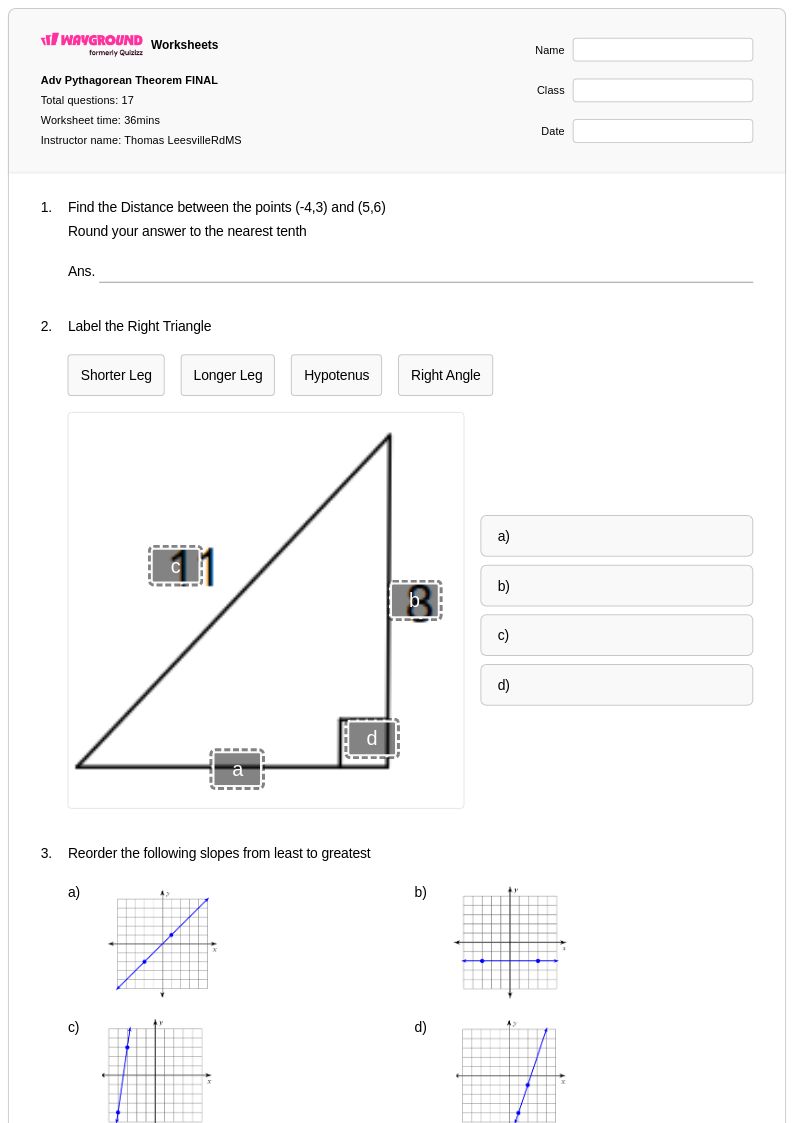
17 Q
8th
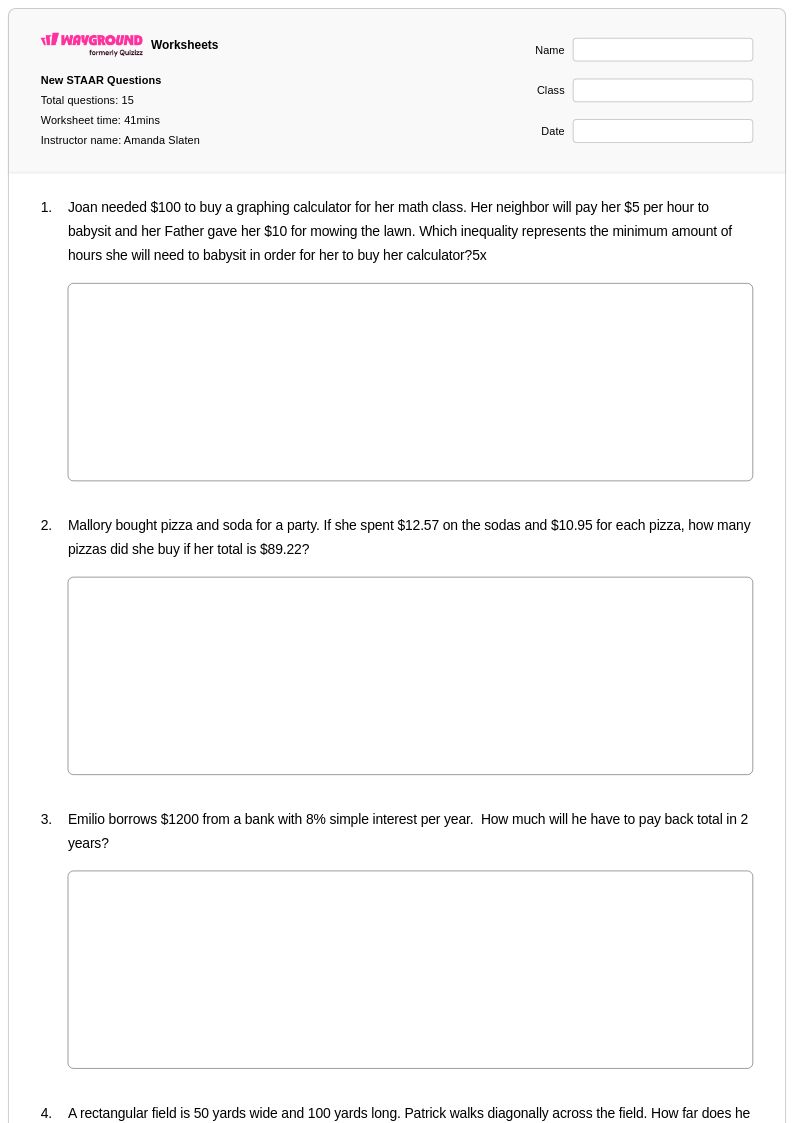
15 Q
8th
Explore Other Subject Worksheets for kindergarten
Explore printable Vertices worksheets for Kindergarten
Vertices worksheets for Kindergarten students available through Wayground (formerly Quizizz) introduce young learners to the fundamental geometric concept of corners and points where lines meet in shapes. These carefully designed printables help children develop spatial reasoning skills by identifying, counting, and understanding vertices in basic two-dimensional shapes like triangles, squares, rectangles, and circles. The worksheets strengthen visual discrimination abilities and mathematical vocabulary through engaging activities that make abstract geometric concepts concrete and accessible for early learners. Each worksheet includes practice problems that progress from simple identification tasks to more complex counting exercises, with answer keys provided to support both independent learning and guided instruction. These free resources serve as essential tools for building the foundational geometric knowledge that Kindergarten students need before advancing to more complex mathematical concepts.
Wayground (formerly Quizizz) supports educators with an extensive collection of teacher-created vertices worksheets that can be easily accessed through robust search and filtering capabilities designed specifically for Kindergarten geometry instruction. The platform's millions of educational resources include standards-aligned materials that help teachers plan differentiated lessons addressing diverse learning needs within their classrooms. Teachers can customize these printable and digital pdf worksheets to match their specific instructional goals, whether for initial concept introduction, skill remediation, or enrichment activities for advanced learners. The flexible format options allow educators to seamlessly integrate vertices practice into various teaching scenarios, from whole-class instruction to individual practice sessions, while the comprehensive resource library ensures that teachers have access to age-appropriate materials that make geometric learning both effective and engaging for young students.