Free Printable Chromosome Structure and Numbers worksheets
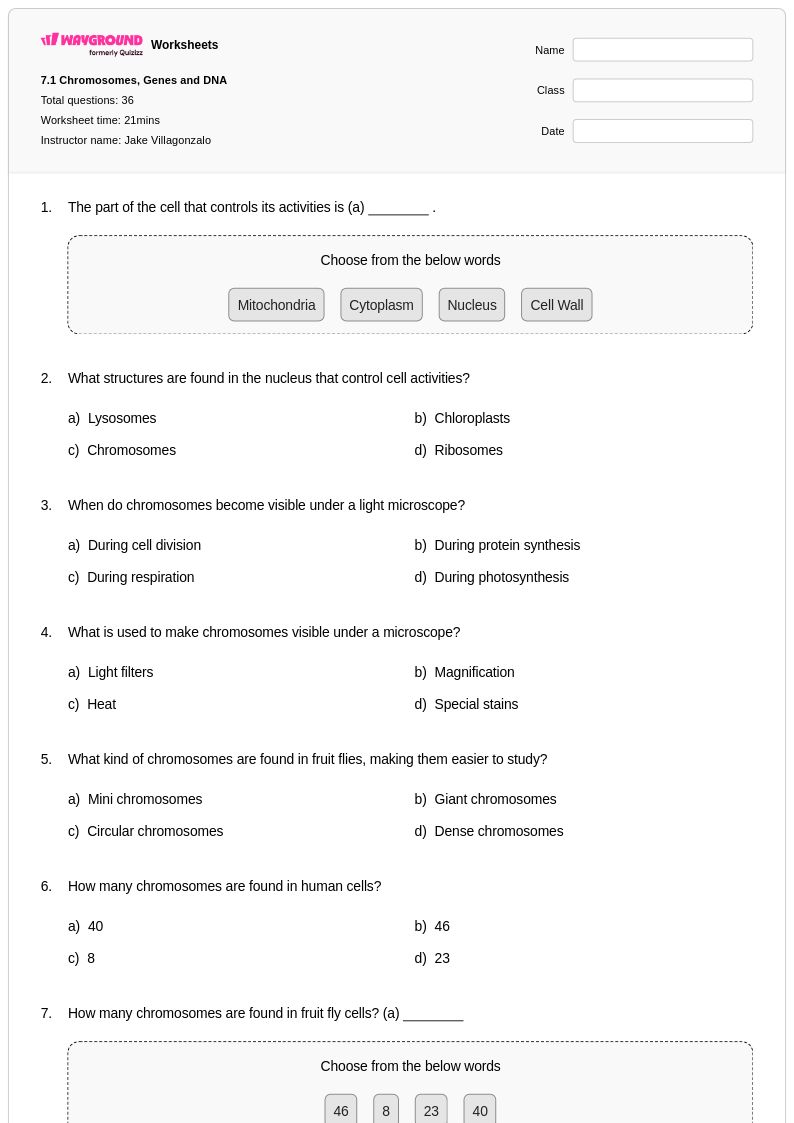
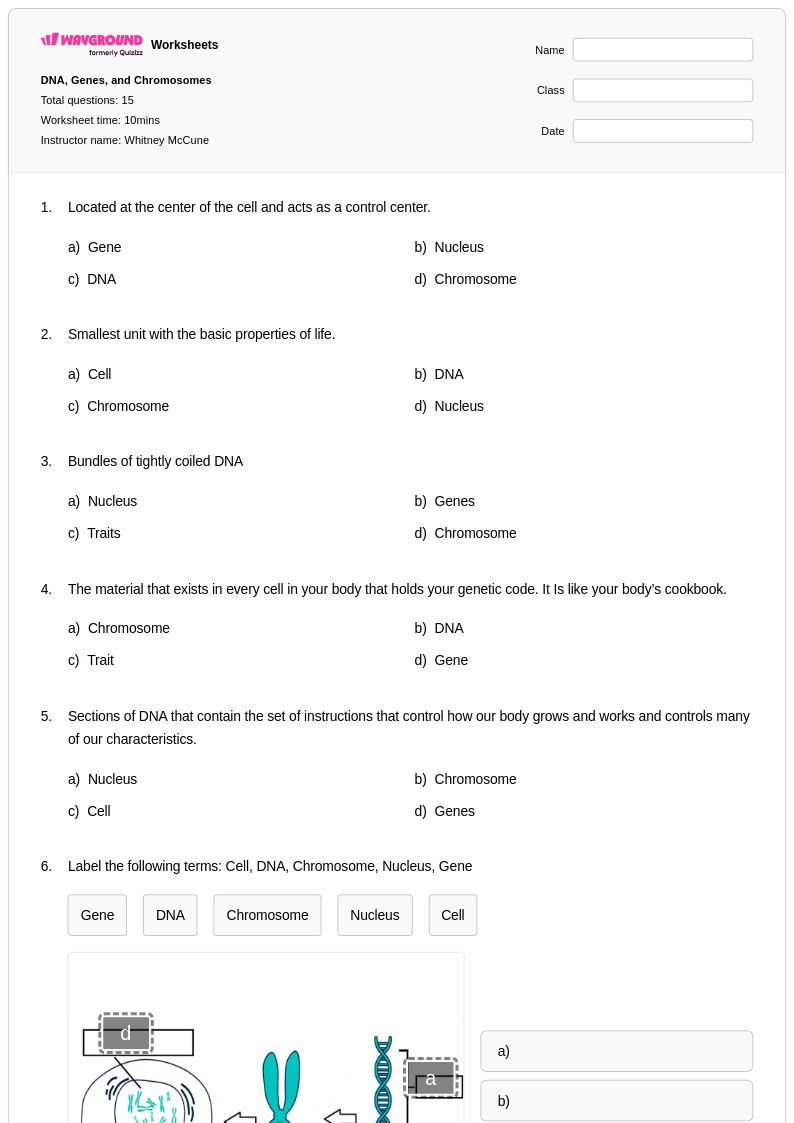
Explore Wayground's free chromosome structure and numbers worksheets with printable PDFs, practice problems, and answer keys to help students master genetic organization, karyotypes, and chromosomal variations in living organisms.
Explore printable Chromosome Structure and Numbers worksheets
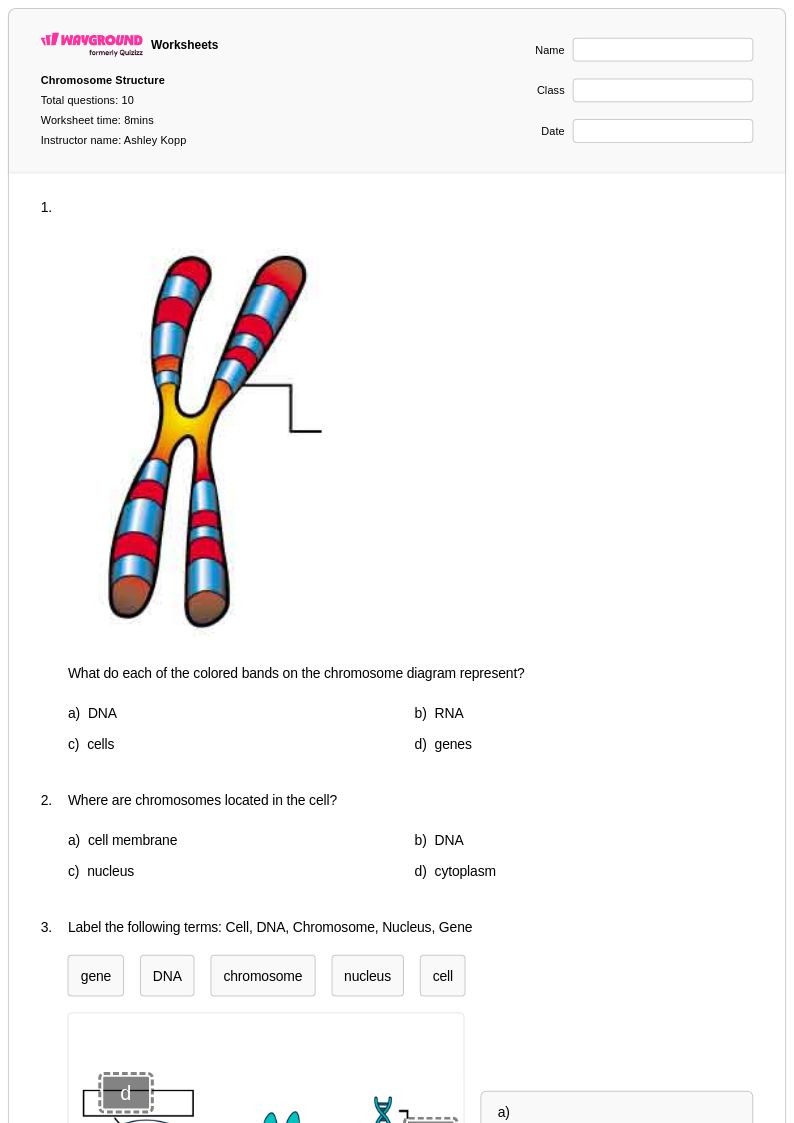
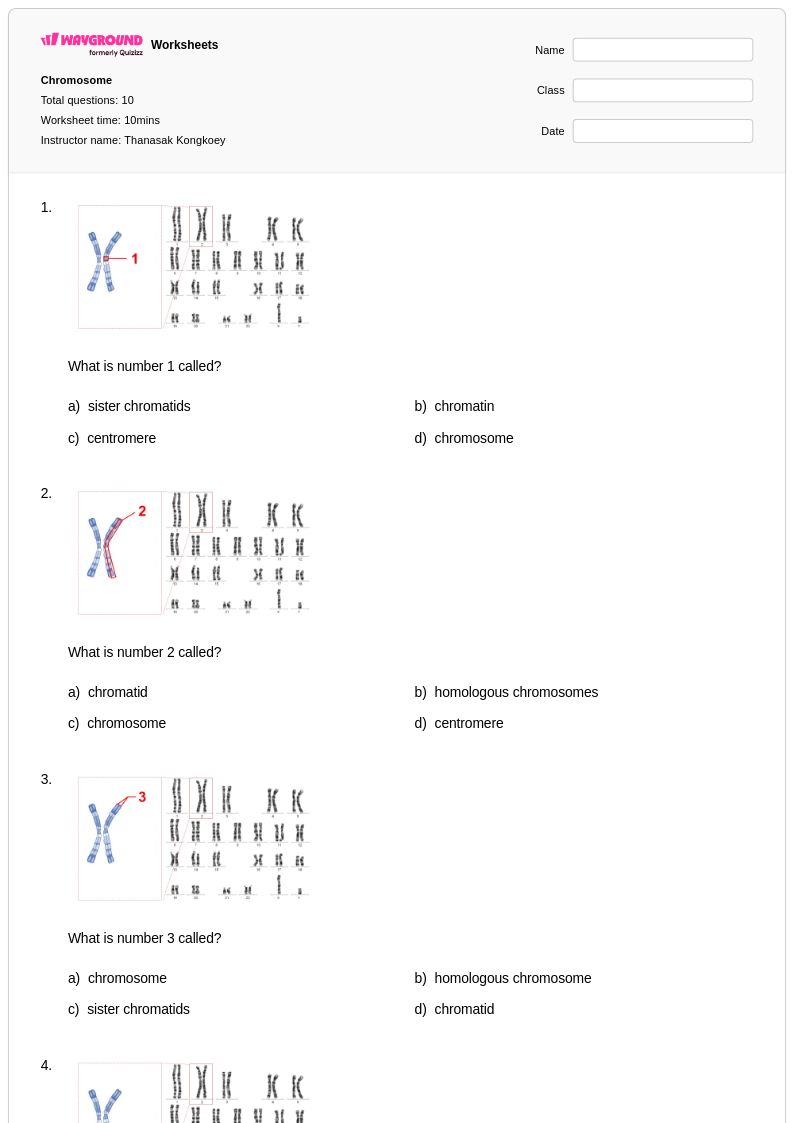
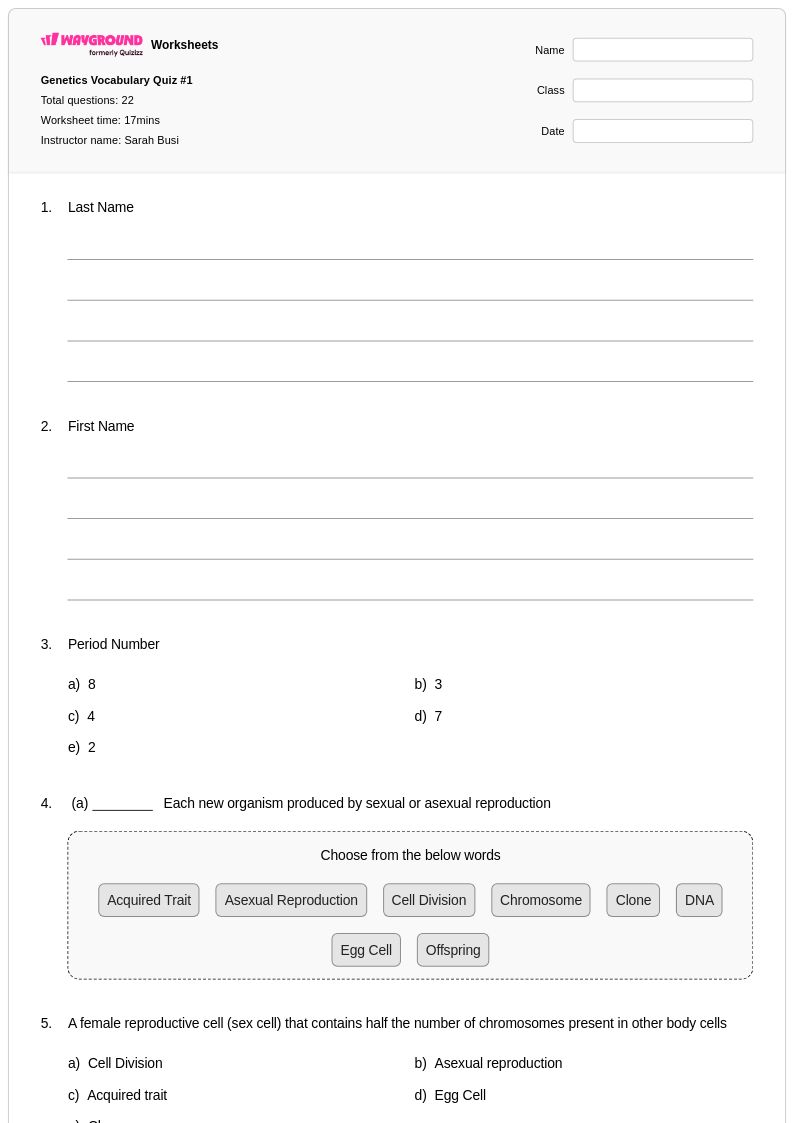
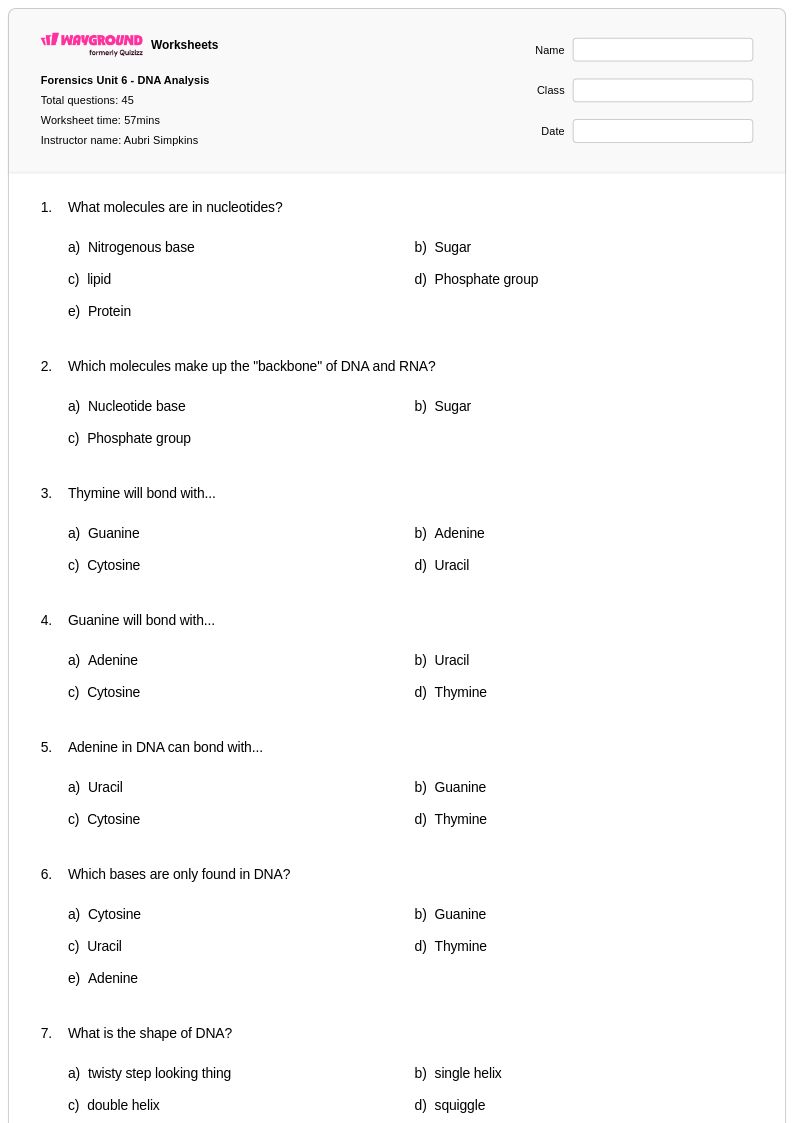
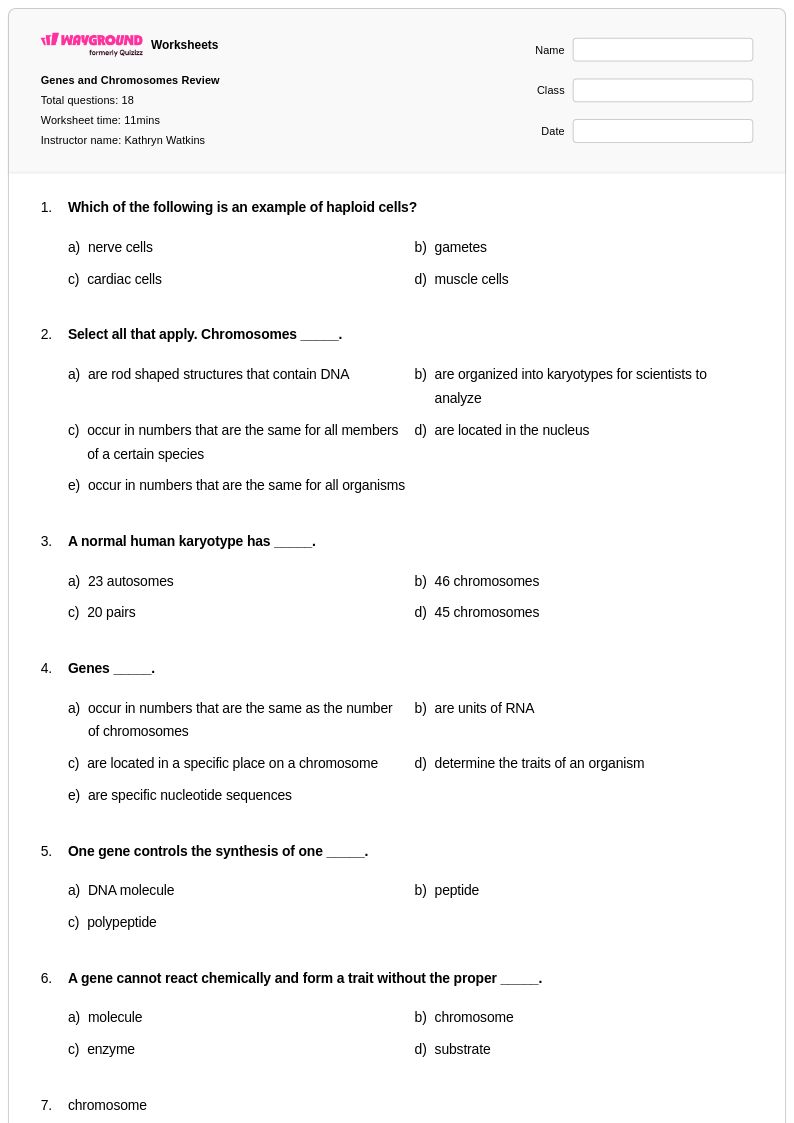
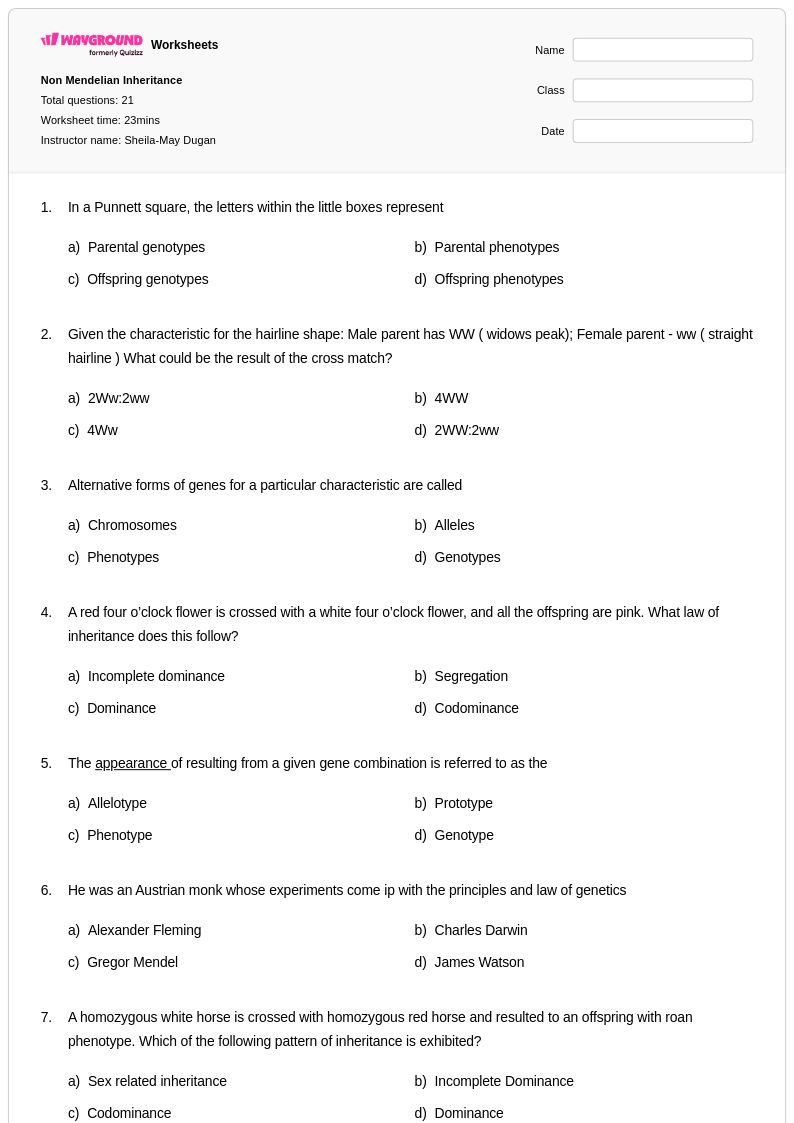
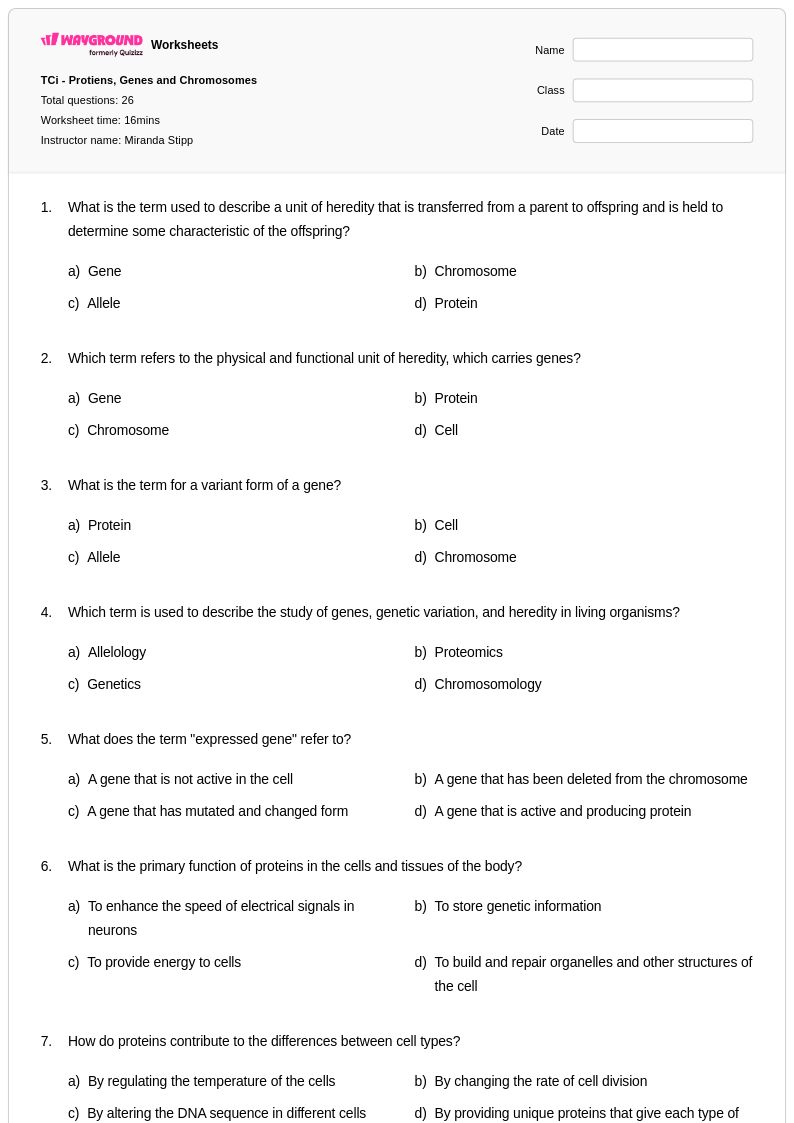
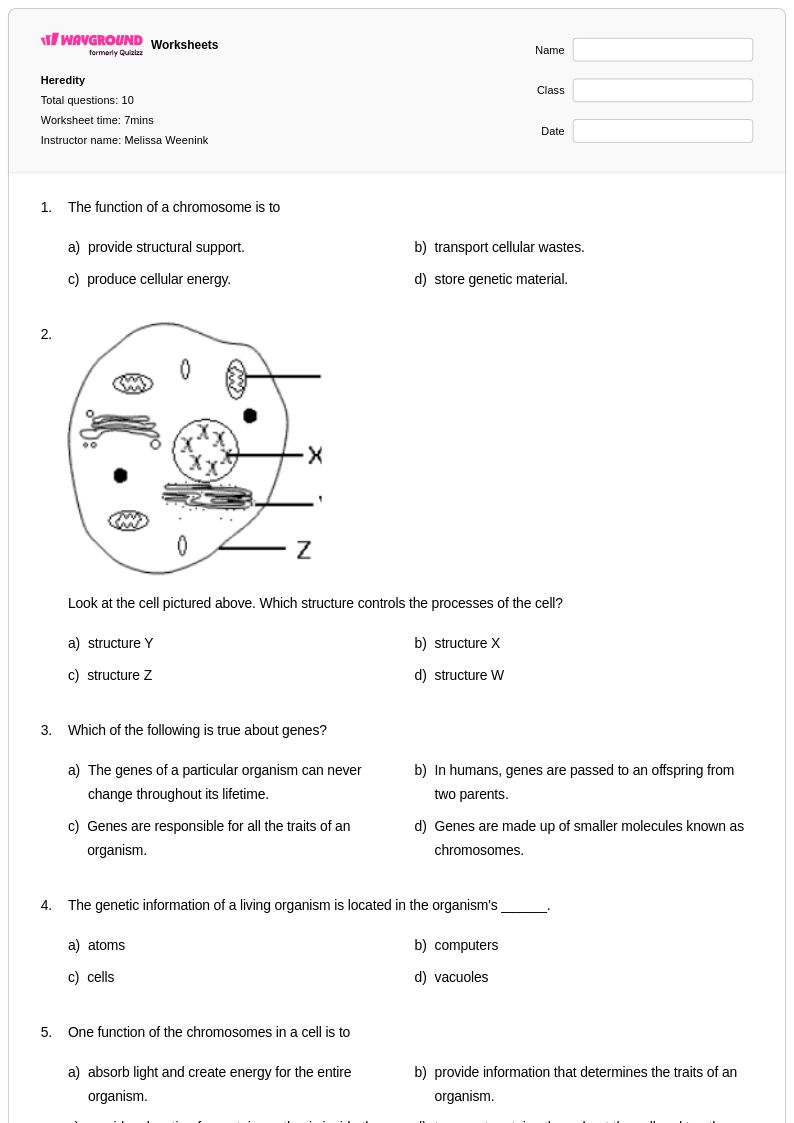
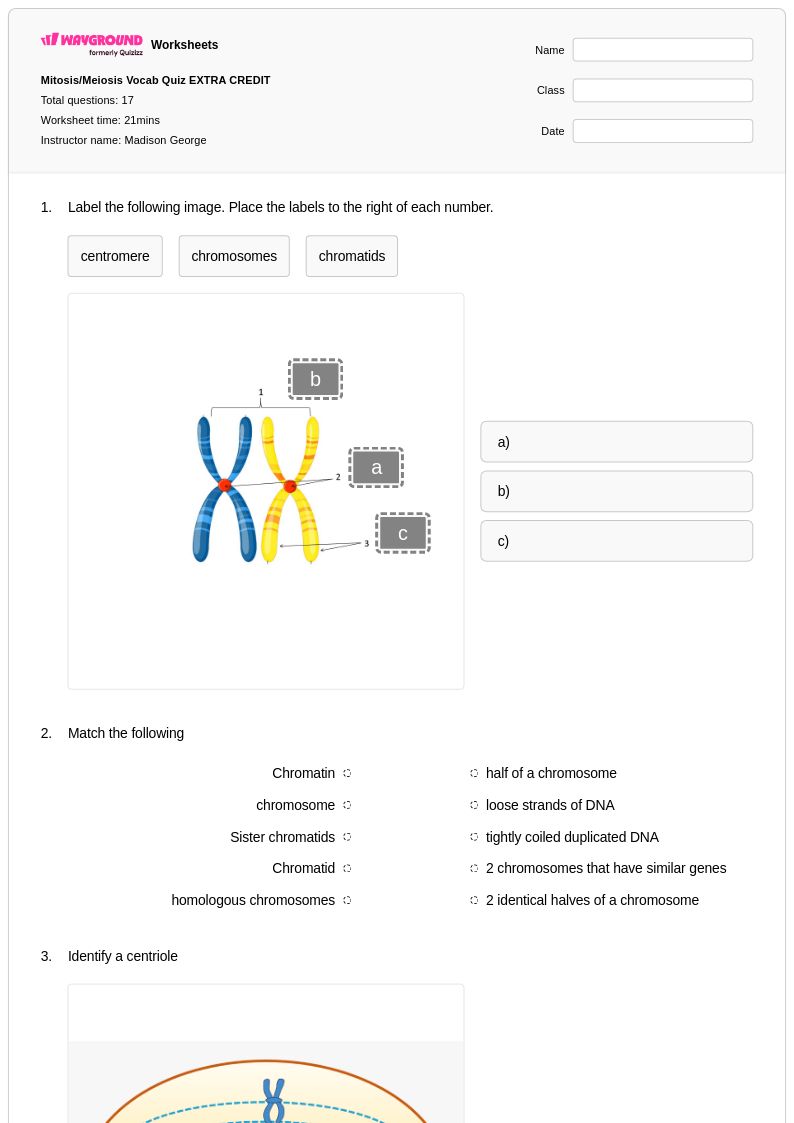
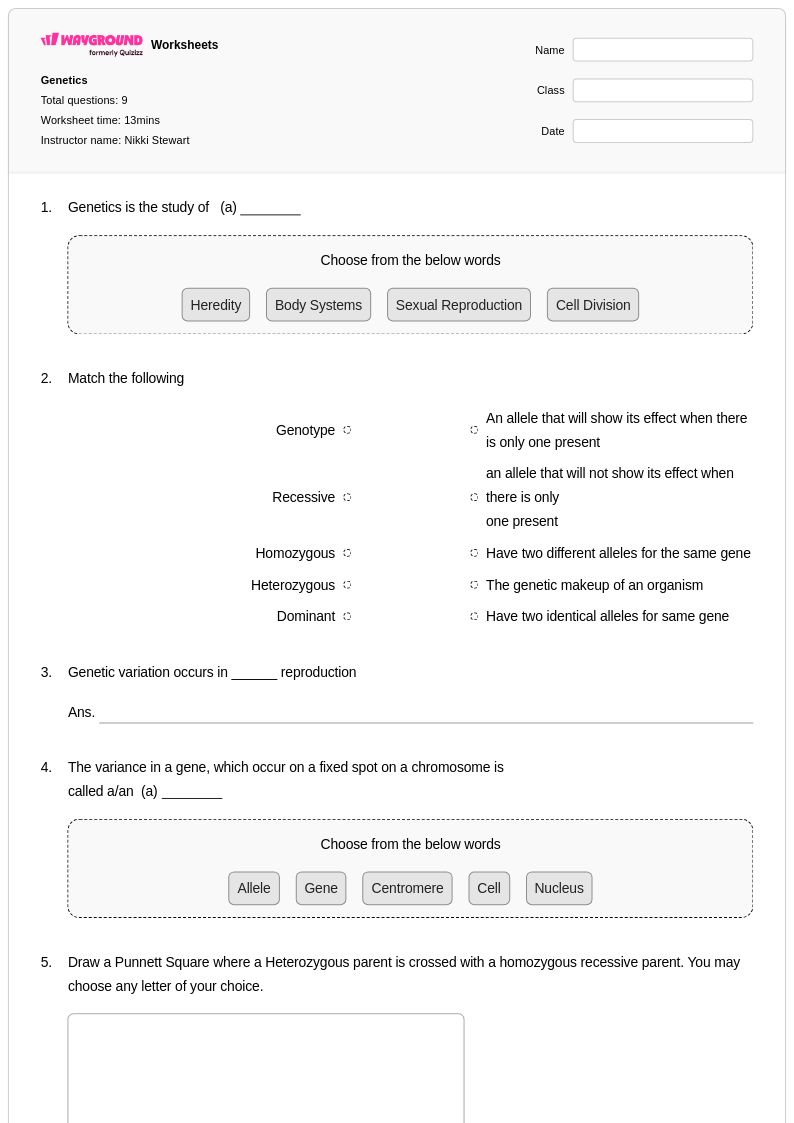
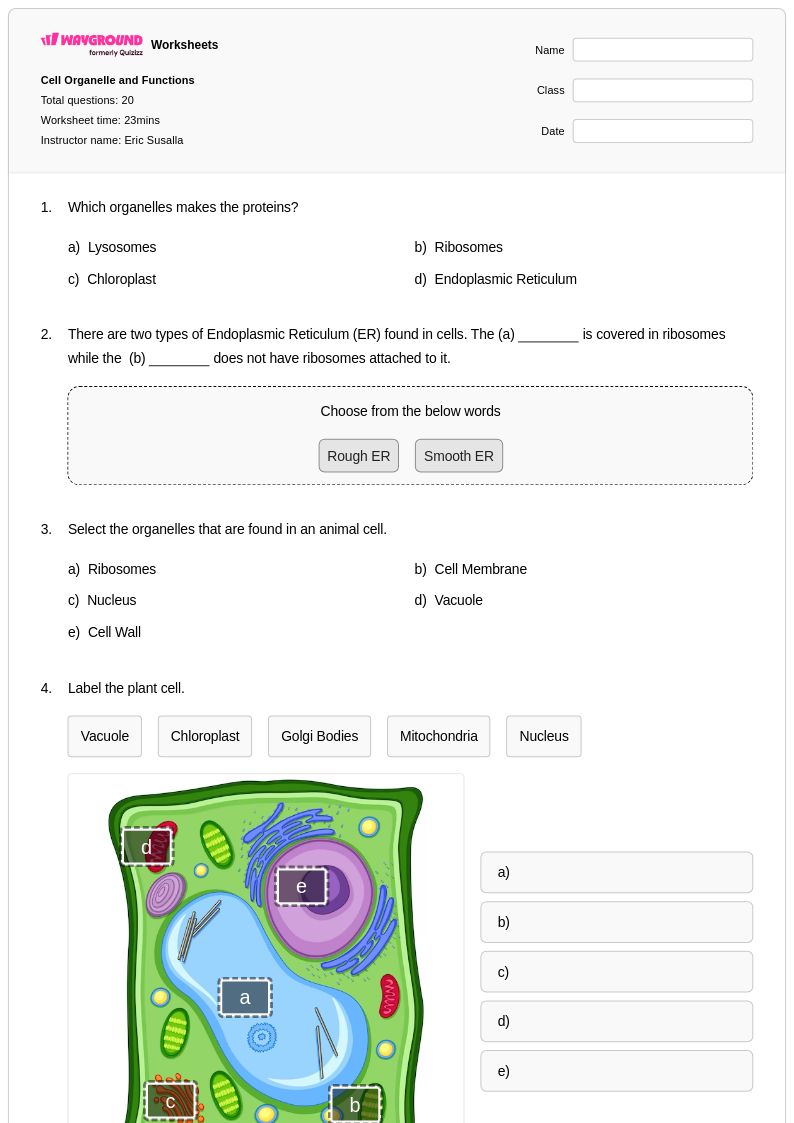
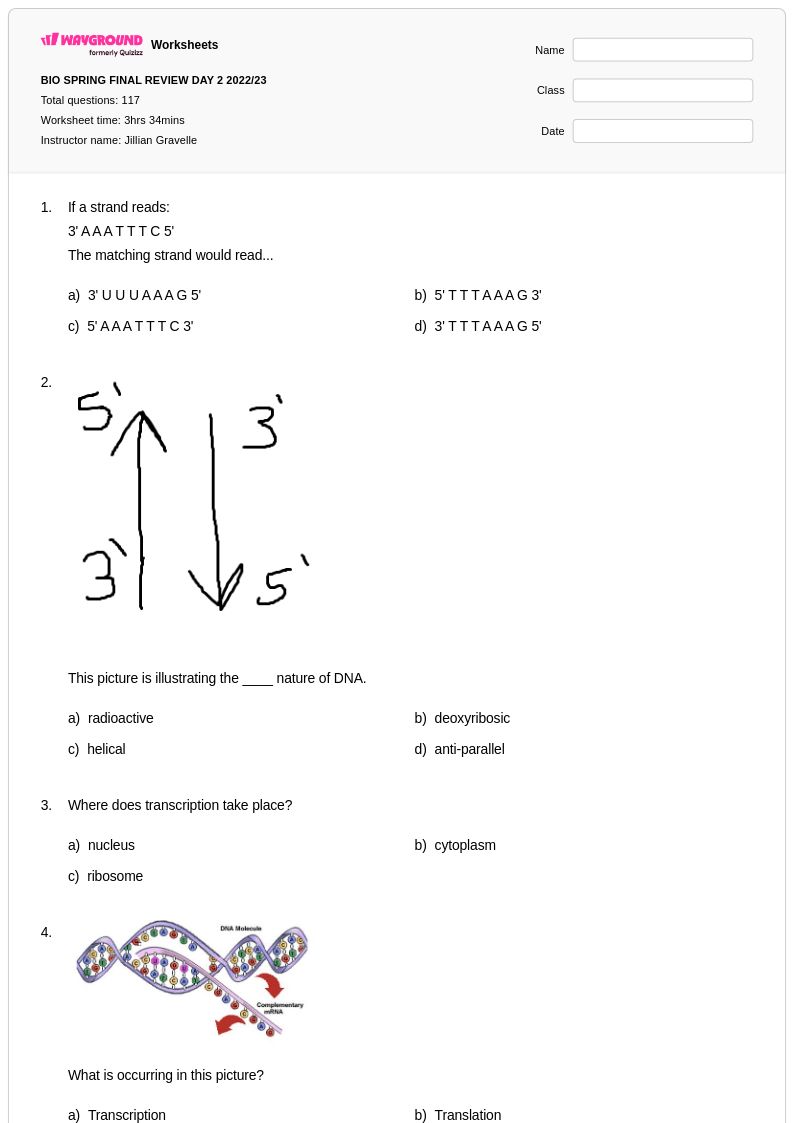
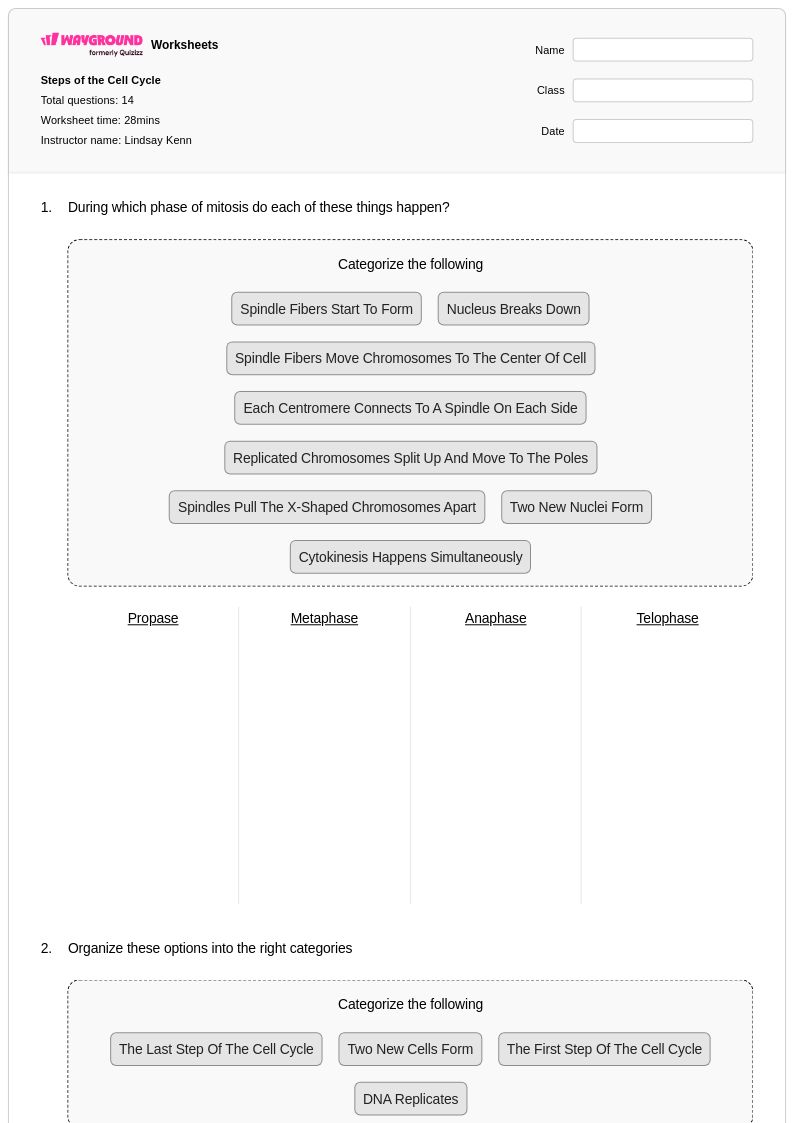
Chromosome structure and numbers worksheets available through Wayground (formerly Quizizz) provide comprehensive practice materials that help students master the fundamental concepts of cellular genetics and chromosome organization. These expertly designed worksheets guide learners through essential topics including chromosome composition, chromatin structure, karyotype analysis, and the relationship between chromosome numbers and genetic disorders. Students develop critical analytical skills by working through practice problems that require them to identify chromosome parts such as centromeres, chromatids, and telomeres, while also learning to distinguish between diploid and haploid chromosome sets across different organisms. Each worksheet includes detailed answer keys and is available as free printable pdf resources, making it easy for educators to incorporate these materials into their biology curriculum and assess student understanding of complex genetic concepts.
Wayground (formerly Quizizz) supports biology teachers with millions of teacher-created chromosome structure and numbers worksheets that can be easily searched, filtered, and customized to meet diverse classroom needs. The platform's extensive collection includes resources aligned with national science standards, offering educators flexibility to select materials appropriate for different learning levels and teaching objectives. Teachers can access both printable pdf formats for traditional classroom use and digital versions for online learning environments, while built-in differentiation tools allow for seamless adaptation of content complexity. These comprehensive worksheet collections serve multiple instructional purposes, from initial concept introduction and skill practice to targeted remediation for struggling students and enrichment activities for advanced learners, enabling educators to effectively plan lessons that reinforce understanding of chromosome organization, genetic variation, and hereditary mechanisms.
FAQs
How do I teach chromosome structure to biology students?
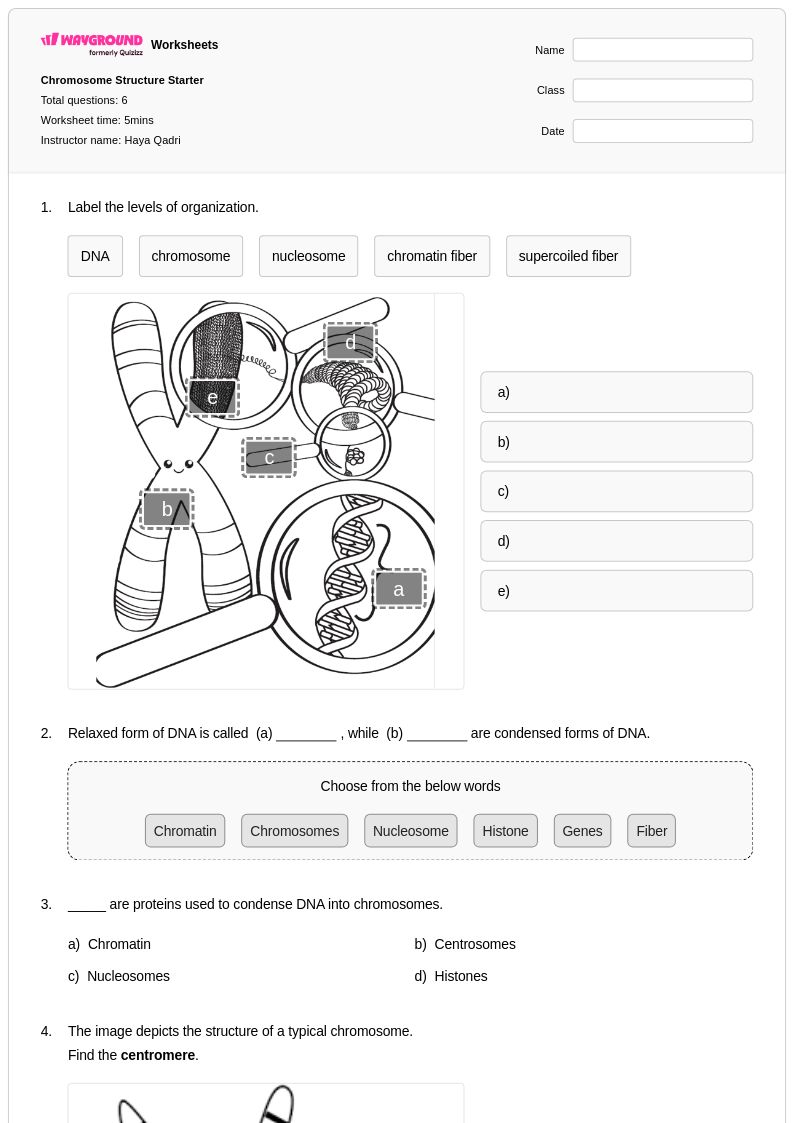
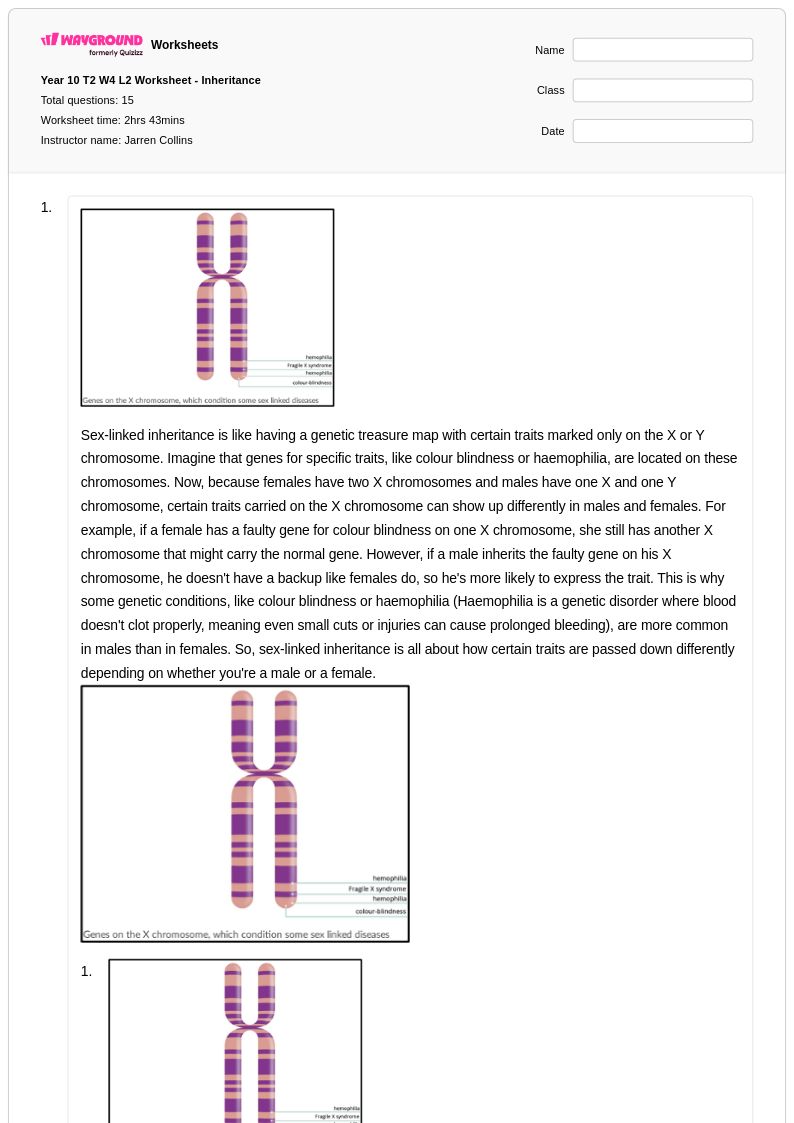
Start by building students' understanding of chromatin organization before introducing the condensed chromosome form they see during cell division. Use labeled diagrams to walk through key structures — centromeres, chromatids, and telomeres — and connect each component to its functional role in DNA packaging and cell replication. Anchoring abstract structures to concrete functions helps students retain the vocabulary and apply it when analyzing karyotypes or explaining chromosomal behavior during mitosis and meiosis.
What's the best way to help students understand diploid vs. haploid chromosome numbers?
Use comparative examples across organisms to make the distinction concrete — humans have 46 chromosomes (diploid, 2n) while gametes carry 23 (haploid, n). Have students calculate chromosome numbers for different species and trace what happens to chromosome count through meiosis and fertilization. Connecting this concept to real reproductive outcomes helps students see why maintaining the correct number across generations matters genetically.
What practice exercises help students get better at karyotype analysis?
Karyotype analysis improves through repeated practice with sorting and matching chromosome images by size, shape, and banding pattern. Exercises that ask students to identify sex chromosomes, detect trisomy conditions like Down syndrome, and compare normal versus abnormal karyotypes build the pattern recognition skills central to this topic. Pairing visual matching tasks with short written explanations reinforces both identification and conceptual understanding.
What mistakes do students commonly make when learning about chromosome structure and numbers?
A frequent misconception is confusing a chromosome with a chromatid — students often think a replicated chromosome is two chromosomes rather than one chromosome composed of two sister chromatids. Students also regularly conflate the number of chromosomes with the number of DNA molecules, which causes errors when counting chromosomes at different stages of cell division. Explicit instruction on how chromosome number is defined and counted at each phase of mitosis and meiosis is essential to correcting these errors.
How do I use Wayground's chromosome structure and numbers worksheets in my class?
Wayground's chromosome structure and numbers worksheets are available as printable PDFs for traditional classroom use and in digital formats for technology-integrated or online learning environments, giving you flexibility in how you assign and deliver the material. You can also host worksheets directly as a quiz on Wayground, making it straightforward to collect and review student responses in one place. Wayground supports built-in accommodations such as read aloud, extended time, and reduced answer choices, which can be assigned to individual students so that the rest of the class receives default settings without disruption.
How do chromosomal variations connect to genetic disorders, and how should I teach that link?
Chromosomal variations — such as aneuploidy, deletions, and translocations — result in dosage imbalances of genes that can disrupt normal development. Teaching this connection works best after students have a firm grasp of normal chromosome number and karyotype structure, so they can recognize what has changed and why it matters. Case studies using real karyotypes of conditions like Trisomy 21, Turner syndrome, and Klinefelter syndrome give students meaningful context for understanding how structural and numerical abnormalities translate into phenotypic outcomes.