
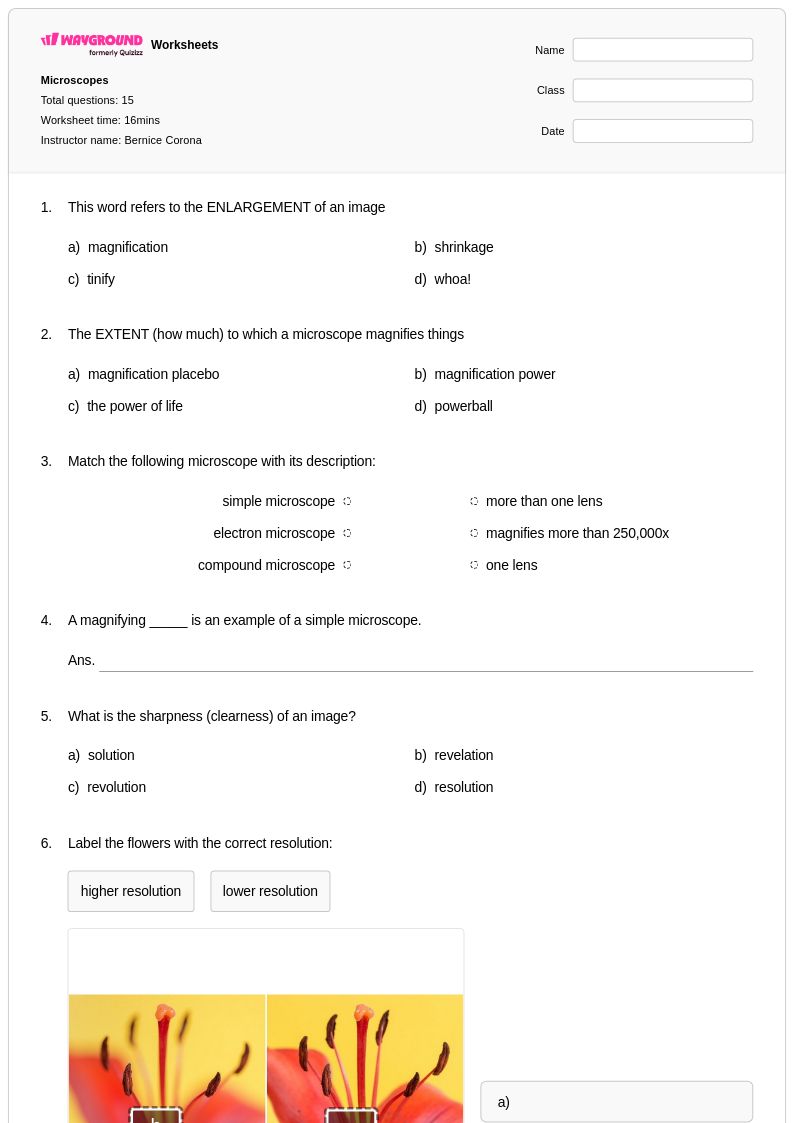
15 Q
6th - 8th
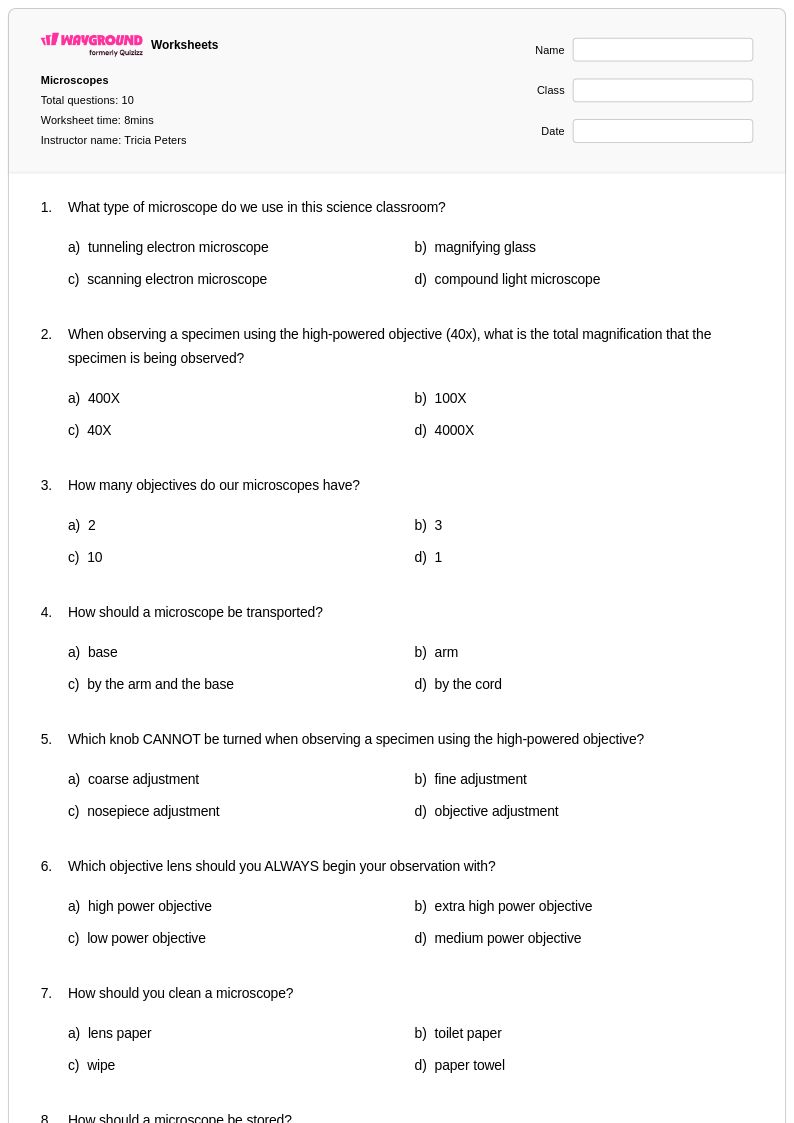
10 Q
10th
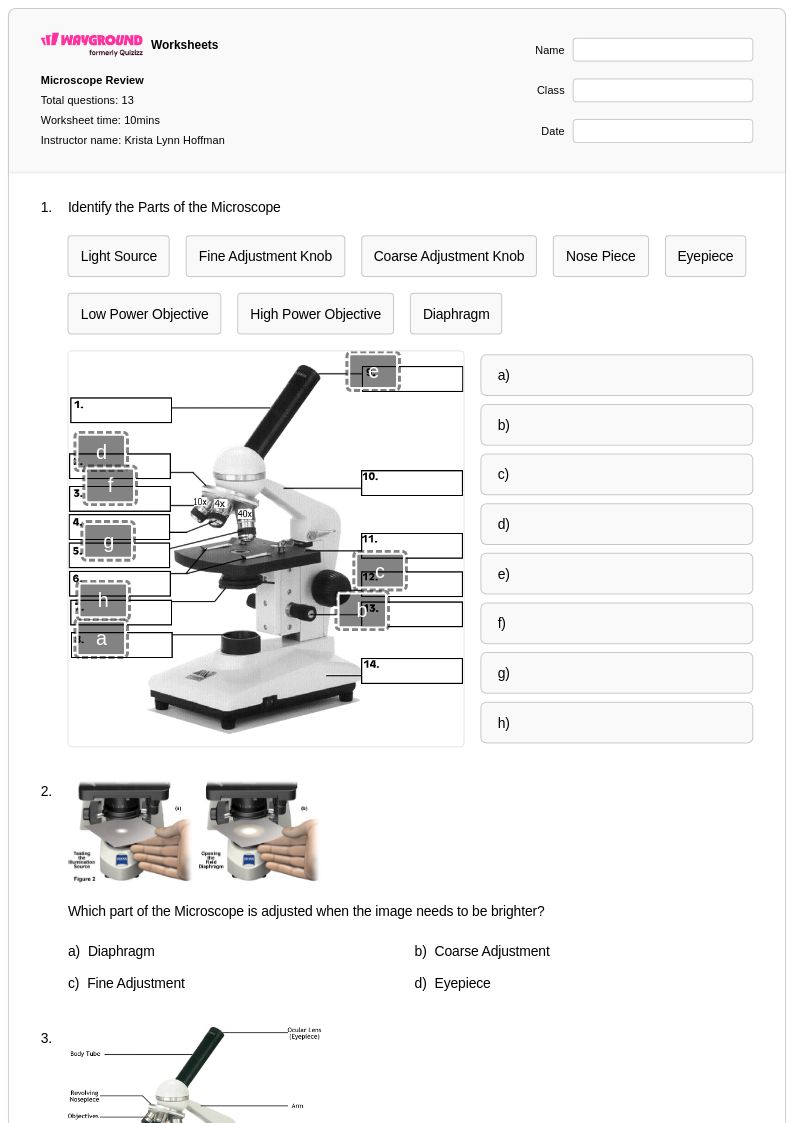
13 Q
9th
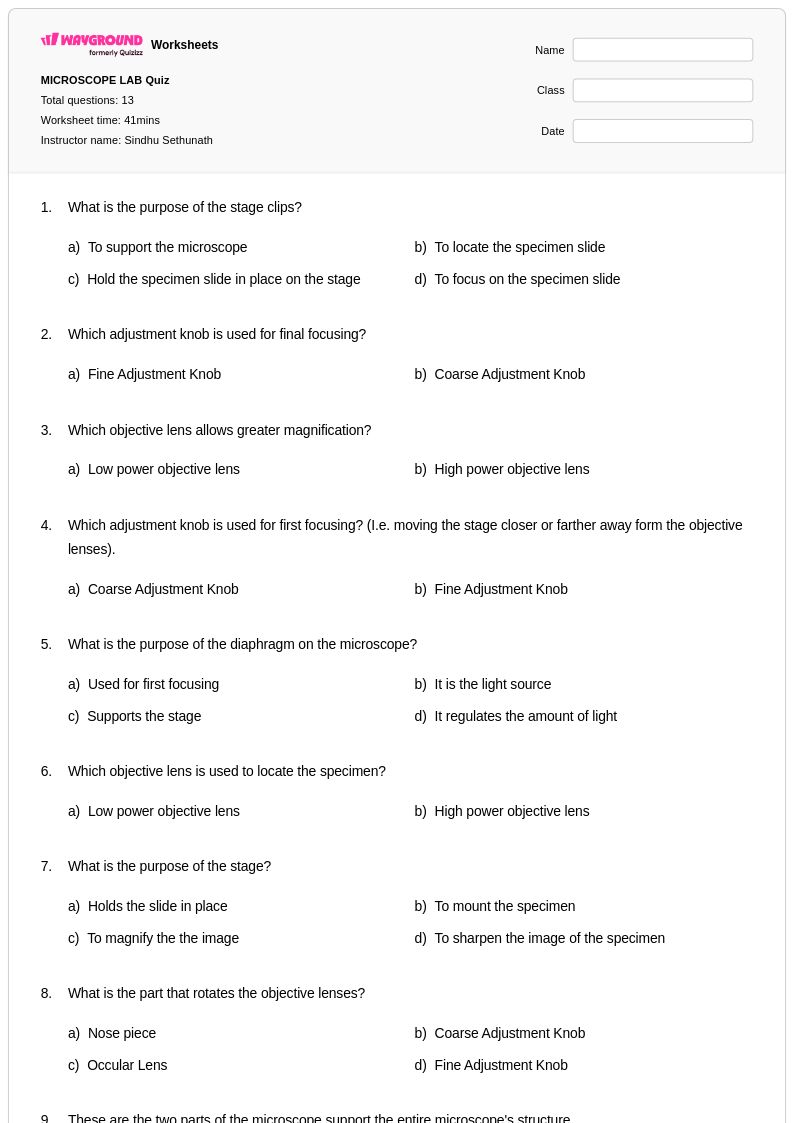
13 Q
9th - 12th
22 Q
7th
20 Q
7th - Uni
26 Q
9th
28 Q
7th
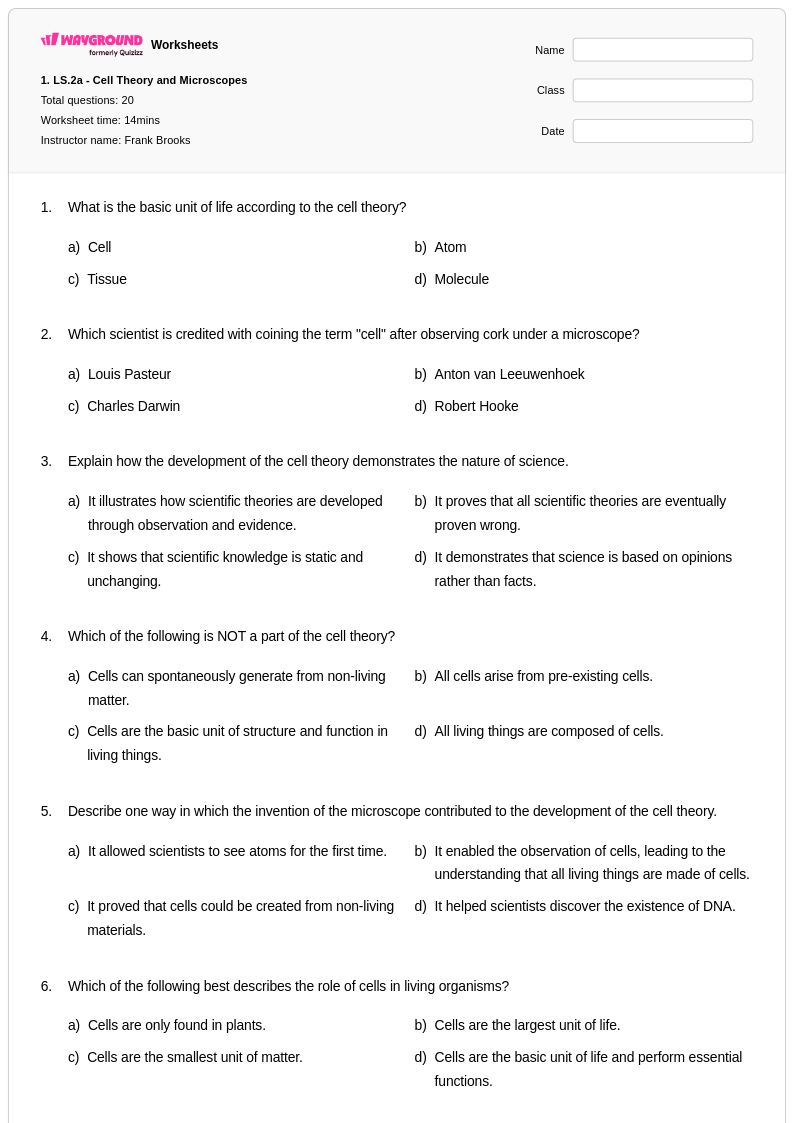
20 Q
7th - Uni
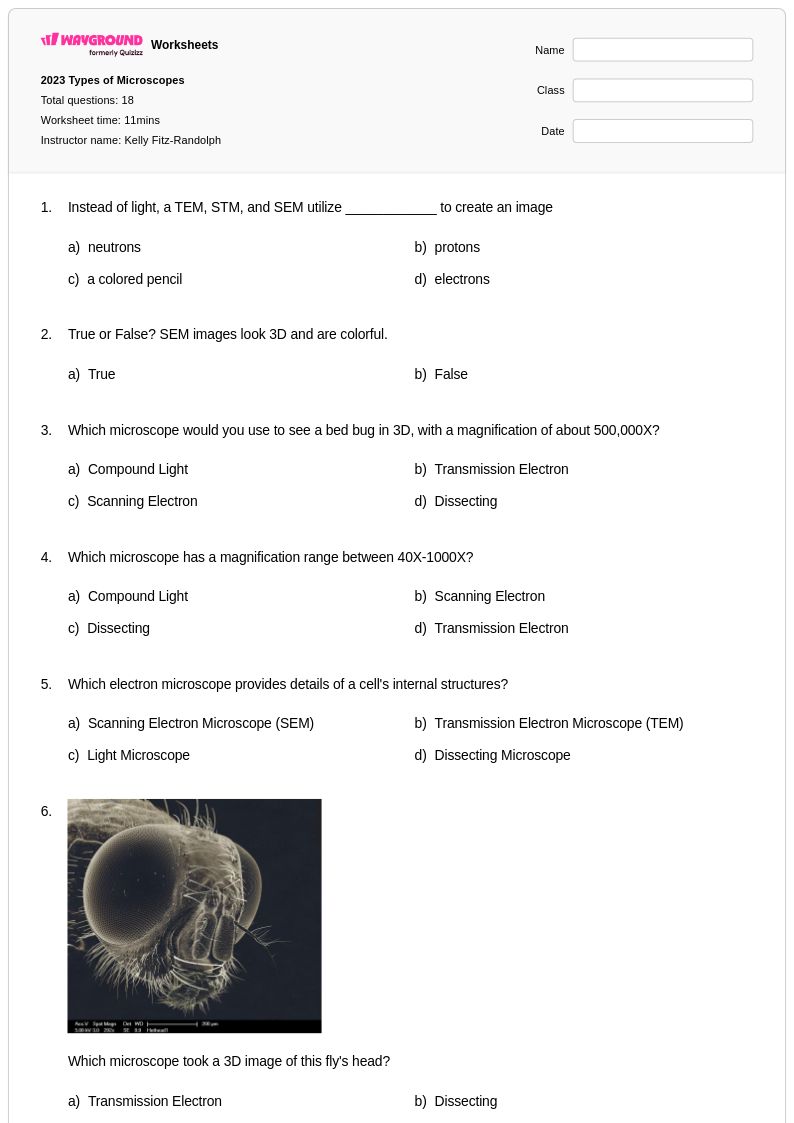
18 Q
6th - 8th
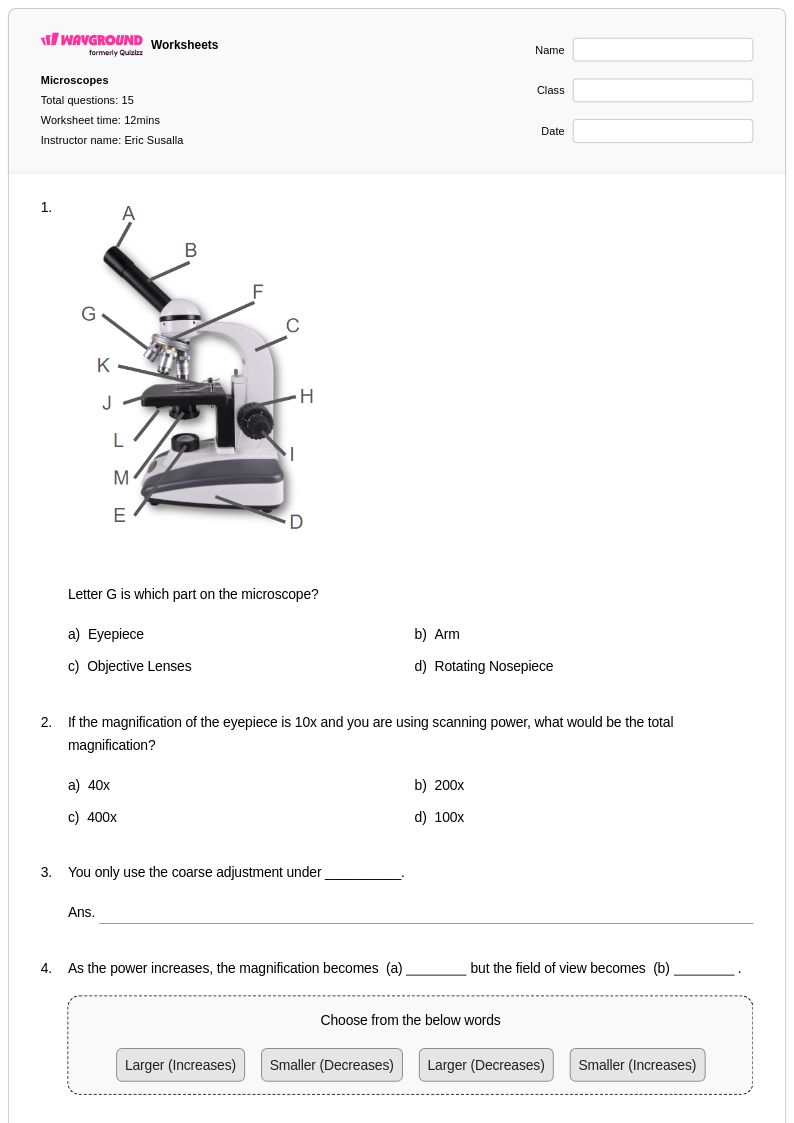
15 Q
7th
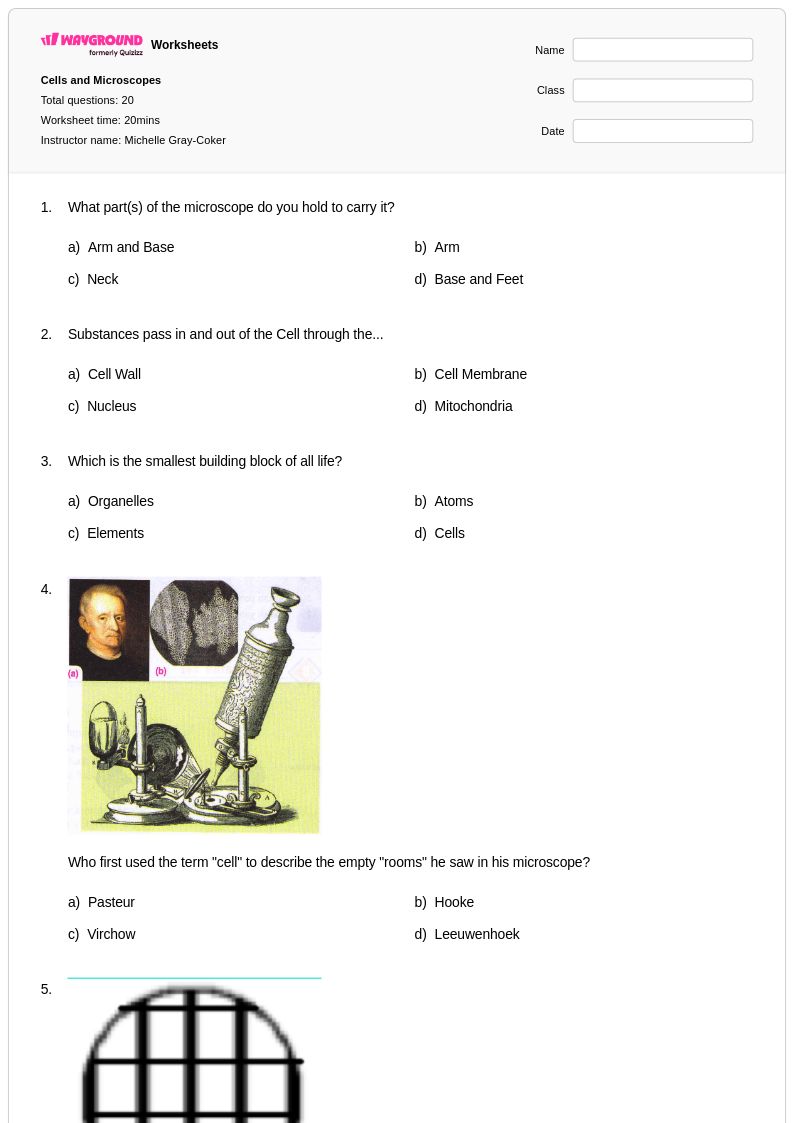
20 Q
7th
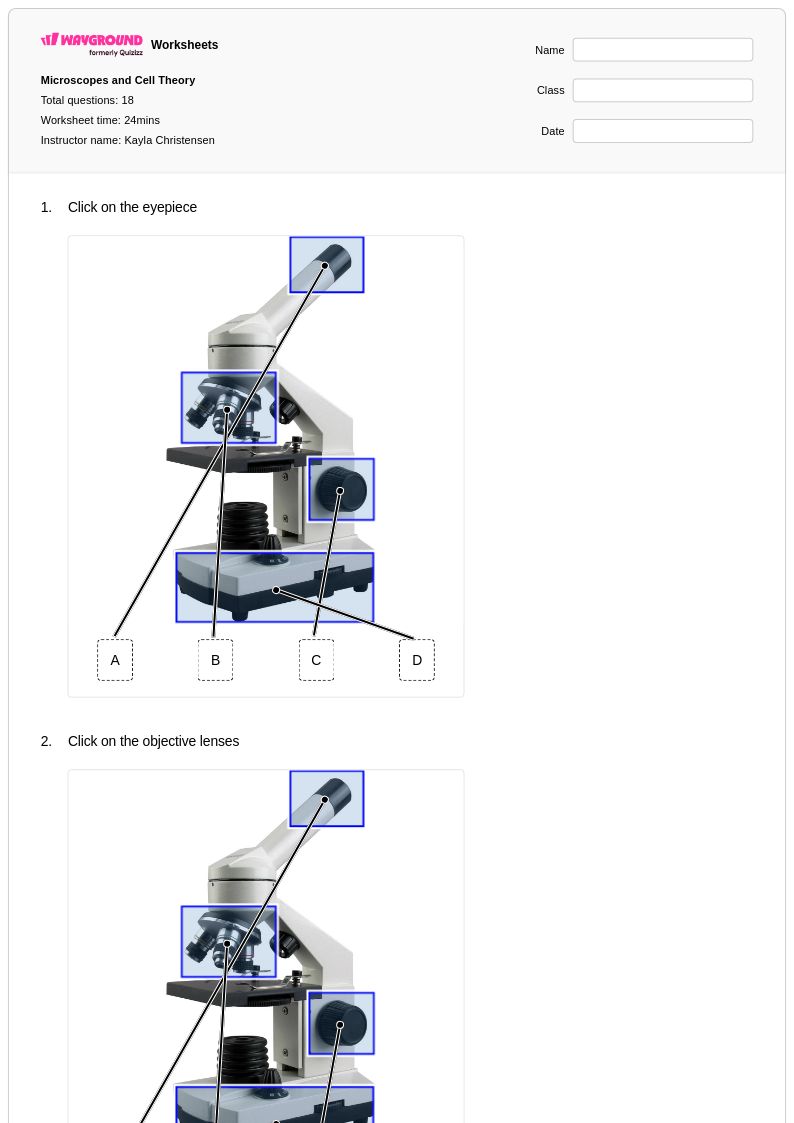
18 Q
7th
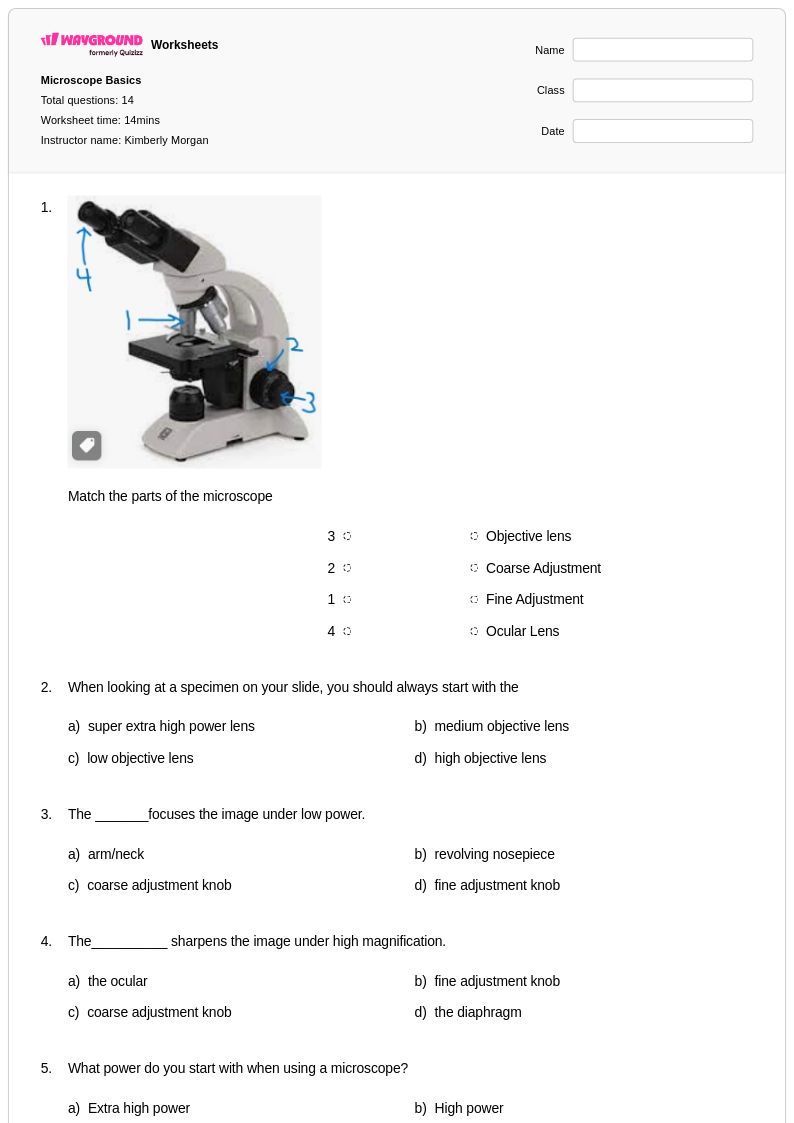
14 Q
11th
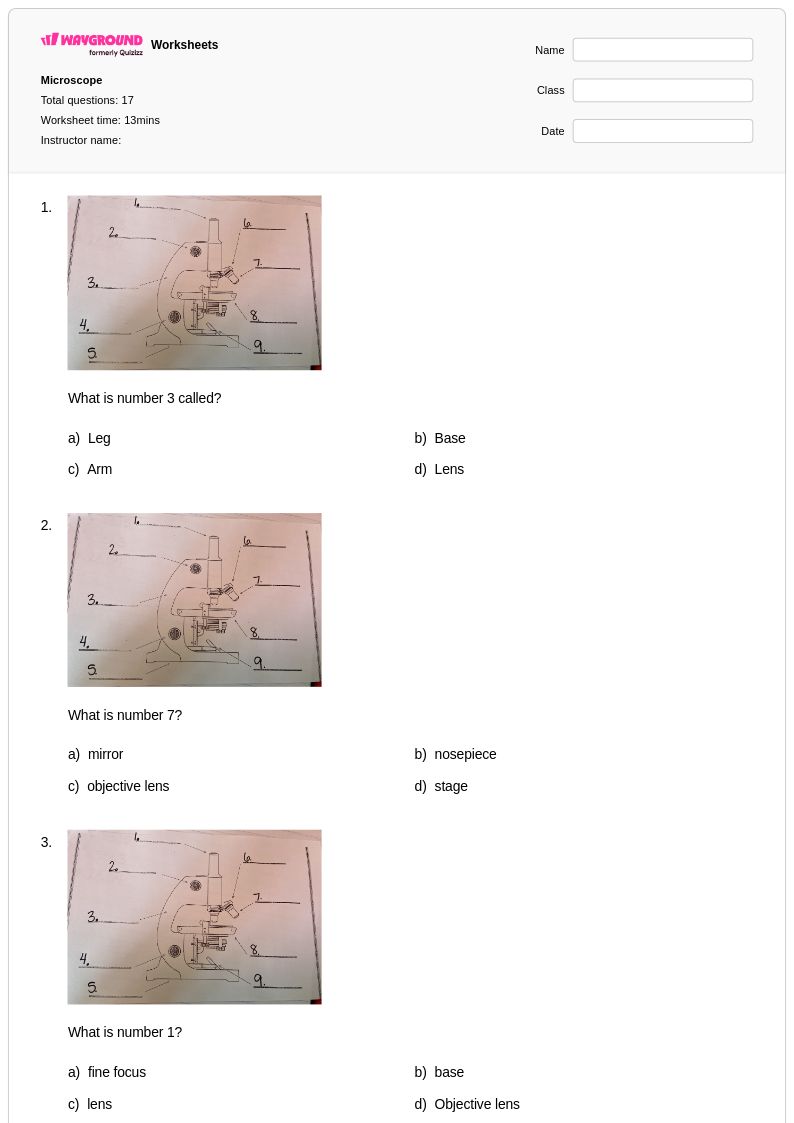
17 Q
5th
13 Q
7th
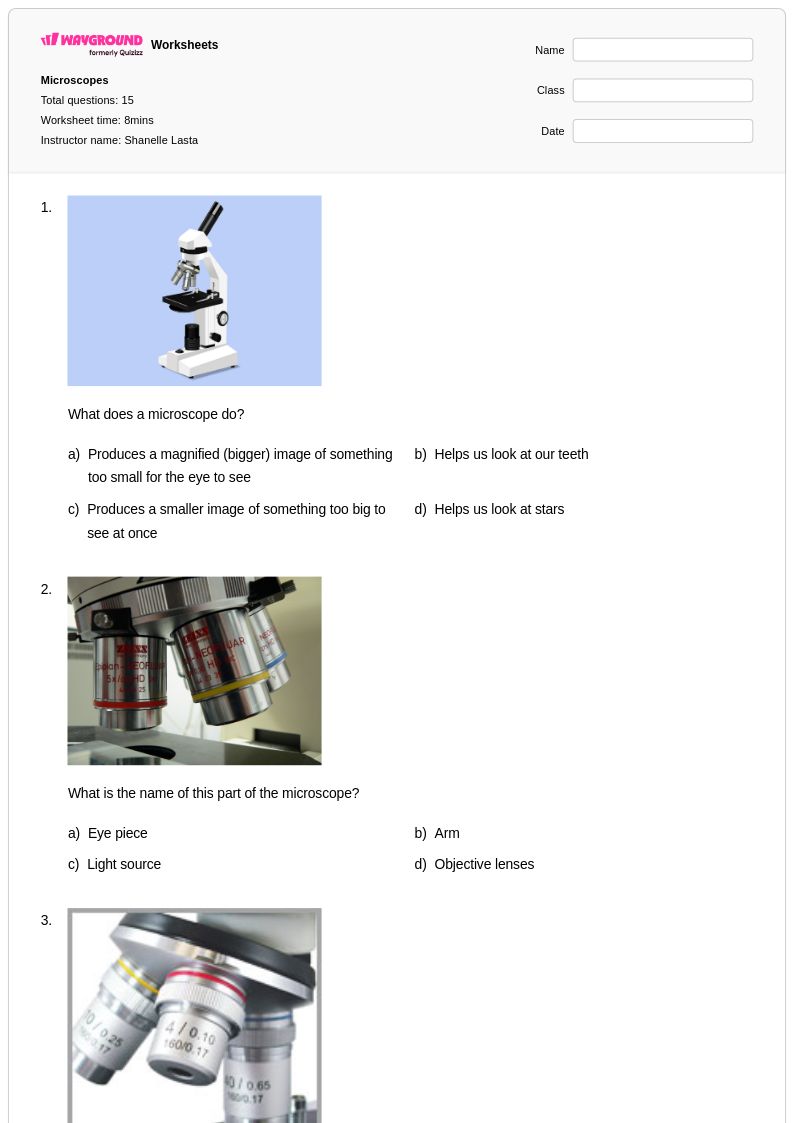
15 Q
6th
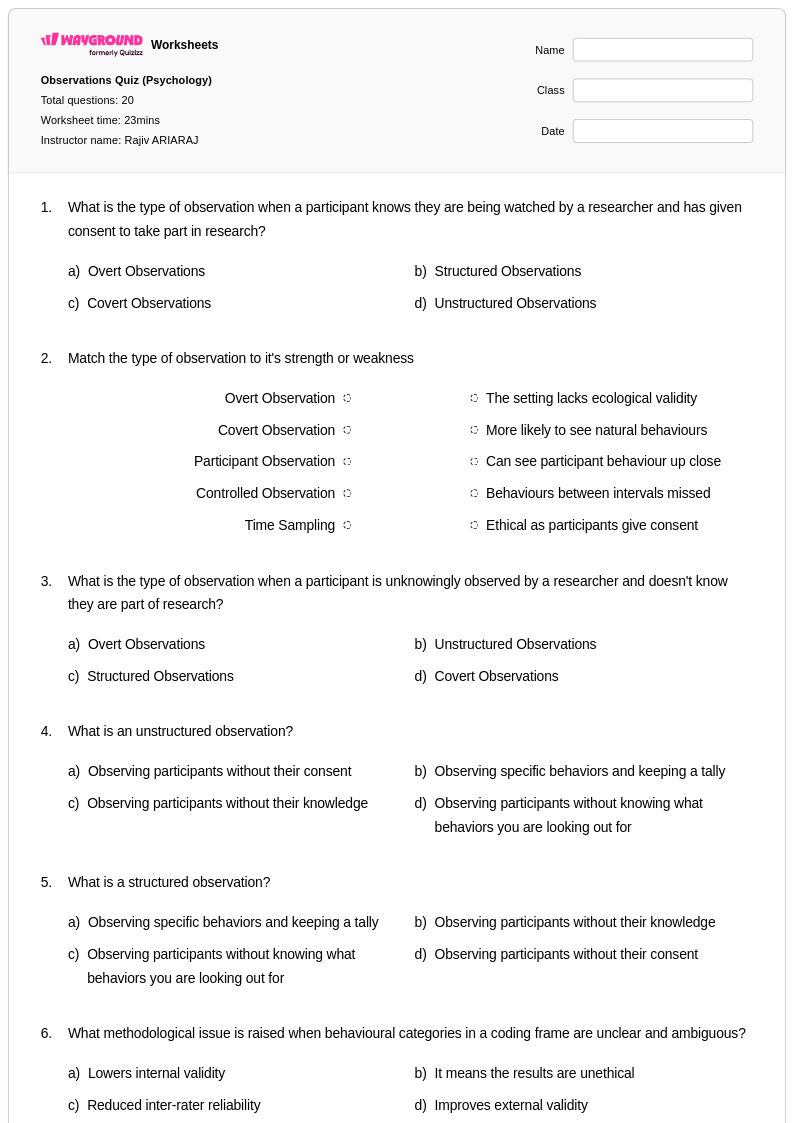
20 Q
12th
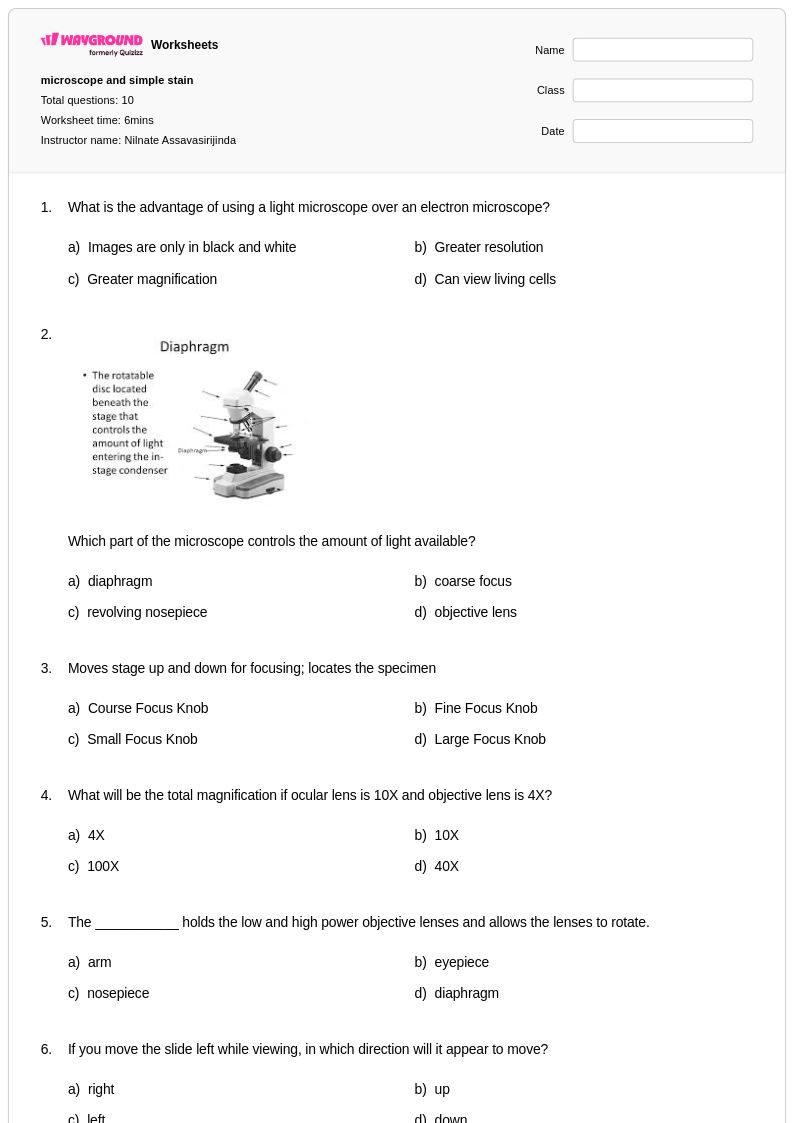
10 Q
Uni
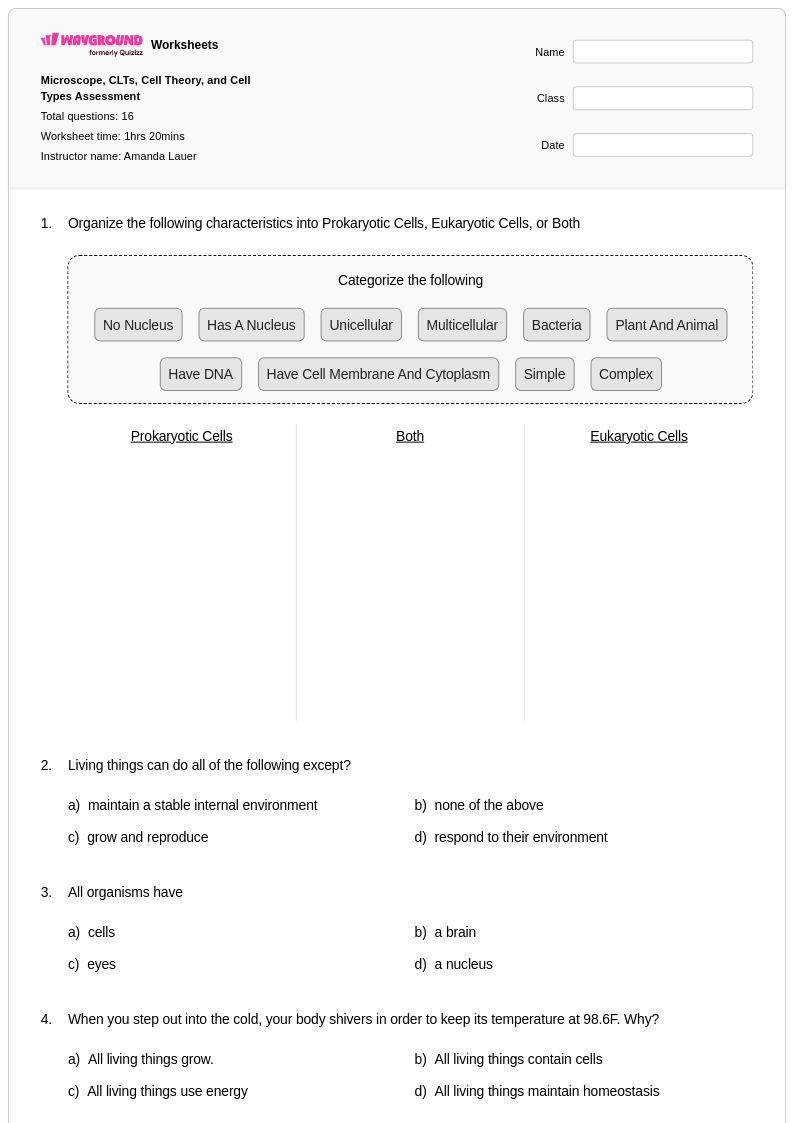
16 Q
6th
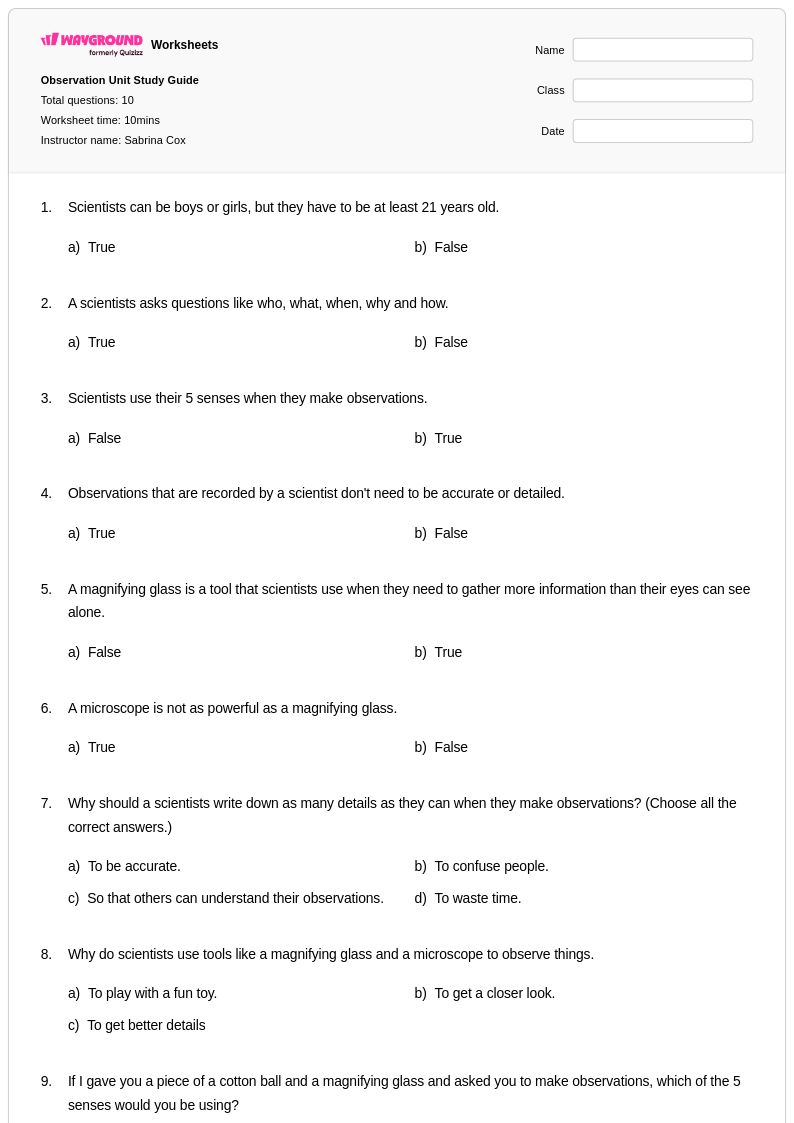
10 Q
4th
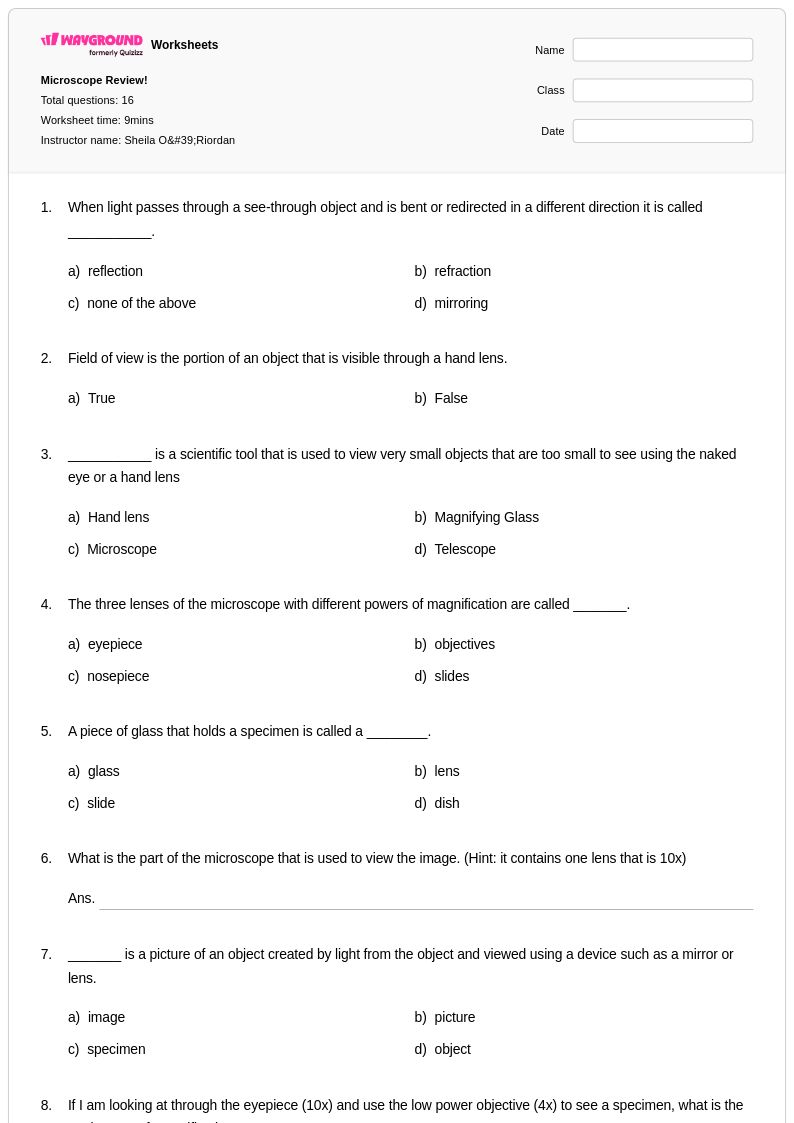
16 Q
4th
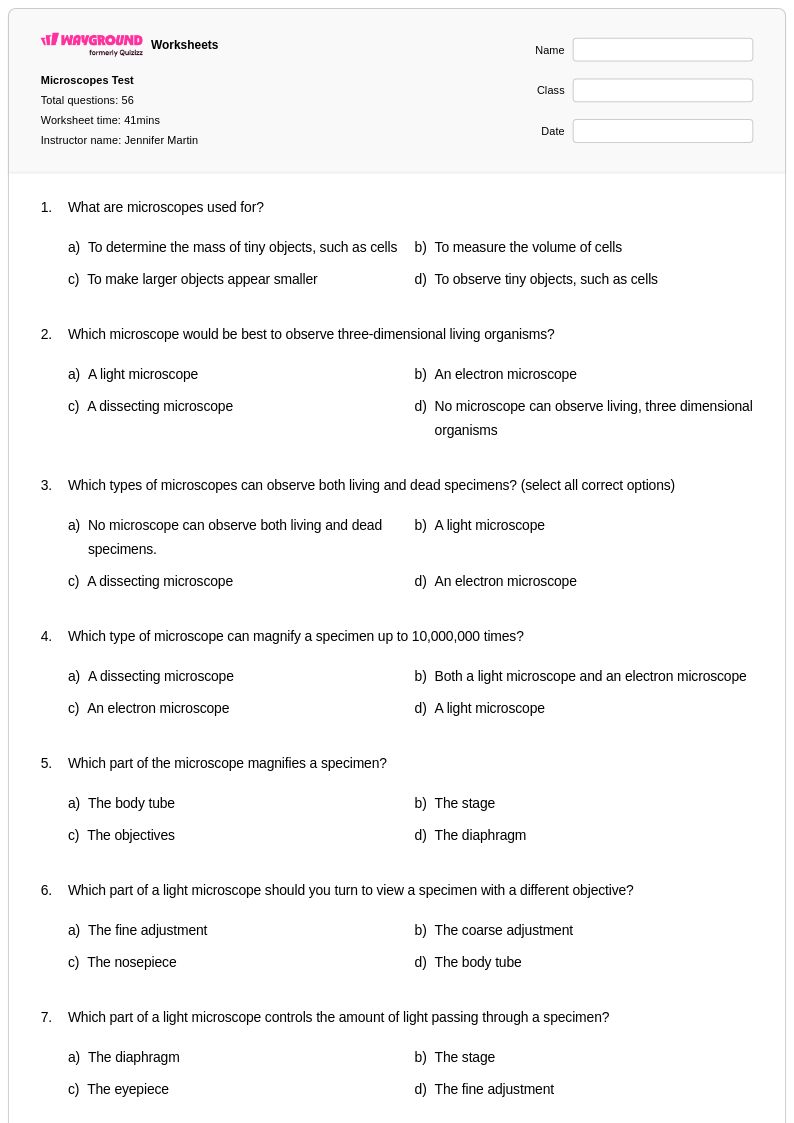
56 Q
7th
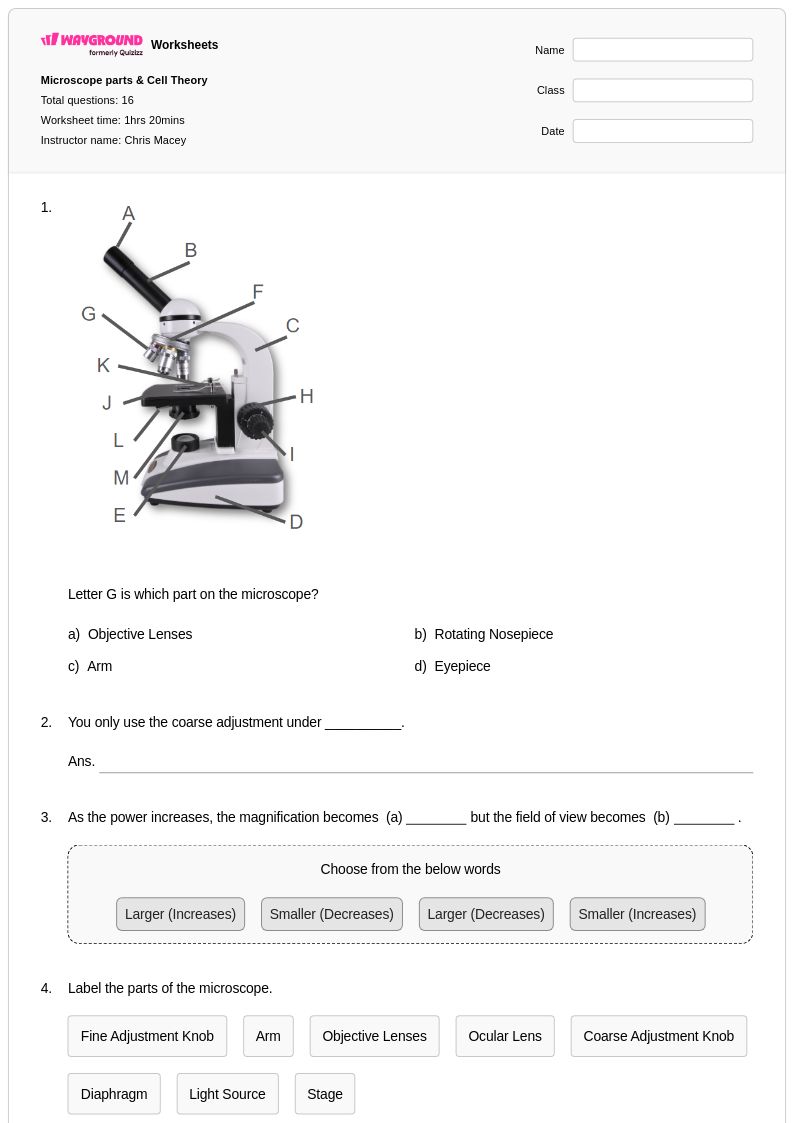
16 Q
7th
Explore Worksheets by Subjects
Explore printable Microscope Observation worksheets
Microscope observation worksheets available through Wayground (formerly Quizizz) provide students with essential hands-on learning materials that bridge the gap between theoretical biology concepts and practical laboratory skills. These comprehensive worksheets guide learners through the fundamental techniques of microscopy, including proper instrument handling, specimen preparation, focusing procedures, and detailed scientific observation recording. Students develop critical analytical skills as they practice identifying cellular structures, calculating magnification levels, and documenting their findings through accurate scientific drawings and descriptive notes. Each worksheet collection includes answer keys and detailed explanations that reinforce proper microscopy techniques, while printable pdf formats ensure accessibility for both classroom and independent study sessions. The practice problems incorporated throughout these free resources challenge students to apply their observational skills across various biological specimens, from simple pond water samples to complex tissue preparations.
Wayground (formerly Quizizz) empowers educators with an extensive library of millions of teacher-created microscope observation resources that streamline lesson planning and enhance student engagement in biological sciences. The platform's robust search and filtering capabilities allow teachers to quickly locate worksheets that align with specific curriculum standards and match their students' skill levels, whether they need introductory materials covering basic microscope parts or advanced exercises involving specialized staining techniques. Teachers can easily customize existing worksheets or create differentiated versions to support diverse learning needs, providing targeted remediation for struggling students while offering enrichment opportunities for advanced learners. The flexible digital and printable formats accommodate various classroom environments and teaching preferences, enabling seamless integration into traditional laboratory settings, remote learning scenarios, or hybrid educational models. This comprehensive approach to microscopy education ensures that students develop the foundational observational skills essential for success in advanced biological studies and scientific research.
FAQs
How do I teach microscope observation skills to biology students?
What exercises help students practice microscope observation and magnification calculations?
What mistakes do students commonly make when recording microscope observations?
How do I differentiate microscope observation worksheets for students at different skill levels?
How can I use Wayground's microscope observation worksheets in my classroom?