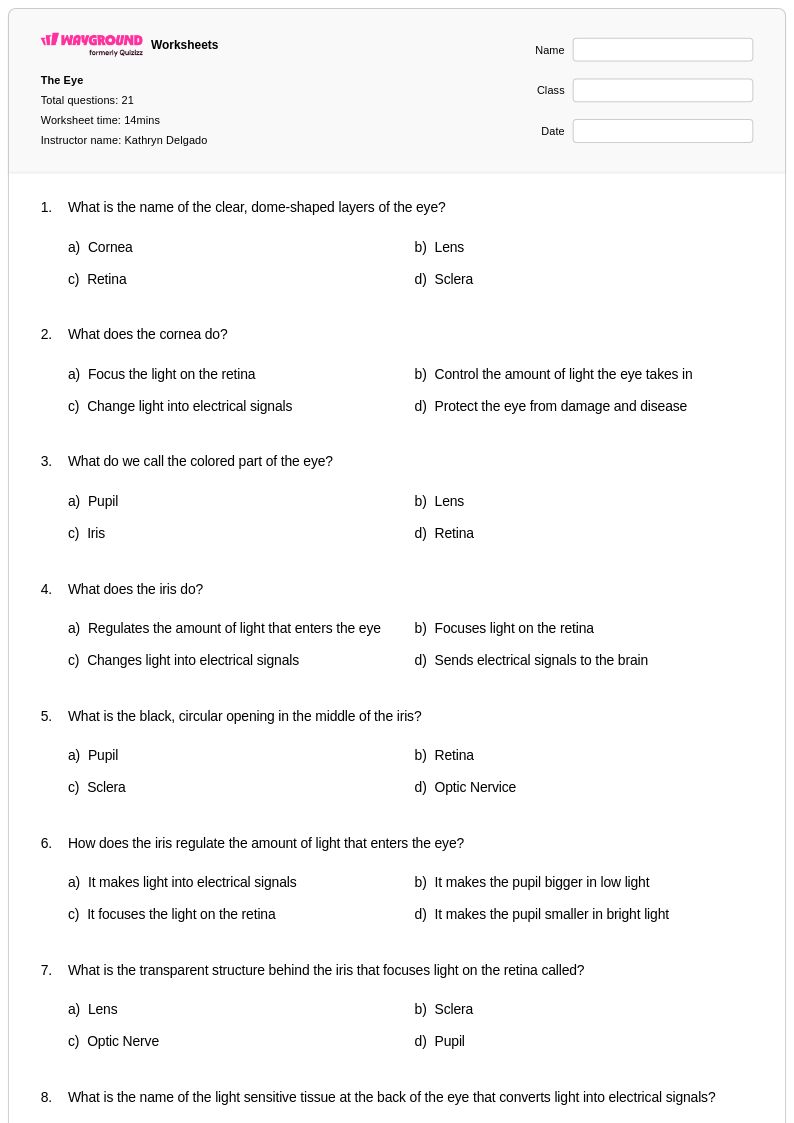
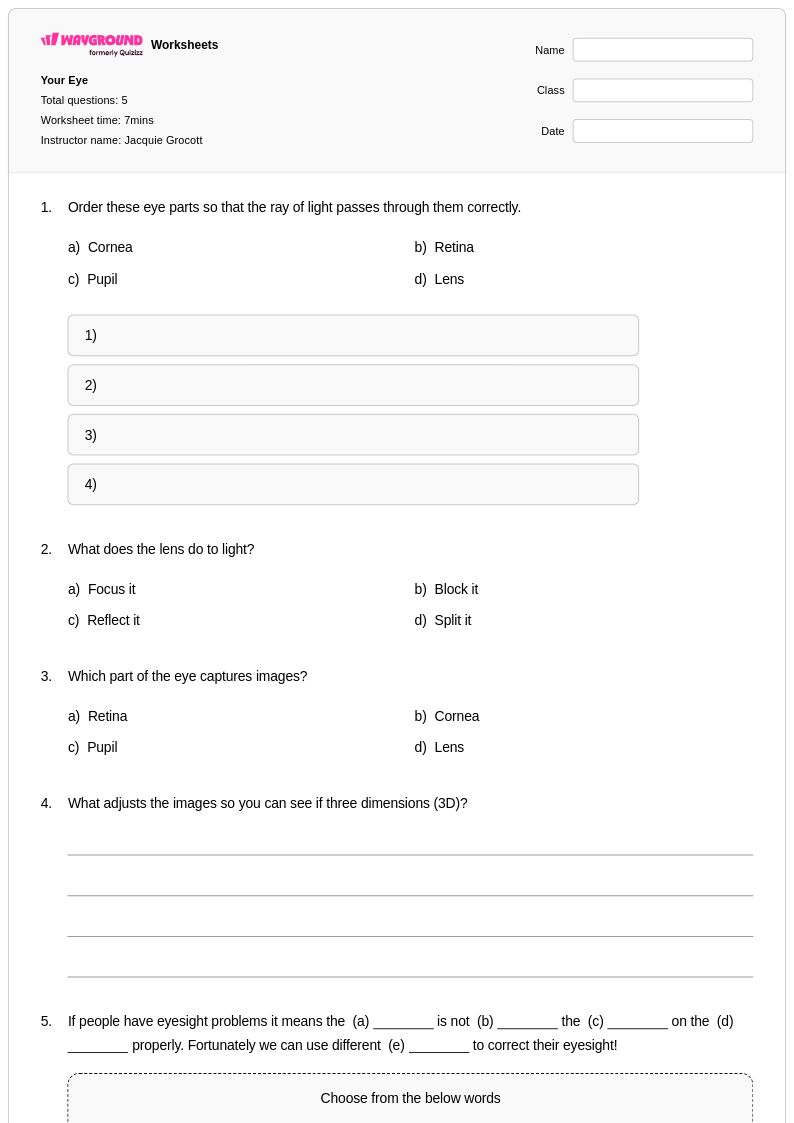
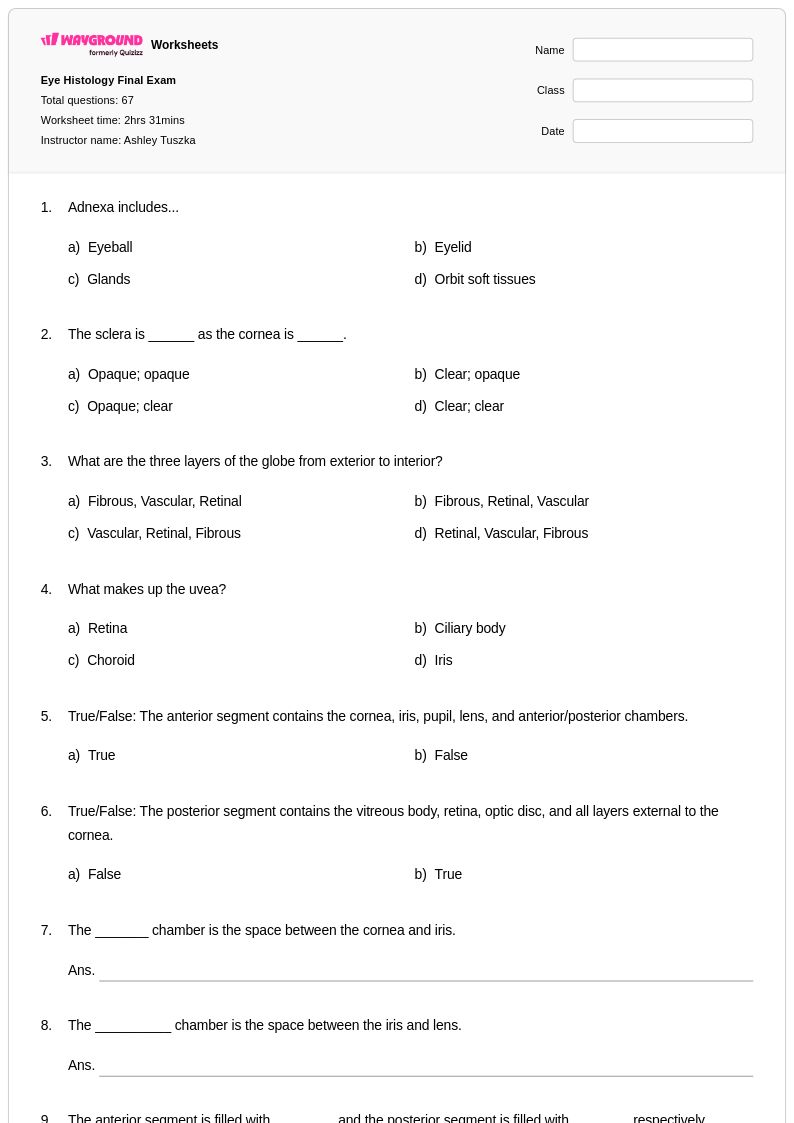
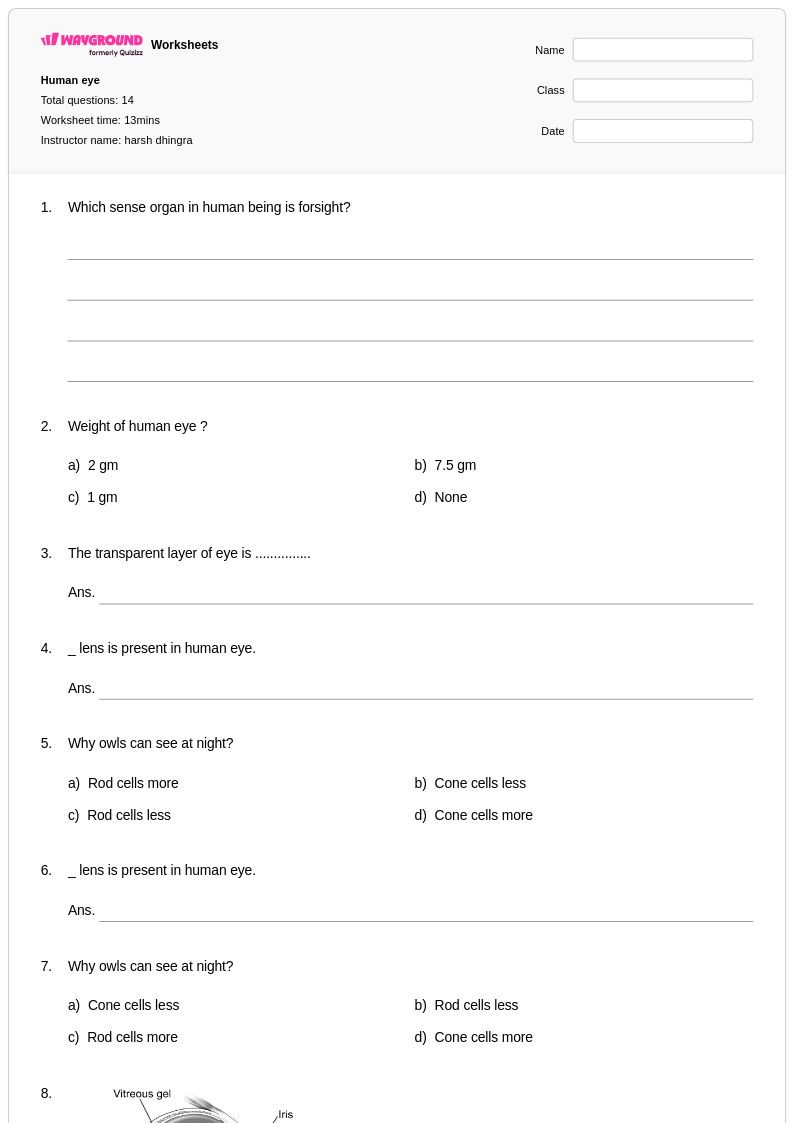
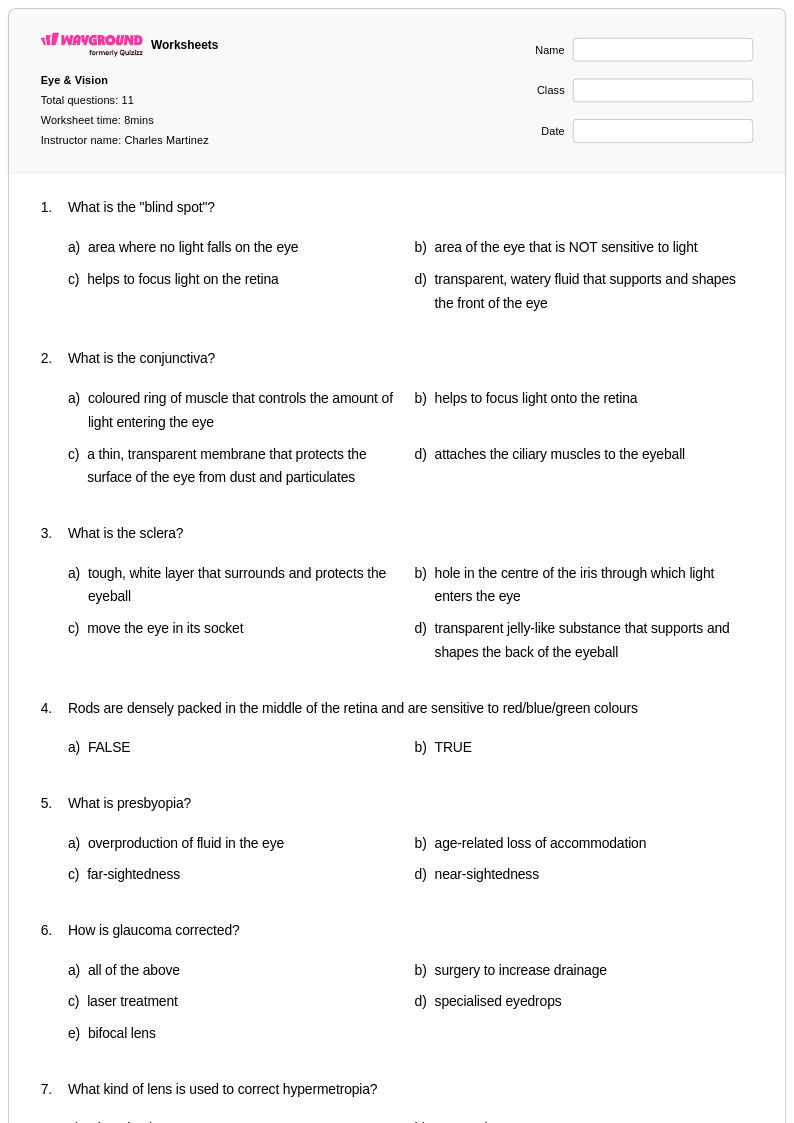
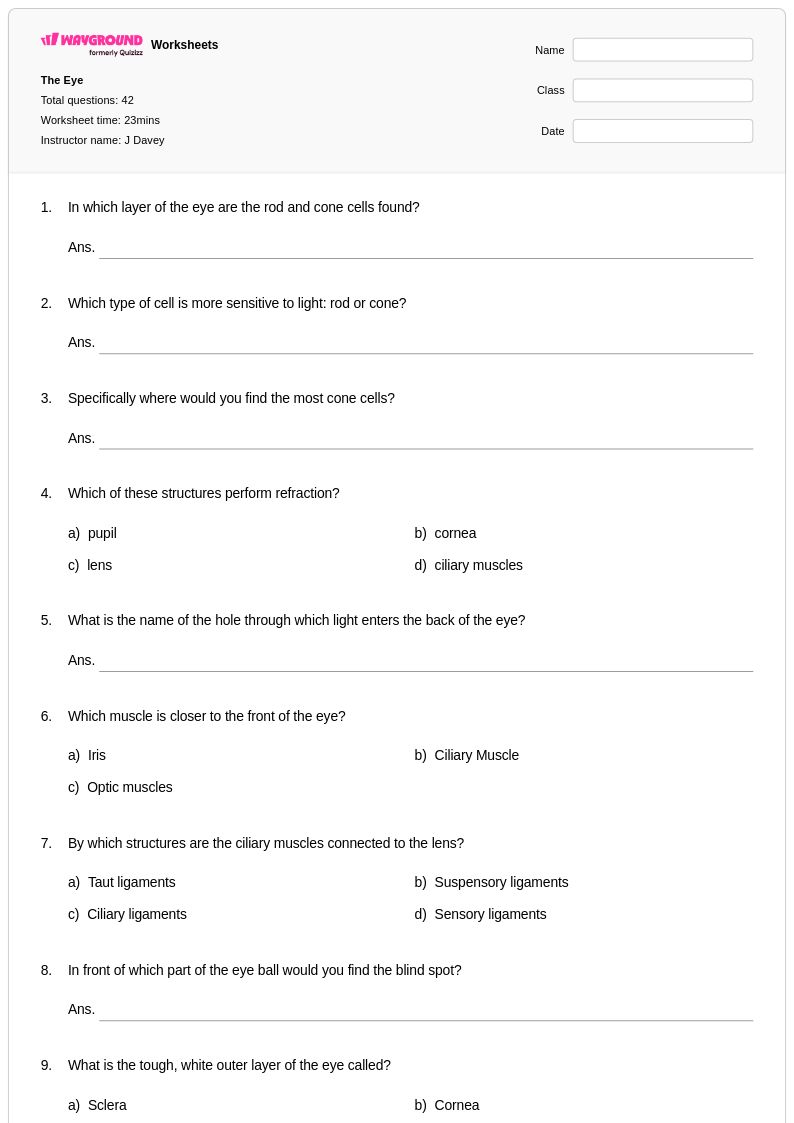
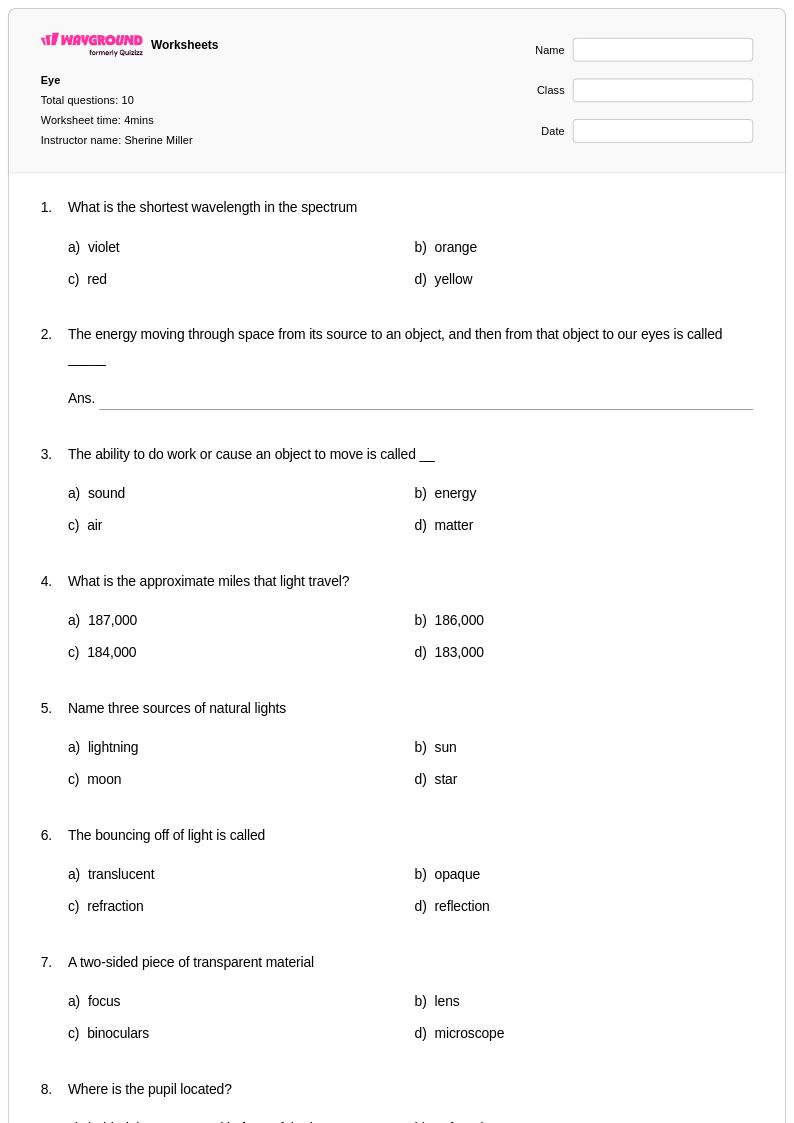
Discover comprehensive eye worksheets and printables that help students explore vision, eye anatomy, and optical functions through engaging practice problems, free PDF downloads, and detailed answer keys from Wayground's biology collection.
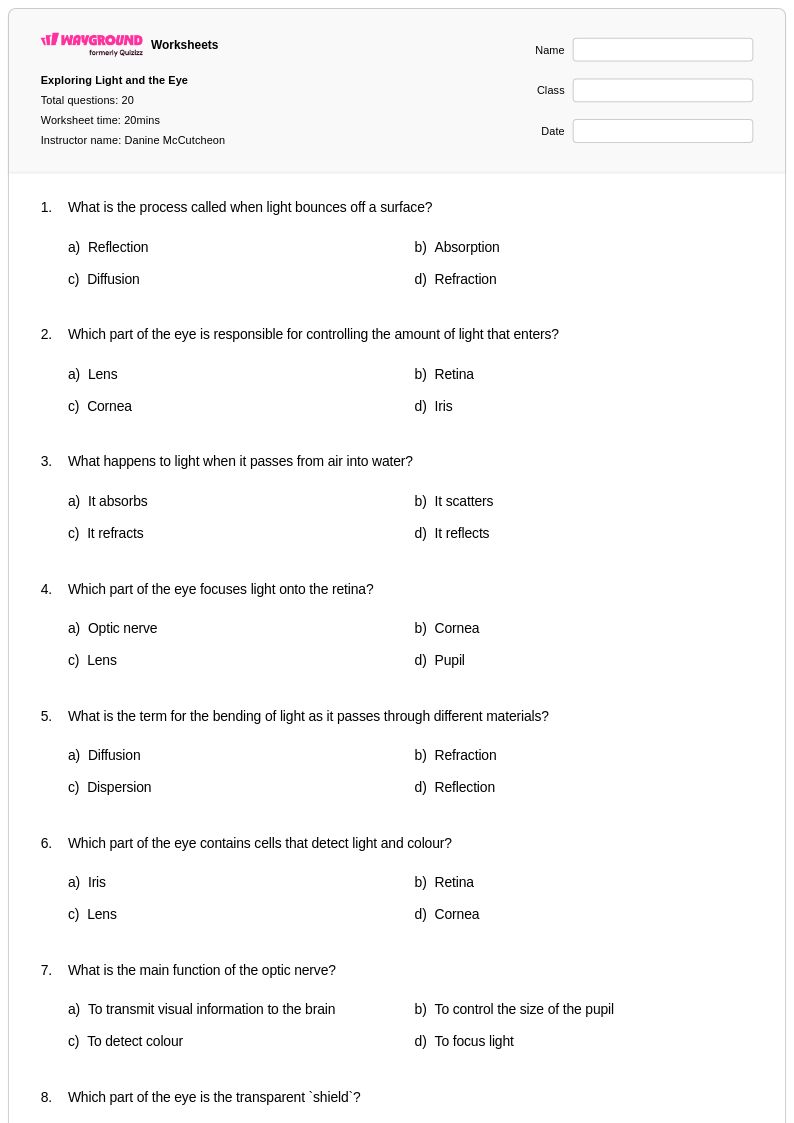
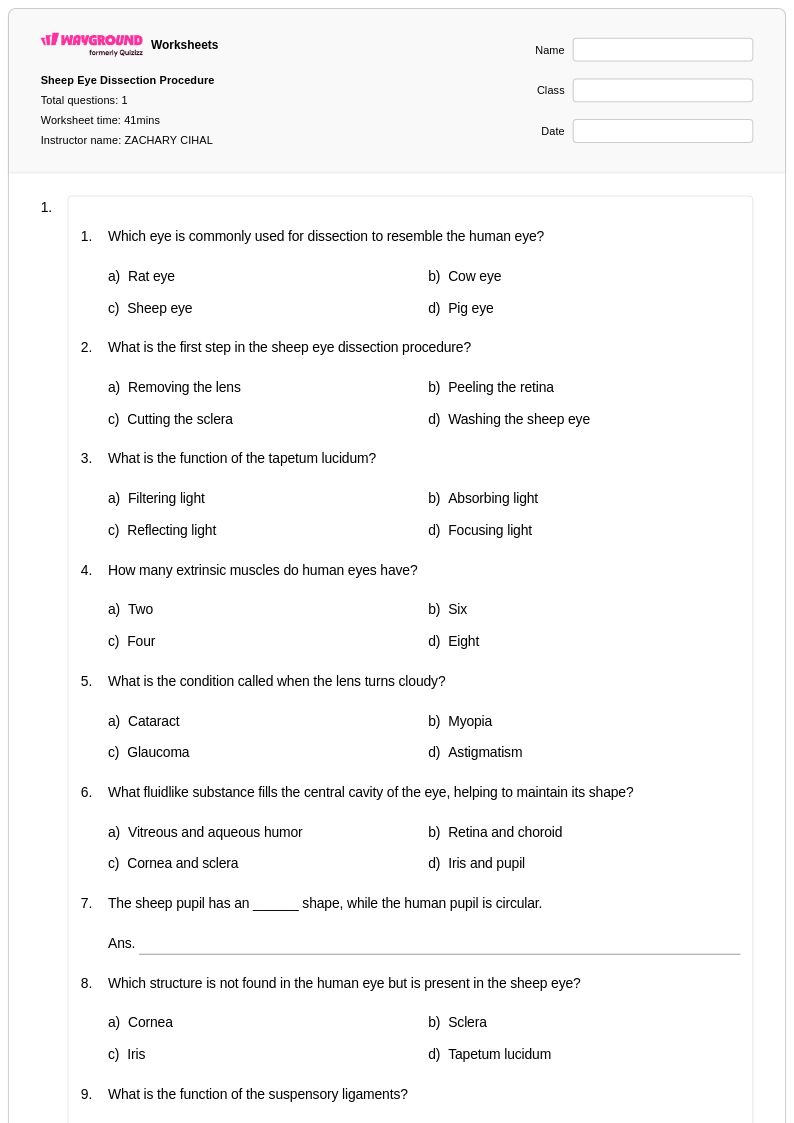
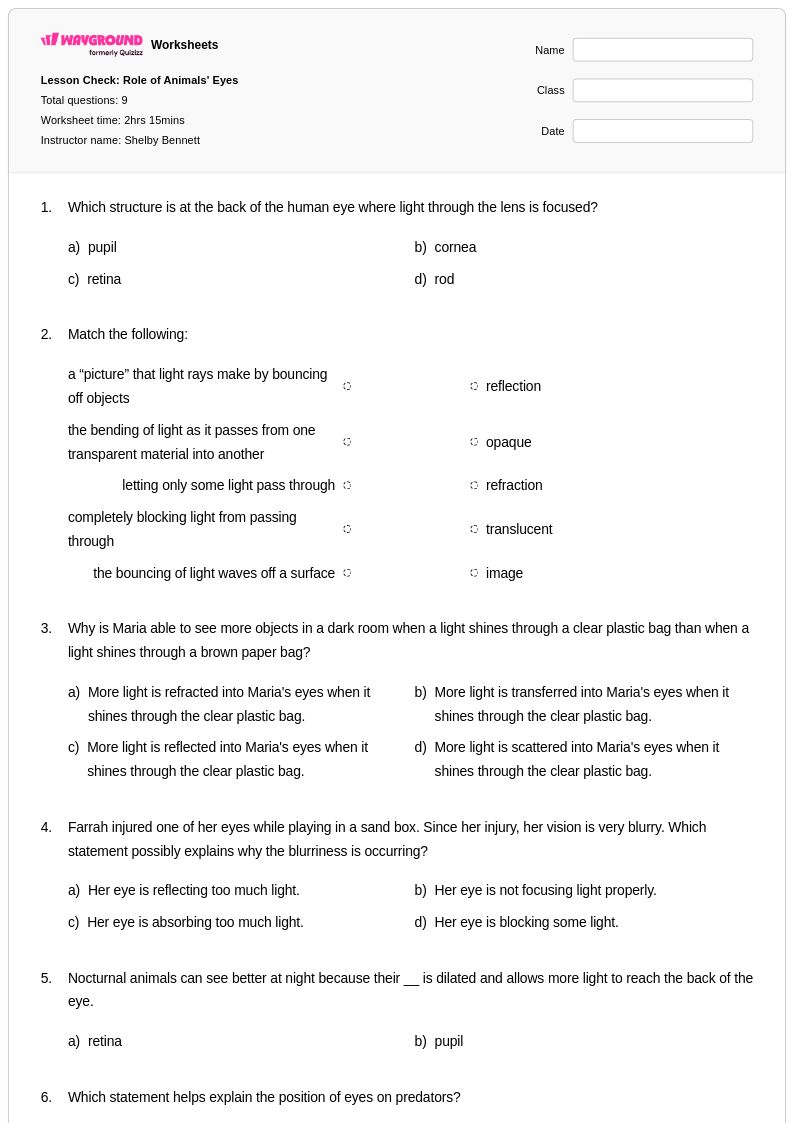
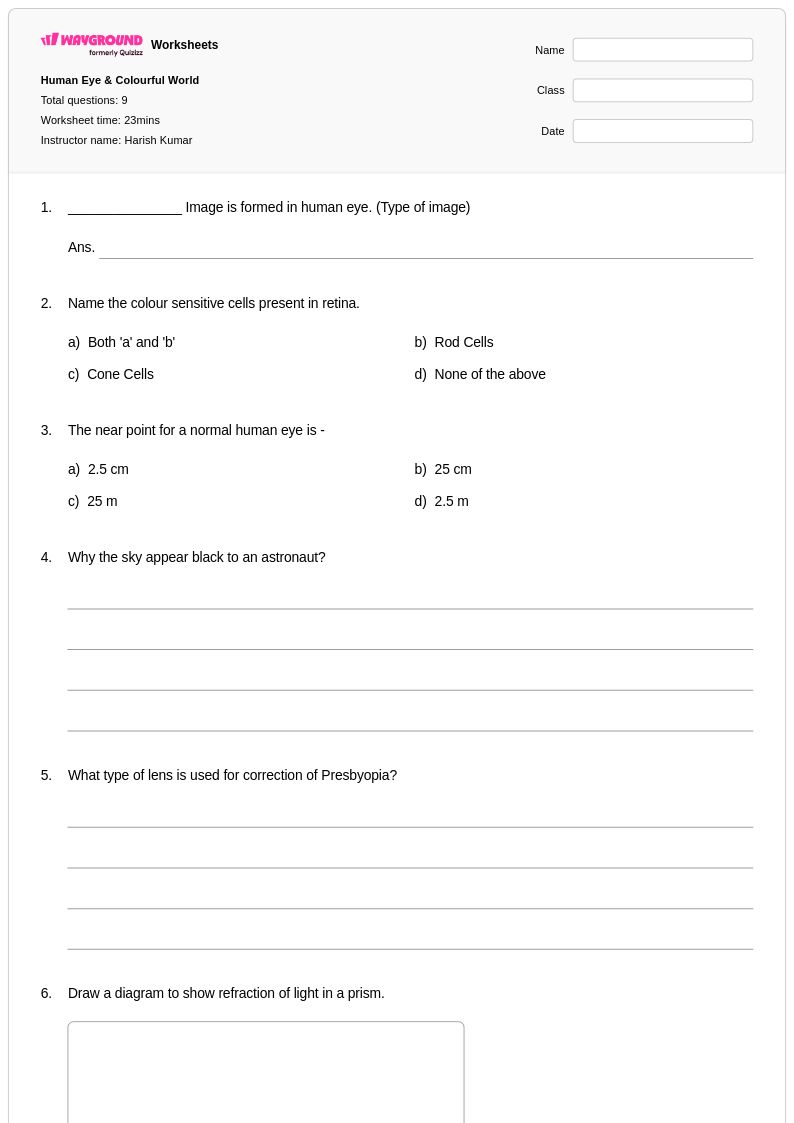
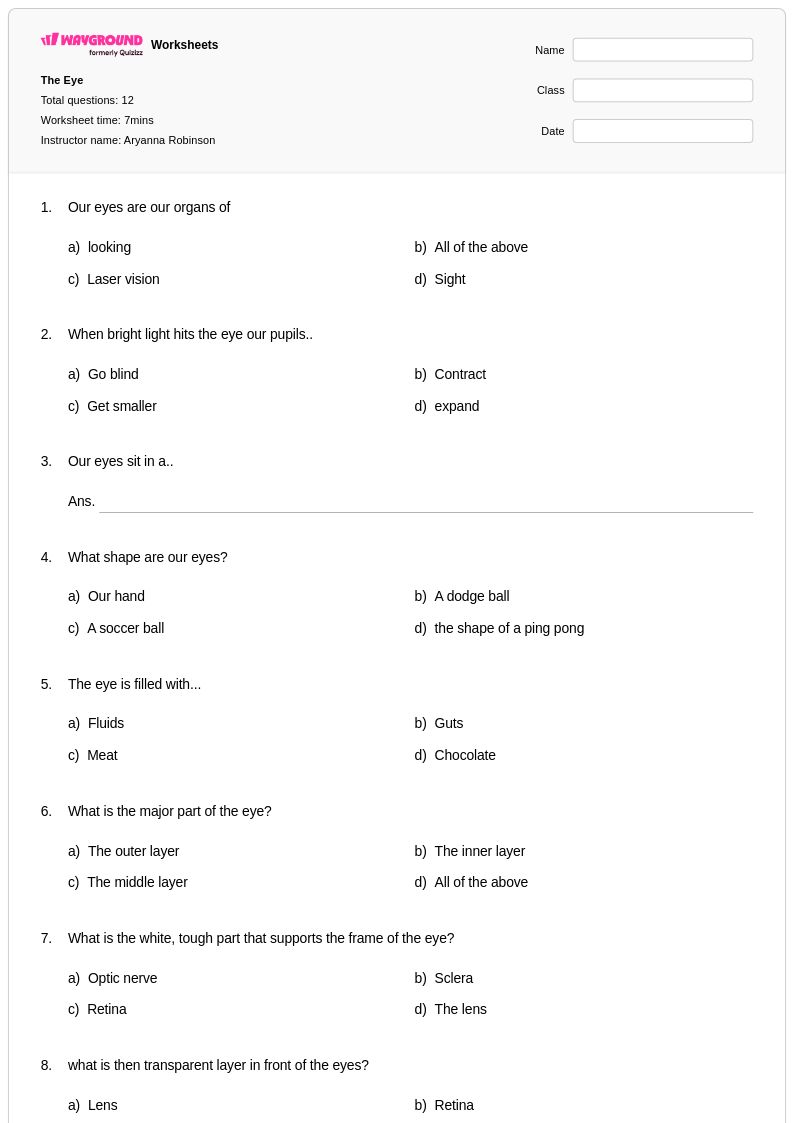
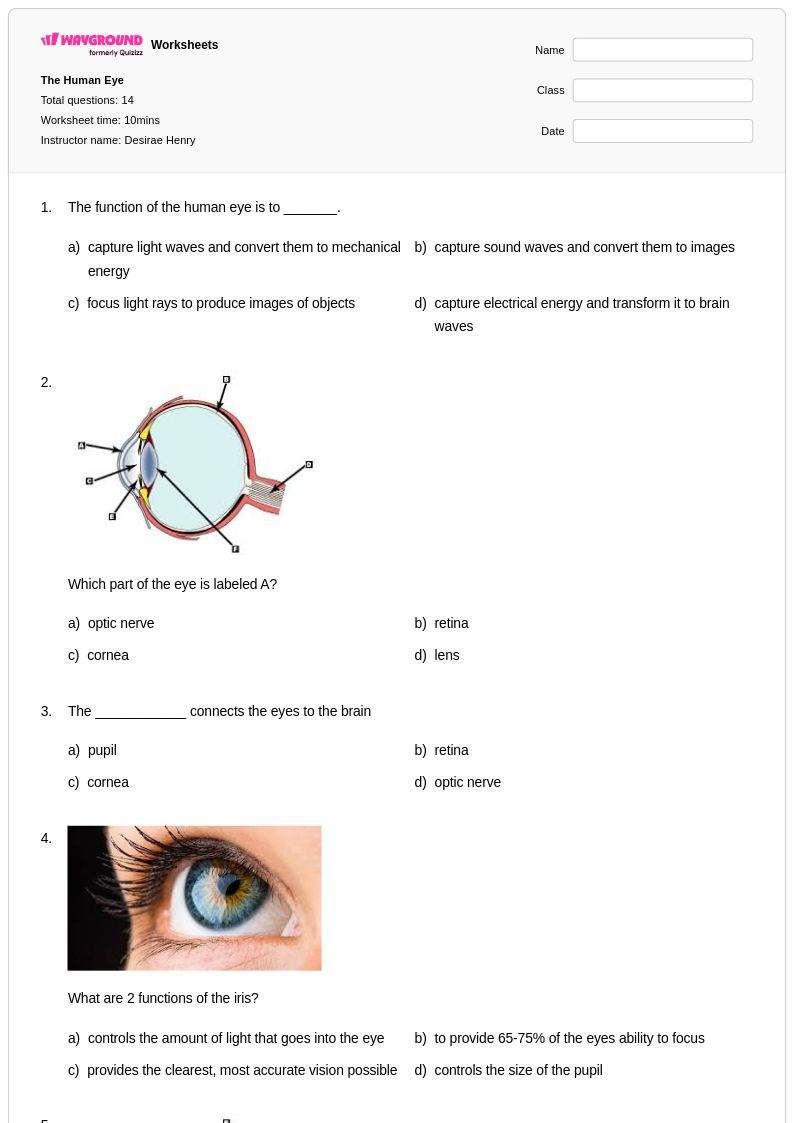
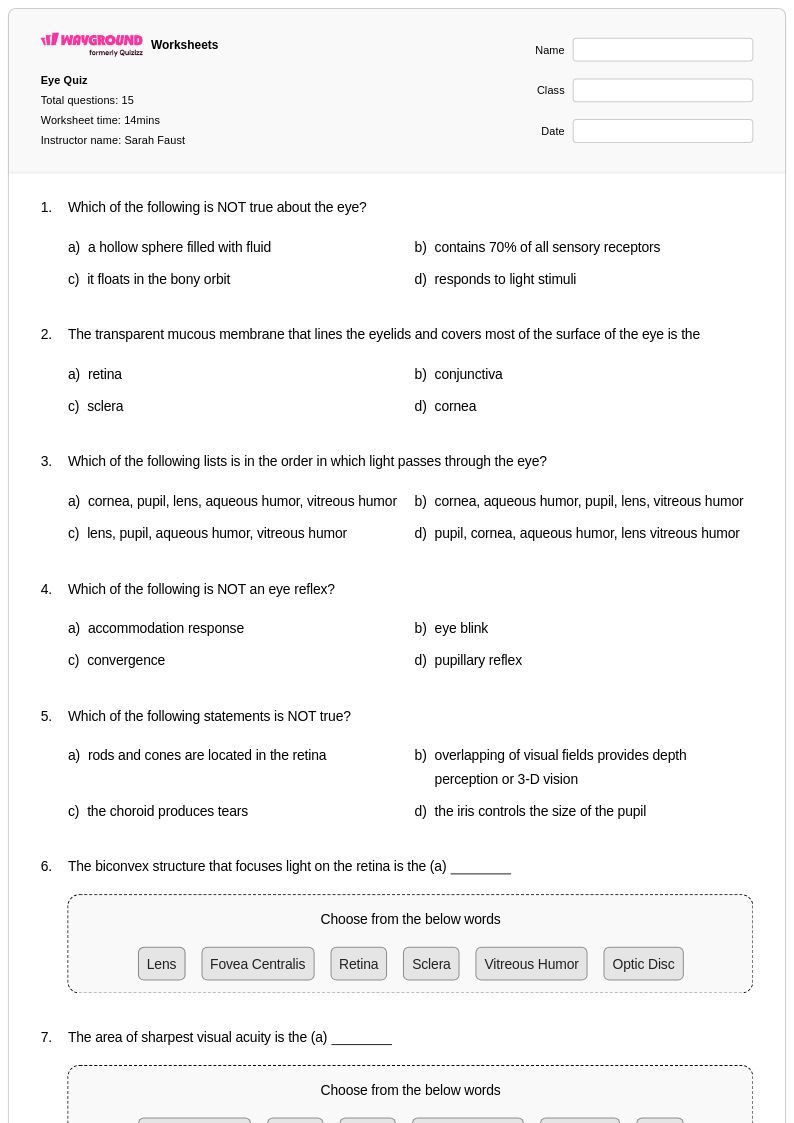
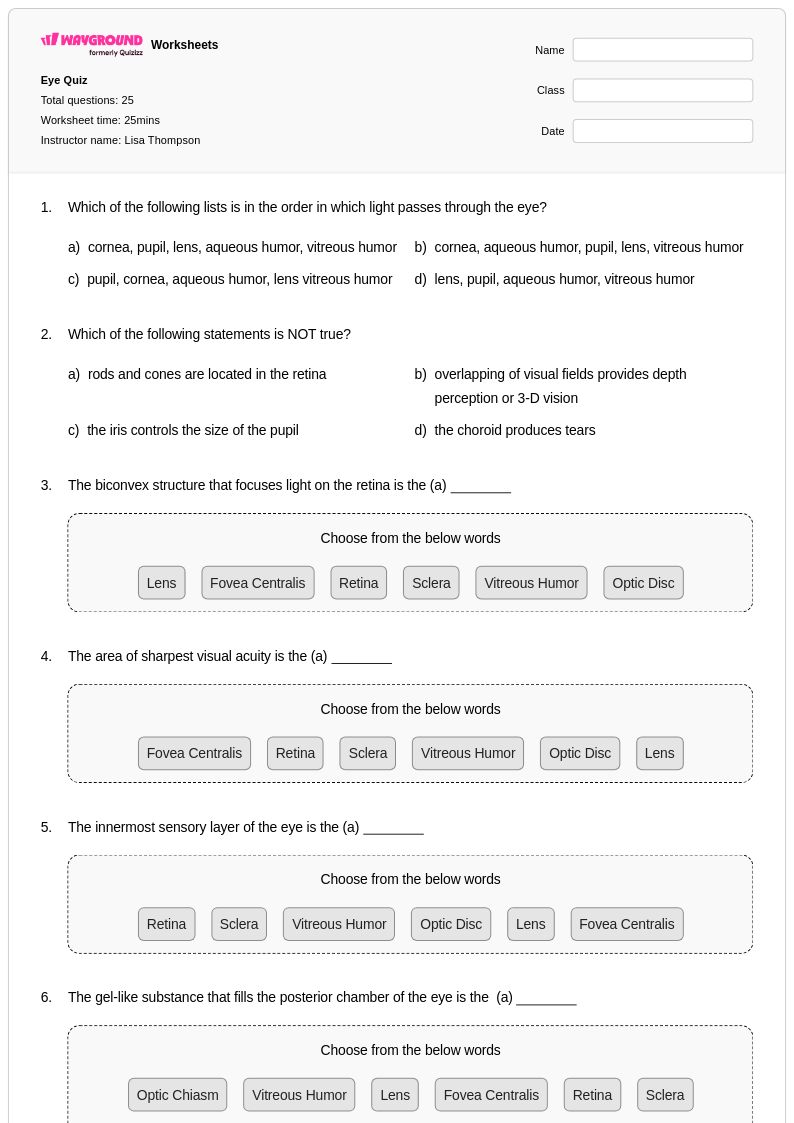
Eye-focused biology worksheets available through Wayground (formerly Quizizz) provide comprehensive resources for exploring the structure, function, and mechanisms of vision in the human visual system. These expertly crafted materials guide students through detailed examinations of anatomical components including the cornea, lens, retina, and optic nerve, while reinforcing understanding of light refraction, photoreceptor function, and neural signal transmission. The worksheets strengthen critical thinking skills through practice problems that challenge students to analyze how environmental factors affect vision, compare different types of eye adaptations across species, and evaluate common vision disorders and their underlying causes. Each resource includes detailed answer keys and is available as free printables in convenient pdf format, ensuring educators have immediate access to both student materials and comprehensive solution guides for effective assessment and feedback.
Wayground (formerly Quizizz) empowers educators with an extensive collection of millions of teacher-created eye biology worksheets that feature robust search and filtering capabilities, allowing instructors to quickly locate materials that align with specific curriculum standards and learning objectives. The platform's differentiation tools enable seamless customization of content difficulty levels, supporting both remediation for struggling learners and enrichment opportunities for advanced students who need additional challenges in understanding complex visual processes. Teachers can access these resources in both printable and digital formats, including downloadable pdfs that facilitate flexible lesson planning whether for in-person laboratory activities or remote learning environments. This comprehensive approach to resource management streamlines instructional preparation while providing targeted skill practice opportunities that address diverse learning needs and support mastery of fundamental concepts in ocular biology and vision science.
FAQs
How do I teach eye anatomy and the visual system to students?
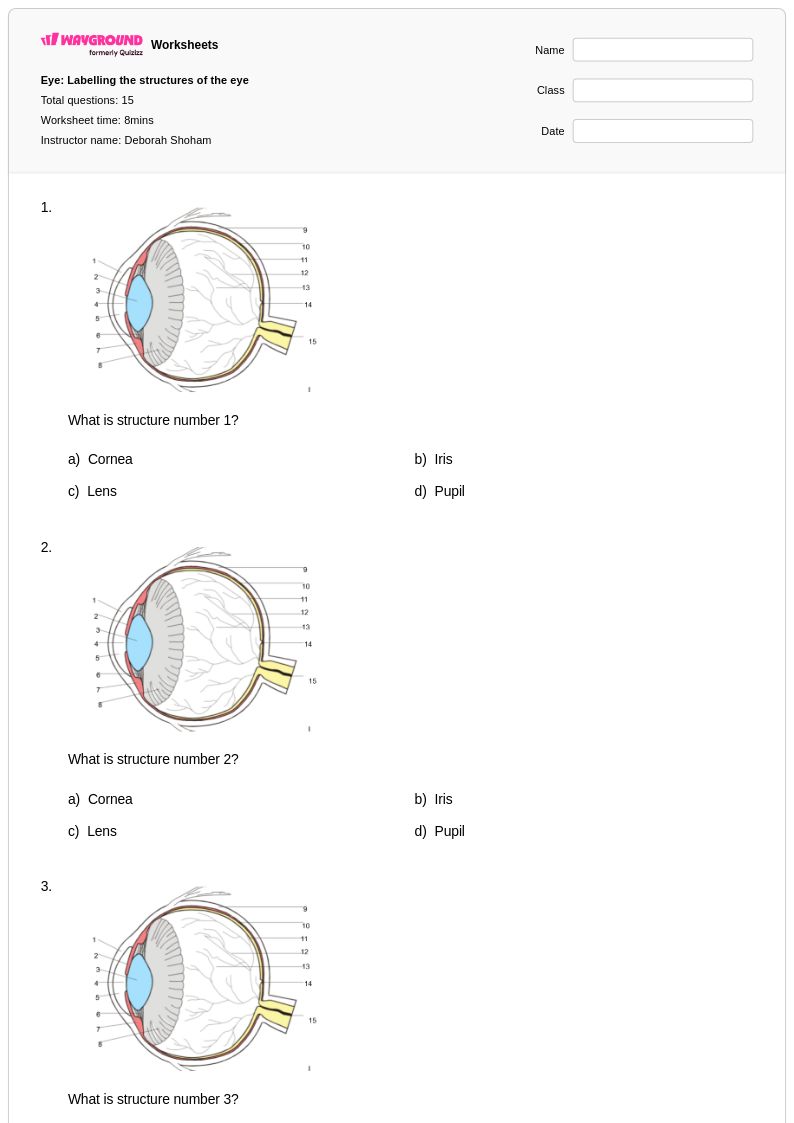
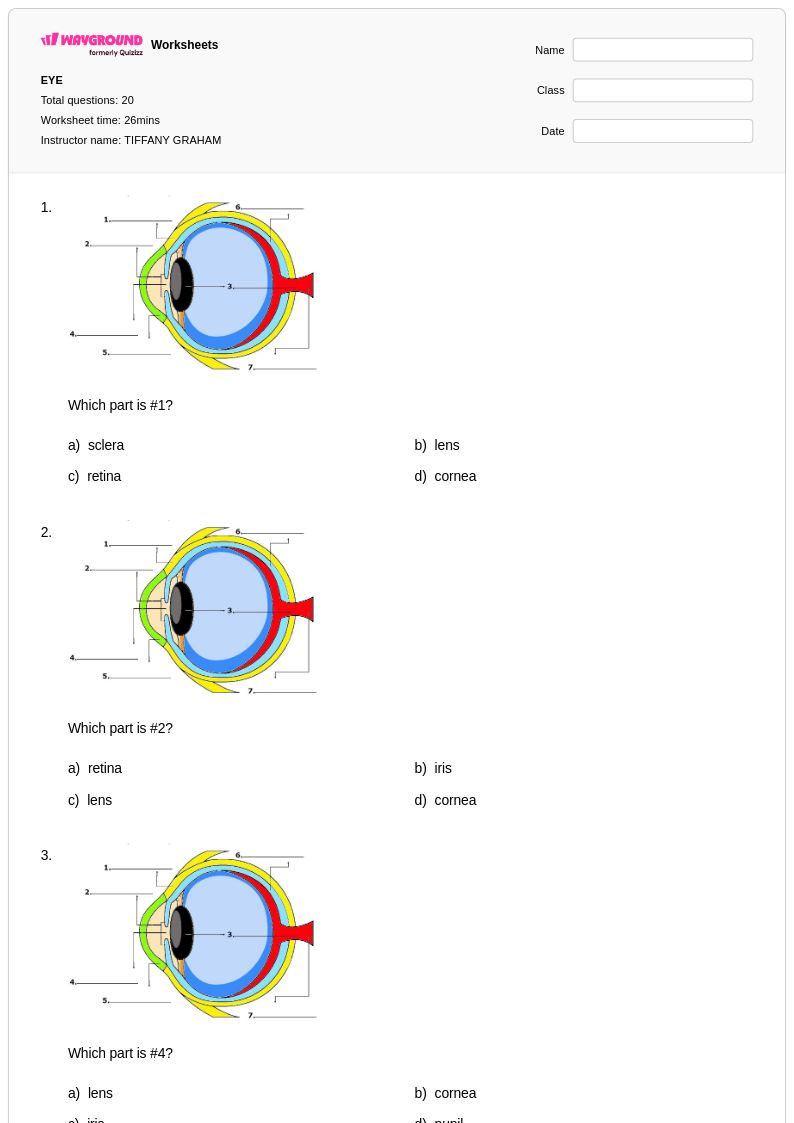
Start by introducing the major structural components of the eye, including the cornea, lens, retina, and optic nerve, before connecting each structure to its specific function in vision. Use labeled diagrams to help students visualize how light enters the eye and travels through each component before being converted into neural signals. Reinforcing the pathway from light refraction through the cornea and lens to photoreceptor activation and optic nerve transmission gives students a functional framework rather than isolated facts.
What exercises help students practice identifying parts of the eye?
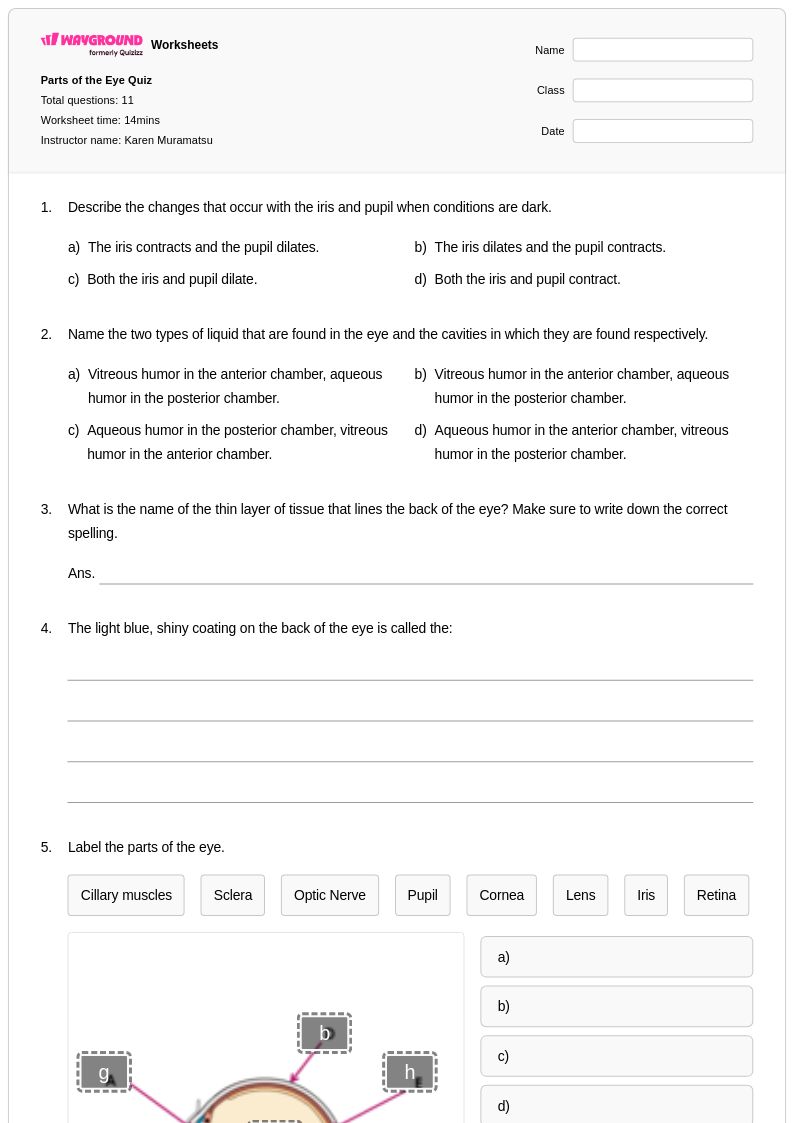
Labeling diagrams of the eye is one of the most effective practice formats, requiring students to recall anatomical terms and their locations without visual cues. Pairing diagram exercises with short-answer questions that ask students to explain the role of each structure, such as how the retina converts light into electrical signals, deepens comprehension beyond memorization. Practice problems that connect structure to function, like asking how a damaged lens affects focus, push students to apply their knowledge rather than simply recall it.
What misconceptions do students commonly have about how the eye works?
A frequent misconception is that the eye works like a camera in a one-to-one way, leading students to underestimate the brain's role in processing and interpreting visual signals sent via the optic nerve. Students also often confuse the roles of rods and cones, believing all photoreceptors work the same way regardless of lighting conditions. Another common error is misunderstanding refraction, with many students thinking the lens alone focuses light rather than recognizing that both the cornea and lens contribute to bending incoming light.
How do I differentiate eye anatomy instruction for students at different levels?
For foundational learners, focus on the major structures and their single primary functions before introducing complex processes like neural signal transmission. Advanced students can be challenged with questions about vision disorders, comparative eye adaptations across species, and how environmental factors affect visual acuity. On Wayground, teachers can apply accommodations at the individual student level, including reduced answer choices to lower cognitive load for struggling learners and extended time settings, all without disrupting the experience of other students in the class.
How do I use Wayground's eye worksheets in my classroom?
Wayground's eye worksheets are available as printable PDFs for traditional classroom and laboratory use, as well as in digital formats for technology-integrated or remote learning environments. Teachers can also host worksheets directly as a quiz on Wayground, enabling interactive digital delivery with built-in answer tracking. Each worksheet includes a complete answer key, so teachers have immediate access to solution guides for efficient grading and student feedback.
How can I help students understand vision disorders using worksheets?
Worksheets that ask students to evaluate common vision disorders, such as myopia, hyperopia, and color blindness, work best when they require students to connect the disorder back to a specific structural or functional failure in the eye. For example, asking students to explain why a misshapen cornea causes blurred vision reinforces the relationship between structure and function rather than treating disorders as separate memorization content. This analytical approach helps students see vision disorders as extensions of normal eye anatomy rather than isolated medical facts.