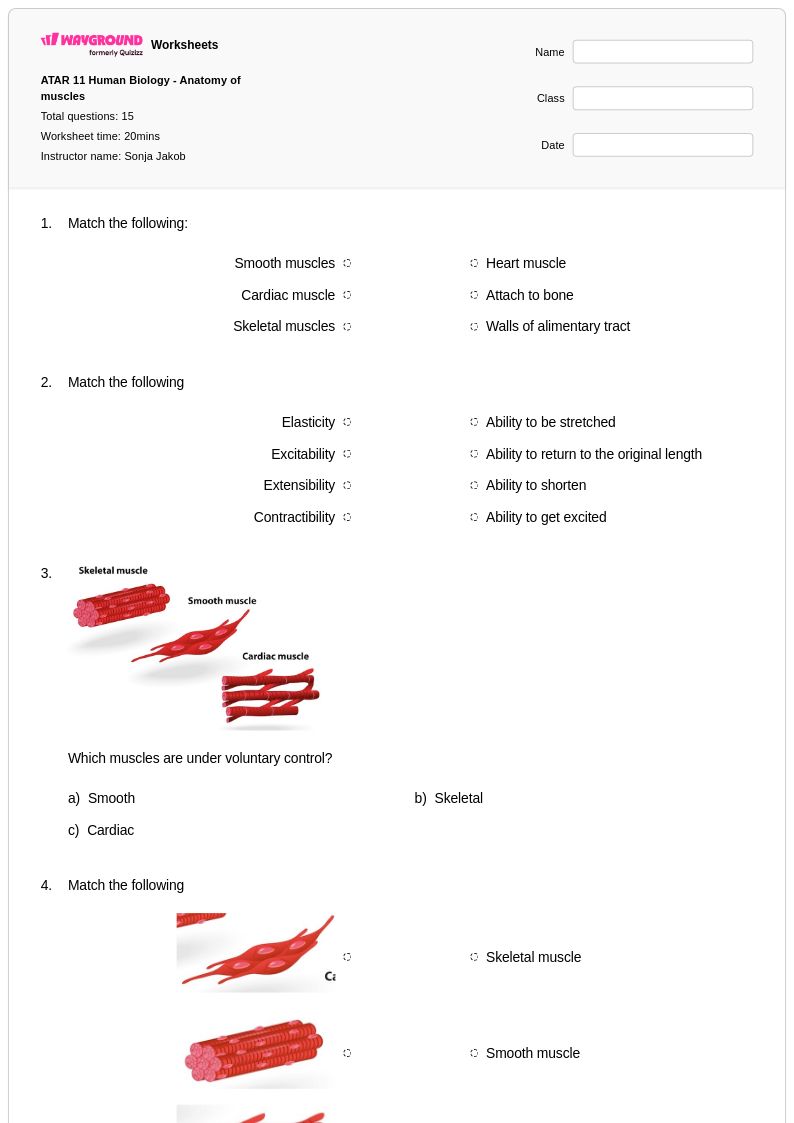
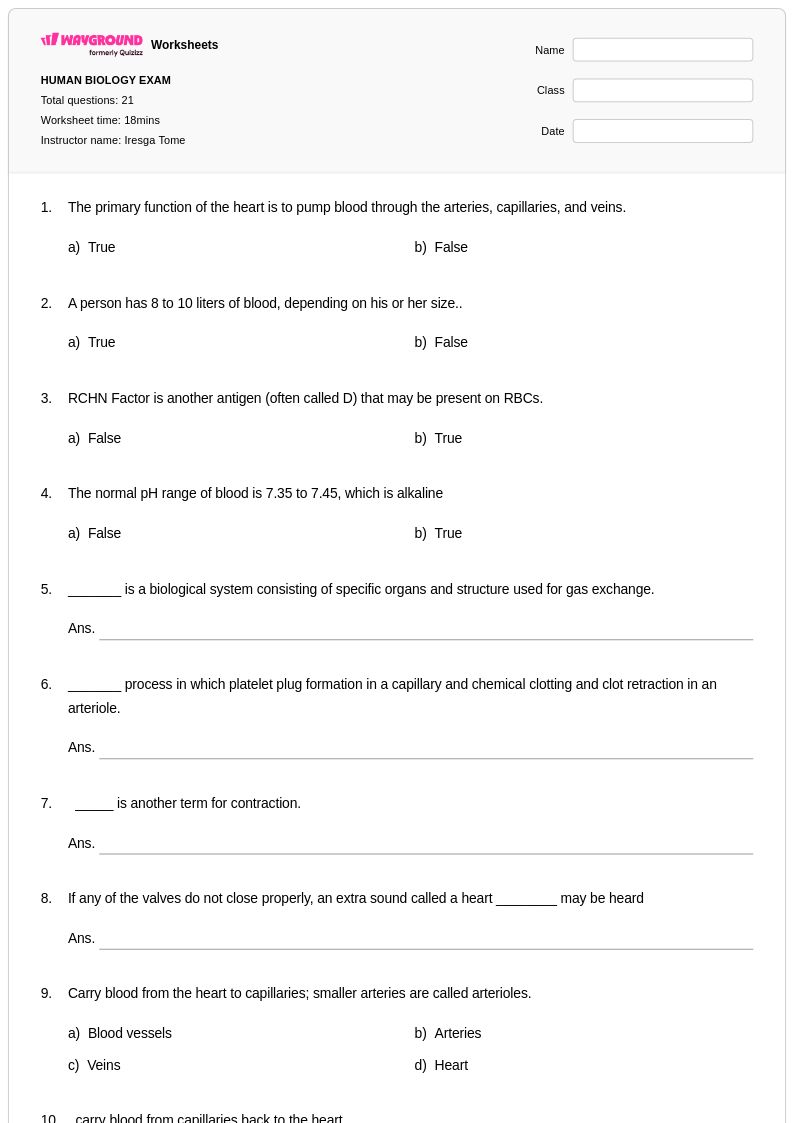
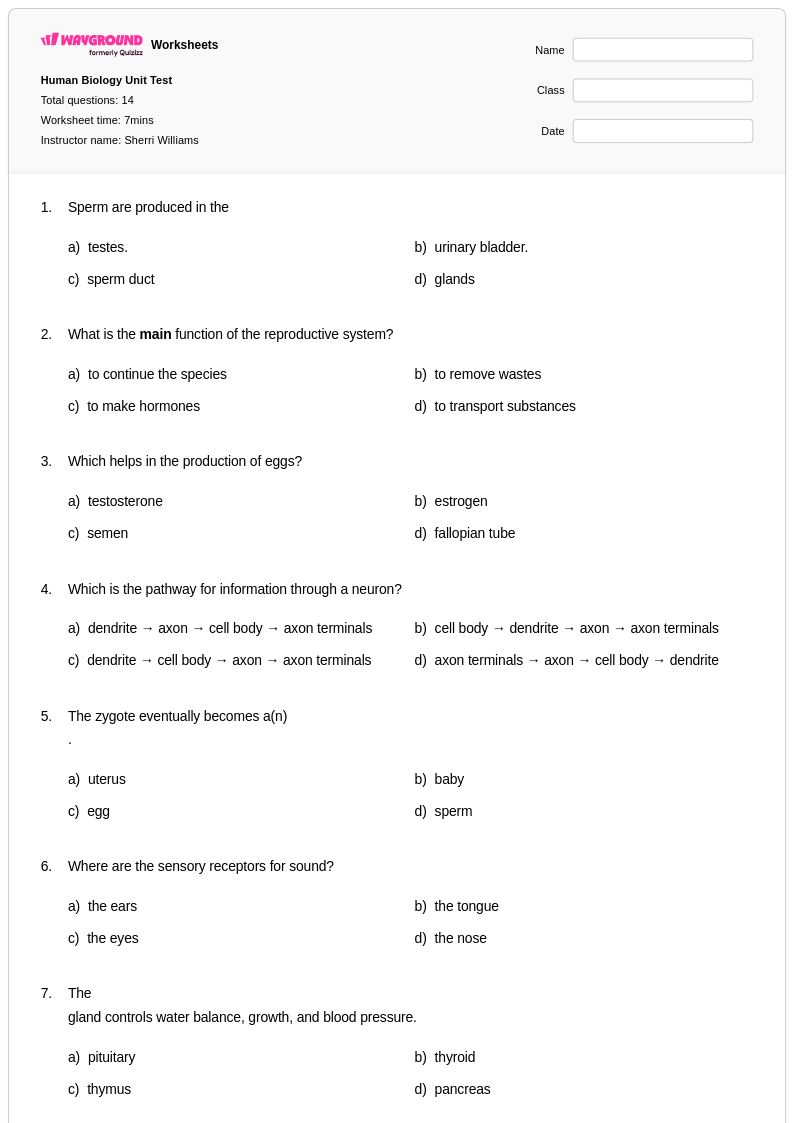
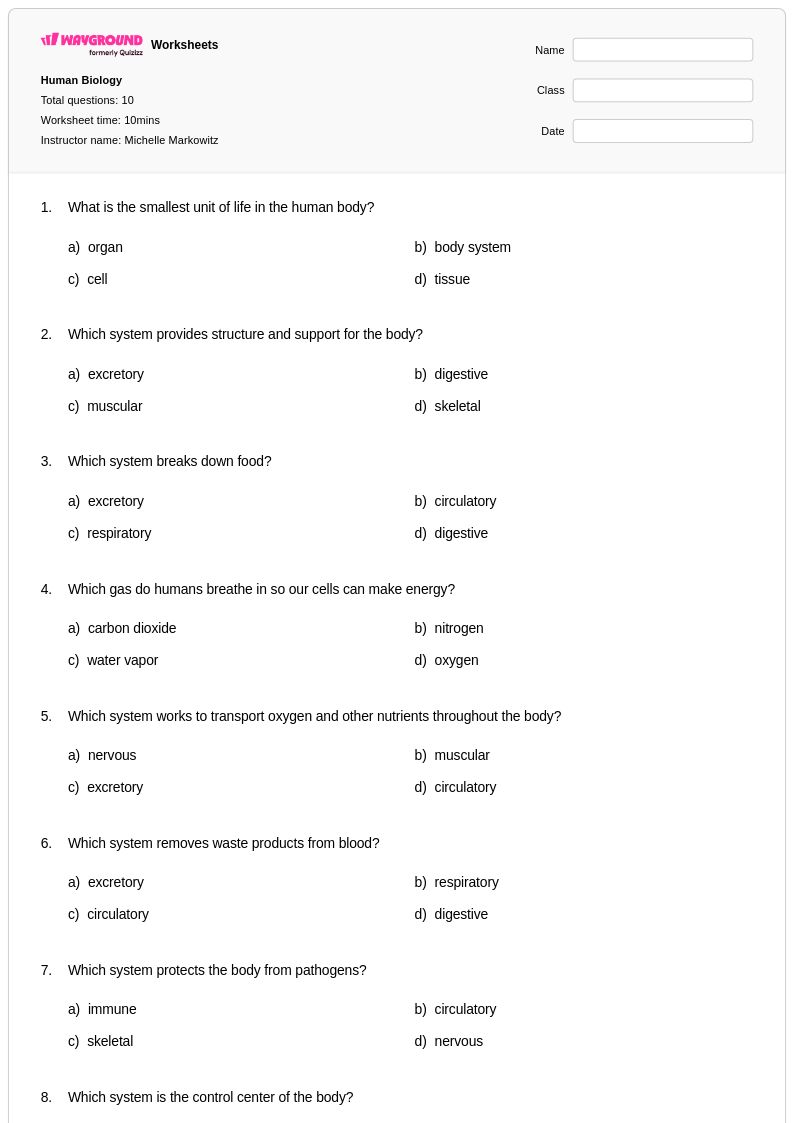
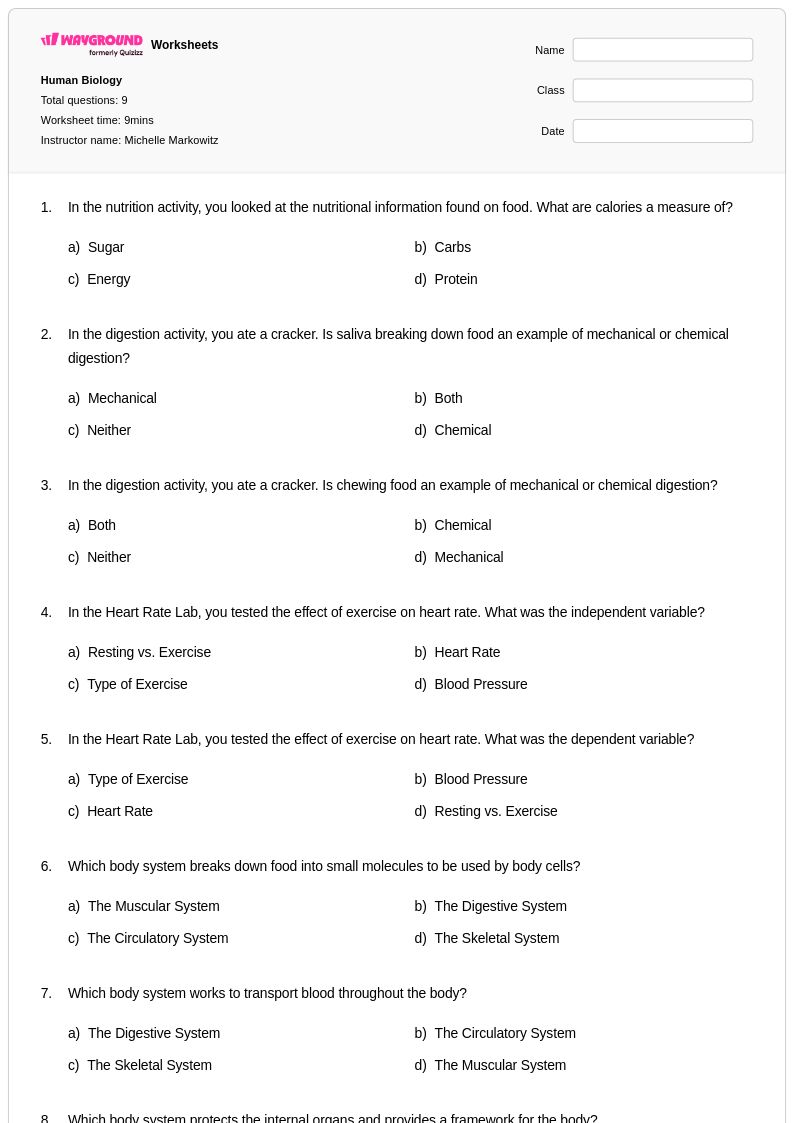
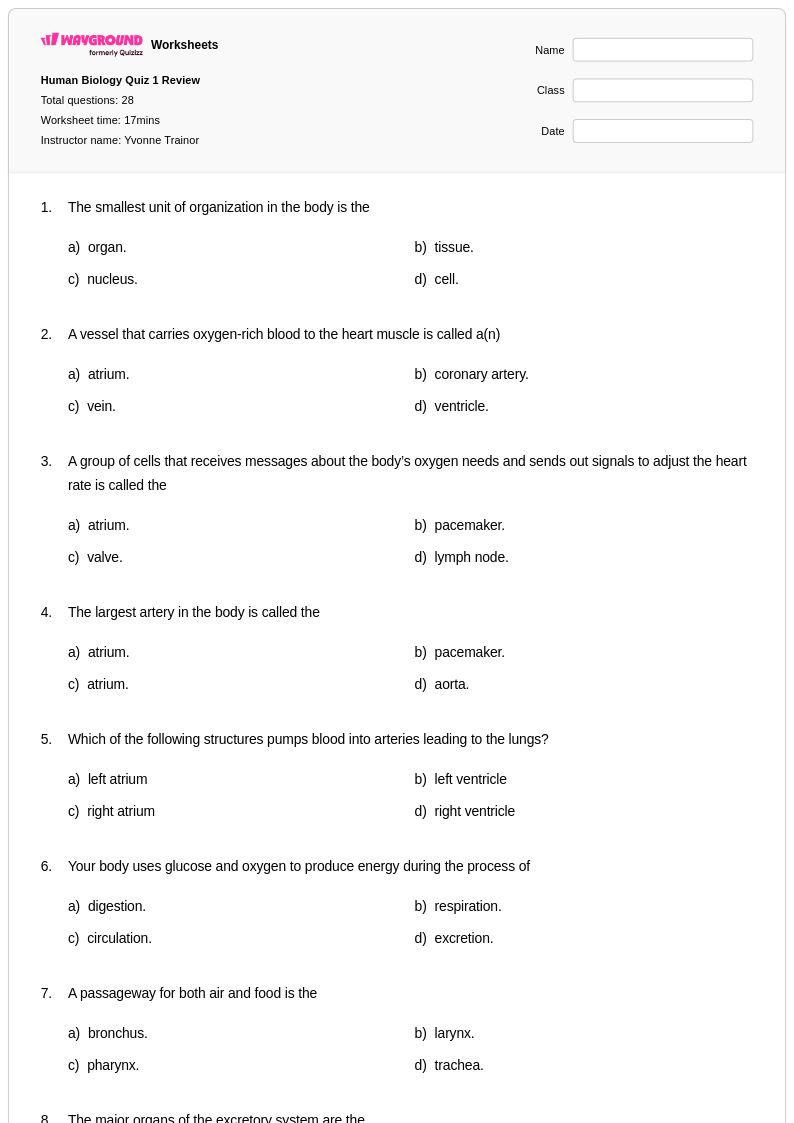
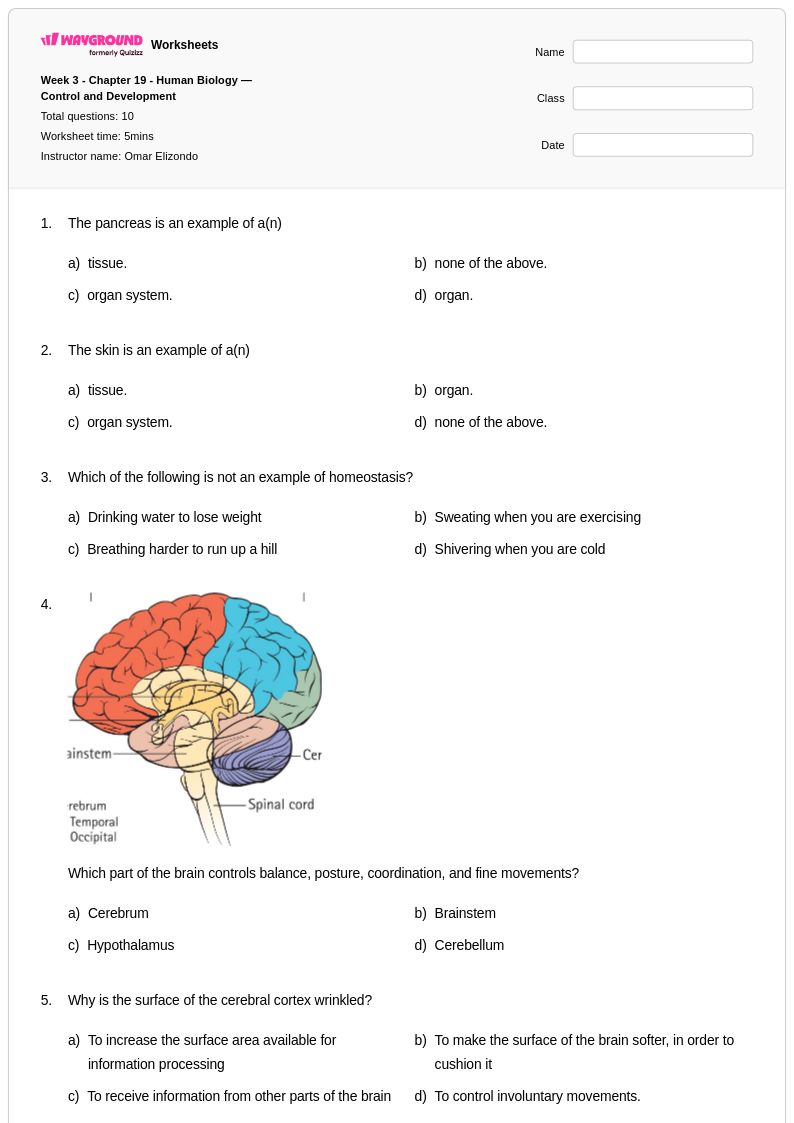
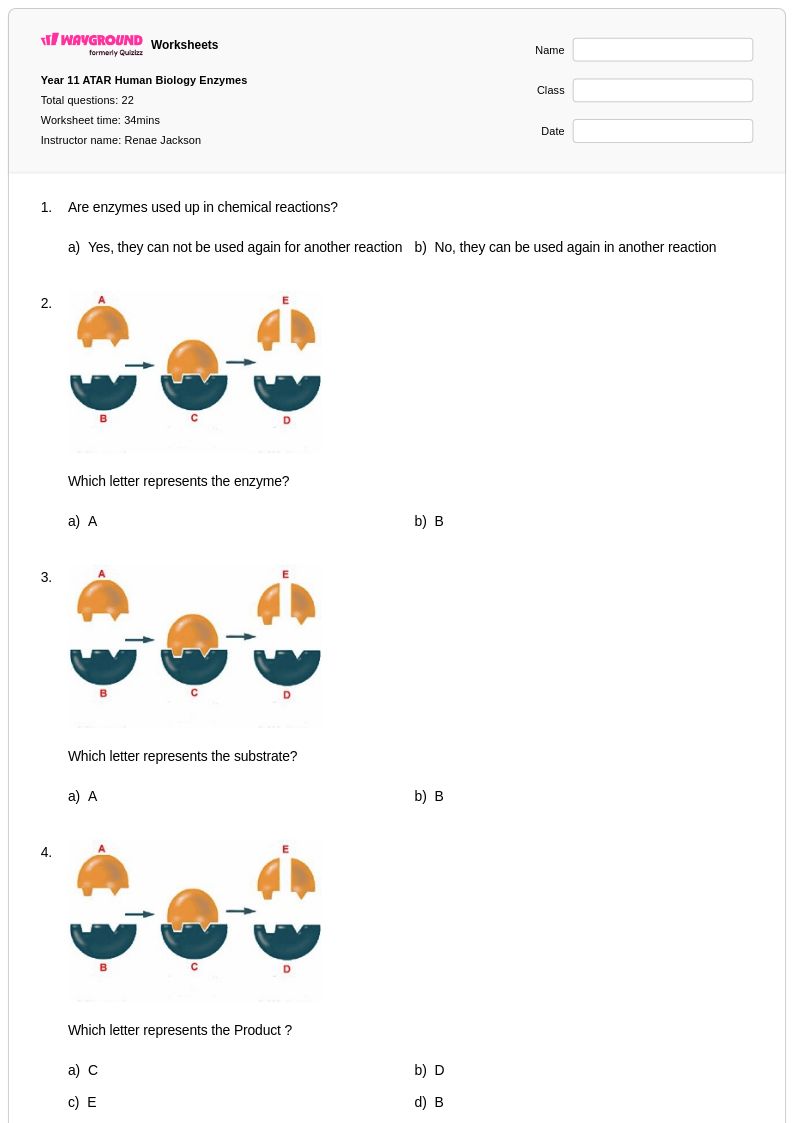
Explore Wayground's comprehensive collection of free human biology worksheets and printables that help students master body systems, anatomy, and physiological processes through engaging practice problems and detailed answer keys.
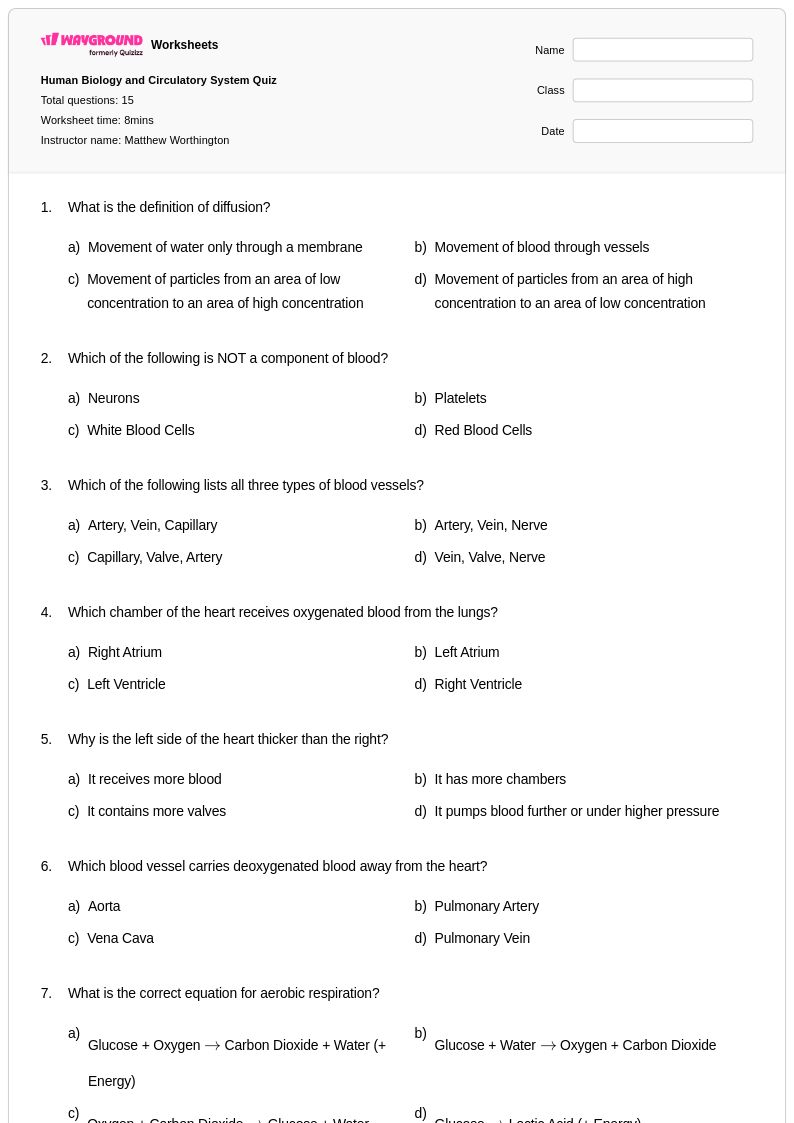
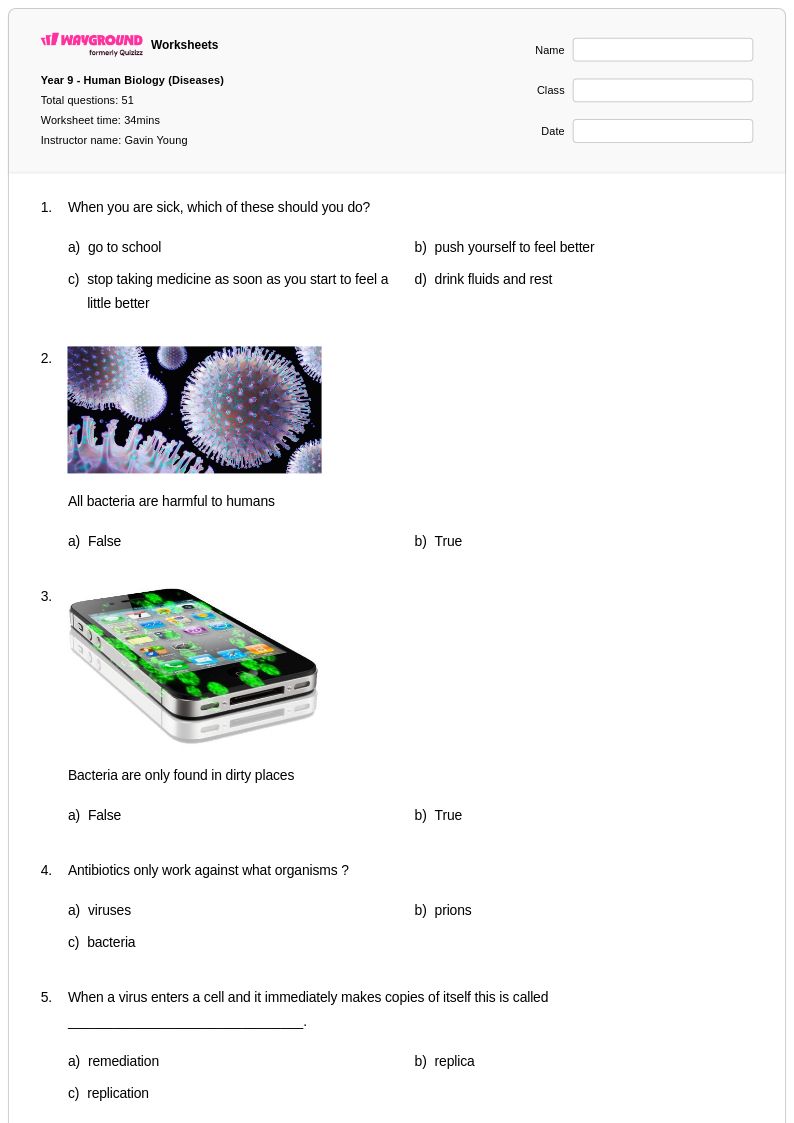
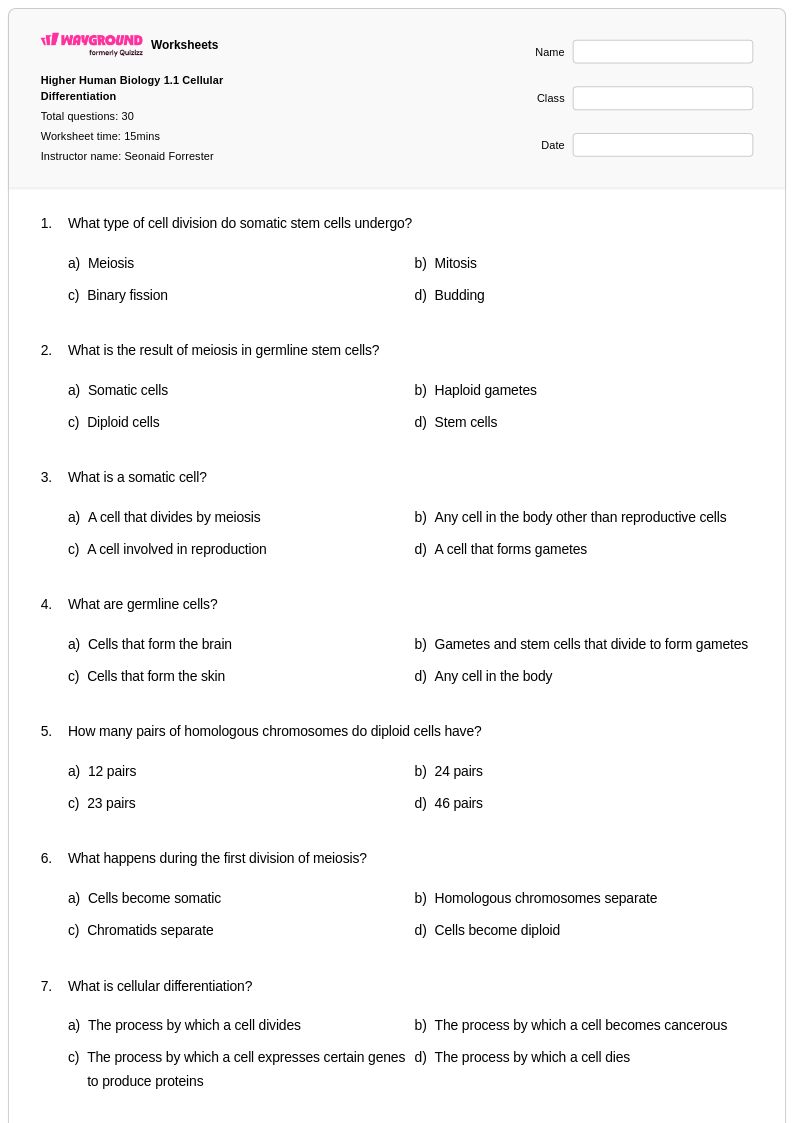
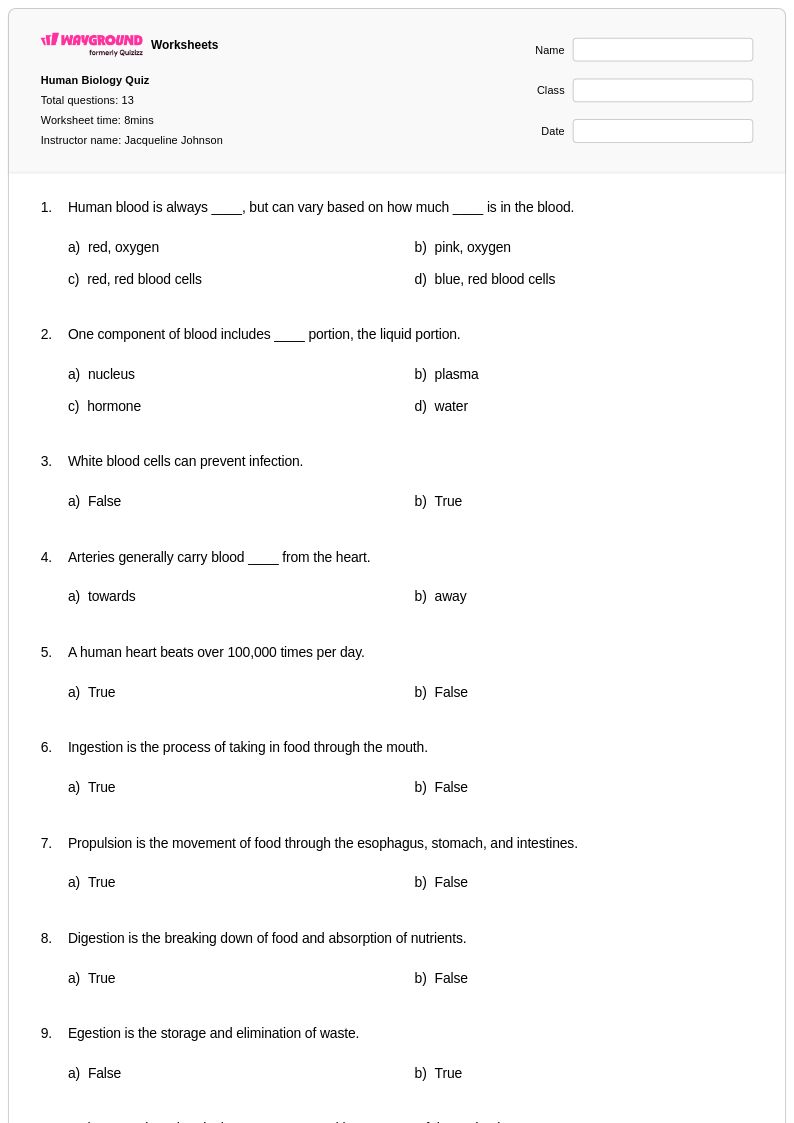
Human Biology worksheets available through Wayground (formerly Quizizz) provide comprehensive coverage of the complex systems and processes that govern the human body. These educational resources strengthen students' understanding of anatomical structures, physiological functions, and the intricate relationships between body systems including the circulatory, respiratory, digestive, nervous, and reproductive systems. The worksheets feature detailed practice problems that challenge students to analyze organ functions, trace metabolic pathways, and understand homeostatic mechanisms that maintain human health. Each resource includes a complete answer key to facilitate self-assessment and guided learning, while the free printable format ensures accessibility for diverse classroom environments and study situations.
Wayground (formerly Quizizz) empowers educators with millions of teacher-created Human Biology resources that feature robust search and filtering capabilities, enabling precise alignment with curriculum standards and learning objectives. The platform's differentiation tools allow teachers to customize worksheets based on student readiness levels, accommodating diverse learning needs within the same classroom. These resources are available in both printable pdf formats and interactive digital versions, providing flexibility for traditional instruction, remote learning, and hybrid educational models. Teachers utilize these comprehensive collections for strategic lesson planning, targeted remediation of challenging concepts like cellular respiration and neural transmission, enrichment activities for advanced learners, and systematic skill practice that reinforces critical thinking about human biological processes and their real-world applications.
FAQs
How do I teach human body systems in a way that helps students see how they connect?
The most effective approach is to teach body systems not in isolation but through their functional interdependencies — for example, linking the respiratory and circulatory systems through oxygen transport, or connecting the nervous and endocrine systems through homeostatic regulation. Using case studies, labeled diagrams, and process-tracing activities helps students build a mental model of the body as an integrated system rather than a list of separate parts. Anchoring each system to a real physiological event, such as what happens during exercise or digestion, gives students a concrete framework for understanding how structure supports function.
What are the best practice activities for students learning human anatomy and physiology?
Effective practice for human biology combines labeling activities, function-matching tasks, and process sequencing exercises that require students to apply knowledge rather than simply recall it. Worksheets that ask students to trace metabolic pathways, identify organ roles within a system, or explain homeostatic mechanisms are particularly effective at building analytical thinking. Dissection-focused worksheets, such as those covering heart or lung dissection, add a procedural dimension that prepares students for lab work and reinforces structural knowledge.
What misconceptions do students commonly have about the menstrual cycle?
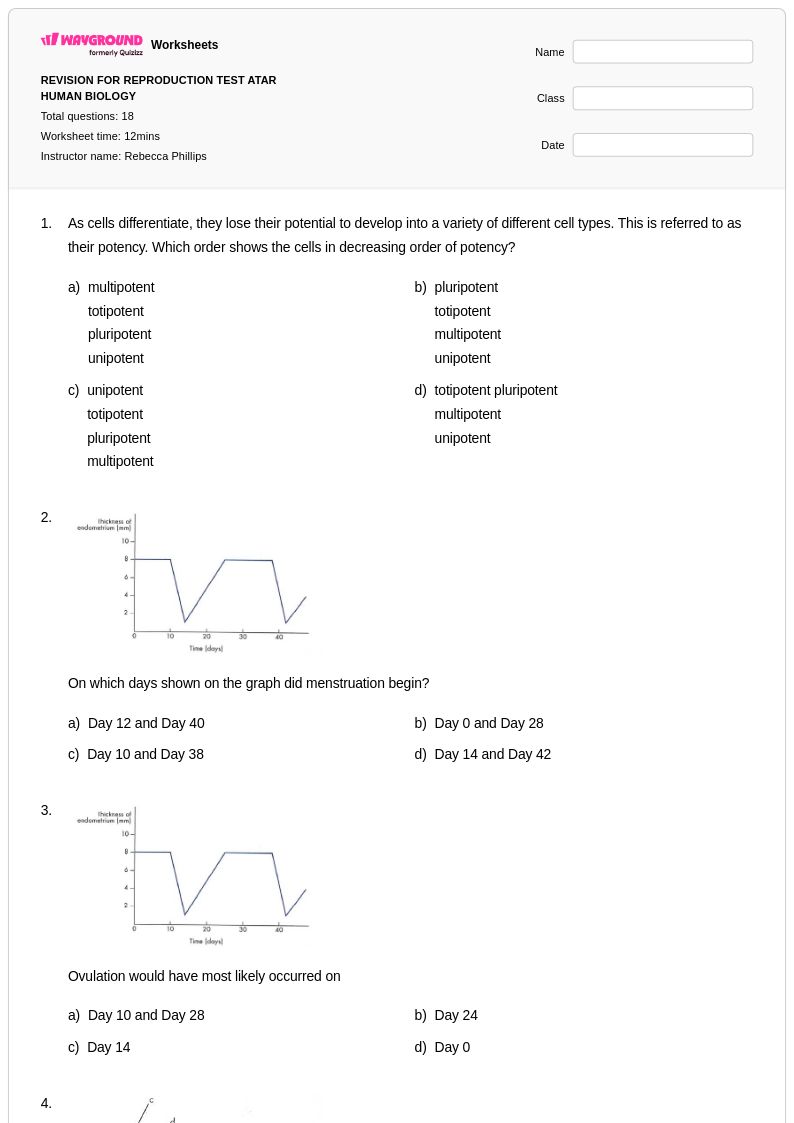
One of the most common misconceptions is that menstruation marks the beginning of fertility, when in fact ovulation — which occurs mid-cycle — is the fertile window. Students also frequently confuse the roles of estrogen and progesterone, misattributing which hormone triggers ovulation versus which sustains the uterine lining. Another persistent error is treating the cycle as a fixed 28-day process rather than understanding that cycle length varies and that the luteal phase is the more consistent portion. Targeted worksheet practice that sequences hormonal events and links them to physiological changes helps address all three of these errors directly.
Why do students struggle with understanding cerebrospinal fluid and what's the best way to address it?
Students typically struggle with cerebrospinal fluid because it sits at the intersection of neuroanatomy and physiology — requiring them to understand both where the fluid is produced and circulated and what functional role it serves in protecting and supporting the central nervous system. The abstract nature of the ventricular system makes spatial visualization difficult without diagrams. Worksheets that pair labeled anatomical diagrams of the brain and spinal cord with questions about CSF production, circulation, and clinical significance help students build both structural and functional understanding simultaneously.
How can I use human biology worksheets to support students with different learning needs in the same class?
Human biology worksheets on Wayground can be assigned digitally and customized with student-level accommodations, including read aloud for students who need audio support, reduced answer choices to lower cognitive load for struggling learners, and extended time for students who need it. These settings can be applied to individual students without affecting the experience of the rest of the class, making differentiation practical in a mixed-ability setting. Because accommodations are saved and reusable, teachers can set them up once and apply them consistently across multiple assignments throughout a unit.
How do I use Wayground's human biology worksheets in my classroom?
Wayground's human biology worksheets are available as printable PDFs for traditional classroom use and in digital formats for technology-integrated or remote learning environments, and teachers can also host them as a quiz directly on Wayground. Teachers can use them for direct instruction support, independent practice, lab preparation, or targeted remediation of specific concepts like cellular respiration, neural transmission, or hormonal regulation. The included answer keys make them suitable for self-paced learning stations, homework assignments, or formative assessment checkpoints within a unit.