
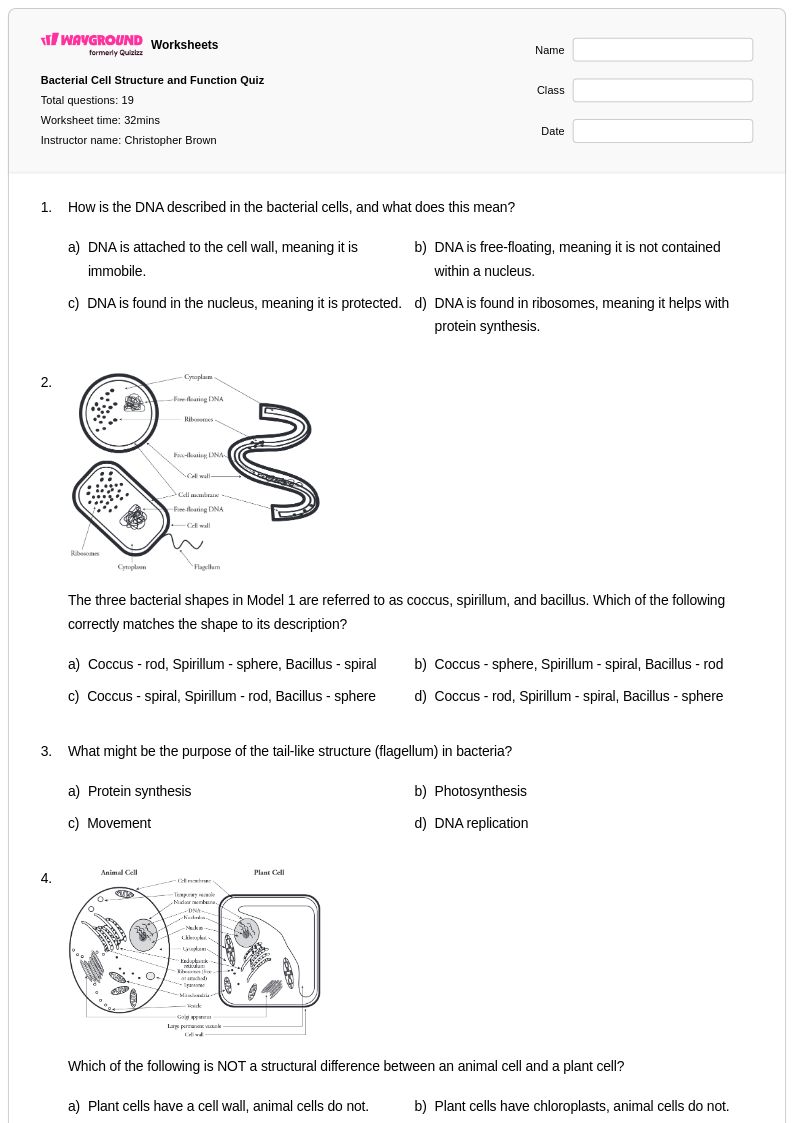
19 Q
9th
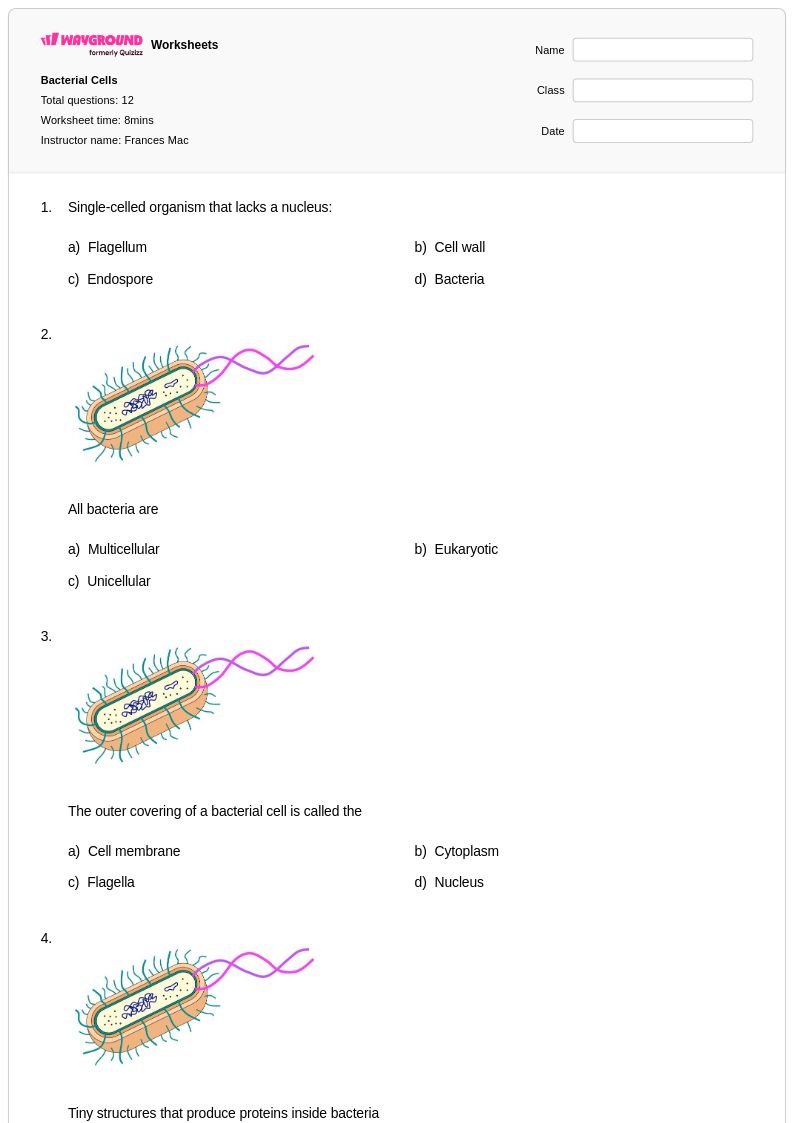
12 Q
6th
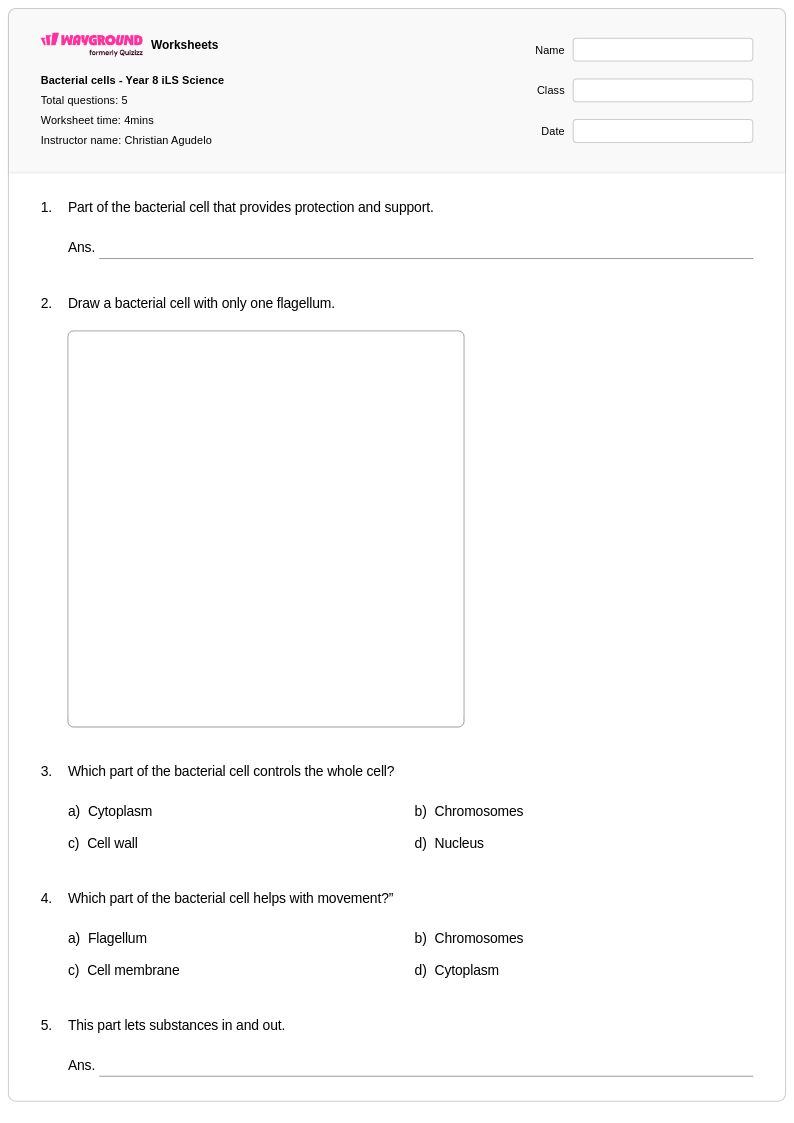
5 Q
7th
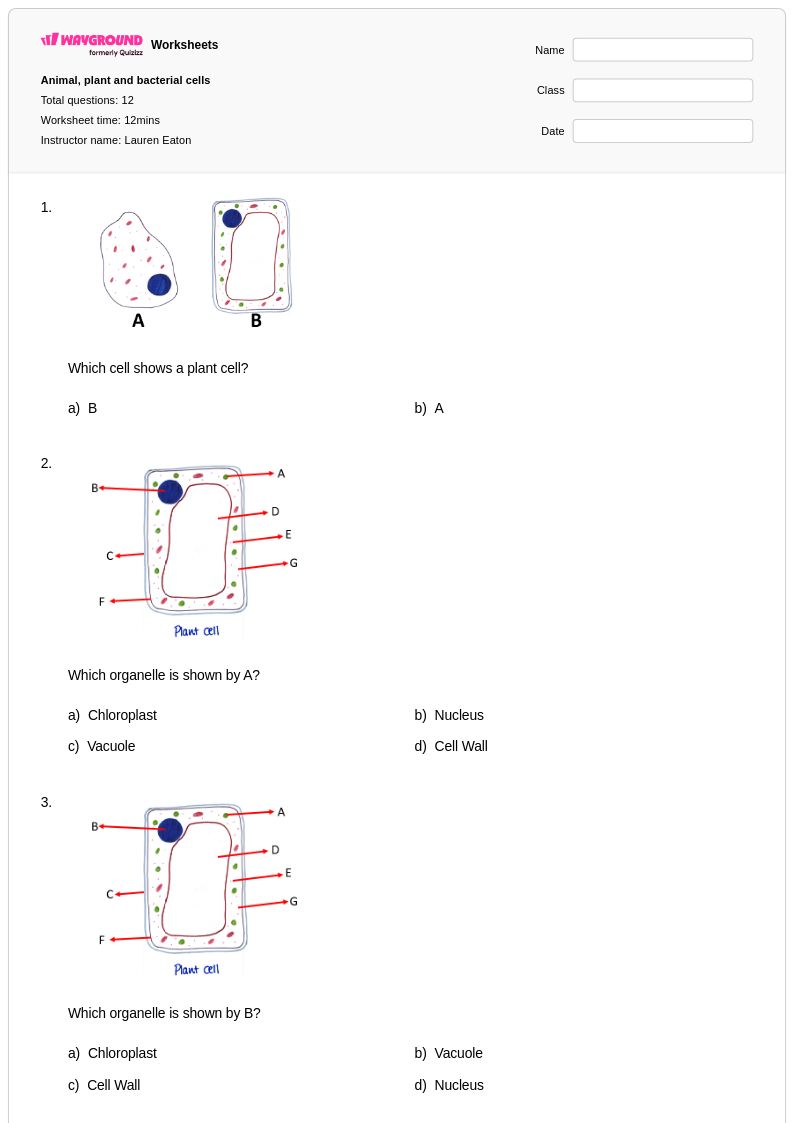
12 Q
9th
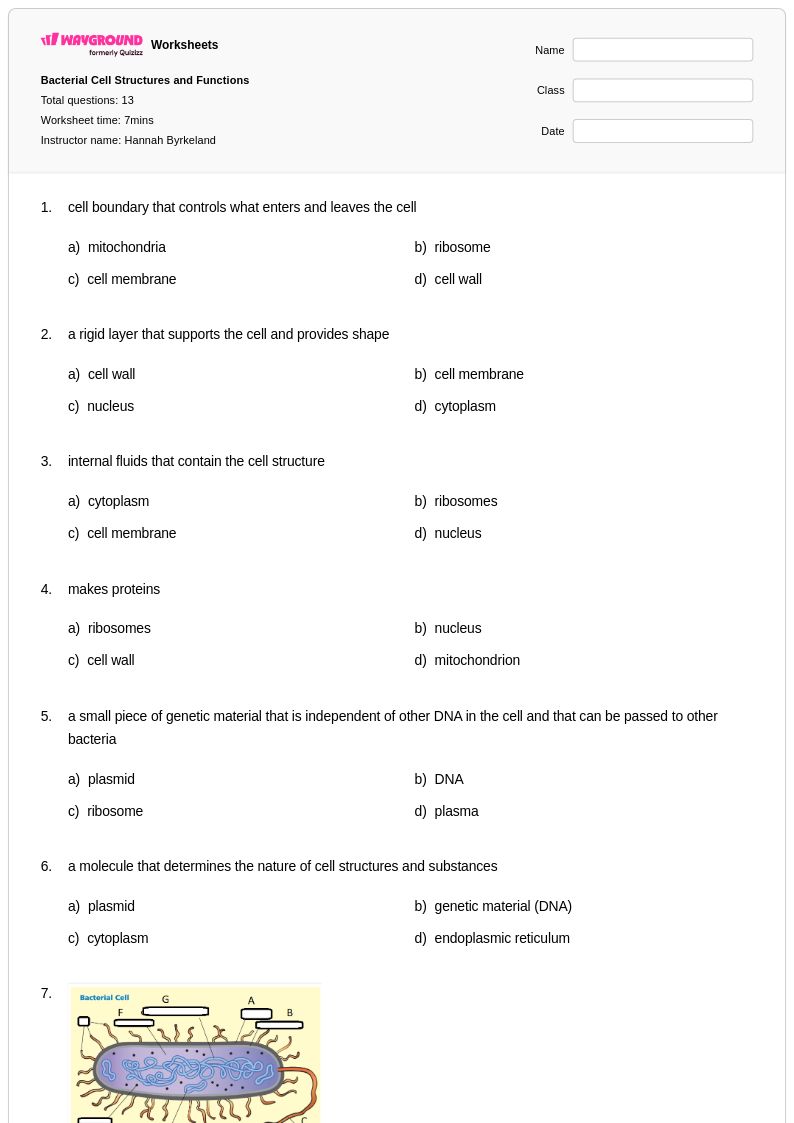
13 Q
6th
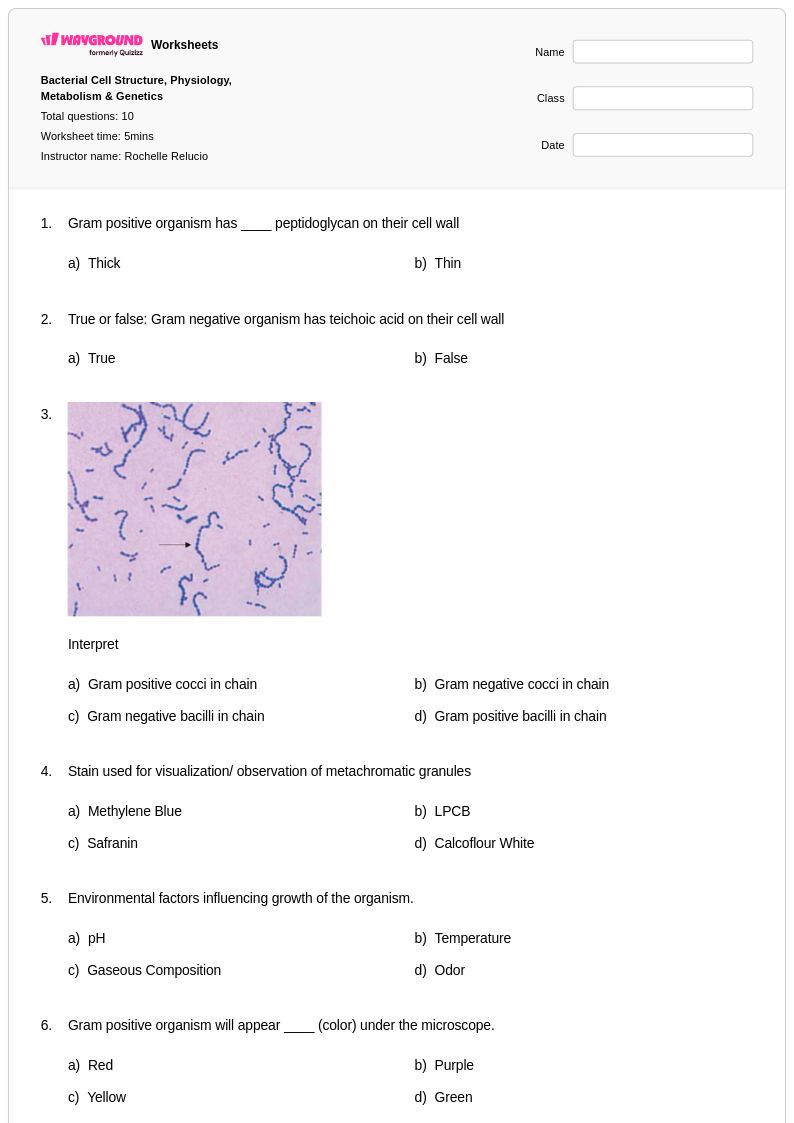
10 Q
1st - 12th
38 Q
Uni
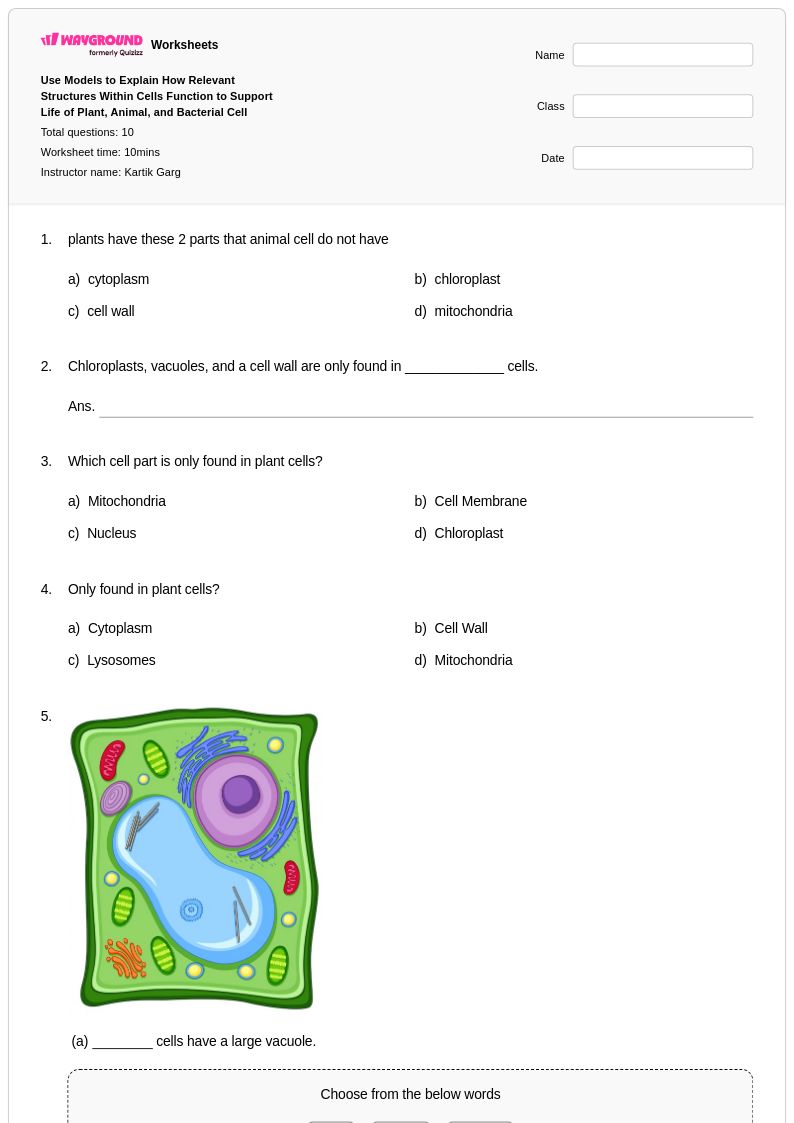
10 Q
7th - Uni
10 Q
7th - Uni
10 Q
7th - Uni
10 Q
7th - Uni
10 Q
7th - Uni
10 Q
7th - Uni
10 Q
7th - Uni
10 Q
8th
20 Q
7th - Uni
16 Q
9th
6 Q
7th
10 Q
7th - Uni
10 Q
7th - Uni
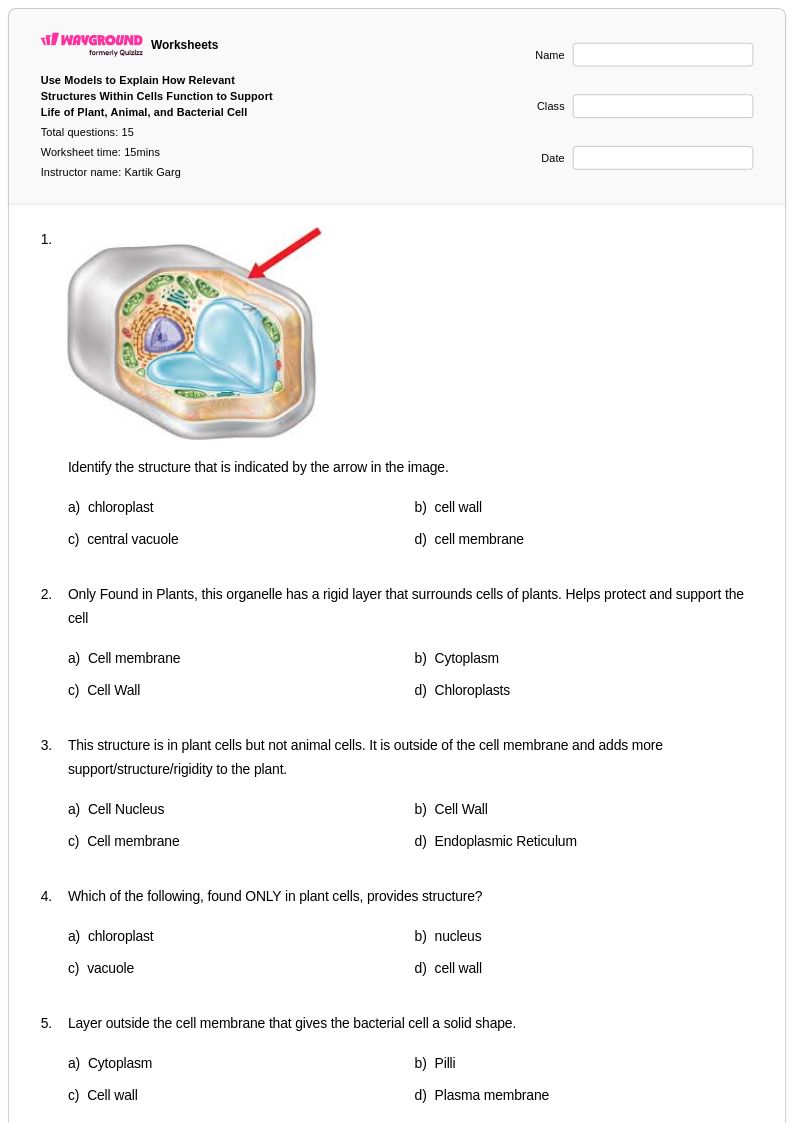
15 Q
7th - Uni
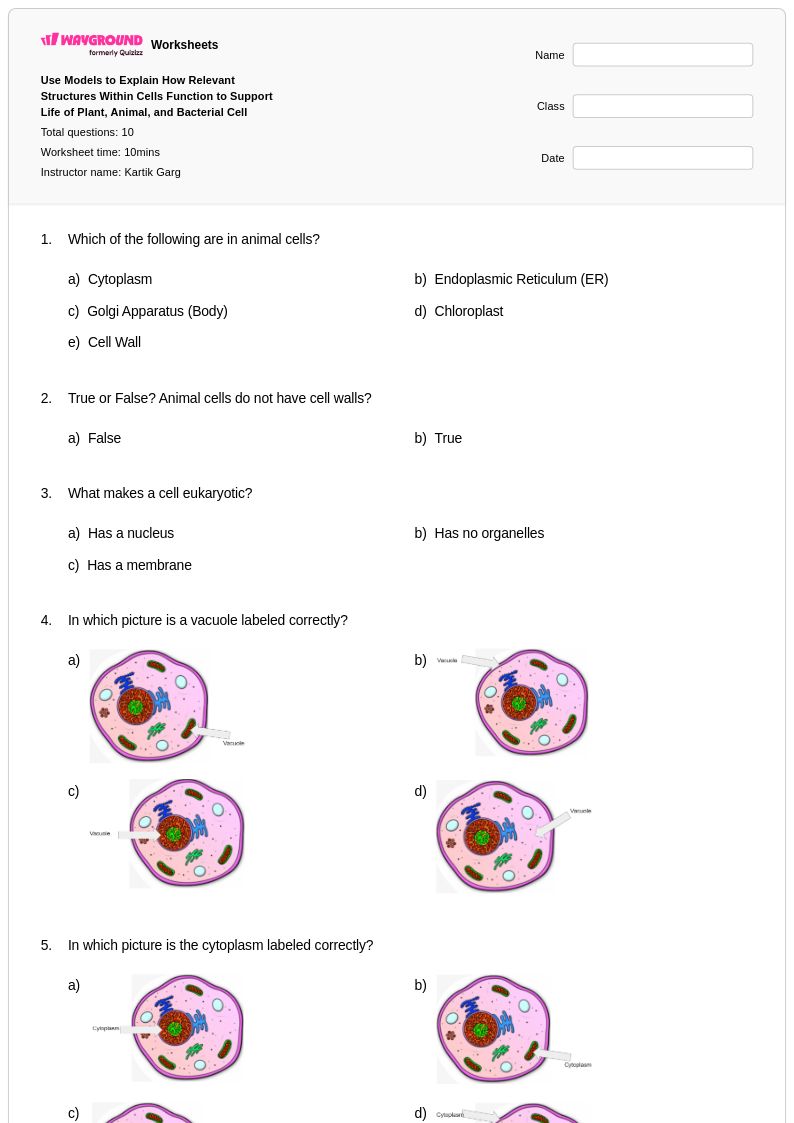
10 Q
7th - Uni
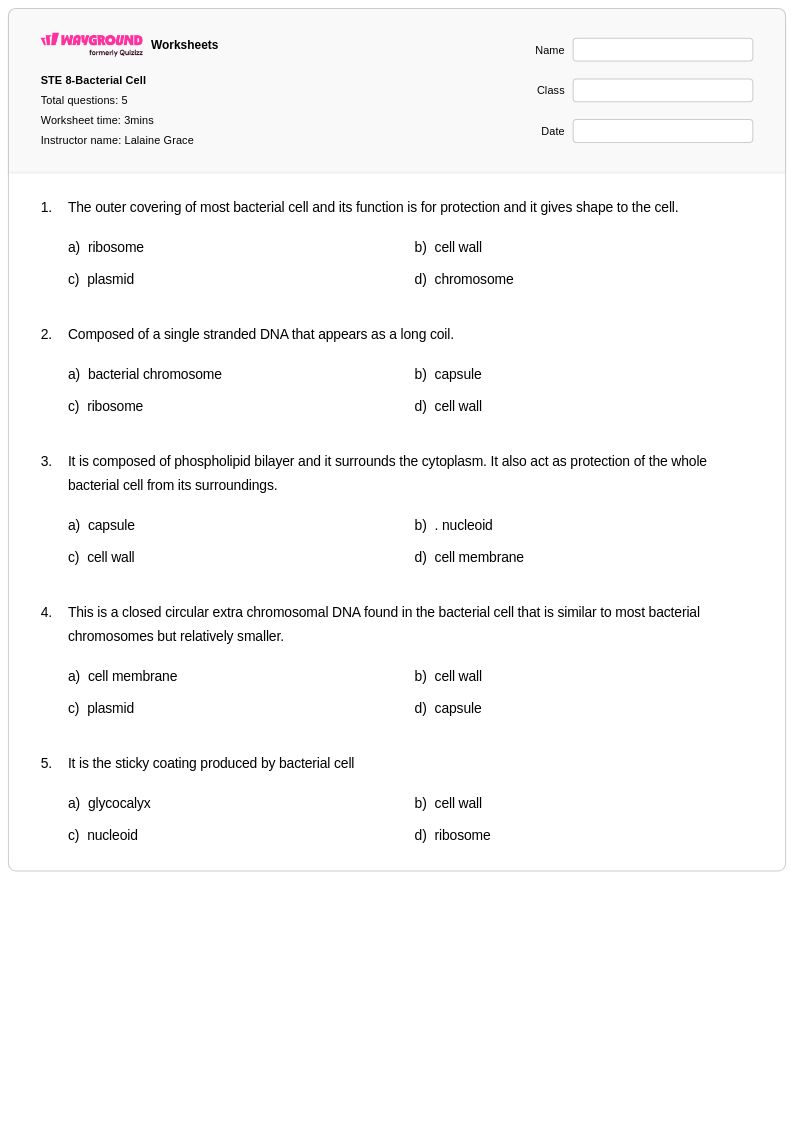
5 Q
8th
Explore Worksheets by Subjects
Explore printable Bacterial Cell worksheets
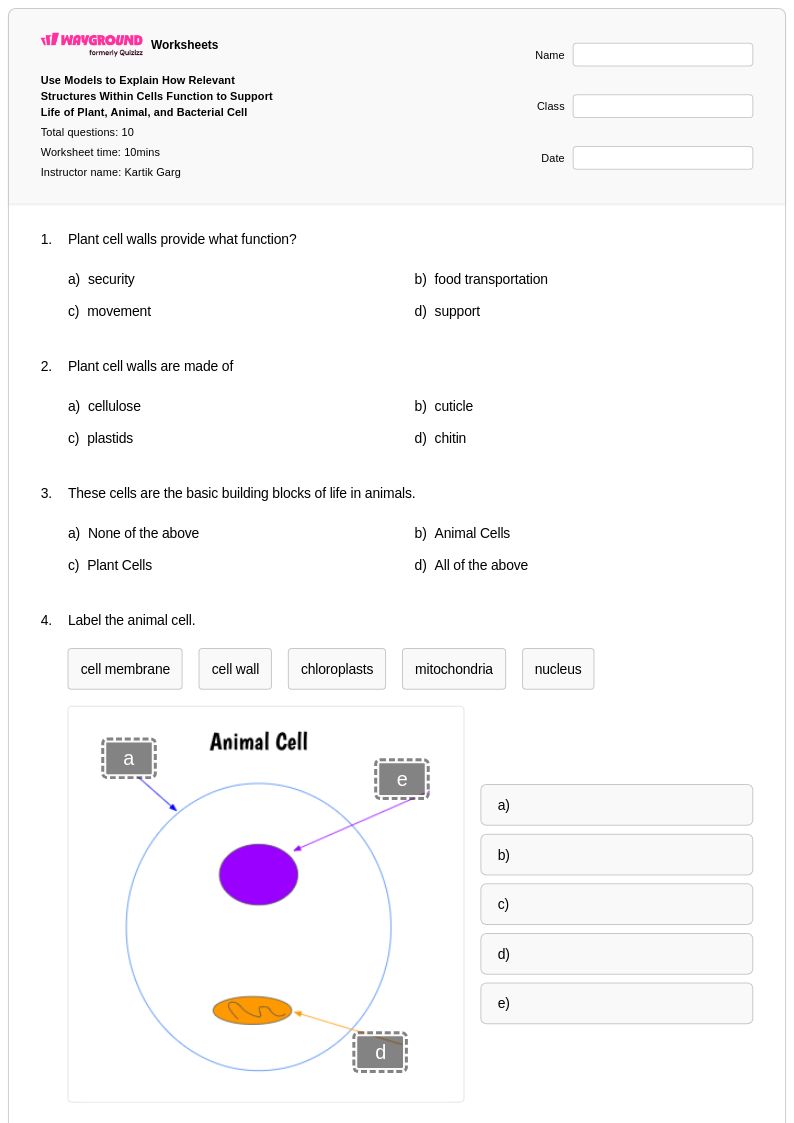
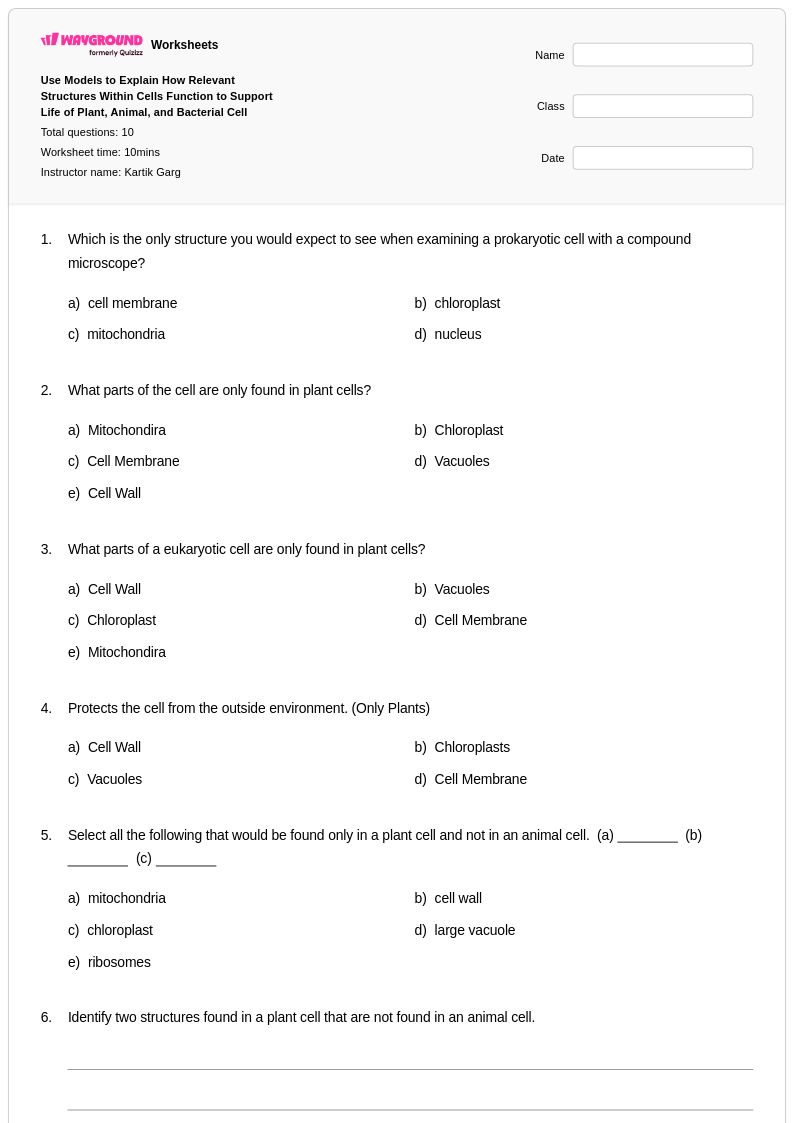
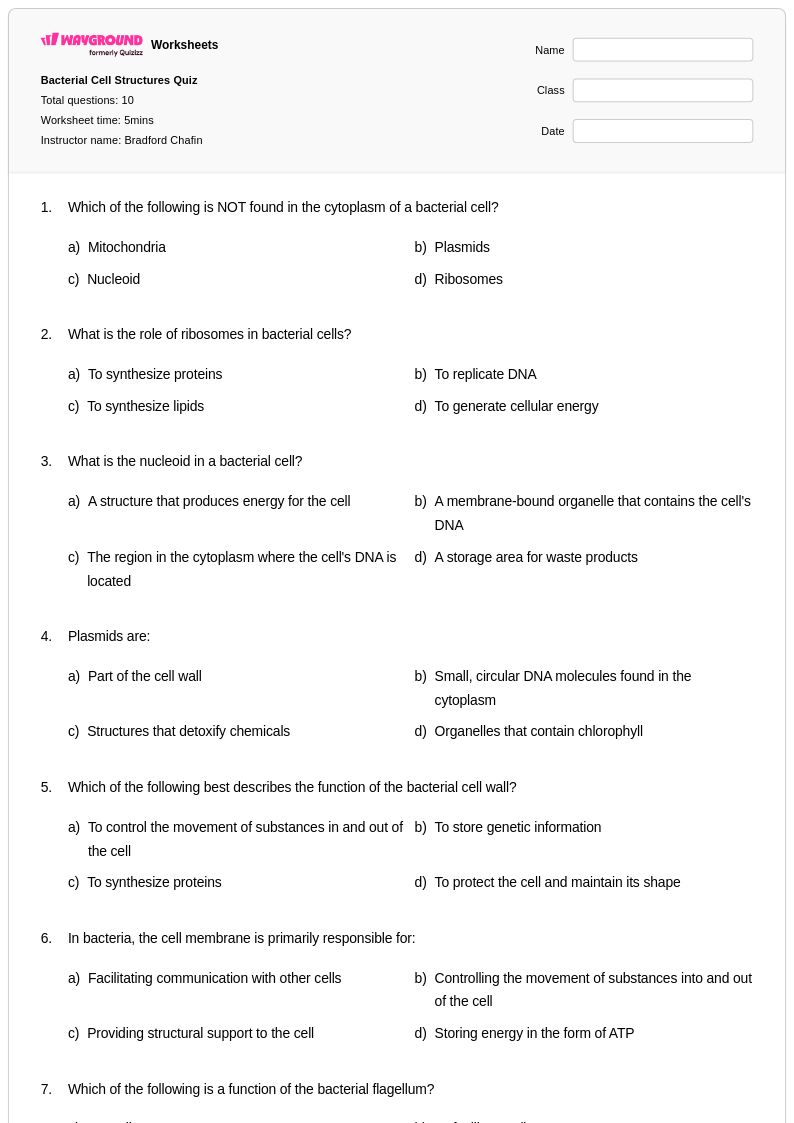
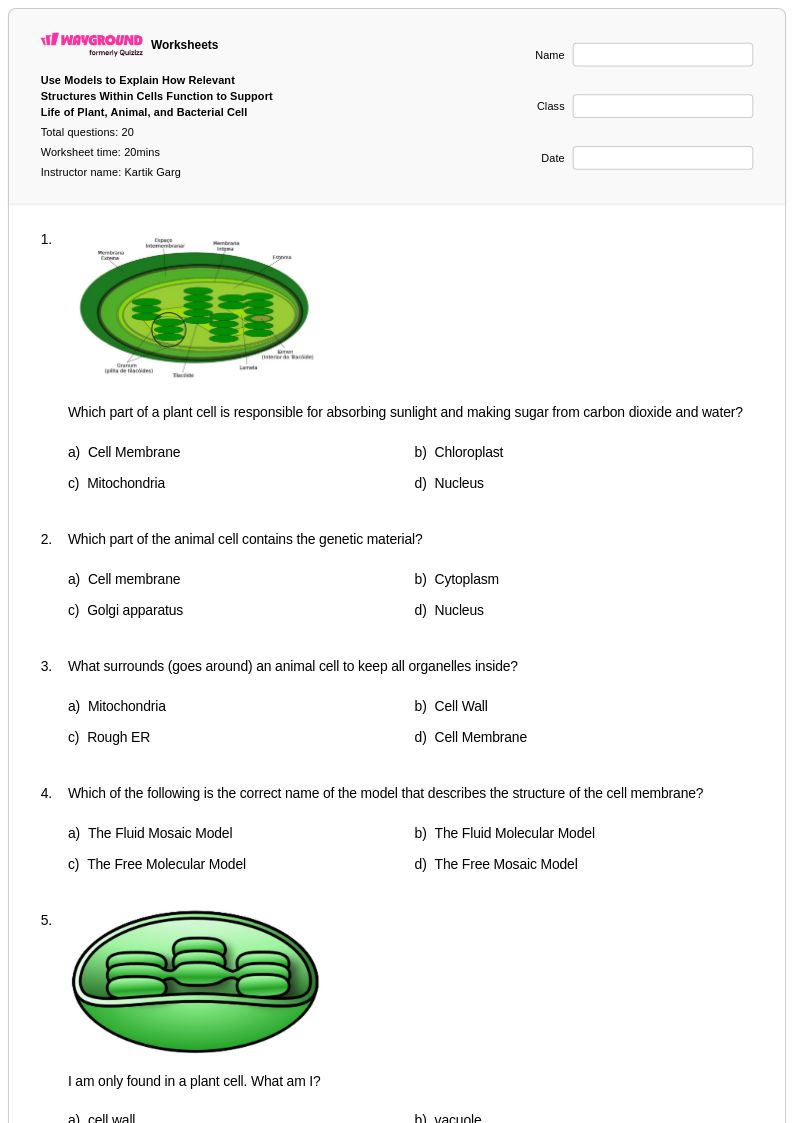
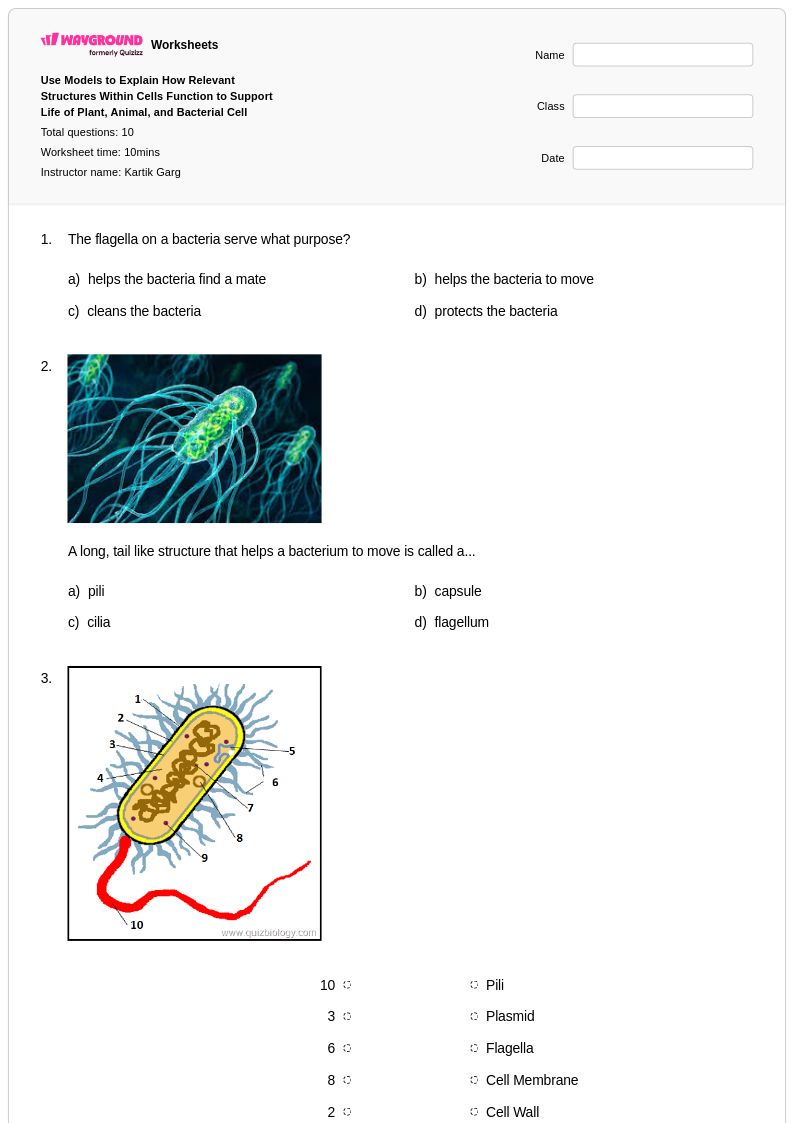
Bacterial cell worksheets available through Wayground (formerly Quizizz) provide comprehensive resources for students to explore the fundamental structures and functions of prokaryotic organisms. These expertly designed educational materials guide learners through detailed examinations of bacterial cell components including the cell wall, plasma membrane, nucleoid region, ribosomes, flagella, and pili, while building critical analytical skills in cellular biology. Students engage with practice problems that require them to identify bacterial structures, compare prokaryotic and eukaryotic cells, and analyze the relationship between bacterial cell features and their survival strategies. Each worksheet comes with a complete answer key, making them invaluable free printables for both classroom instruction and independent study, whether accessed as pdf downloads or interactive digital formats.
Wayground (formerly Quizizz) empowers educators with millions of teacher-created bacterial cell resources that streamline lesson planning and enhance student understanding of microbiology concepts. The platform's robust search and filtering capabilities allow teachers to quickly locate worksheets aligned with specific curriculum standards, while differentiation tools enable customization for diverse learning needs and ability levels. These bacterial cell worksheet collections support flexible instructional approaches, offering both printable pdf versions for traditional classroom use and digital formats for interactive learning experiences. Teachers can seamlessly integrate these resources into their curriculum for initial concept introduction, targeted skill practice, remediation for struggling students, or enrichment activities for advanced learners, ensuring comprehensive coverage of bacterial cell structure and function across all instructional contexts.
FAQs
How do I teach bacterial cell structure to my students?
What exercises help students practice identifying bacterial cell components?
What mistakes do students commonly make when learning about bacterial cells?
How do I use Wayground's bacterial cell worksheets in my classroom?
How do bacterial cell worksheets support differentiation for diverse learners?
How should I structure a lesson comparing prokaryotic and eukaryotic cells?