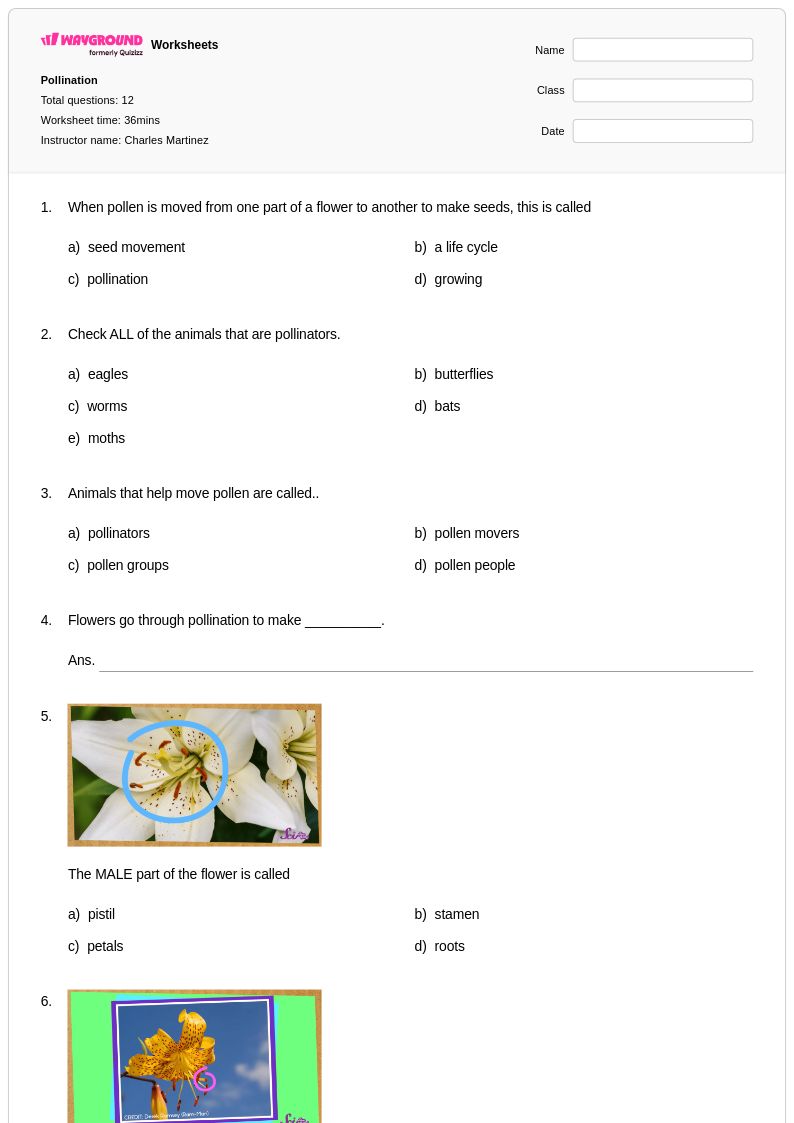
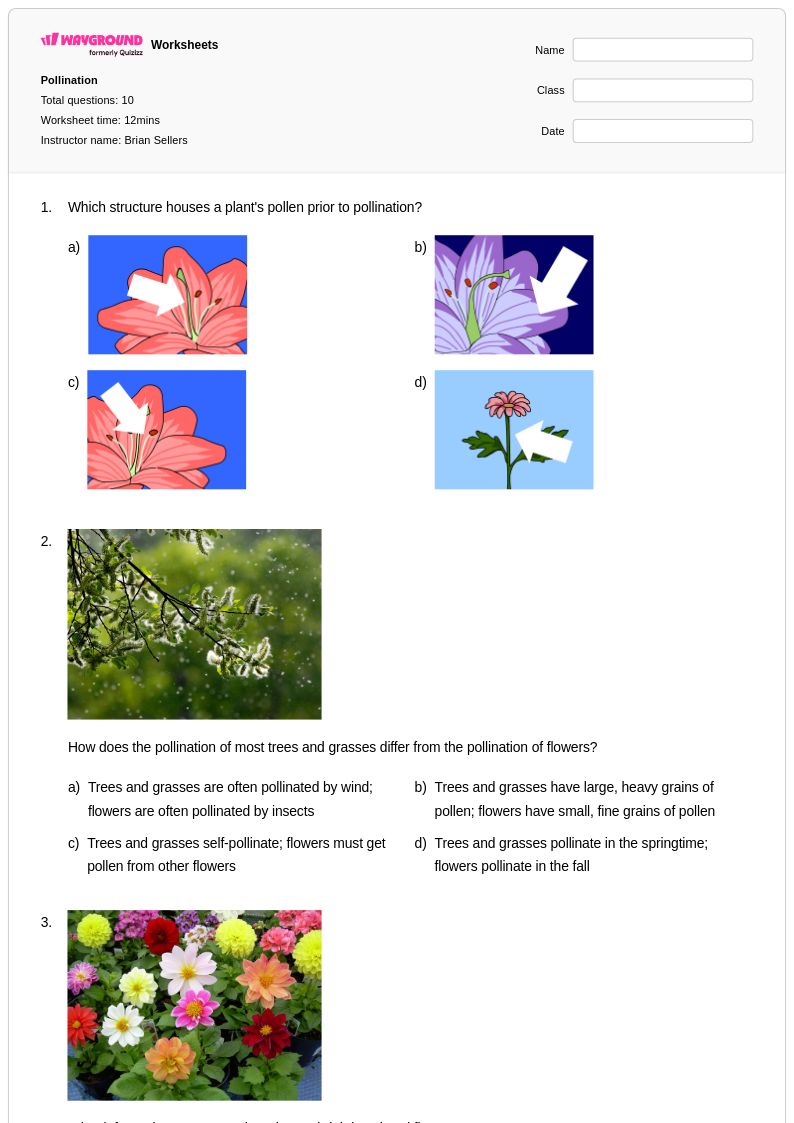
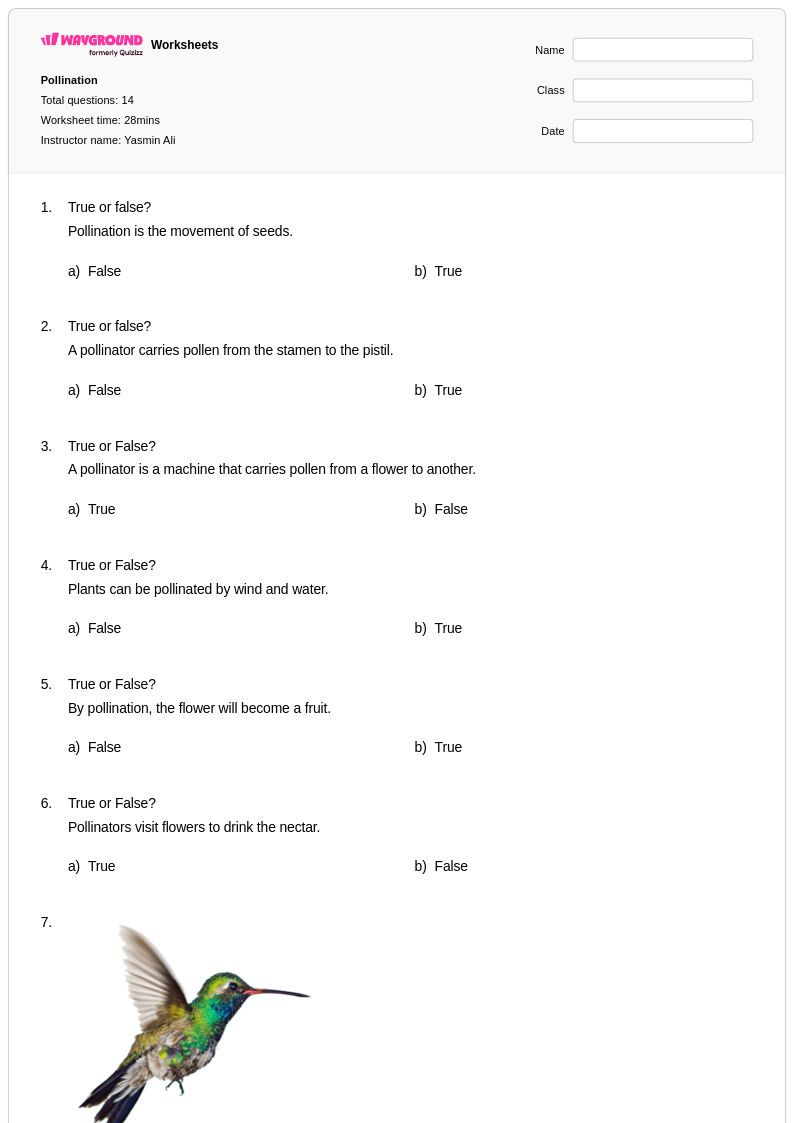
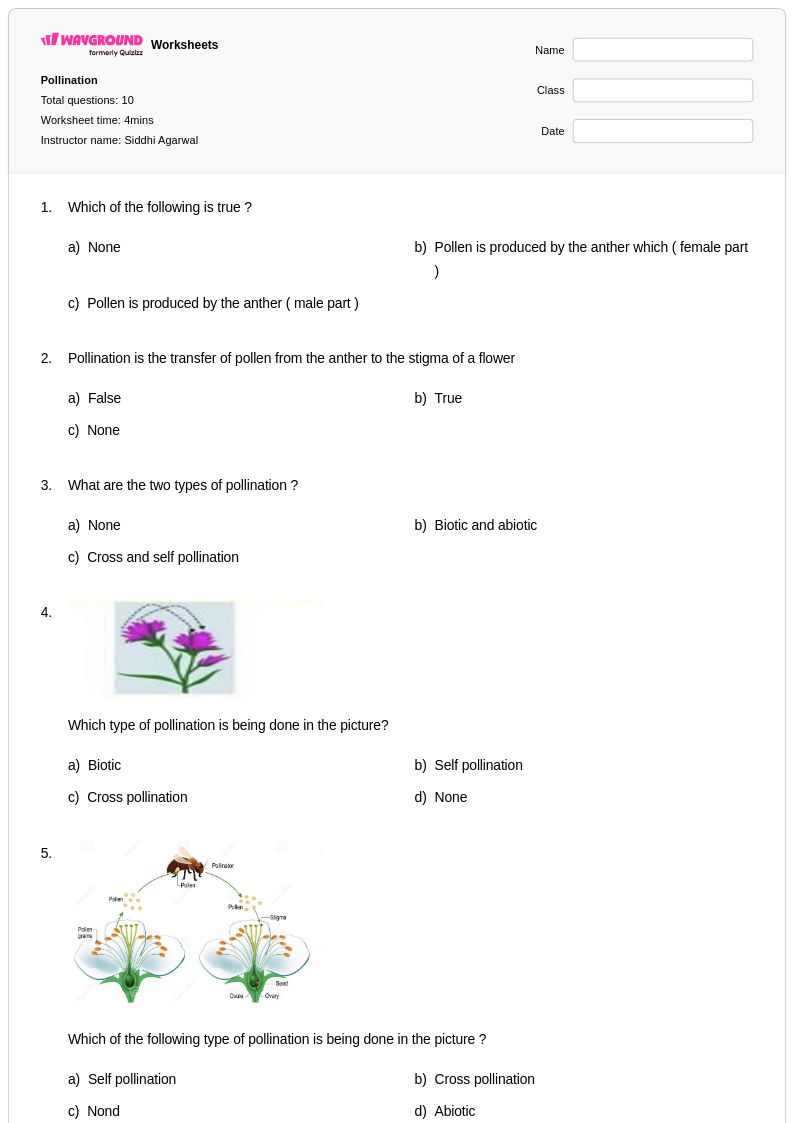
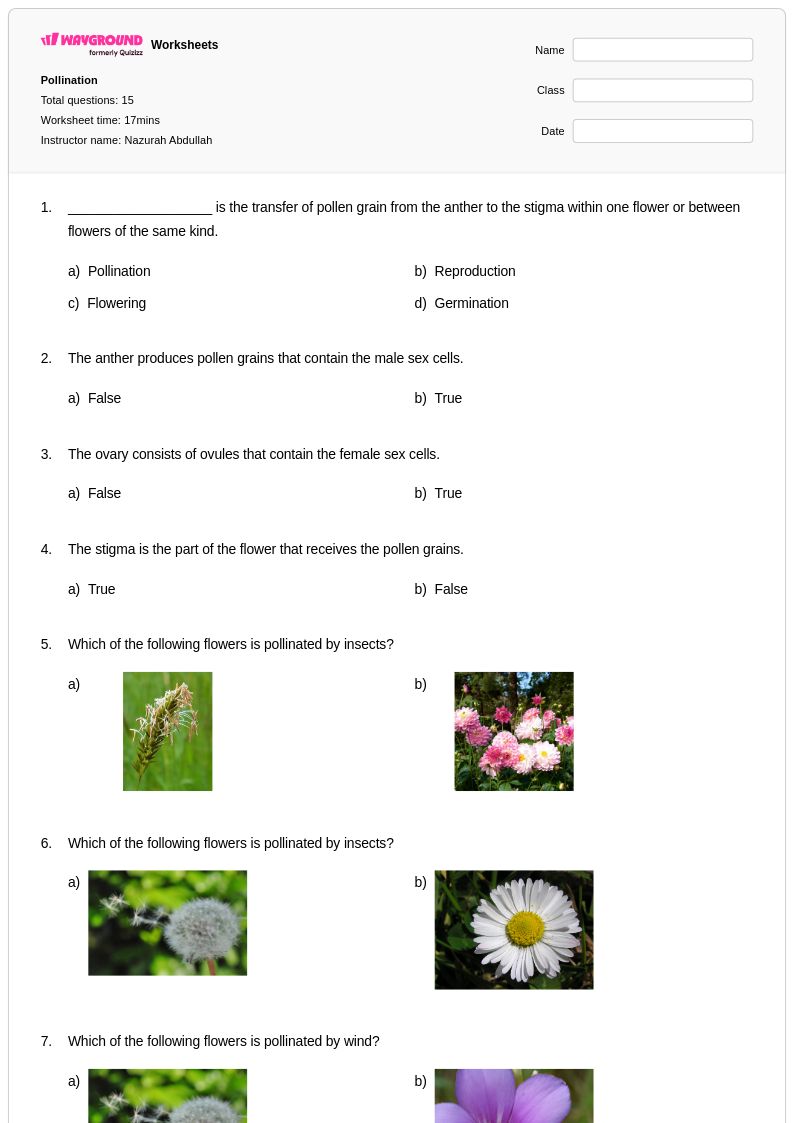
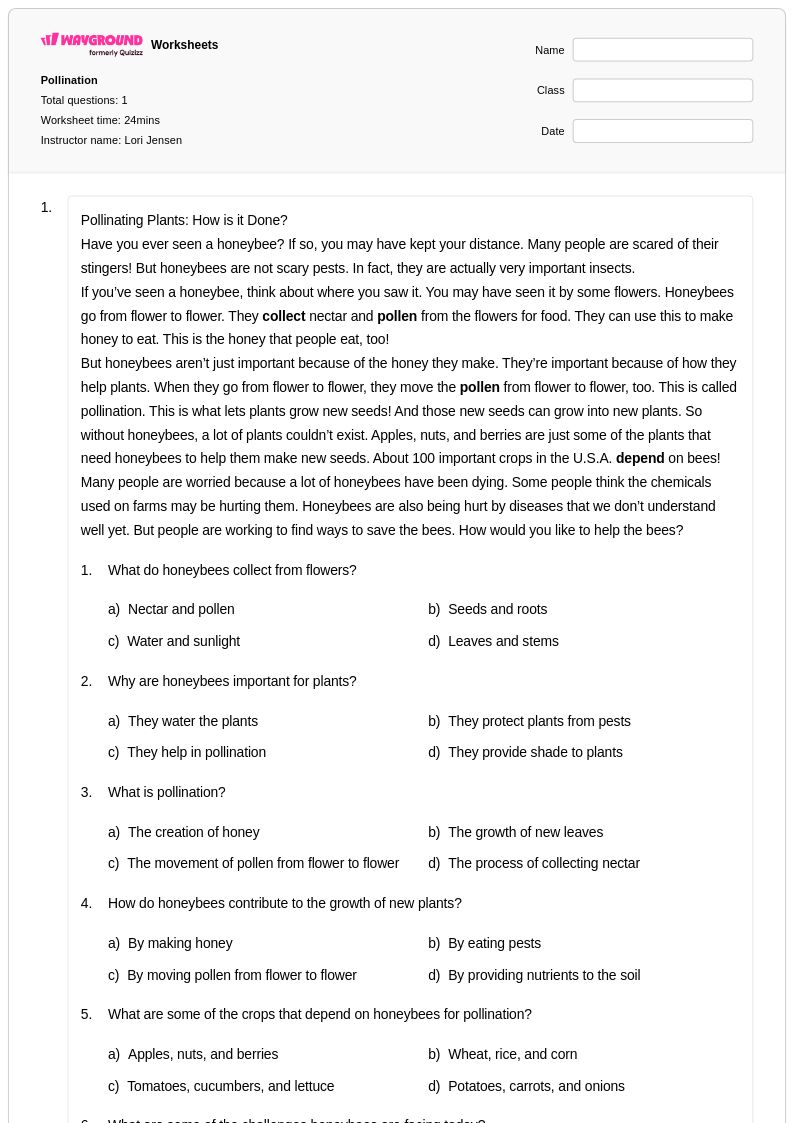
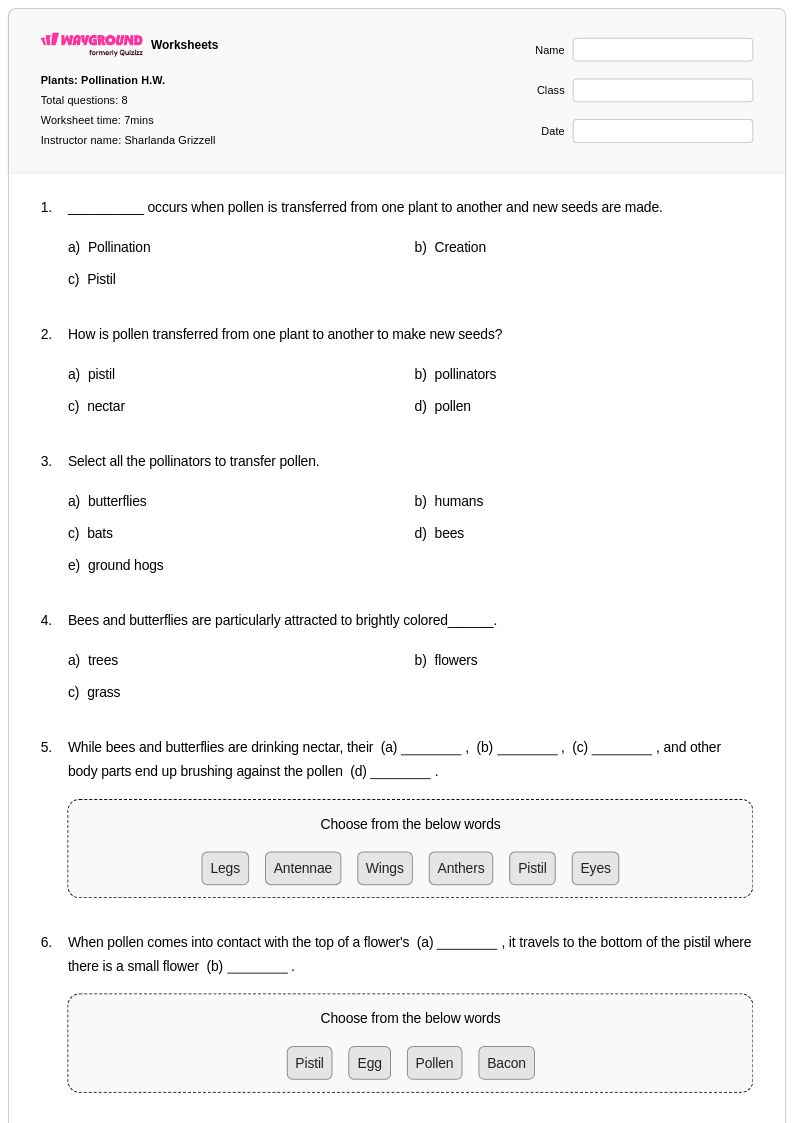
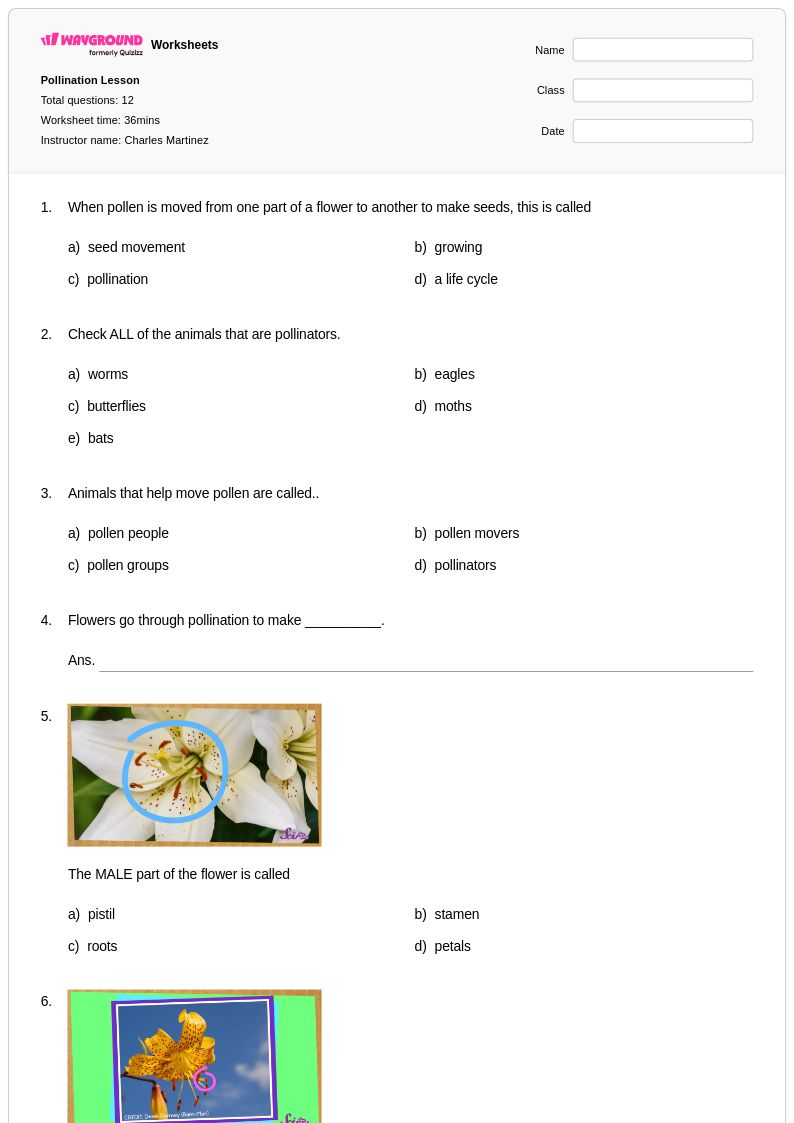
Explore Wayground's comprehensive collection of free pollination worksheets and printables that help students understand flower reproduction, plant life cycles, and ecosystem relationships through engaging practice problems with complete answer keys.
Pollination worksheets available through Wayground (formerly Quizizz) provide comprehensive educational resources that guide students through the fascinating process of how plants reproduce and ensure species survival. These expertly crafted materials strengthen critical biology skills by helping students understand the intricate relationships between flowers, pollinators, and environmental factors that make plant reproduction possible. Students engage with practice problems that explore topics ranging from the anatomy of flowers and their reproductive structures to the behavioral patterns of bees, butterflies, and other pollinating animals. The collection includes detailed answer keys that support both independent learning and classroom instruction, while printable pdf formats ensure accessibility whether students are working digitally or with traditional paper-based materials. These free educational resources emphasize hands-on learning through diagrams, observation exercises, and real-world applications that connect pollination concepts to agricultural practices and ecosystem health.
Wayground (formerly Quizizz) empowers educators with millions of teacher-created pollination resources that streamline lesson planning and enhance instructional effectiveness across diverse learning environments. The platform's robust search and filtering capabilities allow teachers to quickly locate materials that align with specific curriculum standards and match their students' developmental needs. Advanced differentiation tools enable educators to customize worksheets for varying ability levels, ensuring that both struggling learners and advanced students can access appropriately challenging content about pollination processes. Teachers benefit from flexible formatting options that include both printable and digital versions, making it simple to adapt materials for in-person instruction, remote learning, or hybrid classroom models. These comprehensive resources support targeted skill practice, facilitate remediation for students who need additional support with biological concepts, and provide enrichment opportunities for learners ready to explore more complex ecological relationships within pollination networks.
FAQs
How do I teach pollination to students?
Start by grounding students in flower anatomy, specifically the roles of the stamen, pistil, pollen, and stigma, before introducing how pollinators transfer pollen between flowers. Use diagrams and real-world examples, such as the relationship between bees and flowering crops, to show why pollination matters beyond the classroom. Connecting plant reproduction to ecosystem health and food supply gives students a concrete reason to care about the concept.
What kinds of exercises help students practice pollination concepts?
Effective practice combines diagram labeling, sequencing activities that trace the steps of pollination, and observation exercises that ask students to identify pollinators and their behavioral patterns. Worksheets that integrate real-world applications, such as connecting pollination to agricultural practices, reinforce why these biological relationships matter. Varied exercise types help students move from recognizing vocabulary to applying concepts across different plant and pollinator scenarios.
What common mistakes do students make when learning about pollination?
Students frequently confuse pollination with fertilization, treating them as the same event rather than understanding that pollination is the transfer of pollen and fertilization is what follows. Many also assume that only bees pollinate, overlooking the roles of butterflies, moths, birds, wind, and water. A third common error is misidentifying flower parts, particularly confusing the stamen and pistil, which leads to downstream confusion about how male and female reproductive structures function.
How do I use Wayground's pollination worksheets in my classroom?
Wayground's pollination worksheets are available as printable PDFs for traditional classroom use and in digital formats for technology-integrated or remote learning environments. You can also host any worksheet as a live or self-paced quiz directly on Wayground, which allows you to track student responses in real time. Each worksheet includes a complete answer key, so they work equally well for guided instruction, independent practice, or homework assignments.
How can I support struggling students during a pollination unit?
For students who need additional support, Wayground offers built-in accommodation tools that can be applied individually without notifying the rest of the class. These include Read Aloud, which reads questions and content aloud for students who benefit from audio support, reduced answer choices to lower cognitive load on multiple-choice items, and extended time settings that give specific students extra seconds per question. These accommodations are saved per student and carry over to future sessions, reducing setup time for teachers.
How does pollination connect to broader science curriculum standards?
Pollination sits at the intersection of plant biology, ecology, and environmental science, making it relevant across multiple standards frameworks. It directly supports learning goals around plant reproduction and life cycles, food web relationships, and the interdependence of organisms within ecosystems. Teachers can use pollination as an anchor concept to bridge units on biodiversity, agriculture, and human impact on natural systems.