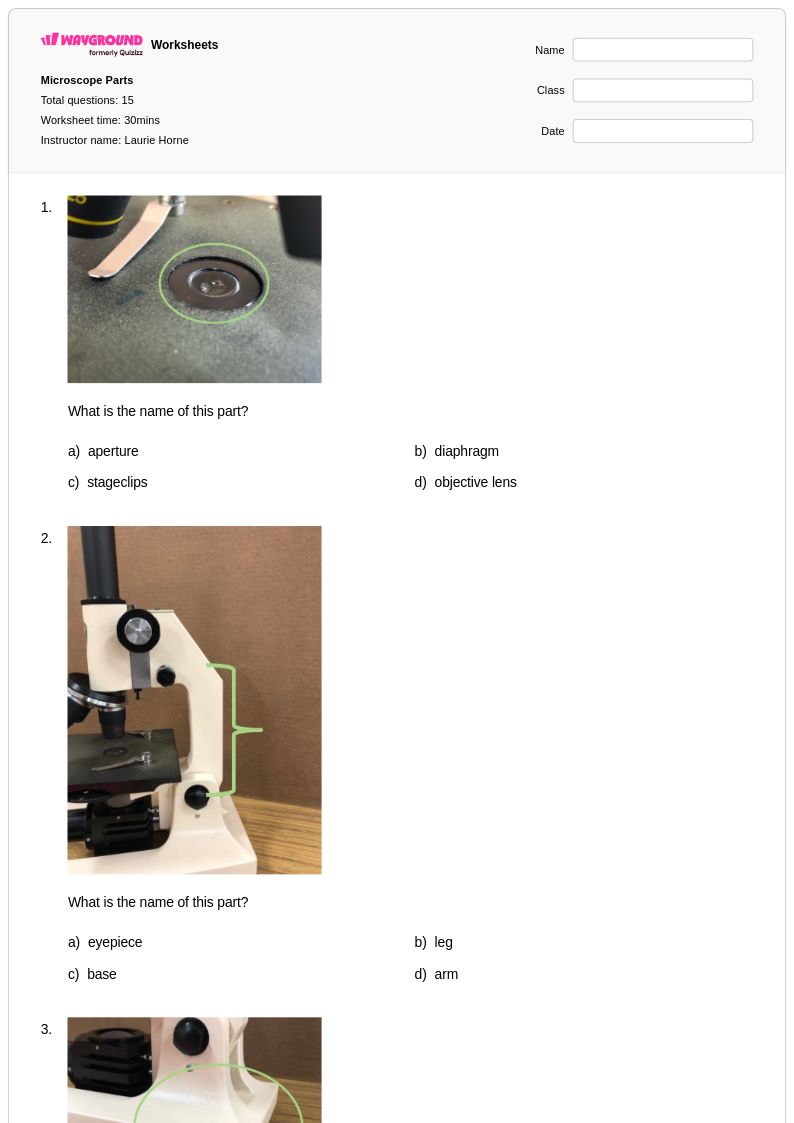
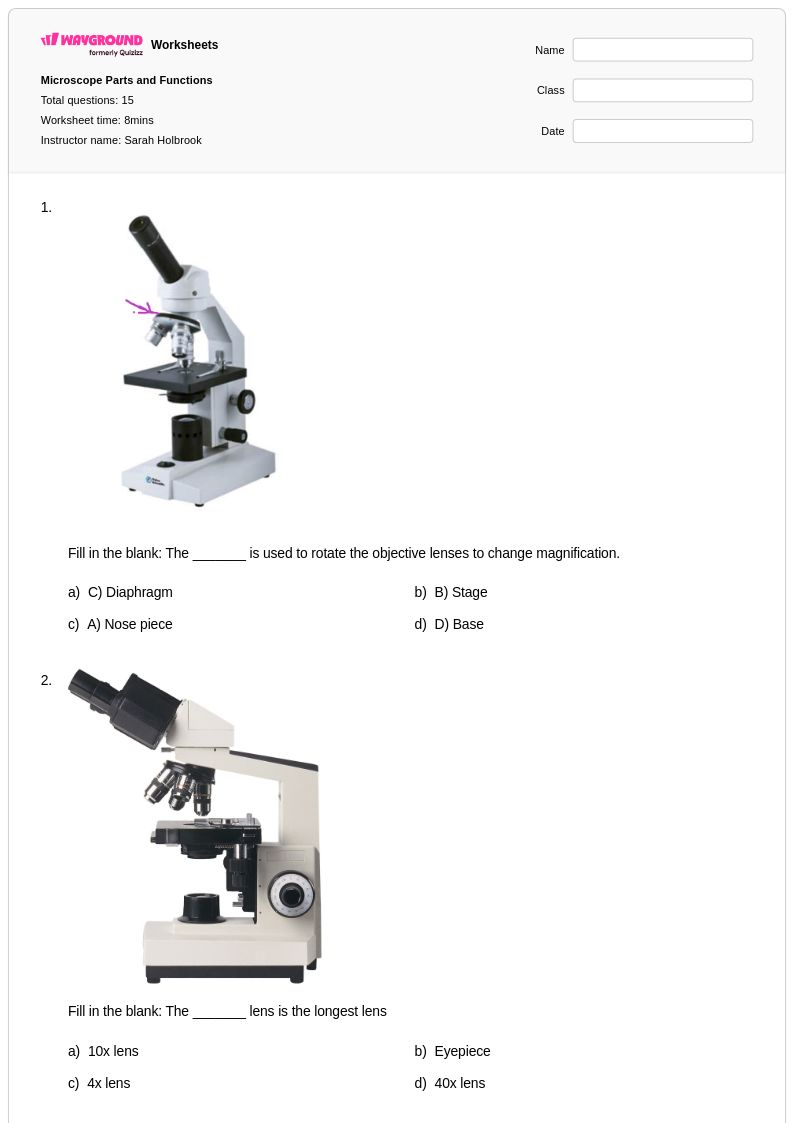
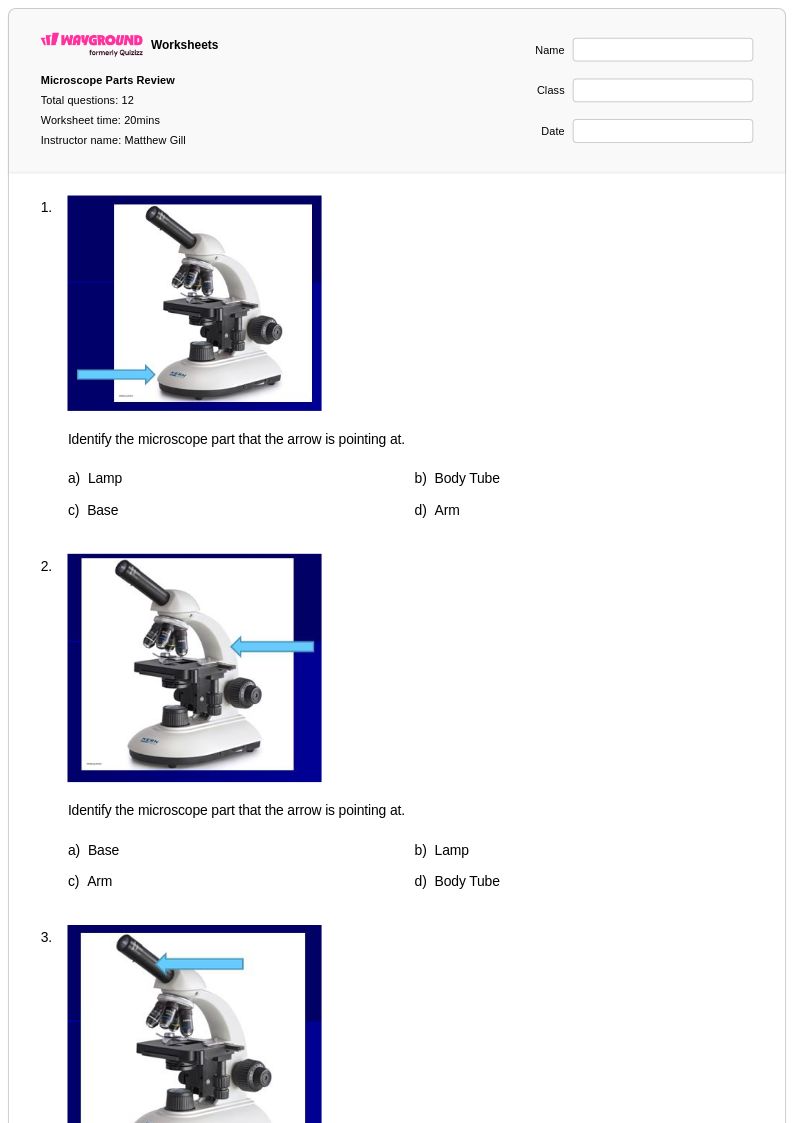
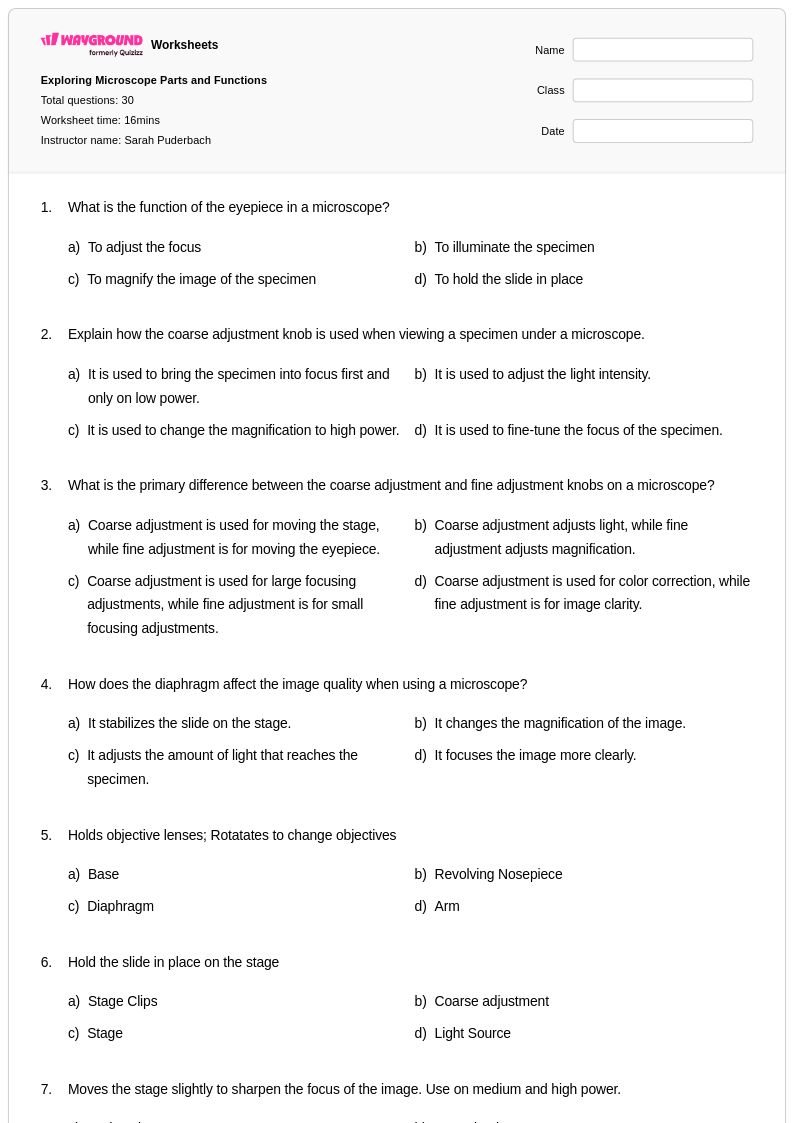
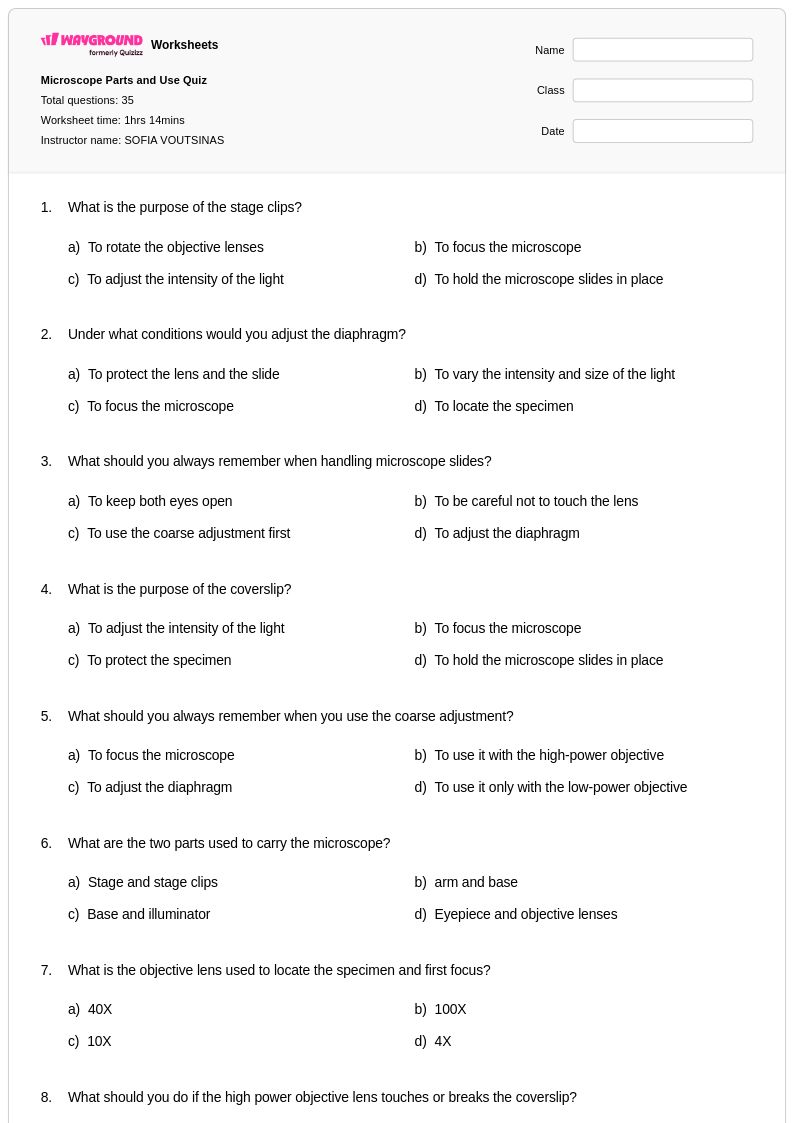
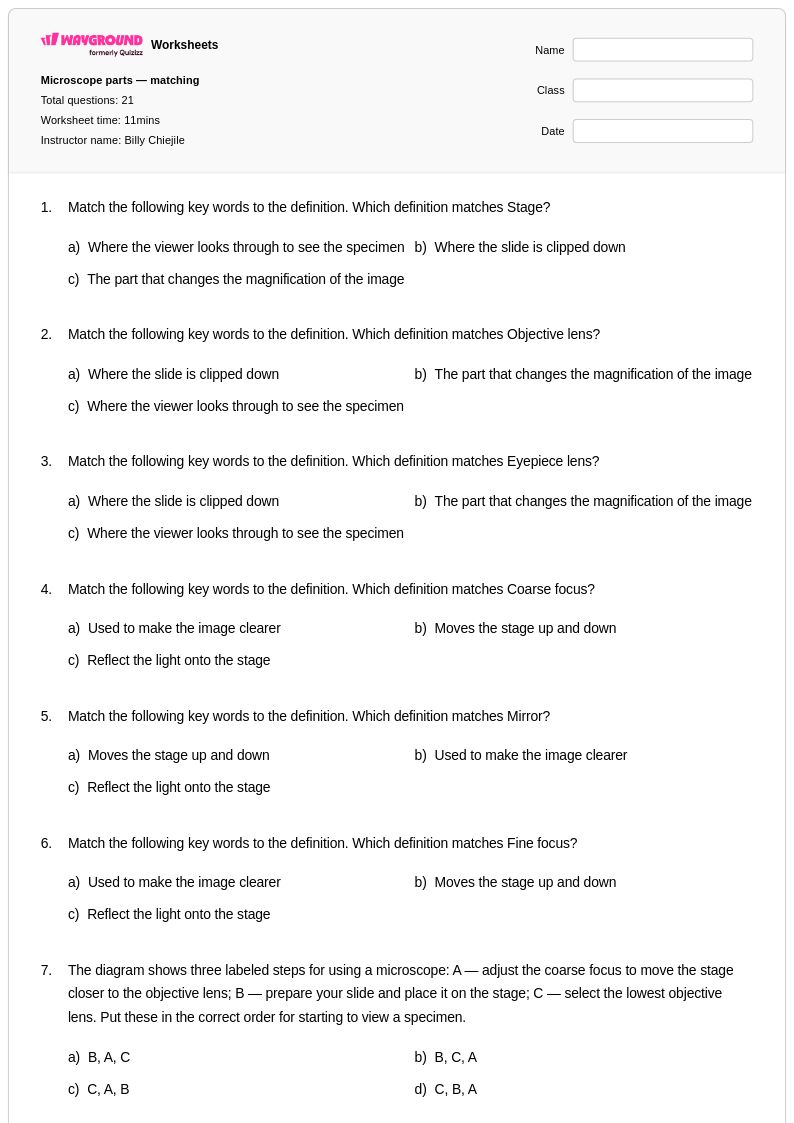
Discover free printable worksheets and practice problems focused on microscope parts that help students master biology fundamentals through hands-on learning activities with comprehensive answer keys and PDF resources from Wayground.
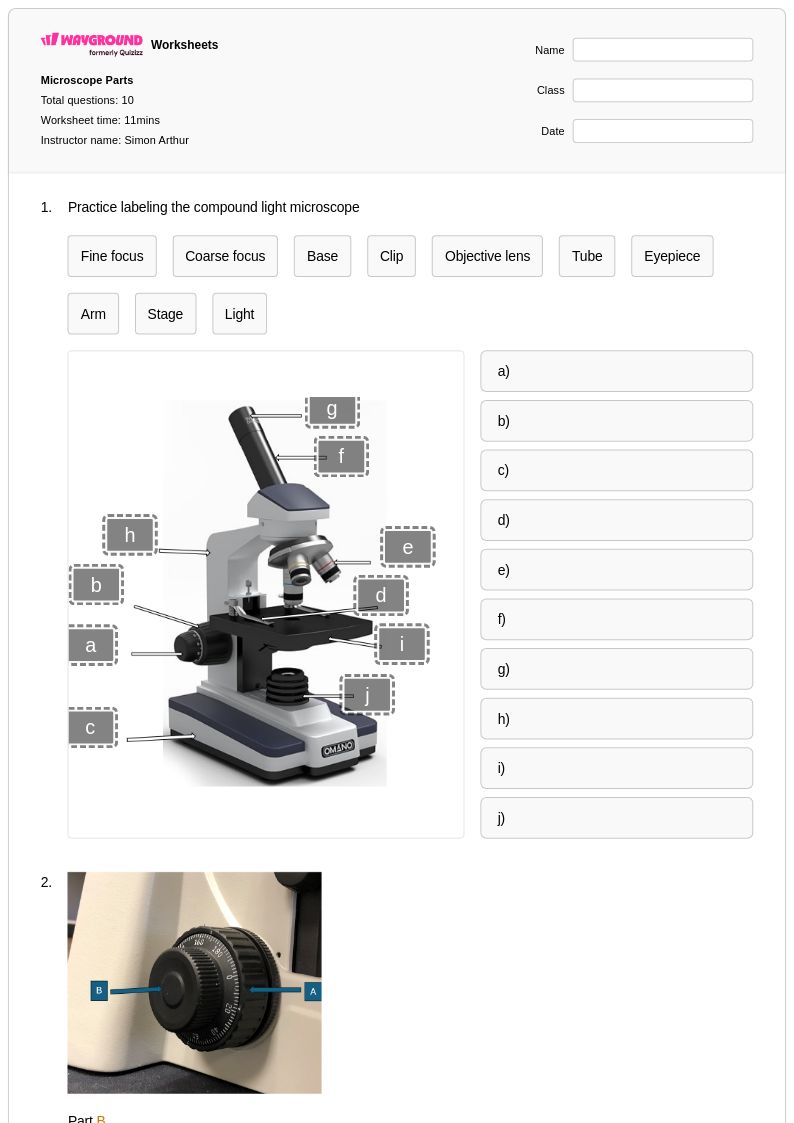
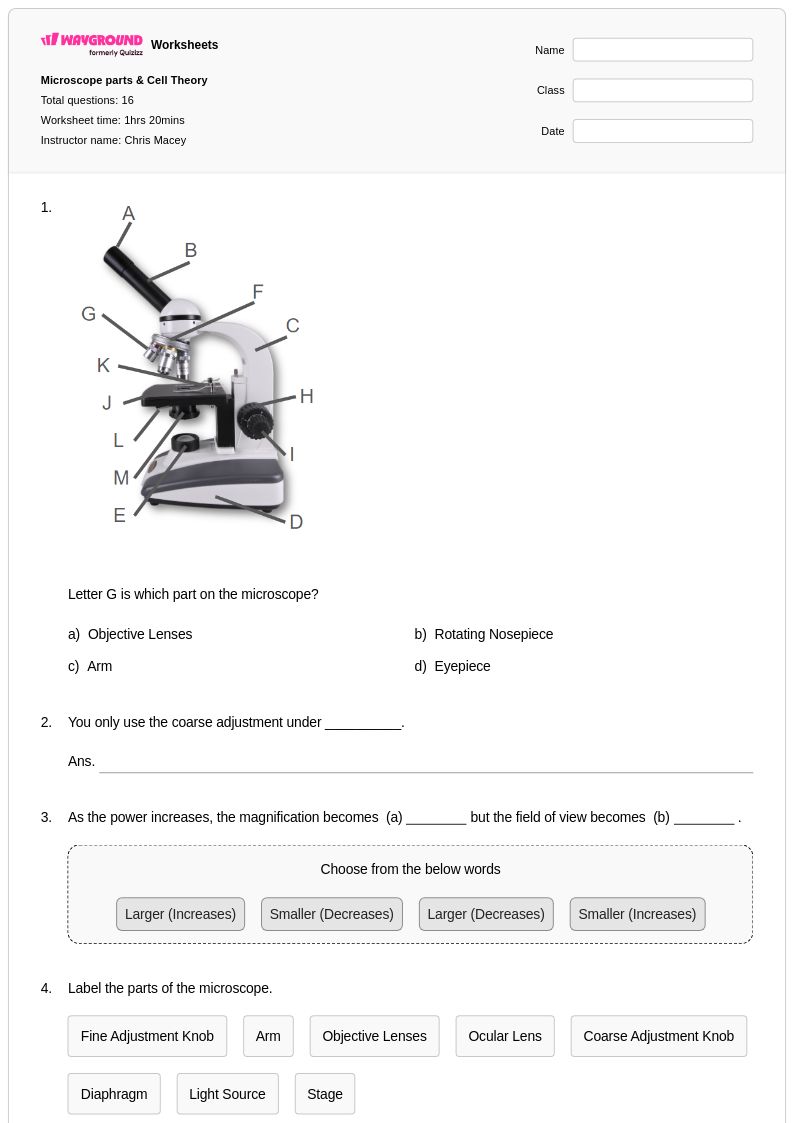
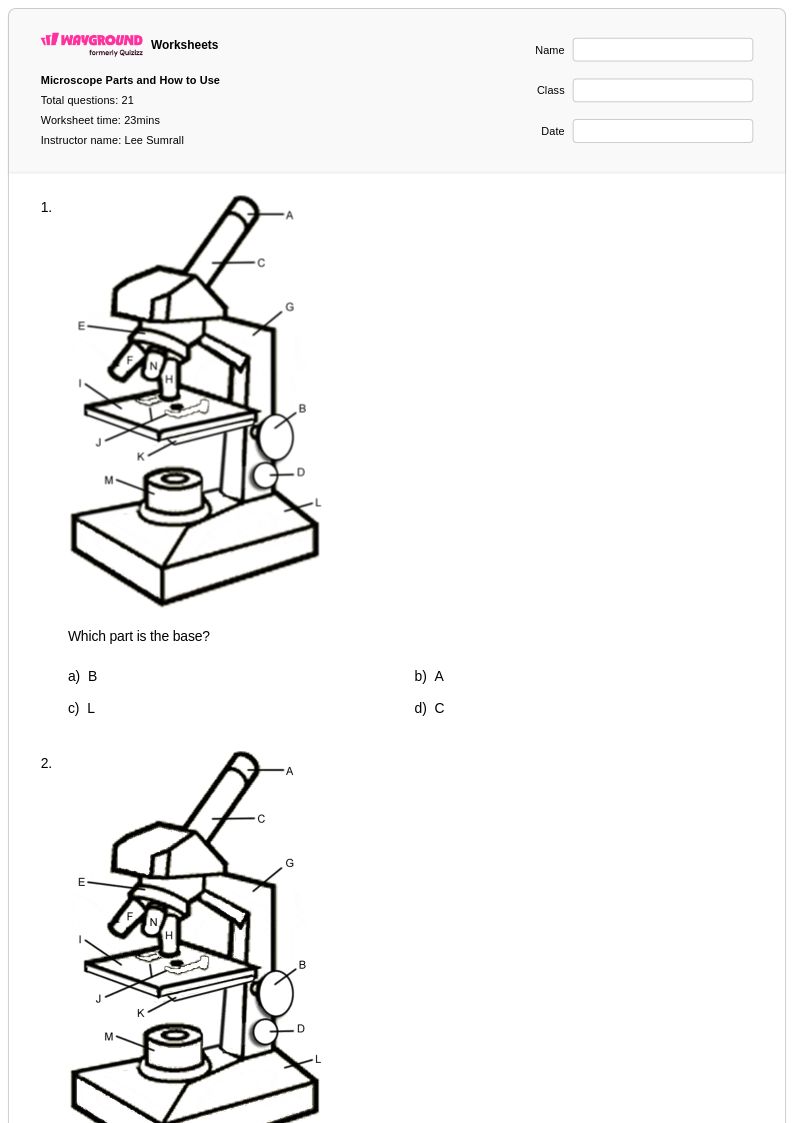
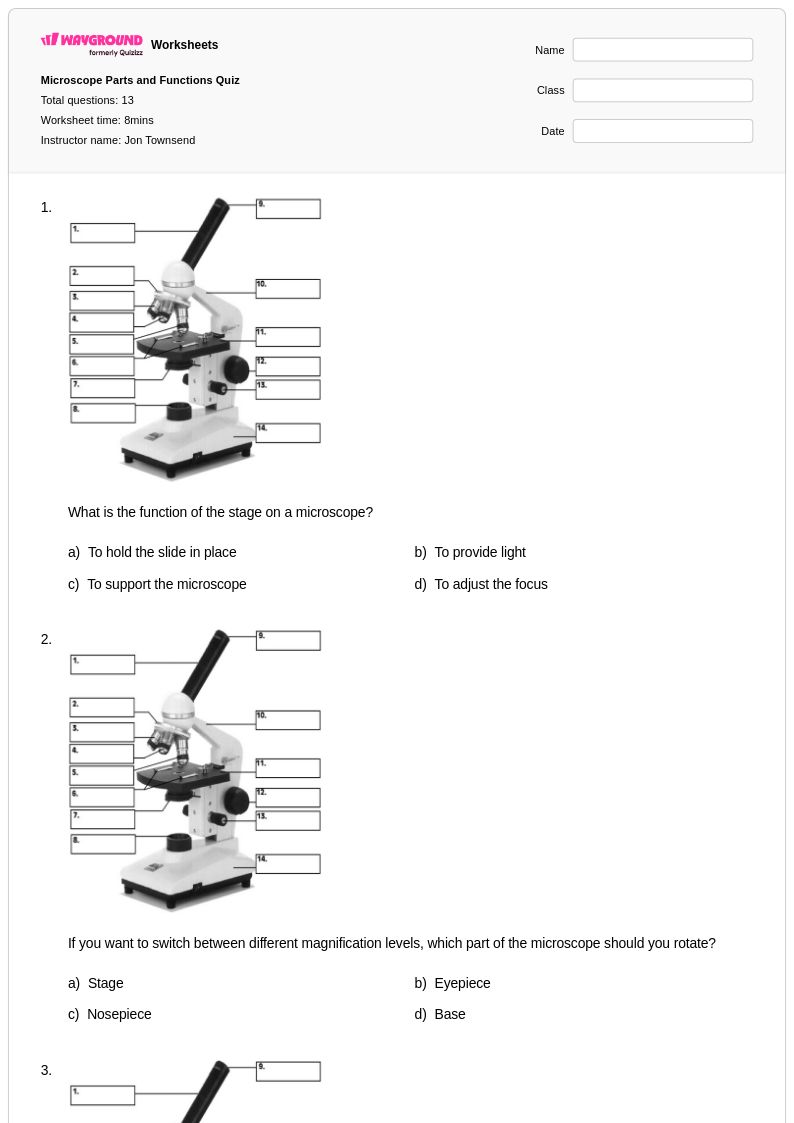
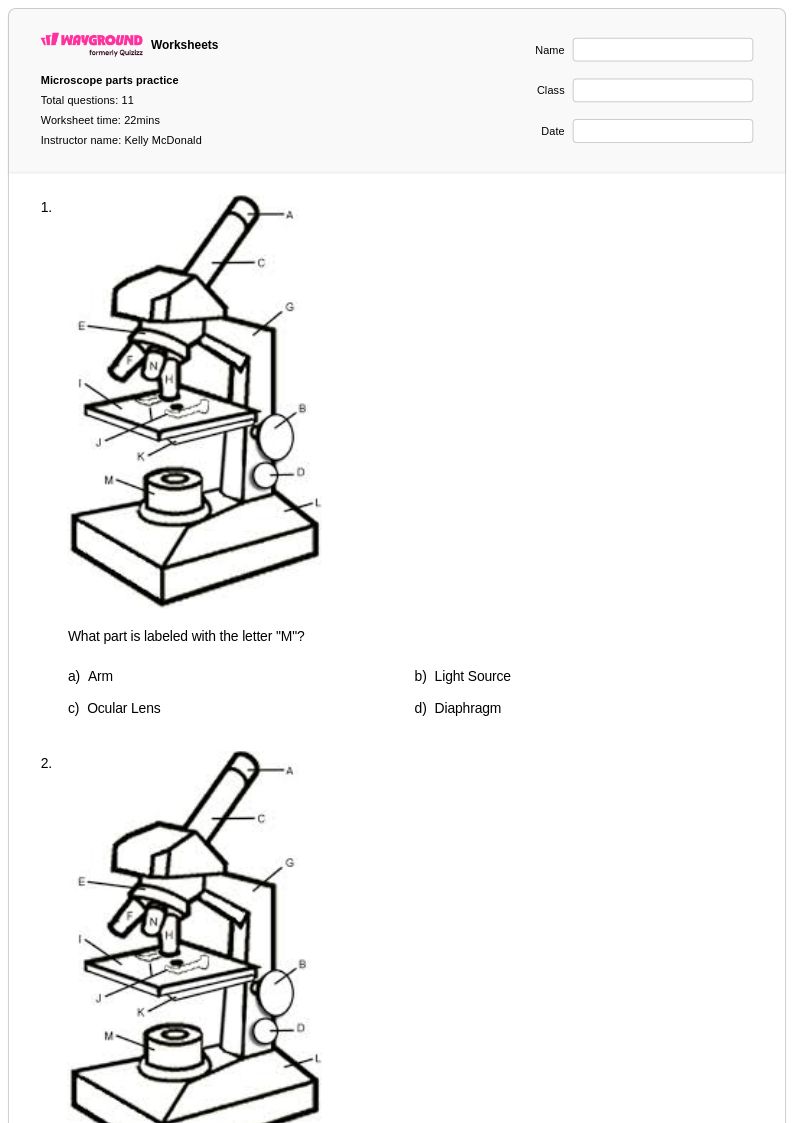
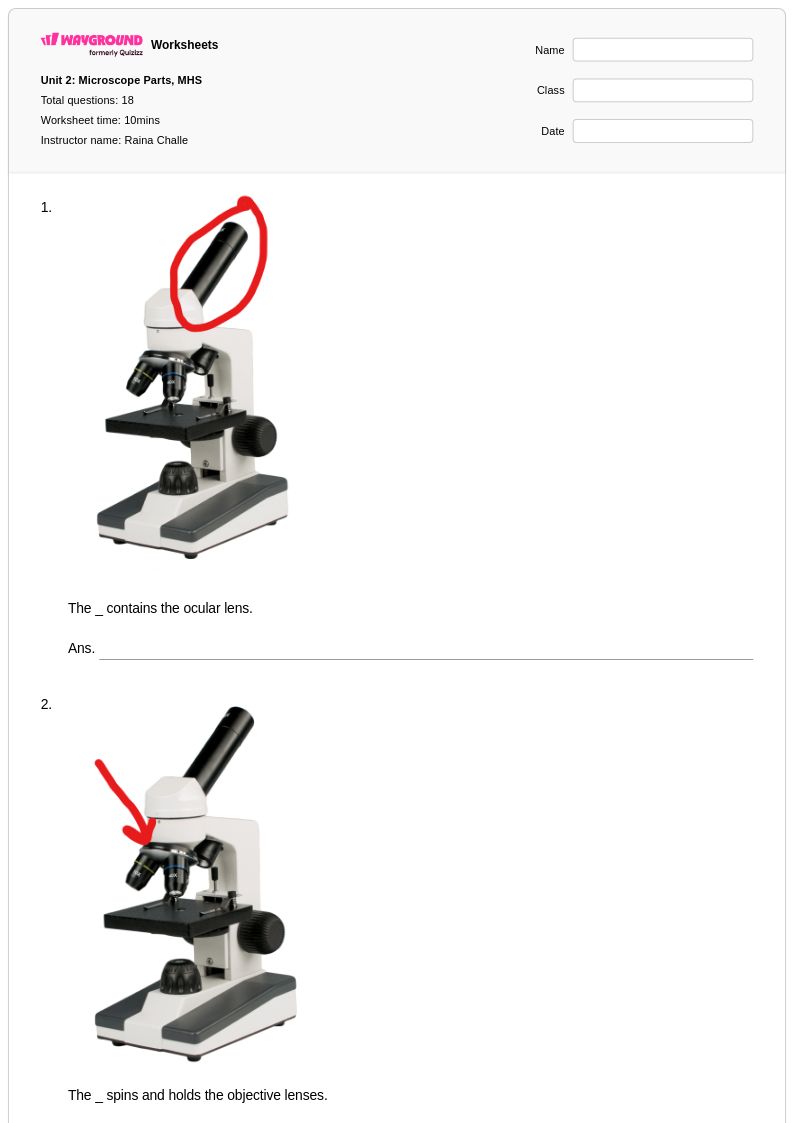
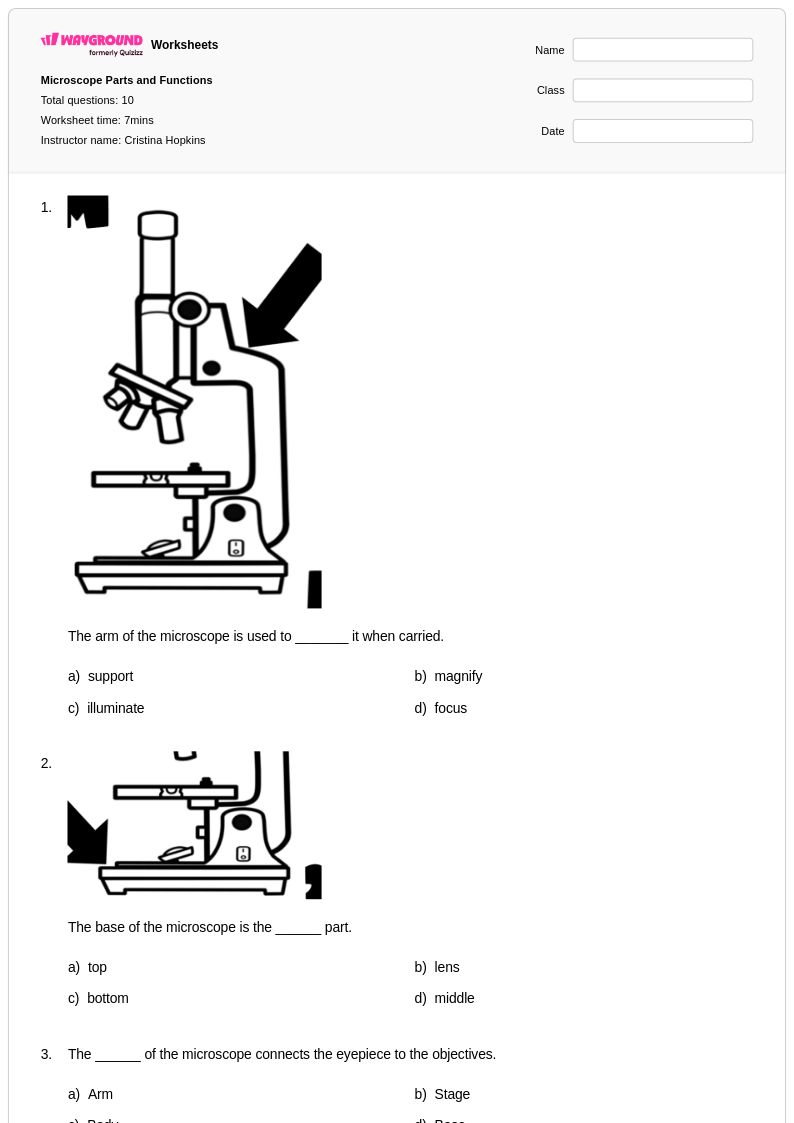
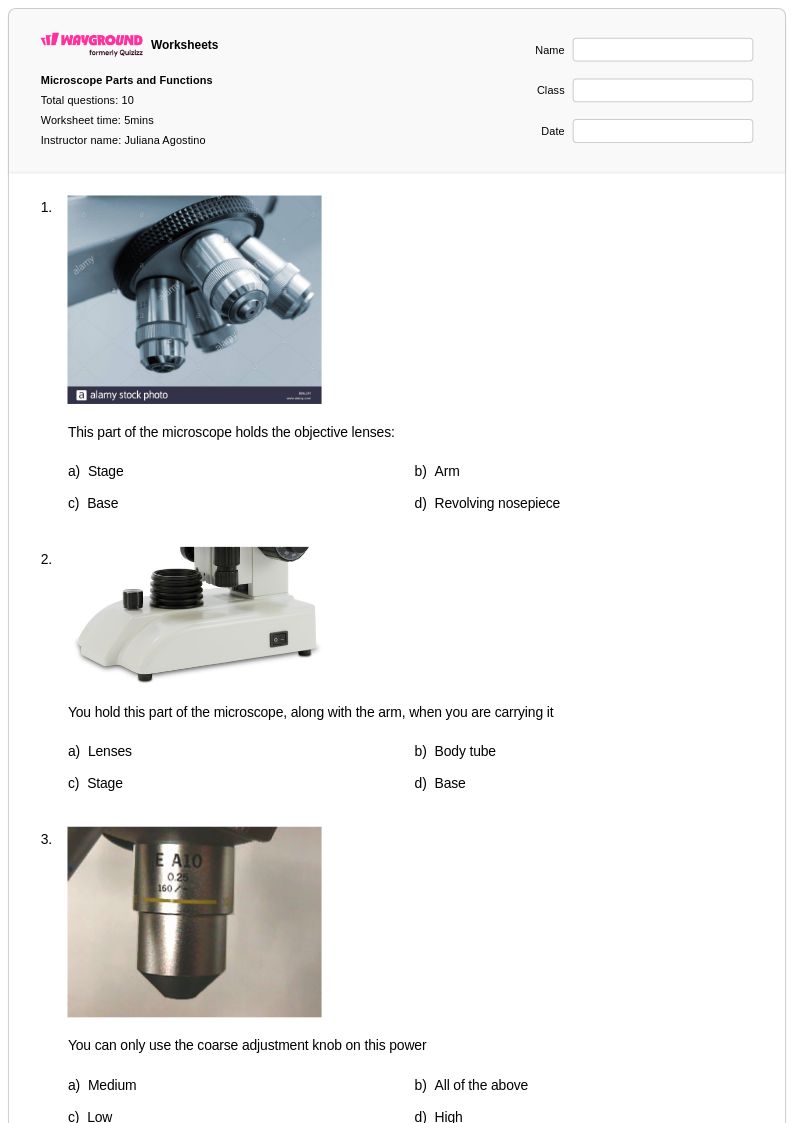
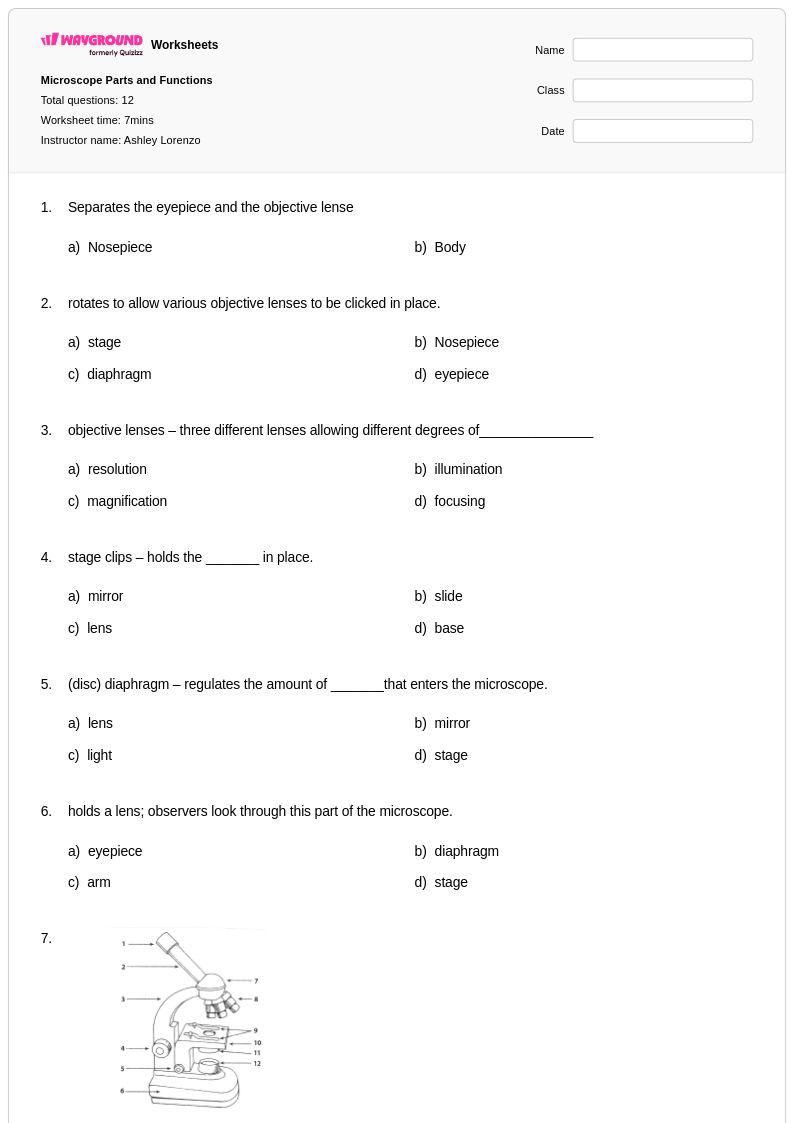
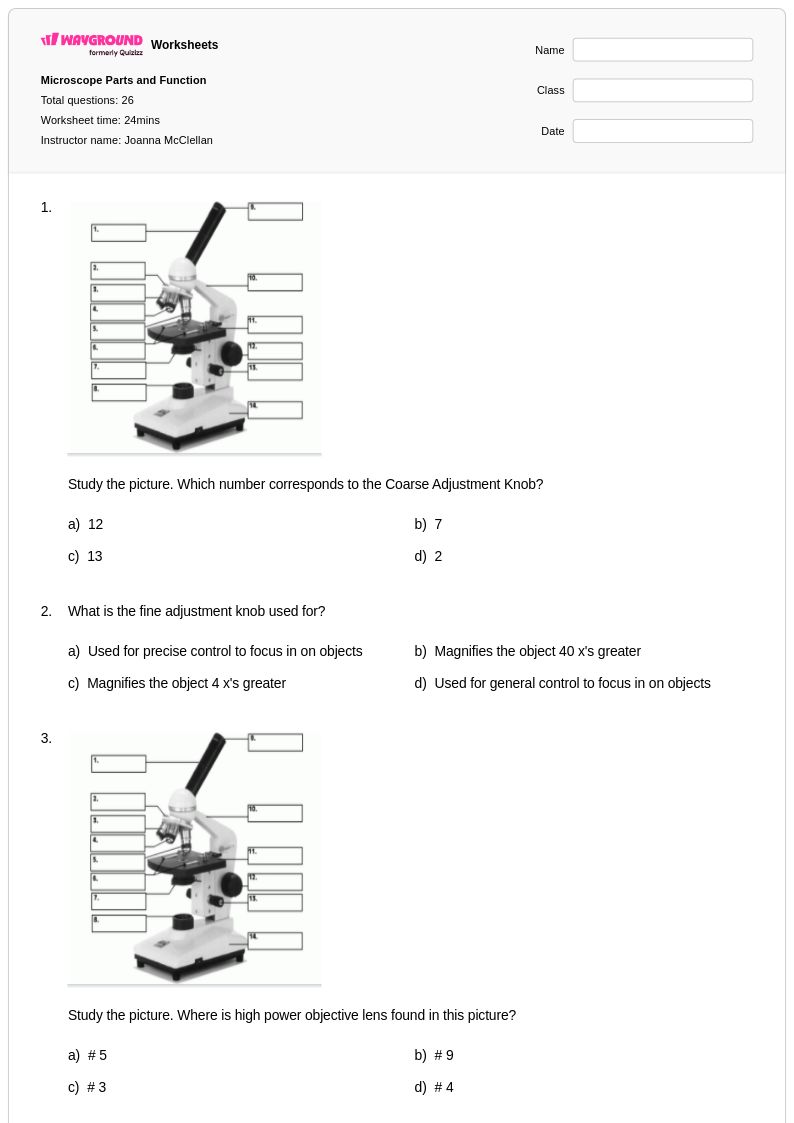
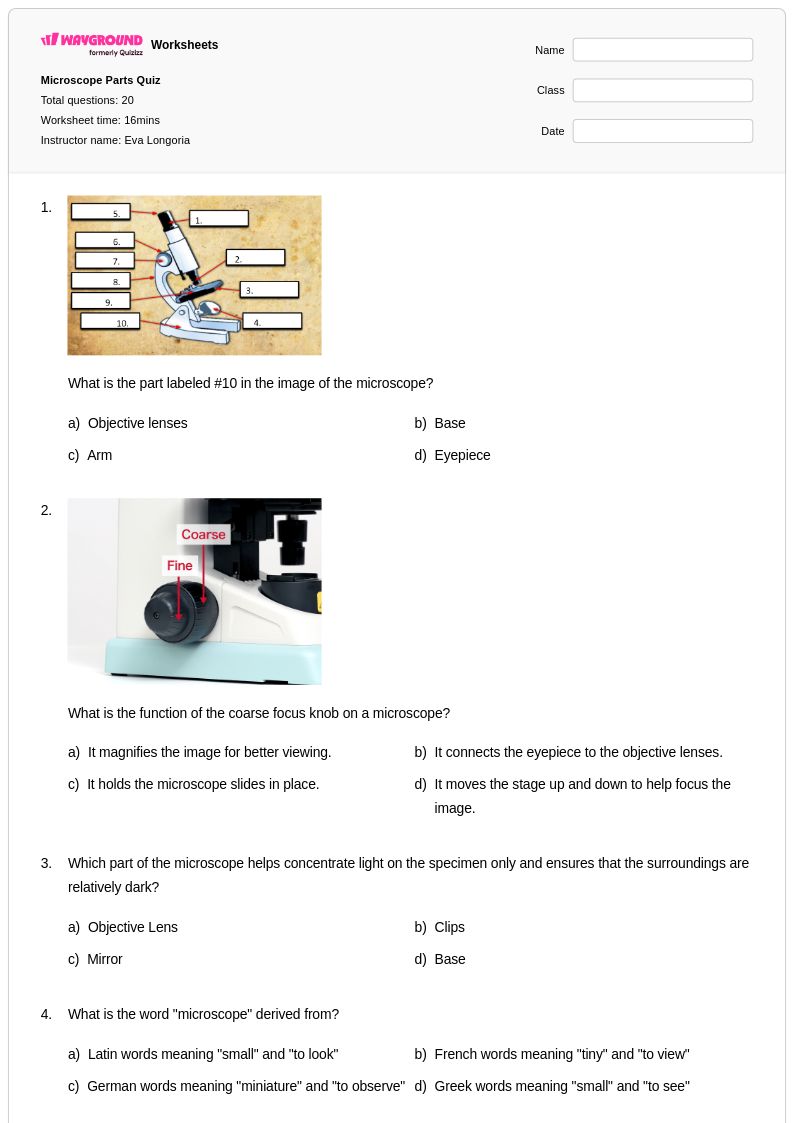
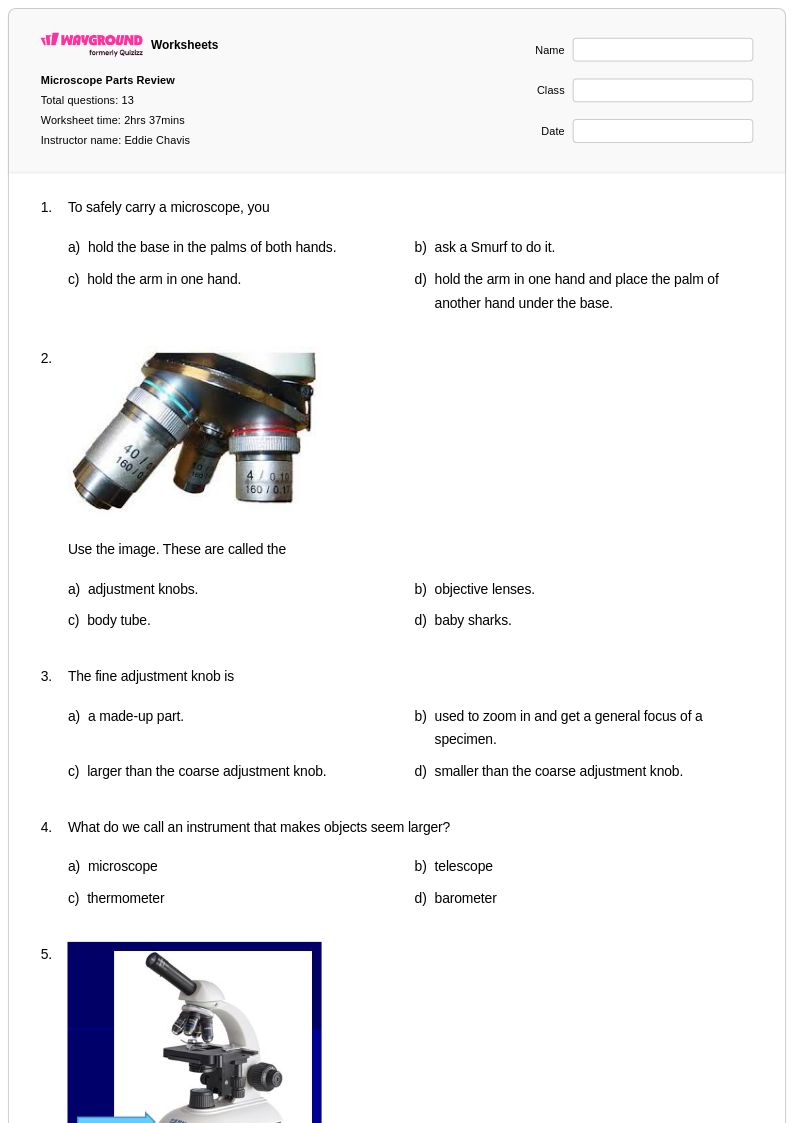
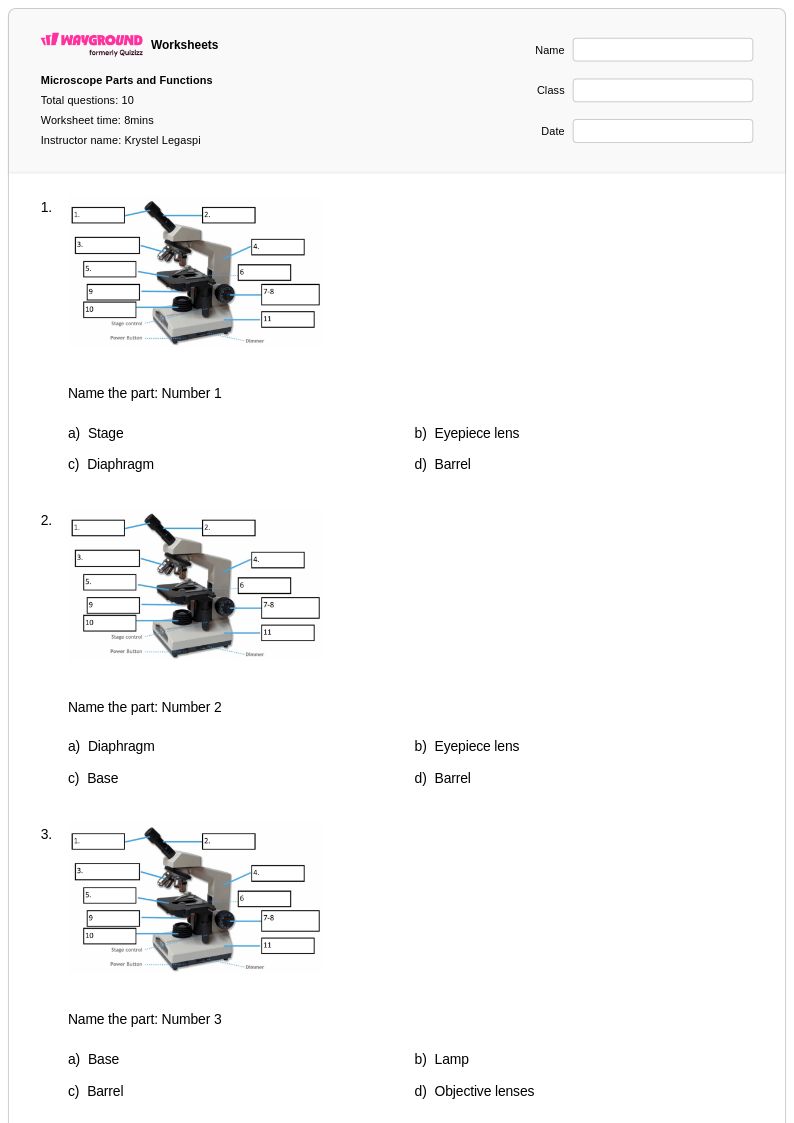
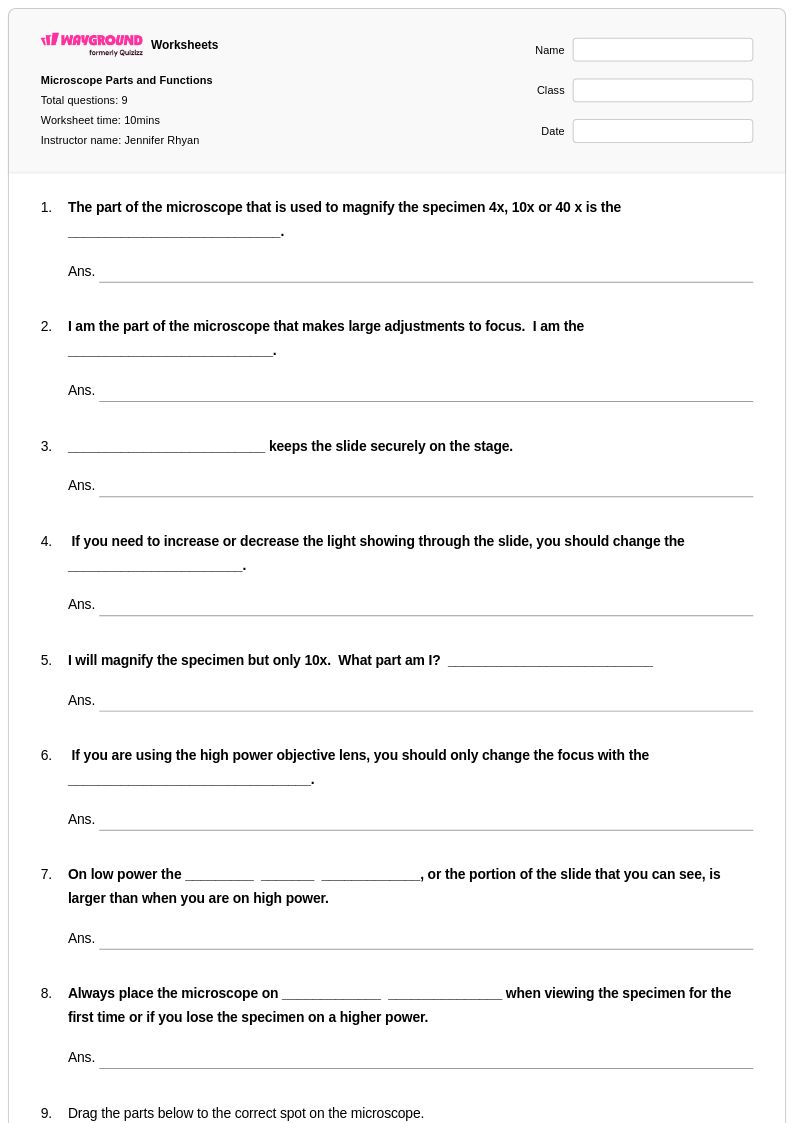
Microscope parts worksheets through Wayground (formerly Quizizz) provide students with comprehensive practice in identifying and understanding the essential components of light microscopes, from the eyepiece and objective lenses to the stage and illumination systems. These educational resources strengthen critical scientific observation skills by requiring students to label diagrams, match parts with their functions, and explain how each component contributes to magnification and image clarity. The collection includes free printables with detailed answer keys, allowing students to work independently while building foundational knowledge of microscopy. Practice problems range from basic part identification to more complex questions about lens combinations and proper microscope handling procedures, ensuring students develop both theoretical understanding and practical laboratory skills essential for biological investigations.
Wayground (formerly Quizizz) supports science educators with millions of teacher-created microscope parts resources that can be easily searched and filtered by complexity level and specific learning objectives. The platform's standards alignment features help teachers select worksheets that match curriculum requirements, while differentiation tools enable customization for students with varying skill levels and learning needs. These materials are available in both printable pdf format for traditional classroom use and digital formats for interactive learning experiences. Teachers can utilize these comprehensive worksheet collections for initial skill-building lessons, targeted remediation when students struggle with microscope operation, or enrichment activities that deepen understanding of optical principles, making lesson planning more efficient while ensuring students master this fundamental laboratory equipment.
FAQs
How do I teach microscope parts to middle school students?
Start by introducing the two main structural systems of a light microscope: the optical system (eyepiece, objective lenses) and the mechanical system (stage, arm, base, focus knobs). Use labeled diagrams to anchor student understanding before students ever touch a physical microscope. Pairing diagram work with a brief hands-on orientation — where students locate each part as they name it — builds both vocabulary and procedural confidence before lab work begins.
What exercises help students practice identifying microscope parts?
Labeling blank diagrams is the most effective practice format for microscope parts because it requires active recall rather than passive recognition. Matching exercises that pair each part with its specific function push students beyond memorization into conceptual understanding. Sequencing tasks — where students order the steps of focusing a specimen using the correct parts — add procedural depth and mirror real laboratory expectations.
What mistakes do students commonly make when learning microscope parts?
Students frequently confuse the coarse and fine adjustment knobs, often applying coarse focus at high magnification, which can crack slides or damage objective lenses. Another common error is misidentifying the nosepiece as a lens rather than the rotating turret that holds the objective lenses. Students also tend to conflate total magnification with objective lens power alone, not accounting for the eyepiece multiplier in their calculations.
How do I differentiate microscope parts instruction for students with different skill levels?
For students who need additional support, reduce the complexity of labeling tasks by providing a word bank or limiting the number of parts to identify in a single session. More advanced students can be challenged with questions about lens combinations, resolving power, and how changes in one component affect image clarity. On Wayground, teachers can apply accommodations such as reduced answer choices or read-aloud settings to individual students, allowing differentiation without signaling it to the rest of the class.
How can I use Wayground's microscope parts worksheets in my classroom?
Wayground's microscope parts worksheets are available as printable PDFs for traditional classroom use and in digital formats for technology-integrated environments, including the option to host them as a quiz directly on the platform. Teachers can use these resources for initial instruction, targeted remediation when students struggle with microscope operation, or as enrichment activities focused on optical principles. The included answer keys support independent student practice and make self-assessment straightforward.
How do I assess whether students truly understand microscope parts versus just memorizing names?
Move beyond simple identification by asking students to explain what would happen to image quality if a specific part were removed or adjusted incorrectly — for example, what changes when the diaphragm is fully closed. Functional explanation questions reveal whether students understand the role each component plays in magnification and image clarity, not just its name and location. Including questions about proper handling procedures also assesses practical, applied understanding of the equipment.