
20 Q
8th - Uni
13 Q
7th
12 Q
7th
10 Q
7th - 9th
6 Q
9th - 10th
20 Q
10th - Uni
19 Q
8th - Uni
25 Q
9th - 12th
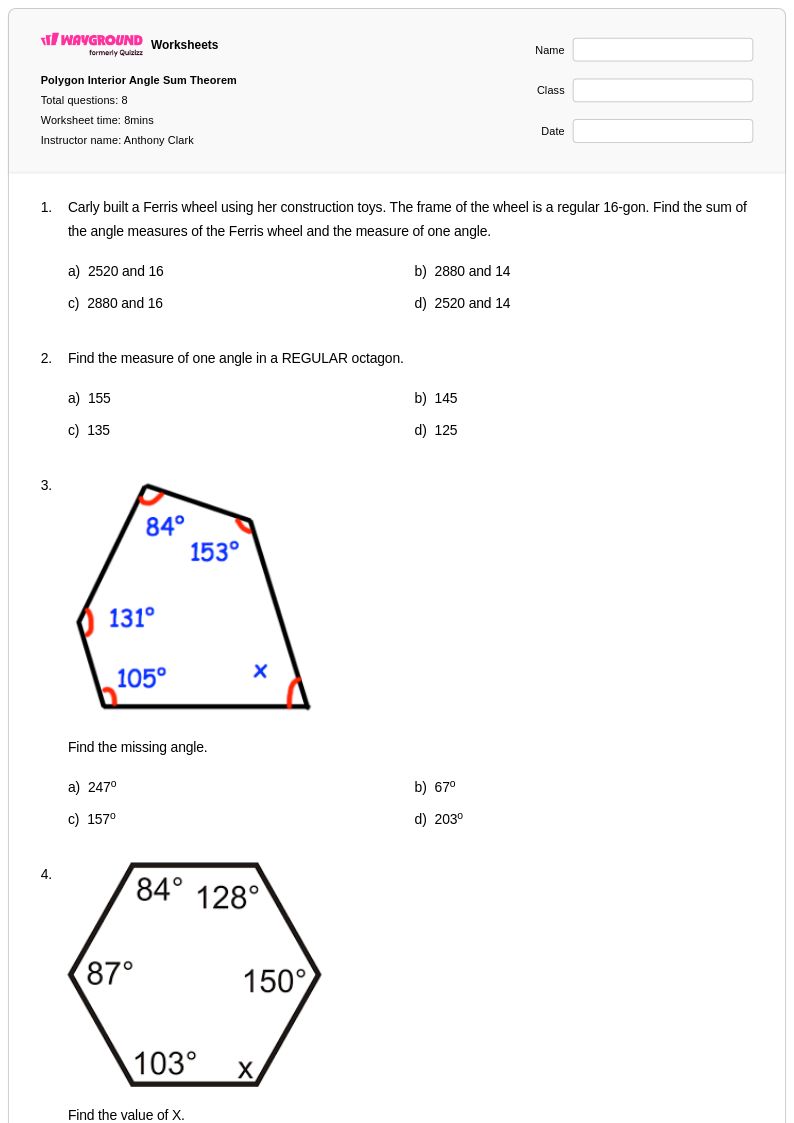
8 Q
10th - Uni
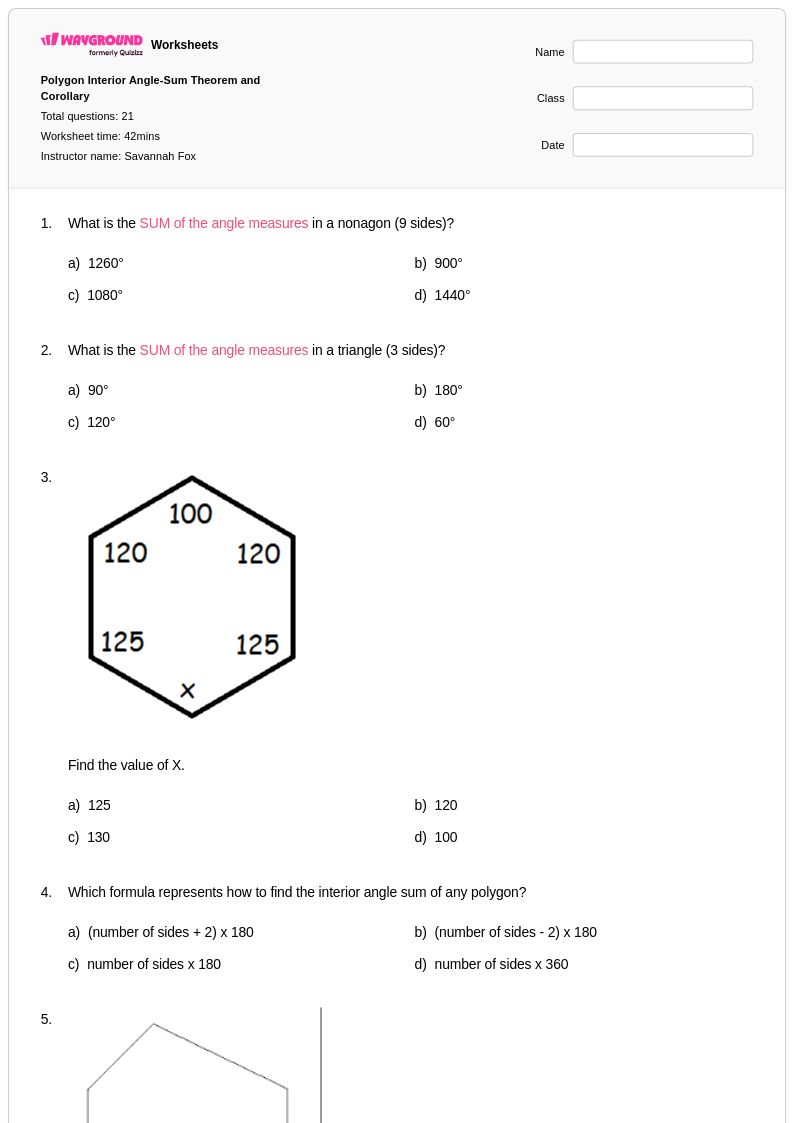
21 Q
9th - 12th
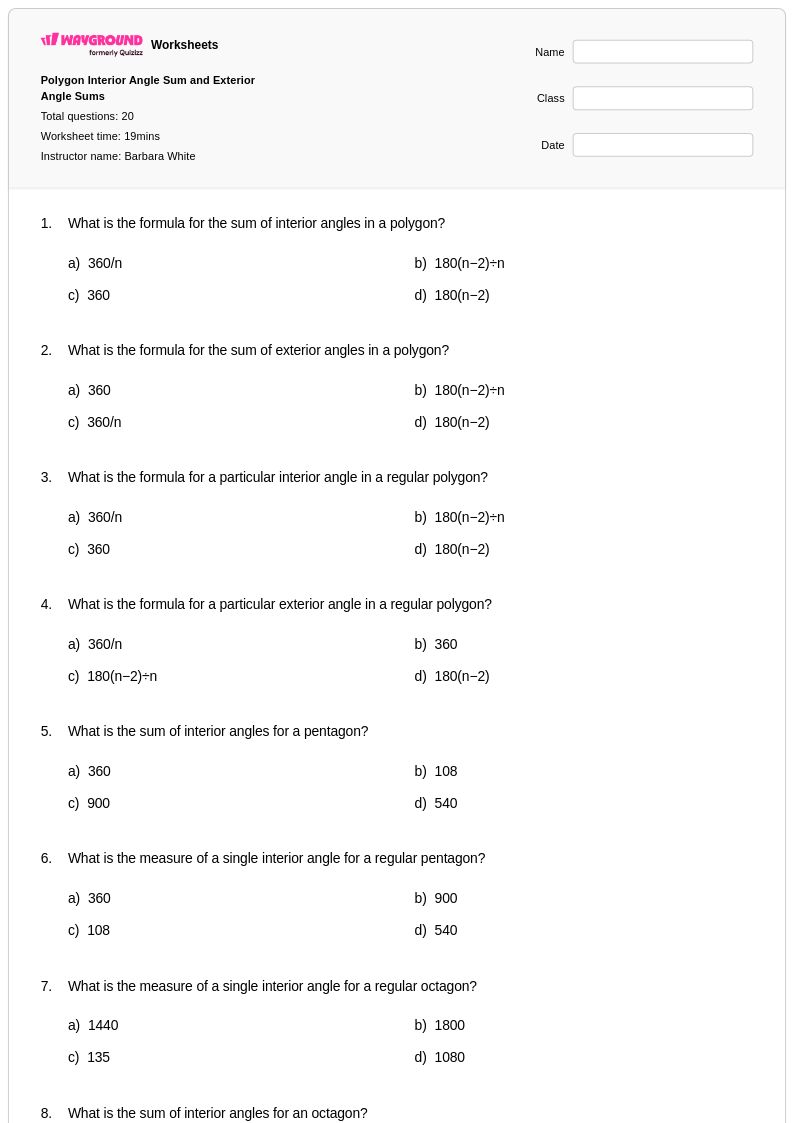
20 Q
10th - 11th
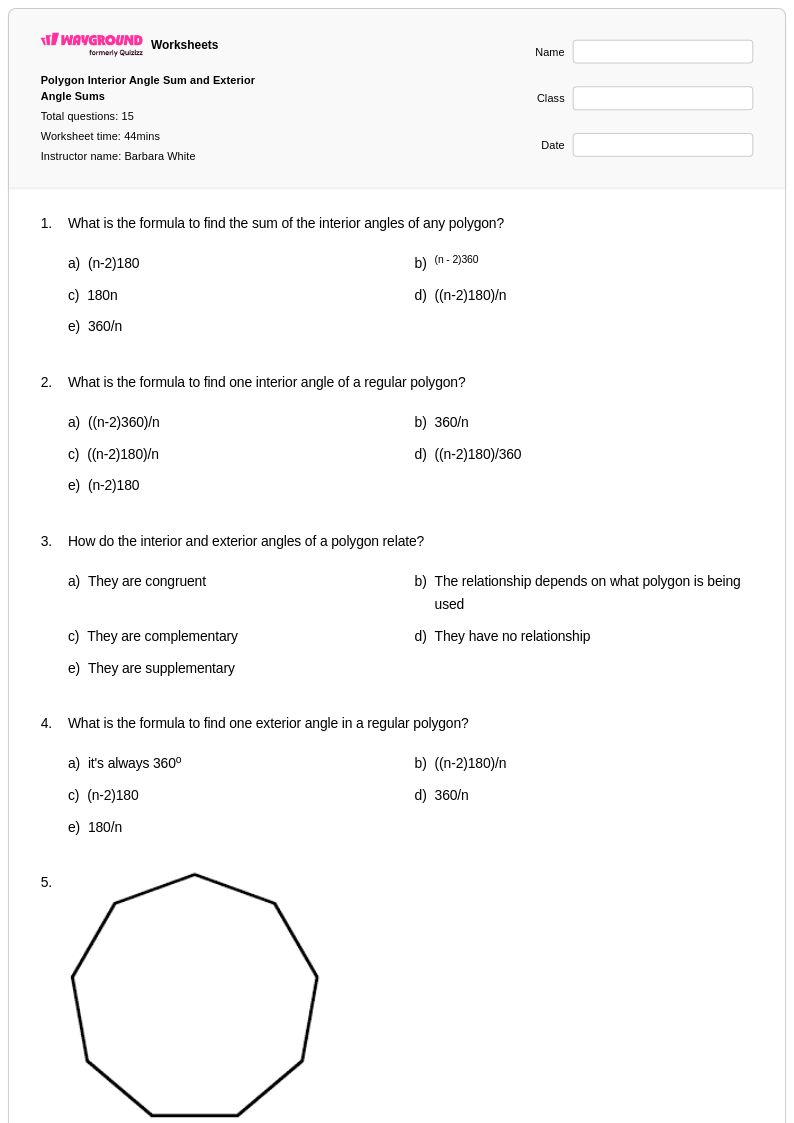
15 Q
9th - 10th
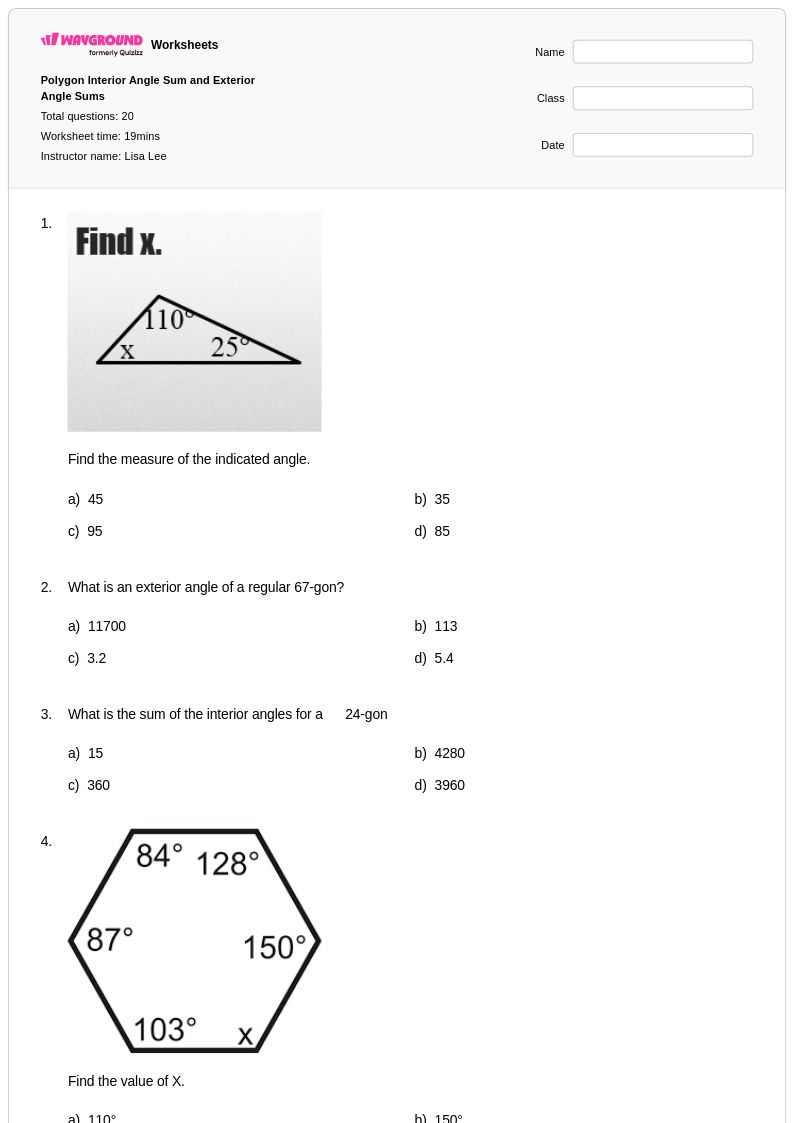
20 Q
KG - Uni
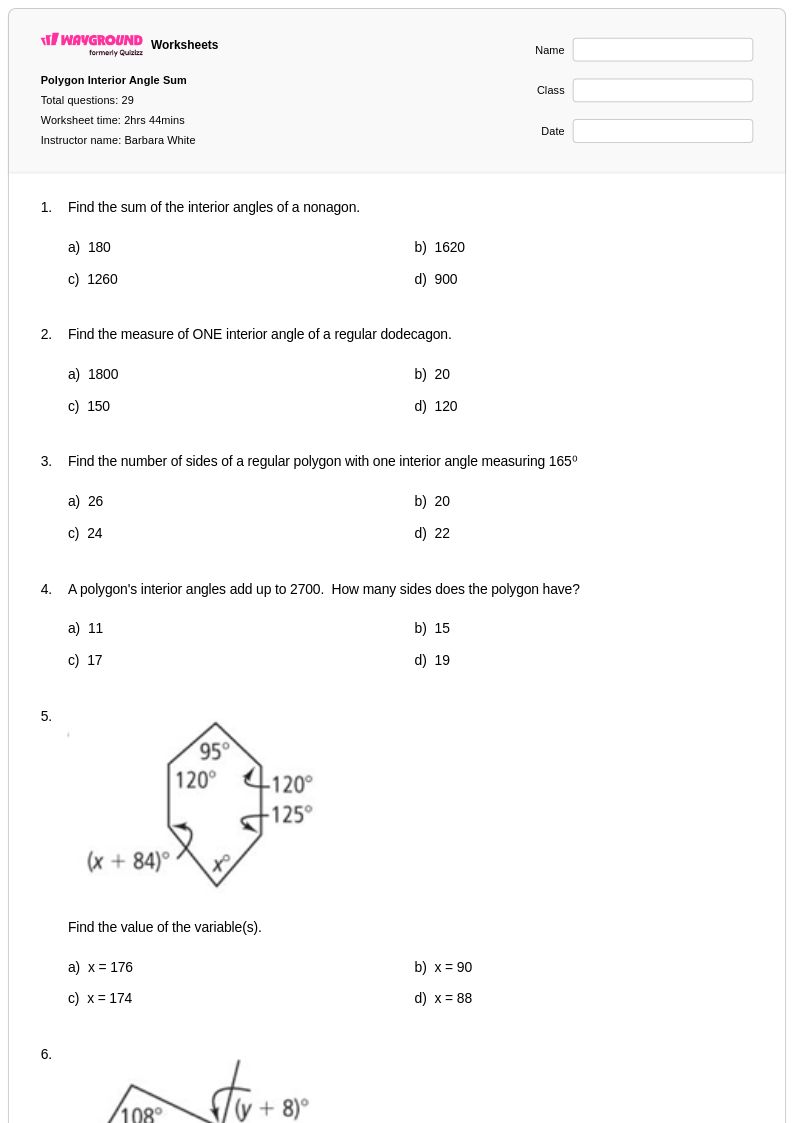
29 Q
KG - Uni
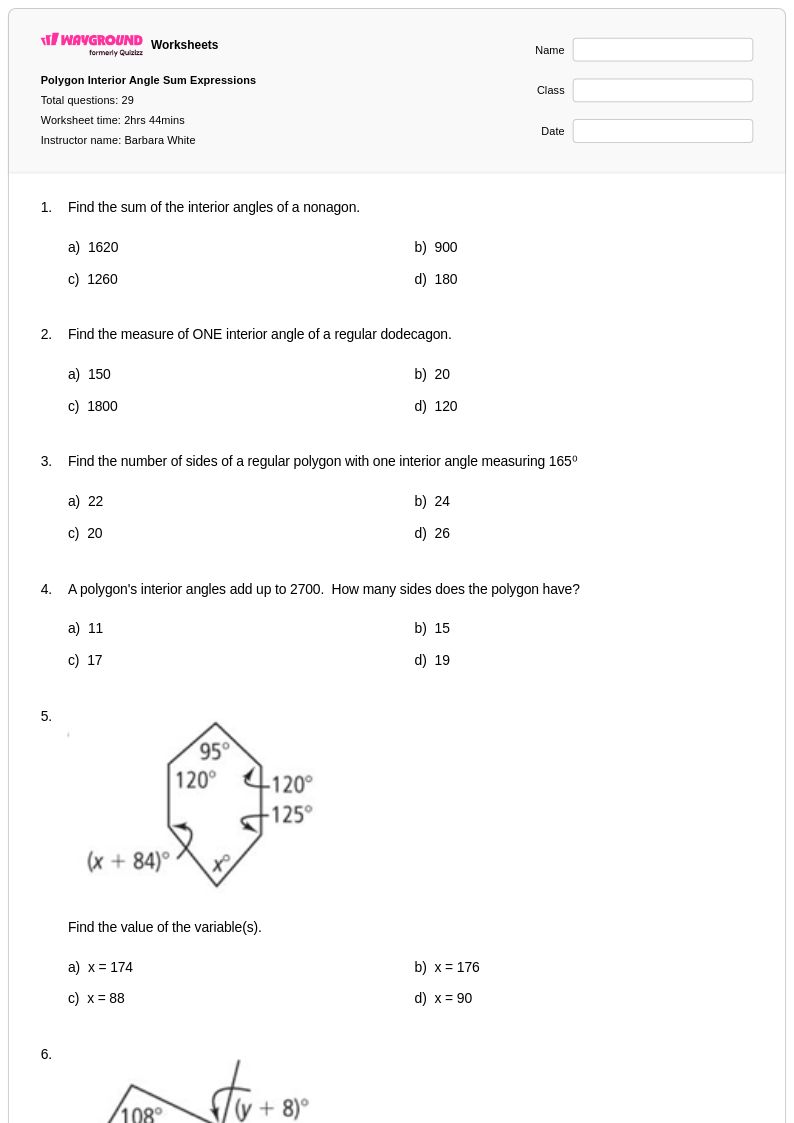
29 Q
KG - Uni
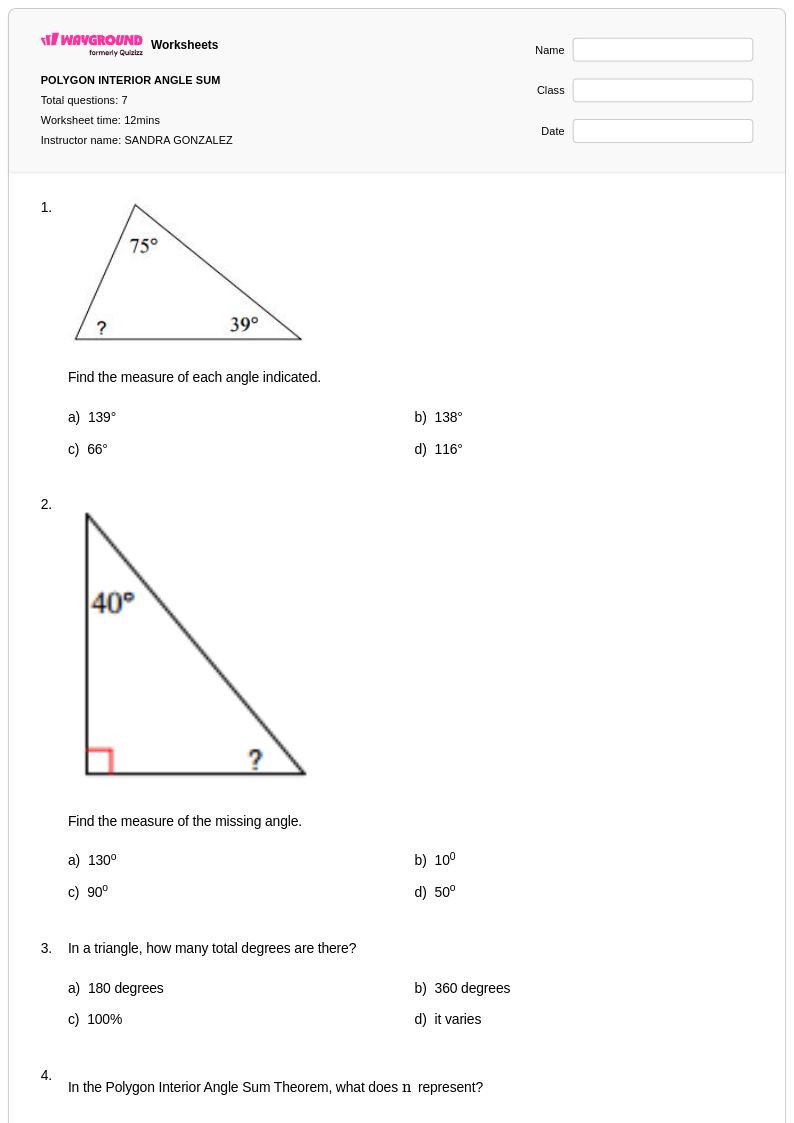
7 Q
10th
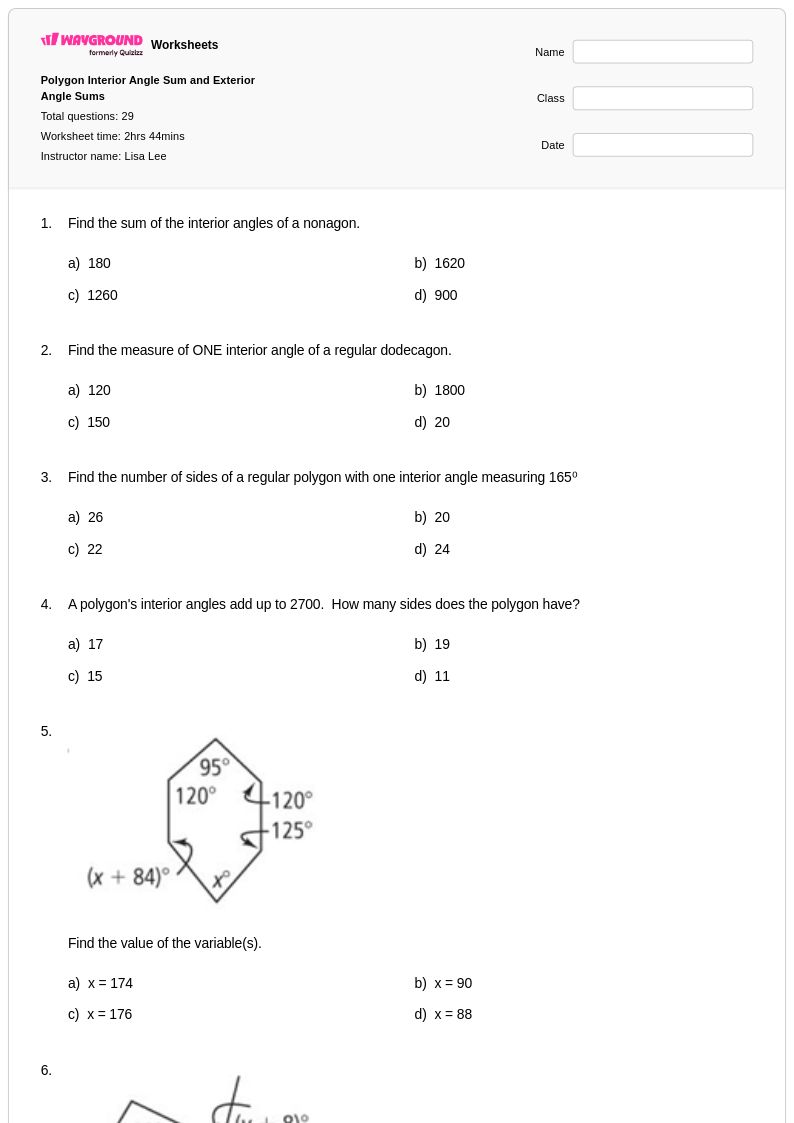
29 Q
KG - Uni
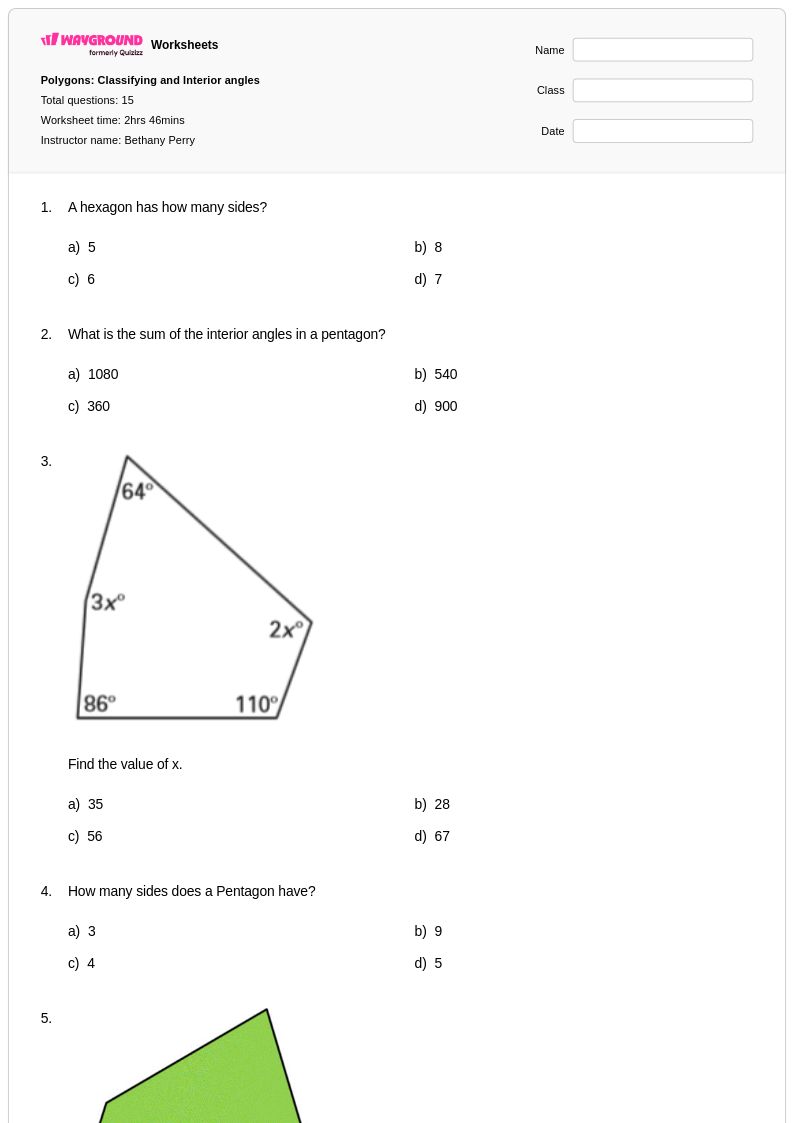
15 Q
10th
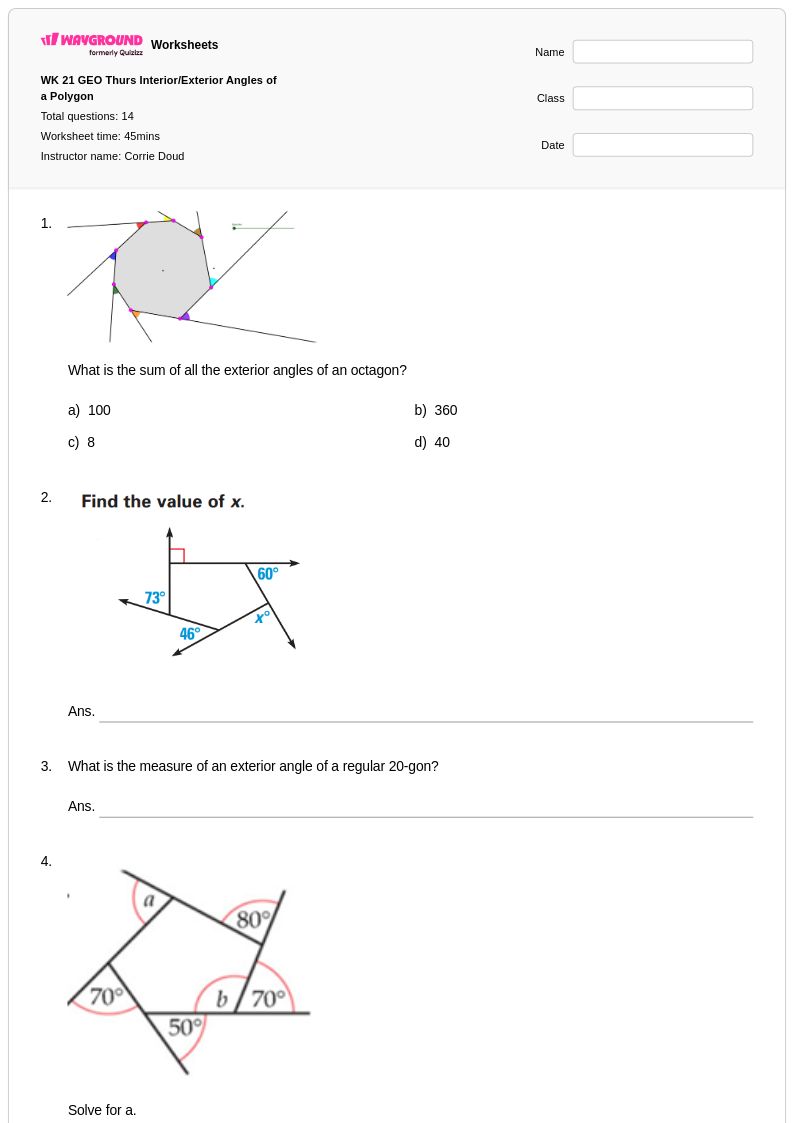
14 Q
10th
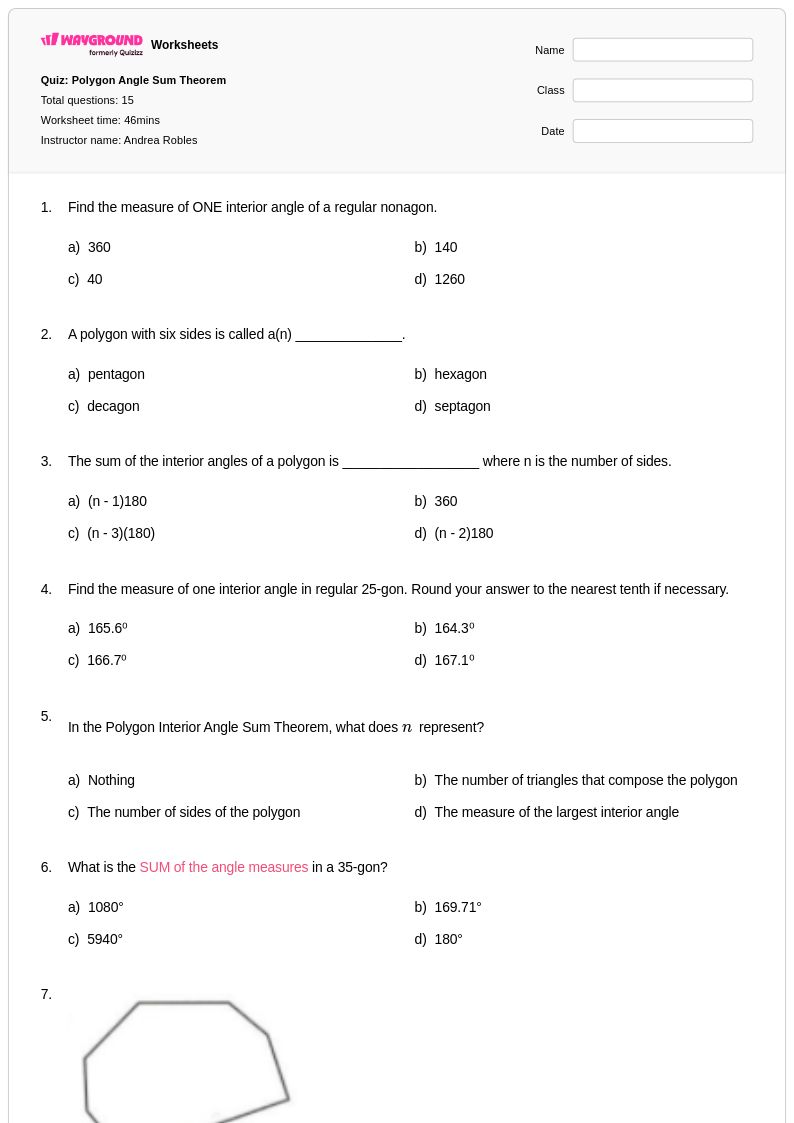
15 Q
10th
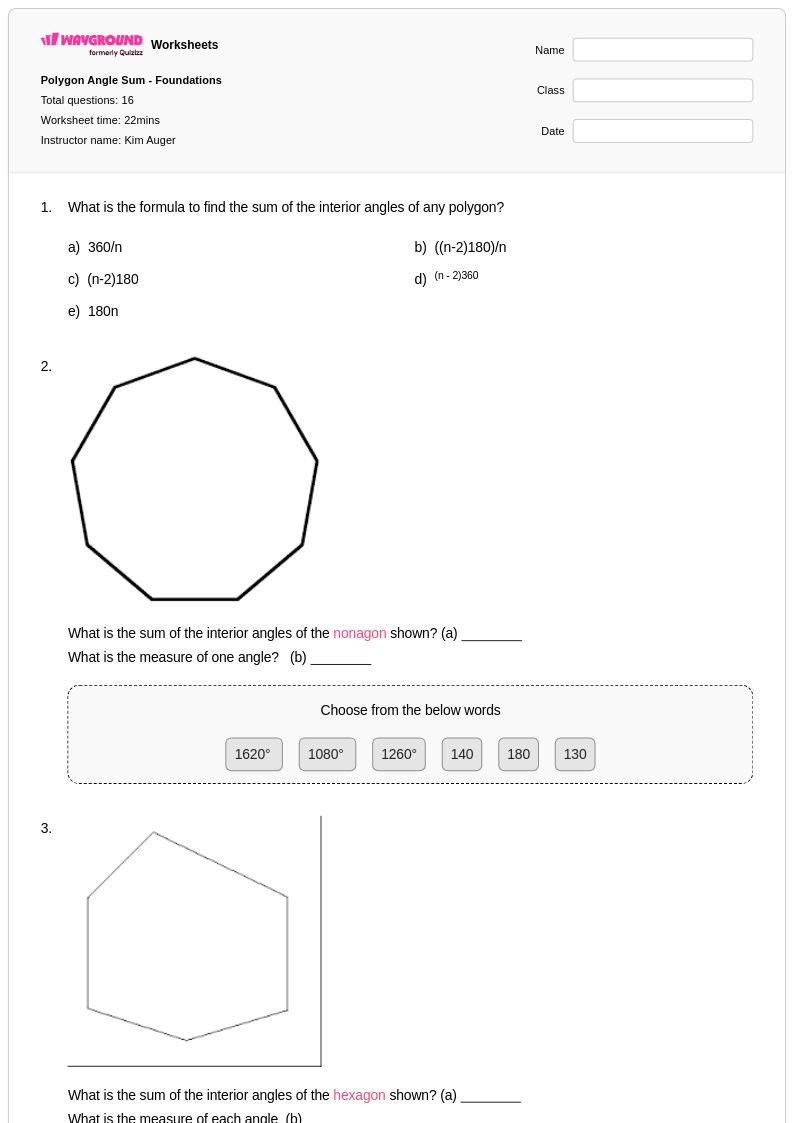
16 Q
8th
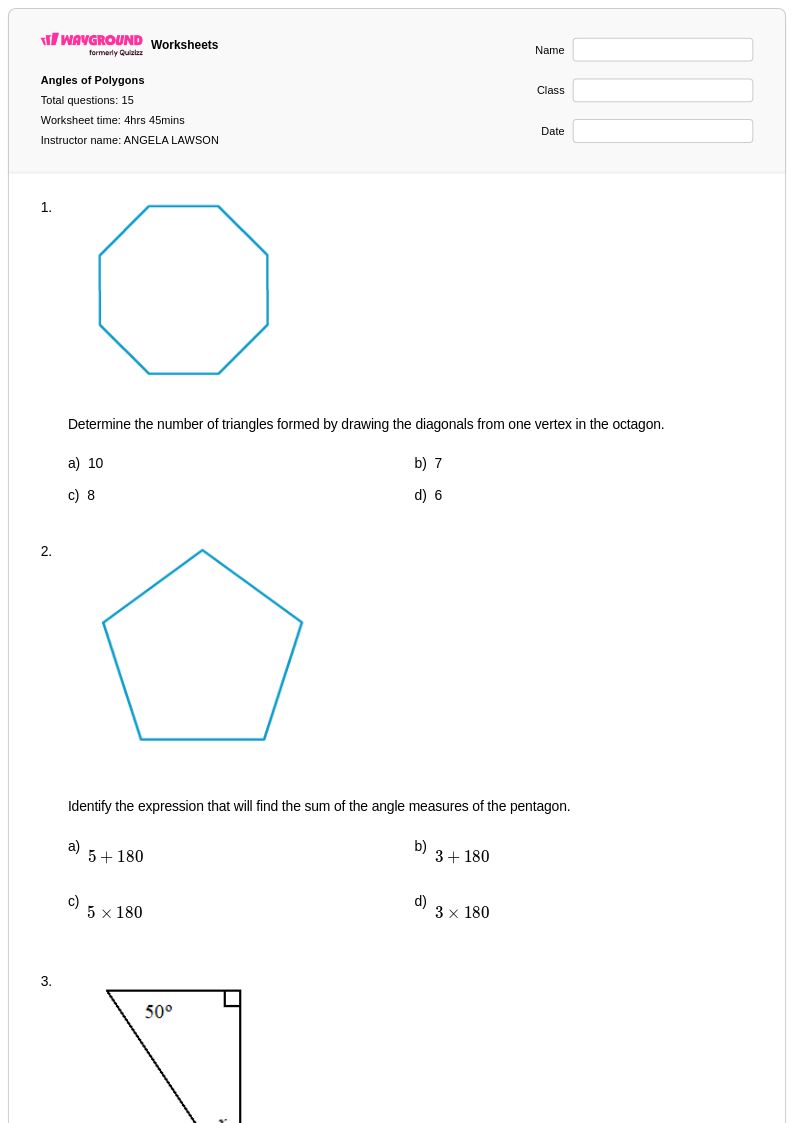
15 Q
7th
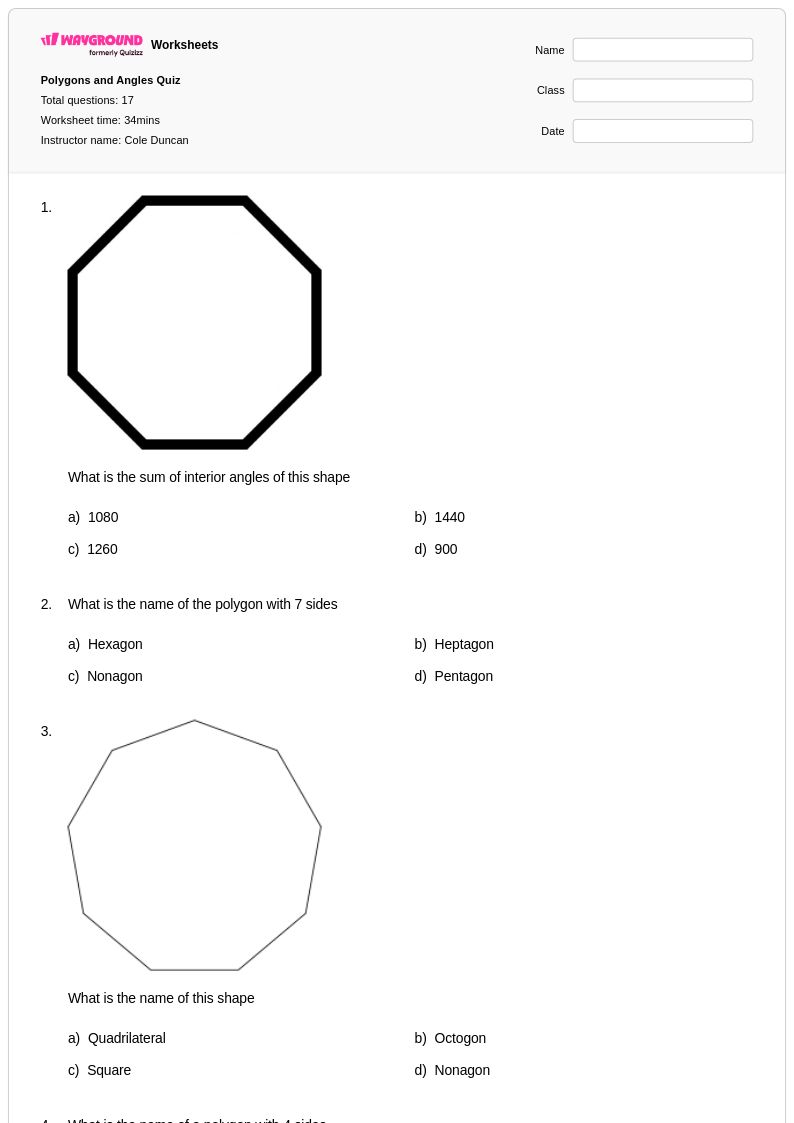
17 Q
8th
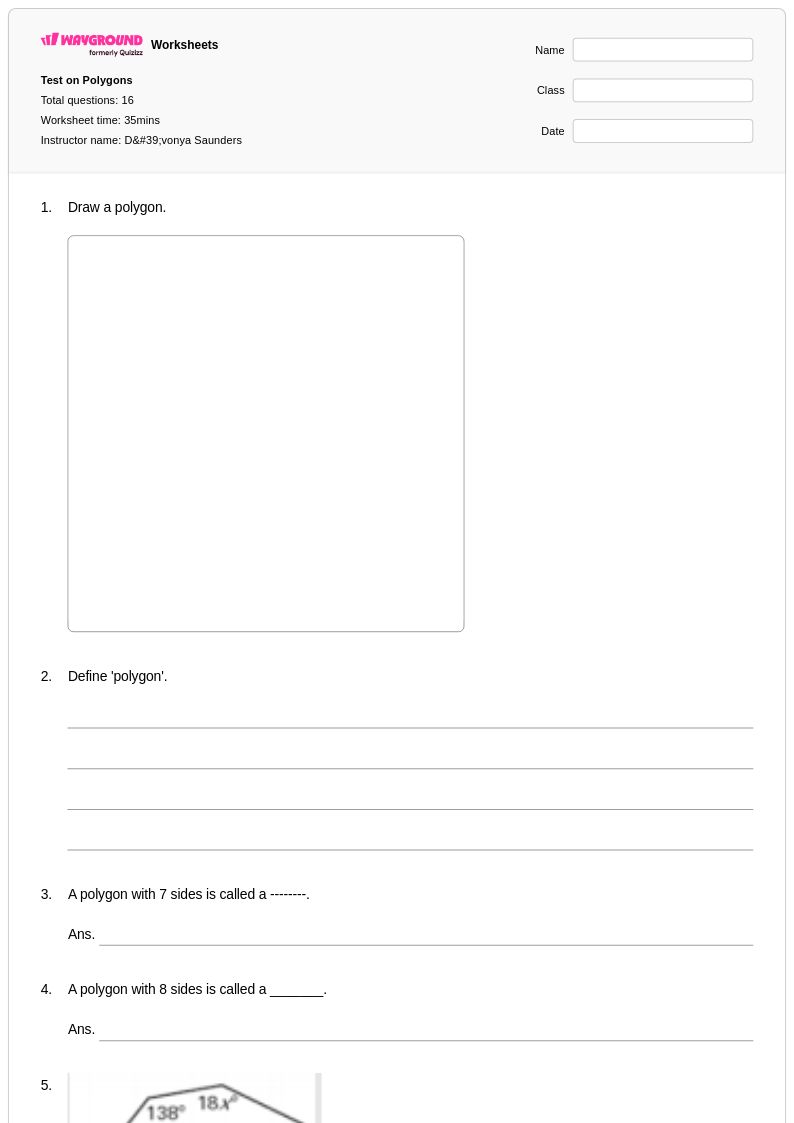
16 Q
10th
Explore Worksheets by Subjects
Explore printable Polygon Interior Angle Sum worksheets
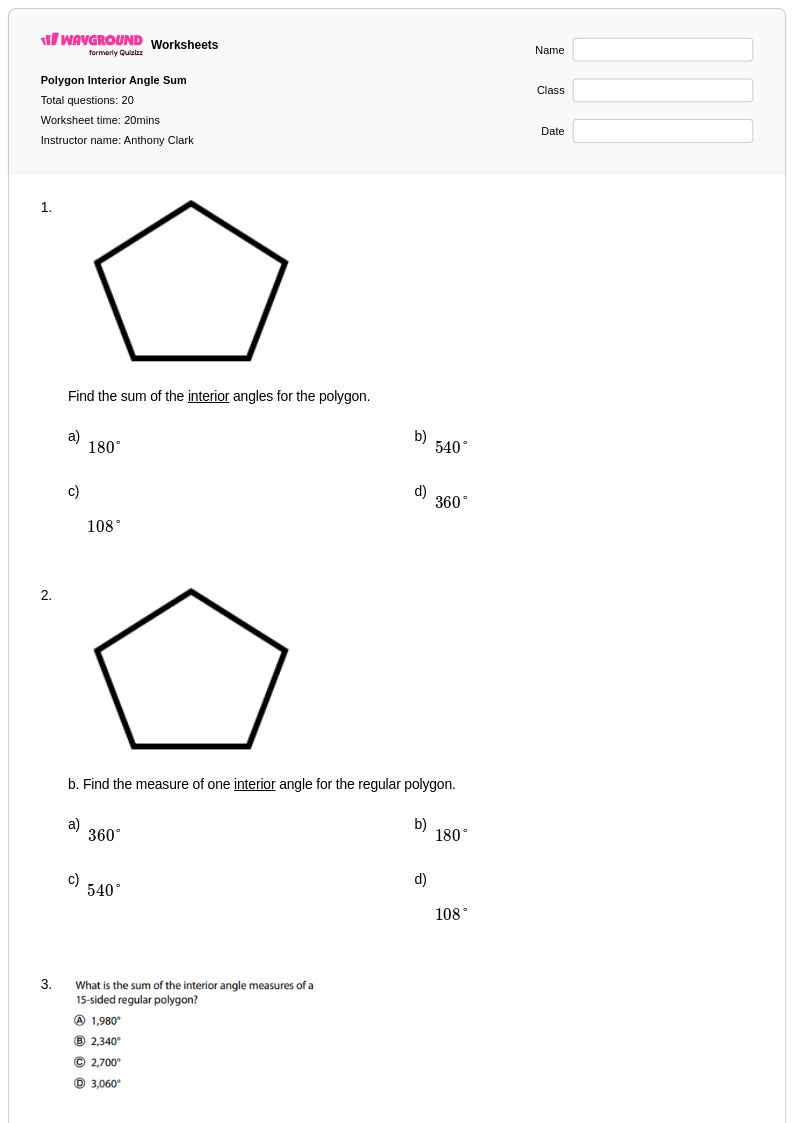
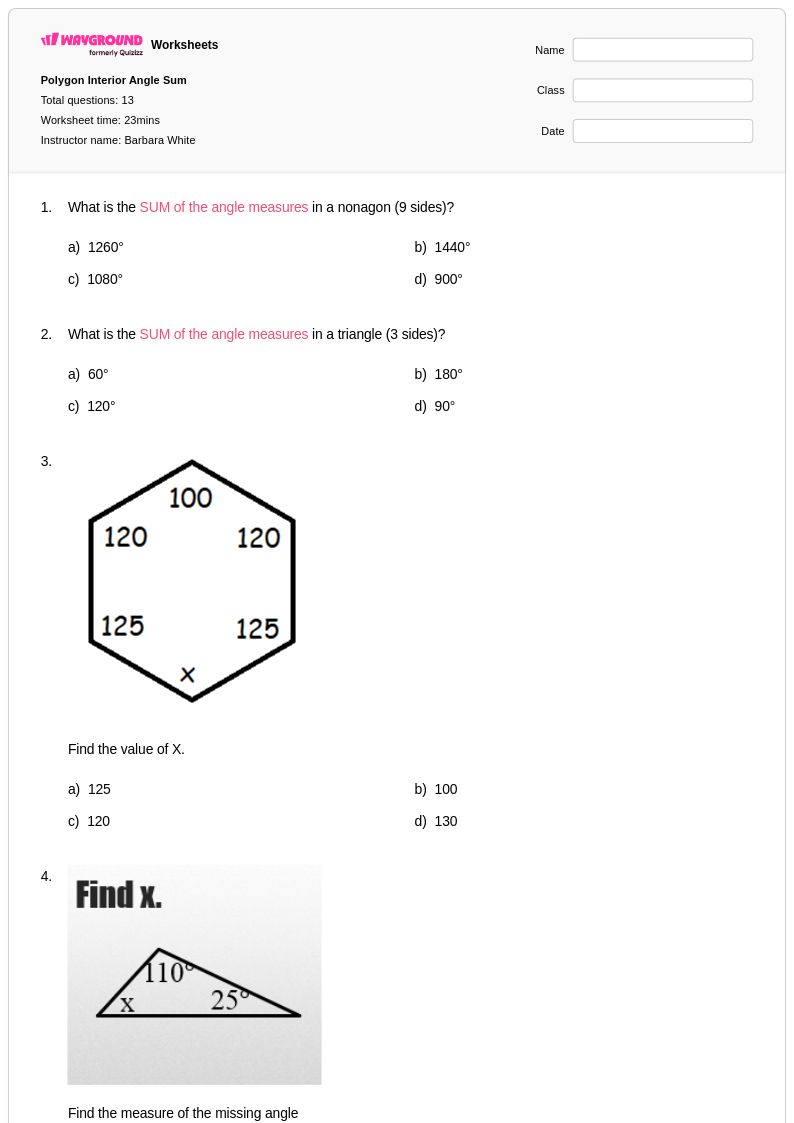
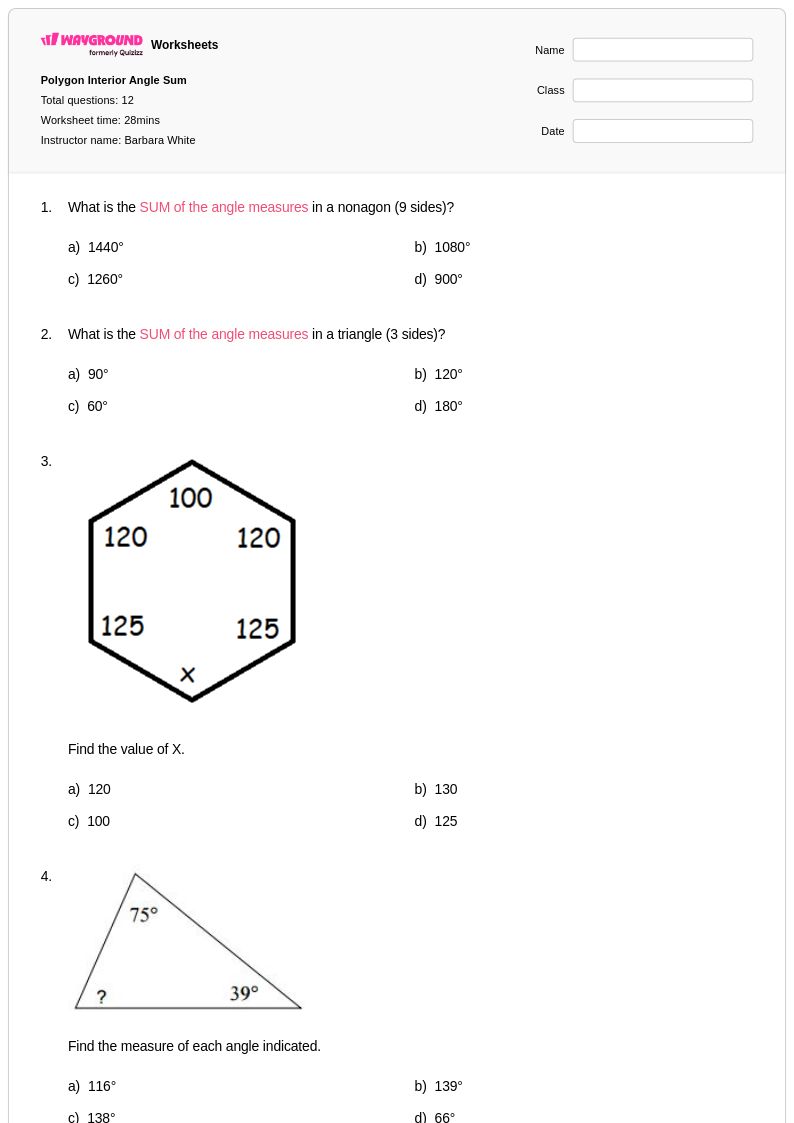
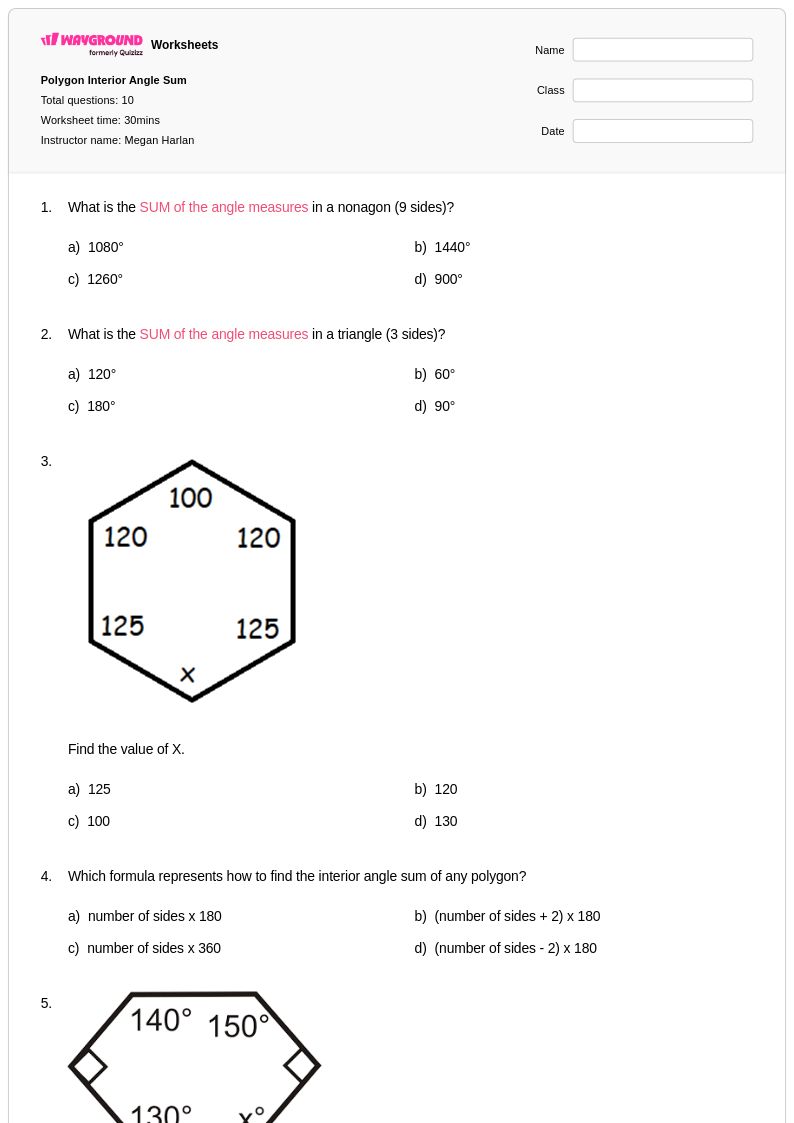
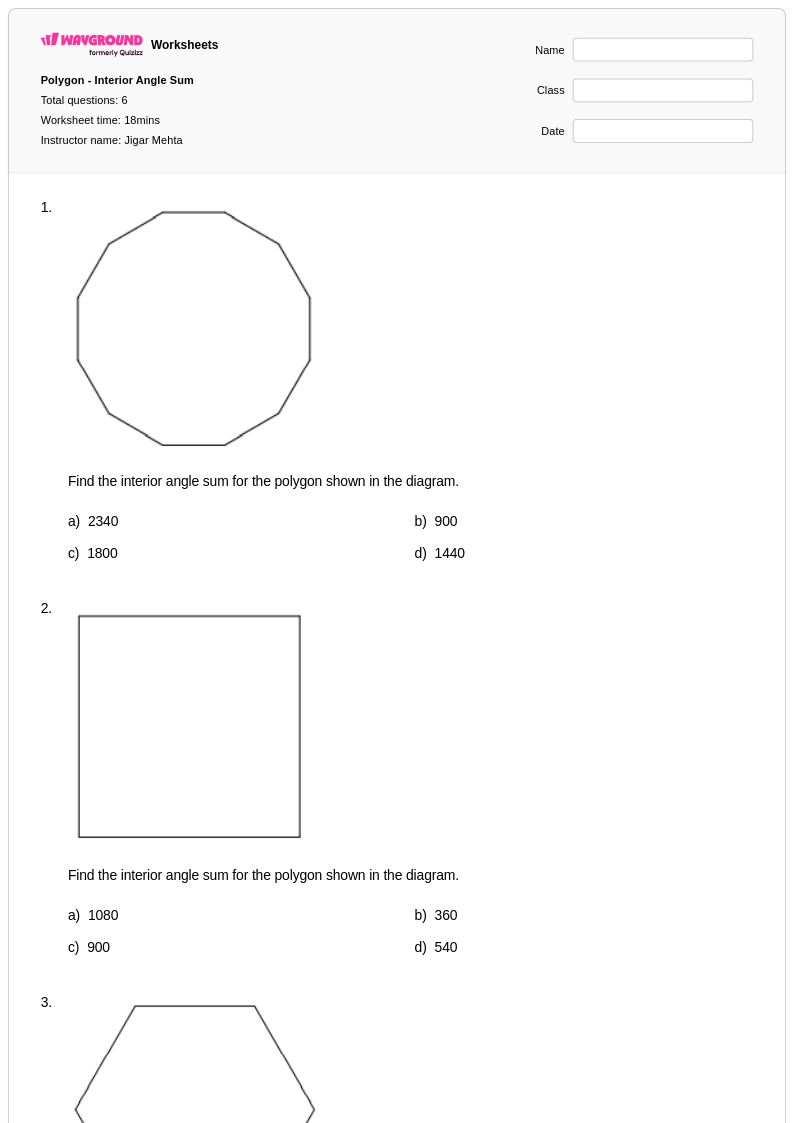
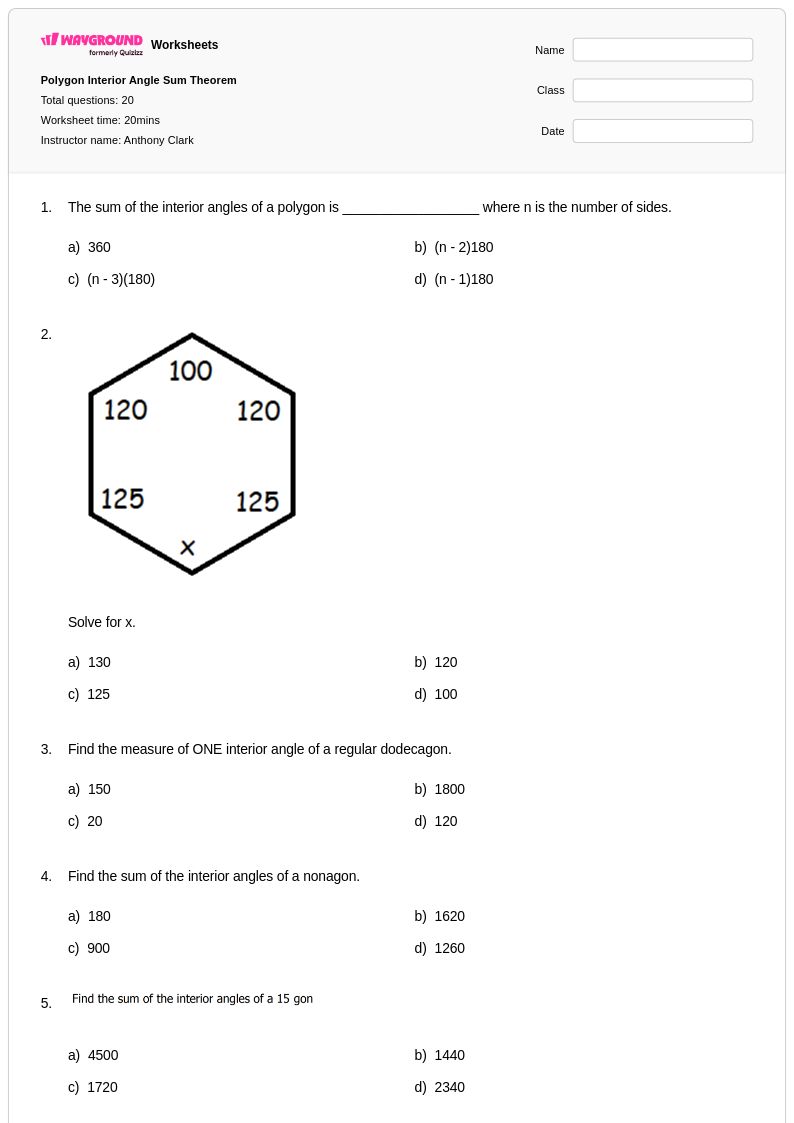
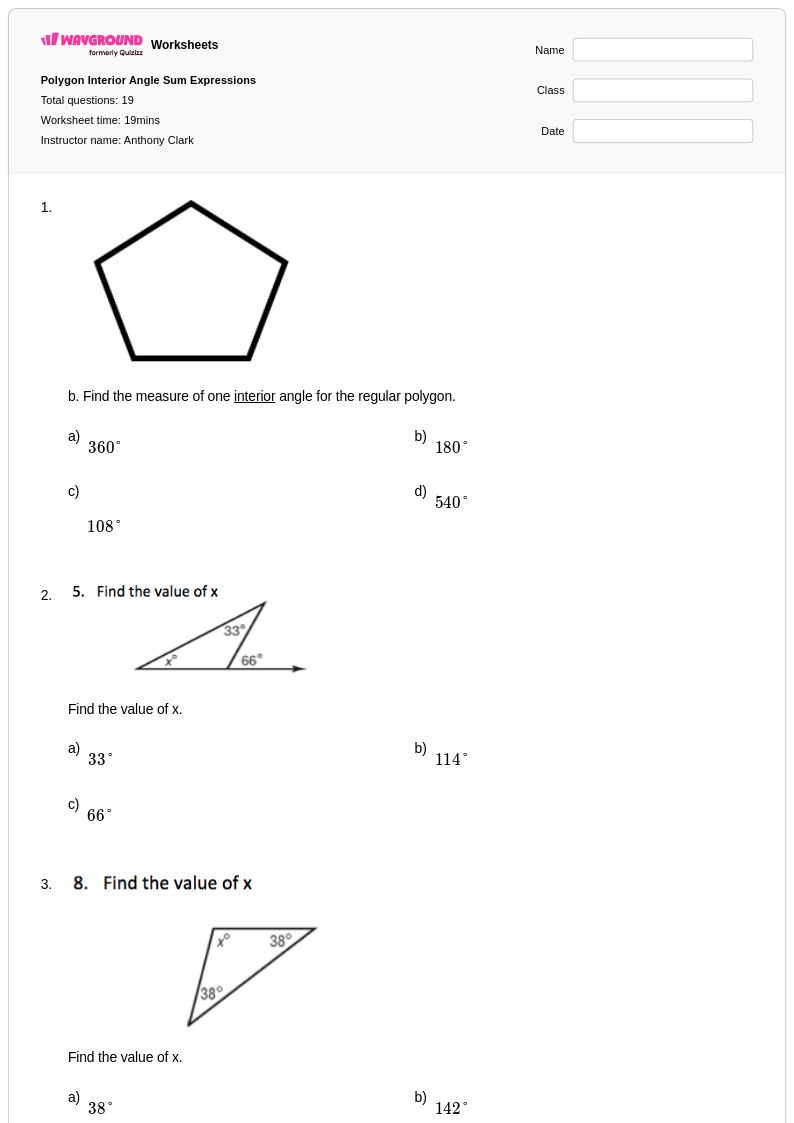
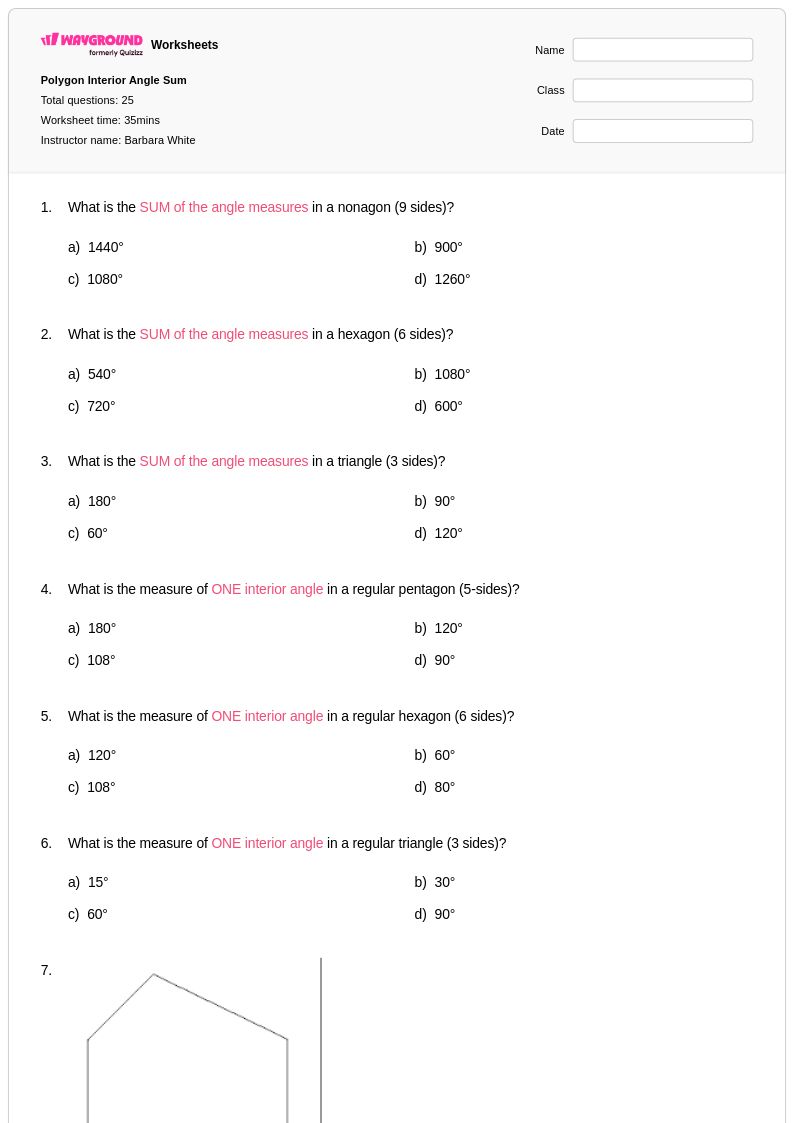
Polygon interior angle sum worksheets available through Wayground (formerly Quizizz) provide students with comprehensive practice in calculating and understanding the total degrees within various polygons. These mathematics resources strengthen essential geometric reasoning skills by guiding learners through the systematic application of the interior angle sum formula (n-2) × 180°, where n represents the number of sides in the polygon. Students work through practice problems that progress from basic triangles and quadrilaterals to more complex polygons like pentagons, hexagons, and beyond, developing their ability to identify polygon types, count sides accurately, and perform multi-step calculations. Each worksheet includes detailed answer keys that allow students to check their work independently, while the free printable format ensures accessibility for both classroom instruction and home practice.
Wayground (formerly Quizizz) supports mathematics educators with millions of teacher-created polygon interior angle sum resources that feature robust search and filtering capabilities to locate materials perfectly suited to specific instructional needs. The platform's standards alignment ensures that worksheets correspond to appropriate grade-level expectations, while built-in differentiation tools enable teachers to modify content complexity for diverse learners. Teachers can customize these geometry worksheets to emphasize particular polygon types or adjust problem difficulty, then distribute them in both printable pdf format for traditional pencil-and-paper work or digital format for interactive online practice. This flexibility streamlines lesson planning while providing targeted resources for remediation of struggling students, enrichment opportunities for advanced learners, and systematic skill practice that reinforces conceptual understanding of polygon properties and angle relationships.
FAQs
How should I introduce the polygon interior angle sum theorem?
What types of problems are on this worksheet?
What are common student mistakes with the polygon angle sum formula?
How does this topic fit into the geometry curriculum?
How can I use this Wayground worksheet in my classroom?